NASA: Life Signs Could Survive Near Surfaces of Enceladus and Europa

NASA: Life Signs Could Survive Near Surfaces of Enceladus and Europa

5 min read

NASA: Life Signs Could Survive Near Surfaces of Enceladus and Europa

Europa, a moon of Jupiter, and Enceladus, a moon of Saturn, have evidence of oceans beneath their ice crusts. A NASA experiment suggests that if these oceans support life, signatures of that life in the form of organic molecules (e.g. amino acids, nucleic acids, etc.) could survive just under the surface ice despite the harsh radiation on these worlds. If robotic landers are sent to these moons to look for life signs, they would not have to dig very deep to find amino acids that have survived being altered or destroyed by radiation.

“Based on our experiments, the ‘safe’ sampling depth for amino acids on Europa is almost 8 inches (around 20 centimeters) at high latitudes of the trailing hemisphere (hemisphere opposite to the direction of Europa’s motion around Jupiter) in the area where the surface hasn’t been disturbed much by meteorite impacts,” said Alexander Pavlov of NASA’s Goddard Space Flight Center in Greenbelt, Maryland, lead author of a paper on the research published July 18 in Astrobiology. “Subsurface sampling is not required for the detection of amino acids on Enceladus – these molecules will survive radiolysis (breakdown by radiation) at any location on the Enceladus surface less than a tenth of an inch (under a few millimeters) from the surface.”

The frigid surfaces of these nearly airless moons are likely uninhabitable due to radiation from both high-speed particles trapped in their host planet’s magnetic fields and powerful events in deep space, such as exploding stars. However, both have oceans under their icy surfaces that are heated by tides from the gravitational pull of the host planet and neighboring moons. These subsurface oceans could harbor life if they have other necessities, such as an energy supply as well as elements and compounds used in biological molecules.

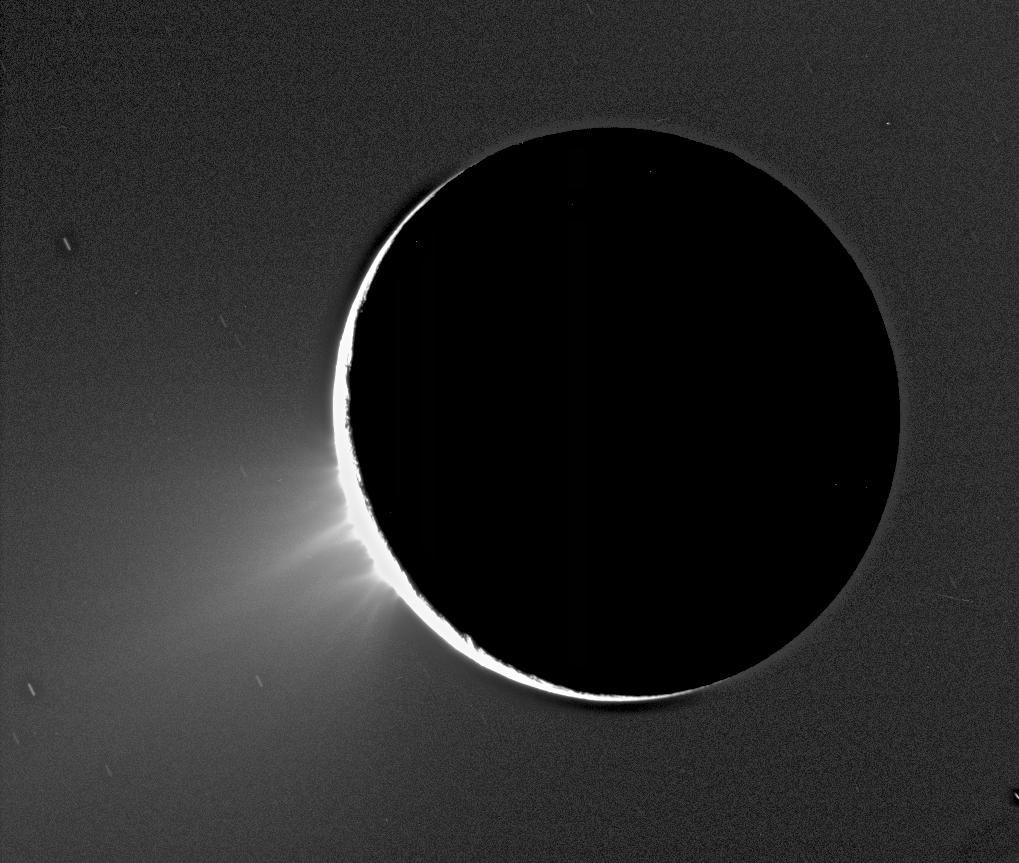
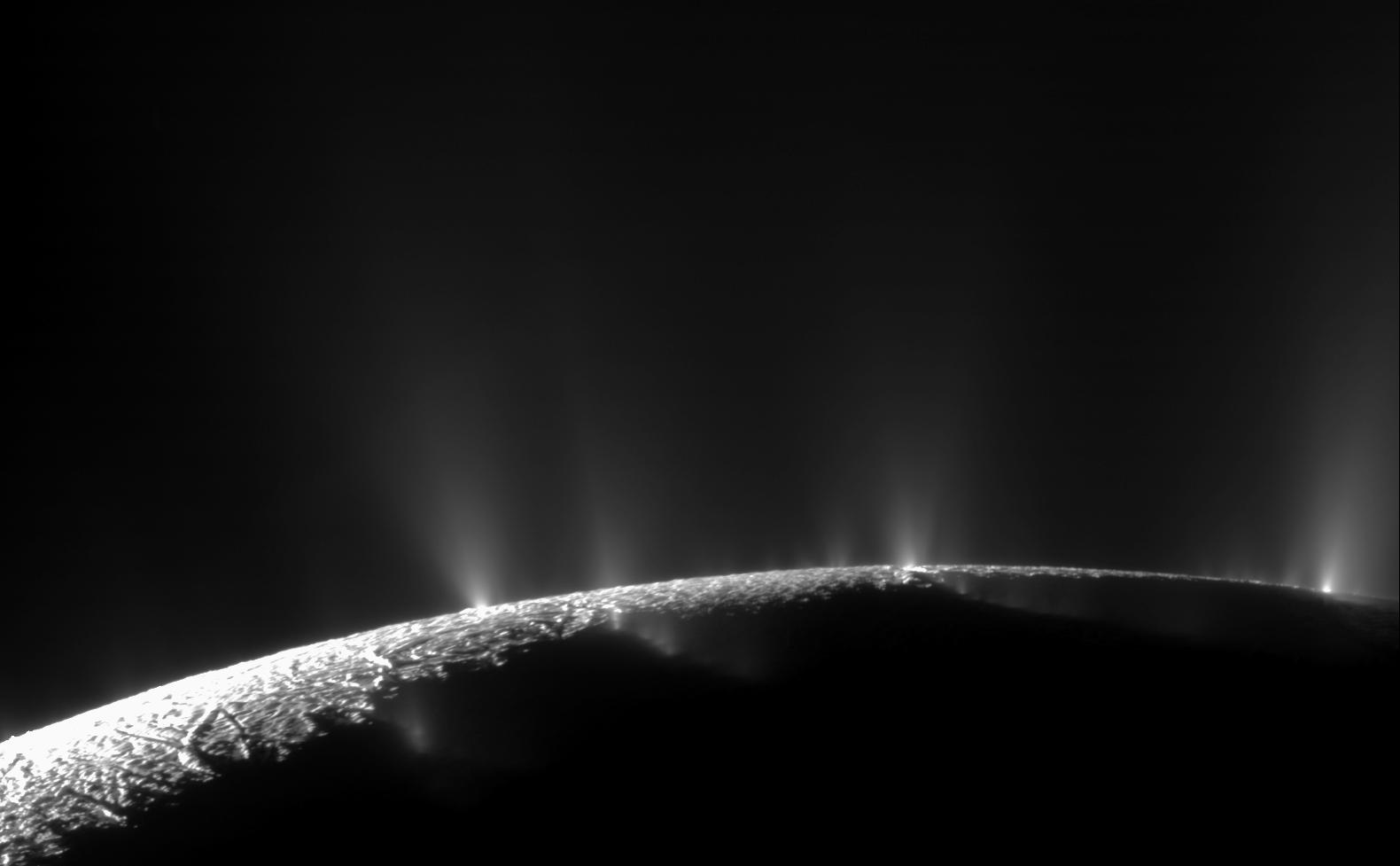
Fountains of ice erupt from the surface of Enceladus. The small moon is mostly in shadow, which makes the geysers illuminated by sunlight stand out.
Dramatic plumes, both large and small, spray water ice and vapor from many locations along the famed “tiger stripes” near the south pole of Saturn’s moon Enceladus.
NASA/JPL/Space Science Institute

The research team used amino acids in radiolysis experiments as possible representatives of biomolecules on icy moons. Amino acids can be created by life or by non-biological chemistry. However, finding certain kinds of amino acids on Europa or Enceladus would be a potential sign of life because they are used by terrestrial life as a component to build proteins. Proteins are essential to life as they are used to make enzymes which speed up or regulate chemical reactions and to make structures. Amino acids and other compounds from subsurface oceans could be brought to the surface by geyser activity or the slow churning motion of the ice crust.

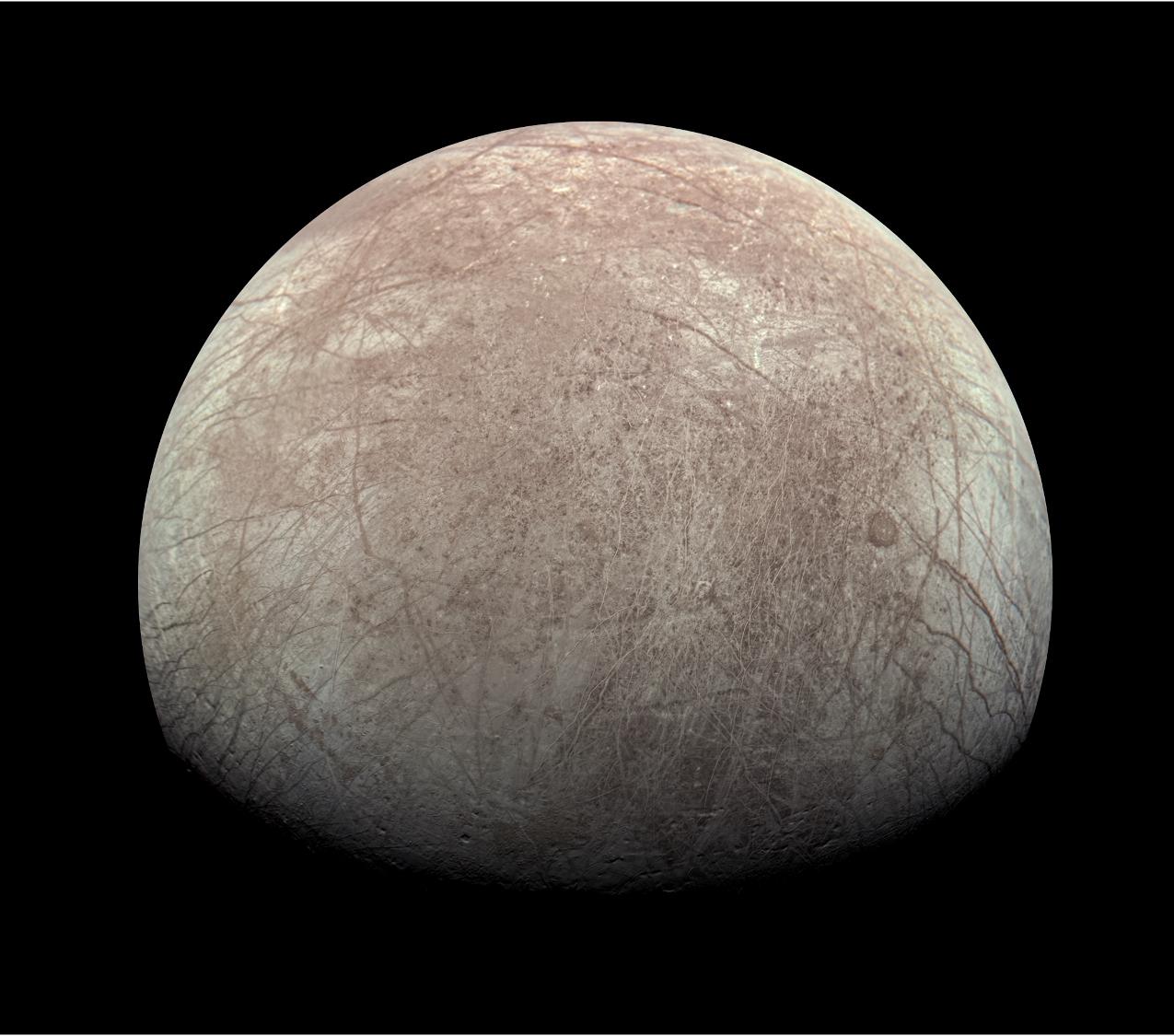
Europa has reddish brown lines and patches in this image from Juno.
This view of Jupiter’s icy moon Europa was captured by JunoCam, the public engagement camera aboard NASA’s Juno spacecraft, during the mission’s close flyby on Sept. 29, 2022. The picture is a composite of JunoCam’s second, third, and fourth images taken during the flyby, as seen from the perspective of the fourth image. North is to the left.

The images have a resolution of just over 0.5 to 2.5 miles per pixel (1 to 4 kilometers per pixel).

As with our Moon and Earth, one side of Europa always faces Jupiter, and that is the side of Europa visible here. Europa’s surface is crisscrossed by fractures, ridges, and bands, which have erased terrain older than about 90 million years.

Citizen scientist Kevin M. Gill processed the images to enhance the color and contrast.

NASA/JPL-Caltech/SwRI/MSSS Image processing: Kevin M. Gill CC BY 3.0

To evaluate the survival of amino acids on these worlds, the team mixed samples of amino acids with ice chilled to about minus 321 Fahrenheit (-196 Celsius) in sealed, airless vials and bombarded them with gamma-rays, a type of high-energy light, at various doses. Since the oceans might host microscopic life, they also tested the survival of amino acids in dead bacteria in ice. Finally, they tested samples of amino acids in ice mixed with silicate dust to consider the potential mixing of material from meteorites or the interior with surface ice.

Image showing samples loaded in a dewar before being chilled with liquid nitrogen.
This image shows experiment samples loaded in the specially designed dewar which will be filled with liquid nitrogen shortly after and placed under gamma radiation. Notice that the flame-sealed test tubes are wrapped in cotton fabric to keep them together because test tubes become buoyant in liquid nitrogen and start floating around in the dewar, interfering with the proper radiation exposure.
Candace Davison

The experiments provided pivotal data to determine the rates at which amino acids break down, called radiolysis constants. With these, the team used the age of the ice surface and the radiation environment at Europa and Enceladus to calculate the drilling depth and locations where 10 percent of the amino acids would survive radiolytic destruction.

Although experiments to test the survival of amino acids in ice have been done before, this is the first to use lower radiation doses that don’t completely break apart the amino acids, since just altering or degrading them is enough to make it impossible to determine if they are potential signs of life. This is also the first experiment using Europa/Enceladus conditions to evaluate the survival of these compounds in microorganisms and the first to test the survival of amino acids mixed with dust.

The team found that amino acids degraded faster when mixed with dust but slower when coming from microorganisms.

“Slow rates of amino acid destruction in biological samples under Europa and Enceladus-like surface conditions bolster the case for future life-detection measurements by Europa and Enceladus lander missions,” said Pavlov. “Our results indicate that the rates of potential organic biomolecules’ degradation in silica-rich regions on both Europa and Enceladus are higher than in pure ice and, thus, possible future missions to Europa and Enceladus should be cautious in sampling silica-rich locations on both icy moons.”

A potential explanation for why amino acids survived longer in bacteria involves the ways ionizing radiation changes molecules — directly by breaking their chemical bonds or indirectly by creating reactive compounds nearby which then alter or break down the molecule of interest. It’s possible that bacterial cellular material protected amino acids from the reactive compounds produced by the radiation.

The research was supported by NASA under award number 80GSFC21M0002, NASA’s Planetary Science Division Internal Scientist Funding Program through the Fundamental Laboratory Research work package at Goddard, and NASA Astrobiology NfoLD award 80NSSC18K1140.

Share

Details

Last Updated

Jul 18, 2024

Editor
wasteigerwald
Contact

Powered by WPeMatico

Get The Details…

Summary of the 2023 Sun – Climate Symposium

Summary of the 2023 Sun – Climate Symposium

18 min read

Summary of the 2023 Sun – Climate Symposium

Introduction

Observations of the Sun and Earth from space continue to revolutionize our view and understanding of how solar variability and other natural and anthropogenic forcings impact Earth’s atmosphere and climate. For more than four decades (spanning four 11-year solar cycles and now well into a fifth), the total and spectral solar irradiance and global terrestrial atmosphere and surface have been observed continuously, providing an unprecedented, high-quality time series of data for Sun–climate studies, such as the Total Solar Irradiance (TSI) composite record – see Figure 1.

Sun Climate figure 1
Figure 1. The Total Solar Irradiance (TSI) composite record spans almost 5 decades and includes measurements from 13 different instruments (9 NASA and 4 international).
Figure credit: Greg Kopp, Laboratory for Atmospheric and Space Physics (LASP)/University of Colorado (UC).

Sun–Climate Symposia, originally called SOlar Radiation and Climate Experiment (SORCE) Science Team Meetings, have been held at a regular cadence since 1999 – before the launch of SORCE in 2003. These meetings provide an opportunity for experts from across the solar, Earth atmosphere, climate change, stellar, and planetary communities to present and discuss their research results about solar variability, climate influences and the Earth-climate system, solar and stellar variability comparative studies, and stellar impacts on exoplanets.

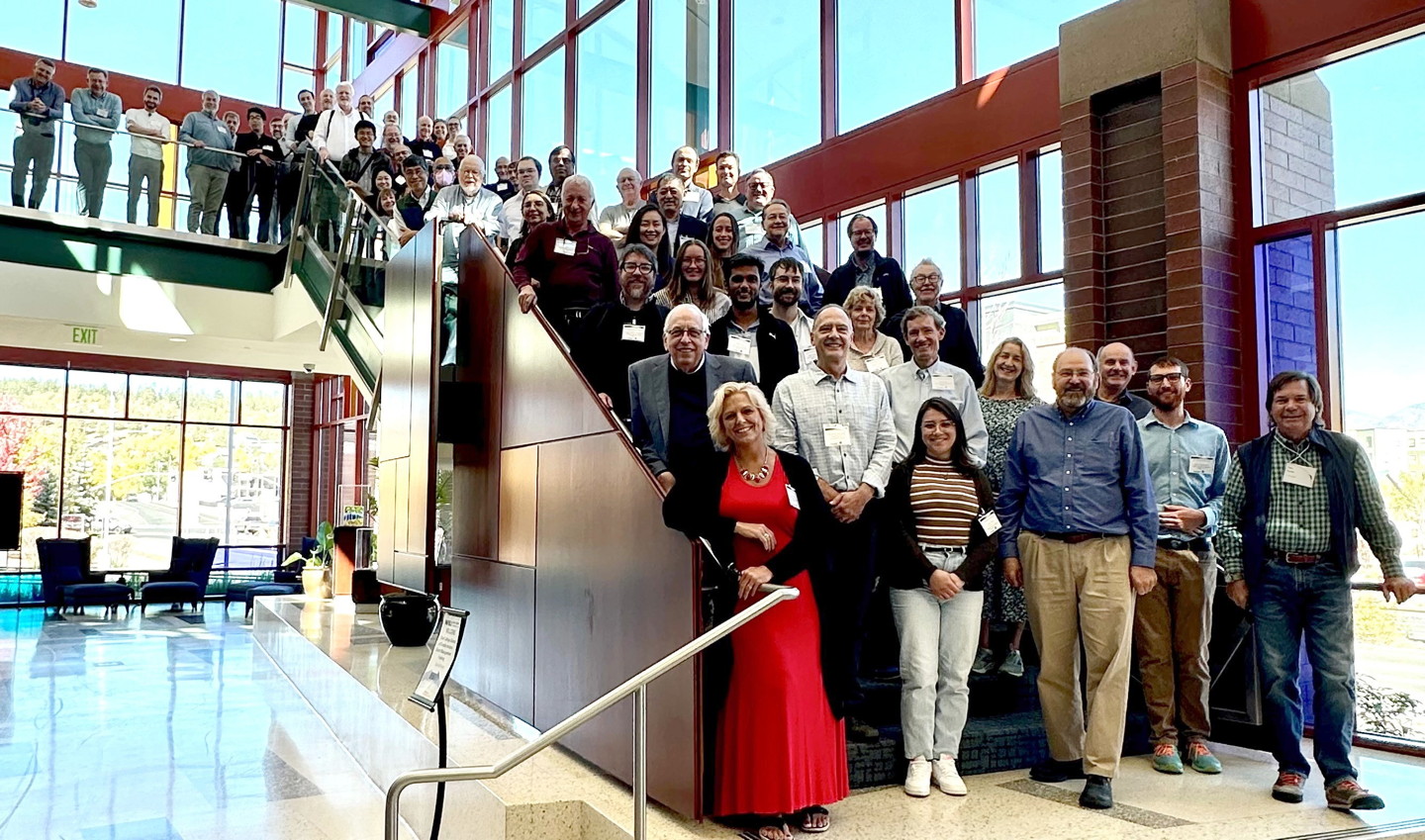
The latest iteration was the eighteenth in the series and occurred in October 2023. (As an example of a previous symposium, see Summary of the 2022 Sun–Climate Symposium, in the January–February 2023 issue of The Earth Observer [Volume 35, Issue 1, pp. 18–27]). The 2023 Sun–Climate Symposium took place October 17­–20 in Flagstaff, AZ – with a focus topic of “Solar and Stellar Variability and its Impacts on Earth and Exoplanets.” The Sun–Climate Research Center – a joint venture between NASA’s Goddard Space Flight Center (GSFC) and the Laboratory for Atmospheric and Space Physics (LASP) at the University of Colorado (UC) with the Lowell Observatory hosting the meeting. The in-person meeting had 75 attendees – including 7 international participants – with diverse backgrounds covering a wide range of climate change and solar-stellar variability research topics – see Photo.

Sun Climate Group Photo
Photo. Attendees at the 2023 Sun–Climate Symposium in Flagstaff, AZ.
Photo credit: Kelly Boden/LASP

Update on NASA’s Current and Planned TSIS Missions

The current NASA solar irradiance mission, the Total and Spectral Solar Irradiance Sensor (TSIS-1), marks a significant advance in our ability to measure the Sun’s energy input to Earth across various wavelengths. Following in the footsteps of its predecessors, most notably SORCE, TSIS-1 contributes to the continuous time series of solar energy data dating back to 1978 – see Figure 1. The two instruments on TSIS-1 improve upon those on previous missions, enabling scientists to study the Sun’s natural influence on Earth’s ozone layer, atmospheric circulation, clouds, and ecosystems. These observations are essential for a scientific understanding of the effects of solar variability on the Earth system. 

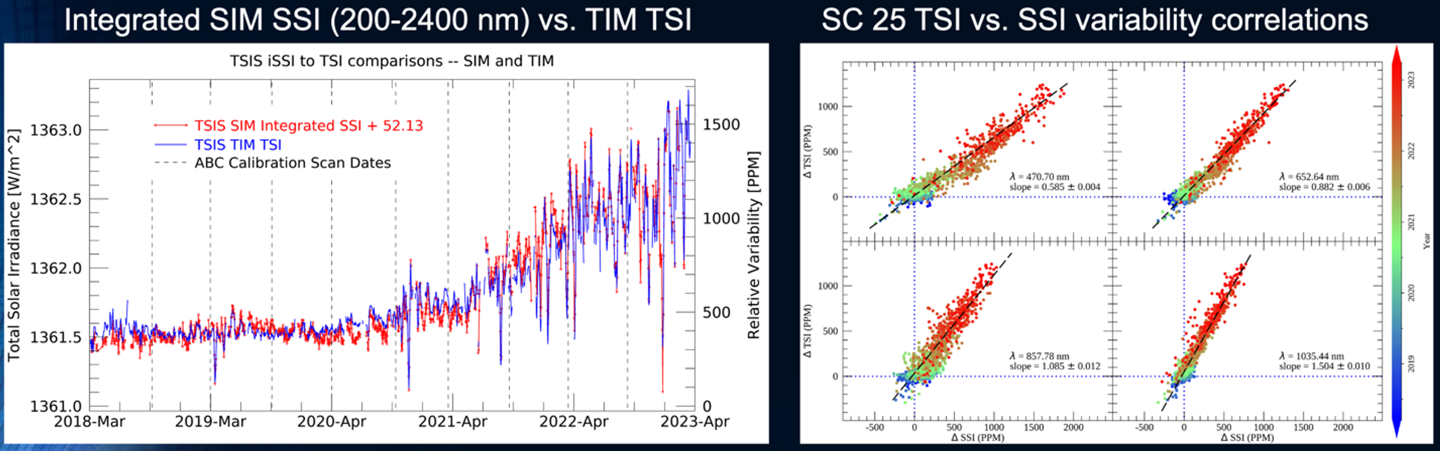
TSIS-1 launched to the International Space Station (ISS) in December 2017 and is deployed on the Station’s EXpedite the PRocessing of Experiments to Space Station (ExPRESS) Logistics Carrier–3 (ELC-3). Its payload includes the Total Irradiance Monitor (TIM) for observing the TSI and the Spectral Irradiance Monitor (SIM) for measuring the Solar Spectral Irradiance (SSI) – see comparison in Figure 2. The mission completed its five-year prime science mission in March 2023. SIM measures from 200–2400 nm with variable spectral resolution ranging from about 1 nm in the near ultraviolet (NUV) to about 10 nm in the near infrared (NIR). TSIS-1 has been extended by at least three more years as part of the Earth Sciences Senior Review process.

TSIS-2 is intended as the follow-on to TSIS-1. The mission is currently in development at LASP and GSFC with a planned launch around mid 2025. The TSIS-2 payload is nearly identical to that of TSIS-1, except that the payload will ride on a free-flying spacecraft rather than be mounted on a solar pointing platform on the ISS. NASA hopes to achieve 1–2 years of overlap between TSIS-1 and TSIS-2. Achieving such measurement overlap between missions is crucial to the continuity of the long-term records of the TSI and SSI without interruption and improving the solar irradiance composite.

In addition to the current solar irradiance mission and its planned predecessor, NASA is always looking ahead to plan for the inevitable next solar irradiance mission. Two recent LASP CubeSat missions – called Compact SIM (CSIM) and Compact TIM (CTIM) – have tested miniaturized versions of the SIM and TIM instruments, respectively. Both CSIM and CTIM have performed extremely well in space – with measurements that correlate well with the larger instruments – and are being considered as continuity options for the SSI and TSI measurements. Based on the success of CSIM and CTIM, LASP has developed a concept study report about the Compact-TSIS (CTSIS) as a series of small satellites viable for a future TSIS-3 mission.

Sun Climate Figure 2
Figure 2. The Solar Spectral Irradiance (SSI) variability from TSIS-1 Spectral Irradiance Monitor (SIM) is compared to the Total Solar Irradiance (TSI) variability from TSIS-1 Total Irradiance Monitor (TIM). The left panel shows the SIM SSI integrated over its wavelength range of 200–2400 nm, which is in excellent agreement with the TSI variability during the rising phase of solar cycle 25. The right panels show comparison of SSI variability at individual wavelengths to the TSI variability, revealing linear relationships with ultraviolet variability larger than TSI variability, visible variability similar to TSI variability, and near infrared variability smaller than TSI variability.
Figure credit: Erik Richard/LASP

Meeting Overview

After an opening plenary presentation in which Erik Richard [LASP] covered the information on TSIS-1, TSIS-2, CSIM, and CTIM presented in the previous section on “NASA’s Current and Planned Solar Irradiance Missions,” the remainder of the four-day meeting was divided into five science sessions each with oral presentations, and a poster session featuring 23 contributions.

The five session topics were:

  1. Solar and Stellar Activity Cycles
  2. Impacts of Stellar Variability on Planetary Atmospheres
  3. Evidence of Centennial and Longer-term Variability in Climate Change
  4. Evidence of Short-term Variability in Climate Change
  5. Trending of Solar Variability and Climate Change for Solar Cycle 25 (present and future)

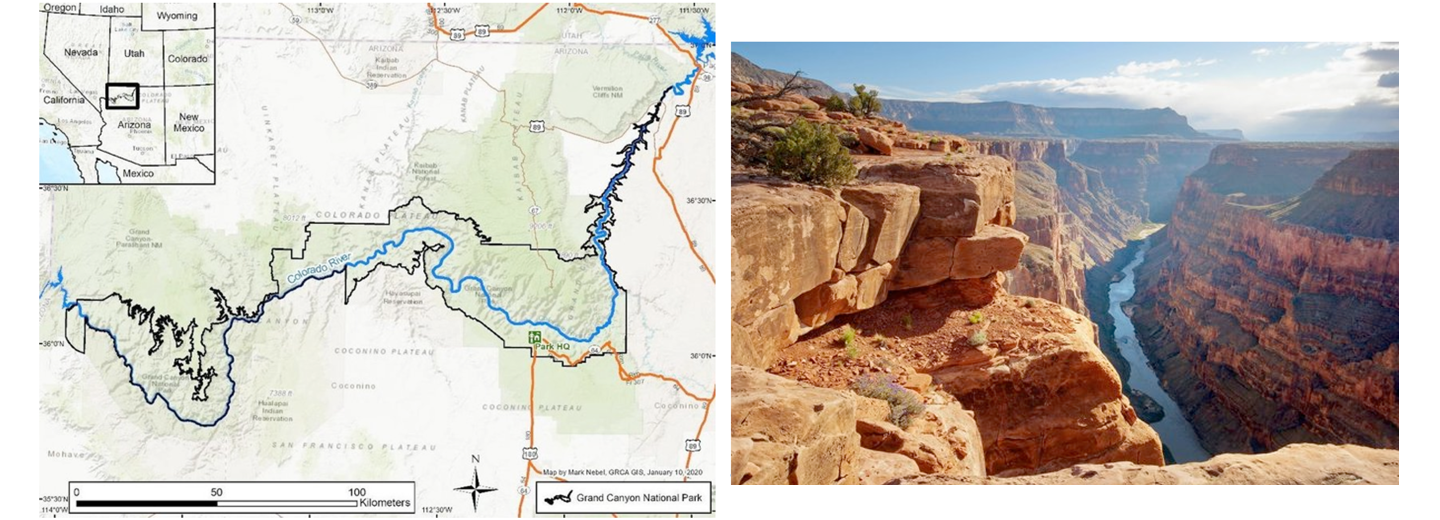
There was also a banquet held on the final evening of the meeting (October 19) with special presentations focusing on the water drainage system and archaeology of the nearby Grand Canyon – see Sun-Climate Symposium Banquet Special Presentation on the Grand Canyon National Park.

The remainder of this report summarizes highlights from each of the science sections. To learn more, the reader is referred to the full presentations from the 2023 Sun–Climate Symposium, which can be found on the Symposium website by clicking on individual presentation titles in the Agenda tab.

Session 1: Solar and Stellar Activity Cycles

Sun-like stars (and solar analogs, solar twins) provide a range of estimates for how the Sun’s evolution may affect its solar magnetic cycle variability. Recent astrophysics missions (e.g., NASA’s Kepler mission) have added thousands of Sun-like stars to study, compared to just a few dozen from a couple decades ago when questions remained if the Sun is a normal G star or not.

Tom Ayres [UC Center for Astrophysics and Space Astronomy (CASA)] gave the session’s keynote presentation on Sun-like stars. He pointed out that the new far ultraviolet (FUV) and X-ray stellar observations have been used to clarify that our Sun is a normal G-type dwarf star with low activity relative to most other G-type dwarf stars.

Travis Metcalfe [White Dwarf Research Corporation (WDRC)] discussed the recent progress in modeling of the physical processes that generate a star’s magnetic field – or stellar dynamo. He explained how the presence of stellar wind can slow down a star’s rotation, which in turn lengthens the period of the magnetic cycle. He related those expectations to the Sun and to the thousands of Sun-like stars observed by Kepler.

Continuing on the topic of solar dynamo, Lisa Upton [Space Systems Research Corporation (SSRC)] and Greg Kopp [LASP] discussed their recent findings using a solar surface magnetic flux transport model, which they can use to reconstruct an estimated TSI record back in time to the anomalously low activity during the Maunder Minimum in the 1600s. Dan Lubin [University of California San Diego (UCSD)] described efforts to identify grand-minimum stars – which exhibit characteristics similar to our Sun during the Maunder Minimum. Using Hamilton Echelle Spectrograph observations, they have identified about two dozen candidate grand-minimum stars.

In other presentations and posters offered during this session, Adam Kowalski [LASP]) discussed stellar and solar flare physics and revealed that the most energetic electrons generated during a flare are ten times more than previously thought, while Moira Jardine [University of St. Andrews, Scotland]) discussed the related subject of space weather on the Sun and stars and how the coronal extent was likely much larger for the younger Sun. Three presenters – Debi Choudhary [California State University, Northridge], Garrett Zills [Augusta University], and Serena Criscuoli [National Solar Observatory] –discussed how solar emission line variability from both line intensity and line width are good indicators of magnetic activity on the Sun and thus relevant for studies of Sun-like star variability. Andres Munoz-Jaramillo [Southwest Research Institute (SWRI)] highlighted the importance of archiving large datasets showing the Harvard dataverse as an example. Juan Arjona [LASP] discussed the solar magnetic field observations made using the Max Planck Institute for Solar System Research’s GREGOR solar telescope.

Session 2: Impacts of Stellar Variability on Planetary Atmospheres

Presenters in this session focused on how the stellar variability can impact exoplanet evolution and climate. By analyzing data from NASA’s Kepler mission, scientists have discovered numerous Earth-like planets orbiting other stars – or exoplanets, which has enabled comparative studies between planets in our Solar System and exoplanets.

Aline Vidotto [University of Leiden, Netherlands] gave this session’s keynote presentation in which he discussed the impact of stellar winds on exoplanets. In general, younger stars rotate faster and thus have more stellar variability. The evolution of the exoplanet’s atmosphere is dependent on its star’s variability and also modulated by the exoplanet’s own magnetic field. Robin Ramstad [LASP] further clarified a planetary magnetic field’s influences on atmospheric evolution for planets in our solar system.

Vladimir Airapetian [GSFC] presented an overview of how laboratory measurements used to simulate pre-biosignatures – characteristics that precede those elements, molecules, or substances that would indicate past or present life – could be created in an exoplanet atmosphere by highly energetic particles and X-rays from stars with super flares, very large-scale magnetic eruptions on a star that can be thousands of times brighter than a typical solar flare. While the probability of a super flare event is low for our Sun (perhaps 1 every 400 years), super flares are routinely observed on more active stars.

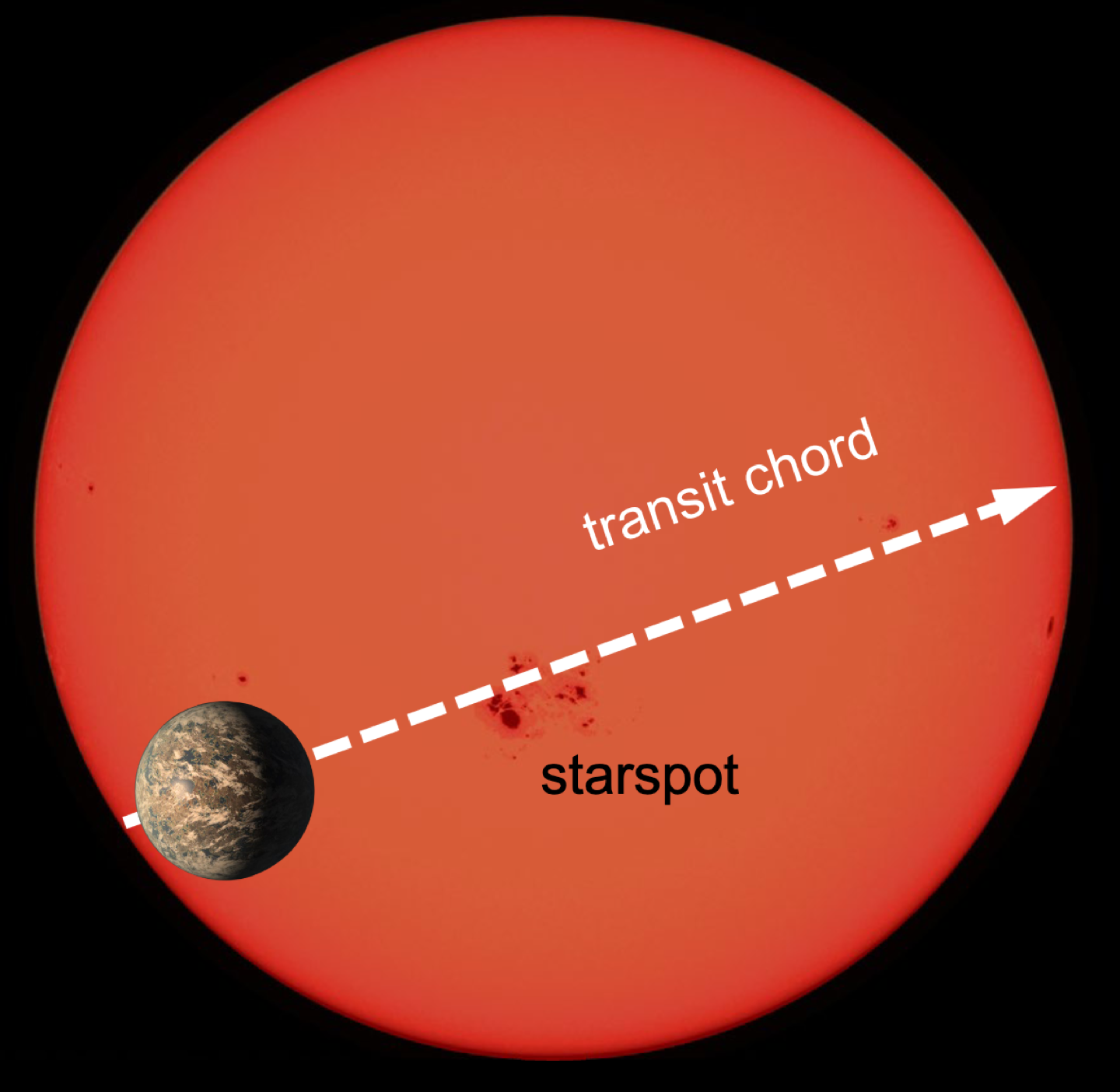
The stellar flares and the spectral distribution of the flare’s released energy can have large impacts on exoplanet’s atmospheres. Laura Amaral [Arizona State University] presented on the super-flare influences on the habitable zone of exoplanets and explained how the flare’s significantly enhanced X-ray emissions would greatly accelerate water escape from the exoplanet’s atmosphere. Ward Howard [ UC CASA] showed that exoplanet transits can also provide information about starspots (akin to the dark sunspots on the Sun) when a transit event happens to occult a starspot – see Figure 3. Ward also explained the importance of observing the transit events at multiple wavelengths, referred to as transit spectroscopy, to understand the physical characteristics of the starspots. Yuta Notsu [LASP] compared the energetics observed in many different stars using X-ray and far ultraviolet (FUV) observations to estimate stellar magnetic field strengths, which in turn can be used to estimate the stellar extreme ultraviolet (EUV) spectra. Those results provide new information on how the stellar spectra could evolve during the lifetime of Sun-like stars, and how those spectral changes can affect the atmospheric escape rates on their exoplanets.  

Nina-Elisabeth Nemec [University of Göttingen, Germany] described how Kepler observations of exoplanets rely on tracking their transits across its host star’s disk. She explained some of the challenges that arise with analyzing such transits when there are large starspots present. 

Sun Climate figure 3
Figure 3. Illustration of an exoplanet transit that will occult a starspot. The transit light curve can provide information about the size of the starspot, and transit observations at multiple wavelengths can reveal physical parameters, such as temperature, of the starspot.
Figure credit: Ward Howard, CASA/University of Colorado

Session 3: Evidence of Centennial and Longer-term Variability in Climate Change

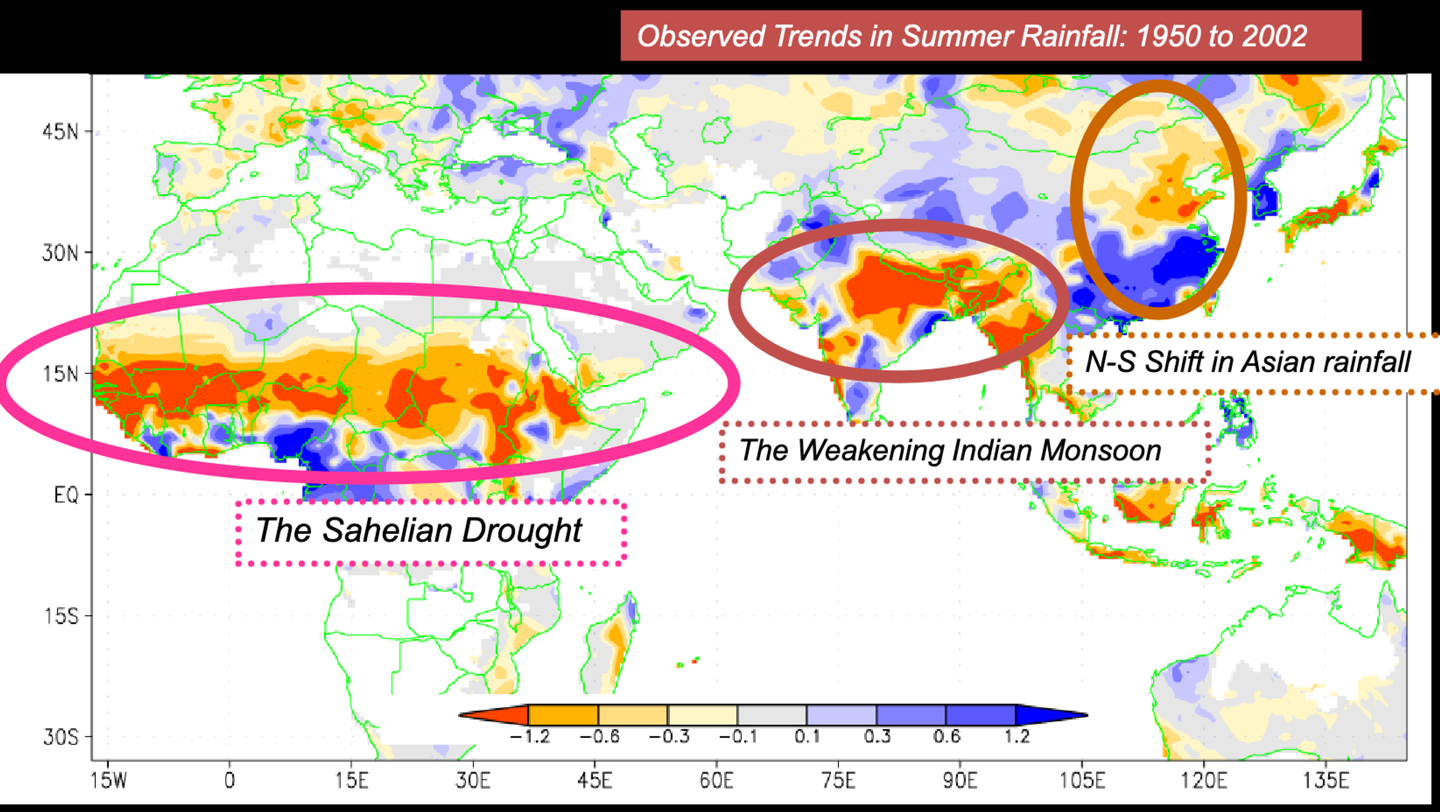
Venkatachalam “Ram” Ramaswamy [National Oceanic and Atmospheric Administration’s (NOAA) Geophysical Fluid Dynamics Laboratory (GFDL)] gave the keynote for this session in which he discussed Earth’s variable climate change over the past two centuries. He explained in detail Earth’s energy budget and energy imbalance, which leads to less land and sea ice, warmer temperatures at the surface and in the atmosphere and ocean, and more extreme weather. These weather changes have different regional impacts, such as more floods in some regions and more drought in different regions – see Figure 4

Sun Climate Figure 4
Figure 4. The rainfall amount has shifted over the past fifty years (red is less and blue is more) with strong regional impacts on droughts and floods.
Figure credit: Ram Ramaswamy/NOAA/GFDL

Bibhuti Kumar Jha [SWRI], Bernhard Hofer [Max Planck Institute for Solar System Research, Germany], and Serena Criscuoli [National Solar Observatory] discussed long-term solar measurements from the Kodaikanal Solar Observatory and showed that the chromospheric plages (Ca K images) have 1.6% faster solar rotation rate than sunspots (white light images). Timothy Jull [University of Arizona (UA)], Fusa Miyake [Nagoya University, Japan], Georg Fueulner [Potsdam Institute for Climate Impact Research, Germany], and Dan Lubin discussed the impact that solar influences (i.e., solar flares, solar energetic particles) have had on Earth’s climate over hundreds of years through their impact on phenomena such as the natural distribution of carbon dioxide in the atmosphere and fluctuations in the North Atlantic Oscillation.  

Hisashi Hayawawa [Nagoya University] and Kalevi Mursula [University of Oulu, Finland] discussed the influence that ever-changing sunspots and magnetic fields on the Sun are having on climate – with a focus on the Maunder Minimum period. Irina Panyushkina [UA] and Timothy Jull presented tree ring radioisotope information as it relates to climate change trends as well as long-term, solar variability trends. According to Lubin, if a reduction in solar input similar to what happened during the Maunder Minimum would happen today, the resulting reduction in temperature would be muted due to the higher concentration of greenhouse gases (GHG) in the atmosphere.

Session 4: Evidence of Short-term Variability in Climate Change

Session 4 focused on discussions that examined shorter-term variations of solar irradiance and climate change. Bill Collins [Lawrence Berkeley National Laboratory (LBNL)] started off the session with a presentation on Earth albedo asymmetry across the hemispheres from Nimbus-7 observations, and then showed some important differences when looking at the Clouds and the Earth’s Radiant Energy System (CERES) record – shown in Figure 5. Lon Hood [UA] discussed the changes in atmospheric circulation patterns which might be the consequence of Arctic sea ice loss increasing the sea level pressure over northern Eurasia. Alexi Lyapustin [GSFC] described how higher temperatures are causing an extension of the wildfire season in the Northern hemisphere by 1–3 months.

Sun Climate Figure 5
Figure 5. The albedo difference between the visible and near-infrared bands are shown for the southern hemisphere (red line) and the northern hemisphere (blue lines) for CERES [left] and Nimbus 7 [right]. The southern hemisphere albedo difference is higher than the northern hemisphere albedo difference, both for the 1980s as measured by Nimbus-7 and for the recent two decades as measured by CERES. These hemispheric differences are related mostly to differences in cloud coverage. The seasonal effect on the albedo difference values is about 2%, but the changes from 1980s to 2010s appear to be about 10%.
Figure credit: Bill Collins/Lawrence Berkeley National Laboratory

Jae Lee [GSFC/University of Maryland, Baltimore County] discussed changes in the occurrence and intensity of the polar mesosphere clouds (PMCs), showing high sensitivity to mesospheric temperature and water, and fewer PMCs for this solar cycle. In addition, some presenters discussed naturally driven climate changes. Luiz Millan [JPL], whose research has found that the water-laden plume from the Hunga-Tonga-Hunga-Ha’apai (HT-HH) volcano eruption in January 2022 has had a warming effect on the atmosphere as well as the more typical cooling effect at the surface from the volcanic aerosols. In another presentation, Jerry Raedar [University of New Hampshire, Space Science Center] showed results from his work indicating about 5% reductions in temperature and pressure following major solar particle storms, but noted differences in dependence between global and regional effects.

Session 5: Trending of Solar Variability and Climate Change for Solar Cycle 25 (present and future)

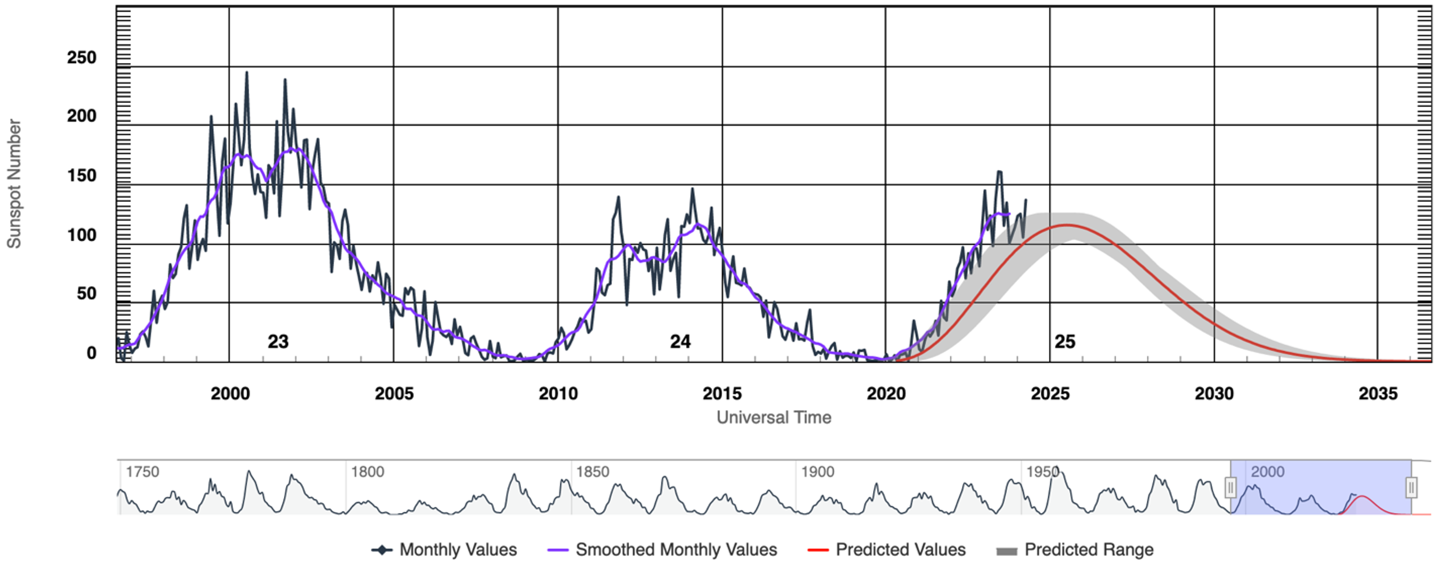
Session 5 focused on trends during Solar cycle 25 (SC-25), which generated lively discussions about predictions. It appears the SC-25 maximum sunspot number could be about 15% higher than the original SC-25 maximum predictions. Those differences between the sunspot observations and this prediction may be related to the timing of SC-25 ramp up. Lisa Upton started off Session 5 by presenting both the original and latest predictions from the NASA–NOAA SC-25 Prediction Panel. Her assessment of the Sun’s polar magnetic fields and different phasing of magnetic fields over the Sun’s north and south poles suggests that the SC-25 maximum will be larger than the prediction – see Figure 6.

The next several speakers – Matt DeLand [Science Systems and Applicatons Inc. (SSAI)], Sergey Marchenko [SSAI], Dave Harber [LASP], Tom Woods [LASP], and Odele Coddington [LASP] – showed a variety of TSI and SSI (NUV, visible, and NIR) variability observations during SC-25. The group consensus was that the difference between the SC-24 and SC-25 maxima may be due to the slightly higher solar activity during SC-25 as compared to the time of the SC-24 maximum – which was an anomalously low cycle. The presenters all agreed that SC-25 maximum may not have been reached yet (and SC-25 maximum may not have occurred yet in 2024).

Sun Climate Figure 6
Figure 6. The sunspot number progression (black) during solar cycle 25 is higher than predicted (red). The original NASA–NOAA panel prediction was for a peak sunspot number of 115 in 2025. Lisa Upton’s updated prediction is for a sunspot number peak of 134 in late 2024.
Figure credit: NOAA Space Weather Prediction Center

On the climate change side, Don Wuebbles [University of Illinois, Urbana-Champaign] provided a thorough overview of climate change science showing that: the largest impacts result from the activities of humans, land is warming faster than the oceans, the Arctic is warming two times faster than rest of the world, and 2023 was the hottest year on record with an unprecedented number of severe weather events.

There were several presentations about the solar irradiance observations. Leah Ding [American University] presented new analysis techniques using machine learning with Solar Dynamics Observatory (SDO) solar images to study irradiance variability. Steve Penton [LASP] discussed new SIM algorithm improvements for TSIS-1 SIM data product accuracy. Margit Haberreiter [Physikalisch-Meteorologisches Observatorium Davos (PMOD), Switzerland] discussed new TSI observations from the Compact Lightweight Absolute Radiometer (CLARA) on the Norwegian NorSat-1 microsatellite. Marty Snow [South African National Space Agency] discussed a new TSI-proxy from the visible light (green filter) Solar Position Sensor (SPS) flown on the NOAA Geostationary Operational Environmental Satellites (GOES-R). (The first of four satellites in the GOES-R series launched in 2016 (GOES-16) followed by GOES-17 and GOES-18 in 2018 and 2022 respectively. The final satellite in the series – GOES-U – launched June 25, 2024 will become GOES-19 after checkout is complete.)

Peter Pilewskie [LASP] discussed future missions, focusing on the Libera mission for radiative energy budget, on which he is Principal Investigator. Selected as the first Earth Venture Continuity mission (EVC-1), Libera will record how much energy leaves our planet’s atmosphere on a day-by-day basis providing crucial information about how Earth’s climate is evolving. In Roman mythology, Libera was Ceres’ daughter. The mission name is thus fitting as Libera will act as a follow-on mission to maintain the decades long data record of observation from NASA’s suite of CERES instruments. Figure 7 shows the CERES climate data record trends over the past 20 years.

Sun Climate figure 7
Figure 7. The CERES Earth Radiation Budget (ERB) climate data record shows a positive trend for the absorbed solar radiation [left] and the net radiation [right] and a small negative trend for the emitted terrestrial radiation [middle].
Figure credit: Peter Pilewskie/adapted from a 2021 paper in Geophysical Research Letters

Susan Breon [GSFC] discussed the plans for and status of TSIS-2 , and Tom Patton [LASP] discussed CTSIS as an option for TSIS-3 – both of these topics were discussed earlier in this article in the section on “NASA’s Current and Planned Solar Irradiance Missions.”

Angie Cookson [California State University, San Fernando Observatory (SFO)] shared information about the SFO’s 50-year history, and how analyses of solar image observations taken at SFO are used to derive important indicators of solar irradiance variability – see Figure 8.

Sun Climate Figure 8
Figure 8. The San Fernando Observatory (SFO) [left] has been making visible [middle] and near ultraviolet (NUV) [right] solar images from the ground for more than 50 years. Those solar images have been useful for understanding the sources of solar irradiance variability.
Figure credit: Angie Cookson/SFO
Black Separator Line

Sun-Climate Symposium Banquet Special Presentation on the Grand Canyon National Park

At the Thursday evening banquet, two speakers – Mark Nebel and Anne Millar – from the National Park Service (NPS) presented some of their geological research on the nearby Grand Canyon. Nebel discussed the water drainage systems surrounding the Grand Canyon while Millar described the many different fossils that have been found in the surrounding rocks. Nebel explained how  the Grand Canyon’s water drainage system into the Colorado River is complex and has evolved over the past few decades – see map and photo below. Millar brought several samples of the plant and insect fossils found in the Grand Canyon to share with banquet participants. Those fossils ranged in time from the Bright Angel Formation ocean period 500 million years ago to the Hermit Formation period 285 million years ago – when the Grand Canyon was semi-arid land with slow-moving rivers.

Sun Climate Grand Canyon Map
Map and photo credit: Mark Nebel/NPS
Black Separator Line

Conclusion

Altogether, 80 presentations during the 2023 Sun–Climate Symposium spread across 6 sessions about solar analogs, exoplanets, long-term climate change, short-term climate change, and solar/climate recent trending. The multidisciplinary group of scientists attending made for another exciting conference for learning more about the TSIS solar irradiance observations. Sun–Climate recent results have improved perception of our Sun’s variability relative to many other Sun-like stars, solar impact on Earth and other planets and similar type impacts of stellar variability on exoplanets, and better characterization of anthropogenic climate drivers (e.g., increases in GHG) and natural climate drivers (Sun and volcanoes).

The next Sun–Climate Symposium will be held in spring 2025 with a potential focus on polar climate records, including polar ice trends and long-term solar variabilities derived from ice-core samples. Readers who may be interested in participating in the 2025 science organizing committee should contact Tom Woods and/or Dong Wu [GSFC].

separater line

Acknowledgments

The three co-authors were all part of the Science Organizing Committee for this meeting and wish to acknowledge the other members for their work in planning for and participating in another successful Sun–Climate Symposium. They include: Odele Coddington, Greg Kopp, and Ed Thiemann [all at LASP]; Jae Lee, Doug Rabin, and Dong Wu [all at GSFC]; Jeff Hall, Joe Llama, and Tyler Ryburn [all at Lowell Observatory]; Dan Lubin [UCSD’s Scripps Institution of Oceanography (SIO)]; and Tom Stone [U.S. Geological Survey’s Astrogeology Science Center]. The authors and other symposium participants are also deeply grateful to Kelly Boden [LASP] for organizing the logistics and management of the conference, and to the Lowell Observatory, the Drury Inn conference center staff, and the LASP data system engineers for their excellent support in hosting this event.

Tom Woods
University of Colorado, Laboratory for Atmospheric and Space Research
tom.woods@lasp.colorado.edu

Peter Pilewskie
University of Colorado, Laboratory for Atmospheric and Space Research
peter.pilewskie@lasp.colorado.edu

Erik Richard
University of Colorado, Laboratory for Atmospheric and Space Research
erik.richard@lasp.colorado.edu

Share

Details

Last Updated
Jul 18, 2024

Powered by WPeMatico

Get The Details…

July 2024 Transformer of the Month: Brooke Weborg

July 2024 Transformer of the Month: Brooke Weborg

Photo of Brooke Weborg smiling outside against a foliage bacground. She is a caucasian woman with brown hair and brown eyes wearing a pink sweater.

“She gets things done.”   

This is how colleagues describe Brooke Weborg, machine learning data scientist and engineer at NASA. Weborg was nominated as Digital Transformer of the Month for her work on the AI/ML (artificial intelligence/machine learning) consultation portal, the type of ambitious project that computer scientist Herb Schilling had seen fail in the past. “Some of these things that you try to do just get bogged down in people saying no. But [Brooke] was never fazed by that at all…she just went ahead with it.” Reflecting on what makes Weborg a Digital Transformer, Schilling says, “A big part of digital transformation is communication, and she’s just a really good communicator.”   

Although Weborg grew up near the Glenn Research Center in Cleveland, Ohio, she did not envision a career at NASA until college, where she studied computer science and engineering. Her professor Brent Nowlin, who still currently works at Glenn Research Center, encouraged her to apply for a Pathways internship, which she began in 2017. When considering how her educational background has led her to where she is today, Weborg says, “What I learned in college was that I really liked the algorithm portion of computer science. I enjoy puzzles and I feel I’m very much a middleman when it comes to projects…I love machine learning because it’s kind of this middle process of figuring out the intricacies of the model.” Her focus on the “middle” also comes through in how she describes the AI/ML consultation portal as a bridge, connecting the knowledge gap between users and experts at NASA.   

We’re entering a new era of discovery with all these AI/ML tools that are at our disposal, which is really cool. I’m excited to see how my work is going to impact that.

Brooke Weborg

Brooke Weborg

NASA Machine Learning Data Scientist and Engineer

Weborg’s idea for the portal stemmed from a need she noticed in her own work. “I was struggling to find projects that were truly ready to begin the ML modeling and exploratory data analysis process. I found myself bouncing between projects because I ended up doing a lot of consulting and feasibility work for them versus actually getting to create machine learning models.” To properly prepare for the modeling process, many teams would have benefitted from expert support during the experiment design phase to ensure proper data collection and sampling. Weborg envisioned a way to support data scientists and machine learning engineers by providing relevant projects while ensuring those projects get the necessary assistance for leveraging AI/ML solutions.  

The first successful use case, the CH2ARGE project, initially reached out to Weborg for a consultation in fall 2023, before the portal officially launched. What began as project proposal support has led to Weborg’s current role on the CH2ARGE team doing exploratory data analysis and investigating potential AI/ML use cases for cryogenic material and fuel cell data. This initiated what would become the AI/ML consultation portal.   

With support from Herb Schilling, data scientist Douglas Trent, and intern Eva Ternovska, the AI/ML consultation portal launched on April 9, 2024. Although the portal started small, it gained significant traction during an agency-wide AI upskilling initiative, with over 230 people attending Weborg’s presentation on using the AI/ML Portal and becoming an advisor. “How we’re measuring success right now is how many advisors are we getting to sign up, which is showing that experts see the vision and realize its importance to our mission,” says Weborg. Since its launch, the portal has doubled capacity in just two months, going from 10 to 21 advisors across NASA with regular inquiries for new advisor sign-ups.  

Dave Salvagnini, NASA’s Chief AI Officer, sees Weborg and the AI Portal as drivers of intellectual curiosity around AI and its possibilities. “She has fostered a movement that gives learners a place to seek expert advice about their AI ideas and use cases,” says Salvagnini. “The AI portal is quickly becoming a key AI enabler at NASA.” The portal has already led to seven successful use cases for machine learning and AI solutions by connecting talent across the different centers, highlighting Weborg’s commitment to inclusive teaming.   

As a fearless pursuer of big ideas, Weborg was unsurprisingly excited for the future of digital transformation at NASA. “We’re entering a new era of discovery with all these AI/ML tools that are at our disposal, which is really cool. I’m excited to see how my work is going to impact that.”   

Powered by WPeMatico

Get The Details…
Maya L. Kikuchi

An Ancient Partnership: Co-Evolution of Earth Environments and Microbial Life

An Ancient Partnership: Co-Evolution of Earth Environments and Microbial Life

NASA-supported scientists have examined the long and intricately linked history of microbial life and the Earth’s environment. By reviewing the current state of knowledge across fields like microbiology, molecular biology, and geology, the study looks at how microorganisms have both shaped and been shaped by chemical properties of our planet’s oceans, land, and atmosphere. The study combines data across multiple fields of study and discusses how information on the complicated history of life on our planet from a single field cannot be viewed in isolation.

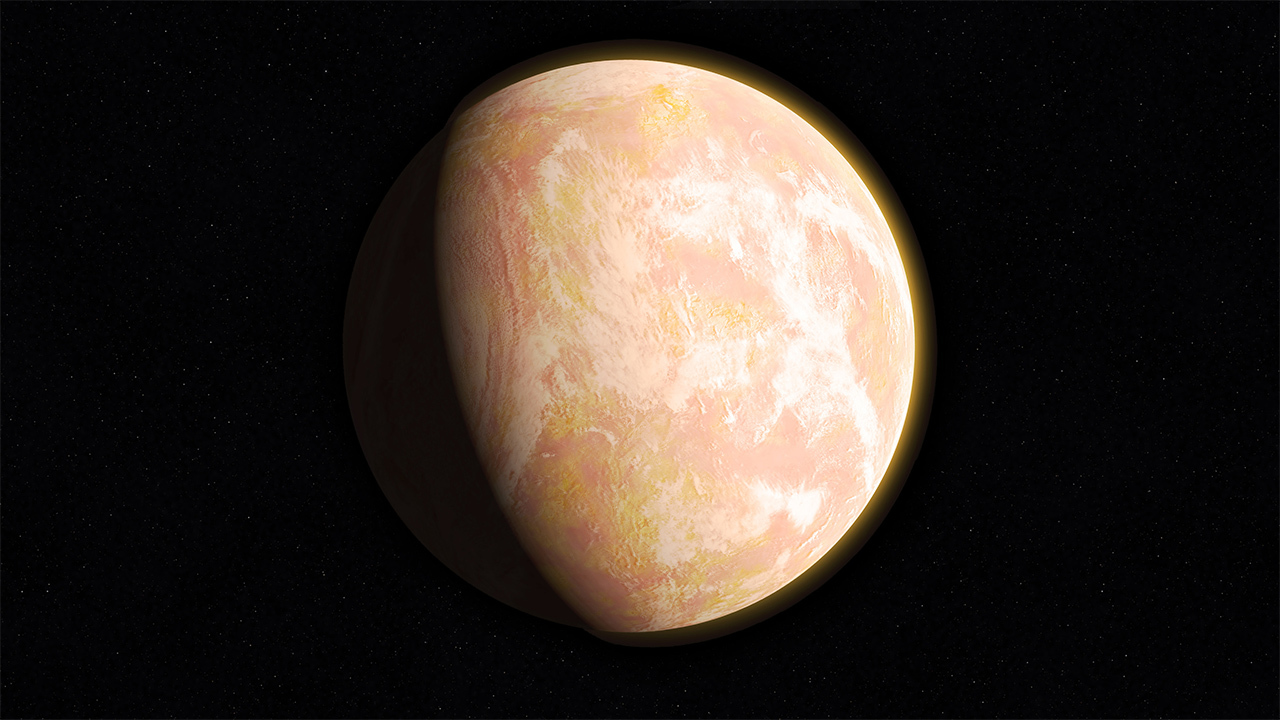
An illustration of ancient Earth. It appears yellow/orange in color with hazy clouds covering much of the surface. The planet sits in a field of black.
An artist interpretation of the hazy atmosphere of Archean Earth – a pale orange dot.
NASA’s Goddard Space Flight Center/Francis Reddy

The first life on Earth was microbial. Today the vast majority of our planet’s biomass is still made up of tiny, single-celled microorganisms. Although they’re abundant, the history of microbes can be a challenge for astrobiologists to study. Microbes don’t leave bones, shells or other large fossils behind like dinosaurs, fish or other large organisms. Because of this, scientists must look at different evidence to understand the evolution of microbial life through time.

In order to study ancient microbes on Earth, astrobiologists look for isotopic fingerprints in rocks that can be used to identify the metabolisms of ancient communities. Metabolism refers to the conversion of food into energy, and happens in all living things. Many elements (think carbon (C), nitrogen (N), Sulfur (S), iron (Fe)) are involved in microbial metabolism. As microbes process these elements, they cause isotopic changes that scientists can spot in the rock record. Microbes also help to control how these elements are deposited and cycled in the environment, affecting geology and chemistry at both local and global scales (consider the role of microbes in the carbon cycle on Earth today).

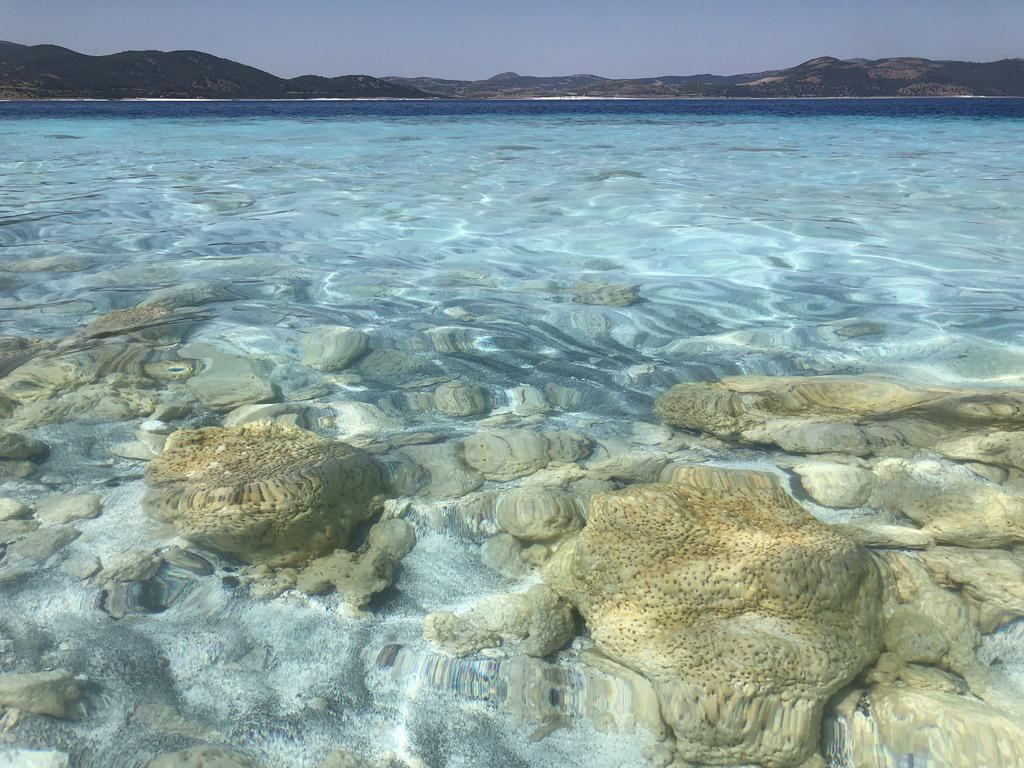
The clear, light blue water of Lake Salda fills most of the frame. Across the lake, hills can be seen on the horizon. Beneath the water are yellowish structures that resemble balls of coral that are almost brain-like.
Rocks along the shoreline of Lake Salda in Turkey were formed over time by microbes that trap minerals in the water. These microbialites were once a major form of life on Earth.
NASA/JPL-Caltech

Another way to study ancient microbial life is to look back along the evolutionary information contained in the genetics of life today. Combining this genetic information from molecular biology with geobiological information from the rock record can help astrobiologists understand the connections between the shared evolution of the early Earth and early life.

For an example of geological evidence of microbial metabolism, we can consider the formation of banded iron formations (BIFs) on the ancient seafloor. These colorful layers of alternating iron- and silicon-rich sediment were formed from 3.8 billion to 1.8 billion years ago and are associated with some of the oldest rock formations on Earth. The red colors they exhibit are from their high iron content, showing us that the ocean of Earth was rich in iron during the 2 billion years in which these rocks were forming.

In the new study, the team of researchers provide a review of current knowledge, gleaning information into the early metabolisms used by microbial life, the timing of when these metabolisms evolved, and how these processes are linked to major chemical and physical changes on Earth, such as the oxygenation of the oceans and atmosphere.

Over time, the prevalence of oxygen on Earth has varied dramatically, in the ocean, in the atmosphere, and on land. These changes impacted both the evolution of the biosphere and the environment. For instance, as the activity of photosynthetic organisms raised oxygen levels in the atmosphere, creating new environments for microbial life to inhabit. Different nutrients were made accessible to life to fuel growth. At the same time, microbes that couldn’t survive in the presence of oxygen had to adapt, perish, or find a way to survive in environments where oxygen didn’t persist, such as deep in the Earth’s subsurface.

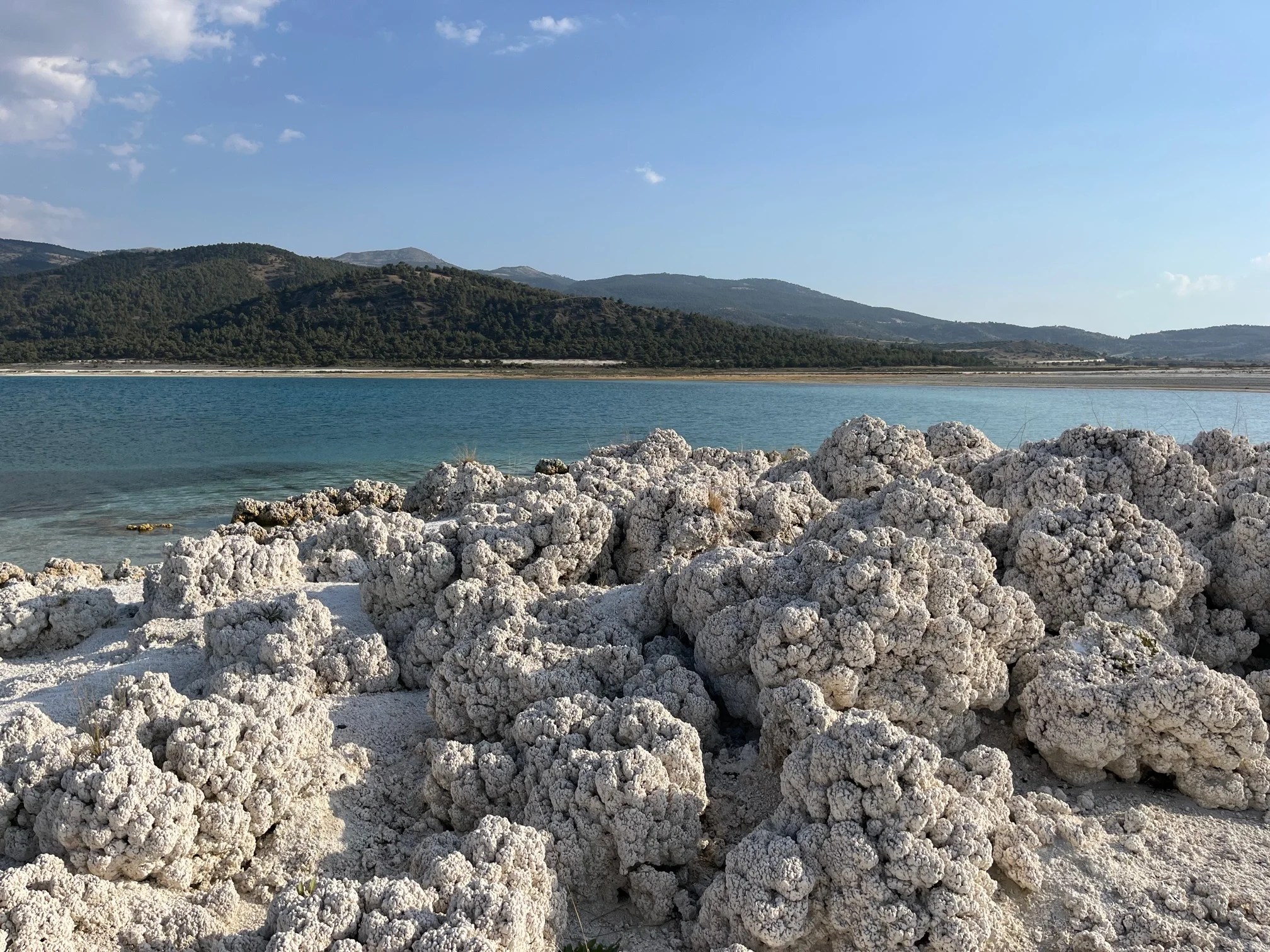
Dried up microbial structures are seen on the shore of the clear blue waters of a lake. The structures are bleached white in the Sun and look similar to brain-like coral.
Many microbial structures on the shores of Lake Salda are exposed as water levels drop, allowing scientists to study relationships between life and the surrounding environment.
Tim Lyons/University of California, Riverside

The new study explains our understanding of how oxygen levels have changed over time and spatial scales. The authors map different types of microbial metabolism, such as photosynthesis, to this history to better understand the “cause-and-effect relationship” between oxygen and the evolution of life on Earth. The paper provides important context for major changes in the course of evolution for the biosphere and the planet.

By carefully considering the history of different types of microbial metabolisms on Earth, the review paper shows how biogeochemical cycles on our planet are inextricably linked through time over both local and global scales. The authors also discuss significant gaps in our knowledge that limit interpretations. For instance, we do not know how large the young biosphere on Earth was, which limits our ability to estimate the global effects of various metabolisms during Earth’s earliest years. Similarly, when using genetic information to look back along the tree of life, scientists can estimate when certain genes first appeared (and thereby what types of metabolisms could have been used at the time in living cells). However, the evolution of a new type of metabolism at a point in history does not necessarily mean that that metabolism was common or had a large enough effect in the environment to leave evidence in the rock record.

According to the authors, “The history of microbial life marched in step with the history of the
oceans, land and atmosphere, and our understanding remains limited by how much we still do not know about the environments of the early Earth.”

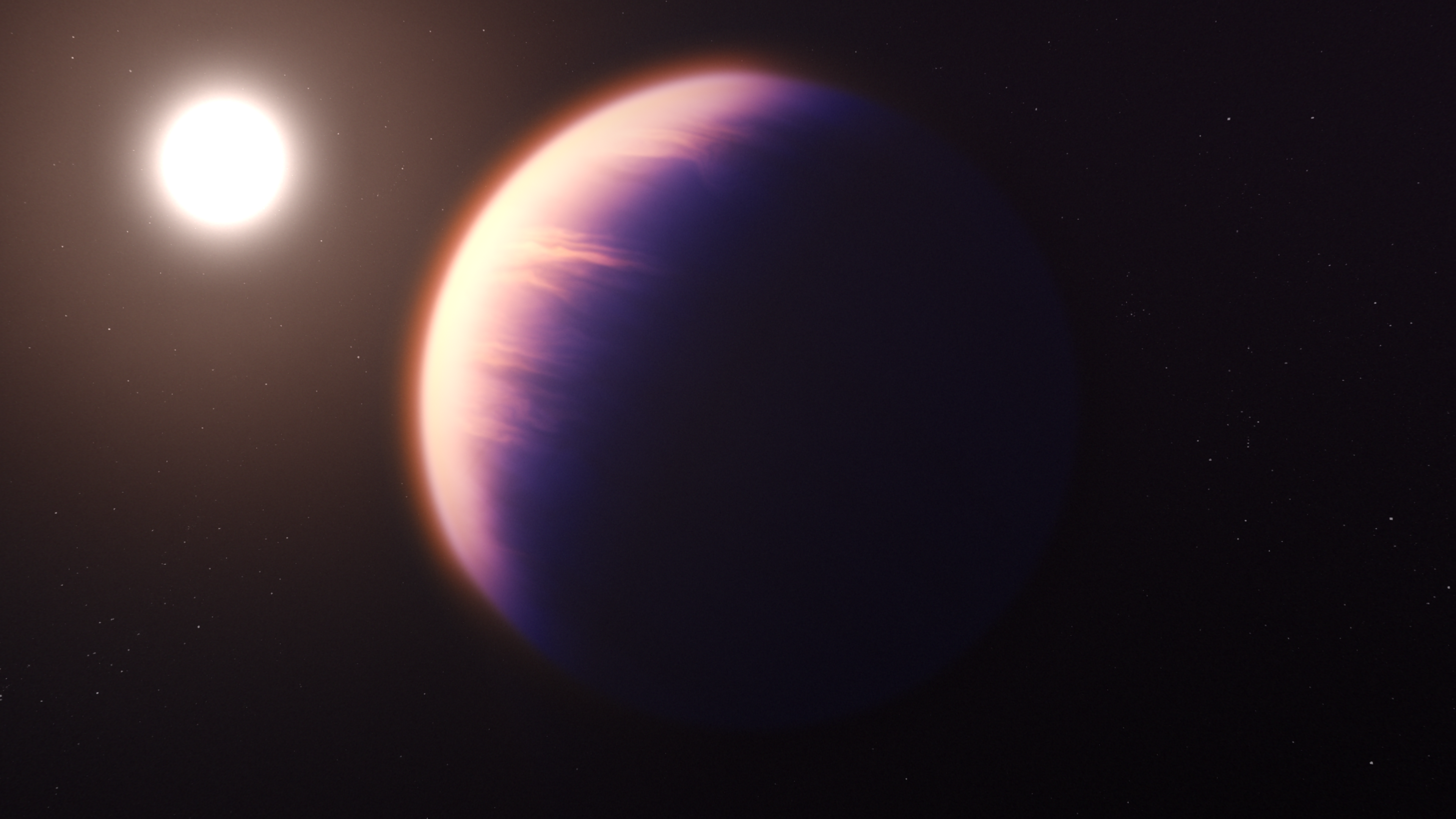
Illustration of a planet and its star on an empty black background. The planet is large, in the foreground at the center and the star is smaller, in the background at the upper left.
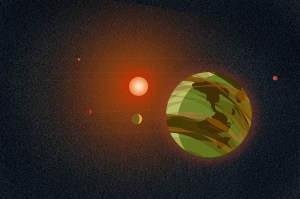
This is an illustration of exoplanet WASP-39 b, also known as Bocaprins. NASA’s James Webb Space Telescope provided the most detailed analysis of an exoplanet atmosphere ever with WASP-39 b analysis released in November 2022. Webb’s Near-Infrared Spectrograph (NIRSpec) showed unambiguous evidence for carbon dioxide in the atmosphere, while previous observations from NASA’s Hubble and Spitzer Space Telescopes, as well as other telescopes, indicate the presence of water vapor, sodium, and potassium. The planet probably has clouds and some form of weather, but it may not have atmospheric bands like those of Jupiter and Saturn. This illustration is based on indirect transit observations from Webb as well as other space and ground-based telescopes. Webb has not captured a direct image of this planet.
NASA, ESA, CSA, Joseph Olmsted (STScI)

The study also has wider implications in the search for life beyond Earth. Understanding the co-evolution of life and the environment can help scientists better understand the conditions necessary for a planet to be habitable. The interconnections between life and the environment also provide important clues in the search for biosignature gases in the atmospheres of planets that orbit distant stars.

The study, “Co‐evolution of early Earth environments and microbial life,” was published in the journal Nature Reviews. Additional information on the study is available from the University of California, Riverside.

Click here to return to the NASA Astrobiology page.

Share

Details

Last Updated
Jul 18, 2024

Related Terms

Powered by WPeMatico

Get The Details…
Wednesday’s Station Research Focuses on Space Plants, Free-Flying Robotics

Wednesday’s Station Research Focuses on Space Plants, Free-Flying Robotics

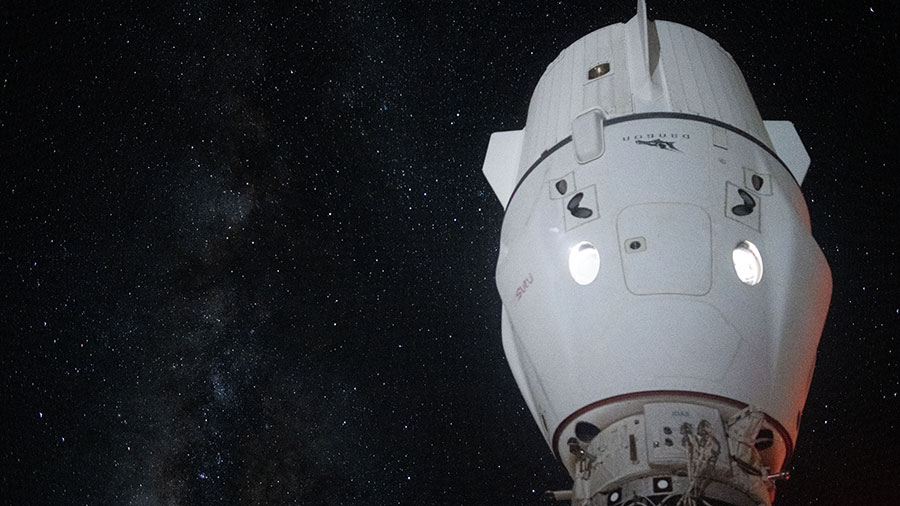
The Milky Way appears in the vastness of space behind the SpaceX Dragon Endeavour spacecraft docked to the space station's Harmony module.
The Milky Way appears in the vastness of space behind the SpaceX Dragon Endeavour spacecraft docked to the space station’s Harmony module.

On Wednesday, space plants and free-flying robotics dominated the science schedule aboard the International Space Station. Orbital plumbing, cargo packing, and an emergency drill rounded out the day for the nine crew members living aboard the orbital outpost.

NASA astronauts Butch Wilmore and Suni Williams of Boeing’s Crew Flight Test continued exploring ways to effectively water plants in the weightless environment. The duo took turns throughout the day in the Harmony module testing how root models and plants of various sizes would absorb water in microgravity . The Plant Water Management study looks at techniques such as hydroponics and air circulation to nourish plants growing aboard spacecraft and space habitats.

Expedition 71 Flight Engineer Tracy C. Dyson coordinated with ground controllers and tested an Astrobee robotic free flyer’s ability to autonomously maneuver and recognizes gestures inside the Kibo laboratory module. She set up the cube-shaped, toaster-sized robotic assistant ahead of a student competition to write the best algorithms that will guide the Astrobee. NASA Flight Engineer Jeanette Epps activated the Astrobee before lunchtime and removed items in Kibo allowing Dyson to access the robotic free flyer’s docking apparatus. Epps also recorded another DNA research demonstration video for students on Earth.

NASA astronauts Matthew Dominick and Mike Barratt took turns on Wednesday cleaning up orbital plumbing tools used to service the Tranquility module’s bathroom, also known as the waste and hygiene compartment. Dominick also relocated protein crystal research hardware, loaded software on the Microgravity Science Glovebox computer, then reorganized cargo and trashed stowed in the Destiny laboratory module. Barratt trained Roscosmos Flight Engineer Alexander Grebenkin on the operations of the COLBERT treadmill then audited and stowed spacesuit components.

At the beginning of the day, the crew of the SpaceX Dragon Endeavour spacecraft, Dominick, Barratt, Epps, Grebenkin, trained for the unlikely event they would need to evacuate the station in an emergency. Dyson, who rode to the station aboard the Soyuz MS-25 crew ship, also joined the quartet reviewing their emergency responses and procedures during the hourlong session.

Cosmonauts Oleg Kononenko and Nikolai Chub began loading the Progress 87 cargo craft with garbage and discarded gear prior to its departure from the Zvezda service module in mid-August. Grebenkin had an off-duty day spending most of his time relaxing and working out on the treadmill and advanced resistive exercise device.

Beginning Monday, July 29th, the IMC Daily Summary will be discontinued.

To learn more about the groundbreaking science and engineering happening daily on the International Space Station, please visit the space station blog at https://blogs.nasa.gov/spacestation/, or browse a variety of space station research resources at https://nasa.gov/iss-science.


Learn more about station activities by following the space station blog@space_station and @ISS_Research on X, as well as the ISS Facebook and ISS Instagram accounts.

Get weekly video highlights at: https://roundupreads.jsc.nasa.gov/videoupdate/

Get the latest from NASA delivered every week. Subscribe here: www.nasa.gov/subscribe

Powered by WPeMatico

Get The Details…
Mark Garcia