Hubble Finds Structure in an Unstructured Galaxy

Hubble Finds Structure in an Unstructured Galaxy

2 min read

Hubble Finds Structure in an Unstructured Galaxy

A black background dotted with stars and distant galaxies. The distribution of stars increases toward image center, forming the loose oval shape of the irregular galaxy Leo A that stretches horizontally across the image. Three foreground stars shine brightly – one located at center-top, and two others in the lower-right quadrant of the image. Each holds four bright barbs (called diffraction spikes) that extend outward from the star.
NASA, ESA, A. del Pino Molina (CEFCA), K. Gilbert and R. van der Marel (STScI), A. Cole (University of Tasmania); Image Processing: Gladys Kober (NASA/Catholic University of America)

This NASA Hubble Space Telescope image features the nearby dwarf irregular galaxy Leo A, located some 2.6 million light-years away. The relatively open distribution of stars in this diminutive galaxy allows light from distant background galaxies to shine through.

Astronomers study dwarf galaxies like Leo A because they are numerous and may offer clues to how galaxies grow and evolve. Dwarf galaxies are small and dim making the most distant members of this galaxy type difficult to study. As a result, astronomers point their telescopes toward those that are relatively near to our own Milky Way galaxy, like Leo A. 

Leo A is one of the most isolated galaxies in our Local Group of galaxies. Its form appears as a roughly spherical, sparsely populated mass of stars with no obvious structural features like spiral arms. 

The data that created this image come from four Hubble observing programs. Three of these looked at star formation histories of relatively nearby dwarf galaxies. The fourth sought to better determine the mass of our Local Group by looking at the motions of dwarf galaxies just outside of the Local Group. 

The Hubble observations that looked at star formation found distinct structural differences in the age and distribution of stars in the galaxy. Most of the younger stars are located in the middle of the galaxy, while the number of older stars increases as you move outward from the center. Hubble observations also suggest that the galaxy’s halo of stars is about one-third larger than previous estimates. This distribution suggests that star formation in Leo A occurred from the outside-in, or that older stars efficiently migrated to the outskirts of Leo A in the early stages of its evolution.

Explore More

Media Contact:

Claire Andreoli
NASA’s Goddard Space Flight CenterGreenbelt, MD
claire.andreoli@nasa.gov
Share

Details

Last Updated
Aug 22, 2024
Editor
Michelle Belleville

Powered by WPeMatico

Get The Details…

Update on NASA Wallops Aircraft and Airfield Operations

Update on NASA Wallops Aircraft and Airfield Operations

The NASA Aircraft Management Advisory Board (AMAB), which manages the agency’s aircraft fleet, has decided to relocate the agency’s P-3 aircraft at Wallops to Langley Research Center. The decision is part of a long-running, NASA-wide aircraft enterprise-management activity to consolidate the aircraft fleet where feasible and achieve greater operational efficiencies while reducing our infrastructure footprint.

We all recognize this is a tough decision impacting a stellar, mission-focused team that has achieved so much over the years. I myself started my career in the Wallops Aircraft Office some 38 years ago, and my time there was foundational for all I’ve done in my career. My top priority is to work with the Aircraft Office team on a transition plan, and importantly, to carry out an effective and safe transition of the aircraft to NASA Langley, and to ensure the long term sustainability of NASA’s P-3 capability in support of the airborne science community. The Wallops aircraft office transition may take 18 to 24 months or more to accomplish. A specialized team is forming to ensure a smooth transition, and in the meantime, we continue to support airborne science from the facility.

With NASA’s flying mission at Wallops relocating to Langley, we recognize that the hangars and airfield at Wallops are true regional assets with great potential. NASA will issue a request for information (RFI) to identify potential customers/interest in assuming responsibility for Wallops’ airfield operations. It’s in the best interest of NASA and the region to explore other uses and opportunities for the Wallops airfield, and this RFI will help NASA evaluate future options. There is no timeline for the RFI at this time – we will provide updates as more information becomes available. What we do know – and are fully committed to – is ensuring the airfield remains an important resource for continued use by our customers, such as the U.S. Navy’s Fleet Force Command Field Carrier Landing Practice program. We’ve supported Navy flight operations at Wallops for more than 10 years and that support continues.

I want to assure everyone that Wallops’ future is bright and secure – the facility has a diverse mission set of orbital and suborbital operations and a whole host of government and commercial customers expanding operations on-site. We expect Wallops’ launch cadence to increase to upward of 50 launches per year by 2030 as the facility takes on a growing portfolio of hypersonics work as well as support to commercial spaceflight.

Without a doubt, the Wallops Aircraft Team is the best in the agency. They’ve had a massively successful run of operations recently with the ARCSIX missions in Greenland to supporting student research flights on both coasts and cargo transport missions all over the world to places such as Antarctica and India. I am committed to working with every member of the team on a way forward as we transition our flight operations and seek new opportunities.

We will continue to communicate with you and provide information on the transition plans as they become available.

All the best,

Dave

David L. Pierce
Wallops Director

Powered by WPeMatico

Get The Details…
Rob Garner

Gateway: Energizing Exploration

Gateway: Energizing Exploration

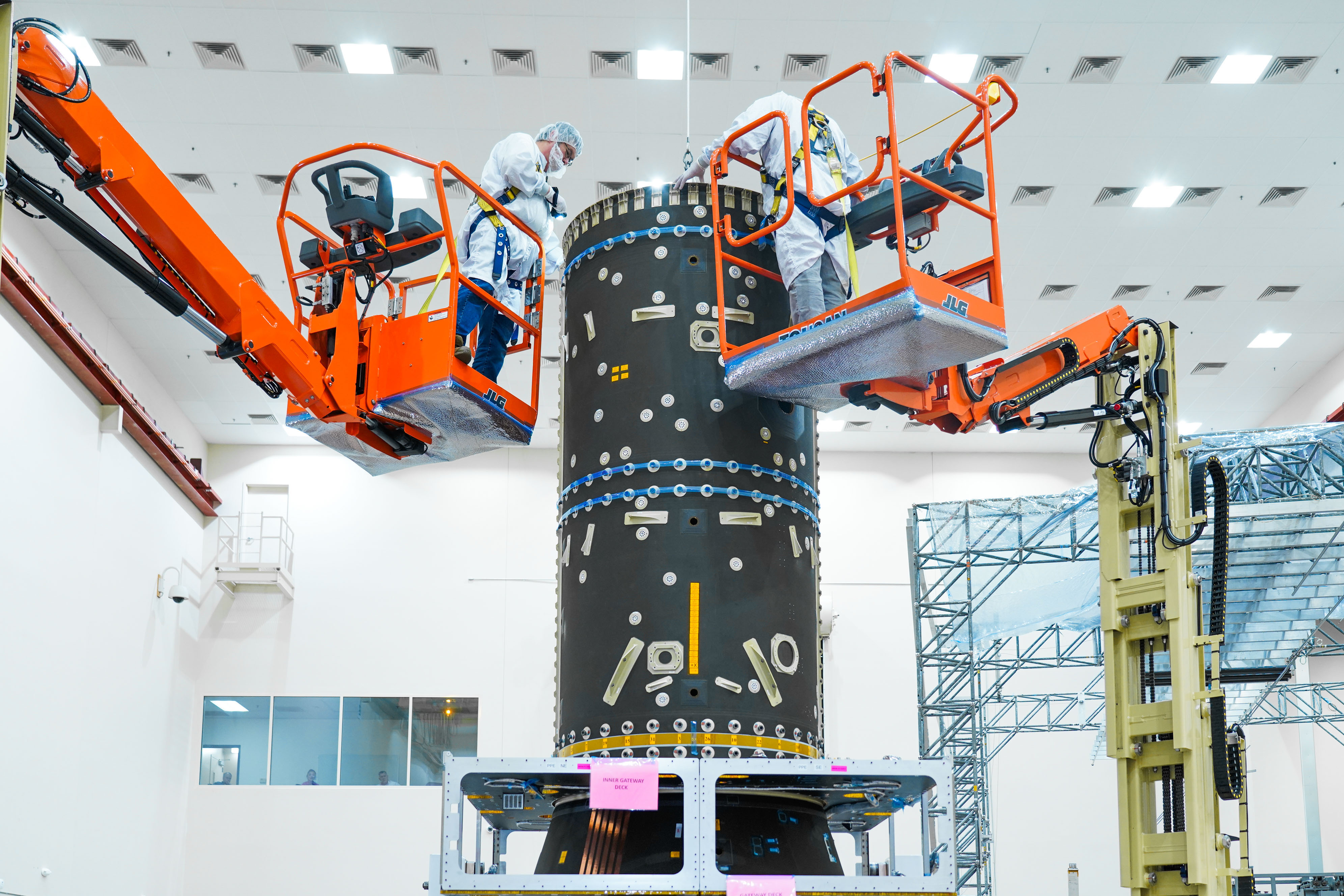
Two engineers in cleanroom suits work from elevated orange platforms on the cylindrical structure of the Power and Propulsion Element (PPE) at Maxar Space Systems in Palo Alto, California.
Two engineers in cleanroom suits work on the Power and Propulsion Element at Maxar Space Systems in Palo Alto, California.
Maxar Space Systems

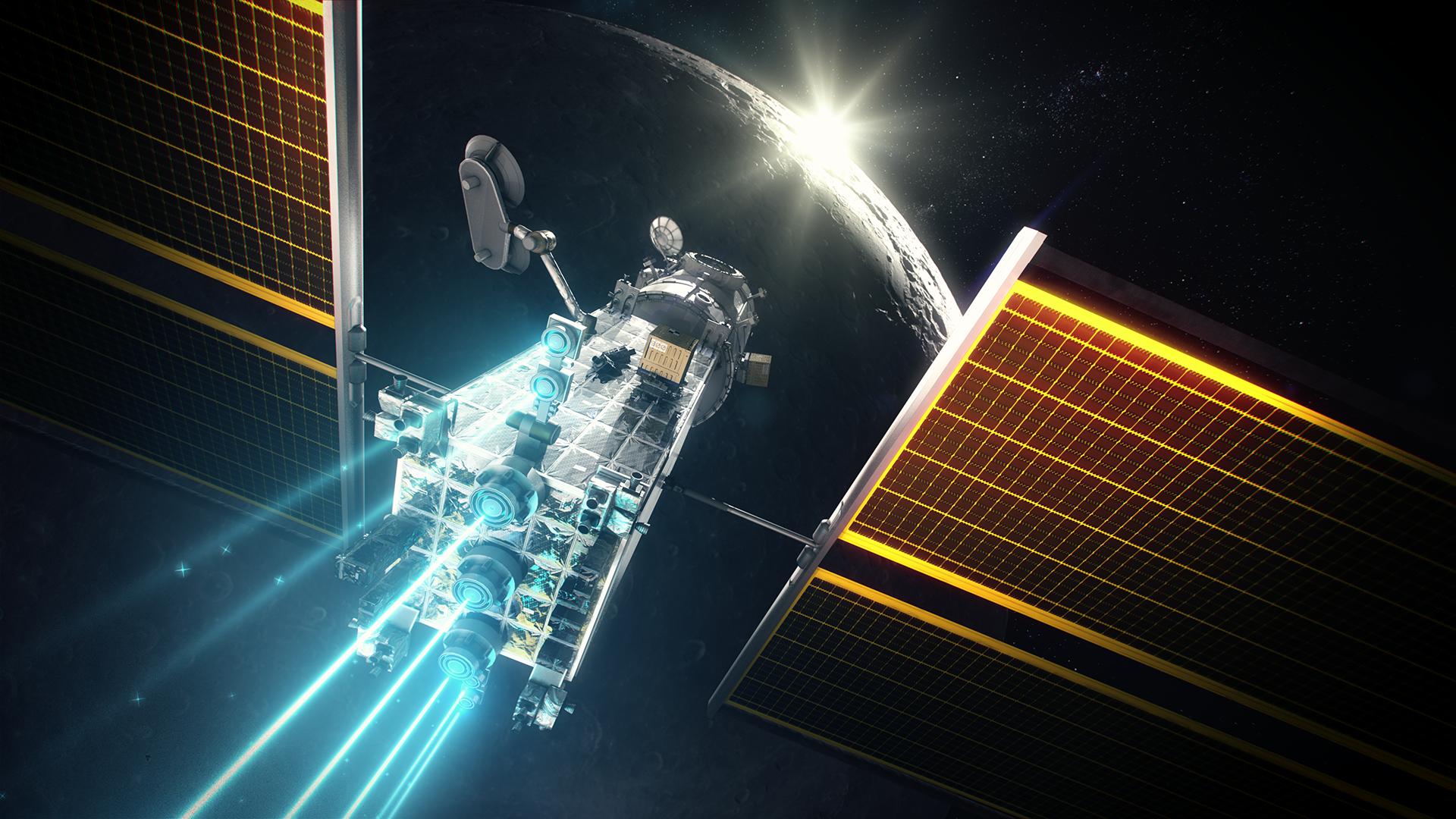
Technicians work diligently to assemble a key power element of Gateway, the lunar space station that will become the most powerful solar electric spacecraft ever flown.

Gateway’s Power and Propulsion Element will use the largest roll-out solar arrays ever built – together about the size of an American football field endzone – to harness the Sun’s energy for deep space exploration. The module is built by Maxar Space Systems in Palo Alto, California, and managed at NASA’s Glenn Research Center in Cleveland. That includes energizing xenon gas to produce the thrust needed to send Gateway from Earth to lunar orbit and keep it there for the Artemis IV, V, and VI missions. On those missions and beyond, international teams of astronauts will expand Gateway with additional living and working space, and will journey to the lunar South Pole region from Gateway.

The Power and Propulsion Element will power Gateway’s subsystems and enable telecommunications between the lunar surface, the space station, Earth, and back again. Building on technology advancements from past successful electric propulsion missions like Psyche and DART (Double Asteroid Redirection Test), the module will help NASA expand the boundaries of what’s possible in deep space.

NASA and its international partners will explore the scientific mysteries of deep space with Gateway, humanity’s first space station around the Moon. The international teams of astronauts living and conducting science on Gateway will be the first humans to make their home in deep space.

A type of advanced electric propulsion system thruster that will be used on Gateway glows blue as it emits ionized xenon gas during testing at NASA’s Glenn Research Center.
NASA
The Gateway space station will be humanity's first space station around the Moon as a vital component of the Artemis missions to return humans to the lunar surface for scientific discovery and chart the path for the first human missions to Mars. Astronauts on Gateway will be the first humans to call deep space home during missions where they will use Gateway to conduct science and prepare for lunar surface missions. Credit: NASA
An artist’s rendering of the Gateway space station, which will be humanity’s first space station around the Moon as a vital component of the Artemis missions to return humans to the lunar surface for scientific discovery and chart the path for the first human missions to Mars.
NASA/Alberto Bertolin
Artist’s rendering of Gateway in its initial configuration, featuring the Habitation and Logistics Outpost (HALO) connected to the Power and Propulsion Element.
NASA

Powered by WPeMatico

Get The Details…
Dylan Connell

Rare Blue Supermoon 8/19/24

Rare Blue Supermoon 8/19/24

The Sturgeon Moon rises behind a replica Saturn V rocket at the U.S. Space & Rocket Center in Huntsville, Alabama on Monday, August 19, 2024. Over 99% full when it rose, the moon was a rare combination of a blue moon and a supermoon, a phenomenon that will not repeat until 2027. Image credit: NASA/Michael DeMocker

Powered by WPeMatico

Get The Details…

Wednesday’s Research Promoting Self-Sufficient Crews Farther Away from Earth

Wednesday’s Research Promoting Self-Sufficient Crews Farther Away from Earth

The Full Moon pictured above Earth's horizon as the space station soared above the Indian Ocean south of the African island nation of Madagascar.
The Full Moon pictured above Earth’s horizon as the space station soared above the Indian Ocean south of the African island nation of Madagascar.

Manufacturing tools and medicine in space is a key objective for NASA and its international partners as crews train for longer missions farther away from Earth. Humans living in space habitats will need to be self-sufficient to stay heathy and run successful missions since launching supplies from Earth will be less feasible and uneconomical.

NASA astronauts Jeanette Epps of Expedition 71 and Suni Williams, Pilot for Boeing’s Crew Flight Test, joined each other in the Columbus laboratory module and configured the Metal 3D printer on Wednesday. The duo first uninstalled the device from Columbus’ European Drawer Rack-2 (EDR-2), a multipurpose experiment rack, to access an experimental sample printed with stainless steel. They replaced a substrate in the advanced manufacturing hardware then reinstalled the 3D printer back in the EDR-2. Researchers are exploring how the Metal 3D printer operates in the microgravity conditions of weightlessness and radiation as well as its ability to manufacture tools and parts on demand during space missions.

NASA Flight Engineer Mike Barratt explored how stem cells grow in microgravity to improve cell therapies on Earth and cell manufacturing in space. Working in the Kibo laboratory module, Barratt serviced stem cell samples inside the Life Science Glovebox. The cells are undergoing a cellular reprogramming process and the samples will be returned to Earth for further analysis. Scientists are pursuing the production of stem cells in space that can be regenerated into human cells or tissues for personalized medicine.

Flight Engineer Matthew Dominick partnered with Crew Flight Test Commander Butch Wilmore, both NASA astronauts, checking CubeSat configurations before they are deployed into Earth orbit. The duo ensured the shoebox-sized satellites were secured in their launch cases and clear of debris inside the Small Satellite Orbital Deployer they are packed in. Afterward, they installed the deployer onto a multipurpose experiment platform and loaded it inside Kibo’s airlock where it will soon be placed in the vacuum of space to release the CubeSats for a variety of research.

NASA Flight Engineer Tracy C. Dyson focused on housekeeping tasks as she cleaned the crew quarters in the starboard side of the Harmony module. She vacuumed dust collected on ventilation systems and wiped down surfaces inside the module where Boeing’s Starliner and the SpaceX Dragon Endeavour spacecraft are docked.

Working in the Roscosmos segment of the orbiting lab, Commander Oleg Kononenko set up Earth observation gear, inspected the aft vestibule of the Zvezda service module, then explored futuristic planetary and robotic piloting techniques. Flight Engineer Nikolai Chub assisted Kononenko with the Zvezda checks then he explored how microalgae can be used to produce oxygen and consume carbon dioxide improving space life support systems. Flight Engineer Alexander Grebenkin spent his day on life support maintenance transferring from resupply tanks and performing coolant leak checks on the aur conditioning system.


Learn more about station activities by following the space station blog@space_station and @ISS_Research on X, as well as the ISS Facebook and ISS Instagram accounts.

Get weekly video highlights at: https://roundupreads.jsc.nasa.gov/videoupdate/

Get the latest from NASA delivered every week. Subscribe here: www.nasa.gov/subscribe

Powered by WPeMatico

Get The Details…

Mark Garcia