Assure 2017

Assure 2017

Home

ASSURE 2017 has successfully concluded.

UPDATES

  • 2017-10-01: ASSURE 2017 concluded successfully. The accepted papers appear in the SAFECOMP 2017 Workshop Proceedings. Thank you for attending! See you in 2018.
  • 2017-08-28: The ASSURE 2017 Program has been announced. The final program is contingent on registration. If you haven’t already done so, please register for ASSURE 2017 via SAFECOMP 2017.
  • 2017-08-27: ASSURE 2017 will be held on Tuesday, Sep. 12, 2017. The accepted papers and program will be posted here soon.
  • 2017-06-02: Authors of accepted papers have been notified. The final, camera-ready version and a signed copyright release form are due on June 12, 2017. Instructions on submitting both the final version and the copyright form also have been posted.
  • 2017-05-24: Paper submission deadlines have passed. Submission is now closed.
  • 2016-05-16: ASSURE deadlines have been extended by a week, to May 24, 2017.
  • 2017-03-27Dr. Simon Burton, Chief Expert Safety, Reliability and Availability at Robert Bosch GmbH Central Research Division, Germany, has generously accepted to give an invited keynote talk! Watch this space for the topic and abstract for the talk.
  • 2017-03-22: The deadline to submit papers to ASSURE 2017 is May 17, 2017. Submit a paper now!
  • 2017-03-01: The ASSURE 2017 website is live!

Introduction

The 5th International Workshop on Assurance Cases for Software-intensive Systems (ASSURE 2017) is being collocated this year with SAFECOMP 2017, and aims to provide an international forum for high-quality contributions on the application of assurance case principles and techniques to provide assurance that the dependability properties of critical, software-intensive systems have been met.

The main goals of the workshop are to:

  • Explore techniques for the creation and assessment of assurance cases for software-intensive systems
  • Examine the role of assurance cases in the engineering lifecycle of critical systems
  • Identify the dimension of effective practice in the development and evaluation of assurance cases
  • Investigate the relationship between dependability techniques and assurance cases
  • Identify critical research challenges and define a roadmap for future development

We invite original, high-quality research, practice, tools and position papers that have not been published/submitted elsewhere. See the full Call for Papers, for more details on topics. Also view the submission deadlines, and guidelines.

Program

ASSURE 2017 Program
September 12, 2017, from 08:00 – 17:30

08:00 – 09:00   Registration

09:00 – 11:00   Session 1. Welcome, Introduction, Keynote and Assurance Case Frameworks

09:00 – 09:05 Welcome and Introduction, ASSURE 2017 Organizers

09:05 – 10:00 Keynote Talk: Making the Case for Safety of Machine Learning in Highly Automated Driving, Simon Burton (with Lydia Gauerhof and Christian Heinzemann) 

10:00 – 10:30 A Thought Experiment on Evolution of Assurance Cases – from a Logical Aspect, Y. Kinoshita and S. Kinoshita

10:30 – 11:00   Morning Coffee/Tea Break

11:00 – 12:30   Session 2. Assurance Case Tool Support

11:00 – 11:30 Uniform Model Interface for Assurance Case Integration with System Models, A. Wardziński and P. Jones

11:30 – 12:00 ExplicitCase: Integrated Model-based Development of System and Safety Cases, C. Cârlan, S. Barner, A. Diewald, A. Tsalidis and S. Voss

12:00 – 12:30 D-Case Communicator: A Web-Based GSN Editor for Multiple Stakeholders, Y. Matsuno

12:30 – 13:30   Lunch Break

13:30 – 15:30   Session 3. Assurance Cases for Security

13:30 – 14:00 Reconciling Systems-Theoretic and Component-Centric Methods for Safety and Security Co-Analysis, W. Temple, Y. Wu, B. Chen and Z. Kalbarczyk

14:00 – 14:30 Towards combined safety and security constraints analysis, D. Pereira, C. Hirata, R. Pagliares and S. Nadjm-Tehrani

14:30 – 15:00 Attack Modeling for System Security Analysis and Assurance Case, A. Altawairqi and M. Maarek

15:00 – 15:30 Using an Assurance Case Framework to Develop Security Strategy and Policies, R. Bloomfield, P. Bishop, E. Butler and K. Netkachova

15:30 – 16:00   Afternoon Coffee/Tea Break

16:00 – 17:25   Session 4. Guided Discussion

17:25 – 17:30   ASSURE 2017 Conclusion and Wrap-Up

Important Dates

EVENT DEADLINE
Workshop Papers Due 24 May 2017
Notification of Acceptance 31 May 2017
Camera-ready Copies Due 12 June 2017
ASSURE 2017 Workshop September 12, 2017
SAFECOMP 2017 September 13 – 15, 2017

Call for Papers

Software plays a key role in high-risk systems, e.g., safety-, and security-critical systems. Several certification standards/guidelines now recommend and/or mandate the development of assurance cases for software-intensive systems, e.g., defense (UK MoD DS-0056), aviation (CAP 670, FAA’s operational approval guidance for unmanned aircraft systems), automotive (ISO 26262), and healthcare (FDA infusion pumps total product lifecycle guidance). As such, there is a need to develop models, techniques and tools that target the development of assurance arguments for software.

The goals of the 2017 Workshop on Assurance Cases for Software-intensive Systems (ASSURE 2017) are to:

  • explore techniques for creating/assessing assurance cases for software-intensive systems;
  • examine the role of assurance cases in the engineering lifecycle of critical systems;
  • identify the dimensions of effective practice in the development and evaluation of assurance cases;
  • investigate the relationship between dependability techniques and assurance cases; and,
  • identify critical research challenges and define a roadmap for future development.

We solicit high-quality contributions: researchpracticetools and position papers on the application of assurance case principles and techniques to assure that the dependability properties of critical software-intensive systems have been met.

Papers should attempt to address the workshop goals in general.

Topics

Topics of interest include, but are not limited to:

  • Assurance issues in emerging paradigms, e.g., adaptive and autonomous systems, including self-driving cars, unmanned aircraft systems, complex health care and decision making systems, etc.
  • Standards: Industry guidelines and standards are increasingly requiring the development of assurance cases, e.g., the automotive standard ISO 26262 and the FDA guidance on the total product lifecycle for infusion pumps.
  • Certification and Regulations: The role and usage of assurance cases in the certification of critical systems, as well as to show compliance to regulations.
  • Empiricism: Empirical assessment of the applicability of assurance cases in different domains and certification regimes.
  • Dependable architectures: How do fault-tolerant architectures and design measures such as diversity and partitioning relate to assurance cases?
  • Dependability analysis: What are the relationships between dependability analysis techniques and the assurance case paradigm?
  • Safety and security co-engineering: What are the impacts of security on safety, particularly safety cases, and how can safety and security cases (e.g., as proposed in ISO 26262 and SAE J 3061 respectively) be reconciled?
  • Tools: Using the output from software engineering tools (testing, formal verification, code generators) as evidence in assurance cases / using tools for the modeling, analysis and management of assurance cases.
  • Application of formal techniques for the creation, analysis, reuse, and modularization of arguments.
  • Exploration of relevant techniques for assurance cases for real-time, concurrent, and distributed systems.
  • Assurance of software quality attributes, e.g., safety, security and maintainability, as well as dependability in general, including tradeoffs, and exploring notions of the quality of assurance cases themselves.
  • Domain-specific assurance issues, in domains such as aerospace, automotive, healthcare, defense and power.
  • Reuse and Modularization: Contracts and patterns for improving the reuse of assurance case structures.
  • Relations between different formalisms and paradigms of assurance and argumentation, such as Goal Structuring Notation, STAMP, IBIS, and goal-oriented formalisms such as KAOS.

Submit

Submission Instructions for Accepted Papers

If your paper has been accepted for the ASSURE 2017 Program, please follow the instructions below, when preparing your final, camera-ready paper for the proceedings.

1. Deadline

The final paper and the signed copyright form are due on June 12, 2017. This is a firm deadline for the production of the proceedings.

2. Copyright Release

  • Authors must fill and sign the Springer “Consent to Publish” copyright release form using the following information:
    • Title of the Book or Conference Name: Computer Safety, Reliability, and Security – SAFECOMP 2017 Workshops – ASSURE, DECSoS, SASSUR, TELERISE, and TIPS
    • Volume Editor(s): Stefano Tonetta, Erwin Schoitsch, Friedemann Bitsch
  • One author may sign on behalf of all authors.
  • Springer does not accept digital signatures, unfortunately. Please physically sign the form, scan, and email it in PDF or any acceptable image format, to the SAFECOMP 2017 Publication Chair by the deadline above.
  • Alternatively, upload the signed, and completed form via EasyChair using your author account.

3. Corresponding Authors

Please nominate a corresponding author, whose name and email address must be included in the email containing the copyright release form. This author will be responsible for checking the pre-print proof of your paper prepared by Springer.

4. Pre-print Checking

The publisher has recently introduced an extra control loop: once data processing is finished, they will contact all corresponding authors and ask them to check their papers. We expect this to happen shortly before the printing of the proceedings. At that time your quick interaction with Springer-Verlag will be greatly appreciated.

5. Formatting and Page Limits

Please do not change the spacing and dimensions associated with the paper template files. Please ensure that your paper meets the page limits for your paper type. Page limits are strict.

  • Regular research/practice papers: 12 pages including figures, references, and appendices.
  • Tools papers: 10 pages, including figures, references, and appendices.
  • Position papers: 4 – 6 pages including figures, references, and any appendices.

6. Final Paper Submission

Submit your camera ready paper using your EasyChair author account, for inclusion into the Workshop Proceedings. After you have logged in, select the Proceedings Author role to be directed to the submission page.

Springer reserves the right to reformat your paper to meet their print and digital publication requirements. Consequently, you will need to submit all the source files associated with your paper. Follow the instructions after the login for uploading two files:

  1. either a zipped file containing all your LaTeX sources or a Word file in the RTF format, and
  2. a PDF version of your camera-ready paper.

Please follow the LNCS paper formatting guidelines when preparing the final version.

Committees

Workshop Chairs

  • Ewen Denney, SGT / NASA Ames, USA
  • Ibrahim Habli, University of York, UK
  • Ganesh Pai, SGT / NASA Ames, USA
  • Kenji Taguchi, AIST, Japan

Program Committee

  • Robin Bloomfield, City University, and Adelard, UK
  • Simon Burton, Bosch Research, Germany
  • Isabelle Conway, ESA/ESTEC, Netherlands
  • Martin Feather, NASA Jet Propulsion Laboratory, USA
  • Jérémie Guiochet, LAAS-CNRS, France
  • Richard Hawkins, University of York, UK
  • Joshua Kaizer, Nuclear Regulatory Commission, USA
  • Tim Kelly, University of York, UK
  • Yoshiki Kinoshita, Kanagawa University, Japan
  • Terrence Martin, Queensland University of Technology, Australia
  • Andrew Rae, Griffith University, Australia
  • Philippa Ryan, Adelard, UK
  • Roger Rivett, Jaguar Land Rover, UK
  • Mark-Alexander Sujan, University of Warwick, UK
  • Sean White, NHS Digital, UK

Previous ASSURE Workshops

Contact the Organizers

If you have questions about paper topics, submission and/or about ASSURE 2016 in general, please contact the Workshop Organizers.

Powered by WPeMatico

Get The Details…
Sam Kim

Busy Week of Science, Robotics, and Spacecraft Activities on Station

Busy Week of Science, Robotics, and Spacecraft Activities on Station

A waning gibbous moon sets over the Pacific Ocean as the International Space Station orbited 258 miles above.

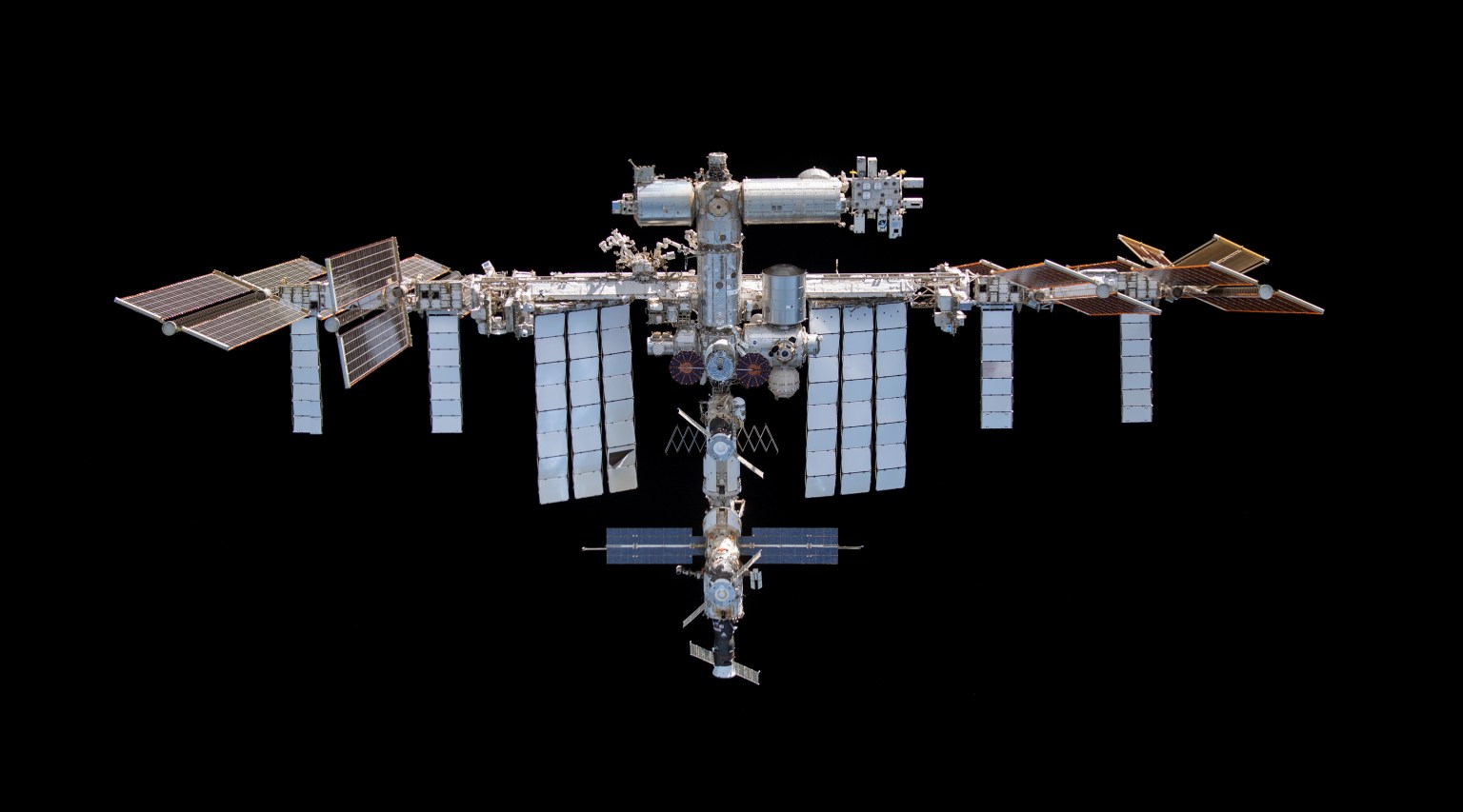
It has been a busy week aboard the International Space Station and Thursday was no exception with ongoing space research, systems maintenance, robotics activities, and an orbital reboost for an upcoming crew mission. The nine lab crewmates have been working together and coordinating closely with mission controllers from around the world ensuring safe and successful mission operations in low-Earth orbit.

NASA Flight Engineers Jeanette Epps and Matthew Dominick returned to space botany on Thursday servicing the Advanced Plant Habitat located in the Kibo laboratory module. The duo replaced a variety of life support components and sensors inside the microgravity greenhouse that supports space-grown plants for both research and consumption.

NASA astronauts Mike Barratt, Butch Wilmore and Suni Williams began their day continuing to configure emergency systems inside the SpaceX Dragon Endeavour spacecraft. Williams also partnered with NASA astronaut Tracy C. Dyson and updated Dragon emergency procedures. Barratt wrapped up his day inside Dragon charging computer tablet batteries and synchronizing the portable computers for satellite coverage. Dragon is due to return to Earth in early October bringing home four SpaceX Crew-8 members.

Wilmore and Dyson then finished the afternoon cleaning the inside of the carbon dioxide removal assembly (CDRA). Wilmore and Williams removed the CDRA from the Tranquility module’s Air Revitalization System (ARS) on Tuesday beginning the weeklong maintenance job. It will be reinstalled in the ARS and reactivated early next week.

Over the past week, robotics controllers on Earth remotely commanded the Canadarm2 robotic arm to remove the science packed NanoRacks Bishop airlock from Tranquility. Bishop was then maneuvered toward the Mobile Transporter where it was temporarily installed for experiment transfers. Canadarm2 then retrieved the ArgUS multi-payload carrier from Bishop and installed it on the Columbus laboratory module’s Bartolomeo external science platform. The newly installed radio frequency research hardware will demonstrate advanced satellite communications to improve aerospace systems on Earth and space. Bishop has been returned to Tranquility where it will be repressurized and opened for crew entry on Friday.

The orbital outpost’s three cosmonauts from Roscosmos also remained busy on Thursday conducting their array of life science, lab upkeep, and robotics checks. Station Commander Oleg Kononenko focused on science, first swapping samples inside the Electromagnetic Levitator, a research device that measures the thermophysical properties of liquid metallic alloys at high temperatures. Next, he attached sensors to himself measuring his heart rate while relaxing. Flight Engineer Nikolai Chub installed and tested a device that measures mass in microgravity then packed trash and discarded gear inside the Progress 88 cargo craft. Flight Engineer Alexander Grebenkin inventoried components that control the European Robotic Arm then uninstalled software that supported a plasma physics study.

The International Space Station is soaring higher this week after the Progress 89 cargo craft, docked to the Zvezda service module’s rear port, fired its thrusters for nearly 18 minutes on Tuesday. The reboost puts the space station at the correct altitude for the arrival of the Soyuz MS-26 crew ship in September. The Soyuz spacecraft, carrying NASA astronaut Don Pettit and Roscosmos cosmonauts Alexey Ovchinin and Ivan Vagner, is due to dock to the station’s Rassvet module just three hours after launching from the Baikonur Cosmodrome in Kazakhstan.


Learn more about station activities by following the space station blog@space_station and @ISS_Research on X, as well as the ISS Facebook and ISS Instagram accounts.

Get weekly video highlights at: https://roundupreads.jsc.nasa.gov/videoupdate/

Get the latest from NASA delivered every week. Subscribe here: www.nasa.gov/subscribe

Powered by WPeMatico

Get The Details…

Mark Garcia

NASA Life Sciences Portal (NLSP)

NASA Life Sciences Portal (NLSP)

1 min read

Preparations for Next Moonwalk Simulations Underway (and Underwater)

Red romaine lettuce plants aboard the ISS.
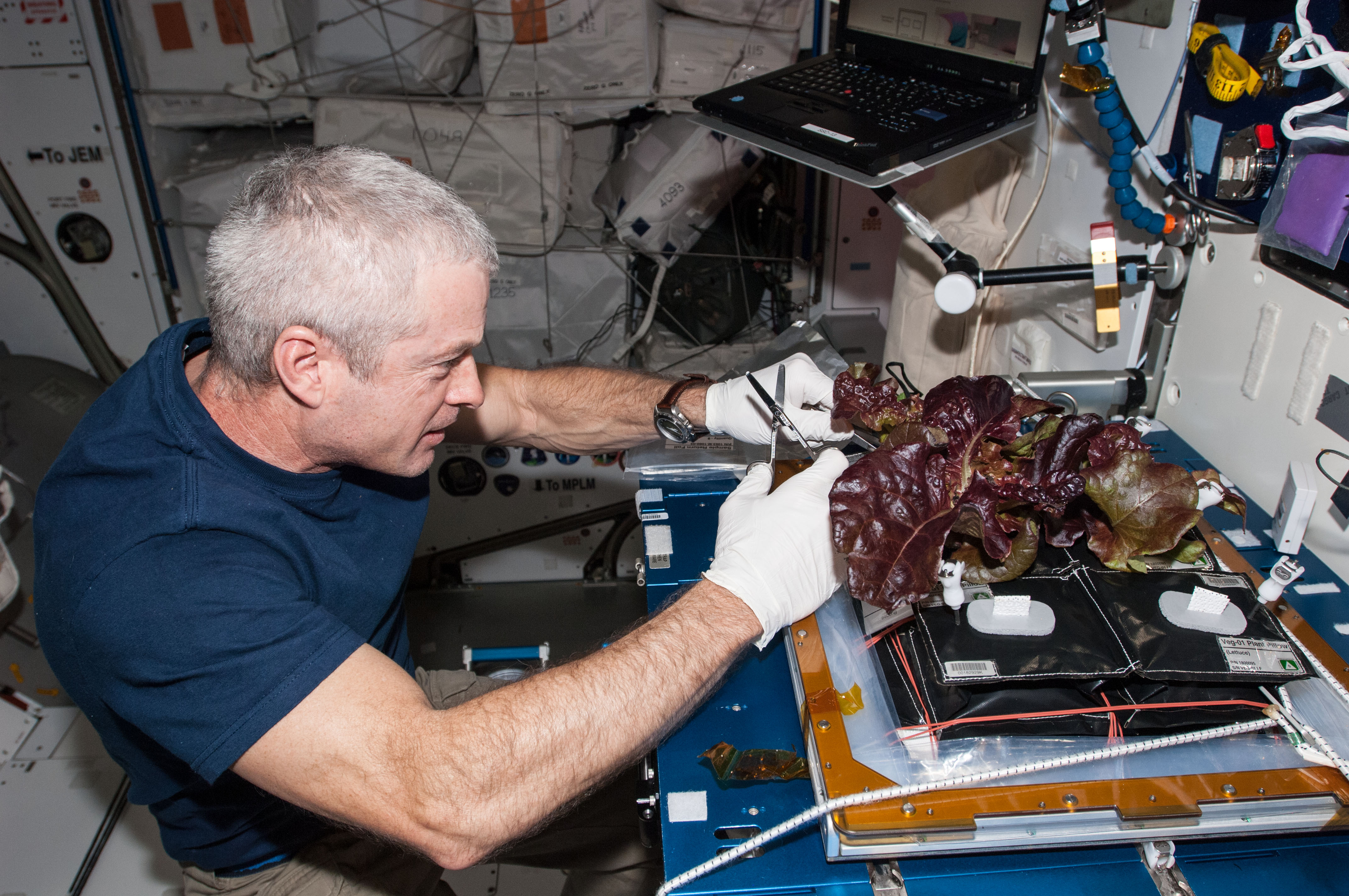
NASA astronaut Steve Swanson harvests a crop of red romaine lettuce plants aboard the International Space Station. Grown from seeds in the Veggie facility, this crop is part of the Veg-01 study to help researchers test and validate the Veggie hardware.
NASA

NASA Life Sciences Portal (NLSP)

The NASA Life Sciences Portal (NLSP) is the gateway to discovering and accessing all archive data from investigations sponsored by NASA’s Human Research Program (HRP). The HRP conducts research and develops technologies that allow humans to travel safely and productively in space. The Program uses evidence from data collected from astronauts, animals, and plants over many decades, and stored in several repositories accessible via the NLSP, including the Life Sciences Data Archive (LSDA) and Lifetime Surveillance of Astronaut Health and Standard Measures repositories.

Life Sciences Data Archive (LSDA)

NASA’s Life Sciences Data Archive (LSDA) is an archive that provides information and data from 1961 (Mercury Project) through current flight and flight analog studies (International Space Station) involving human, plant and animal subjects. ​

Much of the information and data are publicly available on this site. Some data are potentially attributable to individual human subjects, and thus restricted by the Privacy Act, but can be requested for research.

Share

Details

Last Updated

Aug 29, 2024

Editor
Robert E. Lewis

Powered by WPeMatico

Get The Details…
Robert E. Lewis

235 Years Ago: Herschel Discovers Saturn’s Moon Enceladus

235 Years Ago: Herschel Discovers Saturn’s Moon Enceladus

On Aug. 29, 1789, German-born British astronomer William Herschel observed a tiny bright dot orbiting around Saturn. His son later named the object Enceladus. Because of its distance from Earth and proximity to bright Saturn, for the next two centuries little remained known about Enceladus other than its size, orbital parameters, and that it held the honor as the most reflective body in the solar system. It took the Voyager flybys through the Saturn system in the early 1980s and especially the detailed observations between 2005 and 2015 by the Saturn orbiter Cassini to reveal Enceladus as a truly remarkable world, interacting with Saturn and its rings. Harboring a subsurface ocean of salty water, Enceladus may possibly be hospitable to some forms of life.

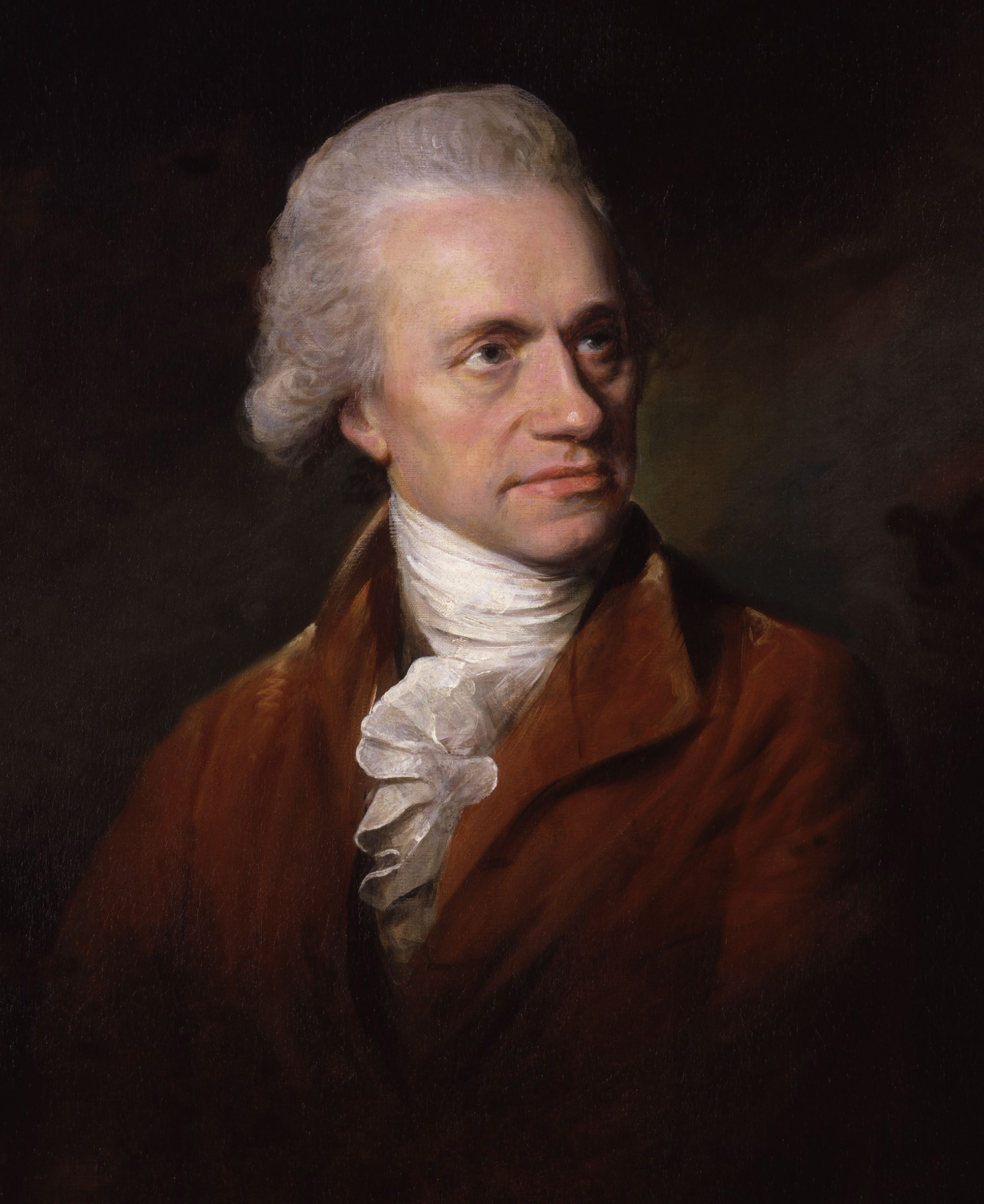
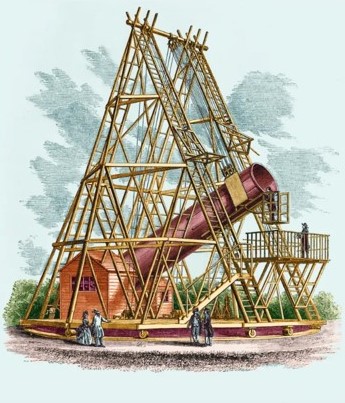
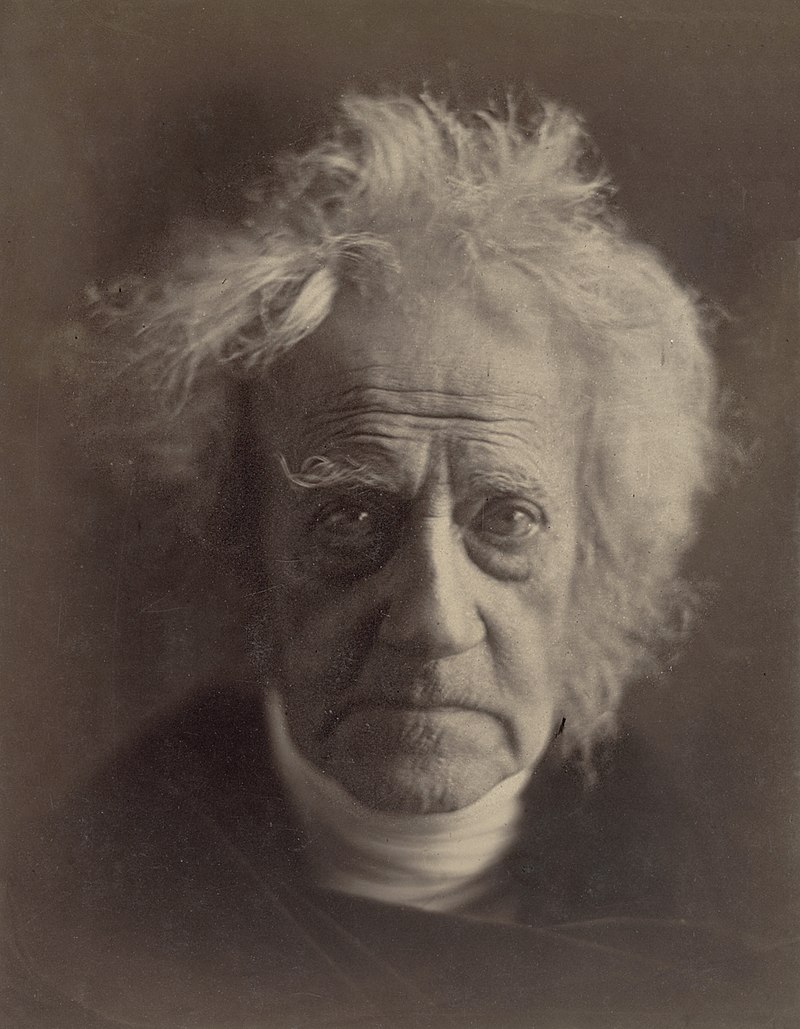
Portrait (1785) of William Herschel by Lemuel Francis Abbott Drawing of Herschel’s 40-foot telescope Portrait (1867) of John Herschel by Julia Margaret Cameron
Left: Portrait (1785) of William Herschel by Lemuel Francis Abbott. Image credit: courtesy National Portrait Gallery, London. Middle: Drawing of Herschel’s 40-foot telescope. Right: Portrait (1867) of John Herschel by Julia Margaret Cameron. Image credit: Metropolitan Museum of Art.

Herschel’s previous astronomical accomplishments include the discovery of Uranus in 1781 and two of its moons, Oberon and Titania, in 1787. He also catalogued numerous objects he termed nebulae, but remained frustrated by the limitations of telescopes of his age. He began to build ever larger instruments, finally building the world’s largest reflecting telescope of its time. At 40 feet long, and with a 49-inch diameter primary mirror weighing a ton, it looked impressive although its optical characteristics did not advance the field as much as he had hoped. Nevertheless, Herschel used this telescope to observe Saturn and its five known moons, looking for others. On Aug. 28, 1789, he observed a bright point orbiting the planet and believed he had discovered a sixth moon. On Sept. 17, he discovered a seventh moon orbiting the ringed planet. He did not name these moons, that task fell to his son John who believed Saturn’s moons should be named after the Titans of Greek mythology. He named the first moon Enceladus and the second Mimas.

Relative sizes of Earth, Earth’s Moon, and Enceladus Best Voyager 2 image of Enceladus
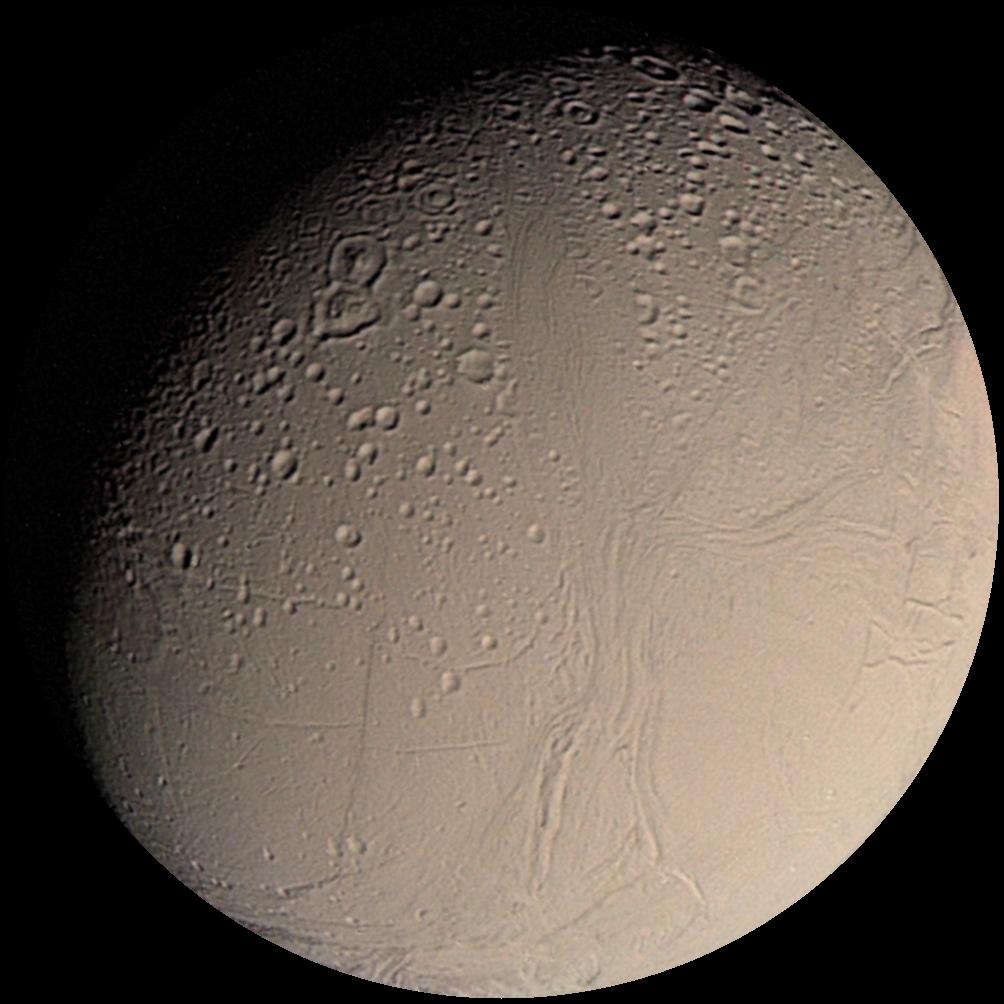
Left: Relative sizes of Earth, Earth’s Moon, and Enceladus. Right: Best Voyager 2 image of Enceladus.

For nearly two centuries, Enceladus remained not much more than a point of light orbiting Saturn, just another icy moon in the outer solar system. Astronomers estimated its diameter at around 310 miles and its orbital period around Saturn at 1.4 days, with a mean distance from the planet’s center of 148,000 miles. Enceladus has the distinction as one of the brightest objects in the solar system, reflecting almost 100 percent of the Sun’s light. Unusual telescope observations during the 20th century showed an increase in brightness on its trailing side, with no known explanation at the time. In 1966, astronomers discovered a diffuse ring around Saturn, the E-ring, and found in 1980 that its density peaked near Enceladus. The Voyager 1 spacecraft flew within 125,570 miles of Enceladus during its passage through the Saturn system on Nov. 12, 1980. Its twin Voyager 2 came within 54,000 miles on Aug. 26, 1981, during its flyby. These close encounters enabled the spacecraft to return the first detailed images of the moon, showing various terrains, including heavily cratered areas as well as smooth crater-free areas, indicating a very young surface.

False color image of Enceladus from Cassini showing the tiger stripes at bottom Limb view of Enceladus showing plumes of material emanating from its surface Cassini image of Enceladus backlit by the Sun showing the fountain-like plumes of material
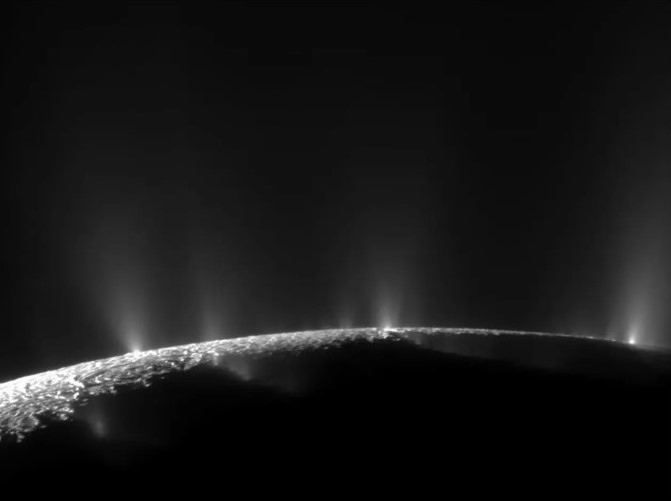
Left: False color image of Enceladus from Cassini showing the tiger stripes at bottom. Middle: Limb view of Enceladus showing plumes of material emanating from its surface. Right: Cassini image of Enceladus backlit by the Sun showing the fountain-like plumes of material.

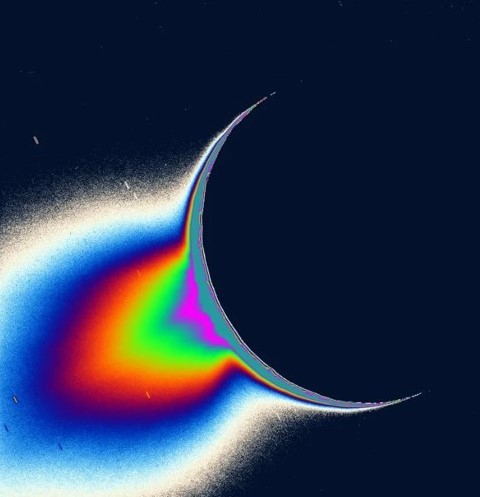
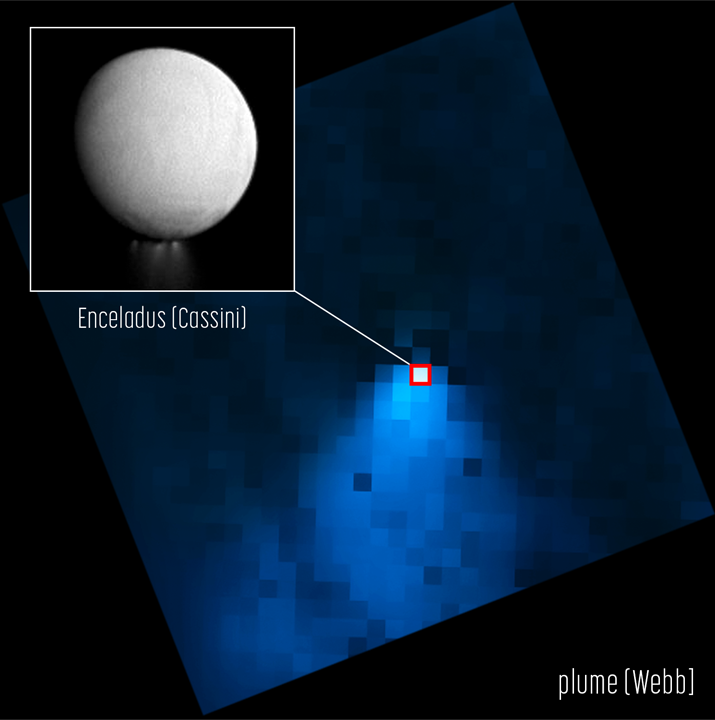
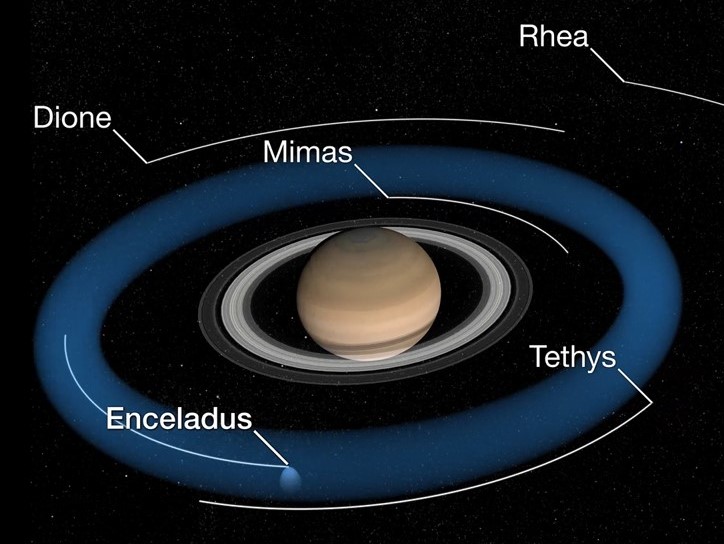
After the Cassini spacecraft entered orbit around Saturn in July 2004, our understanding of Enceladus increased tremendously, and of course raised new questions. Between 2005 and 2015, Cassini encountered Enceladus 22 times, turning its various instruments on the moon to unravel its secrets. It noted early on that the moon emitted gas and dust or ice particles and that they interacted with the E-ring. Images of the moon’s south polar region revealed cracks on the surface and other instruments detected a huge cloud of water vapor over the area. The moon likely had a liquid subsurface and some of this material reached the outside through these cracks. Scientists named the most prominent of these areas “tiger stripes” and later observations confirmed them as the source of the most prominent jets. During the most daring encounter in October 2015, Cassini came within 30 miles of the Enceladus’ surface, flying through the plume of material emanating from the moon. Analysis of the plumes revealed an organic brew of volatile gases, water vapor, ammonia, sodium salts, carbon dioxide, and carbon monoxide. These plumes replenish Saturn’s E-ring, and some of this material enters Saturn’s upper atmosphere, an interaction unique in the solar system. More recently, the James Webb Space Telescope imaged the water vapor plume emanating from Enceladus’ south pole, extending out 40 times the size of the moon itself. The confirmation of a subsurface ocean of salty water has led some scientists to postulate that Enceladus may be hospitable to some forms of life, making it a potential target for future exploration. Enceladus may yet have more surprises, even as scientists continue to pore over the data returned by Cassini.

James Webb Space Telescope image of a water vapor plume emanating from Enceladus Illustration of the interaction of Enceladus and Saturn’s E-ring
Left: James Webb Space Telescope image of a water vapor plume emanating from Enceladus. Right: Illustration of the interaction of Enceladus and Saturn’s E-ring.

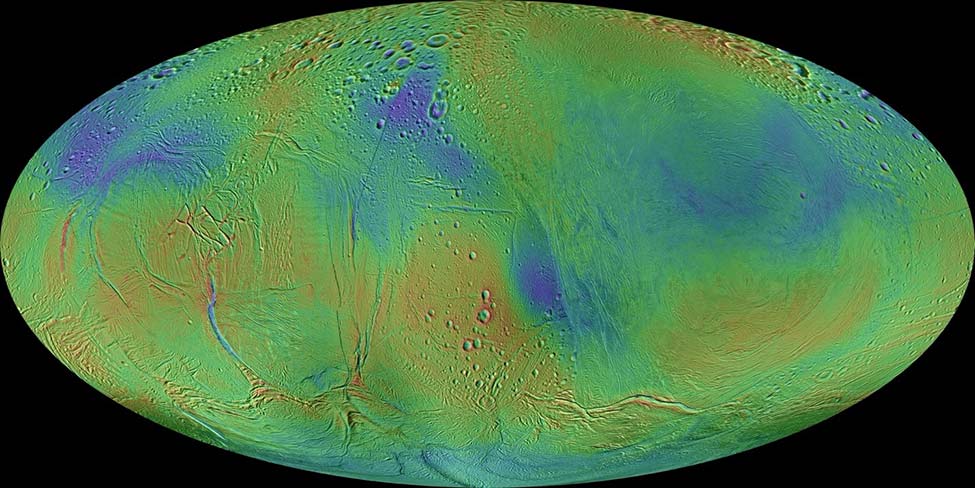
Map of Enceladus based on imagery from Cassini, turning our view of Enceladus from a small point of light into a unique world with its own topography
Map of Enceladus based on imagery from Cassini, turning our view of Enceladus from a small point of light into a unique world with its own topography.

Events in world history in 1789:

January 29 – Vietnamese emperor Quang Trung defeats Chinese Qing forces at Ngọc Hồi-Đống Đa in one of the greatest military victories in Vietnamese history.

March 10 – In Japan, the Menashi-Kunashir rebellion begins between the Ainu people and the Japanese.

April 7 – Selim III succeeds Abdul Hamid I as Sultan of the Ottoman Empire.

April 28 – Aboard the HMS Bounty in the Pacific Ocean, Fletcher Christian leads the mutiny against Captain William Bligh.

April 30 – Inauguration of George Washington as the first President of the United States of America.

July 14 – Citizens storm The Bastille fortress in Paris during the French Revolution.

September 15 – Birth of American writer James Fenimore Cooper in Burlington, New Jersey.

December 11 – Founding of the University of North Carolina, the oldest public university in the United States.

Powered by WPeMatico

Get The Details…
Kelli Mars

NASA Awards Intuitive Machines Lunar South Pole Research Delivery

NASA Awards Intuitive Machines Lunar South Pole Research Delivery

An artist’s concept of Intuitive Machines’ Nova-C lunar lander on the Moon’s South Pole.
Credit: Intuitive Machines

A new set of NASA science experiments and technology demonstrations will arrive at the lunar South Pole in 2027 following the agency’s latest CLPS (Commercial Lunar Payload Services) initiative delivery award. Intuitive Machines of Houston will receive $116.9 million to deliver six NASA payloads to a part of the Moon where nighttime temperatures are frigid, the terrain is rugged, and the permanently shadowed regions could help reveal the origin of water throughout our solar system.

Part of the agency’s broader Artemis campaign, CLPS aims to conduct science on the Moon for the benefit of all, including experiments and demos that support missions with crew on the lunar surface.

“This marks the 10th CLPS delivery NASA has awarded, and the fourth planned for delivery to the South Pole of the Moon,” said Joel Kearns, deputy associate administrator for exploration, Science Mission Directorate, NASA Headquarters in Washington. “By supporting a robust cadence of CLPS flights to a variety of locations on the lunar surface, including two flights currently planned by companies for later this year, NASA will explore more of the Moon than ever before.”

NASA has awarded Intuitive Machine’s four task orders. The company delivered six NASA payloads to Malapert A in the South Pole region of the Moon in early 2024. With this lunar South Pole delivery, Intuitive Machines will be responsible for payload integration, launch from Earth, safe landing on the Moon, and mission operations.

“The instruments on this newly awarded flight will help us achieve multiple scientific objectives and strengthen our understanding of the Moon’s environment,” said Chris Culbert, manager of the CLPS initiative at NASA’s Johnson Space Center in Houston. “For example, they’ll help answer key questions about where volatiles – such as water, ice, or gas – are found on the lunar surface and measure radiation in the South Pole region, which could advance our exploration efforts on the Moon and help us with continued exploration of Mars.”

The instruments, collectively expected to be about 174 pounds (79 kilograms) in mass, include:

  • The Lunar Explorer Instrument for Space Biology Applications will deliver yeast to the lunar surface and study its response to radiation and lunar gravity. The payload is managed by NASA’s Ames Research Center in Silicon Valley, California.
  • Package for Resource Observation and In-Situ Prospecting for Exploration, Characterization and Testing is a suite of instruments that will drill down to 3.3 feet (1 meter) beneath the lunar surface, extract samples, and process them in-situ in a miniaturized laboratory, to identify possible volatiles (water, ice, or gas) trapped at extremely cold temperatures under the surface. This suite is led by ESA (European Space Agency). 
  • The Laser Retroreflector Array is a collection of eight retroreflectors that will enable lasers to precisely measure the distance between a spacecraft and the reflector on the lander. The array is a passive optical instrument and will function as a permanent location marker on the Moon for decades to come. The retroflector array is managed by NASA’s Goddard Space Flight Center in Greenbelt, Maryland. 
  • The Surface Exosphere Alterations by Landers will investigate the chemical response of lunar regolith to the thermal, physical, and chemical disturbances generated during a landing, and evaluate contaminants injected into the regolith by the lander. It will give insight into how a spacecraft landing might affect the composition of samples collected nearby. This payload is managed by NASA Goddard.
  • The Fluxgate Magnetometer will characterize certain magnetic fields to improve the understanding of energy and particle pathways at the lunar surface and is managed by NASA Goddard.
  • The Lunar Compact Infrared Imaging System will deploy a radiometer – a device that measures infrared wavelengths of light – to explore the Moon’s surface composition, map its surface temperature distribution, and demonstrate the instrument’s feasibility for future lunar resource utilization activities. The imaging system is managed by the Laboratory for Atmospheric and Space Physics at the University of Colorado at Boulder.

Under CLPS, multiple commercial deliveries to different geographic regions will help NASA conduct science and continue working toward a long-term human presence on the Moon. Future deliveries will include sophisticated science experiments, and technology demonstrations as part of the agency’s Artemis campaign. Two upcoming CLPS flights slated to launch near the end of 2024 will deliver NASA payloads to the Moon’s nearside and South Pole, including the Intuitive Machines-2 delivery of NASA’s first on-site demonstration of searching for water and other chemical compounds 3.3 feet below the surface of the Moon, using a drill and mass spectrometer.

Learn more about CLPS and Artemis at:

https://www.nasa.gov/clps

-end-

Karen Fox
Headquarters, Washington
202-358-1275
karen.c.fox@nasa.gov

Laura Sorto / Natalia Riusech      
Johnson Space Center, Houston
281-483-5111
laura.g.sorto@nasa.gov / natalia.s.riusech@nasa.gov

Powered by WPeMatico

Get The Details…
Tiernan P. Doyle