NASA Johnson Honors Hispanic Heritage: Meet Manuel Retana 

NASA Johnson Honors Hispanic Heritage: Meet Manuel Retana 

Manuel Retana arrived in the U.S. at 15 years old, unable to speak English and with nothing but a dream and $200 in his pocket. Now, he plays a crucial role implementing life support systems on spacecraft that will carry humans to the Moon and, eventually, Mars—paving the way for the next frontier of space exploration. 

A project manager for NASA’s Johnson Space Center Life Support Systems Branch in Houston, Retana helps to ensure astronaut safety aboard the International Space Station and for future Artemis missions. His work involves tracking on-orbit technical issues, managing the cost and schedule impacts of flight projects, and delivering emergency hardware. 

Manuel Retana stands in front of NASA’s Space Launch System rocket at Kennedy Space Center in Florida.

One of his most notable achievements came during the qualification of the Orion Smoke Eater Filter for the Artemis II and III missions. The filter is designed to remove harmful gases and particulates from the crew cabin in the event of a fire inside the spacecraft. Retana was tasked with creating a cost-effective test rig – a critical step for making the filter safe for flight. 

Retana’s philosophy is simple: “Rockets do not build themselves. People build rockets, and your ability to work with people will define how well your rocket is built.” 

Throughout his career, Retana has honed his soft skills—communication, leadership, collaboration, and conflict resolution—to foster an environment of success. 

Retana encourages his colleagues to learn new languages and share their unique perspectives. He even founded NASA’s first Mariachi ensemble, allowing him to share his cultural heritage in the workplace. 

He believes diversity of thought is a key element in solving complex challenges as well as creating an environment where everyone feels comfortable sharing their perspectives. 

“You need to be humble and have a willingness to always be learning,” he said. “What makes a strong team is the fact that not everyone thinks the same way.” 

A group of musicians, dressed in traditional mariachi attire with white shirts, red bow ties, and black pants, perform in a bright, spacious room. The lead musician stands at the front, holding a guitar and singing into a microphone.
Manuel Retana, center, performs with the Mariachi Ensemble group at NASA’s Johnson Space Center in Houston.

For the future of space exploration, Retana is excited about the democratization of space, envisioning a world where every country has the opportunity to explore. He is eager to see humanity reach the Moon, Mars, and beyond, driven by the quest to answer the universe’s most enigmatic questions. 

To the Artemis Generation, he says, “Never lose hope, and it is never too late to start following your dreams, no matter how far you are.” 

Powered by WPeMatico

Get The Details…
Sumer Loggins

Sols 4304-4006: 12 Years, 42 Drill Holes, and Now… 1 Million ChemCam Shots!

Sols 4304-4006: 12 Years, 42 Drill Holes, and Now… 1 Million ChemCam Shots!

5 min read

Sols 4304-4006: 12 Years, 42 Drill Holes, and Now… 1 Million ChemCam Shots!

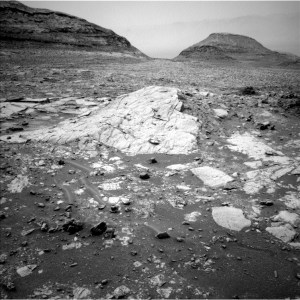
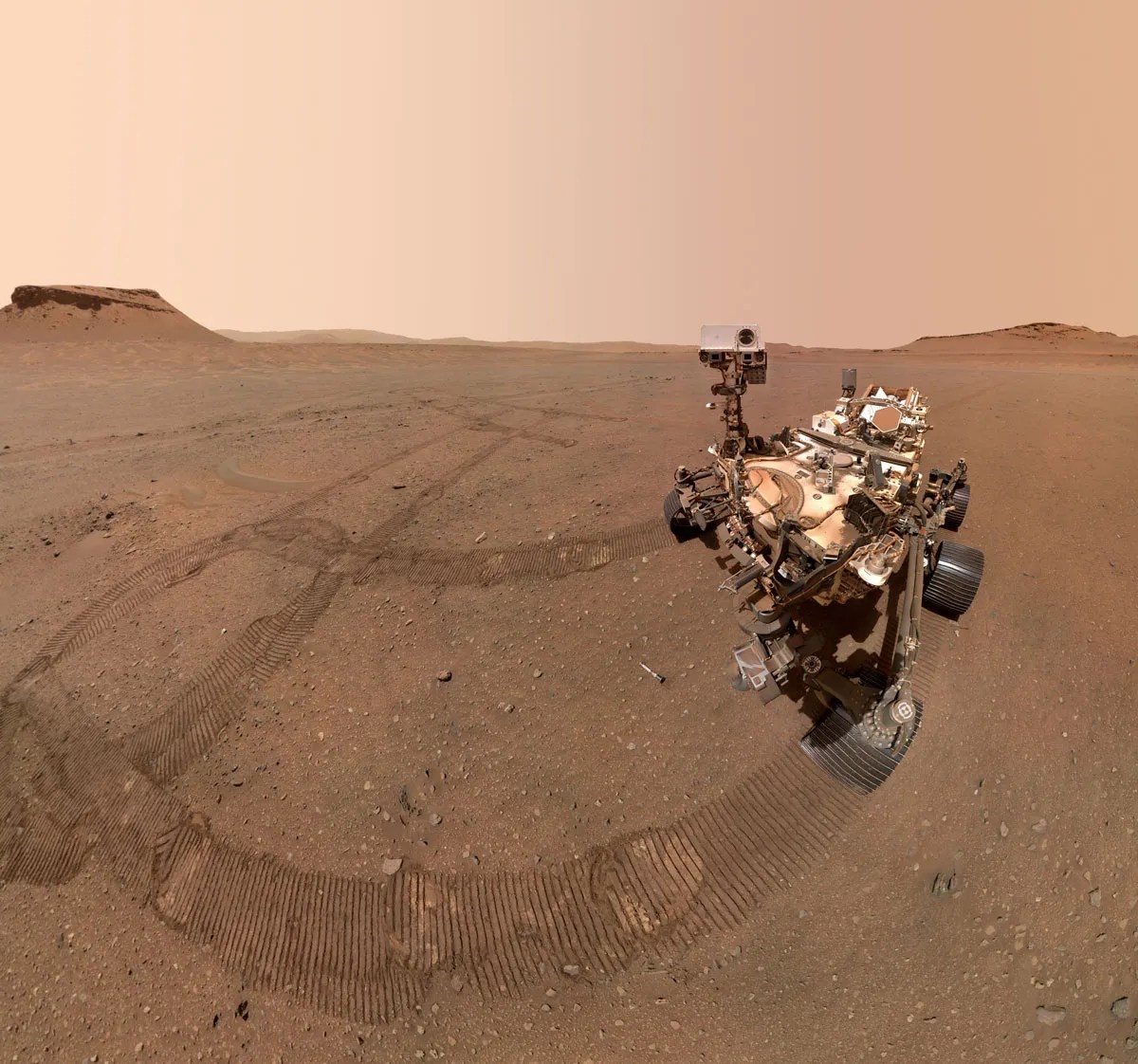
Image taken by Curiosity of Mars at the
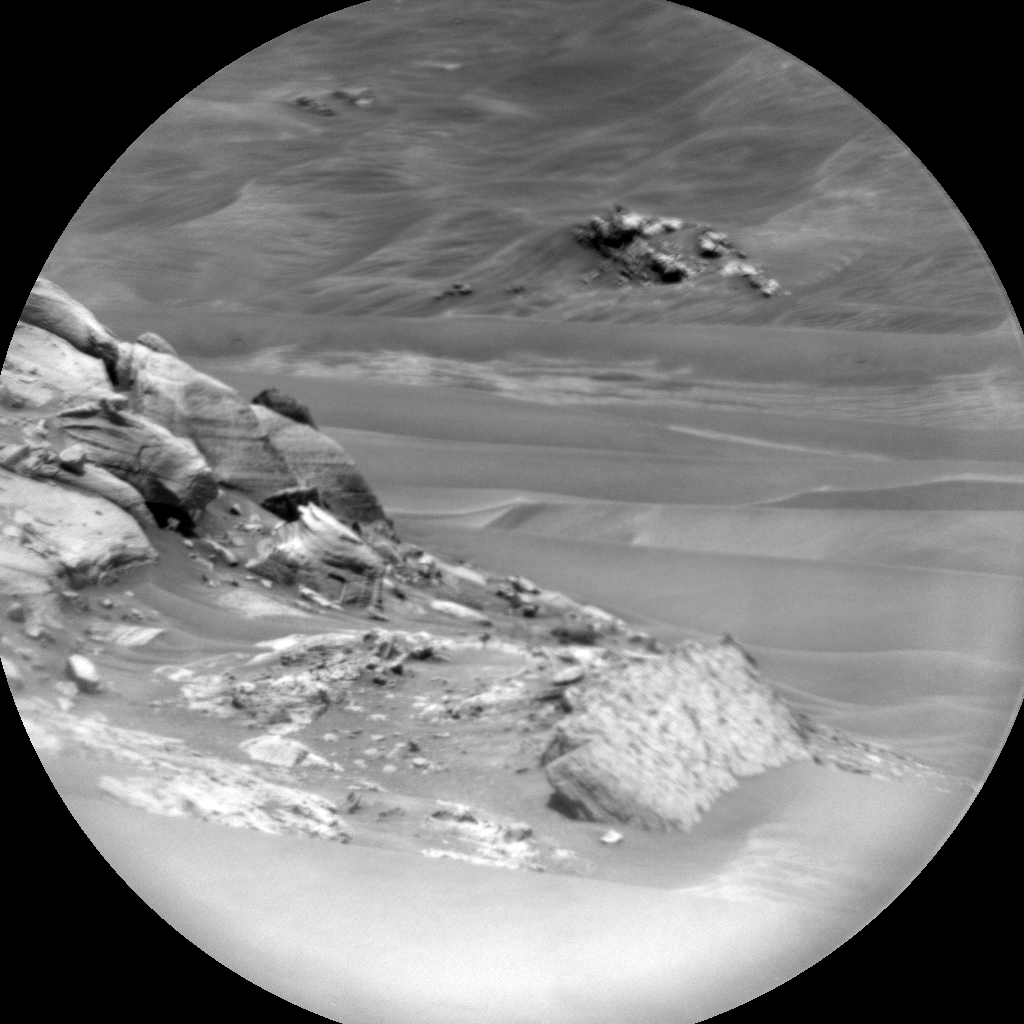
In celebration of ChemCam’s milestone, here is a stunning image from its remote micro imager, showing details in the landscape far away. This image was taken by Chemistry & Camera (ChemCam) onboard NASA’s Mars rover Curiosity on Sol 4302 — Martian day 4,302 of the Mars Science Laboratory mission — on Sept. 12, 2024, at 09:20:51 UTC.
NASA/JPL-Caltech

Earth planning date: Friday, Sept. 13, 2024

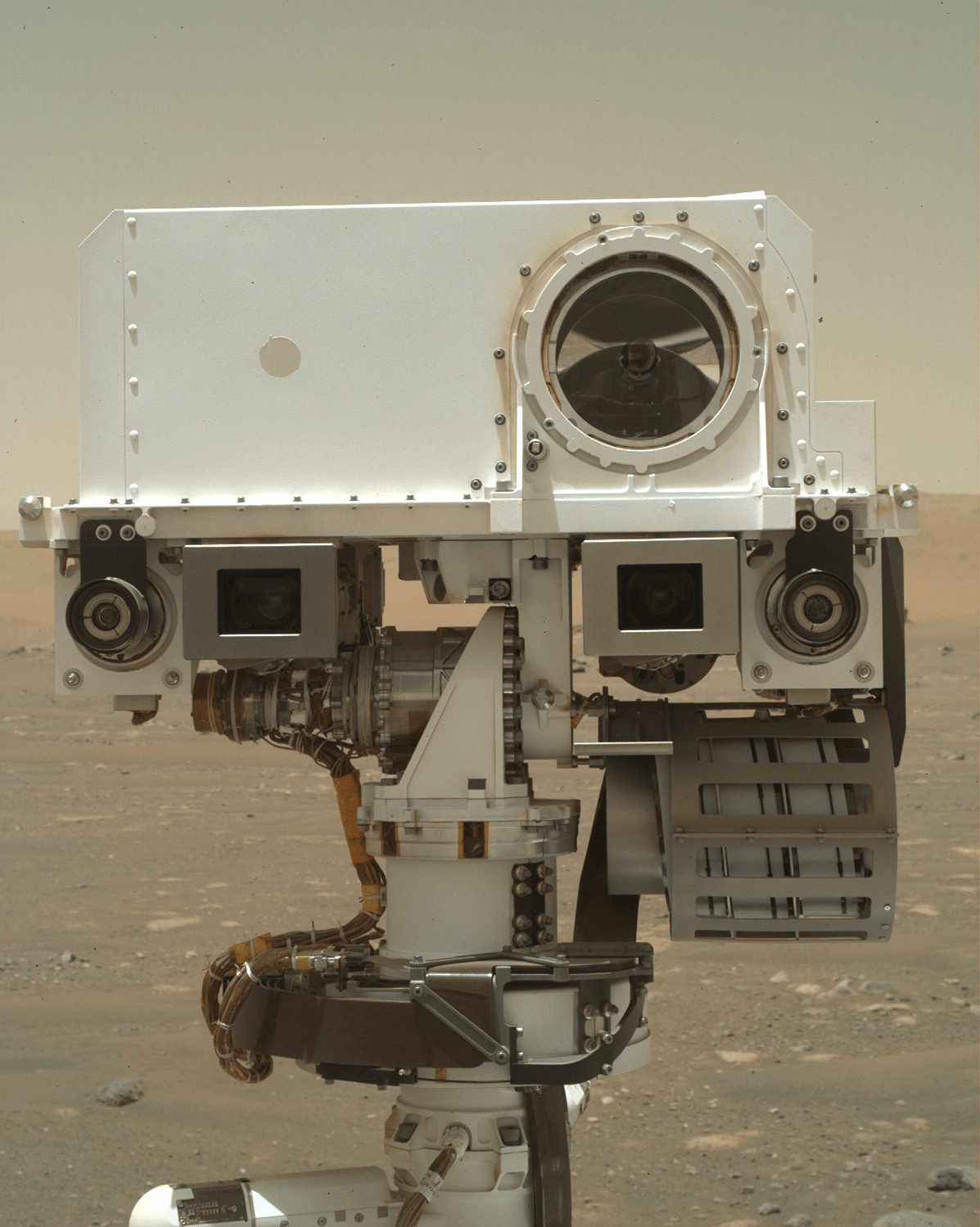
Today, I need to talk about ChemCam, our laser and imaging instrument on the top of Curiosity’s mast. It one of the instruments in the “head” that gives Curiosity that cute look as if it were looking around tilting its head down to the rocks at the rover’s wheels. On Monday, 19th August the ChemCam team at CNES in France planned the 1 millionth shot and Curiosity executed it on the target Royce Lake on sol 4281 on Mars. Even as an Earth scientist used to really big numbers, this is a huge number that took me a while to fully comprehend. 1 000 000 shots! Congratulations, ChemCam, our champion for getting chemistry from a distance – and high-resolution images, too. If you are now curious how Curiosity’s ChemCam instrument works, here is the NASA fact sheet. And, of course, the team is celebrating, which is expressed by those two press releases, one from CNES in France and one from Los Alamos National Laboratory, the two institutions who collaborated to develop and build ChemCam and are now running the instrument for over 12 years! And the PI, Dr Nina Lanza from Los Alamos informs me that the first milestone – 10000 shots was reached as early as Sol 42, which was the sol the DAN instrument used its active mode for the first time. But before I am getting melancholic, let’s talk about today’s plan!

The drive ended fairly high up in the terrain, and that means we see a lot of the interesting features in the channel and generally around us. So, we are on a spot a human hiker would probably put the backpack down, take the water bottle out and sit down with a snack to enjoy the view from a nice high point in the landscape. Well, no such pleasures for Curiosity – and I am pretty sure sugar, which we humans love so much, wouldn’t be appreciated by rover gears anyway. So, let’s just take in the views! And that keeps Mastcam busy taking full advantage of our current vantage point. We have a terrain with lots of variety in front of us, blocks, boulders, flatter areas and the walls are layered, beautiful geology. Overall there are 11 Mastcam observations in the plan adding up to just about 100 individual frames, not counting those taken in the context of atmospheric observations, which are of course also in the plan. The biggest mosaics are on the targets “Western Deposit,” “Balloon Dome,” and “Coral Meadow.” Some smaller documentation images are on the targets “Wales Lake,” “Gnat Meadow,” and “Pig Chute.”

ChemCam didn’t have long to dwell on its milestone, as it’s busy again today. Of course, it will join Mastcam in taking advantage of our vantage point, taking three remote micro imager images on the landscape around us. LIBS chemistry investigations are targeting “Wales Lake,” “Gnat Meadow,” and “Pig Chute.” APXS is investigating two targets, “College Rock” and “Wales Lake,” which will also come with MAHLI documentation. With all those investigations together, we’ll be able to document the chemistry of many targets around us. There is such a rich variety of dark and light toned rocks, and with so much variety everywhere, it’s hard to choose and the team is excited about the three targeted sols … and planning over 4 hours of science over the weekend!

The next drive is planned to go to an area where there is a step in the landscape. Geologists love those steps as they give insights into the layers below the immediate surface. If you have read the word ‘outcrop’ here, then that’s what that means: access to below the surface. But there are also other interesting features in the area, hence we will certainly have an interesting workspace to look at! But getting there will not be easy as the terrain is very complex, so we cannot do it in just one drive. I think there is a rule of thumb here: the more excited the geo-team gets, the more skills our drivers need. Geologists just love rocks, but of course, no one likes driving offroad in a really rocky terrain – no roads on Mars. And right now, our excellent engineers have an extra complication to think about: they need to take extra care where and how to park so Curiosity can actually communicate with Earth. Why? Well, we are in a canyon, and those of you liking to hike, know what canyons mean for cell phone signals… yes, there isn’t much coverage, and that’s the same for Curiosity’s antenna. This new NASA video has more information and insights into the planning room, too! So, we’ll drive halfway to where we want to be but I am sure there will be interesting targets in the new workspace, the area is just so, so complex, fascinating and rich!

And that’s after Mars for you, after 12 years, 42 drill holes, and now 1 Million ChemCam shots. Go Curiosity go!!!

Written by Susanne Schwenzer, Planetary Geologist at The Open University

Share

Details

Last Updated
Sep 13, 2024

Related Terms

Powered by WPeMatico

Get The Details…

Expanded Crew Wraps Week with Biomedicine and Emergency Training

Expanded Crew Wraps Week with Biomedicine and Emergency Training

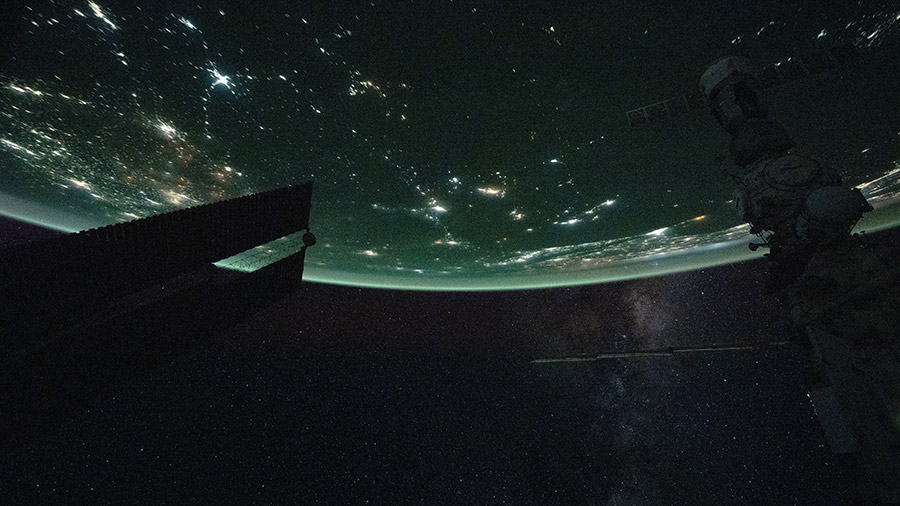
NASA astronaut Matthew Dominick pointed a camera out a window as the station orbited above Kazakhstan capturing a wispy Milky Way pictured amongst a starry night sky.

While three new crewmates get up to speed with living and working aboard the International Space Station another trio is preparing for its return to Earth. In the meantime, biomedicine and science maintenance topped the research schedule at the end of the week as the orbital residents also brushed up on their emergency response skills.

NASA astronaut Don Pettit is beginning his fourth mission in space with his previous mission occurring over 12 years ago when he was an Expedition 31 Flight Engineer. He spent Friday continuing to get familiar with orbital operations and lab systems as he settles in for a six-and-a-half-month mission planned to end in spring 2025.

Roscosmos Flight Engineers Alexey Ovchinin and Ivan Vagner, who launched to the orbital outpost with Pettit on Sept. 11, started Friday unpacking cargo from the Soyuz MS-26 spacecraft. Afterward, the experienced cosmonaut duo attached sensors to themselves monitoring how blood flows throughout their body in weightlessness.

At the same time, station Commander Oleg Kononenko and Flight Engineers Tracy C. Dyson and Nikolai Chub are preparing to depart the orbiting lab in less than two weeks. The homebound trio first joined each other early Friday checking the pressure suits they will wear as they descend to a parachuted landing on Earth inside the Soyuz MS-25 crew ship. Kononenko and Chub also tested the lower body negative pressure suit that may help crews counteract the effects of living in space and adjust quicker to the return to Earth’s gravity setting.

Dyson joined fellow NASA astronaut Mike Barratt studying how blood and cerebrospinal fluids travel toward the head creating eye pressure in microgravity. Dyson later participated in standard medical checks measuring her own temperature, blood pressure, heart rate, and breathing rate. Barratt also partnered with NASA Flight Engineer Matthew Dominick taking turns exercising on an exercise cycle while wearing sensors and breathing gear measuring their cardiorespiratory rate and capacity.

Dyson also took charge as crew medical officer and scanned the eyes of NASA Flight Engineers Butch Wilmore and Suni Williams with the Ultrasound 2 device. Ground surgeons monitored the ultrasound imaging in real time to understand how microgravity affects a crew member’s cornea, lens, and optic nerve. Wilmore and Williams also called down to mission managers to familiarize themselves with the upcoming SpaceX Crew-9 mission.

NASA Flight Engineer Jeanette Epps worked throughout the day swapping gas bottles that supply argon, helium, and carbon dioxide to variety of experiment racks in the Kibo laboratory module. Roscosmos Flight Engineer Alexander Grebenkin photographed cell samples during his shift for a space biology investigation.

All 12 space station residents joined each other after their lunchtime and reviewed their roles and responsibilities in the event of unlikely emergency scenarios such as a fire, or a chemical or pressure leak. The dozen crewmates also reviewed procedures to regain control of the orbital outpost during an emergency situation.


Learn more about station activities by following the space station blog@space_station and @ISS_Research on X, as well as the ISS Facebook and ISS Instagram accounts.

Get weekly video highlights at: https://roundupreads.jsc.nasa.gov/videoupdate/

Get the latest from NASA delivered every week. Subscribe here: www.nasa.gov/subscribe

Powered by WPeMatico

Get The Details…

Mark Garcia

NASA Ames Selects Aeronautics and Exploration Support Contractor

NASA Ames Selects Aeronautics and Exploration Support Contractor

The letters NASA on a blue circle with red and white detail, all surrounded by a black background
Credit: NASA

NASA has awarded the NASA Academic Mission Services 2 (NAMS-2) contract to Crown Consulting Inc., of Arlington, Virginia, to provide the agency’s Ames Research Center in California’s Silicon Valley, aeronautics and exploration technology research and development support.

NAMS-2 is a single award hybrid cost-plus-fixed-fee indefinite-delivery indefinite-quantity contract with a maximum potential value of $121 million. The contract begins Tuesday, Oct. 1, 2024, with a 60-day phase-in period, followed by a two-year base period, and options to extend performance through November 2029.

Under this contract, the company will support a broad scope of scientific research and development of new and emerging capabilities and technologies associated with air traffic management, advanced technology, nanoelectronics, and prototype software in support of the Aeronautics Directorate and the Exploration Technology Directorate at NASA Ames. The work also will focus on the improvement of aircraft and airspace safety, as well as the transition of advanced aeronautics technologies into future air vehicles.

For information about NASA and agency programs, visit:

https://www.nasa.gov

-end-

Roxana Bardan
Headquarters, Washington
202-358-1600
roxana.bardan@nasa.gov

Rachel Hoover
Ames Research Center, Silicon Valley, Calif.
rachel.hoover@nasa.gov
650-604-4789

Share

Details

Last Updated

Sep 13, 2024

Powered by WPeMatico

Get The Details…
Roxana Bardan

Waxing Gibbous Moon over Minnesota

Waxing Gibbous Moon over Minnesota

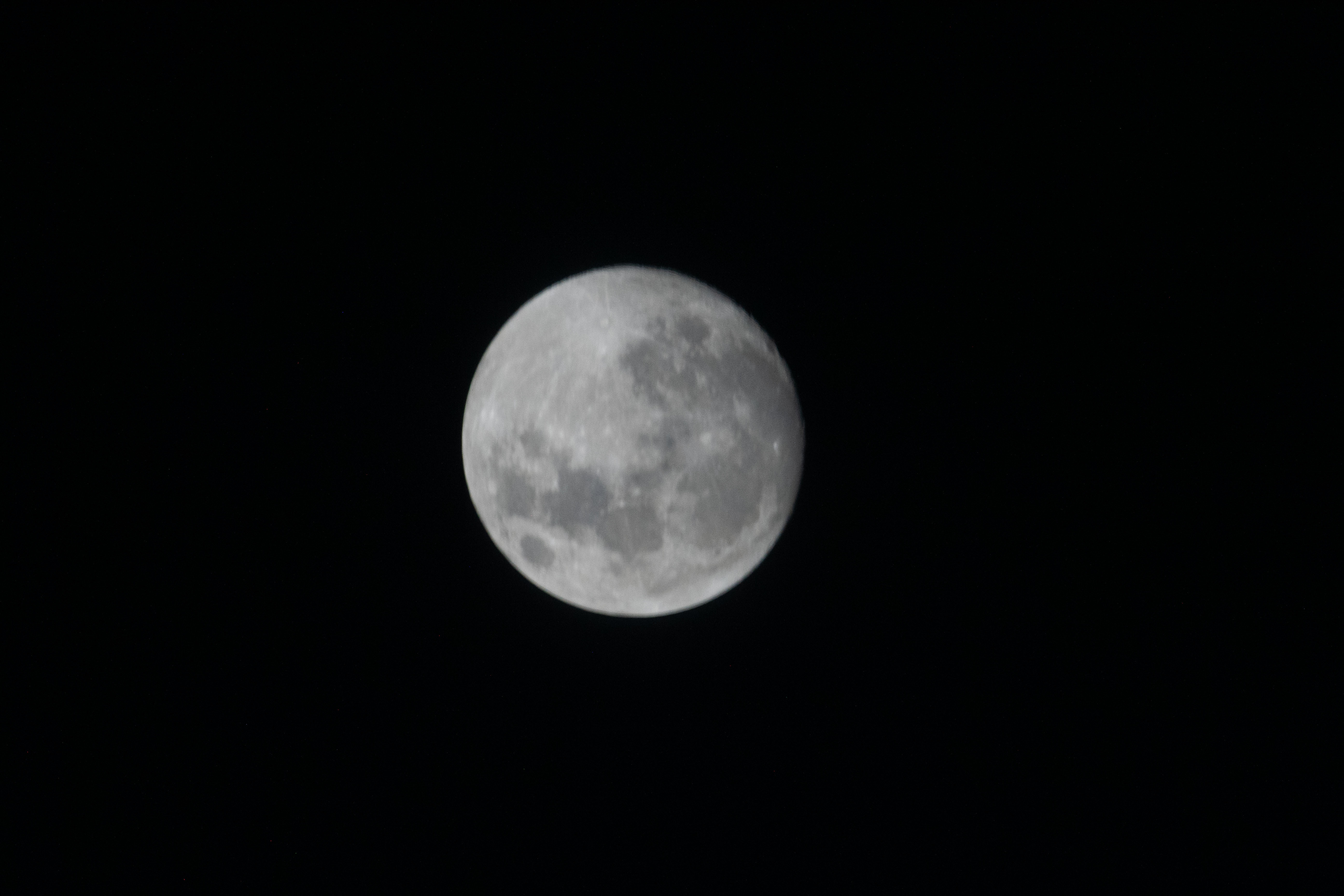
The waxing gibbous Moon looks nearly full in the darkness of space.
NASA, ESA/Matthias Maurer

An astronaut aboard the International Space Station snapped this picture of the Moon as the station orbited 265 miles above the U.S. state of Minnesota on Dec. 17, 2021.

Astronauts aboard the orbital lab take images using handheld digital cameras, usually through windows in the station’s cupola, for Crew Earth Observations. Crew members have produced hundreds of thousands of images of the Moon and Earth’s land, oceans, and atmosphere.

On Saturday, Sept. 14, 2024, International Observe the Moon Night, everyone on Earth is invited to learn about lunar science, participate in celestial observations, and honor cultural and personal connection to the Moon. Find an event to join in the celebration.

Image credit: NASA, ESA/Matthias Maurer

Powered by WPeMatico

Get The Details…
Monika Luabeya