NASA, GE Aerospace Advancing Hybrid-Electric Airliners with HyTEC

NASA, GE Aerospace Advancing Hybrid-Electric Airliners with HyTEC

3 min read

Preparations for Next Moonwalk Simulations Underway (and Underwater)
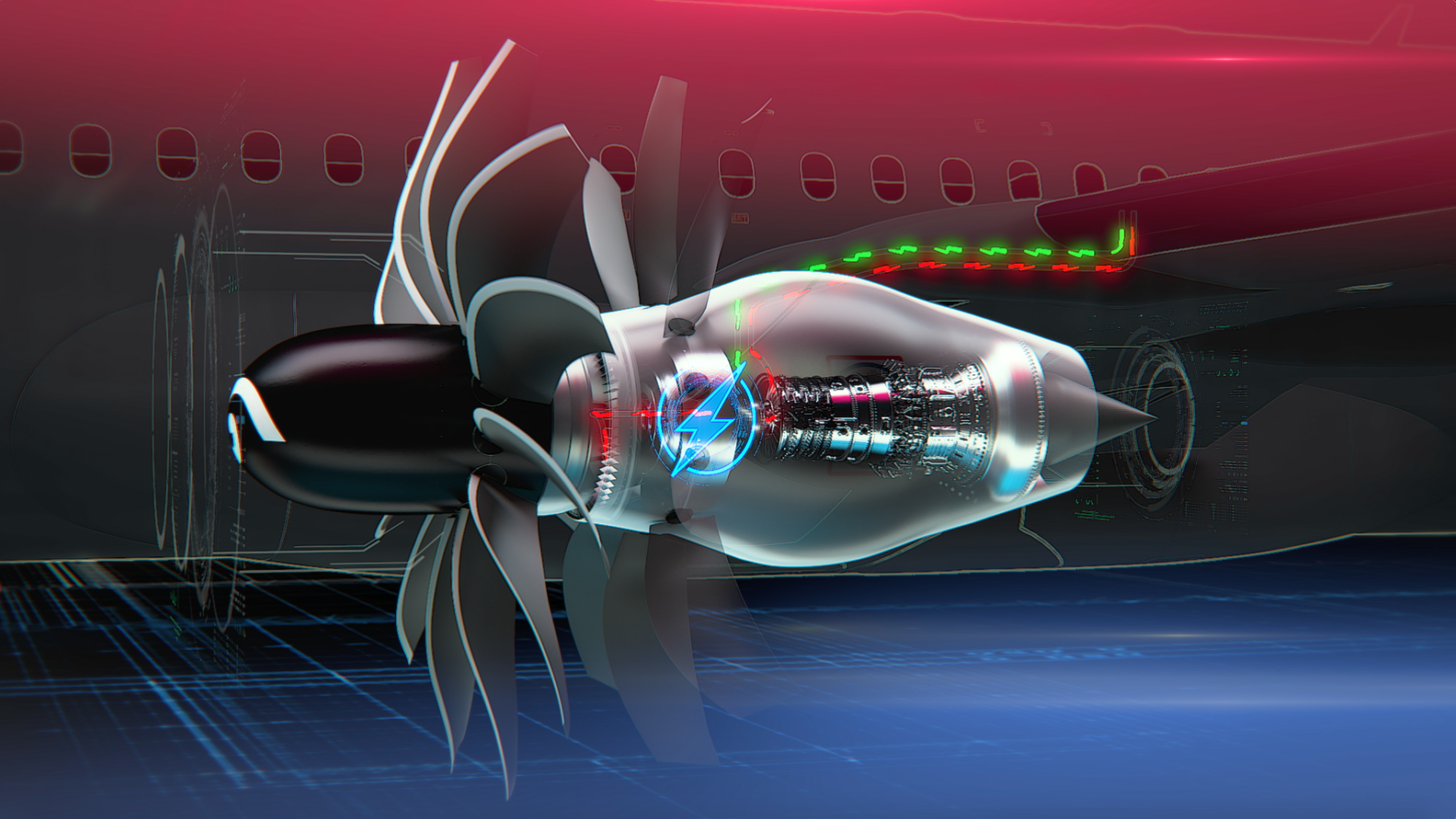
Graphic shows a possible future General Electric jet engine with exposed fan blades in front of a cut-away-interior view of its core mechanisms -- all part of NASA's HyTEC research project.
This artist concept shows a NASA-developed small-core jet engine installed in General Electric Aerospace’s CFM RISE jet engine design. The more fuel-efficient small core powers a large open turbofan, which also helps increase efficiency. The effort is part of NASA’s Sustainable Flight National Partnership to help inform the next generation of ultra-efficient airliners.
GE Aerospace

Hybrid-electric cars have been a staple of the road for many years now.

Soon that same idea of a part-electric-, part-gas-powered engine may find its way into the skies propelling a future jet airliner.

NASA is working in tandem with industry partner GE Aerospace on designing and building just such an engine, one that burns much less fuel by including new components to help electrically power the engine.

In this hybrid jet engine, a fuel-burning core powers the engine and is assisted by electric motors. The motors produce electric power, which is fed back into the engine itself—therefore reducing how much fuel is needed to power the engine in the first place.

It really opens the door for more sustainable aviation even beyond the 2030s.
Anthony nerone

Anthony nerone

NASA Project Manager

High Tech Hybrid-Electric

The work is happening as part of NASA’s Hybrid Thermally Efficient Core (HyTEC) project. This work intends to demonstrate this engine concept by the end of 2028 to enable its use on airliners as soon as the 2030s.

It represents a major step forward in jet engine technology.

This jet engine would be the first ever mild hybrid-electric jet engine. A “mild hybrid” engine can be powered partially by electrical machines operating both as motors and generators.

“This will be the first mild hybrid-electric engine and could lead to the first production engine for narrow-body airliners that’s hybrid electric,” said Anthony Nerone, who leads the HyTEC project from NASA’s Glenn Research Center in Cleveland. “It really opens the door for more sustainable aviation even beyond the 2030s.”

The hybrid-electric technology envisioned by NASA and GE Aerospace also could be powered by a new small jet engine core.

A major HyTEC project goal is to design and demonstrate a jet engine that has a smaller core but produces about the same amount of thrust as engines being flown today on single-aisle aircraft.

At the same time, the smaller core technology aims to reduce fuel burn and emissions by an estimated 5 to 10%.

A man working in an industrial laboratory wearing sunglasses points a camera at a silver exhaust port emitting a superhot blue flame that is striking a material causing it to glow bright orange.
Michael Presby, a research materials engineer at NASA’s Glenn Research Center in Cleveland, adjusts an infrared thermal imaging camera used to monitor the temperature profile of a NASA-developed, high-temperature environmental barrier coating deposited on a ceramic matrix composite in support of the agency’s HyTEC project. The composite’s environmental barrier coating surface temperature is 3,000 degrees Fahrenheit.
NASA / Bridget Caswell

How Does It Work?

A GE Aerospace Passport engine is being modified with hybrid electric components for testing.

“Today’s jet engines are not really hybrid electric,” Nerone said. “They have generators powering things like lights, radios, TV screens, and that kind of stuff. But not anything that can power the engines.”

The challenge is figuring out the best times to use the electric motors.

“Later this year, we are doing some testing with GE Aerospace to research which phases of flight we can get the most fuel savings,” Nerone said.

Embedded electric motor-generators will optimize engine performance by creating a system that can work with or without energy storage like batteries. This could help accelerate the introduction of hybrid-electric technologies for commercial aviation prior to energy storage solutions being fully matured.

“Together with NASA, GE Aerospace is doing critical research and development that could help make hybrid-electric commercial flight possible,” said Arjan Hegeman, general manager of future of flight technologies at GE Aerospace.

The technologies related to HyTEC are among those GE Aerospace is working to mature and advance under CFM International’s Revolutionary Innovation for Sustainable Engines (RISE) program. CFM is a joint venture between GE Aerospace and Safran Aircraft Engines. CFM RISE, which debuted in 2021, encompasses a suite of technologies including advanced engine architectures and hybrid electric systems aimed at being compatible with 100% Sustainable Aviation Fuel.

HyTEC, part of NASA’s Advanced Air Vehicles Program, is a key area of NASA’s Sustainable Flight National Partnership, which is collaborating with government, industry, and academic partners to address the U.S. goal of net-zero greenhouse gas emissions in aviation by the year 2050.

About the Author

John Gould

John Gould

Aeronautics Research Mission Directorate

John Gould is a member of NASA Aeronautics’ Strategic Communications team at NASA Headquarters in Washington, DC. He is dedicated to public service and NASA’s leading role in scientific exploration. Prior to working for NASA Aeronautics, he was a spaceflight historian and writer, having a lifelong passion for space and aviation.

Powered by WPeMatico

Get The Details…
John Gould
Trio Nears Departure During Biology Research, Spacesuit, and Cargo Work

Trio Nears Departure During Biology Research, Spacesuit, and Cargo Work

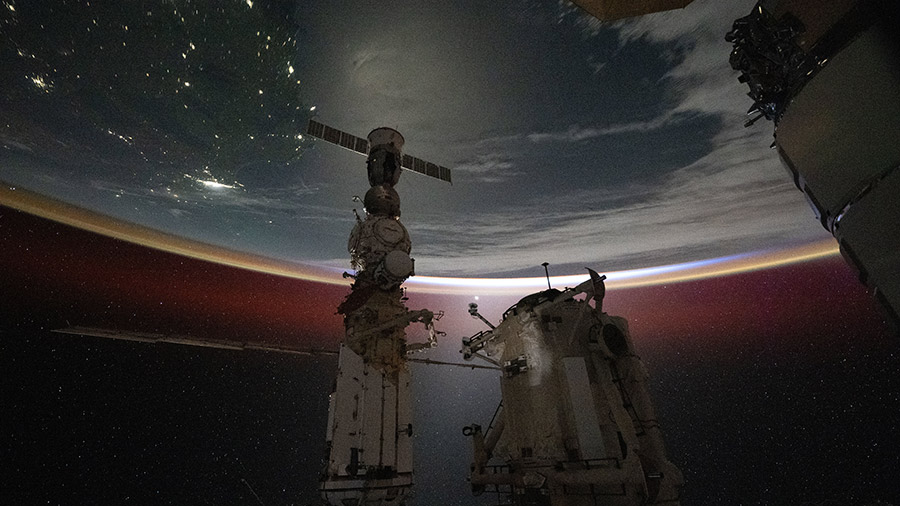
The last rays of an orbital sunset illuminate Earth's atmosphere as the space station 267 miles above off the coast of Australia.
The last rays of an orbital sunset illuminate Earth’s atmosphere as the space station 267 miles above off the coast of Australia.

Three crewmates are preparing to end their stay aboard the International Space Station and return to Earth next week. Meanwhile, the rest of the Expedition 71 crew spent Monday exploring how space affects their bodies, working on a spacesuit, and transferring cargo.

NASA astronaut Tracy C. Dyson is nearing her mission’s completion along with Roscosmos cosmonauts Oleg Kononenko and Nikolai Chub. Dyson packed personal items that will be going back to Earth with her on the Soyuz MS-25 crew ship and on future SpaceX Dragon missions. Dyson started her mission when she launched to the orbital outpost on March 23 aboard the Soyuz MS-25 spacecraft. Kononenko and Chub practiced piloting the Soyuz MS-25 on a simulator for a descent to Earth. The Roscosmos duo also tested the lower body negative pressure suit that may alleviate the symptoms of living in space and help crews adjust quicker to the return Earth’s gravity. Kononenko and Chub have been orbiting Earth since Sept. 15, 2023, when they lifted off toward the space station on the Soyuz MS-24 crew ship.

At the end of her crew shift, Dyson set up medical imaging hardware and viewed NASA Flight Engineer Mike Barratt’s eyes with ground doctors observing his optic nerve, retina, cornea to understand and counteract potential space-caused vision issues. Barratt also attached sensors to his chest before ground doctors remotely guided the Vascular Echo device and scanned his abdomen in the Columbus laboratory module. He also worked out on the advanced resistive exercise device while wearing electrodes that recorded his heart rate.

Cosmonauts Alexey Ovchinin and Ivan Vagner attached sensors to their foreheads and fingers on Monday to monitor how blood flows throughout their bodies in weightlessness. The duo also continued unpacking cargo delivered aboard the Soyuz MS-26 spacecraft that transported them and NASA astronaut Don Pettit to the space station on Sept. 11. Pettit continued familiarizing himself with station operations and orbital medical procedures and equipment during Monday.

NASA Flight Engineer Matthew Dominick tested the performance of lithium-ion battery chargers in the Quest airlock before installing a battery on a spacesuit. NASA astronauts Jeanette Epps and Butch Wilmore took turns throughout Monday unpacking cargo from inside the Cygnus space freighter that was captured and installed to the Unity module on Aug. 6, 2024.

Expedition 71 Flight Engineers Suni Williams of NASA and Alexander Grebenkin of Roscosmos focused most of their day on orbital maintenance. Williams worked mostly on cleaning and inspecting hatch seals while also joining Wilmore for a short SpaceX Dragon spacecraft systems review. Grebenkin checked out ventilation systems in the Nauka science module before assisting Ovchinin and Vagner during their blood flow study.


Learn more about station activities by following the space station blog@space_station and @ISS_Research on X, as well as the ISS Facebook and ISS Instagram accounts.

Get weekly video highlights at: https://roundupreads.jsc.nasa.gov/videoupdate/

Get the latest from NASA delivered every week. Subscribe here: www.nasa.gov/subscribe

Powered by WPeMatico

Get The Details…

Mark Garcia

Engineer Zaida Hernandez

Engineer Zaida Hernandez

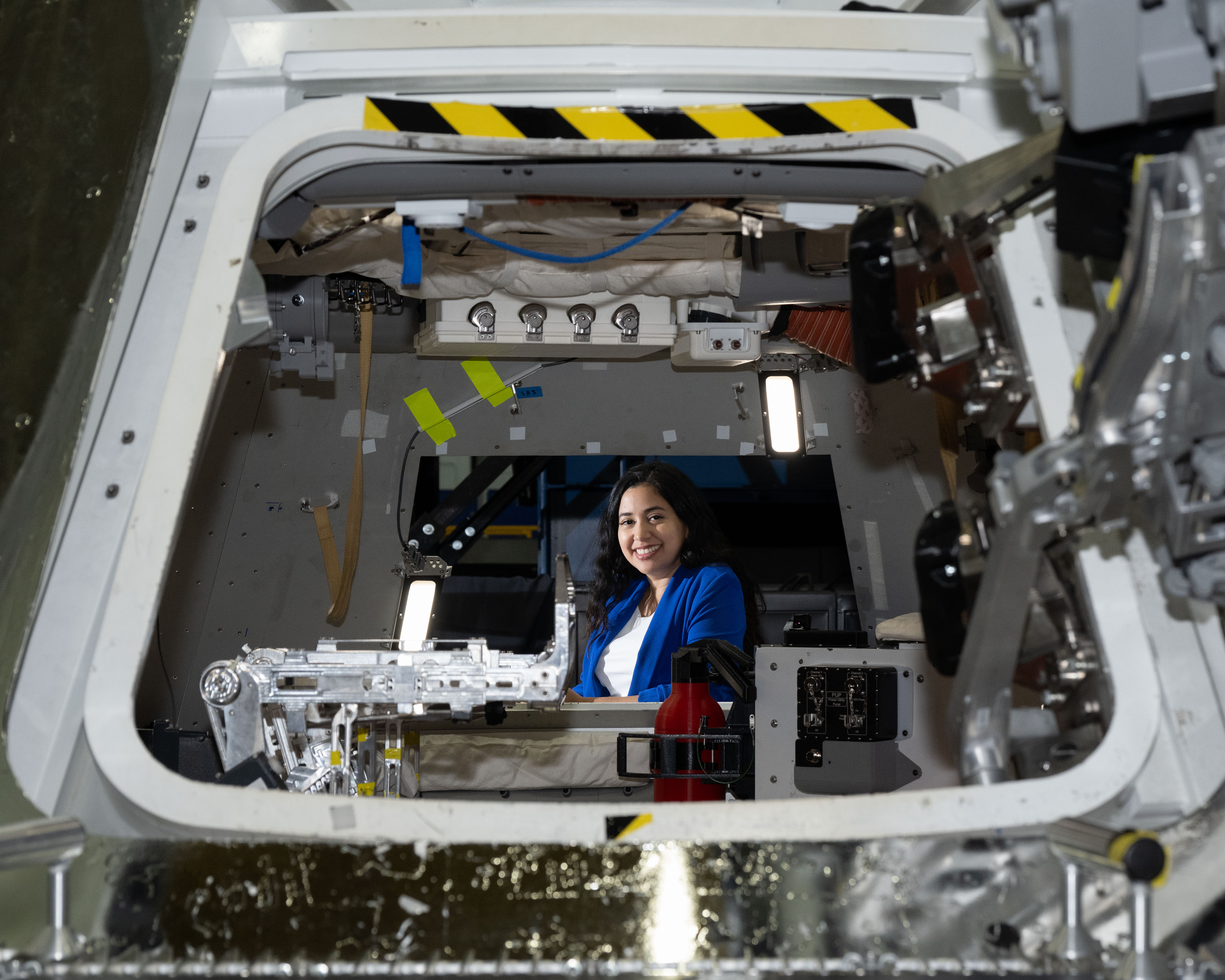
Zaida Hernandez, a hispanic woman with long wavy brown hair and dark brown eyes, smiles brightly at the camera while sitting inside a mock up of NASA's Orion Crew Capsule. She's wearing a blue blazer and flight hardware is seen all around her.

“I would say family and part of that ‘first-gen experience’ [shaped me]. Being born in the U.S. gave me a lot of opportunities that my family and parents were robbed of because of situations in their home country. It shaped me to be a hard worker and to aspire to large things because not only was it my goal at this point, but it was also my parents’ aspiration.

“I feel that a lot of their pride comes from their kids. That pushes me to be a better employee or to want to do better for myself because I know that they’ve made a lot of sacrifices for me while I was building up to becoming an engineer. Now that I’ve accomplished my goal, it’s very important for me to always thank them and be a grateful person.

“Culture also shaped me. Coming from a minority background, and I’m only familiar with the Hispanic culture, it was an education-first mindset…and very supportive. I think that’s important. When I do outreach, I always like to share my experiences because sometimes, people don’t realize how much impact they can have, like the teacher who told me about [a NASA] internship. She didn’t know that was going to be my career. Or, my mom staying up with me during late night study sessions when I was like, ‘I can’t be an engineer’ and failed a test and she was like, ‘No, you can do it. I believe in you.’ 

“It might not be memorable for the person who [says it], but it was super important for my motivation to keep going. So, [online, I am that voice for] first-gen motivation.” 

– Zaida Hernandez, Engineer, Lunar Architecture Team, NASA Johnson Space Center

Image Credit: NASA/Bill Stafford
Interviewer: NASA/Tahira Allen

Check out some of our other Faces of NASA. 

Powered by WPeMatico

Get The Details…
Tahira S. Allen

Reaching New Heights to Unravel Deep Martian History!

Reaching New Heights to Unravel Deep Martian History!

2 min read

Reaching New Heights to Unravel Deep Martian History!

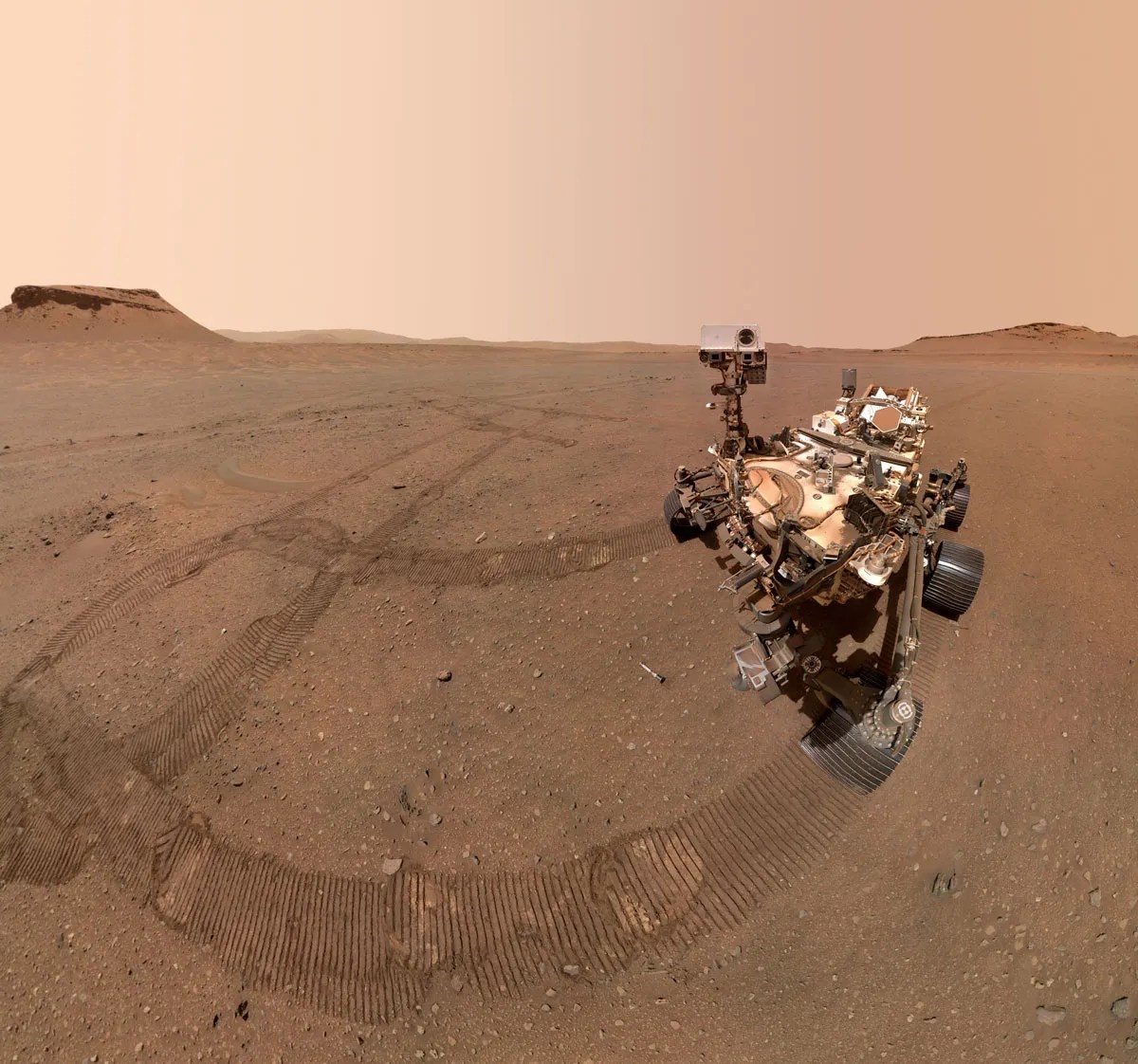
This is an image of the rim that the Perseverance rover took on sol 383 (March 18th, 2022) when it was traversing the crater floor. Dox Castle is located at the top of the image in the far ground.
This is an image of the rim that the Perseverance rover took on sol 383 (March 19th, 2022) when it was traversing the crater floor. Dox Castle is located at the top of the image in the far ground.
NASA/JPL-Caltech/ASU

The Perseverance rover is reaching new heights as it ascends the rim of Jezero crater (over 300 meters in elevation higher than the original landing site)! The rover is now enroute to its first campaign science stop Dox Castle (image in the far ground) a region of interest for its potential to host ancient Mars’ bedrock in the exposed rocks on the rim.

Impact craters like Jezero may be the key to piecing together the early geologic history of Mars, as they provide a window into the history of the ancient crust by excavating and depositing deep crustal materials above the surface. Crater rims act as keepers of ancient Martian history, uplifting and exposing the stratigraphy of these impacted materials. Additionally, extreme heat from the impact can encourage the circulation of fluids through fractures similar to hydrothermal vents, which have implications for early habitability and may be preserved in the exposed rim bedrock. With the Perseverance rover we have the potential to explore some of the oldest exposed rocks on the planet.

Exploring such diverse terrains takes a lot of initial planning! The team has been preparing for the Crater Rim Campaign these last few months by working together to map out the types of materials Perseverance may encounter during its traverse up and through the rim. Using orbital images from the High-Resolution Imaging Science Experiment (HiRISE) instrument, the science team divided the rim area into 36 map quadrants, carefully mapping different rock units based on the morphologies, tones, and textures they observed in the orbital images. Mapping specialists then connected units across the quads to turn 36 miniature maps into one big geologic map of the crater rim. This resource is being used by the team to plan strategic routes to scientific areas of interest on the rim.

On Earth, geologic maps are made using a combination of orbital images and mapping in the field. Planetary scientists don’t typically get to check their map in the field, but we have the unique opportunity to validate our map using our very own robot geologist! Dox Castle will be our first chance to do rim science – and we’re excited to search for evidence of the transition between the margin and rim materials to start piecing together the stratigraphic history of the rocks that make up the rim of Jezero crater.

Written by Margaret Deahn, Ph.D. student at Purdue University

Share

Details

Last Updated
Sep 16, 2024

Related Terms

Powered by WPeMatico

Get The Details…

Station Science Top News: September 13, 2024

Station Science Top News: September 13, 2024

JAXA (Japan Aerospace Exploration Agency) researchers examined the structures of four titanium-based compounds solidified in levitators in microgravity and on the ground and found that the internal microstructures were generally similar. These results could support development of new materials for use in space manufacturing.

To produce glass or metal alloys on Earth, raw materials are placed into a container and heated. But reactions between the container and the materials can cause imperfections. The JAXA Electrostatic Levitation Furnace can levitate, melt, and solidify materials without a container. The facility enables measurement of the thermophysical properties of high temperature melts and could accelerate development of innovative materials such as heat resistant ceramics for use in the aerospace and energy industries.

An astronaut wears safety glasses and a face mask while working with a large, box-like scientific apparatus inside the International Space Station.
JAXA (Japan Aerospace Exploration Agency) astronaut Akihiko Hoshide works with the Electrostatic Levitation Furnace.
European Space Agency/Thomas Pesquet

Satellite 3D imaging of a Peruvian tropical forest demonstrated that measuring leaf traits with remote sensing may provide more accurate predictions of biomass production than structure data such as tree height. Carbon stored or sequestered in forests can help offset emissions that cause climate change, and improved estimates of tropical forest biomass could allow researchers to better evaluate these ecosystems and their offset contributions.

Global Ecosystem Dynamics Investigation (GEDI) provides high-resolution global observations of Earth’s forests and topography. These observations provide information on carbon and water cycling processes, biodiversity, and habitat, including quantifying carbon stored in vegetation and the potential for future carbon storage. The researchers suggest that estimates of tropical forest biomass could be further improved with data from new satellite missions and by integrating GEDI with dynamic vegetation models that include trait data.

Learn more from this video and this article.

Exterior view of a white scientific instrument attached to the outside of the International Space Station, with Earth visible in the background.
The refrigerator-sized Global Ecosystem Dynamics Investigation instrument on the exterior of the International Space Station.
NASA/Nick Hague

Research indicates that refractive eye surgery is safe, effective, and suitable for astronauts. The study documented stable vision in two astronauts who, a few years prior to flight, underwent photorefractive keratectomy (PRK) and laser-assisted in situ keratomileusis (LASIK), respectively. These visual correction procedures can reduce the logistical complications of wearing glasses or contact lenses in space.

International Space Station Medical Monitoring collects health data from crew members before, during, and after spaceflight.  The medical evaluation requirements, including vision assessment, apply to all crew members and are part of efforts by all international partners to maintain crew health, ensure mission success, and enable crew members to return to normal life on Earth after their missions.

Two astronauts float inside a densely packed laboratory module on the International Space Station, surrounded by a complex array of scientific equipment, cables, and instruments.
NASA astronauts Terry Virts (bottom) and Scott Kelly (top) perform eye exams as part of ongoing studies into crew vision health.
NASA

JAXA researchers report that accurately assessing the velocity of airflow in front of a spreading flame makes it possible to predict the flammability of thin, flat materials in microgravity. These results mean it could be possible to use ground tests to predict the flammability of solid materials and thus ensure fire safety in spacecraft and space habitations.

The JAXA Fundamental Research on International Standard of Fire Safety in Space – Base for Safety of Future Manned Missions (FLARE) investigation tested the flammability of various solid materials in different configurations, including filter paper. Microgravity significantly affects combustion phenomena such as the spread of flame over solid materials; while flames cannot spread over solid materials under low-speed oxygen flow in Earth’s gravity, they can in microgravity due to the lack of buoyancy. Testing of the flammability of materials for spacecraft previously has not considered the effect of gravity, and results from this investigation could address this issue, significantly improving fire safety on future exploration missions.

JAXA astronaut Satoshi Furukawa sets up hardware for the Fundamental Research on International Standard of Fire Safety in Space – Base for Safety of Future Manned Missions investigation.
NASA/Jasmin Moghbeli

Powered by WPeMatico

Get The Details…
Sumer Loggins