Orion Spacecraft Tested in Ohio After Artemis I Mission

Orion Spacecraft Tested in Ohio After Artemis I Mission

5 min read

Preparations for Next Moonwalk Simulations Underway (and Underwater)

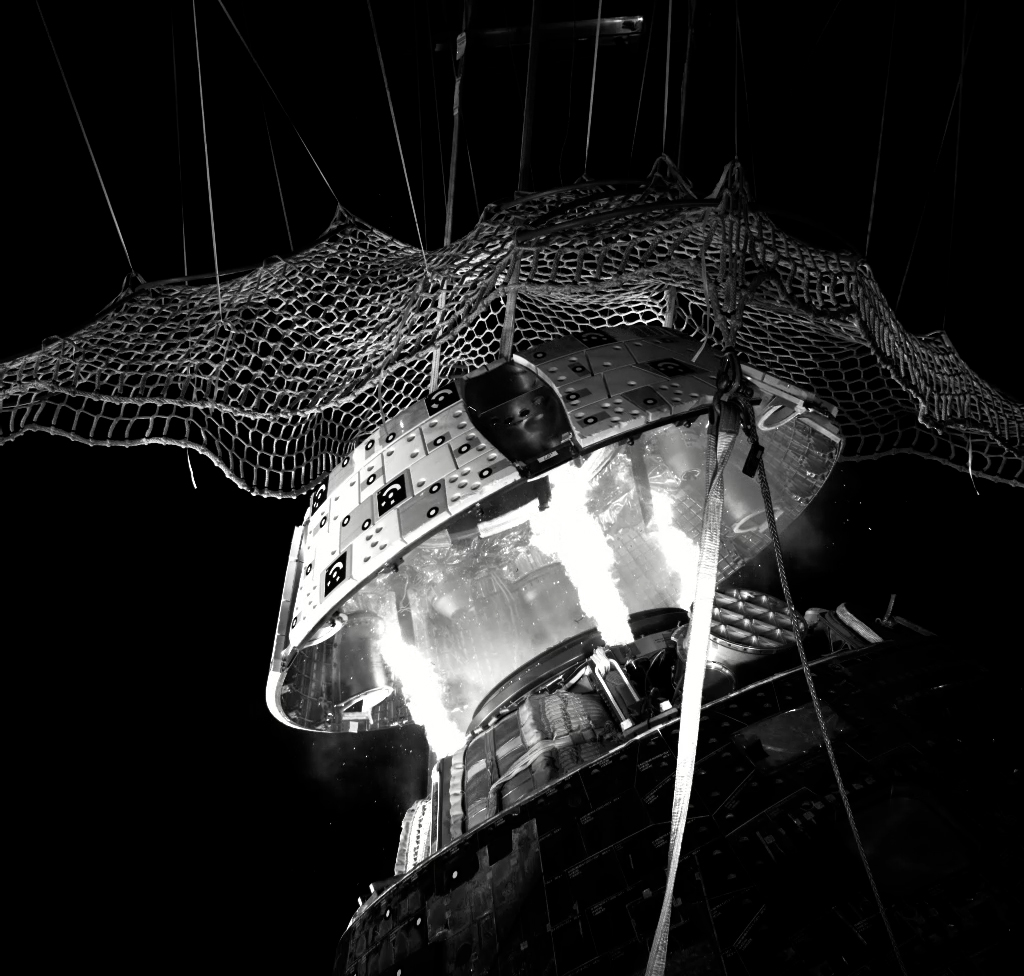
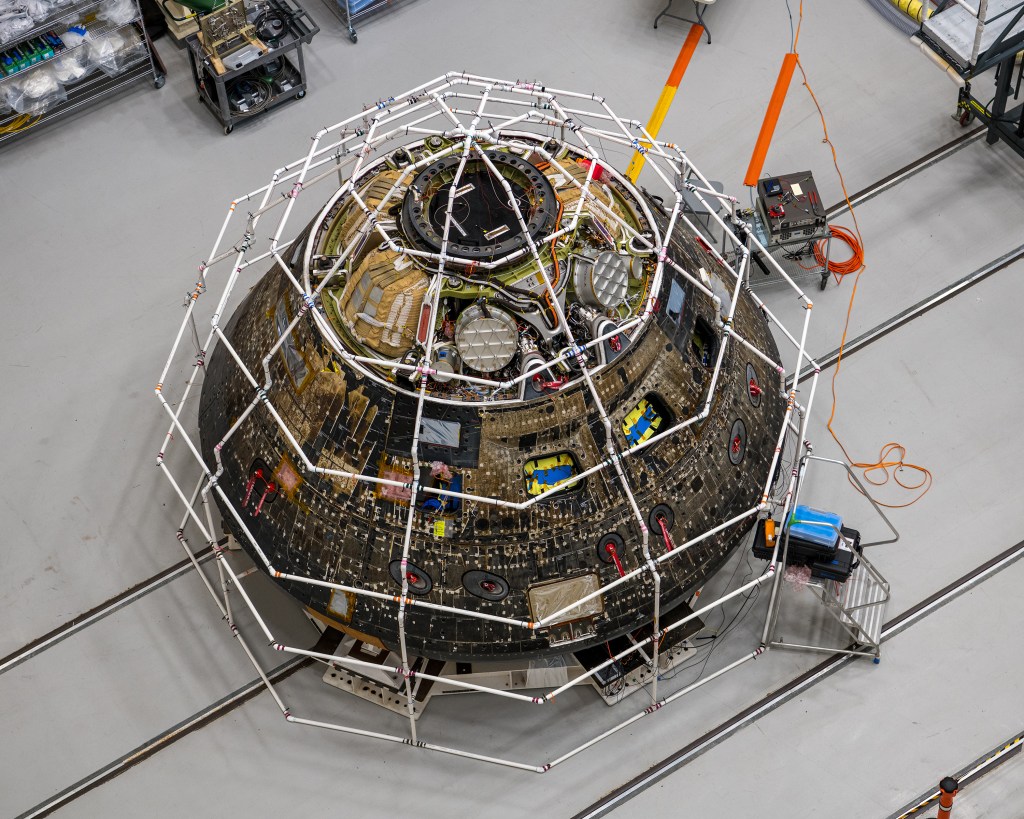
The Orion Environmental Test Article, blackened from its spaceflight, is photographed sitting on a white platform inside the shadowed aluminum vacuum chamber at NASA’s Neil Armstrong Test Facility. A woman with dark hair wearing a black sweatshirt appears in the lower right corner of the photo.
The Orion Environmental Test Article photographed inside the Thermal Vacuum Chamber on April 11, 2024, in the Space Environments Complex at NASA’s Neil Armstrong Test Facility in Sandusky, Ohio.
Credit: NASA/Quentin Schwinn 

Making the voyage 1.4 million miles around the Moon and back — the farthest a spacecraft built for humans has ever gone — the Orion spacecraft has faced a battery of tests over the years. Though Orion successfully proved its capabilities in the harsh environment of space during the Artemis I mission, Orion’s evaluation did not end at splashdown.  

The crew module, now known as the Orion Environmental Test Article (ETA), returned to NASA’s Neil Armstrong Test Facility in Sandusky, Ohio, in January 2024 and completed an 11-month test campaign necessary for the safety and success of Artemis II, the first crewed mission under NASA’s Artemis campaign.  

Engineers and technicians from NASA and Lockheed Martin subjected the test article to the extreme conditions Orion may experience in a launch abort scenario. In the event of an emergency, Orion — and astronauts inside — will jettison away from the SLS (Space Launch System) rocket for a safe landing in the ocean.  
“This event would be the maximum stress and highest load that any of the systems would see,” said Robert Overy, Orion ETA project manager, NASA’s Glenn Research Center in Cleveland. “We’re taking a proven vehicle from a successful flight and pushing it to its limits. The safety of the astronaut crew depends on this test campaign.” 

Experts conducted tests that simulated the noise levels of an abort during launch in addition to the electromagnetic effects of lightning strikes. The test campaign also jettisoned the test article’s docking module and parachute covers, as well as the crew module uprighting system, which consists of five airbags on top of the spacecraft that inflate upon splashdown.  

“It’s been a successful test campaign,” Overy said. “The data has matched the prediction models, and everything operated as expected after being subjected to nominal and launch abort acoustic levels. We are still analyzing data, but the preliminary results show the vehicle and facility operated as desired.” 

On. Nov. 23, 2024, after subjecting the Orion test article to launch abort-level acoustics, experts tested the functionality of the forward bay cover, which is the last piece that must eject before parachutes deploy.
Credit: NASA/Jordan Salkin and Quentin Schwinn

Testing Orion at such high acoustic levels was a major milestone for Artemis. The Reverberant Acoustic Test Facility, the world’s most powerful spacecraft acoustic test chamber, was built in 2011 in anticipation of this specific test campaign.   

“These tests are absolutely critical because we have to complete all of these tests to say the spacecraft design is safe and we’re ready to fly a crew for the first time on Artemis II,” said Michael See, ETA vehicle manager, Orion Program. “This is the first time we’ve been able to test a spacecraft on the ground in such an extreme abort-level acoustic environment.” 

The Orion Environmental Test Article with Launch Abort System installed moves to the Reverberant Acoustic Test Facility, the most powerful spacecraft acoustic test chamber in the world, on Sept. 9, 2024, at NASA’s Neil Armstrong Test Facility in Sandusky, Ohio. 
Credit: NASA/Jordan Salkin and Quentin Schwinn 

Part of NASA Glenn, Armstrong Test Facility is home to the world’s largest and most powerful space environment simulation chambers capable of testing full-sized spacecraft for all the extreme conditions of launch and spaceflight. The facility not only houses an acoustic test chamber, but also a thermal-vacuum chamber and spacecraft vibration system.  

“The facility is unique because there’s no other place in the world capable of testing spacecraft like this,” Overy said. “Armstrong Test Facility is a one-stop-shop for all your testing needs to prepare your spacecraft for the severe and challenging journey to and from space.” 

Orion’s Round-Trip Journey to Ohio 

This is not the first time Orion has been inside the walls of the Space Environments Complex at Armstrong Test Facility. The spacecraft underwent mission-critical testing in 2019, where it was subjected to extreme temperatures and an electromagnetic environment before it launched on Artemis I in 2022. 

“I remember when it first arrived, the gravity of its importance really hit home,” said Joshua Pawlak, test manager, NASA Glenn. “I thought to myself, on future Artemis missions, astronauts will be inside Orion heading to the Moon, and they’ll be depending on it for survival.” 

Pawlak was a mechanical test engineer when Orion made its first trip to the Sandusky facility. He participated in planning and coordinating testing of the vehicle and trained personnel. He managed the vehicle from the moment it arrived, through testing, and up until it departed for NASA’s Kennedy Space Center in Florida.  

A man in a hat, long-sleeve shirt, and jeans stands with his hands in his pocket, smiling toward the camera. Behind him across the water, the Artemis I Space Launch System rocket awaits launch. The rocket is lit by flood lights, and the light is reflected in both the water and the sky above.
Joshua Pawlak poses in front of the Artemis I Space Launch System rocket on Nov. 16, 2022, in Cape Canaveral, Florida.
Credit: Joshua Pawlak

“When it returned, I felt like I had a small part in this really big and exciting thing,” Pawlak said. “Seeing it come back blackened and scarred from the harsh environment of space was incredible. Space is not a friendly space, and I felt proud knowing that if there were astronauts on that vehicle, they would have survived. 

After the Orion test article departs from Glenn, it will head to Kennedy for additional testing. 

“When Artemis II launches and those astronauts are sitting on board, I’ll know that I did everything I could to ensure the vehicle is ready for them and going to perform as expected,” Pawlak said. “That’s why I do what I do.” 

Powered by WPeMatico

Get The Details…
Kelly M. Matter

Dragon Cargo Spacecraft Leaves Station Packed With Science

Dragon Cargo Spacecraft Leaves Station Packed With Science

Dec. 16, 2024: International Space Station Configuration. Five spaceships are parked at the space station including the SpaceX Dragon Freedom, the Northrop Grumman Cygnus resupply ship, the Soyuz MS-26 crew ship, and the Progress 89 and 90 resupply ships.

At 11:05 a.m. EST, the unpiloted SpaceX Dragon spacecraft undocked from the forward port of the Harmony module at the International Space Station following a command from ground controllers at SpaceX.

After re-entering Earth’s atmosphere, the spacecraft will make a parachute-assisted splashdown off the coast of Florida on Tuesday, Dec. 17. NASA will not stream the splashdown but will post updates on the agency’s space station blog.

Filled with nearly 6,000 pounds of crew supplies, science investigations, and equipment, the spacecraft arrived to the orbiting laboratory Nov. 5 after it launched Nov. 4 on a Falcon 9 rocket from Launch Complex 39A at NASA’s Kennedy Space Center in Florida for the agency’s SpaceX 31st commercial resupply services mission.


Learn more about station activities by following the space station blog, @space_station and @ISS_Research on X, as well as the ISS Facebook and ISS Instagram accounts.

Get the latest from NASA delivered every week. Subscribe here: www.nasa.gov/subscribe

Powered by WPeMatico

Get The Details…

Mark Garcia

Artemis II Core Stage Moves to High Bay 2

Artemis II Core Stage Moves to High Bay 2

An immense orange cylindrical object - the SLS core stage - is surrounded by a blue metal structure. The space around them is dark.
NASA/Kim Shiflett

In this image from Dec. 11, 2024, the 212-foot-tall SLS (Space Launch System) core stage is lowered into High Bay 2 at the Vehicle Assembly Building at NASA’s Kennedy Space Center in Florida. With the move to High Bay 2, NASA and Boeing technicians now have 360-degree access to the core stage both internally and externally.

The Artemis II test flight, targeted for launch in 2026, will be NASA’s first mission with crew under the Artemis campaign. NASA astronauts Victor Glover, Christina Koch, and Reid Wiseman, as well as CSA (Canadian Space Agency) astronaut Jeremy Hansen, will go on a 10-day journey around the Moon and back.

Image credit: NASA/Kim Shiflett

Powered by WPeMatico

Get The Details…
Monika Luabeya

Station Science Top News: Dec. 13, 2024

Station Science Top News: Dec. 13, 2024

Benchmarks for solidifying metal alloys

Researchers report benchmark data for modeling the growth of specific types of microstructures that form during solidification of metal alloys under different conditions. These microstructures affect the properties of materials and products such as refrigeration devices and solar cells.

The ESA (European Space Agency) Columnar-to-Equiaxed Transition in Solidification Processing (CETSOL) investigation studied the processes of metal alloy solidification and the crystal patterns that form as liquids transition to solids. Results could improve ground-based development of lightweight, high-performance structural materials for space and ground applications. Microgravity is key to this research because it eliminates influences of gravity during solidification and allows researchers to control turbulence and convection.

An astronaut aboard the International Space Station holds a metal bar with both hands while working in a space station module filled with cables, equipment, and storage compartments. He wears a light gray t-shirt and blue pants.
European Space Agency (ESA) astronaut Frank De Winne works on the Columnar-to-Equiaxed Transition in Solidification Processing (CETSOL) investigation in the U.S. Destiny Laboratory.
NASA

Composite materials shield against radiation, other hazards

Researchers found no degradation in two multifunctional radiation shielding composite materials after exposure to space. This finding suggests that composite materials with a surface layer and a coating could protect crews on future missions from radiation and other hazards of space.

Materials ISS Experiment Flight Facility (MISSE-FF) continued a series of investigations examining how exposure to space affects materials and material configurations used for space missions. The MISSE-13 suite of materials included a multifunctional composite material for shielding crew members in habitats and spacecraft beyond low Earth orbit against radiation, atomic oxygen, and temperature extremes.

An image of the Materials ISS Experiment Flight Facility (MISSE-FF) platform used for MISSE experiments.
NASA

Modeling the use of boiling to transfer heat

Researchers developed an algorithm to determine the amount of heat transferred via boiling of a liquid and showed that maximum heat flow occurs where the bubble contacts the surface and the liquid. This finding could inform design of thermal control systems for spacecraft and for cooling electronics and other applications on Earth.

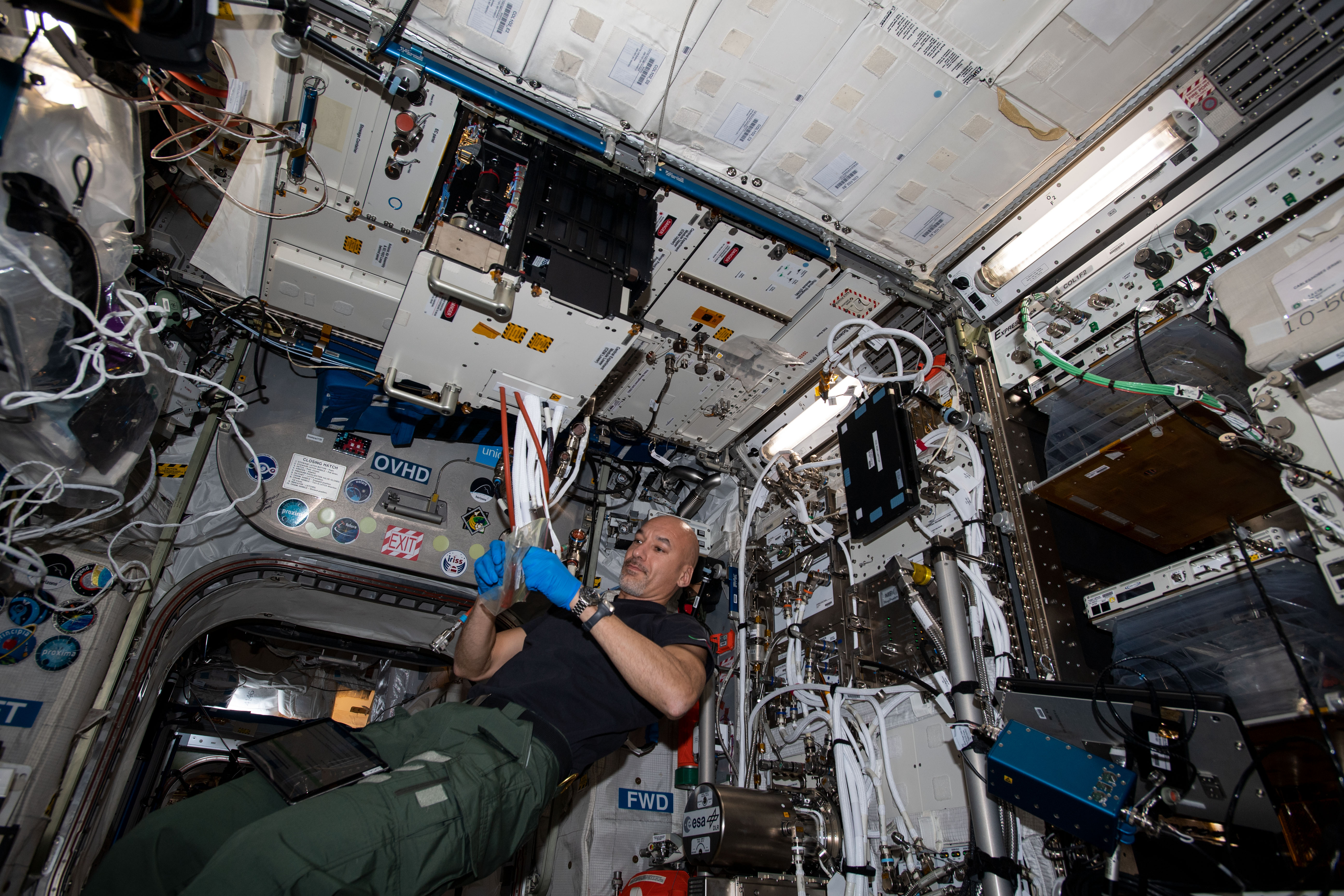
ESA’s Multiscale Boiling examined the dynamics of heat transfer via boiling, which generates vapor bubbles that lift heat from a surface. This technique is less efficient in microgravity because boiling happens more slowly, and bubbles remain near the surface in the absence of buoyancy. But microgravity also makes it possible to observe effects that are too fast and too small to be measured under normal gravity conditions, helping scientists understand the dynamics of boiling heat transfer.

An astronaut aboard the International Space Station works with cables and tools while floating in a module filled with equipment, wires, and storage containers. The astronaut is wearing gloves, a black T-shirt, and green pants.
ESA astronaut Luca Parmitano works on the Multiscale Boiling hardware aboard the International Space Station.
ESA/Luca Parmitano

Powered by WPeMatico

Get The Details…
Sumer Loggins

NASA Sees Progress on Starlab Commercial Space Station Development

NASA Sees Progress on Starlab Commercial Space Station Development

3 min read

Preparations for Next Moonwalk Simulations Underway (and Underwater)

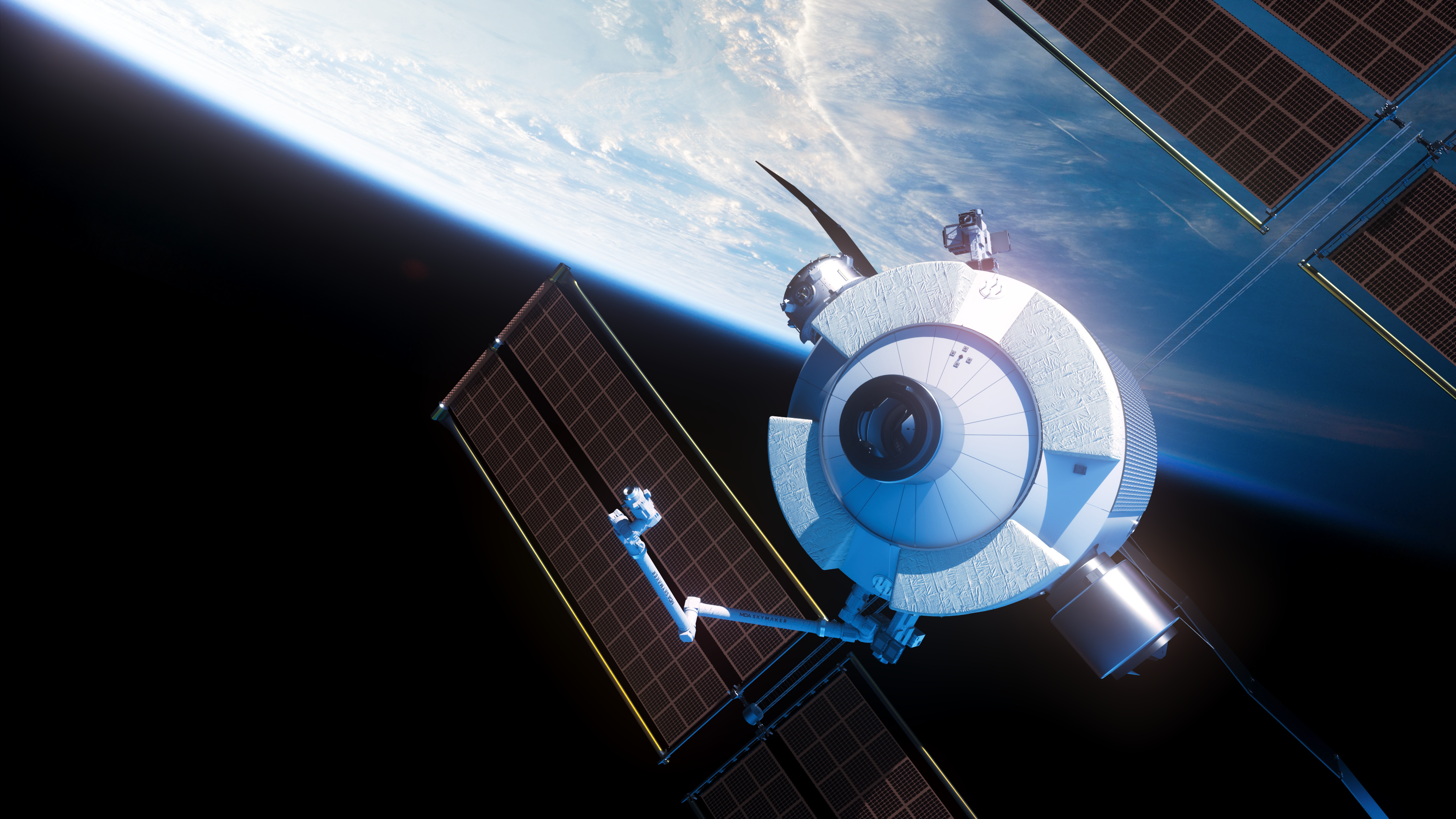
A digital rendering of the Starlab, which includes a large habitation and laboratory module with a smaller service module for power and propulsion (Credit: Starlab).
A digital rendering of the Starlab, which includes a large habitation and laboratory module with a smaller service module for power and propulsion.
Credits: Starlab

A NASA-funded commercial space station, Starlab, recently completed four key developmental milestones, marking substantial progress in the station’s design and operational readiness.

The four milestones are part of a NASA Space Act Agreement  awarded in 2021 and focused on reviews of the habitat structural test article preliminary design, systems integration, integrated operations, and a habitat structural test plan.

“These milestone achievements are great indicators to reflect Starlab’s commitment to the continued efforts and advancements of their commercial destination,” said Angela Hart, program manager for NASA’s Commercial Low Earth Orbit Development Program. “As we look forward to the future of low Earth orbit, every successful milestone is one step closer to creating a dynamic and robust commercialized low Earth orbit.”

The commercial space station is designed to launch on a single flight and includes a large habitation and laboratory module with a smaller service module for power and propulsion.

Earlier this year, Starlab Space completed a structural test article preliminary design review, supported by NASA. The structural test article is an engineering development unit of the station’s habitation module, which is where astronauts will spend most of their time living and working aboard the future commercial destination. An engineering development unit is a physical model that is used to test and verify the design of a project, such as a space station.

A digital rendering of the Starlab free-flying commercial destination, which continues to be developed as part of a Space Act Agreement with NASA (Credit: Starlab).
A digital rendering of the Starlab free-flying commercial destination, which continues to be developed as part of a Space Act Agreement with NASA
Credits: Starlab

Starlab also recently shared a test plan for the structural test article, which included defining qualification tests of the development unit from welding verifications to proof pressure and static load testing, among others. During proof pressure tests, a spacecraft component or system is pressurized to a significantly higher than normal operating pressure to verify its structural integrity, and a static load test measures the response of a component or system under an applied load.

In addition, Starlab completed integration operations and systems integration reviews. These reviews included updates on system and station architecture, segment interfaces, and program goals, as well as a comprehensive look into the program’s requirements.

Starlab also is set to complete a preliminary design review and phase 1 safety review by the end of the year. This review is meant to demonstrate that the station’s design meets system requirements, including human spaceflight verification, with acceptable risk. The safety review will summarize the current design and general safety approach for the destination.

NASA is supporting the design and development of multiple commercial space stations, including Starlab, through funded and unfunded agreements. The current design and development phase will be followed by the procurement of services from one or more companies, where NASA aims to be one of many customers for low Earth orbit destinations.

NASA’s low Earth orbit microgravity strategy builds on the agency’s extensive human spaceflight experience to advance future scientific and exploration goals. As the International Space Station nears the end of operations, NASA plans to transition to a new low Earth orbit model to continue leveraging microgravity benefits. Through commercial partnerships, NASA aims to maintain its leadership in microgravity research and ensure continued benefits for humanity.

Learn more about NASA’s low Earth orbit microgravity strategy at:

https://www.nasa.gov/leomicrogravitystrategy

News Media Contacts:

Claire O’Shea
Headquarters, Washington
202-358-1100
claire.a.o’shea@nasa.gov

Anna Schneider
Johnson Space Center, Houston
281-483-5111
anna.c.schneider@nasa.gov

Powered by WPeMatico

Get The Details…
Roger Weiss