ICESat-2 Hosts Third Applications Workshop
16 min read
ICESat-2 Hosts Third Applications Workshop
Introduction
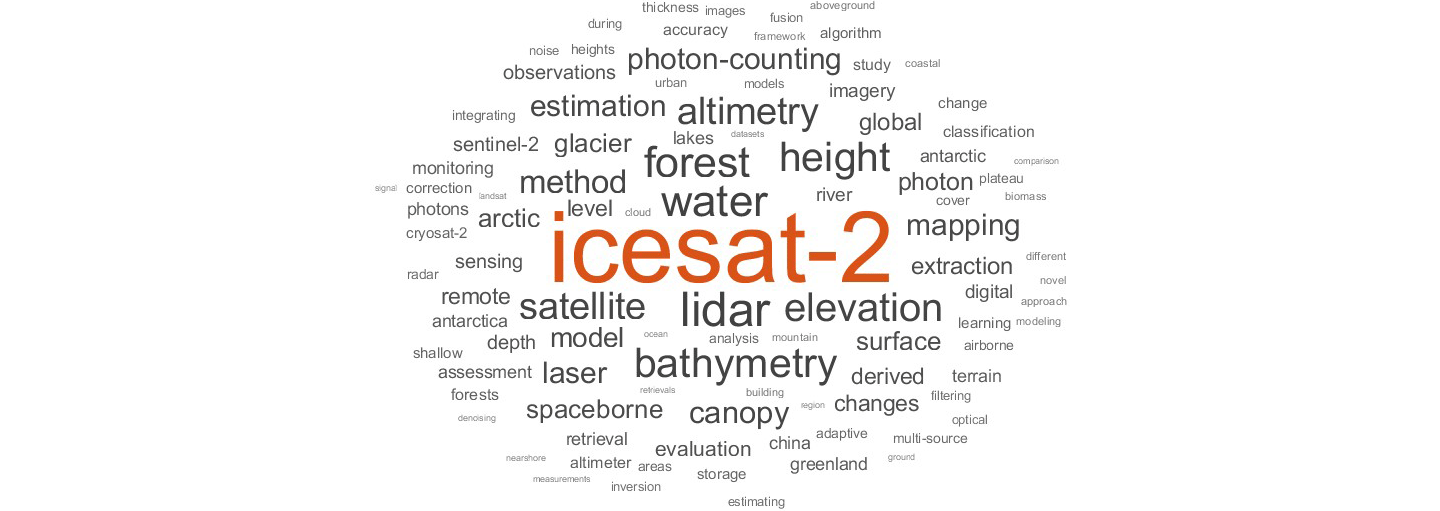
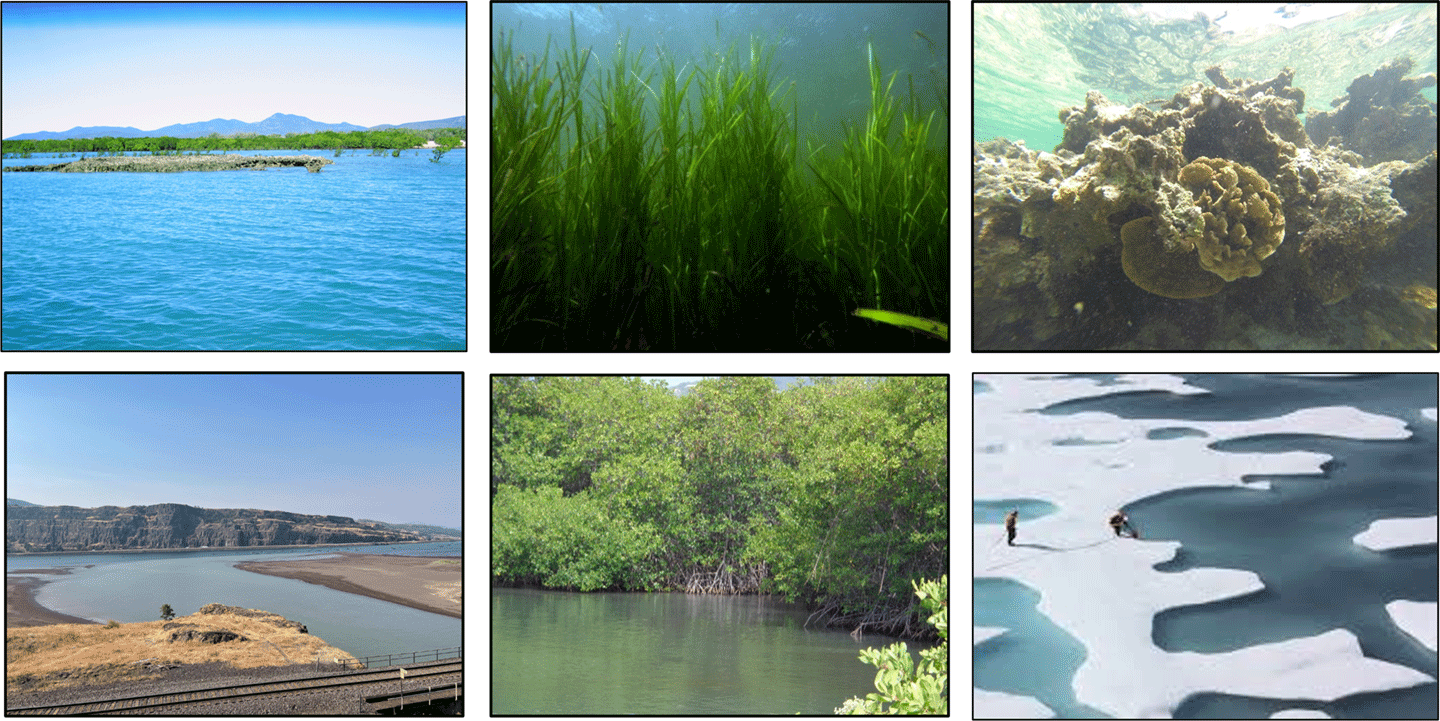
The NASA Ice, Cloud, and land Elevation Satellite-2 mission (ICESat-2), launched September 15, 2018, continues the first ICESat mission, delivering invaluable global altimetry data. Notwithstanding its icy acronym, ICESat-2 can do more than measure ice – in fact, the expanded acronym hints at these wider applications. From vegetation to inland surface water to bathymetry, ICESat-2 has emerged as a more versatile mission than originally planned, thanks in part to the ingenuity of research scientists, the Science Team (ST), and users of the data – see Figure 1.
ICESat-2 was among the first NASA missions to develop an applications program that engages both scientists and potential users of the science data to accelerate user uptake. Throughout this program, ICESat-2 has demonstrated the value of Earth Observation data to end users, stakeholders, and decision makers. The ICESat-2 Early Adopter (EA; pre-launch) program, now the Applied User program (post-launch), was created to “promote applications research to provide a fundamental understanding of how ICESat-2 data products can be scaled and integrated into organizations, policy, business, and management activities to improve decision making efforts.” This article summarizes the workshop objectives met through plenary talks, lightning talks, an applied user panel, and a breakout session. The ICESat-2 Applications page contains more about the ICESat-2 Applications Program.
Motivation and Objectives
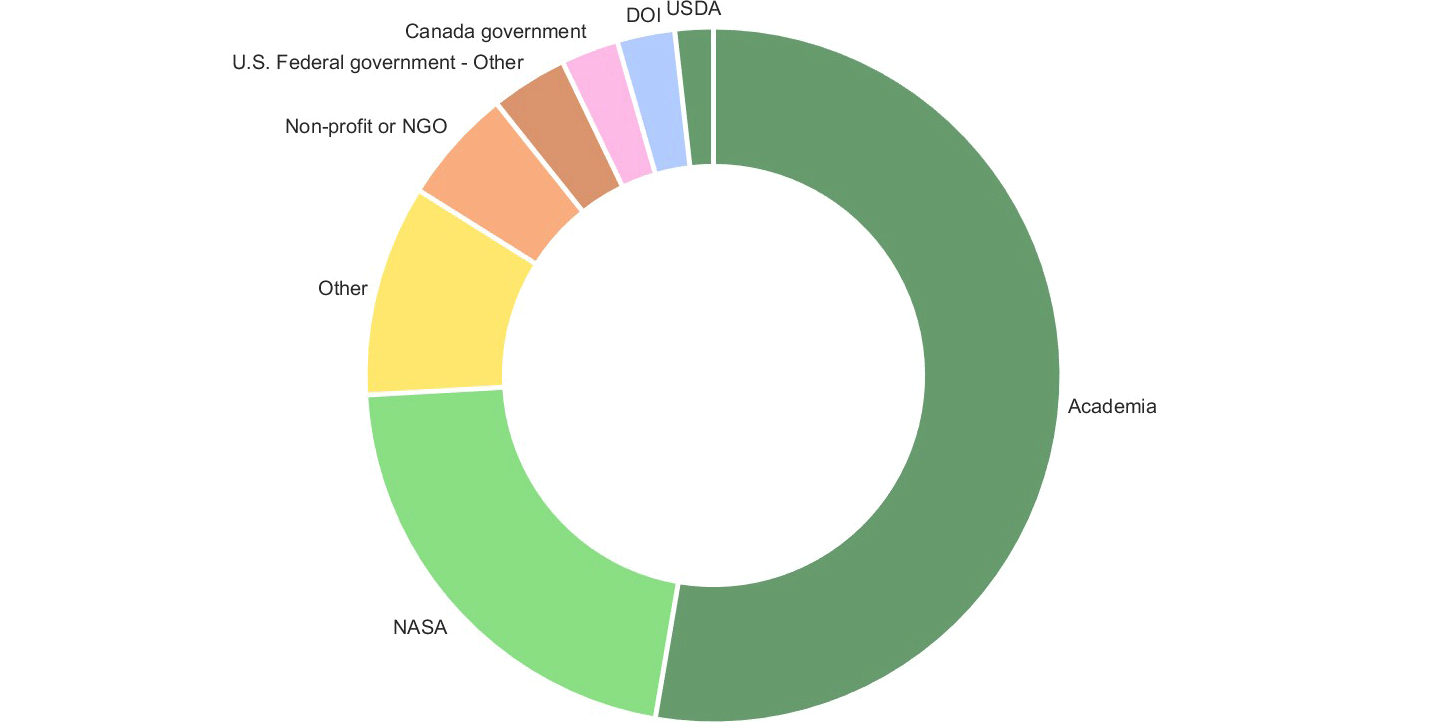
To meet Applications Program initiatives, the ICESat-2 Applications Team hosted its third Applications workshop June 3–4, 2024 at NASA’s Goddard Space Flight Center (GSFC) in a hybrid environment. A total of 113 participants registered for the workshop, representing multiple government agencies, including NASA Centers, non-profit organizations, and academic organizations – see Figure 2. Approximately 20 individuals attended the workshop in person with the majority participating online through the Webex platform. This workshop provided the space to foster collaboration and to encourage the conceptualization of applications not yet exploited.
The objectives of the Applications workshop were to:
- provide an overview of the mission status, data products, and support services from the National Snow and Ice Data Center (NSIDC);
- build partnerships among applied users, data producers, and end users;
- foster synergies with all participants, decision makers, and satellite operators;
- identify new potential applications or products from ICESat-2;
- review available tools for extracting ICESat-2 data; and
- understand the challenges faced by applied users, data users, and end users, and identify solutions.
The remainder of this article will summarize the meeting highlights. Rather than give a strict chronological survey, the report is organized around the meeting objectives listed above. Readers interested in more details can find the full agenda and slide decks from individual presentations mentioned in this summary on the ICESat-2 Workshop website.
Workshop Overview and Structure
The agenda of the 2024 ICESat-2 Applications workshop was intended to bring together end-users, including ICESat-2 applications developers, satellite operators, and decision makers from government and nongovernmental entities to discuss the current state and future needs of the community – see Figure 3.
On the morning of the first day, the workshop participants contributed to a plenary session and ICESat-2 data tool demonstrations. These presentations were intended to provide a broad overview of the ICESat-2 mission, data, science, and applications. Plenary talks during the afternoon session provided an overview of the Earth Science-to-Action initiative and measuring impacts of science. The afternoon also included lightning talks from participants and an Applied User Panel. The second day consisted of a plenary presentation and more lightning talks from participants. The workshop ended with a thematic breakout session with pre-constructed topics and a report out to create a forum for direct interaction between participants.
Objective 1: Provide an overview of the status of the mission and current data products and support services from the NSIDC.
To fulfill the first meeting objective, the workshop included a series of overview presentations given by ICESat-2 team members about the status of the ICESat-2 mission and its data products, as well as a review of the NASA Applied Sciences Program.
Aimee Neeley [NASA Goddard Space Flight Center (GSFC)/Science Systems and Applications Inc. (SSAI)—ICESat-2 Mission Applications Lead] and Molly Brown [GSFC/University of Maryland—ICESat-2 Mission Applications Scientist] served as cohosts for the event. Neeley opened the first day with a brief overview of workshop goals, logistics, and the agenda. On the second day she gave a brief overview of the agenda for the day and opened it up for questions.
Thomas Neumann [GSFC—ICESat-2 Project Scientist and Deputy Director of Earth Sciences Division] provided an overview of the ICESat-2 measurement concepts, which includes activity of GPS positioning, pointing angle, altimetry measurements, and ground processing. He continued with an overview of the Advanced Topographic Laser Altimeter System (ATLAS) instrument, the wavelength and spatial resolution of the lasers, and the distributed data products. Neumann presented the mission outlook, with an expected lifespan until December 2035.
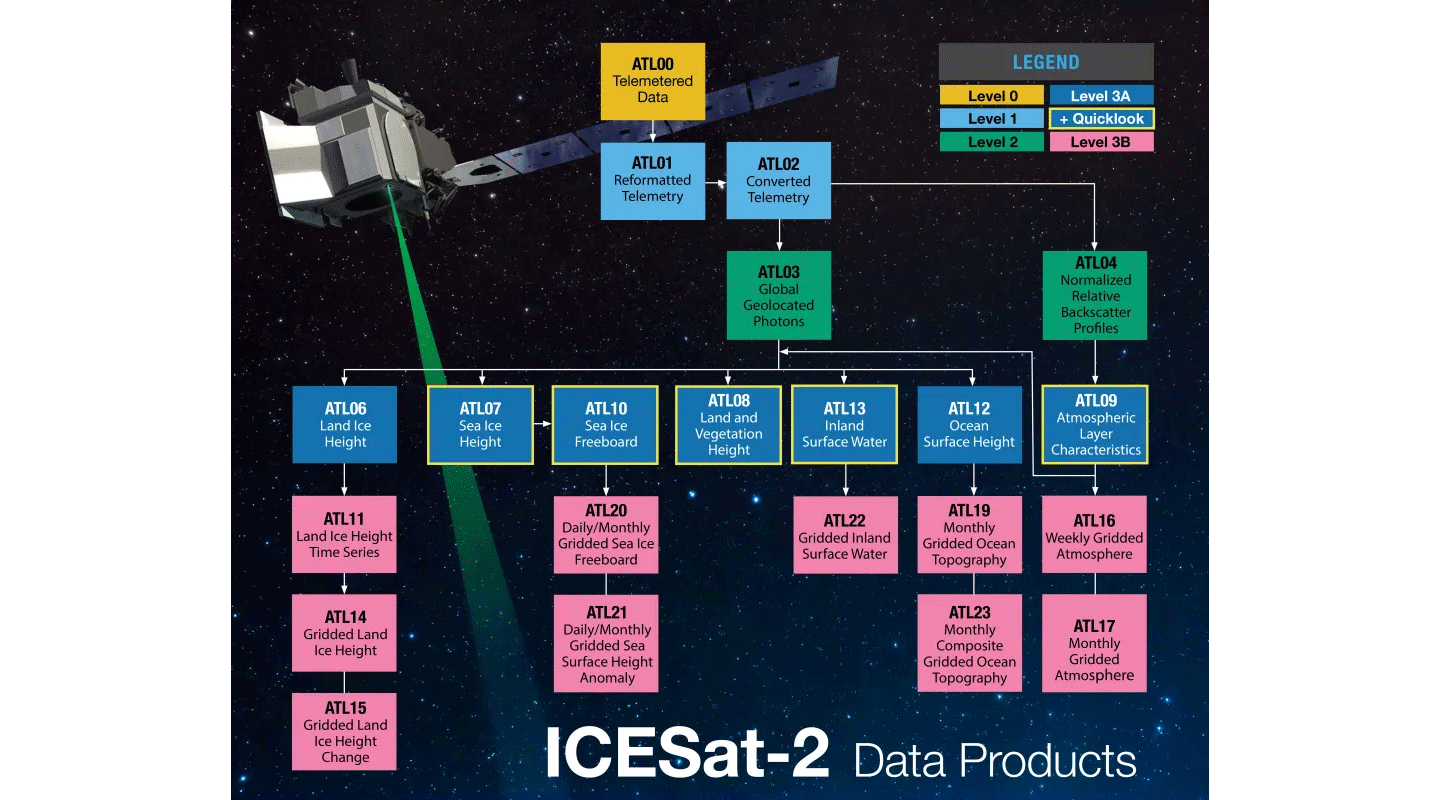
Walter Meier [University of Colorado, Boulder (UC, Boulder)—NSIDC DAAC Scientist] provided an overview of ICESat-2 data tools and services. He walked the audience through the ICESat-2 data website, as well as the instructional guides that are available for all the tools and services. Meier provided an overview of ICESat-2 standard data products – see Figure 3. Most of the products have a ~45-day latency while quick look data sets have an ~3-day latency. Future data sets include ATL24 and ATL25 and quick look data sets for ATL03, ATL20, and ATL25. Next, he described webinars and tutorials, access tools, and customization services for different users and workflows, including graphical user interfaces and programmatic tools in Earthaccess and the NSIDC website.
Helen Amanda Fricker [Scripps Institution of Oceanography, University of California (UC), San Diego—ICESat-2 ST Leader and Professor] provided an overview of the ST members and ST goals. Fricker described the ST goals to: 1) provide coordination between the team, project science office, and NASA headquarters; 2) use science talks, posters, and social events to stimulate collaboration within the ST and across disciplines; and 3) maintain the visibility of the ICESat-2 mission through publications, press releases, white papers, open science, and synergies with other missions. Next, Fricker shared the list of ST members that can be found on the ICESat-2 website. She concluded with an overview of a recent publication by Lori Magruder [University of Texas, Austin] and coauthors published in Nature Reviews.
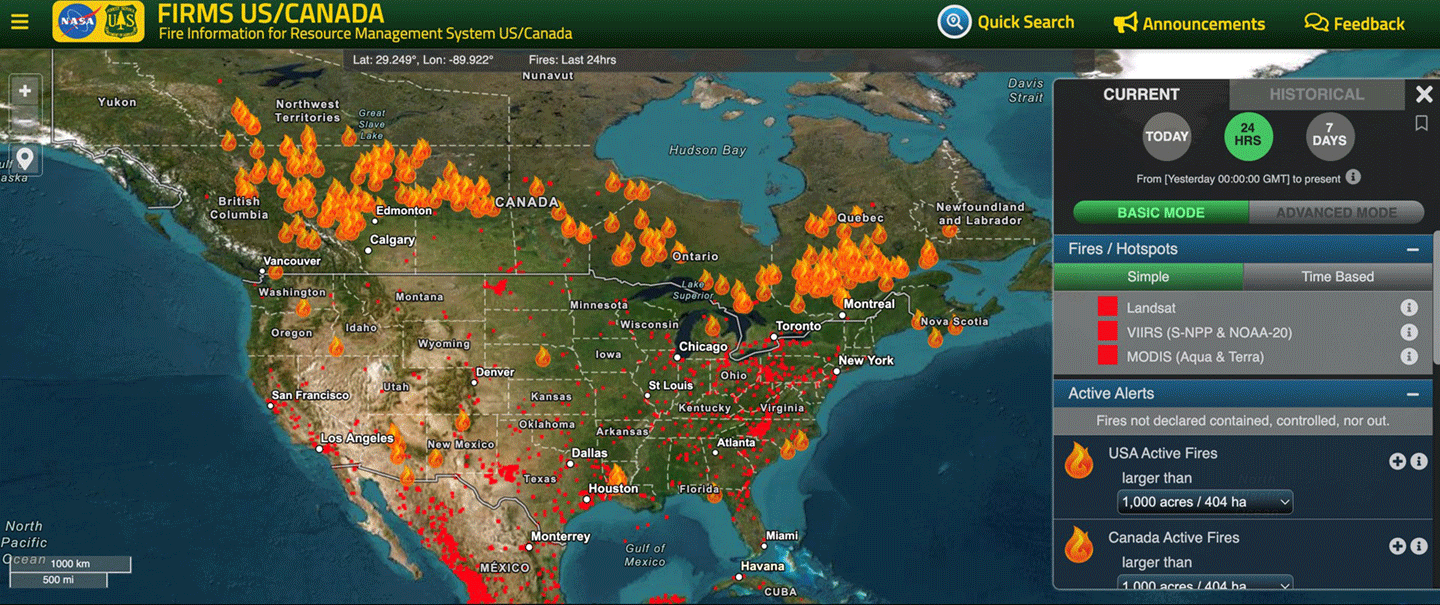
Stephanie Schollaert Uz [NASA GSFC—Applied Sciences Manager] provided an overview of the NASA Applied Science Program, including the current NASA Earth Science Satellite missions that are monitoring Earth systems. The NASA Applied Science Programs “tackle challenges on our home planet in areas for which Earth science information can respond to the urgent needs of our time.” Earth science data products are used to “inform decisions and actions on management, policy and business.” Uz provided examples of applications using Earth science data, including economic activity, active fire mapping, food security, and monitoring air quality – see Figure 4.
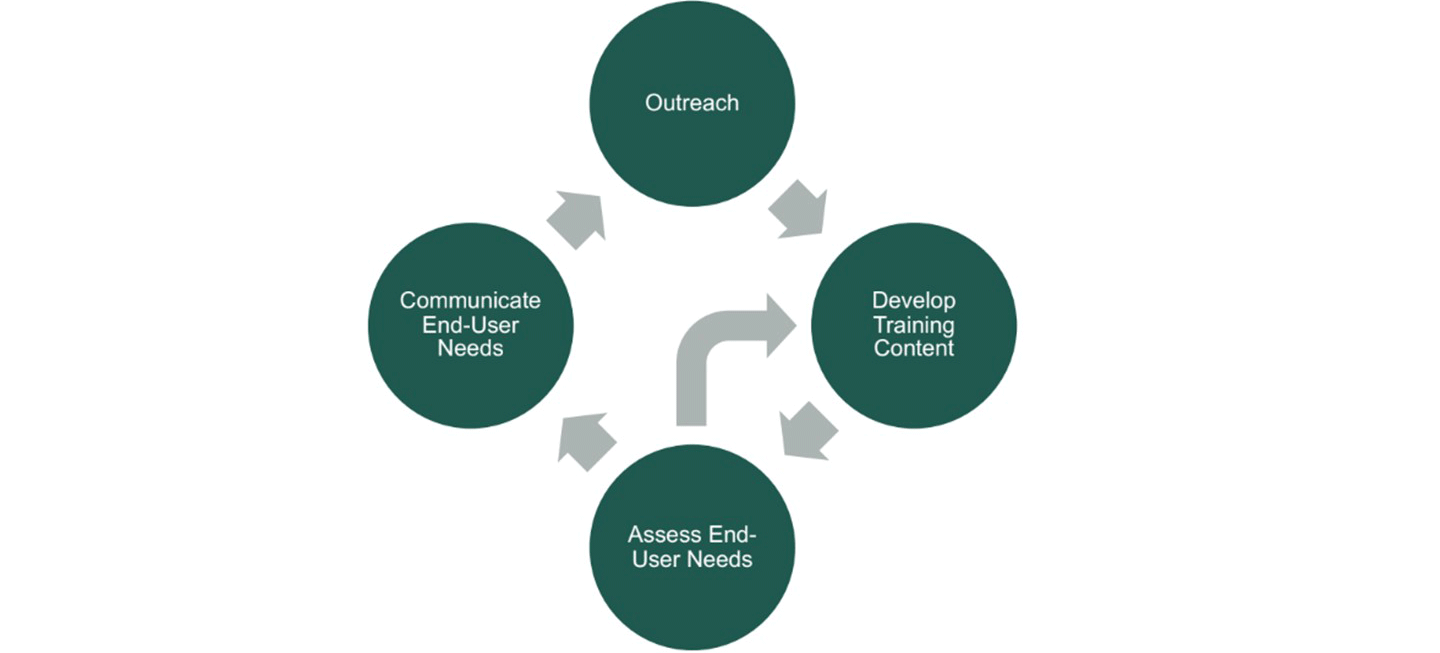
Molly E. Brown [University of Maryland—ICESat-2 Mission Applications Scientist] began her presentation by defining the term application in the context of this workshop, which includes “innovative uses of mission data products in decision-making activities for societal benefit.” Brown stated that the ICESat-2 Mission Applications program “works to bring our data products into areas where they can help inform policy or decisions that benefit the public.” End users include the private sector, academia, and government agencies. Brown described the benefits of the program and strategies to extend ICESat-2 to new communities – see Figure 5. Brown concluded with an overview of recent publications and new research efforts to assess the impact of ICESat-2 data.
Mike Jasinski [NASA GSFC, Hydrological Sciences Laboratory—Assistant Chief for Science] provided an overview of ICESat-2 inland water standard and quick look data products, ATL13QL and ATL22QL. ICESat-2 covers approximately one million lakes each year. Jasinski also listed application areas for water resources decision support, including river elevation and discharge, lake and reservoir water balance and management, and validation of Surface Water and Ocean Topography (SWOT) data. He provided metrics for each data product and quick look product and the advantages and disadvantages of ATL13 and ATL22 data products.
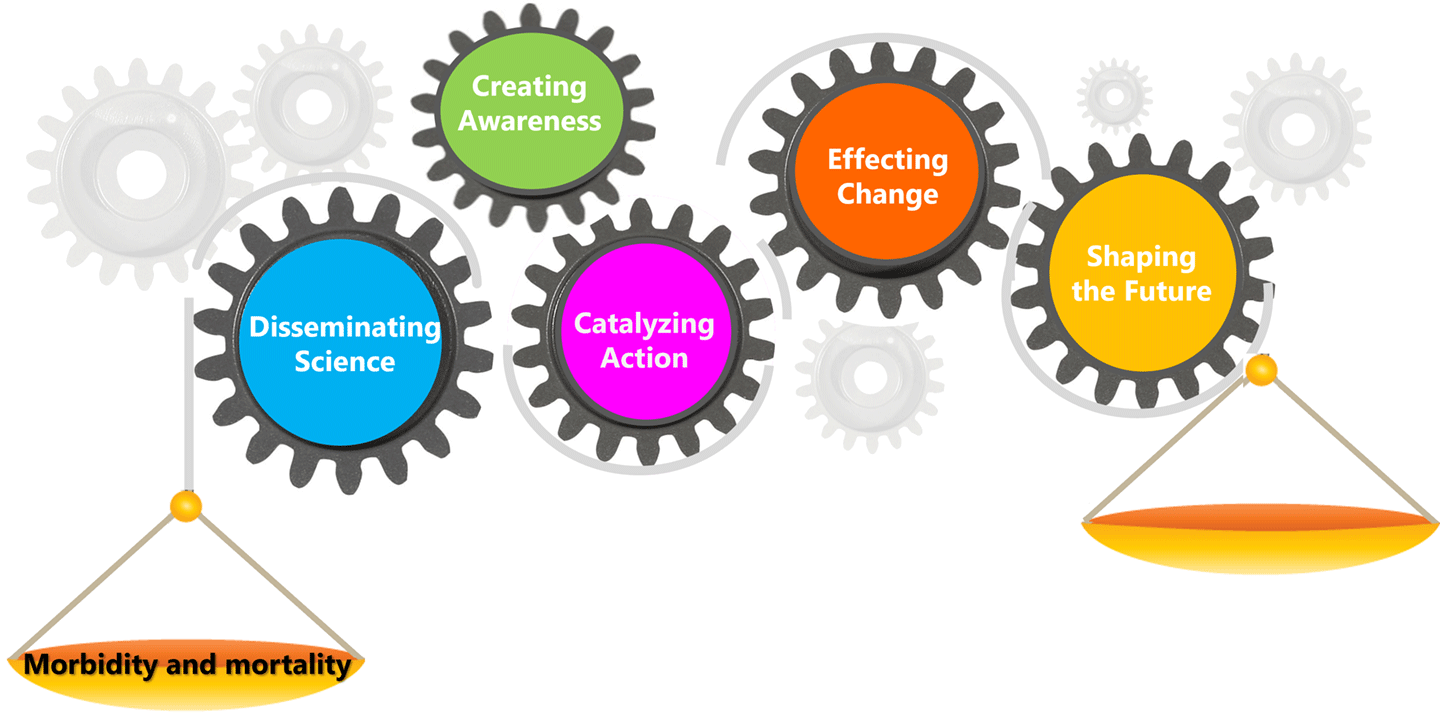
Mary D. Ari [Centers for Disease Control and Prevention, Office of Science—Senior Advisor for Science] provided an overview of the Science Impact Framework (SIF). Ari explained that our partners and public need “evidence to support practice or policy or decision making, accountability for public finds, and research focus to advocate for research priority.” A major goal is to translate findings into practice or action. Next, she presented ways by which impact can be measured, including bibliometrics (quantitative) and value (qualitative). Ari further explained the Science Impact Framework (SIF), which includes five domains of scientific influence: disseminating science, creating awareness, catalyzing action, effecting change, and shaping the future – see Figure 6.
Woody Turner [NASA Headquarters—ICESat-2 Program Applications Lead] provided an overview of NASA’s Earth Science to Action Strategy. Turner explained that NASA’s Earth Science to Action strategy is integral to the Earth Science Division’s 2024–2034 strategic plan. The overall strategy has two objectives: 1) observe, monitor, and understand the Earth System and 2) deliver trusted information to drive Earth resilience activities. He also summarized the “three key pillars” for this new Earth Action paradigm to 1) be user centered, 2) build bridges between research, technology, flight, data, and Earth Action elements, and 3) scale up existing efforts to get NASA data into the hands of end users. Lastly, Turner listed NASA’s core values, including safety, integrity, inclusion, teamwork, excellence, trustworthiness, innovation, and collaboration.
Objective 2: Review available tools for extracting ICESat-2 data for a diverse community.
To achieve this objective, the meeting included a series of presentations in which each speaker described a different tool that is being used to download and analyze ICESat-2 data.
Jessica Scheick [University of New Hampshire] provided an overview of a set of Python tools, named icepyx, that can be used to obtain and manipulate ICESat-2 data. Scheick, who developed icepyx, described how the tools address challenges with ICESat-2 data. Lastly, she performed a live demonstration of icepyx.
Tyler Sutterley [Applied Physics Laboratory/University of Washington] presented a live demonstration of Sliderule, an ICESat-2 plugin module that uses an application programming interface (API) to “query a set of ATL03 input granules for photon heights and locations based on a set of photon-input parameters that select the geographic and temporal extent of the request.”
Joanna D. Millstein [Colorado School of Mines] provided an overview of CryoCloud, which is a “JupyterHub built for NASA cryosphere communities in collaboration with 2i2c.” The goal of CryoCloud is to create a “simple and cost-effective managed cloud environment for training and transitioning new users to cloud workflows and determining community best practices.” CryoCloud makes it possible to “process data faster, minimize downloading and democratize science.” The CryoCloud GitHub provides access to a Slack channel, trainings and tutorials, and community office hours.
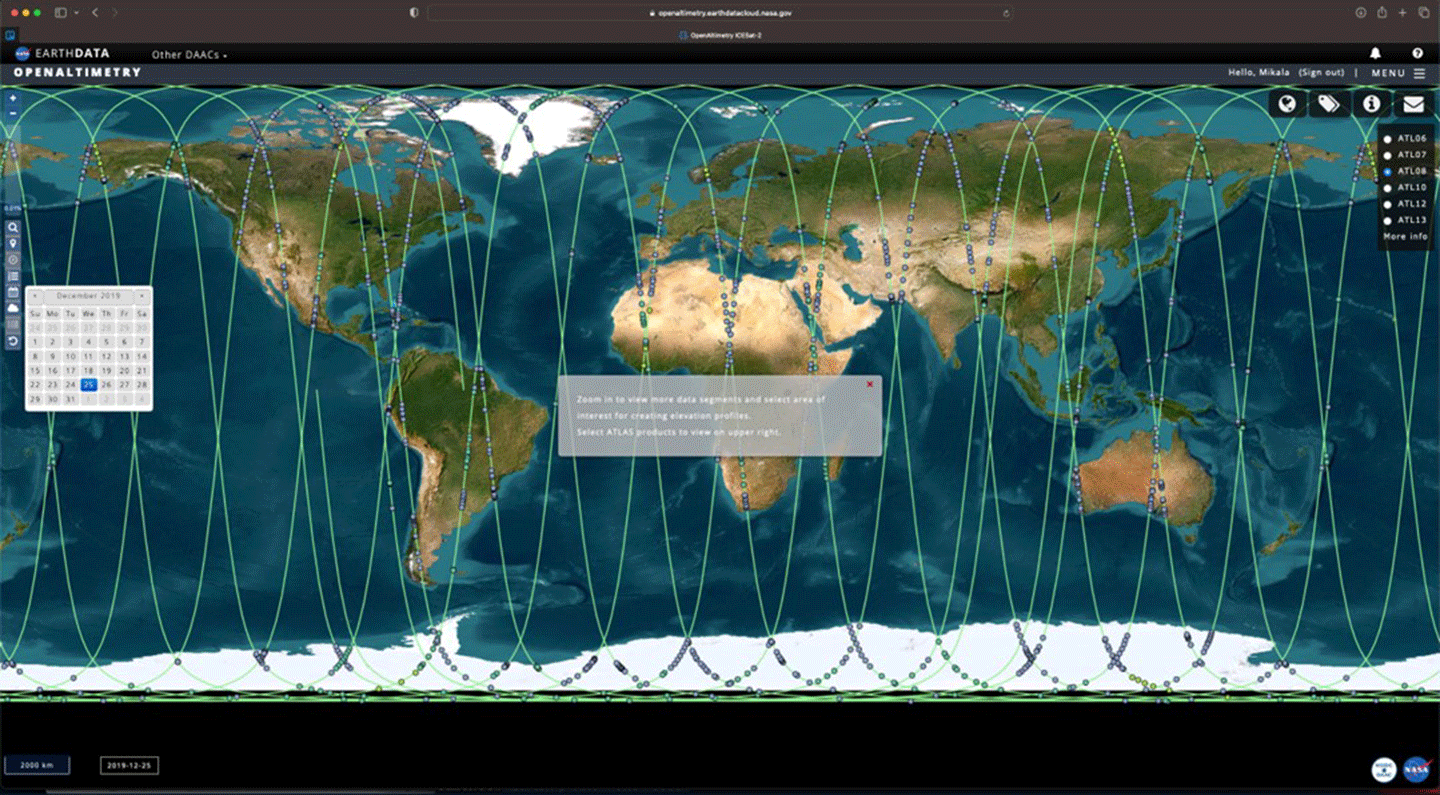
Mikala Beig [UC, Boulder—NSIDC User Services] provided and overview of OpenAltimetry, a platform for visualizing and downloading surface elevation data from ICESat and ICESat-2. OpenAltimetry was developed to alleviate the challenges faced by researchers, including the “steep learning curves and heavy demands on computational resources” necessary to download and manipulate large volumes of data. The strengths of OpenAltimetry include fostering user engagement, lowering technical hurdles for visualizing data, and allowing deeper data exploration. Lastly, Beig demonstrated the platform for the audience – see Figure 7.
Objectives 3 and 4: Foster synergies between all participants; Identify new potential applications or products from ATLAS data not currently under investigation.
To meet these two meeting objectives, workshop organizers scheduled a round of lightning talks, where a series of presenters gave five-minute presentations on their research or activities. The talks are distilled below. The reader is directed online to find formal presentation titles and additional information. There was also an applied user panel and a breakout session to facilitate synergies between participants and identify new applications.
Younghyun Koo [Lehigh University/ Cooperative Institute for Research in Environmental Science (CIRES)] described a method to filter landfast ice (or sea ice “fastened” to the coastline) for accurate examination of thermodynamic and dynamic sea ice features using the ICESat-2 ATL10 data product – see Figure 8.
Chandana Gangodagamage [OeilSat—Principal Investigator] described the company’s efforts to track freshwater in the Congo River for the purposes of water resources management and other water-related applications that require river bathymetry data.
Daniel Scherer [Technischen Universität München (TUM), Germany] provided an overview of the ICESat-2 River Surface Slope (IRIS), a global reach-scale water surface slope dataset that provides average and extreme water slopes from ICESat-2 observations. The data can be dowloaded from Zenodo.
Louise Croneborg-Jones [Water In Sight—Chief Executive Officer] described her company’s effort to use satellite data and mobile and cloud technology to digitize river and rainfall observation at scale in Malawi. Water In Sight has emphasized getting local communities involved in monitoring water resources to increase observations of water levels for conservation.
Ravindra Duddu [Vanderbilt University] provided an overview on a project called Modeling Antarctic Iceshelf Calving and Stability (MAGICS), which involves using computation, data, and machine learning to map the rift and crevasse configurations of ice shelves in Antarctica to better understand calving events.
Shawn Serbin [GSFC] discussed use of harmonized above ground products from ICESat-2 and other earth observing platforms, including Global Ecosystem Dynamics Investigation (GEDI), Soil Moisture Active Passive (SMAP), and Moderate Resolution Imaging Spectroradiometer (MODIS), for terrestrial ecosystem carbon cycle reanalysis and near-term, iterative forecasting for North America and the globe.
Wengi Ni-Meister [Hunter College of the City University of New York—ICESat-2 Early Adopter] summarized an effort to retrieve canopy and background reflectivity ratio from ICESat-2 data and use it for the retrieval of vegetation cover and snow distribution in boreal forests.
Morgaine McKibben [GSFC–Plankton, Aerosol, Clouds, ocean Ecosystem (PACE) Applications Lead] provided an overview of NASA’s PACE mission, suggesting possible synergies between ICESat-2 and PACE with the intent of opening the door for further discussion on collaboration between the two missions. (To learn more about planned applications for PACE, see Preparing for Launch and Assessing User Readiness: The 2023 PACE Applications Workshop. (Also published in The Earth Observer, Nov–Dec 2023, 35:6, 25–32.)
Anthony Campbell [GSFC/ University of Maryland, Baltimore County] discussed his group’s research into using ICESat-2 data to monitor changes in coastal wetland migration, including coastal elevation and canopy height.
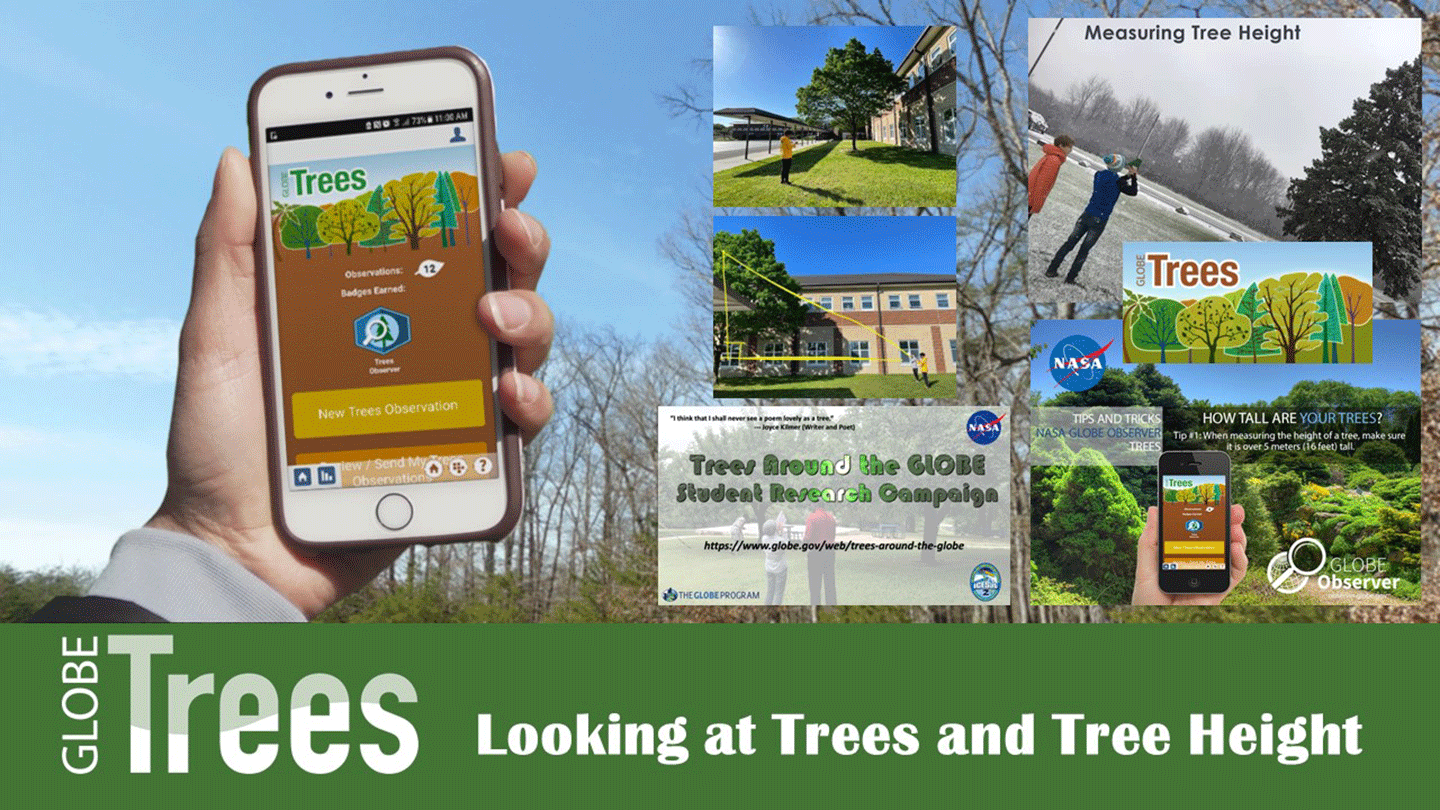
Brian A Campbell [NASA’s Wallops Flight Facility (WFF)—ICESat-2 Mission Education Lead] described the Global Learning and Observations to Benefit the Environment (GLOBE) program’s network of citizen scientists who collect several different kinds of data using the GLOBE Observer app. He highlighted one data type with particular relevance to ICESat-2. GLOBE Trees – see Figure 8 – equips citizen scientists with the tools to take tree height measurements using their mobile devices. These observations could then be compared to data from NASA satellite missions.
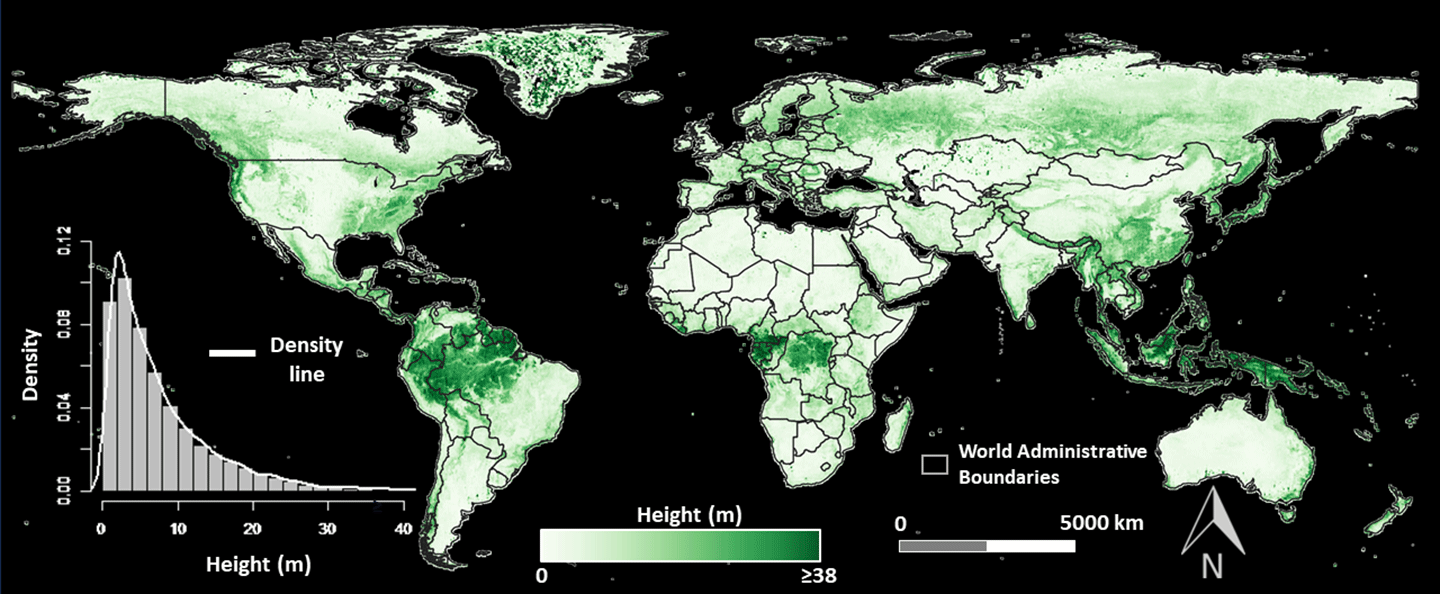
Caio Hamamura [University of Florida/School of Forest, Fisheries & Geomatics Sciences—Postdoctoral Associate] summarized a literature review his team had conducted of studies using ICESat-2 data for land and vegetation applications as well as results of an assessment of the current capability and limitations of ICESat-2 data for land and vegetation applications – see Figure 9.
Jacob Comer [Cultural Site Research and Management Foundation] summarized results from an evaluation of the use of ICESat-2 data for archaeological prospection and documentation of archaeological sites – particularly in the Federal States of Micronesia.
Juradana M. Iqrah [University of Texas at San Antonio] described her group’s effort to obtain high resolution sea ice classification and freeboard information from ICESat-2 ATL03 observations to understand the impact of global warming on the melting and retreat of polar sea ice cover.
Michael MacFerrin [National Oceanic and Atmospheric Administration (NOAA) National Centers for Environmental Information (NCEI)—Coastal Digital Elevation (DEM) Model Team] provided an overview of the NOAA/CIRES ICESat-2 Validation of Elevations Reporting Tool (IVERT) tool, which is used to generate land-based validation statistics of digital elevation models (DEM) anywhere in the word using the ATL03 and ATL08 datasets – see Figure 10.
Gretchen Imahori [NOAA National Geodetic Survey, Remote Sensing Division] presented an overview of satellite derived bathymetry using ICESat-2 data, including the new Level 3 (L3) bathymetry data product (ATL24) that will be available later in 2024 – see Figure 11.
Objectives 5 and 6: Understand the challenges faced by applied, data users, and end users and identify solutions. Build partnerships between applied users, data producers, and end users.
To achieve these two objectives, planners organized an applied user panel and a breakout session as means to foster conversation among participants. The applied user panel consisted of five panelists– three participating virtually and two in-person. The presenters in the session shared their responses to three prepared discussion prompts: 1) an introduction of ICESat-2 data products; 2) use of ICESat-2 data products for their application; and 3) potential data latency impacts. The conversation was brief, but it provided a unique opportunity to hear from experienced applied users.
A breakout session consisted of pre-planned discussion prompts through two virtual breakout groups and one in-person group. Group One discussed questions that covered examination of ice crevassing and rifting, community tools for shallow water mapping, and slope measurement bias and uncertainties. Group Two discussed a variety of current and potential surface water applications, identified challenges using ICEat-2 data, and developed suggestions to increase the accessibility and usability of ICESat-2 data products. Group Three covered a gamut of topics, including potential products for Alaskan and Canadian communities, increased accessibility to products, and applications through central cloud storage systems, central repositories and detailed documentation, and the desire for future topic-specific workshops and focus sessions.
Conclusion
The 2024 NASA ICESat-2 Applications Workshop was the third in a series of workshops – with the first workshop occurring in 2012, six years prior to launch. The EA program was transitioned to the Applied User program, which deployed a post-launch program per the NASA Early Adopter Handbook “that acts as a continuation of the Early Adopter program to engage with Communities of Practice and Potential.” This workshop provided the space to foster collaboration and conceptualization of applications not yet exploited that may be developed using ICESat-2 data products. The workshop met its objectives and created an environment that fostered collaboration between participants. The workshop was a success, and participants requested another one focused on a thematic topic. Updates, future workshops, and other events will be posted on the ICESat-2 ‘Get Involved’ page.
Aimee Renee Neeley
NASA’s Goddard Space Flight Center/Science Systems and Applications, Inc.
aimee.neeley@nasa.gov
Powered by WPeMatico
Get The Details…