NASA Cameras to Capture Interaction Between Blue Ghost, Moon’s Surface

NASA Cameras to Capture Interaction Between Blue Ghost, Moon’s Surface

4 min read

Preparations for Next Moonwalk Simulations Underway (and Underwater)
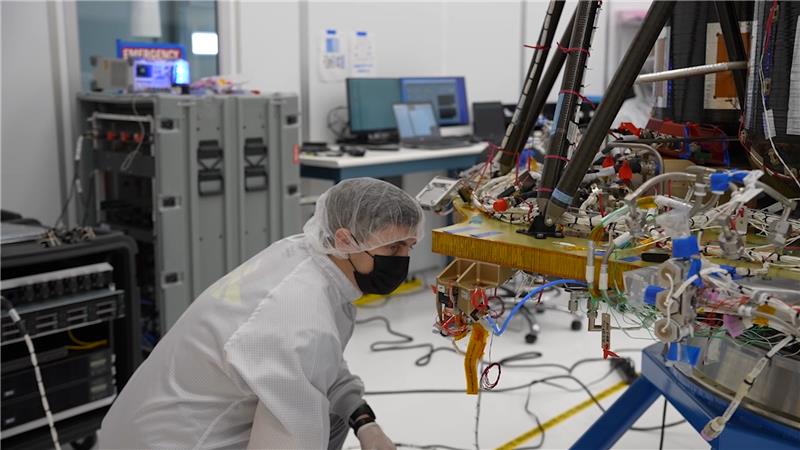
The six SCALPSS cameras mounted around the base of Blue Ghost will collect imagery during and after descent and touchdown. Using a technique called stereo photogrammetry, researchers at Langley will use the overlapping images to produce a 3D view of the surface. 
Image courtesy of Firefly.

Say cheese again, Moon. We’re coming in for another close-up.

For the second time in less than a year, a NASA technology designed to collect data on the interaction between a Moon lander’s rocket plume and the lunar surface is set to make the long journey to Earth’s nearest celestial neighbor for the benefit of humanity.

Developed at NASA’s Langley Research Center in Hampton, Virginia, Stereo Cameras for Lunar Plume-Surface Studies (SCALPSS) is an array of cameras placed around the base of a lunar lander to collect imagery during and after descent and touchdown. Using a technique called stereo photogrammetry, researchers at Langley will use the overlapping images from the version of SCALPSS on Firefly’s Blue Ghost — SCALPSS 1.1 — to produce a 3D view of the surface. An earlier version, SCALPSS 1.0, was on Intuitive Machines’ Odysseus spacecraft that landed on the Moon last February. Due to mission contingencies that arose during the landing, SCALPSS 1.0 was unable to collect imagery of the plume-surface interaction. The team was, however, able to operate the payload in transit and on the lunar surface following landing, which gives them confidence in the hardware for 1.1.

The SCALPSS 1.1 payload has two additional cameras — six total, compared to the four on SCALPSS 1.0 — and will begin taking images at a higher altitude, prior to the expected onset of plume-surface interaction, to provide a more accurate before-and-after comparison.

These images of the Moon’s surface won’t just be a technological novelty. As trips to the Moon increase and the number of payloads touching down in proximity to one another grows, scientists and engineers need to be able to accurately predict the effects of landings.

How much will the surface change? As a lander comes down, what happens to the lunar soil, or regolith, it ejects? With limited data collected during descent and landing to date, SCALPSS will be the first dedicated instrument to measure the effects of plume-surface interaction on the Moon in real time and help to answer these questions.

“If we’re placing things – landers, habitats, etc. – near each other, we could be sand blasting what’s next to us, so that’s going to drive requirements on protecting those other assets on the surface, which could add mass, and that mass ripples through the architecture,” said Michelle Munk, principal investigator for SCALPSS and acting chief architect for NASA’s Space Technology Mission Directorate at NASA Headquarters in Washington. “It’s all part of an integrated engineering problem.”

Under the Artemis campaign, the agency’s current lunar exploration approach, NASA is collaborating with commercial and international partners to establish the first long-term presence on the Moon. On this CLPS (Commercial Lunar Payload Services) initiative delivery carrying over 200 pounds of NASA science experiments and technology demonstrations, SCALPSS 1.1 will begin capturing imagery from before the time the lander’s plume begins interacting with the surface until after the landing is complete.

The final images will be gathered on a small onboard data storage unit before being sent to the lander for downlink back to Earth. The team will likely need at least a couple of months to

process the images, verify the data, and generate the 3D digital elevation maps of the surface. The expected lander-induced erosion they reveal probably won’t be very deep — not this time, anyway.

One of the SCALPSS cameras is visible here mounted to the Blue Ghost lander.
Image courtesy of Firefly.

“Even if you look at the old Apollo images — and the Apollo crewed landers were larger than these new robotic landers — you have to look really closely to see where the erosion took place,” said Rob Maddock, SCALPSS project manager at Langley. “We’re anticipating something on the order of centimeters deep — maybe an inch. It really depends on the landing site and how deep the regolith is and where the bedrock is.”

But this is a chance for researchers to see how well SCALPSS will work as the U.S. advances human landing systems as part of NASA’s plans to explore more of the lunar surface.

“Those are going to be much larger than even Apollo. Those are large engines, and they could conceivably dig some good-sized holes,” said Maddock. “So that’s what we’re doing. We’re collecting data we can use to validate the models that are predicting what will happen.”

The SCALPSS 1.1 project is funded by the Space Technology Mission Directorate’s Game Changing Development Program.

NASA is working with several American companies to deliver science and technology to the lunar surface under the CLPS initiative. Through this opportunity, various companies from a select group of vendors bid on delivering payloads for NASA including everything from payload integration and operations, to launching from Earth and landing on the surface of the Moon.

Share

Details

Last Updated

Dec 19, 2024

Editor
Angelique Herring

Related Terms

Powered by WPeMatico

Get The Details…
Angelique Herring
Perseverance Blasts Past the Top of Jezero Crater Rim

Perseverance Blasts Past the Top of Jezero Crater Rim

3 min read

Perseverance Blasts Past the Top of Jezero Crater Rim

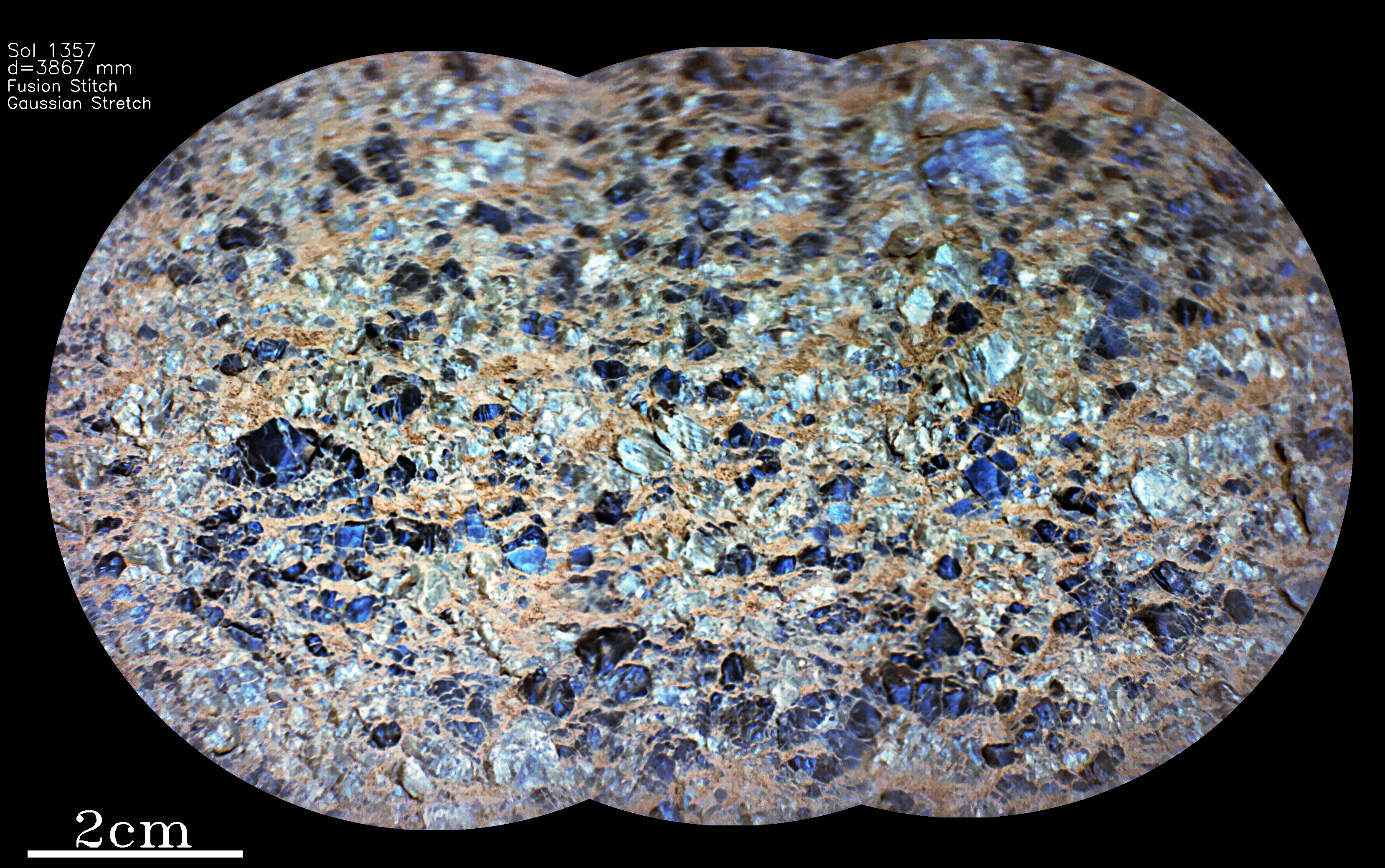
SuperCam Remote Micro-Imager (RMI) mosaic shows part of the target “Duran,”
This SuperCam Remote Micro-Imager (RMI) mosaic shows part of the target “Duran,” observed on Sol 1357 near the top of Jezero crater’s rim. It was processed using a color-enhancing Gaussian stretch algorithm.
NASA/JPL-Caltech/LANL/CNES/IRAP.

I have always loved the mountains. Growing up on the flat plains of Midwestern USA, every summer I looked forward to spending a few days on alpine trails while on vacation. Climbing upward from the trailhead, the views changed constantly. After climbing a short distance, the best views were often had by looking back down on where we had started. As we climbed higher, views of the valleys below eventually became shrouded in haze. Near the top we got our last views of the region behind us; then it disappeared from view as we hiked over the pass and started down the other side. Approaching the summit held a special reward, as the regions beyond the pass slowly revealed themselves. Frequent stops to catch our breath during our ascent were used to check the map to identify the new peaks and other features that came into view. Sometimes the pass was an exciting gateway to a whole new area to explore.

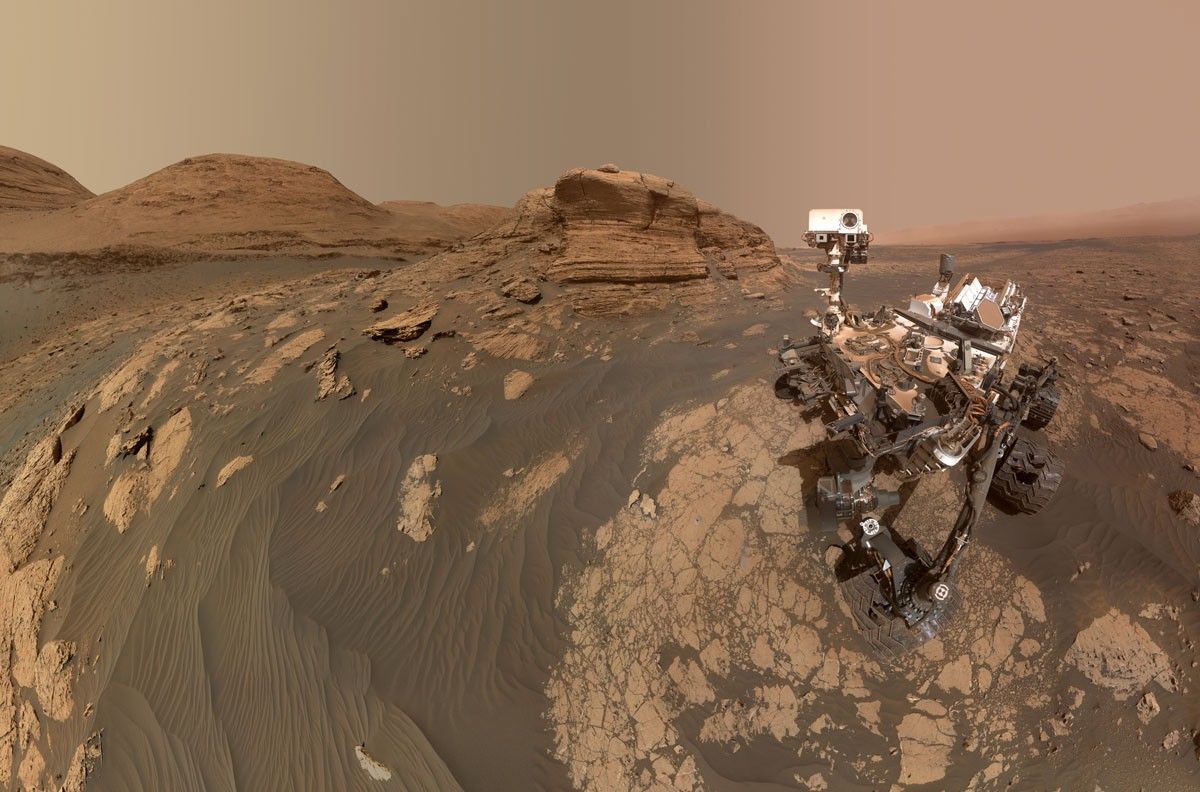
This ever-changing landscape has been our constant companion over the last five months as Perseverance first climbed out of Neretva Vallis, then past “Dox Castle,” and “Pico Turquino.” We stopped at “Faraway Rock” on Sol 1282 to get a panorama of the crater floor. More recently, we could see many more peaks of the crater rim. As Perseverance crested the summit of “Lookout Hill,” half a mile (800 meters) above the traverse’s lowest point, we got our first views beyond the crater rim, out into the great unknown expanse of Mars’ Nili Planum, including the upper reaches of Neretva Vallis and the locations of two other candidate landing sites that were once considered for Perseverance. As the rover crested the summit, Mastcam-Z took a large panoramic mosaic, and team members are excitedly poring over the images, looking at all the new features. With Perseverance’s powerful cameras we can analyze small geological features such as boulders, fluvial bars, and dunes more than 5 miles (8 kilometers) distant, and major features like mountains up to 35 miles (60 kilometers) away. One of our team members excitedly exclaimed, “This is an epic moment in Mars exploration!”

While Curiosity has been climbing “Mount Sharp” for 10 years, and Spirit and Opportunity explored several smaller craters, no extraterrestrial rover has driven out of such a huge crater as Jezero to see a whole new “continent” ahead. We are particularly excited because it is potentially some of the most ancient surface on the Red Planet. Let’s go explore it!

Perseverance is now in Gros Morne quad, named for a beautiful Canadian national park in Newfoundland, and we will be naming our targets using locations and features in the national park. For the drive ahead, described in a video in a recent press release, our next destination is on the lower western edge of the Jezero crater rim at a region named “Witch Hazel Hill.”

Perseverance made more than 250 meters of progress over the weekend (about 820 feet) and is already at the upper part of Witch Hazel Hill, a location called “South Arm.” Much of the climb up the crater rim was on sandy material without many rocks to analyze. Witch Hazel Hill appears to have much more exposed rock, and the science team is excited about the opportunity for better views and analyses of the geology directly beneath our wheels.

Written by Roger C. Wiens, Principal Investigator of the SuperCam instrument, Purdue University

Share

Details

Last Updated
Dec 19, 2024

Related Terms

Powered by WPeMatico

Get The Details…

Gateway: Wired for Deep Space

Gateway: Wired for Deep Space

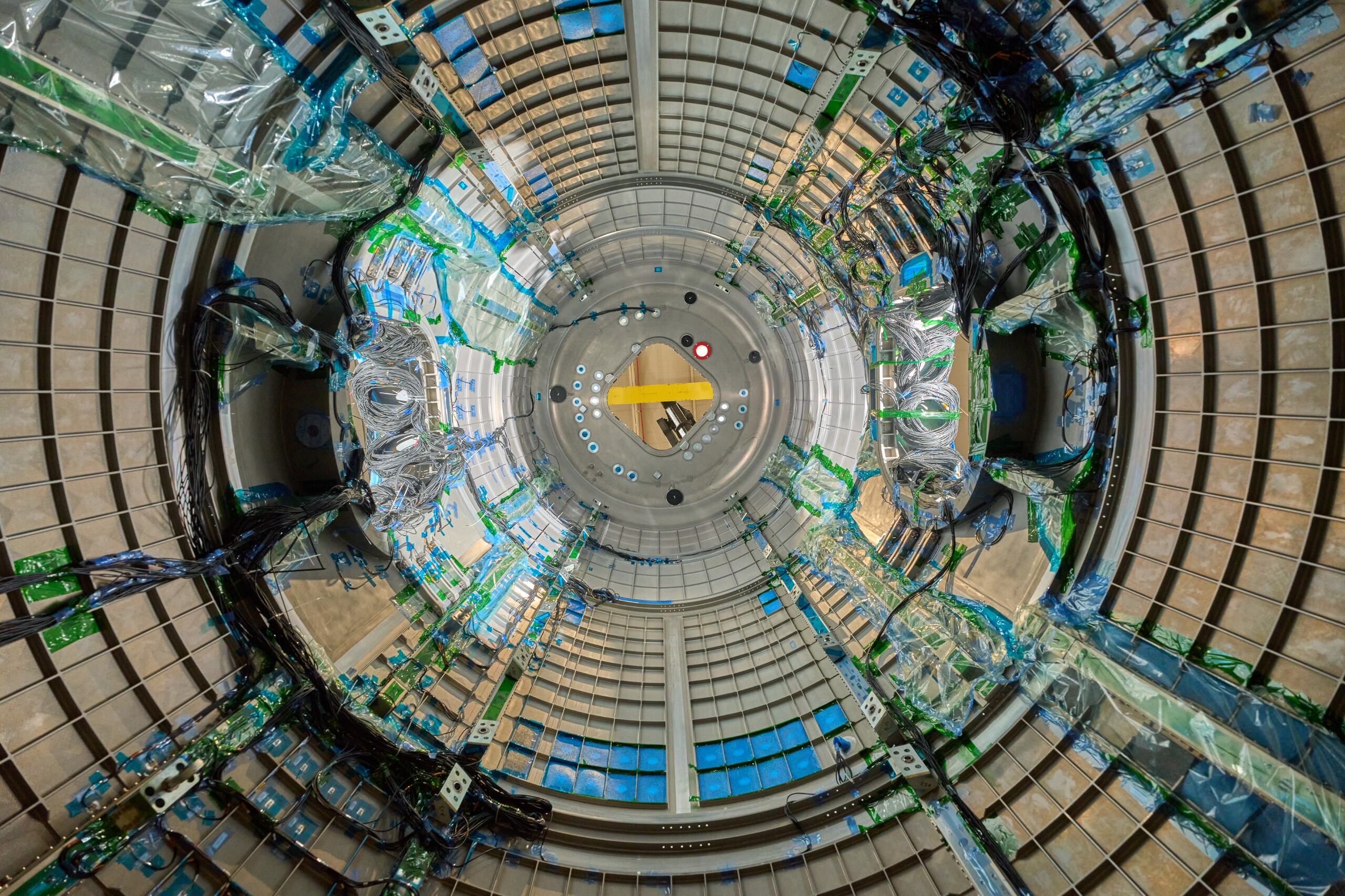
As we look through a circular piece of Gateway, a space station that will be in lunar orbit, there are blue wires snaking through. The wires are covered in clear plastic in some places and held onto the walls by green tape in others.
Thales Alenia Space

A maze of cables and sensors snakes through a major piece of Gateway, humanity’s first space station around the Moon, during a key testing phase earlier this year to ensure the lunar-orbiting science lab can withstand the harsh conditions of deep space.

HALO (Habitation and Logistics Outpost) is one of four Gateway modules where international teams of astronauts will live, conduct science, and prepare for missions to the lunar South Pole region. Other elements will be provided by the European Space Agency, Japanese Aerospace Exploration Agency, and the Mohammed Bin Rashid Space Centre of the United Arab Emirates. The Canadian Space Agency is providing Gateway’s Canadarm3 advanced robotics system.

HALO is provided by Northrop Grumman and their subcontractor, Thales Alenia Space. The module completed testing in Turin, Italy, before its expected arrival to the United States in 2025. Northrop Grumman will complete final outfitting of HALO and integrate it with Gateway’s Power and Propulsion Element for launch ahead of the Artemis IV mission on a SpaceX Falcon Heavy rocket.

Image credit: Thales Alenia Space

Powered by WPeMatico

Get The Details…
Dylan Connell

New Report Analyzes Long History of NASA Support for Commercial Space

New Report Analyzes Long History of NASA Support for Commercial Space

3 min read

Preparations for Next Moonwalk Simulations Underway (and Underwater)

Dragon spacecraft approaches the International Space Station
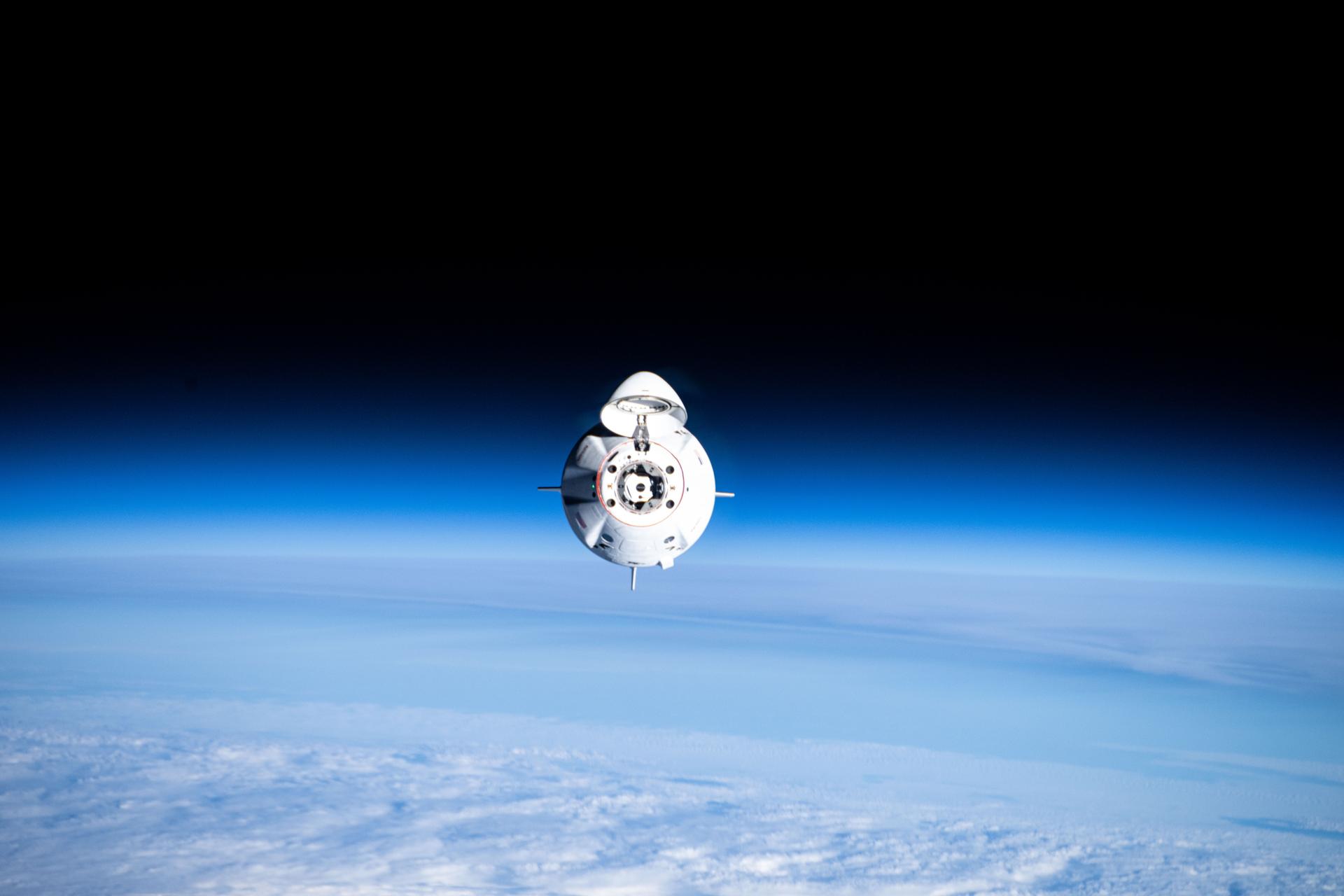
The SpaceX Dragon Freedom spacecraft carrying NASA astronaut Nick Hague and Roscosmos cosmonaut Aleksandr Gorbunov approaches the International Space Station as it orbited 261 miles above Ontario, Canada, near James Bay.

NASA published a new report Thursday highlighting 17 agency mechanisms that have directly and indirectly supported the development and growth of the U.S. commercial space sector for the benefit of humanity.

The report, titled Enabling America on the Space Frontier: The Evolution of NASA’s Commercial Space Development Toolkit, is available on the agency’s website.

“This is the most extensive and comprehensive historical analysis produced by NASA on how it has contributed to commercial space development over the decades,” said Alex MacDonald, NASA chief economist. “These efforts have given NASA regular access to space with companies, such as SpaceX and Rocket Lab, modernizing our communications infrastructure, and even led to the first private lunar lander thanks to Intuitive Machines. With commercial space growth accelerating, this report can help agency leaders and stakeholders assess the numerous mechanisms that the agency uses to support this growth, both now and in the future.”

Throughout its history, NASA has supported the development of the commercial space sector, not only leading the way in areas such as satellite communications, launch, and remote sensing, but also developing new contract and operational models to encourage commercial participation and growth. In the last three decades, NASA has seen the results of these efforts with commercial partners able to contribute more to missions across NASA domains, and increasingly innovative agency-led efforts to engage, nurture, and integrate these capabilities. These capabilities support the agency’s mission needs, and have seen a dramatic rise in importance, according to the report.

NASA has nurtured technology, companies, people, and ideas in the commercial space sector, contributing to the U.S. and global economies, across four distinct periods in the agency’s history:

  • 1915–1960: NASA’s predecessor, the National Advisory Committee on Aeronautics (NACA), and NASA’s pre-Apollo years.
  • 1961–1980: Apollo era.
  • 1981–2010: Space shuttle era.
  • 2011–present: Post-shuttle commercial era.

Each of these time periods are defined by dominant technologies, programs, or economic trends further detailed in the report.

Though some of these mechanisms are relatively recent, others have been used throughout the history of NASA and NACA, leading to some overlap. The 17 mechanisms are as follows:

  • Contracts and Partnership Agreements
  • Research and Technology Development (R&TD)
  • Dissemination of Research and Scientific Data
  • Education and Workforce Development
  • Workforce External Engagement and Mobility
  • Technology Transfer
  • Technical Support
  • Enabling Infrastructure
  • Launch
  • Direct In-Space Support
  • Standards and Regulatory Framework Support
  • Public Engagement
  • Industry Engagement
  • Venture Capital Engagement
  • Market Stimulation Funding
  • Economic Analysis and Due Diligence Capabilities
  • Narrative Encouragement

NASA supports commercial space development in everything from spaceflight to supply chains. Small satellite capabilities have inspired a new generation of space start-ups, while new, smaller rockets, as well as new programs are just starting. Examples include CLPS (Commercial Lunar Payload Services), commercial low Earth orbit destinations, human landing systems, commercial development of NASA spacesuits, and lunar terrain vehicles. The report also details many indirect ways the agency has contributed to the vibrance of commercial space, from economic analyses to student engagement.

The agency’s use of commercial capabilities has progressed from being the exception to the default method for many of its missions. The current post-shuttle era of NASA-supported commercial space development has seen a level of technical development comparable to the Apollo era’s Space Race. Deploying the 17 commercial space development mechanisms in the future are part of NASA’s mission to continue encouraging commercial space activities.

To learn more about NASA’s missions, please visit:

https//:www.nasa.gov

Share

Details

Last Updated

Dec 19, 2024

Editor
Bill Keeter

Powered by WPeMatico

Get The Details…
Bill Keeter

Artemis II Core Stage Vertical Integration Begins at NASA Kennedy

Artemis II Core Stage Vertical Integration Begins at NASA Kennedy

NASA has taken a big step forward in how engineers will assemble and stack future SLS (Space Launch System) rockets for Artemis Moon missions inside the Vehicle Assembly Building (VAB) at the agency’s Kennedy Space Center in Florida.

The VAB’s High Bay 2 has been outfitted with new tooling to facilitate the vertical integration of the SLS core stage. That progress was on full display in mid-December when teams suspended the fully assembled core stage 225 feet in the air inside the high bay to complete vertical work before it is stacked on mobile launcher 1, allowing teams to continue solid rocket booster stacking simultaneously inside High Bay 3 for Artemis II.

The fully assembled SLS (Space Launch System) core stage for the Artemis II test flight is suspended 225 feet in the air inside the newly renovated High Bay 2 at Kennedy’s Vehicle Assembly Building. The core stage was lifted to enable engineers to complete work before it is stacked on mobile launcher 1 with other rocket elements. With the move to High Bay 2, technicians now have 360-degree tip to tail access to the core stage, both internally and externally.
NASA

With the move to High Bay 2, technicians with NASA and Boeing now have 360-degree tip to tail access to the core stage, both internally and externally. Michigan-based supplier Futuramic Tool and Engineering led the design and build of the Core Stage Vertical Integration Center tool that will hold the core stage in a vertical position.

“High Bay 2 tooling was originally scheduled to be complete for Artemis III. We had an opportunity to get it done earlier and that will put us in a good posture to complete work earlier than planned prior to moving the core stage for Artemis II into the full integrated stack over into in High Bay 3,” said Chad Bryant, deputy manager of the NASA SLS Stages Office. “This gives us an opportunity to go in and learn how to rotate, lift, and move the core stage into the high bay.”

This move also doubles the footprint of useable space within the VAB, giving engineers access to both High Bay 2 and High Bay 3 simultaneously, while also freeing up space at NASA’s Michoud Assembly Facility in New Orleans to continue work on the individual elements for future SLS core stages.

High Bay 2 has a long history of supporting NASA exploration programs: during Apollo, High Bay 2, one of four high bays inside the VAB, was used to stack the Saturn V rocket. During the Space Shuttle Program, the high bay was used for external tank checkout and storage and as an extra storage area for the shuttle.

Under the new assembly model beginning with Artemis III, all the major structures for the SLS core stage will continue to be fully produced and manufactured at NASA Michoud. Upon completion of manufacturing and thermal protection system application, the engine section will be shipped to Kennedy for final outfitting.

The 212-foot-tall SLS (Space Launch System) core stage for NASA Artemis II is seen being moved from a horizontal position to a vertical position in High Bay 2 at the Vehicle Assembly Building at NASA’s Kennedy Space Center in Florida. With the move to High Bay 2, NASA and Boeing technicians now have 360-degree access to the core stage both internally and externally. (NASA)

“Core stage 3 marks a significant change in the way we build core stages,” said Steve Wofford, manager of the SLS Stages Office. “The vertical capability in High Bay 2 allows us to perform parallel processing from the top to bottom of the stage. It’s a much more efficient way to build core stages. This new capability will streamline final production efforts, allowing our team to have 360-degree access to the stage, both internally and externally.”

The fully assembled core stage for Artemis II arrived July 23, 2024, at Kennedy, where it remained horizontal inside the VAB transfer aisle until its recent lift into the newly outfitted high bay.

Teams at NASA Michoud are outfitting the remaining core stage elements for Artemis III and preparing to horizontally join them. The four RS-25 engines for the Artemis III mission are complete at NASA’s Stennis Space Center in Bay St. Louis, Mississippi, and will be transported to NASA Kennedy in 2025. Major core stage and exploration upper stage structures are in work at NASA Michoud for Artemis IV and beyond.

NASA is working to land the first woman, first person of color, and its first international partner astronaut on the Moon under Artemis. SLS is part of NASA’s backbone for deep space exploration, along with the Orion spacecraft, supporting ground systems, advanced spacesuits and rovers, the Gateway in orbit around the Moon, and commercial human landing systems. SLS is the only rocket that can send Orion, astronauts, and supplies to the Moon in a single launch.

News Media Contact

Jonathan Deal
Marshall Space Flight Center
Huntsville, Ala.
256-544-0034

Powered by WPeMatico

Get The Details…
Lee Mohon