Mining Old Data From NASA’s Voyager 2 Solves Several Uranus Mysteries

Mining Old Data From NASA’s Voyager 2 Solves Several Uranus Mysteries

4 min read

Preparations for Next Moonwalk Simulations Underway (and Underwater)
Uranus
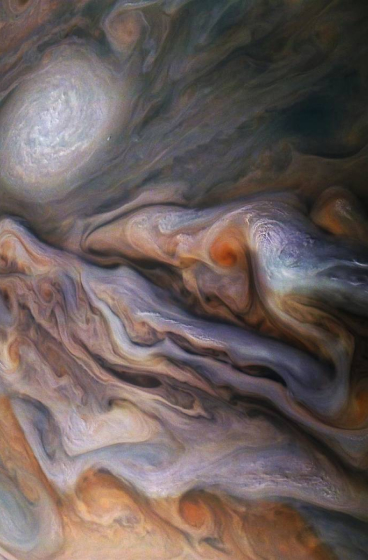
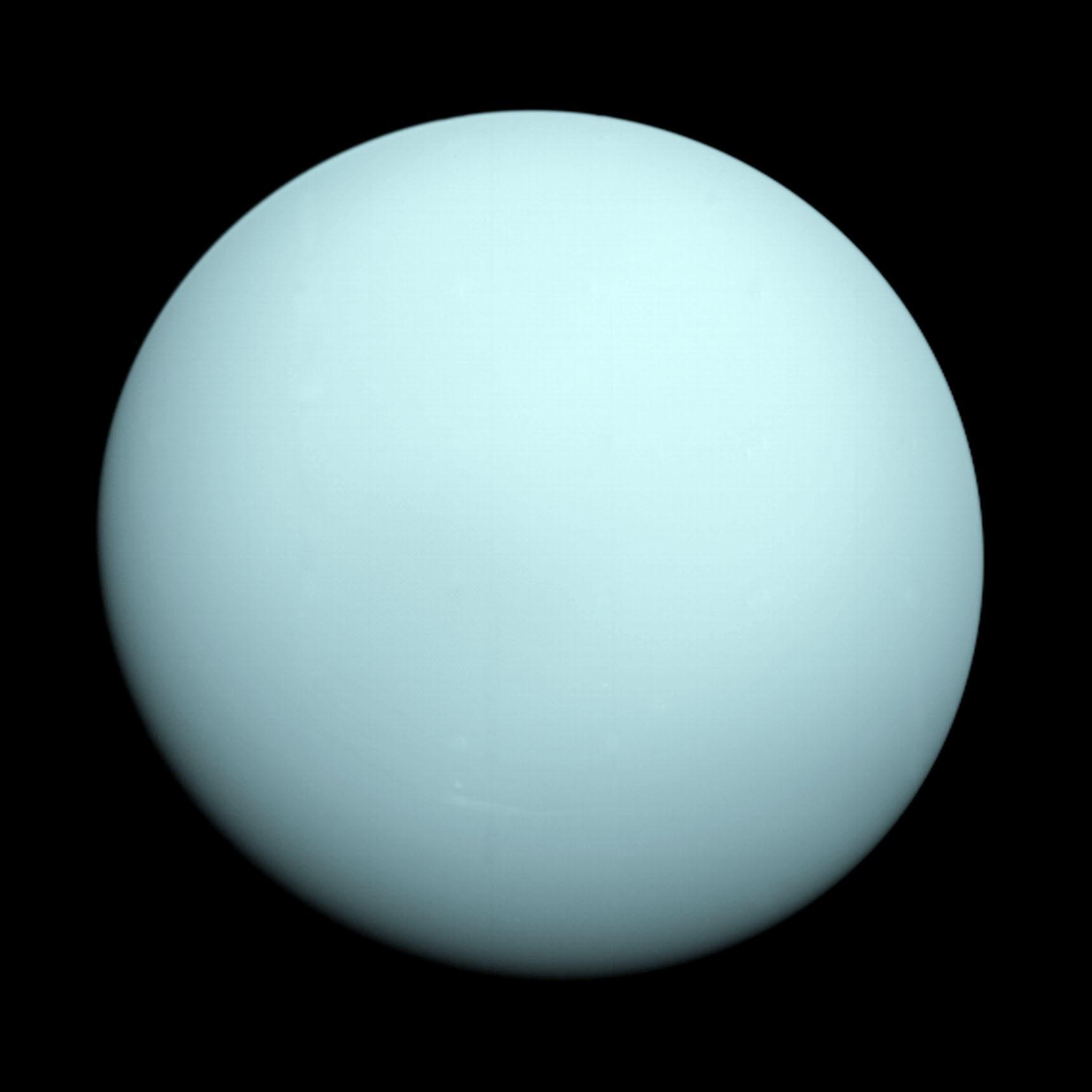
NASA’s Voyager 2 captured this image of Uranus while flying by the ice giant in 1986. New research using data from the mission shows a solar wind event took place during the flyby, leading to a mystery about the planet’s magnetosphere that now may be solved.
NASA/JPL-Caltech

NASA’s Voyager 2 flyby of Uranus decades ago shaped scientists’ understanding of the planet but also introduced unexplained oddities. A recent data dive has offered answers.

When NASA’s Voyager 2 spacecraft flew by Uranus in 1986, it provided scientists’ first — and, so far, only — close glimpse of this strange, sideways-rotating outer planet. Alongside the discovery of new moons and rings, baffling new mysteries confronted scientists. The energized particles around the planet defied their understanding of how magnetic fields work to trap particle radiation, and Uranus earned a reputation as an outlier in our solar system.

Now, new research analyzing the data collected during that flyby 38 years ago has found that the source of that particular mystery is a cosmic coincidence: It turns out that in the days just before Voyager 2’s flyby, the planet had been affected by an unusual kind of space weather that squashed the planet’s magnetic field, dramatically compressing Uranus’ magnetosphere.

“If Voyager 2 had arrived just a few days earlier, it would have observed a completely different magnetosphere at Uranus,” said Jamie Jasinski of NASA’s Jet Propulsion Laboratory in Southern California and lead author of the new work published in Nature Astronomy. “The spacecraft saw Uranus in conditions that only occur about 4% of the time.”

Artist’s concept depicts how Uranus’s magnetosphere was behaving before and during the flyby of NASA’s Voyager 2.
The first panel of this artist’s concept depicts how Uranus’s magnetosphere — its protective bubble — was behaving before the flyby of NASA’s Voyager 2. The second panel shows an unusual kind of solar weather was happening during the 1986 flyby, giving scientists a skewed view of the magnetosphere.
NASA/JPL-Caltech

Magnetospheres serve as protective bubbles around planets (including Earth) with magnetic cores and magnetic fields, shielding them from jets of ionized gas — or plasma — that stream out from the Sun in the solar wind. Learning more about how magnetospheres work is important for understanding our own planet, as well as those in seldom-visited corners of our solar system and beyond.

That’s why scientists were eager to study Uranus’ magnetosphere, and what they saw in the Voyager 2 data in 1986 flummoxed them. Inside the planet’s magnetosphere were electron radiation belts with an intensity second only to Jupiter’s notoriously brutal radiation belts. But there was apparently no source of energized particles to feed those active belts; in fact, the rest of Uranus’ magnetosphere was almost devoid of plasma.

The missing plasma also puzzled scientists because they knew that the five major Uranian moons in the magnetic bubble should have produced water ions, as icy moons around other outer planets do. They concluded that the moons must be inert with no ongoing activity.

Solving the Mystery

So why was no plasma observed, and what was happening to beef up the radiation belts? The new data analysis points to the solar wind. When plasma from the Sun pounded and compressed the magnetosphere, it likely drove plasma out of the system. The solar wind event also would have briefly intensified the dynamics of the magnetosphere, which would have fed the belts by injecting electrons into them.

The findings could be good news for those five major moons of Uranus: Some of them might be geologically active after all. With an explanation for the temporarily missing plasma, researchers say it’s plausible that the moons actually may have been spewing ions into the surrounding bubble all along.

Planetary scientists are focusing on bolstering their knowledge about the mysterious Uranus system, which the National Academies’ 2023 Planetary Science and Astrobiology Decadal Survey prioritized as a target for a future NASA mission.

JPL’s Linda Spilker was among the Voyager 2 mission scientists glued to the images and other data that flowed in during the Uranus flyby in 1986. She remembers the anticipation and excitement of the event, which changed how scientists thought about the Uranian system.

“The flyby was packed with surprises, and we were searching for an explanation of its unusual behavior. The magnetosphere Voyager 2 measured was only a snapshot in time,” said Spilker, who has returned to the iconic mission to lead its science team as project scientist. “This new work explains some of the apparent contradictions, and it will change our view of Uranus once again.”

Voyager 2, now in interstellar space, is almost 13 billion miles (21 billion kilometers) from Earth.

News Media Contacts

Karen Fox / Molly Wasser
NASA Headquarters, Washington
202-358-1600
karen.c.fox@nasa.gov / molly.l.wasser@nasa.gov  

Gretchen McCartney
Jet Propulsion Laboratory, Pasadena, Calif.
818-393-6215
gretchen.p.mccartney@jpl.nasa.gov

2024-156

Powered by WPeMatico

Get The Details…
Anthony Greicius
Interview with OCEANOS Instructor María Fernanda Barbarena-Arias

Interview with OCEANOS Instructor María Fernanda Barbarena-Arias

4 min read

Preparations for Next Moonwalk Simulations Underway (and Underwater)

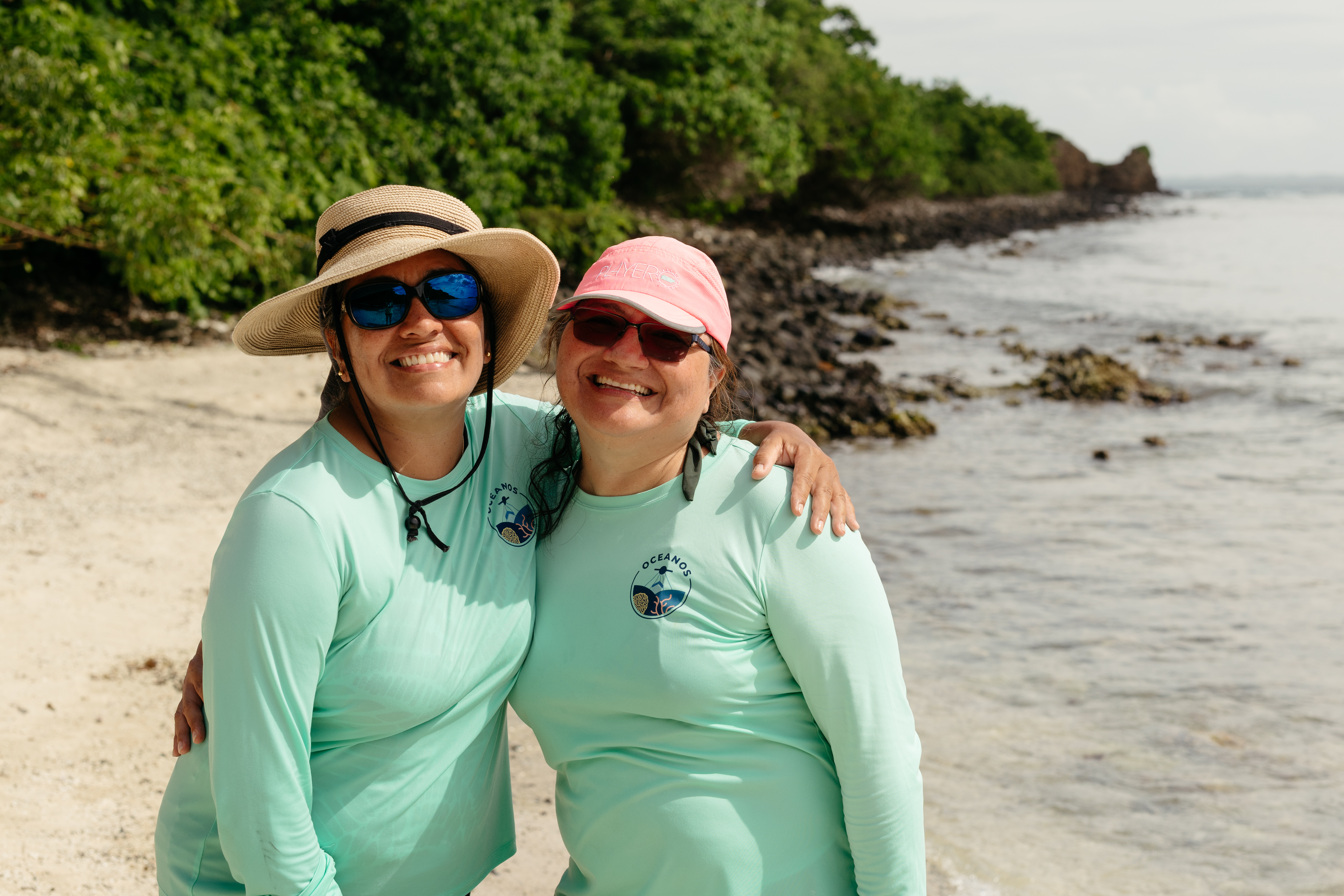
Two Puerto Rican women stand on a beach, both wearing teal longsleeve shirts and sunglasses. The one on the left has a tan, wide-brimmed hat, and the one on the right has a pink baseball cap.
María Fernanda Barbarena-Arias (left), an associate professor of biology and instructor for the OCEANOS internship, stands on the sand of Playa Melones, Culebra Island, during the field work section of the internship.
NASA ARC/Milan Loiacono

What is your name and your role with OCEANOS?

My name is María Fernanda Barbarena-Arias. I am an associate professor of biology at the American University of Puerto Rico, Metropolitan Campus. I am also a co-PI in the OCEANOS project, and an instructor and mentor for the students during the internship.

What is the importance of a program like OCEANOS, especially in Puerto Rico?

I think it makes a difference for the students because it gives them the opportunity to learn and to become familiar with ocean science, and with coastal and marine natural resources. In particular with OCEANOS one of the great [elements] is that usually marine science is offered in the upper system, which is the public university in Puerto Rico, and OCEANOS is engaging a private university where usually students who cannot enter the public system can begin studying. They have those kind of opportunities, because of OCEANOS.

What are some ways you’ve seen the students grow over the course of the internship?

The growth and changes that I’ve seen in students is mostly gaining confidence in the water. I think it’s great! Their first time they are apprehensive, and then as time passes and they engage more into their projects they seem much more familiar with swimming. The students also become more familiar and more confident on their projects. The first time they try to collect data they ask a lot of questions, and then by the third day they already know what to do. They are really empowered and I love that.

What is something you hope the students take with them after this program?

I hope that the students learn and become voices to help spread the word about natural sciences: we can study it and work in marine science. Usually in Puerto Rico, natural sciences are seen like a first step when you’re going to be focused in medical science or human health-related disciplines, and so that’s in some ways the tradition; it’s what the public knows. I hope this experience helped the students to spread the word that other kinds of careers are an alternative. I also hope it made them aware that we live in a vulnerable island and that we need to take action to become conscious, and to take action to be ready and to protect our natural resources.

How did you become involved in marine science, and eventually OCEANOS?

I actually come from Colombia. I did a bachelors degree in biology there and a minor in entomology, because at that point in my life I wanted to work in agriculture and to do pest control. But then I took a class on insect ecology, and I had to do a project and that’s when I discovered that my passion is ecology. So I applied to the University of Puerto Rico and I came here and did my master’s and my bachelor’s in tropical biology, but actually related to forests. But in the meantime I got married to a Puerto Rican guy, so I decided to stay here.

Three years later I was able to land a permanent position as a faculty in a private university, and I realized that I didn’t like the way we usually teach science in the classroom. So I began taking trainings and looking for opportunities to mentor students and to teach students in non-traditional settings. I got involved in many projects and I have a strong collaboration with University of Maryland, and we have had these kinds of projects/training/research opportunities for students outside the classroom for many years. And that I why I think one PI called me and invited me to OCEANOS, and here I am.

Powered by WPeMatico

Get The Details…
Milan Loiacono

Interview with OCEANOS Instructor Samuel Suleiman

Interview with OCEANOS Instructor Samuel Suleiman

3 min read

Preparations for Next Moonwalk Simulations Underway (and Underwater)

A Puerto Rican man with a bushy white beard, green bucket hat, teal longsleeve shirt, and black shorts gestures to a group of high school students wearing neon orange shirts.
Samuel Suleiman, an instructor for the OCEANOS internship, teaches students about sargassum and shore ecology on Culebra Island, Puerto Rico, during the fieldwork section of the project. Suleiman is also the Executive Director of Sociedad Ambiente Marino: a Puerto Rican NGO that works in conservation and coral reef restoration.
NASA ARC/Milan Loiacono

What is your name and your role with OCEANOS?

My name is Samuel Suleiman and I am the Executive Director of Sociedad Ambiente Marino: an NGO in Puerto Rico that has been working for the last 25 years to conserve our coastline and our reefs. During the OCEANOS internship, I am one of the Co-PIs (a co-instructor) for the project, and I’m in charge of the marine ecosystem in Culebra Island.  

What is the importance of a program like OCEANOS, especially in Puerto Rico?

The OCEANOS internship is pretty important for those students that don’t have the opportunity to go directly to our natural resources. Puerto Rico is an archipiélago – an island surrounded with other small islands  – and most of the population that we have on the island doesn’t appreciate or understand or protect our resources, because they haven’t had the opportunity to learn about it. OCEANOS provide this experience for these kids and also allows them to grow in different areas; not just in the in the lectures and the information and the marine science data, but also about working together as collaborators.

What are some ways you’ve seen the students grow over the course of the internship?

They have become more confident in the water compared to where we started, and they have start collaborating amongst themselves in their different research groups. They have also been changing their minds and attitudes, [which is] what we need for a better Puerto Rico and a better world.

How did you get into science?

I started in science because I wanted to be a pediatrician when I was a kid. I started in the Natural Science College at the University of Puerto Rico, then I changed to education in science. And I try to mix together my experience from the past: I almost drowned when I was five years old. Instead of paralyzing myself with fear of the water, I tried to explore, and I have been exploring since then; since I was five years old. Every time that I have the opportunity, I learn something new from the ocean.

What is something that has been rewarding about working with these students?

I think that we have to create a new kind of people that protect our resources. People that are willing to take what is needed to make a better world, and a better Puerto Rico.

What is something you hope the students take with them after this program?

I hope they feel a sense of belonging with the ocean, our coastline, our beaches, our resources, our reefs, our marine ecosystems. And I hope they can be ambassadors of these places.

Powered by WPeMatico

Get The Details…
Milan Loiacono

Interview with OCEANOS Instructor Roy Armstrong

Interview with OCEANOS Instructor Roy Armstrong

4 min read

Preparations for Next Moonwalk Simulations Underway (and Underwater)

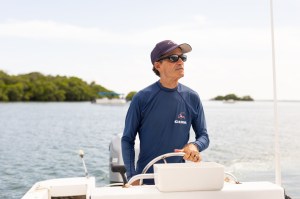
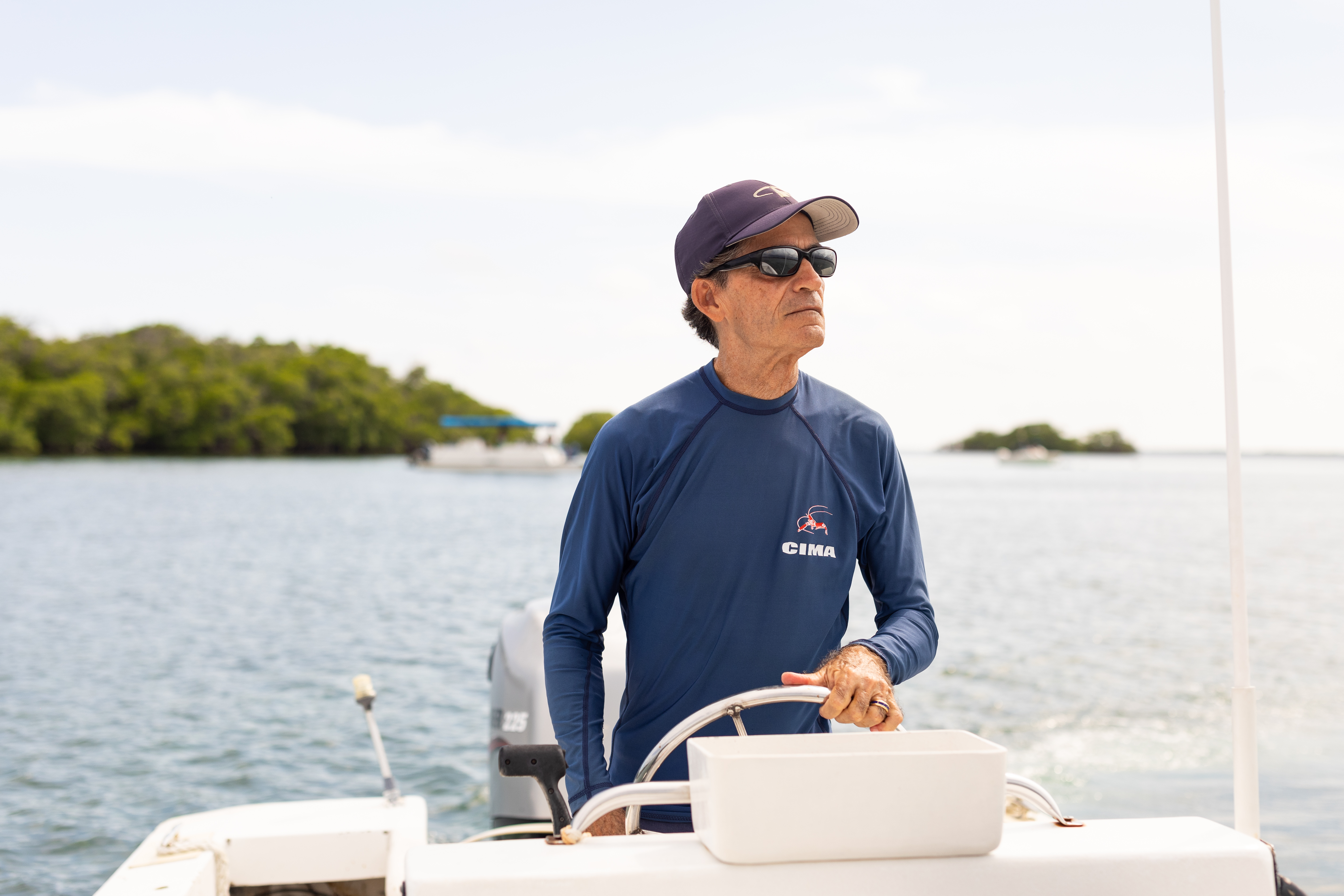
A Puerto Rican man wearing sunglasses, a navy baseball cap and longsleeve shirt is visible from the waist up, standing behind the silver wheel of a small white boat. In the background are a few islands of green foliage.
Roy Armstrong, an instructor for the OCEANOS internship and marine sciences professor, pilots a small boat around the cays off the coast of La Parguera, Puerto Rico.
NASA ARC/Milan Loiacono

What is your name and your role with OCEANOS?

My name is Ray Armstrong and I am a professor in the Department of Marine Sciences of the University of Puerto Rico. I came to be involved in OCEANOS because my ex-student and good friend Juan Torres-Perez, who works at NASA Ames Research Center, came up with this idea of having an internship for Hispanic students in Puerto Rico in the areas of remote sensing and oceanography, as a way of motivating Hispanic students to pursue careers in technology and oceanography.

What is the importance of a program like OCEANOS, especially in Puerto Rico?

Puerto Rico is an island and surrounded by ocean, and yet there is a lack of interest in marine sciences and oceanography compared to other disciplines. So we think that we need to promote the study and also conservation of our marine resources, and to use high technology  – such as remote sensing – to study and monitor our oceans and deal with things like water quality and the status of coral reefs, mangroves communities and so forth.

What is something that has been rewarding about working with these students?

Mostly the enthusiasm of the students when they go in the water or they look at mangroves for the first time, and learn more about their importance for fisheries and the coastline and so forth. Also sharing some of our stories and experiences in marine sciences, and listening to the students at the end of the program say that because of this experience they would like to pursue careers in marine sciences.

What has been a challenge of the program?

Well, one thing is the logistics, because it involves going out in boats in the ocean and there’s a limit of how many students can be in one place or in the water for safety reasons. So that that sets a limitation on the number of students for different activities.

This year we started a virtual component where we are also teaching a cohort of students and teachers on the use of NASA remote sensing technology in a virtual way and they also participate in some of the projects that the in-person students developed for this project.

How did you get into science?

Oh, for me it was simple. I was in love with the ocean since I was a little kid. I had the opportunity of participating in what is called the ‘sea semester’ at Woods Hole Oceanographic Institution, also Boston University where I graduated, and that was a big difference. I immediately realized that that’s what I wanted to do the rest of my life.

As someone born and raised in Puerto Rico, what are some of the environmental changes you’ve noticed in and around Puerto Rico?

I was born in Ponce, which is the second largest city in Puerto Rico. I moved to Parguera to study marine sciences at the Department of Marine Sciences in 1976. So basically I have lived here all my life, as a student but also as a professor: this year is my 28th year as a professor of marine sciences.

There were a lot of changes initially from hurricanes. In the late 1970s a couple of hurricanes destroyed huge areas of very shallow coral reef zones. After that there was a bloom of coral diseases. Through the years that has increased, decimating a lot of the coral populations in this area and in many other areas of the Caribbean and the world. More recently, in the last 5-10 years, more people in boats are coming to this area to a marine reserve, which put constant pressure on the ecosystem. When you have too many boats in one place, too many people in the water, and so forth, we don’t give the ecosystem a time to recover.

What is the importance of a program like OCEANOS, particularly in Puerto Rico?

We have seen that many professionals leave the island, in all disciplines. But if we can get younger people to be interested in what we do in the marine sciences in general. they will lhopefully ike to stay in Puerto Rico and work here and also make a difference in protecting our coastal ecosystems.

What is something that you hope the students take with them when they leave?

Even now, when the program is still going you can hear them say that the bonds they have established with fellow students and also with mentors and professors is very important. Some have also completely shifted their interest in other disciplines to marine science, or technology in general. And I’m very happy to hear that, because I think we’re having an effect on the on the people that come and the students that participate in this internship.

Powered by WPeMatico

Get The Details…
Milan Loiacono

Interview with OCEANOS PI Juan Torres-Pérez

Interview with OCEANOS PI Juan Torres-Pérez

6 min read

Preparations for Next Moonwalk Simulations Underway (and Underwater)

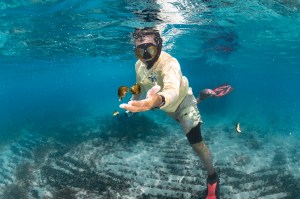
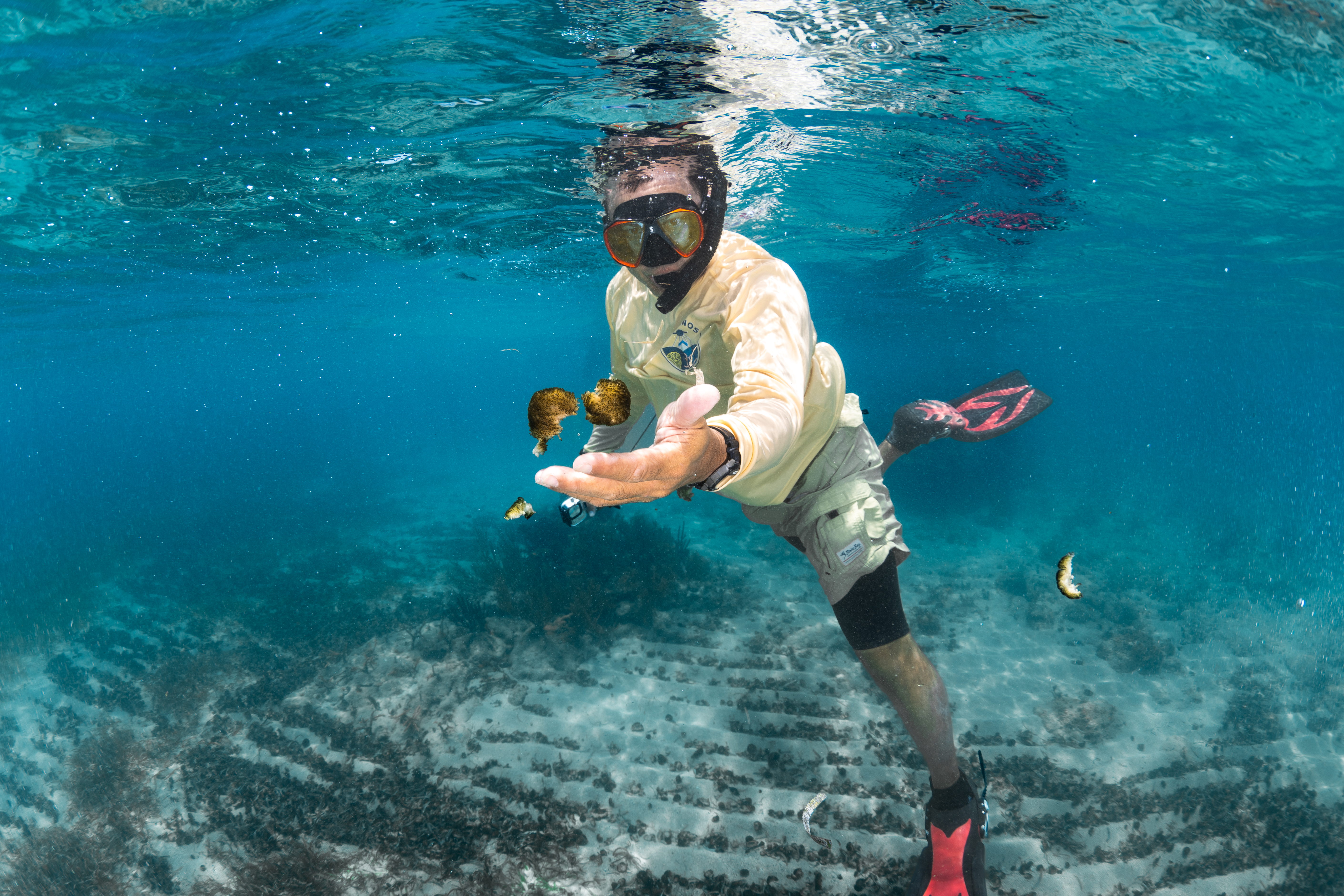
A Puerto Rican man wearing a snorkel mask, fins, and a cream long-sleeve shirt float in bright blue water with one hand extended towards the camera. Just above his hand float two brown fuzzy balls, roughly the size of golf balls.
OCEANOS PI Juan Torres-Pérez, a research scientist at NASA Ames Research Center, holds two pieces of cyanobacteria in the waters of Playa Melones, Culebra Island (Puerto Rico) during the 2024 OCEANOS internship. The cyanobacteria overgrowth is likely caused by an on-land source of pollution leeching into the waters.
NASA ARC/Milan Loiacono

What is your name and your role with OCEANOS?

My name is Juan Torres-Pérez. I am a research scientist at NASA Ames Research Center in the Earth Sciences division, biospheric sciences branch. I am the PI of OCEANOS, which stands for Ocean Community Engagement and Awareness with NASA Observations and Science for Hispanic/Latino students.

What is the importance of a program like OCEANOS, particularly in Puerto Rico?

When you look at the statistics in the in the US, the Hispanic/Latino community is one of the largest minorities across the continental US and jurisdictions like Puerto Rico. But in the geo sciences, the percentage of Hispanic and Latinos is very, very small, including in Puerto Rico. So that’s where we wanted to propose a project like OCEANOS: to engage Hispanic/Latino students  in Puerto Rico in geosciences. Specifically, engaging students in oceanography and the use of remote sensing and NASA data to study coastal marine ecosystems.

What are some of the activities that the students do as part of the program?

For example here in Culebra, students study the coral reefs and their different components. What was the condition of the corals per se? The different coral species and their status. They’re also doing beach profiles, to measure whether the beaches have shrunk over time.

One of the other things that they’re doing is measuring water quality in a few different sites in Culebra [Island] and also in la Parguera on the southwest coast of Puerto Rico,  so they can compare the water quality in the east of Puerto Rico against the Southwest.

What is something that has been rewarding about working with these students?

Something rewarding is just to see their faces. Last year when they finished the program and this year as they go through the different experiences, you see how they’re learning. You see how they become engaged and how they participate in the in all the different activities. Most of the evenings, event late at night they’re still working on the data and they want to continue working with the data. So that tells you that this is something that they really enjoy and that they want to do for the future.

What growth or change do you see in the students over the course of the internship?

For one example, we’ve had students here that on the very first day told us that they didn’t swim, and we brought them to the water in the first week. We gave them some pointers, we talked to them about safety in the water, and taught them some techniques. And now,  less than three weeks later they’re diving; they’re literally diving in the water collecting data and doing everything that we tell them to do. So that for us is a win-win situation.

What has been a challenge of the program?

A challenge for us is more on the on the logistics of bringing in so many students, particularly to the to the southwest coast and also to Culebra Island. These are both big tourism sites in Puerto Rico, which makes it tough for logistics like finding a place for them to stay. In the case of Culebra, we have to buy the ferry tickets to bring them to the island, the transportation and all of that. But at the end of the day it’s so rewarding that it’s definitely worth it.

What is something that you hope the students take with them when they leave?

We want the students to become agents of change. That means that they can pass on to their communities, their families, all their relatives, and their schools all the knowledge that they gain through this whole month, and eventually get others enthusiastic about not only engaging in activities like this, but also in preserving the ocean. We have some of the most beautiful coral reefs in the Caribbean here, and they’ve been suffering from a lot of different climate-related and anthropogenic activities. If we get them to tell others that we need to preserve this [marine ecosystem], and then they follow the same steps, that’s the long-term goal for us.

What are some of the environmental changes you’ve noticed in and around Puerto Rico?

One example is that nowadays there are several invasive species that have been affecting the coral reefs for at least the past couple decades and some of them even more recently. For instance, the introduction of the lionfish in the Caribbean has devastated some of the most important fish populations, such as groupers and snappers, which affects the whole food web. There are also a number of invasive seagrass species and also some other invertebrates that are literally colonizing all the areas that used to be covered by corals and the local seagrass species, and that disrupts the whole ecosystem.

Many of them are a consequence of human introduction. Most of these species are actually from the Pacific, and come in or on ships as they go through the Panama canal and eventually they get into the Caribbean. Some of the larvae and such are in there,  and then they find a new place to stay and reproduce.

Some other species are probably related to climate change: the increase in surface temperatures the changes in currents and such. This is something that’s still being studied by a lot of scientists in the Caribbean and also in the in the Atlantic.

Do you see any climate change-related effects in Puerto Rico?

In particular one of the biggest changes that we have seen in terms of climate change and its impact on coral reefs is the increasing surface temperatures. We are literally going through a global coral bleaching event. That has been happening in the last in the last few years and that has affected many of the coral species in the Caribbean and many other parts in the world. Once the coral gets bleached it becomes weakened, and eventually a lot of these colonies die. Once they die they get covered by filamentous algae, and there’s no way back from there. That affects the whole ecosystem, including fisheries and others. Also, some of the coral diseases may also be triggered by these changes related to climate.

Powered by WPeMatico

Get The Details…
Milan Loiacono