NASA Armstrong Builds Sensor Pod for Autonomous Flight

NASA Armstrong Builds Sensor Pod for Autonomous Flight

2 min read

Preparations for Next Moonwalk Simulations Underway (and Underwater)

NASA/Quincy Eggert

The design and build of a unique NASA pod, produced to advance computer vision for autonomous aviation, was recently completed in-house at NASA’s Armstrong Flight Research Center in Edwards, California, by using the center’s unique fabrication capabilities. The pod is called the NASA Airborne Instrumentation for Real-world Video of Urban Environments (AIRVUE). NASA Armstrong can take an idea from a drawing to flight with help from the center’s Experimental Fabrication Shop.  

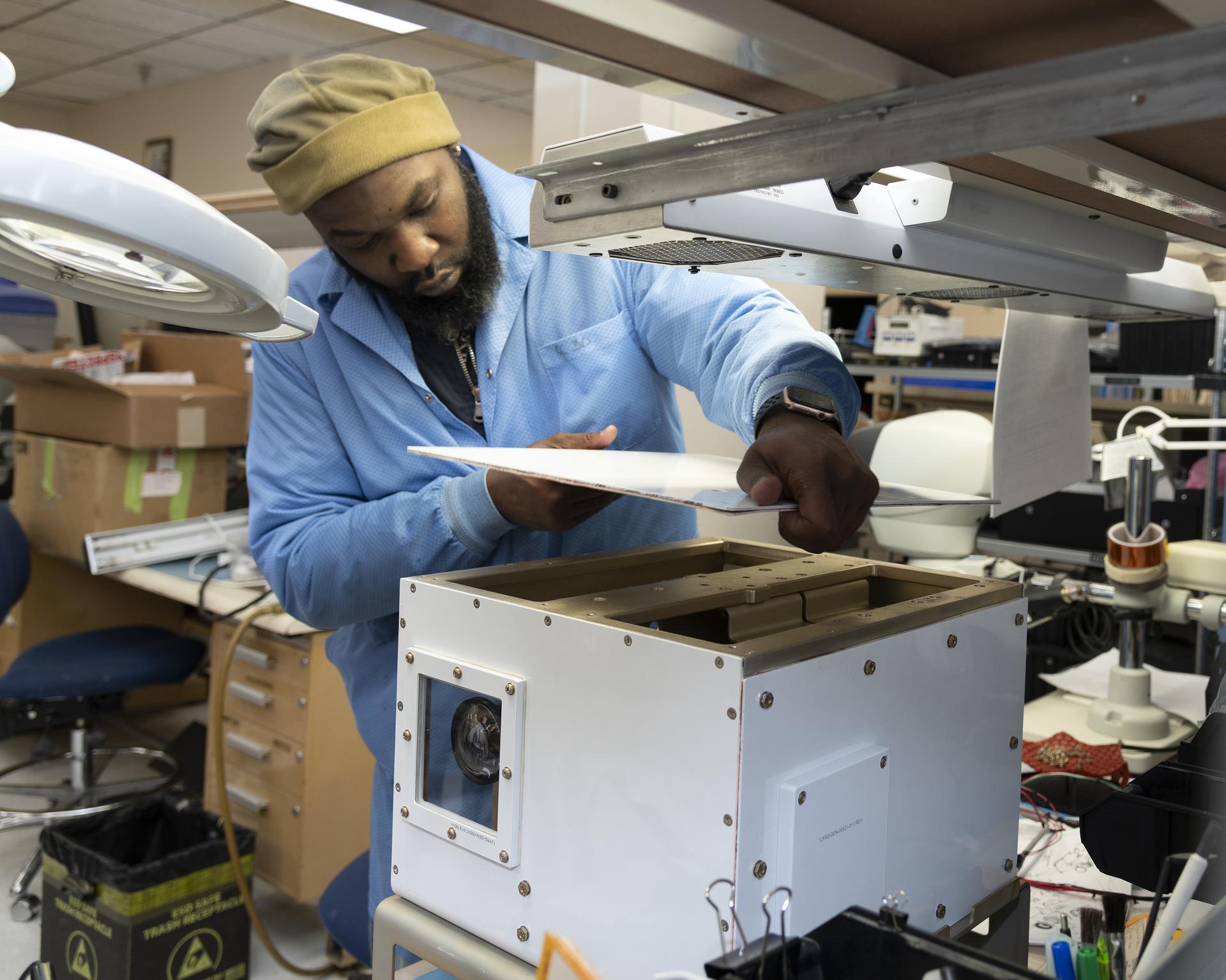
A man wearing a light blue lab coat inside of a lab installs the top back onto a white cube that sits on a desk. The man wears a tan winter hat. The background is filled with boxes, other lab equipment, a desk and rolling blue chair.
NASA researcher James Cowart adds the top back onto the NASA Airborne Instrumentation for Real-world Video of Urban Environments (AIRVUE) sensor pod at NASA’s Armstrong Flight Research Center in Edwards, California, in late February 2024. The pod houses sensors, wiring and cameras. The AIRVUE pod was flown on a helicopter at NASA’s Kennedy Space Center in Florida and is used to collect data for future autonomous aircraft.
NASA/Genaro Vavuris

NASA subject matter experts developed the idea for the project, after which engineers drew up plans and selected materials. The Experimental Fabrication Shop received those plans and gathered the materials to fabricate the pod.  

After the pod was built, it moved to NASA Armstrong’s Engineering Support Branch, where electronics technicians and other specialists installed instruments inside of it. Once completed, the pod went through a series of tests at NASA Armstrong to make sure it was safe to fly at NASA’s Kennedy Space Center in Florida on an Airbus H135 helicopter. The engineering team made final adjustments to ensure the pod would collect the correct data prior to installation. More about the design and fabrication process, and the pod’s capabilities, is available to view in a NASA video.

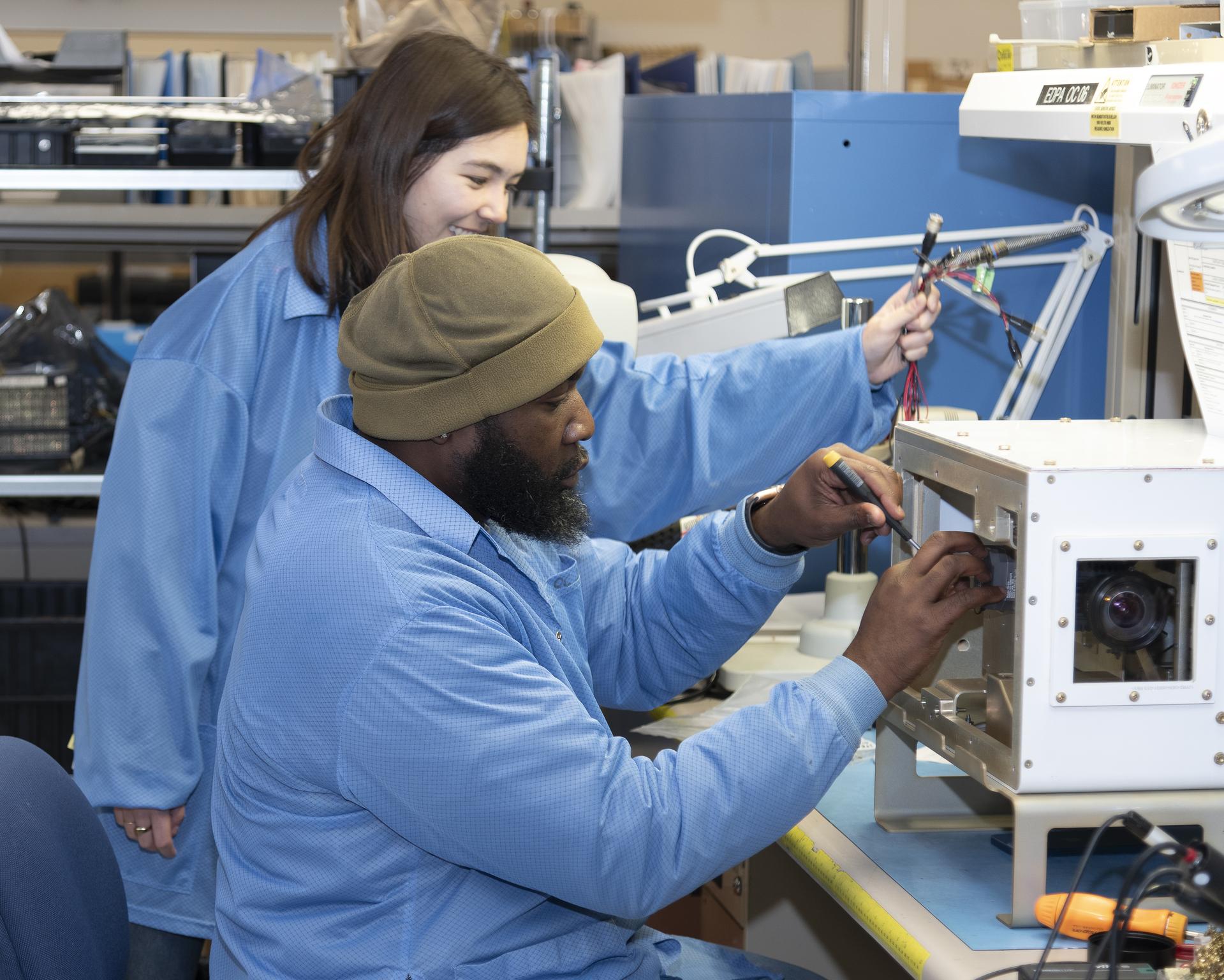
A man in the foreground and a woman in the background, both wearing light blue lab coats, install wiring, sensors, and cameras into a white cube that sits on a desk. The mean wears a tan winter hat. There is a metal shelf in the background full of hardware, wires, and baskets housing other lab equipment.
NASA researchers James Cowart and Elizabeth Nail add sensors, wiring and cameras, to the NASA Airborne Instrumentation for Real-world Video of Urban Environments (AIRVUE) sensor pod at NASA’s Armstrong Flight Research Center in Edwards, California, in late February 2024. The AIRVUE pod was flown on a helicopter at NASA’s Kennedy Space Center in Florida and is used to collect data for future autonomous aircraft.
NASA/Genaro Vavuris

Powered by WPeMatico

Get The Details…
Dede Dinius

NASA Johnson Director to Speak at Space Institute Groundbreaking

NASA Johnson Director to Speak at Space Institute Groundbreaking

Director Wyche speaking to media
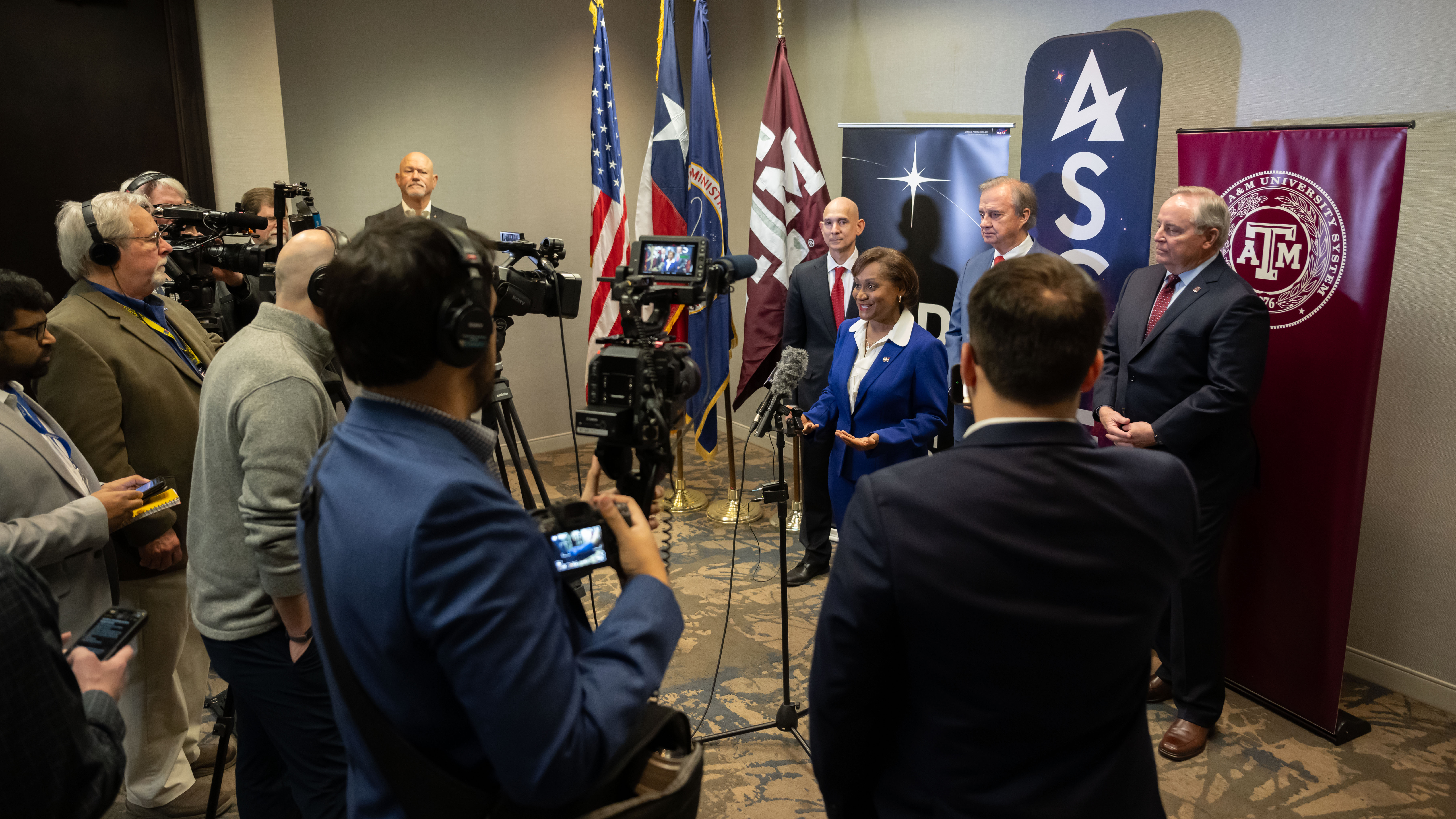
Vanessa Wyche, director of NASA’s Johnson Space Center provides an update on Exploration Park on Feb. 15, 2022, at the ASCENDxTexas conference at South Shore Harbor Resort and Conference Center. Credit: NASA / Josh Valcarcel

Nov. 12, 2024

Director Vanessa Wyche of NASA’s Johnson Space Center in Houston will join Texas A&M University leaders and guests Friday, Nov. 15, to break ground for the new Texas A&M University Space Institute.

U.S. media interested in participating in person must contact the NASA Johnson newsroom no later than 5 p.m. Wednesday, Nov. 13, by calling 281-483-5111 or emailing: jsccommu@mail.nasa.gov. NASA’s media accreditation policy is available online.

The groundbreaking is planned for 10 a.m. CST Nov. 15, at Johnson Space Center’s Exploration Park. Additional participants will include:

  • Greg Bonnen, Texas House of Representatives, chairman of House Appropriations Committee
  • William Mahomes, Jr., Board of Regents chairman, Texas A&M University System 
  • John Sharp, chancellor Texas A&M University System 
  • General (Ret.) Mark Welsh III, president, Texas A&M University 
  • Robert H. Bishop, vice chancellor and dean, Texas A&M Engineering
  • Nancy Currie-Gregg, director, Texas A&M University Space Institute
  • Robert Ambrose, associate director for space and robotics initiatives, Texas A&M Engineering Experiment Station 

The institute, funded through a $200 million initial investment from the State of Texas, will support research for civilian, defense and commercial space missions as part of NASA Johnson’s Exploration Park. Key features will include the world’s largest indoor simulation spaces for lunar and Mars surface operations, state-of-the-art high-bay laboratories, and multifunctional project rooms.

The Texas A&M Space Institute is set to open in Summer 2026. 

NASA is leasing the 240-acre Exploration Park to create facilities that enable a collaborative development environment, increase commercial access, and enhance the United States’ commercial competitiveness in the space and aerospace industries. 

To learn more about NASA Johnson and the Texas A&M University Space Institute, visit:

https://www.nasa.gov/nasas-johnson-space-center-hosts-exploration-park

-end-

Kelly Humphries

Johnson Space Center, Houston

281-483-5111

kelly.o.humphries@nasa.gov

Powered by WPeMatico

Get The Details…
Wendy K. Avedisian

Matthew Kowalewski: Aerospace Engineer and Curious About Everything

Matthew Kowalewski: Aerospace Engineer and Curious About Everything

Name: Matthew Kowalewski
Title: Dragonfly Mass Spectrometer (DraMS) Lead Instrument Systems Engineer
Formal Job Classification: Aerospace Engineer
Organization:  Instrument and Payload Systems Engineering Branch (Code 592)

Matthew Kowalewski stands second from left with three other people. He and the woman in the middle are wearing
Matthew Kowalewski (second from left) is the lead instrument systems engineer for NASA’s Dragonfly Mass Spectrometer (DraMS).
Photo courtesy of Matthew Kowalewski

What do you do and what is most interesting about your role here at Goddard?

As the DraMS lead instrument systems engineer for NASA’s Dragonfly mission, I lead the coordinated technical development, integrating systems and making sure communications across subsystems is maintained within the instruments as well as with the lander. I enjoy the diversity and complexity of this instrument.

What do you enjoy most about your current position as the DraMS lead instrument systems engineer?

I started this position in March 2023 and it has been like drinking from a fire hose ever since, but in a good way. The complexity of the instrument and the number of subsystems means this is really three separate instruments in one, and that makes my job exciting. I have to keep up with a range of disciplines across everything that Goddard does including mechanisms, lasers, mass spectrometers, gas flow systems, mechanical systems, thermal systems and electrical systems.

I am always challenged and excited by those challenges too. Everything we do is necessary to meet the broad science requirements. Our goal is studying prebiotic chemistry on the surface of Titan.

What is your educational background? Why did you become an aerospace engineer?

I have a B.A. in astronomy and physics from Boston University and a master’s in physics from Johns Hopkins University.

As a child, I was more interested in astronomy and physics. In college, I developed an extreme interest in experimental physics including the engineering required to perform these experiments.

How did you come to Goddard?

After college, I worked in missile defense for a private company supporting the Midcourse Space Experiment. After three years, in 1998, my wife and I wanted to move closer to family, so I came to Goddard as an instrument engineer supporting the Total Ozone Mapping Spectrometer-Earth Probe (TOMS/EP) mission. I have also supported the Ozone Monitoring Instrument on Aura, The Ozone Mapping Profiler Suite (OMPS) on Suomi NPP and JPSS, various airborne field campaigns, and the New Opportunities Office.

What interesting field work did you do prior to joining DraMS?

I largely did field work supporting Earth science research and new business development. We flew remote sensing instruments on high altitude aircraft in the United States, Costa Rica, South Korea [whose official name is the Republic of Korea], and Canada. Most field campaigns lasted about a month where we were housed in hotels or military bases. While supporting the New Opportunities Office, we developed instrument and mission concepts, evaluated and prioritized technologies, and fostered relationships with industry, universities, and other government organizations.

How do you lead across multiple teams?

I lead a large team engineers and technicians spanning across over six teams. Communication is the key. I rely on the expertise of our systems team and all of the subsystem leads. We have daily and weekly meetings where everyone is heard and they are free to approach me whenever they have concerns.

I try to encourage open discussions including contrarian thoughts and ideas. I listen to all the options and opinions in an attempt to make the best-informed decision. Then I move forward with my decision.

In a cost- and schedule-constrained environment, like most missions are, we cannot get stuck in the decision-making process. At some point, a decision needs to be made and the team then moves forward.

Where have you traveled for work?

I have been to multiple NASA centers and military bases in this country. In addition to Costa Rica, South Korea and Canada, I have also been to the Netherlands and France for mission development.

What is the most memorable moment you have had at Goddard?

In 2003, I was supporting the space shuttle Columbia mission, STS-107. We had a small payload in the shuttle cargo bay called a Hitchhiker. I was second shift in the Hitchhiker mission operations center. I got to interact with the astronauts both prelaunch and on orbit. It meant a lot to me. My last shift was just prior to their reentry. It really impacted me when I learned, after my shift, that the shuttle disintegrated with all hands lost.

I had the honor of meeting these astronauts. It reminded me of the importance of the work that we do as we continue sending astronauts into orbit for missions.

When you mentor someone, what do you advise them to do?

I tell them to learn as much about everything that they can. For example, if they are an engineer, they should learn about science and other disciplines because a broad knowledge base will help them in the future. They will also learn why building a small piece of hardware is important for accomplishing the mission’s science goals. An electrical engineer building a circuit is actually building something for a far larger purpose.

It is also very important to get along with others. We work with others every day, in all aspects of our lives, and we have to understand their perspectives and respect their opinions. There is more to our jobs than building things. Establishing relationships with others is what truly allows us to accomplish our goals.

What do you do for fun?

I have four kids and enjoy spending time with them. I coach soccer, mentor a robotics club, and participate in endurance swim races. This is my second year as a mentor to my son’s robotics club, which participates in an annual, national robotics competition to build a robot from scratch. This year we have a highly mobile, fast robot with a multi-jointed arm to manipulate objects. I think we have a good shot at going to nationals.

Who would you like to thank?

I wish to thank my wife Angie for supporting me over all these years as my career developed. She was often home alone with four kids during long stints of travel. I would not be where I am without her.

I also owe much to my mentors, Scott Janz, Glenn Jaross, and Jay Al-Saadi for all their guidance, support and opportunities over the many years. Nobody can work alone, no matter how smart you are.

What is your “five-word or phrase memoir”? A five-word or phrase memoir describes something in just five words or phrases.

Understanding. Compassionate. Persistent. Hard-working. Curious about too many things.

By Elizabeth M. Jarrell
NASA’s Goddard Space Flight Center, Greenbelt, Md.

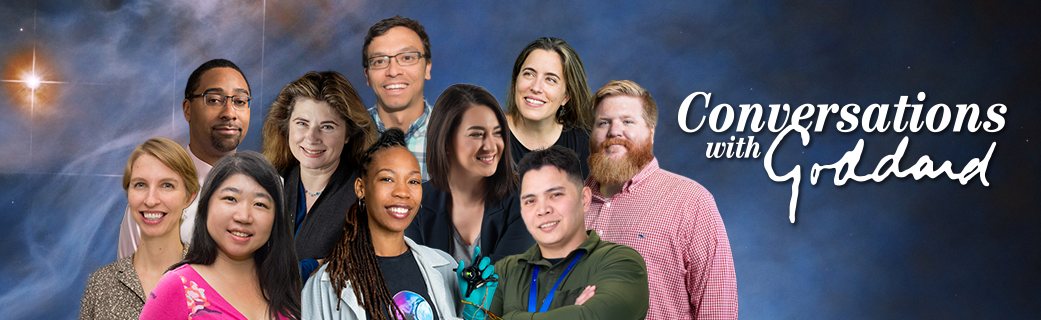
A banner graphic with a group of people smiling and the text "Conversations with Goddard" on the right. The people represent many genders, ethnicities, and ages, and all pose in front of a soft blue background image of space and stars.

Conversations With Goddard is a collection of Q&A profiles highlighting the breadth and depth of NASA’s Goddard Space Flight Center’s talented and diverse workforce. The Conversations have been published twice a month on average since May 2011. Read past editions on Goddard’s “Our People” webpage.

Share

Details

Last Updated

Nov 12, 2024

Editor
Rob Garner
Contact
Rob Garner
Location
Goddard Space Flight Center

Powered by WPeMatico

Get The Details…
Rob Garner

Inia Soto Ramos, From the Mountains of Puerto Rico to Mountains of NASA Earth Data

Inia Soto Ramos, From the Mountains of Puerto Rico to Mountains of NASA Earth Data

Name: Dr. Inia Soto Ramos
Title and Formal Job Classification: Associate Research Scientist
Organization: Ocean Ecology Laboratory (Code 616) via Morgan State University and GESTAR II cooperative agreement

A woman sits on a tan-gray rock to the right of the image. She is wearing a deep purple colored shirt and black pants. One of her legs is tucked up while the other hangs off the side of the rock, and her arms are gently crossed. The woman is at a higher elevation than the background, so the landscape behind her can be seen a far distance. The landscape to the left of the image is a nearly flat ground in dark green, brown, and orange colors, and centered in the image is a lake which is reflecting the color of the sky off of it. Above the horizon, the sky is a bright blue color, but is covered slightly by sparse gray clouds.
Dr. Inia Soto Ramos is an associate research scientist with NASA’s PACE — the Plankton, Aerosol, Cloud, ocean Ecosystem mission — at the agency’s Goddard Space Flight Center in Greenbelt, Md.
Photo courtesy of Inia Soto Ramos

What do you do and what is most interesting about your role here at Goddard?

I am currently co-leading the validation efforts for PACE, NASA’s Plankton, Aerosol, Cloud, ocean Ecosystem mission. I am also part of NASA’s SeaBASS (SeaWiFS Bio-optical Archive and Storage System) team, which is responsible for archiving, distributing, and managing field data used for validation and development of satellite ocean color data products. It has been exciting to be a part of a satellite mission, to see it being built, tested and launched. And now, be able to validate the data and in the near future, use the data to do science.

What is your educational background?

I graduated with a bachelor’s degree in biology from The University of Puerto Rico, Mayagüez Campus, and I have a master’s and Ph.D. in Biological Oceanography from the University of South Florida.

How did you get your foot in the door at NASA?

While I was a student at the University of Puerto Rico, I saw a flyer for a program called PaSCoR (Partnership for Spatial and Computational Research). It was a partnership between universities, NASA and other institutions with the intent to train students in remote sensing and Geographical Information Systems. Although, this program was targeted mainly for engineers, I decided to apply. That took me to the first remote sensing classes I had taken. That’s how I started learning that you can study the ocean from space. I had no idea that could be done. That program planted the curiosity about satellite oceanography and gave me the tools to go into graduate school in that field.

How did you first gain exposure to oceanography and diving?

I am from Puerto Rico and grew up all the way in the mountains. There wasn’t much of a connection to the ocean for me, only a few trips to the beach. I remember my dad taking me to a small beach called La Poza del Obispo in Arecibo and he held me while I used a small snorkel underwater. That was the first connection I had with marine life. I started diving sometime when I was about 18 years old, and I remember saying, “This is the most amazing thing ever,” and that’s when I decided I needed to pursue a life in that field.

What interested you in phytoplankton as a specialty?

Initially, I was curious about harmful algal blooms in the West Florida Shelf, which I studied when I moved to Florida to do my grad studies. I learned that the blooms can produce neurotoxins, and those can affect humans in different ways. So, if you have asthma, they can make you feel worse. I remember developing asthma that night after going to the beach and having go to the ER. I didn’t see the connection at the time until I learned about these events and how toxins can get in the air. It felt like something important that I could study to help people or do something that’s meaningful. It’s amazing that we can see something so tiny from space and study them.

How does your identity, being a Latina, show up at NASA?

This is kind of a dream come true. It is so amazing to be able to fulfill that dream. I came from a small town. There appeared to me no chances to come all the way to NASA. So, having this opportunity is exciting, and bringing it back to my community and saying, “Hey, anyone can actually do it.” One of the advantages is that you speak a different language, so you can make connections with different countries.

What do you look forward to in the future? What are some of your goals?

 I would love to keep growing in my field. As a mother, sometimes is hard to visualize where I want to be in the future, so I find it best to focus on the present. My priority right now is my family, however in the future I would love to engage in a job in which I can transfer my knowledge and love to the oceans to future generations; and be more involved in the community.

When you think of your village and growing up in Puerto Rico, what is a memory you have that makes you smile?

I still remember going to collect coffee with my mom and dad. My dad had a small basket for me that I would fill with only the most beautiful red grains of coffee. I was around 5 years old, and I remember the toys that my mom would take, and they’d settle me under the coffee trees. I still go to Puerto Rico, and I am fascinated when I see the coffee trees; it reminds me of my childhood.

What advice would you give to other little girls who might not think NASA is a dream they can achieve?
I was the little girl with the dream of being a scientist at NASA, and then I was a teenager, an adult, and a mother, all with the same dream! It took me several decades and many life stages to get here. Many times, along my path, I thought of giving up. Others, I thought I was completely off track and I would never fulfill my dream. I had limited resources while growing up. There were no fancy swimming or piano classes, but I had amazing teachers and mentors who guided me along the way. So, no matter how young or old you are, you can still fulfill that dream. The key to success is to know where you want to go, surround yourself with people that believe in you, and if you fall, just shake it off and try again!

By Alexa Figueroa
NASA’s Goddard Space Flight Center, Greenbelt, Md.

A banner graphic with a group of people smiling and the text "Conversations with Goddard" on the right. The people represent many genders, ethnicities, and ages, and all pose in front of a soft blue background image of space and stars.

Conversations With Goddard is a collection of Q&A profiles highlighting the breadth and depth of NASA’s Goddard Space Flight Center’s talented and diverse workforce. The Conversations have been published twice a month on average since May 2011. Read past editions on Goddard’s “Our People” webpage.

Share

Details

Last Updated

Nov 12, 2024

Editor
Rob Garner
Contact
Rob Garner
Location
Goddard Space Flight Center

Powered by WPeMatico

Get The Details…
Rob Garner

Peculiar Pale Pebbles

Peculiar Pale Pebbles

3 min read

Peculiar Pale Pebbles

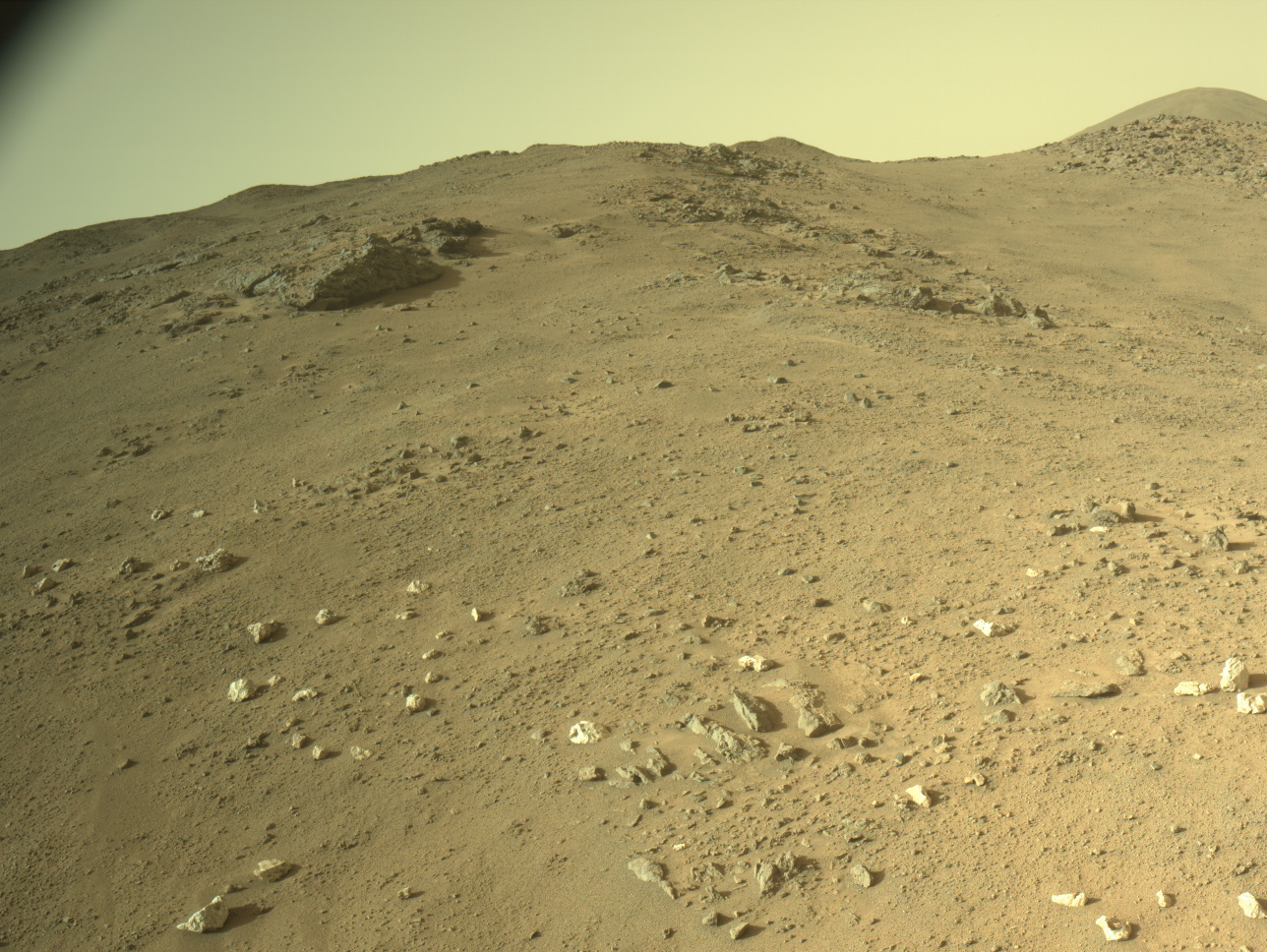
During its recent exploration of the crater rim, Perseverance diverted to explore a strange, scattered field of bright white rocks which sparked the interest of the team scientists.

Perseverance has been climbing up the steep slopes of the Jezero crater rim for over two months now, and ever since approaching the edge of the crater has been spying increasingly diverse and strange-looking rocks. Back in the Jezero inlet channel, Neretva Vallis, Perseverance spotted a whole host of colourful boulders at Mount Washburn, and more recently the science team and internet alike were mesmerised by Freya Castle – a rock striped like a zebra! The crater rim hasn’t finished delivering surprises yet though… Just as we humans were preparing for Halloween back on Earth, a ghostly field of bright white rocks appeared in Perseverance’s view, at the base of a mound in the crater rim termed “Mist Park”, and sparking a new mystery for the science team to unravel.

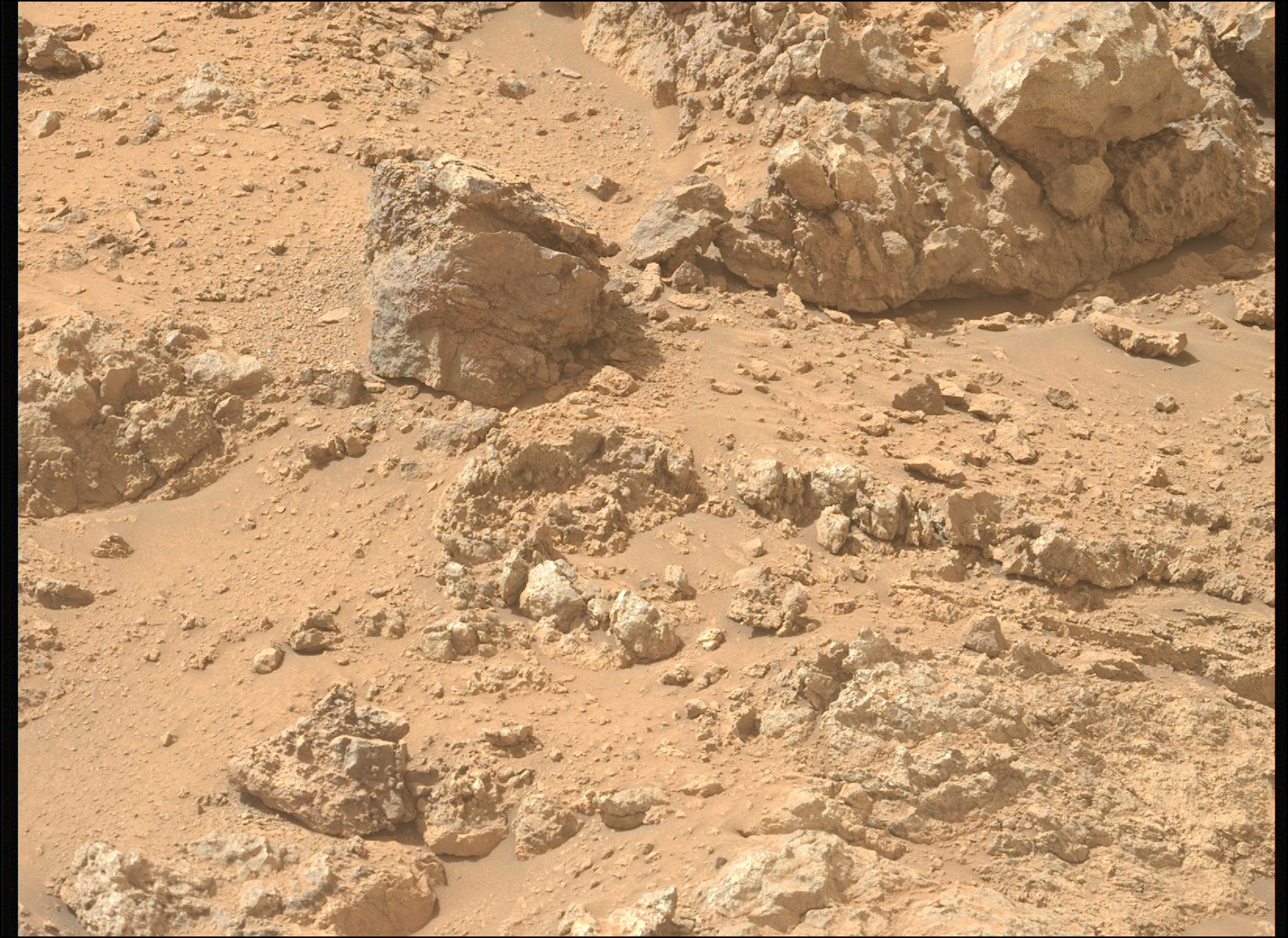
On Earth, we find white rocks in a wide array of geologic settings, and that’s not surprising given the diverse array of light-toned minerals which can be generated across Earth’s various tectonic settings. On Mars however, with its lack of plate tectonics and a basaltic crust dominated by dark minerals like olivine and pyroxene, white rocks are a rare find. The science team planned several observations using Perseverance’s remote sensing instruments to assess the composition of these peculiar pebbles, including multispectral imaging with Mastcam-Z and zapping them with Supercam’s laser. Hopefully these observations can shed light on how these white rocks formed all the way up here on the crater rim. Unfortunately, none of the rocks were big enough to safely inspect them up close with Perseverance’s robotic arm instruments, but the team are on the lookout for larger blocks or outcrops of this strange lithology as we continue traversing upslope.

Aside from their composition, another mystery is just how these rocks got here. The blocks are all float (float = loose rocks, not in their original location), and scattered over just a few square meters. Perhaps these could be erosional leftovers of some kind of resistant vein or rock layer, where the softer, surrounding lithologies have eroded away? Or could these blocks have tumbled downslope from a more continuous bedrock exposure of enigmatic white material? Who knows, but Perseverance will be keeping its eyes peeled for more of these bizarre blocks as it continues to summit new heights…

Written by Alex Jones, PhD student at Imperial College London

Share

Details

Last Updated
Nov 12, 2024

Related Terms

Powered by WPeMatico

Get The Details…