What’s Up: September 2026 Skywatching Tips from NASA

What’s Up: September 2026 Skywatching Tips from NASA

Brilliant Venus and a Harvest Moon

Use the Moon to find Antares and the Teapot, spot brilliant Venus, welcome the equinox, and see the Harvest Moon near Saturn and Neptune.

Skywatching Highlights

  • Sept. 14-20: Use the Moon to find Antares and the Teapot; dark skies may reveal the Milky Way center
  • Sept 18: Venus reaches peak brilliance for this evening appearance
  • Sept. 22: September equinox; fall begins in the Northern Hemisphere and spring in the Southern Hemisphere
  • Sept. 26: Harvest Moon rises near Saturn and Neptune
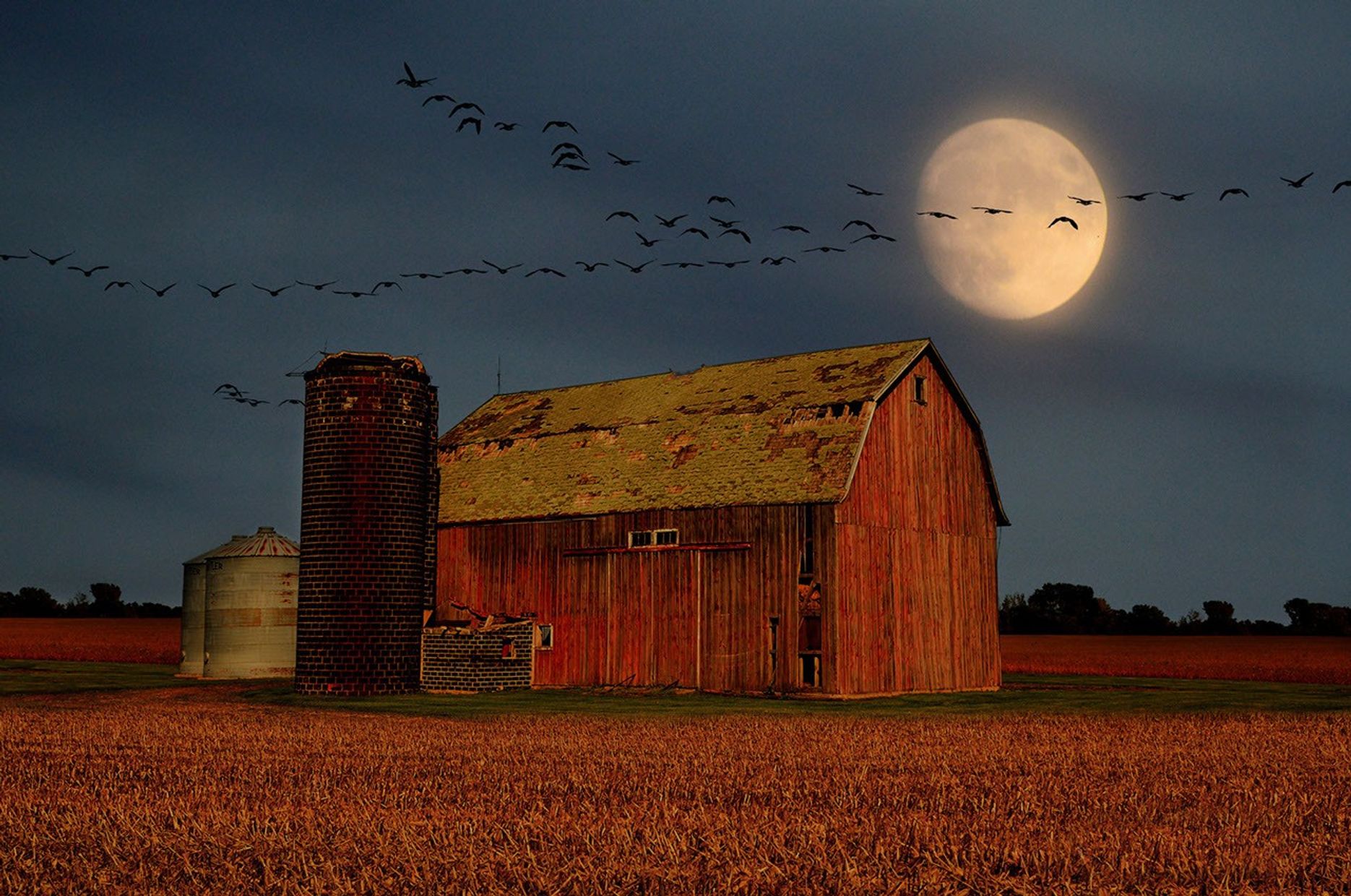
A large, glowing full moon shines bright yellow in a dark twilight sky above a rustic red barn and silo set behind a golden harvest field, with a long V-formation of birds flying across the sky.
Birds fly over a barn as a harvest Moon rises.
Mike Linnihan

Transcript

The Moon joins a tea party… Venus cranks up the brightness… the seasons officially change… and the Harvest Moon meets up with some planetary neighbors.

That’s What’s Up for September.
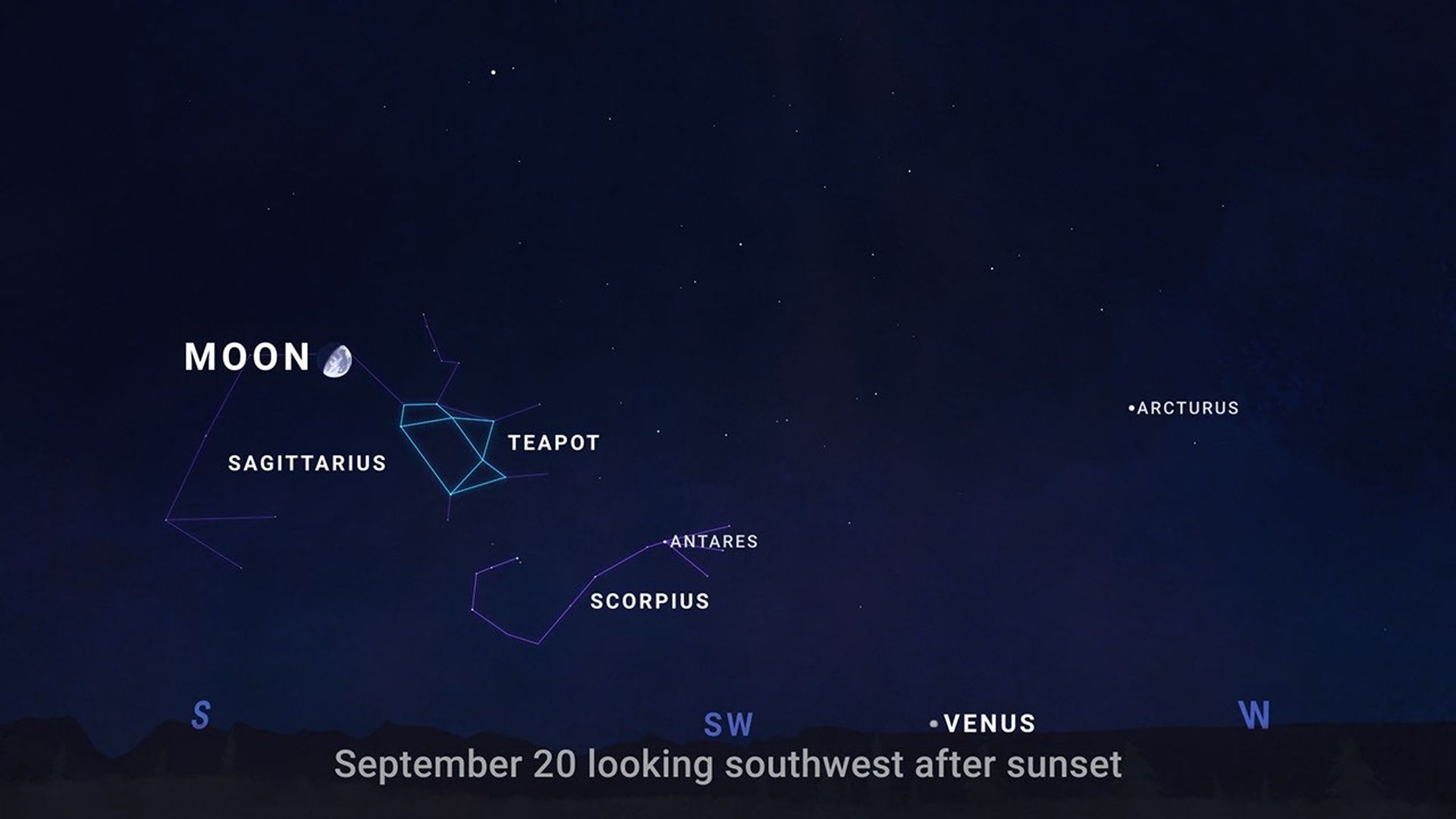
A sky chart looking southwest after sunset on Sept. 20, 2026.
NASA/JPL-Caltech

From September 14 through 20, let the Moon guide you to a few celestial landmarks. About an hour after sunset, look south to find the Moon in the evening sky.

Night by night, the Moon shifts position against the background stars, passing near Antares.

This bright, reddish star marks the heart of the constellation Scorpius.

Next you’ll see the Teapot, a group of stars in neighboring Sagittarius that really does resemble a teapot, complete with a handle, lid, and spout.

If you are under an especially dark sky… you may see hazy steam rising from the Teapot’s spout.
Follow that steam to its thickest part, and you’ll be looking toward the center of our Milky Way galaxy.
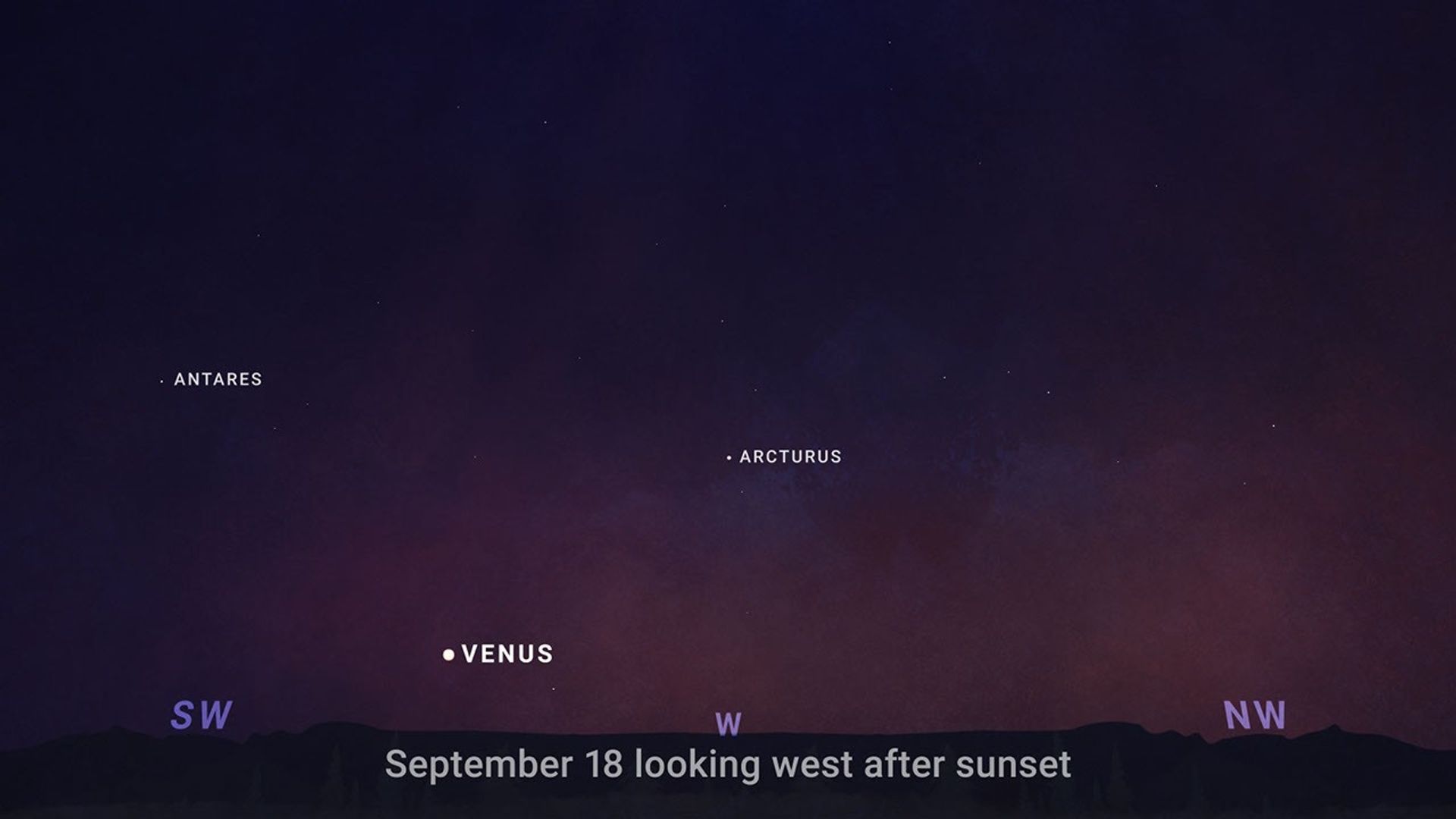
A sky chart looking west after sunset on Sept. 18, 2026.
NASA/JPL-Caltech

Look west on September 18 as Venus hits peak brilliance, shining at its brightest of this evening appearance..

You won’t have to search hard to find it. Shortly after sunset, Venus will stand out as a brilliant point of light low above the western horizon, outshining every star around it. A clear view of the horizon will give you the best chance to catch it before it sets.

On September 19, celebrate International Observe the Moon Night!

People around the world are invited to look up and connect with our nearest celestial neighbor while learning more about lunar science, exploration, and the many ways the Moon has shaped cultures around the world. Find an event near you — or learn how to participate from wherever you are — at go.nasa.gov/ObserveTheMoon.

Then on September 22, it’s officially fall in the Northern Hemisphere …while spring begins in the Southern Hemisphere.

That’s the September equinox, when the Sun is directly above Earth’s equator and day and night are close to equal in length around the world.

From there, daylight keeps getting shorter in the Northern Hemisphere and longer in the Southern Hemisphere.
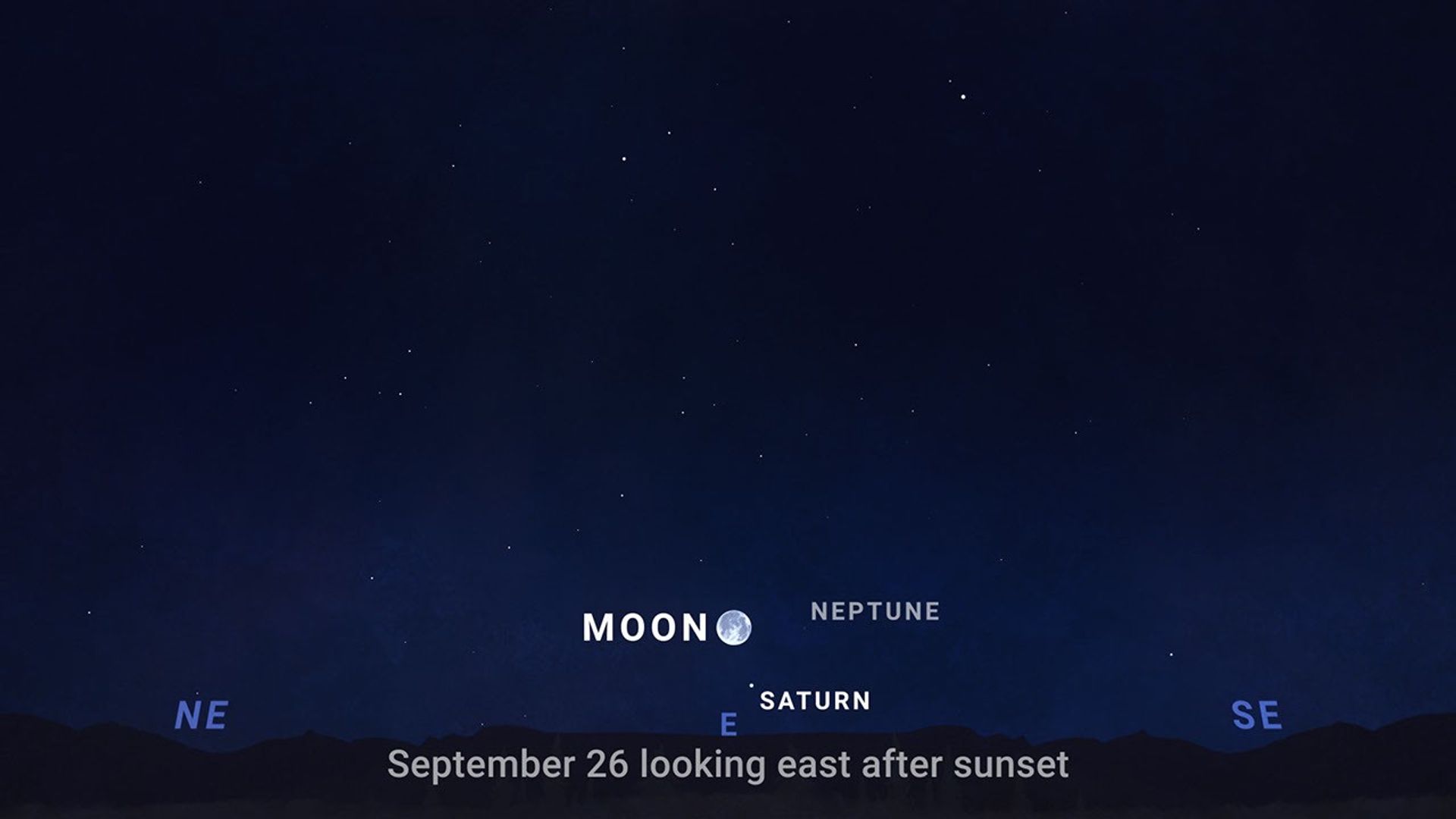
A sky chart looking east after sunset on Sept. 26, 2026.
NASA/JPL-Caltech

And on September 26, the Harvest Moon takes center stage, rising in the east shortly after sunset.

It won’t be alone. Saturn appears nearby, with faint Neptune completing a wide triangle in the sky.

Saturn is the easy one-you can see it with just your eyes. Neptune is a bit more challenging. At around magnitude 8, it’s too faint to see with the unaided eye …so you’ll need binoculars or a telescope to spot it. Darker skies and good observing conditions can help bring it into view.

Here are the phases of the Moon for September.
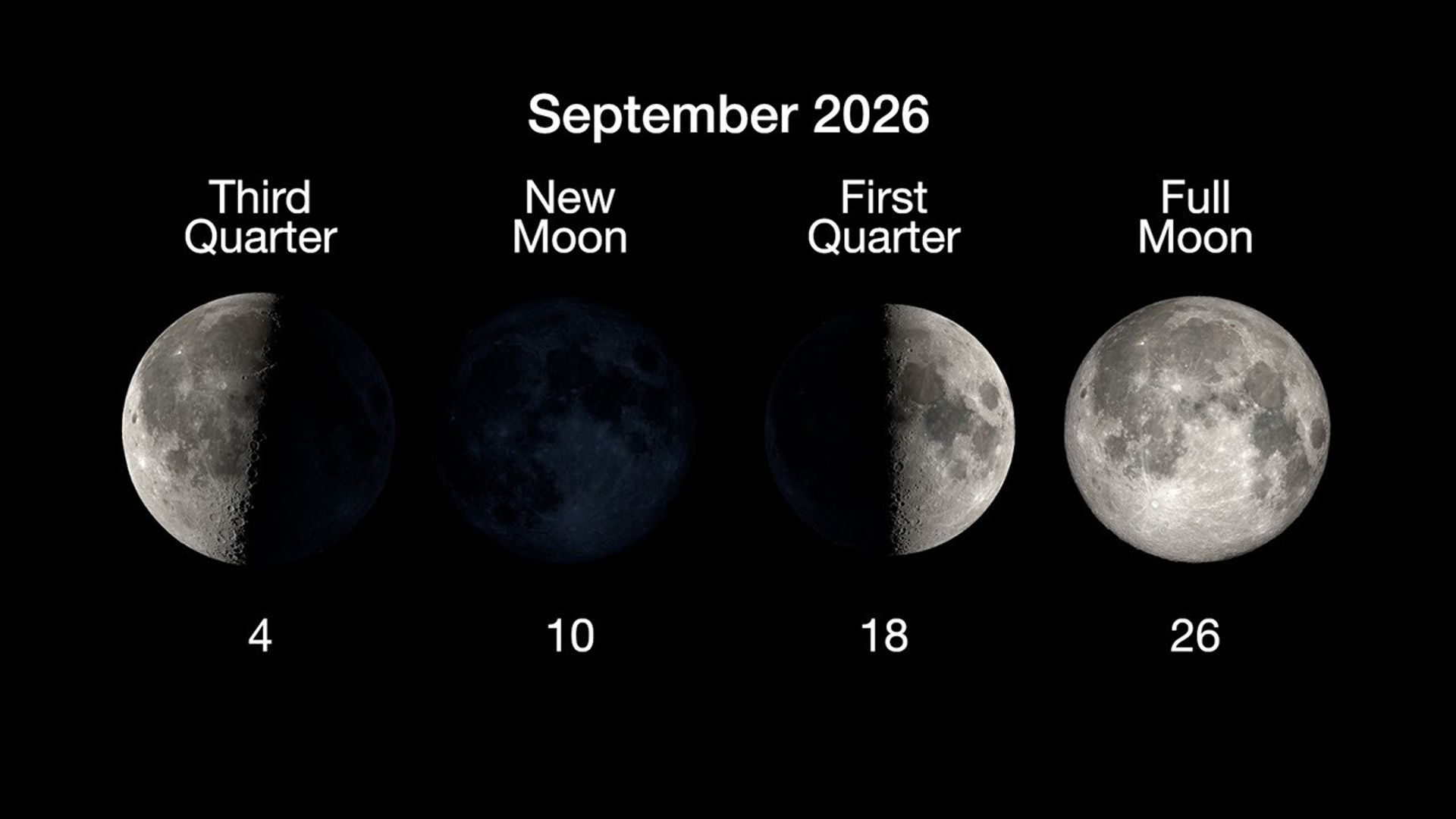
The phases of the Moon for September 2026.
NASA/JPL-Caltech

You can stay up to date on all of NASA’s missions exploring the solar system and beyond at NASA Science. I’m Raquel Villanueva from NASA’s Jet Propulsion Laboratory, and that’s What’s Up this month.

Share

Details

Last Updated
Sep 01, 2026

Powered by WPeMatico

Get The Details…

ESA, NASA Astronauts Begin Spacewalk for Navigation, Science Maintenance

ESA, NASA Astronauts Begin Spacewalk for Navigation, Science Maintenance

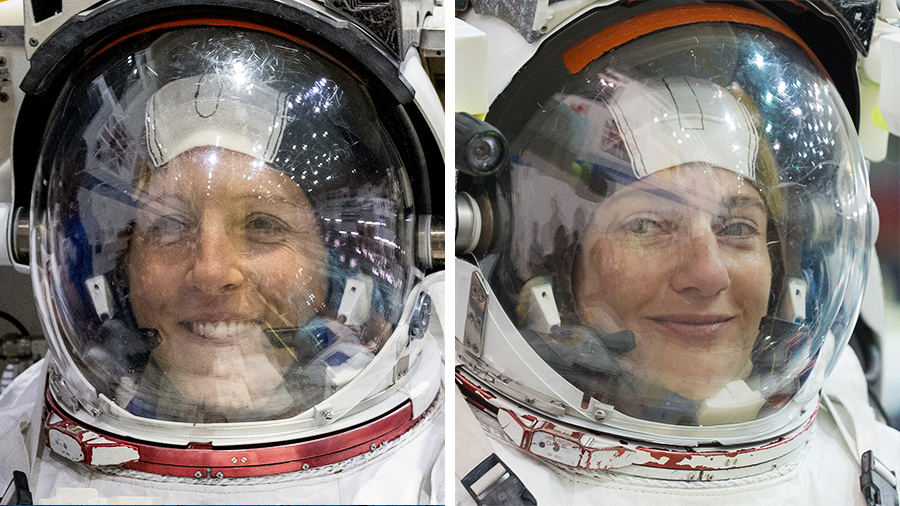
Astronauts Sophie Adenot of ESA and Jessica Meir of NASA are pictured training for a spacewalk at the Johnson Space Center’s Neutral Buoyancy Laboratory in Houston, Texas.
NASA

NASA astronaut Jessica Meir and ESA (European Space Agency) astronaut Sophie Adenot began a spacewalk at 8:40 a.m. EDT outside the International Space Station to replace a retroflector, install jumper cables, prepare the Alpha Magnetic Spectrometer for future maintenance, and replace a high-definition camera.

The spacewalk is streaming through a variety of platforms. Learn where to watch online: https://www.nasa.gov/live

Adenot is spacewalk crew member 1, wearing the suit with red stripes. Meir is crew member 2, wearing the unmarked suit.

Learn more about station activities by following the space station blog, @space_station on X, as well as the ISS Facebook and ISS Instagram accounts.

Get the latest from NASA delivered every week. Subscribe here.

Powered by WPeMatico

Get The Details…

Mark A. Garcia

Artemis III RS-25 Engine Processing: #3 Lift

Artemis III RS-25 Engine Processing: #3 Lift

Technicians prepare to transfer the #2 RS-25 SLS (Space Launch System) rocket engine (front) to the work stand with the #3 engine (back) for integration with the Artemis III core stage rocket on Tuesday, Aug. 25, 2026, inside the Vehicle Assembly Building at NASA’s Kennedy Space Center in Florida. During Artemis III, the four RS‑25 engines will launch the Orion spacecraft and its crew of four into low Earth orbit, generating more than two million pounds of thrust at liftoff.

Powered by WPeMatico

Get The Details…

Historic Engines Take Their Place on Artemis III

Historic Engines Take Their Place on Artemis III

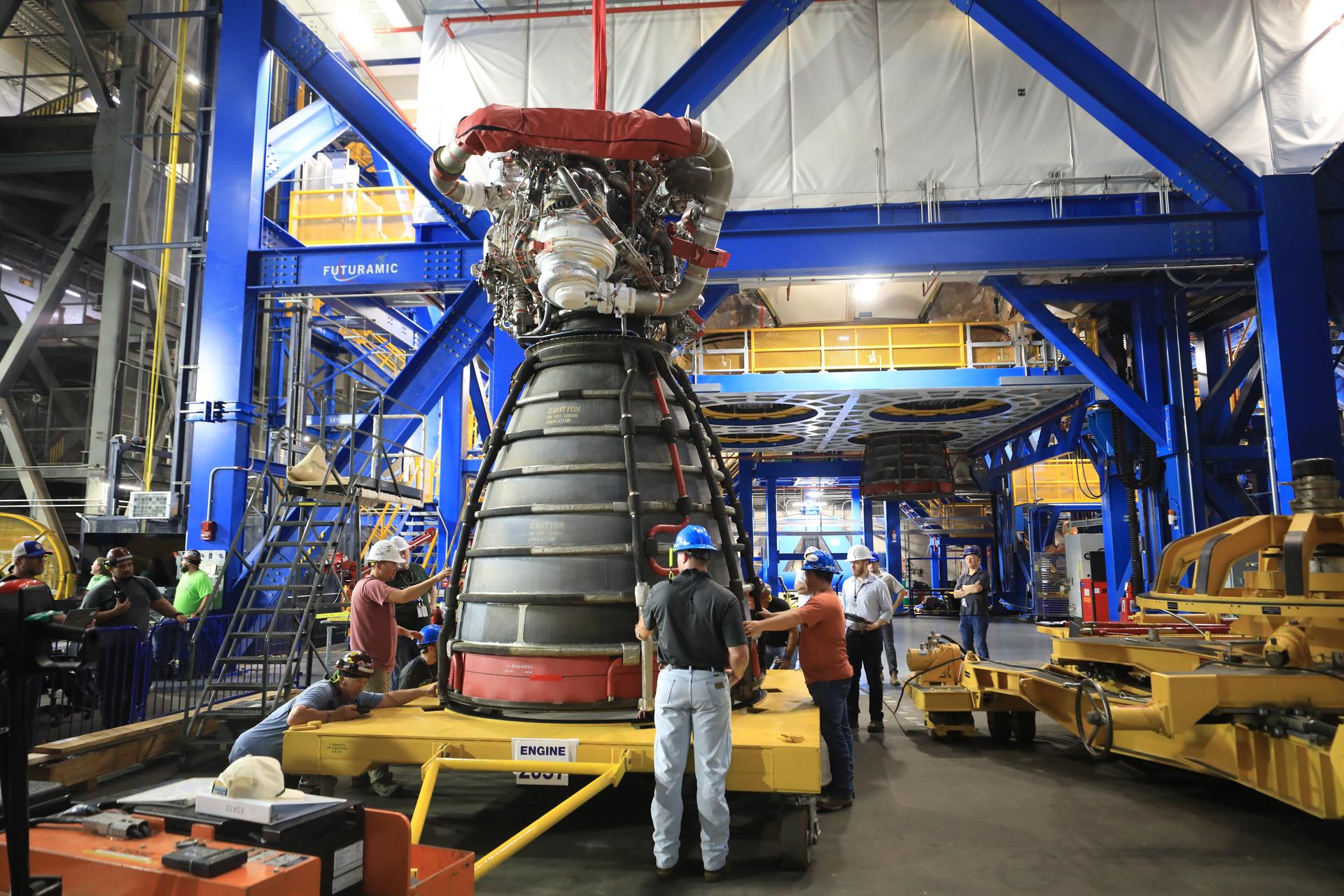
A rocket engine sits on a yellow transport platform inside a large industrial facility. Several technicians wearing hard hats and safety gear stand around the engine, inspecting and guiding it. The engine’s bell nozzle faces downward, and complex piping and hardware are visible at the top. Bright blue structural frames and elevated yellow walkways surround the work area, with additional equipment and machinery in the background.
NASA/Clayton Rougelot

On Aug. 24, technicians at NASA’s Kennedy Space Center in Florida began installing the four RS‑25 engines in the core stage of the agency’s Space Launch System (SLS) rocket that will carry the Artemis III crew into low Earth orbit in 2027.

Each RS‑25 engine has a unique serial number that records its detailed flight history. The four engines assigned to Artemis III — E2054, E2057, E2048, and E2052 — previously powered multiple space shuttle missions. Engine 2048 helped launch NASA astronaut Randy Bresnik’s earlier mission aboard space shuttle Atlantis during STS‑129. It also flew on Space Shuttle Discovery during STS‑95 in 1998, the mission that returned 77-year‑old space pioneer U.S. Sen. John Glenn to orbit, making him the oldest person to fly in space at that time.

Powered by WPeMatico

Get The Details…
Gary Daines

ESA, NASA Astronauts Suit Up for Navigation, Science Maintenance Spacewalk

ESA, NASA Astronauts Suit Up for Navigation, Science Maintenance Spacewalk

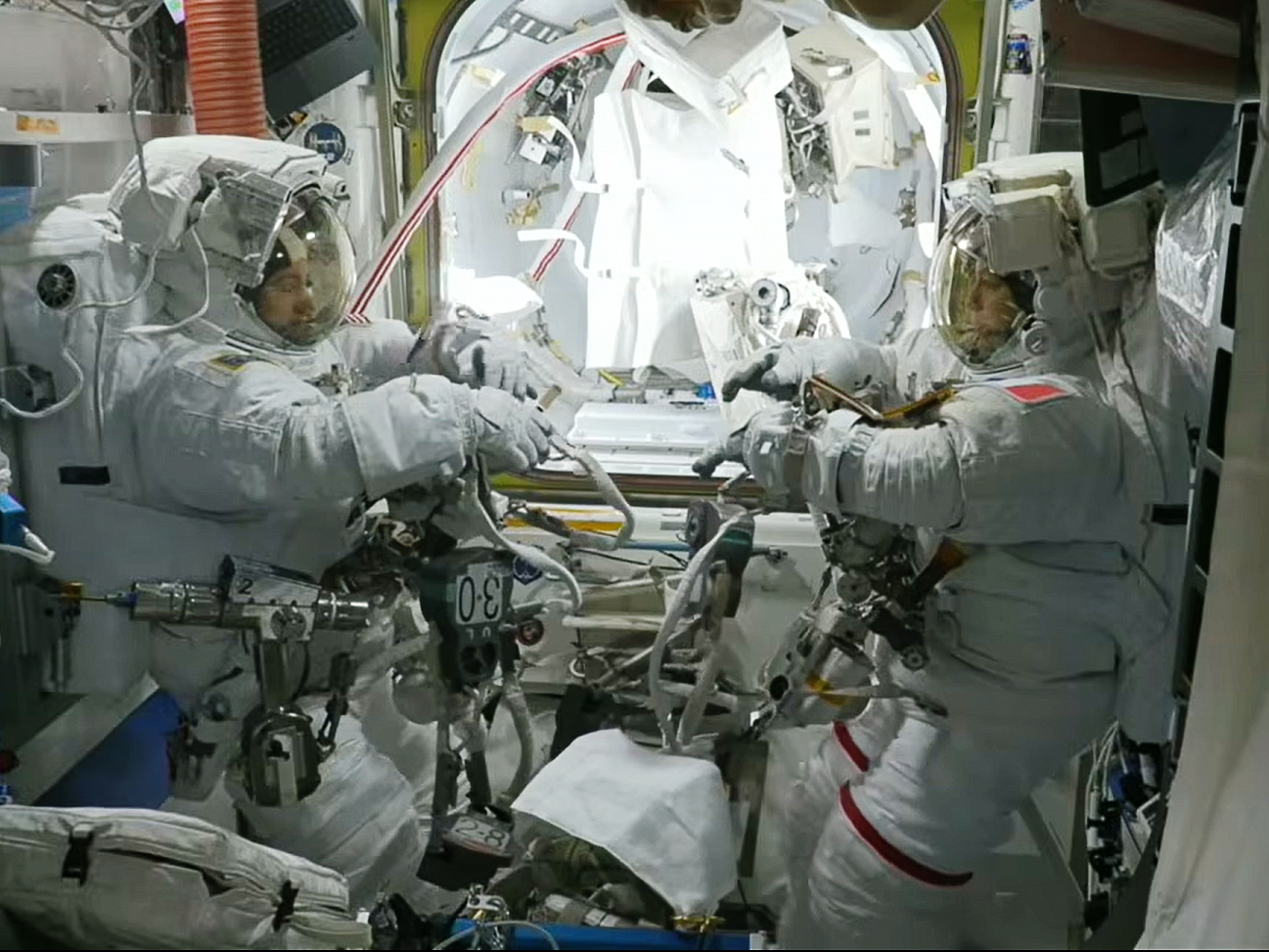
Astronauts Jessica Meir of NASA (left) and Sophie Adenot of ESA are suited up inside the Quest airlock preparing to exit the International Space Station for a spacewalk.
NASA+

NASA is streaming live coverage as two astronauts prepare for a spacewalk outside the International Space Station. The spacewalk is scheduled to begin at approximately 8:30 a.m. EDT and last about six and a half hours. Watch online at: https://www.nasa.gov/live

NASA astronaut Jessica Meir and ESA (European Space Agency) astronaut Sophie Adenot will exit the station’s Quest airlock to replace a retroreflector on the forward port of the space station’s Harmony module to support spacecraft navigation during rendezvous and docking operations.

After installing the reflector, the crew will work to install jumper cables for the data-relay systems, prepare the Alpha Magnetic Spectrometer’s radiator for future maintenance, and replace a high-definition camera on the station’s truss.

Adenot will serve as spacewalk crew member 1 and will wear a suit with red stripes. Meir will serve as crew member 2 and will wear an unmarked suit.

This will be Meir’s seventh spacewalk and Adenot’s third. The excursion also marks the 284th spacewalk supporting space station assembly, maintenance, and upgrades.

Learn more about station activities by following the space station blog, @space_station on X, as well as the ISS Facebook and ISS Instagram accounts.

Get the latest from NASA delivered every week. Subscribe here.

Powered by WPeMatico

Get The Details…

Mark A. Garcia