NASA to Provide Coverage of Progress 90 Launch, Space Station Docking

NASA to Provide Coverage of Progress 90 Launch, Space Station Docking

The unpiloted Roscosmos Progress spacecraft pictured on Feb. 7, 2023, from the International Space Station.
Credit: NASA

NASA will provide live launch and docking coverage of a Roscosmos cargo spacecraft delivering nearly three tons of food, fuel, and supplies to the Expedition 72 crew aboard the International Space Station.

The unpiloted Progress 90 spacecraft is scheduled to launch at 7:22 a.m. EST (5:22 p.m. Baikonur time) Thursday, Nov. 21, on a Soyuz rocket from the Baikonur Cosmodrome in Kazakhstan.

Live launch coverage will begin at 7 a.m. on NASA+ and the agency’s website. Learn how to watch NASA content through a variety of platforms, including social media.

After a two-day in-orbit journey to the station, the spacecraft will dock autonomously to the space-facing port of the orbiting laboratory’s Poisk module at 9:35 a.m., Saturday, Nov. 23. NASA’s coverage of rendezvous and docking will begin at 8:45 a.m. on NASA+ and the agency’s website.

The Progress 88 spacecraft will undock from the Poisk module on Tuesday, Nov. 19. NASA will not stream undocking.

The spacecraft will remain docked at the station for approximately six months before departing for a re-entry into Earth’s atmosphere to dispose of trash loaded by the crew.

The International Space Station is a convergence of science, technology, and human innovation that enables research not possible on Earth. For more than 24 years, NASA has supported a continuous U.S. human presence aboard the orbiting laboratory, through which astronauts have learned to live and work in space for extended periods of time. The space station is a springboard for developing a low Earth economy and NASA’s next great leaps in exploration, including missions to the Moon under Artemis and, ultimately, human exploration of Mars.

Get breaking news, images and features from the space station on Instagram, Facebook, and X.

Learn more about the International Space Station, its research, and its crew, at:

https://www.nasa.gov/station

-end-

Claire O’Shea / Josh Finch
Headquarters, Washington
202-358-1100
claire.a.o’shea@nasa.gov / joshua.a.finch@nasa.gov

Sandra Jones
Johnson Space Center, Houston
281-483-5111
sandra.p.jones@nasa.gov

Share

Details

Last Updated

Nov 18, 2024

Editor
Jessica Taveau

Powered by WPeMatico

Get The Details…
Jessica Taveau

Station Science Top News: Nov. 15, 2024

Station Science Top News: Nov. 15, 2024

Anthocyanins protect seeds in space

After exposure to space outside the International Space Station, purple-pigmented rice seeds rich in anthocyanin had higher germination rates than non-pigmented white rice seeds. This result suggests that anthocyanin, a flavonoid known to protect plants from UV irradiation, could help preserve seed viability on future space missions.

Plants are key components for systems being designed to produce nutrients and recycle carbon for future sustained space habitation, but space has been shown to reduce seed viability. Tanpopo-3, part of a series of investigations from JAXA (Japan Aerospace Exploration Agency), examined the role of anthocyanins in maintaining seed viability. Results of this and previous experiments suggest that solar light in space is more detrimental to seeds than radiation.

Grid of metallic square enclosures, each containing a circular opening, arranged in a compact layout against a dark background.
Preflight image of the Tanpopo panel used to expose seeds and other samples to space.
Tanpopo-3 team

Low-cost, autonomous technology validated for space research

Researchers verified a pair of devices for conducting experiments in space that have multi-step reactions and require automatic mixing of solutions. This type of low-cost, autonomous technology expands the possibilities for space-based research, including work by commercial entities.

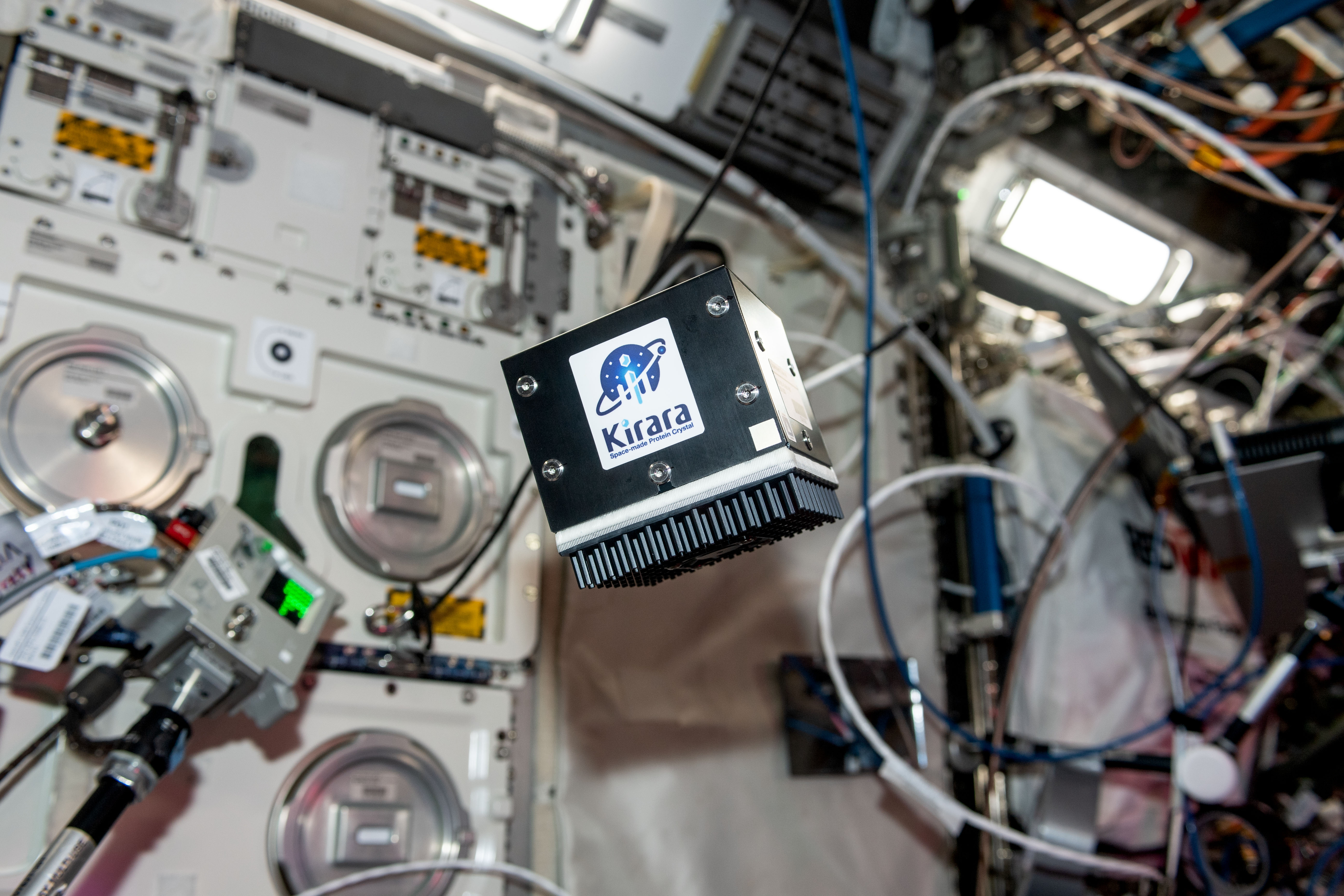
Ice Cubes #6- Kirara, an investigation from ESA (European Space Agency) developed by the Japan Manned Space Systems Corporation, used a temperature-controlled incubator to crystallize proteins in microgravity. The Kirara facility also enables production of polymers, including cellulose, which have different uses than protein crystals. This experiment synthesized and decomposed cellulose.

The Kirara incubator used for experiments in microgravity.
United Arab Emirates/Sultan Alneyadi

Insights from observations of an X-ray binary star

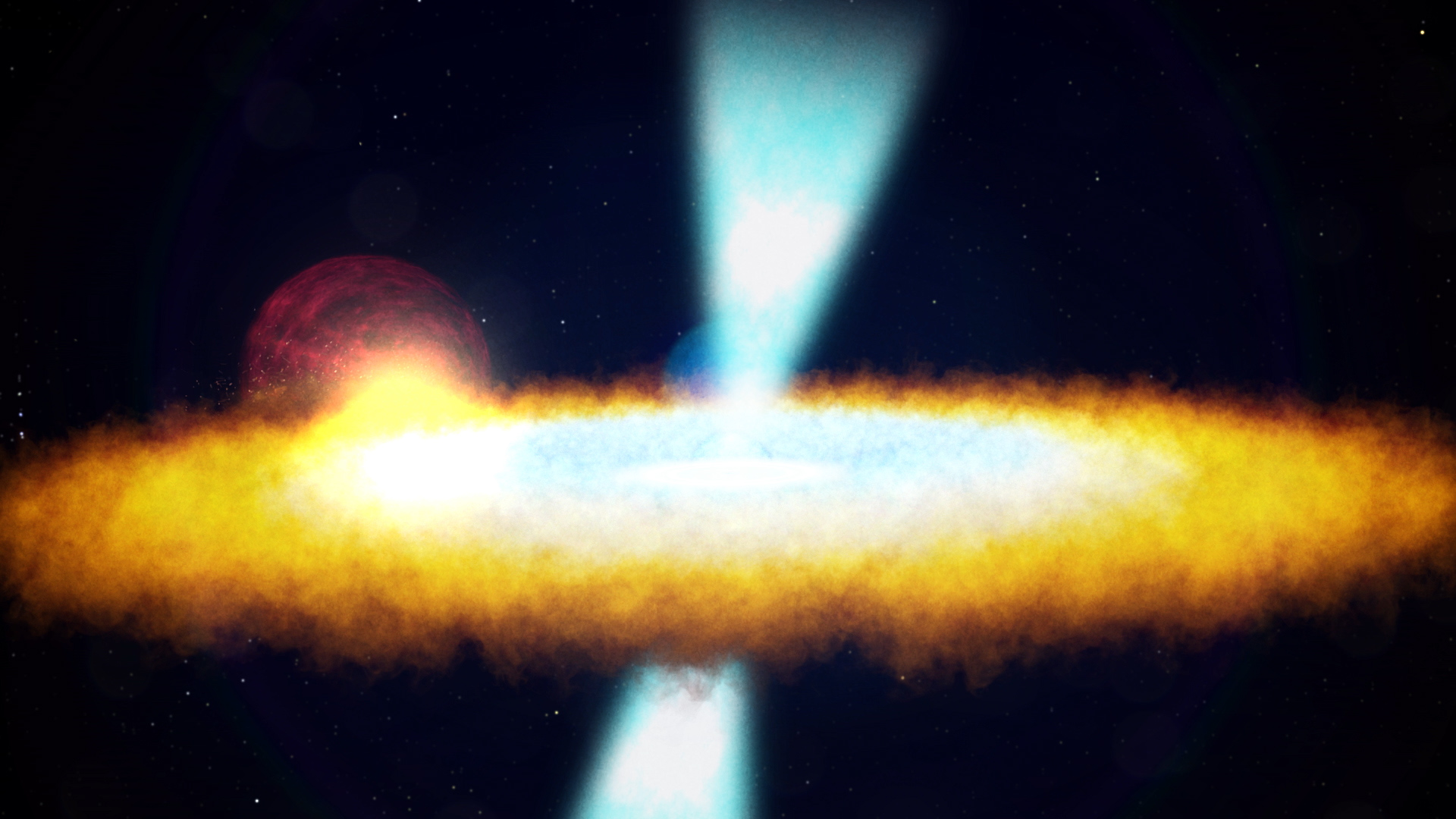
Researchers used Neutron star Interior Composition Explorer (NICER) to observe the timing of 15 X-ray bursts from 4U 1820–30, an ultracompact X-ray binary (UCXB) star. An X-ray binary is a neutron star orbiting a companion from which it takes matter. If confirmed with future observations, this result makes 4U 1820–30 the fastest-spinning neutron star known in an X-ray binary system and provides insights into the physics of neutron stars.

NICER makes high-precision measurements of neutron stars (the ultra-dense matter created when massive stars explode as supernovas) and other phenomena to increase our understanding of the universe. NICER has monitored 4U 1820–30 since its launch in June 2017. A short orbital period indicates a relatively small binary system, and 4U 1820–30 has the shortest known orbital period among low-mass X-ray binaries.

Artistic rendering of a glowing yellow-orange accretion disk with blue jets of energy emitting vertically with a red celestial body in the distance.
Animated image of a binary star system,
NASA’s Goddard Space Flight Center/Chris Smith

Powered by WPeMatico

Get The Details…
Sumer Loggins

November Transformer of the Month: Ariel Vargas

November Transformer of the Month: Ariel Vargas

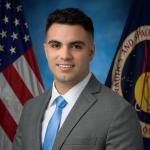
Protrait of Ariel Vargas

When Ariel Vargas joined NASA in 2023, he knew he wanted to make an impact. Despite his relatively short tenure, he has earned the reputation of a Digital Transformer in his work as a Network and ICAM (Identity, Credential, and Access Management) Service Integrator at Johnson Space Center (JSC). No matter the task at hand, Ariel is motivated by measurable transformation. “I wanted to have my fingerprint on something no matter what it was, big or small. To be able to see an impact,” he says. “And a lot of the things that I’m doing, both within my role and within Digital Transformation, I can see really flourishing already.”  

In his current role, Ariel oversees the integration and management of various network services to ensure compliance and smooth operation. This includes the modernization of NASA’s Voice over Internet Protocol (VoIP) to consolidate the agency’s telephone systems and enhance wireless communications. He is involved in rolling out wall-to-wall wireless and coverage improvements on campus at JSC. Ariel also spearheads efforts in streamlining communications across NASA by integrating new capabilities into familiar platforms like Microsoft Teams. With these projects in progress, he aims to foster a more flexible, collaborative work environment aligned with Digital Transformation’s goal of inclusive teaming.  

Ariel appreciates the cultural side of Digital Transformation, particularly the challenges involved in pursuing constant innovation. He recognizes that growth “often requires a period of adjustment, especially for those encountering new tools or methods for the first time.” Ariel strives to ensure cohesive collaboration across teams and centers in establishing interoperable architectures, processes, and tools. His team measures the impact of their transformation efforts by several metrics, including increased network performance and adoption rates of new tools and technologies. For instance, the VoIP modernization initiative aims to remove 50% of telephones at NASA centers. Of the over 1300 users affected by the NASA-wide service shut-off of non-compliant phones at JSC, only 6% reported issues post-implementation. This reflected a positive and proactive collaboration with users on finding alternative solutions and embracing future innovations. 

I really believe in embracing changes and innovation and driving impactful results, being able to see it.

Ariel Vargas

Ariel Vargas

Network and ICAM (Identity, Credential, and Access Management) Service Integrator at Johnson Space Center (JSC)

Lynn Vernon, JSC’s Digital Transformation lead and Chief Engineer for IT, notes Ariel’s ability to engage with partners, understand their mission needs, and identify innovative solutions to barriers. “Ariel looks at things from a new perspective and is willing to ask ‘why’ or ‘why not.’ Why do we do it this way? Why not try this? He is consistently willing to explore new technologies and capabilities to transform the way we work,” says Lynn. Ariel’s passion for continuous improvement and learning positions him as a natural leader within the Digital Transformation community. 

Ariel took a unique path to NASA and sees his prior experiences as building blocks toward becoming the Digital Transformer he is today. Although his upbringing in Florida near Cape Canaveral sparked an early interest in space, Ariel initially pursued pre-medicine after high school before transitioning into the Army. After his service, he joined NASA as an intern through the Department of Defense’s SkillBridge program, which offers career assistance to transitioning military personnel. His ability to learn NASA’s culture and demonstrate mission value quickly led to a full-time, civil servant position. 

Between his initial interest in medicine, his service in the Army, and his current focus on digital transformation and technology, Ariel sees a common theme of problem-solving. “You have to figure out what the problem is, and you have to be up to date with the newest, the latest and greatest, to help solve these problems.” Ariel followed this thread to complete a master’s degree in computer science and is currently pursuing a doctorate in instructional design and performance technology. Even outside his work at NASA, Ariel pursues pathways that further his capacity as a champion of Digital Transformation initiatives. 

Looking to the future, Ariel is excited by the possibility of supporting NASA’s space missions through AI and data integration. He is motivated by the prospect of seeing his current work make a difference in the near-term future. “I really believe in embracing changes and innovation and driving impactful results, being able to see it,” he says. Given his accomplishments of the past year, Ariel is well on his way to realizing the future he envisions.  

Powered by WPeMatico

Get The Details…
Maya L. Kikuchi

First Nations Launch Winners Watch Crew-7 Launch

First Nations Launch Winners Watch Crew-7 Launch

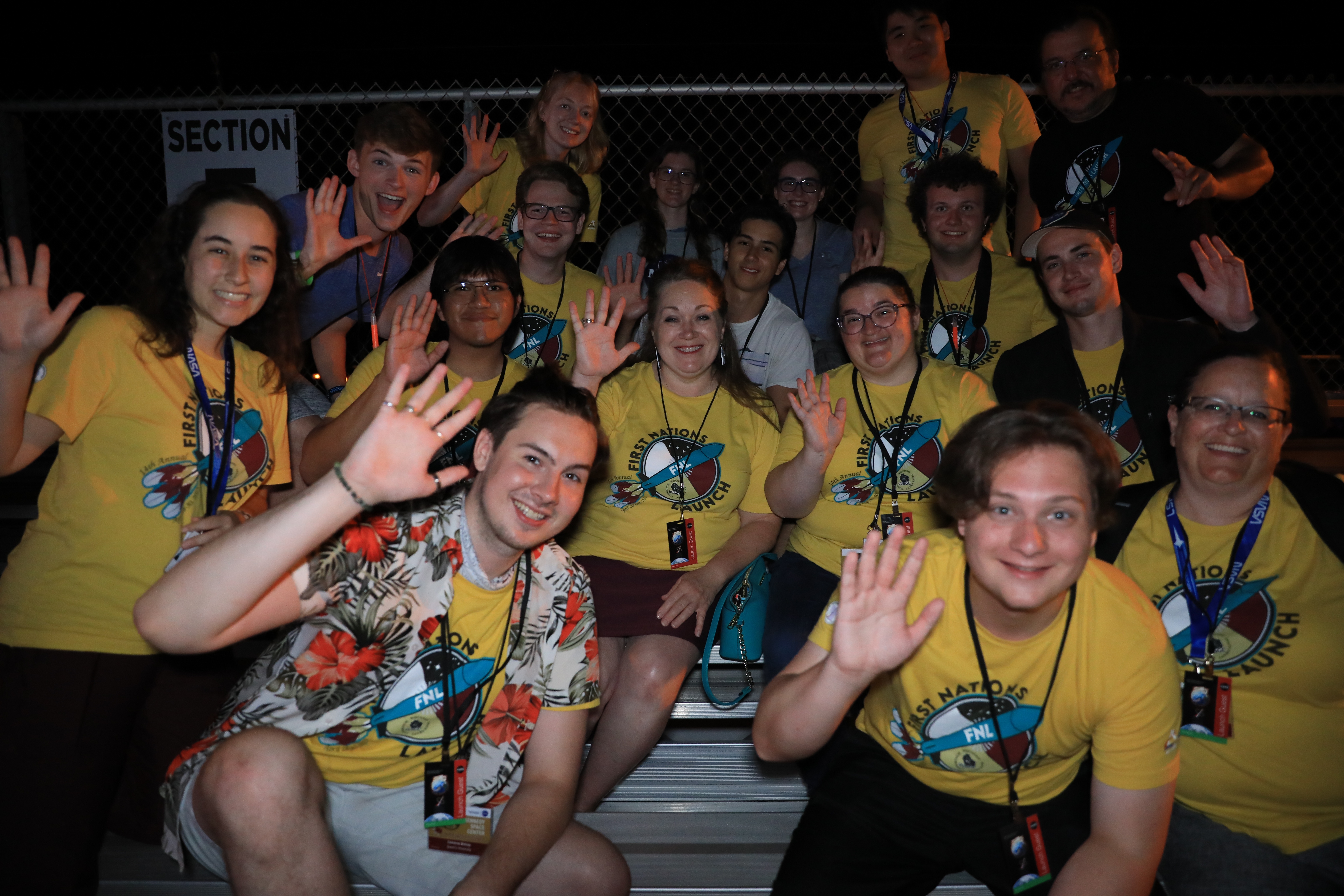
A group of people wearing yellow t-shirts wave at the camera as they sit outside at night. They are members or advisors of winning teams from the 14th First Nations Launch High-Power Rocket Competition. The competition comprises students from tribal colleges and universities, Native American-Serving Nontribal Institutions, and collegiate chapters of the American Indian Science and Engineering Society.
NASA/Ben Smegelsky & Virgil Cameron

In this image from Aug. 26, 2023, participants from the 14th First Nations Launch High-Power Rocket Competition watch NASA’s SpaceX Crew-7 launch at the agency’s Kennedy Space Center in Florida. Students and advisors from University of Washington, University of Colorado-Boulder, and an international team from Queens University – the 2023 First Nations Launch grand prize teams – traveled to Kennedy for a VIP tour, culminating in viewing the Crew-7 launch.

Grand prize teams also went on a guided tour of historic Hangar AE, led by James Wood (Osage Nation and Loyal Shawnee), chief engineer of NASA’s Launch Services Program, technical advisor for the Crew-7 launch, and First Nations mentor and judge.

One of NASA’s Artemis Student Challenges, the First Nations Launch competition comprises students from tribal colleges and universities, Native American-Serving Nontribal Institutions, and collegiate chapters of the American Indian Science and Engineering Society who design, build, and launch a high-powered rocket from a launch site in Kansasville, Wisconsin.

Explore more Minority University Research and Education Project opportunities and resources here.

Image credit: NASA/Ben Smegelsky & Virgil Cameron

Powered by WPeMatico

Get The Details…
Monika Luabeya

15 Years Ago: STS-129 Delivers Cargo on the Third Utilization and Logistics Flight

15 Years Ago: STS-129 Delivers Cargo on the Third Utilization and Logistics Flight

On Nov. 16, 2009, space shuttle Atlantis began its 31st trip into space, on the third Utilization and Logistics Flight (ULF3) mission to the International Space Station, the 31st shuttle flight to the orbiting lab. During the 11-day mission, the six-member STS-129 crew worked with the six-person Expedition 21 crew during seven days of docked operations. The mission’s primary objectives included delivering two external logistics carriers and their spare parts, adding nearly 15 tons of hardware to the station, and returning a long-duration crew member, the last to return on a shuttle. Three of the STS-129 astronauts conducted three spacewalks to transfer spare parts and continue assembly and maintenance of the station. As a group of 12, the joint crews celebrated the largest and most diverse Thanksgiving gathering in space.

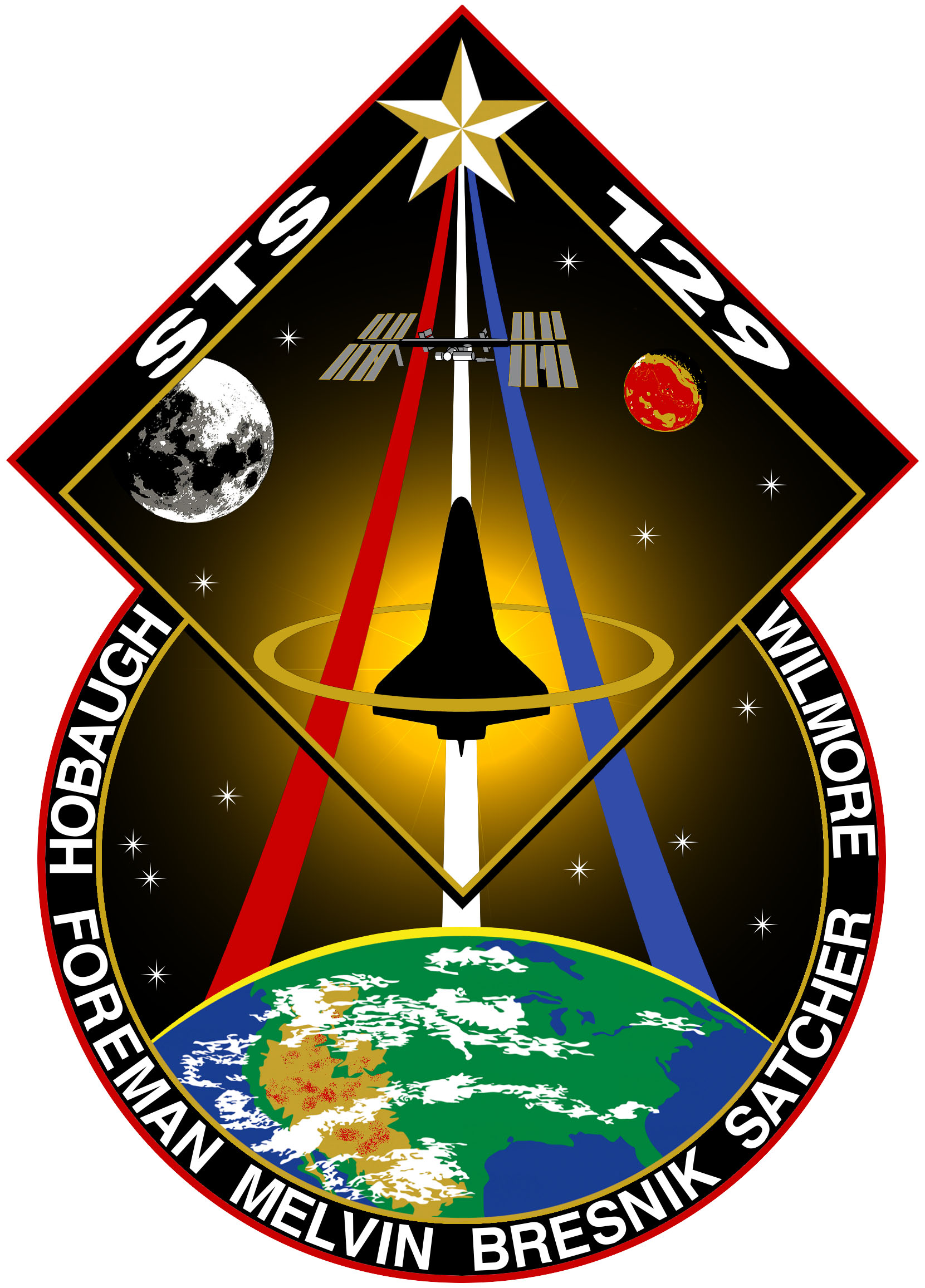
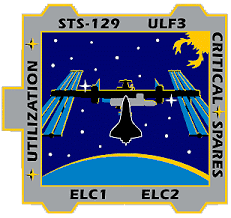
Official photograph of the STS-129 crew The STS-129 crew patch The ULF3 payload patch
Left: Official photograph of the STS-129 crew of Leland D. Melvin, left, Charles O. Hobaugh, Michael J. Foreman, Robert “Bobby” L. Satcher, Barry “Butch” E. Wilmore, and Randolph “Randy” J. Bresnik. Middle: The STS-129 crew patch. Right: The ULF3 payload patch.

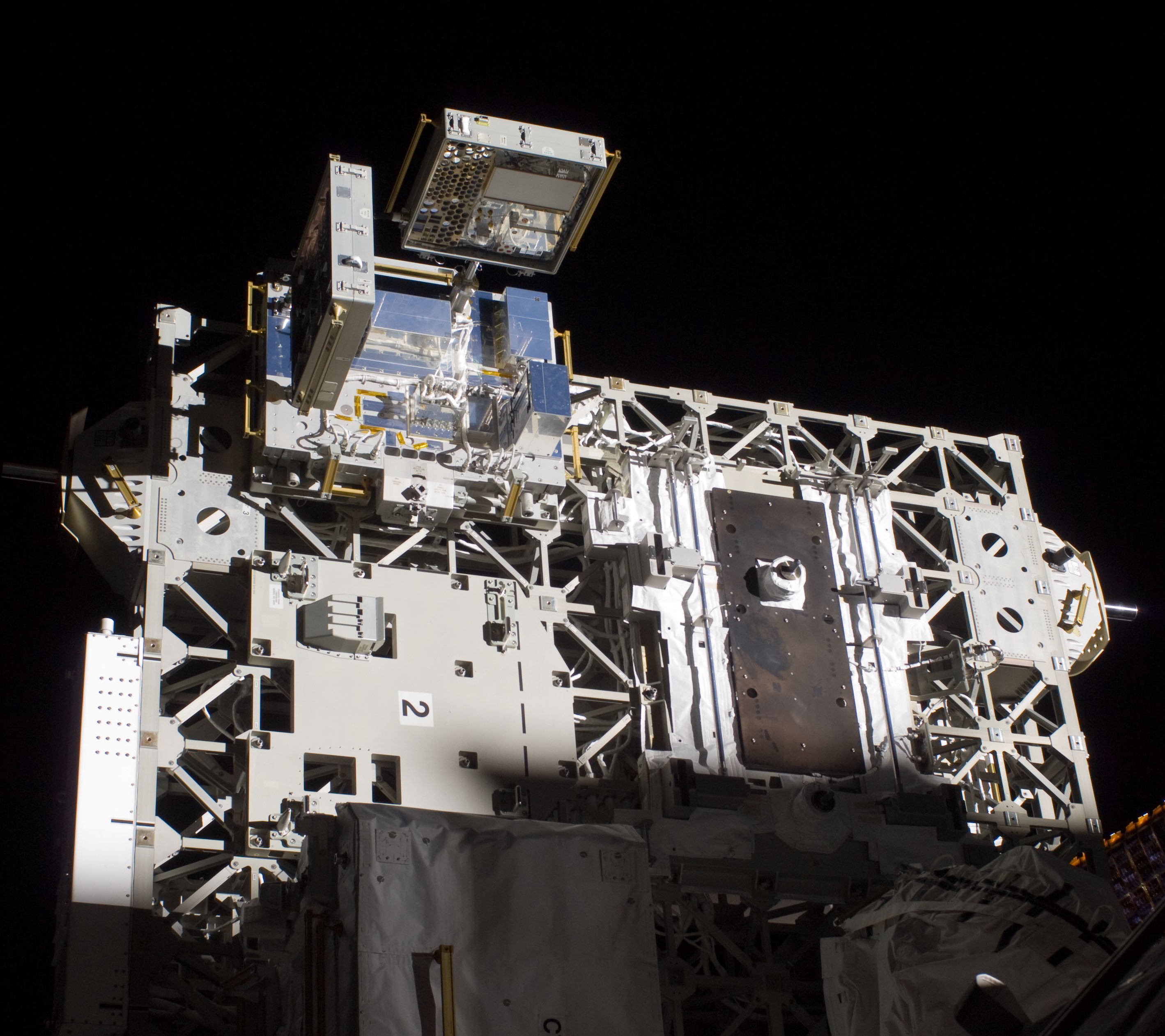
The six-person STS-129 crew consisted of Commander Charles O. Hobaugh, Pilot Barry “Butch” E. Wilmore, and Mission Specialists Randolph “Randy” J. Bresnik, Michael J. Foreman, Leland D. Melvin, and Robert “Bobby” L. Satcher. Primary objectives of the mission included launch and transfer to the station of the first two EXPRESS Logistics Carriers (ELC-1 and ELC-2) and their multiple spare parts, and the return of NASA astronaut and Expedition 20 and 21 Flight Engineer Nicole P. Stott, the last astronaut to rotate on the shuttle.
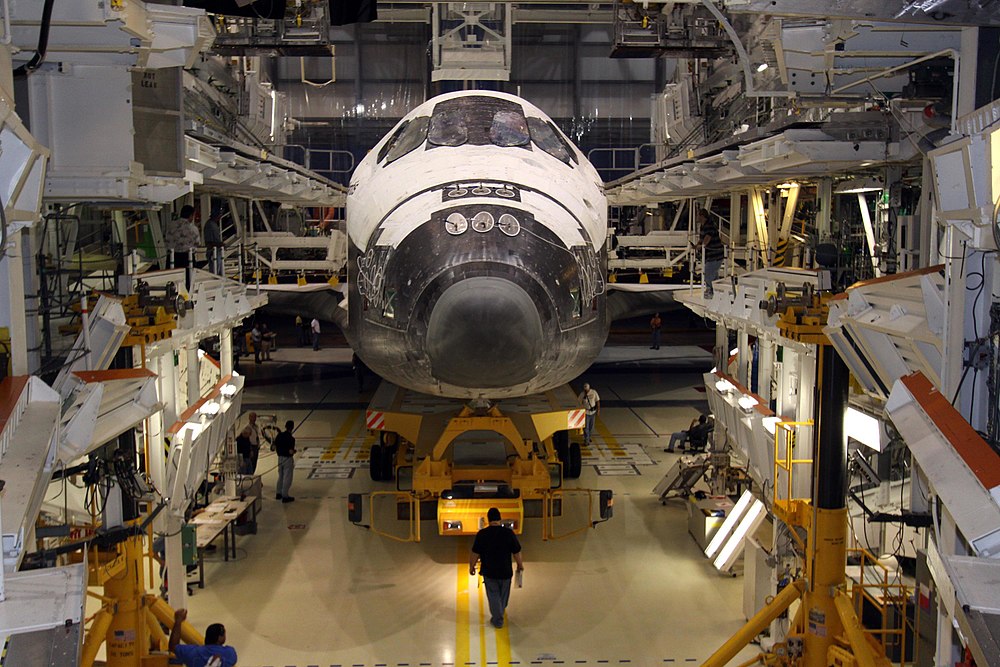
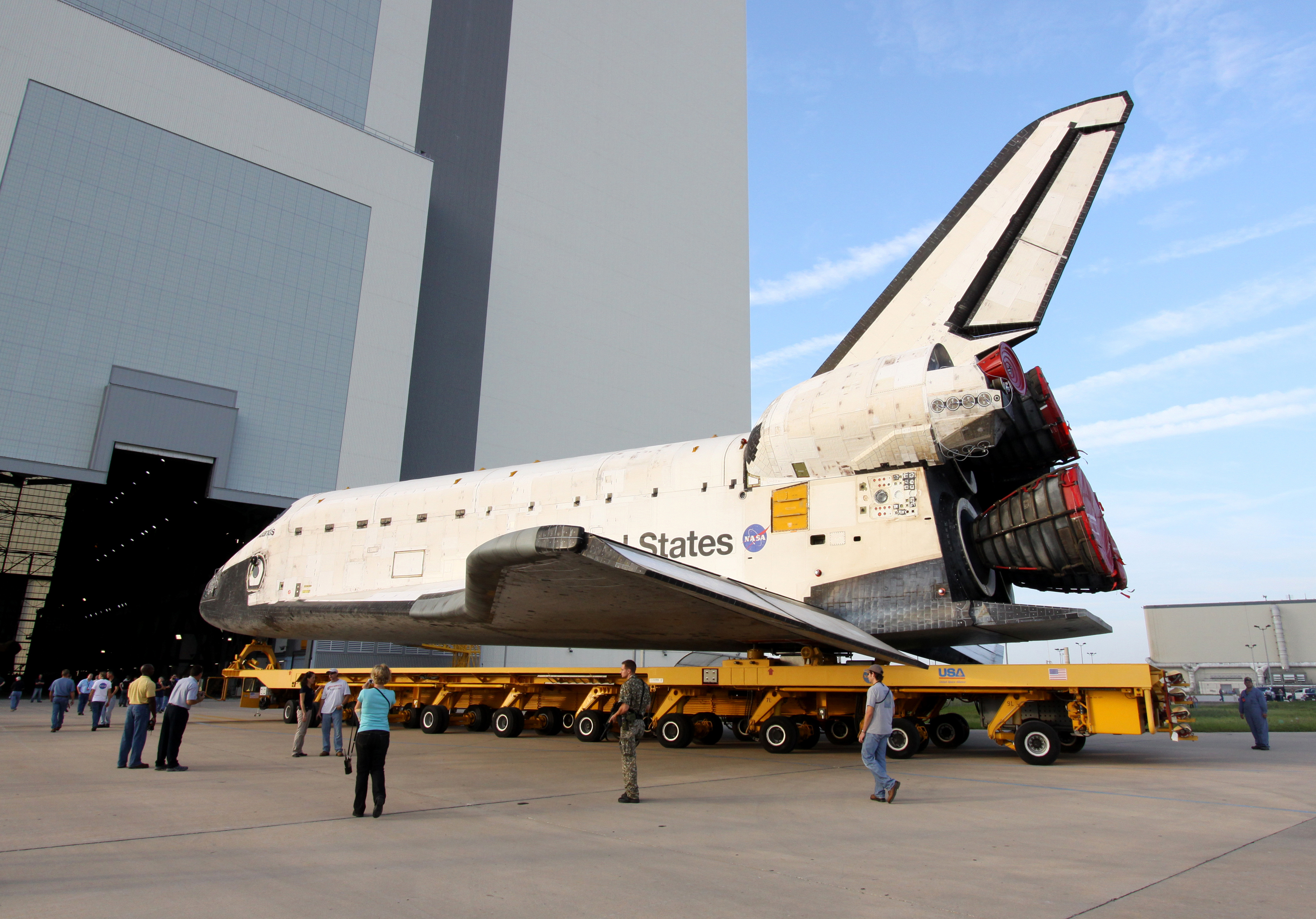
In the Orbiter Processing Facility (OPF) at NASA’s Kennedy Space Center in Florida, workers finish processing Atlantis for STS-129 Space shuttle Atlantis rolls over from the OPF to the Vehicle Assembly Building
Left: In the Orbiter Processing Facility (OPF) at NASA’s Kennedy Space Center in Florida, workers finish processing Atlantis for STS-129. Right: Space shuttle Atlantis rolls over from the OPF to the Vehicle Assembly Building.

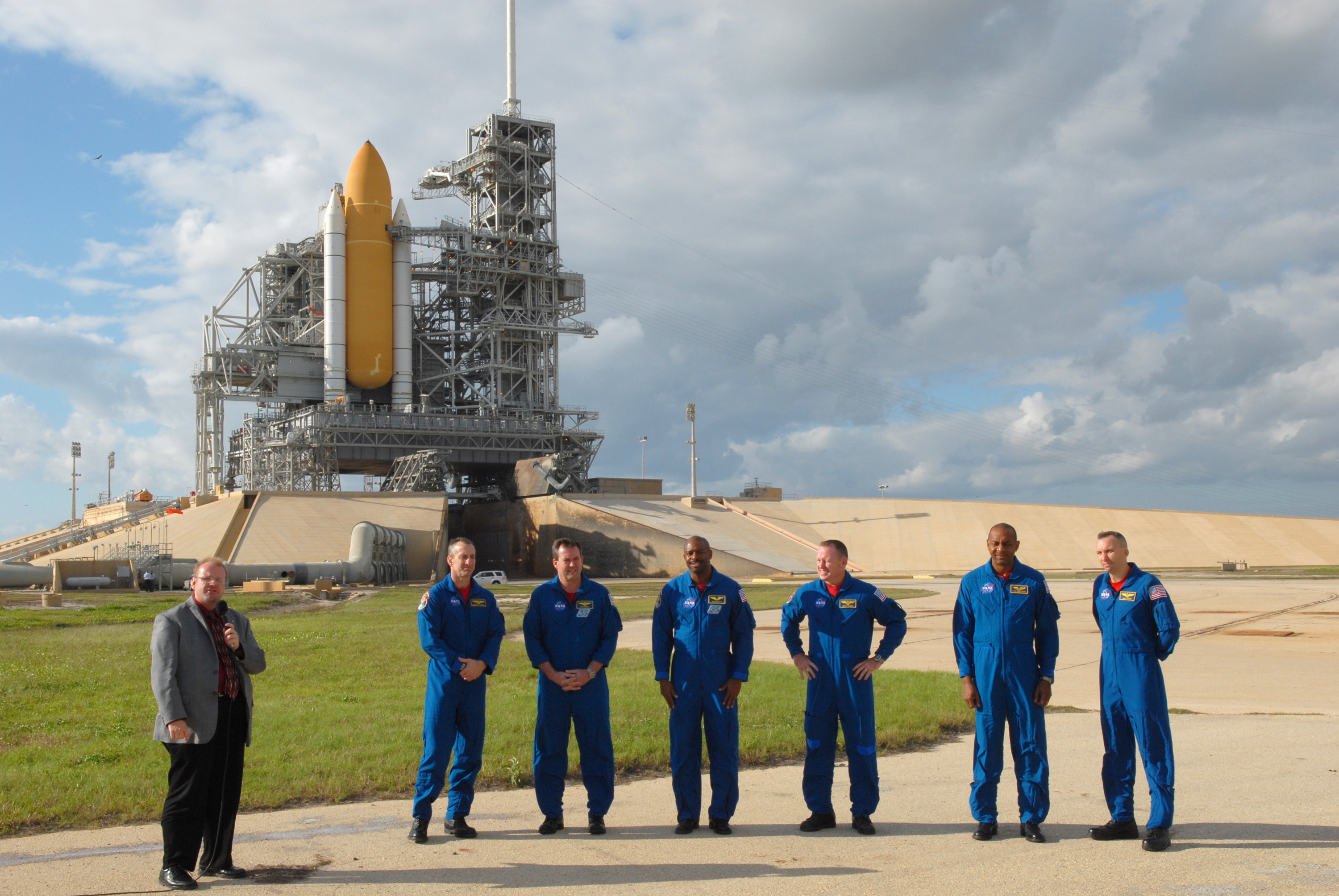
Atlantis rolls out to Launch Pad 39A The STS-129 crew during the Terminal Countdown Demonstration Test
Left: Atlantis rolls out to Launch Pad 39A. Right: The STS-129 crew during the Terminal Countdown Demonstration Test.

Atlantis returned to NASA’s Kennedy Space Center (KSC) from its previous mission, STS-125, on June 2, 2009, and workers towed it to the Orbiter Processing Facility (OPF) to prepare it for STS-129. The orbiter rolled over to the Vehicle Assembly Building on Oct. 6, and after mating with its external tank and twin solid rocket boosters, rolled out to Launch Pad 39A on Oct. 14, targeting a Nov. 16 launch. Six days later, the six-member crew participated in the Terminal Countdown Demonstration Test, essentially a dress rehearsal of the actual countdown for launch, returning to Houston for final training. They returned to KSC on Nov. 13 to prepare for launch.

Ares 1-X rocket lifts off from Launch Pad 39B The payload canister arrives at Launch Pad 39A
Left: With Atlantis sitting on Launch Pad 39A, the Ares 1-X rocket lifts off from Launch Pad 39B. Right: The payload canister arrives at Launch Pad 39A.
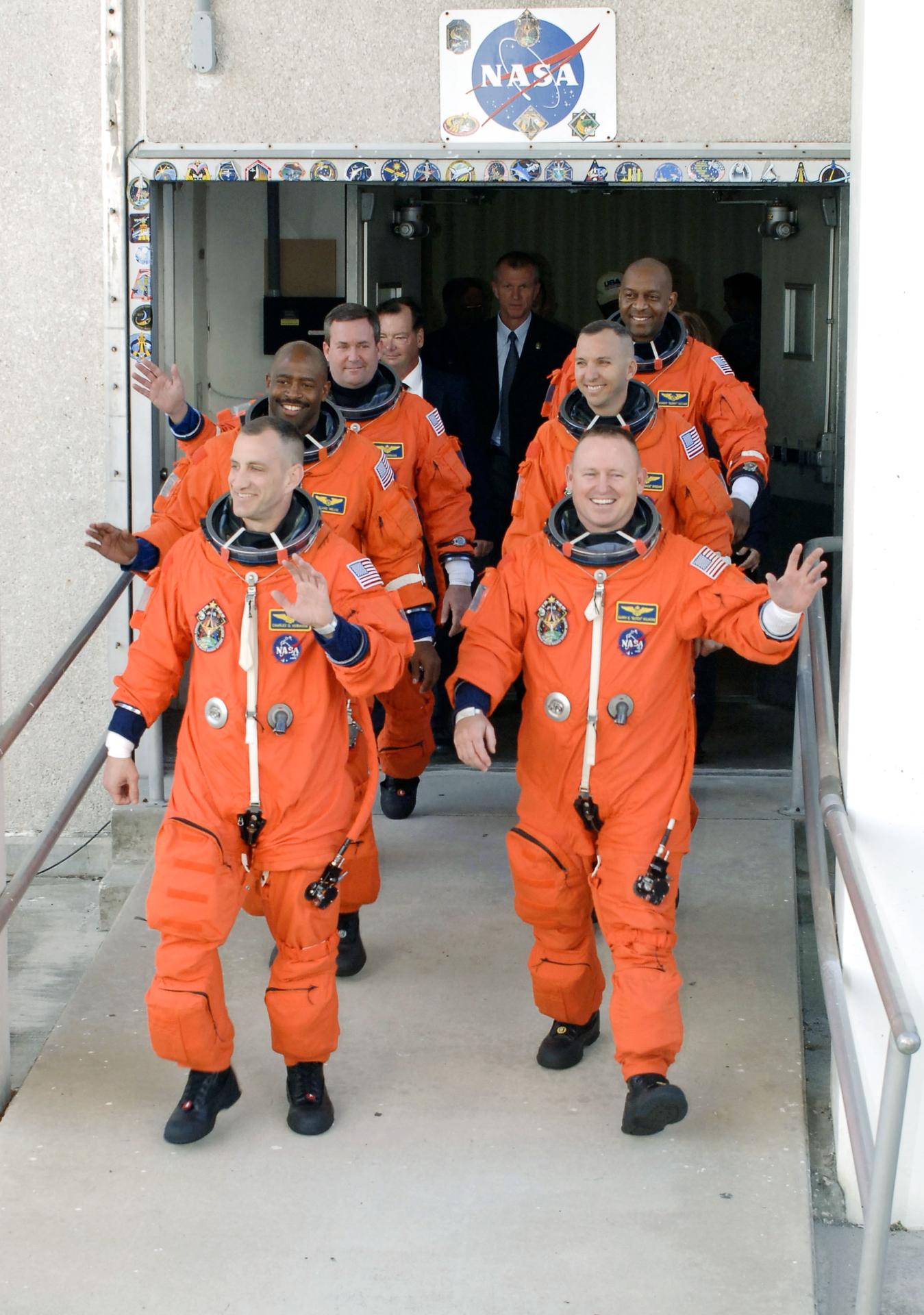
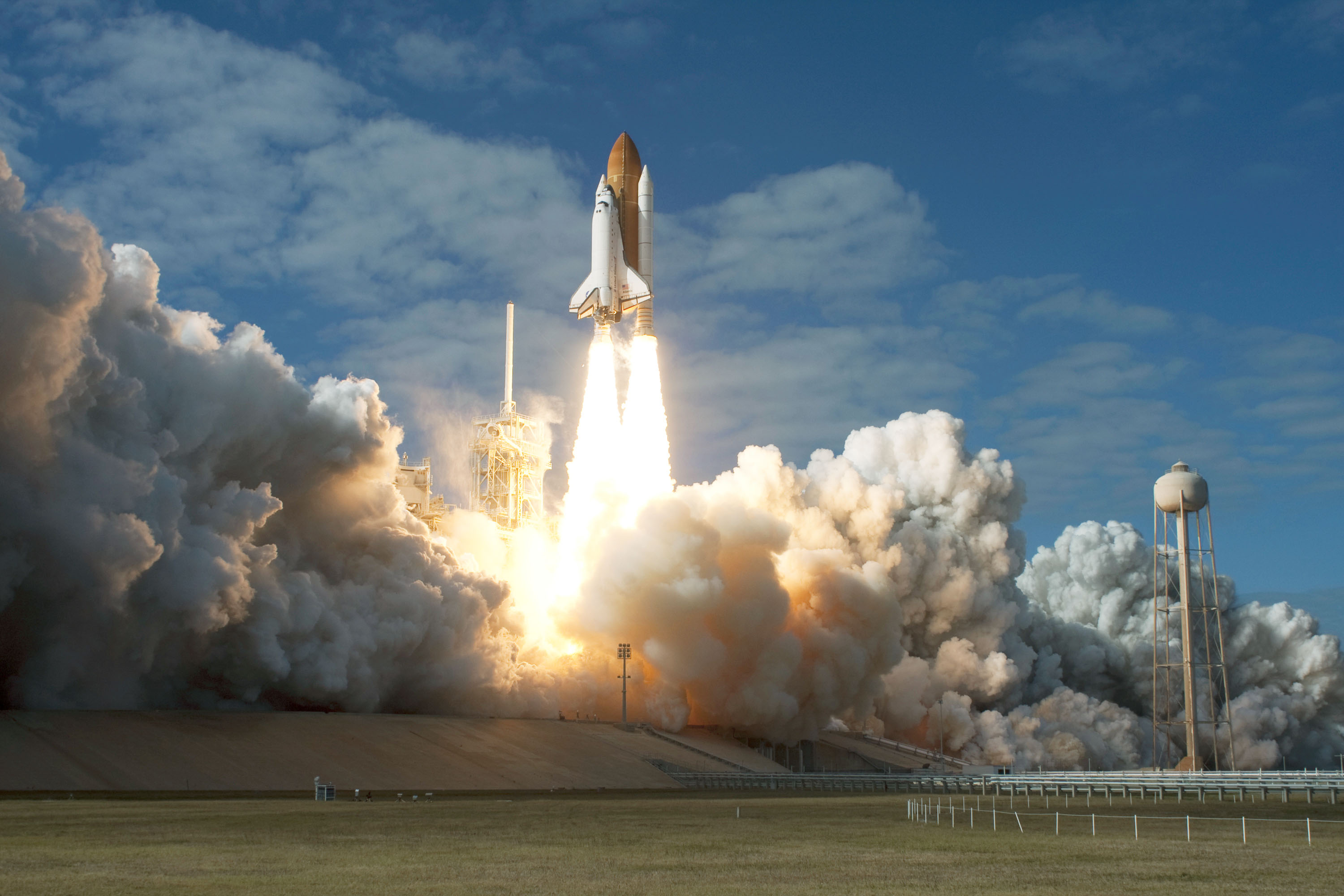
The STS-129 astronauts leave crew quarters for the ride to Launch Pad 39A Liftoff of space shuttle Atlantis on STS-129
Left: The STS-129 astronauts leave crew quarters for the ride to Launch Pad 39A. Right: Liftoff of space shuttle Atlantis on STS-129.

On Nov. 16, at 2:28 p.m. EST, space shuttle Atlantis lifted off from Launch Pad 39A to begin its 31st trip into space, carrying its six-member crew on the ULF3 space station outfitting and resupply mission. Eight and a half minutes later, Atlantis and its crew had reached orbit. The flight marked Hobaugh’s third time in space, having flown on STS-104 and STS-118, Foreman’s and Melvin’s second, having flown on STS-123 and STS-122, respectively, while Wilmore, Bresnik, and Satcher enjoyed their first taste of weightlessness.
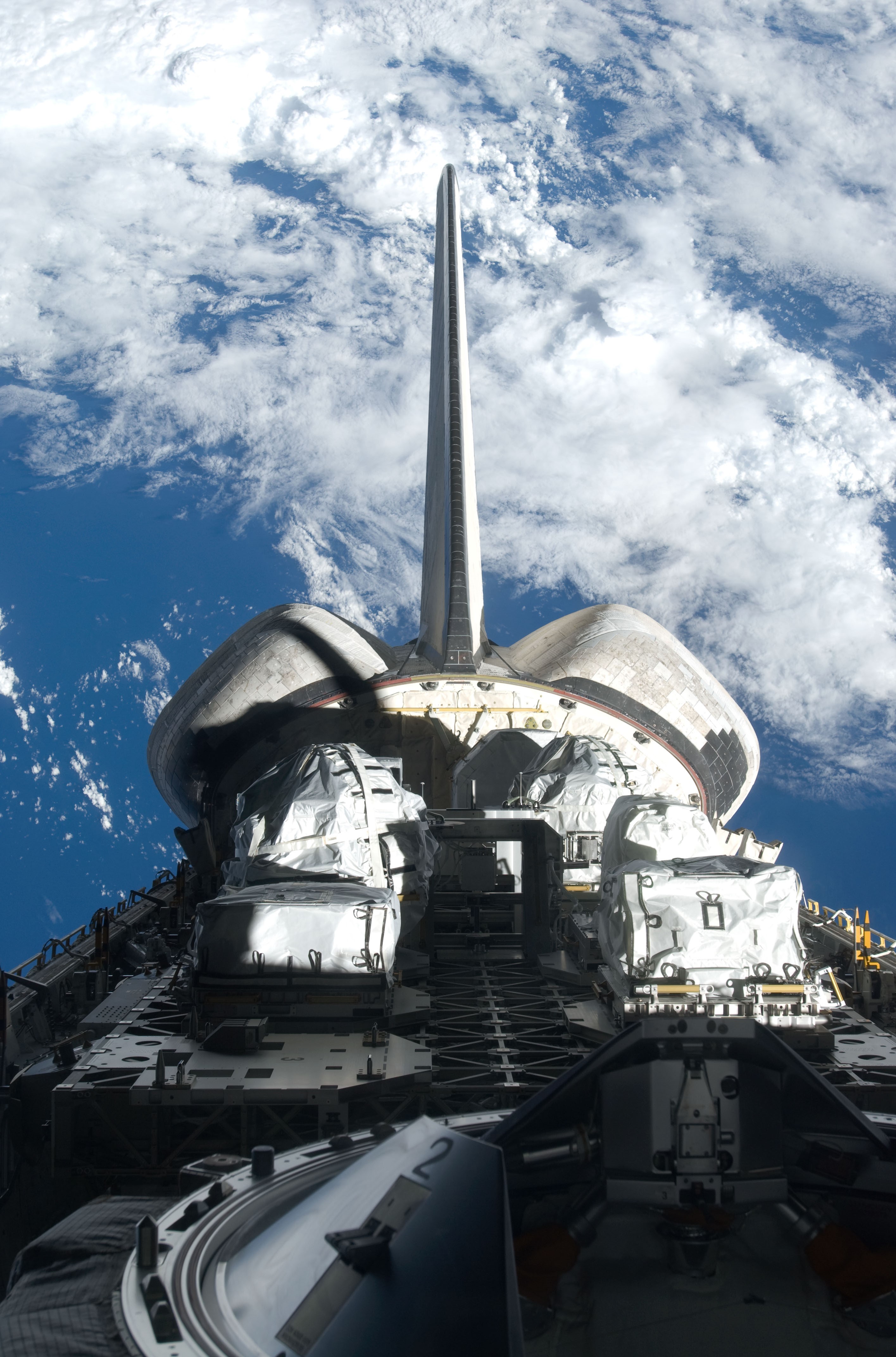
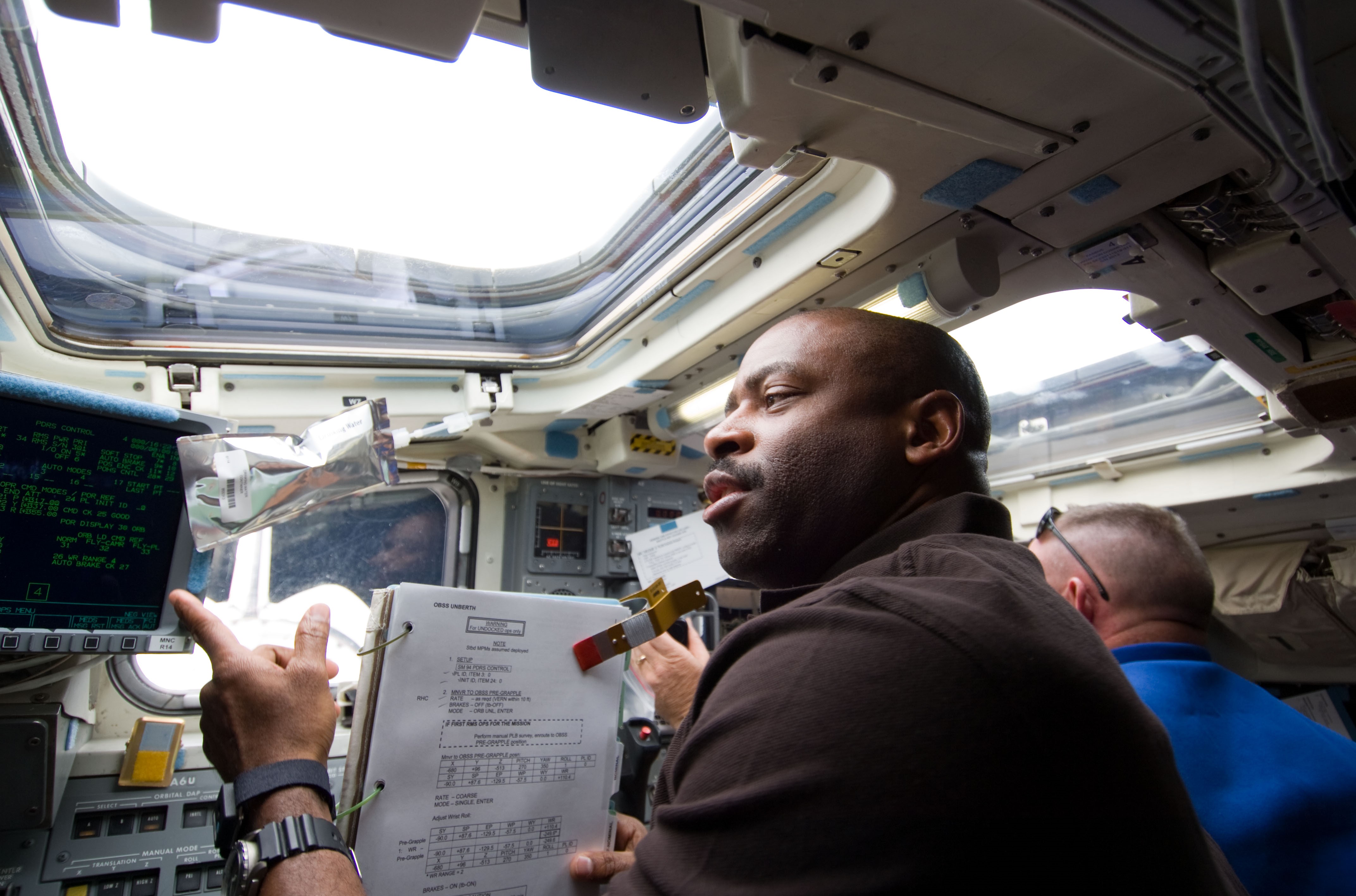
The two EXPRESS Logistics Carriers in Atlantis’ payload bay Leland D. Melvin participates in the inspection of Atlantis’ thermal protection system The Shuttle Remote Manipulator System grasps the Orbiter Boom Sensor System for the inspection
Left: The two EXPRESS Logistics Carriers in Atlantis’ payload bay. Middle: Leland D. Melvin participates in the inspection of Atlantis’ thermal protection system. Right: The Shuttle Remote Manipulator System grasps the Orbiter Boom Sensor System for the inspection.

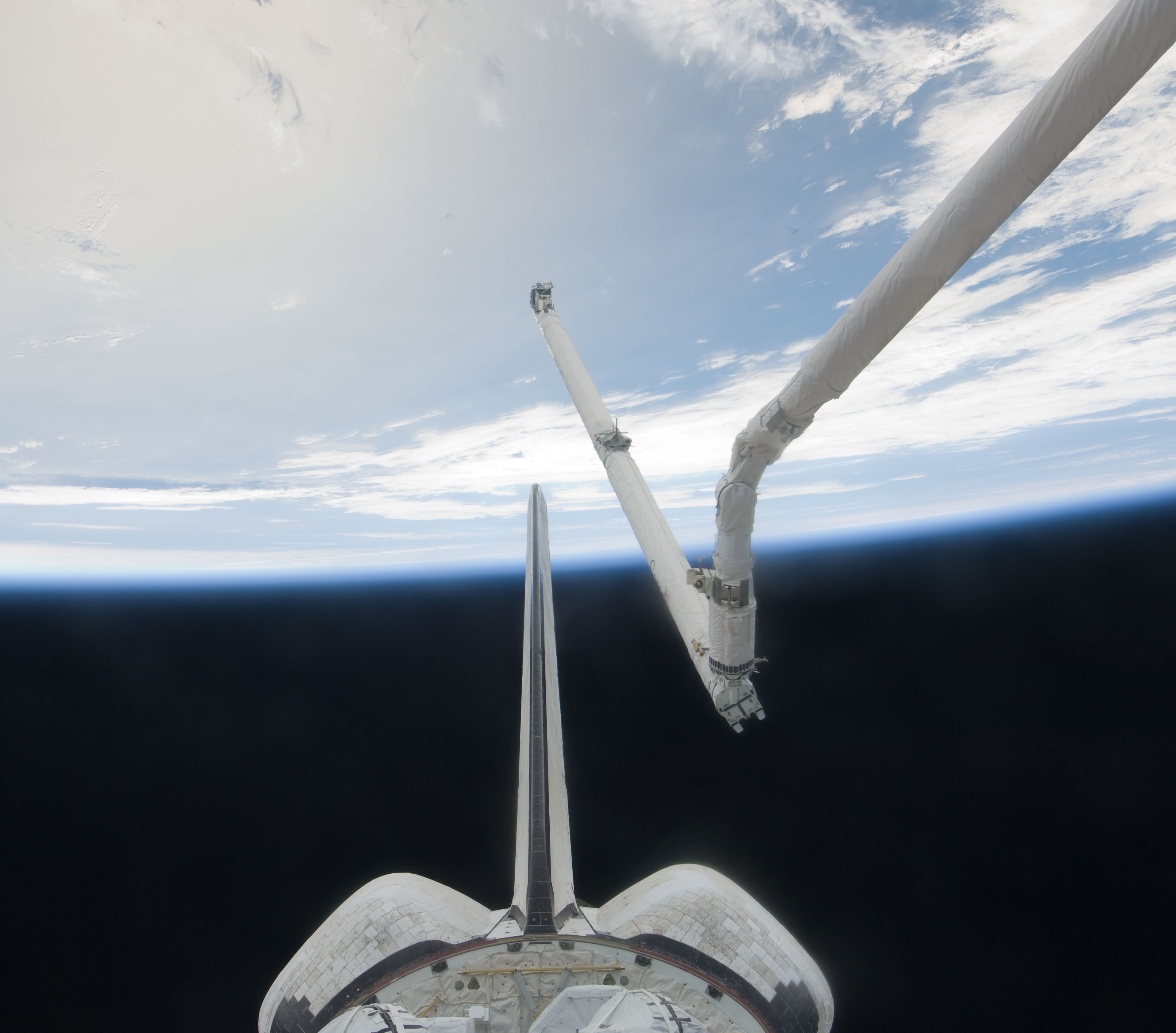
After reaching orbit, the crew opened the payload bay doors, deployed the shuttle’s radiators, and removed their bulky launch and entry suits, stowing them for the remainder of the flight. The astronauts spent six hours on their second day in space conducting a detailed inspection of Atlantis’ nose cap and wing leading edges, with Hobaugh, Wilmore, Melvin, and Bresnik taking turns operating the Shuttle Remote Manipulator System (SRMS), or robotic arm, and the Orbiter Boom Sensor System (OBSS).
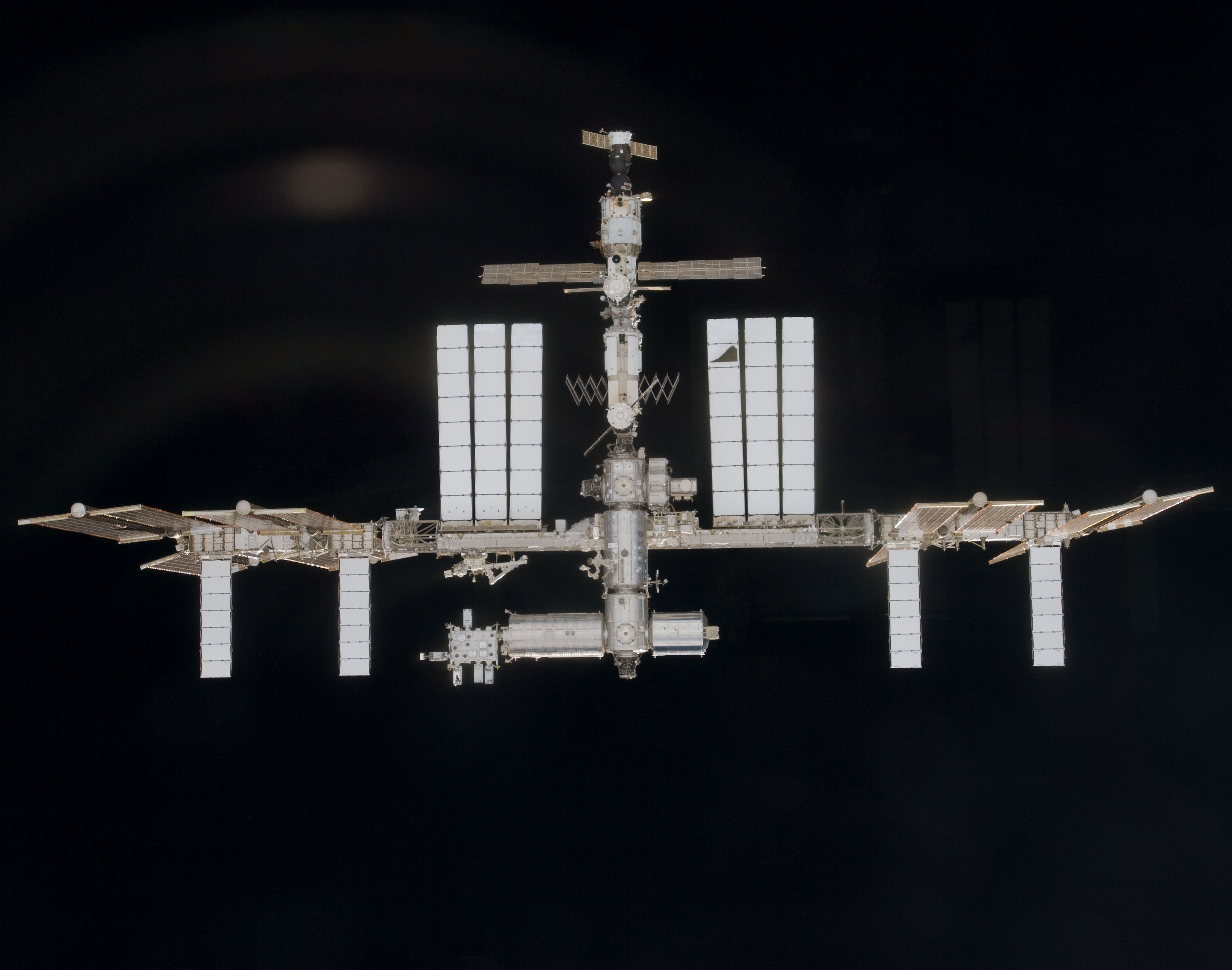
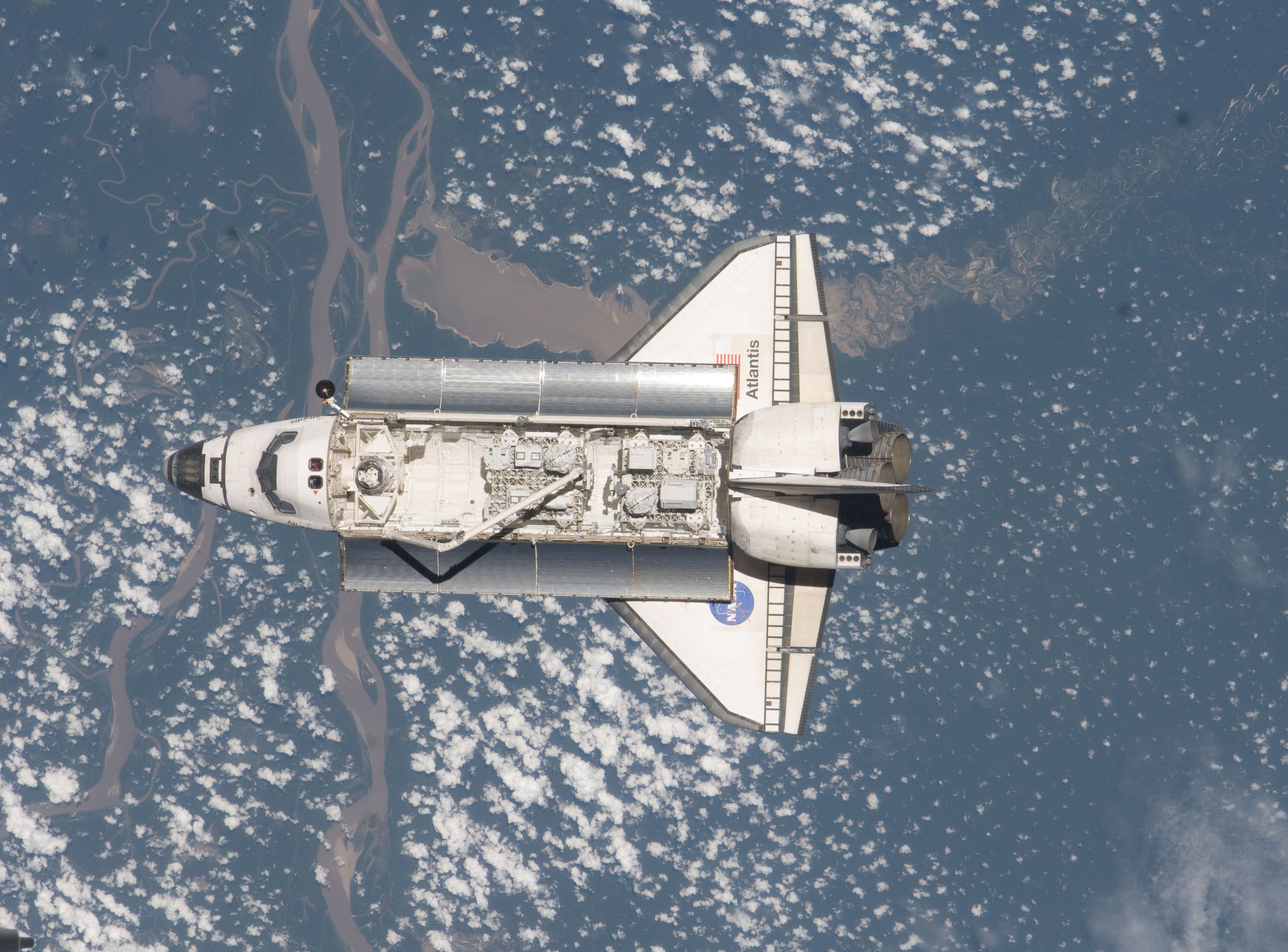
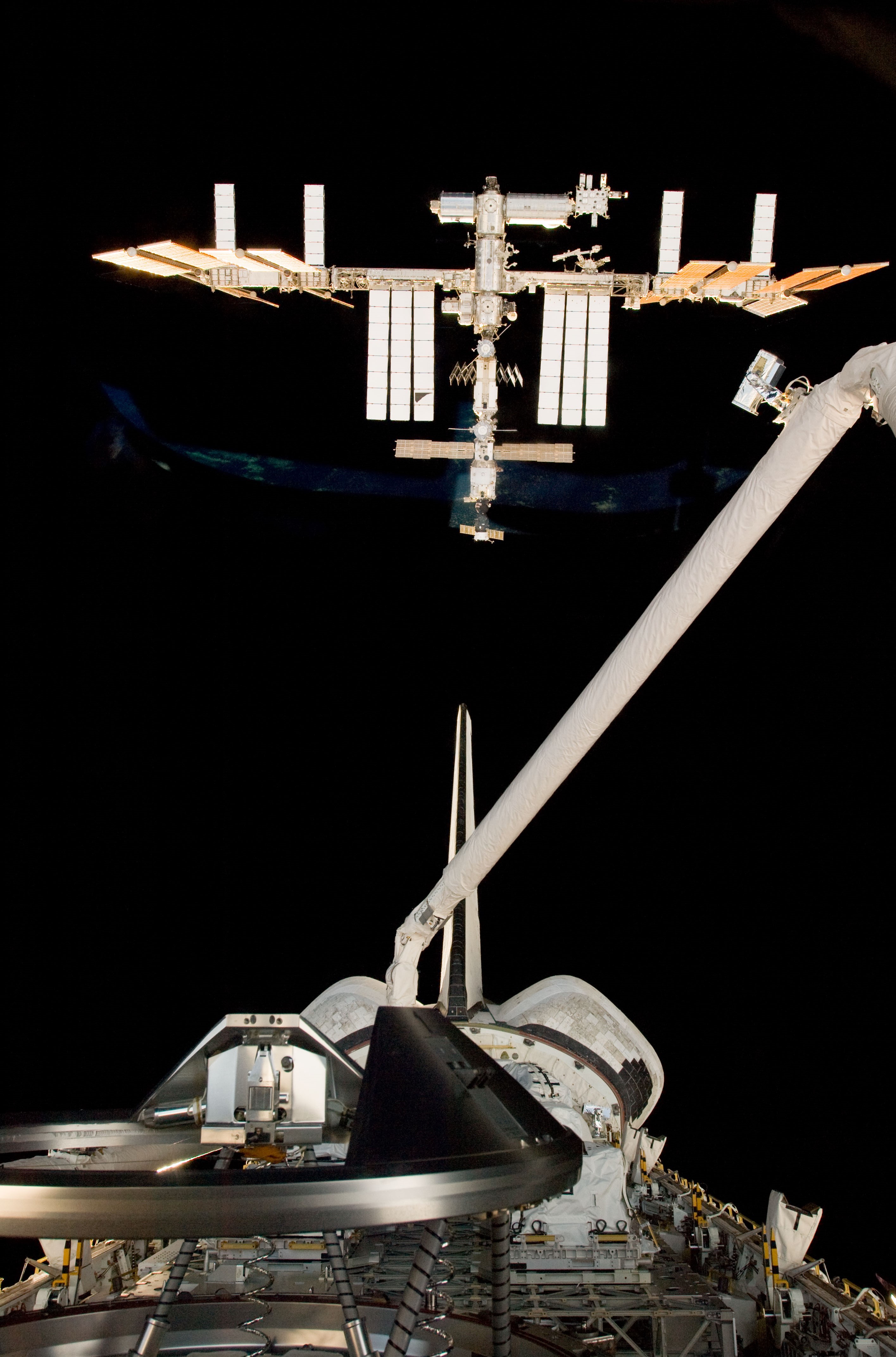
The International Space Station as seen from Atlantis Atlantis as seen from the space station View of the space station from Atlantis during the rendezvous pitch maneuver
Left: The International Space Station as seen from Atlantis during the rendezvous and docking maneuver. Middle: Atlantis as seen from the space station, showing the two EXPRESS Logistics Carriers (ELC) in the payload bay. Right: View of the space station from Atlantis during the rendezvous pitch maneuver, with the Shuttle Remote Manipulator System grasping ELC-1 in preparation for transfer shortly after docking.

On the mission’s third day, Hobaugh assisted by his crewmates brought Atlantis in for a docking with the space station. During the rendezvous, Hobaugh stopped the approach at 600 feet and completed the Rendezvous Pitch Maneuver so astronauts aboard the station could photograph Atlantis’ underside to look for any damage to the tiles. Shortly after docking, the crews opened the hatches between the two spacecraft and the six-person station crew welcomed the six-member shuttle crew. After the welcoming ceremony, Stott joined the STS-129 crew, leaving a crew of five aboard the station. Melvin and Bresnik used the SRMS to pick up ELC-1 from the payload bay and hand it off to Wilmore and Expedition 21 NASA astronaut Jeffrey N. Williams operating the Space Station Remote Manipulator System (SSRMS), who then installed it on the P3 truss segment.
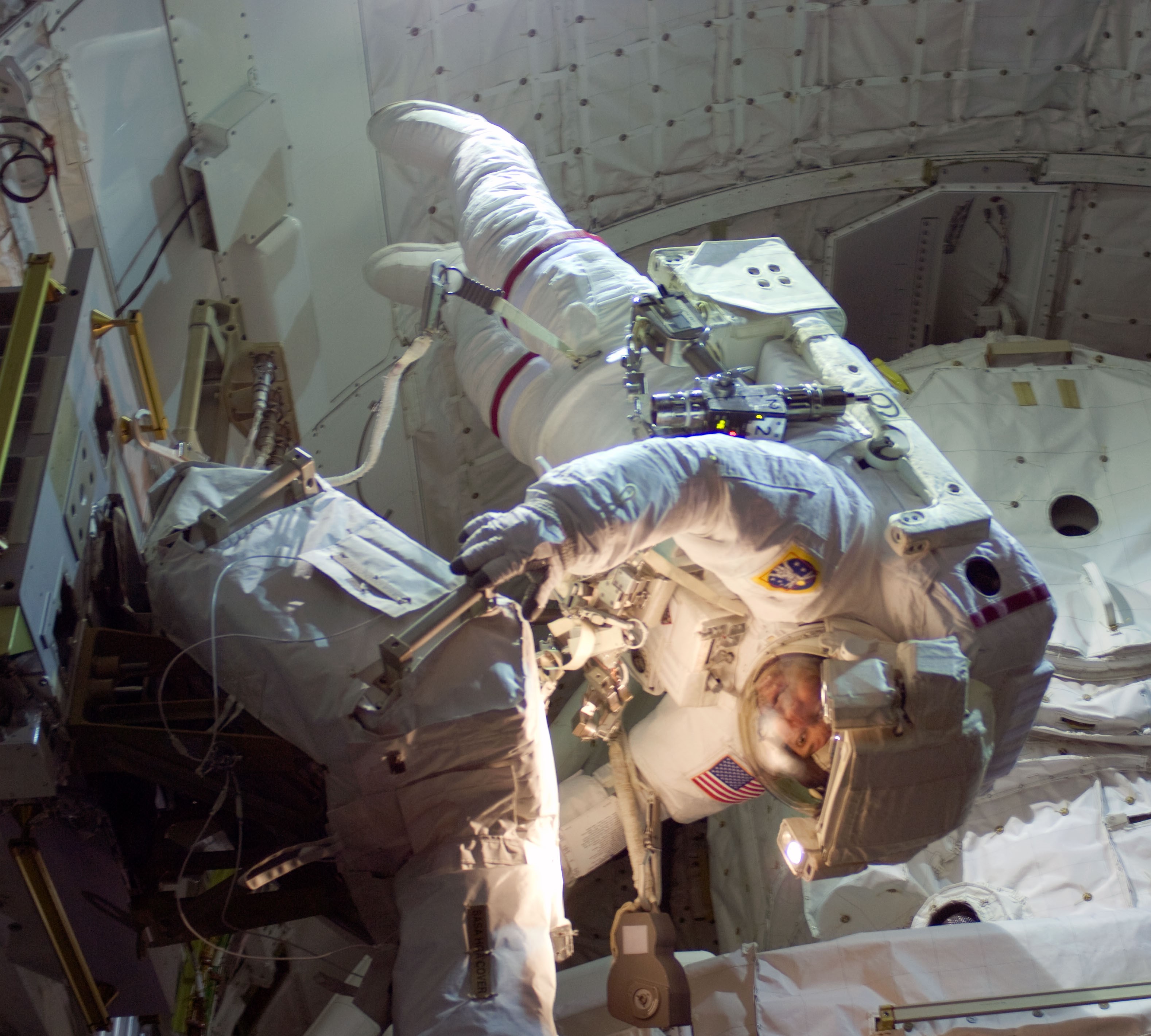
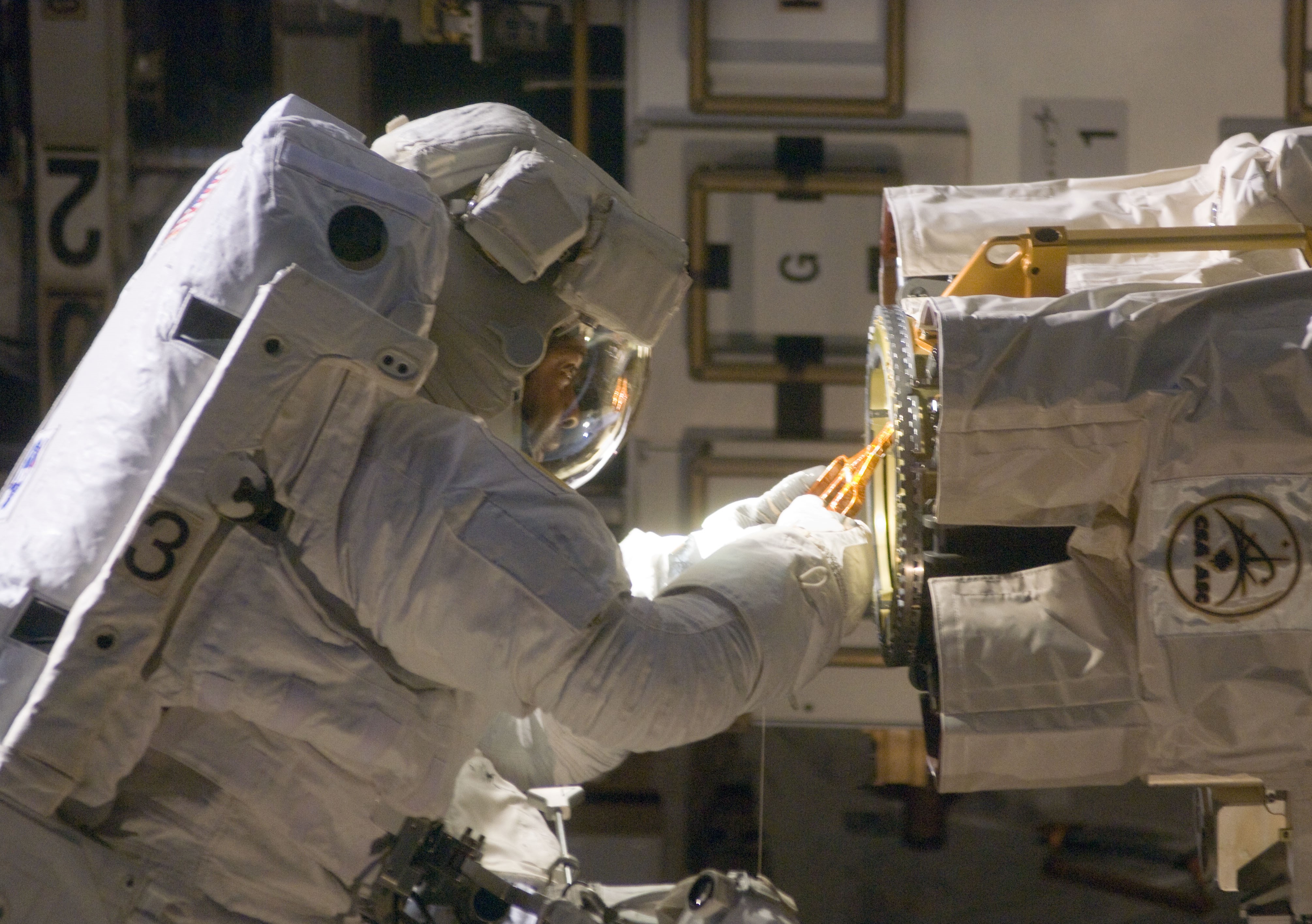
Michael J. Foreman unstows the S-band Antenna Support Assembly prior to transferring it to the station Robert “Bobby” L. Satcher lubricates the robotic arm’s Latching End Effector Satcher’s image reflected in a Z1 radiator panel
Images from the first spacewalk. Left: Michael J. Foreman unstows the S-band Antenna Support Assembly prior to transferring it to the station. Middle: Robert “Bobby” L. Satcher lubricates the robotic arm’s Latching End Effector. Right: Satcher’s image reflected in a Z1 radiator panel.

During the mission’s first of three spacewalks on flight day four, Foreman and Satcher ventured outside for six hours and 37 minutes. During the excursion, with robotic help from their fellow crew members, they transferred a spare S-band Antenna Support Assembly from the shuttle’s payload bay to the station’s Z1 truss. Satcher, an orthopedic surgeon by training, performed “surgery” on the station’s main robotic arm as well as the robotic arm on the Kibo Japanese module, by lubricating their latching end effectors. One day after joining Atlantis’ crew, Stott celebrated her 47th birthday.

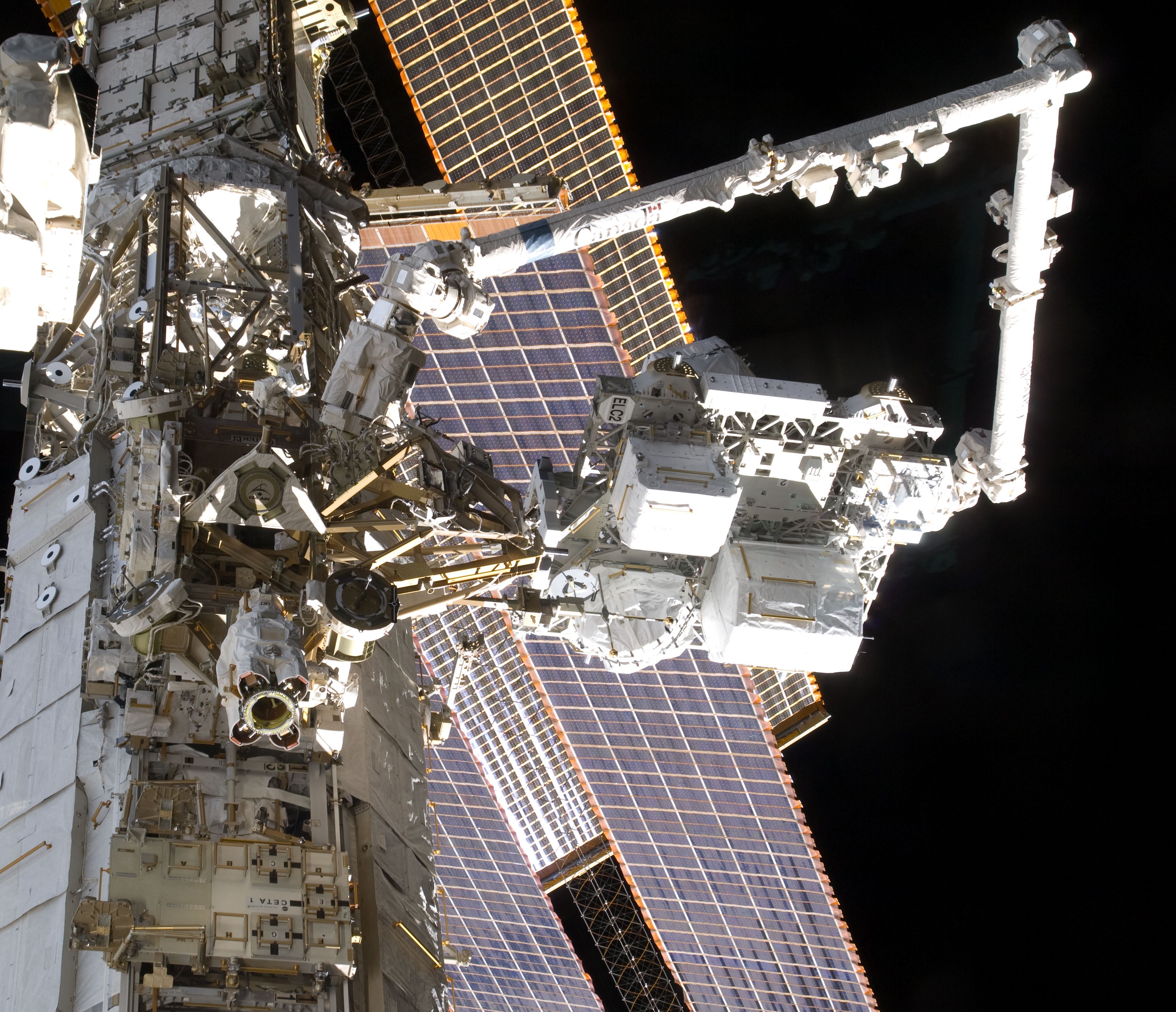
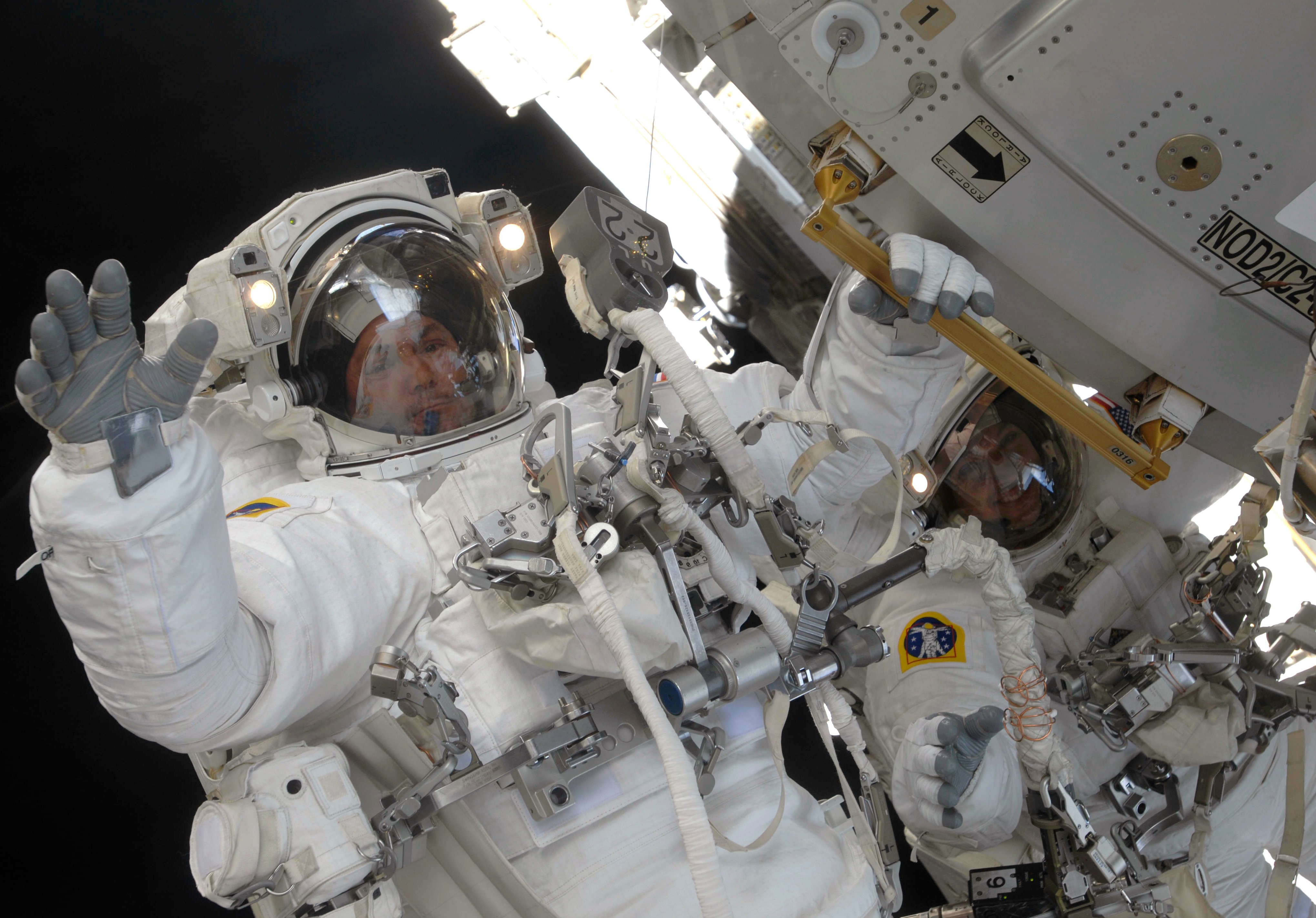
Space station crew member Jeffery N. Williams assists STS-129 astronaut Leland D. Melvin in operating the space station’s robotic arm The station robotic arm installs ELC2 on the S3 truss Michael J. Foreman, left, and Randolph J. Bresnik during the mission’s second spacewalk
Left: Space station crew member Jeffery N. Williams assists STS-129 astronaut Leland D. Melvin in operating the space station’s robotic arm to transfer and install the second EXPRESS Logistics Carrier (ELC2) on the S3 truss. Middle: The station robotic arm installs ELC2 on the S3 truss. Right: Michael J. Foreman, left, and Randolph J. Bresnik during the mission’s second spacewalk.

On the mission’s fifth day, the astronauts performed another focused inspection of the shuttle’s thermal protection system. The next day, through another coordinated robotic activity involving the shuttle and station arms, the astronauts transferred ELC-2 and its complement of spares from the payload bay to the station’s S3 truss. Foreman and Bresnik completed the mission’s second spacewalk. Working on the Columbus module, they installed the Grappling Adaptor to On-Orbit Railing (GATOR) fixture that includes a system used for ship identification and an antenna for Ham radio operators. They next installed a wireless video transmission system on the station’s truss. This spacewalk lasted six hours and eight minutes.
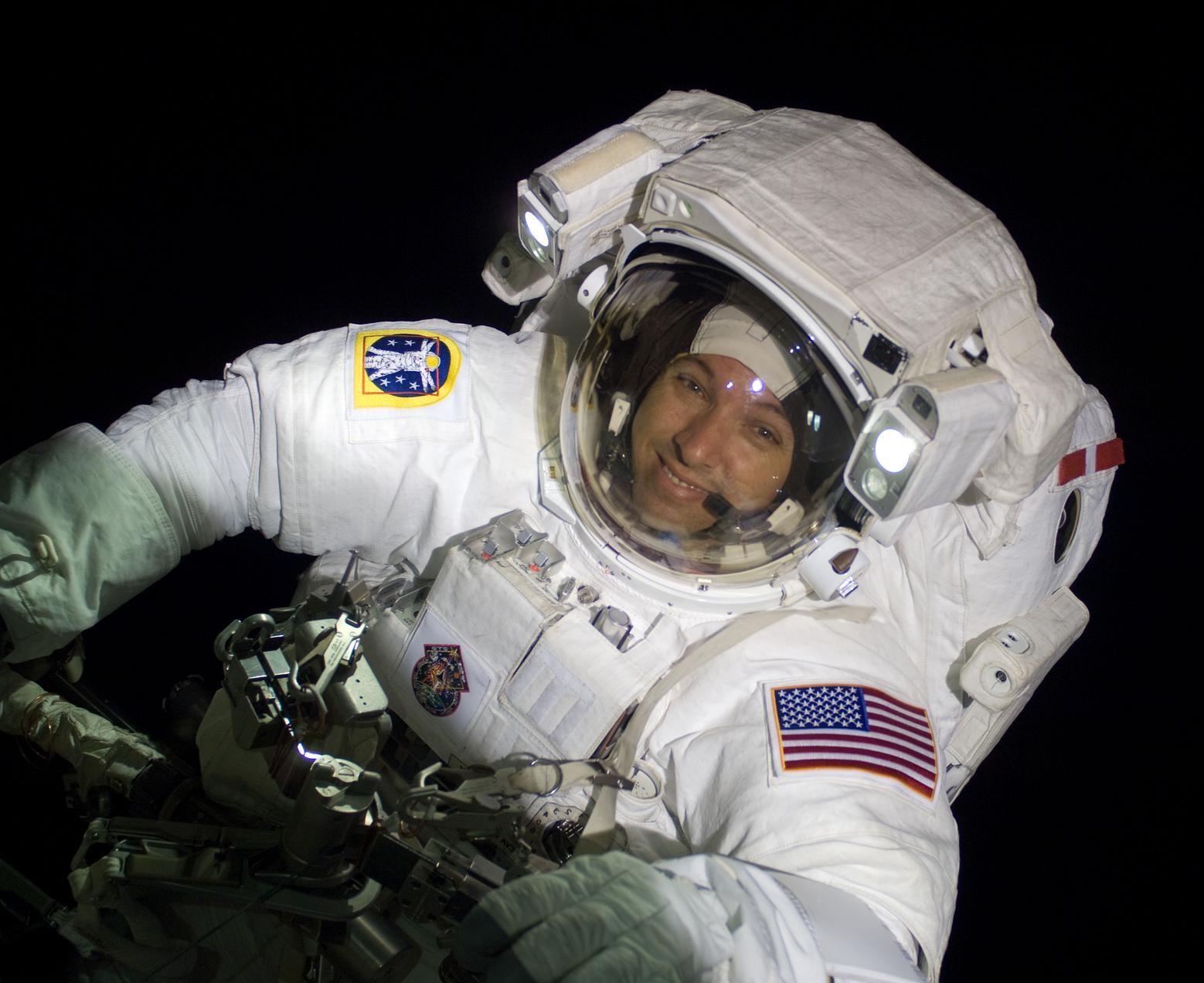
Randolph J. Bresnik during the third STS-129 spacewalk Robert “Bobby” L. Satcher during the third spacewalk The MISSE 7 exposure experiment suitcases installed on ELC2
Left: Randolph J. Bresnik during the third STS-129 spacewalk. Middle: Robert “Bobby” L. Satcher during the third spacewalk. Right: The MISSE 7 exposure experiment suitcases installed on ELC2.

Following a crew off duty day, on flight day eight Satcher and Bresnik exited the airlock for the mission’s third and final spacewalk. Their first task involved moving an oxygen tank from the newly installed ELC-2 to the Quest airlock. They accomplished this task with robotic assistance from their fellow crew members. Bresnik retrieved the two-suitcase sized MISSE-7 experiment containers from the shuttle cargo bay and installed them on the MISSE-7 platform on ELC-2, opening them to begin their exposure time. This third spacewalk lasted five hours 42 minutes.
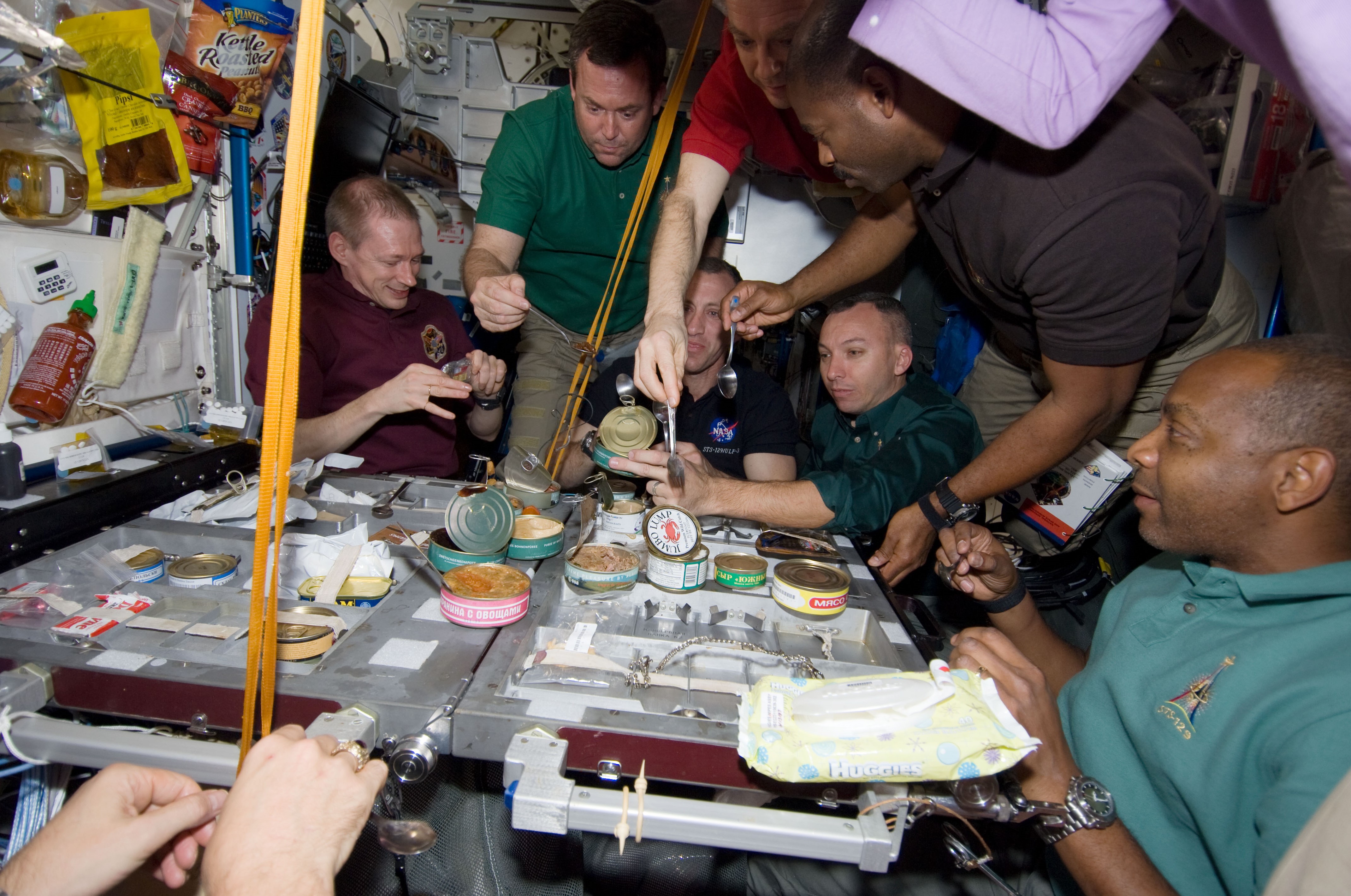
STS-129 Thanksgiving STS-129 Thanksgiving
Left: An early Thanksgiving meal for 12 aboard the space station. Right: After the meal, who has the dishes?

Thanksgiving Day fell on the day after undocking, so the joint crews celebrated with a meal a few days early. The meal represented not only the largest Thanksgiving celebration in space with 12 participants, but also the most international, with four nations represented – the United States, Russia, Canada, and Belgium (representing the European Space Agency).

The 12 members of Expedition 21 and STS-129 pose for a final photograph The STS-129 crew
Left: The 12 members of Expedition 21 and STS-129 pose for a final photograph before saying their farewells. Right: The STS-129 crew, now comprising seven members.

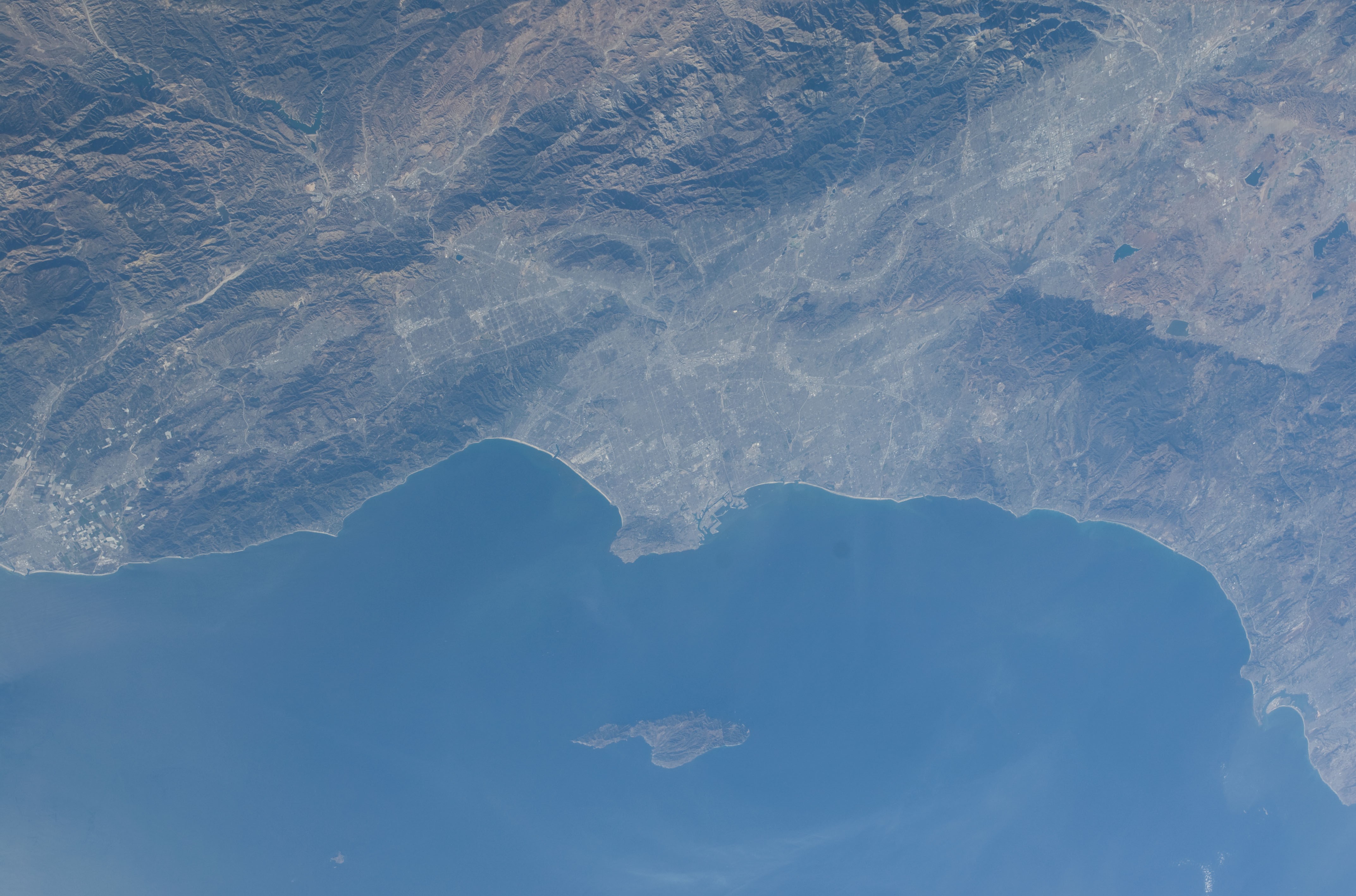
A selection of STS-129 Earth observation images of Maui A selection of STS-129 Earth observation image of Los Angeles STS-129 Earth observation image of Houston
A selection of STS-129 Earth observation images. Left: Maui. Middle: Los Angeles. Right: Houston.

Despite their busy workload, as with all space crews, the STS-129 astronauts made time to look out the windows and took hundreds of photographs of their home planet.
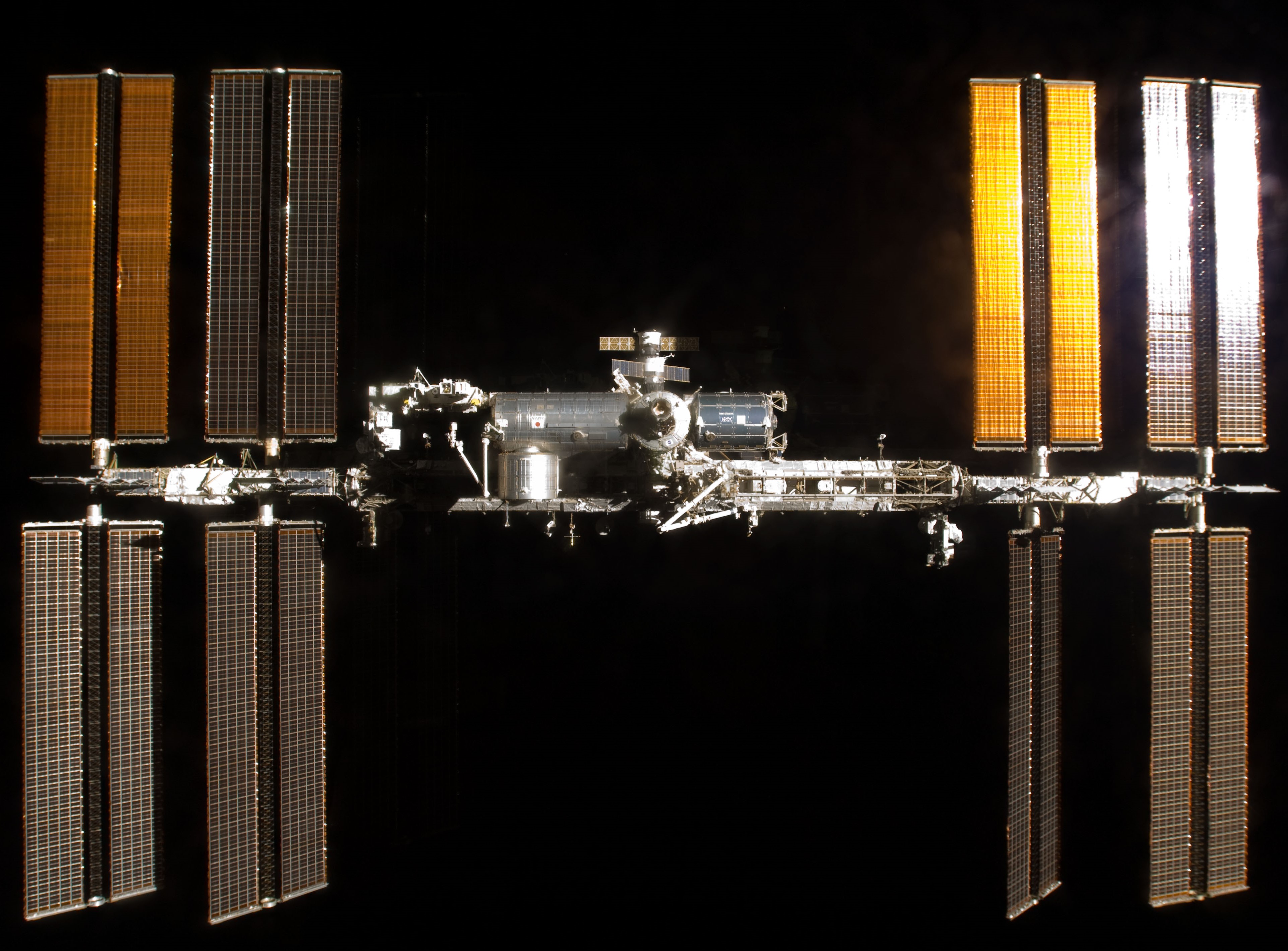
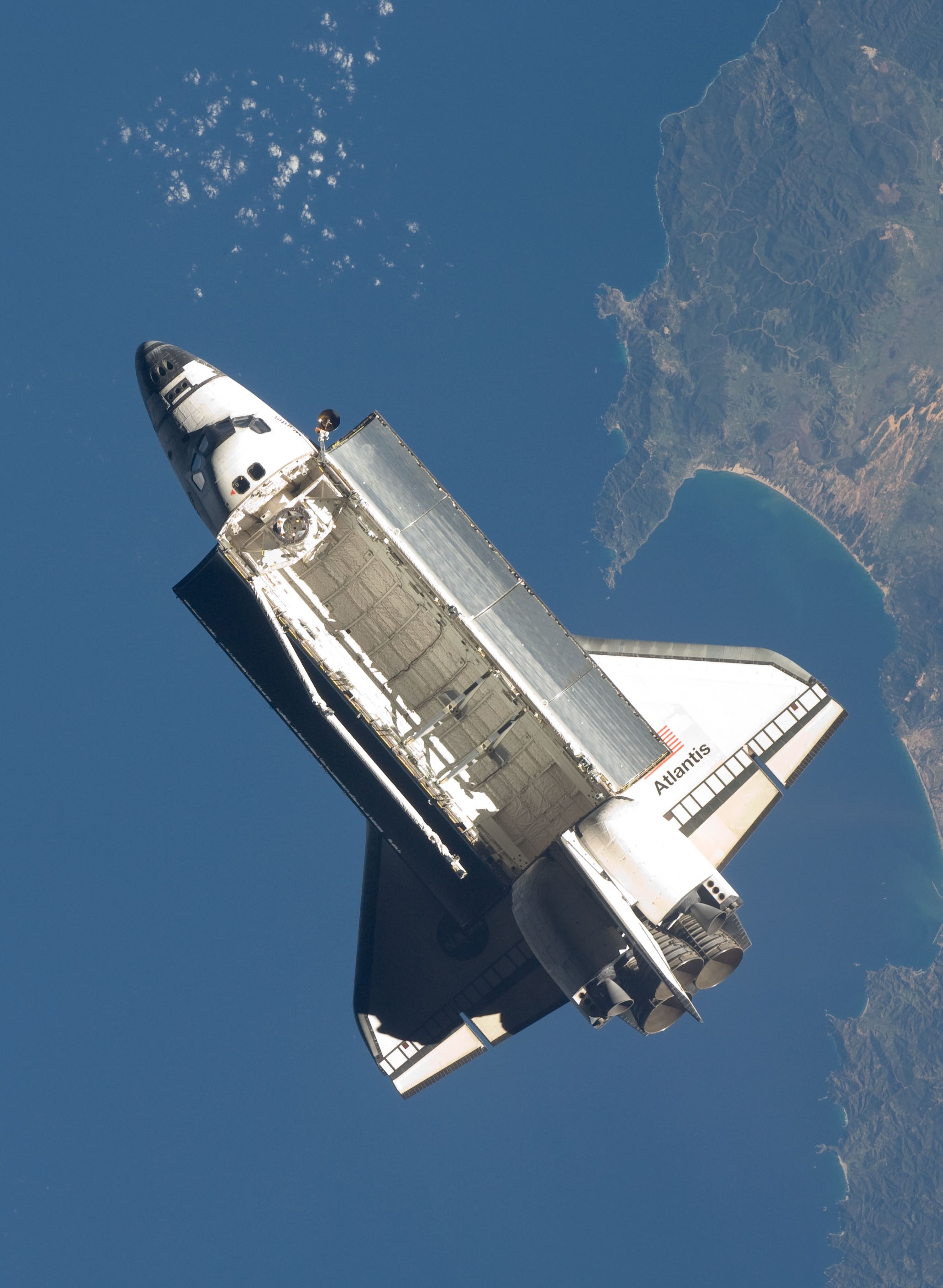
The space station seen from Atlantis during the flyaround Atlantis as seen from the space station during the flyaround Astronaut Nicole P. Stott looks back at the station,
Left: The space station seen from Atlantis during the flyaround. Middle: Atlantis as seen from the space station during the flyaround, with a now empty payload bay. Right: Astronaut Nicole P. Stott looks back at the station, her home for three months, from the departing Atlantis.

On flight day nine, the joint crews held a brief farewell ceremony. European Space Agency astronaut Frank De Winne, the first European to command the space station, handed over command to NASA astronaut Williams. The two crews parted company and closed the hatches between the two spacecraft. The next day, with Wilmore at the controls, Atlantis undocked from the space station, having spent seven days as a single spacecraft. Wilmore completed a flyaround of the station, with the astronauts photographing it to document its condition. A final separation burn sent Atlantis on its way.

The astronauts used the shuttle’s arm to pick up the OBSS and perform a late inspection of Atlantis’ thermal protection system. On flight day 11, Hobaugh and Wilmore tested the orbiter’s reaction control system thrusters and flight control surfaces in preparation for the next day’s entry and landing. The entire crew busied themselves with stowing all unneeded equipment.
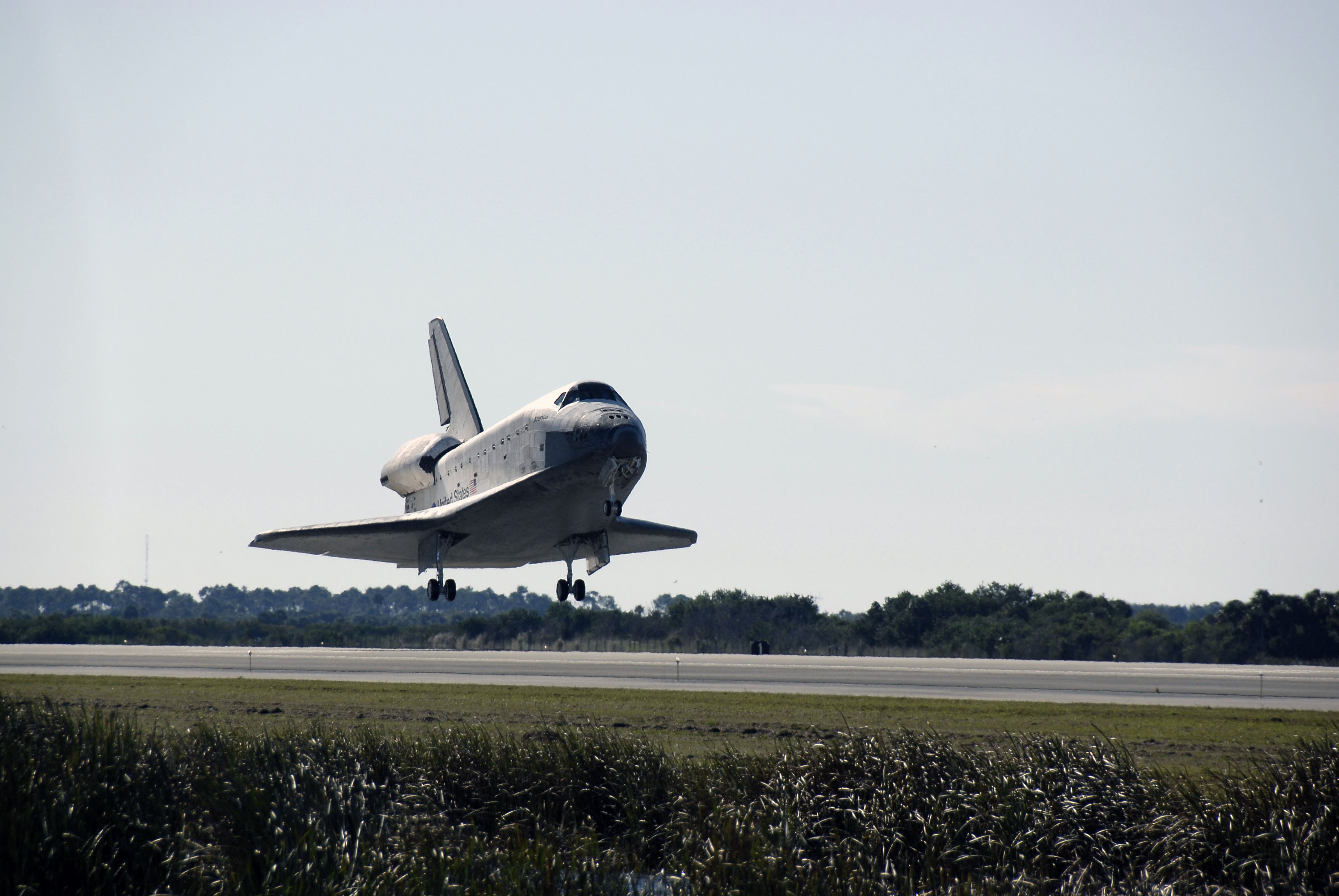
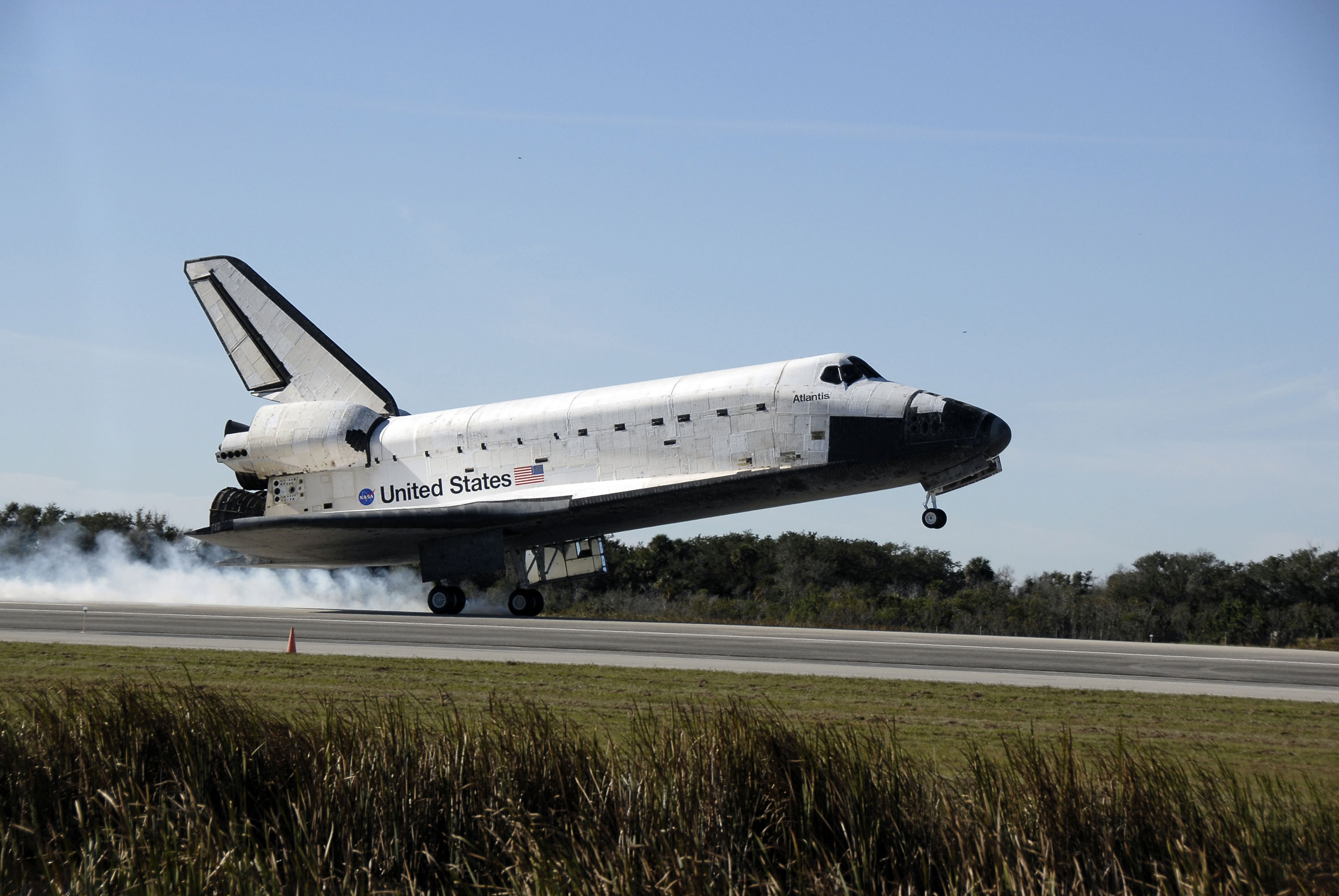
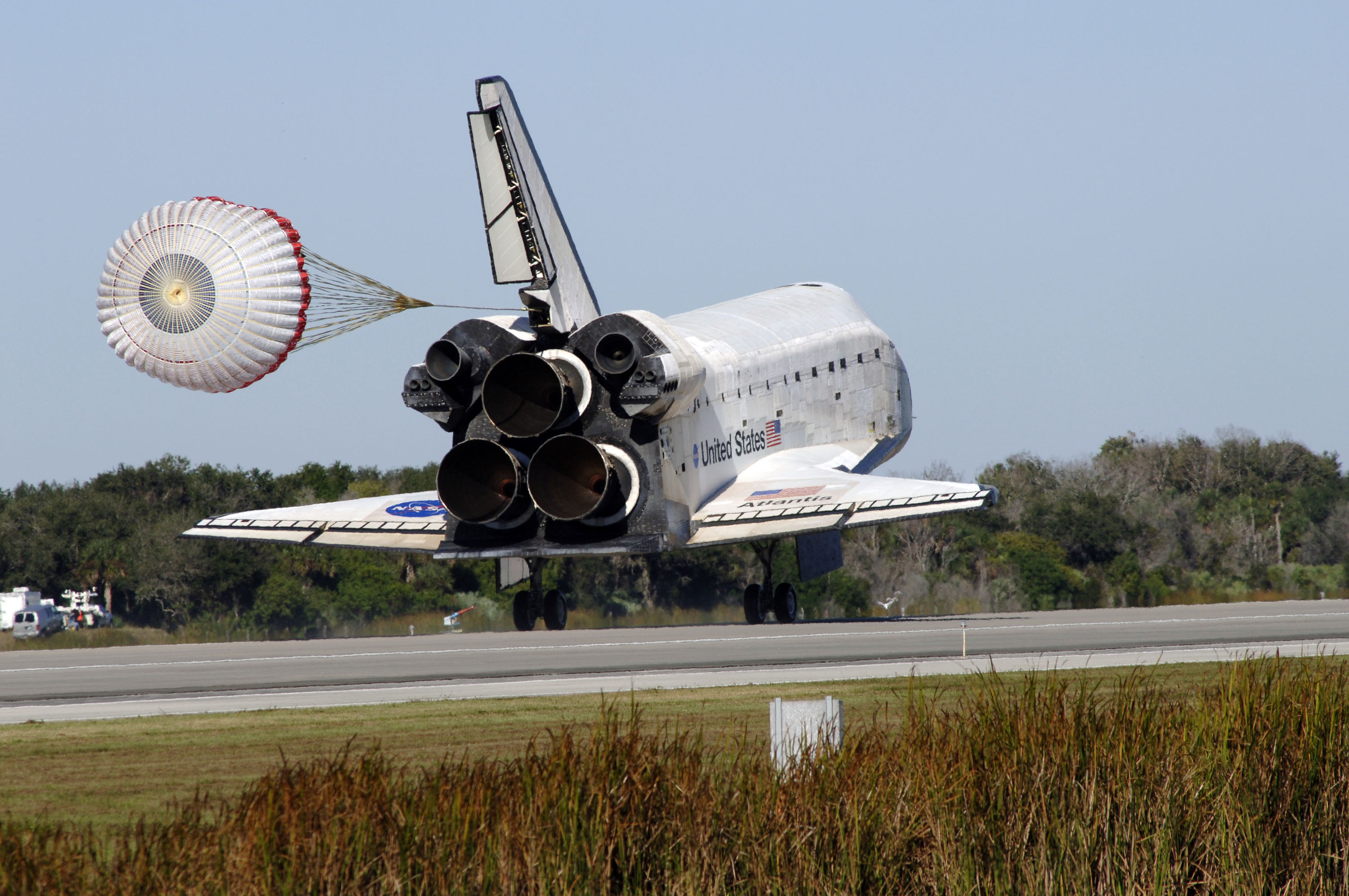
Atlantis about to touch down at NASA’s Kennedy Space Center in Florida Atlantis touches down Atlantis deploys its drag chute as it continues down the runway
Left: Atlantis about to touch down at NASA’s Kennedy Space Center in Florida. Middle: Atlantis touches down. Right: Atlantis deploys its drag chute as it continues down the runway.
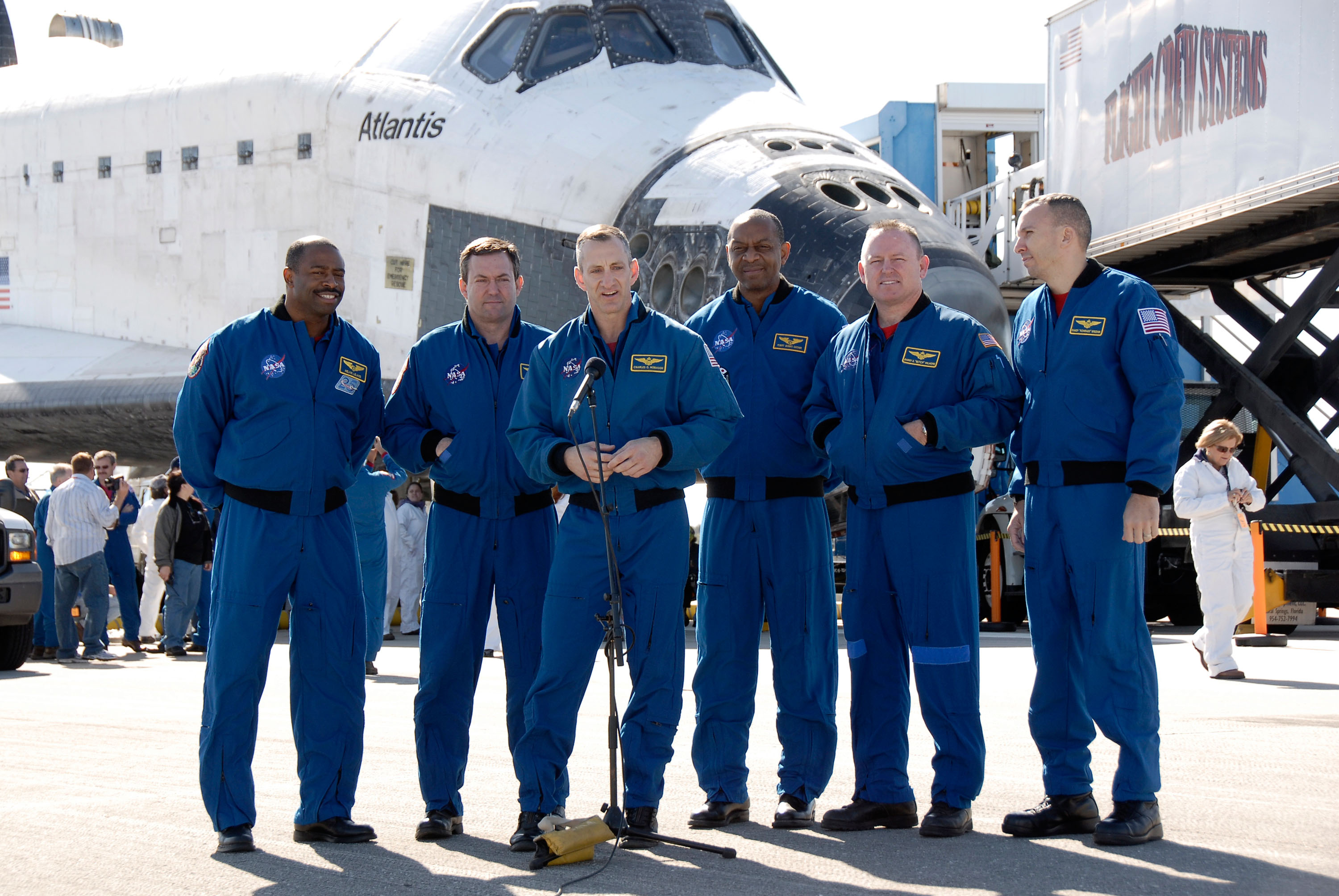
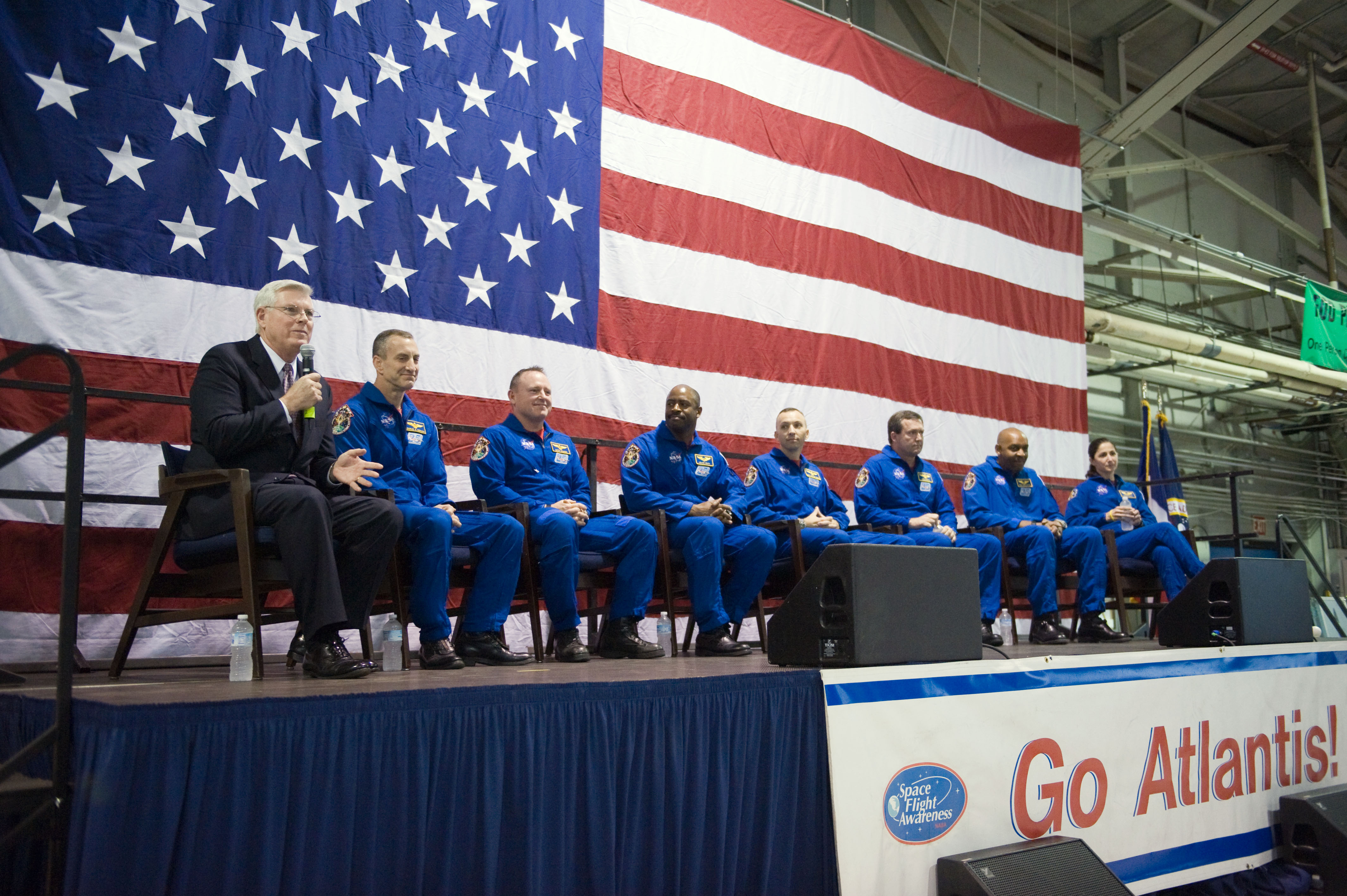
Six of the STS-129 astronauts pose with Atlantis on the runway at NASA’s Kennedy Space Center in Florida The welcome home ceremony for the STS-129 crew at Ellington Field in Houston
Left: Six of the STS-129 astronauts pose with Atlantis on the runway at NASA’s Kennedy Space Center in Florida. Right: The welcome home ceremony for the STS-129 crew at Ellington Field in Houston.

On Nov. 27, the astronauts closed Atlantis’ payload bay doors, donned their launch and entry suits, and strapped themselves into their seats, a special recumbent one for Stott who had spent the last three months in weightlessness. Hobaugh fired Atlantis’ two Orbital Maneuvering System engines to bring them out of orbit and head for a landing half an orbit later. He guided Atlantis to a smooth touchdown at KSC’s Shuttle Landing Facility.

The landing capped off a very successful STS-129 mission of 10 days, 19 hours, 16 minutes. The six astronauts orbited the planet 171 times. Stott spent 90 days, 10 hours, 45 minutes in space, completing 1,423 orbits of the Earth. After towing Atlantis to the OPF, engineers began preparing it for its next flight, STS-132 in May 2010. The astronauts returned to Houston for a welcoming ceremony at Ellington Field.

Enjoy the crew narrate a video about the STS-129 mission.

Powered by WPeMatico

Get The Details…
Kelli Mars