Life Science, Spacewalk Preps on Station as Dragon Splashes Down

Life Science, Spacewalk Preps on Station as Dragon Splashes Down

Astronauts Suni Williams and Don Pettit take a break from science maintenance activities and pose for a selfie-portrait aboard the station's Harmony module.
Astronauts Suni Williams and Don Pettit take a break from science maintenance activities and pose for a selfie-portrait aboard the station’s Harmony module.

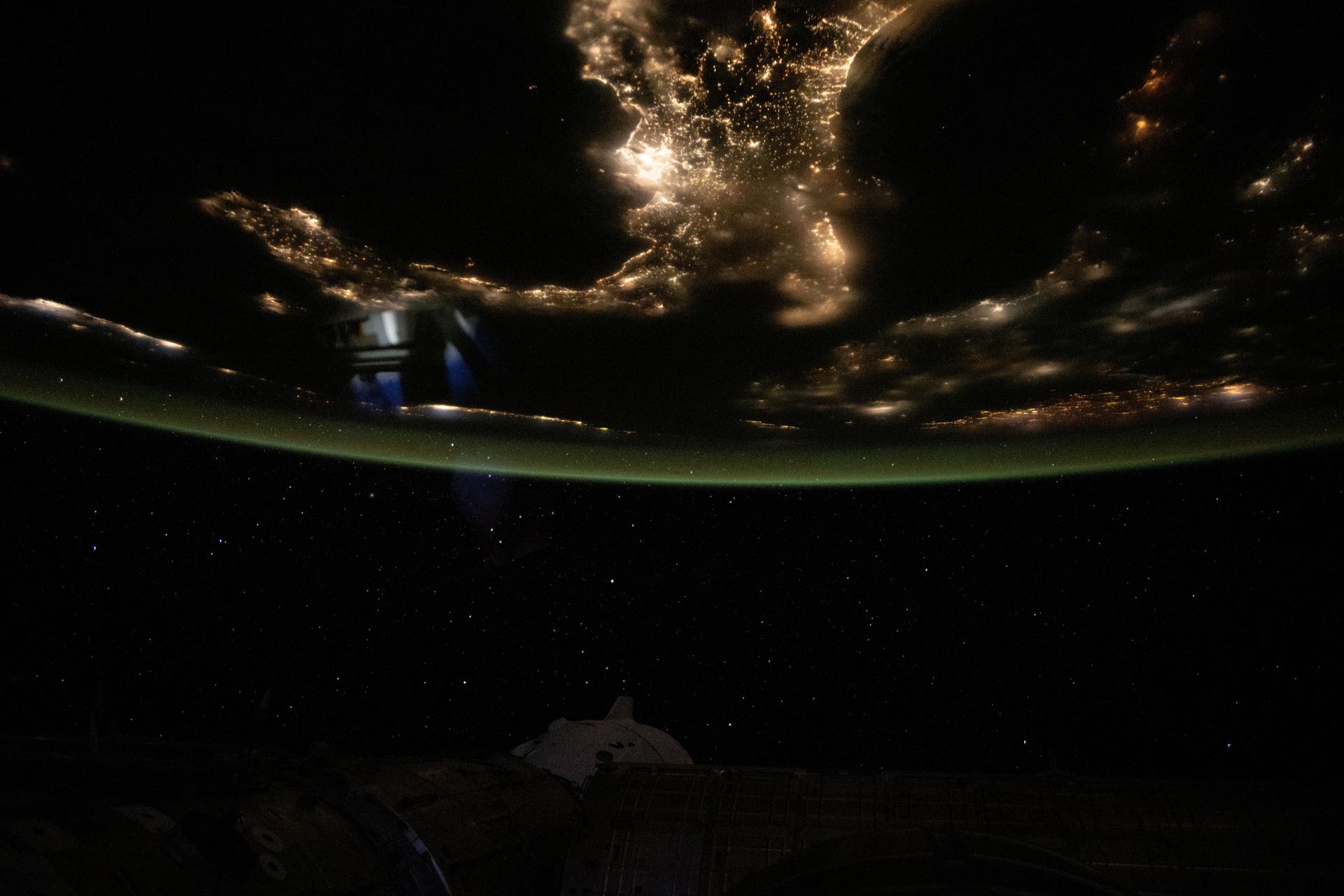
The Expedition 72 crew continued its life science research and spacewalk preparations on Tuesday as a U.S. resupply spacecraft splashed down in the Gulf of Mexico. The orbital residents also serviced advanced exercise gear and reconfigured a science airlock on the International Space Station.

NASA Flight Engineers Don Pettit and Nick Hague worked on two different space biology experiments Tuesday each exploring different facets of microgravity’s effects on humans. Pettit cleaned up a research incubator that earlier housed biological samples exposed to the stresses of space that cause muscle and bone loss. Those samples have been returned to Earth aboard the SpaceX Dragon cargo spacecraft for analysis. Hague strapped on a sensor-packed headband and vest that recorded his heart and breathing activity as he pedaled on an exercise bike. The data will be downlinked to researchers to learn how the body adapts to microgravity conditions.

Commander Suni Williams and Flight Engineer Butch Wilmore, both NASA astronauts, joined each other in the Columbus laboratory module and began installing new exercise gear. Combining bicycling, rowing, and resistive capabilities, the small and compact European Enhanced Exploration Exercise Device will be tested for its effectiveness aboard the space station before being used for longer term missions to the Moon, Mars, and beyond.

Wilmore partnered with Hague near the end of their shift and reconfigured the Nanoracks Bishop airlock. Bishop will be repressurized after being reattached to the Tranquility module following a weekend of transfer activities with the Canadarm2 robotic arm. Bishop had earlier contained the Euro Materials Ageing experiment hardware that was robotically maneuvered to the Bartolomeo research platform attached to the outside of Columbus.

Roscosmos cosmonauts Alexey Ovchinin and Ivan Vagner are nearing a spacewalk that will see the duo remove external science experiments and relocate European robotic arm hardware. The pair organized their spacewalking tools and conducted photographic inspections inside the Poisk airlock where they will exit into the vacuum of space at 10:10 a.m. EST on Thursday. Ovchinin and Vagner will spend about six hour and 40-minutes wearing their Orlan spacesuits while tethered to the outside of the orbital outpost.

Flight Engineer Aleksandr Gorbunov split his day on Earth observations and life support maintenance inside the station’s Roscosmos segment. Gorbunov tested new imaging hardware in the Nauka science module that can view the effects of natural and man-made disasters on Earth in different wavelengths. The first-time space flyer also worked an orbital plumbing and ventilation system cleaning throughout the day.


Learn more about station activities by following the space station blog@space_station and @ISS_Research on X, as well as the ISS Facebook and ISS Instagram accounts.

Get the latest from NASA delivered every week. Subscribe here: www.nasa.gov/subscribe

Powered by WPeMatico

Get The Details…

Mark Garcia

Dragon Returns to Earth, Cargo Mission Ends

Dragon Returns to Earth, Cargo Mission Ends

The SpaceX Dragon cargo spacecraft is pictured departing the vicinity of the space station following its undocking from the International Space Station on January 9, 2023.

At 1:39 p.m. EST, the unpiloted SpaceX Dragon spacecraft splashed down off the coast of Florida, marking the return of the company’s 31st commercial resupply services mission to the International Space Station for NASA.

The spacecraft carried back to Earth thousands of pounds of supplies and scientific experiments designed to take advantage of the space station’s microgravity environment after undocking at 11:05 a.m. Dec. 16, from the forward port of the space station’s Harmony module.

Filled with nearly 6,000 pounds of crew supplies, science investigations, and equipment, the spacecraft arrived to the orbiting laboratory Nov. 5 after it launched Nov. 4 on a Falcon 9 rocket from Launch Complex 39A at NASA’s Kennedy Space Center in Florida.


Learn more about station activities by following the space station blog@space_station and @ISS_Research on X, as well as the ISS Facebook and ISS Instagram accounts.

Get the latest from NASA delivered every week. Subscribe here: www.nasa.gov/subscribe

Powered by WPeMatico

Get The Details…

Mark Garcia

2024 in Review: Highlights from NASA in Silicon Valley 

2024 in Review: Highlights from NASA in Silicon Valley 

7 min read

Preparations for Next Moonwalk Simulations Underway (and Underwater)

2024 intro: As NASA’s Ames Research Center in California’s Silicon Valley enters its 85th year since its founding, join us as we take a look back at some of our highlights of science, engineering, research, and innovation from 2024.

Ames Arc Jets Play Key Role in Artemis I Orion Spacecraft Heat Shield Findings 

A block of Avcoat undergoes testing inside an arc jet test chamber at NASA Ames. The test article, configured with both permeable (upper) and non-permeable (lower) Avcoat sections for comparison, helped to confirm understanding of the root cause of the loss of charred Avcoat material that engineers saw on the Orion spacecraft after the Artemis I test flight beyond the Moon. 
NASA

Researchers at Ames were part of the team tasked to better understand and identify the root cause of the unexpected char loss across the Artemis I Orion spacecraft’s heat shield. Using Avcoat material response data from Artemis I, the investigation team was able to replicate the Artemis I entry trajectory environment — a key part of understanding the cause of the issue — inside the arc jet facilities at NASA Ames. 

Starling Swarm Completes Primary Mission 

The four CubeSat spacecraft that make up the Starling swarm have demonstrated success in autonomous operations, completing all key mission objectives. 
NASA

After ten months in orbit, the Starling spacecraft swarm successfully demonstrated its primary mission’s key objectives, representing significant achievements in the capability of swarm configurations in low Earth orbit, including distributing and sharing important information and autonomous decision making. 

Another Step Forward for BioNutrients 

Three people wearing lab coats are working with hardware in a lab.
Research scientists Sandra Vu, left, Natalie Ball, center, and Hiromi Kagawa, right, process BioNutrients production packs.
NASA/Brandon Torres Navarrete

NASA’s BioNutrients entered its fifth year in its mission to investigate how microorganisms can produce on-demand nutrients for astronauts during long-duration space missions. Keeping astronauts healthy is critical and as the project comes to a close, researchers have processed production packs on Earth on the same day astronauts processed production packs in space on the International Space Station to demonstrate that NASA can produce nutrients after at least five years in space, providing confidence it will be capable of supporting crewed missions to Mars.  

Hyperwall Upgrade Helps Scientists Interpret Big Data

Four individuals stand in front of the NASA Advanced Supercomputing Facility hyperwall, a wall of LCD screens displaying an image of stars and galaxies.
The newly upgraded hyperwall visualization system provides four times the resolution of the previous system. 
NASA/Brandon Torres Navarrete

Ames upgraded its powerful hyperwall system, a 300-square foot wall of LCD screens with over a billion pixels to display supercomputer-scale visualizations of the very large datasets produced by NASA supercomputers and instruments. The hyperwall is just one way researchers can utilize NASA’s high-end computing technology to better understand their data and advance the agency’s missions and research. 

Ames Contributions to NASA Artificial Intelligence Efforts 

NASA public affairs officer Melissa Howell moderates as chief scientist Kate Calvin speaks alongside chief technologist AC Charania, chief artificial intelligence officer David Salvagnini, and chief information officer Jeff Seaton at the agency’s first artificial intelligence town hall.
NASA/Bill Ingalls

Ames contributes to the agency’s artificial intelligence work through ongoing research and development, agencywide collaboration, and communications efforts. This year, NASA announced David Salvagnini as its inaugural chief artificial intelligence officer and held the first agencywide town hall on artificial intelligence sharing how the agency is safely using and developing artificial intelligence to advance missions and research. 

Advanced Composite Solar Sail System Successfully Launches, Deploys Sail

NASA’s Advanced Composite Solar Sail System seeks to advance future space exploration and expand our understanding of our Sun and Solar System. 

NASA’s Advanced Composite Solar Sail System successfully launched from Māhia, New Zealand, in April, and successfully deployed its sail in August to begin mission operations. The small satellite represents a new future in solar sailing, using lightweight composite booms to support a reflective polymer sail that uses the pressure of sunlight as propulsion. 

Understanding Our Planet 

Shot from the sea floor looking up, a man in snorkeling equipment and a teal shirt is silhouetted against the blue water and the bright light of the sun, visible at the ocean's surface. In the bottom-center of the frame is a lumpy mass of brown-orange coral.
Samuel Suleiman, an instructor on NASA’s OCEANOS student training program, gathers loose corals to place around an endangered coral species to help attract fish and other wildlife, giving the endangered coral a better chance of survival.
NASA/Milan Loiacono

In 2024, Ames researchers studied Earth’s oceans and waterways from multiple angles – from supporting NASA’s Plankton, Aerosol, Cloud, ocean Ecosystem, or PACE, mission to bringing students in Puerto Rico experiences in oceanography and the preservation of coral reefs. Working with multiple partners, our scientists and engineers helped inform ecosystem management by joining satellite measurements of Earth with animal tracking data. In collaboration with the U.S. Geological Survey, a NASA team continued testing a specialized instrument package to stay in-the-know about changes in river flow rates

Revealing the Mysteries of Asteroids in Our Solar System 

NASA

Ames researchers used a series of supercomputer simulations to reveal a potential new explanation for how the moons of Mars may have formed: The first step, the findings say, may have involved the destruction of an asteroid. 

Using NASA’s powerful James Webb Space Telescope, another Ames scientist helped reveal the smallest asteroids ever found in the main asteroid belt. 

Ames Helps Emerging Space Companies ‘Take the Heat’

A heat shield made by NASA is visible on the blunt, upward-facing side of a space capsule after its landing in the Utah desert.
Varda Space Industries/John Kraus

A heat shield material invented and made at Ames helped to safely return a spacecraft containing the first product processed on an autonomous, free-flying, in-space manufacturing platform. February’s re-entry of the spacecraft from Varda Space Industries of El Segundo, California, in partnership with Rocket Lab USA of Long Beach, California, marked the first time a NASA-manufactured thermal protection material, called C-PICA (Conformal Phenolic Impregnated Carbon Ablator), ever returned from space. 

Team Continues to Move Forward with Mission to Learn More about Our Star

This illustration lays a depiction of the sun’s magnetic fields over an image captured by NASA’s Solar Dynamics Observatory on March 12, 2016.
NASA/SDO/AIA/LMSAL

HelioSwarm’s swarm of nine spacecraft will provide deeper insights into our universe and offer critical information to help protect astronauts, satellites, and communications signals such as GPS. The mission team continues to work toward launching in 2029. 

CAPSTONE Continues to Chart a New Path Around the Moon 

The capstone spacecraft with solar panels open on either side is lit on one side by the sun which is peeking out in the background from behind the darkened Earth.
CAPSTONE revealed in lunar Sunrise: CAPSTONE will fly in cislunar space – the orbital space near and around the Moon. The mission will demonstrate an innovative spacecraft-to-spacecraft navigation solution at the Moon from a near rectilinear halo orbit slated for Artemis’ Gateway.
Credits: Illustration by NASA/Daniel Rutter

The microwave sized CubeSat, CAPSTONE, continues to fly in a cis-lunar near rectilinear halo orbit after launching in 2022. Flying in this unique orbit continues to pave the way for future spacecraft and Gateway, a Moon-orbiting outpost that is part of NASA’s Artemis campaign, as the team continues to collect data. 

NASA Moves Drone Package Delivery Industry Closer to Reality 

ACD16-0170-016. UTM Technical Capabilities Level 2 (TLC2) Test at Reno-Stead Airport.
A drone is shown flying during a test of Unmanned Aircraft Systems Traffic Management (UTM) technical capability Level 2 (TCL2) at Reno-Stead Airport, Nevada in 2016. During the test, five drones simultaneously crossed paths, separated by different altitudes. Two drones flew beyond visual line of sight and three flew within line-of-sight of their operators. More UTM research followed, and it continues today. 
Dominic Hart

NASA’s uncrewed aircraft system traffic management concepts paved the way for newly-approved package delivery drone flights in the Dallas area. 

NASA Technologies Streamline Air Traffic Management Systems 

A computer display of a map shows several lines which represent possible air traffic routes for an airplane to follow.
This image shows an aviation version of a smartphone navigation app that makes suggestions for an aircraft to fly an alternate, more efficient route. The new trajectories are based on information available from NASA’s Digital Information Platform and processed by the Collaborative Departure Digital Rerouting tool.
NASA

Managing our busy airspace is a complex and important issue, ensuring reliable and efficient movement of commercial and public air traffic as well as autonomous vehicles. NASA, in partnership with AeroVironment and Aerostar, demonstrated a first-of-its-kind air traffic management concept that could pave the way for aircraft to safely operate at higher altitudes. The agency also saw continued fuel savings and reduction in commercial flight delays at Dallas Fort-Worth Airport, thanks to a NASA-developed tool that allows flight coordinators to identify more efficient, alternative takeoff routes.

Small Spacecraft Gathers Big Solar Storm Data from Deep Space 

Illustration of the BioSentinel spacecraft with its four solar arrays deployed, facing the Sun. The Milky Way is seen in the background.
Illustration of NASA’s BioSentinel spacecraft as it enters a heliocentric orbit.
NASA/Daniel Rutter

BioSentinel – a small satellite about the size of a cereal box – is currently more than 30 million miles from Earth, orbiting our Sun. After launching aboard NASA’s Artemis I more than two years ago, BioSentinel continues to collect valuable information for scientists trying to understand how solar radiation storms move through space and where their effects – and potential impacts on life beyond Earth – are most intense. In May 2024, the satellite was exposed to a coronal mass ejection without the protection of our planet’s magnetic field and gathered measurements of hazardous solar particles in deep space during a solar storm. 

NASA, FAA Partner to Develop New Wildland Fire Technologies

Illustrated graphic of remotely piloted aircraft for wildfire operations, including suppression, monitoring and communications.
Artist’s rendering of remotely piloted aircraft providing fire suppression, monitoring and communications capabilities during a wildland fire. 
NASA

NASA researchers continued to develop and test airspace management technologies to enable remotely-piloted aircraft to fight and monitor wildland fires 24 hours a day.  

The Advanced Capabilities for Emergency Response Operations (ACERO) project seeks to use drones and advanced aviation technologies to improve wildland fire coordination and operations. 

NASA and Forest Service Use Balloon to Help Firefighters Communicate

A high-altitude balloon is photographed from below as it ascends into a blue sky. The white balloon is partially inflated and the cell transmitter and other equipment is visible.
The Aerostar Thunderhead balloon carries the STRATO payload into the sky to reach the stratosphere for flight testing. The balloon appears deflated because it will expand as it rises to higher altitudes where pressures are lower.
Colorado Division of Fire Prevention and Control Center of Excellence for Advanced Technology Aerial Firefighting/Austin Buttlar 

The Strategic Tactical Radio and Tactical Overwatch (STRATO) technology is a collaborative effort to use high-altitude balloons to improve real-time communications among firefighters battling wildland fires. Providing cellular communication from above can improve firefighter safety and firefighting efficiency.

A Fully Reimagined Visitor Center 

A wide shot of the new NASA Ames Visitor Center at Chabot Space & Science Center. At left, an exhibit description "Tech Tools" with a description of engineering work at Ames. At center and right, several historic pieces of Ames equipment are on display.
The NASA Ames Visitor Center includes exhibits and activities, sharing the work of NASA in Silicon Valley with the public.
NASA/Don Richey

The NASA Ames Visitor Center at Chabot Space & Science Center in Oakland, California includes a fully reimagined 360-degree experience, featuring new exhibits, models, and more. An interactive exhibit puts visitors in the shoes of a NASA Ames scientist, designing and testing rovers, planes, and robots for space exploration. 

Ames Collaborations in the Community

Former NASA astronauts Yvonne Cagle and Kenneth Cockrell pose with Eli Toribio and Rhydian Daniels at the University of California, San Francisco Bakar Cancer Hospital. Patients gathered to meet the astronauts and learn more about human spaceflight and NASA’s cancer research efforts
NASA/Brandon Torres Navarrete

NASA astronauts, scientists, and researchers, and leadership from the University of California, San Francisco (UCSF) met with cancer patients and gathered in a discussion about potential research opportunities and collaborations as part of President Biden and First Lady Jill Biden’s Cancer Moonshot initiative on Oct. 4. During the visit with patients, NASA astronaut Yvonne Cagle and former astronaut Kenneth Cockrell answered questions about spaceflight and life in space. 

Ames and the University of California, Berkeley, expanded their partnership, organizing workshops to exchange on their areas of technical expertise, including in Advanced Air Mobility, and to develop ideas for the Berkeley Space Center, an innovation hub proposed for development at Ames’ NASA Research Park. Under a new agreement, NASA also will host supercomputing resources for UC Berkeley, supporting the development of novel computing algorithms and software for a wide variety of scientific and technology areas.

Share

Details

Last Updated

Dec 17, 2024

Powered by WPeMatico

Get The Details…
Abby Tabor

NASA Participates in Microgravity Science Summit

NASA Participates in Microgravity Science Summit

3 min read

Preparations for Next Moonwalk Simulations Underway (and Underwater)

NASA Deputy Administrator Pam Melroy speaks at the Microgravity Science Summit at the Eisenhower Executive Office Building, Monday, Dec. 13, 2024, in Washington.
Credit: NASA/Aubrey Gemignani

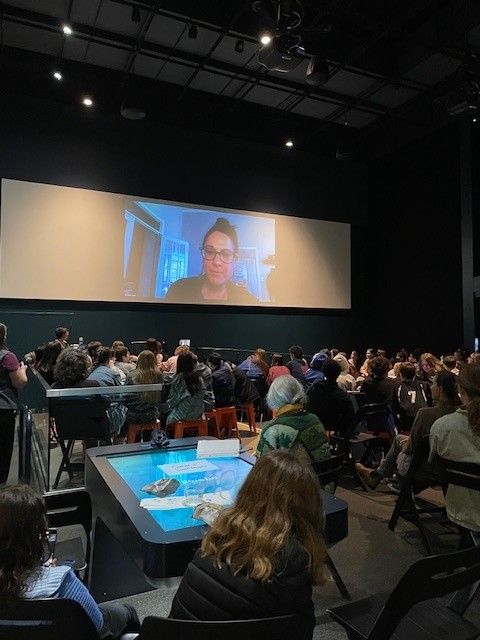
NASA leadership participated in the White House Office of Science and Technology Policy’s Microgravity Science Summit (OSTP) on Dec.16 focused on sharing information with leaders across the U.S. federal government about the benefits of microgravity research. During the summit, NASA Deputy Administrator Pam Melroy, OSTP leadership, and others highlighted the importance of the government coming together to understand the transformative power of microgravity and lay the foundation for the next generation of research and innovation.

“The value of microgravity research has never been clearer. This unique environment offers us the chance to explore fundamental questions and test cutting-edge ideas in ways that simply are not possible under the constraints of Earth’s gravity,” said Melroy. “NASA has long been at the forefront of microgravity research, working in collaboration with a growing network of government partners, international space agencies, commercial partners, and academic institutions. Together, we have established a strong foundation for microgravity science aboard the International Space Station, but our work is far from finished. In fact, it’s only just beginning.”

The theme of the summit, “Building a Coalition for the Next Generation of Microgravity Research,” covered work currently being completed on the International Space Station to bring benefit back to Earth, open space to more people, and allow humans to travel farther into space for exploration. Leaders also heard about NASA’s plan to continue the work into the future on commercial space stations and build on the government’s efforts to maintain a national research capability in orbit.

In 2023, the Biden-Harris Administration released a National Low Earth Orbit Research and Development Strategy to provide an interagency strategy and action plan to enable U.S. government-wide collaboration and support of public-private partnerships to ensure continuity of access and sustainable low Earth orbit research and development activities. The strategy supports the United States Space Priorities Framework with a focus on scientific and technological innovation, economic growth, commercial development, and space-related STEM education and workforce development. The summit also included discussion on the great strides and potential for the future in cancer research, semiconductors, wildland fire management, and in space production applications.

“The key to success will be collaboration,” said Melroy. “What we are doing is building a vision for the future—one where microgravity is not a niche area of study, but an essential part of the scientific toolkit for tackling our biggest challenges, helping to improve our national capabilities and posture. A future where space isn’t just a far-off and mysterious destination—it’s an environment for collaboration, discovery, and progress.”

On Dec. 16, NASA also released its Low Earth Orbit Microgravity strategy outlining the agency’s long-term approach to advance microgravity science, technology, and exploration.

Powered by WPeMatico

Get The Details…
Roger Weiss

Cutting-Edge Satellite Tracks Lake Water Levels in Ohio River Basin

Cutting-Edge Satellite Tracks Lake Water Levels in Ohio River Basin

5 min read

Preparations for Next Moonwalk Simulations Underway (and Underwater)

Data from the SWOT satellite
Data from the SWOT satellite was used to calculate average water levels for lakes and reservoirs in the Ohio River Basin from July 2023 to November 2024. Yellow indicates values greater than 1,600 feet (500 meters) above sea level; dark purple represents water levels less than 330 feet (100 meters).

Data from the U.S.-European Surface Water and Ocean Topography mission gives researchers a detailed look at lakes and reservoirs in a U.S. watershed.

The Ohio River Basin stretches from Pennsylvania to Illinois and contains a system of reservoirs, lakes, and rivers that drains an area almost as large as France. Researchers with the SWOT (Surface Water and Ocean Topography) mission, a collaboration between NASA and the French space agency CNES (Centre National d’Études Spatiales), now have a new tool for measuring water levels not only in this area, which is home to more than 25 million people, but in other watersheds around the world as well.

Since early 2023, SWOT has been measuring the height of nearly all water on Earth’s surface — including oceans, lakes, reservoirs, and rivers — covering nearly the entire globe at least once every 21 days. The SWOT satellite also measures the horizontal extent of water in freshwater bodies. Earlier this year, the mission started making validated data publicly available.

“Having these two perspectives — water extent and levels — at the same time, along with detailed, frequent coverage over large areas, is unprecedented,” said Jida Wang, a hydrologist at the University of Illinois Urbana-Champaign and a member of the SWOT science team. “This is a groundbreaking, exciting aspect of SWOT.”

Researchers can use the mission’s data on water level and extent to calculate how the amount of water stored in a lake or reservoir changes over time. This, in turn, can give hydrologists a more precise picture of river discharge — how much water moves through a particular stretch of river.

The visualization above uses SWOT data from July 2023 to November 2024 to show the average water level above sea level in lakes and reservoirs in the Ohio River Basin, which drains into the Mississippi River. Yellow indicates values greater than 1,600 feet (500 meters), and dark purple represents water levels less than 330 feet (100 meters). Comparing how such levels change can help hydrologists measure water availability over time in a local area or across a watershed.

Complementing a Patchwork of Data

Historically, estimating freshwater availability for communities within a river basin has been challenging. Researchers gather information from gauges installed at certain lakes and reservoirs, from airborne surveys, and from other satellites that look at either water level or extent. But for ground-based and airborne instruments, the coverage can be limited in space and time. Hydrologists can piece together some of what they need from different satellites, but the data may or may not have been taken at the same time, or the researchers might still need to augment the information with measurements from ground-based sensors.

Even then, calculating freshwater availability can be complicated. Much of the work relies on computer models. “Traditional water models often don’t work very well in highly regulated basins like the Ohio because they have trouble representing the unpredictable behavior of dam operations,” said George Allen, a freshwater researcher at Virginia Tech in Blacksburg and a member of the SWOT science team.

Many river basins in the United States include dams and reservoirs managed by a patchwork of entities. While the people who manage a reservoir may know how their section of water behaves, planning for water availability down the entire length of a river can be a challenge. Since SWOT looks at both rivers and lakes, its data can help provide a more unified view.

“The data lets water managers really know what other people in these freshwater systems are doing,” said SWOT science team member Colin Gleason, a hydrologist at the University of Massachusetts Amherst.

While SWOT researchers are excited about the possibilities that the data is opening up, there is still much to be done. The satellite’s high-resolution view of water levels and extent means there is a vast ocean of data that researchers must wade through, and it will take some time to process and analyze the measurements.

More About SWOT

 The SWOT satellite was jointly developed by NASA and CNES, with contributions from the Canadian Space Agency (CSA) and the UK Space Agency. NASA’s Jet Propulsion Laboratory, managed for the agency by Caltech in Pasadena, California, leads the U.S. component of the project. For the flight system payload, NASA provided the Ka-band radar interferometer (KaRIn) instrument, a GPS science receiver, a laser retroreflector, a two-beam microwave radiometer, and NASA instrument operations.  The Doppler Orbitography and Radioposition Integrated by Satellite system, the dual frequency Poseidon altimeter (developed by Thales Alenia Space), the KaRIn radio-frequency subsystem (together with Thales Alenia Space and with support from the UK Space Agency), the satellite platform, and ground operations were provided by CNES. The KaRIn high-power transmitter assembly was provided by CSA.

To learn more about SWOT, visit:

https://swot.jpl.nasa.gov

News Media Contacts

Jane J. Lee / Andrew Wang
Jet Propulsion Laboratory, Pasadena, Calif.
818-354-0307 / 626-379-6874
jane.j.lee@jpl.nasa.gov / andrew.wang@jpl.nasa.gov

2024-176

Powered by WPeMatico

Get The Details…
Anthony Greicius