GLOBE Mission Earth Supports Career Technical Education

GLOBE Mission Earth Supports Career Technical Education

4 min read

GLOBE Mission Earth Supports Career Technical Education

The NASA Science Activation program’s GLOBE Mission EARTH (GME) project is forging powerful connections between career technical education (CTE) programs and real-world science, inspiring students across the United States to pursue careers in Science, Technology, Engineering, and Mathematics (STEM).

GME is a collaborative effort between NASA scientists, educators, and schools that brings NASA Earth science and the GLOBE Program into classrooms to support hands-on, inquiry-based learning. GLOBE (Global Learning and Observations to Benefit the Environment) is an international science and education program that provides students and the public with the opportunity to participate in data collection and the scientific process, contributing meaningfully to our understanding of the Earth system.

By connecting students directly to environmental research and NASA data, GME helps make science more relevant, engaging, and applicable to students’ futures. In CTE programs—where project-based and work-based learning are key instructional strategies—GME’s integration of GLOBE protocols offers students the chance to develop not only technical skills, but also essential data literacy and professional competencies like collaboration, critical thinking, and communication. These cross-cutting skills are valuable across a wide range of industries, from agriculture and advanced manufacturing to natural resources and public safety.

The real-world, hands-on approach of CTE makes it an ideal setting for implementing GLOBE to support STEM learning across industries. At Skyline High School in Oakland, California, for example, GLOBE has been embedded in multiple courses within the school’s Green Energy Pathway, originally launched by GLOBE partner Tracy Ostrom. Over the past decade, nearly 1,000 students have participated in GLOBE activities at Skyline. Many of these students describe their experiences with environmental data collection and interactions with NASA scientists as inspiring and transformative. Similarly, at Toledo Technology Academy, GME is connecting students with NASA science and renewable energy projects—allowing them to study how solar panels impact their local environment and how weather conditions affect wind energy generation.

To expand awareness of how GLOBE can enhance CTE learning and career preparation, WestEd staff Svetlana Darche and Nico Janik presented at the Educating for Careers Conference on March 3, 2025, in Sacramento, California. This event, sponsored by the California chapter of the Association for Career and Technical Education (ACTE), brought together over 2,600 educators dedicated to equipping students with the tools they need to succeed in an evolving job market. Darche and Janik’s session, titled “Developing STEM Skills While Contributing to Science,” showcased GLOBE’s role in work-based learning and introduced new federal definitions from the Carl D. Perkins Act (Perkins V) that emphasize:

  • Interactions with industry professionals
  • A direct link to curriculum and instruction
  • First-hand engagement with real-world tasks in a given career field

GLOBE’s approach to scientific data collection aligns perfectly with these criteria. Janik led 40 educators through a hands-on experience using the GLOBE Surface Temperature Protocol, demonstrating how students investigate the Urban Heat Island Effect while learning critical technical and analytical skills. By collecting and analyzing real-world data, students gain firsthand experience with the tools and methods used by scientists, bridging the gap between classroom learning and future career opportunities.

Through GME’s work with CTE programs, students are not only learning science—they are doing science. These authentic experiences inspire, empower, and prepare students for careers where data literacy, scientific inquiry, and problem-solving are essential. With ongoing collaborations between GLOBE, NASA, and educators nationwide, the next generation of STEM professionals is already taking shape—one real-world investigation at a time.

GME is supported by NASA under cooperative agreement award number NNX16AC54A and is part of NASA’s Science Activation Portfolio. Learn more about how Science Activation connects NASA science experts, real content, and experiences with community leaders to do science in ways that activate minds and promote deeper understanding of our world and beyond: https://science.nasa.gov/learn

Teacher using PowerPoint to talk about the Green Energy Pathway CTE program developed by Tracy Ostrom.
GreenEnergyPathway presenting the Green Energy Pathway CTE program.

Share

Details

Last Updated
Apr 11, 2025
Editor
NASA Science Editorial Team

Powered by WPeMatico

Get The Details…

Apollo 13 Launch: 55 Years Ago

Apollo 13 Launch: 55 Years Ago

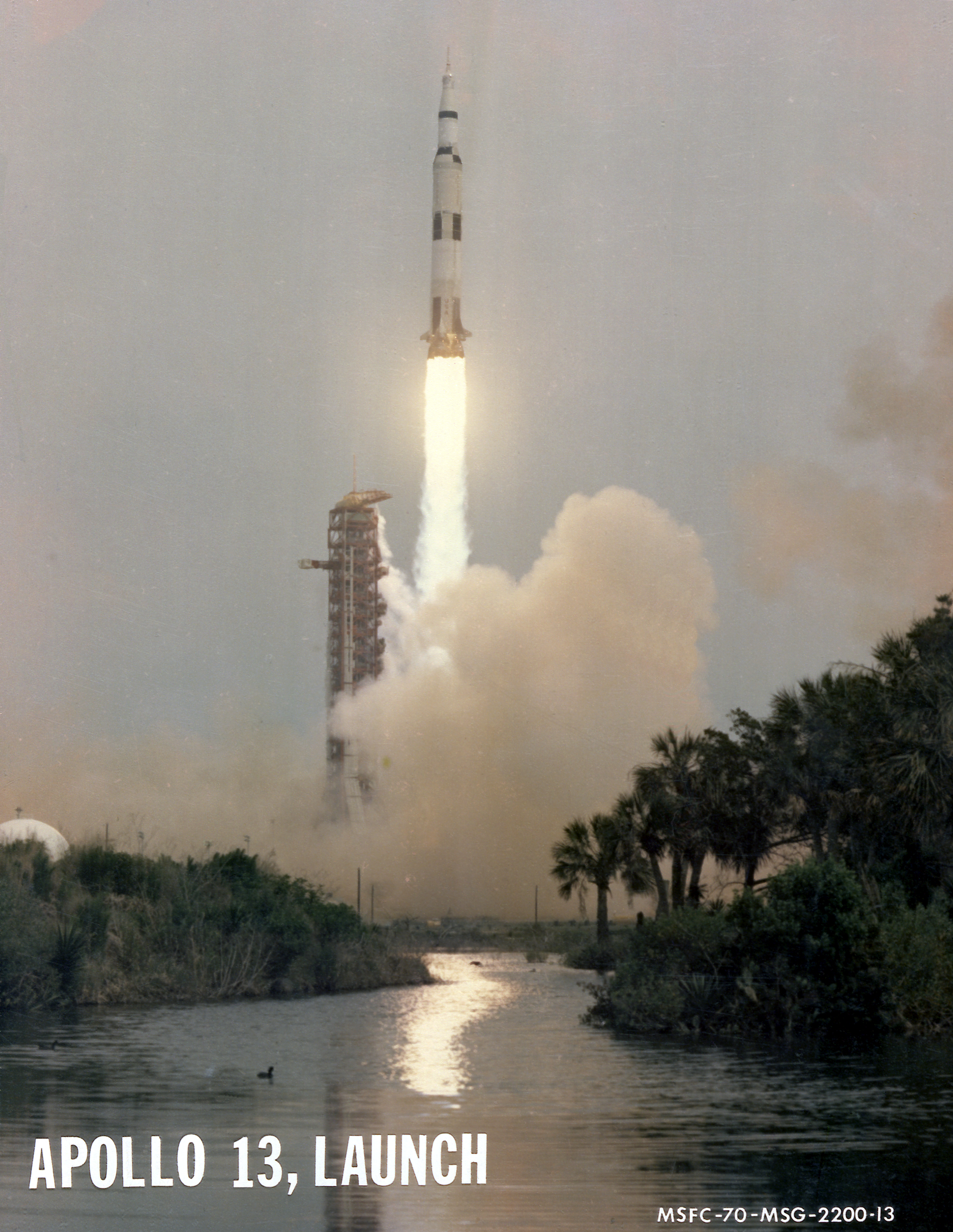
Apollo 13 launches upward, leaving a column of flames and light brown vapor behind it. Trees and vegetation frame the water at the bottom of the photo. Outlines of small animals can be see in the water. At bottom left is written "Apollo 13, launch" in capital letters. At bottom right is a series of letters and numbers labeling the photo.
NASA

NASA astronauts Jim Lovell, Fred Haise, and Jack Swigert launch aboard the Apollo 13 spacecraft from NASA’s Kennedy Space Center in Florida on April 11, 1970. The mission seemed to be going smoothly until 55 hours and 55 minutes in when an oxygen tank ruptured. The new mission plan involved abandoning the Moon landing, looping around the Moon and getting the crew home safely as quickly as possible. The crew needed to go into “lifeboat mode,” using the lunar module Aquarius to save the spacecraft and crew. On April 17, the crew returned to Earth, splashing down in the Pacific Ocean near Samoa.

Image credit: NASA

Powered by WPeMatico
Get The Details…
Monika Luabeya

NASA’s IMAP Arrives at NASA Marshall For Testing in XRCF  

NASA’s IMAP Arrives at NASA Marshall For Testing in XRCF  

3 Min Read

NASA’s IMAP Arrives at NASA Marshall For Testing in XRCF  

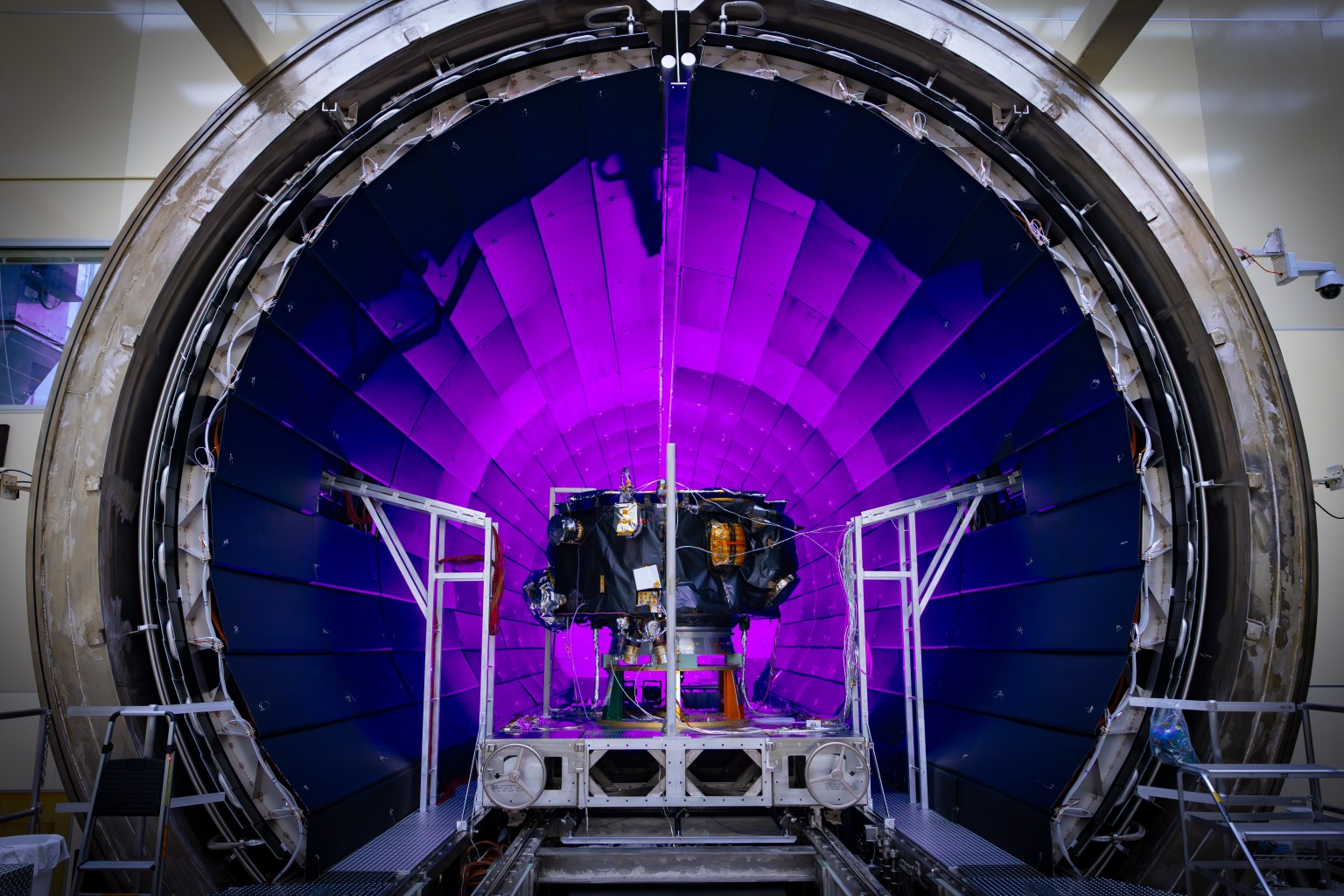
The IMAP mission inside the circular thermal vacuum chamber with a purple background.

On March 18, NASA’s IMAP (Interstellar Mapping and Acceleration Probe) arrived at NASA’s Marshall Space Flight Center in Huntsville, Alabama, for thermal vacuum testing at the X-ray and Cryogenic Facility, which simulates the harsh conditions of space.

The IMAP mission is a modern-day celestial cartographer that will map the solar system by studying the heliosphere, a giant bubble created by the Sun’s solar wind that surrounds our solar system and protects it from harmful interstellar radiation. 

NASA’s IMAP mission being loaded into the thermal vacuum chamber of NASA Marshall Space Flight Center’s X-Ray and Cryogenic Facility (XRCF) in Huntsville, Alabama. IMAP arrived at Marshall March 18 and was loaded into the chamber March 19.
Credit: NASA/Johns Hopkins APL/Princeton/Ed Whitman

Testing performed in the X-ray and Cryogenic Facility will help to assess the spacecraft before its journey toward the Sun. The IMAP mission will orbit the Sun at a location called Lagrange Point 1 (L1), which is about one million miles from Earth towards the Sun. From this location, IMAP can measure the local solar wind and scan the distant heliosphere without background from planets and their magnetic fields. The mission will use its suite of ten instruments to map the boundary of the heliosphere, analyze the composition of interstellar particles that make it through, and investigate how particles change as they move through the solar system. 

Furthermore, IMAP will maintain a continuous broadcast of near real-time space weather data from five instruments aboard IMAP that will be used to test new space weather prediction models and improve our understanding of effects impacting our human exploration of space. 

Team members from Marshall Space Flight Center in Huntsville, Alabama, install IMAP into the XRCF’s chamber dome before the start of the thermal vacuum test. 
NASA/Johns Hopkins APL/Princeton/Ed Whitman

While inside the Marshall facility, the spacecraft will undergo dramatic temperature changes to simulate the environment during launch, on the journey toward the Sun, and at its final orbiting point. The testing facility has multiple capabilities including a large thermal vacuum chamber which simulates the harsh conditions of space such as extreme temperatures and the near-total absence of an atmosphere. Simulating these conditions before launch allow scientists and engineers to identify successes and potential failures in the design of the spacecraft. 

Team members from Marshall Space Flight Center in Huntsville, Alabama work to close the chamber door of the XRCF for IMAP testing. The chamber is 20 feet in diameter and 60 feet long making it one of the largest across NASA.
NASA/Johns Hopkins APL/Princeton/Ed Whitman

“The X-ray and Cryogenic Facility was an ideal testing location for IMAP given the chamber’s size, availability, and ability to meet or exceed the required test parameters including strict contamination control, shroud temperature, and vacuum level,” said Jeff Kegley, chief of Marshall’s Science Test Branch. 

The facility’s main chamber is 20 feet in diameter and 60 feet long, making it the 5th largest thermal vacuum chamber at NASA. It’s the only chamber that is adjoined to an ISO 6 cleanroom — a controlled environment that limits the number and size of airborne particles to minimize contamination. 

The IMAP mission will launch on a SpaceX Falcon 9 rocket from NASA’s Kennedy Space Center in Florida, no earlier than September. 

The IMAP mission inside the circular thermal vacuum chamber with a purple background.
NASA’s IMAP mission was loaded into NASA Marshall’s XRCF thermal vacuum chamber where the spacecraft will undergo testing such as dramatic temperature changes to simulate the harsh environment of space.
NASA/Johns Hopkins APL/Princeton/Ed Whitman

Media Contact:

Lane Figueroa
Marshall Space Flight Center
Huntsville, Alabama
256.544.0034
lane.e.figueroa@nasa.gov

Powered by WPeMatico
Get The Details…
Beth Ridgeway

Hubble Captures a Star’s Swan Song

Hubble Captures a Star’s Swan Song

2 min read

Hubble Captures a Star’s Swan Song

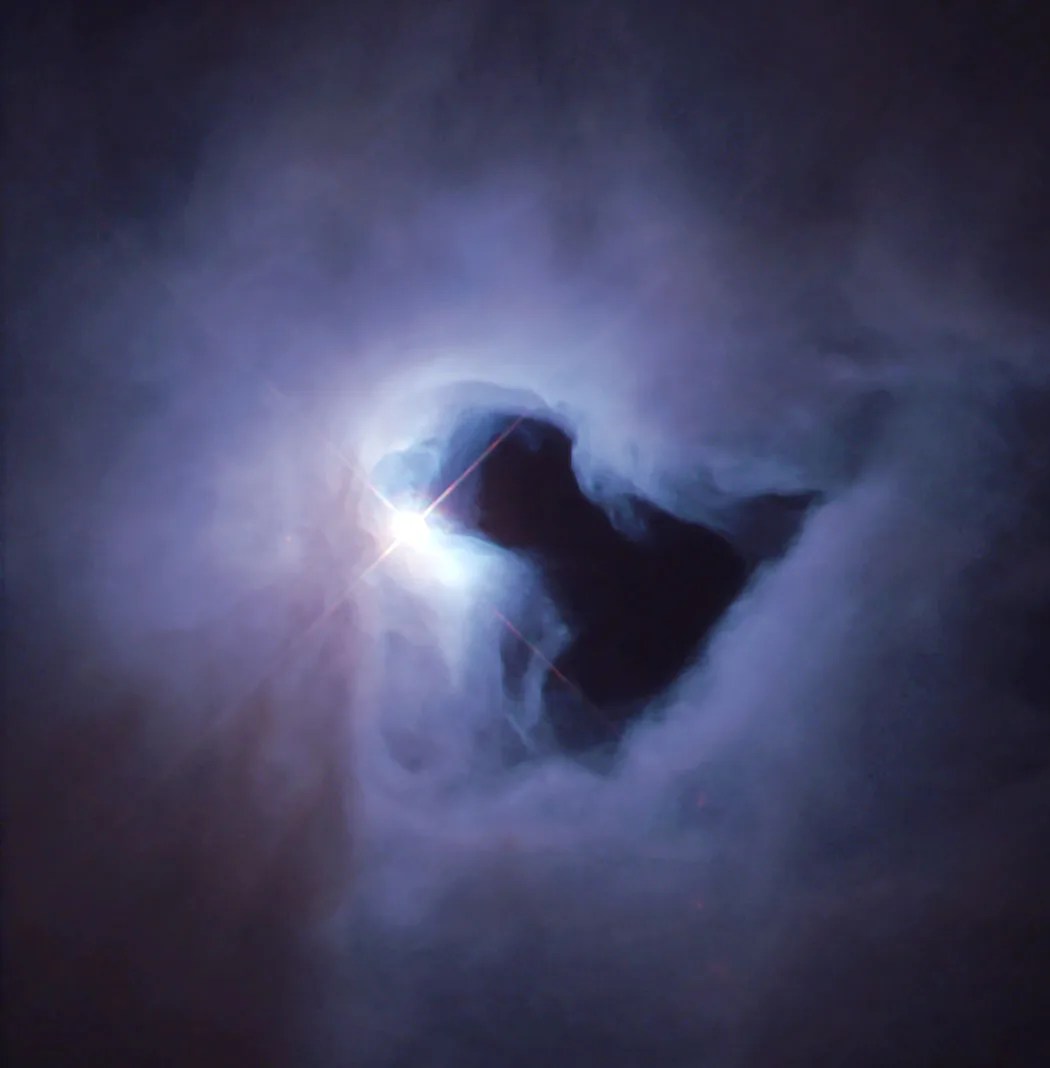
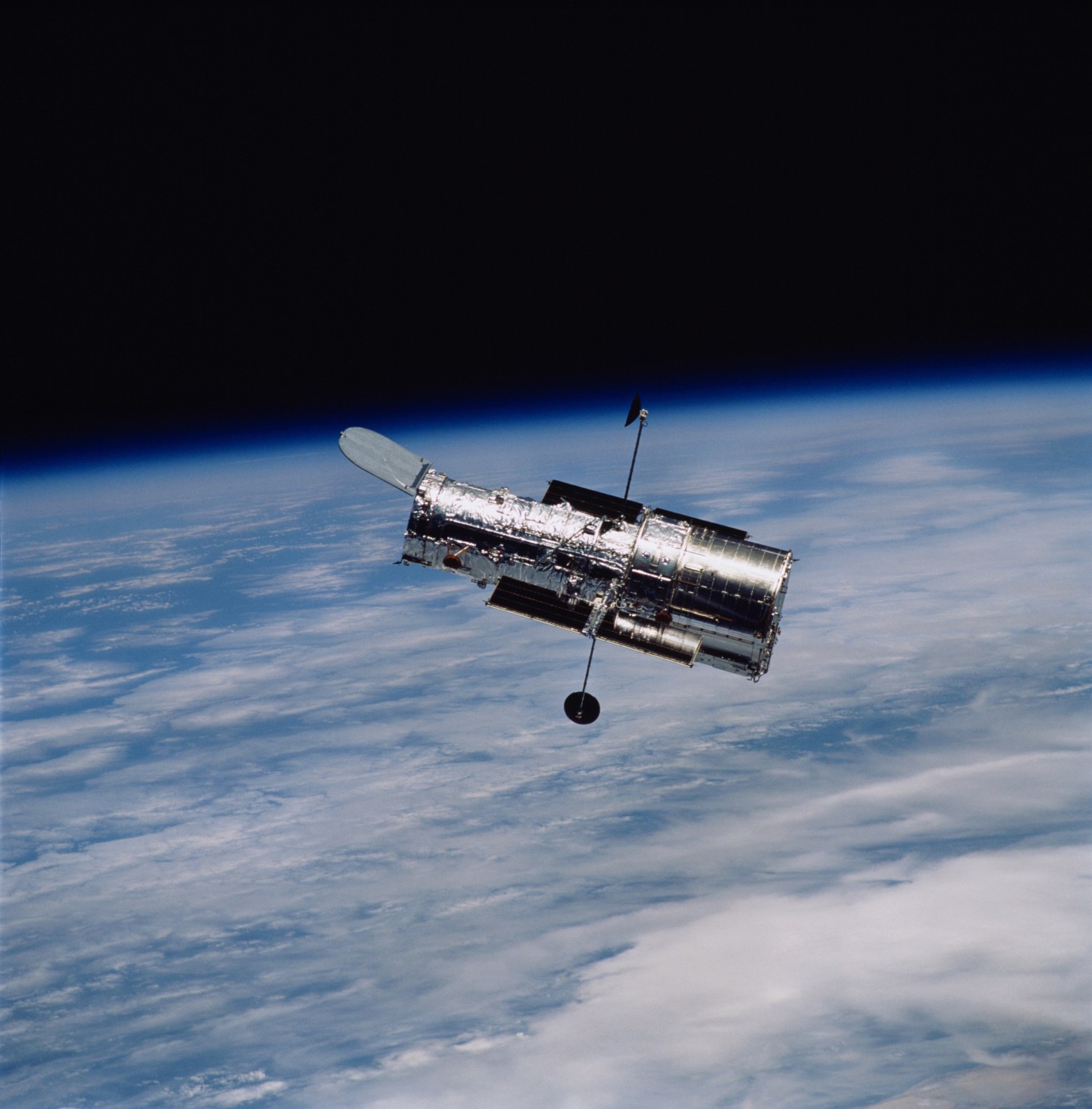
The image holds a planetary nebula, a glowing shell of material thrown off by a dying star. A glowing, jagged ring encircles a small central region of greenish clouds, making it appear like a hole torn in fabric. This “hole” is itself encircled by a band of silvery-blue clouds and a larger, fainter, yellow ring of gas. Puffy, smoky clouds of orange and red gas billow out from there into a large oval nebula, fading into the dark background of space dotted by stars.
This NASA/ESA Hubble Space Telescope image features the planetary nebula Kohoutek 4-55.
ESA/Hubble & NASA, K. Noll

The swirling, paint-like clouds in the darkness of space in this stunning image seem surreal, like a portal to another world opening before us. In fact, the subject of this NASA/ESA Hubble Space Telescope image is very real. We are seeing vast clouds of ionized atoms thrown into space by a dying star. This is a planetary nebula named Kohoutek 4-55, a member of the Milky Way galaxy situated just 4,600 light-years away in the constellation Cygnus (the Swan).

Planetary nebulae are the spectacular final display at the end of a giant star’s life. Once a red giant star has exhausted its available fuel and shed its last layers of gas, its compact core will contract further, enabling a final burst of nuclear fusion. The exposed core reaches extremely hot temperatures, radiating ultraviolet light that energizes the enormous clouds of gas cast off by the star. The ultraviolet light ionizes atoms in the gas, making the clouds glow brightly. In this image, red and orange indicate nitrogen, green is hydrogen, and blue shows oxygen. Kohoutek 4-55 has an uncommon, multi-layered form: a faint layer of gas surrounds a bright inner ring, all wrapped in a broad halo of ionized nitrogen. The spectacle is bittersweet, as the brief phase of fusion in the core will end after only tens of thousands of years, leaving a white dwarf that will never illuminate the clouds around it again.

This image itself was also the final work of one of Hubble’s instruments: the Wide Field and Planetary Camera 2 (WFPC2). Installed in 1993 to replace the original Wide Field and Planetary Camera, WFPC2 was responsible for some of Hubble’s most enduring images and fascinating discoveries. Hubble’s Wide Field Camera 3 replaced WFPC2 in 2009, during Hubble’s final servicing mission. A mere ten days before astronauts removed Hubble’s WFPC2 from the telescope, the instrument collected the data used in this image: a fitting send-off after 16 years of discoveries. Image processors used the latest and most advanced processing techniques to bring the data to life one more time, producing this breathtaking new view of Kohoutek 4-55.

Powered by WPeMatico
Get The Details…

How NASA Science Data Defends Earth from Asteroids

How NASA Science Data Defends Earth from Asteroids

5 min read

How NASA Science Data Defends Earth from Asteroids

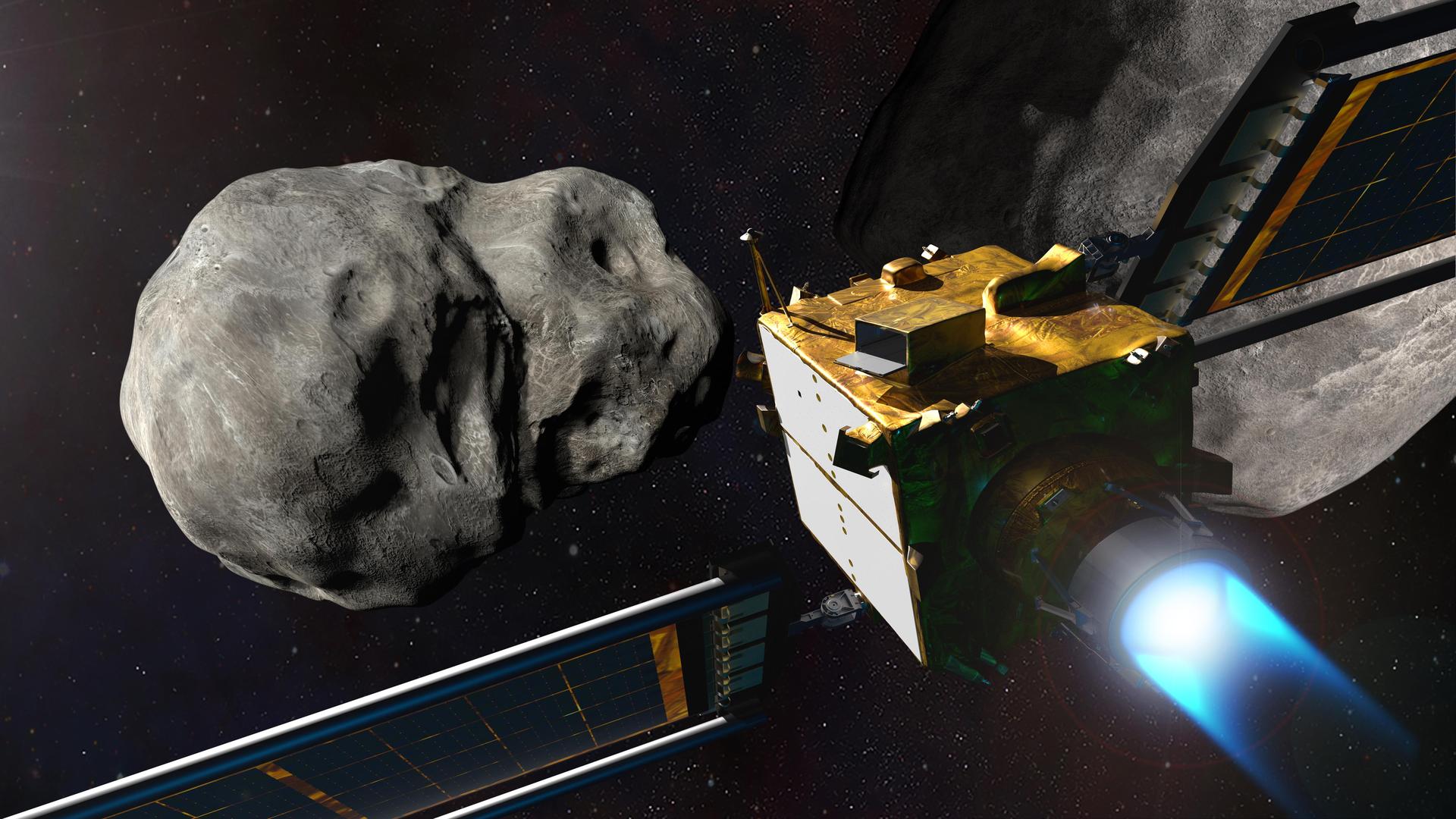
This illustration depicts NASA's Double Asteroid Redirection Test (DART) spacecraft prior to impact at the Didymos binary asteroid system.
Artist’s impression of NASA’s DART mission, which collided with the asteroid Dimorphos in 2022 to test planetary defense techniques. Open science data practices help researchers identify asteroids that pose a hazard to Earth, opening the possibility for deflection should an impact threat be identified.
NASA/Johns Hopkins APL/Steve Gribben

The asteroid 2024 YR4 made headlines in February with the news that it had a chance of hitting Earth on Dec. 22, 2032, as determined by an analysis from NASA’s Center for Near Earth Object Studies (CNEOS) at the agency’s Jet Propulsion Laboratory in Southern California. The probability of collision peaked at over 3% on Feb. 18 — the highest ever recorded for an object of its size. This sparked concerns about the damage the asteroid might do should it hit Earth.

New data collected in the following days lowered the probability to well under 1%, and 2024 YR4 is no longer considered a potential Earth impactor. However, the event underscored the importance of surveying asteroid populations to reveal possible threats to Earth. Sharing scientific data widely allows scientists to determine the risk posed by the near-Earth asteroid population and increases the chances of identifying future asteroid impact hazards in NASA science data.

“The planetary defense community realizes the value of making data products available to everyone,” said James “Gerbs” Bauer, the principal investigator for NASA’s Planetary Data System Small Bodies Node at the University of Maryland in College Park, Maryland.

How Scientists Spot Asteroids That Could Hit Earth

Professional scientists and citizen scientists worldwide play a role in tracking asteroids. The Minor Planet Center, which is housed at the Smithsonian Astrophysical Observatory in Cambridge, Massachusetts, collects and verifies vast numbers of asteroid and comet position observations submitted from around the globe. NASA’s Small Bodies Node distributes the data from the Minor Planet Center for anyone who wants to access and use it.

A near-Earth object (NEO) is an asteroid or comet whose orbit brings it within 120 million miles of the Sun, which means it can circulate through Earth’s orbital neighborhood. If a newly discovered object looks like it might be an NEO, information about the object appears on the Minor Planet Center’s NEO Confirmation Page. Members of the planetary science community, whether or not they are professional scientists, are encouraged to follow up on these objects to discover where they’re heading.

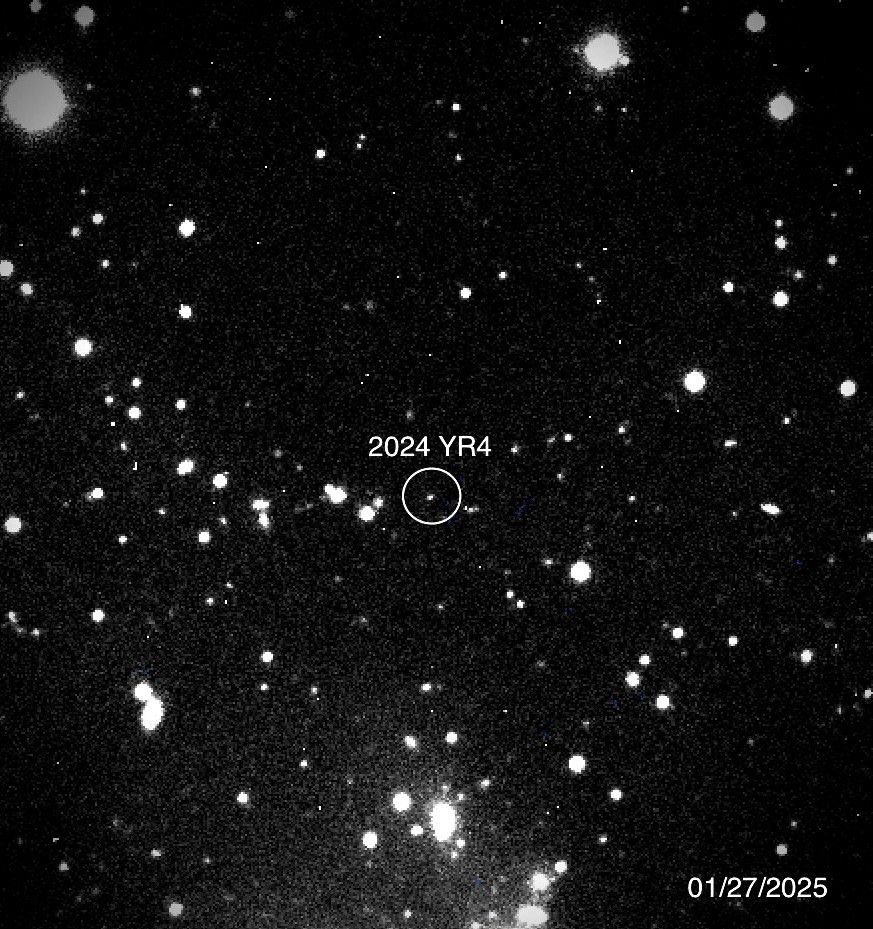
Image of asteroid 2024 YR4
The asteroid 2024 YR4 as viewed on January 27, 2025. The image was taken by the Magdalena Ridge 2.4m telescope, one of the largest telescopes in NASA’s Planetary Defense network. Asteroid position information from observations such as this one are shared through the Minor Planet Center and NASA’s Small Bodies Node to help scientists pinpoint the chances of asteroids colliding with Earth.
NASA/Magdalena Ridge 2.4m telescope/New Mexico Institute of Technology/Ryan

When an asteroid’s trajectory looks concerning, CNEOS alerts NASA’s Planetary Defense Coordination Office at NASA Headquarters in Washington, which manages NASA’s ongoing effort to protect Earth from dangerous asteroids. NASA’s Planetary Defense Coordination Office also coordinates the International Asteroid Warning Network (IAWN), which is the worldwide collaboration of asteroid observers and modelers.

Orbit analysis centers such as CNEOS perform finer calculations to nail down the probability of an asteroid colliding with Earth. The open nature of the data allows the community to collaborate and compare, ensuring the most accurate determinations possible.

How NASA Discovered Risks of Asteroid 2024 YR4

The asteroid 2024 YR4 was initially discovered by the NASA-funded ATLAS (Asteroid Terrestrial-impact Last Alert System) survey, which aims to discover potentially hazardous asteroids. Scientists studied additional data about the asteroid from different observatories funded by NASA and from other telescopes across the IAWN.

At first, 2024 YR4 had a broad uncertainty in its future trajectory that passed over Earth. As the planetary defense community collected more observations, the range of possibilities for the asteroid’s future position on Dec. 22, 2032 clustered over Earth, raising the apparent chances of collision. However, with the addition of even more data points, the cluster of possibilities eventually moved off Earth.

This visualization from the NASA JPL Center for Near-Earth Object Studies shows the evolution of the risk corridor for asteroid 2024 YR4, using data from observations made up to Feb. 23, 2025. Each yellow dot represents the asteroid’s possible location on Dec. 22, 2032. As the range of possible locations narrowed, the dots at first converged on Earth, before skewing away harmlessly.
This visualization from NASA’s Center for Near Earth Object Studies shows the evolution of the risk corridor for asteroid 2024 YR4, using data from observations made up to Feb. 23, 2025. Each yellow dot represents the asteroid’s possible location on Dec. 22, 2032. As the range of possible locations narrowed, the dots at first converged on Earth, before skewing away harmlessly.
NASA/JPL/CNEOS

Having multiple streams of data available for analysis helps scientists quickly learn more about NEOs. This sometimes involves using data from observatories that are mainly used for astrophysics or heliophysics surveys, rather than for tracking asteroids.

“The planetary defense community both benefits from and is beneficial to the larger planetary and astronomy related ecosystem,” said Bauer, who is also a research professor in the Department of Astronomy at the University of Maryland. “Much of the NEO survey data can also be used for searching astrophysical transients like supernova events. Likewise, astrophysical sky surveys produce data of interest to the planetary defense community.”

How Does NASA Stop Asteroids From Hitting Earth?

In 2022, NASA’s DART (Double Asteroid Redirection Test) mission successfully impacted with the asteroid Dimorphos, shortening the time it takes to orbit around its companion asteroid Didymos by 33 minutes. Didymos had no chance of hitting Earth, but the DART mission’s success means that NASA has a tested technique to consider when addressing a future asteroid potential impact threat.

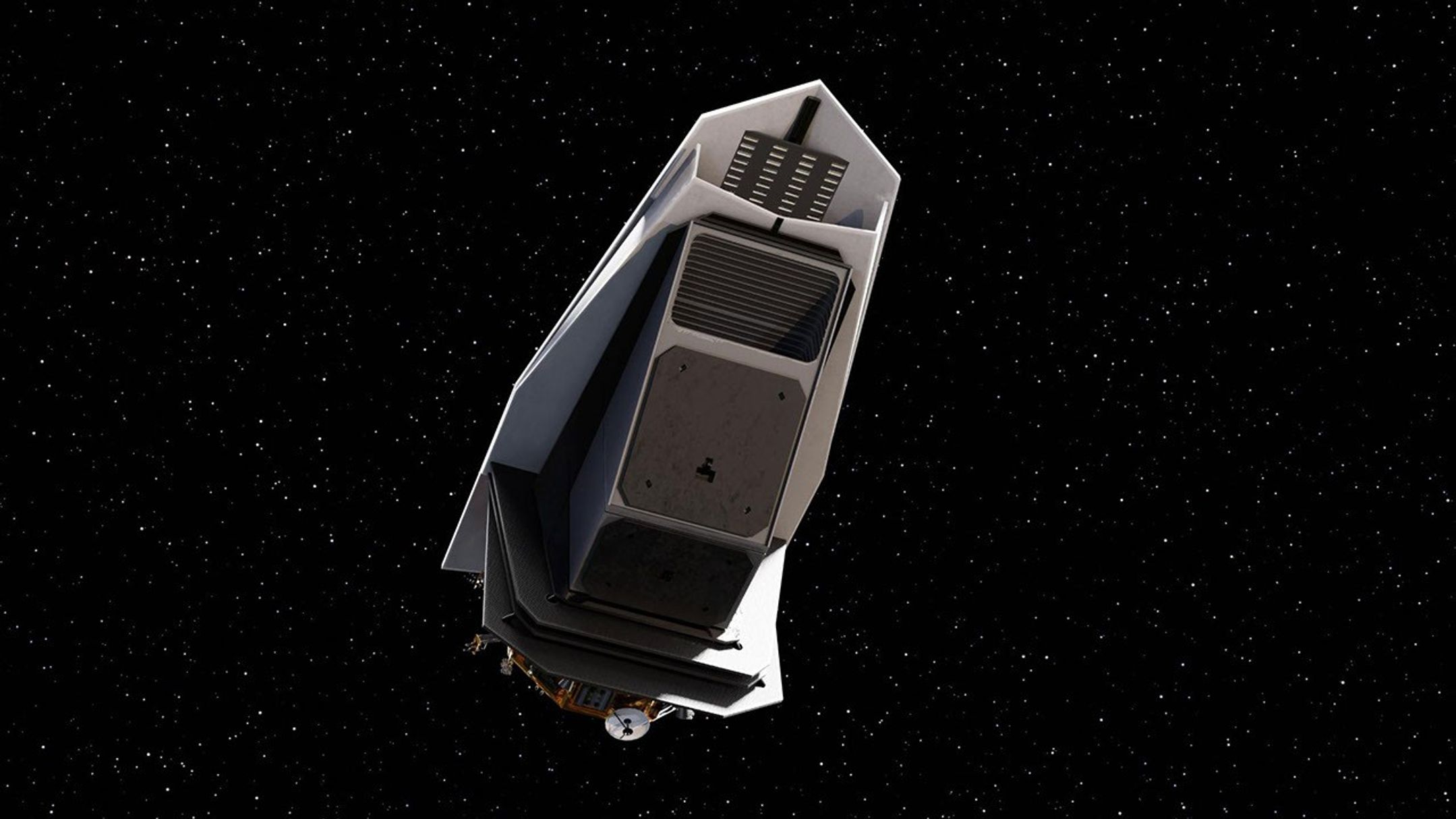
Artist’s impression of NASA’s upcoming NEO Surveyor mission, which will search for potentially hazardous near-Earth objects. The mission will follow open data practices to improve the chances of identifying dangerous asteroids.
NASA/JPL-Caltech

To increase the chances of discovering asteroid threats to Earth well in advance, NASA is working on a new space-based observatory, NEO Surveyor, which will be the first spacecraft specifically designed to look for asteroids and comets that pose a hazard to Earth. The mission is expected to launch in the fall of 2027, and the data it collects will be available to everyone through NASA archives.

“Many of the NEOs that pose a risk to Earth remain to be found,” Bauer said. “An asteroid impact has a very low likelihood at any given time, but consequences could be high, and open science is an       important component to being vigilant.”

For more information about NASA’s approach to sharing science data, visit:

https://science.nasa.gov/open-science.

By Lauren Leese 
Web Content Strategist for the Office of the Chief Science Data Officer 

Share

Details

Last Updated
Apr 10, 2025
Keep Exploring

Discover More Topics From NASA

Powered by WPeMatico
Get The Details…