Helicopter Removes Artifact from NASA Armstrong Rooftop

Helicopter Removes Artifact from NASA Armstrong Rooftop

3 min read

Preparations for Next Moonwalk Simulations Underway (and Underwater)

NASA/Lori Losey

What do the X-15 and the space shuttles have in common? Information from the rocket plane and the spacecraft, as well as many experimental aircraft, were tracked from a pedestal and telemetry dish during key eras in flight history at or near NASA’s Armstrong Flight Research Center in Edwards, California.

When the NASA facility’s administration Building 4800 was built in the 1950s, the infrastructure was included to anchor the rooftop pedestal and dish as the primary way to gather data from aircraft during flights. It was retired in 2015, but a recent roofing project enabled relocation of the artifact to a new place of honor for its support of many experimental aircraft such as the lifting body aircraft, the reverse swept wing X-29, and the highly maneuverable X-31.

“Gathering telemetry data from aircraft on missions is at the core of what we do. Close proximity to the back ramp was one of the big advantages of having the telemetry antenna on the roof in the early days,” said Bob Guere, NASA Armstrong Range Operations chief, referring to the area where aircraft taxi from the hangar to the flightline. “You were able to support ground tests and check airplanes before they taxied without having to use telemetry antennas positioned further away.”

A man secures a cable to a rooftop pedestal.
A cable is secured on a rooftop pedestal located on Building 4800 at NASA’s Armstrong Flight Research Center in Edwards, California, on Oct. 4, 2024. The pedestal, which was prepared for a helicopter lift to remove it from the roof, was used since the 1950s until 2015 to enable different telemetry dishes to collect data from research aircraft.
NASA/Carla Thomas

The rooftop pedestal was key in the early days of the center and its refurbishment in 2003 restored its value. The transformation also included certification to meet Space Shuttle Program landing requirements.

“When a space shuttle deorbited from space it was coming over the top of Edwards,” Guere said. “Telemetry antennas on the hill near NASA Armstrong looked down and with dirt and concrete in the background there were reflections. The rooftop antenna was closer to ground level and looked up as the orbiter was coming in for a landing. It provided an excellent link for shuttle landings.”

The pedestal and dish were not removed when it was decommissioned because of the cost. Now, it’s economical to use a helicopter to remove the pedestal from the roof compared to other options as part of a major project focusing primarily on re-roofing Building 4800. The helicopter lift of the pedestal took a month to plan, plus time to obtain airspace operation and landing permits from the Air Force for the removal project, said Bryan Watters, NASA Armstrong roof project manager.

A helicopter is positioned to carry a rooftop pedestal.
A helicopter is positioned to remove a rooftop pedestal from Building 4800 at NASA’s Armstrong Flight Research Center in Edwards, California, on Oct. 4, 2024. The pedestal was used since the 1950s to 2015 to house different telemetry dishes to collect data from research aircraft.
NASA/Carla Thomas

The pedestal and riser measured 16 feet tall above the rooftop and housed an assembly for the 12-foot dish to rotate. The pedestal and dish together weight about 2,500 pounds and were removed separately. Crews checked the eight bolts anchoring the pedestal and dish to infrastructure on the roof prior to the arrival of a helicopter Oct. 3 before the helicopter arrived.

The following day, after additional briefings, the helicopter was positioned over Building 4800 and a cable was lowered and attached to the pedestal. Once secured, the helicopter slowly gained altitude and took its passenger to the south side of the building. There it was released from the cable and taken to a nearby warehouse for storage. Roofers demolished the steel platform on which the pedestal was located to prepare the area for new roofing materials.

Officials have not determined where the pedestal will be displayed. There are several options to place the pedestal and dish by the famous retired research aircraft on display near the entrance of NASA Armstrong.

A man helps guide a pedestal hanging from a helicopter to a safe position on the ground.
A pedestal carried by a helicopter is positioned for a gentle placement on the ground. The helicopter removed the pedestal from the rooftop of Building 4800 at NASA’s Armstrong Flight Research Center in Edwards, California, on Oct. 4, 2024. The pedestal was used since the 1950s to 2015 to house different telemetry dishes to collect data from research aircraft.
NASA/Carla Thomas
A pedestal and dish are positioned on a rooftop.
A rooftop pedestal and telemetry dish gathered information from research aircraft at Building 4800 at NASA’s Armstrong Flight Research Center in Edwards, California. The pedestal was used since the 1950s to 2015 to house different dishes to collect data from research aircraft. On Oct. 4, 2024, a helicopter was used to remove the pedestal from the roof.
NASA/Jim Ross

Share

Details

Last Updated

Jan 08, 2025

Editor
Dede Dinius
Contact

Powered by WPeMatico

Get The Details…
Dede Dinius

Achieving Instrument High Accuracy In-Orbit

Achieving Instrument High Accuracy In-Orbit

The ARCSTONE observatory is shown in low Earth orbit with the spectrometer viewing the Sun and Moon. The spacecraft rotates in order to view the Moon or the Sun.

One of the most challenging tasks in remote sensing from space is achieving required instrument calibration accuracy on-orbit. The Moon is considered to be an excellent exoatmospheric calibration source. However, the current accuracy of the Moon as an absolute reference is limited to 5 – 10%, and this level of accuracy is inadequate to meet the challenging objective of Earth Science observations. ARCSTONE is a mission concept that provides a solution to this challenge. An orbiting spectrometer flying on a small satellite in low Earth orbit will provide lunar spectral reflectance with accuracy sufficient to establish an SI-traceable absolute lunar calibration standard for past, current, and future Earth weather and climate sensors.

Learn More.

Powered by WPeMatico

Get The Details…
Joshua Lee Kinne

NASA’s Kennedy Marks New Chapter for Florida Space Industry

NASA’s Kennedy Marks New Chapter for Florida Space Industry

Kennedy Space Center Director and charter members of the Florida University Space Research Consortium signed a memorandum of understanding on Jan. 8, 2025. Comprised of the University of Florida, Embry-Riddle Aeronautical University, and University of Central Florida, the consortium was designated in 2024 as the state’s official space research entity, making Florida the only state with a university consortium affiliated with one of NASA’s centers. This critical milestone in a one-of-a-kind partnership to advance research, technology development, education, and communication between the spaceport and the state’s growing space industry. From left: Jennifer Kunz, Associate Director, Technical, Kennedy Space Center; Kelvin Manning, Deputy Director, Kennedy Space Center; Dr. Kent Fuchs, Interim President, University of Florida; Janet Petro, Director, Kennedy Space Center; Jeanette Nuñez, Florida Lieutenant Governor; Dr. Alexander Cartwright, President, University of Central Florida; Dr. Barry Butler, President, Embry-Riddle Aeronautical University.
Kennedy Space Center Director and charter members of the Florida University Space Research Consortium signed a memorandum of understanding on Jan. 8, 2025. From left: Jennifer Kunz, Associate Director, Technical, Kennedy Space Center; Kelvin Manning, Deputy Director, Kennedy Space Center; Dr. Kent Fuchs, Interim President, University of Florida; Janet Petro, Director, Kennedy Space Center; Jeanette Nuñez, Florida Lieutenant Governor; Dr. Alexander Cartwright, President, University of Central Florida; Dr. Barry Butler, President, Embry-Riddle Aeronautical University.
NASA/Kim Shiflett

The future of research and technology at NASA’s Kennedy Space Center in Florida is expanding Wednesday, as Kennedy’s center director and charter members in the Florida University Space Research Consortium signed a memorandum of understanding in research and development to assist with missions and contribute to NASA’s Moon to Mars exploration approach.

Officials from the consortium – designated in 2024 as the state’s official space research entity – NASA leaders, and guests participated in the signing ceremony held at Kennedy, marking a critical milestone in a partnership to advance research, technology development, education, and communication between the spaceport and the state’s growing space industry.

“Through this agreement, NASA will benefit in new and exciting ways from our longtime partnership with the universities that make Florida shine,” said NASA Administrator Bill Nelson. “As we move deeper into this golden era of space exploration, a new generation of thinkers and leaders will lead the way – thinkers and leaders like the researchers, faculty, and students of the Artemis Generation, whom we are pleased to work with through the consortium.”

The creation of the consortium was the result of more than a year of effort by leaders at Kennedy, the University of Florida, the University of Central Florida, and Embry-Riddle Aeronautical University. The agreement highlights the partnership and serves as the official start to partnering activities, with Florida now the only state with a university consortium affiliated with one of NASA’s centers.

Present at the event was Florida Governor Ron DeSantis. “It was great to visit the Space Coast Jan. 8 to announce the Florida University Space Research Consortium—our state’s official space research entity. Home to a thriving aerospace industry and world-class higher education institutions, Florida is the ideal place to launch this initiative. We are primed to lead the nation in developing a blueprint for state-space partnerships into the future.”

The mission of the consortium is to foster a symbiotic relationship between NASA Kennedy and Florida’s universities to drive innovation in space exploration, research, and technology through academic collaboration, joint projects, and workforce development.

“The launch of the Florida University Space Research Consortium is a significant milestone for our state’s aerospace sector, bringing together our world-class education system with cutting edge research and development,” said Lieutenant Governor Jeanette Nuñez. “This consortium will undoubtedly further strengthen and deepen Florida’s position as the leader in the global aerospace economy.”

The memorandum of understanding marks the dawn of a new era of cooperation between the Florida spaceport and the state’s university system, starting with the three charter universities with plans to expand to other state universities interested in participating. The push to enhance research and technological collaboration with universities has been a priority at NASA for years and has seen success at other NASA centers across the country.

While Kennedy becomes the first NASA center affiliated with a university consortium, recently NASA’s Ames Research Center in California’s Silicon Valley partnered with University of California, Berkeley, on development of the Berkeley Space Center at NASA Research Park, located at Ames. Still in development, the project is envisioned as a 36-acre discovery and innovation hub to include educational spaces, labs, offices, student housing, and a new conference center. More recently, NASA’s Johnson Space Center in Houston teamed up with Texas A&M University to break ground on a building that will become a testing laboratory for apparatuses in development for NASA’s Moon to Mars plans. In attendance for the groundbreaking was Kennedy Space Center Director Janet Petro, who was one of the signatories on the agreement.

Kennedy Space Center Janet Petro signs a memorandum of understanding between Kennedy Space Center and the Florida University Space Research Consortium on Jan. 8, 2025. Comprised of the University of Florida, Embry-Riddle Aeronautical University, and University of Central Florida, the consortium was designated in 2024 as the state’s official space research entity, making Florida the only state with a university consortium affiliated with one of NASA’s centers. This critical milestone in a one-of-a-kind partnership to advance research, technology development, education, and communication between the spaceport and the state’s growing space industry.
NASA’s Kennedy Space Center Director Janet Petro signs a memorandum of understanding between Kennedy Space Center and the Florida University Space Research Consortium on Jan. 8, 2025.
NASA/Kim Shiflett

“This agreement is a shining example of what it looks like when we link arms and create a space for the whole to be greater than all our parts,” said Petro. “This symbiotic partnership makes way for collaborative research opportunities and increased exposure to advanced technology, significantly enhancing NASA’s research output in fields such as aerospace engineering, materials science, robotics, and environmental science, all of which are necessary for long-term human exploration as we learn to live and work deeper into space than ever before.”

For more information about NASA Kennedy, visit:

https://www.nasa.gov/kennedy

Powered by WPeMatico

Get The Details…
Jason Costa

A Rover Retrospective: Turning Trials to Triumphs in 2024

A Rover Retrospective: Turning Trials to Triumphs in 2024

3 min read

A Rover Retrospective: Turning Trials to Triumphs in 2024

A look back at a few Mars 2020 mission highlights of 2024  

Perseverance’s past year operating on the surface of Mars was filled with some of the mission’s highest highs, but also some of its greatest challenges. True to its name and its reputation as a mission that overcomes challenges, Perseverance and its team of scientists and engineers turned trials to triumphs in yet another outstanding year for the mission. There’s a lot to celebrate about Perseverance’s past year on Mars, but here are three of my top mission moments this year, in the order in which they happened. 

1. SHERLOC’s cover opens 

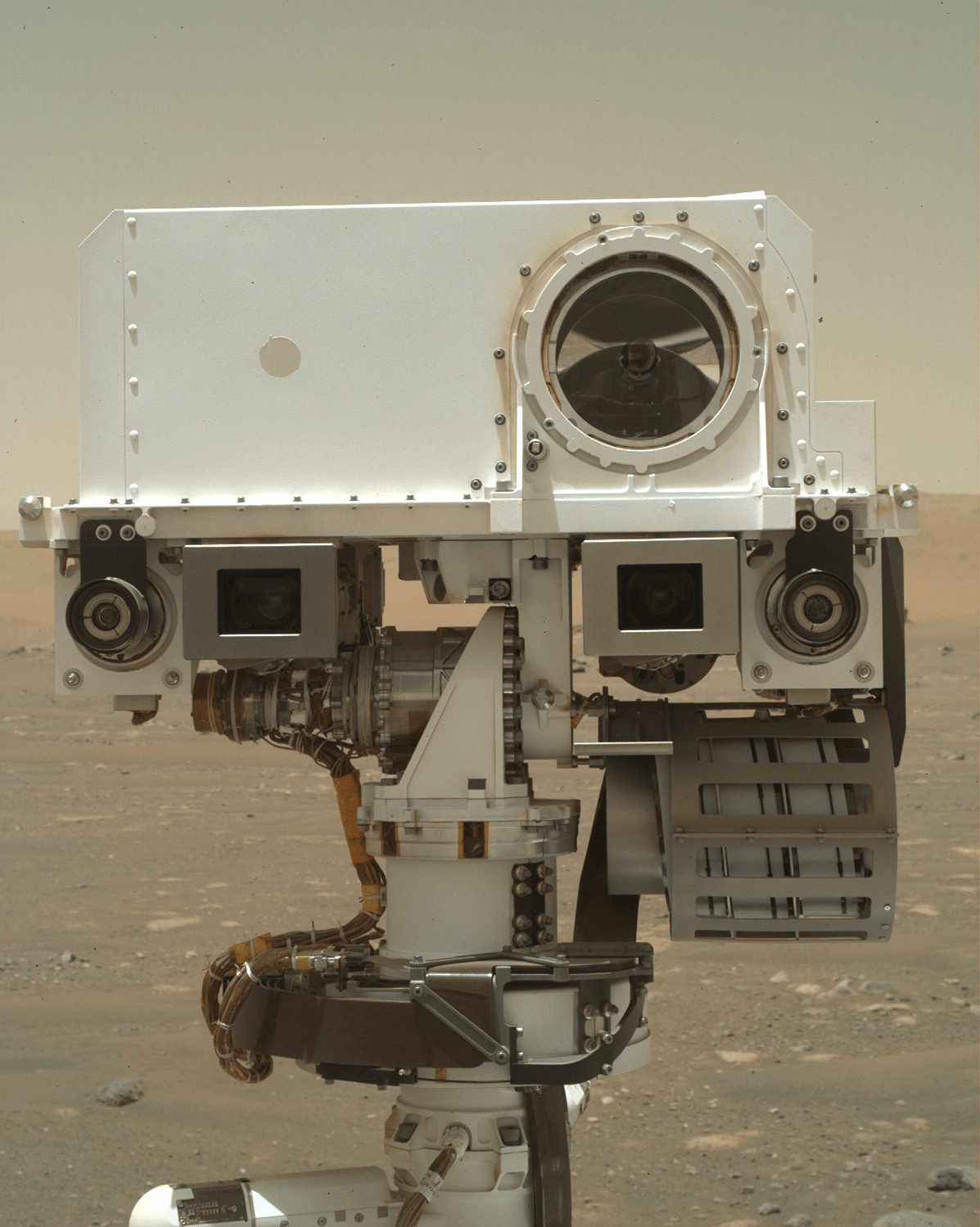
A close-up photo of an instrument on the Perseverance rover shows — against a blurred background of light tan-orange terrain — a metallic structure at the top of the frame, dusted with fine orange powder in some places. Pointing down from that is a short, barrel-shaped extension. Attached to the bottom of that is a “D”-shaped cover, attached to the mouth of the barrel on the right by a cylindrical hinge, fully opened toward the right, to an angle greater than 180 degrees.
NASA’s Mars Perseverance rover captured this image of its SHERLOC instrument (Scanning Habitable Environments with Raman & Luminescence for Organics and Chemicals), showing the cover mechanism of SHERLOC’s Autofocus and Context Imager camera (ACI) in a nearly open configuration. The rover acquired this image using its Left Mastcam-Z camera — one of a pair of cameras located high on the rover’s mast — on March 3, 2024 (sol 1079, or Martian day 1,079 of the Mars 2020 mission), at the local mean solar time of 12:18:41.
NASA/JPL-Caltech/ASU

In early January the SHERLOC instrument’s cover mechanism stopped responding during a routine attempt to acquire data on a rock outcrop in the Margin unit. After six weeks of team diagnostics, the SHERLOC instrument was declared offline and many of us feared that the instrument had met its end. In early March, the team made significant progress in driving the cover to a more open position. Then, to everyone’s surprise, the SHERLOC cover moved unexpectedly to a nearly completely open position during a movement of the arm on sol 1077. I remember staring in wonder at the image of the cover (taken on sol 1079), feeling real optimism for the first time that SHERLOC could be recovered. The team spent the next few months developing a new plan for operating SHERLOC with its cover open, and the instrument was declared back online at the end of June.  

2. A potential biosignature at Cheyava Falls  

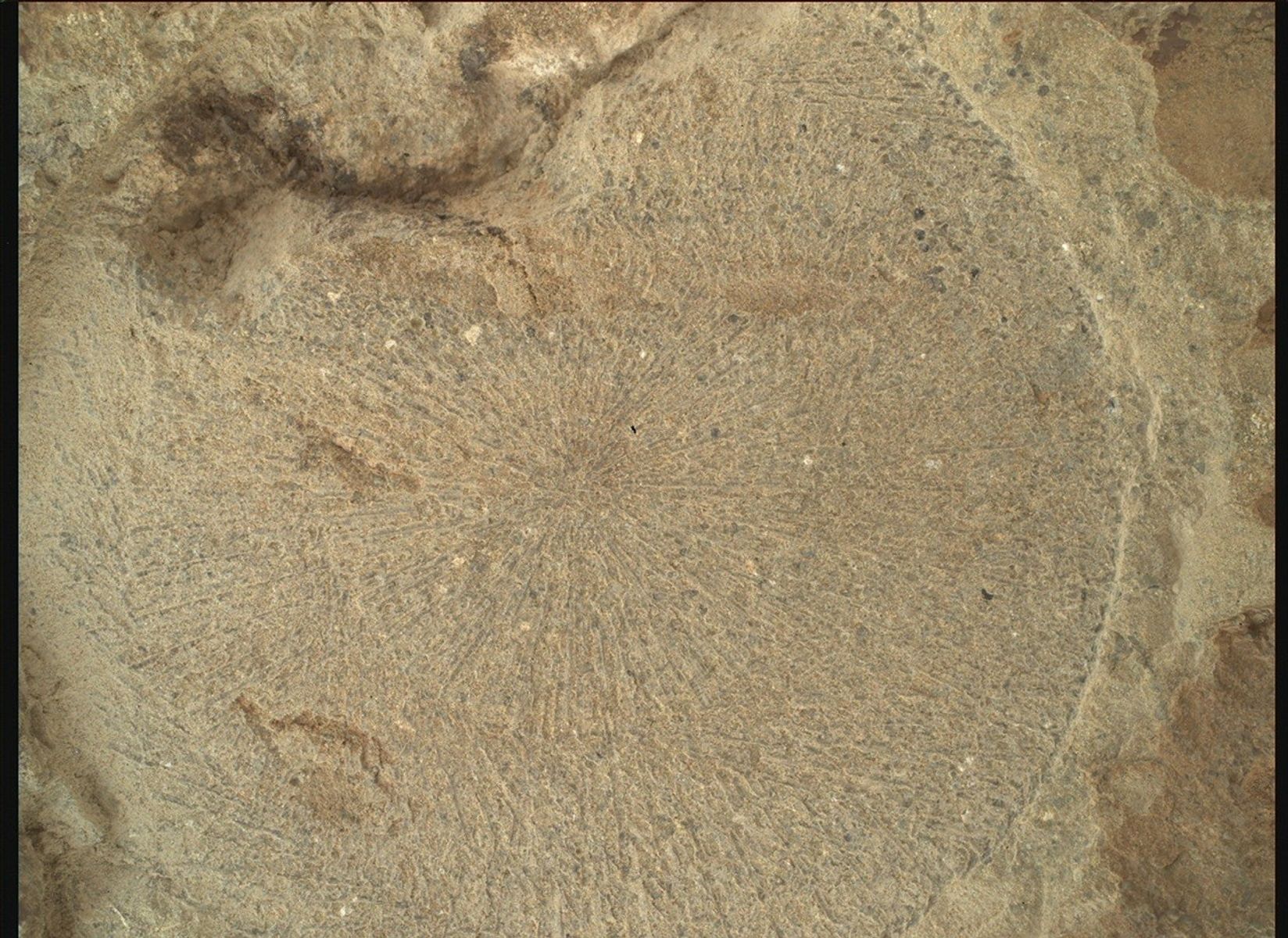
A color image of a Mars rock shows a smooth band of orange-tan down the center of the image, flanked by lumpy strips of lighter materials, smooth and in shades of light mint green and turquoise. The center portion shows innumerable small spots — light tan, outlined in very dark gray.
NASA’s Perseverance Mars rover captured this image of “leopard spots” on a rock nicknamed “Cheyava Falls” on July 18, 2024 — sol 1212. or the 1,212th Martian day of the mission. Running the length of the rock are large white calcium sulfate veins. Between those veins are bands of material whose reddish color suggests the presence of hematite, one of the minerals that gives Mars its distinctive rusty hue. Scientists are particularly interested in the millimeter-size, irregularly shaped light patches on the central reddish band (from lower left to upper right of the image) that resemble leopard spots. Perseverance captured the image using a camera called WATSON (Wide Angle Topographic Sensor for Operations and eNgineering), part of the SHERLOC (Scanning Habitable Environments with Raman and Luminescence for Organics and Chemicals) instrument suite located on the end of Perseverance’s robotic arm.
NASA/JPL-Caltech/MSSS

No top list would be complete without Perseverance’s discovery in July 2024 of a potential biosignature in the form of sub-millimeter-scale “leopard spots” at an outcrop called Cheyava Falls. These features, which formed during chemical reactions within the rock, have dark rims and light cores and occur together with organic carbon. On Earth, these chemical reactions are often driven by or associated with microbes. Although we can’t say for sure that microbes were involved in the formation of the leopard spots at Cheyava Falls, this question can be answered when Perseverance’s samples are returned to Earth. In the meantime, this rock remains one of the most compelling rocks discovered on Mars.  

3. Arrival at Witch Hazel Hill 

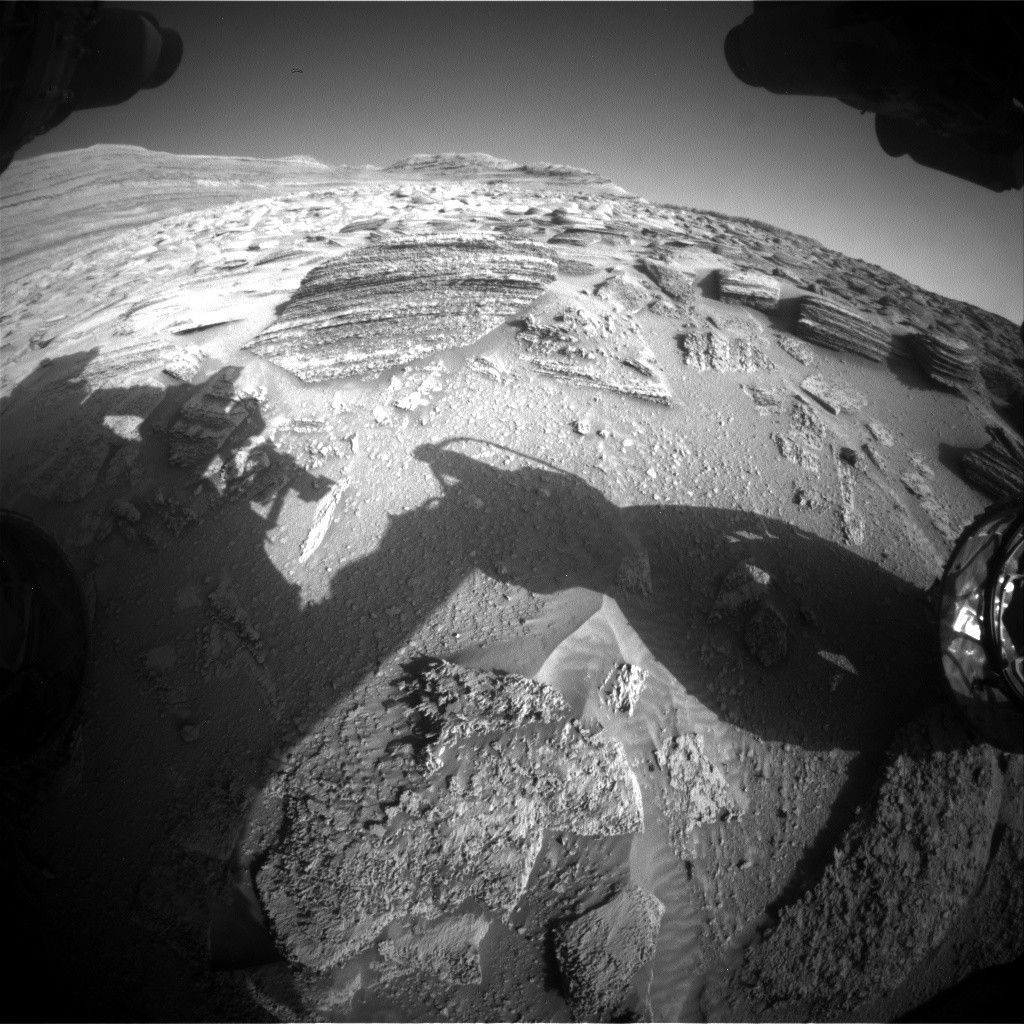
A color image from the Martian surface shows uneven yellow-tan ground leading up to the base of a hill, where the smoother ground dotted with small rocks turns into an outcropping of much larger rocks. That outcropping is on the horizon, which runs diagonally in the image, from the upper left side to the top right of the frame.
NASA’s Mars Perseverance rover acquired this image at the top of Witch Hazel Hill, of the South Arm and Minnie Hill outcrops. Perseverance used its Left Navigation Camera (Navcam) — which also aids in driving — located high on the rover’s mast. The rover captured the image on Dec. 16, 2024 (sol 1359, or Martian day 1,359 of the Mars 2020 mission), at the local mean solar time of 13:26:38.
NASA/JPL-Caltech

Closing out 2024 on a high note, in mid-December Perseverance arrived at the top of a sequence of rock exposed on the western edge of the Jezero crater rim called Witch Hazel Hill. These rocks pre-date the formation of Jezero crater and could be amongst the oldest rocks exposed on the surface of Mars. These rocks have the potential to tell us about a period of solar system history not well-preserved on our own planet Earth, and they may record important clues about the early history and habitability of Mars. Witch Hazel Hill first caught my attention during landing site selection several years ago, when we were debating the merits of landing Perseverance in Jezero versus sites outside the crater. At the time, this area seemed just out of reach for a Jezero-focused mission, so I’m thrilled that the rover is now exploring this site!   

The Mars 2020 mission had its ups and downs and a fair share of surprises during 2024, but we are looking ahead to 2025 with excitement, as Perseverance continues to explore and sample the Jezero crater rim.

Written by Katie Stack Morgan, Mars 2020 Deputy Project Scientist

Share

Details

Last Updated
Jan 08, 2025

Related Terms

Powered by WPeMatico

Get The Details…
Science and Spacewalk Preps Fill Station Crew’s Day

Science and Spacewalk Preps Fill Station Crew’s Day

The Full Moon is pictured from the International Space Station as it orbited 261 miles above the Pacific Ocean.

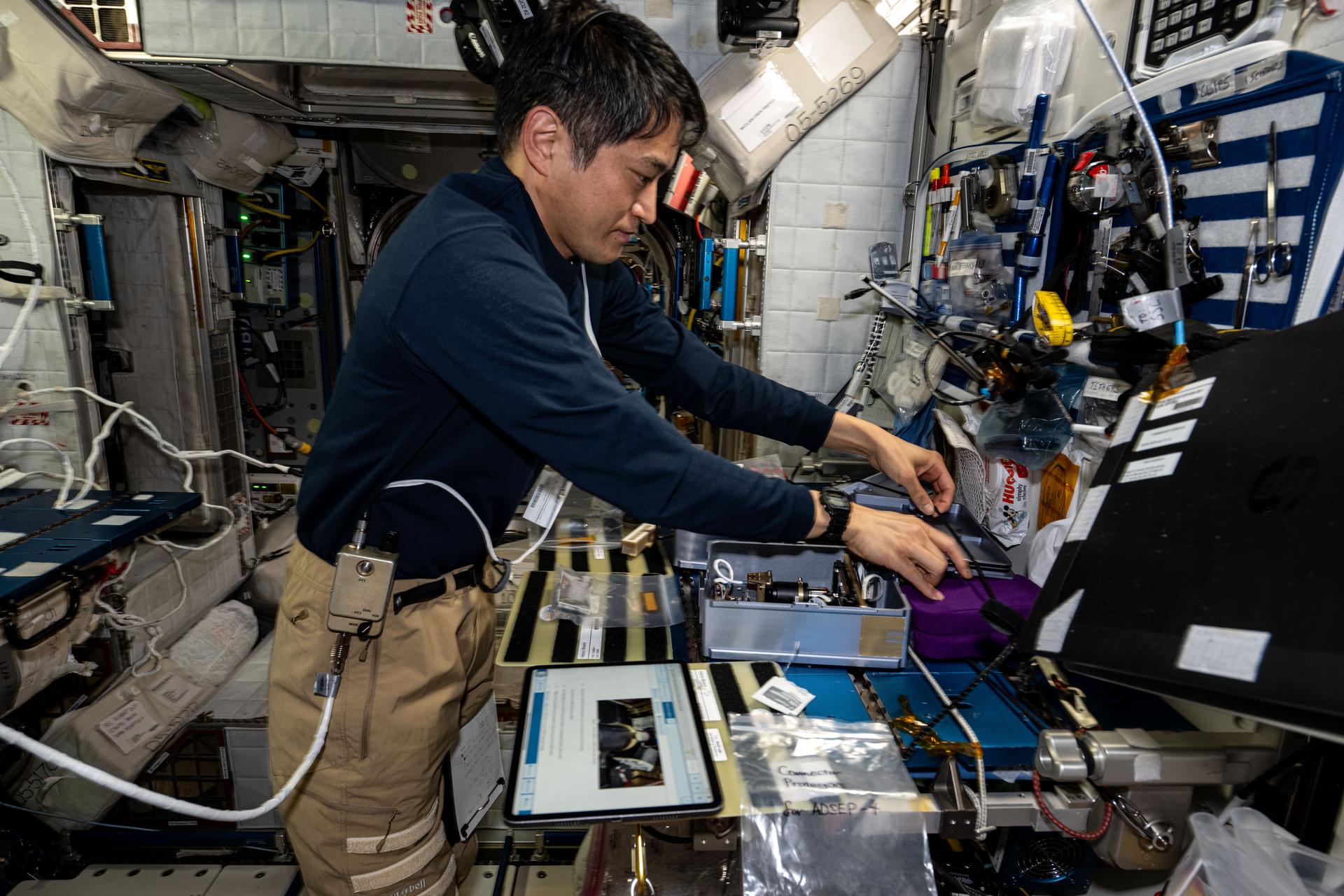
Wednesday was packed with an array of advanced microgravity research promoting fire safety in space, exploring the effects of exercising in weightlessness, and testing futuristic piloting techniques. The Expedition 72 crew is also gearing up for a spacewalk to repair and upgrade science hardware on the International Space Station.

NASA Flight Engineers Don Pettit and Nick Hague had their hands full with a variety of space science and spacesuit activities. Pettit began his shift collecting his urine samples and stowing them in a science freezer for later analysis. Later he replaced experiment samples inside the Combustion Integrated Rack to safely observe how flames spread on a variety of materials in microgravity potentially improving fire safety on future space missions.

Hague spent the first half of his shift wearing the Bio-Monitor vest and headband that recorded his heart and breathing rate while he worked out on the advanced resistive exercise device and jogged on the COLBERT treadmill. Afterward, he joined NASA Commander Suni Williams organizing the Quest airlock and readying a pair of spacesuits for a Jan. 16 spacewalk.

NASA managers will talk about that spacewalk and a second one planned for Jan. 23 during a spacewalk preview briefing that will be broadcast on NASA+ beginning at 2 p.m. EST on Friday. During the first spacewalk, Hague and Williams will exit Quest to repair a “light leak” on the NICER X-ray telescope and prepare the Alpha Magnetic Spectrometer for future upgrades. The second spacewalk will see two yet-to-be announced astronauts remove radio communications gear and collect samples for analysis of potential microbes living outside the space station. Both spacewalks will begin around 7 a.m. with NASA+ coverage starting at 5:30 a.m.

NASA Flight Engineer Butch Wilmore started his shift inside the Kibo laboratory module stowing and photographing space biology gear. Afterward, he ended his day conducting cargo operations inside the Cygnus resupply ship and inventorying medical kits inside the orbital outpost’s two Human Research Facilities.

Roscosmos Flight Engineers Alexey Ovchinin and Aleksandr Gorbunov started their day taking turns wearing a sensor-packed cap that measured their reactions as they practiced on a computer futuristic planetary and robotic piloting techniques. Future crews may use the data gained from these tests to plan missions farther away from Earth. Ovchinin later joined Flight Engineer Ivan Vagner and checked out audio hardware in the Zvezda service module.


Learn more about station activities by following the space station blog@space_station and @ISS_Research on X, as well as the ISS Facebook and ISS Instagram accounts.

Get the latest from NASA delivered every week. Subscribe here: www.nasa.gov/subscribe

Powered by WPeMatico

Get The Details…

Mark Garcia