NASA Instrument on Firefly’s Blue Ghost Lander to Study Lunar Interior

NASA Instrument on Firefly’s Blue Ghost Lander to Study Lunar Interior

4 min read

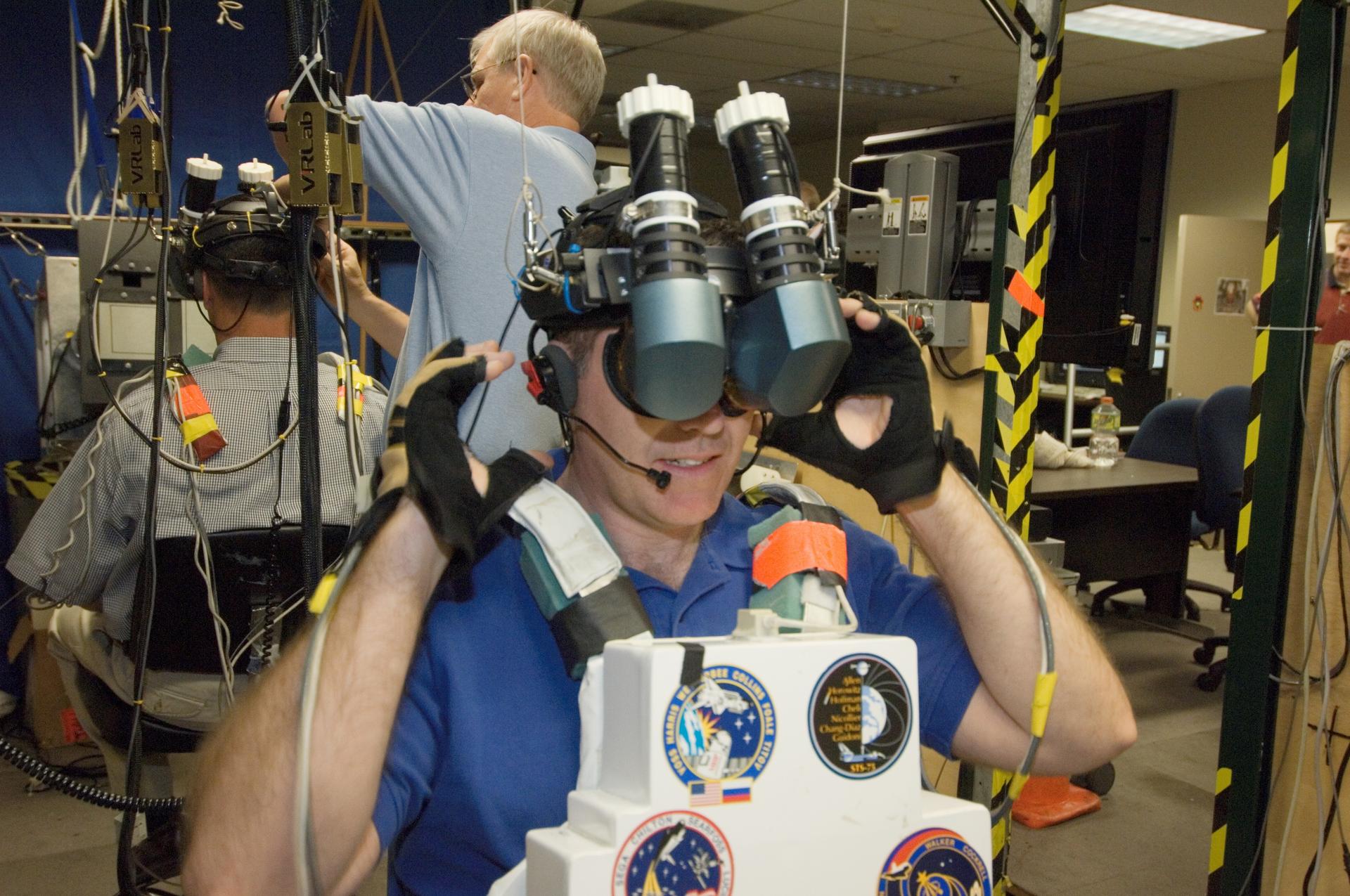
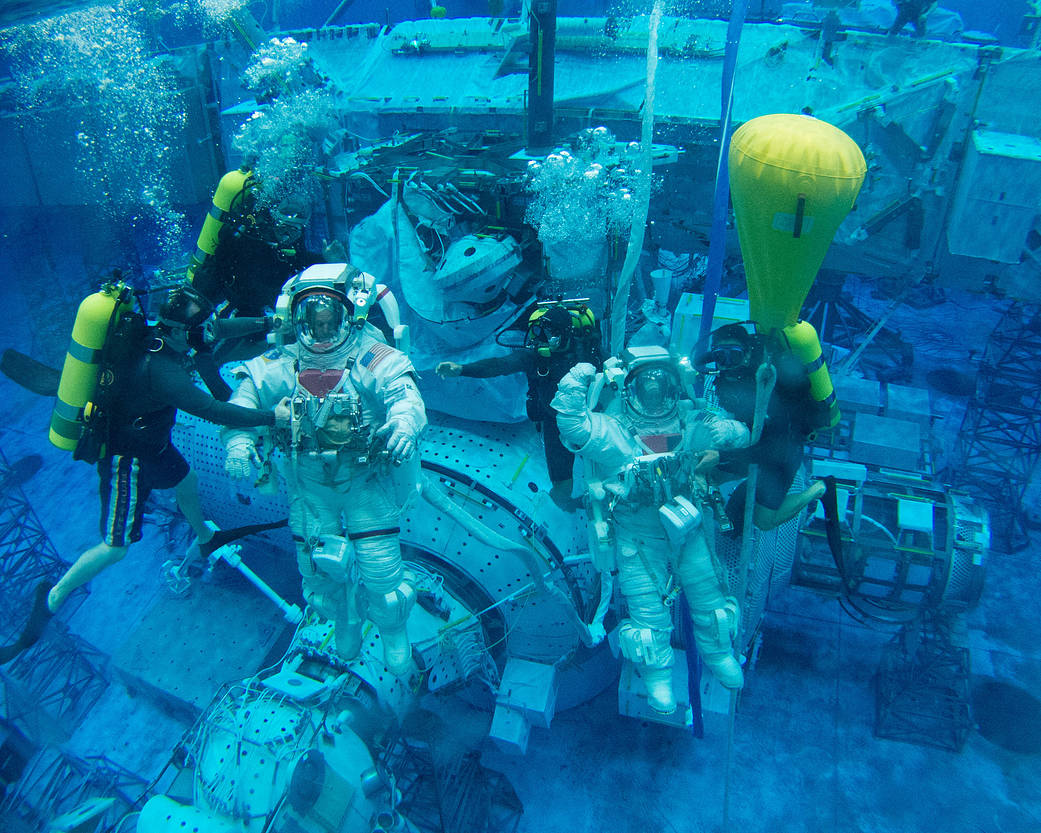
Preparations for Next Moonwalk Simulations Underway (and Underwater)
LMS instrument aboard the Blue Ghost Lander heading to Mare Crisium in mid-January

As part of its Artemis campaign, NASA is developing a series of increasingly complex lunar deliveries and missions to ultimately build a sustained human presence at the Moon for decades to come. Through the agency’s CLPS (Commercial Lunar Payload Services) initiative, commercial provider Firefly’s Blue Ghost lander will head to the Moon’s Mare Crisium for a 14-day lunar lander mission, carrying NASA science and technology that will help understand the lunar subsurface in a previously unexplored location.

A side-by-side comparison of the Moon. On the left is an image of the Moon that is all grey, with darker dark spots specked throughout and many circular craters. A white circle is around one of the dark circular spots with a white arrow pointing to it as the "Mare Crisium" region. On the right is a similar image but is overlayed with colors from dark purple, 1, to white, 12, representing concentrations of the element thorium. The Moon color is mostly purple with many greens, oranges, yellows, and red concentrated around one region of the Moon.
From within the Mare Crisium impact basin, the SwRI-led Lunar Magnetotelluric Sounder (LMS) may provide the first geophysical measurements representative of the bulk of the Moon. Most of the Apollo missions landed in the region of linked maria to the west (left image), whose crust was later shown to be compositionally distinct (right image) as exemplified by the concentration of the element thorium. Mare Crisium provides a smooth landing site on the near side of the Moon outside of this anomalous region.
NASA

Developed by the Southwest Research Institute (SwRI), NASA’s Lunar Magnetotelluric Sounder (LMS) will probe the interior of the Moon to depths of up to 700 miles, two-thirds of the way to the lunar center. The measurements will shed light on the differentiation and thermal history of our Moon, a cornerstone to understanding the evolution of solid worlds.

Magnetotellurics uses natural variations in surface electric and magnetic fields to calculate how easily electricity flows in subsurface materials, which can reveal their composition and structure.

“For more than 50 years, scientists have used magnetotellurics on Earth for a wide variety of purposes, including to find oil, water, and geothermal and mineral resources, as well as to understand geologic processes such as the growth of continents,” said SwRI’s Dr. Robert Grimm, principal investigator of LMS. “The LMS instrument will be the first extraterrestrial application of magnetotellurics.”

Mare Crisium is an ancient, 350-mile-diameter impact basin that subsequently filled with lava, creating a dark spot visible on the Moon from Earth. Early astronomers who dubbed dark spots on the moon “maria,” Latin for seas, mistook them for actual seas.

Mare Crisium stands apart from the large, connected areas of dark lava to the west where most of the Apollo missions landed. These vast, linked lava plains are now thought to be compositionally and structurally different from the rest of the Moon. From this separate vantage point, LMS may provide the first geophysical measurements representative of most of the Moon.

The Lunar Magnetotelluric Sounder (LMS) will probe the interior of the Moon to depths of up to 700 miles or two-thirds of the lunar radius. The measurements will shed light on the differentiation and thermal history of our Moon, a cornerstone to understanding the evolution of solid worlds.
NASA’s Goddard Space Flight Center

The LMS instrument ejects cables with electrodes at 90-degree angles to each other and distances up to 60 feet. The instrument measures voltages across opposite pairs of electrodes, much like the probes of a conventional voltmeter. The magnetometer is deployed via an extendable mast to reduce interference from the lander. The magnetotelluric method reveals a vertical profile of the electrical conductivity, providing insight into the temperature and composition of the penetrated materials in the lunar interior.

“The five individual subsystems of LMS, together with connecting cables, weigh about 14 pounds and consume about 11 Watts of power,” Grimm said. “While stowed, each electrode is surrounded by a ‘yarn ball’ of cable, so the assembly is roughly spherical and the size of a softball.”

The LMS payload was funded and will be delivered to the lunar surface through NASA’s CLPS initiative. Southwest Research Institute based in San Antonio built the central electronics and leads the science investigation. NASA’s Goddard Space Flight Center in Greenbelt, Maryland, provided the LMS magnetometer to measure the magnetic fields, and Heliospace Corp. provided the electrodes used to measure the electrical fields.

Under the CLPS model, NASA is investing in commercial delivery services to the Moon to enable industry growth and support long-term lunar exploration. As a primary customer for CLPS deliveries, NASA aims to be one of many customers on future flights. NASA’s Marshall Space Flight Center in Huntsville, Alabama, manages the development of seven of the 10 CLPS payloads carried on Firefly’s Blue Ghost lunar lander.

Media Contact: Rani Gran
NASA’s Goddard Space Flight Center, Greenbelt, Maryland

Share

Details

Last Updated

Jan 10, 2025

Editor
Rob Garner
Contact
Rani Gran
Location
Goddard Space Flight Center

Powered by WPeMatico

Get The Details…
Rob Garner

New Jersey Students to Hear from NASA Astronauts Aboard Space Station

New Jersey Students to Hear from NASA Astronauts Aboard Space Station

NASA astronaut and Expedition 72 Flight Engineer Butch Wilmore works inside the International Space Station’s Columbus laboratory module to begin installing the European Enhanced Exploration Exercise Device. (Credit: NASA)

Students from the Toms River School District in New Jersey will have the chance to connect with NASA astronauts Don Pettit and Butch Wilmore as they answer  prerecorded science, technology, engineering, and mathematics (STEM) related questions from aboard the International Space Station.

Watch the 20-minute space-to-Earth call in collaboration with Science Friday at 10 a.m. EST on Tuesday, Jan. 14, on NASA+ and learn how to watch NASA content on various platforms, including social media.

Science Friday is a nonprofit dedicated to sharing science with the public through storytelling, educational programs, and connections with audiences. Middle school students will use their knowledge from the educational downlink to address environmental problems in their communities.

Media interested in covering the event must RSVP by 5 p.m., Friday, Jan. 10, to Santiago Florez at: sflorez@sciencefriday.com or 221-840-2244.

For more than 24 years, astronauts have continuously lived and worked aboard the space station, testing technologies, performing science, and developing skills needed to explore farther from Earth. Astronauts aboard the orbiting laboratory communicate with NASA’s Mission Control Center in Houston 24 hours a day through SCaN’s (Space Communications and Navigation) Near Space Network.

Important research and technology investigations taking place aboard the space station benefit people on Earth and lays the groundwork for other agency missions. As part of NASA’s Artemis campaign, the agency will send astronauts to the Moon to prepare for future human exploration of Mars; inspiring Artemis Generation explorers and ensuring the United States continues to lead in space exploration and discovery.

See videos and lesson plans highlighting space station research at:

https://www.nasa.gov/stemonstation

-end-

Abbey Donaldson
Headquarters, Washington
202-358-1600
Abbey.a.donaldson@nasa.gov

Sandra Jones 
Johnson Space Center, Houston
281-483-5111
sandra.p.jones@nasa.gov

Powered by WPeMatico

Get The Details…
Abbey A. Donaldson

Hubble Rings In the New Year

Hubble Rings In the New Year

2 min read

Hubble Rings In the New Year

Many mostly small, bright objects scattered over a dark background in space. In the top half on the right is an elliptical galaxy, a round light larger than the others, with a slightly warped ring of light around it. In the bottom half there is a barred spiral galaxy, big enough that we can see its bluish arms and its core in detail. Other objects include distant galaxies and nearby stars.
This NASA/ESA Hubble Space Telescope image holds an array of stars and galaxies.
ESA/Hubble, NASA, and D. Erb

This NASA/ESA Hubble Space Telescope image reveals a tiny patch of sky in the constellation Hydra. The stars and galaxies depicted here span a mind-bending range of distances. The objects in this image that are nearest to us are stars within our own Milky Way galaxy. You can easily spot these stars by their diffraction spikes, lines that radiate from bright light sources, like nearby stars, as a result of how that light interacts with Hubble’s secondary mirror supports. The bright star that sits just at the edge of the prominent bluish galaxy is only 3,230 light-years away, as measured by ESA’s Gaia space observatory.

Behind this star is a galaxy named LEDA 803211. At 622 million light-years distant, this galaxy is close enough that its bright galactic nucleus is clearly visible, as are numerous star clusters scattered around its patchy disk. Many of the more distant galaxies in this frame appear star-like, with no discernible structure, but without the diffraction spikes of a star in our galaxy.

Of all the galaxies in this frame, one pair stands out: a smooth golden galaxy encircled by a nearly complete ring in the upper-right corner of the image. This curious configuration is the result of gravitational lensing that warps and magnifies the light of distant objects. Einstein predicted the curving of spacetime by matter in his general theory of relativity, and galaxies seemingly stretched into rings like the one in this image are called Einstein rings.

The lensed galaxy, whose image we see as the ring, lies incredibly far away from Earth: we are seeing it as it was when the universe was just 2.5 billion years old. The galaxy acting as the gravitational lens itself is likely much closer. A nearly perfect alignment of the two galaxies is necessary to give us this rare kind of glimpse into galactic life in the early days of the universe.

Explore More

Media Contact:

Claire Andreoli (claire.andreoli@nasa.gov)
NASA’s Goddard Space Flight CenterGreenbelt, MD

Powered by WPeMatico

Get The Details…

Summary of the 2024 NASA LCLUC Science Team Meeting

Summary of the 2024 NASA LCLUC Science Team Meeting

32 min read

Summary of the 2024 NASA LCLUC Science Team Meeting

Introduction

The 2024 NASA Land-Cover and Land-Use Change (LCLUC) Science Team Meeting (STM) took place from April 2–4, 2024 at the Marriott Washingtonian Center in Gaithersburg, MD. During the meeting, 75 people attended in-person. Represented among the attendees were LCLUC project investigators and collaborators, NASA Headquarters (HQ) program managers, and university researchers and students – see Photo.

LCLUC is an interdisciplinary scientific program within NASA’s Earth Science program that aims to develop the capability for periodic global inventories of land use and land cover from space. The program’s goal is to develop the scientific understanding and models necessary to simulate the processes taking place and to evaluate the consequences of observed and predicted changes.

The LCLUC program’s focus is divided into three areas – impacts, monitoring, and synthesis. Each category constitutes about one-third of the program’s content. The LCLUC program is part of the Carbon Cycle and Ecosystems research area, alongside other programs, such as Terrestrial Ecosystems, Ocean Biology and Biogeochemistry, and Biodiversity.

Within NASA’s Earth Science Division (ESD), the LCLUC program collaborates with the Earth Science Technology Office (ESTO), the Earth Action Program element on Agriculture, and data initiatives, such as Harmonized Landsat Sentinel-2 (HLS), Observational Products for End-Users from Remote Sensing Analysis (OPERA), and the Commercial SmallSat Data Acquisition (CSDA) program. Externally, the program engages the U.S. Global Climate Research Program (USGCRP), U.S. Geological Survey (USGS), the U.S. Department of Agriculture (USDA), and the U.S. Forest Service (USFS). Internationally, the program collaborates with Global Observations of Forest Cover and Land-use Dynamics (GOFC-GOLD), the Group on Earth Observations (GEO), particularly Group on Earth Observations Global Agricultural Monitoring (GEOGLAM), the Global Land Program (GLP), as well as regional initiatives – e.g., the South and Southeast Asia Regional Initiative (SARI), and space agencies, including the European Space Agency (ESA), Japan Aerospace Exploration Agency (JAXA), Geo-Informatics and Space Technology Development Agency (GISTDA)–Thailand, Vietnam National Space Center (VNSC), and the Indian Space Research Organisation (ISRO).

Principal Investigators (PIs) who participate in LCLUC are required to provide free and open access to their data and products via their metadata pages, aligning with NASA’s Transform to Open Science (TOPS) initiative. The program organizes at least one international regional workshop and one domestic ST meeting each year to share LCLUC science and foster global collaborations, contributing to regional capacity-building as an added value. Additionally, the program hosts regular webinars led by PIs on topics such as agriculture, urban areas, land-use changes in conflict zones, and natural disaster hotspots (i.e., fires, droughts, and floods). Garik Gutman [NASA HQ—LCLUC Program Manager] presented updates on LCLUC research publications, journal special issues, and upcoming international meetings.

The remainder of this article summarizes the highlights of the 2024 LCLUC STM. The content is organized chronologically, with a section devoted to describing each day of the meeting and descriptive headers throughout. The full presentations from this meeting are available on the LCLUC meeting website.

LCLUC photo 1
Photo. A group picture of meeting participants on the first day of the 2024 LCLUC meeting in Gaithersburg, MD.
Photo credit: Hotel staff (Marriott Washingtonian Center, Gaithersburg, MD)

DAY ONE

The first day featured invited presentations, reports from LCLUC ST members funded through the LCLUC Research Opportunities in Space and Earth Sciences (ROSES) 2022 selections, and an overview of SARI. The day concluded with poster presentations and lightning talks highlighting recent results from ongoing LCLUC-related research.

Update from the LCLUC Program Manager

The meeting began with welcoming remarks from Garik Gutman, who provided an update on the program’s latest developments and achievements. He highlighted that the socioeconomic component is an integral part of most LCLUC projects. The program has recently expanded to include multisource land imaging, such as the ESA’s Copernicus Sentinel program, regional initiatives, and capacity-building efforts. He also underscored the importance of U.S. missions relevant to LCLUC, which produce spatially coarse resolution daily data from the Moderate Resolution Imaging Spectroradiometer (MODIS) on NASA’s Aqua and Terra platforms and the NASA–National Oceanic and Atmospheric Administration (NOAA) Visible Infrared Imaging Radiometer Suite (VIIRS) on the Suomi National Polar-orbiting Partnership (Suomi NPP); spatially moderate resolution data every eight days from the NASA–USGS Landsat-8 (L8) and Landsat-9 (L9) satellites; and very high-resolution data from private companies, such as Planet Inc. and Maxar.

Gutman also discussed how LCLUC investigators are using data from missions on the International Space Station (ISS), e.g., ECOsystem Spaceborne Thermal Radiometer Experiment on Space Station (ECOSTRESS), Global Ecosystem Dynamics Investigation (GEDI), and Earth Surface Mineral Dust Source Investigation (EMIT). He noted the potential of radar observations from the recently launched international Surface Water and Ocean Topography (SWOT) mission – led by NASA and the Centre National d’Études Spatiales [French Space Agency] – and the upcoming NASA-ISRO Synthetic Aperture Radar (NISAR) mission (planned for launch in 2025).

LCLUC in the Broader Context of NASA

Jack Kaye [ESD—Associate Director for Research] gave an update on ESD activities that reflected on NASA’s broad capabilities in Earth Science – emphasizing the agency’s unique role in both developing and utilizing cutting-edge technology. Unlike many other agencies, NASA’s scope spans technology development, research, data provision, and tool creation. Over the past 16 months, NASA has launched several significant missions, including SWOT, Time-Resolved Observations of Precipitation structure and storm Intensity with a Constellation of Smallsats (TROPICS), Tropospheric Emissions: Monitoring of Pollution (TEMPO), and Plankton, Aerosol, Cloud, ocean Ecosystem (PACE). This surge in satellite launches highlights NASA’s role in enhancing global observational capabilities. NASA also supports a diverse array of programs, including airborne campaigns and surface-based measurement networks. Initiatives aim to improve the involvement of minority-serving institutions and incorporate open science practices with a focus on enhancing inclusivity and expanding participation. The agency also emphasizes the importance of peer review and collaboration with international and community-based partners. Kaye highlighted NASA’s commitment to producing high-quality, actionable science while navigating financial and operational challenges. This commitment extends to addressing environmental and societal impacts through programs such as Earth Action and by fostering global collaboration.

Sid Ahmed Boukabara [ESD—Senior Program Scientist for Strategy] presented a detailed overview of NASA’s Earth Science to Action Strategy, which aims to increase the impact of Earth science in addressing global challenges. This strategy acknowledges the urgency of global changes, e.g., accelerating environmental shifts, understanding Earth’s interconnected systems, and developing scalable information. NASA’s mission focuses on observing and understanding the Earth system, delivering trusted information, and empowering resilience activities through advanced technologies, partnerships, and innovations. Key principles include amplifying impact through partnerships, engaging a diverse and inclusive workforce, balancing innovation with sustainability, encouraging cutting-edge capabilities, and ensuring robust and resilient processes. The strategy emphasizes collaboration across sectors and international partnerships to leverage Earth observations enhance the value of Earth science for decision-making and policy support. The strategy also highlights the role of land-cover and land-use change activities in supporting objectives and enhancing modeling capabilities.

Thomas Wagner [ESD—Associate Director for Earth Action] outlined NASA’s Earth Action initiative (formerly known as the Applications Program), which focuses on user-centered strategies to address global challenges, e.g., climate resilience, health, and ecological conservation. By integrating applied sciences and leveraging satellite data, the initiative aims to enhance Earth observation capabilities and connect scientific research with practical applications to meet societal needs. The strategy includes a virtuous cycle, where user feedback informs the development of future programs and missions, ensuring that research and technology are aligned with real-world needs. Additionally, Earth Action emphasizes public engagement by offering open-source models and data to enhance understanding and support decision making. Through multisector consortia and problem-solving teams, the initiative addresses urgent and broad-impact issues, fostering innovation and collaboration.

Updates from LCLUC PIs on 2022 ROSES Proposal Selections

Following the programmatic overview presentations, PIs presented updates on research results from LCLUC ROSES 2022 proposal selections. Gillian Galford [University of Vermont] presented on the socioeconomic and environmental dynamics of LCLUC in the Cerrado frontier of Brazil. She presented results from the three main objectives: developing LCLUC detection methods and datasets, characterizing major land-use transitions (LUTs), and understanding the drivers behind these transitions. The research employs remote-sensing and geostatistical methods to track changes, identify “hotspots” of activity, and understand the underlying motivations for land-use changes. The research aims to provide insights that can guide conservation efforts and promote sustainable land use in the region.

Gustavo Oliveira [Clark University] presented “Irrigation as Climate-Change Adaptation in the Cerrado Biome of Brazil.” This project aims to develop methods for analyzing LCLUC data and their socioeconomic impacts, examining the expansion of irrigated agriculture and creating models to inform policy on agrarian development and water regulations. Oliveira highlighted areas of significant deforestation and the rapid growth of irrigated agriculture in the study region – positioning Western Bahia as a model for irrigation in Brazil. He explained that the research outputs include software for time series analysis and publications on land change, contributing to the broader understanding of climate adaptation strategies in the region.

Grant Connette [Smithsonian Institution] presented “Can Improved Stakeholder Representation Prevent Human-caused Mangrove Loss in the Mesoamerican Reef Ecoregion?” He examined the factors contributing to mangrove loss in the Mesoamerican Reef (MAR) ecoregion. Through a combination of Earth observation data, socioeconomic analysis, and community engagement, Connette described how the study seeks to improve the effectiveness of protected areas and inform best practices for mangrove conservation in the MAR ecoregion.

Saurav Kumar [Arizona State University] presented his team’s work, “Exploring the Nexus between LCLUC, Socio-Economic Factors, and Water for a Vulnerable Arid U.S.–Mexico Transboundary Region.” Kumar explained that the project aims to understand how natural and human systems influence LCLUC when constrained by water availability. The data used in this project come from a combination of time series data, theoretical model output, and artificial intelligence techniques. The team also focuses on stakeholder engagement, recognizing the need for comprehensive identification and involvement in addressing complex water resource issues. Kumar explained that the study seeks to predict future LCLUC transitions, assess the theoretical models of different stakeholder groups, and identify policy-relevant leverage points for sustainable water management.

Abena Boatemaa Asare-Ansah [University of Maryland, College Park (UMD)] presented on “The Multisensor Mapping of Refugee Agricultural LCLUC Hotspots in Uganda.” She explained that this study focuses on mapping changes in cropland within refugee-hosting regions using satellite data and deep learning models. Asare-Ansah described how the first year involved evaluating existing cropland maps and initiating new classifications. Future work will refine these maps and connect cropland changes to specific refugee households, aiming to better understand the relationship between refugee populations, food aid, and agricultural practices.

Elsa Ordway [University of California, Los Angeles (UCLA)] discussed her team’s efforts toward “Disentangling Land-Use Change in Central Africa to Understand the Role of Local and Indigenous Communities in Forest Restoration and Conservation.” Ordway reported that the project focuses on mapping land cover and carbon emissions, analyzing the impact of conservation efforts, and exploring potential forest restoration opportunities. She emphasized that this research highlights the critical role of local indigenous communities in forest management and the unintended consequences of conservation projects on land use – see Photo 2.

LCLUC photo 2
Photo 2. Some residents of a village neighboring the Dja reserve – part of the dense rain forests that form Africa’s Congo Basin. Interviews and surveys among the area’s local and indigenous communities are used to gather information on forest restoration and conservation.
Photo credit: Else Ordway (UCLA)

Ordway also presented on the PAN-tropical investigation of BioGeochemistry and Ecological Adaptation (PANGEA), which aims to investigate the biogeochemistry and ecological adaptation of tropical forests that are crucial for global climate regulation and biodiversity. She explained that this study emphasizes the rapid changes occurring in tropical regions primarily due to deforestation and climate change. PANGEA seeks to answer key scientific questions about the vulnerability and resilience of these ecosystems, and how this information can inform climate adaptation, mitigation, and biodiversity conservation efforts.

The ARID Experiment

Andrew Feldman [NASA’s Goddard Space Flight Center (GSFC)] presented on the Adaptation and Response in Drylands (ARID) experiment, a field campaign focused on dryland ecosystems. He described how this project aims to understand the fundamental science of drylands, including water availability, land–atmosphere interactions, climate variability, carbon stocks, and land management. The study involves significant international collaboration and stakeholder engagement, with a particular focus on the Western U.S – see Figure 1. While this project is in planning stages, ongoing efforts will be made to engage with the scientific community, gather feedback, and refine its research themes.

LCLUC figure 1
Figure 1. The Adaptation and Response in Drylands (ARID) experiment focuses on studying the characteristics of dryland ecosystems, e.g., water availability, land–atmosphere interactions, climate variability, carbon stocks, and land management. While the experiment is global in scope, it has a focus on the Western U.S., with numerous site locations across the desert Southwest and some in the Pacific Northwest.
Figure credit: Andrew Feldman (NASA/UMD)

SARI Update and Related Projects

Krishna Vadrevu [NASA’s Marshall Space Flight Center] gave a comprehensive update on SARI, a regional initiative under the LCLUC program that addresses the critical needs of the South/Southeast Asia region by integrating remote sensing, natural sciences, engineering, and social sciences. His presentation covered the initiative’s background, various funded research projects, and their outputs. The diverse SARI projects include studies on forest degradation, agricultural transitions, food security, urbanization, and their environmental impacts. SARI has supported 35 research projects, engaging more than 400 scientists and over 200 institutions that result in significant scientific contributions, including nearly 450 publications, 16 special journal issues, and five books with two additional books pending publication. Vadrevu emphasized the importance of sustainable land use policies informed by LCLUC research and provided details on upcoming meetings. He concluded with information on three ongoing projects funded under the SARI synthesis solicitation – one in South Asia and two in Southeast Asia. Summaries of these projects are highlighted below.

David Skole [Michigan State University (MSU)] leads the SARI synthesis project that spans South Asian countries, with an emphasis on tree-based systems, particularly Trees Outside Forests (TOF). The primary objective is to synthesize existing research to better understand the patterns, drivers, and impacts of TOF on carbon emissions and removals and their role in supporting rural livelihoods. This research is crucial for informing climate change policy, particularly in the context of nature-based solutions and pathways to achieve net-zero emissions. The project combines empirical data with process-based research and policy models to support the development of sustainable landscapes. By integrating biophysical and socioeconomic data, the project team members aim to provide robust, evidence-based contributions to climate mitigation and adaptation strategies, ultimately guiding regional policy decisions.

Son Nghiem [NASA/Jet Propulsion Laboratory] discussed the interrelated dynamics of LCLUC and demographic changes in Southeast Asia under various developmental pressures and climate change. Nghiem explained that the study explores how these factors interact along the rural-to-urban continuum across regions in Cambodia, the Lao People’s Democratic Republic (Laos), Thailand, Vietnam, Malaysia, and parts of Indonesia. In rapidly urbanizing and agriculturally transitioning areas, physical and human feedback processes are becoming non-stationary, leading to unpredictable impacts that challenge traditional policymaking. The study aims to capture both physical patterns (e.g., land-use) and human (socioeconomic) fabrics, integrating these within a framework to assess whether the statistical properties of the time series measured during this study remain constant or change with time.

Peilei Fan [Tufts University] presented the project, “Decoding Land Transitions Across the Urban-Rural Continuums (URC): A Synthesis Study of Patterns, Drivers, and Socio-Environmental Impacts in Southeast Asia.” The project aims to synthesize knowledge through an interdisciplinary approach. It focuses on URCs in 19 cities across eight Southeast Asian countries. It investigates how global urban hierarchies, URC connectivity, and local policies influence land-use change and related ecosystem impacts. By integrating remote-sensing data with climate and ecological models and socioeconomic analysis, the project seeks to advance theoretical understanding of land transitions and provide valuable insights for both scientific research and policymaking.

Poster sessions

Following the presentations, participants gave lightning talks linked to 17 posters, which highlighted recent results from ongoing LCLUC projects and LCLUC-related research from the Future Investigators in NASA Earth and Space Science and Technology (FINESST) and the Inter-Disciplinary Research in Earth Science (IDS) programs. A reception followed. PDF versions of the posters can be accessed on the meeting website.

DAY TWO

The second day of the meeting continued with additional presentations from the LCLUC ROSES 2022 projects and updates from international programs. In addition, the attendees listened to presentations from NASA HQ and NASA Centers, describing various initiatives and data products, such as from the Socio-Economic Data and Applications Center (SEDAC).

Updates from LCLUC PIs on ROSES 2022 Proposal Selections (cont.)

Cascade Tuholske [Montana State University] presented “Modulation of Climate Risks Due to Urban and Agricultural Land Uses in the Arabian Peninsula.” Tuholske explained how this project aims to map LCLUC, assess the effects on extreme humid heat, and characterize the socio-demographics of exposure to heat stress – see Figure 2. Key findings include evidence of a rapid increase in dangerously hot and humid weather – particularly in urban and agricultural areas – and the importance of remote sensing in studying these interactions. Future steps will involve using climate models to predict the effects of LCLUC on heat waves, water stress, and dust storms.

Figure 2. The Ghana Climate Hazards Center Coupled Model Intercomparison Project (CMIP) Phase 6 climate projection dataset map of temperatures exceeding 41 °C (106 °F) [left], future climate projection (SSP) for 2050 [middle], and the difference between the two [right].
Figure credit: From a 2024 paper in the journal Scientific Data

Monika Tomaszewska [MSU] provided details on the project, “Institutional Forcings on Agricultural Landscapes in Post-Socialist Europe: Diachronic Hotspot Analysis of Common Agricultural Policy Influences on Agricultural Land Use in Romania 2002–2024.” She explained that the project focuses on how the EU’s common agricultural policy (CAP) programs (e.g., livelihood payments, environmental protections, and rural development projects) have influenced land use changes – see Figure 3. Tomaszewska summarized key findings from the study, which indicates significant changes in crop composition and spatial patterns – with notable decreases in maize and rapeseed areas between 2018 and 2023. She stated that the study aims to understand the diffusion of innovation through CAP enrollments and payments and their impact on agricultural practices in Romania.

LCLUC figure 3
Figure 3. Dense time series of Harmonized Landsat Sentinel-2 (HLS) data at 30-m (98-ft) resolution revealing winter and summer crops across Southern Romania in 2018 [top] and 2023 [bottom]. Magenta areas indicate forests, green areas represent summer crops (e.g., maize, sunflower, soy), and blue areas show winter crops (e.g., wheat, barley, rapeseed). Yellow areas indicate very low spring Enhanced Vegetative Index-2 due to snow or persistent clouds at higher elevations.
Figure credit: Geoff Henebry (MSU)

Xiao-Peng Song [UMD] presented “Energy LCLUC Hotspot: Characterizing the Dynamics of Energy Land Use and Assessing Environmental Impacts in the Permian Basin.” He said that the project aims to assess the environmental impacts of energy-related land-cover and land-use change in the region. Song showed the output from the project, which includes high-resolution LCLUC and geohazard maps that enhance understanding of energy-related environmental impacts and contribute to NASA’s LCLUC program. Results from this study are expected to inform decision makers on societal issues related to oil and gas production and its effects on the environment.

International Partner Program Updates

The International Partners Programs session featured four presentations. Ariane DeBremond [UMD] focused on the Global Land Programme (GLP), which is a comprehensive, global initiative dedicated to understanding and addressing changes in land systems and their implications for sustainability and justice. DeBremond described the program, which coordinates research on land use, land management, and land cover changes,. She emphasized land systems as social-ecological systems and fostering interdisciplinary collaboration to develop solutions for global challenges. The research agenda includes descriptive, normative, and transformative aspects, aimed at characterizing land systems, identifying causes and impacts of changes, and creating pathways for sustainability transformations. GLP also emphasizes the need for new remote-sensing data, improved generalizability, and addressing geographic biases in land system science. Recent program activities include developing a new science plan, identifying emerging themes, and organizing open science meetings. DeBremond ended by announcing that the next GLP meeting is scheduled for November 2024 in Oaxaca, Mexico.

David Skole outlined the efforts of the Global Observations of Forest and Land Cover Dynamics (GOFC–GOLD) Land Implementation Team (LC–IT) in advancing methods and tools for global land cover measurements and monitoring. The LC–IT is primarily focused on developing and evaluating space-borne and in-situ observation techniques to support global change research, forest inventories, and international policy. Skole highlighted the importance of regional networks in coordinating the use of Earth Observation (EO) data, facilitating capacity building, and addressing regional concerns through workshops and partnerships. He also discussed the changing role of EO in responding to climate change and sustainability challenges, emphasizing the need for high-integrity carbon finance and the integration of new data and technologies to support nature-based solutions. He concluded with insights into the BeZero Carbon Rating system, which evaluates carbon efficacy across various projects worldwide and highlights the need for reliable ratings to ensure the credibility of carbon markets.

David Roy [MSU] detailed the work of the GOFC-GOLD Fire Implementation Team, which focuses on improving the accuracy and utility of satellite-based fire monitoring. The team is working to enhance global fire observation requirements, particularly for small fires and those with low Fire Radiative Power, which are often underrepresented in current datasets. Roy emphasized the need for continuous development and validation of satellite-derived fire products, including a robust quality assurance framework. The team advocates for standardized methods to validate fire data and harmonize information from various satellite missions to create a more comprehensive global fire record. Roy also highlighted the need for new satellite missions with advanced fire detection capabilities and the use of machine learning to improve fire modeling and data accessibility to provide more accurate and actionable data for global change research and fire management.

Alexandra Tyukavina [UMD] presented on Land Product Validation (LPV) subgroup of the Committee on Earth Observation Satellites (CEOS) Working Group on Calibration and Validation (WGCV). The LPV is focused on updating land cover validation guidelines, incorporating new literature and data from the past 20 years. Tyukavina emphasized the need for rigorous accuracy assessment in land cover studies, highlighting the need to improve methods and reporting as well as accuracy. She also discussed the outcomes of a NASA-sponsored joint cropland validation workshop co-hosted by CEOS and GEOGLAM, which aimed to set minimum requirements for cropland validation and develop community guidelines. Tyukavina concluded her presentation with a call for reviewers to assist in updating these guidelines.

LCLUC Program Crosswalks

The Crosswalks, a LCLUC program, featured six presentations. Frederick Policelli [GSFC] presented on the CSDA program, which supports the ESD by acquiring and utilizing commercial, small-satellite data to enhance Earth science research. Launched as a pilot in November 2017, the program became a sustained effort in 2020, transitioning from Blanket Purchase Agreements to Indefinite-Delivery, Indefinite-Quantity contracts for better data management. The CSDA also introduced a tiered End User License Agreement for data usage and focuses on long-term data preservation and broad access. Policelli described how program participants collaborate with U.S. government agencies and international partners, adhering to the 2003 U.S. Commercial Remote Sensing Policy. He discussed recent developments, which include onboarding new commercial data vendors and expanding the program’s capabilities.

Jacqueline Le Moigne [ESTO] provided details on NASA’s Earth Science Technology Office’s (ESTO), Advanced Information Systems Technology (AIST) program and its development of Earth System Digital Twins (ESDT). She explained that ESDTs are intended to be dynamic, interactive systems that replicate the Earth’s past and current states, forecast future states, and assess hypothetical scenarios. They should integrate continuous data from diverse sources, utilize advanced computational and visualization capabilities, and rely heavily on machine learning for data fusion, super-resolution, and causal reasoning. Le Moigne added that ESDTs enhance our understanding of Earth systems, their interactions, and applications, particularly in the context of climate change. She highlighted various use cases (e.g., wildfires, ocean carbon processes, the water cycle, and coastal zones) demonstrating the potential of ESDTs to support decision-making and policy planning.

Roger Pielke [University of Colorado, Boulder] discussed the critical need to incorporate land-use data into weather forecasts and climate models to improve understanding of and address climate change. He emphasized the distinction between weather and climate, explaining that climate is dynamic and influenced by both natural and human factors. Pielke critiqued the focus of the approach of the Intergovernmental Panel on Climate Change (IPCC) on carbon dioxide (CO2) emissions as the primary driver of climate change, arguing that LCLUC should be considered as an equally important climate forcing. He illustrated how changes in land cover, such as in Florida and the Great Plains, can significantly impact local and regional climate, sometimes rivaling the effects of CO2. Pielke called for integrating land-use data into climate models across all scales, suggesting that NASA’s programs could lead in this effort to enhance climate forecasting and policymaking.

Brad Doorn [NASA HQ—Program Manager, NASA’s Earth Action Agriculture Program] presented an overview of the program’s status and strategic direction. He emphasized the importance of partnerships, particularly with the USDA, in advancing initiatives like Climate Smart Agriculture. NASA’s role in global food security and supply chain monitoring was highlighted through the activities of NASA’s Harvest and Acres, agriculture and food security consortia, both of which enable collaborative research to codevelop data-driven products and services and enhance predictive models to meet end-user needs. Doorn stressed the need for strong collaborations with the private sector, non-governmental organizations, and other space agencies to accelerate the development of agricultural solutions. He also highlighted the significance of integrating NASA’s capabilities in weather, water, and crop monitoring systems to provide comprehensive tools for stakeholders. Doorn explained that the program aims to bridge gaps between NASA’s observations and practical applications in agriculture, leveraging tools, such as the Global Crop Monitor, and integrating predictive capabilities for improved future planning.   

Rachel Paseka [NASA HQ] presented on NASA’s open science funding opportunities with a focus on the ROSES F.7 element, which supports widely used open-source software tools, frameworks, and libraries within the NASA science community. She described the program, which offers two types of awards: Foundational Awards for projects that impact multiple divisions and Sustainment Awards for those affecting one or more divisions of the Science Mission Directorate. Foundational Awards are cooperative agreements lasting up to five years. Sustainment Awards can be grants or cooperative agreements lasting up to three years. Paseka also emphasized the importance of open science, highlighting various tools, data challenges, and collaborative efforts, including artificial intelligence (AI) models for tasks (e.g., flood detection and burn scar mapping). She concluded with an introduction of the Science Explorer (SciX) digital library and the Science Discovery Engine, both of which facilitate access to NASA’s open science data and research.

Alex de Sherbinin [SocioEconomic Data and Applications Center (SEDAC), Center for International Earth Science Information Network (CIESIN), Columbia University] provided an overview of datasets and research related to climate risk, social vulnerability, and environmental change. de Sherbinin outlined the SocioEconomic Data and Applications Center (SEDAC) mission areas, which include population land-use and emissions, mitigation, vulnerability and adaptation, hazard vulnerability assessment, poverty and food security, and environment and sustainable development. He highlighted key SEDAC datasets (e.g., LCLUC and Urban and Settlements Datasets) and their use in analyses. SEDAC data and services are accessible via tools, such as Global Forest Watch and Google Earth Engine. de Sherbinin also covered recent research citations, the impact of studies on biodiversity and urban changes, and SEDAC’s contributions to open science and training initiatives. He also emphasized the importance of integrating remote sensing data with social and health sciences for comprehensive environmental analysis.

DAY THREE

The third day of the meeting focused on satellite missions and data product updates and a LCLUC program feedback session on emerging science directions.

Landsat Mission Updates

Chris Neigh [GSFC—Landsat 9 Project Scientist] provided an overview of the status of the current Landsat missions that are in orbit (L7, L8, and L9]. He reported that all L9 Level-1 requirements have now been met and exceeded. OLI-2, the updated sensor for L9, transmits data at 14 bits compared to the L8 12-bit transmission, allowing for finer data resolution. OLI-2 offers a 25–30% improvement in the signal-to-noise ratio for dark targets, leading to enhanced data quality. The Thermal Infrared Sensor on L9 (TIRS-2) has also been improved over TIRS on L7 and L8, to mitigate stray light issues, enhancing the reliability of thermal data. Additionally, OLI-2 supports better atmospheric corrections through split window techniques using both of its channels. With two operational observatories, L8 and L9, equipped with advanced radiometry, data is provided every eight days, ensuring consistent and precise Earth observation capabilities. The radiometric and geometric performance of L9 is excellent from a Calibration/Validation (Cal/Val) perspective.

While all systems are nominal for L8 and L9, Neigh reported that L7 is nearing the end of its operational life. He stated that the Landsat Cal/Val team will continue its work for the duration of the mission as a joint USGS–NASA effort. He also highlighted the need for a global Analysis Ready Data framework and the development of proxy and simulated datasets to support the next generation of Landsat missions. Neigh ended by reporting that opportunities exist for scientists to share their high-profile, Landsat-based research through the program’s communications team.

Bruce Cook [GSFC—Landsat Next Project Scientist] provided an update on the Landsat Next mission, an ambitious extension of the Landsat Program under the Sustainable Land Imaging (SLI) program, which will be a joint effort by NASA and the USGS. Cook explained that this mission aims to greatly enhance Earth observation by launching three identical satellites, each equipped with advanced Visible Shortwave Infrared (VSWIR) and Thermal Infrared (TIR) instruments. He described how the Landsat Next constellation will improve the temporal revisit time to six days – a major advancement from the 16-day interval of L8 and L9. In order to achieve this revisit time improvement, each satellite will carry a Landsat Next Instrument Suite (LandIS) that will capture 21 VSWIR and five thermal infrared bands, which will have better spatial resolutions compared to previous Landsat missions. It will have ground sample distances of 10–20 m (33–66 ft) for visible, near infrared, and shortwave infrared bands and 60 m (197 ft) for atmospheric visible SWIR and thermal infrared bands.

Cook continued with details on LandIS, stating that Landsat Next will record 26 bands in total – 15 more than the currently active L8 and L9 missions. The LandIS will include refined versions of the 11 Landsat “heritage” bands to ensure continuity, five new bands similar to the ESA’s Copernicus Sentinel-2 mission for improved data integration, and 10 new spectral bands to meet evolving user needs and applications. Additionally, Landsat Next will have a water vapor band for atmospheric correction without needing data from other satellites. LandIS will collect all bands nearly simultaneously, reducing illumination variations between bands and aiding in cloud detection and the generation of multispectral surface reflectance and thermal emission products (e.g., evapotranspiration).

Cook said that Landsat Next is in Phase A of its mission life cycle. The current focus is on defining science requirements and converting them into specific hardware and system designs. He said that this phase is crucial for setting up the subsequent phases. Phase B will involve preliminary design and technology completion, and later phases leading to the final design, fabrication, and launch of the satellites. He ended by emphasizing that the introduction of a new reference system and a lower orbit will further enhance the satellites’ ability to capture high-quality data, leading to a significant advancement in Earth observation technology.

Harmonized Landsat–Sentinel Project Update

Junchang Ju [GSFC] discussed the Harmonized Landsat Sentinel-2 (HLS) project, which aims to integrate data from the L8, L9, Sentinel-2A, and Sentinel-2B satellites for more frequent and detailed Earth observations. Currently the MODIS climate modeling grid data is used for atmospheric correction – see Figure 4. The newer HLS version will use VIIRS-based water vapor and ozone fields instead of MODIS data for atmospheric correction using the land surface reflectance code. Ju explained how HLS adopts the Military Grid Reference System used by Sentinel-2. HLS V2.0 corrects a mistake in view angle normalization of earlier versions (V1.3 and V1.4). Atmospherically corrected data from Hyperion (an instrument on NASA’s Earth Observing–1 extended mission) is used to make bandpass adjustments. A temporally complete global HLS V2.0 dataset has been available since August 2023. He also highlighted the availability and access of HLS data through various platforms – e.g., EarthData and WorldView, in Amazon Web Services and the project’s future plans, such as enhancing vegetation indices, cloud mask improvements, and 10-m (33-ft) improved resolution product.

LCLUC figure 4
Figure 4. Sentinel-2B image over the Baltimore-Washington area on April 7, 2022 [left]. Example true color images of top of atmospheric reflectance and the corresponding HLS surface reflectance are shown [right]. The atmospheric ancillary data used in the surface reflectance derivation was from the MODIS Climate Modeling Grid (CMG) data before the transition to VIIRS was implemented.
Figure Credit: Junchang Ju (GSFC)

NISAR Update

Gerald Bawden [NASA HQ—NISAR Program Scientist] delivered a presentation about the NISAR mission, which is a collaborative effort between NASA and the ISRO. He explained that NISAR will be a dual-frequency Synthetic Aperture Radar satellite using 24-cm (9-in) L-band and 10-cm (4-in) S-band radar frequencies. This dual-frequency approach will enable high-resolution imaging of Earth’s surface, offering near-global land and ice coverage with a 12-day repeat cycle for interferometry and approximately 6-day coverage using both ascending and descending orbits. The mission’s goals include providing valuable data to understand and manage climate variability, carbon dynamics, and catastrophic events (e.g., earthquakes). Specific applications include monitoring deformation, measuring ice sheet velocities, observing sea-ice deformation, and assessing biomass and crop disturbances. Bawden discussed NISAR’s data products, which will include raw radar data (Level-0) and geocoded single-look complex images and multi-look interferograms (Level-2). He stated that these data products will be crucial for various research and practical applications, including ecological forecasting, wildfire management, resource management, and disaster response. NISAR’s data will be openly accessible to the global scientific community through the Alaska Satellite Facility Data Active Archive Center. Initially planned for early 2024, the NISAR launch has been delayed to 2025. Bawden reported that NISAR will undergo a three-month commissioning phase after launch – before starting science operations. He also emphasized NASA’s commitment to open science, with NISAR’s data processing software and algorithms being made available as open-source tools, accompanied by training resources to facilitate their use.

Land Surface Disturbance Alert Classification System Update

Matthew Hansen [UMD] focused on the Land Surface Disturbance Alert (DIST-ALERT) classification system, designed for near-real-time global vegetation extent and loss mapping. He described the DIST-ALERT system, which uses HLS data, combining inputs from L8, L9, Sentinel-2A, and -2B to achieve a high-revisit rate of approximately 2–3 days at a 30-m (98-ft) resolution. DIST-ALERT operates with a primary algorithm that tracks vegetation loss through time-series analysis of fractional vegetation cover (FVC) and a secondary algorithm that detects general spectral anomalies. The system integrates drone data from various biomes to build a k-nearest neighbors model that is applied globally to predict FVC at the HLS-pixel scale. Hansen explained that DIST-ALERT monitors disturbances by comparing current vegetation fraction against a seasonal baseline, capturing changes such as forest fires, logging, mining, urban expansion, drought, and land conversion. He concluded by highlighting some case studies, including analysis of forest fires in Quebec, Canada, logging in the Republic of Congo, and gold mining in Ghana. He also said that the team released an improved version (V1) in March 2024, following a provisional release (V0) that was operational from February 2023 to February 2024.

State of LCLUC Report

Chris Justice [UMD—LCLUC Program Scientist] provided comments on the current state of the LCLUC program, followed by an open discussion to gather feedback. He emphasized the need for PI’s to effectively communicate their work to the broader community and highlighted the recent LCLUC initiative to create policy-oriented briefs based on research results, demonstrating its relevance to the Earth Science to Action Strategy. Justice acknowledged that challenges lie ahead for the LCLUC program – particularly considering the anticipated resource constraints in the coming year. He noted that the program plans to strengthen its position by forming partnerships with other ESD program elements and increasing involvement across NASA Centers. The program is also emphasizing the use of advanced remote sensing technologies, AI, and deep-learning data analytics, to deliver more precise and actionable insights into land dynamics contributing to better decision-making and policy development in land management and environmental conservation.

Justice also suggested the need for better integration between different scientific fields (i.e., between LCLUC and climatology, climate mitigation, and adaptation) to enhance interdisciplinary research and collaboration. He cited the current program solicitation (e.g., ROSES 2024 A.2) as an example of this integration and the recent IDS solicitation in ROSES 2022 A.28. Justice reminded participants that the solicitation focuses on collaborating with AIST to develop Land Digital Twins that incorporate available remote sensing data time series as non-static boundary conditions in weather forecast and climate models. Improvements in model forecasts and climate simulations will highlight the importance of accounting for LCLUC in these models – advancing the goals of the IPCC.

Conclusion

Garik Gutman concluded the meeting by summarizing key points raised about data management strategies, educational outreach efforts, LCLUC research outside the U.S., and current and upcoming projects. He highlighted that the program requires PIs to provide metadata for data products generated under NASA-funded projects, ensuring these resources are freely and openly accessible to the scientific community. Gutman acknowledged the challenges of conducting research and fieldwork in foreign countries due to funding and, at times, security issues, but praised the PIs for their efforts to expand the program globally. He also noted the program’s outreach efforts, which include engaging PIs, collaborators, and interested parties through its website, newsletters, webinars, and policy briefs. LCLUC emphasizes the importance of effectively communicating research results and encourages researchers to share their findings via NASA’s Earth Sciences Research Results Portal to enhance visibility among leadership and communication teams.

Gutman ended his presentation by providing details about forthcoming meetings in the Philippines, South Korea, and Turkey, as well as workshops scheduled for 2024, which will involve various stakeholders in the LCLUC community and are vital for fostering collaboration and advancing the program’s goals. He concluded by recognizing the contributions of long-term supporters and collaborators, reaffirming the program’s ongoing commitment to advancing Earth observation and land-use science.

Overall, the 2024 LCLUC meeting was highly successful in fostering collaboration among researchers and providing valuable updates on recent developments in LCLUC research. The exchange of ideas, integration of new data products, and discussions on emerging science directions were particularly impactful, contributing to the advancement of the LCLUC program’s goals.

Krishna Vadrevu
NASA’s Marshall Space Flight Center
krishna.p.vadrevu@nasa.gov

Meghavi Prashnani
University of Maryland, College Park
meghavi@umd.edu

Christopher Justice
University of Maryland, College Park
cjustice@umd.edu

Garik Gutman
NASA Headquarters
ggutman@nasa.gov

Share

Details

Last Updated
Jan 09, 2025

Related Terms

Powered by WPeMatico

Get The Details…

35 Years Ago: STS-32 Returns the Long Duration Exposure Facility

35 Years Ago: STS-32 Returns the Long Duration Exposure Facility

On Jan. 9, 1990, space shuttle Columbia took off on its ninth flight, STS-32, from NASA’s Kennedy Space Center (KSC) in Florida. Its five-person crew of Commander Daniel Brandenstein, Pilot James Wetherbee, and Mission Specialists Bonnie Dunbar, Marsha Ivins, and David Low flew a then record-breaking 11-day mission to deploy the Syncom IV-F5 communications satellite for the U.S. Navy and retrieve the Long-Duration Exposure Facility (LDEF). Astronauts aboard a shuttle mission in 1984 deployed the LDEF and scientists eagerly awaited the return of their 57 experiments to study the effects of nearly six years exposure to the low Earth orbit environment. The crew also conducted several middeck experiments in biotechnology and materials processing and used an echocardiograph to study changes in their hearts. 

In November 1988, NASA announced Brandenstein, Wetherbee, Dunbar, Ivins, and Low as the STS-32 crew for the flight then planned for November 1989. Brandenstein, from the Class of 1978, had flown twice before, as pilot on STS-8 in August-September 1983 and commander of STS-51G in June 1985. Dunbar, selected in 1980, had flown once before on STS-61A in October-November 1985. For Wetherbee, Ivins, and Low, all selected in 1984, STS-32 marked their first spaceflight. During the second day of their planned 10-day mission, the astronauts would deploy the Syncom IV-F5, also known as Leasat-5, communications satellite for the U.S. Navy. The main focus of the flight involved the retrieval of LDEF, deployed by the STS-41C crew in April 1984. The original plan had LDEF, containing 57 science and technology experiments, retrieved by the STS-51D crew in February 1985. Delays in the shuttle program first pushed the retrieval to STS-61I in September 1986, and then the Challenger accident delayed it to STS-32. The facility ended up staying in orbit nearly six years instead of the originally intended 10 months. The crew rounded out the mission by conducting a series of middeck science and medical experiments. 

Columbia returned to KSC on Aug. 21, 1989, following STS-28’s landing at Edwards Air Force Base (AFB) in California, and workers towed it to the Orbiter Processing Facility (OPF) the next day. They made 26 modifications to the orbiter, including the installation of the Remote Manipulator System (RMS), or robotic arm, and a fifth set of liquid hydrogen and liquid oxygen tanks to extend the vehicle’s duration in space. Rollover to the nearby Vehicle Assembly Building took place on Nov. 16, where Columbia joined its External Tank and twin Solid Rocket Boosters (SRB) on refurbished Mobile Launch Platform 3, last used in 1975. Rollout took place on Nov. 28 to Launch Pad 39A, newly refurbished since its previous launch in 1986.  

On Dec. 1, engineers and the astronaut crew completed the Terminal Countdown Demonstration Test, a dress rehearsal for the planned Dec. 18 launch. Based on that date and the mission’s planned 10-day duration, the STS-32 crew would have spent Christmas in space, only the third American crew and the first space shuttle crew to do so. However, unfinished work on Pad 39A delayed the launch into January 1990. Trajectory specialists had estimated that due to orbital decay, LDEF would reenter the Earth’s atmosphere by March 1990, so a timely launch remained crucial for mission success. The countdown began on Jan. 4 for an expected Jan. 8 launch, with the crew arriving at KSC on Jan. 5. 

Cloudy skies scrubbed the first launch attempt on Jan. 8. Liftoff took place the next day at 7:35 a.m. EST from Launch Pad 39A, with LDEF 1,500 miles ahead of Columbia. The powered ride to space took 8.5 minutes, placing Columbia into a 215-by-38-mile orbit. A burn of the two Orbiter Maneuvering System (OMS) engines 40 minutes later changed the orbit to the desired 222-by-180-mile altitude. The crew opened the shuttle’s payload bay doors and deployed its radiators. The major activities for the first day in space involved the checkout of the RMS and the first rendezvous maneuver in preparation for the LDEF grapple three days later. The astronauts also activated four of the middeck experiments. On the mission’s second day, Low deployed the 15,000-pound Syncom satellite, releasing it in a frisbee motion out of the payload bay. The satellite extended its antenna, stabilized itself, and 40 minutes after deployment, fired its engine for the first burn to send it to its geostationary orbit. 

Following the Syncom deploy, the crew turned its attention to the rendezvous with LDEF while also continuing the middeck experiments. On Flight Day 3, they completed three rendezvous burns as they steadily continued their approach to LDEF. Soon after awakening on Flight Day 4, the astronauts spotted LDEF appearing as a bright star. After the first of four rendezvous burns, Columbia’s radar locked onto the satellite. As they continued the approach, with three more burns carried out successfully, Dunbar activated the RMS in preparation for the upcoming grapple. Brandenstein took over manual control of Columbia for the final approach and parked the shuttle close enough to LDEF for Dunbar to reach out with the 50-foot arm and grapple the satellite. Brandenstein reported, “We have LDEF.”  

For the next four hours, with Wetherbee flying the orbiter and Dunbar operating the arm, Ivins performed a comprehensive photo survey of LDEF, documenting the effects of nearly six years of space exposure on the various experiments. The survey completed, Dunbar slowly and carefully lowered LDEF into the payload bay, and five latches secured it in place for the ride back to Earth. With the two major goals of their mission completed, the astronauts settled down for the remainder of their 10-day mission conducting science experiments. 

During the mission, the STS-32 crew conducted several middeck experiments. The Protein Crystal Growth experiment used vapor diffusion to grow 120 crystals of 24 different proteins, for study by scientists following their return to Earth. The Characterization of Neurospora Circadian Rhythm experiment studied whether spaceflight affected the daily cycles of pink bread mold. The Fluid Experiment Apparatus performed materials processing research in the microgravity environment. The astronauts used the American Flight Echocardiograph (AFE) to study changes in their hearts as a result of weightlessness. The crew used the large format IMAX camera to film scenes inside the cabin as well as through the windows, such as the capture of LDEF. 

On Jan. 17, Brandenstein celebrated his 47th birthday, the fifth American astronaut to do so in space. His crew presented him with an inflatable plastic cake including candles while controllers in Mission Control passed on their birthday wishes as did his wife and teenage daughter. On the same day, NASA announced the selection of its 13th group of astronauts. Among them, engineer Ronald Sega, Dunbar’s husband, as well as the first female shuttle pilot, Eileen Collins, and the first Hispanic woman astronaut, Ellen Ochoa. 

On Jan. 19, the astronauts awakened for their planned final day in space. However, due to fog at their landing site, Edwards AFB in California, Mission Control first informed them that they would have to spend an extra orbit in space, and finally decided to delay the landing by an entire day. With their experiments already packed, the crew spent a quiet day, looking at the Earth and using up what film still remained. As they slept that night, they passed the record for the longest space shuttle mission, set by STS-9 in 1983.  

In preparation for reentry, the astronauts donned their orange spacesuits and closed the payload bay doors. A last-minute computer problem delayed reentry by one orbit, then Brandenstein and Wetherbee oriented Columbia into the deorbit attitude, with the OMS engines facing in the direction of travel. Over the Indian Ocean, they fired the two engines for 2 minutes 48 seconds to bring the spacecraft out of orbit. They reoriented the orbiter to fly with its heat shield exposed to the direction of flight as it encountered Earth’s atmosphere at 419,000 feet. The buildup of ionized gases caused by the heat of reentry prevented communications for about 15 minutes but provided the astronauts a great light show. After completing the Heading Alignment Circle turn, Brandenstein aligned Columbia with the runway, and Wetherbee lowered the landing gear. Columbia touched down and rolled to a stop, making the third night landing of the shuttle program and ending a 10-day 21-hour 1-minute flight, the longest shuttle flight up to that time, having completed 172 orbits of the Earth.  

Other records set by the astronauts on this mission included Brandenstein as the new record holder for most time spent in space by a shuttle crew member – 24 days – and Dunbar accumulating the most time in space by a woman – 18 days – up to that time. Following eight hours of postflight medical testing, the astronauts boarded a jet bound for Houston’s Ellington Field, where they reunited with their families and took part in a welcome home ceremony led by Aaron Cohen, director of NASA’s Johnson Space Center. 

Following postlanding inspections, workers placed Columbia, with LDEF still cradled in its payload bay, atop a Shuttle Carrier Aircraft, a modified Boeing-747, and the combination left Edwards on Jan. 25. Following a refueling stop at Monthan Davis AFB in Tucson, an overnight stay at Kelly AFB in San Antonio, and another refueling stop at Eglin AFB in Fort Walton Beach, Florida, Columbia and LDEF arrived back at KSC on Jan. 26. The next day, workers towed Columbia to the OPF and on Jan. 30 lifted LDEF out of its payload bay, in preparation for the detailed study of the effects of nearly six years in space on the 57 experiments it carried. Meanwhile, workers began to prepare Columbia for its next flight, STS-35 in December 1990. 

Enjoy the crew narrate a video of the STS-32 mission. Read Brandenstein‘s and Dunbar‘s recollections of the STS-32 mission in their oral histories with the JSC History Office. For an overview of the LDEF project, enjoy this video. For detailed information on the results of the LDEF experiments, follow this link

Powered by WPeMatico

Get The Details…
John J. Uri