How to Contribute to Citizen Science with NASA
How to Contribute to Citizen Science with NASA
NASA
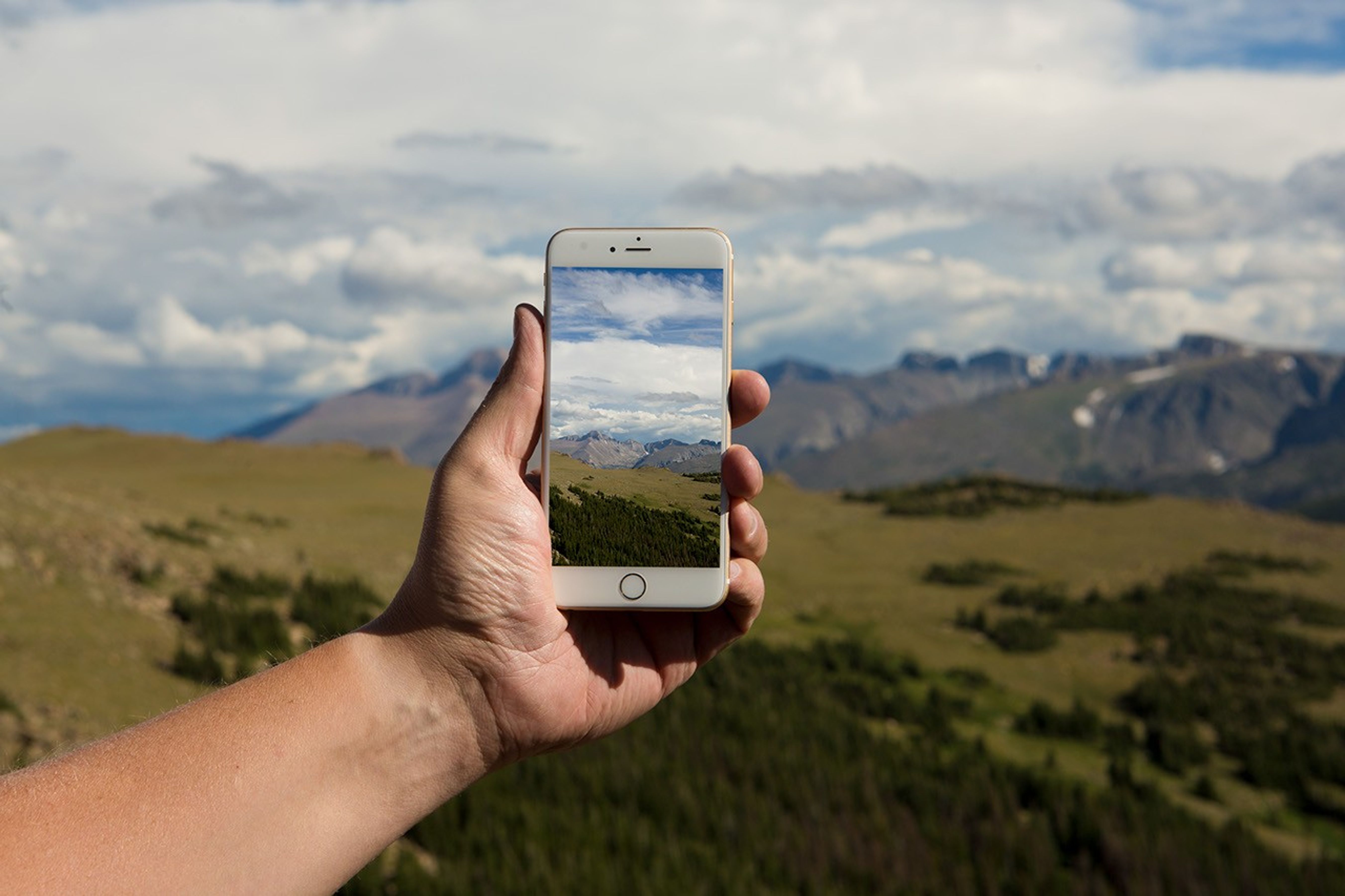
A cell phone, a computer—and your curiosity—is all you need to become a NASA citizen scientist and contribute to projects about Earth, the solar system, and beyond.
Science is built from small grains of sand, and you can contribute yours from any corner of the world.
All you need is a cell phone or a computer with an internet connection to begin a scientific adventure. Can you imagine making a pioneering discovery in the cosmos? Want to help solve problems that could improve life on our planet? Or maybe you dream of helping solve an ancient mystery of the universe? All of this is possible through NASA’s Citizen Science program.
NASA defines citizen science, or participatory science, as “science projects that rely on volunteers,” said Dr. Marc Kuchner, an astrophysicist and the Citizen Science Officer in the agency’s Science Mission Directorate in Washington, D.C.
For decades, volunteers have been supporting NASA researchers in different fields and in a variety of ways, depending on the project. They help by taking measurements, sorting data from NASA missions, and deepening our understanding of the universe and our home planet. It all counts.
“That’s science for you: It’s collaborative,” said Kuchner, who oversees the more than 30 citizen science projects NASA offers. “I connect the public and scientists to get more NASA science done.”
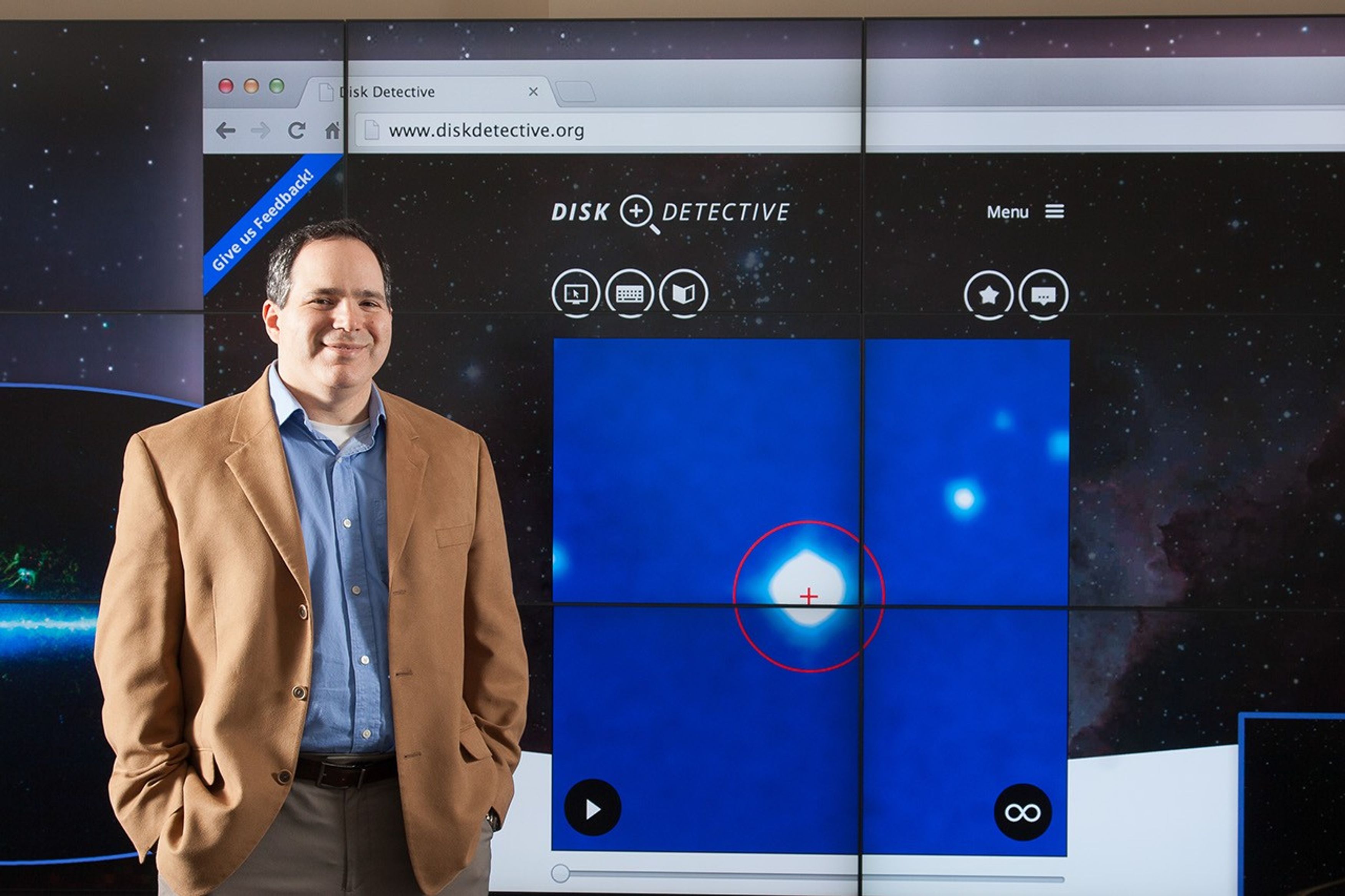
Credit: David Friedlander
A menu of projects for all tastes
Citizen scientists can come from anywhere in the world—they do not have to be U.S. citizens or residents. Volunteers help NASA look for planets in other solar systems, called exoplanets; sort clouds in Earth’s sky; observe solar eclipses; or detect comets and asteroids. Some of those space rocks are even named after the volunteers who helped find them.
Mass participation is key in initiatives that require as many human eyes as possible. “There are science projects that you can’t do without the help of a big team,” Kuchner said. For example, projects that need large datasets from space telescopes—or “things that are physically big and you need people in different places looking from different angles,” he said.
One example is Aurorasaurus, which invites people to observe and classify northern and southern auroras. “We try to study them with satellites, but it really helps to have people on the ground taking photos from different places at different times,” he explained.
“Part of the way we serve our country and humankind is by sharing not just the pretty pictures from our satellites, but the entire experience of doing science,” Kuchner said.
More than 3 million people have participated in the program. Kuchner believes that shows how much people want to be part of what he calls the “roller coaster” of science. “They want to go on that adventure with us, and we are thrilled to have them.”
The dream of discovering
“You can help scientists who are now at NASA and other organizations around the world to discover interesting things,” said Faber Burgos, a citizen scientist and science communicator from Colombia. “Truth be told, I’ve always dreamed of making history.”
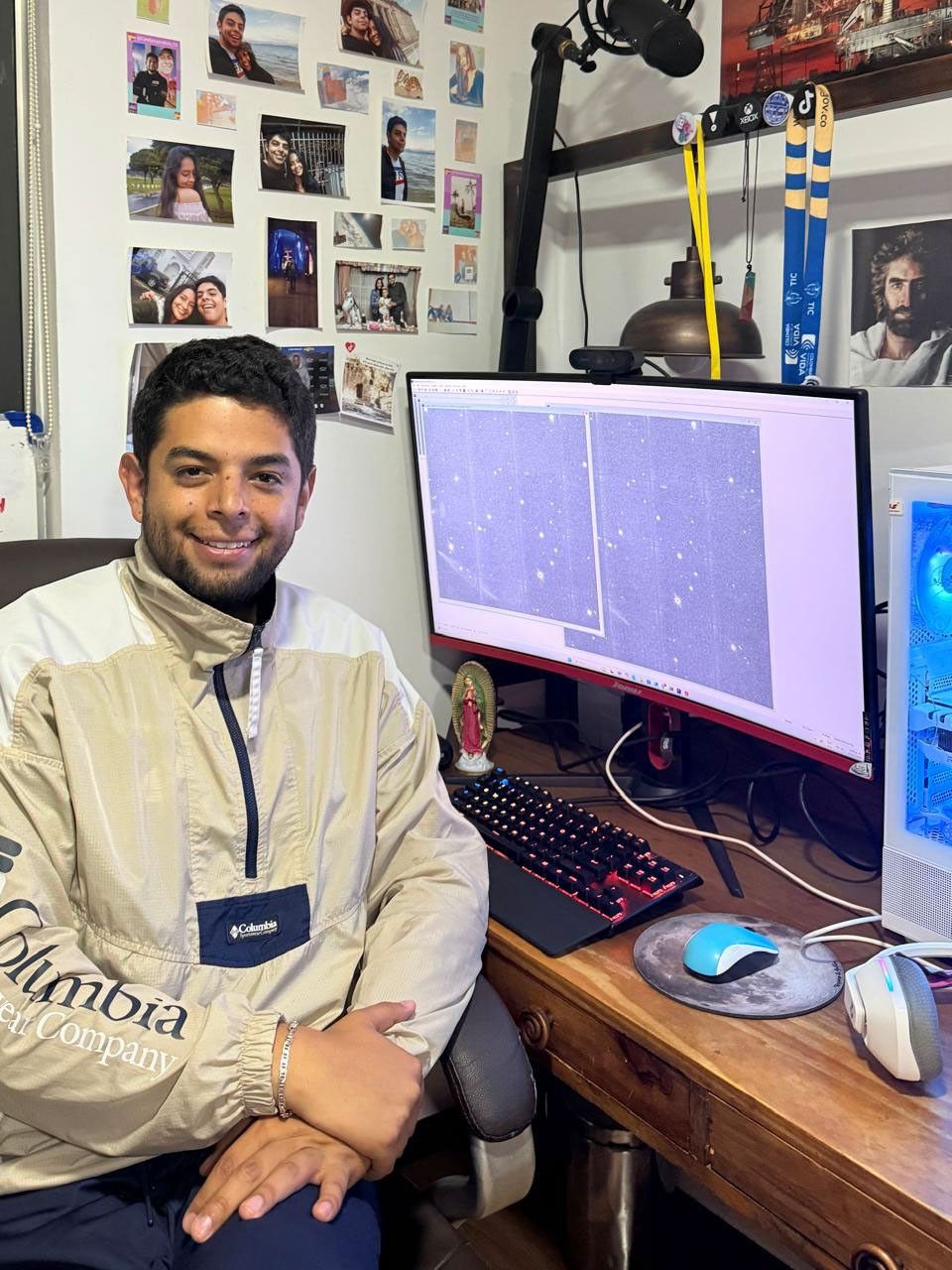
Credit: Courtesy of Faber Burgos
Burgos has been involved in two projects for the past four years: the International Astronomical Search Collaboration (IASC), which searches the sky for potentially dangerous asteroids, and Backyard Worlds: Planet 9. This project uses data from NASA’s now-completed Wide-field Infrared Survey Explorer (WISE) and its follow-up mission, NEOWISE, to search for brown dwarfs and a hypothetical ninth planet.
“There are really amazing participants in this project,” said Kuchner, who helped launch it in 2015. NASA’s WISE and NEOWISE missions detected about 2 billion sources in the sky. “So, the question is: Among those many sources, are any of them new unknowns?” he said.
The project has already found more than 4,000 brown dwarfs. These are Jupiter-sized objects—balls of gas that are too big to be planets, but too small to be stars. Volunteers have even helped discover a new type of brown dwarf.
Participants in the project are also hopeful they’ll find a hypothetical ninth planet, possibly Neptune-sized, in an orbit far beyond Pluto.
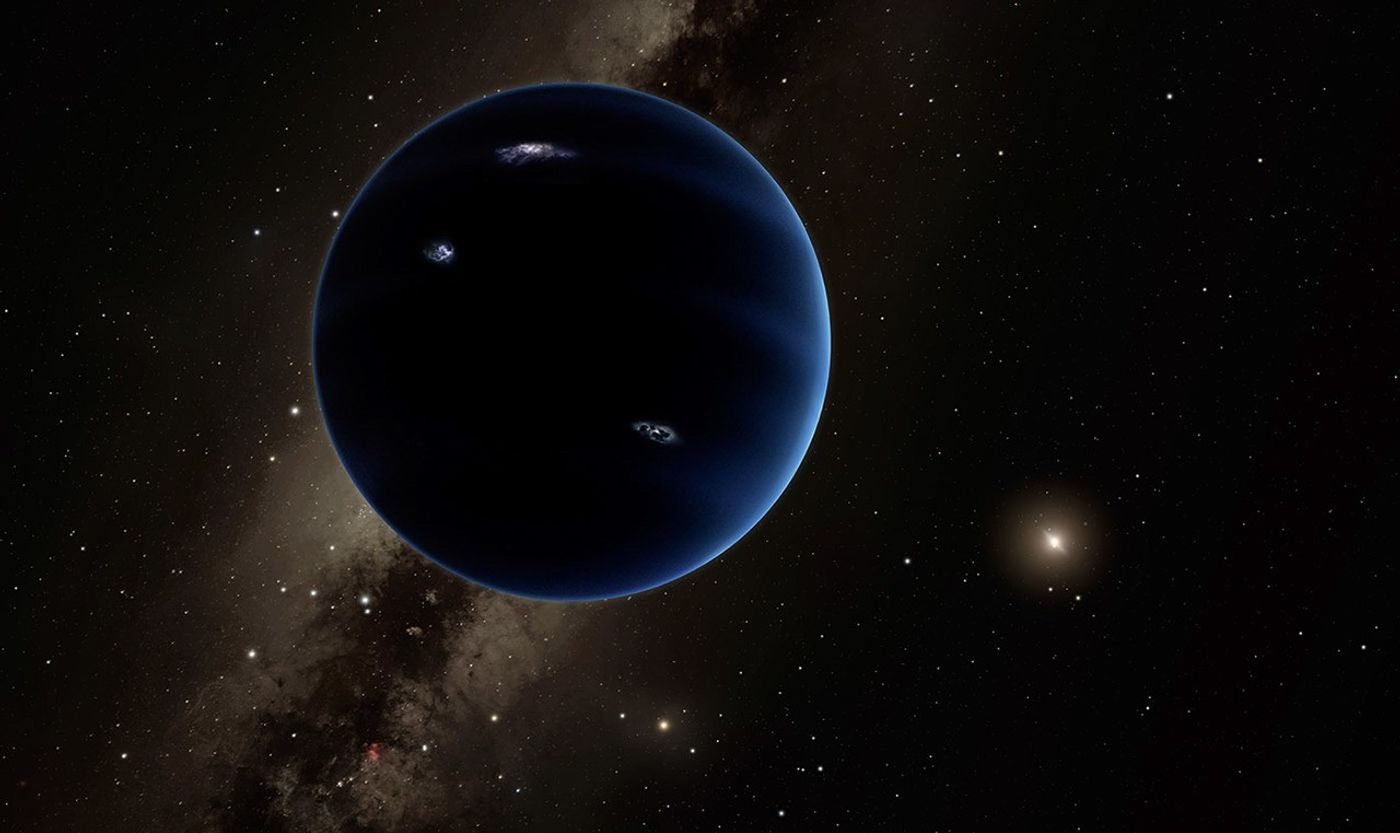
Credit: Caltech/R. Hurt (IPAC)
Burgos explained that analyzing the images is easy. “If it’s a moving object, it’s obviously going to be something of interest,” he said. “Usually, when you see these images, everything is still. But if there’s an object moving, you have to keep an eye on it.”
Once a citizen scientist marks the object across the full image sequence, they send the information to NASA scientists to evaluate.
“As a citizen scientist, I’m happy to do my bit and, hopefully, one day discover something very interesting,” he said. “That’s the beauty of NASA—it invites everyone to be a scientist. Here, it doesn’t matter what you are, but your desire to learn.”
The first step
To become a NASA citizen scientist, start by visiting the program’s website. There you’ll find a complete list of available projects with links to their respective sites. Some are available in Spanish and other languages. Many projects are also hosted on the Zooniverse platform, which has been available since 2006.
“Another cool way to get involved is to come to one of our live events,” said Kuchner. These are virtual events open to the public, where NASA scientists present their projects and invite people to participate. “Pick a project you like—and if it’s not fun, pick a different one,” he advised. “There are wonderful relationships to be had if you reach out to scientists and other participants.”
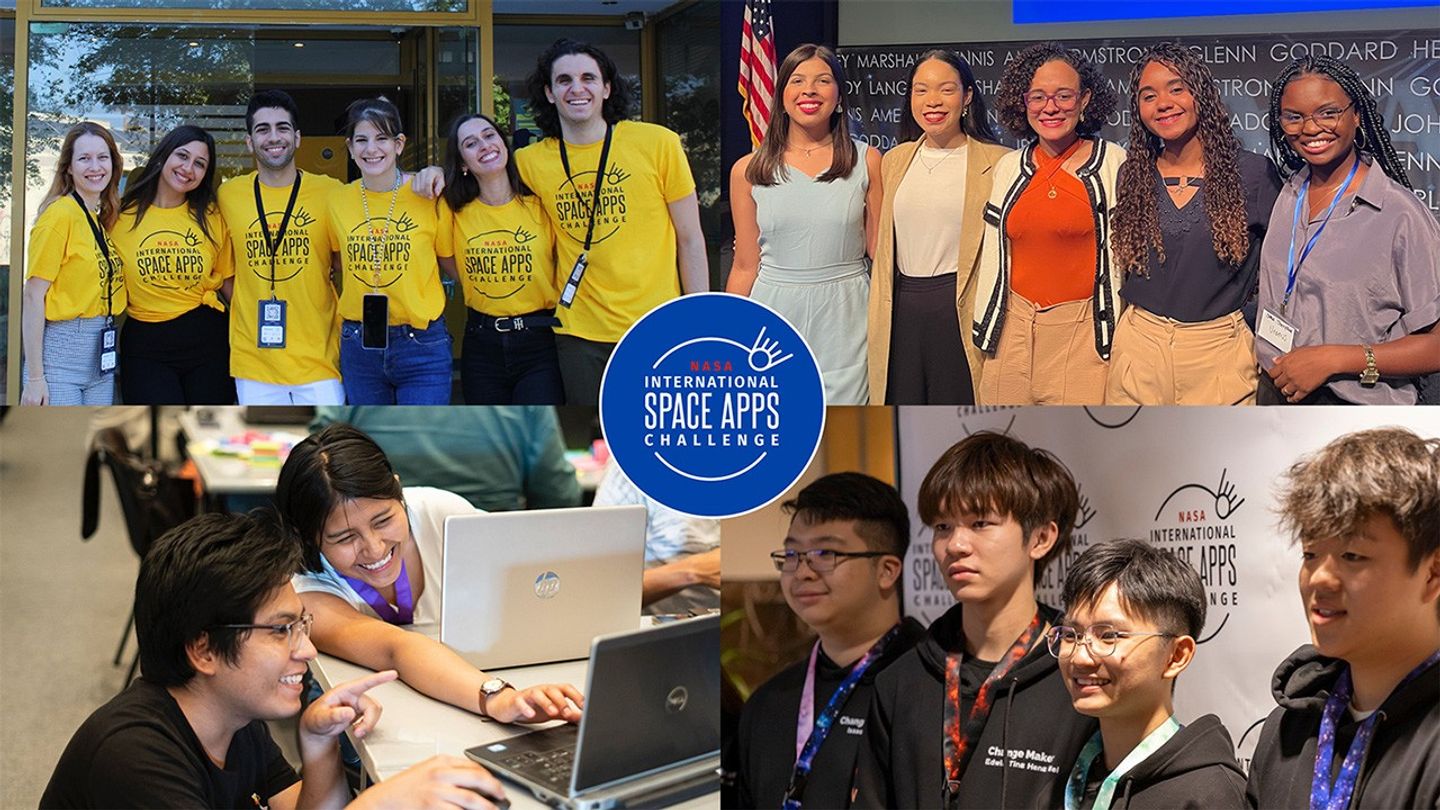
Credit: NASA
Age is not the limit
People of all ages can be citizen scientists. Some projects are kid-friendly, such as Nemo-Net, an iPad game that invites participants to color coral reefs to help sort them. “I’d like to encourage young people to start there—or try a project with one of the older people in their life,” Kuchner said.
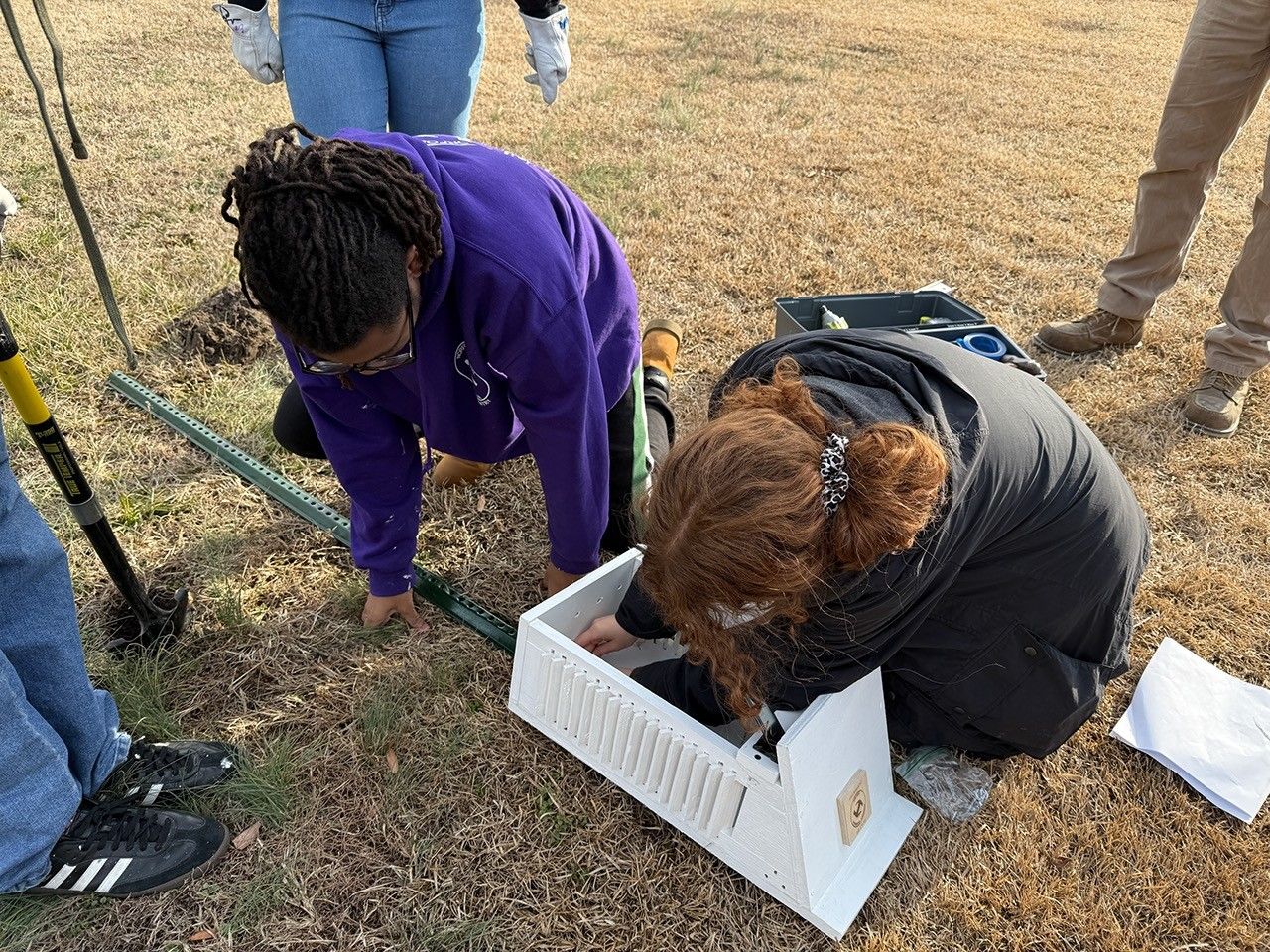
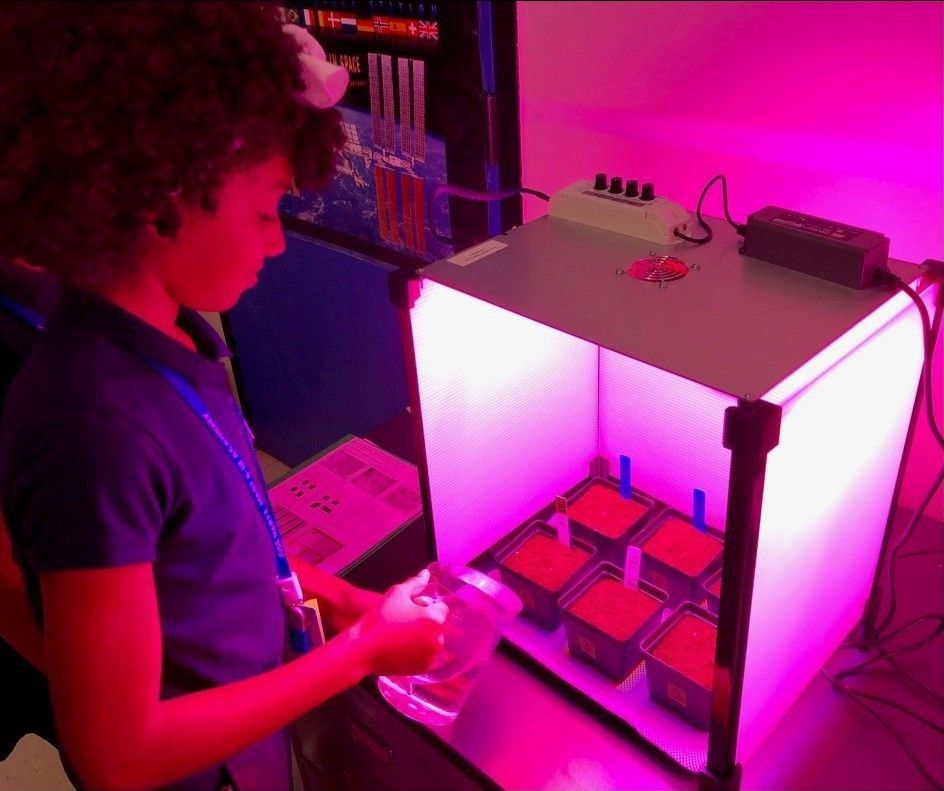
Citizen science can also take place in classrooms. In the Growing Beyond Earth project, teachers and students run experiments on how to grow plants in space for future missions. The IASC project also works with high schools to help students detect asteroids.
Credit: NASA
Projects by the community, for the community
GLOBE Observer is another initiative with an international network of teachers and students. The platform offers a range of projects—many in Spanish—that invite people to collect data using their cell phones.
One of the most popular is the GLOBE Mosquito Habitat Mapper, which tracks the migration and spread of mosquitoes that carry diseases. “It’s a way to help save lives—tracking the vectors that transmit malaria and Zika, among others,” Kuchner said.
Other GLOBE projects explore everything from ground cover to cloud types. Some use astronomical phenomena visible to everyone. For example, during the 2024 total solar eclipse, participants measured air temperature using their phones and shared that data with NASA scientists.
The full experience of doing science
No prior studies are needed, but many volunteers go on to collaborate on—or even lead—scientific research. More than 500 NASA citizen scientists have co-authored scientific publications.
One of them is Hugo Durantini Luca, from Córdoba, Argentina, who has participated in 17 published articles, with more on the way. For years, he explored various science projects, looking for one where he could contribute more actively.
Credit: NASA
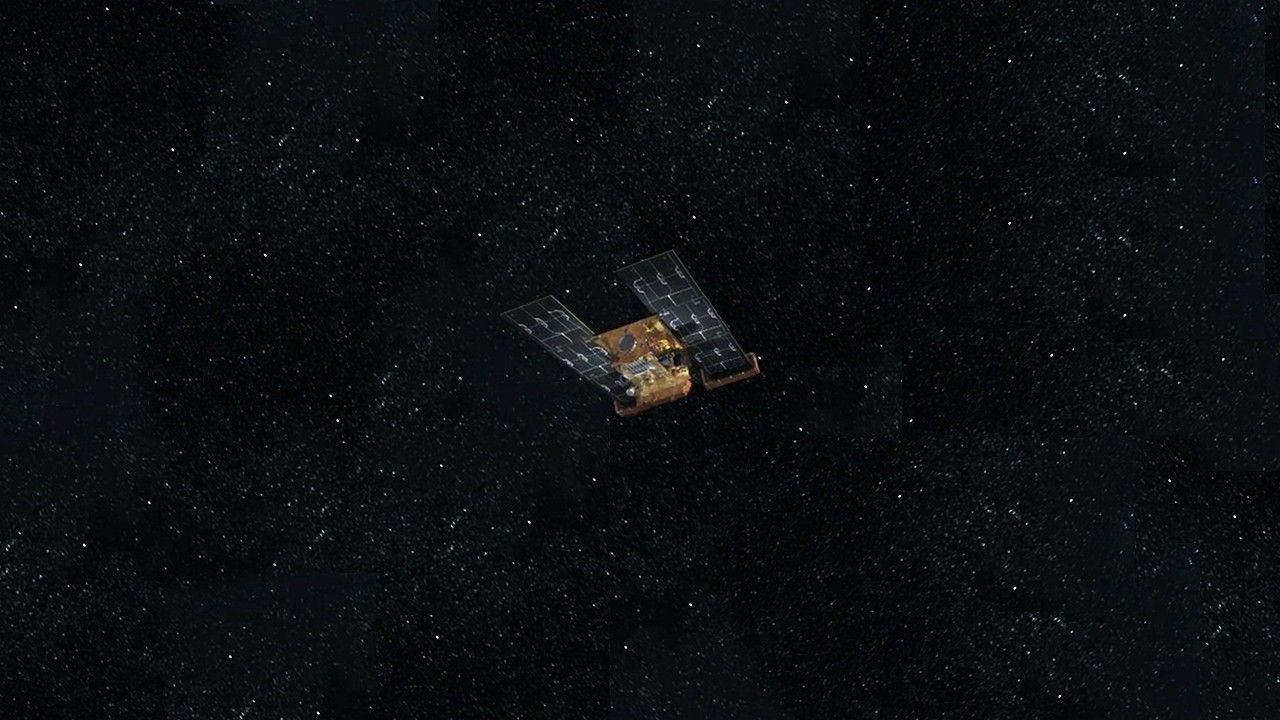
He participated in NASA’s first citizen science project, Stardust@home, which invites users to search for interstellar dust particles in collectors from the Stardust mission, using a virtual microscope.
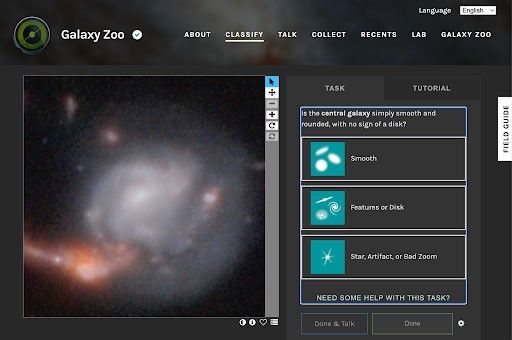
In 2014, he discovered Disk Detective, a project that searches for disks around stars, where planets may form. By looking at images from the WISE and NEOWISE missions, participants can help understand how worlds are born and how solar systems evolve.
“And, incidentally, if we find planets or some sign of life, all the better,” said Durantini Luca.
Although that remains a dream, they have made other discoveries—like a new kind of stellar disk called the “Peter Pan Disk,” which appears young even though the star it surrounds is not.

Credit: NASA
Science in person
In 2016, Durantini Luca got the chance to support Disk Detective with his own observations from the southern hemisphere. He traveled to El Leoncito Astronomical Complex (CASLEO), an observatory in San Juan, Argentina. There, he learned to use a spectrograph—an instrument that breaks down starlight to analyze its composition.
He treasures that experience. “Curiously, it was the first time in my life I used a telescope,” he said.

Credit: Luciano García
While in-person opportunities are rare, both virtual and physical events help build community. Citizen scientists stay in touch weekly through various channels.
“Several of us are friends already—after so many years of bad jokes on calls,” said Durantini Luca.
“People send me pictures of how they met,” said Kuchner. He said the program has even changed how he does science. “It’s changed my life,” he said. “Science is already cool—and this makes it even cooler.”
About the Author
NASA Science Editorial Team
Share
Details
Related Terms
Explore More

Powered by WPeMatico