Meet NASA’s SpaceX Crew-12

Meet NASA’s SpaceX Crew-12
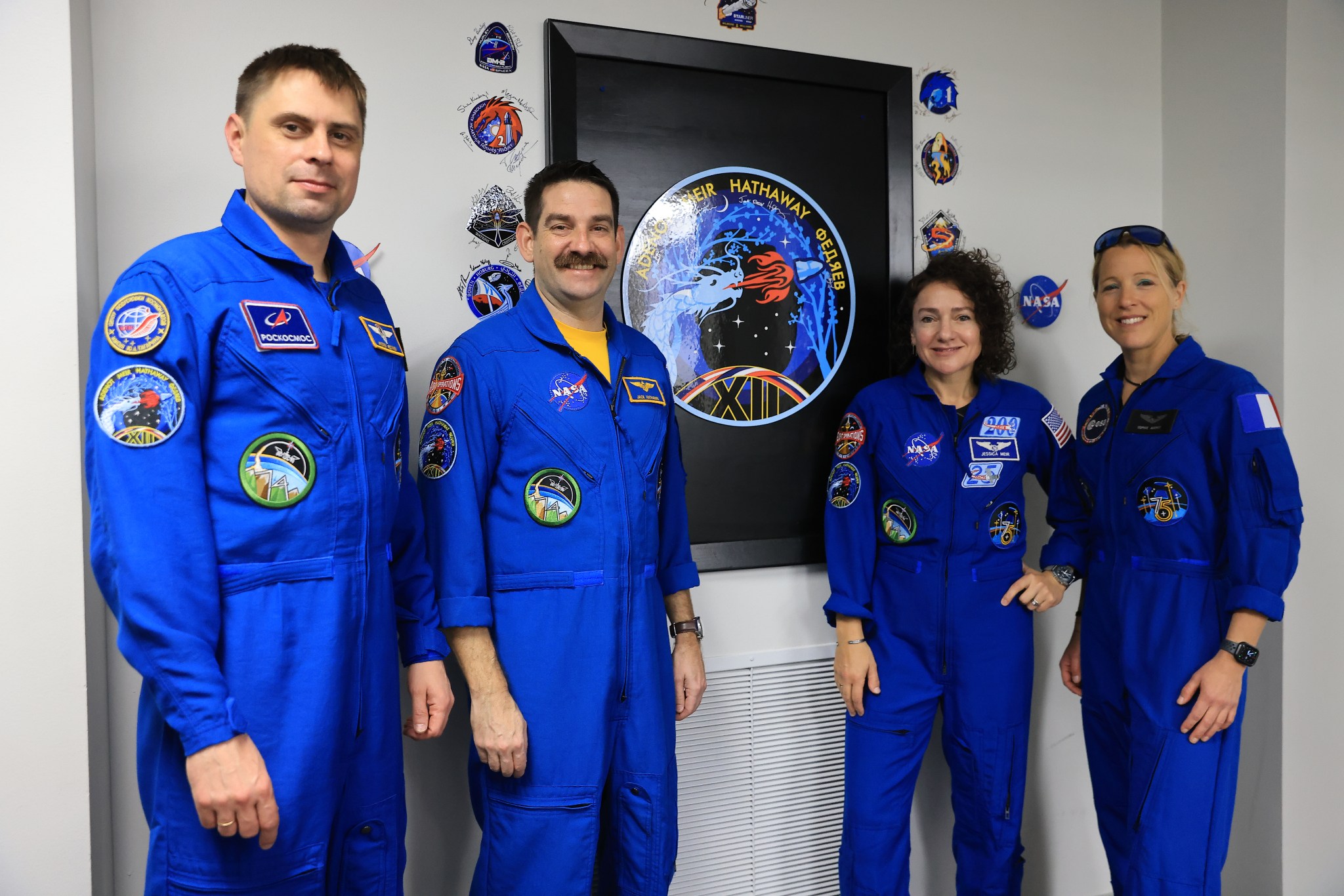
Four people - two men on the left and two women on the right - pose with the Crew-12 mission insignia. They are all wearing blue jumpsuits with various patches on them. The insignia is on the wall, framed in a black recess. Autographed patches are stuck on the wall around the black frame.
From left, NASA’s SpaceX Crew-12 crew members – Roscosmos cosmonaut Andrey Fedyaev, NASA astronauts Jack Hathaway and Jessica Meir, and ESA (European Space Agency) astronaut Sophie Adenot – pose next to their mission insignia inside the Astronaut Crew Quarters in the Neil A. Armstrong Operations and Checkout Building at NASA’s Kennedy Space Center in Florida on Monday, Feb. 9, 2026.
NASA/Kim Shiflett

NASA astronaut Jessica Meir will serve as the spacecraft commander for NASA’s SpaceX Crew-12 mission.

This will be the second flight to the International Space Station for Meir, who was selected as a NASA astronaut in 2013. The Caribou, Maine, native earned a bachelor’s degree in biology from Brown University in Providence, Rhode Island, a master’s degree in space studies from the International Space University in Illkirch-Graffenstraden, France, and a doctorate in marine biology from Scripps Institution of Oceanography in San Diego, California. Follow Meir on X for updates on the mission.

Meir previously spent 205 days as a flight engineer during Expedition 61/62, and she completed the first three all-woman spacewalks with fellow NASA astronaut Artemis II Mission Specialist Christina Koch, totaling 21 hours and 44 minutes outside of the station. Since then, she has served in various roles, including assistant to the chief astronaut for commercial crew (SpaceX), deputy for the Flight Integration Division, and assistant to the chief astronaut for the human landing system.

For his first spaceflight, NASA astronaut Jack Hathaway will serve as the spacecraft pilot. A commander in the United States Navy, Hathaway was selected as part of the 2021 astronaut candidate class.

The South Windsor, Connecticut, native holds a bachelor’s degree in physics and history from the U.S. Naval Academy in Maryland, and master’s degrees in flight dynamics from Cranfield University in England, and national security and strategic studies from the U.S. Naval War College in Newport, Maryland, respectively. Hathaway also is a graduate of the Empire Test Pilot’s School, Fixed Wing Class 70 in 2011. At the time of his selection, Hathaway was deployed aboard the USS Truman, serving as Strike Fighter Squadron 81’s prospective executive officer. He has accumulated more than 2,500 flight hours in 30 different aircraft, including more than 500 carrier arrested landings and 39 combat missions.

The Crew-12 mission will be ESA (European Space Agency) astronaut Sophie Adenot’s first spaceflight. Before her selection as an ESA astronaut in 2022, Adenot earned a degree in engineering from ISAE-SUPAERO in Toulouse, France, specializing in spacecraft and aircraft flight dynamics. She also earned a master’s degree in human factors engineering at Massachusetts Institute of Technology in Cambridge.

After earning her master’s degree, she became a helicopter cockpit design engineer at Airbus Helicopters and later served as a search and rescue pilot at Cazaux Air Base from 2008 to 2012. She then joined the High Authority Transport Squadron in Villacoublay, France, and served as a formation flight leader and mission captain from 2012 to 2017. Between 2019 and 2022, Adenot worked as a helicopter experimental test pilot in Cazaux Flight Test Center with DGA (Direction Générale de l’Armement – the French Defence Procurement Agency). She has logged more than 3,000 hours flying 22 different helicopters.

This will be Roscosmos cosmonaut Andrey Fedyaev’s second long-duration stay aboard the orbiting laboratory. He graduated from the Krasnodar Military Aviation Institute in 2004, specializing in aircraft operations and air traffic organization, and earned qualifications as a pilot engineer. Prior to his selection as a cosmonaut, he served as deputy commander of an Ilyushin-38 aircraft unit in the Kamchatka Region, logging more than 600 flight hours and achieving the rank of second-class military pilot.

Fedyaev was selected for the Gagarin Research and Test Cosmonaut Training Center Cosmonaut Corps in 2012 and has served as a test cosmonaut since 2014. In 2023, he flew to the space station as a mission specialist during NASA’s SpaceX Crew-6 mission, spending 186 days in orbit, as an Expedition 69 flight engineer. For his achievements, Fedyaev was awarded the title Hero of the Russian Federation and received the Yuri Gagarin Medal. 

For more than 25 years, people have lived and worked continuously aboard the International Space Station, advancing scientific knowledge and making research breakthroughs that are not possible on Earth. The station is a critical testbed for NASA to understand and overcome the challenges of long-duration spaceflight and to expand commercial opportunities in low Earth orbit. As commercial companies concentrate on providing human space transportation services and destinations as part of a robust low Earth orbit economy, NASA is focusing its resources on deep space missions to the Moon as part of the Artemis campaign in preparation for future human missions to Mars.

Powered by WPeMatico

Get The Details…

Elyna Niles-Carnes

NASA’s SpaceX Crew-12 Greet Family, Friends During Walkout

NASA’s SpaceX Crew-12 Greet Family, Friends During Walkout

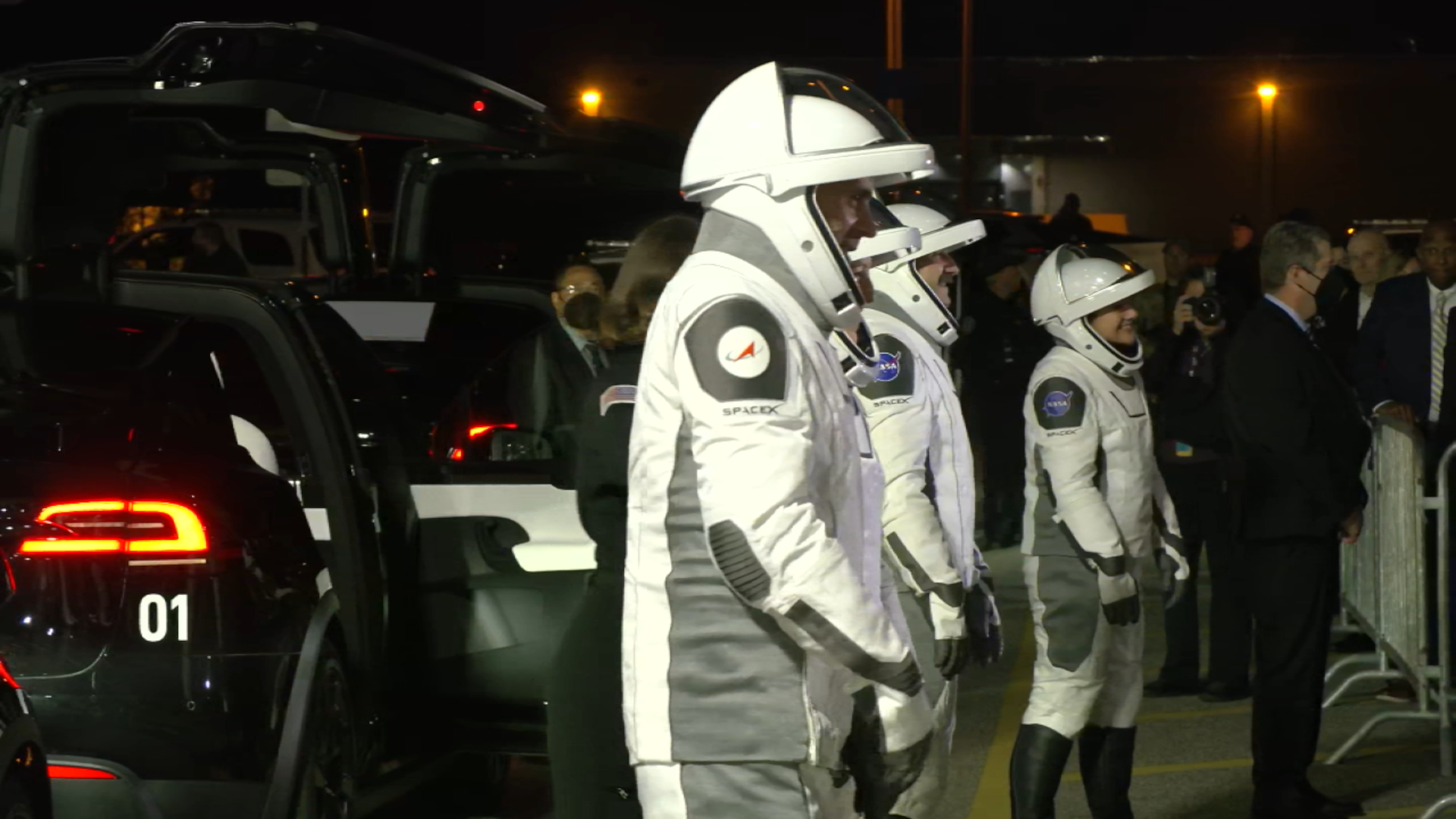
NASA’s SpaceX Crew-12 crew members wave to family and friends as they prepare to depart the Neil A. Armstrong Operations and Checkout Building at the agency’s Kennedy Space Center in Florida for nearby Space Launch Complex 40 at Cape Canaveral Space Force Station for launch of Crew-12 on Friday, Feb. 13, 2026.
NASA

NASA astronauts Jessica Meir and Jack Hathaway, ESA (European Space Agency) astronaut Sophie Adenot, and Roscosmos cosmonaut Andrey Fedyaev waved to family, friends, and supporters as they walked out of the Astronaut Crew Quarters at the Neil A. Armstrong Operations and Checkout Building in Florida. The crew walkout and greeting are a tradition that dates to Apollo 7 in 1968.

New for the Crew-12 mission, crew members will have the latest smartphones while orbiting Earth. They can use the phones to record messages for loved ones, document their journey, and share their story with the world.

Customized vehicles, with a security escort, will drive Crew-12 members for the 20-minute ride to Space Launch Complex 40 at Cape Canaveral Space Force Station in Florida.

Follow along for updates on Crew-12 on the mission blog@NASAKennedy on X, or NASA Kennedy on Facebook.

Powered by WPeMatico

Get The Details…

Elyna Niles-Carnes

Sunlight Extracts Oxygen From Regolith Using Solar Chemistry

Sunlight Extracts Oxygen From Regolith Using Solar Chemistry

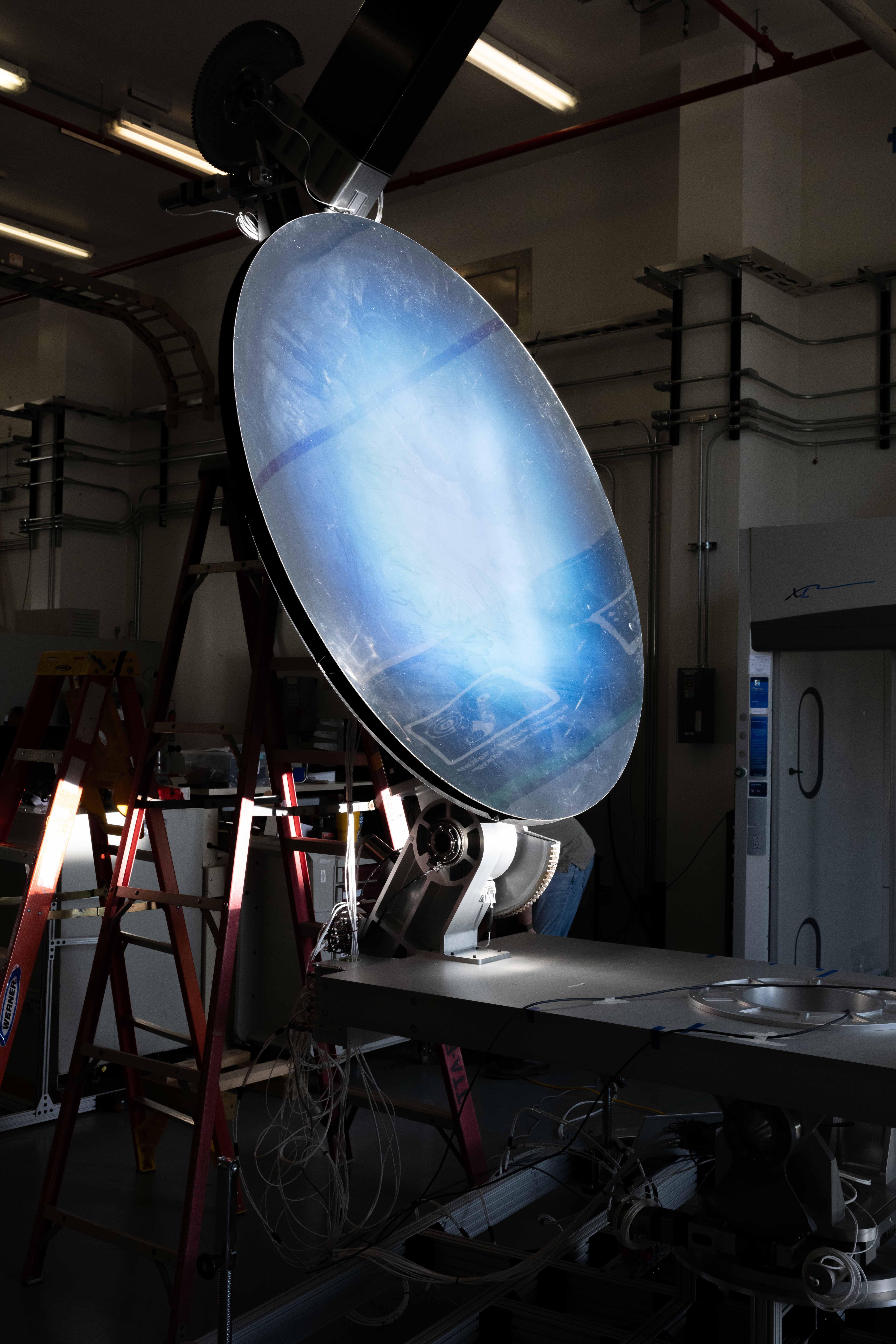
A solar concentrator is tested as part of the Carbothermal Reduction Demonstration (CaRD) project, which aims to produce oxygen from simulated lunar regolith for use at the Moon’s south pole. During this integrated test, the team combined the concentrator, mirrors, and control software and confirmed the production of carbon monoxide.
NASA/Michael Rushing

NASA’s Carbothermal Reduction Demonstration (CaRD) project completed an important step toward using local resources to support human exploration on the Moon. The CaRD team performed integrated prototype testing that used concentrated solar energy to extract oxygen from simulated lunar soil, while confirming the production of carbon monoxide through a solar-driven chemical reaction. 

If deployed on the Moon, this technology could enable the production of propellant using only lunar materials and sunlight, significantly reducing the cost and complexity of sustaining a long-term human presence on the lunar surface. The same downstream systems used to convert carbon monoxide into oxygen can also be adapted to convert carbon dioxide into oxygen and methane on Mars.  

The integrated prototype brought together a carbothermal oxygen production reactor developed by Sierra Space, a solar concentrator designed by NASA’s Glenn Research Center in Cleveland, precision mirrors produced by Composite Mirror Applications, and avionics, software, and gas analysis systems from NASA’s Kennedy Space Center in Florida. NASA’s Johnson Space Center in Houston led project management, systems engineering, testing, and development of key hardware and ground support systems.

Powered by WPeMatico

Get The Details…
Sumer Loggins

Stonebreen’s Beating Heart

Stonebreen’s Beating Heart

An animation of part of an island in the Svalbard archipelago shows ice-covered terrain centered on a glacier that flows toward the dark blue Barents Sea at the top. Shades of red along the glacier appear to pulse from light to dark, indicating seasonal changes in the glacier’s speed—slower in winter and spring and faster in summer.
2014–2022

Edgeøya, an island in the southeastern part of the Svalbard archipelago, is defined by stark Arctic expanses and rugged terrain. Still, even here—halfway between mainland Norway and the North Pole—life persists, from mosses to polar bears. The southern lobe of Stonebreen, a glacier that flows from the Edgeøyjøkulen ice cap into the Barents Sea, gives the landscape a different kind of life. Its ice pulses like a heart.

The apparent heartbeat comes from the ice speeding up and slowing down with the seasons. This animation, based on satellite data collected between 2014 and 2022, shows how fast the glacier’s surface ice moves on average during each month. In winter and spring, the ice flows relatively slowly (pink); by late summer, it races toward the sea at speeds exceeding 1,200 meters per year in places (dark red). In summer 2020, speeds reached as high as 2,590 meters per year (23 feet per day).

In general, summer speedups are caused by meltwater that percolates from the surface down to the base of the glacier, where the ice sits on rock, explained Chad Greene, a glaciologist at NASA’s Jet Propulsion Laboratory (JPL). “When the base of a glacier becomes inundated with meltwater, water pressure at the base increases and allows the glacier to slide more easily,” he said.

Data for the animation are from the ITS_LIVE project, developed at JPL, which uses an algorithm to detect glacier speed based on surface features visible in optical and radar satellite images. In 2025, Greene and JPL colleague Alex Gardner used ITS_LIVE data to analyze the seasonal variability of hundreds of thousands of glaciers across the planet, including Stonebreen.

Stonebreen is a surging glacier, a type that cycles between stretches of relatively slow movement and sudden bursts of speed when ice can flow several times faster than usual. These surges can last anywhere from months to years. Globally, only about 1 percent of glaciers are surge-type, though in Svalbard, they are relatively widespread.

Before 2023, Stonebreen spent several years surging at high speeds after melting along its front likely destabilized the glacier, according to Gardner. Even during this surging period, the ice followed a seasonal rhythm—speeding up in summer and slowing through the winter—all while continuing its faster overall flow toward the Barents Sea.

Since 2023, however, the glacier has all but slowed to a halt, with only a short stretch in the summer when meltwater causes Stonebreen to glide across the ground. It has entered a phase of quiet, or “quiescence,” which is a normal part of the cycle for surge-type glaciers.  

These seasonal heartbeat-like pulses and longer-term variations in ice flow at Stonebreen and other glaciers worldwide can be explored using the ITS_LIVE app.

Maps courtesy of Chad Greene and Alex Gardner, NASA/JPL, using data from the NASA MEaSUREs project ITS_LIVE. Story by Kathryn Hansen.

References & Resources

You may also be interested in:

Stay up-to-date with the latest content from NASA as we explore the universe and discover more about our home planet.

Satellites Detect Seasonal Pulses in Earth’s Glaciers

4 min read

From Alaska’s Saint Elias Mountains to Pakistan’s Karakoram, glaciers speed up and slow down with the seasons.

Article

Alaska’s Brand New Island

3 min read

A landmass that was once encased in the ice of the Alsek Glacier is now surrounded by water.

Article

Arctic Sea Ice Ties for 10th-Lowest on Record

3 min read

Satellite data show that Arctic sea ice likely reached its annual minimum extent on September 10, 2025.

Article

Powered by WPeMatico

Get The Details…

NASA, SpaceX Work Toward Friday Morning Crew-12 Launch

NASA, SpaceX Work Toward Friday Morning Crew-12 Launch

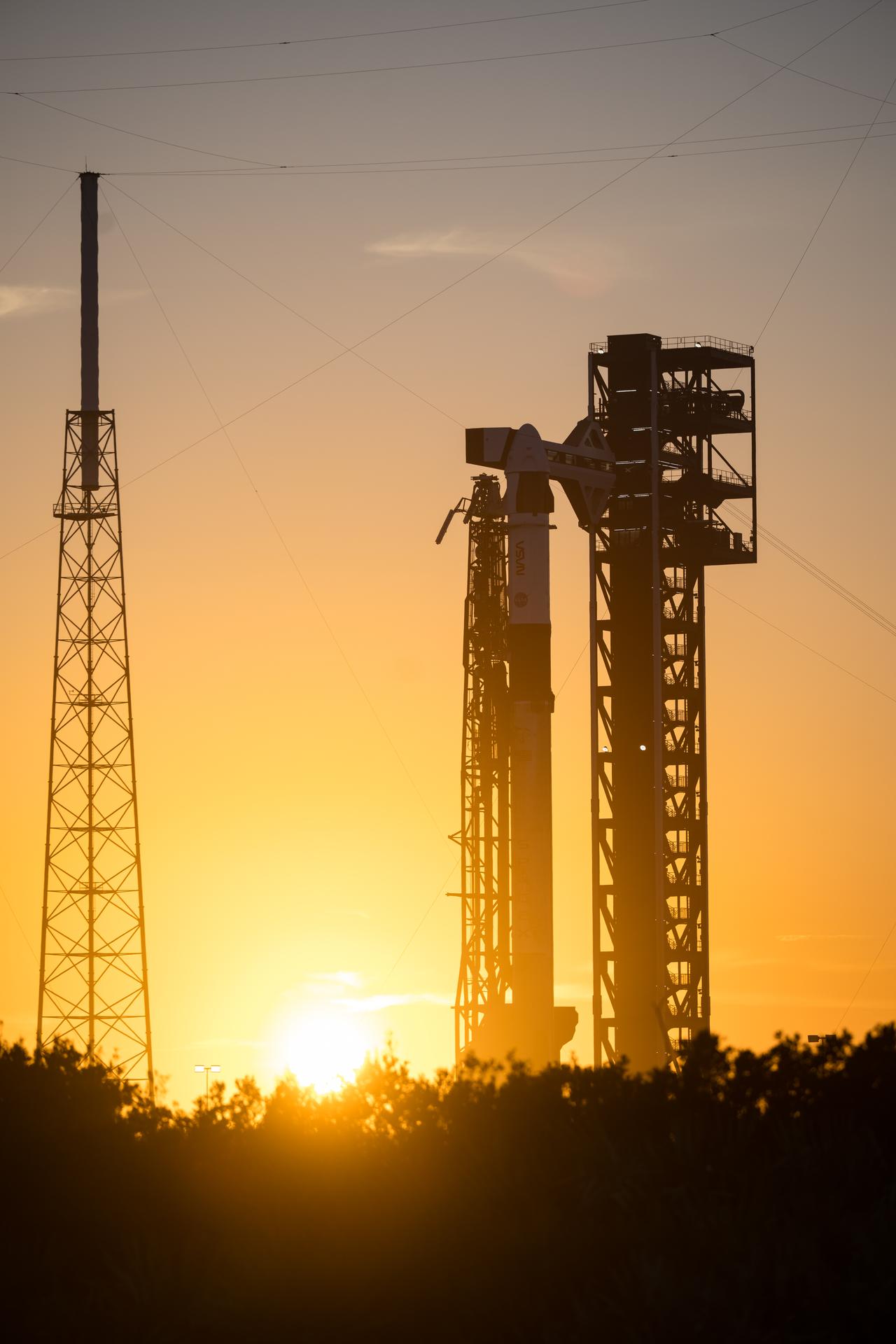
Image shows a sunset at Space Launch Complex 40 at Cape Canaveral Space Force Station in Florida on Tuesday, Feb. 10, 2026. A SpaceX Falcon 9 rocket with the company's spacecraft is atop, along with the crew access arm and lighting tower. Photo credit: NASA/Aubrey Gemignani
A SpaceX Falcon 9 rocket with the company’s Dragon spacecraft on top is seen on the launch pad at sunset at Space Launch Complex 40 as preparations continue for the Crew-12 mission, Tuesday, Feb. 10, 2026, at Cape Canaveral Space Force Station in Florida.
NASA/Aubrey Gemignani

NASA and SpaceX teams are continuing final preparations on Thursday as the four crew members of Crew-12 follow their own precise checklist of activities before they launch to the International Space Station. Crew-12 is set to lift off from Space Launch Complex 40 at Cape Canaveral Space Force Station in Florida at 5:15 a.m. EST Friday, Feb. 13, aboard a SpaceX Dragon spacecraft and Falcon 9 rocket.

Weather forecasters issued an improved outlook for the launch site conditions, with a 90% chance of acceptable weather at launch time. They also will be watching the weather conditions along Crew-12’s flight path throughout the countdown, specifically the potential for elevated wind speeds. After detailed weather briefings Thursday morning, forecasters and mission managers opted to continue into the Crew-12 launch countdown. They will again review the forecast around 10 p.m. Thursday, a few hours before the crew suits up.

NASA astronauts Jessica Meir, commander, and Jack Hathaway, pilot, ESA (European Space Agency) astronaut Sophie Adenot, and Roscosmos cosmonaut Andrey Fedyaev will fly aboard the Dragon spacecraft to begin an eight-month rotation aboard the space station, where they will conduct a host of experiments. They will return the orbiting laboratory to its full crew complement of seven crew members following the return of Crew-11 in January.

Crew-12 will be SpaceX’s 12th crew rotational flight to the space station and 13th crewed mission as part of NASA’s Commercial Crew Program.

Watch NASA’s live launch coverage starting at 3:15 a.m., on Feb. 13 on NASA+, Amazon Prime, and the agency’s YouTube channel. Learn how to watch NASA content through a variety of online platforms, including social media. Launch blog coverage begins at 1:15 a.m. on Feb. 13. 

For a Feb. 13 launch, Crew-12 would arrive at the space station at approximately 3:15 p.m. Saturday, Feb. 14. NASA’s live coverage of Crew-12’s arrival to the space station will begin at 1:15 p.m. on NASA+, Amazon Prime, and the agency’s YouTube channel. 

Powered by WPeMatico

Get The Details…

Elyna Niles-Carnes