Artemis II Crew Trains on T-38

Artemis II Crew Trains on T-38

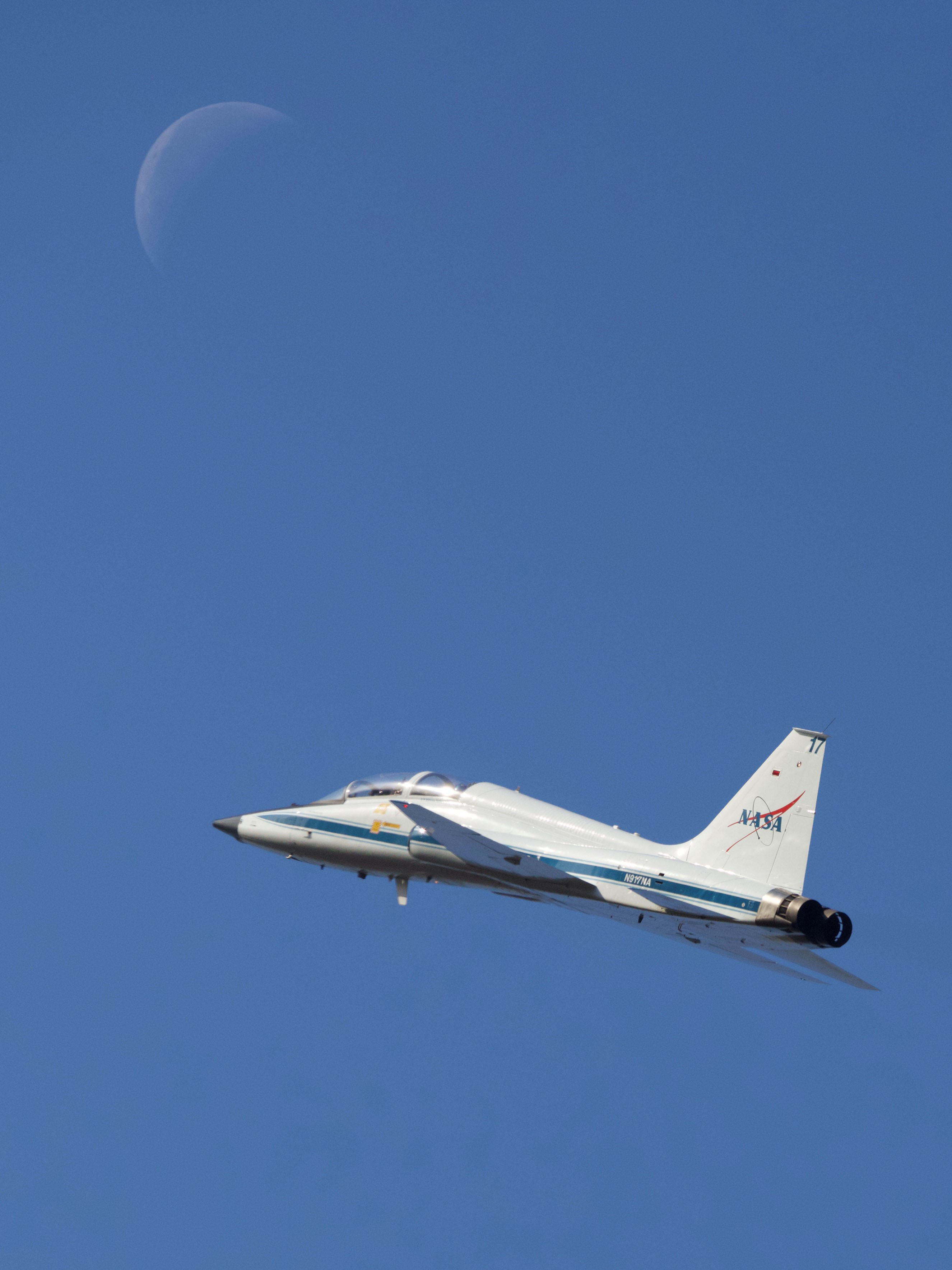
A white plane rises upward to the left against a blue sky. At top left, the waning crescent moon is faintly visible. The plane has a blue stripe low on its body and a version of the NASA insignia on the rudder.
NASA/Brendan Finnegan

NASA astronaut Christina Koch and Canadian Space Agency astronaut Jeremy Hansen take off on a T-38 training flight from Ellington Field on Feb. 11, 2026, as a waning crescent Moon hovers above. Koch and Hansen, along with NASA astronauts Reid Wiseman and Victor Glover, are part of NASA’s Artemis II mission, the first crewed flight of the Space Launch System rocket and Orion spacecraft. Artemis II will fly around the Moon and back to test Orion’s systems and capabilities before returning the crew to a splashdown off the California coast.

As part of a Golden Age of innovation and exploration, Artemis will pave the way for new U.S. crewed missions on the lunar surface in preparation to send the first astronauts to Mars.

Image credit: NASA/Brendan Finnegan

Powered by WPeMatico

Get The Details…
Monika Luabeya

Winds Whip Up Fires and Dust on the Southern Plains

Winds Whip Up Fires and Dust on the Southern Plains

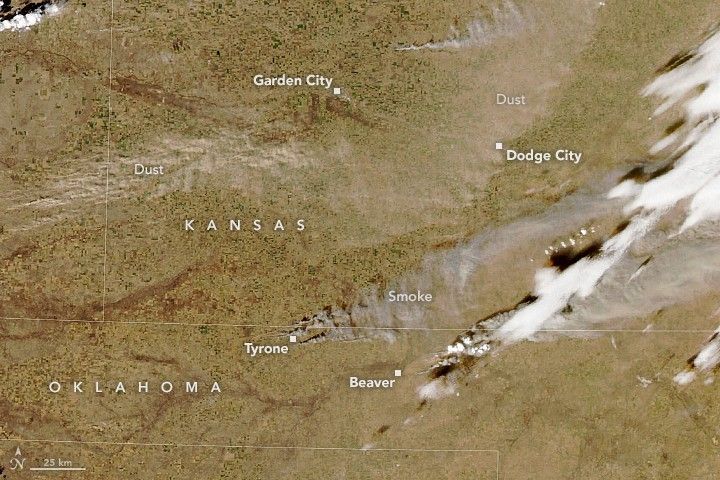
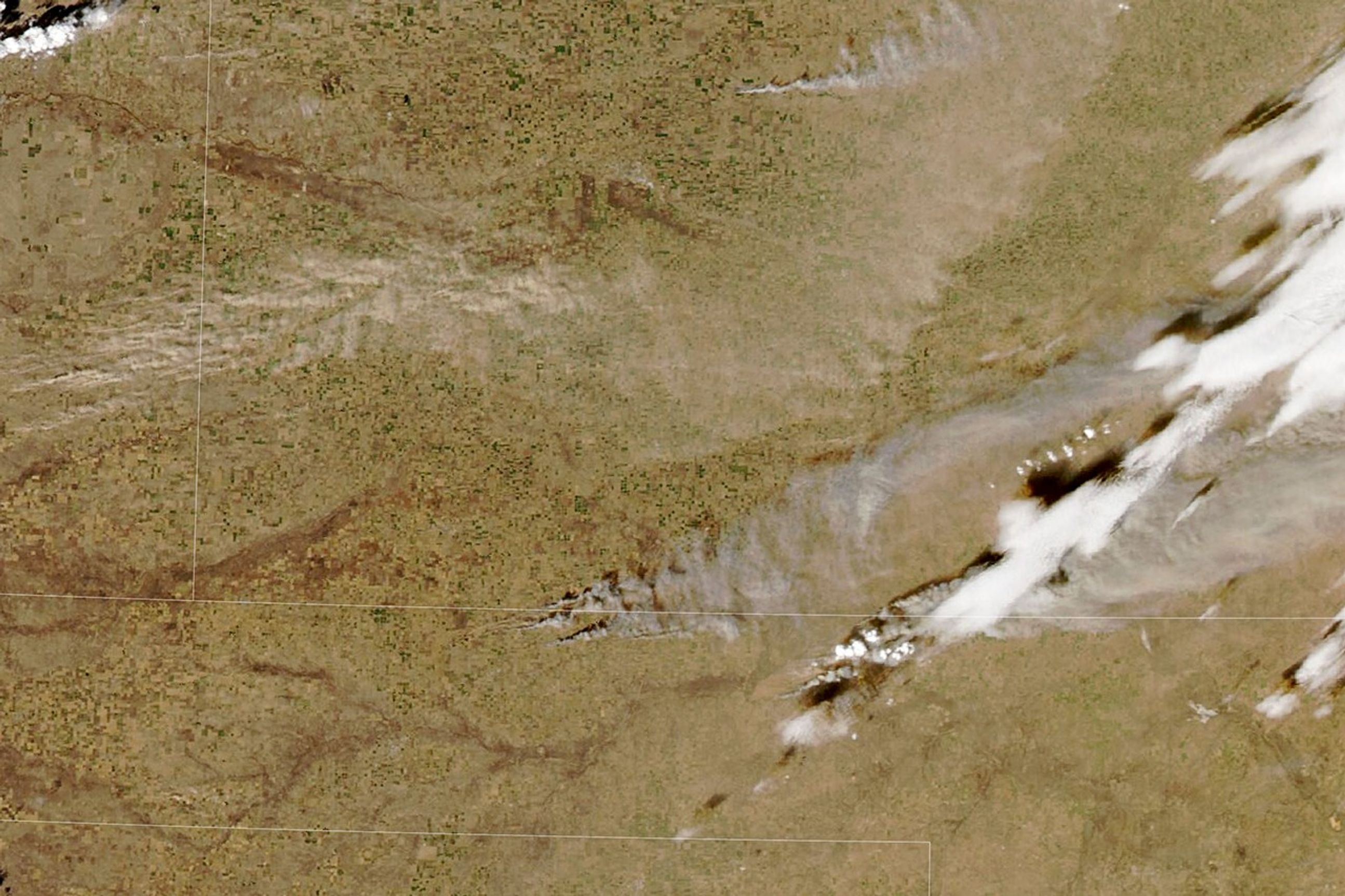
Plumes of gray smoke drift east-northeast from several grass and brush fires in the Oklahoma Panhandle. To the north, tan clouds of wind-borne dust cover portions of Kansas.
February 17, 2026

High winds coupled with dry conditions fueled fast-spreading wildland fires in the U.S. southern Plains in winter 2026. On February 17, several large blazes broke out on the Oklahoma Panhandle and burned quickly through tens of thousands of acres of grasslands and shrublands. The winds also caused dust storms and low visibility throughout the wider region.

Smoke from multiple fires as well as wind-borne dust streamed across the Plains on the afternoon of February 17, when the MODIS (Moderate Resolution Imaging Spectroradiometer) on NASA’s Aqua satellite acquired this image. The Ranger Road fire, the largest of the group, started that day shortly after noon near Beaver, Oklahoma, and spread rapidly throughout the afternoon. By the evening, it had burned into Kansas and consumed an estimated 145,000 acres (587,000 hectares), the Oklahoma Forestry Service reported. Combined with other fires nearby, including the Stevens and Side Road fires near Tyrone, Oklahoma, more than 155,000 acres burned that day, the agency said.

The Ranger Road fire exhibited features of a “fast fire,” a particularly dangerous and destructive type of fire characterized by rapid spread. These blazes usually burn in grasslands and shrublands rather than forests, often occur in autumn and winter when fuels are dry, and are propelled by strong winds. Wind gusts up to 70 miles (110 kilometers) per hour were measured across the Oklahoma and Texas panhandles on February 17, the National Weather Service said.

The fires destroyed several structures, threatened farmland and livestock, and prompted evacuation orders for parts of western Oklahoma and southern Kansas, according to news reports. Oklahoma’s governor declared a disaster emergency for counties in the Panhandle.

Persistent winds and dry conditions led to further fire growth on February 18. The Ranger Road and Stevens fires approximately doubled in size that day, the Oklahoma Forestry Services reported. On February 19, a red flag warning remained in effect for the Texas and Oklahoma panhandles, with forecasts calling for wind gusts up to 40 miles (64 kilometers) per hour and very low relative humidity.

Wind-blown dust created other serious hazards across the region. Near Pueblo, Colorado (west of this scene), poor visibility led to a deadly pileup of dozens of vehicles on Interstate 25, according to reports. And in southern New Mexico, officials warned travelers of dangerous conditions due to blowing dust.

NASA Earth Observatory image by Lauren Dauphin, using MODIS data from NASA EOSDIS LANCE and GIBS/Worldview. Story by Lindsey Doermann.

References & Resources

You may also be interested in:

Stay up-to-date with the latest content from NASA as we explore the universe and discover more about our home planet.

B.C. Wildfires Send Smoke Skyward

2 min read

Lightning likely ignited several large fires that sent smoke pouring over the Canadian province in early September 2025.

Article

Fires on the Rise in the Far North

3 min read

Satellite-based maps show northern wildland fires becoming more frequent and widespread as temperatures rise and lightning reaches higher latitudes.

Article

Fires Erupt in South-Central Chile 

2 min read

Tens of thousands of people fled to safety as blazes spread throughout the country’s Biobío and Ñuble regions.

Article

Powered by WPeMatico

Get The Details…

Thursday Packed With Human Research as Station’s Orbit is Boosted

Thursday Packed With Human Research as Station’s Orbit is Boosted

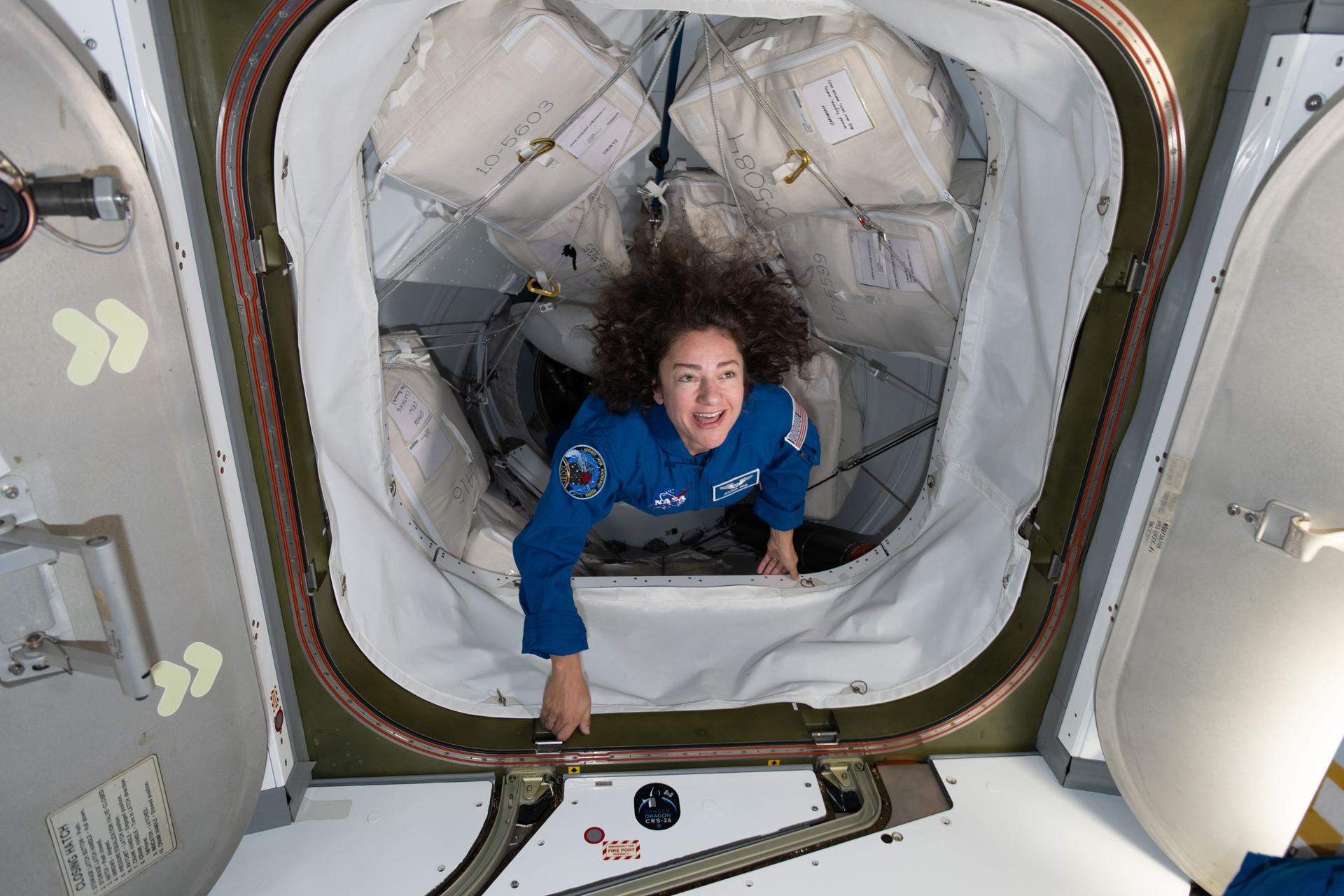
NASA astronaut and SpaceX Crew-12 Commander Jessica Meir enters the International Space Station after docking aboard the Dragon spacecraft to join Expedition 74 and begin a long-duration microgravity research mission.
NASA astronaut Jessica Meir enters the International Space Station after docking aboard the Dragon spacecraft on Feb. 14, 2026, to join Expedition 74 and begin a long-duration microgravity research mission.
NASA/Chris Williams

Relaxation, exercise, and biomedical studies were the key research objectives for the Expedition 74 crew on Thursday as NASA and its partners investigate ways to keep astronauts healthy on long-term missions. The International Space Station is also orbiting higher after the docked Progress 93 cargo craft fired its thrusters on Wednesday.

Flight Engineers Jessica Meir of NASA and Sophie Adenot of ESA (European Space Agency) kicked off Thursday exploring how to reduce stress and improve sleep while living and working aboard a spacecraft. The duo, right after waking up, first filled out a questionnaire documenting stress and emotions experienced off the Earth. Next, the two astronauts collected their saliva samples so researchers can analyze a crew member’s stress and immunity levels. The RelaxPro study sponsored by ESA explores using non-invasive relaxation and meditation techniques aboard a spacecraft to improve astronaut health and promote mission success.

The NASA and ESA astronauts then joined each other in the afternoon and reviewed setting up hardware for the ARED (advanced resistive exercise device) Kinematics exercise study that takes place in the Tranquility module. They watched a video explaining the precise positioning of four cameras to capture a crew member’s workout, calibrating the cameras, setting up a video monitor, and configuring a computer for data acquisition. Doctors are exploring the forces an astronaut’s muscles and bones experience when working out in weightlessness to maintain fitness and health during a long-term spaceflight.

NASA Flight Engineer Jack Hathaway began his shift organizing blood sampling hardware then retrieving biomedical samples from a science freezer for scientific processing. Afterward, Hathaway transferred food packs into the Harmony module and staged them for future crew usage. During the second half of his shift, he loaded cargo into a SpaceX Dragon cargo spacecraft for return to Earth then joined Meir for a call to mission controllers discussing their experience flying the Dragon crew spacecraft as it docked to the orbital outpost on Feb. 14.

NASA Flight Engineer Chris Williams partnered with Meir twice on Thursday during two short biomedical sessions. He first assisted her as she drew her blood sample, spun it in a centrifuge, then stowed it in a science freezer to analyze her bone health. Toward the end of the crew’s shift, Meir imaged William’s eyes using medical imaging hardware as doctors on the ground remotely monitored to see how microgravity is affecting his retina, optic nerve, and cornea. Williams also worked in the Kibo laboratory module uninstalling the Solid Combustion Experiment Module following the completion of its scientific objectives, including improving spacecraft fire safety and observing how solid fuels burn in microgravity.

Roscosmos Flight Engineer Andrey Fedyaev, who is beginning his second spaceflight, worked on a pair of investigations on Thursday using advanced technology. For the first experiment, Fedyaev wore virtual reality goggles and responded to visual and audio signals to test his sense of balance and orientation in space. For the second experiment, he tested artificial intelligence-assisted tools to convert speech-to-text for improved documentation for data and communications with ground controllers.

Station Commander Sergey Kud-Sverchkov assisted Fedyaev with the advanced human research studies. Kud-Sverchkov also trained to perform procedures and use medical hardware in case of a medical emergency board the orbital outpost. Finally, the two-time station resident downloaded radiation data the station is exposed to while orbiting Earth for analysis.

Roscosmos Flight Engineer Sergei Mikaev primarily spent Thursday on lab upkeep activities focusing most of his time on locating and inventorying hardware throughout the station’s Roscosmos segment. Mikaev also checked the Elektron oxygen generator’s water tanks for air bubbles to ensure the life support device’s continuous operation.

The Roscosmos Progress 93 spacecraft fired its thrusters for 10 minutes, 55 seconds to reboost the station ahead of the launch of the Progress 94 resupply spacecraft. The maneuver raised the station’s altitude by 2 miles at perigee, placing the space station in an orbit of 269.2 x 255 statute miles.

Learn more about station activities by following the space station blog, @space_station on X, as well as the ISS Facebook and ISS Instagram accounts.

Get the latest from NASA delivered every week. Subscribe here.

Powered by WPeMatico

Get The Details…

Mark A. Garcia

NASA Investigates How People Respond to Air Taxi Noise

NASA Investigates How People Respond to Air Taxi Noise

3 min read

Preparations for Next Moonwalk Simulations Underway (and Underwater)

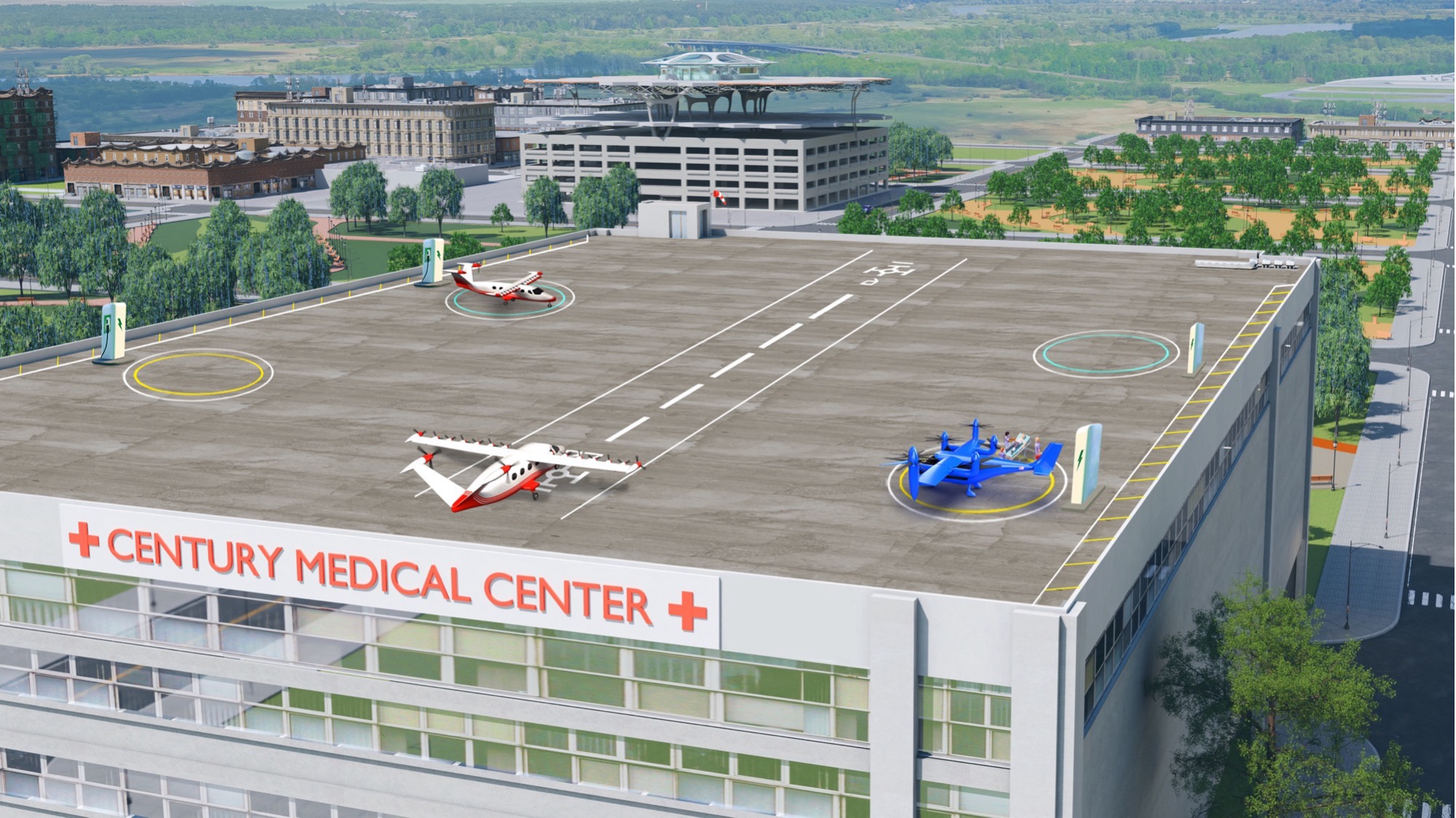
An artist’s concept image shows the square, gray rooftop of a hospital building with three concept aircraft sitting on top. One aircraft is painted dark blue, and two are painted with red and white paint schemes. Each aircraft has several unique propellors and wings to showcase that these aircraft can take off and land on short runways or vertically. The words “Century Medical Center” – in red – sit below the rooftop landing pad with several rows of windows underneath. In the background, there are several rows of trees, buildings, and parking garages, to show that this building is inside of a city.
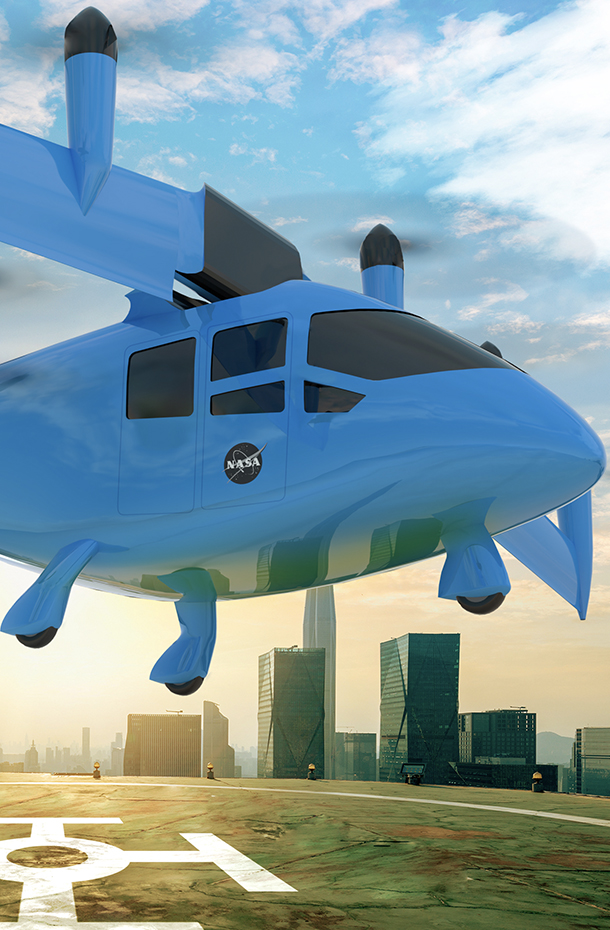
This artist’s concept shows several advanced air mobility aircraft concepts staged for a medical transport. NASA’s recent aircraft noise study included sounds from multiple types of advanced air mobility concept aircraft.
NASA/Lillian Gipson

New kinds of aircraft taking to the skies could mean unfamiliar sounds overhead — and where you’re hearing them might matter, according to new NASA research.

NASA aeronautics has worked for years to enable new air transportation options for people and goods, and to find ways to make sure they can be safely and effectively integrated into U.S. communities. That’s why the agency continues to study how people respond to aircraft noise.  

In this case, NASA’s work focused on air taxis, shorthand for a variety of aircraft intended to carry people short distances for everything from personal travel to medical treatment. Researchers investigated whether residents in loud cities would respond differently to air taxi sounds than those in quieter suburban settings.

From late August through September 2025, 359 participants in the Los Angeles, New York City, and Dallas-Fort Worth areas took part in NASA’s Varied Advanced Air Mobility Noise and Geographic Area Response Difference (VANGARD) test.

Researchers played 67 unique sounds simulating aircraft, including NASA-owned industry concept designs. To ensure unbiased feedback, the research team withheld aircraft manufacturer names. Participants were also not shown images of the aircraft they were hearing.

Initial results reveal that residents living in noisy areas reported being more bothered by the air taxi sounds than those in quieter areas. The VANGARD team members are currently analyzing the data to better understand these findings, but so far, they’re hypothesizing that people in loud environments may simply be more sensitive to additional noise. 

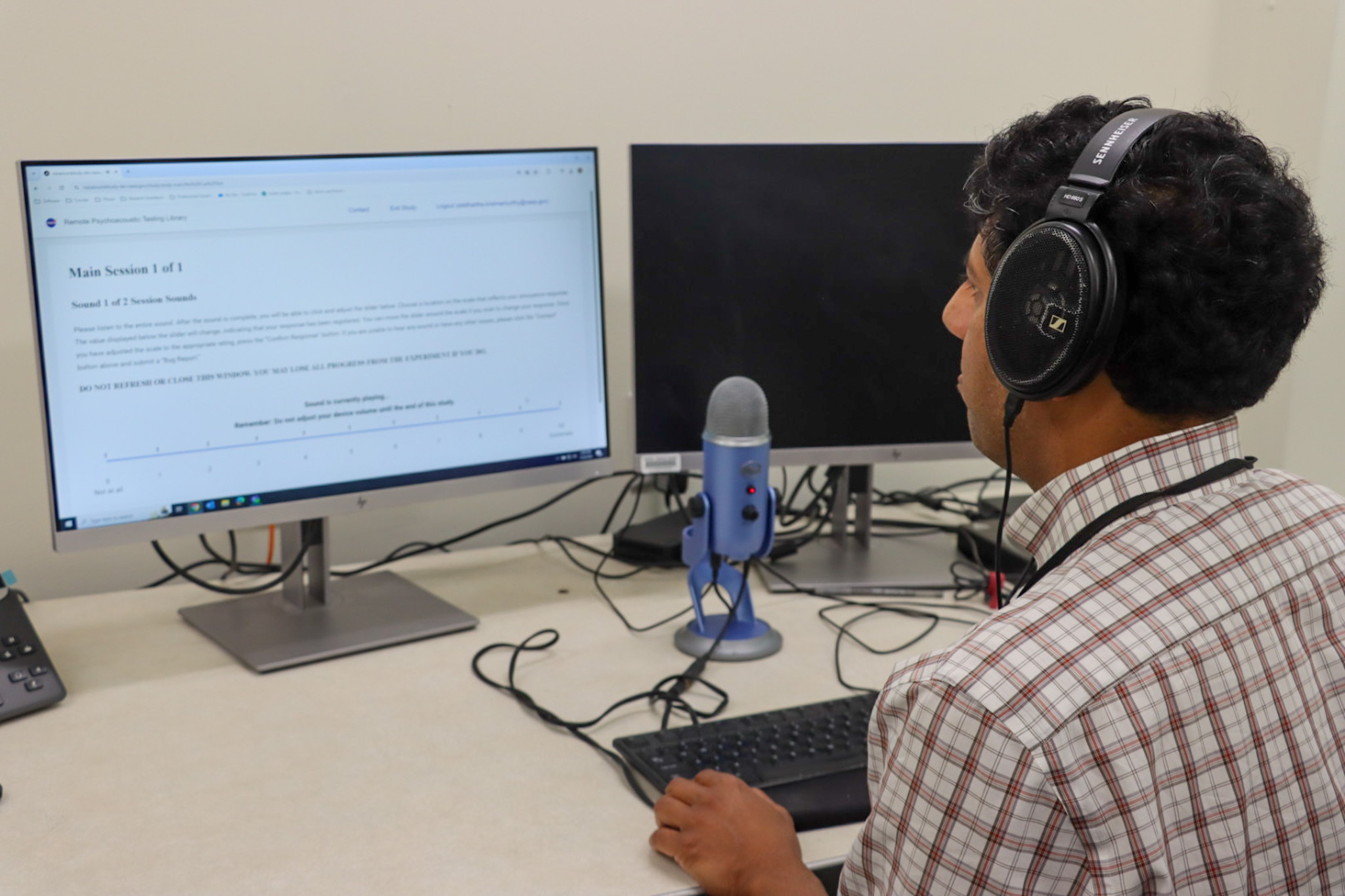
A man wearing a white and red plaid shirt sits to the right side of the image in front of a keyboard, a blue stand microphone, and two monitors. He wears black over ear headphones and looks at a computer screen with a white background and black letters.
Researcher Sidd Krishnamurthy tests the remote platform developed to study human response to air taxi noise at NASA’s Langley Research Center in Hampton, Virginia.
NASA/Ally Olney

“With air taxis coming soon, we need to understand how people will react to a variety of future aircraft sounds,” said Sidd Krishnamurthy, lead researcher at NASA’s Langley Research Center in Hampton, Virginia. “This test filled a critical gap, and its results will improve how we predict human reactions to noise, guiding the design and operation of future aircraft.”

During the study, participants listened to individual aircraft flyover sounds and rated their annoyance levels. The participants also provided their zip codes, allowing the researchers to sort their locations into high and low background noise levels.  “We wanted to know if people in low or high background noise zones would be more annoyed by the air taxi sounds, and to what extent, even without their usual background sounds present during the test,” Krishnamurthy said.

Most participants listened from their home locations, with their own audio devices. But to complement that testing, a control group of 20 people listened in-person at NASA Langley in June, using tablets and headphones with fixed audio settings.

Results showed that the control group responded similarly to those who tested from home.

Many factors influence how humans respond to aircraft noise. This study was not designed to answer every question — for example, it did not look at the potential effects of high background noise masking air taxi noise — but it provided the VANGARD team with initial insights.

The results from this study, and any follow-on efforts, will guide the design and operation of future advanced air mobility aircraft to help designers and regulators determine how and where these aircraft may fly.

This research was led under the Revolutionary Vertical Lift Technology project and contributes to NASA’s advanced air mobility research.  The project falls under the Advanced Air Vehicles Program within NASA’s Aeronautics Research Mission Directorate.

Powered by WPeMatico

Get The Details…
Dede Dinius

NASA Releases Report on Starliner Crewed Flight Test Investigation

NASA Releases Report on Starliner Crewed Flight Test Investigation

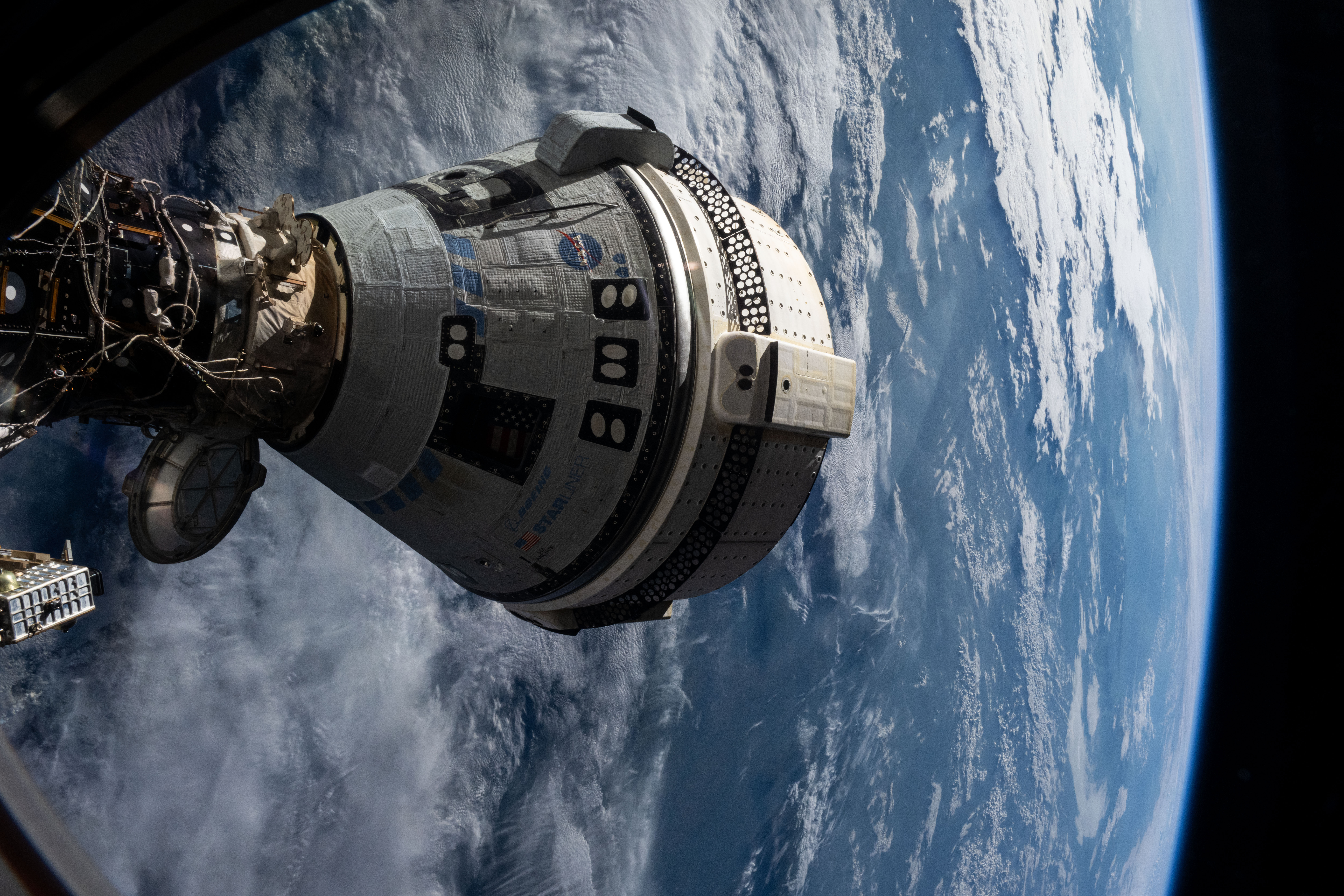
Boeing’s Starliner spacecraft that launched NASA’s Crew Flight Test astronauts Butch Wilmore and Suni Williams to the International Space Station is pictured docked to the Harmony module’s forward port on July 3, 2024. This view is from a window on the SpaceX Dragon Endeavour spacecraft docked to the port adjacent to the Starliner.
Credit: NASA

At a news conference on Thursday, NASA released a report of findings from the Program Investigation Team examining the Boeing CST-100 Starliner Crewed Flight Test as part of the agency’s Commercial Crew Program.  

“The Boeing Starliner spacecraft has faced challenges throughout its uncrewed and most recent crewed missions. While Boeing built Starliner, NASA accepted it and launched two astronauts to space. The technical difficulties encountered during docking with the International Space Station were very apparent,” said NASA Administrator Jared Isaacman.  

“To undertake missions that change the world, we must be transparent about both our successes and our shortcomings. We have to own our mistakes and ensure they never happen again. Beyond technical issues, it is clear that NASA permitted overarching programmatic objectives of having two providers capable of transporting astronauts to-and-from orbit, influence engineering and operational decisions, especially during and immediately after the mission. We are correcting those mistakes. Today, we are formally declaring a Type A mishap and ensuring leadership accountability so situations like this never reoccur. We look forward to working with Boeing as both organizations implement corrective actions and return Starliner to flight only when ready.” 

Starliner launched June 5, 2024, on its first crewed test flight to the International Space Station. Originally planned as an eight-to-14-day mission, the flight was extended to 93 days after propulsion system anomalies were identified while the spacecraft was in orbit. After reviewing flight data and conducting ground test at White Sands Test Facility, NASA decided to return the spacecraft without NASA astronauts Butch Wilmore and Suni Williams. Starliner returned from the space station in September 2024, landing at White Sands Space Harbor in New Mexico. Wilmore and Williams later returned safely to Earth aboard the agency’s SpaceX’s Crew-9 mission in March 2025. 

In February 2025, NASA chartered an independent Program Investigation Team to investigate the technical, organizational, and cultural contributors to the test flight issues.  

This report was completed in November 2025. NASA and Boeing have been working together since Starliner returned 18 months ago to identify and address the challenges encountered during the mission, and the technical root cause work continues. 

Investigators identified an interplay of combined hardware failures, qualification gaps, leadership missteps, and cultural breakdowns that created risk conditions inconsistent with NASA’s human spaceflight safety standards. NASA will accept this as the final report.  

As a result, NASA is taking corrective actions to address the findings of the report, in an effort to ensure the lessons learned contribute to crew and mission safety of future Starliner flights and all NASA programs. Due to the loss of the spacecraft’s maneuverability as the crew approached the space station and the associated financial damages incurred, NASA has classified the test flight as a Type A mishap. While there were no injuries and the mission regained control prior to docking, this highest-level classification designation recognizes there was potential for a significant mishap. 

NASA will continue to work closely with Boeing to fully understand and solve the technical challenges with the Starliner vehicle alongside incorporating the investigative recommendations before flying the next mission.  

For the full report, which includes redactions in coordination with our commercial partner to protect proprietary and privacy-sensitive material is available online. A 508-compliant version of the report is forthcoming, and will be posted on this page. NASA will update with an editor’s note when complete.

https://www.nasa.gov/wp-content/uploads/2026/02/nasa-report-with-redactions-021926.pdf?emrc=76e561

-end-

Bethany Stevens / Cheryl Warner
Headquarters, Washington
202-358-1600
bethany.c.stevens@nasa.gov / cheryl.m.warner@nasa.gov

Share

Details

Last Updated

Feb 19, 2026

Editor
Cheryl Warner

Powered by WPeMatico

Get The Details…
Cheryl Warner