Light Duty Day Amid Space Research and Crew Swap Preps

Light Duty Day Amid Space Research and Crew Swap Preps

NASA astronaut and Expedition 73 Flight Engineer Jonny Kim shows off a barbeque brisket taco during dinner time at the galley inside the International Space Station's Unity module.
NASA astronaut Jonny Kim shows off a barbeque brisket taco during dinner time at the galley inside the International Space Station’s Unity module.
NASA

A portion of the Expedition 73 crew as well as the Axiom Mission 4 (Ax-4) quartet had a light duty day on Wednesday. There was still time aboard the International Space Station for a variety of research activities and preparations for an upcoming crew swap.

NASA Flight Engineers Anne McClain and Nichole Ayers relaxed for half-a-day on Wednesday following a week-and-a-half of supporting their Ax-4 visitors. McClain began her shift collecting her saliva samples for analysis while Ayers recorded her cardiovascular and respiratory data. Next, McClain deactivated a Kubik incubator following several days of blood and saliva processing. Ayers documented her reactions on a computer to an experimental lighting system that helps astronauts maintain their circadian rhythms in space.

NASA Flight Engineer Jonny Kim had a mostly off-duty day taking timeout for his daily exercise routine working out on the Tranquility module’s advanced resistive exercise device and pedaling on the Destiny laboratory module’s exercise cycle.

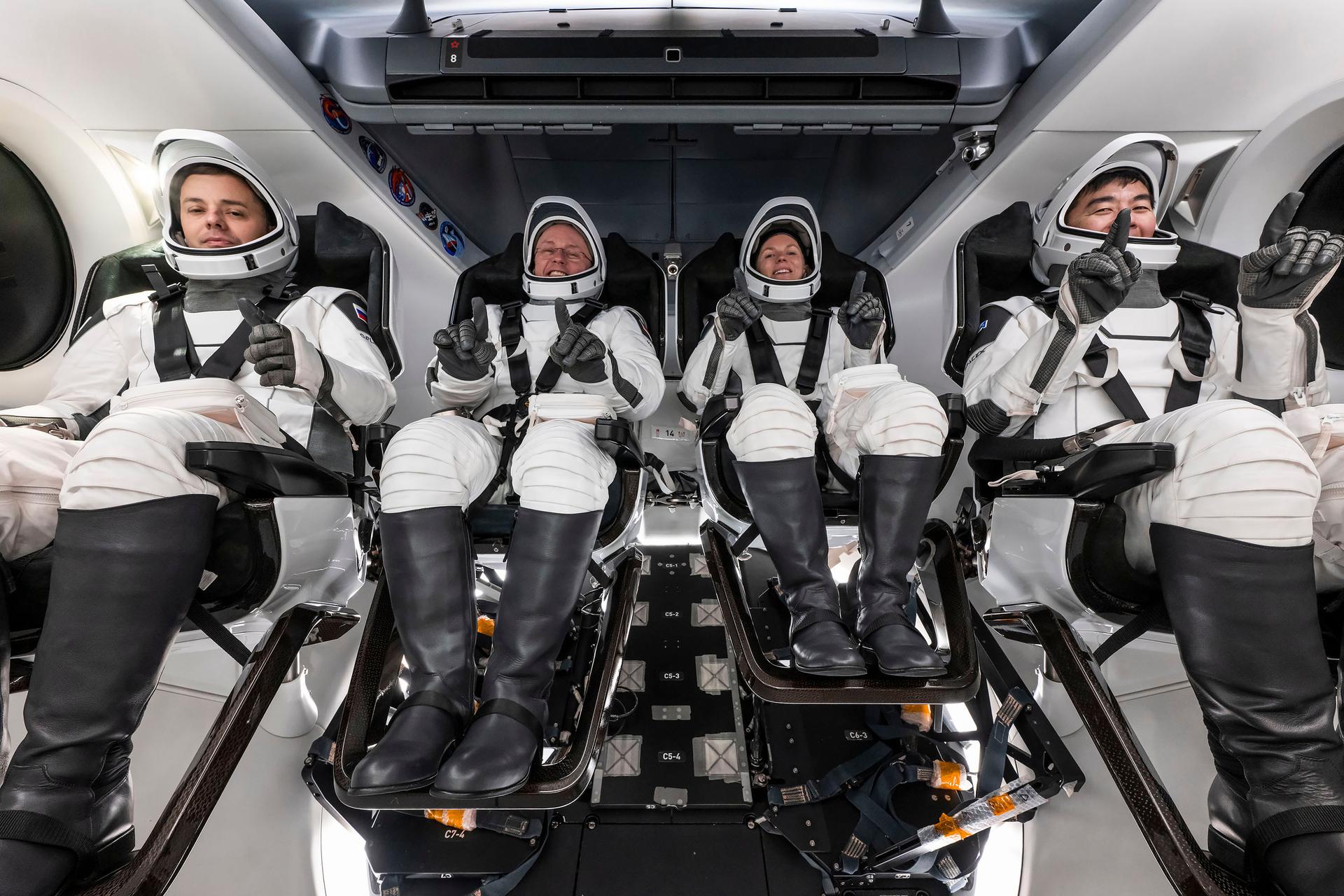
Kim, at the end of his shift joined McClain, Ayers, and station Commander Takuya Onishi of JAXA (Japan Aerospace Exploration Agency) and called down to Earth and talked to the four SpaceX Crew-11 members as they count down to their mission to the orbital outpost. NASA astronauts Zena Cardman and Mike Fincke along with JAXA astronaut Kimiya Yui and Roscosmos cosmonaut Oleg Platonov are preparing to launch aboard the SpaceX Dragon crew spacecraft at the end of July to begin a seven-month space research mission. Program managers and the Crew-11 quartet will discuss the upcoming mission during a pair of news conferences set to begin a 12 p.m. EDT Thursday on YouTube.

Onishi stayed busy on Wednesday spending the first part of his shift setting up communications gear in the Kibo laboratory module preparing for an upcoming conference with Japanese high school students. After lunch, Onishi completed several days of blood and saliva sample work removing the specimens from incubation, spinning them in a centrifuge, then stowing them in a science freezer for preservation and later analysis. Scientists will analyze the biological samples to learn how space affects cellular immunity and potentially treat space-caused immunity symptoms.

The four Ax-4 private astronauts cleared their schedule on Wednesday for a break after several days of continuous research duties since they arrived on June 26 aboard the SpaceX Dragon. However, there was time for processing cyanobacteria samples to test recycling carbon dioxide and nitrogen on spacecraft. The astronauts also exercised using specialized bands of different tensions for a variety of upper and lower body exercises to stretch, activate muscles, and minimize back pain in the space environment.

The three flight engineers from Roscosmos had a full day on Wednesday staying busy with human research, life support maintenance, and cargo transfers. Veteran cosmonaut Sergey Ryzhikov on his third spaceflight kicked off his day checking out the Zarya module’s thermal control system. He then joined cosmonaut Alexey Zubritskiy for a blood pressure study then swapped out a lens on a student-controlled Earth observation camera. Zubritskiy tested new tablet computers delivered recently aboard the Progress 92 cargo craft. Cosmonaut Kirill Peskov began his shift downloading recently captured Earth imagery then spent the rest of his day collecting carbon dioxide measurements and on orbital plumbing tasks.

Learn more about station activities by following the space station blog, @space_station on X, as well as the ISS Facebook and ISS Instagram accounts.

Get the latest from NASA delivered every week. Subscribe here.

Powered by WPeMatico

Get The Details…

Mark A. Garcia

NASA Aircraft, Sensor Technology, Aid in Texas Flood Recovery Efforts

NASA Aircraft, Sensor Technology, Aid in Texas Flood Recovery Efforts

3 min read

Preparations for Next Moonwalk Simulations Underway (and Underwater)

The high-altitude WB-57 aircraft departed July 8, 2025, from Ellington Field in Houston, Texas, headed to the Texas Hill Country. The aircraft will use the DyNAMITE (Day/Night Airborne Motion Imager for Terrestrial Environments) sensor system to take video mosaics of the area to assist with the emergency response effort.
Photo Credit: NASA/Morgan Gridley

In response to recent flooding near Kerrville, Texas, NASA deployed two aircraft to assist state and local authorities in ongoing recovery operations.

The aircraft are part of the response from NASA’s Disasters Response Coordination System, which is activated to support emergency response for the flooding and is working closely with the Texas Division of Emergency Management, the Federal Emergency Management Agency (FEMA), and the humanitarian groups Save the Children and GiveDirectly.

Persistent cloud-cover has made it difficult to obtain clear satellite imagery, so the Disasters Program coordinated with NASA’s Airborne Science Program at NASA’s Johnson Space Flight Center in Houston to conduct a series of flights to gather observations of the impacted regions. NASA is sharing these data directly with emergency response teams to inform their search and rescue efforts and aid decision-making and resource allocation.

The high-altitude WB-57 aircraft operated by NASA Johnson departed from Ellington Field on July 8 to conduct aerial surveys. The aircraft is equipped with the DyNAMITE (Day/Night Airborne Motion Imager for Terrestrial Environments) sensor.

The DyNAMITE sensor views the Guadalupe River  and several miles of the surrounding area, providing high-resolution imagery critical to assessing damage and supporting coordination of ground-based recovery efforts. This system enables real-time collection and analysis of data, enhancing situational awareness and accelerating emergency response times.

In addition, the agency’s Uninhabited Aerial Vehicle Synthetic Aperture Radar (UAVSAR) is flying out of NASA’s Armstrong Flight Research Center in Edwards, California, aboard a Gulfstream III. Managed by the agency’s Jet Propulsion Laboratory in Southern California, the UAVSAR team is planning to collect observations over the Guadalupe, San Gabriel, and Colorado river basins Wednesday, Thursday, and Friday. Because UAVSAR can penetrate vegetation to spot water that optical sensors are unable to detect, the team’s goal is to characterize the extent of flooding to help with understanding the amount of damage within communities.

Flights are being coordinated with FEMA, the Texas Division of Emergency Management, and local responders to ensure data is quickly delivered to those making decisions on the ground. Imagery collected will be sent to NASA’s Disaster Response Coordination System.

Additionally, the Disasters Program, which is part of NASA’s Earth Science Division, is working to produce maps and data to assess the location and severity of flooding in the region and damage to buildings and infrastructure. These data are being shared on the NASA Disasters Mapping Portal as they become available.

-end-

Liz Vlock/Aries Keck
Headquarters, Washington
202-358-1600
elizabeth.a.vlock@nasa.gov / aries.keck@nasa.gov

Powered by WPeMatico

Get The Details…
kcfox

Smarter Searching: NASA AI Makes Science Data Easier to Find

Smarter Searching: NASA AI Makes Science Data Easier to Find

6 min read

Smarter Searching: NASA AI Makes Science Data Easier to Find

Image snapshot taken from NASA Worldview of NASA’s Global Precipitation Measurement (GPM) mission on March 15, 2025 showing heavy rain across the southeastern U.S. with an overlay of the GCMD Keyword Recommender for Earth Science, Atmosphere, Precipitation, Droplet Size.
NASA Worldview

Imagine shopping for a new pair of running shoes online. If each seller described them differently—one calling them “sneakers,” another “trainers,” and someone else “footwear for exercise”—you’d quickly feel lost in a sea of mismatched terminology. Fortunately, most online stores use standardized categories and filters, so you can click through a simple path: Women’s > Shoes > Running Shoes—and quickly find what you need.

Now, scale that problem to scientific research. Instead of sneakers, think “aerosol optical depth” or “sea surface temperature.” Instead of a handful of retailers, it is thousands of researchers, instruments, and data providers. Without a common language for describing data, finding relevant Earth science datasets would be like trying to locate a needle in a haystack, blindfolded.

That’s why NASA created the Global Change Master Directory (GCMD), a standardized vocabulary that helps scientists tag their datasets in a consistent and searchable way. But as science evolves, so does the challenge of keeping metadata organized and discoverable. 

To meet that challenge, NASA’s Office of Data Science and Informatics (ODSI) at the agency’s Marshall Space Flight Center (MSFC) in Huntsville, Alabama, developed the GCMD Keyword Recommender (GKR): a smart tool designed to help data providers and curators assign the right keywords, automatically.

Smarter Tagging, Accelerated Discovery

The upgraded GKR model isn’t just a technical improvement; it’s a leap forward in how we organize and access scientific knowledge. By automatically recommending precise, standardized keywords, the model reduces the burden on human curators while ensuring metadata quality remains high. This makes it easier for researchers, students, and the public to find exactly the datasets they need.

It also sets the stage for broader applications. The techniques used in GKR, like applying focal loss to rare-label classification problems and adapting pre-trained transformers to specialized domains, can benefit fields well beyond Earth science.

Metadata Matchmaker

The newly upgraded GKR model tackles a massive challenge in information science known as extreme multi-label classification. That’s a mouthful, but the concept is straightforward: Instead of predicting just one label, the model must choose many, sometimes dozens, from a set of thousands. Each dataset may need to be tagged with multiple, nuanced descriptors pulled from a controlled vocabulary.

Think of it like trying to identify all the animals in a photograph. If there’s just a dog, it’s easy. But if there’s a dog, a bird, a raccoon hiding behind a bush, and a unicorn that only shows up in 0.1% of your training photos, the task becomes far more difficult. That’s what GKR is up against: tagging complex datasets with precision, even when examples of some keywords are scarce.

And the problem is only growing. The new version of GKR now considers more than 3,200 keywords, up from about 430 in its earlier iteration. That’s a sevenfold increase in vocabulary complexity, and a major leap in what the model needs to learn and predict.

To handle this scale, the GKR team didn’t just add more data; they built a more capable model from the ground up. At the heart of the upgrade is INDUS, an advanced language model trained on a staggering 66 billion words drawn from scientific literature across disciplines—Earth science, biological sciences, astronomy, and more.

Image snippets showing Earth, the Carina nebula, Jupiter, the surface of the Sun, and a cell.
NASA ODSI’s GCMD Keyword Recommender AI model automatically tags scientific datasets with the help of INDUS, a large language model trained on NASA scientific publications across the disciplines of astrophysics, biological and physical sciences, Earth science, heliophysics, and planetary science.
NASA

“We’re at the frontier of cutting-edge artificial intelligence and machine learning for science,” said Sajil Awale, a member of the NASA ODSI AI team at MSFC. “This problem domain is interesting, and challenging, because it’s an extreme classification problem where the model needs to differentiate even very similar keywords/tags based on small variations of context. It’s exciting to see how we have leveraged INDUS to build this GKR model because it is designed and trained for scientific domains. There are opportunities to improve INDUS for future uses.”

This means that the new GKR isn’t just guessing based on word similarities; it understands the context in which keywords appear. It’s the difference between a model knowing that “precipitation” might relate to weather versus recognizing when it means a climate variable in satellite data.

And while the older model was trained on only 2,000 metadata records, the new version had access to a much richer dataset of more than 43,000 records from NASA’s Common Metadata Repository. That increased exposure helps the model make more accurate predictions.

The Common Metadata Repository is the backend behind the following data search and discovery services:

Learning to Love Rare Words

One of the biggest hurdles in a task like this is class imbalance. Some keywords appear frequently; others might show up just a handful of times. Traditional machine learning approaches, like cross-entropy loss, which was used initially to train the model, tend to favor the easy, common labels, and neglect the rare ones.

To solve this, NASA’s team turned to focal loss, a strategy that reduces the model’s attention to obvious examples and shifts focus toward the harder, underrepresented cases. 

The result? A model that performs better across the board, especially on the keywords that matter most to specialists searching for niche datasets.

From Metadata to Mission

Ultimately, science depends not only on collecting data, but on making that data usable and discoverable. The updated GKR tool is a quiet but critical part of that mission. By bringing powerful AI to the task of metadata tagging, it helps ensure that the flood of Earth observation data pouring in from satellites and instruments around the globe doesn’t get lost in translation.

In a world awash with data, tools like GKR help researchers find the signal in the noise and turn information into insight.

Beyond powering GKR, the INDUS large language model is also enabling innovation across other NASA SMD projects. For example, INDUS supports the Science Discovery Engine by helping automate metadata curation and improving the relevancy ranking of search results.The diverse applications reflect INDUS’s growing role as a foundational AI capability for SMD.

The INDUS large language model is funded by the Office of the Chief Science Data Officer within NASA’s Science Mission Directorate at NASA Headquarters in Washington. The Office of the Chief Science Data Officer advances scientific discovery through innovative applications and partnerships in data science, advanced analytics, and artificial intelligence.

Share

Details

Last Updated
Jul 09, 2025

Powered by WPeMatico

Get The Details…

Anatomy of a Space Shuttle

Anatomy of a Space Shuttle

An illustration of a space shuttle orbiter on a white background. There are cutaways revealing different parts of the orbiter, like the hydrazine and nitrogen tetroxide tanks, engines, and thrusters at left, and the flight deck, mid-deck, and nose gear at front. The orbiter is white and in the middle, has a U.S. flag on it as well as the words "United States" and the initials "USA."
This illustration shows the parts of a space shuttle orbiter. About the same size and weight as a DC-9 aircraft, the orbiter contains the pressurized crew compartment (which can normally carry up to seven crew members), the cargo bay, and the three main engines mounted on its aft end.
NASA

This 2001 illustration labels important parts of a space shuttle orbiter. The orbiter was the heart and brains of the space shuttle and served as the crew transport vehicle that carried astronauts to and from space. The space shuttle was comprised of the orbiter, the main engines, the external tank, and the solid rocket boosters. The space shuttle was the world’s first reusable spacecraft and the first spacecraft in history that could carry large satellites both to and from orbit.

Image credit: NASA

Powered by WPeMatico

Get The Details…
Monika Luabeya

“Hubble at 35 Years” Symposium Explores Insights from Hubble’s Past

“Hubble at 35 Years” Symposium Explores Insights from Hubble’s Past

As Hubble marks three and a half decades of scientific breakthroughs and technical resilience, the “Hubble at 35 Years” symposium offers a platform to reflect on the mission’s historical, operational, and scientific legacy. Hubble’s trajectory—from early challenges to becoming a symbol of American scientific ingenuity—presents valuable lessons in innovation, collaboration, and crisis response. Bringing together scientists, engineers, and historians at NASA Headquarters ensures that this legacy informs current and future mission planning, including operations for the James Webb Space Telescope, Roman Space Telescope, and other next-generation observatories. The symposium not only honors Hubble’s transformative contributions but also reinforces NASA’s commitment to learning from the past to shape a more effective and ambitious future for space science.

Hubble at 35 Years

Lessons Learned in Scientific Discovery and NASA Flagship Mission Operations

October 16–17, 2025
James Webb Auditorium, NASA HQ, Washington, D.C.

Hubble Space Telescope backdropped by the Earth and space
The giant Hubble Space Telescope (HST) can be seen as it is suspended in space by Discovery’s Remote Manipulator System (RMS) following the deployment of part of its solar panels and antennae on April 25, 1990.
NASA

The story of the Hubble Space Telescope confirms its place as the most transformative and significant astronomical observatory in history. Once called “the eighth wonder of the world” by a former NASA administrator, Hubble’s development since its genesis in the early 1970s and its launch, repair, and ultimate impact since 1990 provide ample opportunity to apply insights from its legacy. Scientists and engineers associated with groundbreaking discoveries have always operated within contexts shaped by forces including the government, private industry, the military, and the public at large. The purpose of this symposium is to explore the insights from Hubble’s past and draw connections that can inform the development of mission work today and for the future.

Powered by WPeMatico

Get The Details…
Michele Ostovar