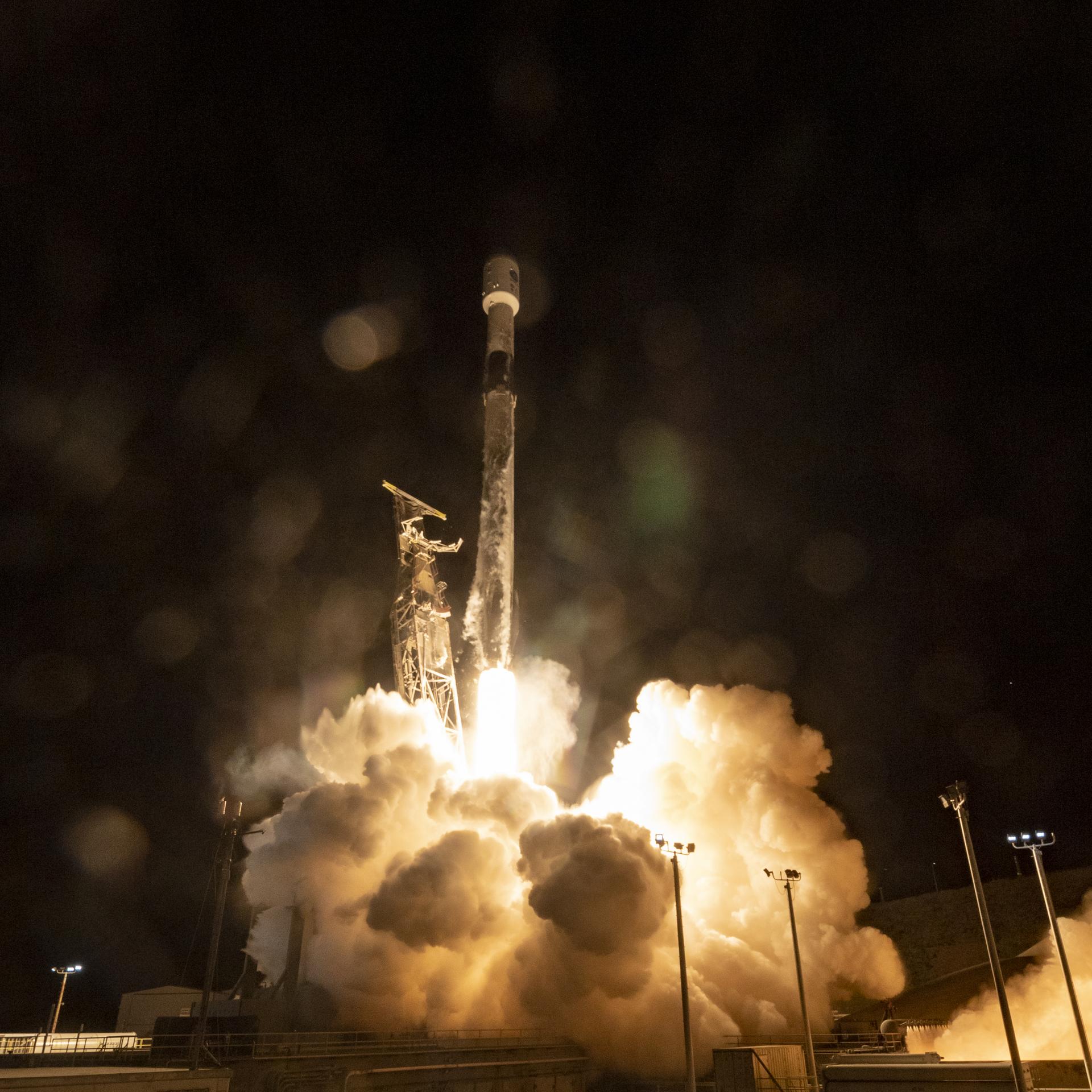
Space Station Research Contributes to Artemis II

Space Station Research Contributes to Artemis II
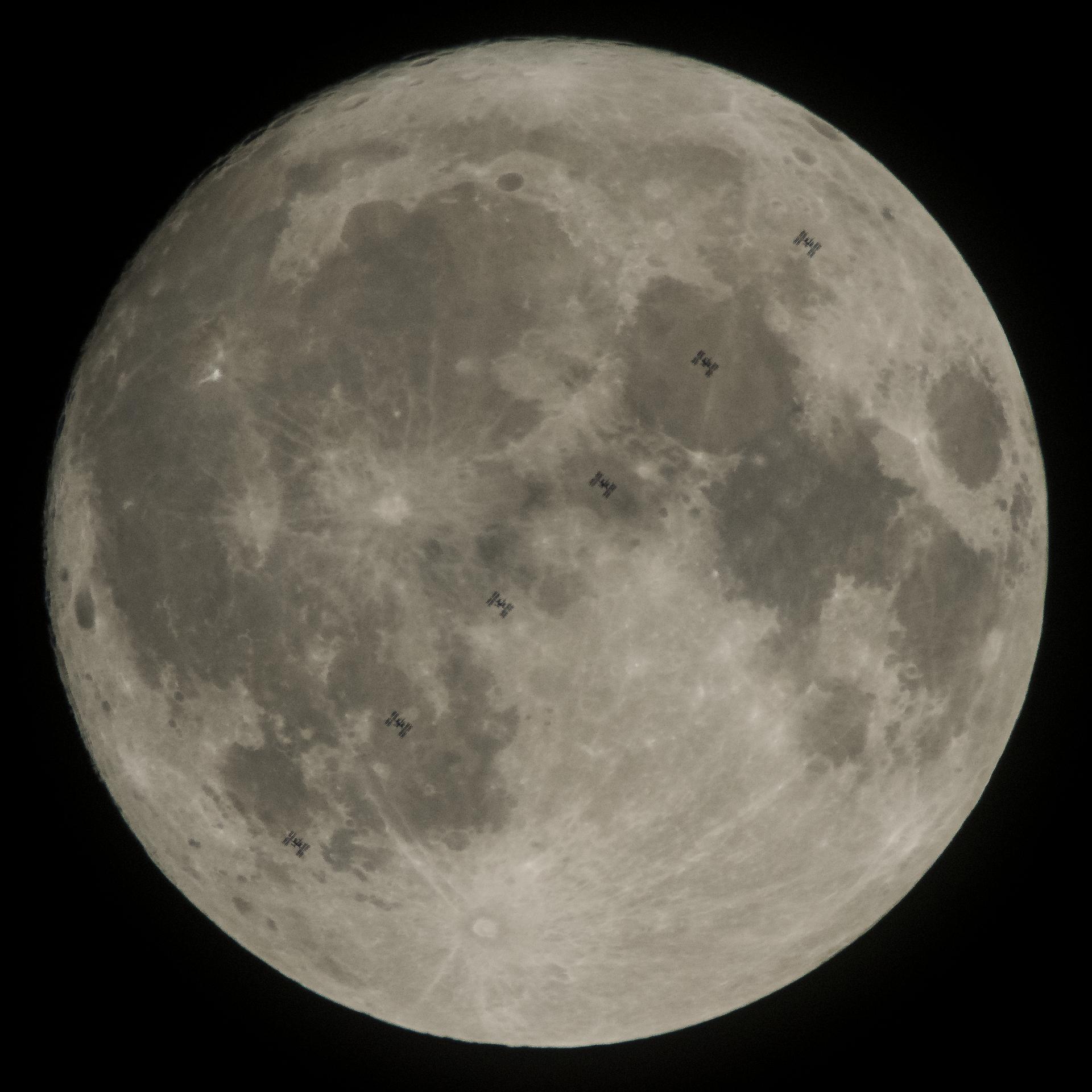
The full Moon fills the frame against a black sky, with multiple small silhouettes of the International Space Station captured as it transits across the Moon’s face.
A composite image shows the International Space Station as it transits the Moon. Photo Credit: NASA/Joel Kowsky
NASA/Joel Kowsky

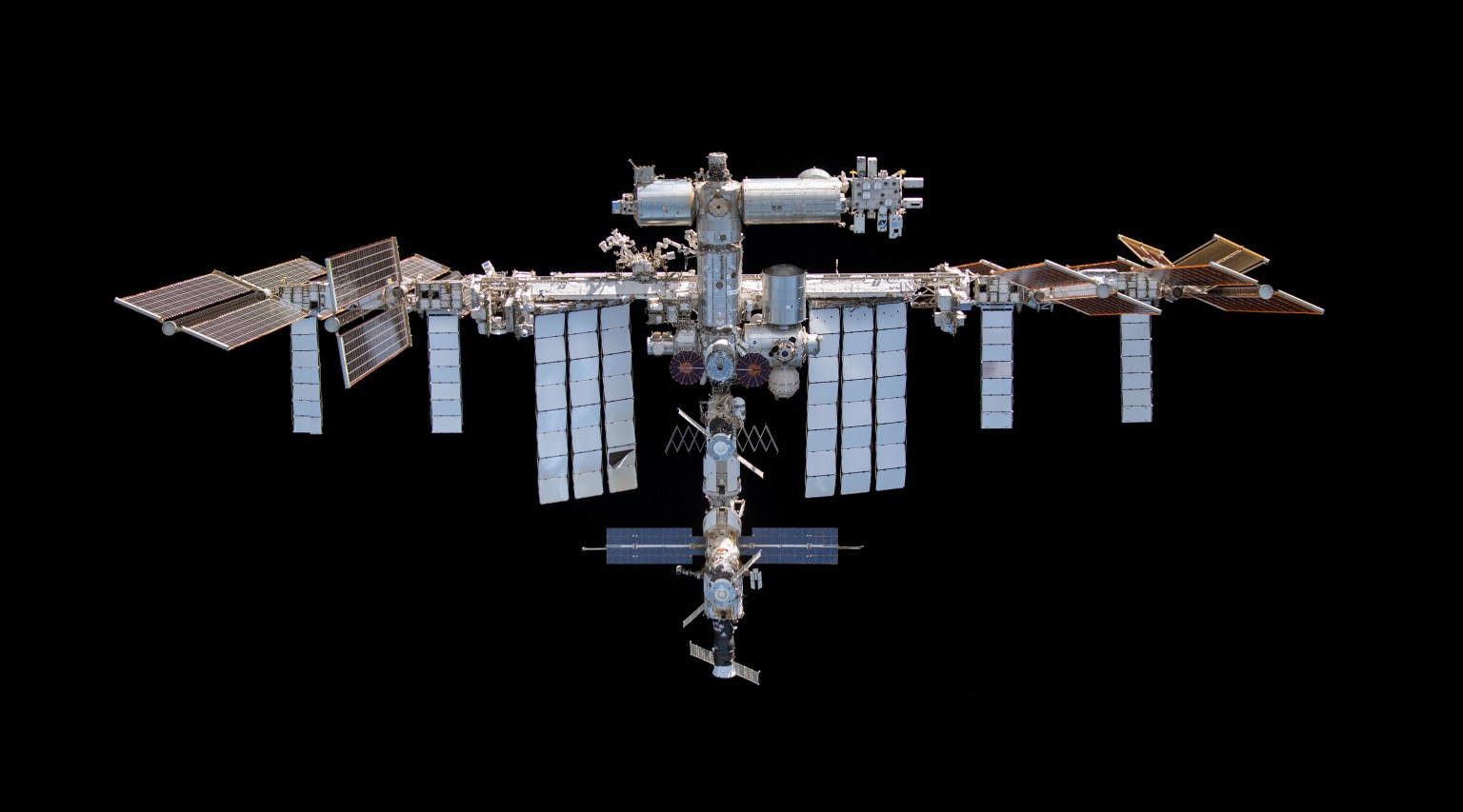
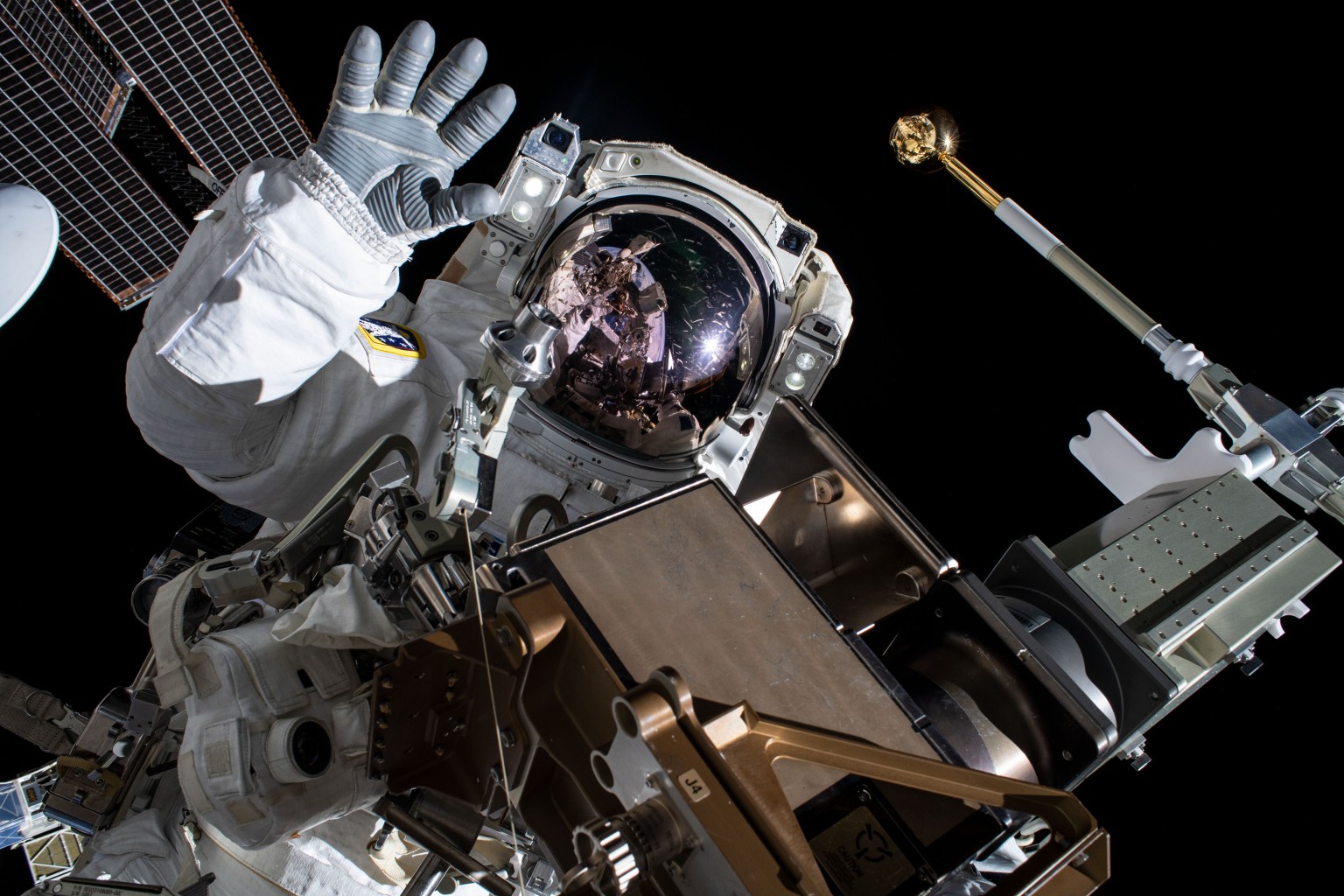
Have you ever heard the saying, “You have to learn how to walk before you can run?” The same can be true in human space exploration. To push capabilities further and ensure safe, successful missions, NASA must test ideas and solve challenges ahead of time. While Earth-based research and engineering helps NASA progress through various challenges, it can’t fully replicate the space environment. That’s where the International Space Station comes in — an out-of-this-world laboratory where astronauts help prepare for missions to the Moon, Mars, and beyond.
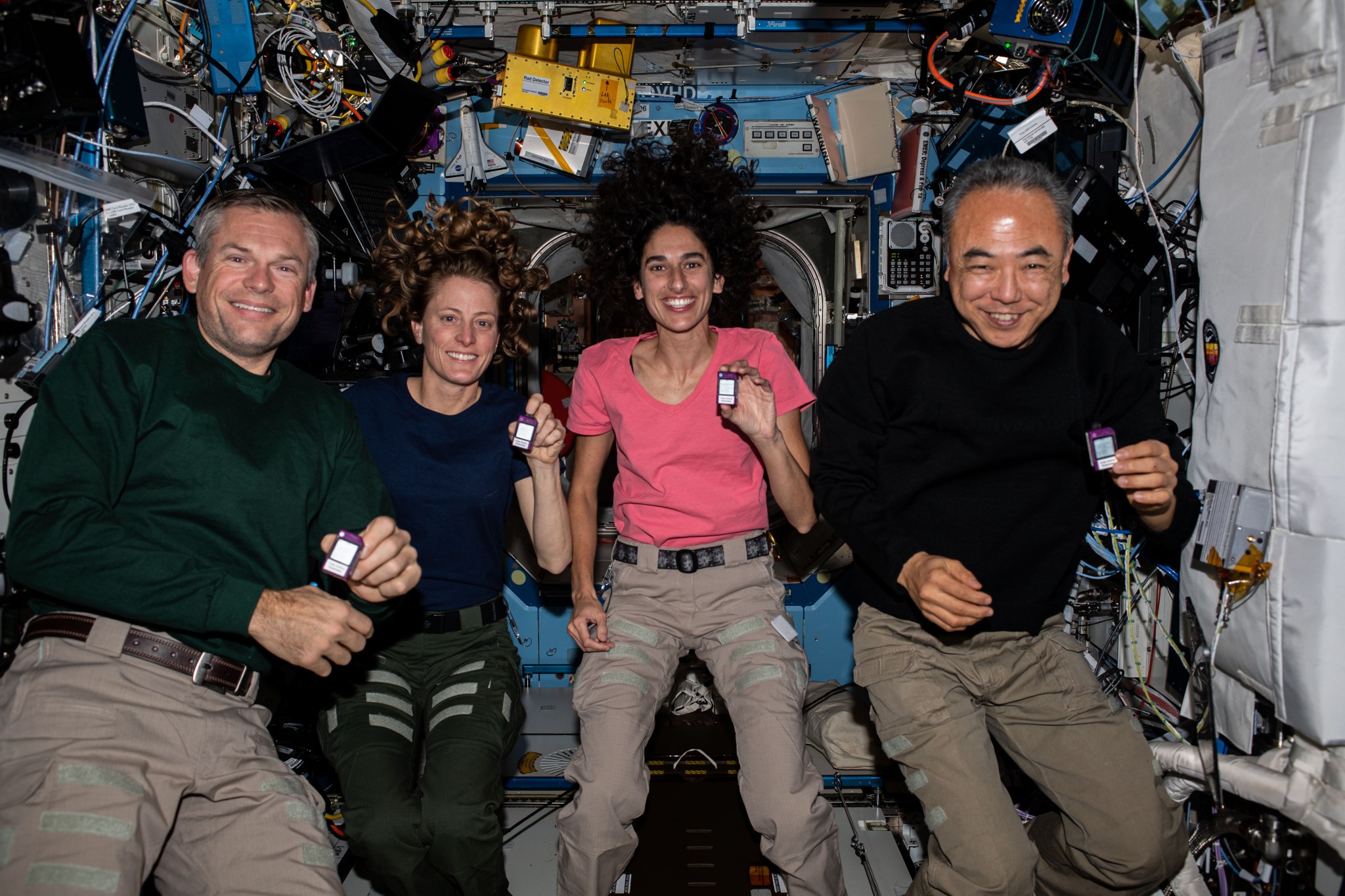
Four astronauts float together inside the International Space Station, smiling and holding small devices about the size of a printer ink cartridge. They are surrounded by equipment, cables, and modules in the microgravity laboratory.
(From left) Andreas Mogensen of ESA (European Space Agency); Loral O’Hara and Jasmin Moghbeli, both from NASA; and Satoshi Furukawa of JAXA (Japan Aerospace Exploration Agency), showing off crew active dosimeters used for radiation monitoring. Credit: NASA
NASA

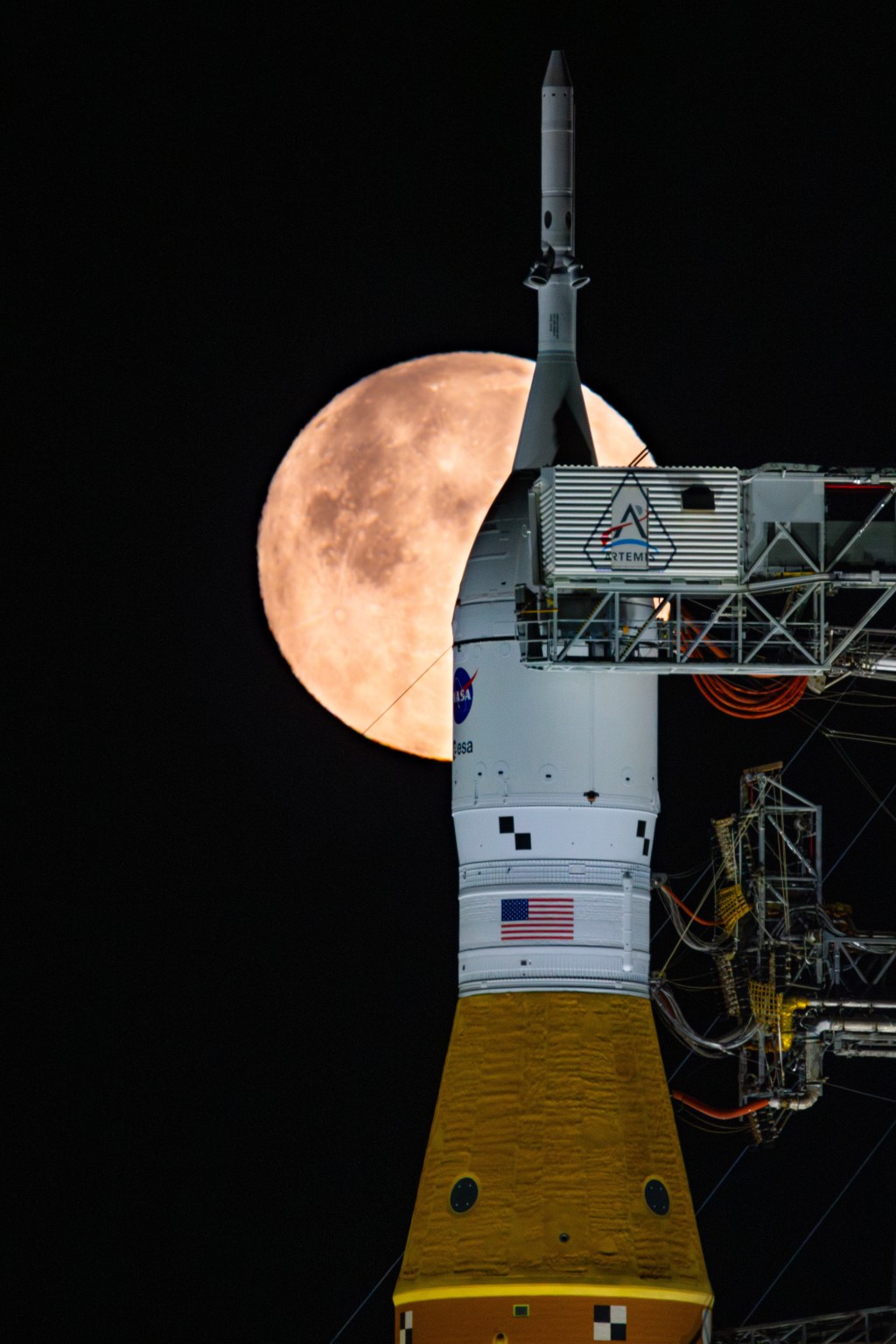
Since 2000, NASA and its partners have used the orbiting laboratory to conduct groundbreaking research and collaborate to advance human exploration to the depths of our solar system. Research aboard the space station helped lay the foundation for the Orion spacecraft’s life support and safety systems, which will carry four astronauts around the Moon during the Artemis II mission. These systems include radiation sensing equipment, carbon dioxide removal systems, a water-based portable fire extinguisher, emergency fire masks, the toilet, a heat exchanger, and a backup emergency navigation system.

Artemis II also includes a set of science objectives, many rooted in research and methods pioneered aboard the space station. One example is Spaceflight Standard Measures, an experiment that tracks psychological and physiological data points. This research will branch off to collect astronaut information beyond low Earth orbit, deepening our understanding of how the body adapts to living and working far from Earth.

Organ-chip experiments use small devices containing cells to model how tissues and organs respond to space stressors and therapeutic treatments. These devices and their related hardware have been used in several experiments aboard the space station and will continue their legacy in the lunar environment to study the effects of deep space stressors on human health using cells from Artemis II astronauts. Organ-chip research could be used to develop improved prevention and personalized medical treatments for people on Earth and in space.
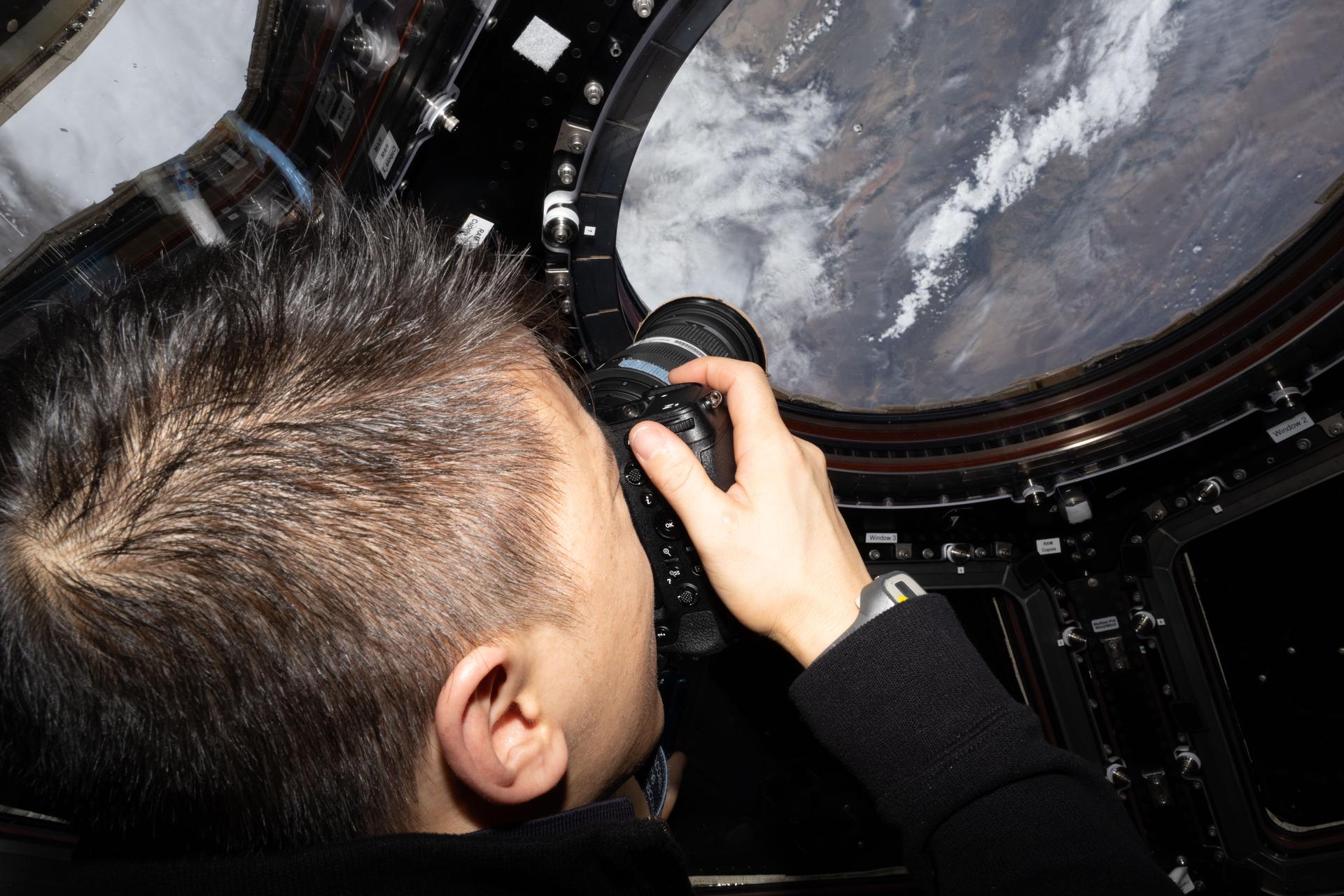
NASA astronaut Jonny Kim takes a photo of Earth landmarks from the International Space Station's cupola. Credit: NASA.
NASA astronaut Jonny Kim takes a photo of Earth landmarks from the International Space Station’s cupola. Credit: NASA.
NASA

Methods proven through Crew Earth Observations aboard space station are informing Crew Lunar Observations in support of Artemis II science and handheld imaging of the Moon. The crew will analyze and photograph geologic features on the lunar far side, providing critical information for Artemis III surface exploration. Frameworks from Earth observations, including target planning, visualization software, and scripts, have been adapted for lunar observations, shaping operations and preparing for future exploration missions.  

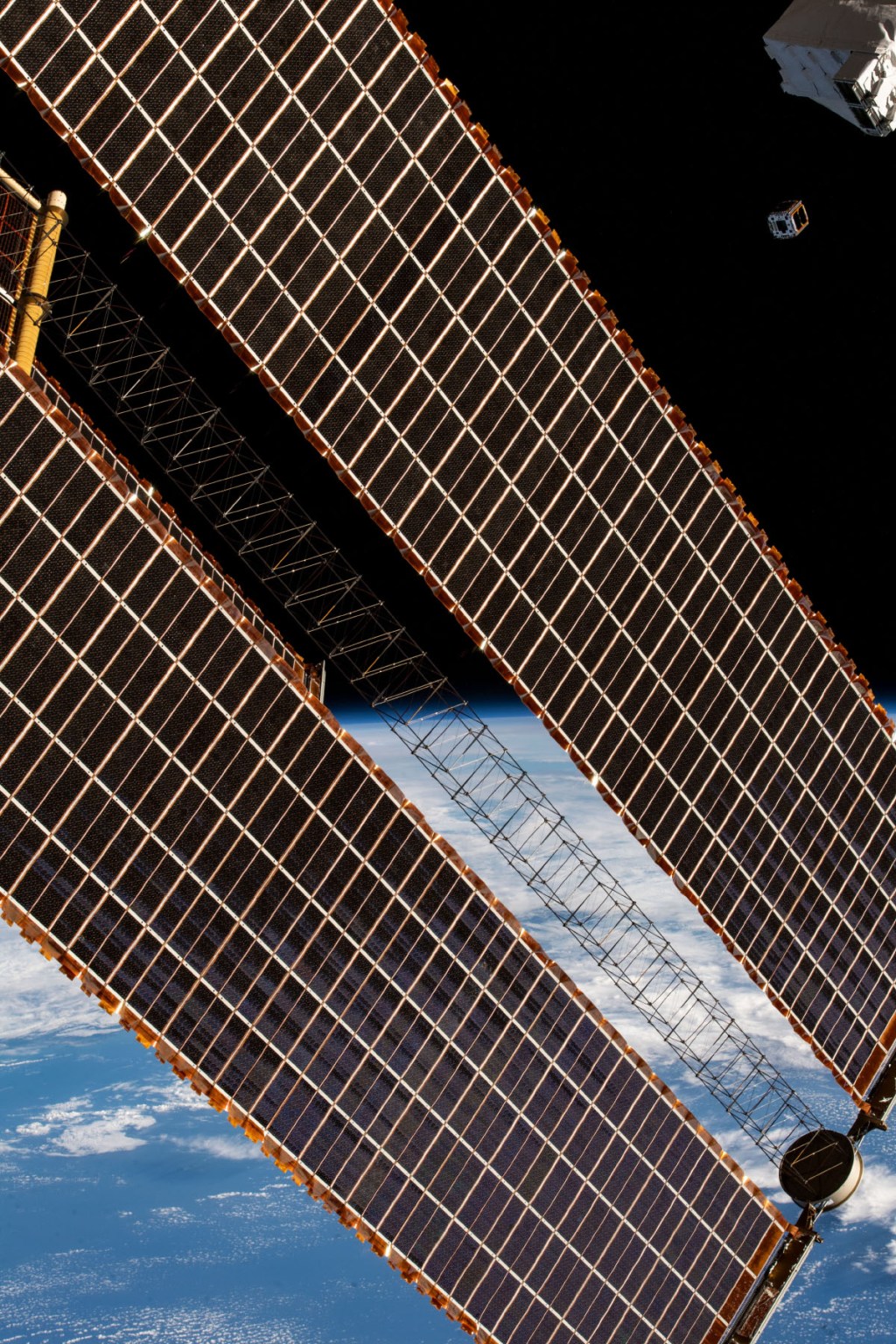
Small, cost-effective satellites called CubeSats are deployed from space station and other spacecraft to test new technologies and conduct scientific research in low Earth orbit. Building on this success, NASA is partnering with international agencies to deploy CubeSats aboard Artemis II for technology demonstrations and studies in high Earth orbit.

The space station remains a critical testbed for optimizing communications, robotics, and other technologies for missions to the Moon and Mars. Researchers also study the effects of spaceflight on people, develop tools to monitor crew health, and enhance plant growth to support astronaut safety and wellbeing.

As humans prepare to venture beyond Earth’s orbit for the first time in more than 50 years, we celebrate the space station and other NASA programs that walked so Artemis could run.

Share

Details

Last Updated

Feb 06, 2026

Powered by WPeMatico

Get The Details…
Christine Giraldo

NASA, SpaceX Adjust Crew-12 Launch Date Due to Weather

NASA, SpaceX Adjust Crew-12 Launch Date Due to Weather

NASA Insignia

NASA and SpaceX now are targeting no earlier 5:38 a.m. EST, Thursday, Feb. 12, for launch of the Crew-12 mission to the International Space Station from Cape Canaveral Space Force Station in Florida. Mission teams completed a weather review on Monday and elected to waive off a Wednesday, Feb. 11, launch opportunity due to forecast weather conditions along the flight path of the Dragon spacecraft. Weather will continue to be a watch item on Feb 12, and conditions are expected to improve on Friday, Feb. 13.

NASA astronauts Jessica Meir and Jack Hathaway, ESA (European Space Agency) astronaut Sophie Adenot, and Roscosmos cosmonaut Andrey Fedyaev remain in quarantine at NASA’s Kennedy Space Center in Florida until the next launch opportunity.

Crew-12 will lift off aboard SpaceX’s Dragon spacecraft on the company’s Falcon 9 rocket from Space Launch Complex 40. 

Watch agency launch coverage on NASA+, Amazon Prime, and the agency’s YouTube channel. Learn how to watch NASA content through a variety of online platforms, including social media. 

For a Feb. 12 opportunity, launch coverage will begin at 3:30 a.m. Following launch, Crew-12 would arrive to the space station at 10:30 a.m. on Friday, Feb. 13. 

Learn more about the mission by following the commercial crew blog and @space_station on X, as well as the International Space Station’s Facebook and Instagram accounts. 

Powered by WPeMatico

Get The Details…

Elyna Niles-Carnes

NASA’s SpaceX Crew-12 Answer Questions from Quarantine

NASA’s SpaceX Crew-12 Answer Questions from Quarantine

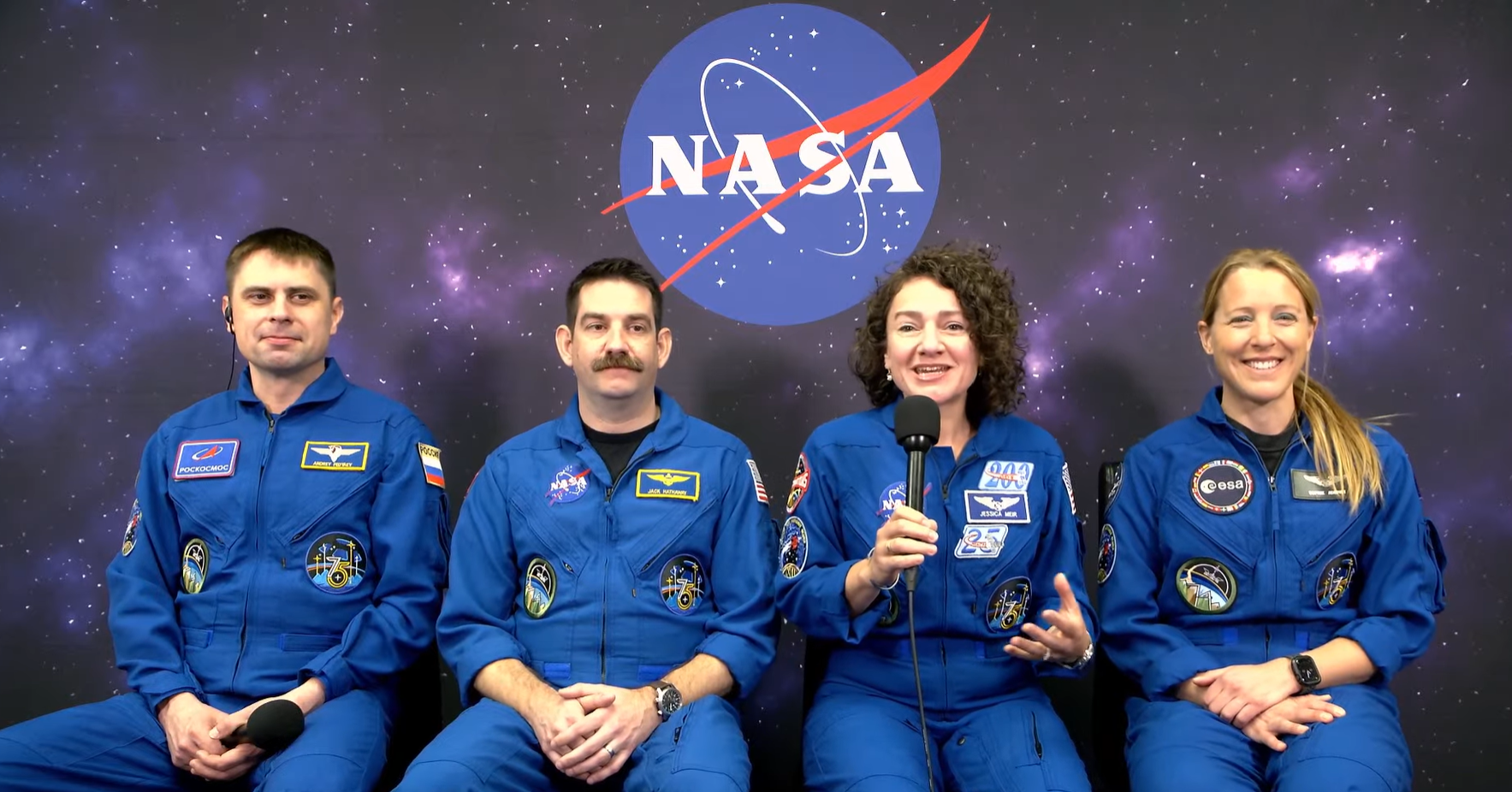
Image shows a NASA insignia in the background while four astronauts in blue flight suits sit and speak virtually to the media inside Astronaut Crew Quarters at NASA's Kennedy Space Center in Florida on Sunday, Feb. 8, 2026. Photo credit: NASA
Crew members of NASA’s SpaceX Crew-12 mission, from left to right, Roscosmos cosmonaut Andrey Fedyaev, NASA astronauts Jack Hathaway and Jessica Meir, and ESA (European Space Agency) astronaut Sophie Adenot, participate in a news conference from Astronaut Crew Quarters inside the Neil A. Armstrong Operations and Checkout Building at the agency’s Kennedy Space Center in Florida on Sunday, Feb. 8, 2026.
NASA

NASA astronauts Jessica Meir and Jack Hathaway, ESA (European Space Agency) astronaut Sophie Adenot, and Roscosmos cosmonaut Andrey Fedyaev answered questions Sunday from the Astronaut Crew Quarters inside the Neil A. Armstrong Operations and Checkout Building at NASA’s Kennedy Space Center in Florida.

During their virtual briefing with the media, Crew-12 discussed their science objections aboard the International Space Station and some of the personal mementos they’ll bring on their eight-month journey at the orbiting laboratory.

Liftoff is targeted for no earlier than 6:01 a.m. EST on Wednesday, Feb. 11, from Space Launch Complex 40 at Cape Canaveral Space Force Station in Florida. The targeted docking time is approximately 10:30 a.m., Thursday, Feb. 12.

Watch the briefing below:

Powered by WPeMatico

Get The Details…

Elyna Niles-Carnes

A Grand, Snow-Rimmed Canyon

A Grand, Snow-Rimmed Canyon

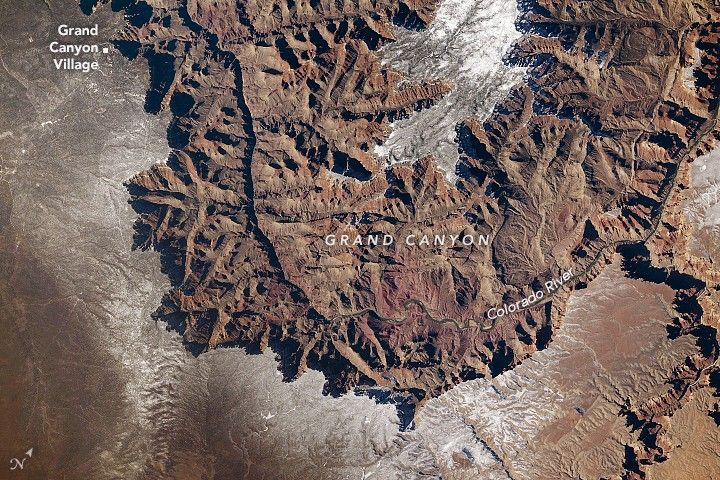
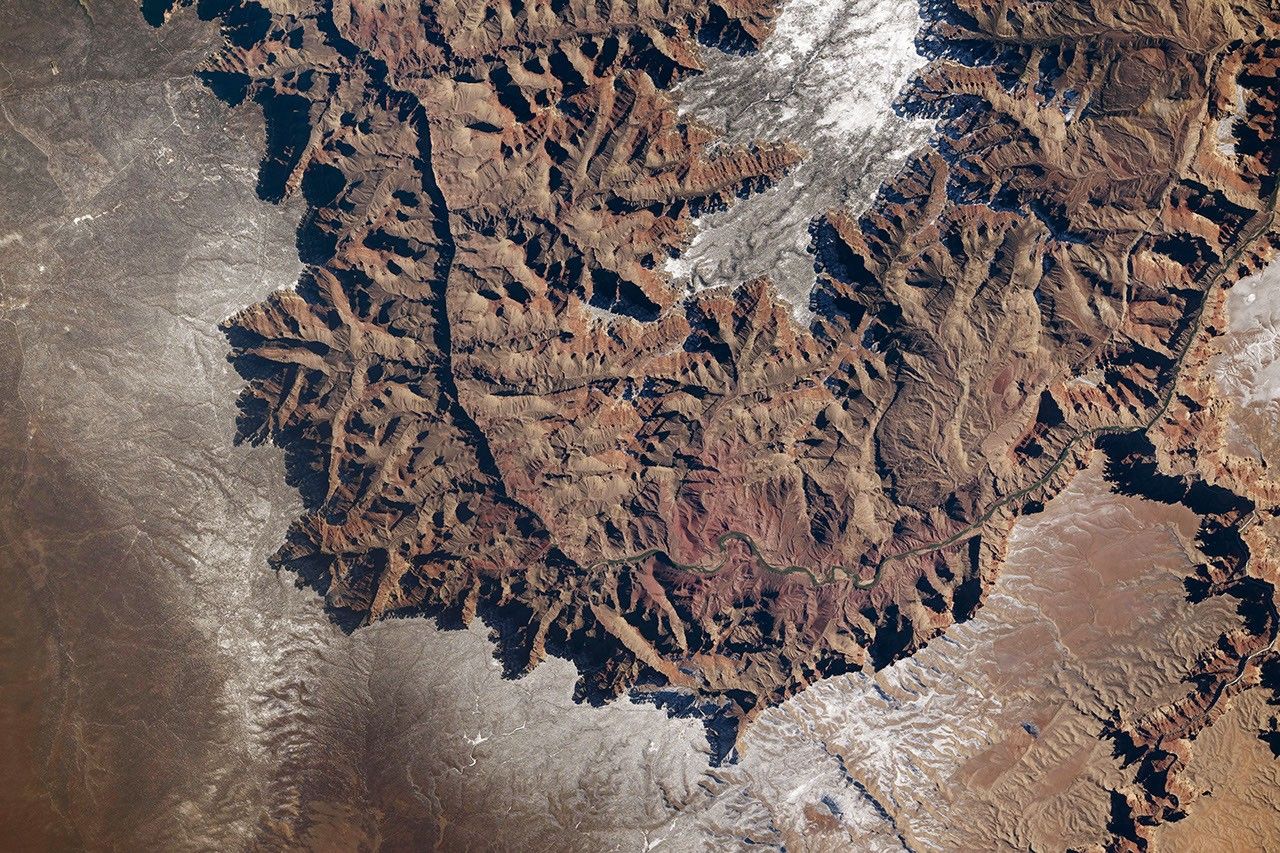
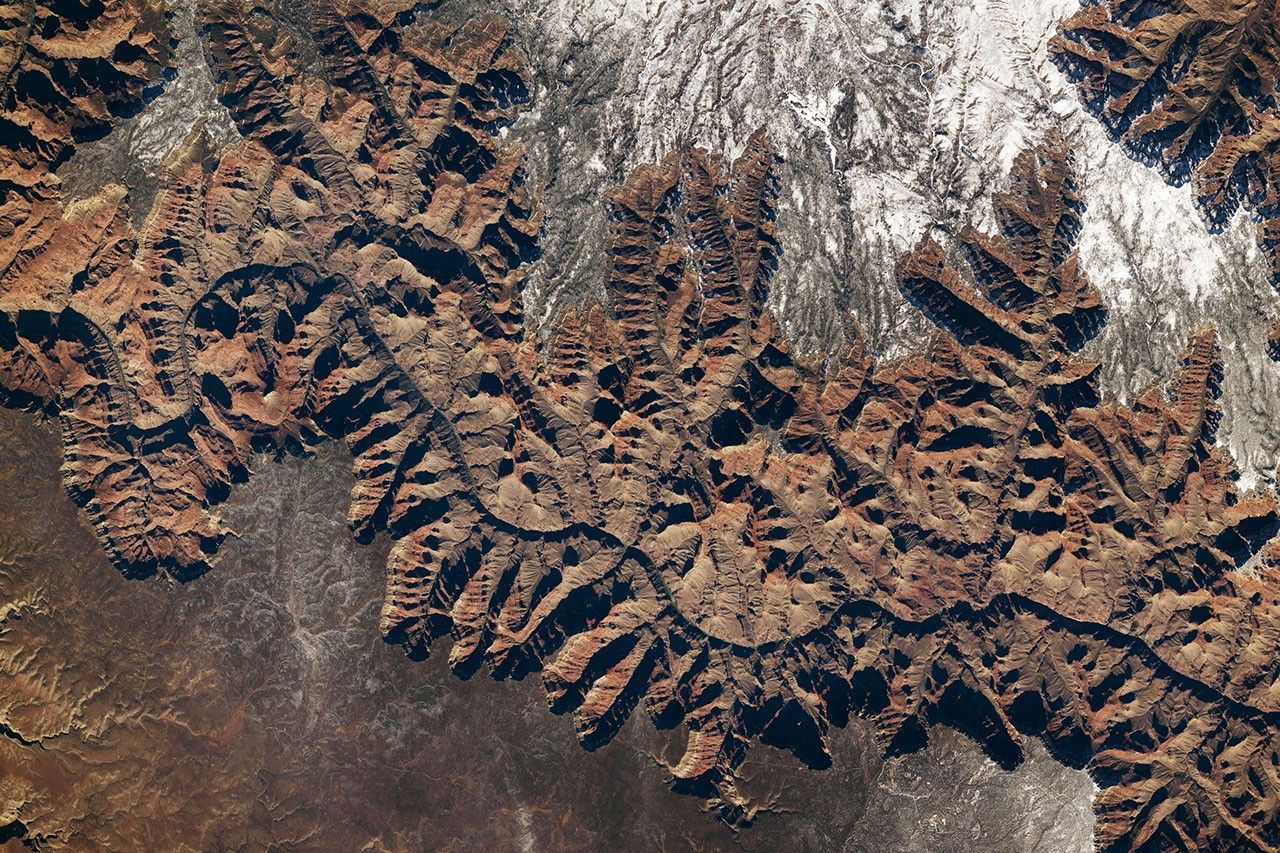
A portion of the Grand Canyon, photographed from above, forms a U shape. The plateau on both sides of the canyon is partially covered in a layer of white snow.
January 26, 2026

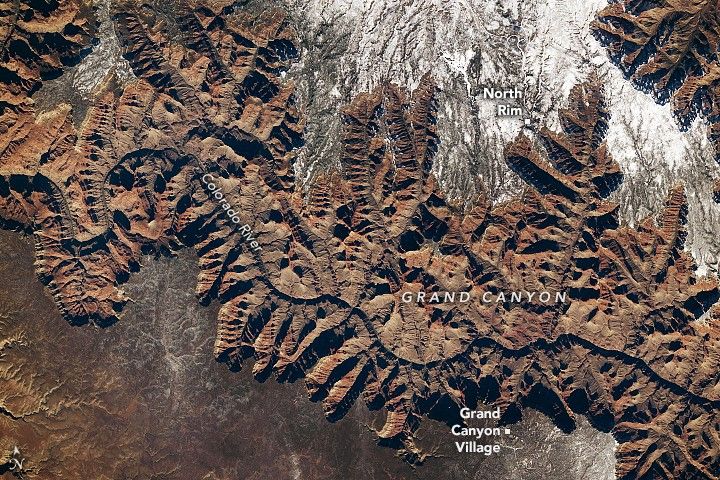
A sunny day in early 2026 revealed the remnants of a winter storm on Arizona’s high desert—and produced a striking, if somewhat puzzling, display of light and shadow in the Grand Canyon. An astronaut aboard the International Space Station captured these photographs of the distinct topography on January 26, 2026.

Snow flurries were flying in the area the previous two days, as they were across much of the central and eastern U.S. Hazardous conditions within Grand Canyon National Park prompted officials to close Desert View Drive, which runs along a portion of the South Rim shown in the photo above, and to issue warnings about icy trails. (The North Rim is closed to traffic in winter and early spring.) When the road reopened around the time of these photos, a layer of white remained on both the South Rim, at an elevation of around 7,000 feet (2,100 meters), and the North Rim, at about 8,000 feet (2,400 meters).

A portion of the Grand Canyon, with the curving Colorado River at its bottom, runs across the width of this downward-looking photo. Snow covers some of the plateau on both sides of the canyon, with more appearing on the North Rim.
January 26, 2026

Snow is typical at these high elevations in winter. The South Rim and North Rim see average season totals of 58 inches and 142 inches, respectively. At lower, warmer elevations, precipitation tends to fall as rain. On January 24, for example, snow fell on the plateau, while a weather station at Phantom Ranch on the canyon floor recorded 0.06 inches of rain.

If these photos make the iconic feature of the American West look more like a mountain range than a vast chasm, the effect is likely due to a visual illusion called relief inversion. Many people have an unconscious expectation that a light source should come from the top of an image. In these images, however, the Sun is shining from the south, or the bottom of the photos. Though the shadows on the canyon walls may be visually deceiving, the presence of snow helps to signal that the flat areas sit at higher elevations.

Astronaut photographs ISS074-E-208838 and ISS074-E-208848 were acquired on January 26, 2026, with a Nikon Z9 digital camera using a focal length of 400 millimeters. They are provided by the ISS Crew Earth Observations Facility and the Earth Science and Remote Sensing Unit at NASA Johnson Space Center. The images were taken by a member of the Expedition 74 crew. The images have been cropped and enhanced to improve contrast, and lens artifacts have been removed. The International Space Station Program supports the laboratory as part of the ISS National Lab to help astronauts take pictures of Earth that will be of the greatest value to scientists and the public, and to make those images freely available on the Internet. Additional images taken by astronauts and cosmonauts can be viewed at the NASA/JSC Gateway to Astronaut Photography of Earth. Story by Lindsey Doermann.

References & Resources

You may also be interested in:

Stay up-to-date with the latest content from NASA as we explore the universe and discover more about our home planet.

An Amphitheater of Rock at Cedar Breaks

4 min read

The colorful formations found in this bowl-shaped escarpment in southwestern Utah are the centerpiece of Cedar Breaks National Monument.

Article

A Northwest Night Awash in Light

3 min read

The glow of city lights, the aurora, and a rising Moon illuminate the night along the northwest coast of North…

Article

Five Minutes in Orbit

3 min read

An astronaut captured a moonrise—and much more—in a series of photos taken from the International Space Station.

Article

Powered by WPeMatico

Get The Details…