Eleasa Kim: Supporting NASA’s Commercial Low-Earth Orbit Development Program

Eleasa Kim: Supporting NASA’s Commercial Low-Earth Orbit Development Program

4 min read

Eleasa Kim: Supporting NASA’s Commercial Low-Earth Orbit Development Program
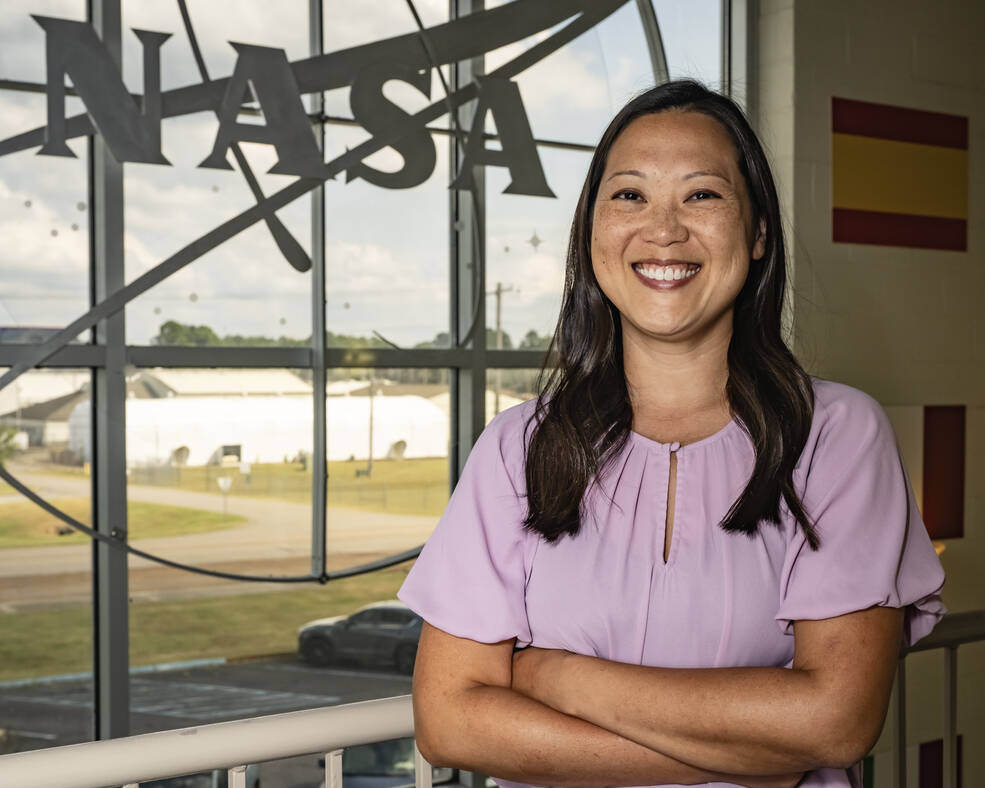
Eleasa Kim is a payload project integrator in Marshalls Human Exploration Development and Operations Division.
Eleasa Kim is a payload project integrator in Marshall’s Human Exploration Development and Operations Division.
Credits: NASA/MIck Speer

For Eleasa Kim, being part of NASA’s Commercial Low-Earth Orbit Development Program, also known as CLDP, is the perfect combination of working with technology and helping people.

As the payload project integrator for CLDP supporting NASA Marshall Space Flight Center’s Human Exploration Development and Operations Division, Kim supports NASA and commercial entities that want to be part of the agency’s burgeoning commercial low Earth orbit economy.

As NASA works to transition science operations from the International Space Station to commercial space stations, Kim is working to ensure a smooth transition for the science being conducted in microgravity for the benefit of humanity.

“What inspires me every day is being trusted by CLDP and Marshall to represent payloads operations in these critical stages of commercial space station development,” Kim said. “I get a front row seat as I offer my expertise and passion to help further this mission in making the spaceflight team operating in low Earth orbit even bigger and more sustainable with commercial partnerships.”

Kim’s path to NASA began with an aptitude test taken at her high school in Opelika, Alabama, that revealed she would do well working in public service. She also enjoyed anatomy and biology classes and had an interest in technology. During her sophomore year, a teacher suggested she would make a great engineer. Stem cell research was beginning to make headlines, and she decided to pursue her bachelor’s degree in biomedical engineering at Vanderbilt University.

She also earned a master’s degree in biotech research from Northwestern University. When evaluating the next step in her journey, she evaluated Ph. D. programs and industry jobs.

“I love people, technology, and teams – working on a team and having a shared goal,” Kim said. “And I like results.”

In 2007, Kim landed a job on a NASA contract at Johnson Space Center, working for Wyle Laboratories as a biomedical engineer flight controller in Mission Control supporting the hardware for astronauts in space.

“Until then, NASA had not been on my radar at all, but I thought, ‘Wow, that’s a cool opportunity,’ and it aligned with those things that are most fulfilling to me,” she said.

Kim supported the operations for crew health and medical equipment on the space station. This included medications, exercise hardware, and environmental sampling equipment. For Space Shuttle mission STS-119 and Increments 27 and 28, she managed the full mission complement of activities and hardware resupply and return. She also trained new biomedical engineer flight controllers.

“It was very hard, but I love challenges and working hard,” Kim said. “And I like working on a team. And that’s exactly what it was. It had the hardware side of things – the building and fixing of things, because the space station was being assembled and hardware rarely works exactly how you think it will in microgravity. And it also had the human aspect of supporting crew health.”

Kim joined the Marshall team in 2014 and has worked as a science payload planner for station and worked a short time on the safety team supporting payloads for the Artemis I mission. She also did systems integration for the Microgravity and Life Science Glovebox teams. After working on various support contracts for about 15 years, she was hired by NASA as a civil servant in 2020. During the first few years as a civil servant, Kim provided technical leadership for the mission planning branch of the Payload and Mission Operations Division at Marshall. While in this role, one of the part-time tasks she fulfilled was providing subject matter expert support for CLDP. In spring of this year, that part-time role became a full-time position.

Kim said she is looking forward to seeing the commercial low Earth orbit economy develop in the years to come. NASA is working with commercial teams to develop commercial space stations and the services that will be needed to support them. 

“When the space station retires, the plan is for us to continue to fly and get our astronauts experience in microgravity and low-Earth orbit as well as execute science in microgravity and low-Earth orbit,” she said. “We want to be one of many users of commercial space stations.

“What I’m most excited for now is that NASA is leveling up by supporting the creation of commercial space stations and destinations. I have a lot of passion for our mission – me in this role is where I’m meant to be right now.”

Share

Details

Last Updated

Sep 28, 2023

Related Terms

Powered by WPeMatico

Get The Details…
Beth Ridgeway
Marshall Teams Combine to Make Space Station Science Reality

Marshall Teams Combine to Make Space Station Science Reality

5 min read

Marshall Teams Combine to Make Space Station Science Reality

By Gina Hannah and Jonathan Deal

For more than 20 years, astronauts aboard the International Space Station have worked diligently on science experiments that benefit humanity on Earth and in deep space. Getting these experiments to and from space is a multi-faceted effort across the agency. Teams at NASA’s Marshall Space Flight Center have combined their world class capabilities – before and after these experiments return from the space station – to make that cutting-edge science a reality.

One experiment that recently returned from station is a perfect example of how the teams work together. The experiment titled “Growth of Ternary Compound Semiconductors” seeks to study crystal growth in microgravity, specifically focusing on ZnSe (zinc selenide) compounds and one of their potential applications in high-powered lasers operating in the infrared wavelengths.

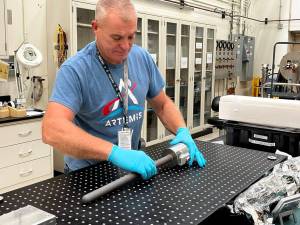
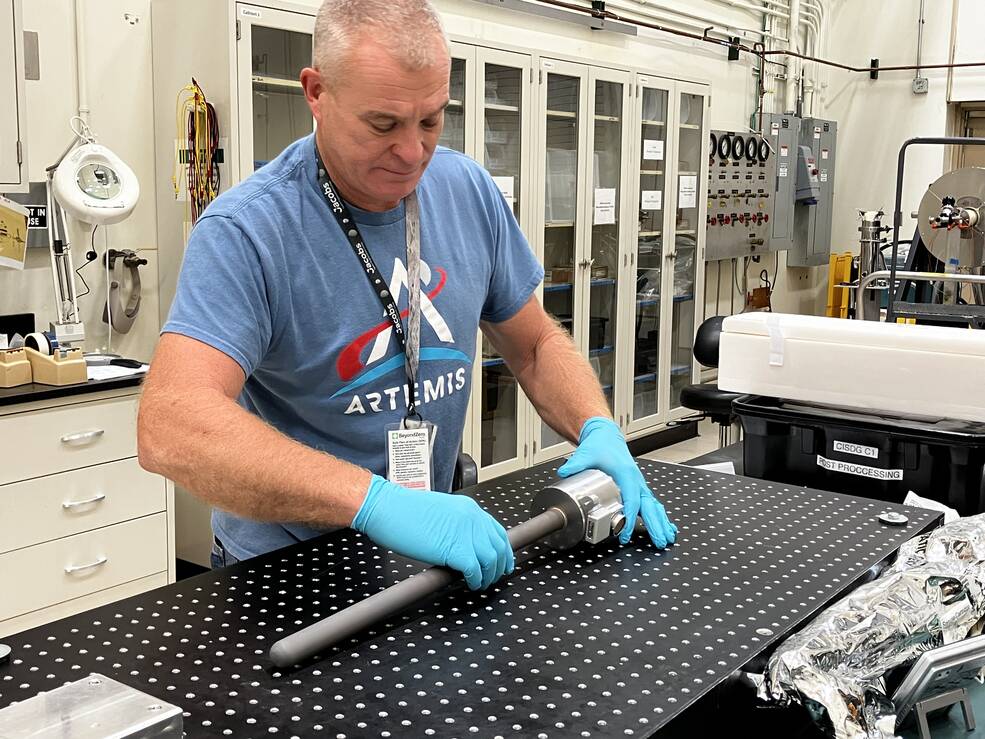
Chris Honea, a NASA Marshall Space Flight Center technician supporting payloads, unwraps a payload Aug. 18 for semiconductor research that recently arrived from the International Space Station. The experiment studied crystal growth in microgravity.
NASA

Six SCAs (Sample Cartridge Assemblies) launched to the space station as part of the SpaceX Commercial Resupply Service Mission-24. Using the Materials Science Laboratory on station, it aimed to cultivate crystals of zinc selenide, zinc selenide telluride, and chromium-doped zinc selenide using the physical vapor transport method. But what set this experiment apart was its core objective: to discern how gravity-driven fluid flows influenced the structural, electrical, and optical characteristics of these crystals when compared to their counterparts grown on Earth.

As the crystals began to form, scientists, personnel from space station project office, and the thermal team of Marshall’s Test Lab, monitored their progress. In the unique environment of microgravity, fluid dynamics took on a new dimension, and the crystals flourished under those conditions.

“Without gravity, we have better control because weight itself can cause defects and affect the growth pattern,” said Dr. Ching Hua Su, the experiment’s principal investigator. “Our main goal is to study the effect of gravity on vapor transport crystal growth. When dealing with materials that melt at higher temperatures, vapor growth lowers the temperature and contributes fewer defects. That’s why we chose zinc selenide for our applications.”

Su is a member of the Materials Science and Metallurgy Branch in Marshall’s Materials and Processing Lab. That team also works on the engineering projects ranging from additive manufacturing, welding to metallurgy for fuel tanks and engines.

On Earth, quality ZnSe-based crystals are used in various optical applications, with implications for cutting edge-technologies such as optical windows, infrared lasers, and optical wavelength conversion devices. Being able to conduct the experiment in a microgravity environment, scientists have gained insights that could enhance the quality of these crystals, thus paving the way for revolutionary advances in optical technology.

“We are now on the brink of completing our sixth flight experiment,” Su said.

We are eager to compare our space-grown samples with those from the ground, conducting two more runs on this duplicate furnace in the test lab at Marshall to facilitate direct comparisons.Take time to debrief after success or conflict. Listen, then restate messages to make sure they’re understood.

 Dr. Ching Hua Su

Dr. Ching Hua Su

Materials Science and Metallurgy Branch in Marshall’s Materials and Processing Lab

Ensuring the science conducted on the payload is successful is a team effort, and work on the mission begins years before the payload launches.

“We have a payload operation integration specialist and a payload activity requirement coordinator who work with the payload developer to write procedures and document timing constraints,” said Jennifer McMillian, payload operations manager for the International Space Station Increment 69 management team.

Those procedures include determining the length of the experiment, proper installation of the cartridge, and defining the type of ground support needed. Planners then work those activities into the mission timeline so the payload can be scheduled into the workflow on the Materials Science Research Rack after it arrives on the space station.

Scheduling the work takes into consideration both crew time and station resources, including power, water, and the vacuum exhaust system.

“We’re involved in all of the planning. We have the whole increment team that is working on building a plan, say, six months out, and then refining that plan daily as we get closer to execution,” McMillian said.

Once the payload enters the rack, the team’s work is round-the-clock.

“When we get to real-time execution, the payload rack officers here are responsible for commanding to the rack, applying all of the resources to that rack to enable the science,” she said.

The astronauts will use the instructions written by the payload operations integration specialist to process the run, usually for about a week. The process is repeated for each of the samples in the payload before being returned to Earth.

The work is an international effort. As payloads are being processed, a team at Marshall monitors the rack, and a European Space Agency team in Munich, Germany, adjusts parameters for each specific investigation in the rack, McMillian said.

“When we’re in the middle of execution, we’re in the monitoring phase, and react to any anomalous situation we may see,” she said.

With the crystals now back on Earth, Su and his team are hoping the experiment will lead to new frontiers in crystal growth and the endless possibilities it holds for both space and terrestrial applications.

Hannah, a Media Fusion employee, supports Marshall’s Office of Communications and Strategic Analysis, and Deal, a public affairs officer, supports the Marshall Office of Communications.

Share

Details

Last Updated

Sep 28, 2023

Related Terms

Powered by WPeMatico

Get The Details…
Beth Ridgeway

Marshall Bids Farewell to Former Center Director with Retirement Ceremony

Marshall Bids Farewell to Former Center Director with Retirement Ceremony

4 Min Read

Marshall Bids Farewell to Former Center Director with Retirement Ceremony

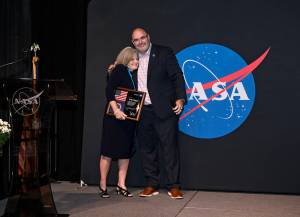
Former Center Director Jody Singer, left, hugs Acting Center Director Joseph Pelfrey after being presented with a plaque honoring her 38 years with NASA and Marshall.

Former Center Director Jody Singer, left, hugs Acting Center Director Joseph Pelfrey after being presented with a plaque honoring her 38 years with NASA and Marshall. The plaque was made with wood from Building 4200, which Singer decided to have demolished during her tenure, and flags that flew on the last Challenger mission and Artemis I.

Credits:
NASA/Charles Beason

By Jessica Barnett

Hundreds filled Activities Building 4316 on Sept. 21 to offer their best wishes to former NASA Marshall Space Flight Center Director Jody Singer as she takes on her next big adventure: retirement.

Marshall team members brought gifts, recorded messages, and lined up for a hug or handshake with Singer as part of the celebration. A select few were invited to stand on stage and speak about Singer’s many career accomplishments, as well as how deeply she would be missed.

We have SLS (Space Launch System) in part because of the hard work of Jody, and that’s pretty amazing.

Bob Cabana

Bob Cabana

NASA Associate Administrator

“All that she did led up to her being the deputy director at Marshall, and from there, an amazing five-year tenure as the director.” added Cabana.

Singer joined NASA in 1985 as an engineer and then supported the Space Shuttle program in 1986. In all, she was involved in 110 shuttle missions. She was named the first female project manager for the Reusable Solid Rocket Booster Project in 2002 and was holding three deputy positions simultaneously just eight years later.

Eight years after that, in 2018, she became Marshall’s first female center director, overseeing 7,000 employees, a $5 billion budget, and one of NASA’s largest field installations. Singer retired July 29.

Joseph Pelfrey, who took over as Marshall’s acting center director, said he’s learned just how heavy a load Singer carried in his few weeks in the role.

“It can’t be overstated the impact that Jody had on our center, on our agency, and especially me, personally,” Pelfrey said. “To believe in me, to believe in the people that followed you – it’s your way of paying it forward, as you always said, and it can’t be overstated how much we appreciate that.”

Singer received numerous awards during her 38-year career with NASA, and the recognition continued at her retirement ceremony. Cabana joined NASA Deputy Associate Administrator Casey Swails in presenting Singer with the Distinguished Service Medal, NASA’s highest honor, along with pins from 68 International Space Station missions, plus an Alabama flag and U.S. flag that flew on the Orion spacecraft for Exploration Flight Test-1 and Artemis I.

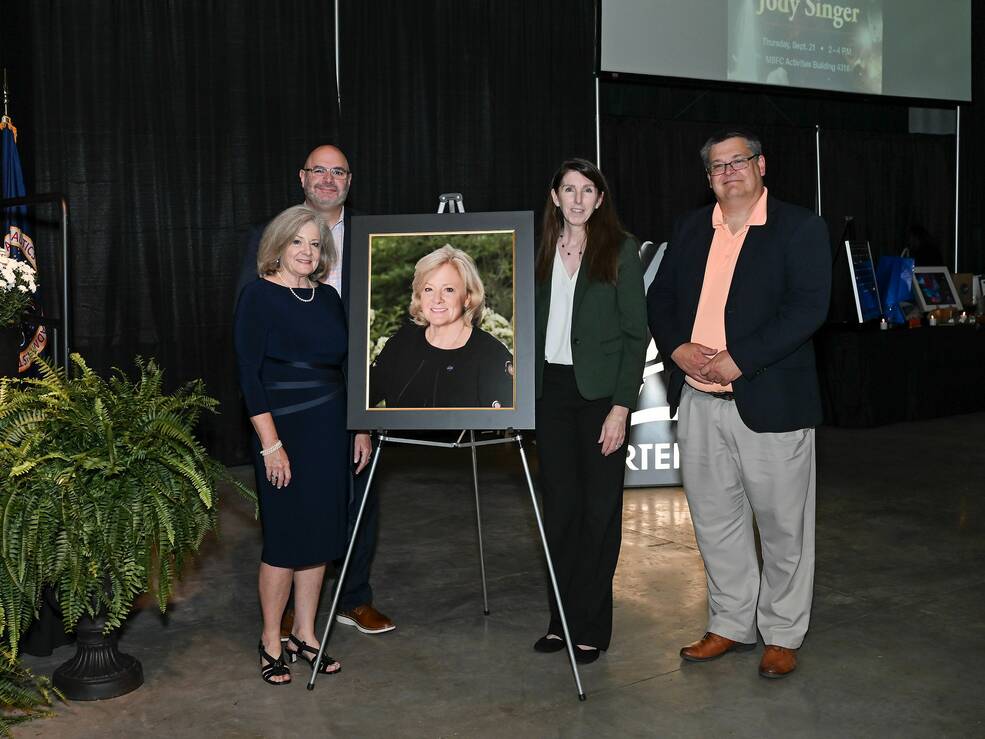
Singer, far left, stands next to a portrait of herself after its unveiling at her retirement ceremony Sept. 21.
Singer, far left, stands next to a portrait of herself after its unveiling at her retirement ceremony Sept. 21. Joining behind her, from left, are Pelfrey, Marshall Associate Director Rae Ann Meyer, and Marshall Associate Director, Technical, Larry Leopard.
Credits: NASA/Charles Beason

Pelfrey, along with Marshall Associate Director, Technical, Larry Leopard, who emceed the ceremony, presented Singer with a plaque honoring her time at Marshall. The plaque was made with wood from Building 4200, which Singer decided to have demolished during her tenure, and flags that flew on the last Challenger mission and Artemis I.

“Jody has inspired countless young people, especially young women, to pursue careers in STEM, and she has personally dedicated her career to mentoring the next generation of explorers and leaders,” Leopard said. “I can personally say she left Marshall better than she found it.”

‘Who we are’

When it was her turn at the microphone, Singer offered thanks to the long list of team members-turned-friends she has worked with and received support from over the years.

“It makes a big difference, having folks you can call up and rely on,” she said. “You can’t do it by yourself. It has to be a team, and I couldn’t have had better partners in this journey.”

She said despite multiple reassurances that she would know when the time was right to retire, the decision was far from easy.

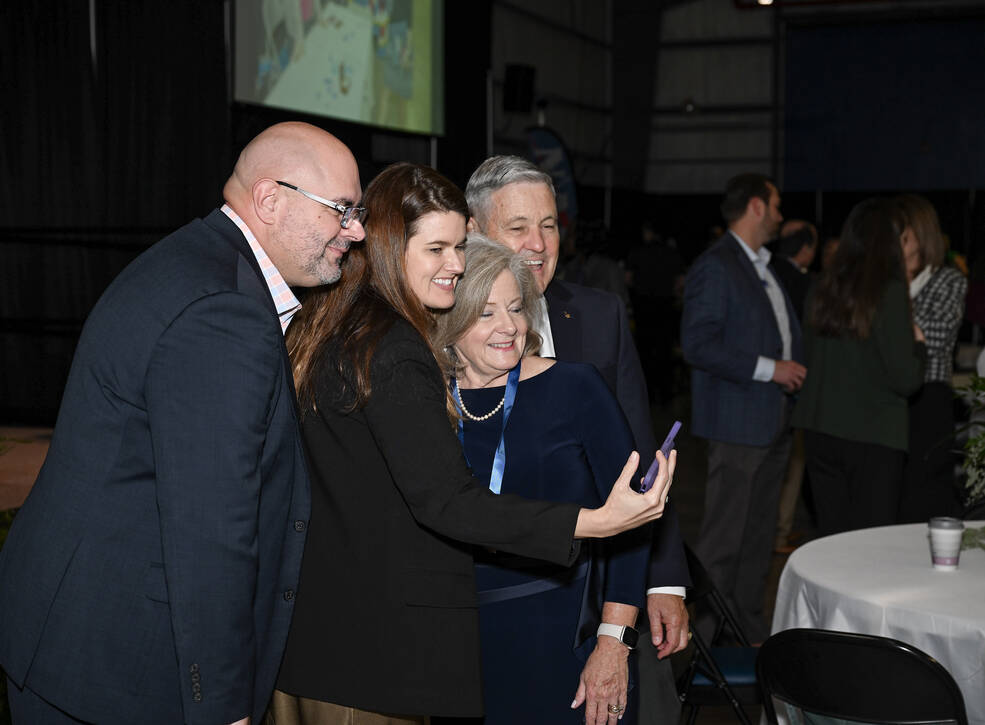
Singer, center right, poses for a selfie with her former coworkers Sept. 21 during her retirement ceremony. Joining her, from left, are Pelfrey, NASA Deputy Associate Administrator Casey Swails, and NASA Associate Administrator Bob Cabana.
NASA/Charles Beason

I’m not a quitter, and I love what we do. I love the passion for our mission, I love all the folks, and it’s really, really hard to decide when it is time.

Jody Singer

Jody Singer

Former Marshall Space Flight Center Director

“But then I look around and I see the teams, I see the leadership we have, and when you see such talent and passion, and knowing there are people that could do it a lot better than I ever thought about doing it, that’s when I know it’s time,” said Singer.

Singer said she’s looking forward to seeing what Marshall accomplishes under the next director’s leadership, and she offered this bit of advice to team members:

“Don’t forget who we are at Marshall. Where else can you say you’re a center that launches, you land, you live in space, you help people learn, you have science, leading-edge technology and manufacturing? There is nothing wrong with being proud of the expertise that Marshall brings to the game. It just doesn’t get any better.”

Meanwhile, she added, “I’ll always be counting on you, fighting for you, and most of all, being so proud to be part of a team like this.”

Barnett, a Media Fusion employee, supports the Marshall Office of Communications.

About the Author

Beth Ridgeway

Beth Ridgeway

Share

Details

Last Updated

Sep 28, 2023

Related Terms

Powered by WPeMatico

Get The Details…
Beth Ridgeway
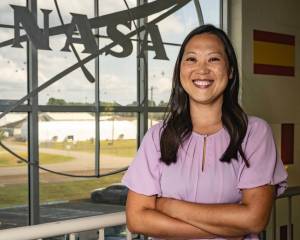
Take 5 with Brad Zavodsky

Take 5 with Brad Zavodsky

5 min read

Take 5 with Brad Zavodsky

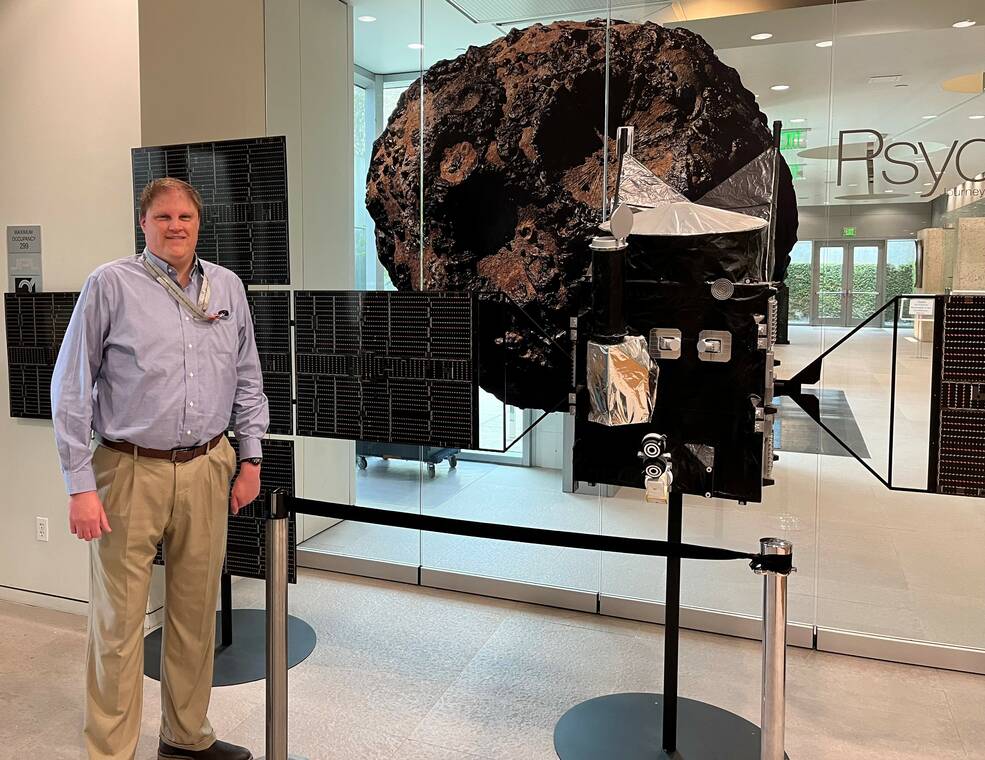
Brad Zavodsky is the mission manager for NASAs Psyche Asteroid Mission for the Planetary Missions Program Office at the agencys Marshall Space Flight Center.
Brad Zavodsky is the mission manager for NASA’s Psyche Asteroid Mission for the Planetary Missions Program Office at the agency’s Marshall Space Flight Center.
Credits: NASA/Brian Mulac

By Wayne Smith

Brad Zavodsky’s interest in science piqued at a young age. Growing up in Cincinnati, Ohio, both of his parents were teachers and they instilled in him a sense of curiosity about the world.

“My dad was a middle school science teacher and he was great at communicating science and helping others understand how the world works,” said Zavodsky, the mission manager of NASA’s Psyche asteroid mission for the Planetary Missions Program Office at Marshall Space Flight Center. “I like to say that working in the program office takes me back to being a student, staring in wonder at pictures of the planets in textbooks. Now, I get to work on projects that are re-writing those same books! I really enjoy sharing the planetary missions’ scientific discoveries with my family and giving back to those who first cultivated my scientific interest.”

The Psyche mission – a journey to a unique metal-rich asteroid orbiting the Sun between Mars and Jupiter – is scheduled to launch Oct. 5 on a Falcon Heavy from NASA’s Kennedy Space Center. What makes the asteroid Psyche unique is that it appears to be the exposed nickel-iron core of an early planet, one of the building blocks of our solar system. Psyche is part of NASA’s Discovery Program, also managed by Marshall.

Zavodsky’s sense of curiosity continues to drive him. He is also motivated and shares the enthusiasm of PIs (principal investigators) and science teams in the Planetary Missions program.

“Our PIs are extraordinary leaders in their scientific disciplines and have worked their whole careers to get to the point where they are leading a mission for NASA,” Zavodsky said. “It is exciting to be able to help them achieve their goals and objectives.”

Just being a small part of the revolutionary science data that our projects collect pushes me to do my best every day.

Brad Zavodsky

Brad Zavodsky

Mission manager of NASA’s Psyche

Question: What are your primary responsibilities as program manager for the Psyche mission?

Zavodsky: I am responsible for ensuring the project has the resources necessary to successfully accomplish the mission. I am also responsible for overseeing the technical, cost, and schedule aspects of the project and ensuring that stakeholders within NASA are informed about any risks in those areas. The goal is to enhance the probability of mission success through providing this oversight. Additionally, I help the project navigate NASA processes and procedures, specifically the NASA Space Flight Program and project management requirements to confirm that they are compliant with all the necessary requirements to prepare them for gate reviews and decisional meetings.

Question: What excites you most about the future of human space exploration and your team’s role in it?

Zavodsky: The planetary bodies we target are unique, and many times, the first time humans have visited a location in our solar system. Psyche is humanity’s first visit to a metal asteroid. We have visited rocky bodies like Mercury and asteroids, icy bodies like comets, and gas bodies like Jupiter and Saturn, but this will be the first time we have visited a metal body. One of Psyche’s objectives is to identify whether the Psyche asteroid is a remnant planet core like Earth’s core, which could teach us about the early history of our own planet. Some of our other projects are targeting Jupiter’s moon, Europa, and Saturn’s moon, Titan, to identify environments that may sustain or once may have sustained life. It is exciting to have a front row seat for these types of exploration projects that are helping to solve some of humanity’s longest-standing questions about the universe.

Question: What has been the proudest moment of your career and why?

Zavodsky: I had the opportunity to support the acquisition process for the 2019 Discovery Program Announcement of Opportunity. I assisted the program scientist in preparing the panels that reviewed the various mission concepts, managing the review process, and communicating the results of the review to decision makers at NASA Headquarters. Being in that role allowed me to participate in several decisional meetings at headquarters, which provided incredible insight into how NASA selects missions and the types of programmatic considerations that are required when making such decisions. This Announcement of Opportunity ultimately led to the selection of the DAVINCI (Deep Atmosphere Venus Investigation of Noble gases, Chemistry, and Imaging) and VERITAS (Venus Emissivity, Radio Science, InSAR, Topography, and Spectroscopy) missions to Venus, the first NASA missions to our neighbor planet in over three decades. When those missions were announced by the NASA administrator, I was extremely proud to have played a role in the process.

Question: What advice do you have for employees early in their NASA career or those in new leadership roles?

Zavodsky: When presented with new work or training opportunities, say yes. Trust that your supervisor is putting you in a position to learn a valuable skill and setting you up to succeed. If you are not getting those opportunities, communicate to your supervisor about your willingness to learn new skills or try a new role. Taking stretch assignments or accepting a new role can be intimidating, but every job requires some on-the-job training, so you can never expect to be an expert on day one. While you may not feel like you have all the experience needed, if you identify others who have experience, establish good relationships, and ask lots of good questions, you can accomplish anything.

Question: What do you enjoy doing with your time while away from work?

Zavodsky: I enjoy watching sports during my time away from work. Having grown up in Cincinnati, I am a lifelong Cincinnati Reds, Cincinnati Bengals, and University of Cincinnati Bearcats basketball fan. Since moving to Huntsville in 2005, I have also become a big University of Alabama football fan.”

Smith, a Media Fusion employee and the Marshall Star editor, supports the Marshall Office of Communications.

Share

Details

Last Updated

Sep 28, 2023

Related Terms

Powered by WPeMatico

Get The Details…
Beth Ridgeway
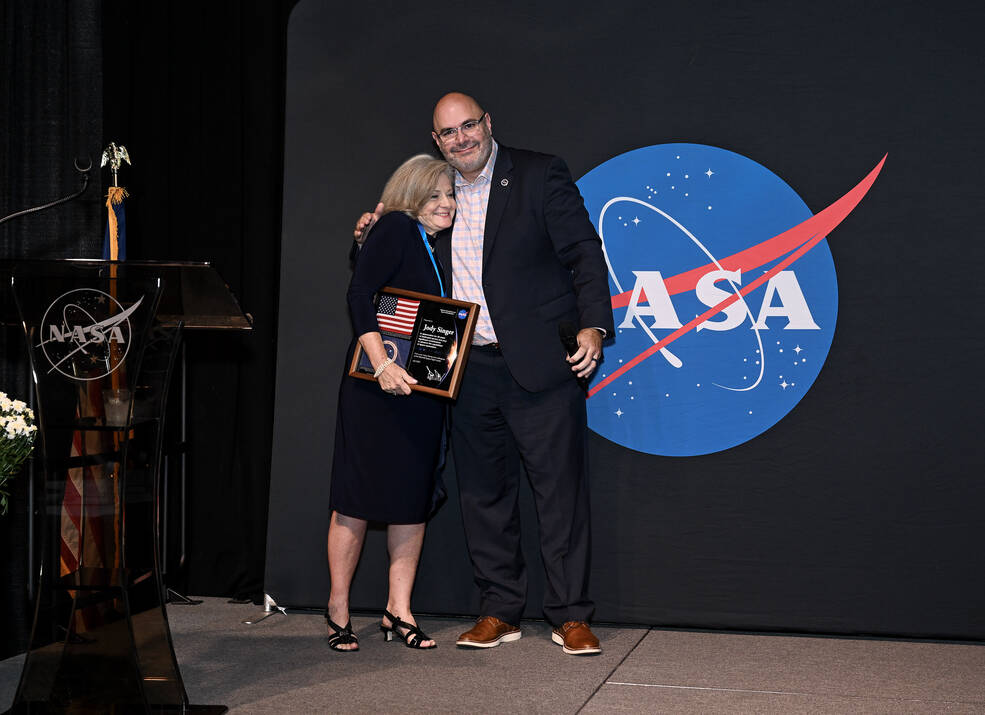
Countdown to Psyche: Marshall Aids Preparations for Asteroid Mission, Key Technology Payload

Countdown to Psyche: Marshall Aids Preparations for Asteroid Mission, Key Technology Payload

5 min read

Countdown to Psyche: Marshall Aids Preparations for Asteroid Mission, Key Technology Payload

By Rick Smith

When the Psyche spacecraft lifts off Oct. 5 to rendezvous with a distant, metal-rich asteroid – and test an innovative new communications system on the way – management teams at NASA’s Marshall Space Flight Center will be watching keenly.

Psyche is the 14th planetary exploration mission in NASA’s Discovery program, which is managed for the agency by Marshall – as is the TDM (Technology Demonstration Missions) program, which funds the DSOC (Deep Space Optical Communications) project.

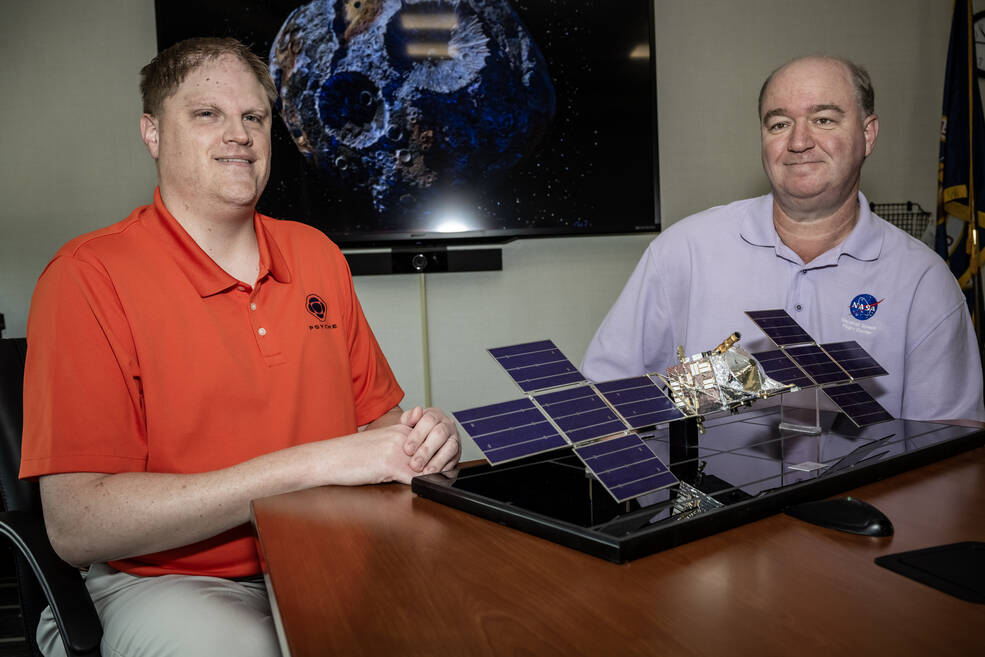
Brad Zavodsky, left, Psyche mission manager in Marshalls Planetary Missions Program Office, and Joel Robinson, Deep Space Optical Communications mission manager at Marshall, ponder a scale model of the Psyche spacecraft.
Brad Zavodsky, left, Psyche mission manager in Marshall’s Planetary Missions Program Office, and Joel Robinson, Deep Space Optical Communications mission manager at Marshall, ponder a scale model of the Psyche spacecraft, which will be launched Oct. 5 on a mission to study a metal-rich asteroid deep in our solar system and will test innovative laser-based communications during the spacecraft’s transit around the Sun.
Credits: NASA/Mick Speer

“We ensure the project teams have all the resources they need to execute the project, monitor costs and schedules to keep the project on track and on time, and work closely with the payload and launch teams throughout the flight mission,” said Brad Zavodsky, Psyche mission manager in Marshall’s Planetary Missions Program Office.

Joel Robinson, DSOC mission manager at Marshall, concurs. He and Zavodsky serve as “conduits,” he said, between directorate-level technology and science leadership at NASA Headquarters and the Psyche and DSOC project leadership – both of which, serendipitously, are managed at NASA’s Jet Propulsion Laboratory.

The program office teams at Marshall include program planning and control personnel, independent technical authorities, and procurement and acquisition specialists. These technical experts provide the Psyche and DSOC missions with all necessary guidance and direction throughout their respective development and programmatic life cycles.

“That means a number of presentations, weekly telecons, and periodic reviews,” Robinson said, “but it’s all worth it as we count down to launch. All that oversight helps facilitate delivery of a robust payload – one that’s ready for launch and ready to extend humanity’s reach into the solar system.”

Led by principal investigator Dr. Lindy Elkins-Tanton at Arizona State University, Psyche is set to be lofted to space on a SpaceX Falcon Heavy – the first interplanetary launch of that rocket – from NASA’s Kennedy Space Center at 9:34 a.m. CDT on Oct. 5.

Powered by solar electric propulsion, Psyche’s flight to the asteroid will take six years; it will reach its destination in 2029 and begin a 26-month period of scheduled scientific observations, gathering images and data to shed new light on the asteroid’s history and composition.

The Psyche asteroid, orbiting the Sun in the asteroid belt between Mars and Jupiter, measures roughly 173 miles at its widest point. Researchers are keen to determine whether it may have been the core of a planetesimal, part of an early planet.

“We know a good deal about Earth’s core, but we can’t study it directly because of its depth below the crust and mantle,” Zavodsky said. “Investigating Psyche is perhaps the closest we can come. Studying its composition and structure is an exciting opportunity to learn more about such objects in space – and perhaps a little something about our own planet as well.”

Should the Psyche spacecraft encounter challenges during flight, Zavodsky’s team will assist mission managers at JPL and Arizona State University, for whom Marshall oversees the project management and principal investigator contracts.

“We’ll maintain direct engagement with the project team and NASA decision-making authorities,” he said. “Should an issue arise, the project will be prepared to stand up anomaly response teams to understand and resolve those challenges. Our program office will support that effort as needed.”

Meanwhile, the DSOC technology demonstrator is set to pursue its own mission, sending and receiving test data from Earth using a near-invisible infrared laser and sensitive photon-counting camera. It will mark NASA’s farthest-ever test of high-bandwidth optical communications – paving the way for broadband communications when NASA sends astronauts to Mars.

“We’re tackling the twin issues of bandwidth and transmission rate to expand and refine our data-gathering ability from missions beyond the Moon,” Robinson said. “We can’t transmit data faster than the speed of light, but we can do far more with advanced optical systems of the same size and power requirements as traditional radio systems.”

Building on the Lunar Laser Communications Demonstration mission flown on the International Space Station in 2013 and the Laser Communications Relay Demonstration, launched to geostationary orbit above Earth in 2021, the DSOC effort is the first to experiment with ultra-long-range, laser-based communications.

“It’s exciting to take optical communications capabilities into deep space for the first time,” Robinson said.

DSOC could deliver 10 to 100 times the data current radio systems are capable of transmitting, with far greater precision and clarity.

Joel Robinson

Joel Robinson

DSOC mission manager at Marshall

DSOC will test its optical transmission capabilities at and beyond a range of 1 astronomical unit, which is about 93 million miles – or the distance from the Sun to Earth. Psyche proves to be the perfect means to that end, requiring a gravity-assisting pass around the Sun in order to accelerate on its journey to the Psyche asteroid.

JPL laser researchers in California will send optical data to the DSOC payload during pre-conjunction – the period before the spacecraft is blocked by the Sun itself – and again during post-conjunction.

Smith, a Manufacturing Technical Solutions employee, supports the Marshall Office of Communications.

Share

Details

Last Updated

Sep 28, 2023

Related Terms

Powered by WPeMatico

Get The Details…
Beth Ridgeway