Station Research Benefits Humans on Earth, Crews in Space

Station Research Benefits Humans on Earth, Crews in Space

Astronaut Loral O'Hara uses a portable glovebag to replace components on a biological printer that tests the printing of organ-like tissues in microgravity.
Astronaut Loral O’Hara uses a portable glovebag to replace components on a biological printer that tests the printing of organ-like tissues in microgravity.

A variety of research taking place today on the International Space Station is helping NASA and its partners support crews living and working off the Earth. The ongoing Expedition 70 investigations are informing ways to improve human health and plan future missions to the Moon, Mars, and beyond.

Astronauts Loral O’Hara and Satoshi Furukawa joined each other in the Columbus laboratory module for vein scans using the Ultrasound 2 device. Doctors on the ground assisted the duo monitoring how weightlessness affects the neck, shoulder, and leg veins, and learning how to keep crews healthy.

O’Hara from NASA also teamed up with fellow NASA Flight Engineer Jasmin Moghbeli and worked in the Tranquility module throughout Thursday. Both astronauts were clearing hardware from the Bishop airlock to make space for the NanoRacks External Platform. Bishop will open its door to space and the platform will be retrieved by the Canadarm2 robotic arm for scientific operations outside of the orbital laboratory. The external research gear is designed to carry experiments for exposure to the vacuum of outer space.

Furukawa from JAXA (Japan Aerospace Exploration Agency) collected cell samples from an incubator and placed them inside the Confocal Microscope to observe how they sense microgravity. He also swapped a gas bottle inside the Electrostatic Levitation Furnace then assisted O’Hara and Moghbeli with the NanoRacks work.

Commander Andreas Mogensen from ESA (European Space Agency) began his day with a conference with ESA managers, charged portable electronics inside the SpaceX Dragon Endurance spacecraft, then set up Earth science hardware. The two-time station visitor then supported a student-designed space botany experiment, analyzed station water samples, and serviced spacesuit batteries.

Veteran Roscosmos cosmonaut Oleg Kononenko practiced futuristic piloting techniques that may be used to operate spacecraft and robots on potential planetary missions. Flight Engineer Nikolai Chub tested a 3D printer for its ability to manufacture tools and supplies without assistance from Earth. Flight Engineer Konstantin Borisov worked on orbital plumbing duties inside the Nauka science module then conducted a photographic analysis of the station’s Roscosmos modules.


Learn more about station activities by following the space station blog@space_station and @ISS_Research on X, as well as the ISS Facebook and ISS Instagram accounts.

Get weekly video highlights at: https://roundupreads.jsc.nasa.gov/videoupdate/

Get the latest from NASA delivered every week. Subscribe here: www.nasa.gov/subscribe

Powered by WPeMatico

Get The Details…

Mark Garcia

Cube Quest Concludes: Wins, Lessons Learned from Centennial Challenge

Cube Quest Concludes: Wins, Lessons Learned from Centennial Challenge

5 min read

Cube Quest Concludes: Wins, Lessons Learned from Centennial Challenge

Small satellites, called CubeSats, are shown secured inside NASA’s Orion stage adapter at NASA’s Kennedy Space Center in Florida on Aug. 5, 2021. One of these CubeSats belonged to Team Miles, one of the three finalists in the Cube Quest Centennial Challenge. The ring-shaped stage adapter was connected to the Space Launch System’s Interim Cryogenic Propulsion Stage, with the Orion spacecraft secured on top. The CubeSats’ mission was to detach from the stage adapter, then fly near and beyond the Moon to conduct a variety of science experiments and technology demonstrations to expand our knowledge of the lunar surface during the Artemis I mission.
NASA/Cory Huston

By Savannah Bullard

Artemis I launched from NASA’s Kennedy Space Center in Florida on Nov. 16, 2022, penning a new era of space exploration and inching the agency closer to sending the first woman and first person of color to the lunar surface.

Aboard the Space Launch System (SLS) rocket were 10 small satellites, no bigger than shoeboxes, whose goal was to detach and capably perform operations near and beyond the Moon. One of those satellites was a product of the Cube Quest Challenge, a NASA-led prize competition that asked citizen innovators to design, build, and deliver flight-qualified satellites called CubeSats that could perform its mission independently of the Artemis I mission.

Cube Quest is the agency’s first in-space public prize competition. Opened in 2015, the challenge began with four ground-based tournaments, which awarded almost $500,000 in prizes. Three finalists emerged from the ground competition with a ticket to hitch a ride aboard the SLS as a secondary payload – and win the rest of the competition’s $5 million prize purse, NASA’s largest-ever prize offering to date – in 2022.

Of the three finalists, Team Miles was the sole team to make the trip on Artemis I successfully. Shortly after a successful deployment in space, controllers detected downlink signals and processed them to confirm whether the CubeSat was operational. This remains the latest update for the Team Miles CubeSat.

“We’re still celebrating the many wins that were borne out of Cube Quest,” said Centennial Challenges Program Manager Denise Morris. “The intent of the challenge was to reward citizen inventors who successfully advance the CubeSat technologies needed for operations on the Moon and beyond, and I believe we accomplished this.”

Innovation rarely comes without error, but according to Challenge Manager Naveen Vetcha, who supports Centennial Challenges through Jacobs Space Exploration Group, even after everything goes as expected, there is no guarantee that scientists will reach their desired outcomes.

“Given the magnitude of what we can and do accomplish every day at NASA, it comes with the territory that not every test, proposal, or idea will come out with 100 percent success,” Vetcha said. “We have set ambitious goals, and challenging ourselves to change what’s possible will inevitably end with examples of not meeting our stretch goals. But, with each failure comes more opportunities and lessons to carry forward. In the end, our competitors created technologies that will enable affordable deep space CubeSats, which, to me, is a big win.”

Advancements in Commercial Space Research

Although Team Miles may have made it furthest in the Cube Quest Challenge, having launched its CubeSat as a secondary payload aboard Artemis I, the team continues to participate in the challenge long after launch.

“From Team Miles, Miles Space LLC was created and is still in business,” said Jan McKenna, Team Miles’ project manager and safety lead. “Miles Space is developing and selling the propulsion system designed for our craft to commercial aerospace companies, and we’ve expanded to be able to create hardware for communications along with our CubeSat developments.”

The next steps for Miles Space LLC include seeing through their active patent applications, establishing relationships with potential clients, and continuing to hunt for a connection with their flying CubeSat. Another finalist team, Cislunar Explorers, is currently focused on using their lessons learned to benefit the global small satellite community.

“I utilized the contacts I made through Cube Quest and the other Artemis Secondary Payloads for my thesis research,” said Aaron Zucherman, Cislunar Explorers’ project manager. “This has enabled me to find partnerships and consulting work with other universities and companies where I have shared my experiences learning the best ways to build interplanetary CubeSats.”

Inspiring a Generation of Space Scientists

This challenge featured teams from diverse educational and commercial backgrounds. Several team members credited the challenge as a catalyst in their graduate thesis or Ph.D. research, but one young innovator says Cube Quest completely redirected his entire career trajectory.

Project Selene team lead, Braden Oh, competed with his peers at La Cañada High School in La Cañada, California. Oh’s team eventually caught the attention of Kerri Cahoy at the Massachusetts Institute of Technology, and the designs were similar enough that Cahoy invited the two teams to merge. The exposure gained through this partnership was a powerful inspiration for Oh and his peers.

“I originally intended to apply to college as a computer science major, but my experiences in Cube Quest inspired me to study engineering instead,” Oh said. “I saw similar stories unfold for a number of my teammates; one eventually graduated from MIT and another now works for NASA.”

Cube Quest is managed out of NASA’s Ames Research Center in California’s Silicon Valley. The competition is a part of NASA’s Centennial Challenges, which is housed at the agency’s Marshall Space Flight Center in Huntsville, Alabama. Centennial Challenges is a part of NASA’s Prizes, Challenges, and Crowdsourcing program in the Space Technology Mission Directorate.

Jonathan Deal
NASA’s Marshall Space Flight Center
256-544-0034
jonathan.e.deal@nasa.gov

Powered by WPeMatico

Get The Details…
Beth Ridgeway
One Year Ago: Artemis I Lifts Off

One Year Ago: Artemis I Lifts Off

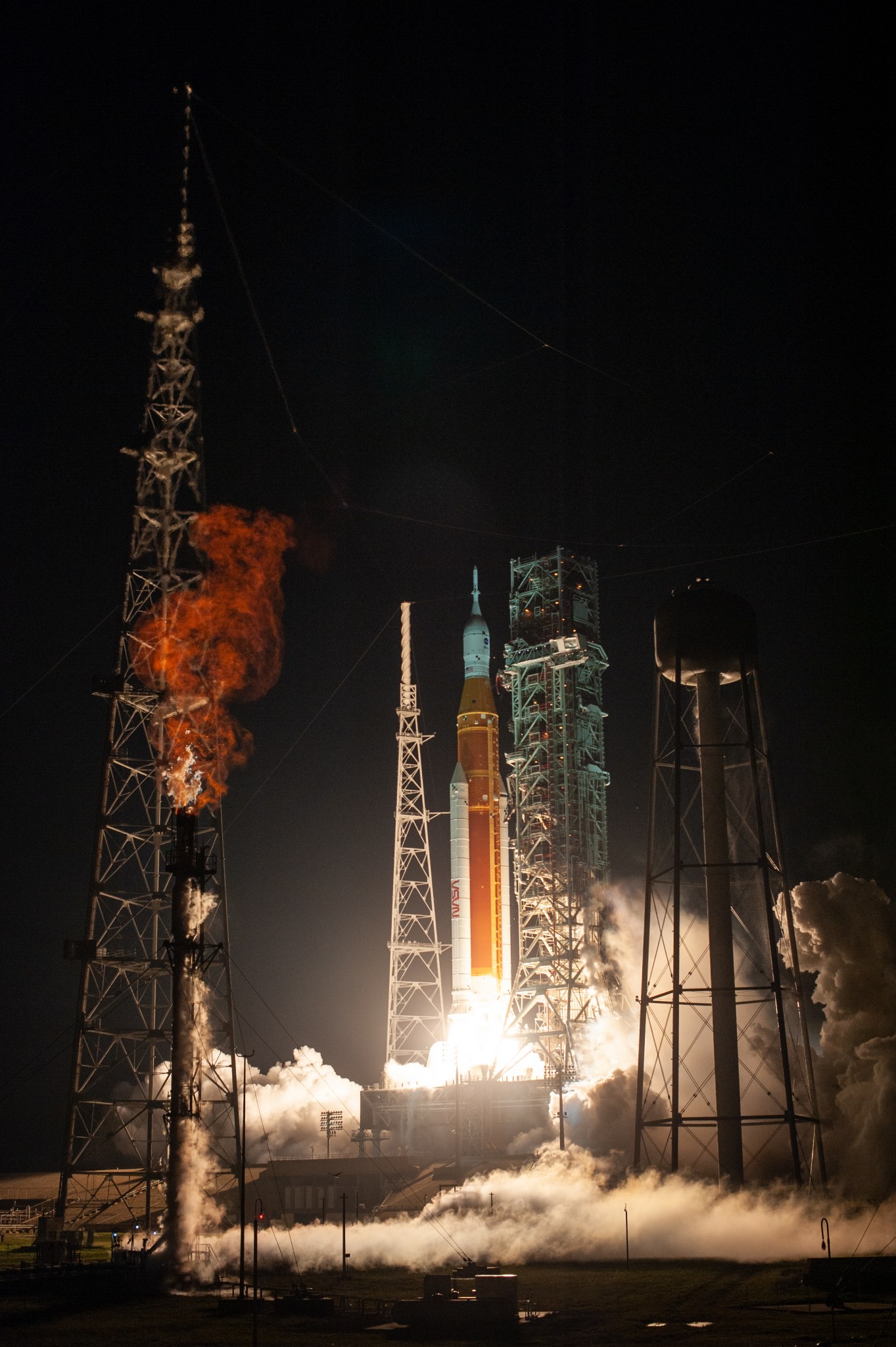
NASA's Space Launch System lifts off from the launch pad, illuminating the ground with a bright white light that bounces off of clouds of smoke. Pictured on the left side of this image is the liquid hydrogen
NASA / Kevin Davis and Chris Coleman

In this photo, NASA’s Space Launch System (SLS), carrying the Orion spacecraft, lifts off the pad at Launch Complex 39B at the agency’s Kennedy Space Center in Florida at 1:47 a.m. EST on Nov. 16, 2022. Set on a path to the Moon, this officially began the Artemis I mission.

Over the course of 25.5 days, Orion performed two lunar flybys, coming within 80 miles (129 kilometers) of the lunar surface. At its farthest distance during the mission, Orion traveled nearly 270,000 miles (435,000 kilometers) from our home planet. On Dec. 11, 2022, NASA’s Orion spacecraft successfully completed a parachute-assisted splashdown in the Pacific Ocean at 12:40 p.m. EST as the final major milestone of the Artemis I mission.

Artemis I was the first in a series of increasingly complex missions that will enable human exploration at the Moon and future missions to Mars. Following the success of Artemis I, humans will fly around the Moon on Artemis II.

Image Credit: NASA/Kevin Davis and Chris Coleman

Powered by WPeMatico

Get The Details…
Monika Luabeya

NASA and UC Berkeley Host Discussion on the Future of AI at Work 

NASA and UC Berkeley Host Discussion on the Future of AI at Work 

3 min read

NASA and UC Berkeley Host Discussion on the Future of AI at Work 

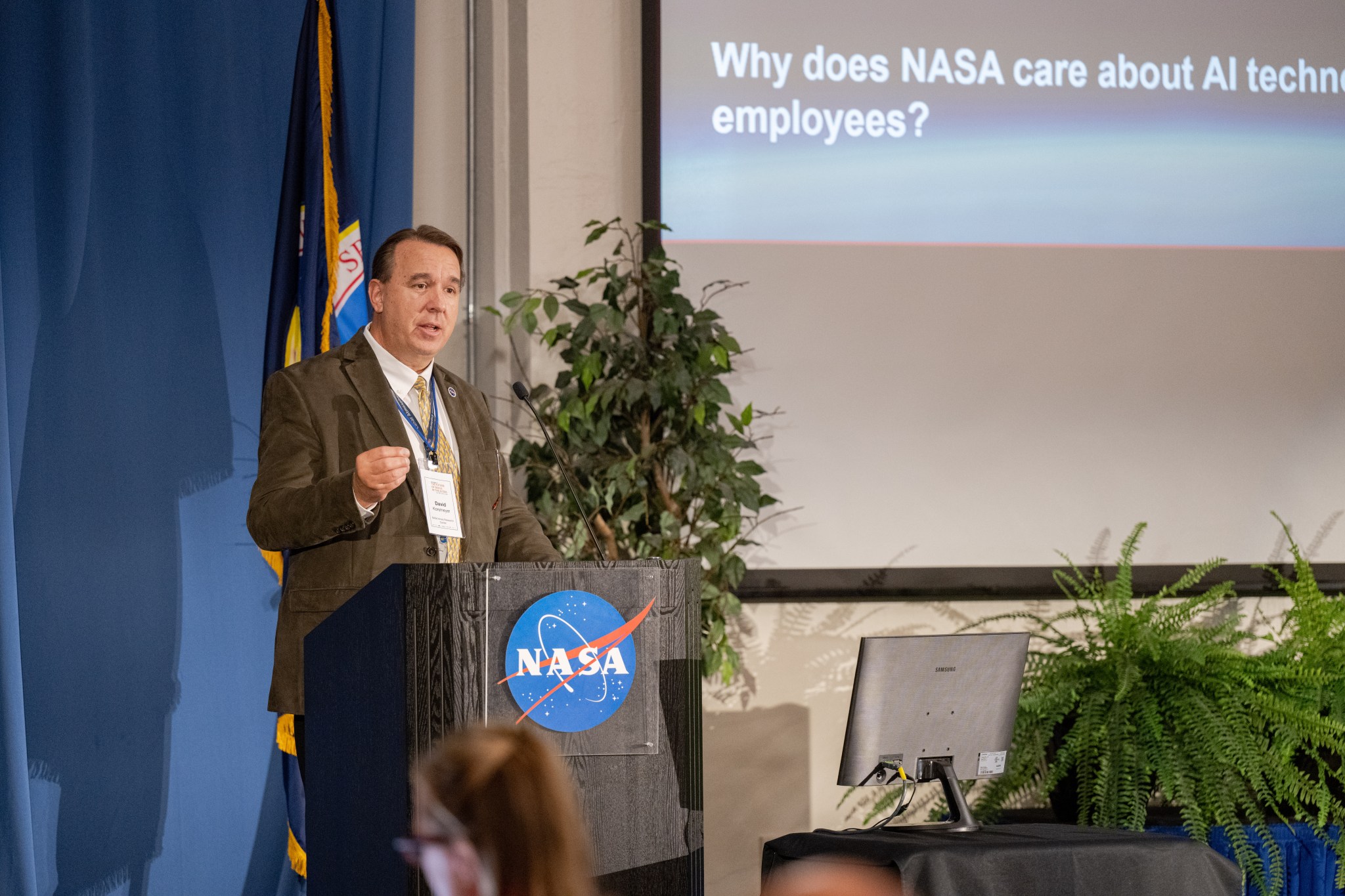
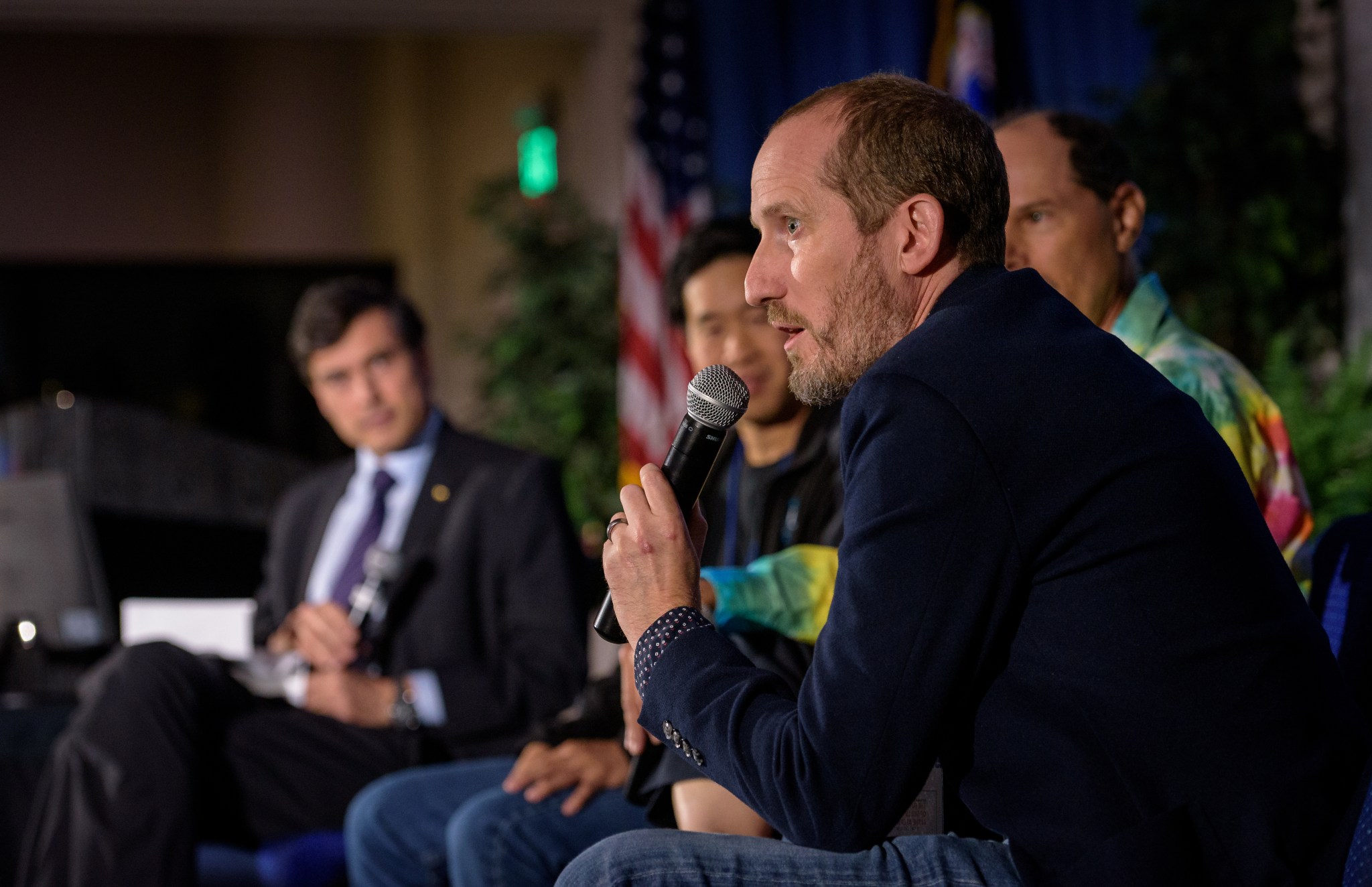
David Korsmeyer, acting deputy center director, speaks at the “The Future of Skills in the AI Era” symposium, Sept. 22, 2023, at NASA’s Ames Research Center in California’s Silicon Valley. Korsmeyer highlighted the opportunities to utilize AI during missions to the Moon, Mars and beyond.
NASA/Donald B. Richey

What does the rise of artificial intelligence mean for the workers of tomorrow? What could it mean for NASA?

Leaders from government, academia, and commercial industries gathered earlier this fall to learn, discuss, and collaborate at the inaugural “The Future of Skills in the AI Era” symposium at NASA’s Ames Research Center in California’s Silicon Valley. The one-day event was organized by Ames, UC Berkeley’s Fisher Center for Business Analytics in the Haas School of Business, and the new College of Computing, Data Science, and Society.

The event sought to drive dialogue around what the future of artificial intelligence could look like across different sectors and solutions for possible challenges. David Korsmeyer, Ames’ acting deputy center director, spoke to attendees about the history of AI and autonomous technology at NASA and how the agency could use it in the future. He highlighted the ways AI could support work on Earth.

“AI tools can help parse through massive amounts of data and bring trends and information to light,” said Korsmeyer, who also discussed the role AI would play in future space exploration, including pre-training spacecraft to identify potential hazards and make decisions autonomously. “When planning missions to places like Mars, a spacecraft and its crew must be ‘Earth independent’ – it can’t come back, there’s no turning around.”

Vincent Vanhoucke, senior director of robotics, Google DeepMind, discusses the application of AI in robotics as part of a panel discussion alongside Alexandre Bayen, associate provost for Moffett Field program development at UC Berkeley, Jeremy Frank, group lead of planning and scheduling at NASA Ames, and Terry Fong, chief roboticist at NASA Ames.
NASA/Donald B. Richey

The role of AI as a tool for school and business was a key theme of the symposium. Annette Bernhardt, director of the technology and work program at the UC Berkeley Labor Center, emphasized the balance between worker privacy and the benefit of highly productive AI tools. Frederick Wehrle, associate dean for academic affairs at UC Berkeley, spoke about the future of education in the era of advancing technology innovation. 

Alonso Vera, NASA Ames senior scientist for distributed collaborative systems, dug deeper into the relationship between humans and AI, and the unique roles each needs to play when doing complex work.

“Artificial intelligence is not on the same path as human intelligence. They’re both superior in different ways,” said Vera. “If you don’t understand a human’s role with AI, you won’t be able to develop and improve the right AI technologies.” 

AI and autonomous design are embedded in the expanding partnership between Ames and UC Berkeley. The two organizations shared efforts aim to expand learning opportunities in aerospace research and development, including programs like NASA’s Advanced Air Mobility effort, which seeks to develop capabilities for autonomous vehicles to transport cargo and passengers. This area of research is a focus of future collaborations between the two institutions following the recent announcement of plans to develop the Berkeley Space Center at Ames. 

For news media:

Members of the news media interested in covering this topic should reach out to the NASA Ames newsroom.

About the Author

Tara Friesen

Tara Friesen

Share

Details

Last Updated

Nov 16, 2023

Powered by WPeMatico

Get The Details…
Tara Friesen