Expedition 74 Advancing Space Health and AI Research on Station

Expedition 74 Advancing Space Health and AI Research on Station

NASA astronaut and Expedition 73 Flight Engineer Mike Fincke shows off the Voyager Flytrap technology demonstration that he installed inside the NanoRacks Bishop airlock. Flytrap will test an inflatable capture bag designed to capture and secure orbital debris or sample containers returning from the Moon and Mars. The technology may also support future space mining techniques on small asteroids. The demonstration will evaluate the bag’s ability to deploy, inflate, and capture space objects while maintaining an airtight seal in microgravity.
NASA astronaut Mike Fincke works inside the NanoRacks Bishop airlock and installs technology demonstration hardware that may support orbital debris capture techniques or future space mining on small asteroids.
NASA

The Expedition 74 crew’s research schedule was filled with biomedical duties and artificial intelligence on Thursday to promote crew health and spark innovation on and off the Earth. Spacesuit tailoring and advanced science hardware maintenance rounded out the day for the seven residents aboard the International Space Station.

Flight Engineer Chris Williams of NASA began his day collecting his blood and urine samples, processing them, then stowing them in a science freezer for later analysis. He also swapped out a sensor-packed Bio-Monitor vest and headband for a dry set and began a second day of health monitoring for the long-running CIPHER human research study. Doctors will examine his biomedical samples after they are returned to Earth and analyze his downlinked heart and lung activity to understand how microgravity is affecting his body.

Roscosmos Flight Engineers Sergey Kud-Sverchkov and Sergei Mikaev took turns testing a voice-based artificial intelligence system that records crew members vocally documenting their activities for more efficient reporting. The cosmonauts also each spent an hour in a quiet portion of the station wearing noise-reducing headphones for a computerized hearing test and responding to pre-programmed tones.

Flight Engineer Kimiya Yui of JAXA (Japan Aerospace Exploration Agency) spent his shift working on a pair of scientific instruments supporting a variety of experiments ranging from biology to physics. He started inside the Kibo laboratory module and set up a biology research imaging system that uses luminescence to observe tissues and genes in microgravity for deeper insights into disease mechanisms. Next, he moved into the Destiny laboratory module and powered on the KERMIT fluorescence microscope to image flat liquid crystal films to help engineers design advanced screen displays for touchpads and instrumentation panels.

Station Commander Mike Fincke of NASA spent most of his day working on spacesuits in the Quest airlock. Fincke began his shift adjusting the length of the arms and legs on one spacesuit. Next, Fincke practiced installing emergency jet packs on the spacesuits with assistance from Williams and Yui. The jet pack, officially called Simplified Aid For EVA Rescue, or SAFER, is attached to the back of the spacesuit and enables a spacewalker to safely maneuver back to the station in the unlikely event they become untethered from the orbital outpost.

NASA Flight Engineer Zena Cardman worked primarily on computer and life support maintenance throughout Thursday. Cardman first worked in the Columbus laboratory module setting up a laptop computer and adjusting its settings so it can run specialized science experiment software. Afterward, she worked in the Tranquility module replacing atmospheric cleaning components that remove harmful contaminants from the air, such as ammonia, that can cause eye, skin, or respiratory irritation.

Flight Engineer Oleg Platonov worked throughout Thursday inside the station’s Roscosmos segment servicing a variety of life support equipment ensuring the orbital outpost operates in tip-tip shape. Platonov spent the first half of his shift replacing atmospheric monitoring hardware in the Zvezda service module and filling a water processing assembly tank. After lunchtime, the first-time space flyer cleaned the ventilation system inside the Nauka science module.

Learn more about station activities by following the space station blog, @space_station on X, as well as the ISS Facebook and ISS Instagram accounts.

Get the latest from NASA delivered every week. Subscribe here.

Powered by WPeMatico

Get The Details…

Mark A. Garcia

NASA Lab Completes Engine Checks on New Aircraft

NASA Lab Completes Engine Checks on New Aircraft

Justin Hall, left, controls a subscale aircraft as Justin Link holds the aircraft in place during preliminary engine tests on Friday, Sept. 12, 2025, at NASA’s Armstong Flight Research Center in Edwards, California. Hall is chief pilot at the center’s Dale Reed Subscale Flight Research Laboratory and Link is a pilot for small uncrewed aircraft systems.

Powered by WPeMatico

Get The Details…

Hi ya! Hyha

Hi ya! Hyha

A color photograph from the Martian surface shows mostly smooth, pale orange colored terrain beneath a sky of flat, warm beige; the ground extends into the distance where an undulating line of gentle peaks forms a horizon about two-thirds of the way above the bottom of the frame. Closer to the foreground the terrain slopes from the upper left of the image toward lower right, with scattered rocks and streaks of gray along the ground.
This image from NASA’s Mars Perseverance rover shows a potential megablock on the Jezero crater rim, taken by the Mastcam-Z instrument’s “right eye.” Mastcam-Z is a pair of cameras located high on the rover’s mast. Perseverance acquired this image looking east across the rim heading towards “Lac de Charmes” on Dec. 7, 2025 — Sol 1706, or Martian day 1,706 of the Mars 2020 mission — at the local mean solar time of 13:38:46.
NASA/JPL-Caltech/ASU

Written by Margaret Deahn, Ph.D. student at Purdue University 

NASA’s Mars 2020 rover is currently trekking towards exciting new terrain. After roughly four months of climbing up and over the rim of Jezero crater, the rover is taking a charming tour of the plains just beyond the western crater rim, fittingly named “Lac de Charmes.” This area just beyond Jezero’s rim will be the prime place to search for pre-Jezero ancient bedrock and Jezero impactites — rocks produced or affected by the impact event that created Jezero crater.  

The formation of a complex crater like Jezero is, well… complex. Scientists who study impact craters like to split the formation process into three stages: contact & compression (when the impactor hits), excavation (when materials are thrown out of the crater), and modification (when gravity causes everything to collapse). This process happens incredibly fast, fracturing the impacted rock and even melting some of the target material. Sometimes on Earth, the classic “bowl” shaped crater has been completely weathered and unrecognizable, so geologists are able to identify craters by the remnants of their impactites. Just when you thought it couldn’t get any more complicated — Jezero crater’s rim is located on the rim of another, even bigger basin called Isidis. That means there is an opportunity to have impactites from both cratering events exposed in and just around the rim — some of which could be several billions of years old! We may have already encountered one of these blocks on our trek towards Lac de Charmes. In the foreground of this image taken by the Mastcam-Z instrument on the rover, there is a potential impactite called a “megablock” that the team has named “Hyha.” We can actually see this block from orbit, it is that large! The team is excited to continue exploring these ancient rocks as we take our next steps off Jezero’s rim.

Powered by WPeMatico

Get The Details…

Today’s Advanced Exercise, Physics Research Benefits Earth and Space Industries

Today’s Advanced Exercise, Physics Research Benefits Earth and Space Industries

A red-yellow airglow blankets Earth's horizon as the city lights of southwestern Europe and North Africa sparkle in contrast to the Atlantic Ocean and the Mediterranean Sea that separates the two continents. The International Space Station was orbiting 262 miles above the Atlantic at approximately 7:47 p.m. local time when this photograph was taken.
A red-yellow airglow blankets Earth’s horizon as the city lights of southwestern Europe and North Africa sparkle in contrast to the Atlantic Ocean and the Mediterranean Sea that separates the two continents. The International Space Station was orbiting 262 miles above the Atlantic at approximately 7:47 p.m. local time when this photograph was taken.
NASA

Exercise and physics research were the top scientific duties aboard the International Space Station on Wednesday advancing human health and industries both on the ground and in space. The Expedition 74 crew members also continued working on spacesuits and practiced an emergency drill.

Doctors continuously monitor astronauts’ health using sensors, tests, and sample collections to understand the long-term effects of spaceflight, helping to keep crews fit for future missions to the Moon, Mars, and beyond while also advancing medical treatments on Earth. A key part of this effort is exercise to prevent space-caused muscle and bone loss. During workouts and daily activities, astronauts periodically wear the sensor-packed Bio-Monitor vest and headband that monitors heart health, respiratory health, and more for up to 48 hours. The data can be monitored by doctors on Earth in real-time or downloaded to the ground for later review.

NASA Flight Engineer Chris Williams put on the Bio-Monitor wearables early Wednesday beginning a two-day health monitoring session. Afterward, he exercised on the advanced resistive exercise device (ARED)—that mimics free weights on Earth—then jogged on the COLBERT treadmill helping counter the effects of microgravity and providing doctors insight into his heart, lung, muscle, and bone health in weightlessness. The Bio-Monitor, a Canadian Space Agency-designed biomedical device, has been in operational use aboard the station since January 2019.

Williams later assisted NASA Flight Engineer Zena Cardman inside the Quest airlock as she installed charged lithium-ion batteries into a pair of spacesuits.

Station Commander Mike Fincke worked throughout Wednesday servicing a variety of exercise gear and science hardware. He first installed kinematics hardware on the ARED that monitors the muscle and bone forces crews experience when exercising in space. Researchers use the visual data to adjust workout programs to maximize crew fitness in microgravity. Next, he swapped a pair of hard drives and injected gas into the experimental Zero Boil-Off Tank being tested for its ability to preserve cryogenic fluids in spacecraft fuel tanks.

Flight Engineer Kimiya Yui of JAXA (Japan Aerospace Exploration Agency) started his shift inside the Kibo laboratory module checking for gas leaks inside combustion research hardware. Next, he powered on a fluorescence microscope to observe changes in the formation of flat liquid crystal films in microgravity. Results from the study may advance screen displays for touchpads and instrumentation panels benefitting both Earth and space hardware.

At the end of their shift, all four astronauts joined the cosmonauts from Roscosmos—Sergey Kud-Sverchkov, Sergei Mikaev, and Oleg Platonov—and conducted an emergency drill. The orbital septet practiced their responses to unlikely events such as a depressurization, a chemical leak, or a fire onboard the orbital outpost. The seven crewmates used computer tablets and reviewed the procedures and communication protocols they would use in coordination with mission controllers on the ground.

Learn more about station activities by following the space station blog, @space_station on X, as well as the ISS Facebook and ISS Instagram accounts.

Get the latest from NASA delivered every week. Subscribe here.

Powered by WPeMatico

Get The Details…

Mark A. Garcia

NASA’s Perseverance Mars Rover Ready to Roll for Miles in Years Ahead

NASA’s Perseverance Mars Rover Ready to Roll for Miles in Years Ahead

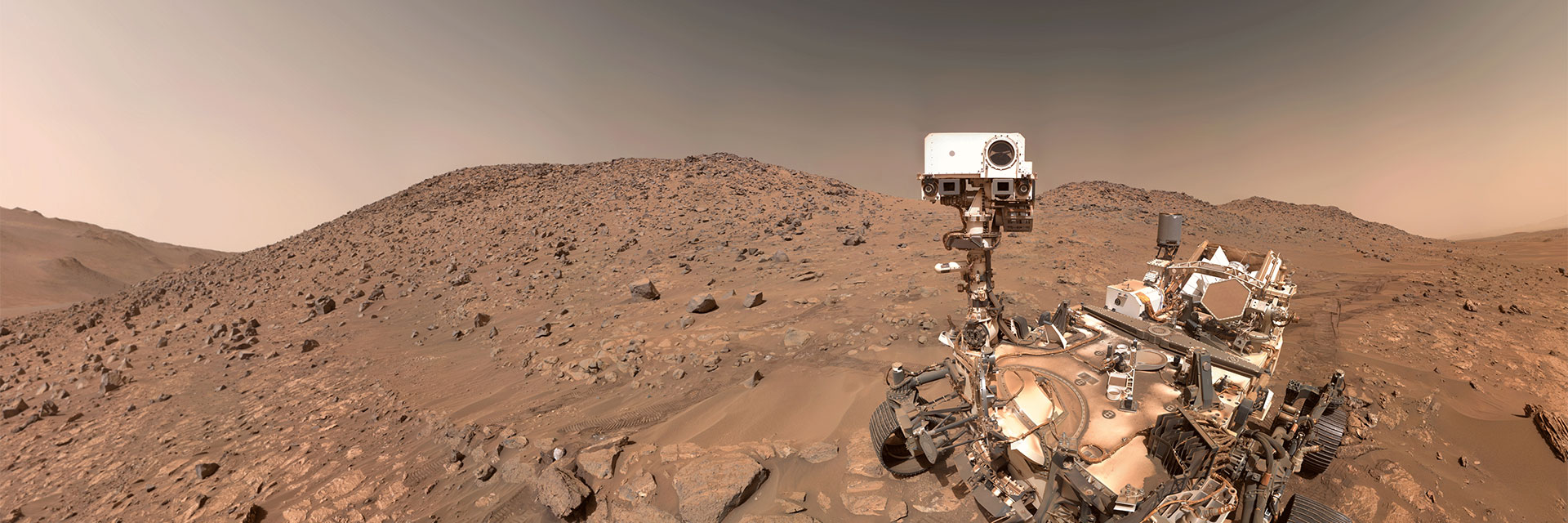
NASA’s Perseverance Mars rover captured this view of a location nicknamed “Mont Musard” on Sept. 8, 2025. Made up of three images, the panorama also captures another region, “Lac de Charmes,” where the rover’s team will be looking for more rock core samples to collect in the year ahead.
NASA/JPL-Caltech/ASU/MSSS

After nearly five years on Mars, NASA’s Perseverance rover has traveled almost 25 miles (40 kilometers), and the mission team has been busy testing the rover’s durability and gathering new science findings on the way to a new region nicknamed “Lac de Charmes,” where it will be searching for rocks to sample in the coming year.

Like its predecessor Curiosity, which has been exploring a different region of Mars since 2012, Perseverance was made for the long haul. NASA’s Jet Propulsion Laboratory in Southern California, which built Perseverance and leads the mission, has continued testing the rover’s parts here on Earth to make sure the six-wheeled scientist will be strong for years to come. This past summer, JPL certified that the rotary actuators that turn the rover’s wheels can perform optimally for at least another 37 miles (60 kilometers); comparable brake testing is underway as well.

Over the past two years, engineers have extensively evaluated nearly all the vehicle’s subsystems in this way, concluding that they can operate until at least 2031.

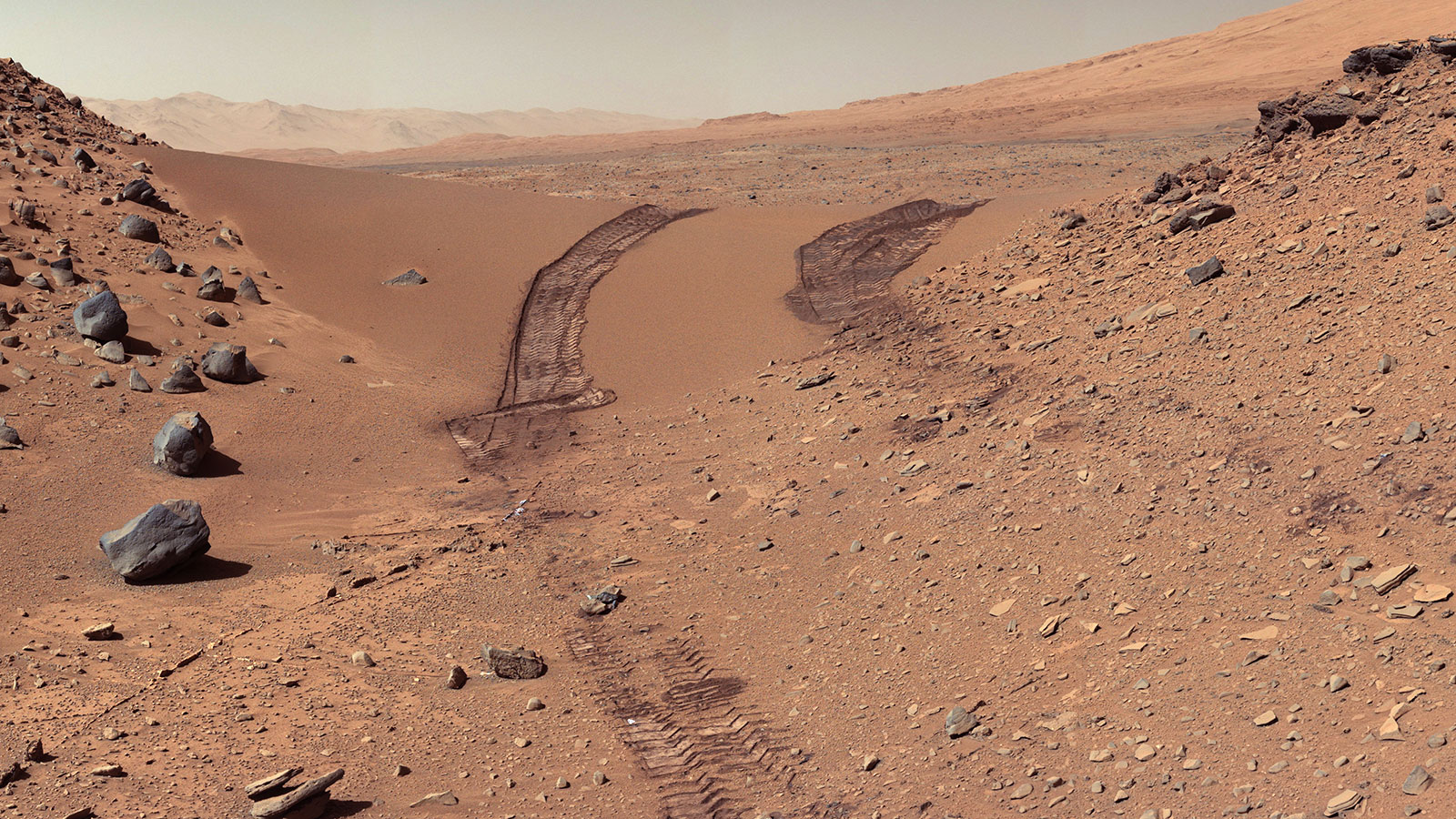
NASA’s Perseverance used its navigation cameras to capture its record-breaking drive of 1,350.7 feet (411.7 meters) on June 19, 2025. The navcam images were combined with rover data and placed into a 3D virtual environment, resulting in this reconstruction with virtual frames inserted about every 4 inches (0.1 meters) of drive progress. Credit: NASA/JPL-Caltech

“These tests show the rover is in excellent shape,” said Perseverance’s deputy project manager, Steve Lee of JPL, who presented the results on Wednesday at the American Geophysical Union’s annual meeting, the largest gathering of planetary scientists in the United States. “All the systems are fully capable of supporting a very long-term mission to extensively explore this fascinating region of Mars.”

Perseverance has been driving through Mars’ Jezero Crater, the site of an ancient lake and river system, where it has been collecting scientifically compelling rock core samples. In fact, in September, the team announced that a sample from a rock nicknamed “Cheyava Falls” contains a potential fingerprint of past microbial life.

More efficient roving

In addition to a hefty suite of six science instruments, Perseverance packs more autonomous capabilities than past rovers. A paper published recently in IEEE Transactions on Field Robotics highlights an autonomous planning tool called Enhanced Autonomous Navigation, or ENav. The software looks up to 50 feet (15 meters) ahead for potential hazards, then chooses a path without obstacles and tells Perseverance’s wheels how to steer there.

Engineers at JPL meticulously plan each day of the rover’s activities on Mars. But once the rover starts driving, it’s on its own and sometimes has to react to unexpected obstacles in the terrain. Past rovers could do this to some degree, but not if these obstacles were clustered near each other. They also couldn’t react as far in advance, resulting in the vehicles driving slower while approaching sand pits, rocks, and ledges. In contrast, ENav’s algorithm evaluates each rover wheel independently against the elevation of terrain, trade-offs between different routes, and “keep-in” or “keep-out” areas marked by human operators for the path ahead.

“More than 90% of Perseverance’s journey has relied on autonomous driving, making it possible to quickly collect a diverse range of samples,” said JPL autonomy researcher Hiro Ono, a paper lead author. “As humans go to the Moon and even Mars in the future, long-range autonomous driving will become more critical to exploring these worlds.”

New science

A paper published Wednesday in Science details what Perseverance discovered in the “Margin Unit,” a geologic area at the margin, or inner edge, of Jezero Crater. The rover collected three samples from that region. Scientists think these samples may be particularly useful for showing how ancient rocks from Mars’ deep interior interacted with water and the atmosphere, helping create conditions supportive for life.

From September 2023 to November 2024, Perseverance ascended 1,312 feet (400 meters) of the Margin Unit, studying rocks along the way — especially those containing the mineral olivine. Scientists use minerals as timekeepers because crystals within them can record details about the precise moment and conditions in which they formed.

Jezero Crater and the surrounding area holds large reserves of olivine, which forms at high temperatures, typically deep within a planet, and offers a snapshot of what was going on in the planet’s interior. Scientists think the Margin Unit’s olivine was made in an intrusion, a process where magma pushes into underground layers and cools into igneous rock. In this case, erosion later exposed that rock to the surface, where it could interact with water from the crater’s ancient lake and carbon dioxide, which was abundant in the planet’s early atmosphere.

Those interactions form new minerals called carbonates, which can preserve signs of past life, along with clues as to how Mars’ atmosphere changed over time.

“This combination of olivine and carbonate was a major factor in the choice to land at Jezero Crater,” said the new paper’s lead author, Perseverance science team member Ken Williford of Blue Marble Space Institute of Science in Seattle. “These minerals are powerful recorders of planetary evolution and the potential for life.”

Together, the olivine and carbonates record the interplay between rock, water, and atmosphere inside the crater, including how each changed over time. The Margin Unit’s olivine appeared to have been altered by water at the base of the unit, where it would have been submerged. But the higher Perseverance went, the more the olivine bore textures associated with magma chambers, like crystallization, and fewer signs of water alteration.

As Perseverance leaves the Margin Unit behind for Lac de Charmes, the team will have the chance to collect new olivine-rich samples and compare the differences between the two areas.

More about Perseverance

Managed for NASA by Caltech, NASA’s Jet Propulsion Laboratory in Southern California built and manages operations of the Perseverance rover on behalf of the agency’s Science Mission Directorate as part of NASA’s Mars Exploration Program portfolio.

To learn more about Perseverance, visit:

https://science.nasa.gov/mission/mars-2020-perseverance

News Media Contacts

Andrew Good / DC Agle
Jet Propulsion Laboratory, Pasadena, Calif.
818-393-2433 / 818-393-9011
andrew.c.good@jpl.nasa.gov / agle@jpl.nasa.gov

Karen Fox / Molly Wasser
NASA Headquarters, Washington
240-285-5155 / 240-419-1732
karen.c.fox@nasa.gov / molly.l.wasser@nasa.gov

2025-143

Powered by WPeMatico

Get The Details…
Naomi Hartono