Spacesuit Loop Scrubs and Routine Station Maintenance for Crew on Thursday

Spacesuit Loop Scrubs and Routine Station Maintenance for Crew on Thursday

NASA astronaut and Expedition 70 Flight Engineer Jasmin Moghbeli configures spacewalking tools inside the International Space Station's Quest airlock.
NASA astronaut and Expedition 70 Flight Engineer Jasmin Moghbeli configures spacewalking tools inside the International Space Station’s Quest airlock.

Another day of station upkeep is underway aboard the International Space Station on Thursday. The Expedition 70 crew spent most of the day on spacesuit and station maintenance, auditing equipment, and wrapping up experiments started earlier this week.

In the morning, NASA Flight Engineer Jasmin Moghbeli was joined by ESA (European Space Agency) Commander Andreas Mogensen to perform a loop scrub on spacesuits that will be used during upcoming spacewalks this year. Moghbeli then reconfigured the hardware to initiate iodination, which is performed to remove contaminants from transfer loops.

Mogensen had a busy rest of the day, completing a VR Mental Care session, which demonstrates the use of virtual reality for mental relaxation. He then moved on to station upkeep—restocking the battery pantry and completing monthly maintenance on the orbital lab’s treadmill—before rounding out the day with a hearing assessment.

NASA Flight Engineer Loral O’Hara began the day setting up a microphone to be worn on her shoulder to take sound measurements around the station and then completed some orbital plumbing tasks, removing and replacing the filter in the waste and hygiene compartment.

Earlier in the week, JAXA (Japan Aerospace Exploration Agency) Flight Engineer Satoshi Furukawa hydrated and incubated production packs for the BioNutrients-1 investigation. On Thursday, Furukawa retrieved the samples to inspect and photograph, which will help researchers better understand on-demand production of human nutrients over long-duration missions. He then wrapped up his day installing the Robotics Work Station for upcoming research.

All three cosmonauts aboard the station continued audit and inventory tasks that started earlier this week. Flight Engineer Oleg Kononenko inventoried the Rassvet module, while Flight Engineer Nikolai Chub audited medical kits and Flight Engineer Konstantin Borisov audited light units throughout Roscosmos segments. Borisov also ran a Pilot-T session, an ongoing experiment to practice piloting techniques, while Chub replaced the carbon monoxide sensor in the Zarya module.


Learn more about station activities by following the space station blog, @space_station and @ISS_Research on X, as well as the ISS Facebook and ISS Instagram accounts.

Get weekly video highlights at: https://roundupreads.jsc.nasa.gov/videoupdate/

Get the latest from NASA delivered every week. Subscribe here: www.nasa.gov/subscribe

Powered by WPeMatico

Get The Details…

Abby Graf

Funding Future Tech: NASA Names 2024 Innovative Concept Studies

Funding Future Tech: NASA Names 2024 Innovative Concept Studies

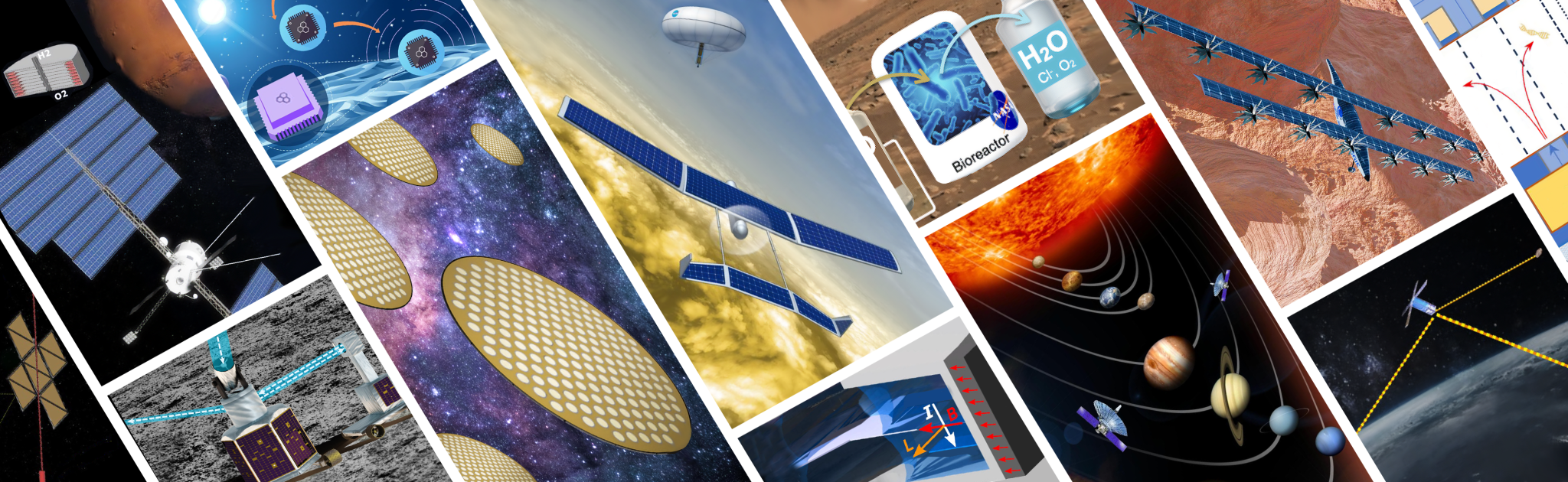
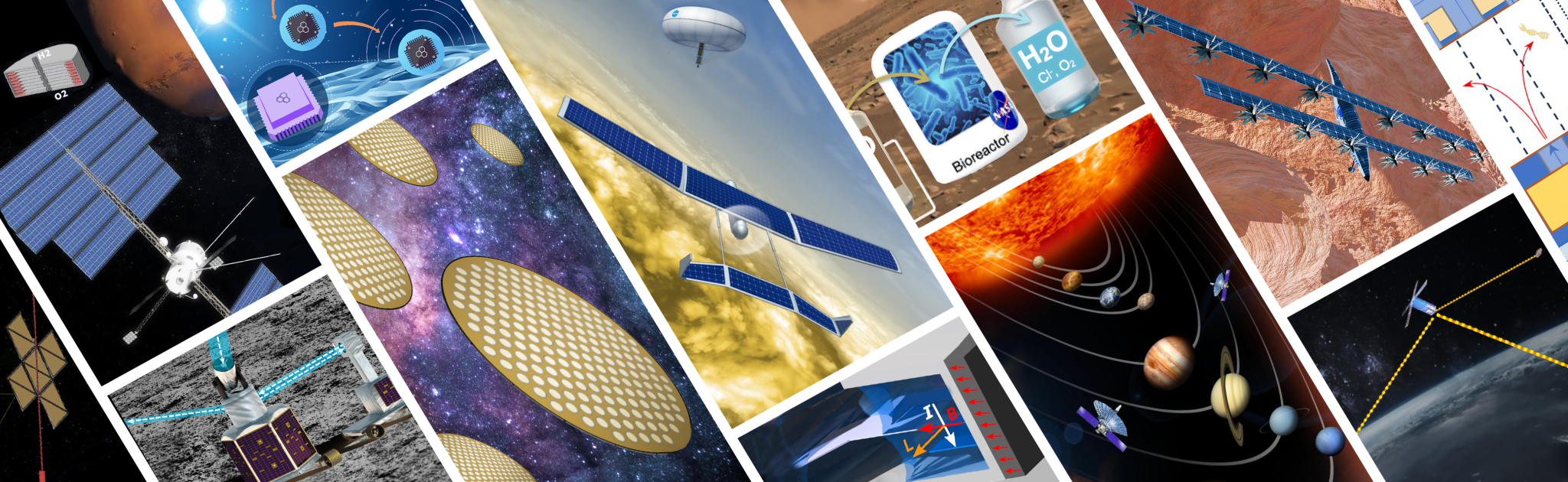
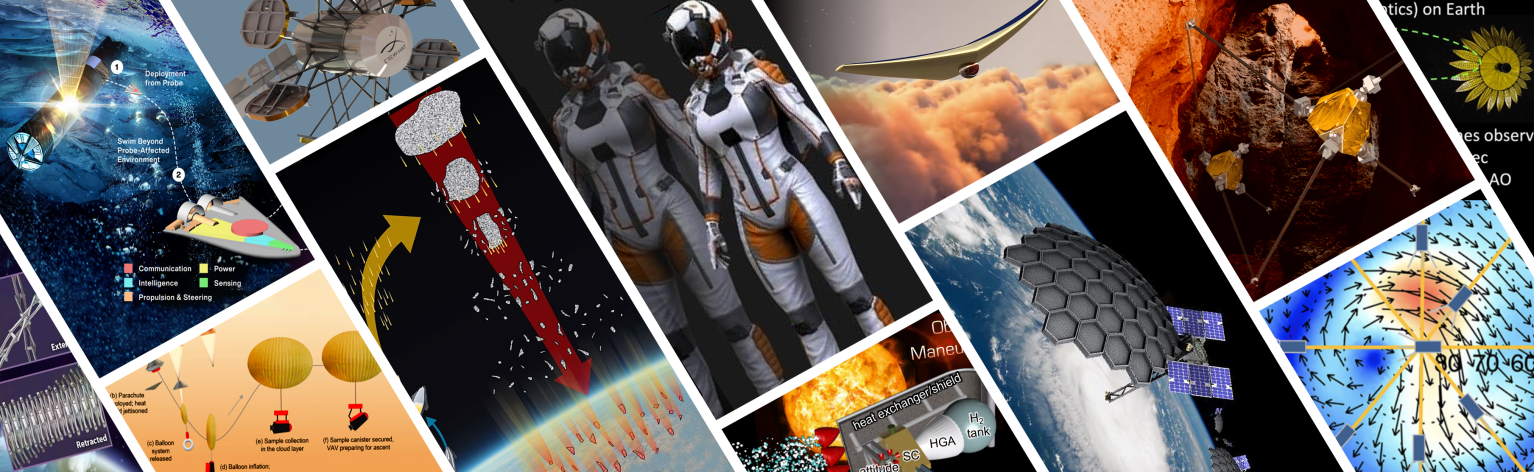
A collage of illustrations highlighting the novel concepts proposed by the 2024 NIAC Phase I awardees. Credit: clockwise, from upper right: Steven Benner, Beijia Zhang, Matthew McQuinn, Alvaro Romero-Calvo, Thomas M. Eubanks, Kenneth Carpenter, James Bickford, Alvaro Romero-Calvo, Peter Cabauy, Geoffrey Landis, Lynn Rothschild, and Ge-Cheng Zha.
NASA

NASA selected the 2024 Phase I awardees for its program to fund ideas that could  innovate for the benefit of all and transform future agency missions. From proposals to explore low Earth orbit to the stars, the 13 concepts chosen stem from companies and institutions across the United States.

The NIAC (NASA Innovative Advanced Concepts) program fosters pioneering ideas by funding early-stage technology concept studies for future consideration and potential commercialization. The combined award is a maximum of $175,000 in grants to evaluate technologies that could enable tomorrow’s space missions.

“The daring missions NASA undertakes for the benefit of humanity all begin as just an idea, and NIAC is responsible for inspiring many of those ideas,” said NASA Associate Administrator Jim Free. “The Ingenuity helicopter flying on Mars and instruments on the MarCO deep space CubeSats can trace their lineage back to NIAC, proving there is a path from creative idea to mission success. And, while not all these concepts will fly, NASA and our partners worldwide can learn from fresh approaches and may eventually use technologies advanced by NIAC.”

This year’s class will explore sample return from the surface of Venus, fixed-wing flight on Mars, a swarm of probes traveling across interstellar space, and more. All NIAC studies are in the early stages of conceptual development and are not considered official NASA missions. 

Ge-Cheng Zha, Coflow Jet LLC in Florida, proposed flying the first fixed-wing, electric vertical takeoff, and landing craft on Mars. The vehicle nicknamed “MAGGIE,” could extend humanity’s ability to explore and conduct science on the Red Planet. 

Thomas Eubanks, Space Initiatives Inc. in Florida, believes a swarm of tiny spacecraft could travel to Proxima Centauri this century, sending back data about the Sun’s nearest interstellar neighbor using a novel laser sailcraft and laser communications.

Geoff Landis, NASA’s Glenn Research Center in Cleveland, proposed a spacecraft that can not only survive Venus’ harsh environment but return a sample from the surface using innovations in high-temperature technology and solar aircraft. 

“The diversity of this year’s Phase I projects – from quantum sensors observing Earth’s atmosphere to a coordinated swarm of spacecraft communicating from the next star – is a testament to the truly innovative community reached by NIAC,” said Mike LaPointe, NIAC program executive at NASA Headquarters in Washington. “The NIAC awards highlight NASA’s commitment to continue pushing the boundaries of what’s possible.”

Using their NIAC grants, the researchers, known as fellows, will investigate the fundamental premise of their concepts, roadmap necessary technology development, identify potential challenges, and look for opportunities to bring these concepts to life.

In addition to the projects mentioned above, the other selectees to receive 2024 NIAC Phase I grants are:

NASA’s Space Technology Mission Directorate funds the NIAC program, as it is responsible for developing the agency’s new cross-cutting technologies and capabilities to achieve its current and future missions.

To learn more about NIAC, visit:

https://www.nasa.gov/niac

-end-

Jimi Russell
Headquarters, Washington
216-704-2412
james.j.russell@nasa.gov

Powered by WPeMatico

Get The Details…
Roxana Bardan

Amazonian Leaders Visit “Space for Earth”

Amazonian Leaders Visit “Space for Earth”

Amazonian leaders stand in the small "Space for Earth" immersive installation room, with tiny white dots of light representing atmospheric rivers flowing all around them on the walls and floor.

Amazonian leaders visit “Space for Earth,” an immersive audio-visual installation that draws from near real-time satellite data and images, in NASA’s Earth Information Center at the NASA Headquarters Mary W. Jackson Building in Washington on Nov. 17, 2023.

The leaders, joined by University of Richmond faculty and NASA representatives, gathered to discuss how NASA’s data can be used to help protect the Amazon.

The NASA Headquarters photographers chose this photo as one of the best images from 2023.

Explore the Earth Information Center.

Image Credit: NASA/Bill Ingalls

Powered by WPeMatico

Get The Details…
Michelle Zajac

NIAC 2024 Selections

NIAC 2024 Selections

2 min read

Preparations for Next Moonwalk Simulations Underway (and Underwater)

Montage of twelve illustrations depicting futuristic aerospace concepts, including a solar powered glider soaring over the clouds of Venus, a fixed wing electric aircraft flying above a Mars landscape, dish satellite probes scattered across the solar system, flat circular discs floating in space and dotted with hundreds of circle sensors, and a device on the lunar surface with sensing lasers.

Phase I

Matthew McQuinn
Solar System-Scale VLBI to Dramatically Improve Cosmological Distance Measurements
University of Washington, Seattle
Seattle, Washington 98195-1000
2024 Phase I

Kenneth Carpenter
A Lunar Long-Baseline Optical Imaging Interferometer: Artemis-enabled Stellar Imager (AeSI)
NASA Goddard Space Flight Center
Greenbelt, MD 20771-2400
2024 Phase I

Alvaro Romero-Calvo
Magnetohydrodynamic Drive for Hydrogen and Oxygen Production in Mars Transfer
Georgia Tech Research Corporation
Atlanta, Georgia 30332-0001
2024 Phase I

James Bickford
Thin Film Isotope Nuclear Engine Rocket (TFINER)
Charles Stark Draper Laboratory
Cambridge, MA 02139-3539
2024 Phase I

Ge-Cheng Zha
Mars Aerial and Ground Global Intelligent Explorer (MAGGIE)
Coflow Jet, LLC
Cutler Bay, Florida 33190-0000
2024 Phase I

Steven Benner
Add-on to Large-scale Water Mining Operations on Mars to Screen for Introduced and Alien Life
Foundation For Applied Molecular Evolution
Alachua, Florida 32615-9544
2024 Phase I

Lynn Rothschild
Detoxifying Mars: The Biocatalytic Elimination of Omnipresent Perchlorates
NASA Ames Research Center (ARC)
Moffett Field, California 94035-1000
2024 Phase I

Thomas Eubanks
Swarming Proxima Centauri: Coherent Picospacecraft Swarms Over Interstellar Distances
Space Initiatives, Inc.
Titusville, Florida 32780
2024 Phase I

Beijia Zhang
LIFA: Lightweight Fiber-based Antenna for Small Sat-Compatible Radiometry
University of Washington, Seattle
Seattle, Washington 98195-1000
2024 Phase I

Ryan Sprenger
A Revolutionary Approach to Interplanetary Space Travel: Studying Torpor in Animals for Space-health in Humans (STASH)
Fauna Bio Inc.
Newark, California 94560-1000
2024 Phase I

Geoffrey Landis
Sample Return from the Surface of Venus
NASA Glenn Research Center
Cleveland, Ohio 44135-3127
2024 Phase I

Peter Cabauy
Autonomous Tritium Micropowered Sensors
City Labs, Inc.
Miami, Florida 33186-6401
2024 Phase I

Aaswath Pattabhi Raman
Electro-luminescently Cooled Zero-boil-off Propellant Depots Enabling Crewed Exploration of Mars
University of California, Los Angeles
Los Angeles, California 90095-8357
2024 Phase I

Powered by WPeMatico

Get The Details…
Loura Hall

Electro-luminescently Cooled Zero-boil-off Propellant Depots Enabling Crewed Exploration of Mars

Electro-luminescently Cooled Zero-boil-off Propellant Depots Enabling Crewed Exploration of Mars

3 min read

Preparations for Next Moonwalk Simulations Underway (and Underwater)

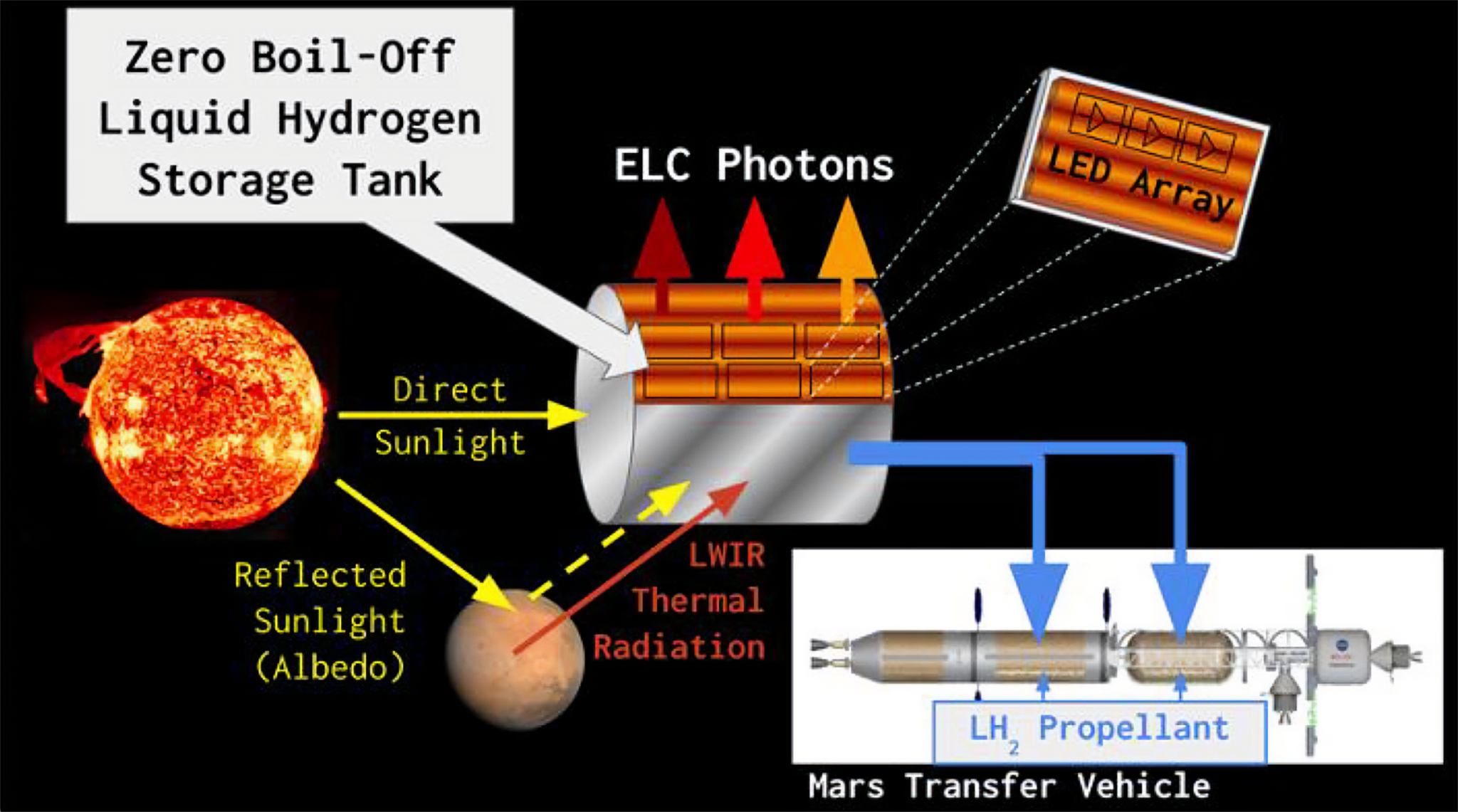
Artist rendition of labeled diagram Electro-luminescently cooled zero-boil-off propellant depots
Graphic depiction of Electro-luminescently cooled zero-boil-off propellant depots enabling crewed exploration of Mars
Aaswath Pattabhi Raman

Aaswath Pattabhi Raman
University of California, Los Angeles

Exploration of Mars has captivated the public in recent decades with high-profile robotic missions and the images they have acquired seeding our collective imagination. NASA is actively planning for human exploration of Mars and laid out some of the key capabilities that must be developed to execute successful, cost-effective programs that would put human beings on the surface of another planet and bring them home safely. One crucial area where new missions and enabling technologies are needed is the long-duration storage of cryogenic propellants in various space environments; relevant propellants include liquid Hydrogen (LH2) for high specific impulse Nuclear Thermal Propulsion (NTP) which can be deployed in strategic locations in advance of a mission. Such LH2 storage tanks could be used to refill a crewed Mars Transfer Vehicle (MTV) to send and bring astronauts home quickly, safely, and cost-effectively.

We propose a breakthrough mission concept: a cryogenic liquid storage depot capable of storing LH2 with ZBO even in the severe and fluctuating thermal environment of LEO. Our innovative storage depot mission employs thin, lightweight, all-solid-state panels attached to the tank’s deep-space-facing surfaces that utilize a long-understood but as-yet-unrealized cooling technology known as Electro-Luminescent Cooling (ELC) to reject heat from cold solid surfaces as non-equilibrium thermal radiation with orders of magnitude more power density than Planck’s Law permits for equilibrium thermal radiation. Such a depot and tank would drastically lower the cost and complexity of propulsion systems for crewed Mars missions and other deep space exploration by allowing spacecraft to refill propellant tanks after reaching orbit rather than launching on the much larger rocket required to lift the spacecraft in a single-use stage. To achieve ZBO, a storage spacecraft must keep the storage tank’s temperature below the boiling point of the cryogen

(e.g., ≈20 K for liquid H2). Achieving this in LEO-like thermal environments requires both excellent reflectivity toward sunlight and thermal radiation from the Earth and other nearby bodies as well as a power-efficient cooling mechanism to remove what little heat inevitably does leak in, a pair of conditions ideally suited to the the ELC panel concept that enables our mission. By enabling ZBO LH2 storage in LEO, our mission will enable cost-effective, and flexible crewed exploration of Mars. Our mission will also demonstrate capabilities with ancillary benefits to cryogenic storage in terrestrial applications and solid-state cooling technologies more generally.

2024 Phase I Selection

Powered by WPeMatico

Get The Details…
Loura Hall