Station Crew Assists Ax-3 on Advanced Space Research

Station Crew Assists Ax-3 on Advanced Space Research

The four Axiom Mission 3 astronauts (front row) and the seven Expedition 70 crew members wave to the camera following a crew greeting ceremony on Jan. 20, 2024. Credit: NASA TV

The Expedition 70 crew spent Tuesday on a host of research activities and spacesuit maintenance while assisting their Axiom Mission 3 (Ax-3) guests. The four Ax-3 crew members had their hands full as they explored cancer research, space botany, and robotics for Earth and space benefits.

Astronauts Andreas Mogensen, Loral O’Hara, and Satoshi Furukawa dedicated part of their schedule on Tuesday to the Ax-3 mission. The trio helped the four private astronauts get up to speed with life on orbit as well as conduct advanced microgravity science.

Mogensen from ESA (European Space Agency) spent a couple of hours ensuring the Ax-3 crewmates are familiarized with systems throughout the orbital lab. O’Hara from NASA set up the Life Science Glovebox (LSG) for an Ax-3 space botany investigation while Furukawa from JAXA (Japan Aerospace Exploration) activated a microscope to look at cell samples for an Ax-3 cancer study.

Ax-3 Commander Michael López-Alegría and Mission Specialist Alper Gezeravcı worked in the Kibo laboratory module’s LSG and tested the genetic editing of space-grown plants. Results may enable genetic modifications allowing plants to adapt to weightlessness and promote crew health. Ax-3 Pilot Walter Villadei peered at cell samples inside the Kermit microscope to learn how to predict and prevent cancer both on Earth and in space.

Ax-3 Mission Specialist Marcus Wandt tested the ability to remotely control robots on Earth from the space station. Working in the Columbus laboratory module, Wandt used a laptop computer to command a team of Earth-bound robots simulating a robotic exploration mission on another planet controlled from a spacecraft.

Mogensen would go on to organize food packs, charge virtual reality hardware for a mental health study, then videotape a space physics demonstration for junior high school students. Furukawa serviced science freezers and combustion research gear before cleaning vents inside the Unity module. Furukawa wrapped up his day with eye checks with NASA Flight Engineer Jasmin Moghbeli. O’Hara operated the medical imaging gear examining the optic nerve, retina, and cornea of both astronauts. Moghbeli earlier installed and tested a camera and lights on a spacesuit helmet.

The orbiting lab’s three cosmonauts from Roscosmos focused on operations in their segment of the International Space Station. Veteran Flight Engineer Oleg Kononenko spent his day inspecting the Zvezda service module and servicing communication and computer systems in the Nauka science module. Flight Engineer Nikolai Chub photographed the condition of Zvezda’s windows then studied how microgravity conditions such as magnetic and electrical fields affect fluid physics. Flight Engineer Konstantin Borisov deactivated Earth observation gear, downloaded vibration data the station experiences while orbiting Earth, then worked on orbital plumbing duties.


Learn more about station activities by following the space station blog@space_station and @ISS_Research on X, as well as the ISS Facebook and ISS Instagram accounts.

Get weekly video highlights at: https://roundupreads.jsc.nasa.gov/videoupdate/

Get the latest from NASA delivered every week. Subscribe here: www.nasa.gov/subscribe

Powered by WPeMatico

Get The Details…

Mark Garcia

NASA Shares Newest Results of Moon to Mars Architecture Concept Review

NASA Shares Newest Results of Moon to Mars Architecture Concept Review

NASA released on Tuesday the outcomes of its 2023 Moon to Mars Architecture Concept Review, the agency’s process to build a roadmap for exploration of the solar system for the benefit of humanity.

The Moon to Mars architecture approach incorporates feedback from U.S. industry, academia, international partners, and the NASA workforce. The 2023 Architecture Concept Review refined the existing architecture and strategies for the first crewed missions to Mars, including identifying seven key decisions in development that need to be made early in the process of establishing a plan to send astronauts to the Red Planet.

“Our new documents reflect the progress we’ve made to define a clear approach to exploration and lay out how we’ll incorporate new elements as technologies and capabilities in the U.S. and abroad mature,” said Catherine Koerner, associate administrator, Exploration Systems Development Mission Directorate at NASA Headquarters in Washington. “This process is ensuring that everything we are doing as an agency and together with our partners is focused on achieving our overarching exploration goals for the benefit of all.”

Newly released documents include the 2023 Architecture Definition Document, a detailed, technical look at NASA’s Moon to Mars architecture approach and process; an executive overview; and 13 white papers about frequently raised topics on NASA’s exploration path.

“Over the last year we’ve been able to refine our process for Moon to Mars architecture concept development to unify the agency,” said Nujoud Merancy, deputy associate administrator for strategy and architecture, NASA’s Exploration Systems Development Mission Directorate. “Our process in the coming months will focus on addressing gaps in the architecture and further reviewing the decisions the agency needs to make to successfully mount crewed Mars missions.”

In April 2023, NASA shared the inaugural Architecture Definition Document with detailed information about how NASA’s Moon to Mars Objectives, which serve as guideposts for exploration, map to specific architecture elements. The agency hosted workshops to obtain feedback and held an internal concept review late in the year, during which leaders from across NASA came together to discuss architecture needs and refinements. NASA will continue this cadence going forward, refining the architecture each year.

Under NASA’s Artemis campaign, the agency will establish the foundation for long-term scientific exploration at the Moon, land the first woman, first person of color, and its first international partner astronaut on the lunar surface, and prepare for human expeditions to Mars for the benefit of all.

Find NASA’s Moon to Mars architecture documents at:

https://www.nasa.gov/moontomarsarchitecture

-end-

Rachel Kraft 
Headquarters, Washington 
202-358-1100 
rachel.h.kraft@nasa.gov

Share

Details

Last Updated

Jan 23, 2024

Related Terms

Powered by WPeMatico

Get The Details…
Abbey A. Donaldson

Axiom Mission 3 Launches to the International Space Station

Axiom Mission 3 Launches to the International Space Station

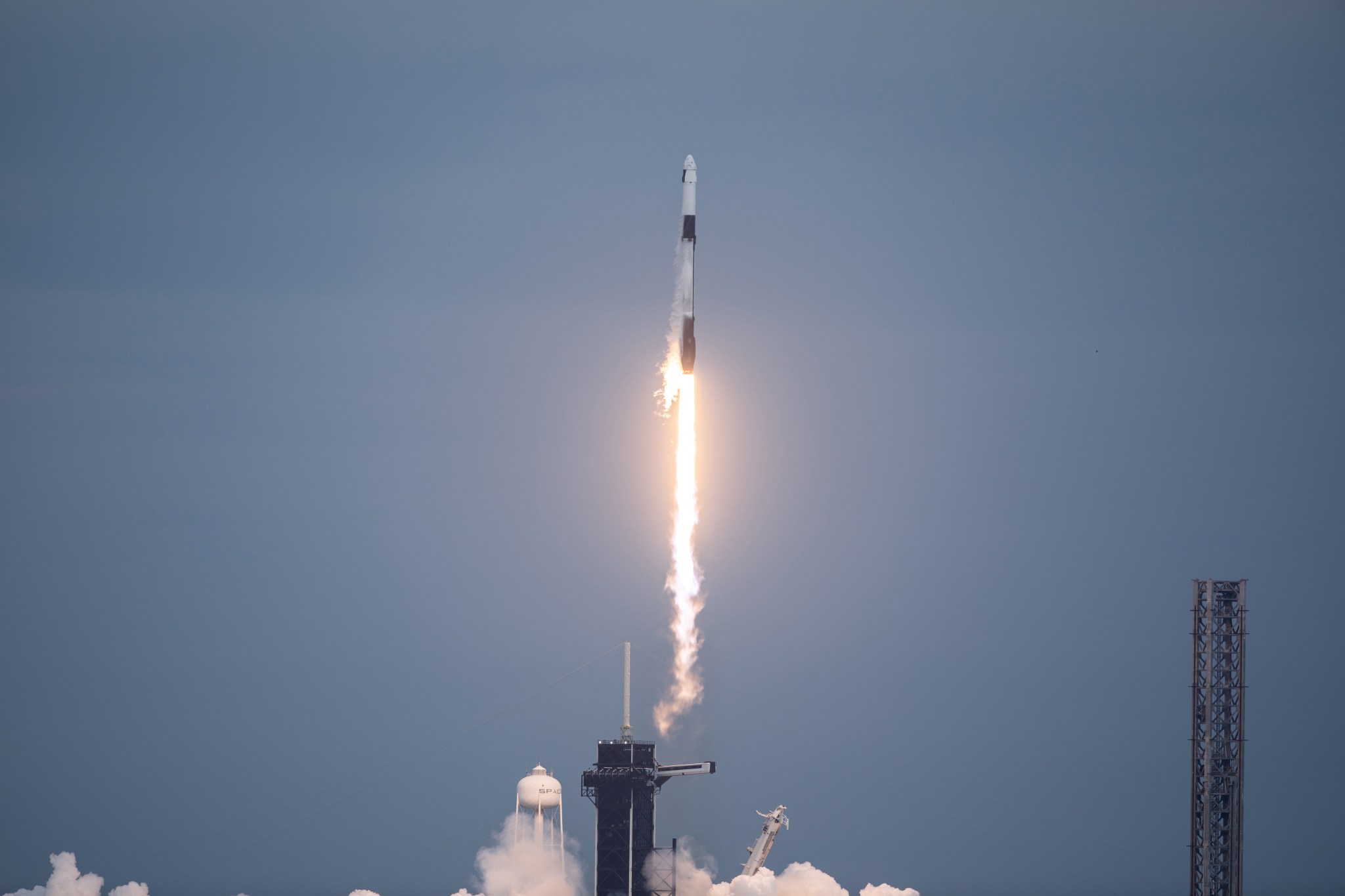
A black and white SpaceX Falcon 9 rocket launches upward through the sky, a bright white-yellow plume trailing behind it.
NASA/Chris Swanson

A SpaceX Falcon 9 rocket carrying the company’s Dragon spacecraft lifts off from NASA’s Kennedy Space Center in Florida on Thursday, Jan. 18, 2024. Axiom Space’s Axiom Mission 3 (Ax-3) is the third all-private astronaut mission to the space station, sending crew members Commander Michael López-Alegría, Pilot Walter Villadei of Italy, Mission Specialist Alper Gezeravcı of Turkey, and ESA (European Space Agency) project astronaut Marcus Wandt of Sweden into orbit.

The Ax-3 crew will spend about two weeks conducting microgravity research, educational outreach, and commercial activities aboard the space station.

Watch our Axiom Mission 3 launch coverage on NASA+.

Image Credit: NASA/Chris Swanson

Powered by WPeMatico

Get The Details…
Monika Luabeya

I Am Artemis: Erick Holsonback

I Am Artemis: Erick Holsonback

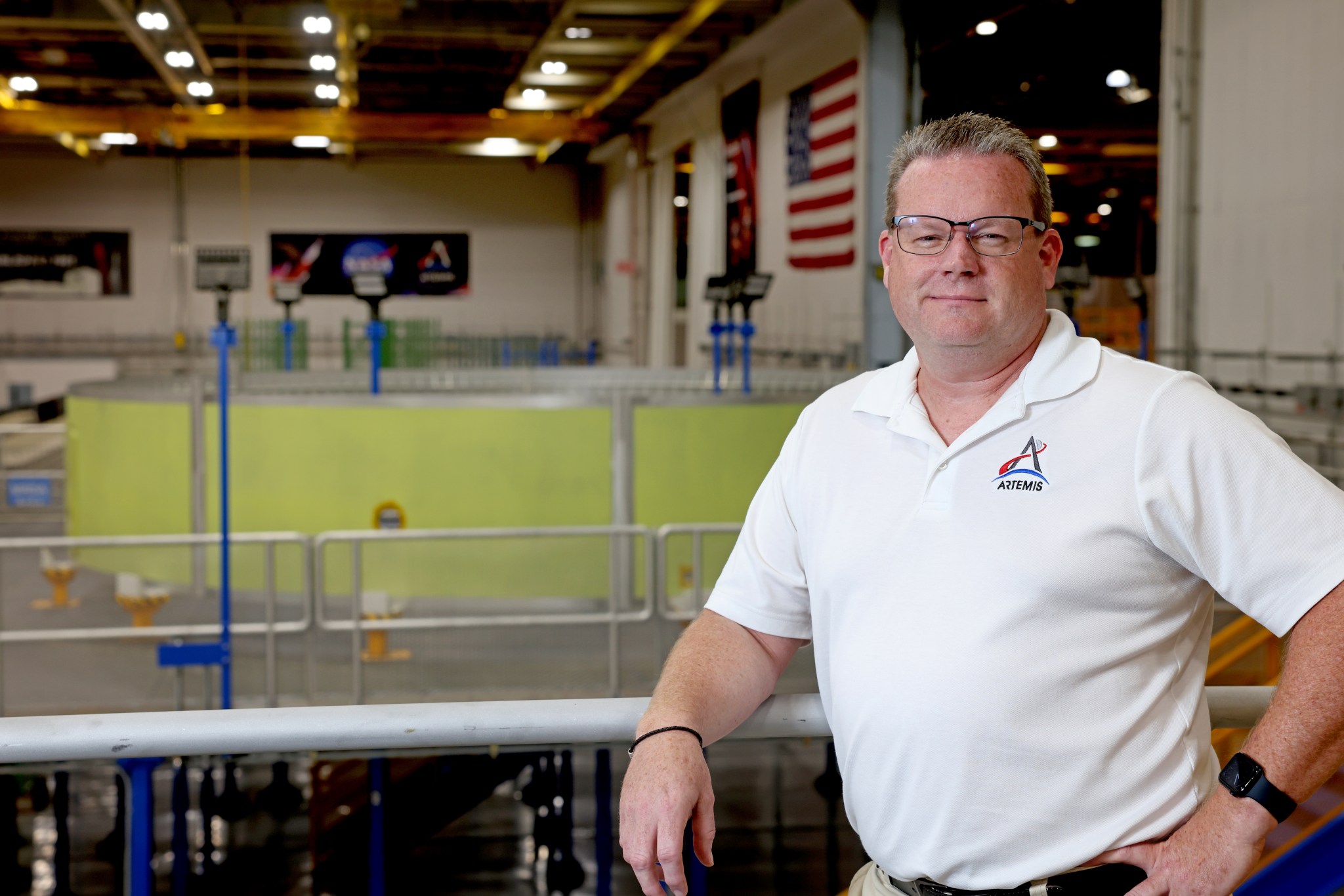
Erick Holsonback
NASA/Michael DeMocker

Whether he’s advising student robotic competitions or managing production of a powerful, new Moon rocket stage, Erick Holsonback meets technical challenges with enthusiasm.

Holsonback, a Jacobs Technology employee, is subsystem manager for production and launch operations of the exploration upper stage (EUS) for NASA’s SLS (Space Launch System) rocket. SLS is NASA’s super heavy lift rocket that will launch the agency’s Artemis campaign to the Moon. The exploration upper stage is one of two upgrades to the SLS rocket as it evolves to the Block 1B variant for missions beginning with Artemis IV. Along with the rocket’s new universal stage adapter, the SLS rocket in its Block 1B configuration will be able to send 40% more payload to the Moon in a single launch.

Holsonback’s job stretches from setting up production for the future upper stage at NASA’s Michoud Assembly Facility in New Orleans, where it’s built, to preparing it for launch from the agency’s Kennedy Space Center in Florida.

“It’s exciting to be part of a capability that will send more crew and cargo to the Moon in a single launch than any other current rocket,” Holsonback said. “That’s going to make operations in the challenging space environment a lot simpler.”

Growing up in North Georgia, Holsonback remembers wanting to be an astronaut and turning street cars into hot rods. He figured he’d wind up in the auto industry, until Pratt & Whitney offered him a job working on space shuttle main engine turbomachinery straight out of college in 1997. He briefly left the space business but jumped at a chance to get back in with the SLS Program in 2016 at NASA’s Marshall Space Flight Center in Huntsville, Alabama.  

“I wanted to come back and do rockets,” he recalled. “It gets in your blood. You’re part of something bigger that just yourself. Through Artemis, we are truly impacting the space program at its foundational level of how we are getting back to the Moon and to Mars.”

Holsonback’s enthusiasm for space challenges doesn’t end at the office door. In his free time, Holsonback has mentored and coached his two daughters’ technology challenge competitions. While the challenge is foremost a robotics contest, Holsonback is proud of the lessons in problem solving, technology, and project management he’s helped impart to the team along the way – which he likens to his NASA job.

You could say Erick Holsonback is working on the future personally as well as professionally, but it’s hard to beat working on a Moon rocket.

“I’ve had some great opportunities with NASA, but my current role is pretty amazing – getting  to be part of building and launching,” he reflected. “I get to play a little part in the overall foundation work that is going to be part of the history of our country for years to come.”

NASA is working to land the first woman and first person of color on the Moon under Artemis. SLS is part of NASA’s backbone for deep space exploration, along with the Orion spacecraft, advanced spacesuits and rovers, the Gateway in orbit around the Moon, and commercial human landing systems. SLS is the only rocket that can send Orion, astronauts, and supplies to the Moon in a single launch.

Powered by WPeMatico

Get The Details…
Lee Mohon

NASA’s DC-8 to Fly Low-Altitude Over Central Valley, CA

NASA’s DC-8 to Fly Low-Altitude Over Central Valley, CA

2 min read

Preparations for Next Moonwalk Simulations Underway (and Underwater)

The DC-8 aircraft, seen from below against a cloudless blue sky, in flight.
DC-8 lifts off from Air Force Plant 42 in Palmdale, Calif.
NASA/Carla Thomas

What: NASA Armstrong Flight Research Center’s DC-8 aircraft will fly over Central Valley and surroundings areas as part of an air quality field study. Residents in the areas below will see and hear the aircraft as it flies to achieve these measurements.  

Where: Central Valley, CA and surrounding areas 

When: Tuesday, January 23, 2024 at mid-morning to early afternoon

Additional details: All flyovers are conducted at a safe altitude without harm to public, wildlife, or infrastructure.  Jet aircraft are loud and those with sensitivity to loud noises should be aware of the flyover window. 

To follow along real-time with the DC-8’s flight path, visit: 
https://airbornescience.nasa.gov/tracker/#!/status/list  

Learn more:  

-end- 

For more information contact: 

Erica Heim 
NASA Armstrong Flight Research Center, Edwards, California 
650-499-9053 
erica.heim@nasa.gov 

Elena Aguirre 
NASA Armstrong Flight Research Center, Edwards, California  
661-233-3966 
elena.aguirre@nasa.gov 

Megan Person 
NASA Armstrong Flight Research Center, Edwards, California 
661-276-2094 
megan.person@nasa.gov  

Share

Details

Last Updated

Jan 23, 2024

Editor
Dede Dinius
Contact
Erica Heim

Powered by WPeMatico

Get The Details…
Dede Dinius