Lagniappe for March 2024

Lagniappe for March 2024
6 Min Read

Lagniappe for March 2024

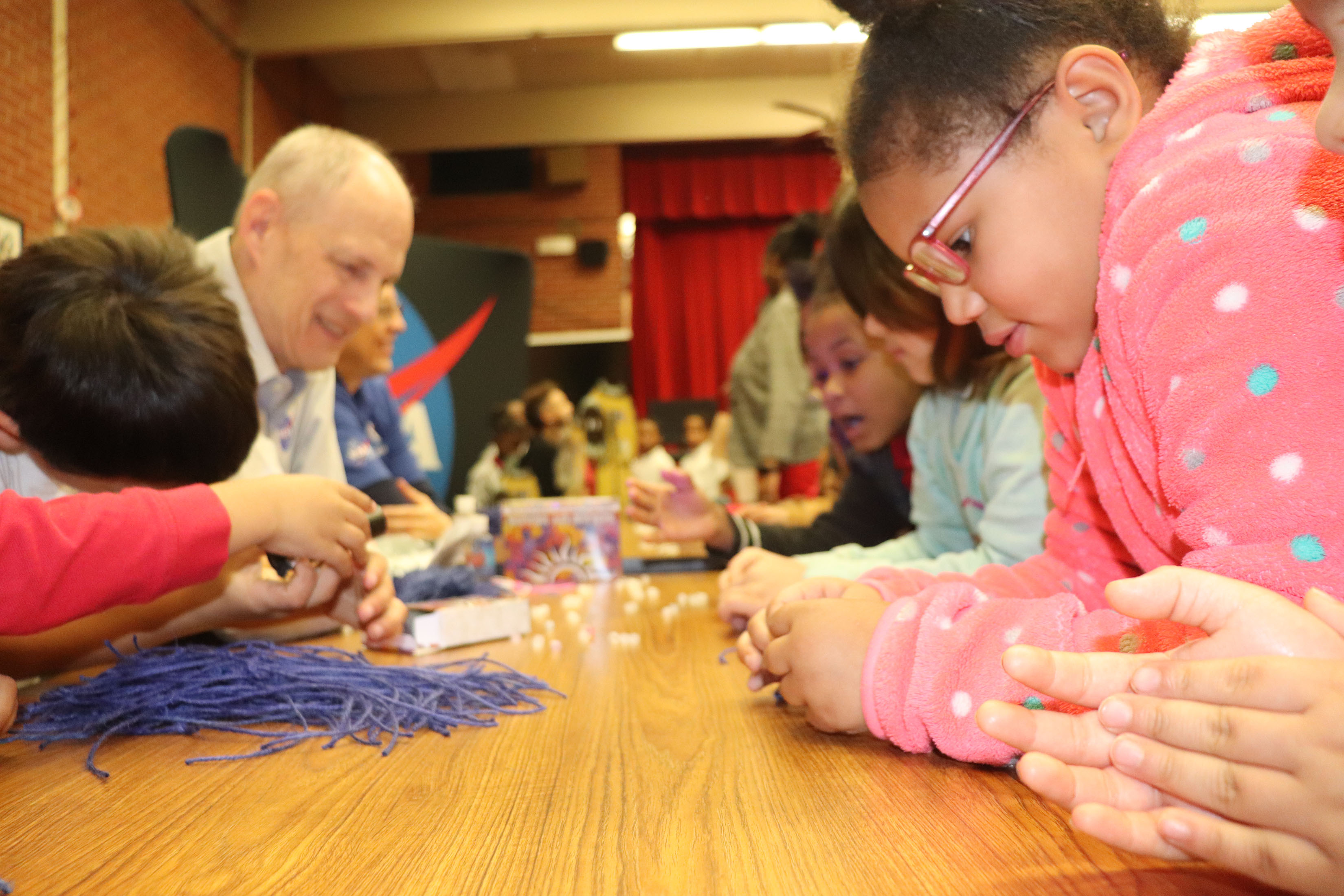
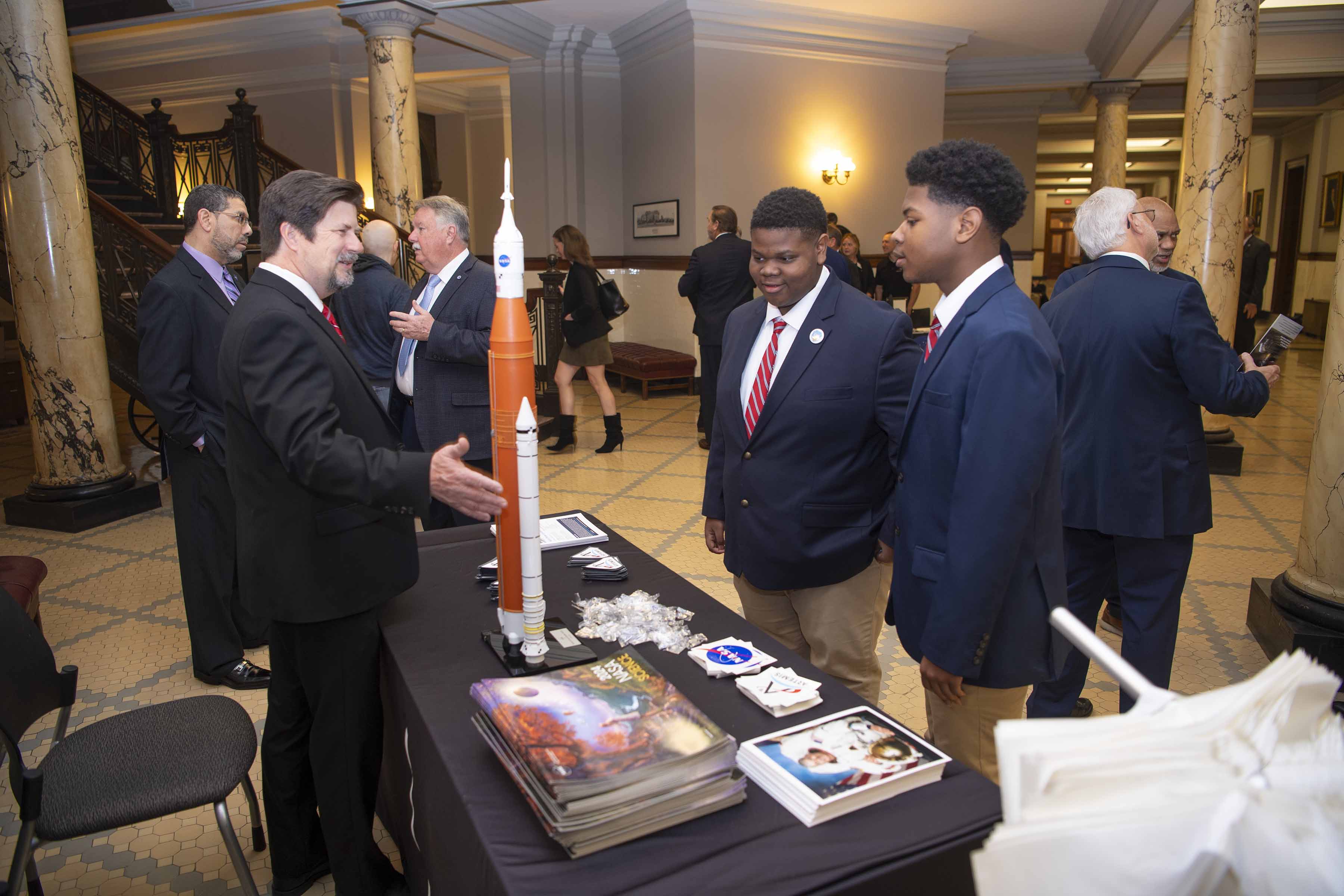
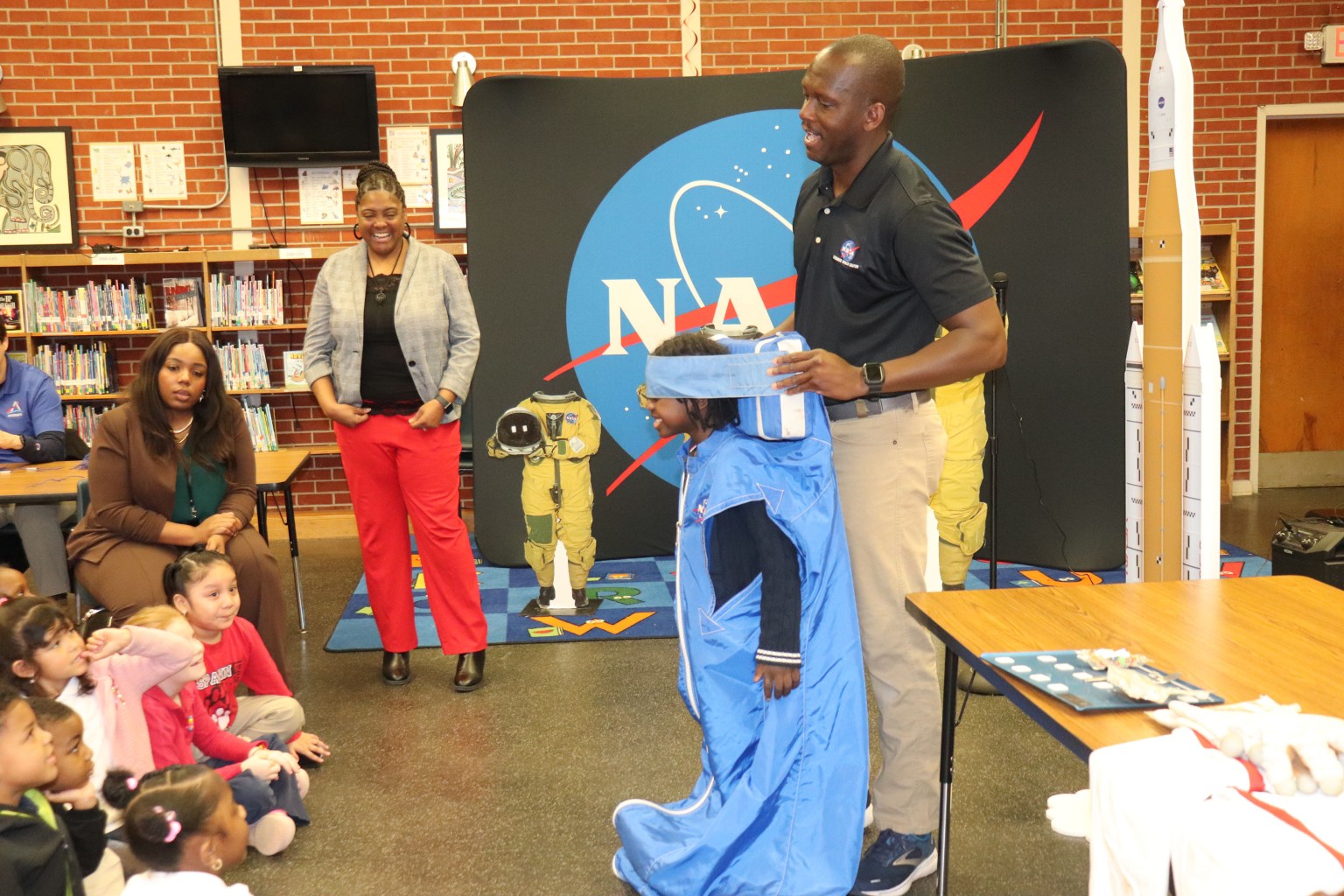
Man and young male student demonstrate how to sleep in space to a group of elementary students

Explore the March 2024 issue with highlights of Stennis Day at the Capitol; Artemis Moon Rocket Engine Testing; and coverage on the first-ever in-space mission for NASA Stennis.

Explore the March 2024 edition featuring:

  • NASA Stennis Capitol Day
  • NASA Enters Second Half of Key RS-25 Engine Certification Series
  • NASA Stennis Celebrates Milestone for Historic Autonomous Systems Mission

Gator Speaks
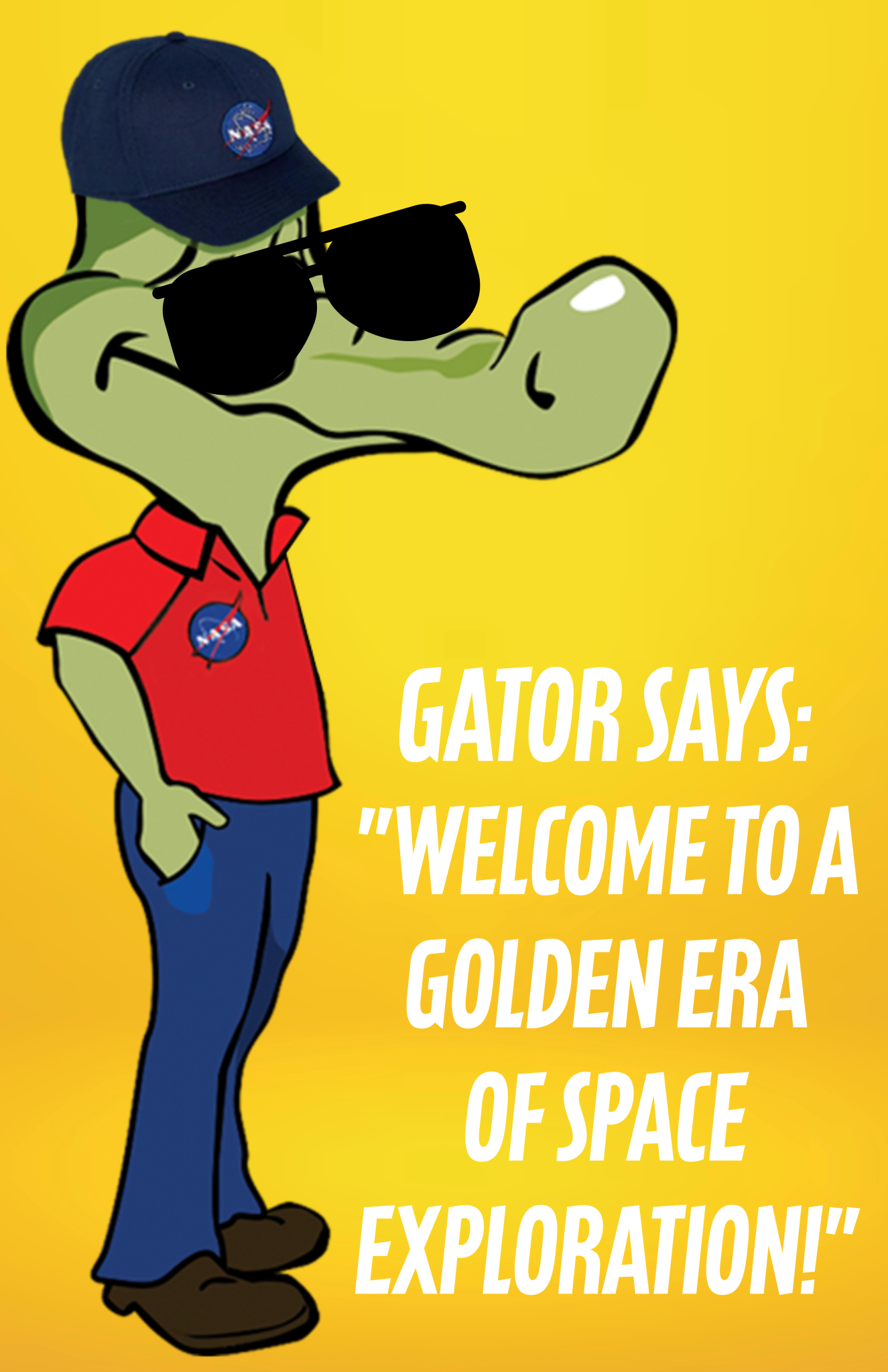
Illustration of Gator wearing
Gator Speaks
NASA/Stennis

Closing out February and coming into March has Gator fired up, and rightfully so!

Recent weeks and upcoming events remind us all how we are in a golden era of space exploration as NASA inspires the world through discovery.

For the first time in more than half a century, America returned to the Moon on Feb. 22 during the eighth day of a quarter-million-mile voyage under NASA’s Commercial Lunar Payload Services initiative with an Intuitive Machines lander named Odysseus. This Odysseus landing on the lunar South Pole makes way for future commercial deliveries to the Moon, along with future Artemis missions that will see humans return to the Moon, Mars, and beyond.

Speaking of Artemis, NASA Stennis is expected to carry out multiple RS-25 engine hot fires this month in the key test series for future Artemis flights of NASA’s SLS (Space Launch System) rocket.

Another example of NASA and NASA Stennis working with a commercial partner comes in the form of the first ever in-space autonomous systems mission involving NASA Stennis as a payload rider. The payload, part of project ASTRA (Autonomous Satellite Technology for Resilient Applications), is expected to launch soon on the Sidus Space LizzieSat TM small satellite.

In March, NASA will celebrate Women’s History Month. I invite you to read how one NASA Stennis employee’s interest in computer science brought her to the south Mississippi site, where she has become the first at NASA Stennis to reach a particular certification that showcases her dedication and level of skill to the job.

Can you feel it? The spring weather is here, and that shine outside is not only the Sun, but also this golden era of space exploration we all get to take part in and enjoy.

NASA Stennis Top News

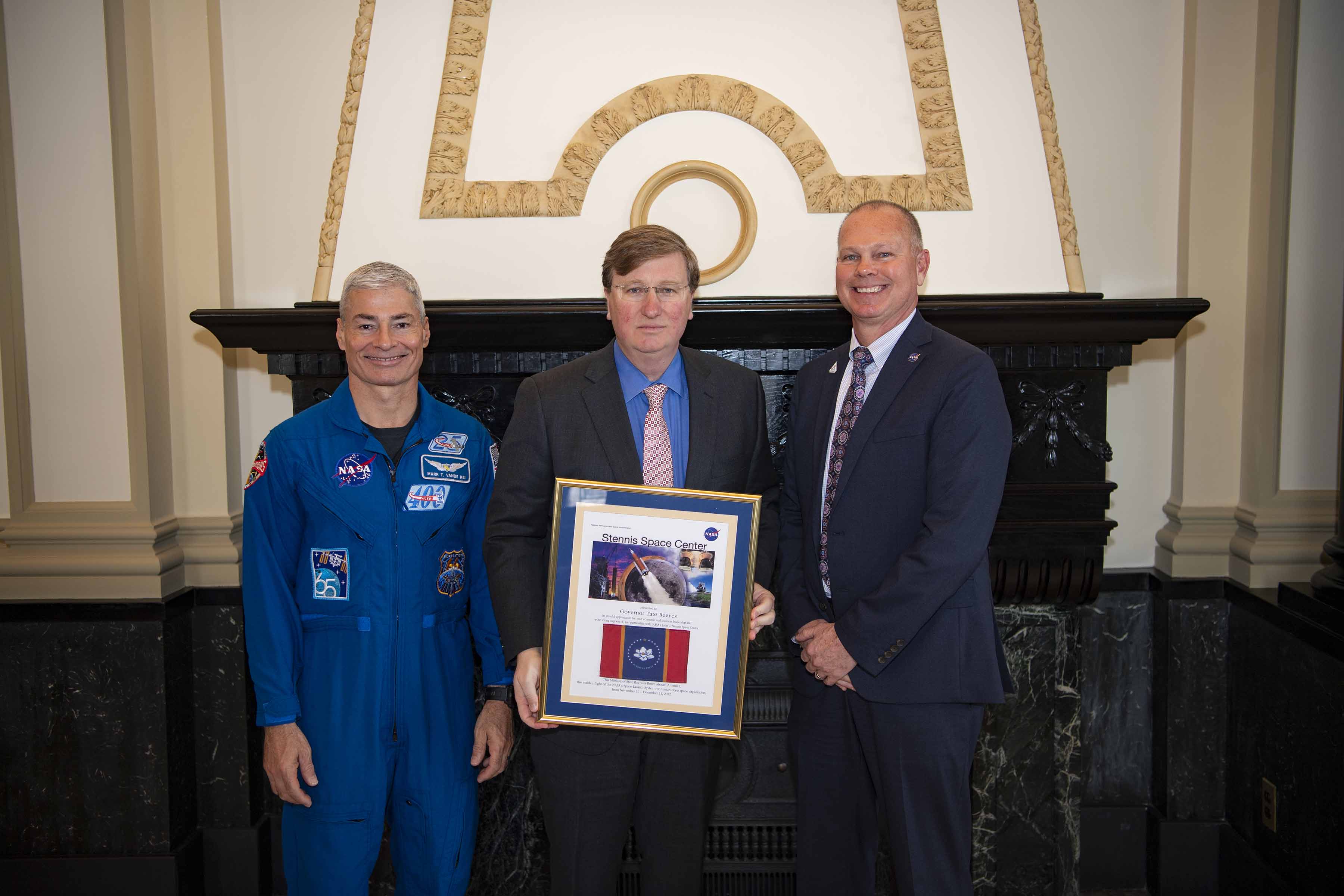
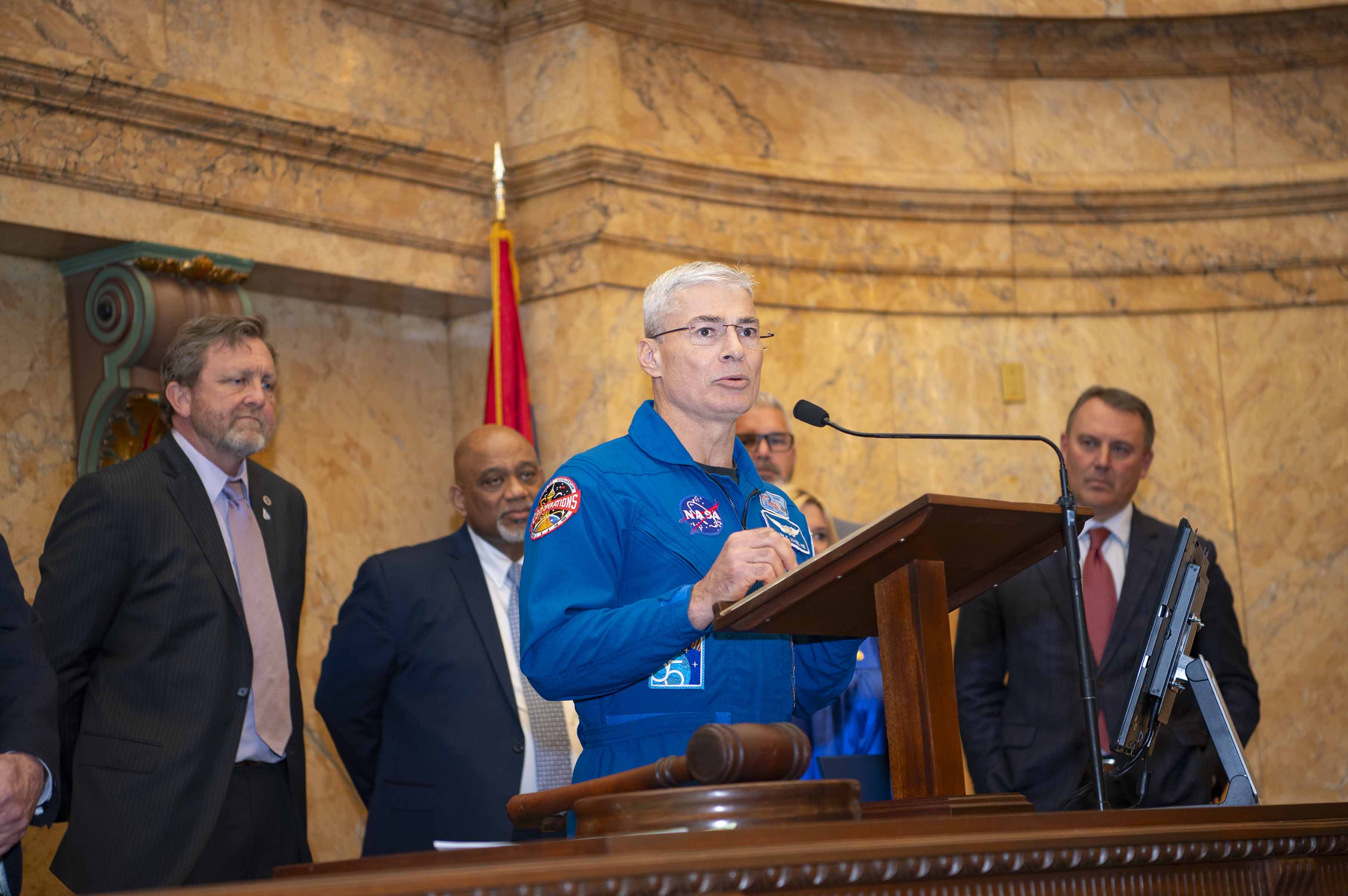
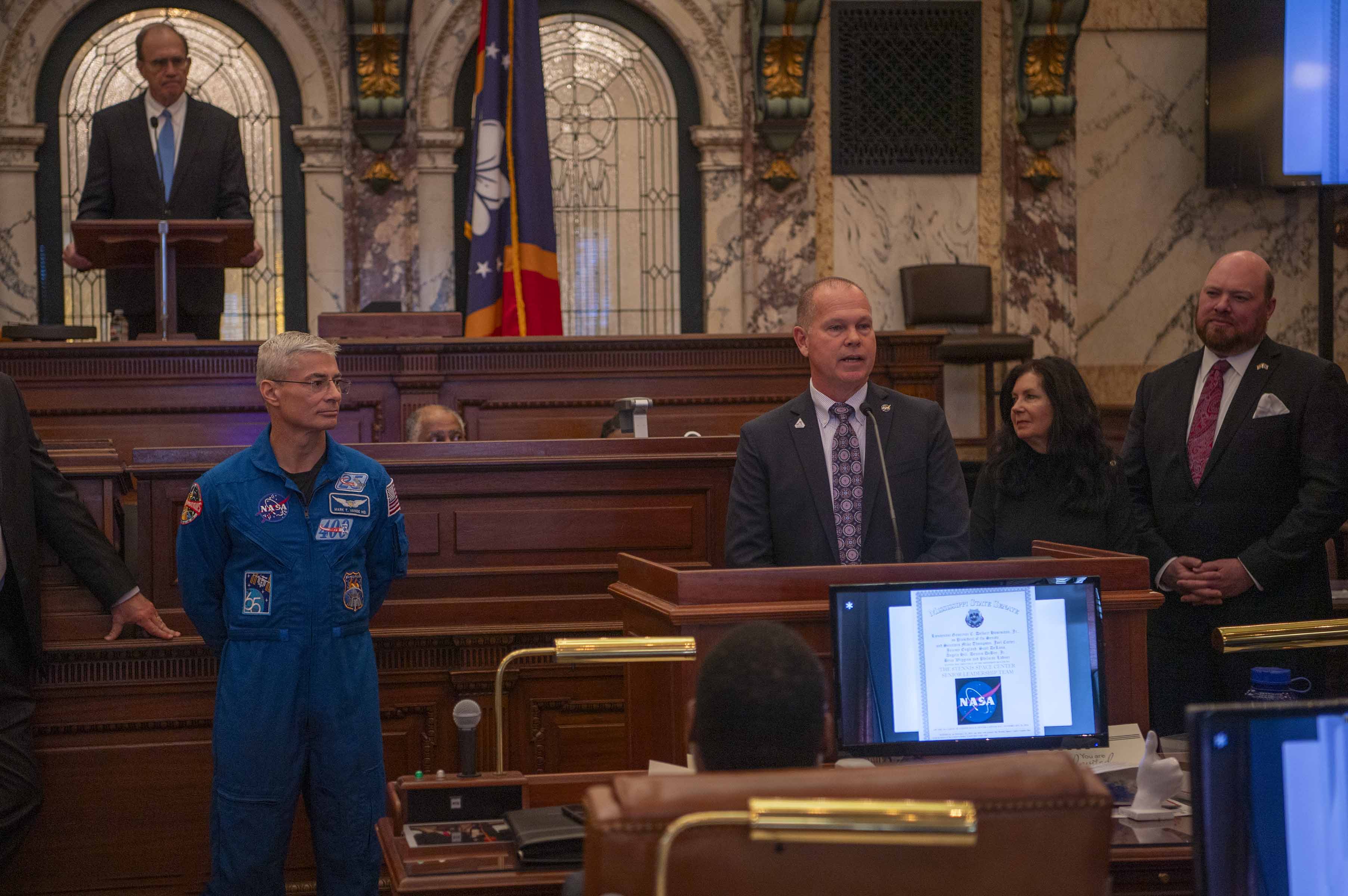
NASA Leaders Participate in Annual Stennis Day at the Capitol

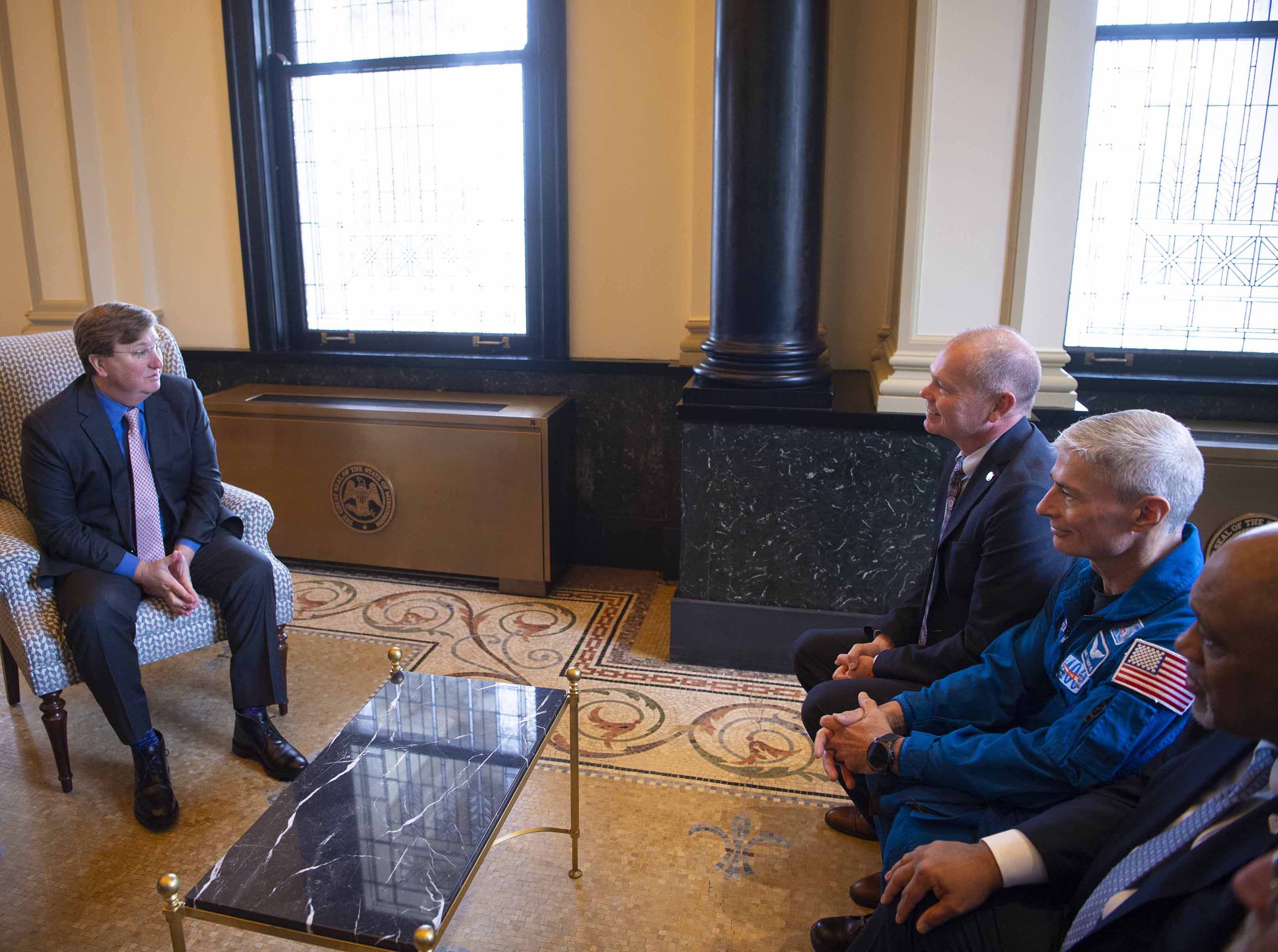
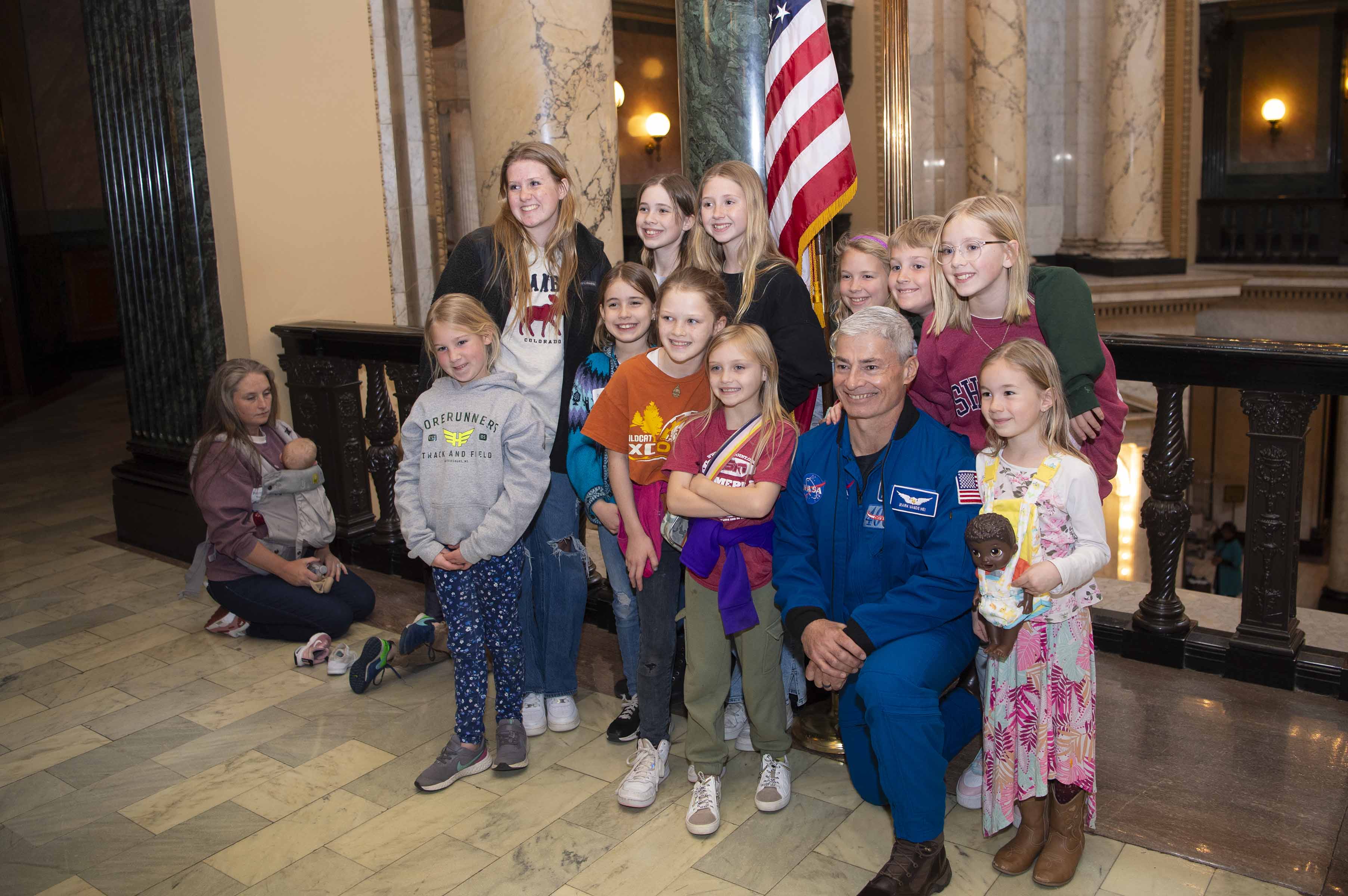
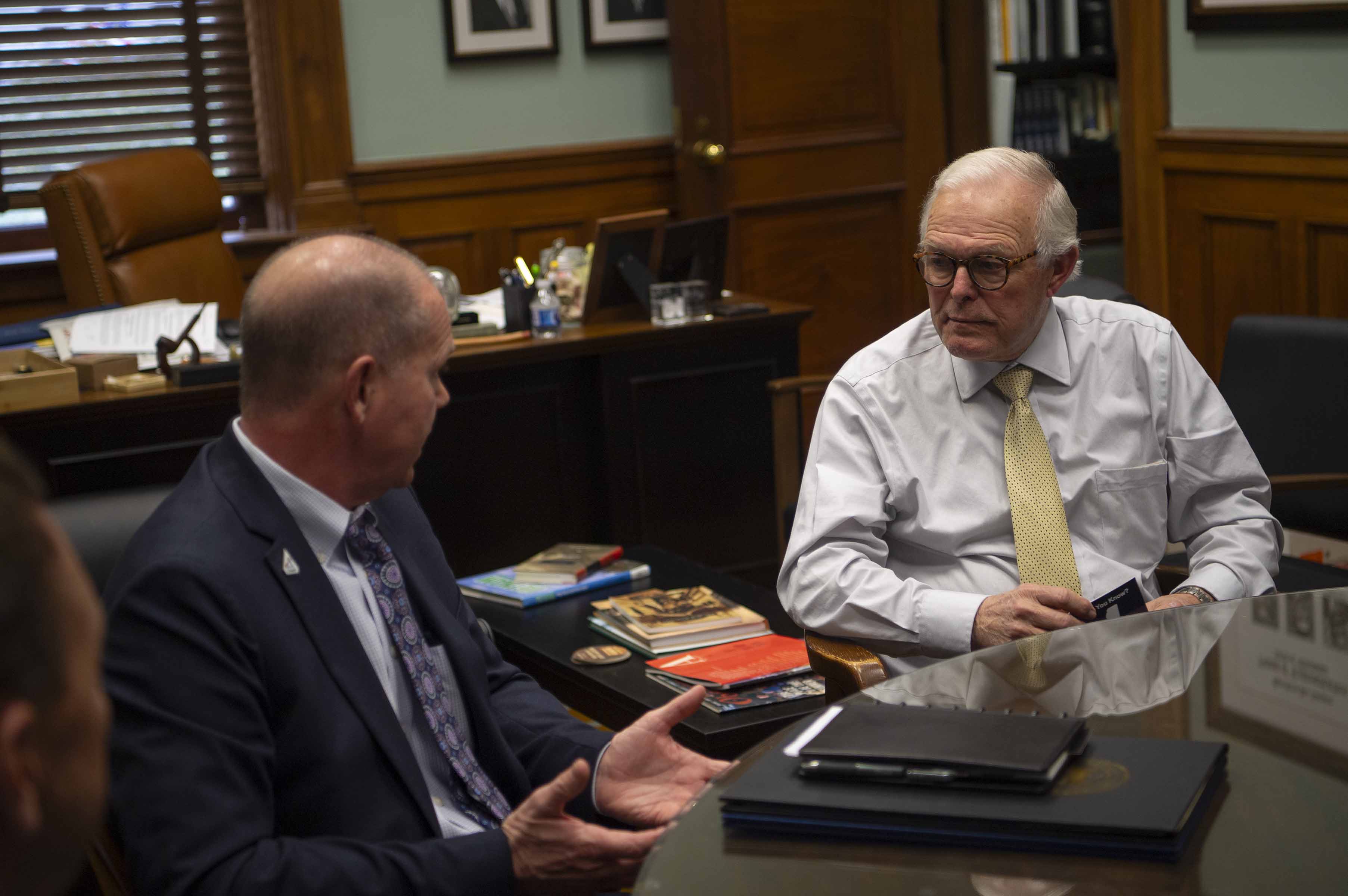
Leaders from NASA’s Stennis Space Center and NASA Shared Services Center visit Jackson, Mississippi, in late February to share site updates with state leaders during the annual Stennis Day at the Capitol.

NASA Stennis Celebrates Milestone for Historic Autonomous Systems Mission

NASA’s Stennis Space Center and Sidus Space, Inc., marked another milestone February 15 for the Center’s first-ever in-flight autonomous systems software mission as a payload rider on the Sidus Space LizzieSatTM small satellite.

NASA Enters Second Half of Key RS-25 Engine Certification Series

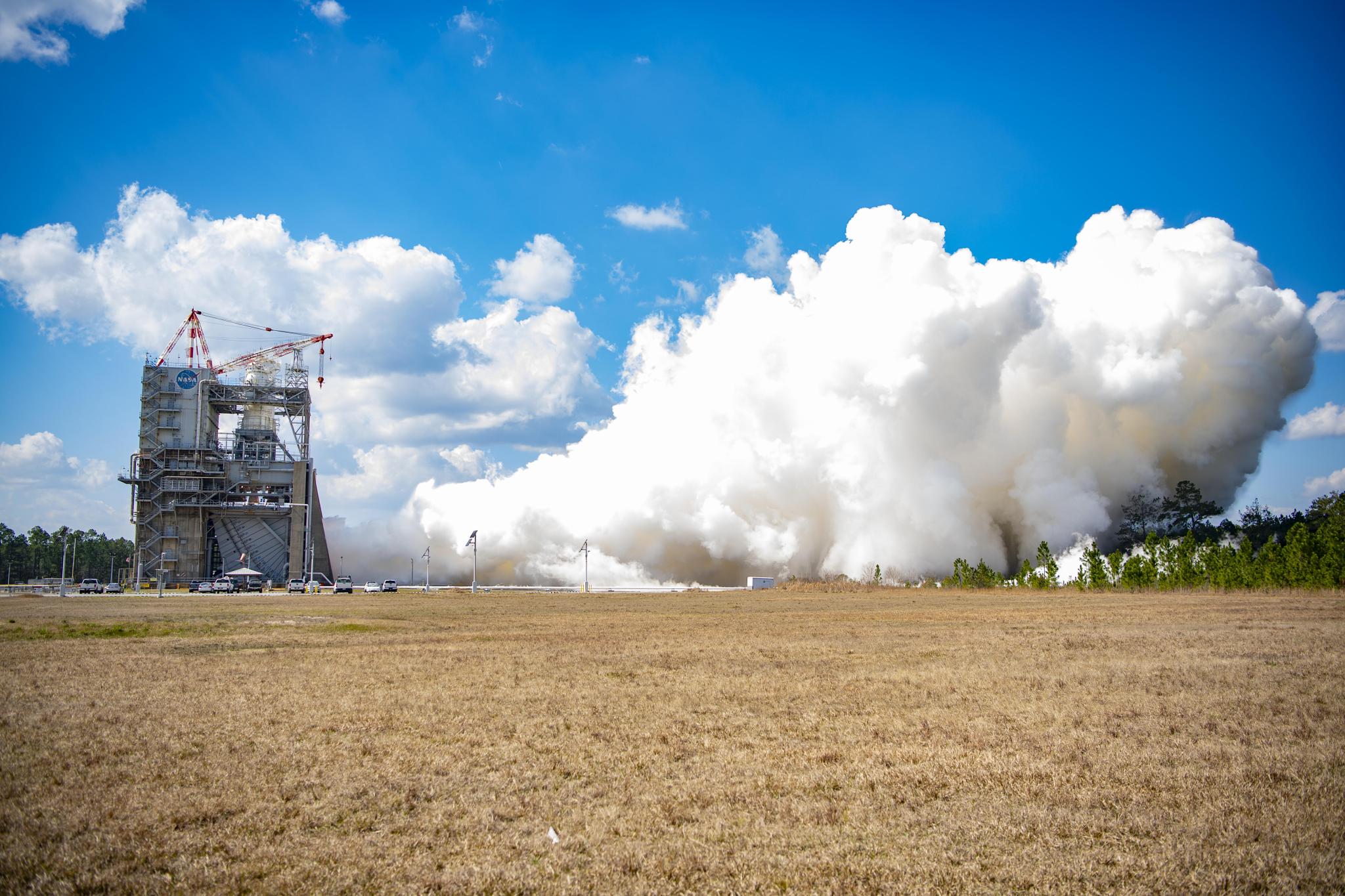
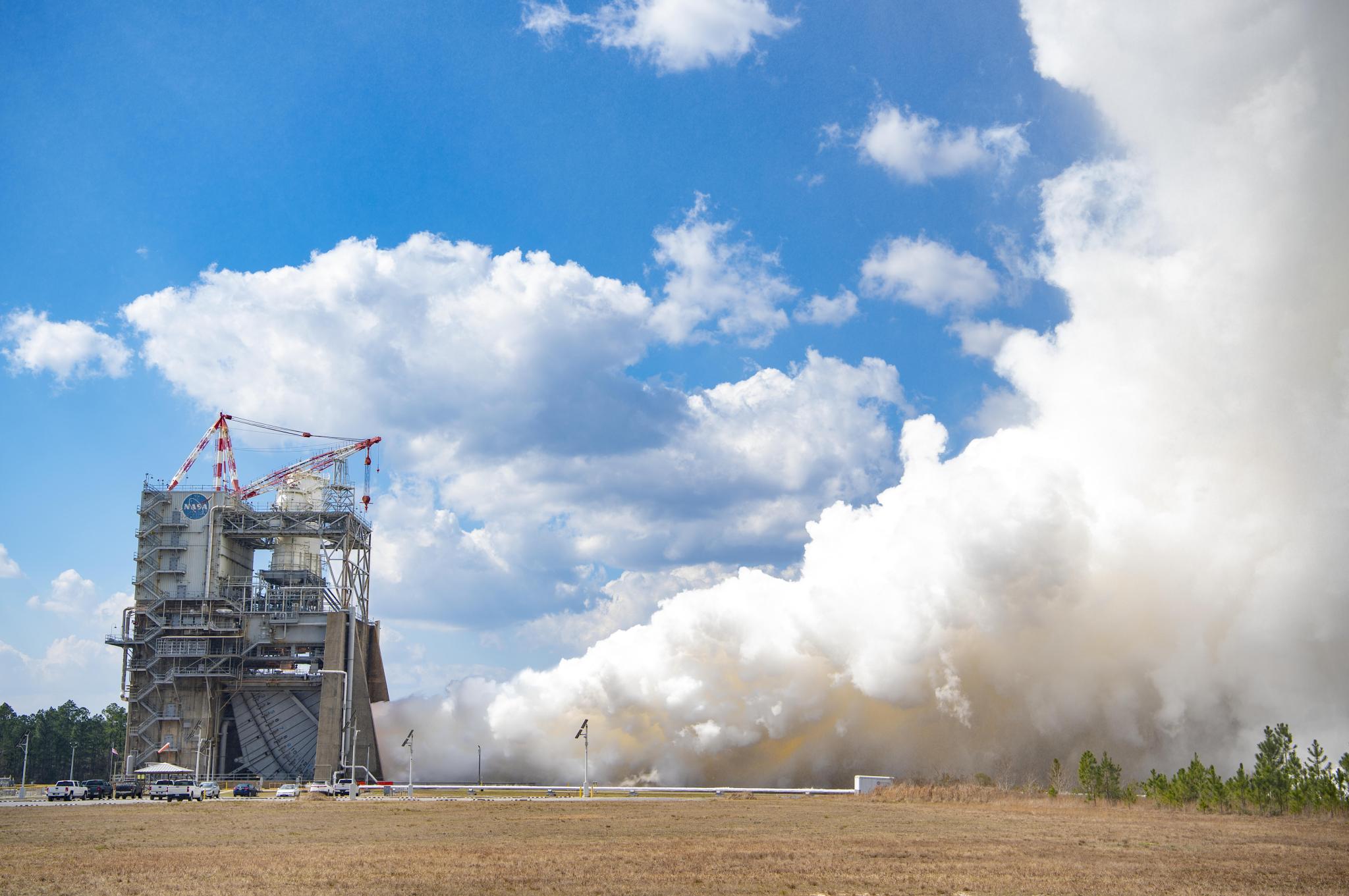
NASA conducts a full-duration RS-25  hot fire Feb. 23 on the Fred Haise Test Stand at NASA’s Stennis Space Center near Bay St. Louis, Mississippi, continuing a key test series for future Artemis flights of NASA’s SLS (Space Launch System) rocket. During the seventh test of the 12-test series, operators fired the certification engine for 550 seconds and up to a 113% power level. The hot fire followed installation of a second production engine nozzle that will provide additional performance data on the upgraded unit. The test series is the second, and final, series to certify restart production of the upgraded engines by lead contractor Aerojet Rocketdyne, an L3Harris Technologies company. New engines will help power NASA’s SLS rocket on Artemis missions to the Moon and beyond, beginning with Artemis V. NASA and Aerojet Rocketdyne modified 16 former space shuttle engines for use on Artemis missions I through IV. NASA completed an initial 12-test certification series with the upgraded components in June 2023. Four RS-25 engines fire simultaneously to help launch each SLS rocket, producing up to 2 million pounds of combined thrust.
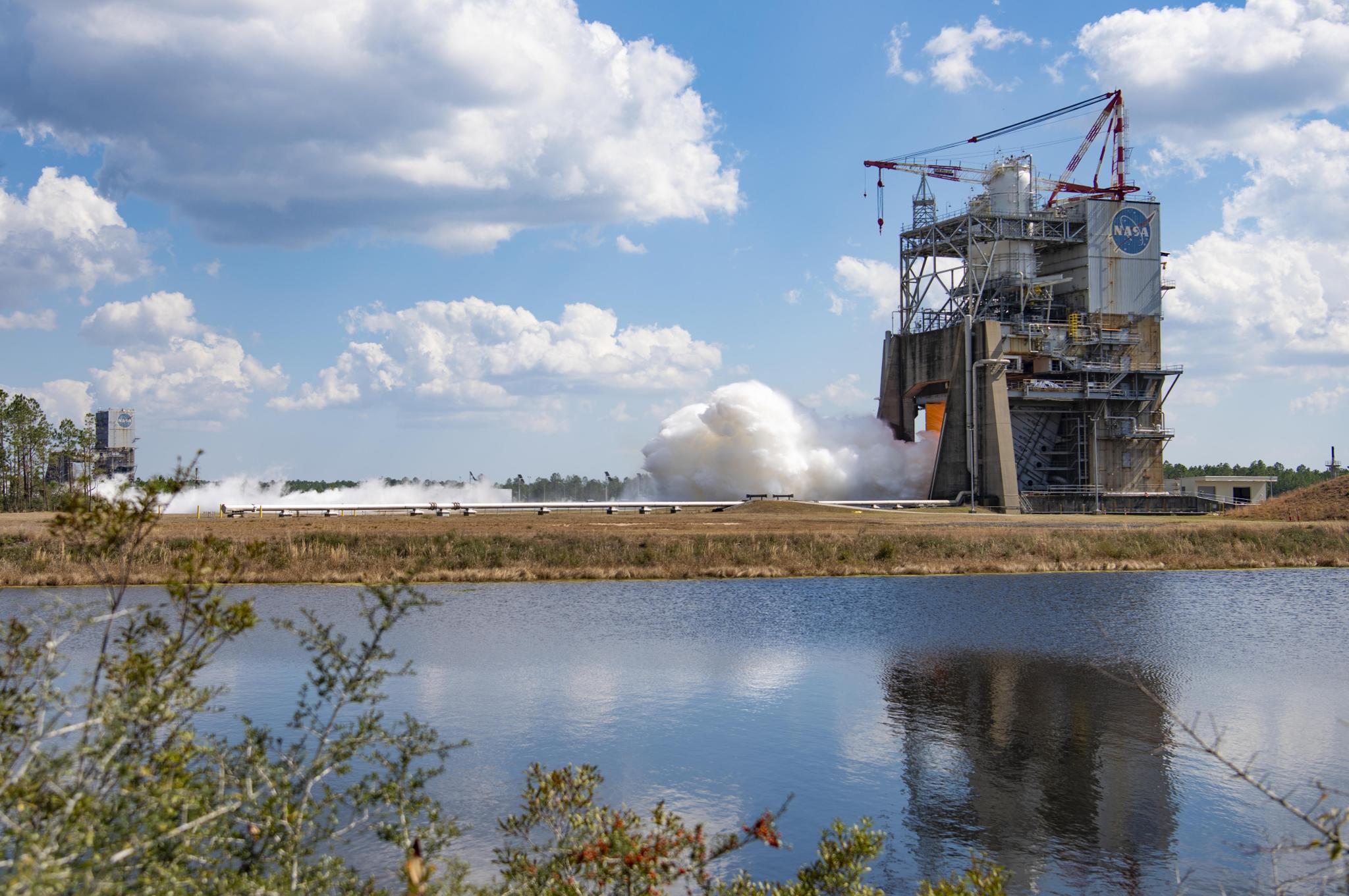
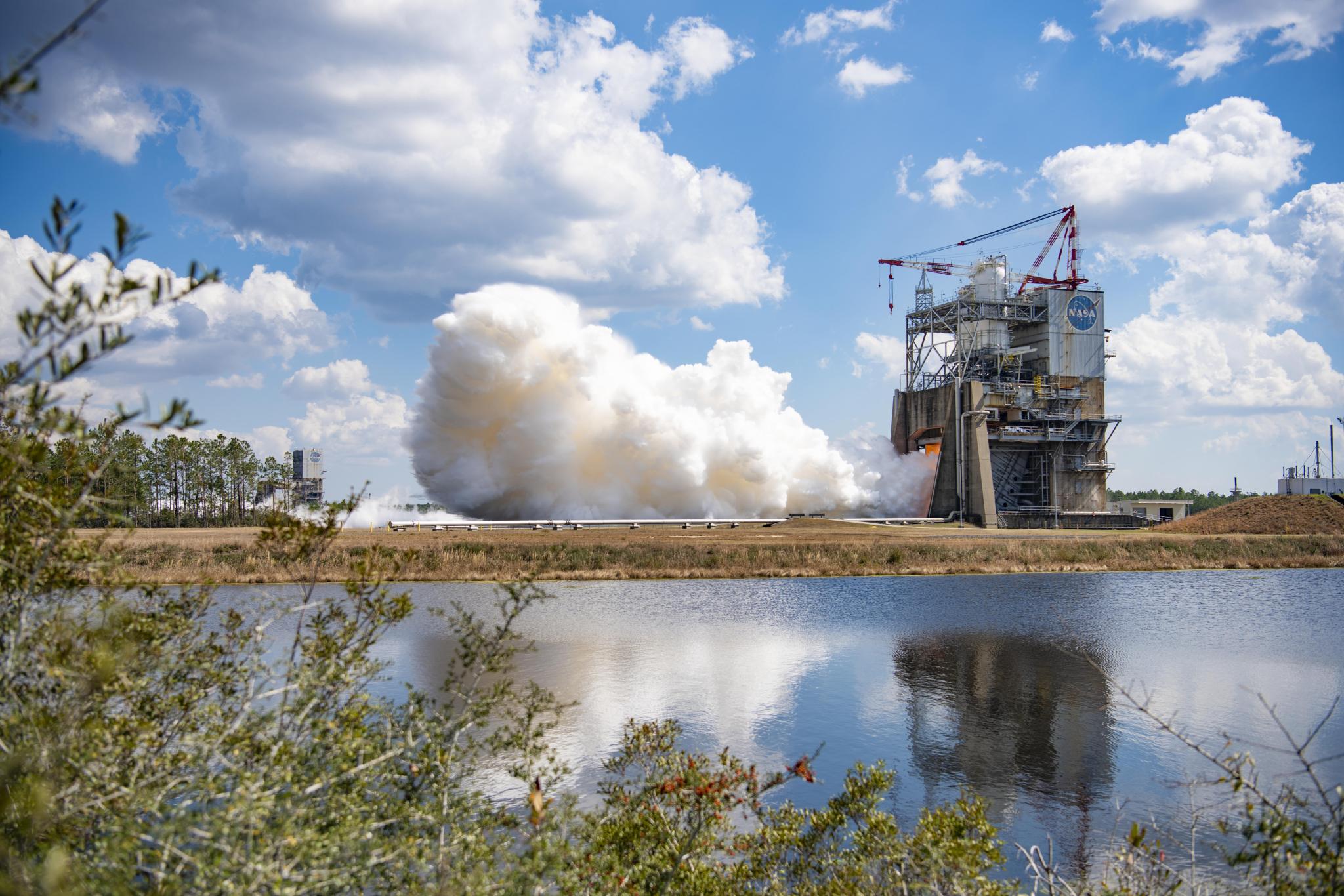
view of a RS-25 hot fire from across the water
RS-25 Hot Fire
NASA/Danny Nowlin
vapor clouds erupt from a RS-25 hot fire from across the water
RS-25 Hot Fire
NASA/Danny Nowlin
vapor clouds erupt from a RS-25 hot fire from across the water
RS-25 Hot Fire
NASA/Danny Nowlin
vapor clouds erupt from a RS-25 hot fire; view is across a grassy field
RS-25 Hot Fire
NASA/Danny Nowlin
vapor clouds erupt from a RS-25 hot fire; view is from across a grassy field
RS-25 Hot Fire
NASA/Danny Nowlin

NASA Caps Off February with RS-25 Engine Certification Test

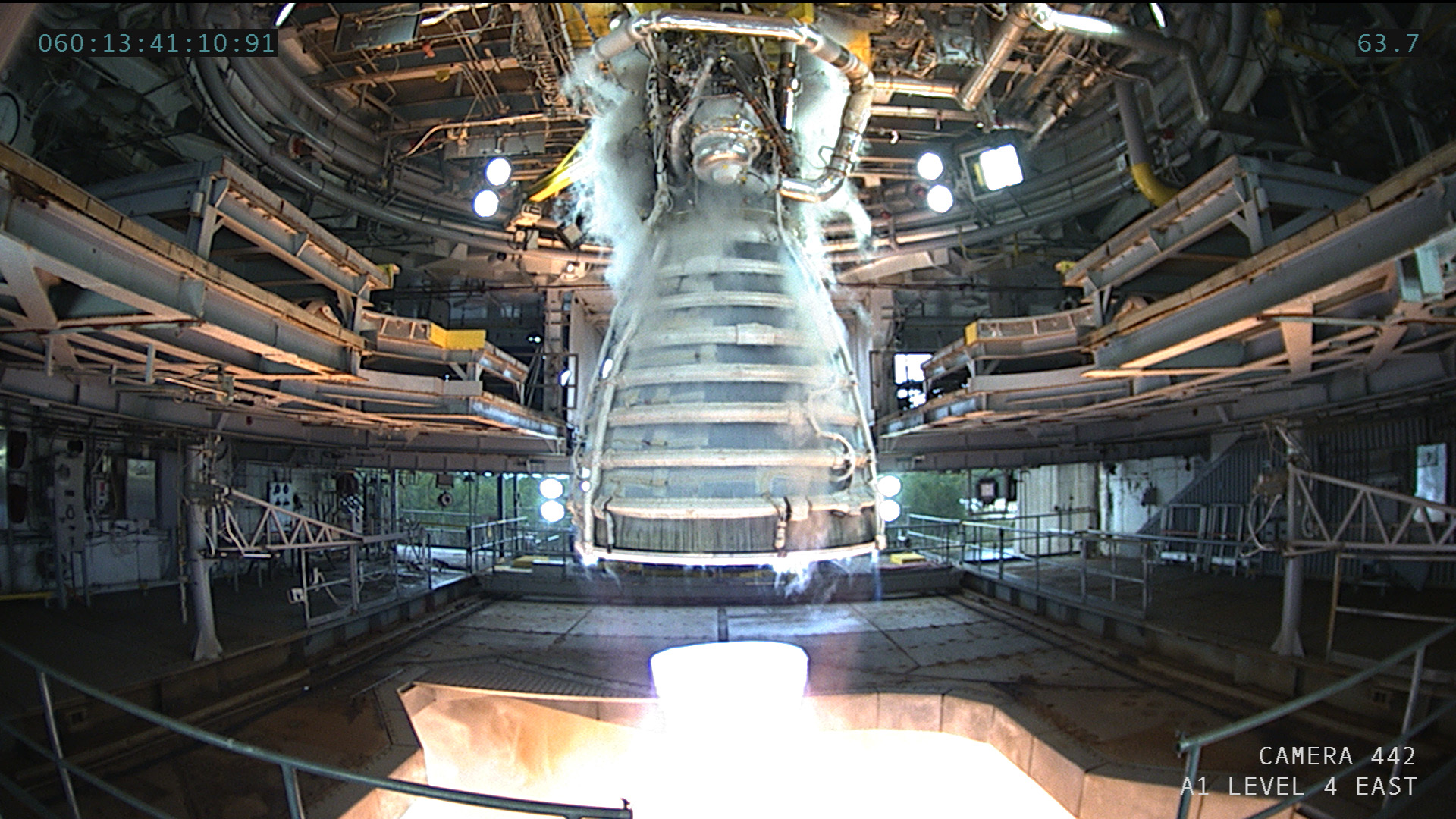
NASA conducted a full-duration RS-25  hot fire Feb. 29 on the Fred Haise Test Stand at NASA’s Stennis Space Center near Bay St. Louis, Mississippi, continuing a key test series for future Artemis flights of NASA’s SLS (Space Launch System) rocket. The hot fire to certify new production RS-25 engines for SLS marked only the second ever Leap Day engine test. Fourty-four years ago on Feb. 29, 1980, before the first space shuttle launch, a test-fire occurred for RS-25 engine #0009. Both tests were conducted on the Fred Haise Test, previously known as the A-1 Test Stand at NASA Stennis. The Feb. 29, 2024, hot fire is the second test following installation of a second production engine nozzle that will provide additional performance data on the upgraded unit. It also marked the eighth in a 12-test series to certify production of new RS-25 engines by lead contractor Aerojet Rocketdyne, an L3Harris Technologies company, to help power NASA’s SLS rocket on Artemis missions to the Moon and beyond, beginning with Artemis V. The current series is the second and final series to certify restart production of the upgraded engines. NASA completed an initial 12-test certification series with the upgraded components in June 2023. Four RS-25 engines fire simultaneously to help launch each SLS rocket, producing up to 2 million pounds of combined thrust.
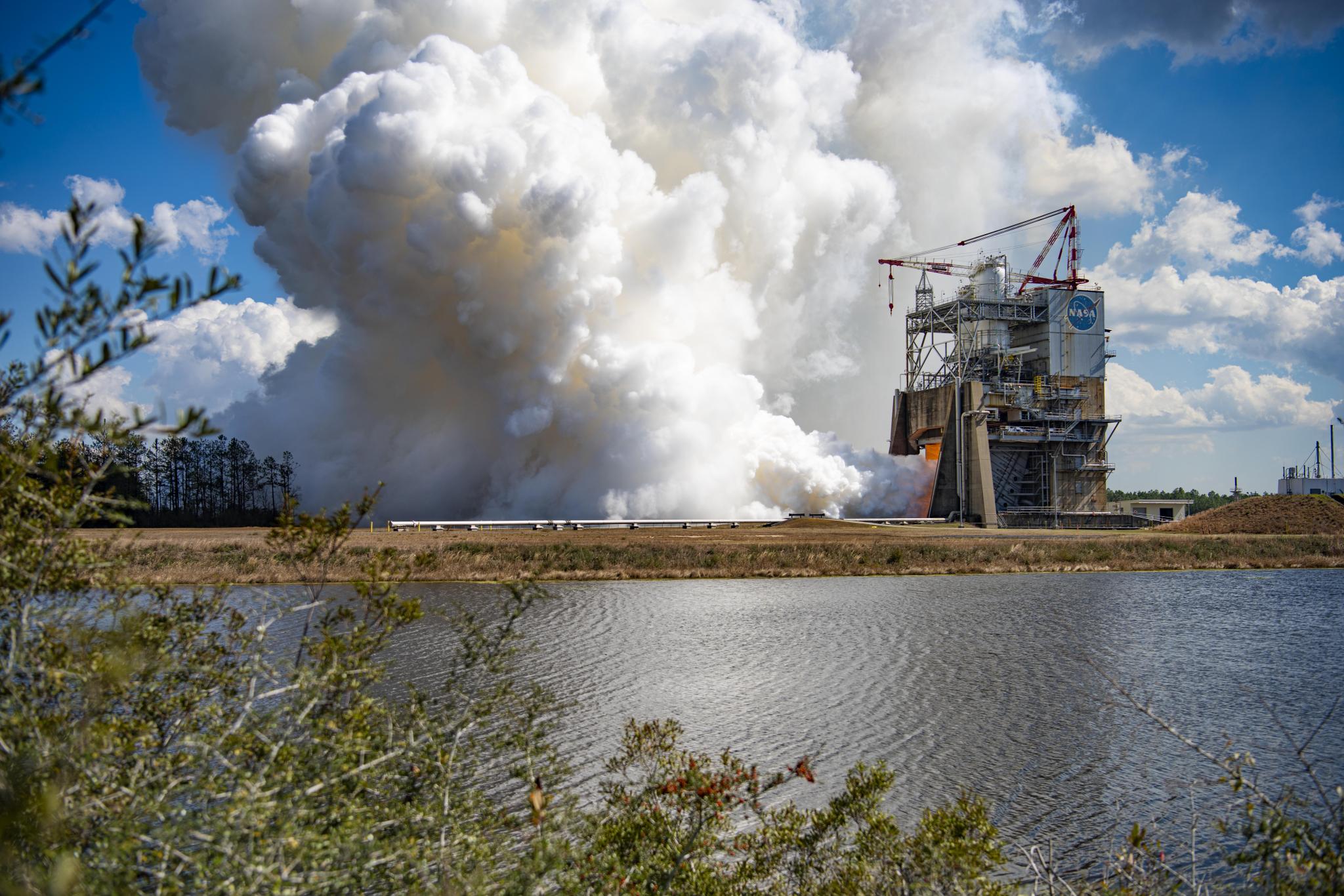
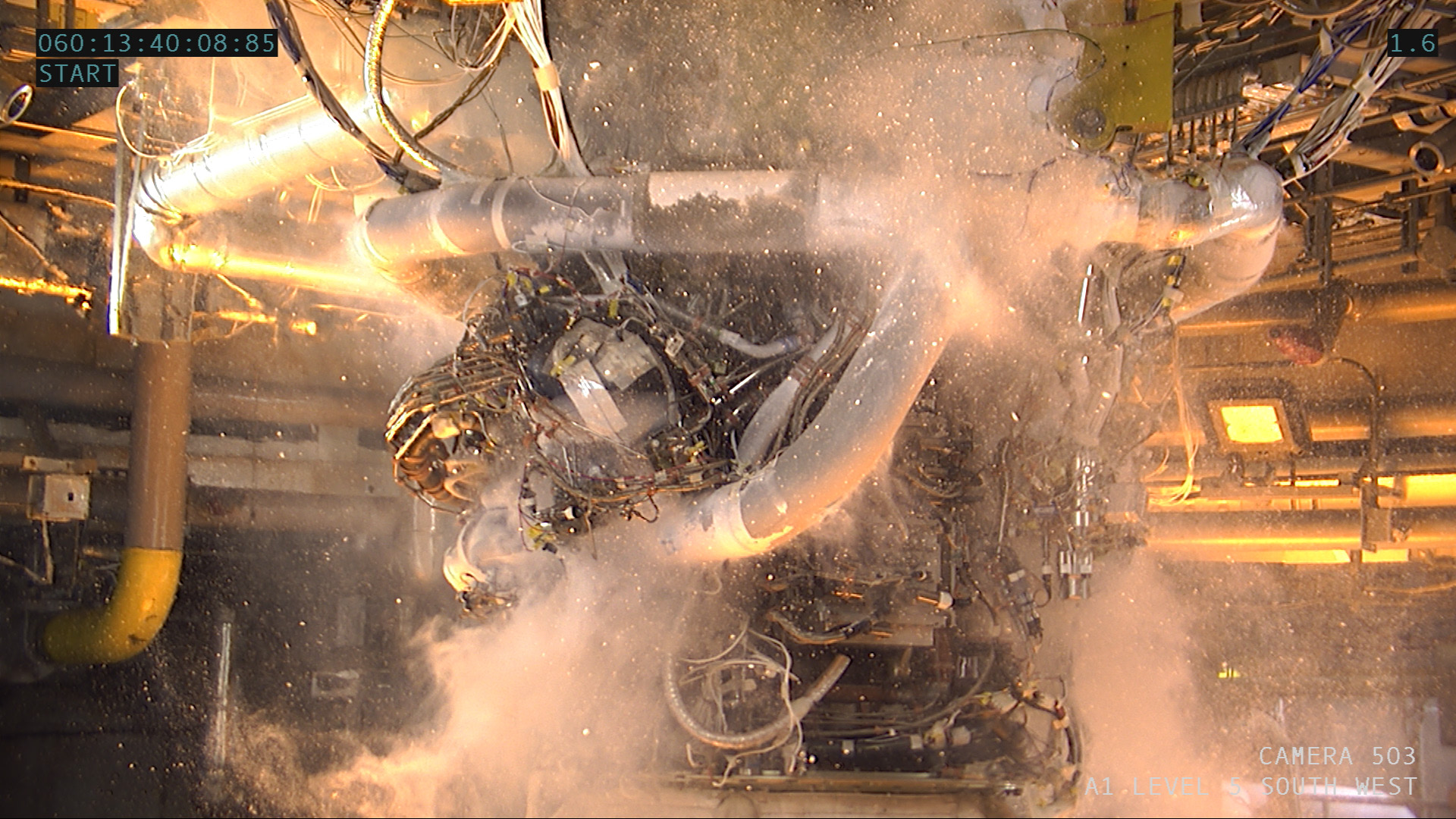
closeup of RS-25 engine during a hot fire
RS-25 Hot Fire on Feb. 29
NASA/Stennis
closeup RS-25 engine during a hot fire
RS-25 Hot Fire on Feb. 29
NASA/Stennis

Center Activities

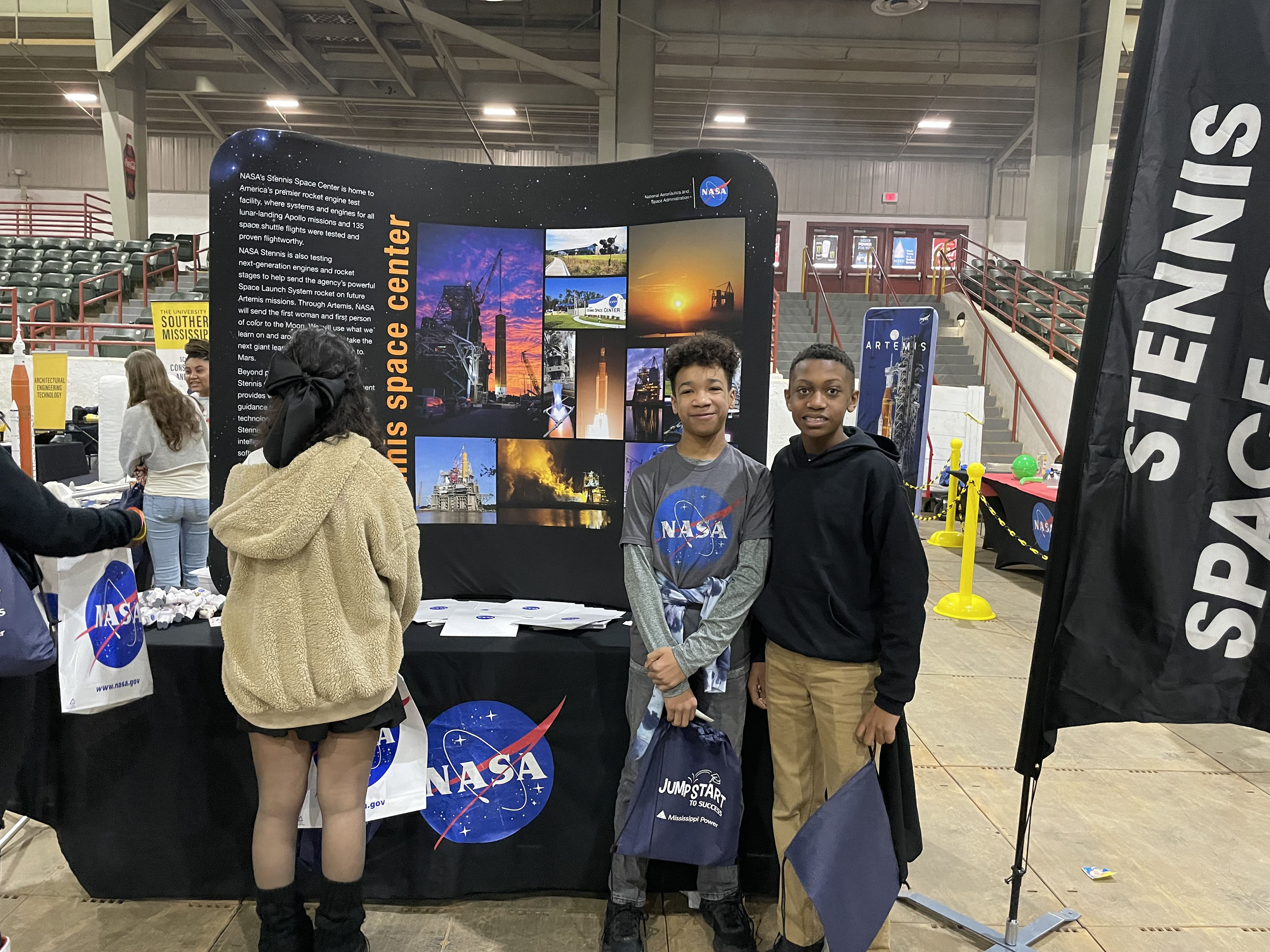
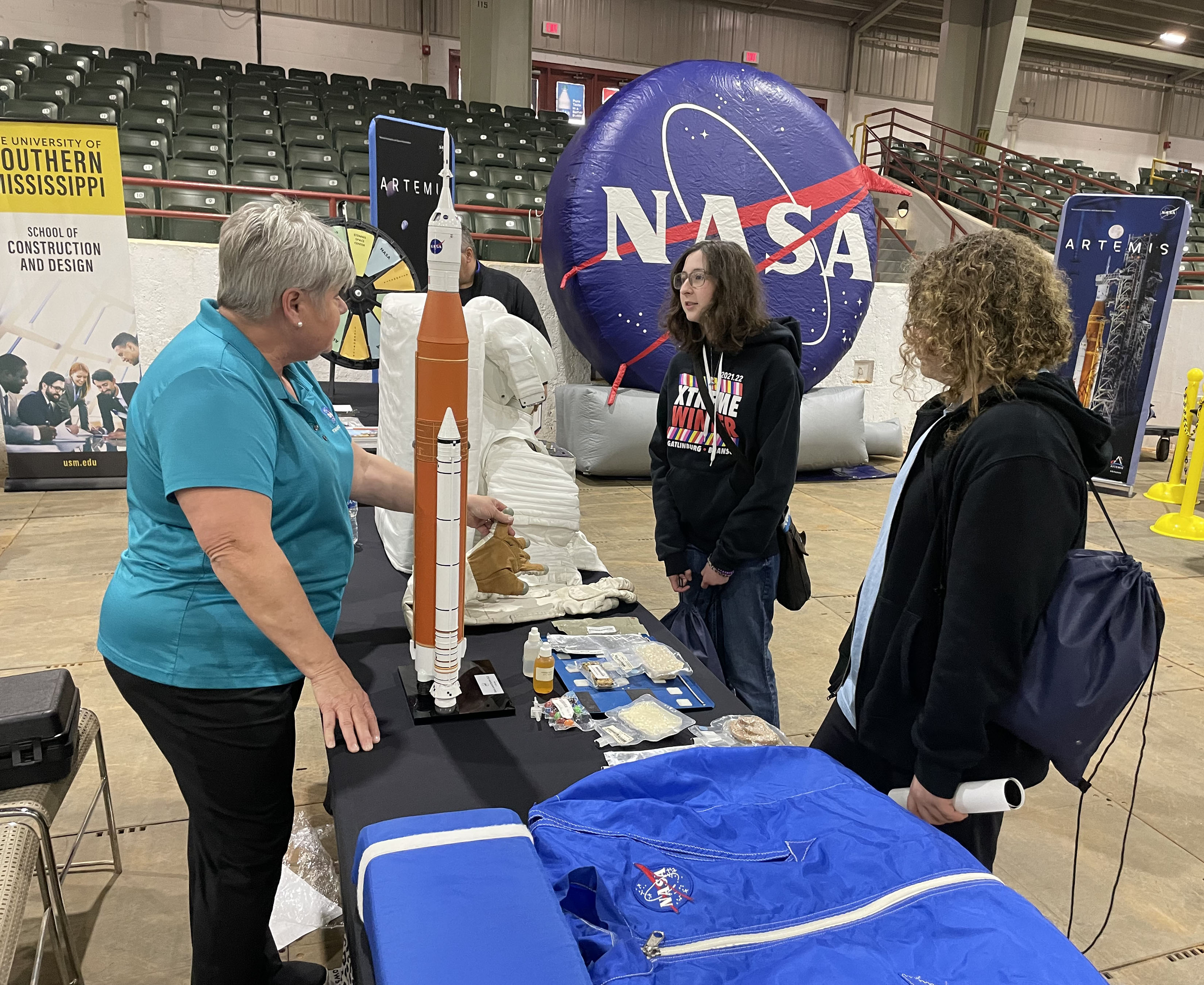
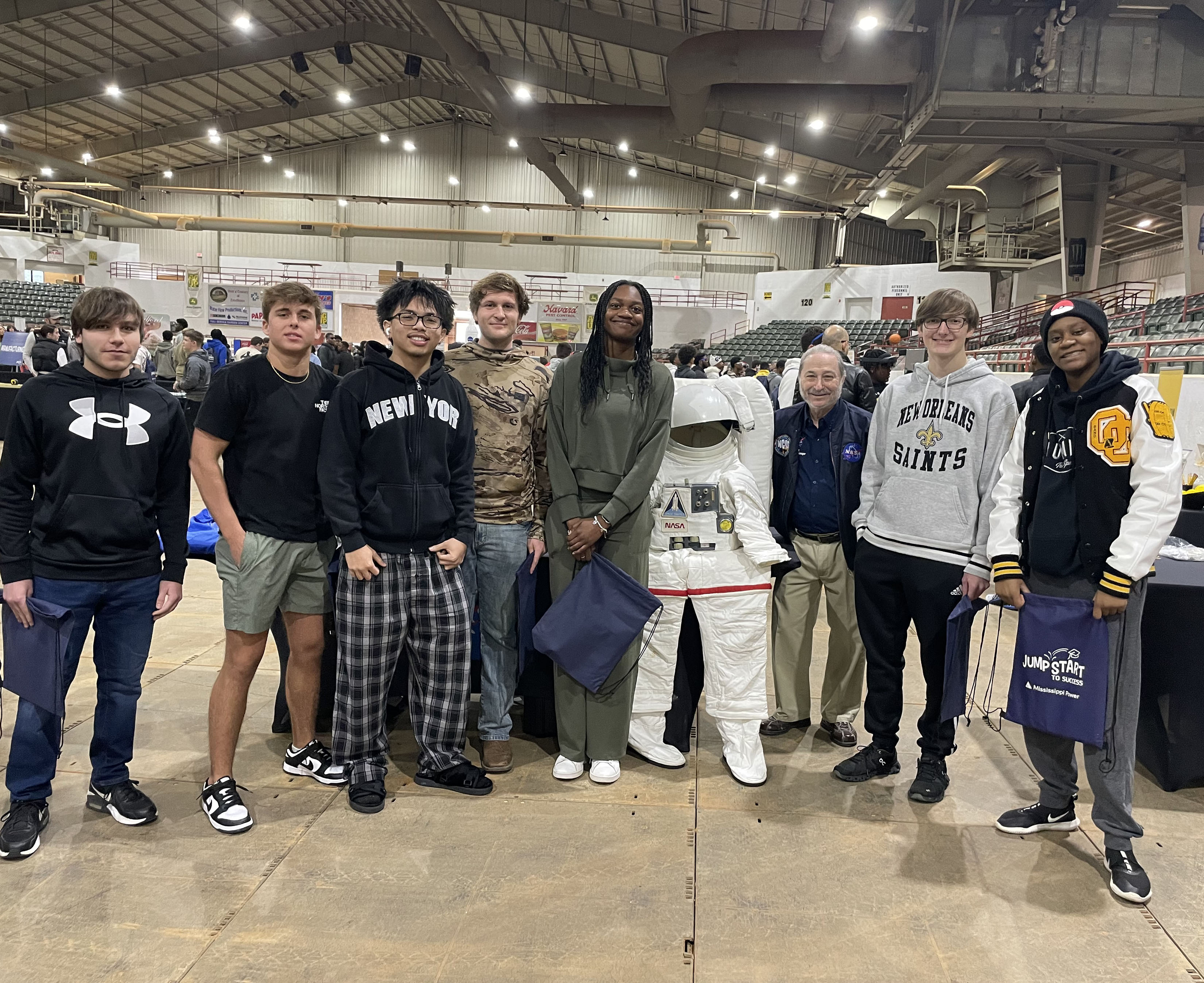
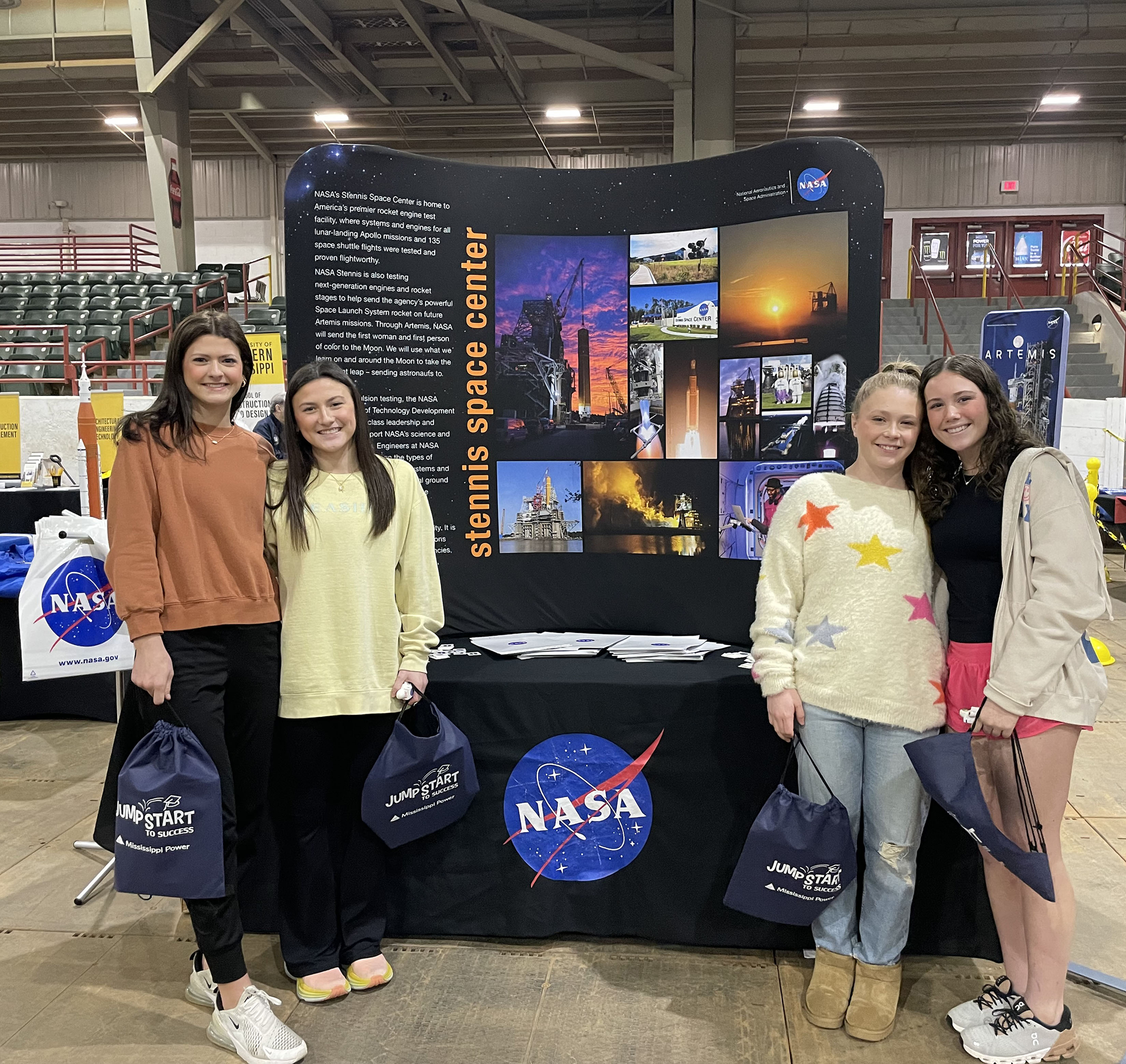
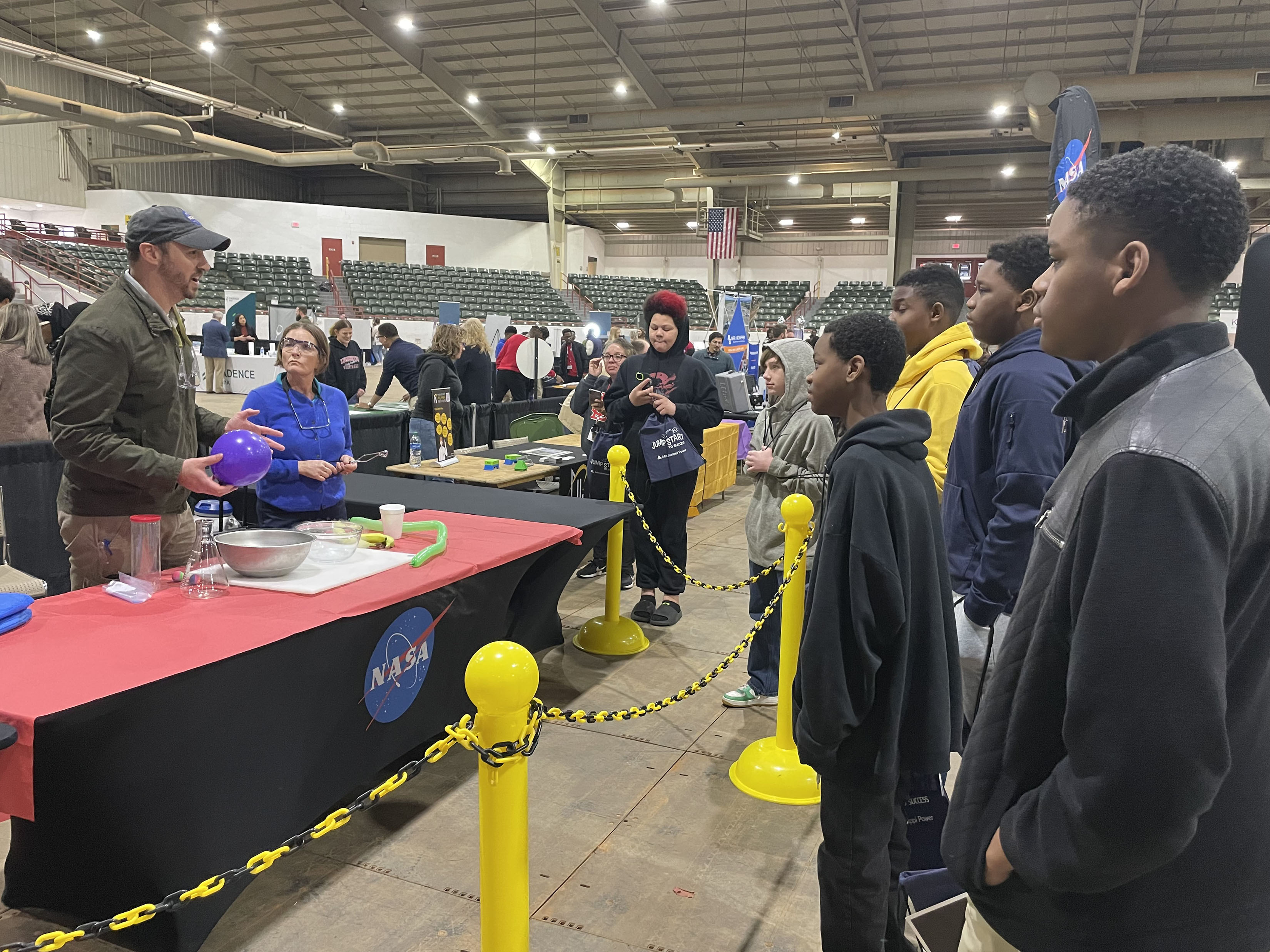
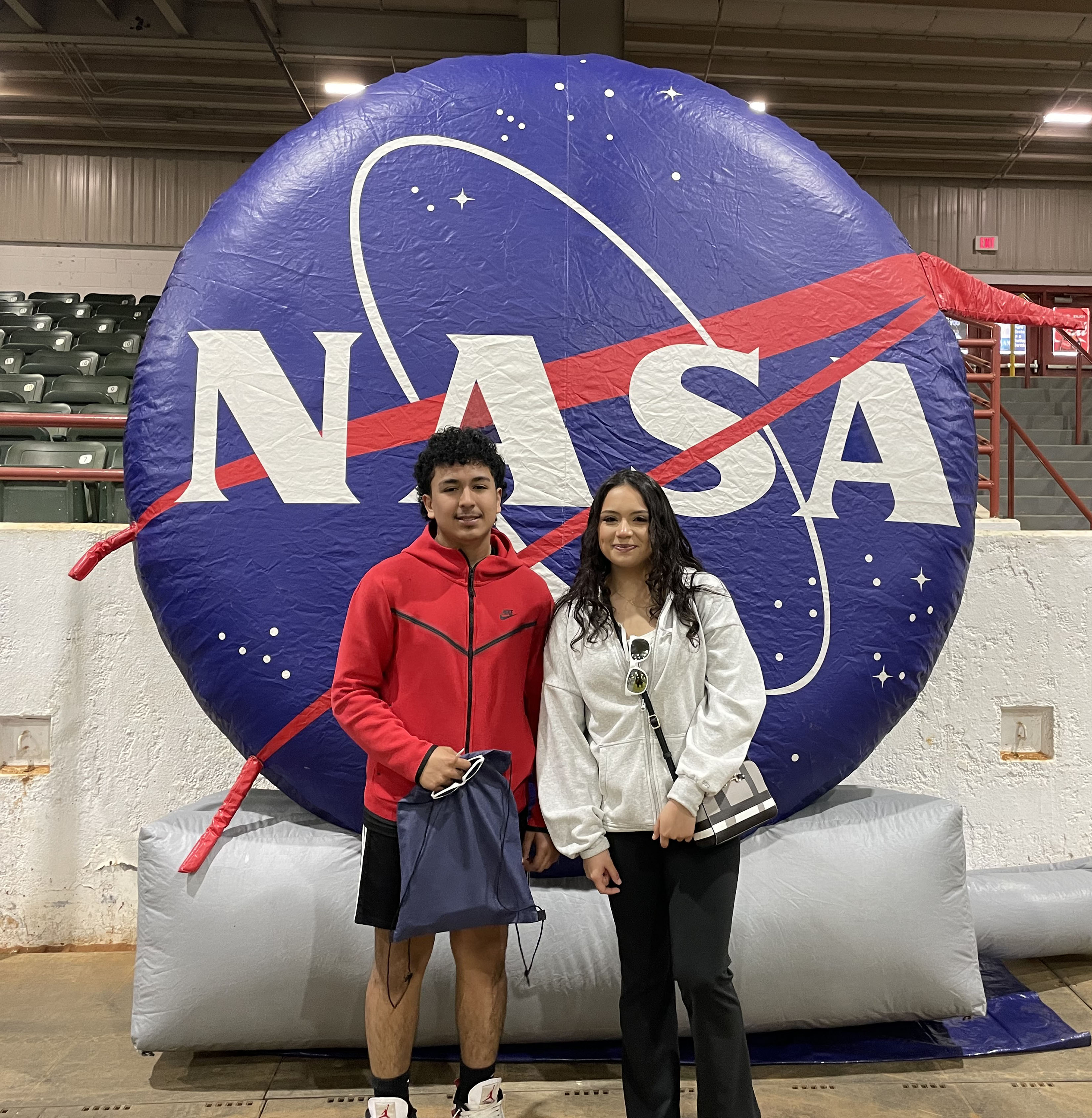
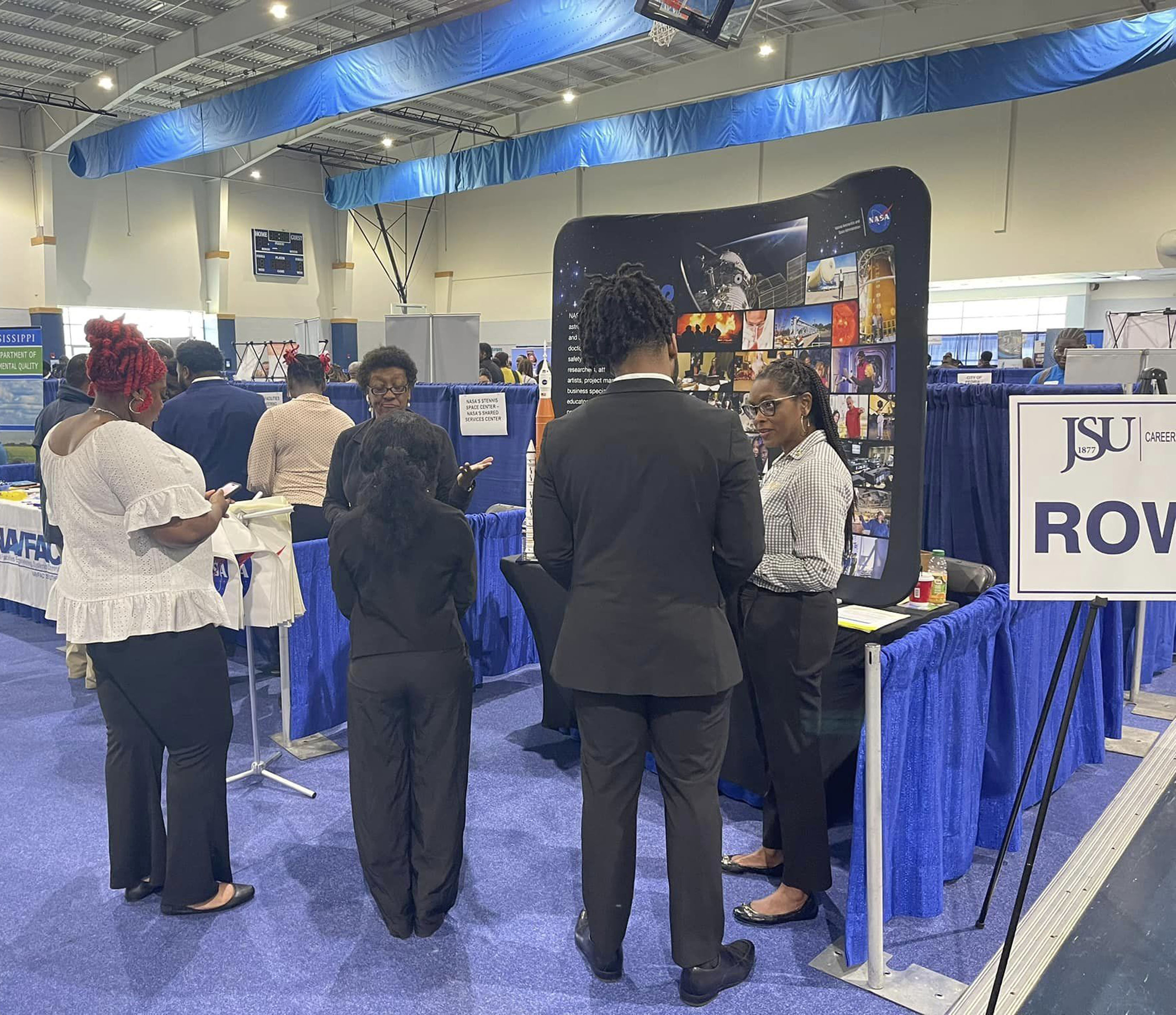
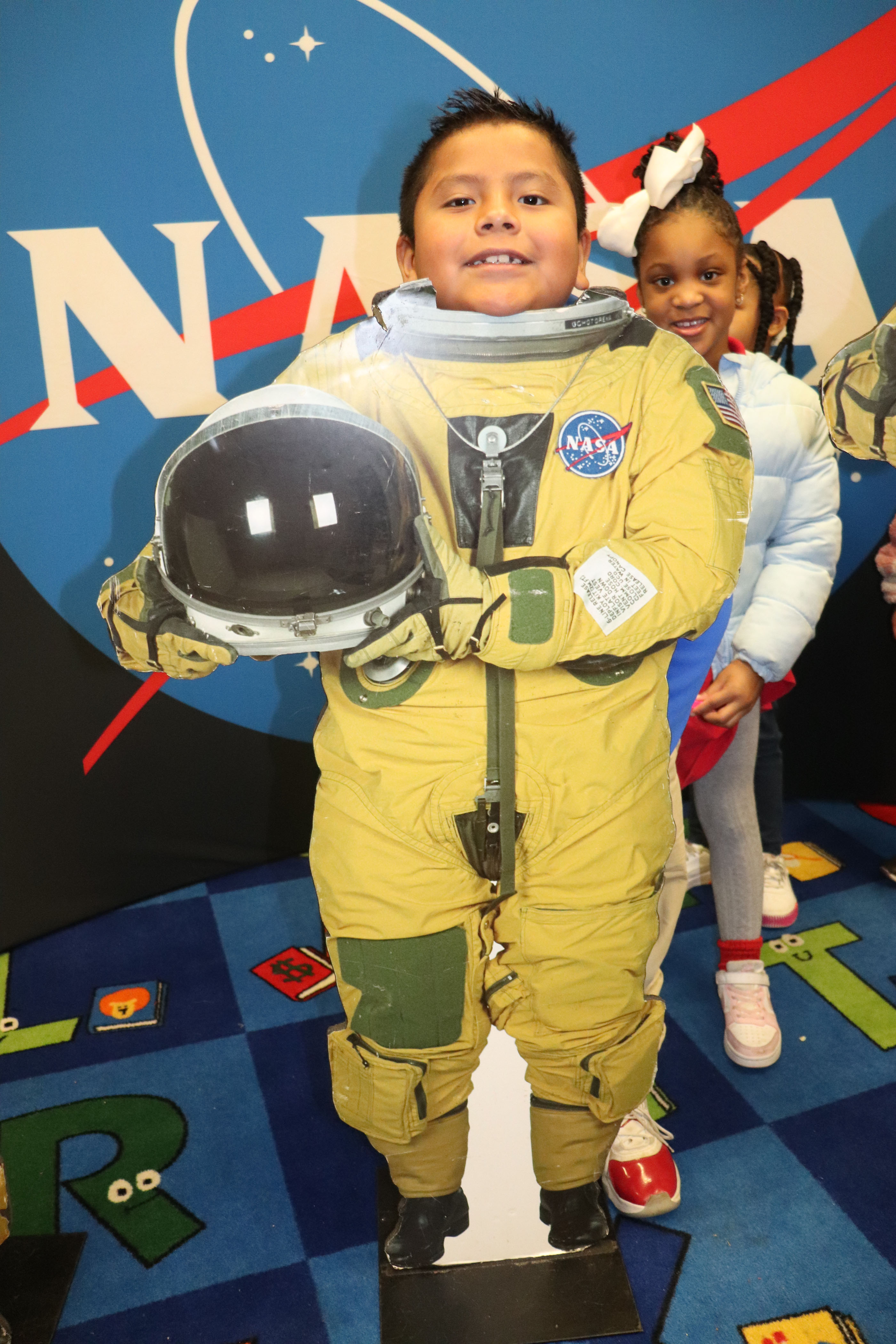
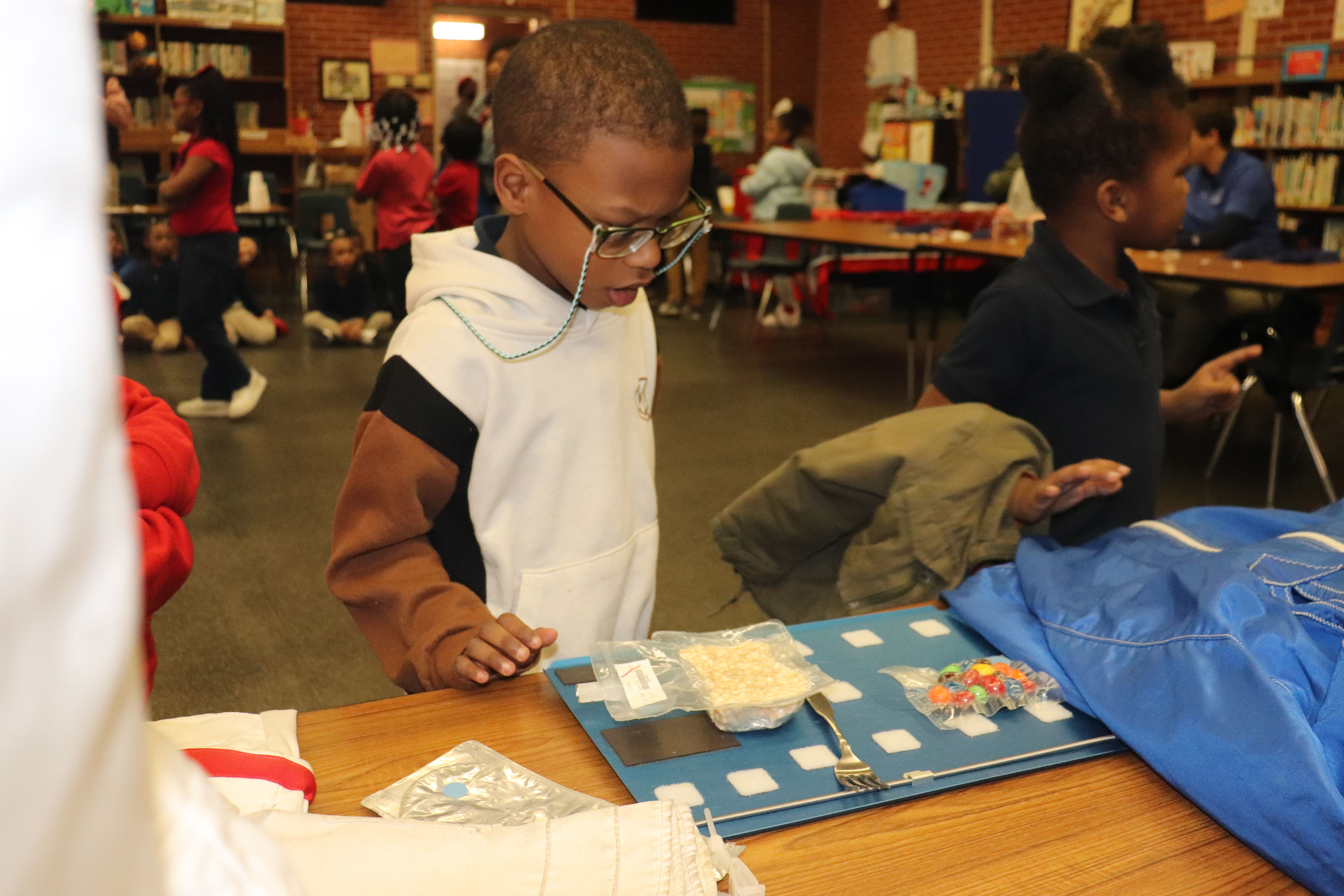
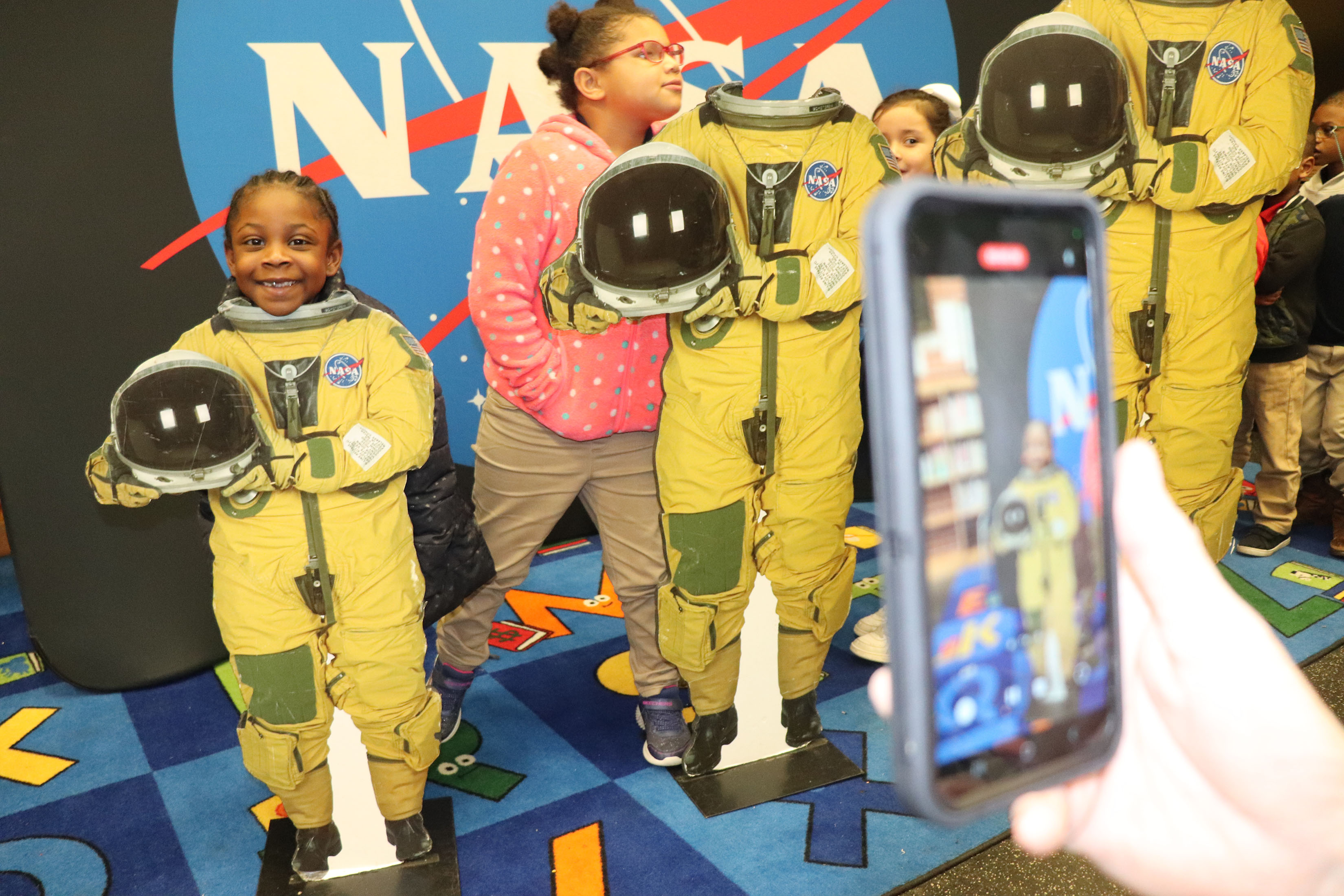
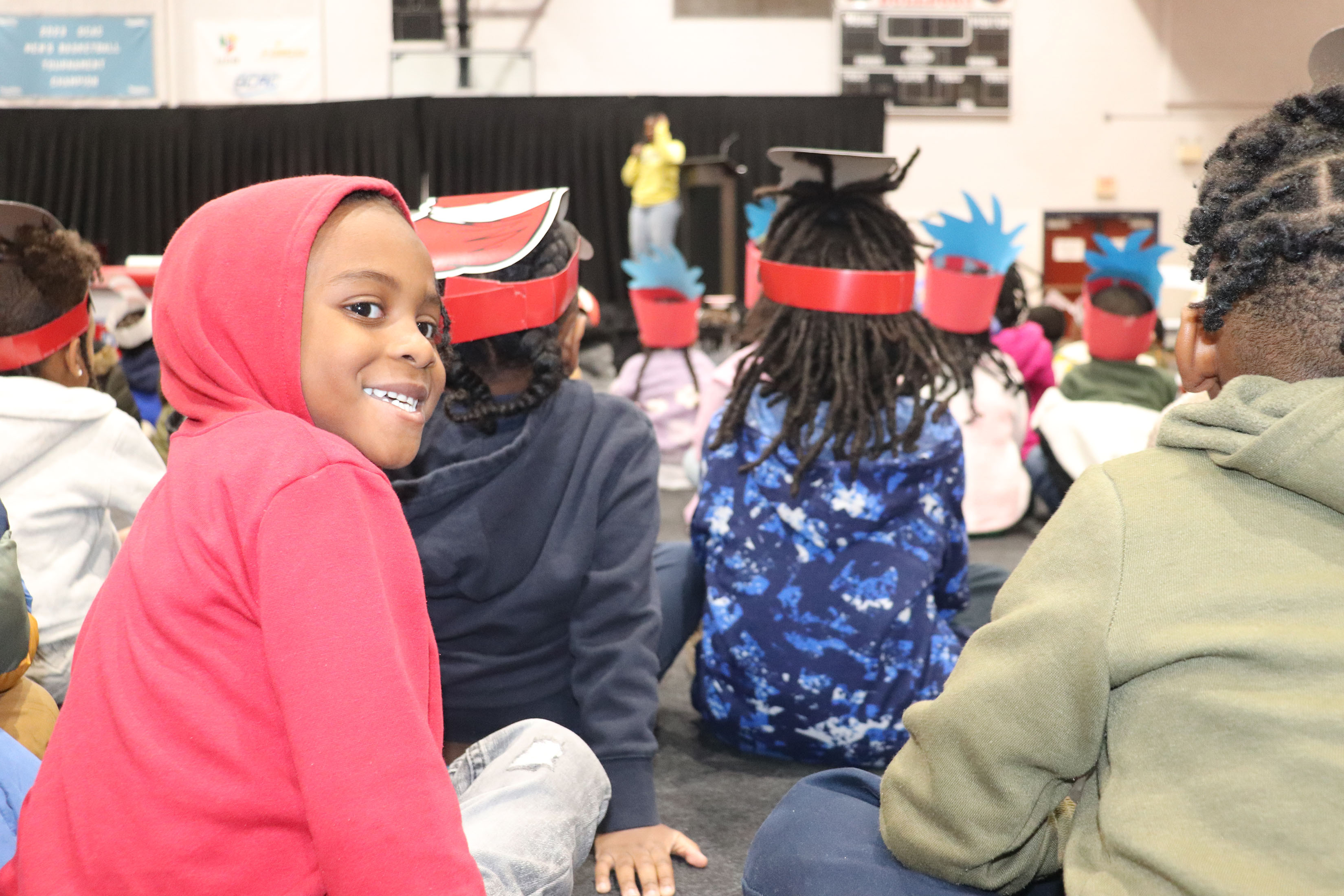
NASA Stennis Inspires Students at Hattiesburg Event
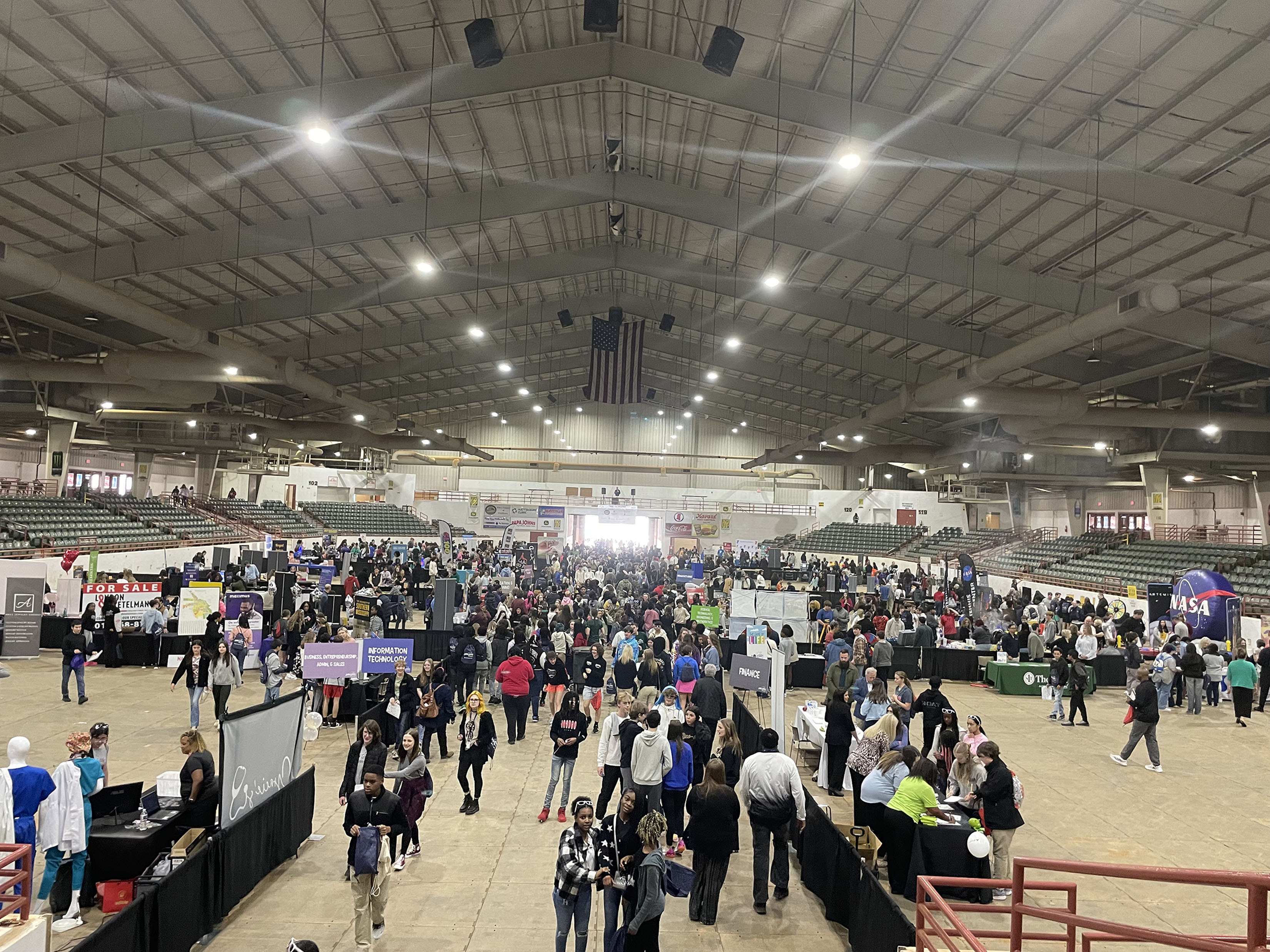
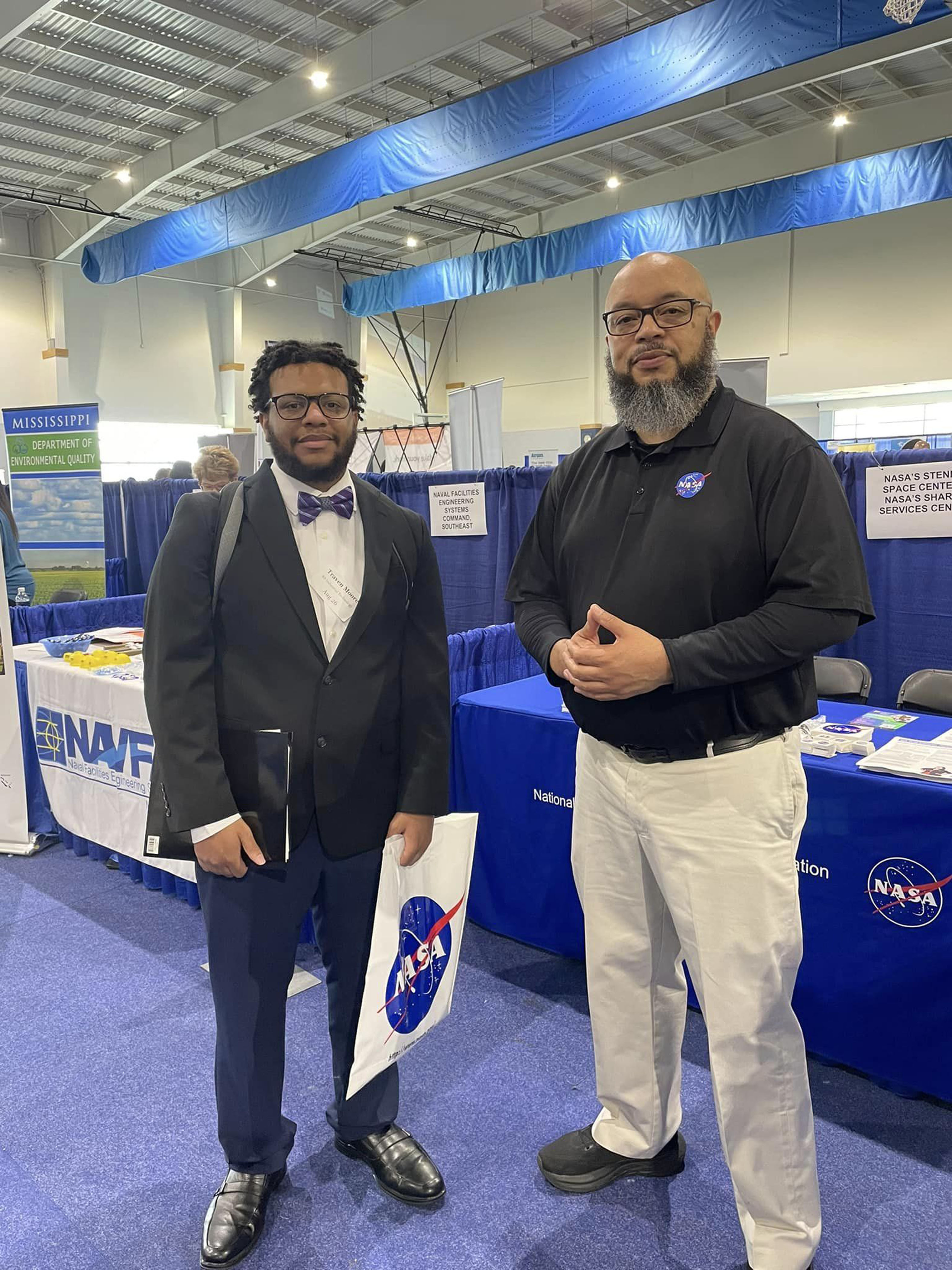
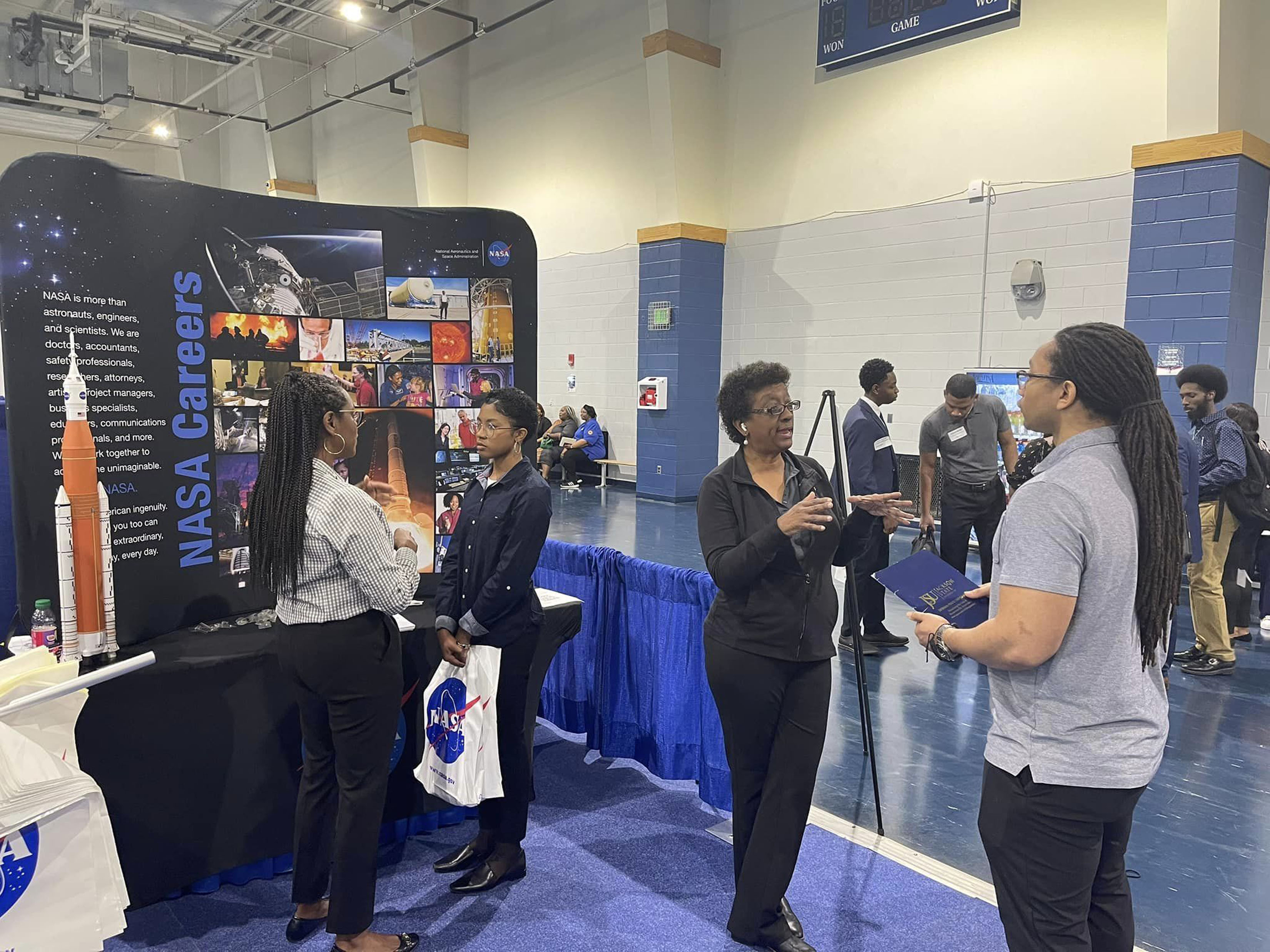
NASA Participates in Jackson State University Events
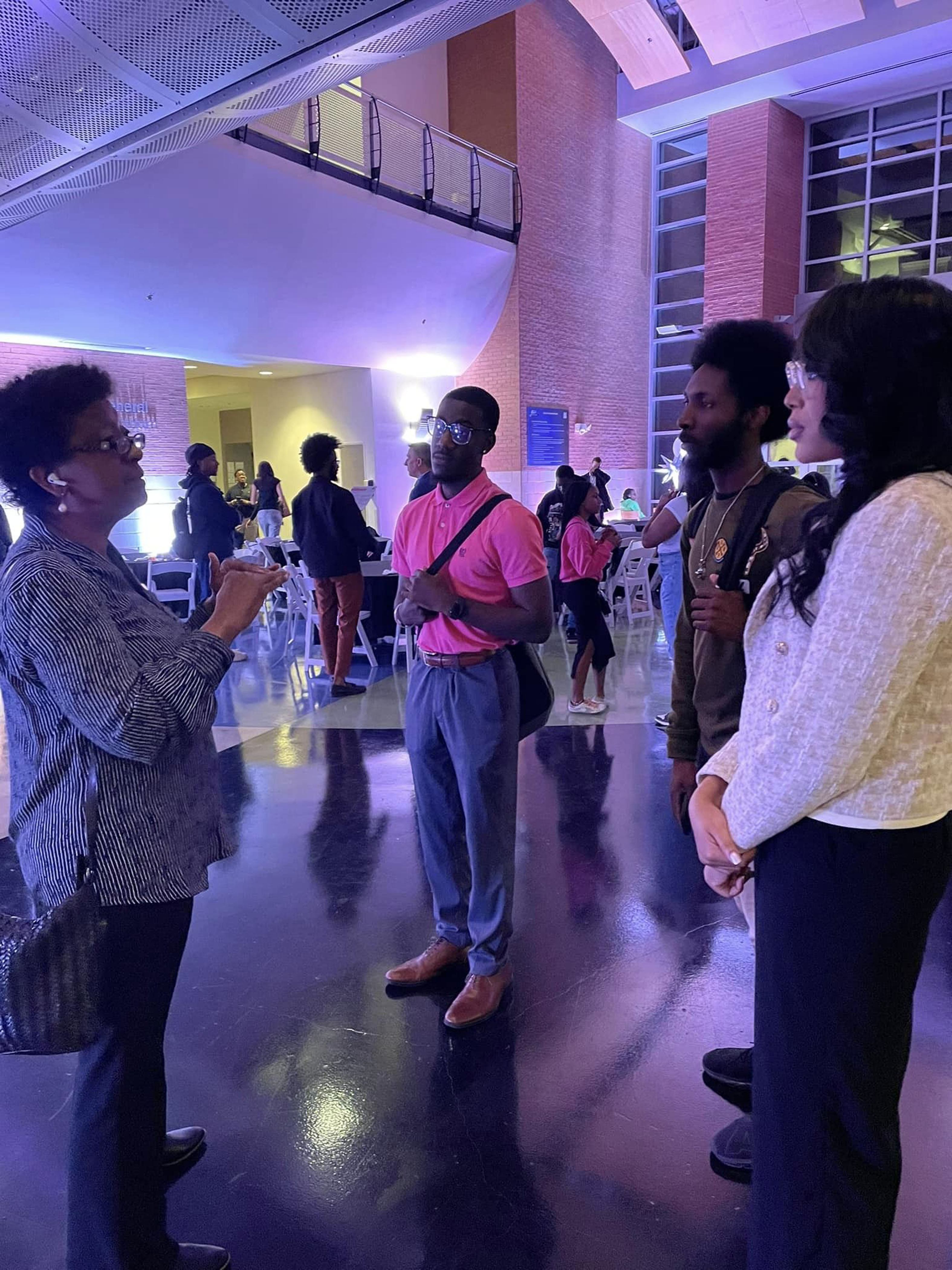
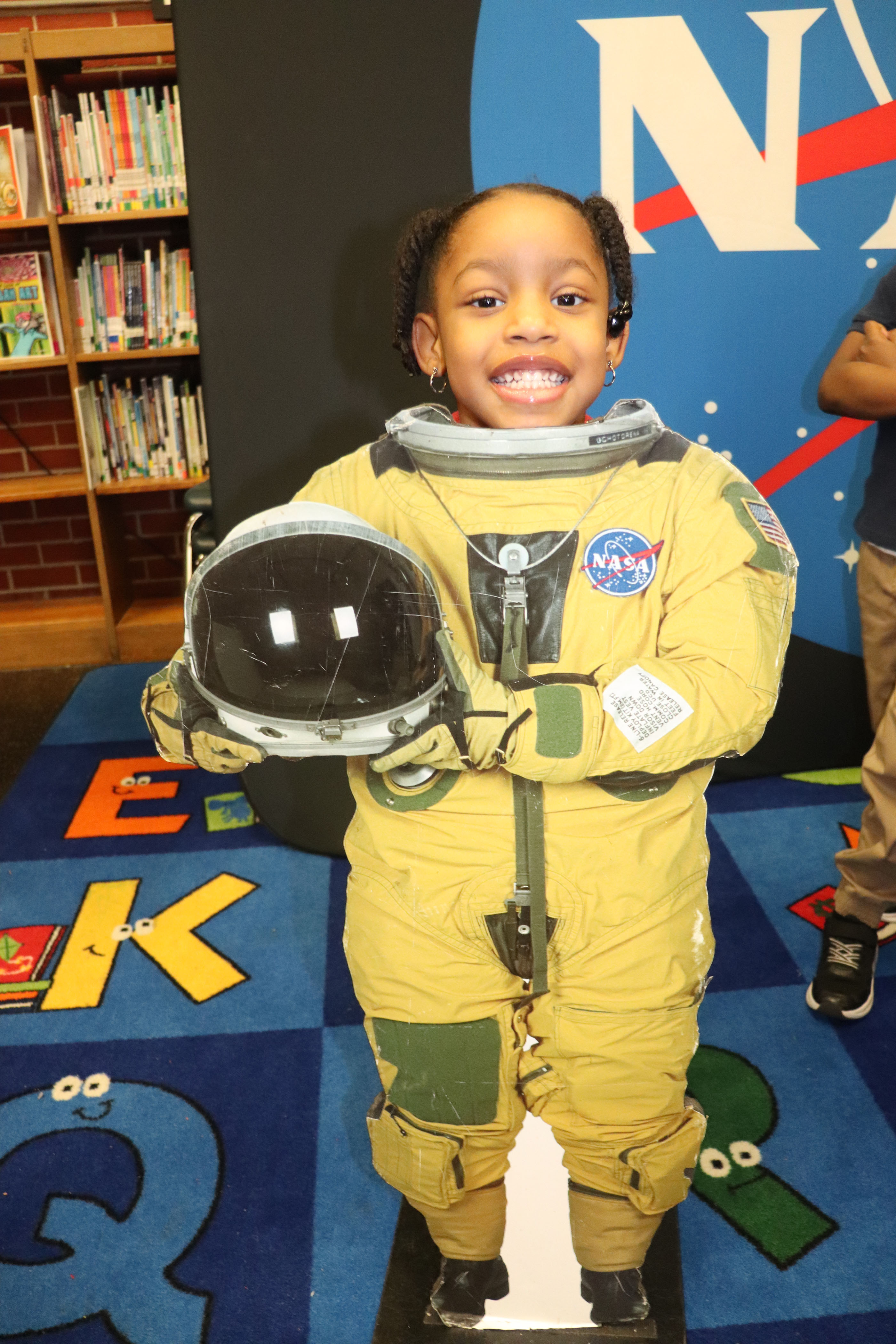
NASA Engages the Artemis Generation in Capital City
NASA in the News

Employee Profile

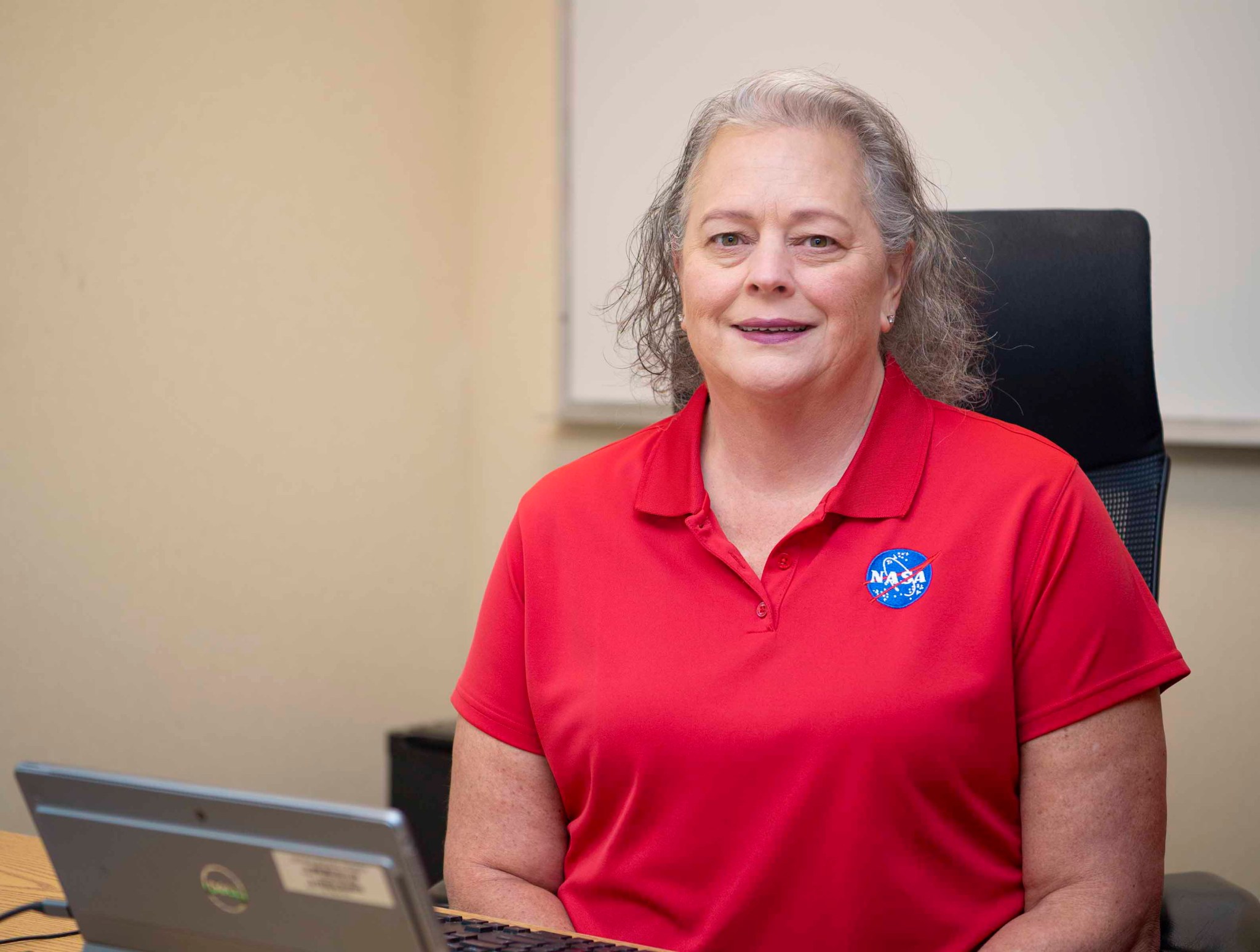
Rae Anderson, wearing a red polo shirt with the NASA meatball on the pocket, smiles at the camera while using her laptop.
Rae Anderson, subject matter expert for software assurance in the NASA Stennis Safety and Mission Assurance Directorate, is the first employee at NASA’s Stennis Space Center – and one of five civil servants across NASA – to earn the highest distinction in the Safety and Mission Assurance Technical Excellence Program in the discipline of software assurance. The level four certification demonstrates Anderson’s dedication to growing her knowledge and skills to become an effective contributor to the agency’s mission.
NASA/Danny Nowlin

Rae Anderson never set out to have a career with NASA, but the pursuit of opportunities around her interest in computer science led the Union City, Tennessee native to the agency that explores the secrets of the universe for the benefit of all.

Additional Resources

Subscription Info

Lagniappe is published monthly by the Office of Communications at NASA’s Stennis Space Center. The NASA Stennis office may be contacted by at 228-688-3333 (phone); ssc-office-of-communications@mail.nasa.gov (email); or NASA OFFICE OF COMMUNICATIONS, Attn: LAGNIAPPE, Mail code IA00, Building 1111 Room 173, Stennis Space Center, MS 39529 (mail).

The Lagniappe staff includes: Managing Editor Lacy Thompson, Editor Bo Black, and photographer Danny Nowlin.

To subscribe to the monthly publication, please email the following to ssc-office-of-communications@mail.nasa.gov – name, location (city/state), email address.

Powered by WPeMatico

Get The Details…
LaToya Dean
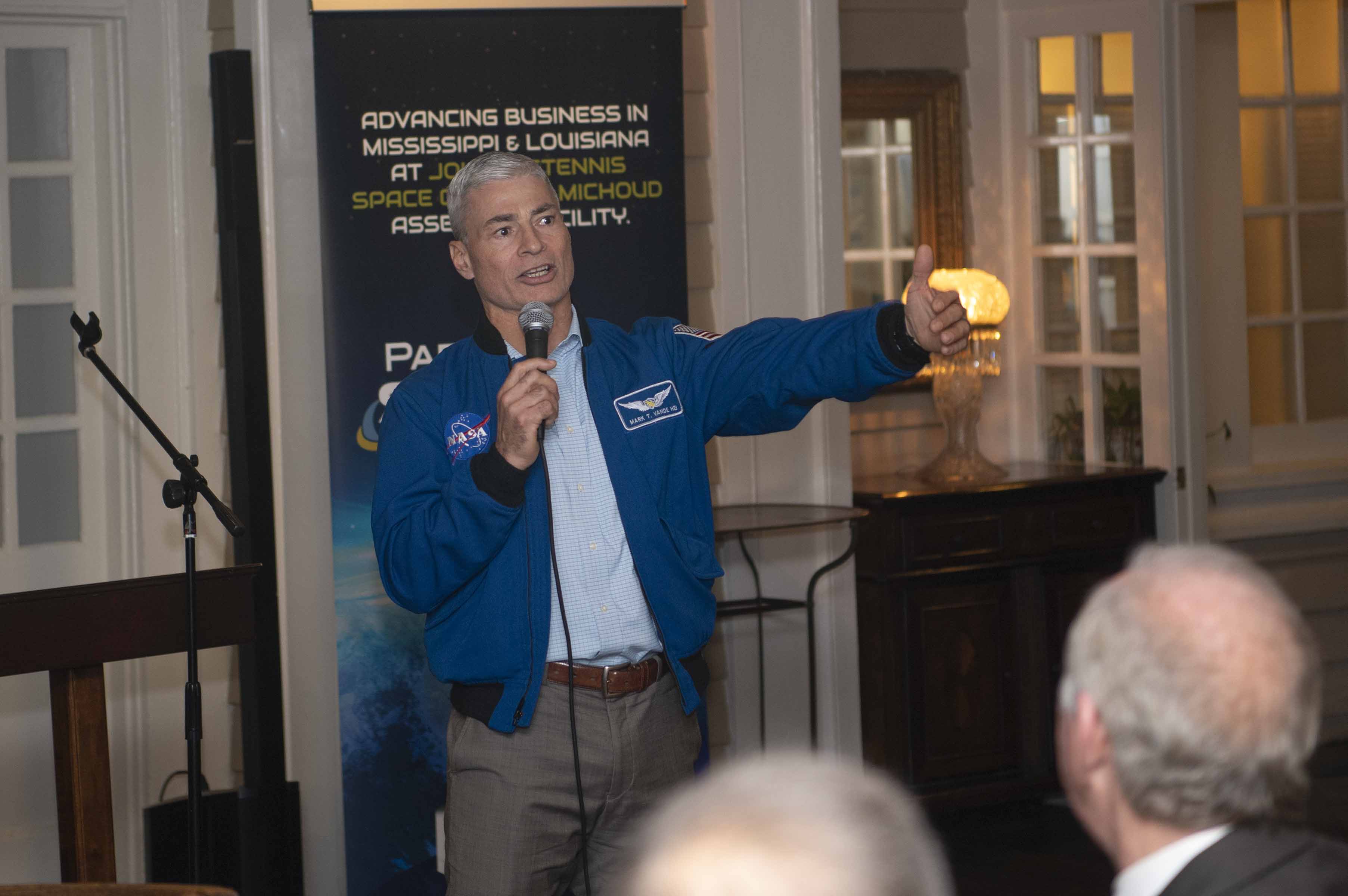
NASA Leaders Participate in Annual Stennis Day at the Capitol

NASA Leaders Participate in Annual Stennis Day at the Capitol

Leaders from NASA’s Stennis Space Center and NASA Shared Services Center visit Jackson, Mississippi, in late February to share site updates with state leaders during the annual Stennis Day at the Capitol. NASA Stennis is on the front line of the next great era of human space exploration as NASA explores the secrets of the universe for the benefit of all. The south Mississippi center tests propulsion systems and engines helping power Artemis missions on the SLS (Space Launch System) rocket to deep space. Through Artemis, NASA will establish the foundation for long-term scientific exploration at the Moon, land the first woman, first person of color, and first international partner astronaut on the lunar surface, and prepare for human expeditions to Mars. Moving forward, NASA Stennis is working to accelerate the exploration and commercialization of space, innovate to benefit NASA and industry, and leverage assets to stimulate the economy and enhance national security.

Powered by WPeMatico

Get The Details…
LaToya Dean
NASA to Demonstrate Miniature CubeSat Swarm Technology 

NASA to Demonstrate Miniature CubeSat Swarm Technology 

A person puts a small box-like structure into a dispenser – larger box-like structure – as a second person holds the dispenser steady. A third person documents the process with a smart phone camera.
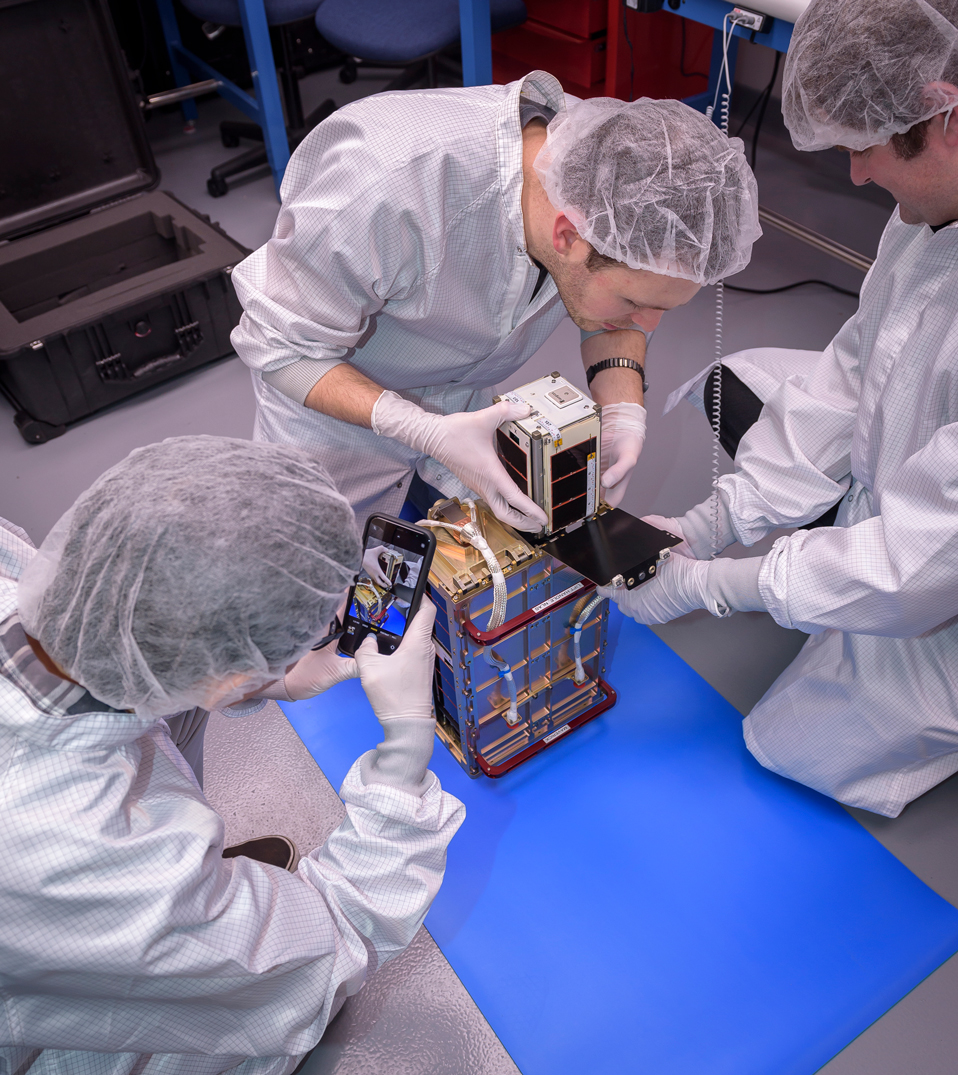
On Nov. 8, 2023, Max Holliday, middle, installs one of the four PY4 spacecraft into the dispenser supplied by Maverick Space Systems ahead of vibration testing. David Pignatelli, Maverick Space Systems, right, holds the dispenser steady as Watson Attai, left, documents the installation with a smart phone camera.
Credits: NASA/Don Richey

Preparations are underway for a new, small spacecraft technology demonstration that will test cost-efficient swarm capabilities – the ability for multiple spacecraft to communicate and perform coordinated actions. The PY4 mission’s four CubeSats are slated to launch Monday March 4, 2:05 p.m. PST to low Earth orbit aboard SpaceX’s Transporter-10 mission from Vandenberg Space Force Base in California.

Led by Carnegie Mellon University in Pittsburgh and funded by NASA’s Small Spacecraft Technology program, PY4 seeks to demonstrate spacecraft-to-spacecraft ranging, in-orbit navigation, and coordinated simultaneous multi-point radiation measurements at low size, weight, power, and cost. It uses a unique avionics platform called PyCubed that integrates power, computing, communications, attitude determination, and orbit control functionalities into a single board system. The PyCubed system is also open-source, programmable entirely in the Python programming language and uses affordable commercial off-the-shelf components.

Four small box-like structures with two flaps on each side arranged in a row on a table in a lab.
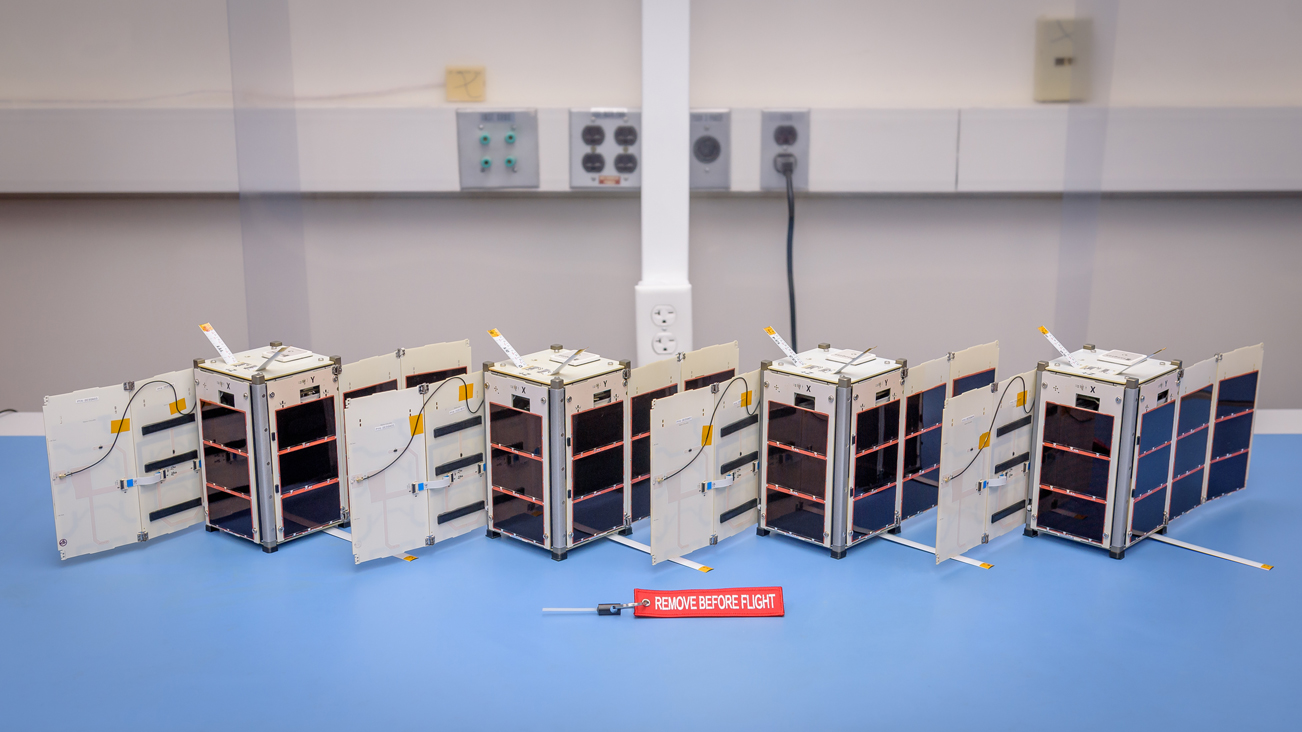
Four-CubeSat swarm of PyCubed-based spacecraft in the Small Spacecraft Technology lab. The goal of PY4 is to demonstrate spacecraft-to-spacecraft ranging, in-orbit relative navigation, and coordinated simultaneous multi-point radiation measurements.
Credits: NASA/Don Richey

Once in orbit at over 325 miles above Earth, the spacecraft will periodically measure their relative distances. These range measurements provide information about the spacecrafts’ positions relative to each other, and when combined with other sensor data, can be used to determine the configuration of the swarm. Advancing these capabilities could decrease the workload for operators on the ground while enabling multi-spacecraft missions at an accessible price point. The PY4 platform was previously used in demonstrations of the V-R3x technology, both in orbit and in a suborbital flight test on a commercial high-altitude balloon with NASA’s Flight Opportunities program. Those initial tests helped researchers evaluate PY4’s functionality ahead of this larger demonstration mission.

In addition to the PY4 demonstration, NASA is also testing critical swarming technologies via the agency’s ongoing Starling mission that launched in 2023. PY4 could dramatically reduce the cost of small spacecraft swarming capabilities and make demonstrating technologies like the autonomous navigation system tested via Starling more widely accessible by offering a flight-ready hardware and software platform.

In the top image, engineers at NASA’s Ames Research Center in California’s Silicon Valley insert the mission’s four spacecraft into their dispenser supplied by Maverick Space Systems of San Luis Obispo, California in preparation for vibration testing.  Each of the one-and-a-half-unit (1.5U) CubeSats measure about 4 inches x 4 inches x 6.5 inches. The spacecraft were later transported to SpaceX for integration on the Falcon 9 rocket in preparation for launch.

A person in a lab reaches into a small box-like structure on a table.
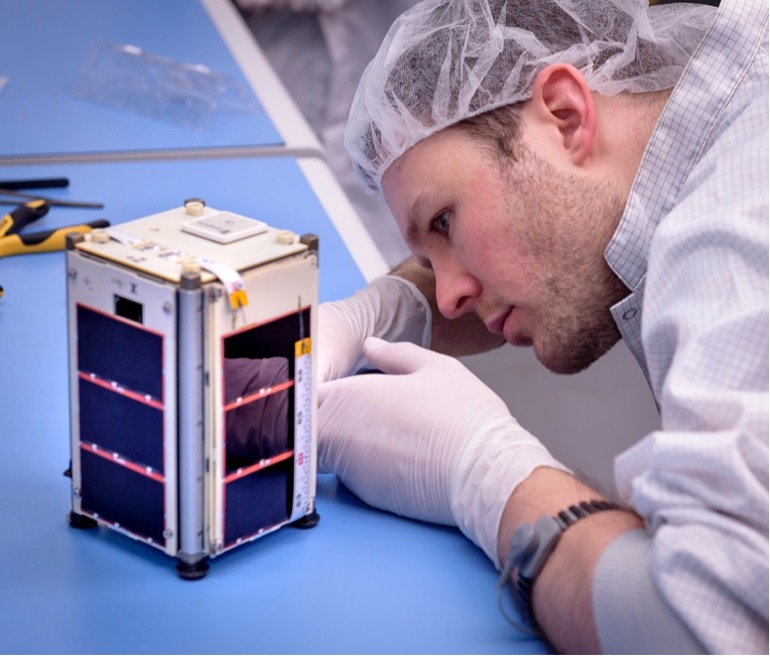
On Nov. 8, 2023, Max Holliday, creator and maintainer of the PyCubed avionics platform, prepares one of the four PY4 spacecraft for installation into the dispenser supplied by Maverick Space Systems ahead of vibration testing.
Credits: NASA/Don Richey

PY4 is led by the Robotic Exploration Laboratory at Carnegie Mellon University with funding from the Small Spacecraft Technology program at NASA’s Ames. The Small Spacecraft Technology program expands the ability to execute unique missions through rapid development and demonstration of capabilities for small spacecraft applicable to exploration, science and the commercial space sector. Engineers at NASA Ames supporting the Small Spacecraft Technology program aided the assembly, testing, and integration of the four PY4 spacecraft as well as their delivery to Maverick Space Systems – the PY4 mission’s launch integrator.

Author:
Chloe E. Tuck

For news media:

  • Members of the news media interested in covering this topic should reach out to the Ames newsroom.

Powered by WPeMatico

Get The Details…
Gianine Figliozzi

NASA Johnson Director to Discuss Exploration Park Facility

NASA Johnson Director to Discuss Exploration Park Facility

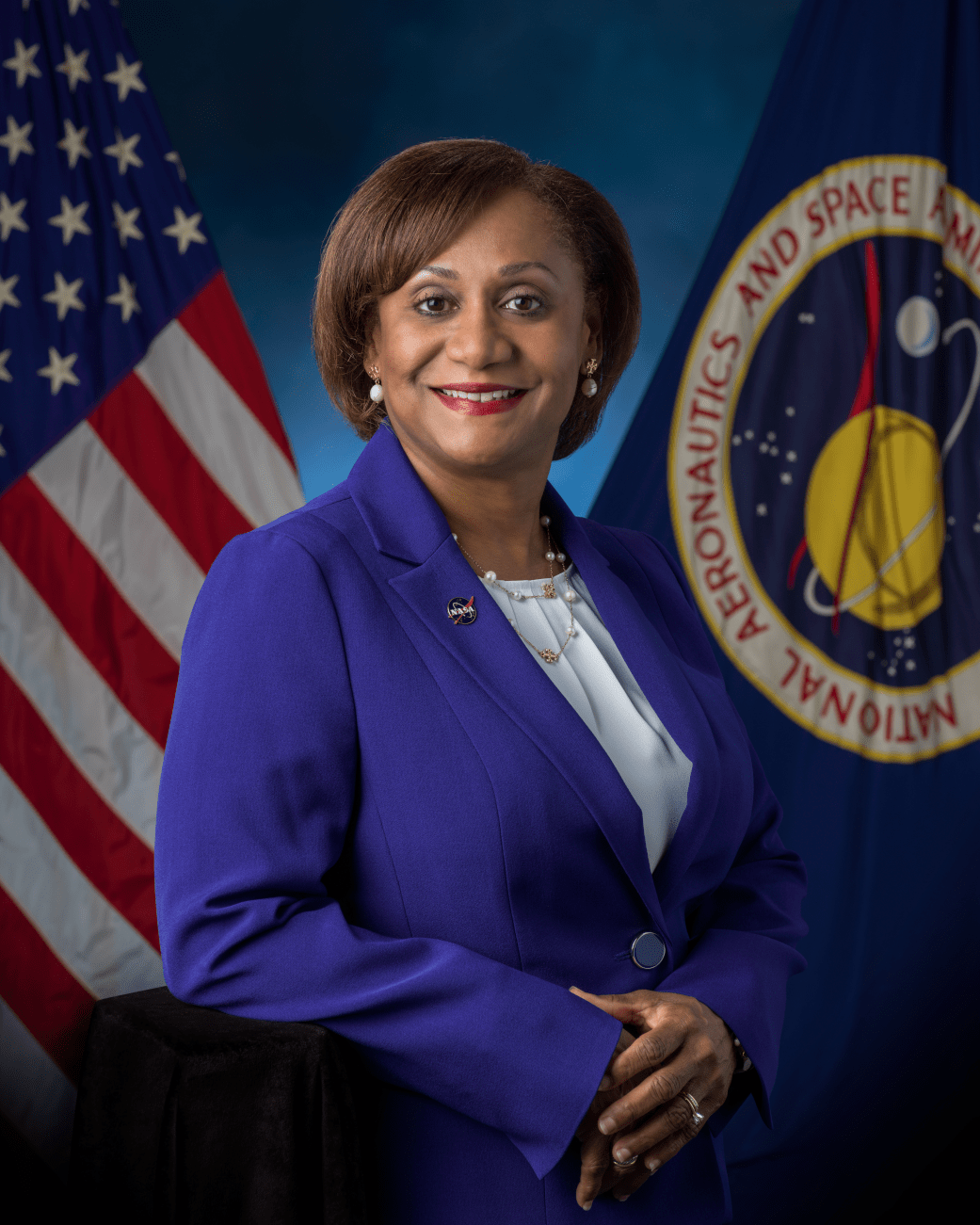
Vanessa Wyche smiles in an official portrait. She has short brown hair and wears an indigo suit jacket with a NASA pin and a white blouse. The background is blue, and she sits in front of American and NASA flags.
NASA Portrait of JSC Center Director – Vanessa Wyche. Photographer: Robert Markowitz

March 4, 2024

MEDIA ADVISORY: J24-005

The director of NASA’s Johnson Space Center will discuss the objectives behind the center’s new Exploration Park initiative at the next meeting of the Bay Area Houston Economic Partnership’s (BAHEP) aerospace advisory committee at 12 p.m. CST Wednesday, March 6, at 1150 Gemini in Houston.

Johnson Director Vanessa Wyche will be joined by representatives from the American Center for Manufacturing and Innovation (ACMI), which recently signed the second agreement to lease acres of underutilized land in a 240-acre Exploration Park. NASA signed a separate lease with the Texas A&M University System earlier this month.

Media are invited to attend the opening discussion of BAHEP’s committee meeting, then have a brief opportunity for interviews with Wyche, John Burer, founder of ACMI and other ACMI experts.

NASA is leasing the land to create facilities for a collaborative development environment that increases commercial access and enhances the United States’ commercial competitiveness in the space and aerospace industries. 

Media wishing to participate in person are asked to RSVP by 9 a.m. Wednesday, March 6, by contacting the Johnson newsroom at 281-483-5111 or jsccommu@mail.nasa.gov.

To learn more about NASA Johnson and Exploration Park, visit:

https://www.nasa.gov/johnson/johnson-news/#news-releases

-end-

Kelly Humphries
Johnson Space Center, Houston
281-483-5111
kelly.o.humphries@nasa.gov

Powered by WPeMatico

Get The Details…
Wendy K. Avedisian

Women of NASA Langley Research Center

Women of NASA Langley Research Center

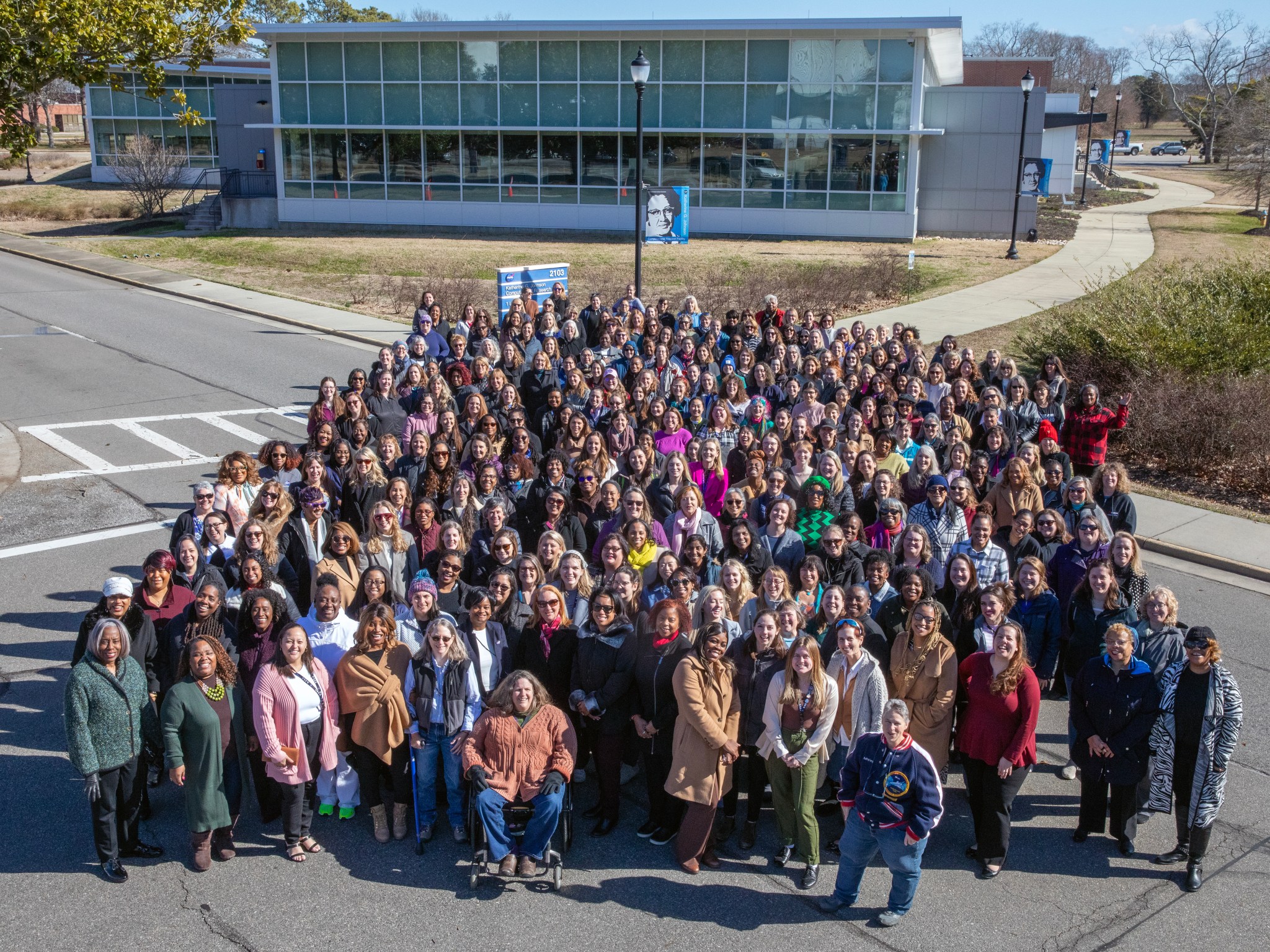
A large group of women gathered for a photo on the street in front of the Katherine G. Johnson Computational Research Facility building.
NASA/David C. Bowman

In honor of Women’s History Month and those who paved the way for them, hundreds of female staff – from artists to administrative support, educators to engineers, and scientists to safety officers – gathered in front of the Katherine G. Johnson Computational Research Facility at NASA’s Langley Research Center in Hampton, Virginia, on Feb. 6, 2024.

“Their path to advancement might look less like a straight line and more like some of the pressure distributions and orbits they plotted, but they were determined to take a seat at the table.”  Margot Lee Shetterly, Hidden Figures

Shetterly wrote these words about Dorothy Vaughan, Mary Jackson, Christine Darden, and Katherine Johnson, the first Black women who worked as mathematicians at the Langley Memorial Aeronautical Laboratory, now NASA’s Langley Research Center­. These women were essential to the success of early spaceflight.

Text Credit: Sondra D. Woodward

Image Credit: NASA/David C. Bowman

Powered by WPeMatico

Get The Details…
Monika Luabeya