Routine Health Assessments and Cargo Ops Top Tuesday’s Schedule

Routine Health Assessments and Cargo Ops Top Tuesday’s Schedule

NASA astronaut Jeanette Epps smiles for a portrait aboard the International Space Station's Columbus laboratory module.
NASA astronaut Jeanette Epps smiles for a portrait aboard the International Space Station’s Columbus laboratory module.

Hearing assessments, eye exams, and cargo ops topped Tuesday’s schedule aboard the International Space Station. The Expedition 71 and Boeing Crew Flight Test crews also scheduled in some time to connect with students back on Earth and prepare for upcoming mission activities.

As part of regularly scheduled exams in low Earth orbit, NASA astronauts Matthew Dominick, Mike Barratt, Jeanette Epps, and Tracy C. Dyson all completed hearing assessments throughout the day. Epps prepped for upcoming Thor-Davis activities—an investigation that observes thunderstorms in Earth’s upper atmosphere—and reconfigured the EarthKam for future operations.

Dominick connected with students from St. Luke’s College in Buenos Aires, Argentina, during an Amateur Radio call, giving them an opportunity to ask questions about living and working in microgravity as the space station orbited overhead.

Barratt and Dyson teamed up in the afternoon to deconfigure spacesuit components after a water leak in Dyson’s service and cooling umbilical unit forced an early end to a spacewalk on Monday, June 24. The next spacewalk outside of the orbiting laboratory, with Dyson and Barratt, is scheduled for July 29.

Later in the evening, Barratt received an eye exam, guided by Epps, to help researchers better understand how microgravity affects vision. Meanwhile, Dyson was joined by Crew Flight Test Commander Butch Wilmore to load trash and discarded gear inside Northrop Grumman’s Cygnus spacecraft. Cygnus is scheduled to be released from the Unity module later this month for disposal over the South Pacific Ocean, ending its five-and-a-half month stay at the orbiting lab.

Crew Flight Test Pilot Suni Williams spent a majority of the day on Starliner operations then assessed the air flow of the pump filter attached to the Advanced Plant Habitat. At the end of the day, Williams was joined by all eight of her crewmates for a conference with ground teams.

All three cosmonauts in microgravity donned acoustic monitors throughout the day to capture sound measurements around the station. In the Zvezda Service Module, Flight Engineer Nikolai Chub tested a 3D printer to assess its ability to manufacture space hardware, then later inspected and photographed panels and cable routes of a Roscosmos physics experiment that examines neutron radiation.

Flight Engineer Alexander Grebenkin continued hose replacement work on the water processing system, then studied the glow of Earth’s nighttime atmosphere in near-ultraviolet. Meanwhile, Commander Oleg Kononenko began loading trash and discarded gear inside Progress 87, which is slated to undock from the orbiting laboratory in August.


Learn more about station activities by following the space station blog, @space_station and @ISS_Research on X, as well as the ISS Facebook and ISS Instagram accounts.

Get weekly updates from NASA Johnson Space Center at: https://roundupreads.jsc.nasa.gov/

Get the latest from NASA delivered every week. Subscribe here: www.nasa.gov/subscribe

Powered by WPeMatico

Get The Details…

Abby Graf

Volunteer Crew to Exit NASA’s Simulated Mars Habitat After 378 Days

Volunteer Crew to Exit NASA’s Simulated Mars Habitat After 378 Days

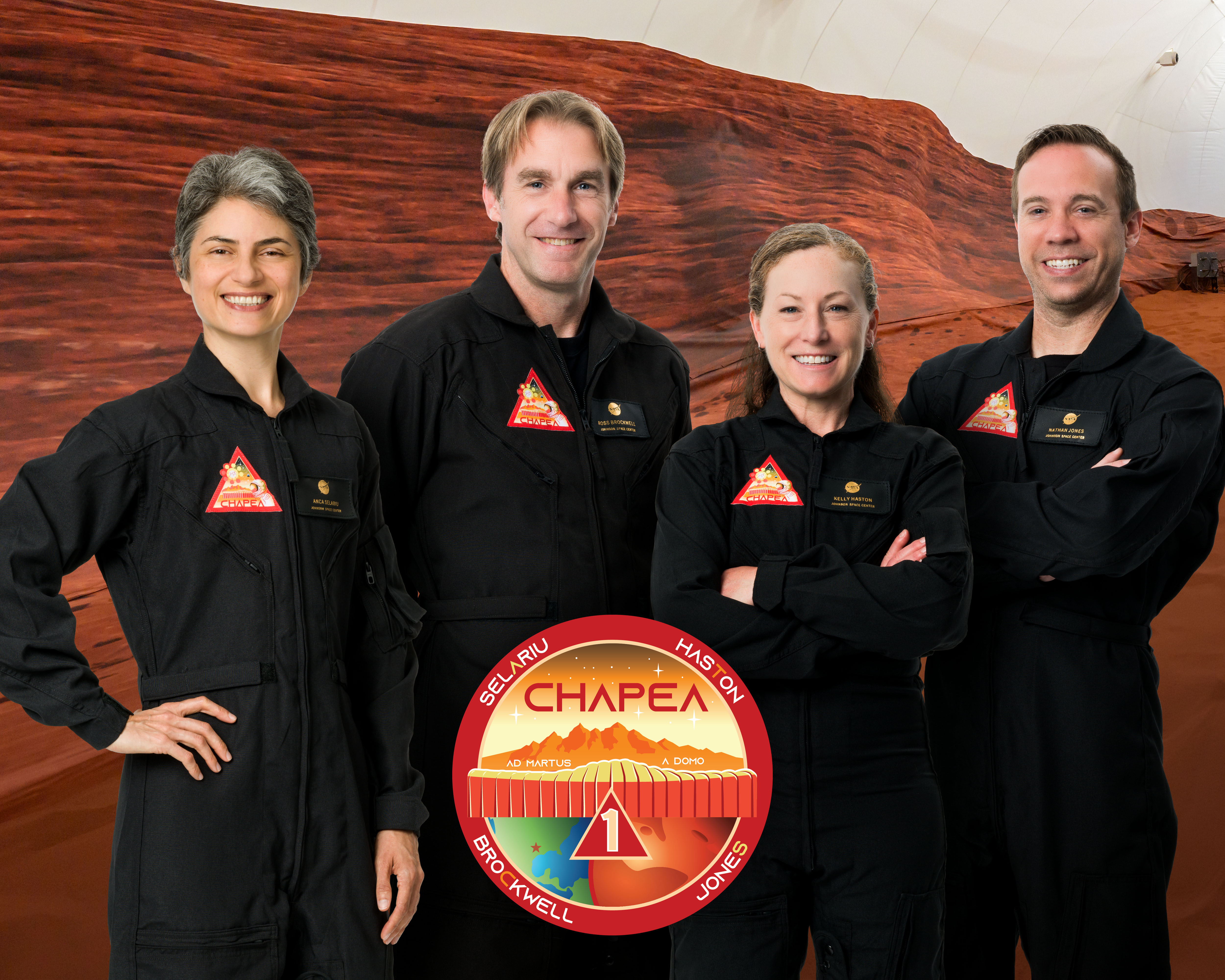
The first CHAPEA mission crew members who have been living and working inside NASA’s first simulated yearlong Mars habitat mission are set to exit their ground-based home on Saturday, July 6.

The four volunteers who have been living and working inside NASA’s first simulated yearlong Mars habitat mission are set to exit their ground-based home on Saturday, July 6. NASA will provide live coverage of the crew’s exit from the habitat at NASA’s Johnson Space Center in Houston at 5 p.m. EDT.

NASA will stream the activity, which will include a short welcome ceremony, on NASA+, NASA Television, the NASA app, the agency’s website, and NASA Johnson’s X and Facebook accounts. Learn how to stream NASA TV through a variety of platforms, including social media.

The first Crew Health and Performance Exploration Analog (CHAPEA) mission began in the 3D printed habitat on June 25, 2023, with crew members Kelly Haston, Anca Selariu, Ross Brockwell, and Nathan Jones. For more than a year, the crew simulated Mars mission operations, including “Marswalks,” grew and harvested several vegetables to supplement their shelf-stable food, maintained their equipment and habitat, and operated under additional stressors a Mars crew will experience, including communication delays with Earth, resource limitations, and isolation.

In addition to the CHAPEA crew, participants include:

  • Steve Koerner, deputy director, NASA Johnson
  • Kjell Lindgren, NASA astronaut and deputy director, Flight Operations
  • Grace Douglas, principal investigator, CHAPEA 
  • Judy Hayes, chief science officer, Human Health and Performance Directorate
  • Julie Kramer White, director of engineering 

Due to facility limitations and crew quarantine requirements, NASA is unable to accommodate requests to attend the event in person. Media interested in speaking with the mission’s crew members in the days following the conclusion of their mission must send a request by 4 p.m. July 6, to the Johnson newsroom at 281-483-5111 or jsccommu@nasa.gov.

NASA is leading a return to the Moon for long-term science and exploration through the Artemis campaign. Lessons learned on and around the Moon will prepare NASA for the next giant leap – sending the first astronauts to Mars.

Learn more about CHAPEA:

https://www.nasa.gov/humans-in-space/chapea/

-end-

Rachel Kraft
Headquarters, Washington
202-358-1600
rachel.h.kraft@nasa.gov

Laura Sorto
Johnson Space Center, Houston
281-483-5111
laura.g.sorto@nasa.gov

Powered by WPeMatico

Get The Details…
Abbey A. Donaldson

NASA Awards Launch Services Contract for Space Telescope Mission

NASA Awards Launch Services Contract for Space Telescope Mission

Credits: NASA

NASA has selected Space Exploration Technologies Corporation (SpaceX) of Hawthorne, California, to provide launch services for the COSI (Compton Spectrometer and Imager) mission.

The firm-fixed-price contract has a value of approximately $69 million, which includes launch services and other mission related costs. The COSI mission currently is targeted to launch August 2027 on a SpaceX Falcon 9 rocket from Cape Canaveral Space Force Station.

This wide-field gamma-ray telescope will study energetic phenomena in the Milky Way and beyond, including the creation and destruction of matter and antimatter and the final stages of the lives of stars. NASA’s COSI mission will probe the origins of the Milky Way’s galactic positrons, uncover the sites of nucleosynthesis in our galaxy, perform studies of gamma-ray polarization, and find counterparts to multi-messenger sources. The compact Compton telescope combines improved sensitivity, spectral resolution, angular resolution, and sky coverage to facilitate groundbreaking science.

The mission is a collaboration between the University of California, Berkeley’s Space Sciences Laboratory, the University of California, San Diego, the Naval Research Laboratory, NASA’s Goddard Space Flight Center, and Northrop Grumman.

The COSI principal investigator-led project management team is located at the University of California, Berkeley. NASA’s Astrophysics Explorers Program at Goddard Space Flight Center in Greenbelt, Maryland, supports development of the project for the Astrophysics Division within NASA’s Science Mission Directorate. NASA’s Launch Services Program at the Kennedy Space Center in Florida is responsible for program management of the launch services.

For more information about COSI, visit:

https://science.nasa.gov/mission/cosi/

-end-

Tiernan Doyle
Headquarters, Washington
202-358-1600
tiernan.doyle@nasa.gov

Patti Bielling
Kennedy Space Center, Florida
321-501-7575
patricia.a.bielling@nasa.gov

Powered by WPeMatico

Get The Details…
Tiernan P. Doyle

NASA’s ECOSTRESS Maps Burn Risk Across Phoenix Streets

NASA’s ECOSTRESS Maps Burn Risk Across Phoenix Streets

3 min read

Preparations for Next Moonwalk Simulations Underway (and Underwater)

NASA’s ECOSTRESS instrument on June 19 recorded scorching roads and sidewalks across Phoenix where contact with skin could cause serious burns in minutes to seconds, as indicated in the legend above.
NASA/JPL-Caltech

Roads and sidewalks in some areas get so hot that skin contact could result in second-degree burns.

Researchers at NASA’s Jet Propulsion Laboratory in Southern California have mapped scorching pavement in Phoenix where contact with skin — from a fall, for example — can cause serious burns. The image shows land surface temperatures across a grid of roads and adjacent sidewalks, revealing how urban spaces can turn hazardous during hot weather.

Data for this visualization of the Phoenix area — the fifth most populous city in the United States — was collected at 1:02 p.m. local time on June 19, 2024, by a NASA instrument aboard the International Space Station. Called ECOSTRESS (short for the Ecosystem Spaceborne Thermal Radiometer Experiment on Space Station), the instrument measures thermal infrared emissions from Earth’s surface.

The image shows how miles of asphalt and concrete surfaces (colored here in yellow, red, and purple, based on temperature) trap heat. The surfaces registered at least 120 degrees Fahrenheit (49 degrees Celsius) to the touch — hot enough to cause contact burns in minutes to seconds.

The image also shows cooling effects of green spaces in communities like Encanto and Camelback East, in contrast to the hotter surface temperatures seen in Maryvale and Central City, where there are fewer parks and trees.

“We create these maps to be intuitive to users and help make data more accessible to the public and citizens scientists,” said Glynn Hulley, a JPL climate researcher. “We see them as a vital tool for planning effective heat interventions, such as tree planting, that can cool down the hottest roads and sidewalks.”

Homing in on Heat

At the lower right of the image is Phoenix’s Sky Harbor International Airport, where ECOSTRESS recorded some of the hottest land surface temperatures within the city —around 140 F (60 C). The air temperature on June 19 at the airport reached 106 F (43 C).

Air temperature, which is measured out of direct sunlight, can differ significantly from the temperature at the land surface. Streets are often the hottest surfaces of the built environment due to dark asphalt paving that absorbs more sunlight than lighter-colored surfaces; asphalt absorbs up to 95% of solar radiation. These types of surfaces can easily be 40 to 60 degrees F (22 to 33 degrees C) hotter than the air temperature on a very hot day.

Launched to the International Space Station in 2018, ECOSTRESS has as its primary mission the identification of plants’ thresholds for water use and water stress, giving insight into their ability to adapt to a warming climate. But the instrument is also useful for documenting other heat-related phenomena, like patterns of heat absorption and retention.

To produce the image of Phoenix, scientists used a machine learning algorithm that incorporates data from additional satellites: NASA/USGS Landsat and Sentinel-2. The combined measurements were used to “sharpen” the surface temperatures to a resolution of 100 feet (30 meters) by 100 feet (30 meters).

More About the Mission

JPL built and manages the ECOSTRESS mission for the Earth Science Division in the Science Mission Directorate at NASA Headquarters in Washington. ECOSTRESS is an Earth Venture Instrument mission; the program is managed by NASA’s Earth System Science Pathfinder program at NASA’s Langley Research Center in Hampton, Virginia.

More information about ECOSTRESS is available here: https://ecostress.jpl.nasa.gov/.

News Media Contacts

Jane J. Lee / Andrew Wang
Jet Propulsion Laboratory, Pasadena, Calif.
818-354-0307 / 626-379-6874
jane.j.lee@jpl.nasa.gov / andrew.wang@jpl.nasa.gov

Written by Sally Younger

2024-096

Powered by WPeMatico

Get The Details…
Anthony Greicius

Studying Hurricane Beryl from Space

Studying Hurricane Beryl from Space

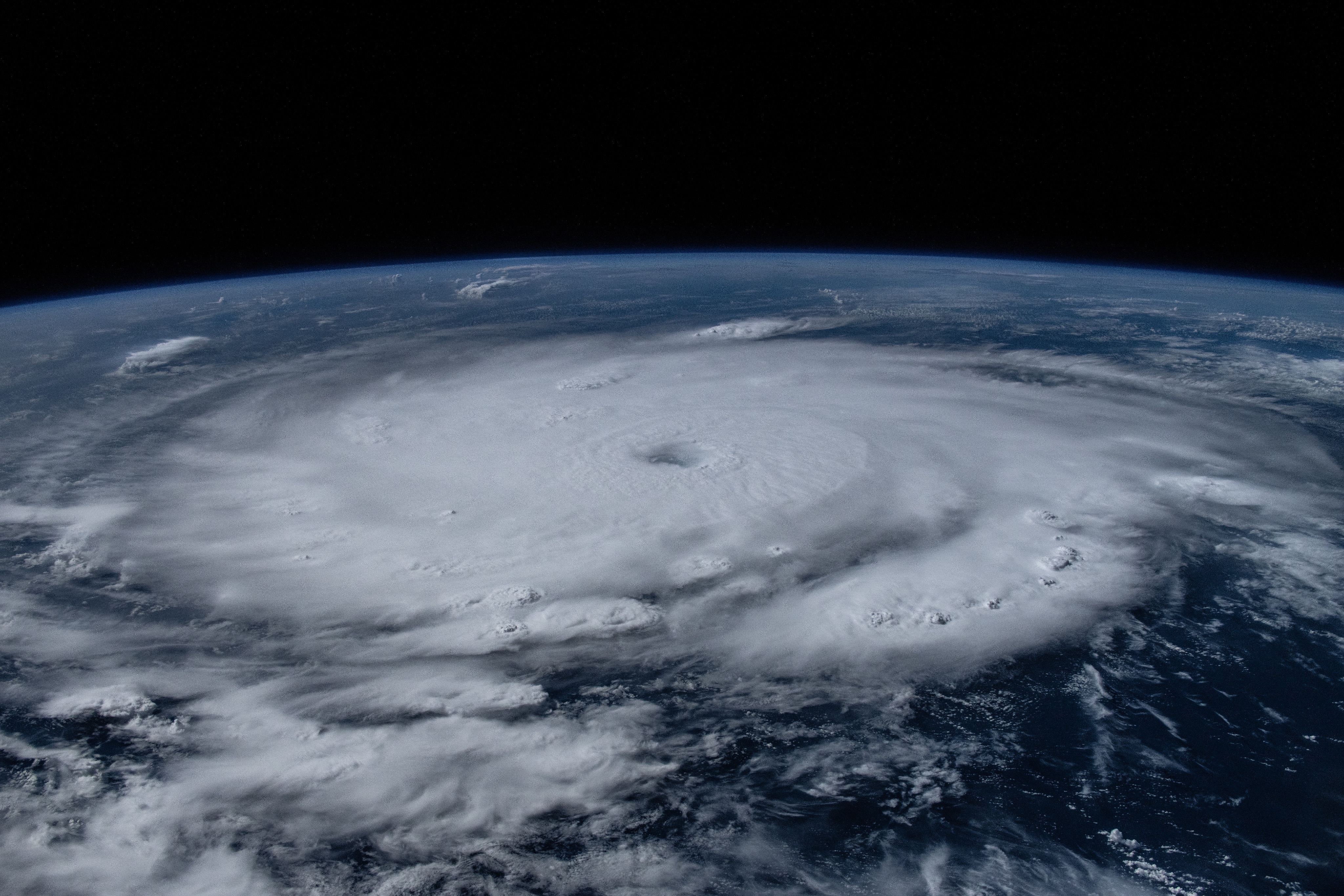
A view of Hurricane Beryl from the International Space Station. The hurricane is a big white circle of clouds, with spiral arms visible at far right and bottom middle. The surrounding water is various shades of blue: lighter blue at the top and deeper blue at the bottom of the photo. Earth's curve is visible in the back, up against the darkness of space.
NASA/Matthew Dominick

NASA astronaut Matthew Dominick captured this image of Hurricane Beryl in the Caribbean on July 1, 2024, while aboard the International Space Station, and posted it to X. The Category 4 hurricane had winds of about 130 mph (215 kph).

Hurricanes – tropical cyclones that form over the Atlantic Ocean or the eastern Pacific Ocean – use warm, moist air as fuel. The warm, moist air over the ocean rises upward from near the surface, causing an area of lower air pressure below. Air from surrounding areas with higher air pressure pushes into the low pressure area. Then that “new” air becomes warm and moist and rises, too. As the warm air continues to rise, the surrounding air swirls in to take its place. As the warmed, moist air rises and cools off, the water in the air forms clouds. The whole system of clouds and wind spins and grows, fed by the ocean’s heat and water evaporating from the surface.

NASA studies hurricanes from space through photos like this one, as well as observations from satellites. This vantage point helps scientists understand how climate change impacts hurricanes and learn how communities can better prepare for tropical cyclones in a warmer world. Learn more about how hurricane first responders use NASA resources and data.

Image Credit: NASA/Matthew Dominick

Powered by WPeMatico

Get The Details…
Monika Luabeya