NASA’s NEOWISE Extends Legacy With Decade of Near-Earth Object Data

NASA’s NEOWISE Extends Legacy With Decade of Near-Earth Object Data

6 min read

Preparations for Next Moonwalk Simulations Underway (and Underwater)
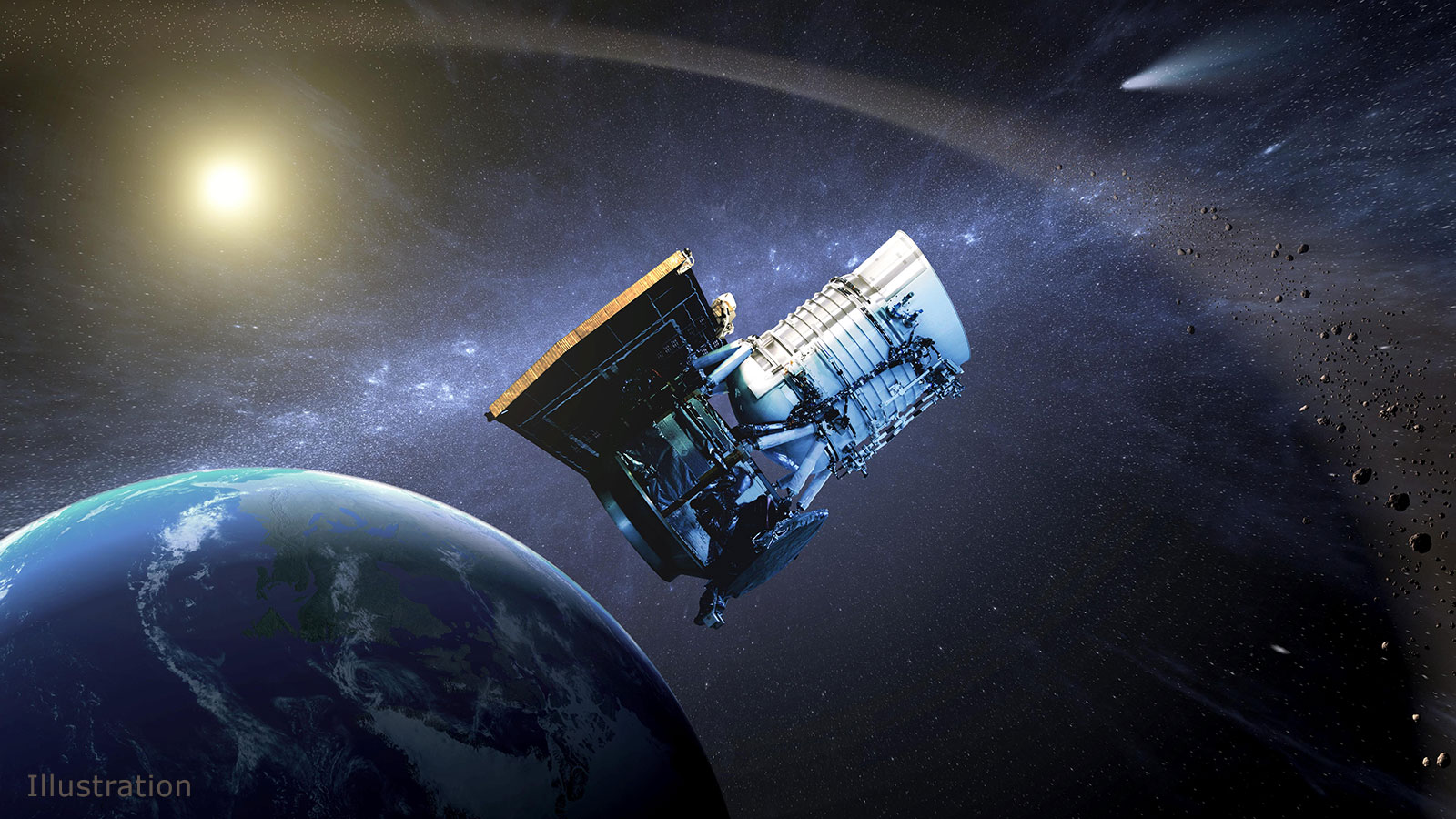
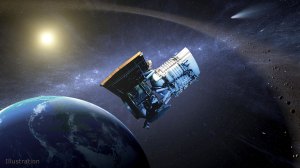
Artist’s concept depicts the NEOWISE spacecraft
This artist’s concept depicts the NEOWISE spacecraft in orbit around Earth. Launched in 2009 to survey the entire sky in infrared, the spacecraft took on a more specialized role in 2014 when it was reactivated to study near-Earth asteroids and comets.
NASA/JPL-Caltech

As the infrared space telescope continues its long-duration survey of the universe, it is creating a unique resource for future astronomers to make new discoveries.

NASA’s NEOWISE mission has released its 10th year of infrared data – the latest in a unique long-duration (or “time-domain”) survey that captures how celestial objects change over long periods. Time-domain astronomy can help scientists see how distant variable stars change in brightness and observe faraway black holes flaring as they consume matter. But NEOWISE has a special focus on our planet’s local cosmic neighborhood, producing a time-domain infrared survey used for planetary science, with a particular emphasis on asteroids and comets.

Short for Near-Earth Object Wide-field Infrared Survey Explorer, NEOWISE is a key component of NASA’s planetary defense strategy, helping the agency refine the orbits of asteroids and comets while also estimating their size. One such example is the potentially hazardous asteroid Apophis, which will make a close approach of our planet in 2029.

By repeatedly observing the sky from its location in low-Earth orbit, NEOWISE has made 1.45 million infrared measurements of over 44,000 solar system objects. That includes more than 3,000 NEOs, 215 of which the space telescope discovered. Twenty-five of those are comets, including the famous comet NEOWISE.

“The space telescope has been a workhorse for characterizing NEOs that may pose a hazard to Earth in the future,” said Amy Mainzer, NEOWISE’s principal investigator at the University of Arizona and University of California, Los Angeles. “The data that NEOWISE has generated for free use by the scientific community will pay dividends for generations.”

From Data to Discovery

Managed by NASA’s Jet Propulsion Laboratory, the mission sends data three times a day to the U.S. Tracking and Data Relay Satellite System (TDRSS) network, which then delivers it to IPAC, an astronomical data research center at Caltech in Pasadena, California. IPAC processes the raw data into fully calibrated images that are accessible online. It also generates NEO detections, sending them to the Minor Planet Center – the internationally recognized clearinghouse for the position measurements of solar system bodies. By searching multiple images of the same patch of sky at different times, scientists capture the motions of individual asteroids and comets.

This top-down animated view of the solar system shows the positions of all the asteroids and comets detected by NEOWISE in the decade since its reactivation in 2014. Credit: IPAC/Caltech/University of Arizona

“The science products we generate identify specific infrared sources in the sky with precisely determined positions and brightnesses that enable discoveries to be made,” said Roc Cutri, lead scientist for the NEOWISE Science Data System at IPAC. “The most fun thing when I look at the data for the first time is knowing that no one has seen this before. It puts you in a unique position of doing real exploration.”

IPAC will also produce data products for NASA’s NEO Surveyor, which is targeting a launch no earlier than 2027. Managed by JPL, with Mainzer serving as principal investigator, the next-generation space survey telescope will seek out some of the hardest-to-find near-Earth objects, such as dark asteroids and comets that don’t reflect much visible light but shine brighter in infrared light.

Two Missions, One Spacecraft

The NEOWISE spacecraft launched in 2009, but as a different mission and with a different name: the Wide-field Infrared Survey Explorer, or WISE, which set out to survey the entire sky. As an infrared telescope, WISE studied distant galaxies, comparatively cool red dwarf stars, exploding white dwarfs, and outgassing comets, as well as NEOs.

An infrared telescope requires cryogenic coolant to prevent the spacecraft’s heat from disrupting its observations. After the WISE telescope’s ran out of coolant and was no longer able to observe the universe’s coldest objects, NASA put the spacecraft into hibernation in 2011. But because the telescope could still detect the infrared glow of comets and asteroids as they are heated by the Sun, Mainzer proposed to restart the spacecraft to keep an eye on them. The mission was reactivated in 2014 and renamed NEOWISE, extending the life of a spacecraft that was initially planned for less than a year of operation.

“We are 14 years into a seven-month mission,” said Joseph Masiero, NEOWISE’s deputy principal investigator and a scientist at IPAC. He started at JPL as a postdoctoral researcher working on WISE just two months before the spacecraft launched on Dec. 14, 2009. “This little mission has been with me my entire career – it just kept going, making new discoveries, helping us better understand the universe,” Masiero added. “And if it wasn’t for the tyranny of orbital dynamics, I’m sure the spacecraft would continue to operate for years to come.”

Solar activity is causing NEOWISE to fall out of orbit, and the spacecraft is expected to drop low enough into Earth’s atmosphere that it will eventually become unusable.

“NEOWISE has lasted way past its original spacecraft design lifetime,” said Joseph Hunt, NEOWISE project manager at JPL. “But as we didn’t build it with a way to reach higher orbits, the spacecraft will naturally drop so low in the atmosphere that it will become unusable and entirely burn up in the months following decommissioning. Exactly when depends on the Sun’s activity.”

More About the Mission

NEOWISE and NEO Surveyor support the objectives of NASA’s Planetary Defense Coordination Office (PDCO) at NASA Headquarters in Washington. The NASA Authorization Act of 2005 directed NASA to discover and characterize at least 90% of the near-Earth objects more than 140 meters (460 feet) across that come within 30 million miles (48 million kilometers) of our planet’s orbit. Objects of this size can cause significant regional damage, or worse, should they impact the Earth.

JPL manages and operates the NEOWISE mission for PDCO within the Science Mission Directorate. The Space Dynamics Laboratory in Logan, Utah, built the science instrument. Ball Aerospace & Technologies Corp. of Boulder, Colorado, built the spacecraft. Science data processing takes place at IPAC at Caltech. Caltech manages JPL for NASA.

For more information about NEOWISE, visit:

https://www.nasa.gov/neowise

and

http://neowise.ipac.caltech.edu/

News Media Contacts

Ian J. O’Neill
Jet Propulsion Laboratory, Pasadena, Calif.
818-354-2649
ian.j.oneill@jpl.nasa.gov

Karen Fox / Charles Blue
NASA Headquarters, Washington
202-358-1257 / 202-802-5345
karen.c.fox@nasa.gov / charles.e.blue@nasa.gov

2024-038

Powered by WPeMatico

Get The Details…
Anthony Greicius
NASA Noise Prediction Tool Supports Users in Air Taxi Industry

NASA Noise Prediction Tool Supports Users in Air Taxi Industry

1 min read

Preparations for Next Moonwalk Simulations Underway (and Underwater)

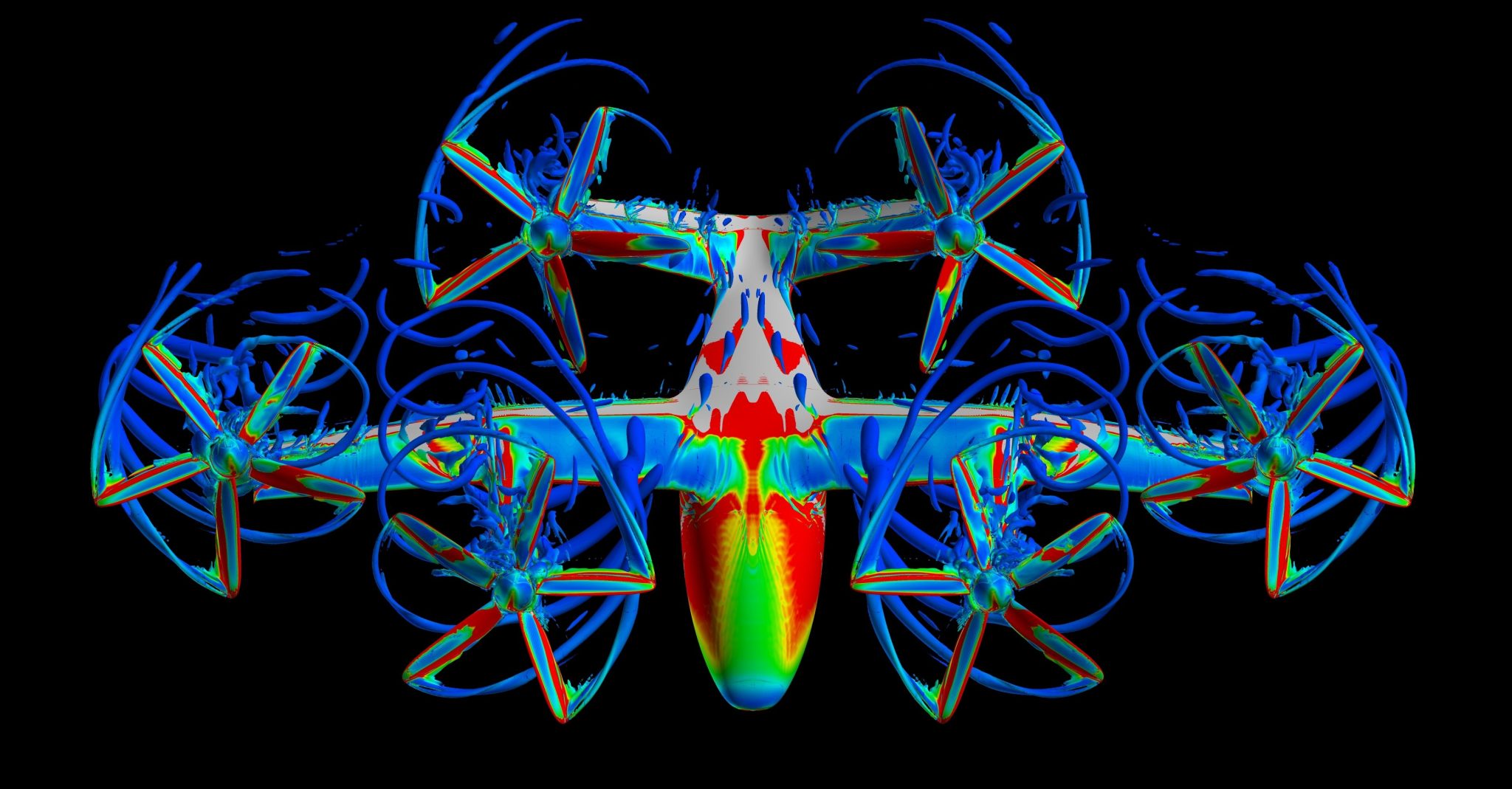
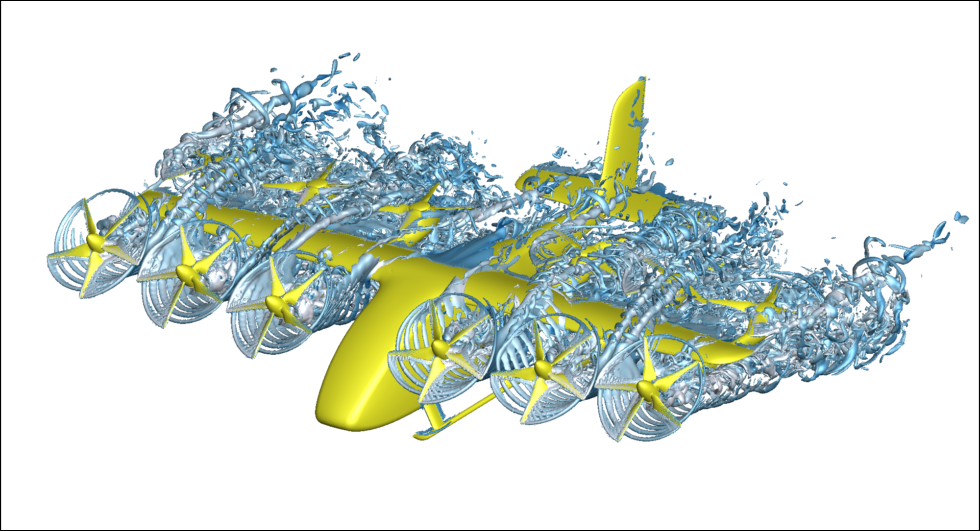
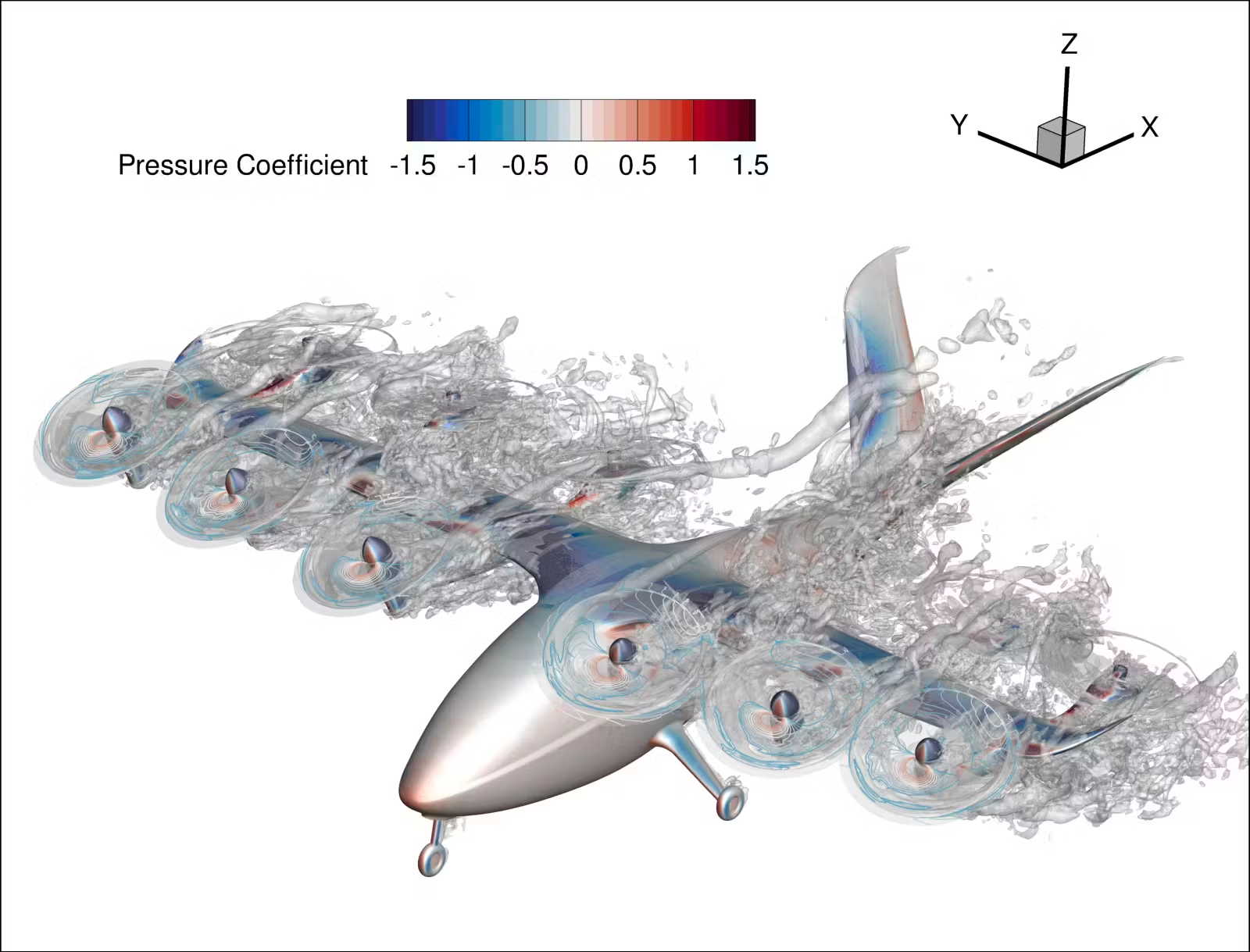
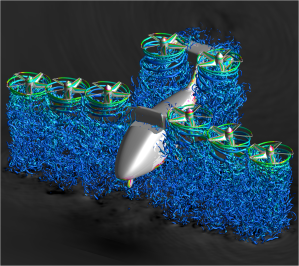
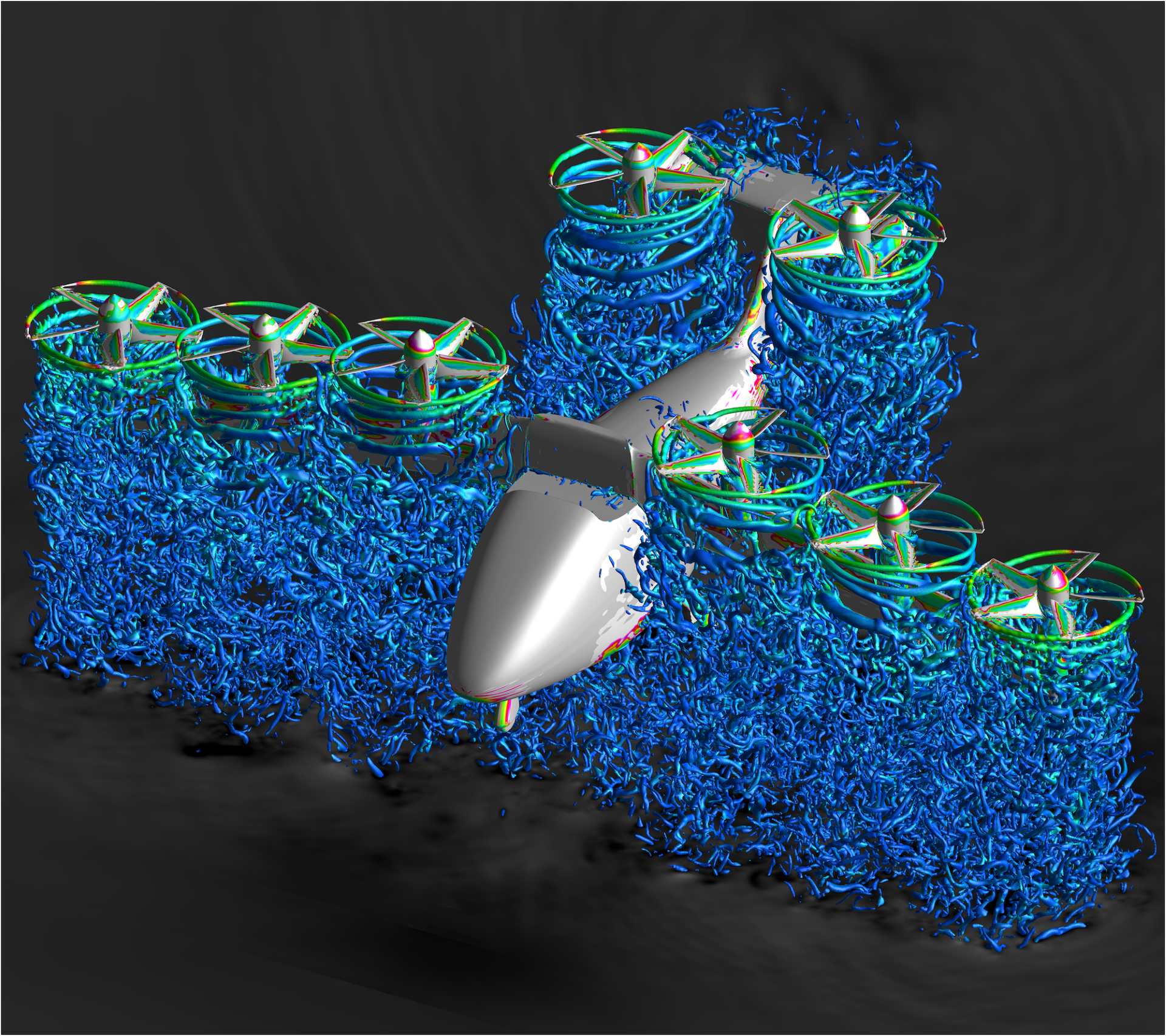
A silver aircraft model with eight propellors hovers in this image with green circles showing the motion of air moving around the propellor and blue waves flowing below showing the motion of air coming from the propellors down to the ground.
The results from a NASA software tool called OVERFLOW, used to model the flow of air around aircraft, are shown in this image.
NASA

Several air taxi companies are using a NASA-developed computer software tool to predict aircraft noise and aerodynamic performance. This tool allows manufacturers working in fields related to NASA’s Advanced Air Mobility mission to see early in the aircraft development process how design elements like propellors or wings would perform. This saves the industry time and money when making potential design modifications.

This NASA computer code, called “OVERFLOW,” performs calculations to predict fluid flows such as air, and the pressures, forces, moments, and power requirements that come from the aircraft. Since these fluid flows contribute to aircraft noise, improved predictions can help engineers design quieter models. Manufacturers can integrate the code with their own aircraft modeling programs to run different scenarios, quantifying performance and efficiency, and visually interpreting how the airflow behaves on and around the vehicle. These interpretations can come forward in a variety of colors representing these behaviors.

This computer program is available to industry for U.S. release via the software.nasa.gov website.

A silver aircraft model with six propellors hovers in this image and is covered in red, green, yellow, and blue colors showing the motion of air moving around the aircraft. The blue propellors show the blades are in motion.
An OVERFLOW modeling image from the manufacturer Joby Aviation.
Joby Aviation
A yellow aircraft model with six propellors is shown in motion in this image as it hovers. Silver waves come off of the aircraft propellors to show it in motion.
An OVERFLOW modeling image from the manufacturer Wisk.
Wisk
A silver aircraft model with six propellors hovers in this image with blue and red streaks as well as silver are moving off of the aircraft showing the propellors in motion as air is flown off of the aircraft propellors.
An OVERFLOW modeling image from the manufacturer Archer Aviation.
Archer Aviation

Powered by WPeMatico

Get The Details…
Dede Dinius

Save-The-Date: DoD-NASA Lidar Technical Interchange Meeting (TIM)

Save-The-Date: DoD-NASA Lidar Technical Interchange Meeting (TIM)

2 min read

Preparations for Next Moonwalk Simulations Underway (and Underwater)

Details

DoD-NASA Lidar TIM

August 13-15, 2024

MIT Lincoln Laboratory in Arlington, VA (Crystal City)
241 18th St S, Arlington, VA 22202

MIT Lincoln Laboratory is hosting a TIM between NASA and DoD to facilitate the sharing of lidar knowledge between these institutions and identify potential areas of collaboration that maximally utilizes the strengths from each organization. This TIM will provide an opportunity to discuss common issues and challenges and possible solutions.

Objectives

This TIM will include up to CUI-level presentations and discussions from leaders in lidar technology development and application.

  1. Share DoD & NASA capabilities in lidar systems, technologies, processing and exploitation/analysis with DoD community & NASA centers, including JPL and NASA headquarters.
  2. Identify NASA and DoD mission and sensor needs that could leverage existing lidar investments to satisfy requirements.
  3. Connect NASA and DoD lidar practitioners, experts and end-user communities and
  4. Roadmap at least two potential applications for collaborative opportunity. Briefings will only include up to CUI level, and representatives from the NASA Centers, JPL, and various DoD organizations (FFRDCs, UARCs, service laboratories, and user community) will be invited to participate.  

Co-Chairs

M. Jalal Khan (MIT-LL), T.Y. Fan (MIT-LL), Jessica Gaskin (NESC), Upendra Singh (NESC), and Parminder Ghuman (GSFC)

More information

Coming soon!

Share

Details

Last Updated

Apr 04, 2024

Powered by WPeMatico

Get The Details…
Daniel Hoffpauir

Tech Today: Synthetic DNA Diagnoses COVID, Cancer

Tech Today: Synthetic DNA Diagnoses COVID, Cancer

2 min read

Preparations for Next Moonwalk Simulations Underway (and Underwater)

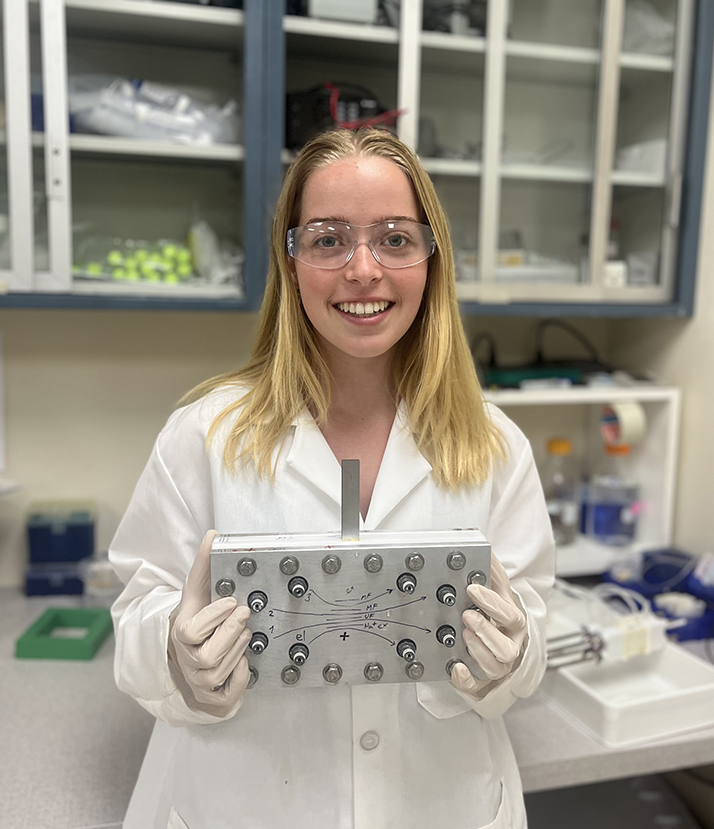
Princeton University undergraduate Kate Sheldon in a lab, holding a rectangular device in both hands
Princeton University undergraduate Kate Sheldon, doing summer work at Firebird Diagnostics, holds a prototype of the Agnostic Life Finder, or ALF, which was developed to seek life on Mars without making Earth-specific assumptions about molecular biology.
Credit: Firebird Diagnostics LLC

At first glance, the search for life beyond Earth might not seem related to human illness, but to biochemist Steven Benner, the connection is clear.

“In diagnostics for an infectious disease, you’re looking for alien life inside of a patient,” said Benner, who has spent nearly two decades conducting NASA-funded research on what alien life might look like at the molecular level.

“It’s actually a bit easier to build a diagnostics assay to detect COVID than to build an agnostic life finder to search for Martian DNA, whose structure would be unknown,” he said.

Benner is the co-founder and CEO of Firebird Diagnostics LLC, based in Alachua, Florida, which sells synthetic DNA and molecule packages to researchers, who use them to develop tools to detect and treat ailments like cancer, hepatitis, and HIV. The company also sold COVID tests during the pandemic.

Benner holds that while some of what we know about biochemistry on Earth may be universal, most is Earth-specific. He and his partners developed DNA-like molecular systems with six and eight nucleotides, or building blocks, based on research funded partly by NASA’s Astrobiology Program. These systems add to the four building blocks in Earth-based DNA an additional two or four synthetic nucleotides.

Mary Voytek, head of the Astrobiology Program at NASA Headquarters in Washington, said Benner’s work shows there are alternatives to Earth-based biological molecules, “This helps us understand what else is possible and may be found in life beyond Earth.”

Share

Details

Last Updated

Apr 04, 2024

Powered by WPeMatico

Get The Details…
Andrew Wagner

NASA Wallops to Launch Three Sounding Rockets During Solar Eclipse 

NASA Wallops to Launch Three Sounding Rockets During Solar Eclipse 

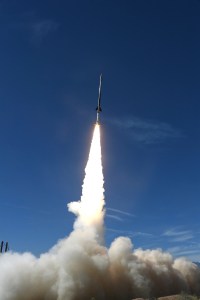
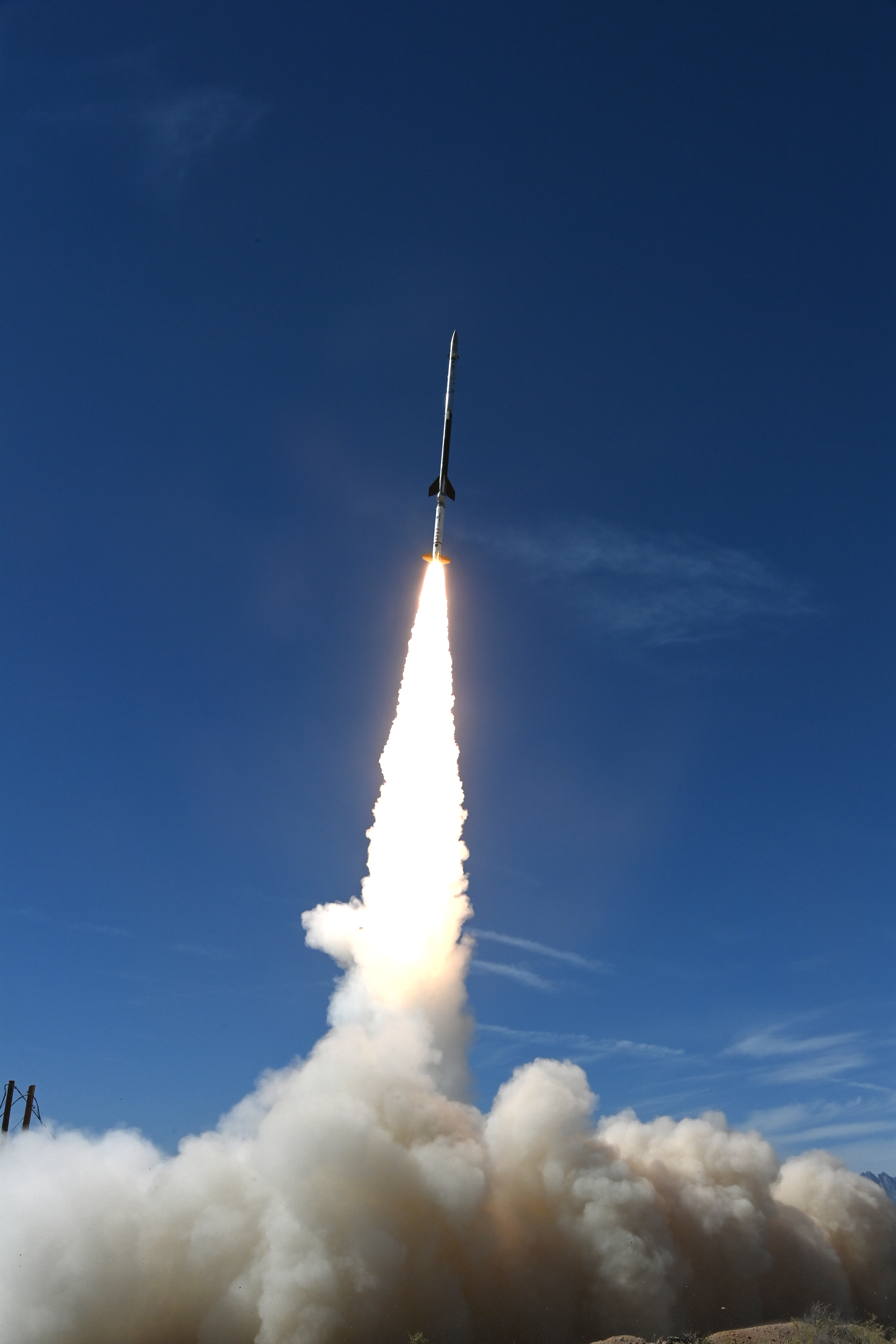
Three Black Brant IX sounding rockets for the Atmospheric Perturbations around Eclipse Path (APEP) mission are scheduled to launch from NASA’s Wallops Flight Facility launch range in Virginia. The launch window opens April 8, 2024, at 2:40 p.m. EDT.  

Launching approximately 45 minutes before, during, and after the peak local eclipse, the APEP sounding rockets will study how Earth’s upper atmosphere is affected when sunlight momentarily dims over a portion of the planet. Targeted launch times for the three rockets are 2:40 p.m., 3:20 p.m., and 4:05 p.m. but may be subject to change. 

The launches will be livestreamed on Wallops’ YouTube beginning at 2:30 p.m.  

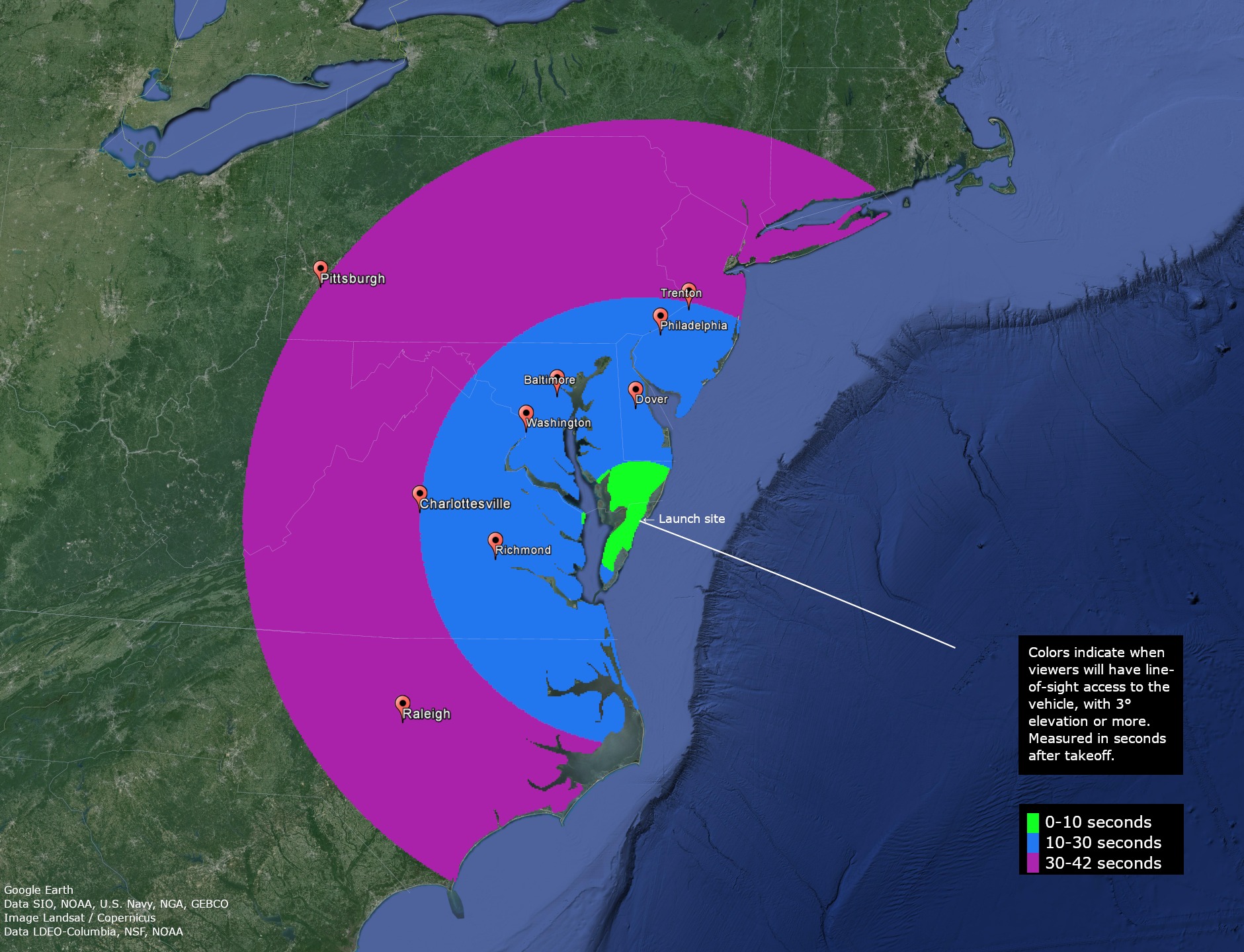
Weather permitting, the launches may be visible in the mid-Atlantic region. Remember to always wear solar safety or “eclipse” glasses when looking at the Sun to protect your eyes. For the Wallops area, the eclipse will begin around 2:06 p.m. The Moon will block 81.4% of the Sun’s light at peak local eclipse at 3:23 p.m. and conclude at 4:34 p.m. 

A visibility map showing the mid-Atlantic region. The map shows how many seconds after that people in the area may be able to see the Black Brant IX sounding rocket in the sky.  The land is green and the ocean is dark blue. Visibility of 30-42 seconds is represented by a bright pink semi-circile reaching up to eastern Massachusetts, through most of Pennsylvania, through eastern West Virginia, Virginia and North Carolina. Visibility area for viewers with a line-of-sight 10-30 seconds after launch is a blue semi-circle reaching from middle of New Jersey down to north North Carolina and inland to Virginia. Visibility from 0-10 seconds is indicated by a bright green semi-circle mostly covering to the edge of the southern border of Delaware and down into the Eastern Shore of Virginia. City labels starting north at Trenton, Philadelphia, Dover, Baltimore, Washington, Pittsburgh, Charlottesville, Richmond, and Raleigh. On the right is a black box with white words: "Colors indicate when viewers will have line-of-sight access to the vehicle, with 3° elevation or more. Measured in seconds after takeoff.
Launch viewing map forAtmospheric Perturbations around Eclipse Path mission are scheduled to launch from NASA’s launch range at Wallops Flight Facility in Virginia on April 8, 2024.
Credit: NASA

Members of the public are invited to the NASA Wallops Visitor Center on Monday, April 8, to view the sounding rocket launches and the partial eclipse. Gates to the visitor center will open from 1-5 p.m. and will close once parking lot capacity is reached. For those traveling to our visitor center, all vehicles MUST fit within a standard parking spot for this event; no large, oversized vehicles or buses will be allowed for entry. 

The visitor center will offer solar-related activities, have NASA sounding rocket experts onsite to answer questions, and host Globe Program expert Brian Campbell, who will be showing people how to collect data during the eclipse using the Observer app. Eclipse glasses and pinhole viewers will be available during this event while supplies last. Food trucks will be onsite serving food and drinks, including empanadas, crab cakes, hamburgers, hot dogs, barbecue, water ice, and more. 

While this combined viewing event is exciting for some, it may not be ideal for all. A designated sensory-friendly quiet area will be available at the Wallops Visitor Center for guests. This supervised quiet area will include dimmed lighting, seating, a reflection area, and touch items for guests to explore. 

Prepare for safe solar viewing during this year’s eclipse by checking out NASA’s Eclipse Safety page

Media Contact
Amy Barra 
NASA’s Wallops Flight Facility, Wallops Island, Virginia

Share

Details

Last Updated

Apr 04, 2024

Editor
Madison Olson
Contact
Location
Wallops Flight Facility

Powered by WPeMatico

Get The Details…
Madison Olson