NASA Challenge Gives Space Thruster Commercial Boost

NASA Challenge Gives Space Thruster Commercial Boost

3 min read

Preparations for Next Moonwalk Simulations Underway (and Underwater)
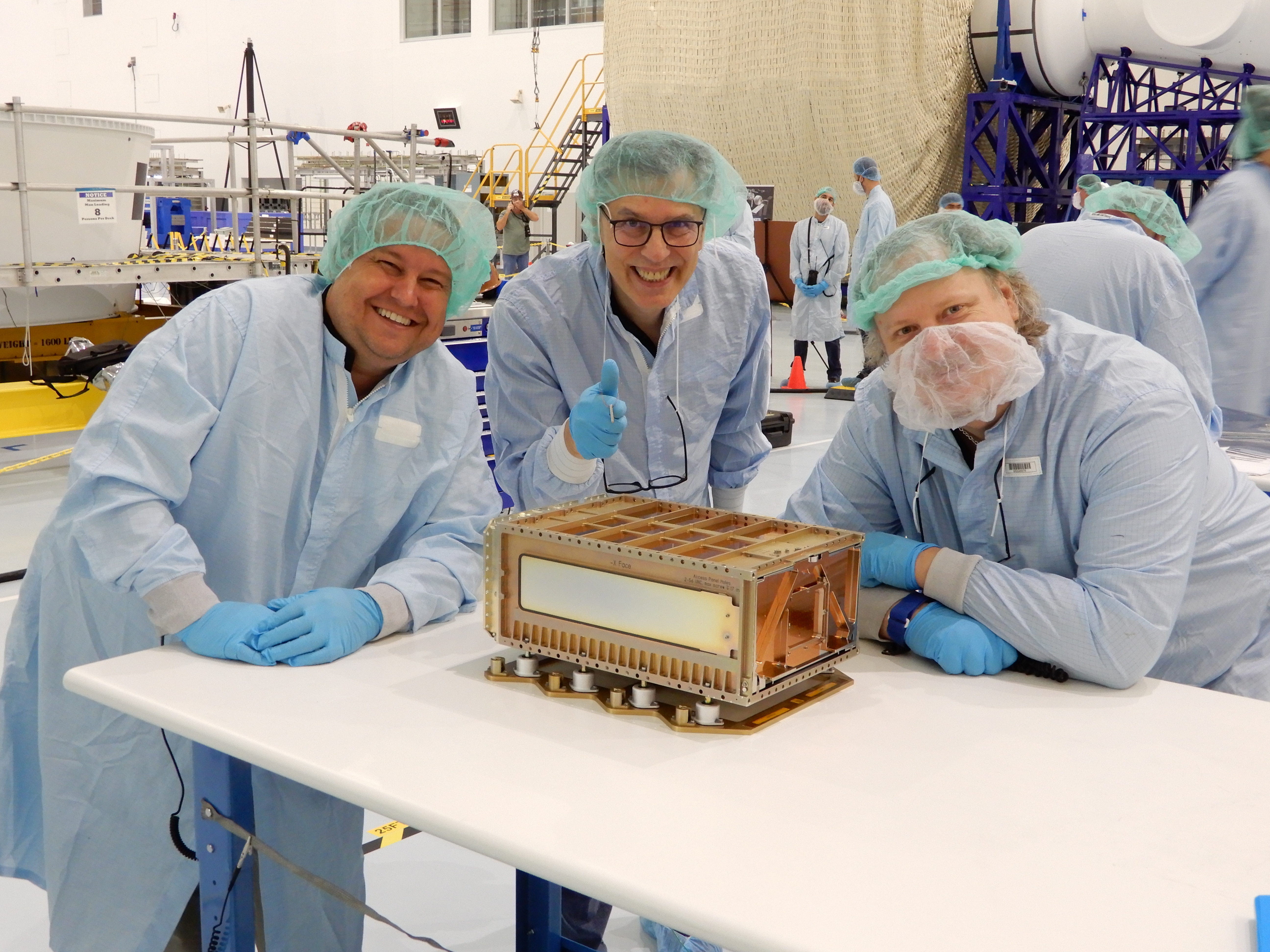
Members of Team Miles with the CubeSat developed during the NASA Cube Quest Challenge. From left to right: Alex Wingeier, Don Smith, Wes Faler. Image Credit: Team Miles
Members of Team Miles with the CubeSat developed during the NASA Cube Quest Challenge. From left to right: Alex Wingeier, Don Smith, Wes Faler.
Image credit: Team Miles

In its pursuit to develop groundbreaking technologies to explore space and benefit life on Earth, NASA invites the public to contribute ideas to the agency through participatory opportunities, including challenges. The Cube Quest competition – NASA’s first in-space challenge – kicked off in 2015, offering a total prize purse of $5 million.

This challenge asked university and private developer teams to complete objectives in designing, building, and delivering small satellites capable of advanced deep space operations. Throughout two challenge phases, several teams developed and tested technologies to launch small satellites, also known as CubeSats, into orbit. 

Team Miles of Tampa, Florida, was the sole team to send its CubeSat aboard 2022’s Artemis I flight test around the Moon. Team Miles was under the leadership of Wesley Faler and found members through Tampa Hackerspace, a community nonprofit workshop. From there, it grew to include software engineering, information technology, radio-frequency engineering, radiation, aerospace engineering, graphic design, and blacksmithing experts. 

“I was prototyping a plasma thruster design in my second bedroom workshop,” says Faler. “NASA’s challenge was specifically looking for wild ideas from citizen scientists – not your traditional degree or institution scientists – and that appealed to me.”
Team Miles KSC
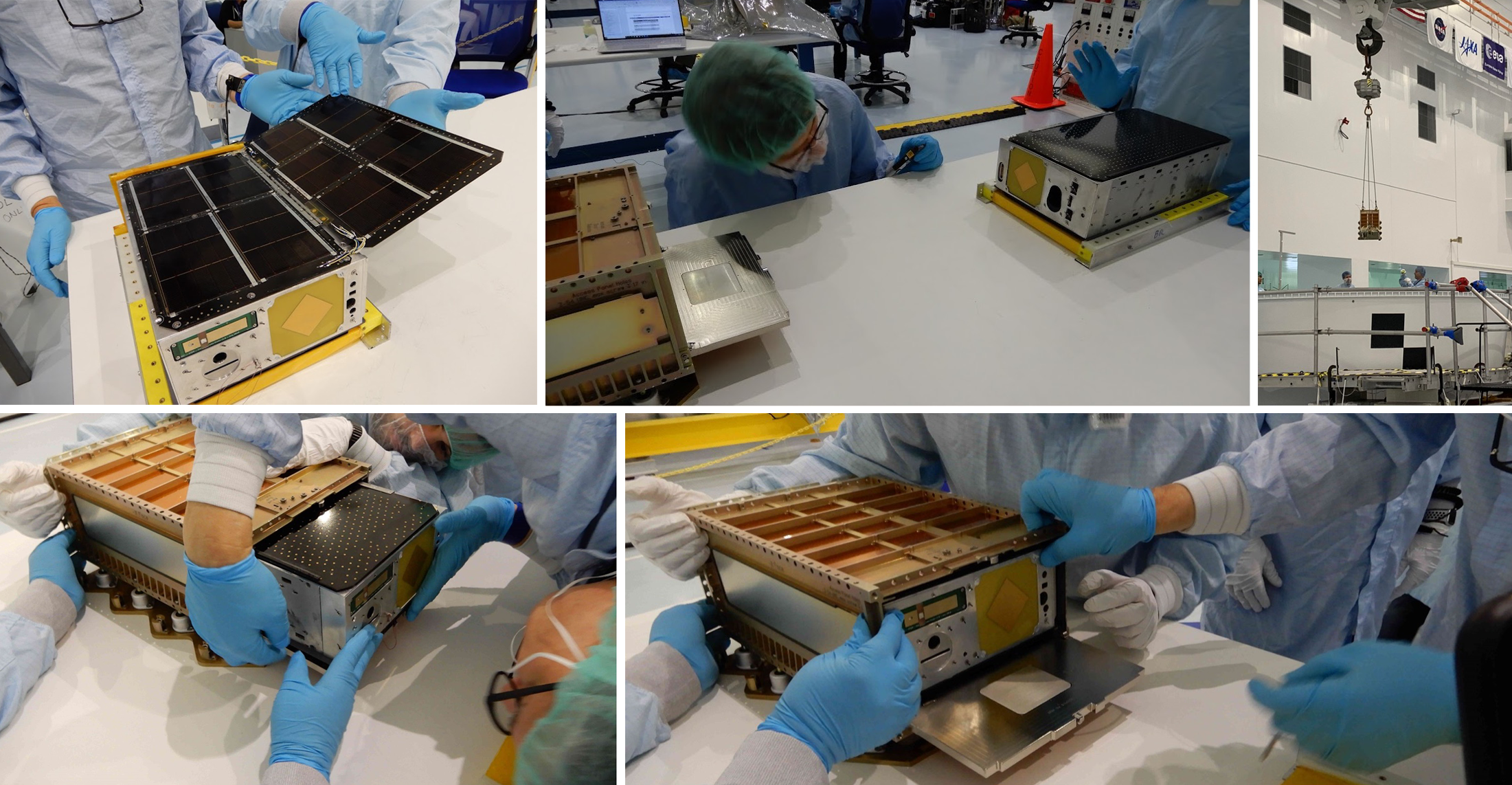
Photo collage: Team Miles integrates their CubeSat into a dispenser for the Orion stage adapter. The Orion stage adapter connects the SLS rocket to Orion and had slots built into it for the payloads.
Credits: NASA/KSC

During the challenge’s ground test phases, Team Miles developed its Miles CubeSat, a breadbox-sized satellite propelled with a novel water-fueled plasma thruster. The team also created and radiation-tested its Resilient Affordable CubeSat Processor flight computer to communicate in deep space.

In total, NASA awarded $100,000 to Team Miles in the ground phase of the Cube Quest challenge. Despite not winning the in-space phase of the challenge due to a communications failure after launch, Faler emphasizes the value of participation extending beyond monetary awards, showcasing the team’s resilience and determination.

“The challenge generated publicity and public awareness for a wild idea. The fact that NASA looked at the idea and helped us advance it gave us a platform to talk to people. That is huge for these challenges – the opportunity to be heard,” says Faler.

Since the challenge ended, Faler has cofounded and become the CEO of Miles Space, Inc., a company that was born out of the innovative spirit of Team Miles. In January 2024, Miles Space was acquired by RocketStar, Inc., where Faler now serves as chief technology officer. Stemming from iterations of Faler’s original thruster, the company has developed a nuclear fusion propulsion system, a testament to the profound impact of the Cube Quest competition on commercial space technology.

As for words of wisdom for future challenge participants, Faler said, “Whether you place in the challenge or not, you haven’t lost time by participating. Being part of that process forces you to grow.”

Powered by WPeMatico

Get The Details…
Bailey G. Light
Gateway: Forward Progress on Artemis IV

Gateway: Forward Progress on Artemis IV

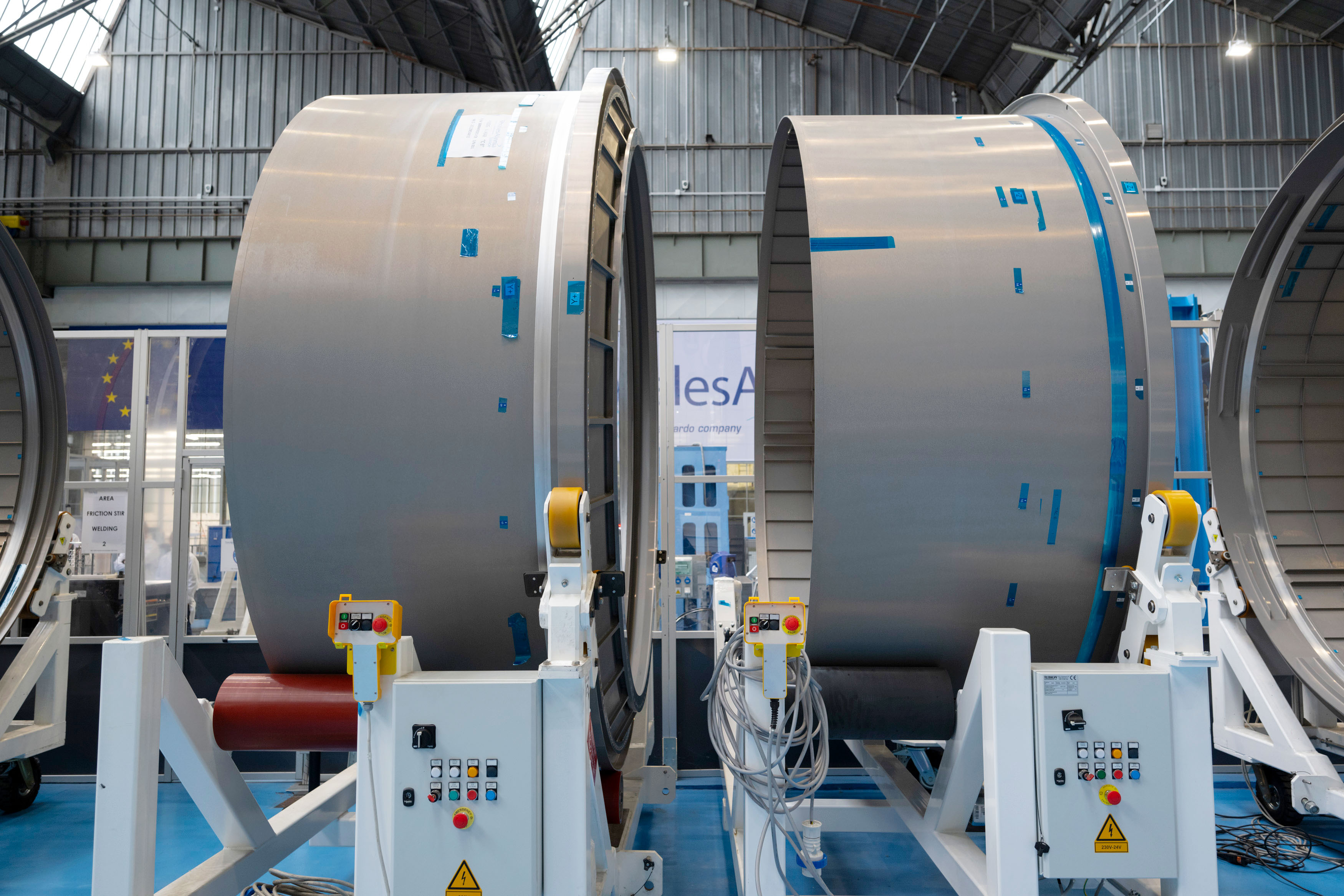
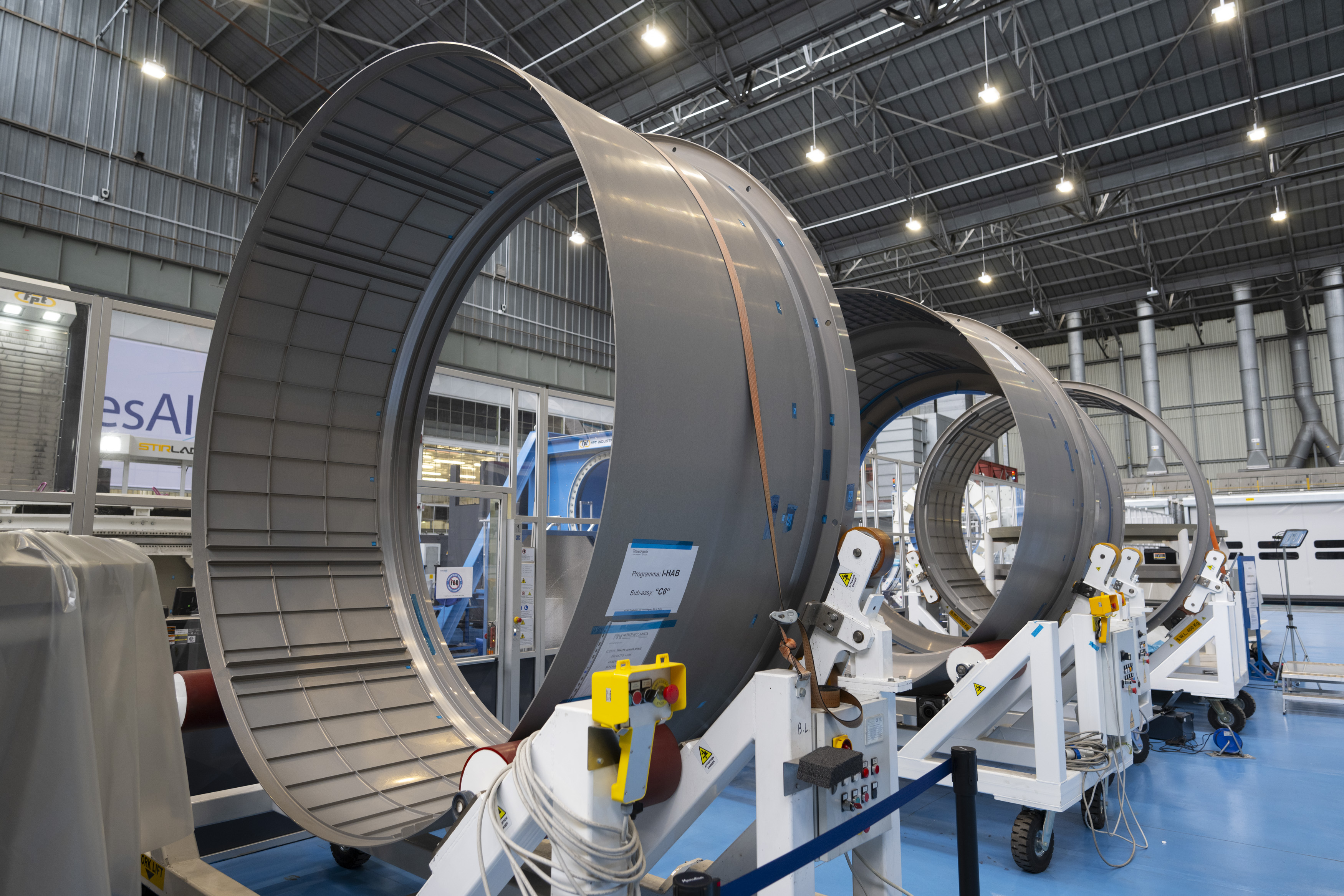
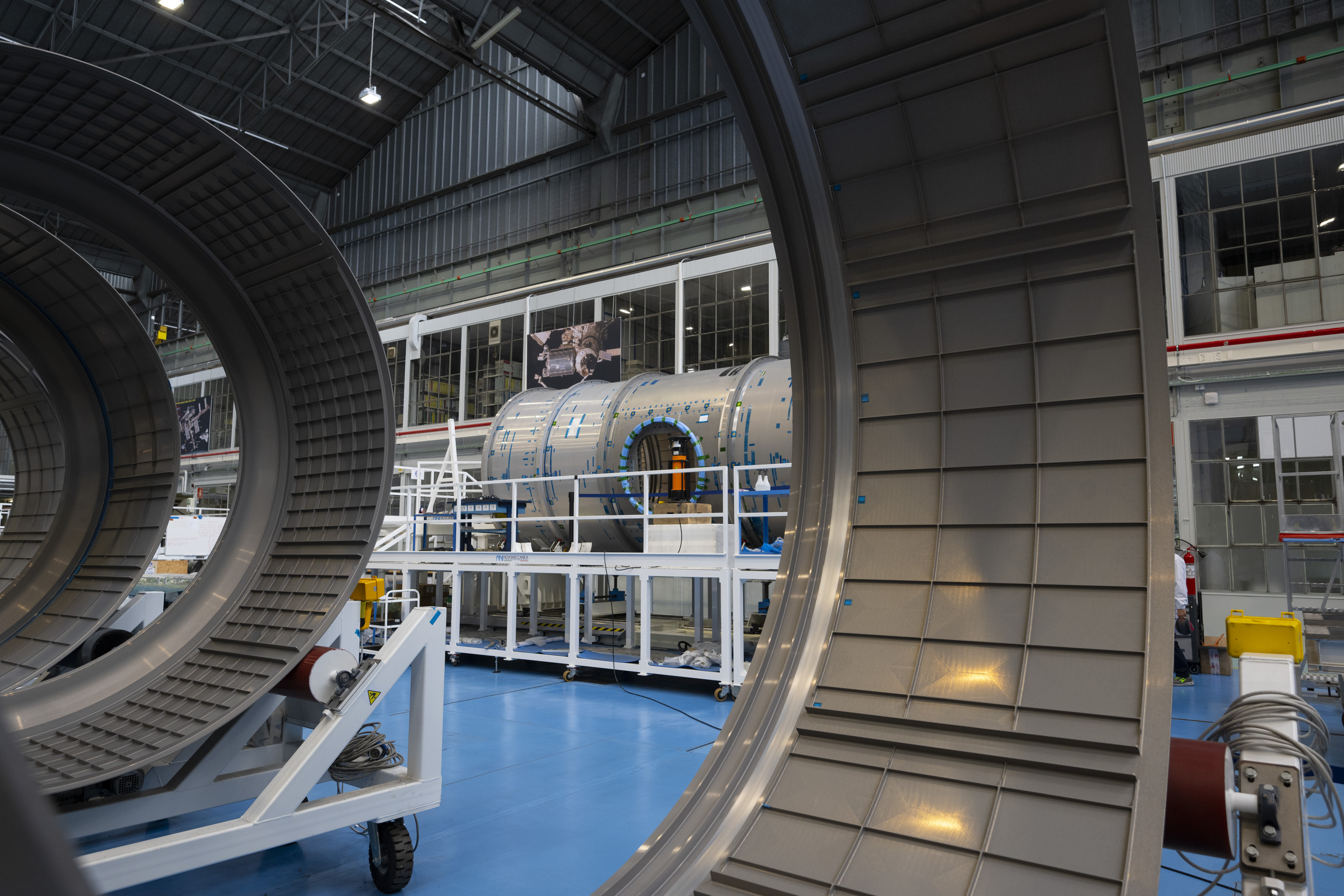
In the background, a large space station module in a facility ringed by inspection scaffolding. In the foreground, large gray rings.
Gateway’s Lunar I-Hab and HALO modules under construction at a Thales Alenia Space industrial plant in Turin, Italy.
ESA/Stephane Corvaja

The Artemis IV mission is taking shape with major hardware for Gateway, humanity’s first space station to orbit the Moon, progressing in Turin, Italy.

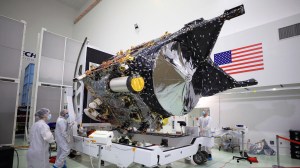
NASA will launch HALO (Habitation and Logistics Outpost), center of image in background, along with the Power and Propulsion Element (not pictured) to lunar orbit ahead of the Artemis IV mission as the first elements of Gateway, the first space station to be assembled around the Moon. During that mission, astronauts will launch in the Orion spacecraft with the Lunar I-Hab, pieces of which are shown here in the foreground, and deliver it to Gateway. Lunar I-Hab is provided by ESA (European Space Agency) with significant hardware contributions from JAXA (Japan Aerospace Exploration Agency), and is one of four Gateway modules that astronauts will live and work inside as they orbit the Moon.

Thales Alenia Space completed major welding on HALO and began initial fabrication of Lunar I-Hab last year. The company is a subcontractor to Northrop Grumman for HALO, and prime contractor to ESA for Lunar I-Hab.

Along with HALO, I-Hab, and the Power and Propulsion Element, two additional Gateway modules provided by ESA and the Mohammad Bin Rashid Space Centre make up the core components of the space station. CSA (Canadian Space Agency) is providing the Canadarm3 advanced external robotic system and fixtures for science instruments.  

The international teams of astronauts living, conducting science, and preparing for missions to the lunar South Pole region from Gateway will be the first humans to make their home in deep space. 

Powered by WPeMatico

Get The Details…
Dylan Connell

Dragon Spacecraft Splashes Down Completing Resupply Mission

Dragon Spacecraft Splashes Down Completing Resupply Mission

The SpaceX Dragon Cargo spacecraft approaches the International Space Station's Harmony module for a docking on March 23, 2024. Credit: NASA TV
The SpaceX Dragon Cargo spacecraft approaches the International Space Station’s Harmony module for a docking on March 23, 2024. Credit: NASA TV

SpaceX’s uncrewed Dragon cargo spacecraft splashed down at 1:38 a.m. EDT Tuesday off the coast of Tampa, Florida, marking the return of the company’s 30th contracted cargo resupply mission to the International Space Station for NASA. The spacecraft carried more than 4,100 pounds of valuable scientific experiments and other cargo back to Earth.

Next, four SpaceX Crew-8 members will board the Dragon crew spacecraft on  Thursday and undock the vehicle from the forward port of the station’s Harmony module and redock to Harmony’s zenith port. NASA TV coverage will begin on Thursday at 7:30 a.m. Undocking is scheduled at 7:45 a.m. with redocking scheduled at 8:28 a.m.

That will clear the forward port of Harmony for the arrival of the Boeing Starliner spacecraft with Butch Wilmore and Suni Williams aboard on the Crew Flight Test (CFT) mission. They are scheduled to launch at 10:34 pm on Monday, May 6, night atop an Atlas 5 rocket from Launch Complex 41 at the Cape Canaveral Space Force Station, Fla..


Learn more about station activities by following the space station blog@space_station and @ISS_Research on X, as well as the ISS Facebook and ISS Instagram accounts.

Get weekly video highlights at: https://roundupreads.jsc.nasa.gov/videoupdate/

Get the latest from NASA delivered every week. Subscribe here: www.nasa.gov/subscribe

Powered by WPeMatico

Get The Details…

Mark Garcia

NASA Marshall Prepares for Strategic Facilities Updates 

NASA Marshall Prepares for Strategic Facilities Updates 

4 min read

Preparations for Next Moonwalk Simulations Underway (and Underwater)

NASA’s Marshall Space Flight Center is getting ready for the next big step in the evolution of its main campus in Huntsville, Alabama. Through a series of multi-year infrastructure projects, Marshall is optimizing its footprint to assure its place as a vibrant and vital hub for the aerospace community in the next era. 

Near-term plans call for the carefully orchestrated take-down of 19 obsolete and idle structures – among them the 363-foot-tall Dynamic Test Stand, the Propulsion and Structural Test Facility, and Neutral Buoyancy Simulator. These facilities are not required for current or future missions, and the demolitions will help the center transition to a more modern, sustainable, and affordable infrastructure.

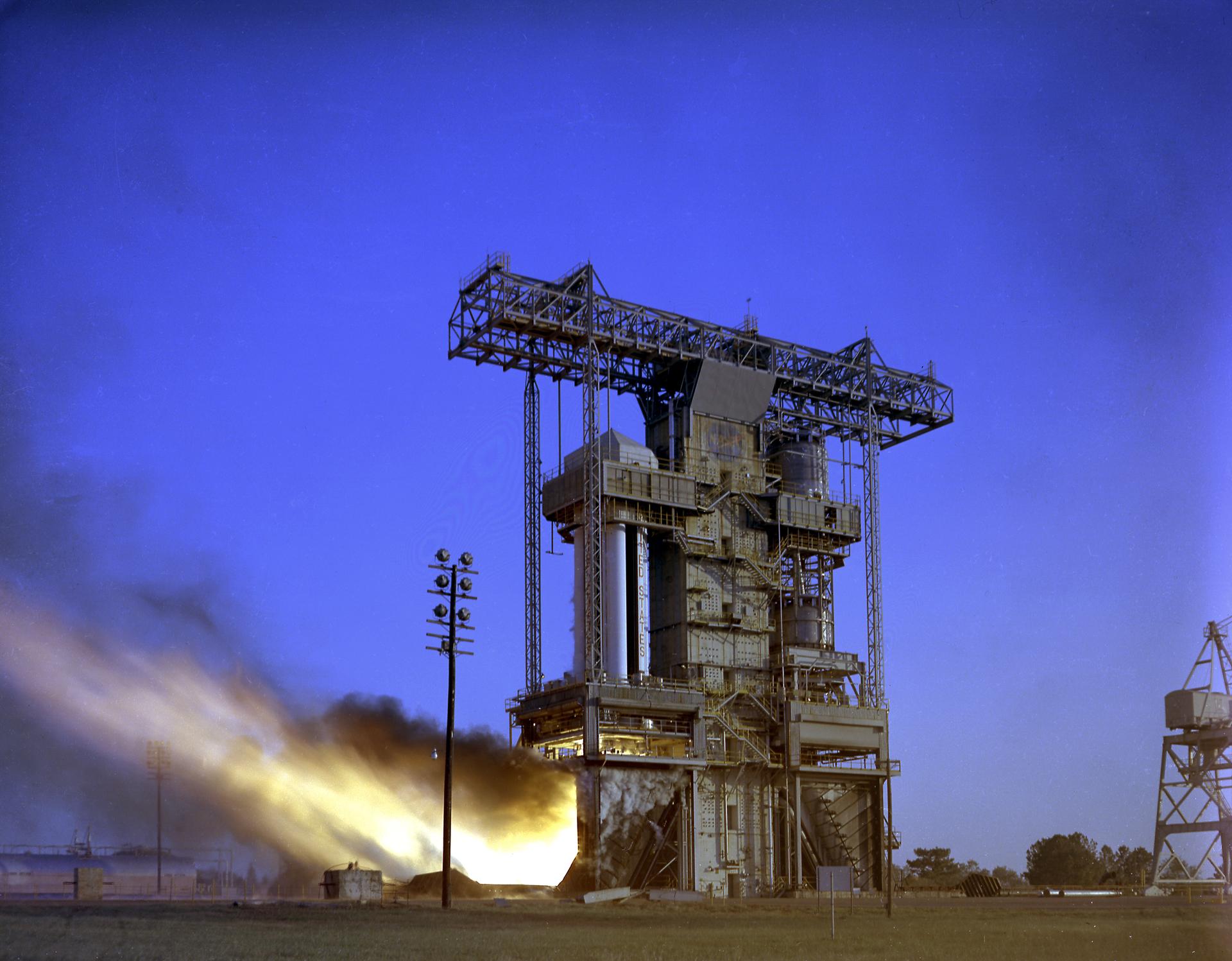
Test engineers fire up the Saturn I rocket’s first stage (S-1-10) at the Propulsion and Structural Test Facility, or “T-tower,” at NASA’s Marshall Space Flight Center in 1964.
NASA

“These facilities helped NASA make history – the Dynamic Test Stand was the tallest manmade structure in North Alabama and helped us test both the Saturn V rocket and the space shuttle,” said Joseph Pelfrey, Marshall’s Center Director. “Without these structures, we wouldn’t have the space program we have today. While it is hard to let them go, the most important legacy remaining are the people that built and stewarded these facilities and the missions they enabled. That same bold spirit fuels us, today. We are committed to carrying it forward to inspire the workforce of tomorrow.” 

Built in 1964, the Dynamic Test Stand initially was used to test fully assembled Saturn V rockets. In 1978, engineers there also integrated all space shuttle elements for the first time, including the orbiter, external fuel tank, and solid rocket boosters.

The Propulsion and Structural Test Facility – better known at Marshall as the “T-tower” due to its unique shape – was built in 1957 by the U.S. Army Ballistic Missile Agency and transferred to NASA when Marshall was founded in 1960. There, engineers tested components of the Saturn launch vehicles, the Army’s Redstone Rocket, and shuttle solid rocket boosters.

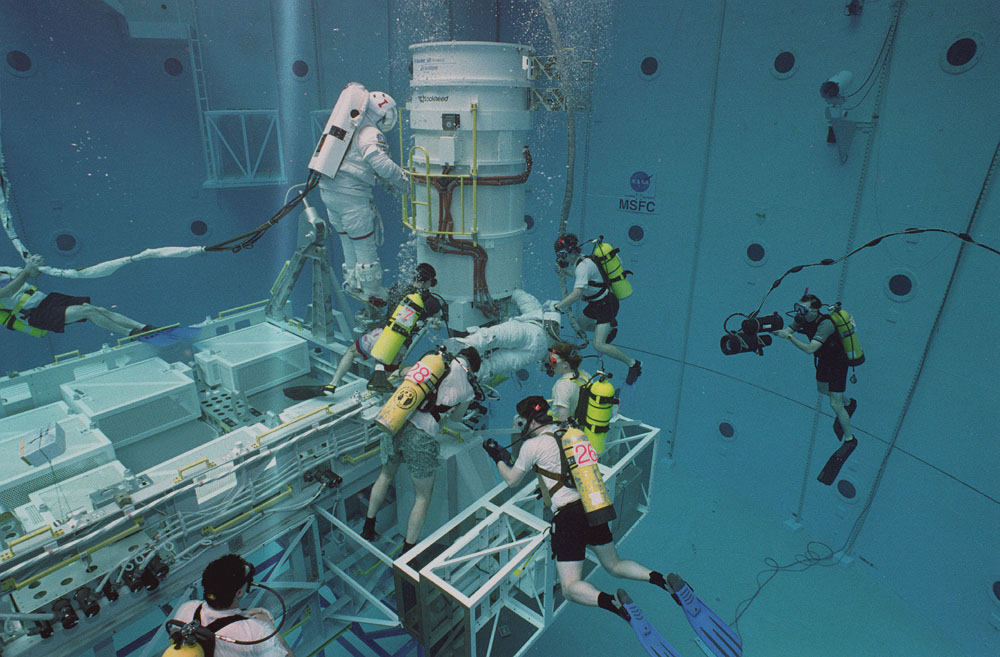
The Neutral Buoyancy Simulator, including its 1.3-million-gallon tank and control room, was built in the late 1960s. From 1969 until its closing in 1997, the facility enabled NASA astronauts and researchers to experience near-weightlessness, conducting underwater testing of space hardware and practice runs for servicing the Hubble Space Telescope. It was replaced in 1997 by a new facility at NASA’s Johnson Space Center in Houston.

Astronauts conduct underwater testing on the International Space Station’s power module in the Neutral Buoyancy Simulator at NASA’s Marshall Space Flight Center in 1995.
NASA

Honoring the Past, Building the Future

Marshall master planner Justin Taylor said the facilities team looked at every possibility for refurbishing the old sites.

“The upkeep of aging facilities is costly, and we have to put our funding where it does the most good for NASA’s mission,” he said. “These are tough choices, but we have to prioritize function and cost over nostalgia. We’re making way for what’s next.”

To preserve NASA history, the agency has worked with architectural historians over the years on detailed drawings, written histories, and large-format photographs of the sites. Those documents are part of the Library of Congress’s permanent Historic American Engineering Record collection, making their history and accomplishments available to the public for generations to come.

Marshall facilities engineers are still finalizing the details and timeline for the demolitions. Work is expected to begin in late 2024 and end in late 2025. Additionally, to support the center’s employees and all the mission work they are doing, Marshall has a few infrastructure projects in design stages that will include the construction of two state-of-the-art buildings within the decade ahead.

A new Marshall Exploration Facility will offer a two to three story facility at approximately 55,000 square feet located within the 4200 complex. The facility will include an auditorium, along with conferencing, training, retail, and administrative spaces. The new Engineering Science Lab – at approximately 140,000 square feet – will provide a modern, flexible laboratory environment to accommodate a new focus for research and testing capabilities.

Ultimately, NASA’s vision for Marshall is a dynamic, interconnected campus. The center’s master plan features a central greenway connecting its two most densely populated zones – its administrative complex and engineering complex.

“As we look towards the aspirational goals we have as an agency, Marshall’s contributions may look different than our past but be no less important,” said Pelfrey. “And we want our partners, employees, and the community to be part of the evolution with us, bringing complementary skills and capabilities, innovative ideas, and a passion for exploration and discovery.”

To learn more about NASA’s Marshall Space Flight Center, visit:

https://www.nasa.gov/marshall

Molly Porter

Marshall Space Flight Center, Huntsville, Ala.
256-544-0034
molly.a.porter@nasa.gov 

Share

Details

Last Updated

Apr 29, 2024

Powered by WPeMatico

Get The Details…
Beth Ridgeway

Crew Starts Week With Maintenance, Science Prep, and Health Exams

Crew Starts Week With Maintenance, Science Prep, and Health Exams

Expedition 71 Flight Engineer and NASA astronaut MIke Barratt is pictured relaxing aboard the International Space Station'.
Expedition 71 Flight Engineer and NASA astronaut Mike Barratt is pictured relaxing aboard the International Space Station.

Five spacecraft are parked at the International Space Station following yesterday’s undocking of a cargo craft. Aboard the orbiting complex, the Expedition 71 crew is looking ahead to a Dragon relocation mid-week and the arrival of two new crew members next week. On Monday, the septet spent the day conducting routine maintenance, prepping for upcoming science activities, and performing health exams.

A Dragon cargo spacecraft is currently orbiting Earth preparing to splash down off the coast of Florida at approximately 1:38 a.m. EDT Tuesday, April 30. Dragon, which spent about a month docked to the station, departed at 1:10 p.m. Sunday, April 28, and is carrying more than 4,100 pounds of supplies and scientific experiments back to researchers on Earth.

Aboard station, four orbital residents—NASA astronauts Jeanette Epps, Matthew Dominick, Mike Barratt, and Roscosmos cosmonaut Alexander Grebenkin—are preparing to relocate their SpaceX Dragon spacecraft on Thursday, May 2 to the zenith port of the Harmony module. This relocation will make room for the Starliner spacecraft as part of NASA’s Boeing Crew Flight Test, scheduled to launch Monday, May 6. Starliner will carry NASA astronauts Butch Wilmore and Suni Williams to the station for about a one week stay.

While mission preparations are underway, Dominick set up hardware to perform an eye exam on Epps and measure her blood pressure using a new thigh cuff. The hardware examines whether cuffs on the legs change the way fluid moves around the body. The microgravity environment often causes fluids to shift toward the head, which can result in changes to vision and eye structure. Scientists are exploring whether the new hardware could be useful for astronauts to wear in the future as a normal part of spaceflight.

In the Destiny laboratory module, Barratt swapped out cartridges inside the Materials Science Laboratory and prepared it for an upcoming sample run. The facility is used to investigate the behavior of different types of materials at high temperatures in microgravity. Meanwhile, NASA Flight Engineer Tracy C. Dyson changed out two water resupply tanks in the water storage system, then moved on to perform routine maintenance on the station’s Advanced Resistive Exercise Device, or ARED.

Over in the Roscosmos segment, Grebenkin practiced his piloting techniques during a Pilot-T session. His crewmates, Commander Oleg Kononenko and Flight Engineer Nikolai Chub, stowed tools they used during a four-hour and 36-minute spacewalk on Thursday, April 25.


Learn more about station activities by following the space station blog, @space_station and @ISS_Research on X, as well as the ISS Facebook and ISS Instagram accounts.

Get weekly updates from NASA Johnson Space Center at: https://roundupreads.jsc.nasa.gov/

Get the latest from NASA delivered every week. Subscribe here: www.nasa.gov/subscribe

Powered by WPeMatico

Get The Details…

Abby Graf