On-Orbit Training and Health Research Occupy Schedule on Tuesday
Expedition 71 Flight Engineer and NASA astronaut Mike Barratt tests portable breathing gear aboard the International Space Station’s Destiny laboratory module.
A suite of on-orbit training topped Tuesday’s schedule aboard the International Space Station as the Expedition 71 crew gets ready for a spacecraft relocation on Thursday and a crew arrival next week. Four crew members also spent some time conducting ongoing health research to help scientists on Earth better understand the effects of spaceflight on the human body.
In the morning, NASA Flight Engineers Mike Barratt and Jeanette Epps assisted one another with ultrasound scans of veins in their necks, shoulders, clavicles, and back of the knees. The duo was then joined by their other Crew-8 crewmates, Flight Engineers Matthew Dominick of NASA and Alexander Grebenkin of Roscosmos, to review procedures and complete training for the upcoming relocation of their SpaceX Dragon spacecraft.
The quartet will suit up Thursday, May 2 and enter Dragon for an undocking from the forward port of the Harmony module at 7:45 a.m. EDT. They will then take a short ride aboard Dragon before redocking to the zenith port of Harmony around 8:28 a.m.
This relocation will make room for the Starliner spacecraft as part of NASA’s Boeing Crew Flight Test, scheduled to launch Monday, May 6 at 10:34 p.m. Starliner will carry NASA astronauts Butch Wilmore and Suni Williams to the station for a docking around 12:48 a.m. Wednesday, May 8. The duo will join the Expedition 71 crew in low Earth orbit for about a week before returning home.
After lunch, the Crew-8 cadre was joined by astronaut Tracy C. Dyson of NASA, space station Commander Oleg Kononenko, and Flight Engineer Nikolai Chub of Roscosmos to complete a fire training session in the event an emergency were to occur aboard station. The septet then spent some time discussing the training and holding a conference with ground teams.
In the evening, Dominick set up tomography hardware and assisted Dyson with an eye exam. Dyson then shut down and stowed the hardware, wrapping up a round of health exams for the week.
On Earth, a SpaceX Dragon cargo spacecraft, which spent about a month docked to the orbiting laboratory, splashed down off the coast of Florida at 1:38 a.m. Tuesday, April 30, returning more than 4,100 pounds of supplies and scientific experiments back to researchers.
NASA’s Commitment to Safety Starts with its Culture
5 min read
Preparations for Next Moonwalk Simulations Underway (and Underwater)
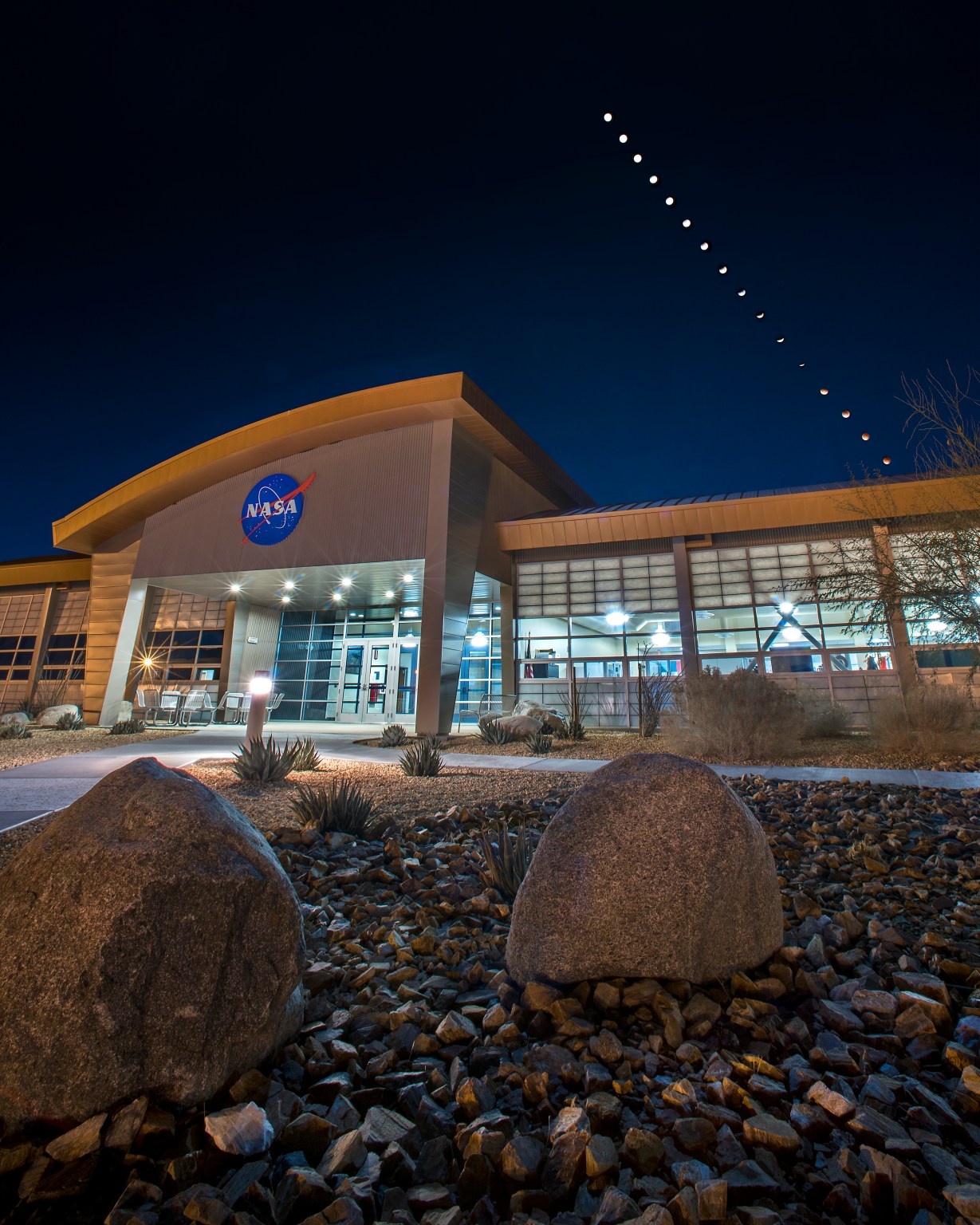
Brad Flick, center director at NASA’s Armstrong Flight Research Center in Edwards, California, amplifies the center’s safety commitment during Safety Day on April 2, 2024, at NASA Armstrong.
NASA/Steve Freeman
NASA works on projects that often have never been done, or perhaps the way they are being done has never been tried. Living on the edge of innovation requires a high degree of risk. After organizational silence led to the loss of space shuttle Challenger and its crew in 1986, NASA vowed to change the culture and make safety its priority.
Allowing unimaginable levels of innovation requires a balance with limiting risk that is inherent in exploring the unknown on Earth and beyond. NASA centers promote a culture of safety through a steady drumbeat of messages, trainings, and mechanisms to report unsafe conditions. In a recent demonstration of this culture, NASA’s Armstrong Flight Research Center in Edwards, California, hosted a Safety Day on April 4 that featured speakers highlighting NASA safety culture and the need to be vigilant about safety not only at work, but at home.
Kicking off the event was Brad Flick, NASA Armstrong center director. “Safety is our number one core value, and these events exemplify that.” Flick said. “We’re in a job that has risk. The hardest part is balancing the work with the responsibility to all of us and the public to do it safety.”
Organizational culture and climate are key factors in a safe work environment. That’s why NASA Safety Culture seeks to create an environment where everyone works safely, feels comfortable communicating safety issues, feels confident balancing challenges and risks while keeping safety in the forefront, and trusts safety is a priority across the agency.
“Culture is the way work gets done,” said Bob Conway, NASA Safety Center deputy director at the safety event. “Everyone is a leader. No accident occurs in the moment. It is the result of a series of events that may be years in the making.”
Bob Conway, NASA Safety Center deputy director, explains key factors in a safe work environment include organizational culture and climate. He presented during Safety Day on April 4, 2024, at NASA’s Armstrong Flight Research Center in Edwards, California.
NASA/Steve Freeman
Maintaining the culture requires more than just trainings throughout the year. NASA employees are routinely encouraged to report any of their concerns, positive safety behavior is rewarded and often awarded, and they have flexibility in responding to the unexpected. NASA considers this focus on safety part of its DNA.
Conway also recalled the X-31 experimental aircraft that flew at NASA Armstrong in the 1990s. The usual probe that measures key flight data like airspeed, altitude, and outside temperature, was changed to a probe without a heater that would have prevented icing. The change was not communicated well and the result on an unusually cold morning was the sensor froze, causing the flight computers to receive incorrect data. The aircraft became uncontrollable, the pilot was injured while ejecting, and the aircraft was lost.
“It is natural to rationalize shortcuts, engage in group think or be silenced by it, or to choose defensive silence,” Conway said. “We need to reverse that thought process by thinking what the risk is of not speaking up.”
Conway emphasized the need to be present, invite dialogue, encourage group members to think critically and speak up, discuss ideas outside the group, and have a team member play devil’s advocate to identify items others may overlook.
Also important in developing a solid safety environment is managing heavy workloads and recognizing when stress is on the rise. “Several projects had safety standdowns to talk about safety,” said Peggy Hayes, acting NASA Armstrong Safety and Mission Assurance director. “I think we do that well.”
This fiscal year, NASA Armstrong has zero lost-time accidents, or those accidents that require people to miss work. “People feel free to come to us, or call the Safety office,” Hayes said. “I think because we are a small center, where people routinely see leadership, it helps them bring their concerns forward.”
Another element of safety is what happens outside of work. Timothy Risch, a NASA Armstrong technical manager, cautioned people should prepare for and be ready to survive a serious accident. While walking to a store to return a movie, Risch heard a loud bang and saw a car crash into a light pole nearby. The 1,100-pound pole fell on his shoulder, hit his knee, shattered his fibula, ankle, and three bones in his foot. He had a 4-inch cut and a compound fracture.
Timothy Risch, a technical manager at NASA’s Armstrong Flight Research Center in Edwards, California, cautions people should prepare for and be ready to survive a serious accident. He presented during Safety Day on April 4, 2024, at NASA’s Armstrong Flight Research Center in Edwards, California.
NASA/Steve Freeman
“Prepare mentally and emotionally that you may need help if you are hurt,” he said. “I carried an identification card with me that had my key information on it such as my address, medical conditions, and medications. I had it with my license.”
Safety Day also included Elissa Dawson, NASA Armstrong emergency management specialist, who highlighted emergency response at the center, and Taylor Dirks, a wellness nurse for Blue Cross, Blue Shield California Federal Employee program, who focused on mental health and how resilience provides tools to manage everyday life challenges.
NASA’s dedication to a safety culture was born out of tragedy and the agency has send decades focusing its intensions to ensure employees can push the boundaries of what’s possible without sacrificing their safety. That model doesn’t have to be unique to NASA, it’s a culture that all businesses and industries can benefit from.
Elissa Dawson, an emergency management specialist at NASA’s Armstrong Flight Research Center in Edwards, California, highlights emergency response at the center. She presented during 4 Safety Day on April 4, 2024, at NASA Armstrong.
NASA/JAXA’s XRISM Mission Captures Unmatched Data With Just 36 Pixels
3 min read
NASA/JAXA’s XRISM Mission Captures Unmatched Data With Just 36 Pixels
At a time when phone cameras are capable of taking snapshots with millions of pixels, an instrument on the Japan-led XRISM (X-ray Imaging and Spectroscopy Mission) satellite captures revolutionary science with just 36 of them.
“That may sound impossible, but it’s actually true,” said Richard Kelley, the U.S. principal investigator for XRISM at NASA’s Goddard Space Flight Center in Greenbelt, Maryland. “The Resolve instrument gives us a deeper look at the makeup and motion of X-ray-emitting objects using technology invented and refined at Goddard over the past several decades.”
XRISM (pronounced “crism”) is led by JAXA (Japan Aerospace Exploration Agency) in collaboration with NASA, along with contributions from ESA (European Space Agency). It launched into orbit last September and has been scrutinizing the cosmos ever since. The mission detects “soft” X-rays, which have energies up to 5,000 times greater than visible light. It will probe the universe’s hottest regions, largest structures, and objects with the strongest gravity, like supermassive black holes in the cores of distant galaxies.
XRISM accomplishes this with an instrument named Resolve.
The square structure at the center of this image shows the 6-by-6-pixel microcalorimeter array at the heart of Resolve, an instrument on XRISM (X-ray Imaging and Spectroscopy Mission). The array measures 0.2 inches (5 millimeters) on a side. The device produces a spectrum of X-ray sources between 400 and 12,000 electron volts — up to 5,000 times the energy of visible light — with unprecedented detail.
NASA/XRISM/Caroline Kilbourne
“Resolve is more than a camera. Its detector takes the temperature of each X-ray that strikes it,” said Brian Williams, NASA’s XRISM project scientist at Goddard. “We call Resolve a microcalorimeter spectrometer because each of its 36 pixels is measuring tiny amounts of heat delivered by each incoming X-ray, allowing us to see the chemical fingerprints of elements making up the sources in unprecedented detail.”
In order to accomplish this, the entire detector must be chilled to 459.58 degrees below zero Fahrenheit (minus 273.1 degrees Celsius), just a whisker above absolute zero.
The instrument is so precise it can detect the motions of elements within a target, effectively providing a 3D view. Gas moving toward us glows at slightly higher energies than normal, while gas moving away from us emits slightly lower energies. This will, for example, allow scientists to better understand the flow of hot gas within clusters of galaxies and to track the movement of different elements in the debris of supernova explosions.
Resolve is taking astronomers into a new era of cosmic exploration — and with only three-dozen pixels.
XRISM is a collaborative mission between JAXA and NASA, with contributions from over 70 institutions in Japan, the U.S., Canada, and Europe. NASA Goddard developed the Resolve detector and many of the instrument subsystems, together with the two X-ray Mirror Assemblies. Goddard is also responsible for the Science Data Center, which developed analysis software and the data processing pipeline, as well as support for the XRISM General Observer Program.
International Space Station Program Manager Dana Weigel
“When people begin their careers, they start as an individual contributor. You’re a technical expert; your worth and your value are based on what you know and what you can do as an individual.
“Then there’s an interesting journey that you have to take from an individual contributor to a leader of people. I enjoy watching people go through this change and helping them make the transition. What you eventually realize is that your success as a leader is not really yours, it’s the team’s. You’re not successful without the team, so it’s your ability to support, motivate, and guide the team that allows us to accomplish amazing things.
“It’s really important as a leader to keep this in mind. Certainly, leaders have opinions, but it’s your ability to give the team a voice and to get them working effectively as a team that makes us successful.”
— Dana Weigel, International Space Station Program Manager, NASA’s Johnson Space Center
Image Credit: NASA / Josh Valcarcel Interviewer: NASA / Michelle Zajac
NASA’s Webb Maps Weather on Planet 280 Light-Years Away
6 Min Read
NASA’s Webb Maps Weather on Planet 280 Light-Years Away
This artist’s concept shows what the hot gas-giant exoplanet WASP-43 b could look like.
Credits: NASA, ESA, CSA, Ralf Crawford (STScI)
An international team of researchers has successfully used NASA’s James Webb Space Telescope to map the weather on the hot gas-giant exoplanet WASP-43 b.
Precise brightness measurements over a broad spectrum of mid-infrared light, combined with 3D climate models and previous observations from other telescopes, suggest the presence of thick, high clouds covering the nightside, clear skies on the dayside, and equatorial winds upwards of 5,000 miles per hour mixing atmospheric gases around the planet.
The investigation is just the latest demonstration of the exoplanet science now possible with Webb’s extraordinary ability to measure temperature variations and detect atmospheric gases trillions of miles away.
Image: Hot Gas-Giant Exoplanet WASP-43 b (Artist’s Concept)
This artist’s concept shows what the hot gas-giant exoplanet WASP-43 b could look like. WASP-43 b is a Jupiter-sized planet roughly 280 light-years away, in the constellation Sextans. The planet orbits its star at a distance of about 1.3 million miles, completing one circuit in about 19.5 hours. Because it is so close to its star, WASP-43 b is probably tidally locked: Its rotation rate and orbital period are the same, such that one side faces the star at all times.
Credits: NASA, ESA, CSA, Ralf Crawford (STScI)
Tidally Locked “Hot Jupiter”
WASP-43 b is a “hot Jupiter” type of exoplanet: similar in size to Jupiter, made primarily of hydrogen and helium, and much hotter than any of the giant planets in our own solar system. Although its star is smaller and cooler than the Sun, WASP-43 b orbits at a distance of just 1.3 million miles – less than 1/25th the distance between Mercury and the Sun.
With such a tight orbit, the planet is tidally locked, with one side continuously illuminated and the other in permanent darkness. Although the nightside never receives any direct radiation from the star, strong eastward winds transport heat around from the dayside.
Since its discovery in 2011, WASP-43 b has been observed with numerous telescopes, including NASA’s Hubble and now-retired Spitzer space telescopes.
“With Hubble, we could clearly see that there is water vapor on the dayside. Both Hubble and Spitzer suggested there might be clouds on the nightside,” explained Taylor Bell, researcher from the Bay Area Environmental Research Institute and lead author of a study published today in Nature Astronomy. “But we needed more precise measurements from Webb to really begin mapping the temperature, cloud cover, winds, and more detailed atmospheric composition all the way around the planet.”
Mapping Temperature and Inferring Weather
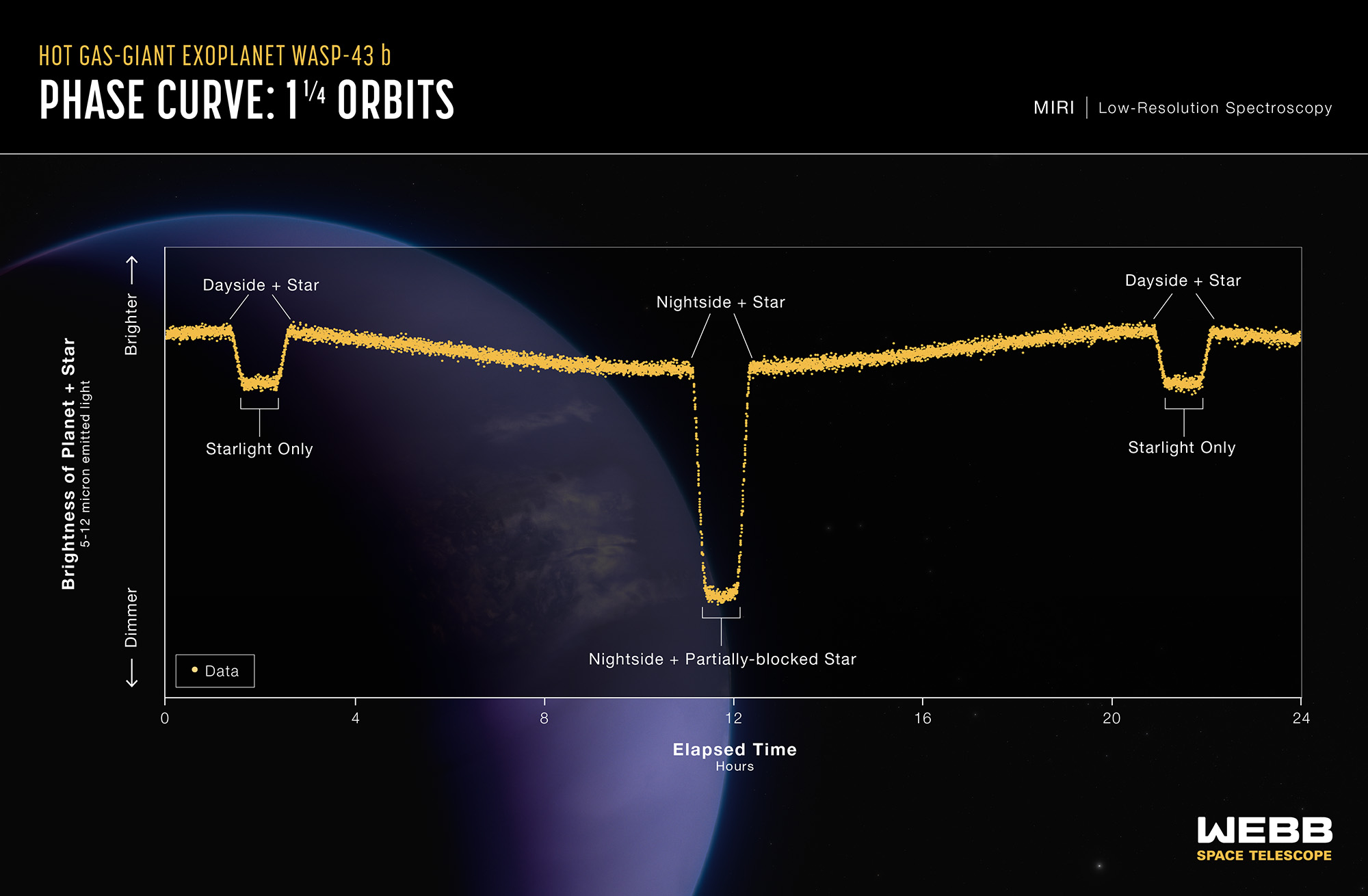
Although WASP-43 b is too small, dim, and close to its star for a telescope to see directly, its short orbital period of just 19.5 hours makes it ideal for phase curvespectroscopy, a technique that involves measuring tiny changes in brightness of the star-planet system as the planet orbits the star.
Since the amount of mid-infrared light given off by an object depends largely on how hot it is, the brightness data captured by Webb can then be used to calculate the planet’s temperature.
Image: Hot Gas-Giant Exoplanet WASP-43 b (MIRI Phase Curve)
This phase curve, captured by the MIRI low resolution spectrometer on NASA’s James Webb Space Telescope, shows the change in brightness of the WASP-43 system over time as the planet orbits its star. The system appears brightest when the hot dayside of the planet is facing the telescope, just before and after it passes behind the star. The system grows dimmer as the planet continues its orbits and the nightside rotates into view. It brightens again after passing in front of the star as the dayside rotates back into view. WASP-43 b is a hot Jupiter roughly 280 light-years away, in the constellation Sextans.
Credits: Science: Taylor J. Bell (BAERI); Joanna Barstow (Open University); Michael Roman (University of Leicester) Graphic Design: NASA, ESA, CSA, Ralf Crawford (STScI)
The team used Webb’s MIRI (Mid-Infrared Instrument) to measure light from the WASP-43 system every 10 seconds for more than 24 hours. “By observing over an entire orbit, we were able to calculate the temperature of different sides of the planet as they rotate into view,” explained Bell. “From that, we could construct a rough map of temperature across the planet.”
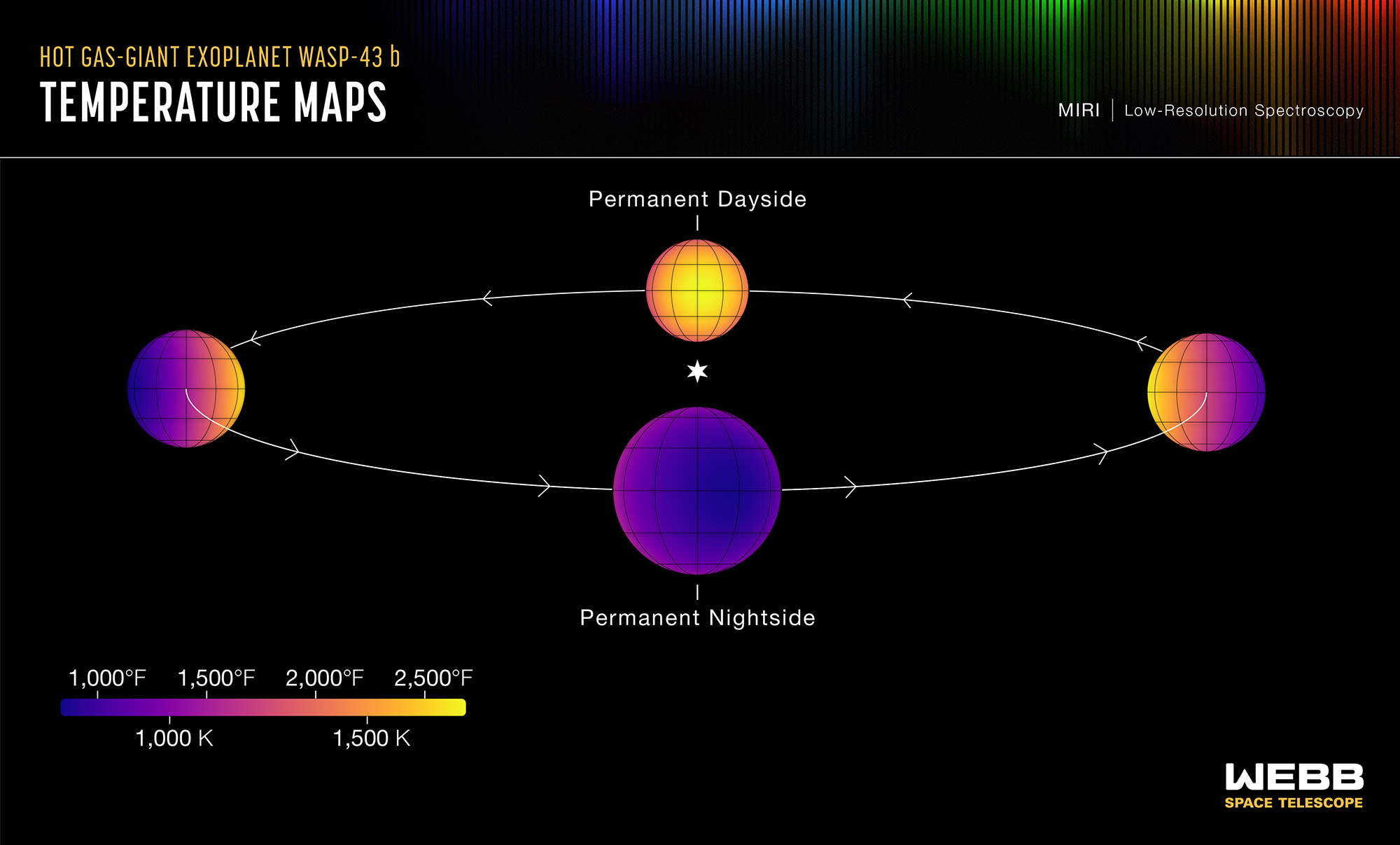
The measurements show that the dayside has an average temperature of nearly 2,300 degrees Fahrenheit (1,250 degrees Celsius) – hot enough to forge iron. Meanwhile, the nightside is significantly cooler at 1,100 degrees Fahrenheit (600 degrees Celsius). The data also helps locate the hottest spot on the planet (the “hotspot”), which is shifted slightly eastward from the point that receives the most stellar radiation, where the star is highest in the planet’s sky. This shift occurs because of supersonic winds, which move heated air eastward.
“The fact that we can map temperature in this way is a real testament to Webb’s sensitivity and stability,” said Michael Roman, a co-author from the University of Leicester in the U.K.
To interpret the map, the team used complex 3D atmospheric models like those used to understand weather and climate on Earth. The analysis shows that the nightside is probably covered in a thick, high layer of clouds that prevent some of the infrared light from escaping to space. As a result, the nightside – while very hot – looks dimmer and cooler than it would if there were no clouds.
Image: Hot Gas-Giant Exoplanet WASP-43 b (Temperature Maps)
This set of maps shows the temperature of the visible side of the hot gas-giant exoplanet WASP-43 b, as it orbits its star. The dayside of the planet is visible just before and after it passes behind the star. The temperatures were calculated based on more than 8,000 brightness measurements of 5- to 12-micron mid-infrared light detected from the star-planet system by MIRI (the Mid-Infrared Instrument) on NASA’s James Webb Space Telescope. In general, the hotter an object is, the more mid-infrared light it gives off.
Credits: Science: Taylor J. Bell (BAERI); Joanna Barstow (Open University); Michael Roman (University of Leicester) Graphic Design: NASA, ESA, CSA, Ralf Crawford (STScI)
Animation: Hot Gas-Giant Exoplanet WASP-43 b (Temperature Maps)
Global temperature map of the hot gas-giant exoplanet WASP-43 b. This map was made based on the brightness of 5- to 12-micron mid-infrared light detected from the planet by MIRI (the Mid-Infrared Instrument) on NASA’s James Webb Space Telescope. In general, the hotter an object is, the more mid-infrared light it gives off.
Although the planet is far too close to the blinding light of its star to see on its own, it is possible to calculate its brightness by measuring the brightness of the star-planet system as a whole, and then subtracting the amount of light coming from the star (measured when the planet is behind the star).
Webb was able to measure each side of the planet by observing over an entire 19.5-hour orbit. The planet is tidally locked, which means that its rotation rate is the same as its orbital period, so different sides rotate into view as the planet moves around the star.
WASP-43 b has an average temperature of about 2,280°F (1,250°C) on the dayside and 1,115°F (600°C) on the nightside. The temperature map also shows that the nightside is probably covered in thick, high clouds. Clouds prevent some of the infrared energy from escaping to space, making the nightside appear cooler than it would if there were no clouds.
Thomas Muller, MPIA
Missing Methane and High Winds
The broad spectrum of mid-infrared light captured by Webb also made it possible to measure the amount of water vapor (H2O) and methane (CH4) around the planet. “Webb has given us an opportunity to figure out exactly which molecules we’re seeing and put some limits on the abundances,” said Joanna Barstow, a co-author from the Open University in the U.K.
The spectra show clear signs of water vapor on the nightside as well as the dayside of the planet, providing additional information about how thick the clouds are and how high they extend in the atmosphere.
Surprisingly, the data also shows a distinct lack of methane anywhere in the atmosphere. Although the dayside is too hot for methane to exist (most of the carbon should be in the form of carbon monoxide), methane should be stable and detectable on the cooler nightside.
“The fact that we don’t see methane tells us that WASP-43b must have wind speeds reaching something like 5,000 miles per hour,” explained Barstow. “If winds move gas around from the dayside to the nightside and back again fast enough, there isn’t enough time for the expected chemical reactions to produce detectable amounts of methane on the nightside.”
The team thinks that because of this wind-driven mixing, the atmospheric chemistry is the same all the way around the planet, which wasn’t apparent from past work with Hubble and Spitzer.
The MIRI observation of WASP-43 b was conducted as part of the Webb Early Release Science programs, which are providing researchers with a vast set of robust, open-access data for studying a wide array of cosmic phenomena.The James Webb Space Telescope is the world’s premier space science observatory. Webb is solving mysteries in our solar system, looking beyond to distant worlds around other stars, and probing the mysterious structures and origins of our universe and our place in it. Webb is an international program led by NASA with its partners, ESA (European Space Agency) and the Canadian Space Agency.