Astronauts Have Begun Spacewalk Live on NASA TV

Astronauts Have Begun Spacewalk Live on NASA TV
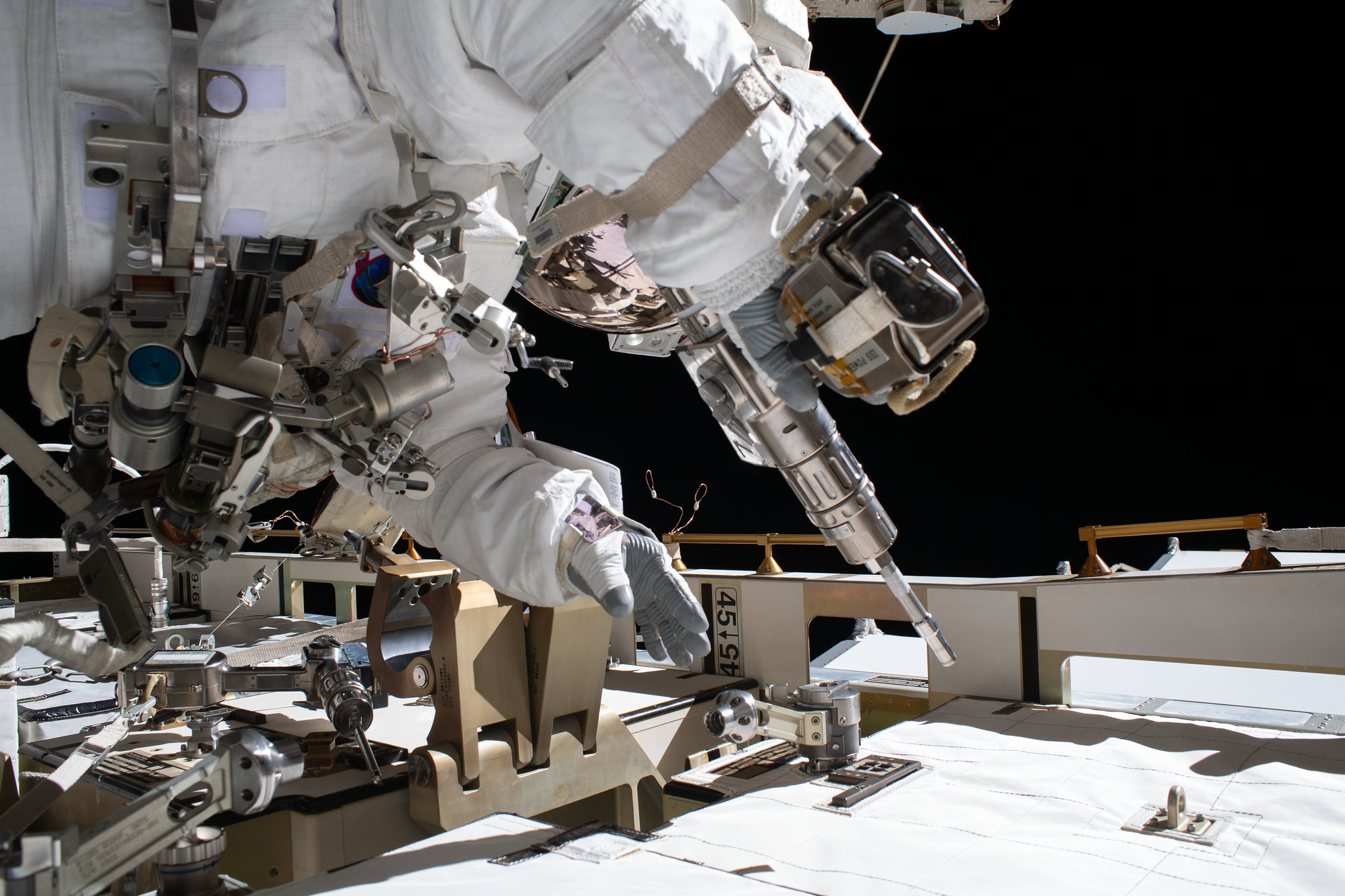
NASA astronaut and Expedition 63 Flight Engineer Bob Behnken works during a spacewalk to swap an aging nickel-hydrogen battery for a new lithium-ion battery on the International Space Station's Starboard-6 truss structure.
NASA astronaut and Expedition 63 Flight Engineer Bob Behnken works during a spacewalk to swap an aging nickel-hydrogen battery for a new lithium-ion battery on the International Space Station’s Starboard-6 truss structure.

NASA astronauts Robert Behnken and Chris Cassidy have begun the first of two final spacewalks to finish a 3.5-year effort to upgrade the International Space Station’s power system. They will replace batteries on one of two power channels on the station’s far starboard truss (S6 Truss).

The spacewalkers switched their spacesuits to battery power at 7:10 a.m. EDT to begin the spacewalk, which is expected to last between six and seven hours.

Watch the spacewalk on NASA TV and on the agency’s website.

The spacewalkers will be removing five existing nickel-hydrogen batteries and replacing them with three new lithium-ion batteries that arrived on a Japanese cargo ship last month. The batteries store electricity for one pair of the station’s solar arrays, and the swap will upgrade the station’s power supply capability. The batteries store power generated by the station’s solar arrays to provide power to the microgravity laboratory when the station is not in sunlight as it circles Earth during orbital night.

This is the 230th spacewalk in support of space station assembly and maintenance. Behnken is extravehicular crew member 1 (EV 1), wearing the spacesuit with red stripes, and using helmet camera #20. Cassidy is extravehicular crew member 2 (EV 2), wearing the spacesuit with no stripes and helmet camera #18. It is the ninth spacewalk for both astronauts.

Learn more about station activities by following the space station blog, @space_station and @ISS_Research on Twitter as well as the ISS Facebook and ISS Instagram accounts.

Get The Details…

Norah Moran

Powered by WPeMatico

NASA TV is Live Now as Astronauts Prepare for Spacewalk

NASA TV is Live Now as Astronauts Prepare for Spacewalk

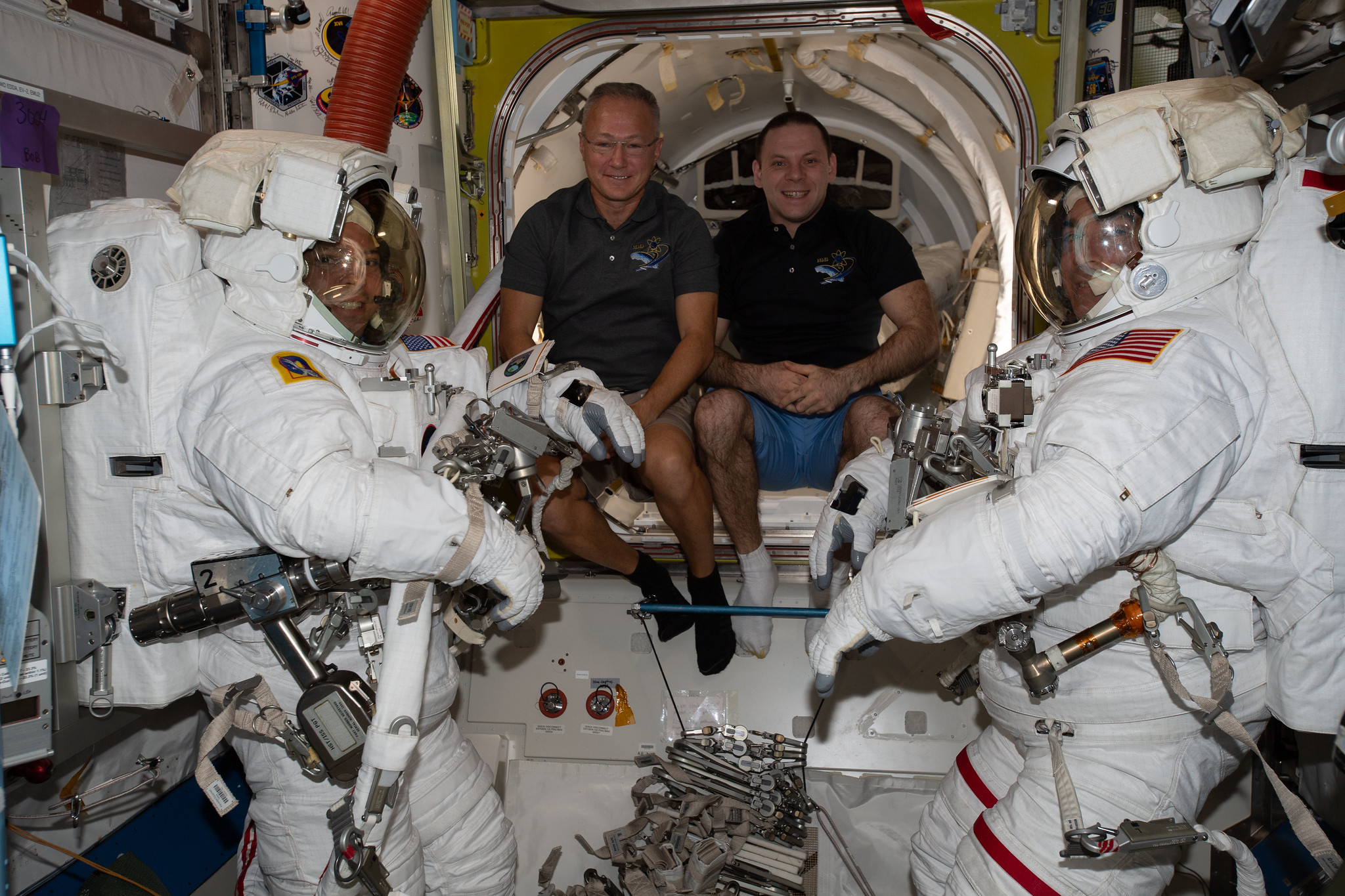
Spacewalkers Bob Behnken (far left) and Chris Cassidy (far right) are suited up ahead of their June 26 spacewalk.
Spacewalkers Bob Behnken (far left) and Chris Cassidy (far right) are suited up with assistance from Expedition 63 Flight Engineers (middle left) Doug Hurley and Ivan Vagner (middle right) ahead of their June 26 spacewalk.

NASA Television coverage of today’s spacewalk with NASA astronauts Robert Behnken and Chris Cassidy is now underway and available on the agency’s website.

The crew members of Expedition 63 are preparing to venture outside the International Space Station for a spacewalk expected to begin at approximately 7:35 a.m. EDT and last as long as seven hours.

The crew is in the airlock and have donned their suits in preparation to exit the airlock and begin today’s activities working on one of two power channels on the far starboard truss (S6 Truss) of the station.

Mirroring the work they completed in the first spacewalk June 26 on the other power channel, the primary tasks for the crew are to remove five of six older nickel-hydrogen batteries for the truss’ power system and install three new lithium-ion batteries. The batteries store electricity for one pair of the station’s solar arrays. Behnken and Cassidy also will be installing two of three adapter plates to complete the circuit to the new batteries and relocating the nickel-hydrogen batteries for storage and for future disposal.

Leading the mission control team today is Flight Director Allison Bolinger with support from Sandy Moore as the lead spacewalk officer.

Learn more about station activities by following @space_station and @ISS_Research on Twitter as well as the ISS Facebook and ISS Instagram accounts.

Get The Details…

Norah Moran

Powered by WPeMatico

Crew Completes Spacewalk Preps and Studies Human Biology

Crew Completes Spacewalk Preps and Studies Human Biology

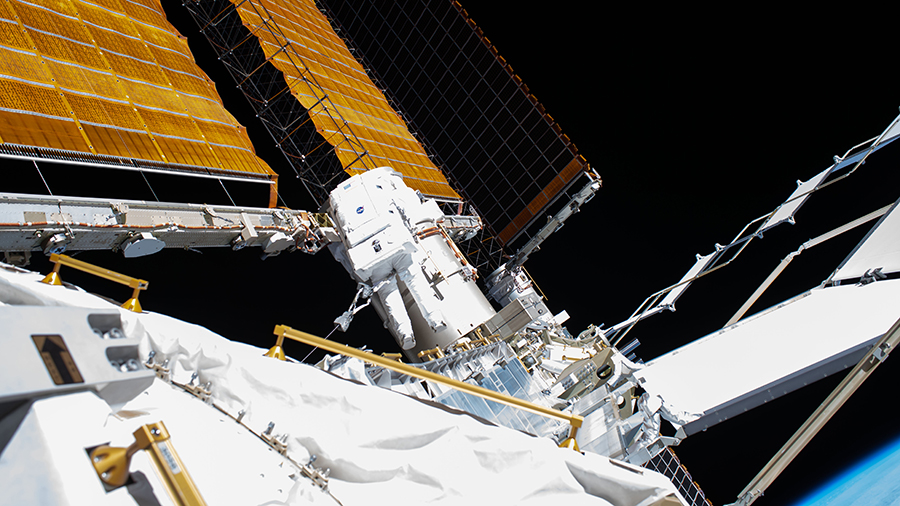
Flight Engineer Bob Behnken (center) is pictured on July 1 during a spacewalk to swap an aging nickel-hydrogen battery for a new lithium-ion battery on the station's starboard truss structure.
Flight Engineer Bob Behnken (center) is pictured on July 1 during a spacewalk to swap an aging nickel-hydrogen battery for a new lithium-ion battery on the station’s starboard truss structure.

Two NASA astronauts finalized their preparations today, ahead of Thursday’s spacewalk, to complete battery swaps on the outside of the International Space Station. NASA Flight Engineer Bob Behnken and Expedition 63 Commander Chris Cassidy organized their tools and readied the Quest airlock for the spacewalk set to begin tomorrow at 7:35 a.m.

NASA astronaut Doug Hurley joined the duo Wednesday afternoon for a spacewalk review and conference with specialists on the ground. Hurley will assist the astronauts in and out of their U.S. spacesuits and monitor their spacewalk activities.

The trio will stay in readiness mode for a second spacewalk scheduled to begin at the same time on Tuesday, July 21. They will finish swapping the aging nickel-hydrogen batteries with new lithium-ion batteries on the station’s truss structure that began 3.5 years ago. The veteran spacewalkers will then set up the Tranquility module for the upcoming installation of a NanoRacks airlock. The new commercial airlock will support public and private experiments exposed to the space environment.

All three astronauts started the day with standard health checks ahead of their spacewalk. Hurley took on the crew medical officer role and briefly examined his crewmates similar to a doctor conducting a checkup on Earth.

Meanwhile, cosmonauts Anatoly Ivanishin and Ivan Vagner were back on human research duty this morning. The Russian duo collected and stowed blood and saliva samples for a pair of studies looking into bone loss and the immune system. The pair then split up as Ivanishin checked out communications gear and Vagner worked on Progress 75 resupply ship cargo transfers.

Get The Details…

Mark Garcia

Powered by WPeMatico

Busy Day of Spacewalk Preps and Human Research

Busy Day of Spacewalk Preps and Human Research

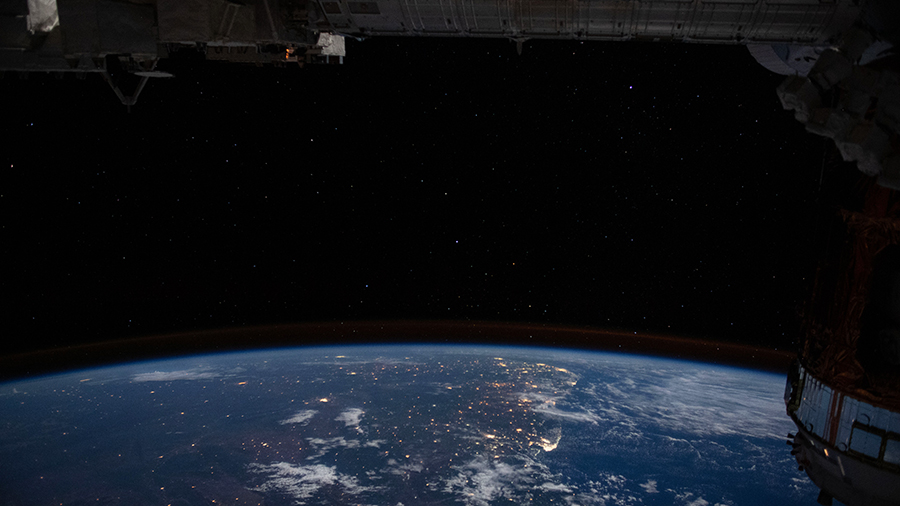
This starry nighttime shot of Rio de Janeiro and surrounding cities on the Brazilian coast was taken as the International Space Station orbited above São Paolo heading northeast above the South American continent before going over the Atlantic Ocean.
This starry nighttime shot of Rio de Janeiro and surrounding cities on the Brazilian coast was taken as the space station orbited above São Paolo before going over the Atlantic Ocean.

Two astronauts are concentrating on the final set of power upgrade spacewalks on the International Space Station beginning this week. Meanwhile, their Expedition 63 crewmates continued focusing on biology research to ensure humans stay healthy in space during long-term missions.

Flight Engineer Bob Behnken and Commander Chris Cassidy for preparing for a pair of spacewalks to wrap up battery swaps and ready the orbiting lab for a new airlock. The duo collected and organized spacewalk tools then studied their tasks step-by-step on a computer during the afternoon. Fellow NASA astronaut Doug Hurley assisted the pair and installed their spacesuit batteries and metal oxide canisters to remove carbon dioxide from the suit.

Behnken and Cassidy will exit the station for the first spacewalk on Thursday. The spacewalk is scheduled to begin at 7:35 a.m. EDT. The spacewalkers will spend about seven hours removing aging nickel-hydrogen batteries and replacing them with new lithium-ion batteries on the Starboard-3 truss structure. NASA TV begins its live coverage at 6 a.m.

The second spacewalk is scheduled to start at the same time on Tuesday, July 21, for the final battery swaps to complete 3.5 years of external power upgrades on the space station. Behnken and Cassidy will then begin outfitting the Tranquility module for a new commercial airlock from NanoRacks. The airlock, designed to deploy public and private experiments, will be installed to Tranquility after its delivery later this year aboard the SpaceX Dragon cargo vehicle.

Meanwhile, a host of space science continues aboard the orbiting lab including human research to maintain healthy crews. NASA and its international partners are studying how the human body adapts to microgravity as they plan longer missions farther out into space.

The two cosmonauts from Roscosmos, Anatoly Ivanishin and Ivan Vagner, were once again exploring ways to stave off the negative effects of living in space. Vagner continued logging his meals and drinks and collected a blood sample for a study that seeks to reverse the loss of bone mass caused by microgravity. He later collected his saliva sample and attached a sensor to himself for an immune system investigation. Ivanishin exercised on a treadmill for a physical fitness evaluation and spent the rest of the day on communications and ventilation maintenance.

Get The Details…

Mark Garcia

Powered by WPeMatico

Spacewalk Preps, Satellite Deployment During Bone and Heart Research

Spacewalk Preps, Satellite Deployment During Bone and Heart Research

The southern tip of Brazil (upper left) bordering Uruguay was pictured as the International Space Station orbited off the Atlantic coast of South America.

Two NASA astronauts are setting their sights on the final pair of spacewalks to continue upgrading power systems on the International Space Station. The orbiting lab also deployed a pair of microsatellites today while the rest of the Expedition 63 crew explored how weightlessness affects the human body.

Flight Engineer Bob Behnken will lead the next two spacewalks to install new lithium-ion (Li-Ion) batteries on the station’s starboard truss structure starting at 7:35 a.m. EDT on Thursday, July 16, and Tuesday, July 21. He will be joined by Commander Chris Cassidy for the two six-and-a-half-hour spacewalks that will finalize the swap of aging nickel-hydrogen batteries with the Li-Ion batteries.

The veteran spacewalkers spent a couple of hours today reviewing their spacewalk procedures step-by-step on a computer. They were joined afterward by Flight Engineer Doug Hurley for a conference with spacewalk specialists in Mission Control. Hurley also began charging the batteries that will power the U.S. spacesuits for the duration of Behnken’s and Cassidy’s spacewalk.

A pair of microsatellites were deployed into Earth orbit today outside Japan’s Kibo laboratory module. The Deformable Mirror CubeSat will demonstrate the performance of a tiny but powerful exo-planet telescope. The TechEdSat-10 CubeSat will test returning small payloads safely into Earth’s atmosphere.

On the Russian side of the station, the two cosmonauts focused on human biology as they conducted a hearing test and studied how diet and exercise can fight the negative effects of microgravity.

Cosmonaut Ivan Vagner, on his first space mission, documented his meals and drinks today to help doctors learn how to counteract the loss of bone mass that occurs during long-term spaceflight. He also joined three-time station resident Anatoly Ivanishin attaching sensors to themselves to monitor their cardiovascular system while working out on an exercise bike. The duo wrapped up the day wearing headphones plugged into a computer that exposed the cosmonauts to a variety of frequencies for a hearing test.

Get The Details…

Mark Garcia

Powered by WPeMatico