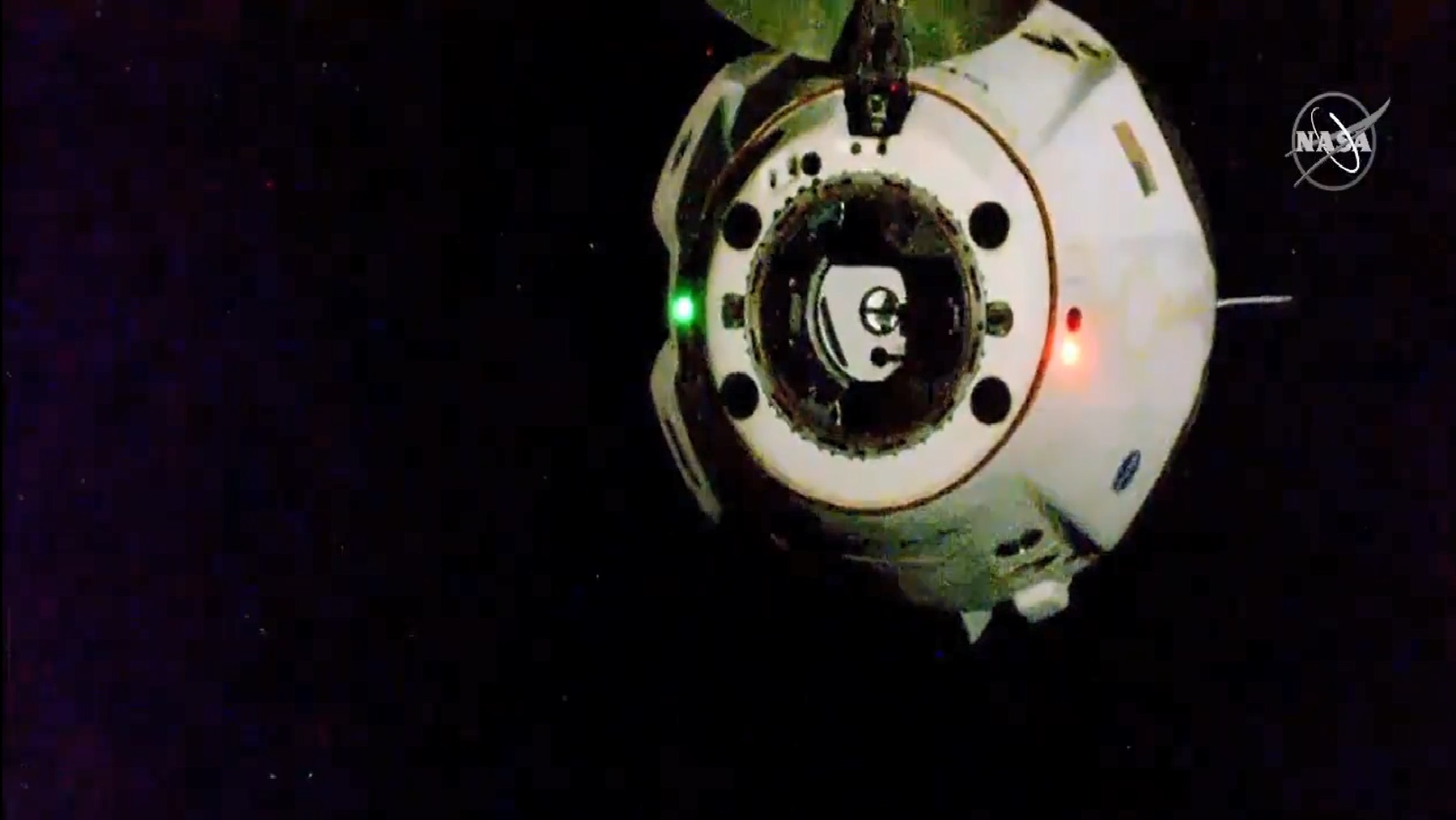
SpaceX’s Crew Dragon “Endeavour” spacecraft moments after undocking from the International Space Station on NASA TV
The SpaceX Crew Dragon “Endeavour” spacecraft with NASA astronauts Robert Behnken and Douglas Hurley inside undocked from the forward end of the International Space Station’s Harmony module at 7:35 p.m. EDT to complete a two-month mission.
Two very small engine burns separated Crew Dragon from the station, and the spacecraft is slowly maneuvering away from the orbital laboratory into an orbital track that will return the astronaut crew and its cargo safely to Earth.
Once flying free, Dragon Endeavour will autonomously execute four departure burns to move the spaceship away from the space station and begin the flight home.
The return timeline with approximate times in EDT is:
August 1
7:35 p.m. Departure burn 0
7:40 p.m. Departure burn 1
8:27 p.m. Departure burn 2
9:14 p.m. Departure burn 3
August 2
1:51 p.m. Trunk jettison
1:56 p.m. Deorbit burn
2:48 p.m. Crew Dragon splashdown
NASA will continue to provide live coverage until astronaut Behnken and Hurley splashdown off the coast of Florida and are recovered from the Gulf of Mexico.
The duo arrived at the orbiting laboratory on May 31, following a successful launch on May 30 on a SpaceX Falcon 9 rocket from NASA’s Kennedy Space Center in Florida. During their 63 days aboard station, Behnken and Hurley contributed more than 100 hours of time to supporting the orbiting laboratory’s investigations, participated in public engagement events, and supported four spacewalks with Behnken and Cassidy to install new batteries in the station’s power grid and upgrade other station hardware.
NASA Astronauts are Now Seated Inside SpaceX’s Crew Dragon
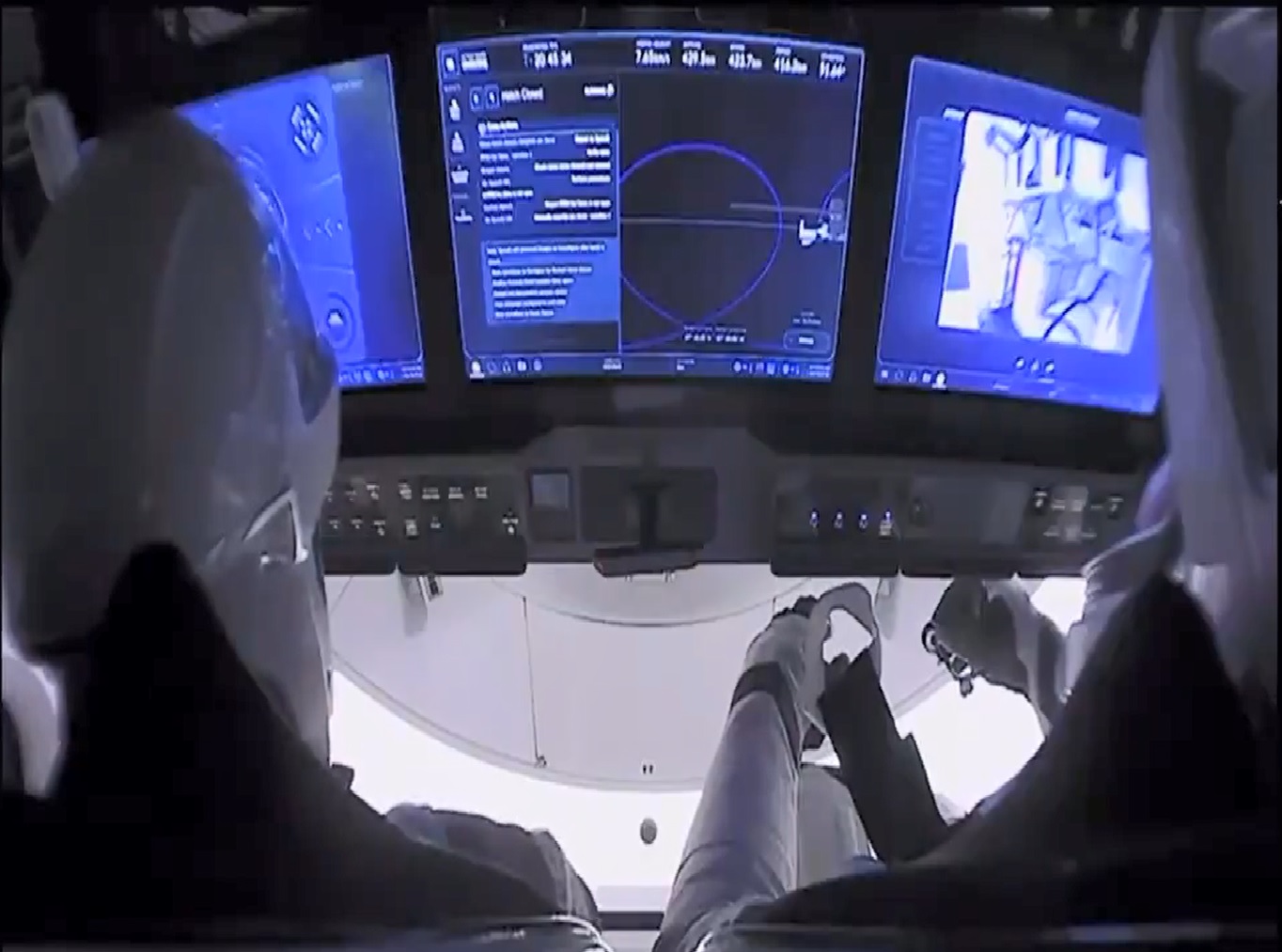
NASA astronauts Robert Behnken and Douglas Hurley seated inside SpaceX’s Crew Dragon “Endeavour” spacecraft on NASA TV before undocking
NASA astronauts Robert Behnken and Douglas Hurley are now seated inside SpaceX’s Crew Dragon “Endeavour” spacecraft as fellow Expedition 63 astronauts Commander Chris Cassidy of NASA and Roscosmos cosmonauts Anatoly Ivanishin and Ivan Vagner closed the hatch between Crew Dragon and the orbital laboratory at 5:37 p.m. EDT.
Teams will conduct standard leak checks and depressurization of the space between the spacecraft and the station, called the vestibule, in preparation for Dragon Endeavour’s undocking and return to Earth. Undocking is scheduled for 7:34 p.m. EDT. After hooks holding Crew Dragon in place retract, two very small engine burns will fire to separate the spacecraft from the station.
Conditions remain “Go” at the primary targeted site, off the coast of Pensacola, and alternate site off the coast of Panama City in the Gulf of Mexico for splashdown and recovery on Sunday, Aug. 2.
NASA TV Live Now as Dragon Crew Prepares for Undocking
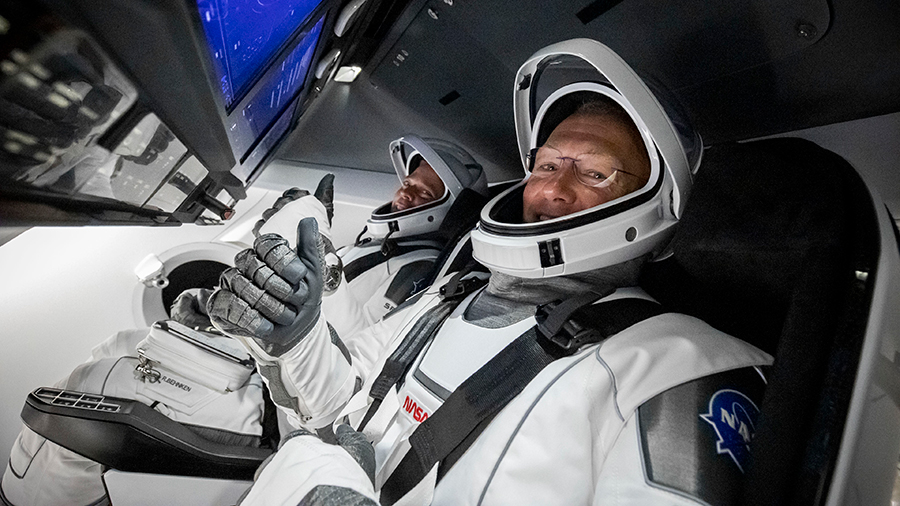
NASA’s first commercial crew astronauts (front to back) Doug Hurley and Bob Behnken are pictured in January during tests inside the SpaceX Crew Dragon vehicle. Credit: SpaceX
SpaceX and NASA are targeting 7:34 p.m. EDT for Crew Dragon to autonomously undock from the space station, with Behnken and Hurley aboard the spacecraft, and return to Earth. Approximately 19 hours later, after jettisoning its trunk and re-entering Earth’s atmosphere, Crew Dragon will splash down in the Gulf of Mexico off the coast of Florida at 2:48 p.m. EDT on Sunday, August 2. The primary splashdown target is Pensacola.
Hurley and Behnken arrived at the orbiting laboratory in the Crew Dragon May 31 following a launch from NASA’s Kennedy Space Center in Florida on May 30. This is SpaceX’s final test flight and is providing data on the performance of the Falcon 9 rocket, Crew Dragon spacecraft and ground systems, as well as in-orbit, docking, splashdown, and recovery operations.
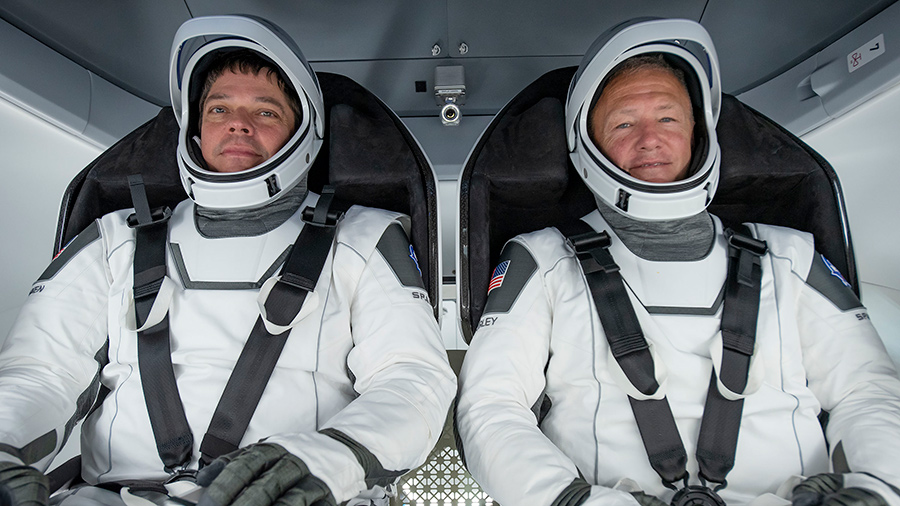
NASA astronauts Bob Behnken (left) and Doug Hurley participate in a fully integrated test of SpaceX Crew Dragon flight hardware at the SpaceX processing facility in Florida on March 30.
Following a scheduled assessment of weather conditions for splashdown, teams from NASA and SpaceX are proceeding with preparations to bring NASA astronauts Robert Behnken and Douglas Hurley home to Earth aboard the SpaceX Crew Dragon “Endeavour” spacecraft.
Conditions are “Go” at the primary targeted site, off the coast Pensacola, and alternate site off the coast of Panama City in the Gulf of Mexico for splashdown and recovery on Sunday, Aug. 2. Teams will continue to closely monitor Hurricane Isaias and evaluate impacts to the potential splashdown sites.
SpaceX will monitor changes to conditions until 2.5 hours prior to the scheduled undocking, when a determination to proceed with departure will be made. If conditions are marginal and exceed the accepted criteria, a joint recommendation by SpaceX and NASA will be made whether to proceed with undocking at 7:34 p.m. EDT. NASA and SpaceX will make the final decision to proceed after the astronauts are ready inside Crew Dragon just before undocking.
Live coverage of NASA’s SpaceX Demo-2 return will begin at 5:15 p.m. and continue through the targeted splashdown at 2:41 p.m. on Sunday, the first return of a commercially built and operated American spacecraft carrying astronauts from the space station. It will wrap up NASA’s SpaceX Demo-2 test flight after more than two months at the International Space Station.
Hurley and Behnken arrived at the orbiting laboratory in the Crew Dragon May 31 following a launch from NASA’s Kennedy Space Center in Florida on May 30. This is SpaceX’s final test flight and is providing data on the performance of the Falcon 9 rocket, Crew Dragon spacecraft and ground systems, as well as in-orbit, docking, splashdown, and recovery operations.
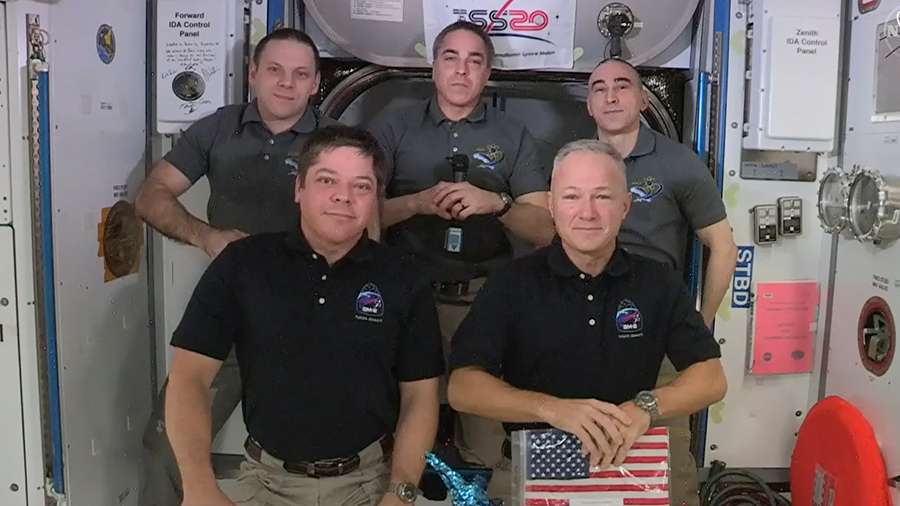
The SpaceX Crew Dragon astronauts (front row, from left) Bob Behnken and Doug Hurley joined their Expedition 63 crewmates (rear, from left) Ivan Vagner, Chris Cassidy and Anatoly Ivanishin for a crew farewell ceremony Saturday morning. Credit: NASA TV
Teams from NASA and SpaceX are proceeding with preparations to bring NASA astronauts Robert Behnken and Douglas Hurley home from the International Space Station to Earth with a splashdown on Sunday, Aug. 2, off the Florida coast aboard the SpaceX Crew Dragon “Endeavour” spacecraft.
Return conditions remained “Go” at several of the needed target locations for splashdown and recovery after teams received a weather briefing Friday evening from the U.S. Air Force 45th Weather Squadron. NASA and SpaceX will make a decision on a primary splashdown target approximately 6 hours before undocking.
NASA and SpaceX are targeting 7:34 p.m. EDT Saturday, Aug. 1, for undocking of the Dragon “Endeavour” spacecraft from the space station and 2:42 p.m. Sunday, Aug. 2, for splashdown, which will be the first return of a commercially built and operated American spacecraft carrying astronauts from the space station.
Teams continue to closely monitor Hurricane Isaias and evaluate impacts to the landing sites in the Gulf of Mexico along the Florida Panhandle. Teams have several weather decision milestones ahead of and after undocking to adjust the splashdown location and time based on the forecasted conditions for recovery.
NASA’s SpaceX Demo-2 return coverage is as follows (all times Eastern):
Saturday, Aug. 1
5:15 p.m. – NASA TV undocking coverage begins for the 7:34 p.m. undocking (NASA Television will have continuous coverage from undocking to splashdown)
Sunday, Aug. 2
2:42 p.m. – Splashdown
5 p.m. – Administrator post-splashdown news conference at Johnson, with the following representatives:
NASA Administrator Jim Bridenstine
Commercial Crew Program representative
International Space Station representative
Gwynne Shotwell, president and chief operating officer, SpaceX
NASA Astronaut Office representative
Tuesday, Aug. 4
4:30 p.m. – Demo-2 Crew News Conference from the Johnson Space Center, with the following participants
NASA astronaut Bob Behnken
NASA astronaut Doug Hurley
Behnken and Hurley arrived at the orbiting laboratory on May 31, following a successful launch on May 30 on a SpaceX Falcon 9 rocket from NASA’s Kennedy Space Center in Florida. During their 63 days aboard station, Behnken and Hurley contributed more than 100 hours of time to supporting the orbiting laboratory’s investigations, participated in public engagement events, and supported four spacewalks with Behnken and Cassidy to install new batteries in the station’s power grid and upgrade other station hardware.
These activities are a part of NASA’s Commercial Crew Program, which has been working with the U.S. aerospace industry to launch astronauts on American rockets and spacecraft from American soil the International Space Station for the first time since 2011. This is SpaceX’s final test flight and is providing data on the performance of the Falcon 9 rocket, Crew Dragon spacecraft and ground systems, as well as in-orbit, docking, splashdown and recovery operations.
The test flight also is helping NASA certify SpaceX’s crew transportation system for regular flights carrying astronauts to and from the space station. SpaceX is readying the hardware for the first rotational mission, which would occur following NASA certification.
The goal of NASA’s Commercial Crew Program is safe, reliable and cost-effective transportation to and from the International Space Station. This could allow for additional research time and increase the opportunity for discovery aboard humanity’s testbed for exploration, including helping us prepare for human exploration of the Moon and Mars.