SpaceX Cargo Dragon Splashes Down Loaded With Science Experiments

SpaceX Cargo Dragon Splashes Down Loaded With Science Experiments

The insignia for the SpaceX CRS-21 mission that saw the upgraded Cargo Dragon resupply ship automatically dock to the Harmony module’s space-facing international docking adapter, a first for a U.S. commercial cargo spacecraft.

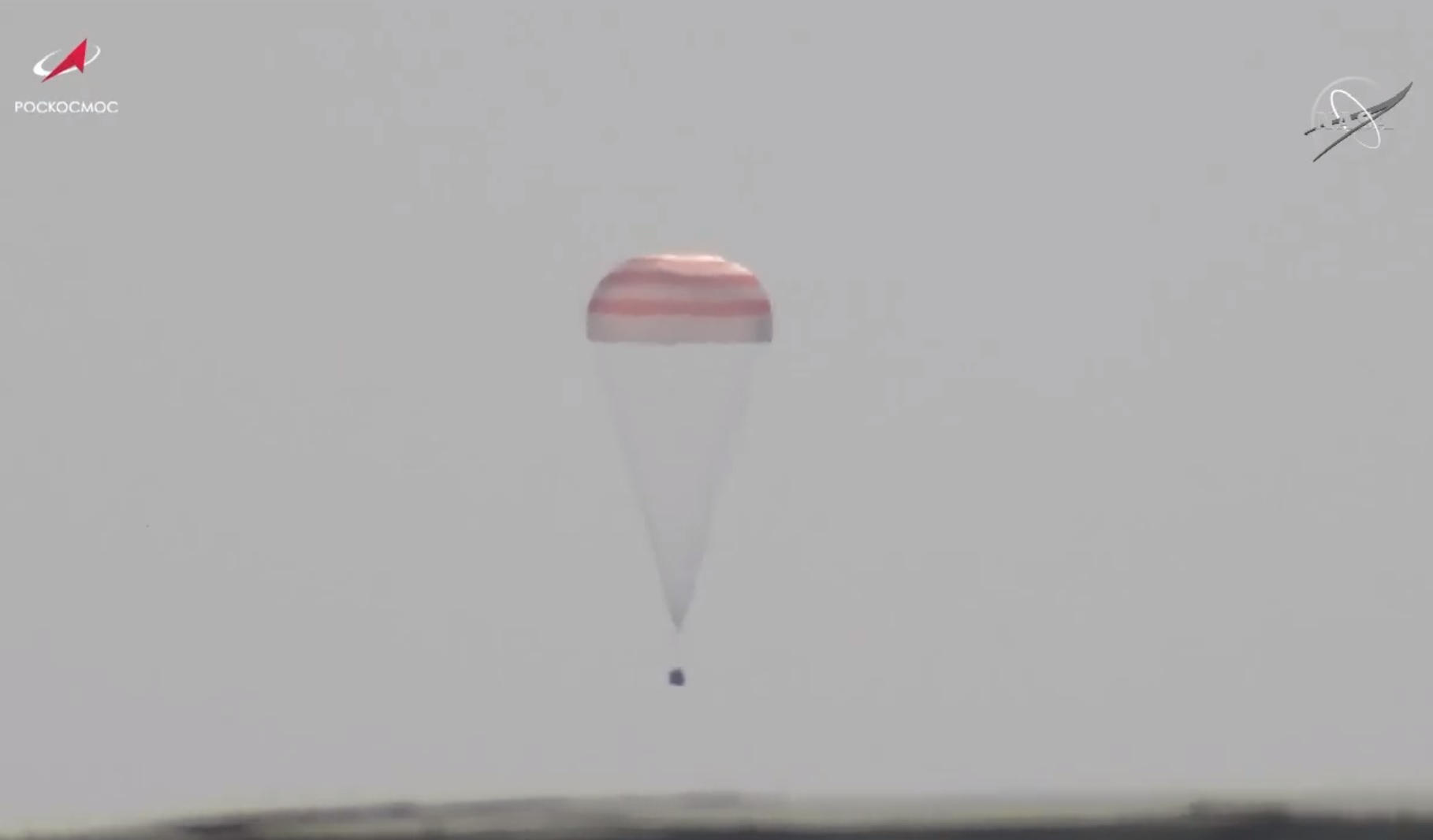
SpaceX’s upgraded Dragon cargo spacecraft splashed down at 8:26 p.m. EST west of Tampa off the Florida coast, marking the return of the company’s 21st contracted cargo resupply mission to the International Space Station for NASA. The spacecraft carried more than 4,400 pounds of valuable scientific experiments and other cargo back to Earth.

The upgraded cargo Dragon capsule used for this mission contains double the powered locker availability of previous capsules, allowing for a significant increase in the research that can be delivered back to scientists. Some scientists will get their research returned quickly, four to nine hours after splashdown.

Some of the scientific investigations Dragon returns to Earth are:

Cardinal Heart

Microgravity causes changes in the workload and shape of the human heart, and it is still unknown whether these changes could become permanent if a person lived more than a year in space. Cardinal Heart studies how changes in gravity affect cardiovascular cells at the cellular and tissue level using 3D-engineered heart tissues, a type of tissue chip. Results could provide new understanding of heart problems on Earth, help identify new treatments, and support development of screening measures to predict cardiovascular risk prior to spaceflight.

Space Organogenesis

This investigation from JAXA (Japan Aerospace Exploration Agency) demonstrates the growth of 3D organ buds from human stem cells to analyze changes in gene expression. Cell cultures on Earth need supportive materials or forces to achieve 3D growth, but in microgravity, cell cultures can expand into three dimensions without those devices. Results from this investigation could demonstrate advantages of using microgravity for cutting-edge developments in regenerative medicine and may contribute to the establishment of technologies needed to create artificial organs.

Sextant Navigation

The sextant used in the Sextant Navigation experiment will be returning to Earth. Sextants have a small telescope-like optical sight to take precise angle measurements between pairs of stars from land or sea, enabling navigation without computer assistance. Sailors have navigated via sextants for centuries, and NASA’s Gemini missions conducted the first sextant sightings from a spacecraft. This investigation tested specific techniques for using a sextant for emergency navigation on spacecraft such as NASA’s Orion, which will carry humans on deep-space missions.

Rodent Research-23

This experiment studies the function of arteries, veins, and lymphatic structures in the eye and changes in the retina of mice before and after spaceflight. The aim is to clarify whether these changes impair visual function. At least 40 percent of astronauts experience vision impairment known as Spaceflight-Associated Neuro-ocular Syndrome (SANS) on long-duration spaceflights, which could adversely affect mission success.

Thermal Amine Scrubber

This technology demonstration tested a method to remove carbon dioxide (CO2) from air aboard the International Space Station, using actively heated and cooled amine beds. Controlling CO2 levels on the station reduces the likelihood of crew members experiencing symptoms of CO2 buildup, which include fatigue, headache, breathing difficulties, strained eyes, and itchy skin.

Bacterial Adhesion and Corrosion

Bacteria and other microorganisms have been shown to grow as biofilm communities in microgravity. This experiment identifies the bacterial genes used during biofilm growth, examines whether these biofilms can corrode stainless steel, and evaluates the effectiveness of a silver-based disinfectant. This investigation could provide insight into better ways to control and remove resistant biofilms, contributing to the success of future long-duration spaceflights.

Fiber Optic Production, which includes the return of experimental optical fibers created in microgravity using a blend of zirconium, barium, lanthanum, sodium, and aluminum. The return of the fibers, called ZBLAN in reference to the chemical formula, will help verify experimental studies that suggest fibers created in space should exhibit far superior qualities to those produced on Earth.

Get space station news, images and features via social media on Instagram at: @iss, ISS on Facebook, and on Twitter @Space_Station and @ISS_Research.

Get The Details…

Mark Garcia

Powered by WPeMatico

Astronauts Relax After Sending Off U.S. Cargo Ships

Astronauts Relax After Sending Off U.S. Cargo Ships

The seven-member Expedition 64 crew poses for a portrait inside the space station's Kibo laboratory module.
The seven-member Expedition 64 crew poses for a portrait inside the space station’s Kibo laboratory module.

One U.S. crew ship and three Russian spaceships remain parked at the International Space Station after the departure of two U.S. space freighters this month. Most of the Expedition 64 crew is relaxing today while a pair of cosmonauts focus on Russian maintenance and science.

Five astronauts, four from NASA and one from JAXA, are taking it easy aboard the orbiting lab today. The quintet kicked off the New Year loading a pair of U.S. cargo ships to wrap up their cargo missions less than a week apart. This followed a busy December full of space research to benefit humans living on and off the Earth.

Northrop Grumman’s Cygnus cargo craft left the station first on Jan. 6 following its release from the Canadarm2 robotic arm. Cygnus will orbit Earth until Jan. 26 for flight tests and remotely controlled science experiments before its fiery, but safe descent above the South Pacific.

The SpaceX Cargo Dragon resupply ship undocked on Tuesday from the Harmony module’s space-facing international docking adapter, a first for a U.S. commercial cargo spacecraft. It will splashdown Wednesday night in the Gulf of Mexico carrying science experiments and station hardware for retrieval and analysis.

JAXA Flight Engineer Soichi Noguchi did start Wednesday collecting his urine samples for a Russian biomedical study before taking the rest of Wednesday off. Station Commander Sergey Ryzhikov and Flight Engineer Sergey Kud-Sverchkov of Roscosmos also participated in the study that seeks to understand how the human body adapts to weightlessness.

Ryzhikov then moved on to Russian spacecraft activities packing the Progress 76 cargo craft and charging batteries inside the Soyuz MS-17 crew ship. Kud-Sverchkov worked on life support gear and deployed radiation detectors in the station’s Russian segment.

Get The Details…

Mark Garcia

Powered by WPeMatico

Cargo Dragon Undocks from Station and Heads for Splashdown

Cargo Dragon Undocks from Station and Heads for Splashdown

The SpaceX Cargo Dragon vehicle begins its separation from the station after undocking from the Harmony module's international docking adapter. Credit: NASA TV
The SpaceX Cargo Dragon vehicle begins its separation from the station after undocking from the Harmony module’s international docking adapter. Credit: NASA TV

With NASA astronaut Victor Glover monitoring aboard the International Space Station, an upgraded SpaceX cargo Dragon spacecraft undocked from the International Docking Adapter on the station’s space-facing port of the Harmony module at 9:05 a.m. EST.

It is the first undocking of a U.S. commercial cargo craft from the complex. Previous cargo Dragon spacecraft were attached and removed from the space station using the station’s robotic Canadarm2.

Dragon will fire its thrusters to move a safe distance from the space station during the next 36 hours. On Wednesday, Jan. 13, Dragon will conduct a deorbit burn at 7:37 p.m. to begin its re-entry sequence into Earth’s atmosphere. Dragon is expected to splash down west of Tampa off the Florida coast about 8:27 p.m. The splashdown will not be broadcast.

The upgraded cargo Dragon capsule used for this mission contains double the powered locker availability of previous capsules, allowing for a significant increase in the research that can be carried back to Earth.

Splashing down off the coast of Florida enables quick transportation of the science aboard the capsule to the agency’s Kennedy Space Center’s Space Station Processing Facility, delivering some science back into the hands of the researchers as soon as four to nine hours after splashdown. This shorter transportation timeframe allows researchers to collect data with minimal loss of microgravity effects. Previous cargo Dragon spacecraft returned to the Pacific Ocean, with quick-return science cargo processed at SpaceX’s facility in McGregor, Texas, and delivered to NASA’s Johnson Space Center in Houston.

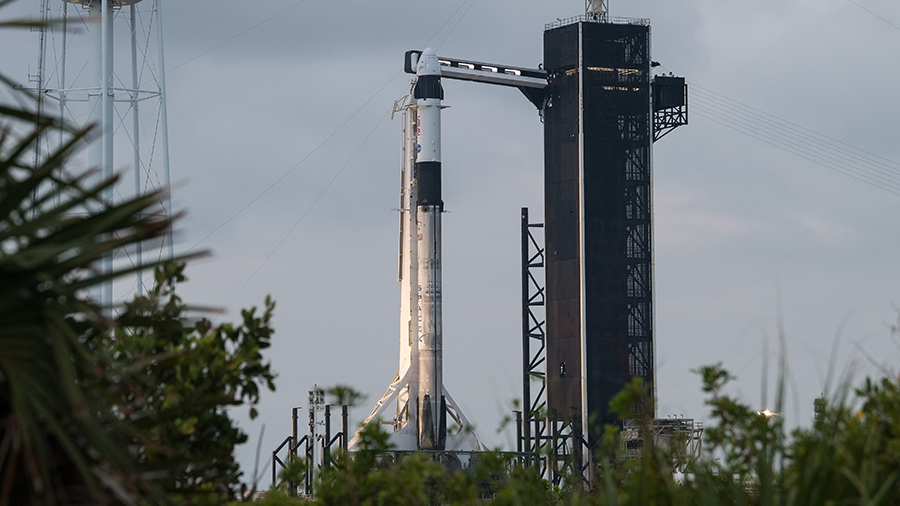
Dragon launched Dec. 6 on a SpaceX Falcon 9 rocket from Launch Complex 39A at NASA’s Kennedy Space Center in Florida, arriving at the station just over 24 hours later and achieving the first autonomous docking of a U.S. commercial cargo resupply spacecraft. The spacecraft delivered more than 6,400 pounds of hardware, research investigations and crew supplies.

Get space station news, images and features via social media on Instagram at: @iss, ISS on Facebook, and on Twitter @Space_Station and @ISS_Research.

Get The Details…

Mark Garcia

Powered by WPeMatico

Dragon Departure Live Now on NASA TV

Dragon Departure Live Now on NASA TV

The SpaceX Cargo Dragon vehicle is pictured docked to the Harmony module's space-facing international docking adapter. Credit: NASA TV
The SpaceX Cargo Dragon vehicle is pictured docked to the Harmony module’s space-facing international docking adapter. Credit: NASA TV

NASA Television and the agency’s website are broadcasting live coverage for the departure of an upgraded SpaceX cargo Dragon spacecraft from the International Space Station. NASA astronaut Victor Glover is monitoring the activity aboard the station.

The targeted undocking time has been moved to optimize communication coverage; commands to undock will be sent at 9 a.m. EST with physical separation of the two spacecraft about 9:05 a.m.

The undocking will be the first time a U.S. commercial cargo craft autonomously departs from the station’s International Docking Adapter.

The spacecraft is filled with more than 4,400 pounds of valuable scientific experiments and other cargo to return to Earth to complete SpaceX’s 21st commercial resupply services mission for NASA.

Dragon will fire its thrusters to move a safe distance from the station’s space-facing port of the Harmony module and exit the area of the space station to begin its return to Earth. On Wednesday, Dragon will initiate a deorbit burn to begin its re-entry sequence into Earth’s atmosphere then make a parachute-assisted splashdown around 8:27 p.m. – the first return of a cargo resupply spacecraft off the Florida coast west of Tampa. The deorbit burn and splashdown will not be broadcast.

For departure coverage and more information about the mission, visit: https://blogs.nasa.gov/spacestation. Get space station news, images and features via social media on Instagram at: @issISS on Facebook, and on Twitter @Space_Station and @ISS_Research.

Get The Details…

Mark Garcia

Powered by WPeMatico

SpaceX Waves off Undocking of Cargo Dragon

SpaceX Waves off Undocking of Cargo Dragon

The SpaceX Cargo Dragon vehicle is pictured docked to the Harmony module's space-facing international docking adapter. Credit: NASA TV
The SpaceX Cargo Dragon vehicle is pictured docked to the Harmony module’s space-facing international docking adapter. Credit: NASA TV

As a result of adverse weather conditions at the targeted splashdown zone off the coast of Daytona Beach, Florida, SpaceX has waved off today’s planned departure of an upgraded SpaceX Dragon resupply spacecraft.

Teams are currently assessing weather conditions to determine the next opportunity for undocking.

Splashing down off the coast of Florida enables quick transportation of the science aboard the capsule to the agency’s Kennedy Space Center’s Space Station Processing Facility, delivering some science back into the hands of the researchers as soon as four to nine hours after splashdown. This shorter transportation timeframe allows researchers to collect data with minimal loss of microgravity effects. Previous cargo Dragon spacecraft returned to the Pacific Ocean, with quick-return science cargo processed at SpaceX’s facility in McGregor, Texas, and delivered to NASA’s Johnson Space Center in Houston.

For updated information about space station activities, visit: https://blogs.nasa.gov/spacestation/.Get space station news, images and features via social media on Instagram at: @iss, ISS on Facebook, and on Twitter @Space_Station and @ISS_Research.

Get The Details…

Mark Garcia

Powered by WPeMatico