Mission Prep Heats Up Amid Science and Medical Studies

Mission Prep Heats Up Amid Science and Medical Studies

Expedition 65 Flight Engineer Thomas Pesquet of ESA (European Space Agency) works with a science experiment within the Microgravity Science Glovebox. Credits: NASA

Today, the Expedition 65 crewmates aboard the International Space Station continued down their checklists in preparation for the next day’s planned mission activities — to include a port-relocation maneuver and the launch of a new module that will replace the Pirs Docking Compartment. Pirs has only a few days left in its 20-year length of service to the orbiting outpost, as it will soon be jettisoned, along with the Progress 77 cargo craft, on Friday for a destructive re-entry in Earth’s atmosphere.

Investigations in materials science continued in between maintenance and mission prep, with NASA astronaut Megan McArthur conducting runs of the Investigating the Structure of Paramagnetic Aggregates from Colloidal Ellipsoids, or InSPACE-4, study. Using magnetic fields, the experiment studies the assembly of tiny structures from colloids and their mechanical responses to interaction with light and heat.

ESA (European Space Agency) astronaut Thomas Pesquet, meanwhile, worked with ULTRA Tweezers, an experiment that aims to gain understanding of an acoustic phenomenon theorized more than 30 years ago. The microgravity environment inherent to station will be particularly helpful in validating use of ultrasonic tweezers, or non-audible sound waves, to exert force on the objects they encounter.

Ongoing medical studies in eye health involved many of the crew members, with Japan Aerospace Exploration Agency astronaut Akihiko Hoshide and McArthur setting up the fundoscope for ocular examinations. These exams are remotely guided from medical experts on the ground and obtain images of the retinol surface, seeking any detectable changes to the astronauts’ eyes and vision.

Maintenance and housekeeping was a priority for another contingent of astronauts and cosmonauts. Flight Engineer Shane Kimbrough continued an install with the newly deployed toilet system in Node 3 while his fellow crew member, NASA astronaut Mark Vande Hei, obtained a potable bus sample from the Water Recovery System. The Russian cosmonaut duo of Pyotr Dubrov and Oleg Novitskiy continued with cargo transfer activities.

Many tasks were a prelude to the port relocation happening Wednesday, with Hoshide going over the final configuration, McArthur calibrating the Crew Dragon handheld gas detectors, and Pesquet reorganizing supplies in the Crew Dragon spacecraft, dubbed Endeavour.

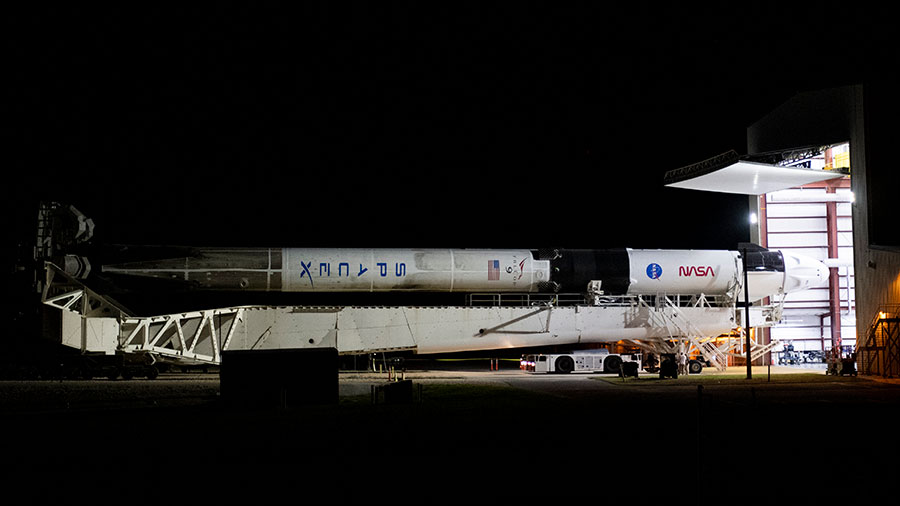
Tomorrow, Kimbrough, McArthur, Hoshide, and Pesquet will board Endeavour about 4:30 a.m. EDT and undock from the forward port of the station’s Harmony module at 6:45 a.m. The spacecraft will dock again at the station’s space-facing port a short time later, at 7:32 a.m. This fly-around will free up Harmony’s forward port for the docking of Boeing’s CST-100 Starliner as part of NASA’s Boeing Orbital Flight Test-2 (OFT-2) mission.

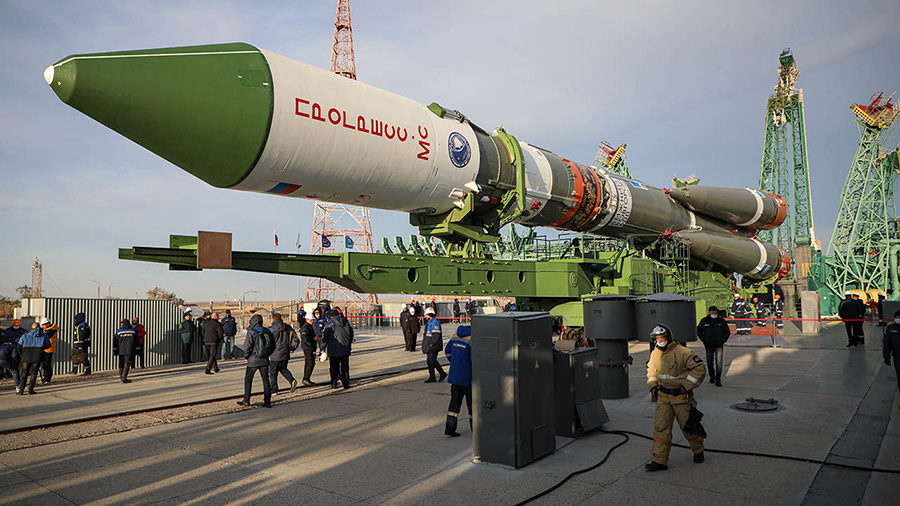
On July 21, catch the port relocation first on NASA Television, the NASA app, and the agency’s website. Live coverage begins at 6:30 a.m. EDT. Four hours later, at 10:30 a.m., launch coverage begins for the Multipurpose Laboratory Module. Named Nauka, after the Russian word for “science,” the newest addition to station will hitch a ride to space on a three-stage Proton rocket from the Baikonur Cosmodrome in Kazakhstan.

Get The Details…

Catherine Williams

Powered by WPeMatico

Simulation and Station Maintenance Preface a Busy Week for the Crew

Simulation and Station Maintenance Preface a Busy Week for the Crew

Expedition 65 Commander Akihiko Hoshide of the Japan Aerospace Exploration Agency reviews procedures on a computer tablet for the InSPACE-4 physics study. Credits: NASA

As the week kicked off, the Expedition 65 crew members spent much of their Monday fine-tuning procedures in anticipation of Wednesday’s port-relocation activity, which will free up the Harmony’s forward port for the docking of Boeing’s CST-100 Starliner spacecraft to the International Space Station. That vehicle is scheduled for launch Friday, July 30, as part of NASA’s Boeing Orbital Flight Test-2 mission.

Science also continued aboard the orbiting laboratory, with NASA Flight Engineer Mark Vande Hei conducting experiment runs throughout the day for Investigating the Structure of Paramagnetic Aggregates from Colloidal Ellipsoids, or InSPACE-4. This investigation studies the assembly of tiny structures from colloids using magnetic fields. Off the Earth and without the constraints of gravity, scientists are able to observe the assembly processes free from confining sample walls and sedimentation and to timescales not possible during simulation.

Vande Hei teamed up with fellow crewmate Shane Kimbrough to perform needed maintenance to the station’s toilet system, removing and replacing a hose for the assembly and completing a motor test and leak check. Station Commander Akihiko Hoshide, a Japan Aerospace Exploration Agency astronaut, along with NASA astronaut Megan McArthur, helped keep station experiments running optimally by removing two deployers from the Japanese Experiment Module Small Satellite Orbital Deployer and a hard drive from the Fluids and Combustion Facility, respectively.

Cosmonauts Pyotr Dubrov and Oleg Novitskiy, meanwhile, worked to transfer equipment for disposal to the Progress 77 cargo craft, which is set to undock — along with the Pirs Docking Compartment — from the International Space Station on Friday, July 23. A few hours later, Progress’ engines will fire in a deorbit maneuver to send the cargo craft and Pirs into a destructive re-entry in the Earth’s atmosphere over the Pacific Ocean.

Replacing Pirs, a module that has been part of the orbital outpost for the past 20 years, is the Multipurpose Laboratory Module (MLM) named Nauka, the Russian word for “science.” The MLM is scheduled to launch on Wednesday, July 21, on a three-stage Proton rocket from the Baikonur Cosmodrome in Kazakhstan.

Most pressing for the team in space was a comprehensive onboard training session and simulation for the upcoming Crew Dragon port relocation, which will set the stage for a historic first — when two different U.S. commercial spacecraft built for crew will be docked to the outpost at the same time.

See all these mission events on NASA Television, the NASA app, and the agency’s website. Live coverage of the port relocation begins at 6:30 a.m. EDT Wednesday, July 21, with launch coverage of the MLM at 10:30 a.m. that same day. On Friday, July 23, coverage for the undocking of Progress 77 and Pirs beginning at 8:45 a.m. EDT Friday, July 23.

Get The Details…

Catherine Williams

Powered by WPeMatico

Nanoparticles and Robotics Research Amid Maintenance Today

Nanoparticles and Robotics Research Amid Maintenance Today

Expedition 65 astronauts (from left) Akihiko Hoshide and Shane Kimbrough talked to elementary school students from New York City on June 9.

The Expedition 65 crew members focused their Friday space research activities on nanoparticles and free-flying robotics. Their International Space Station maintenance activities included updating science communications hardware and replacing life support components.

State-of-the-art space manufacturing techniques being studied on the orbital lab have the potential to improve building technologies on Earth. The new InSPACE-4 study, delivered last moth onboard the SpaceX Cargo Dragon resupply ship, seeks to harness nanoparticles and fabricate new and advanced materials. NASA Flight Engineers Megan McArthur and Mark Vande Hei were conducting more runs of the space physics experiment, that has been ongoing for several days, inside the Microgravity Science Glovebox today.

An AstroBee robotic free-flyer was powered up in the Kibo laboratory module Friday morning to demonstrate complex maneuvers in the orbital lab while using less propulsion. Commander Akihiko Hoshide configured the toaster-sized device Friday morning and ground scientists uplinked software commands to control the AstroBee. The Astrobatics robotic mobility study has implications for future space missions and technologies on Earth.

NASA Flight Engineer Shane Kimbrough spent the day installing new communications gear inside the Human Research Facility-2 (HRF-2) rack. Located in the Europe’s Columbus laboratory module, the HRF-2 enables studies of the physiological, behavioral and chemical changes that take place in the human body while living in space.

Flight Engineer Thomas Pesquet of ESA (European Space Agency) joined Vande Hei and continued replacing aging components inside the U.S. Destiny laboratory module’s carbon dioxide removal assembly. Pesquet later swapped a laptop computer battery and Vande Hei reviewed procedures to support next week’s port relocation of the SpaceX Crew Dragon Endeavour spaceship.

In the station’s Russian segment, first-time space flyer Pyotr Dubrov serviced communications hardware while veteran cosmonaut Oleg Novitskiy swapped out a variety of electronics gear.

Get The Details…

Mark Garcia

Powered by WPeMatico

Crew Using Virtual, Augmented Reality for Science and Maintenance

Crew Using Virtual, Augmented Reality for Science and Maintenance

Flight Engineer Megan McArthur is wearing the Sidekick headset to test using augmented reality on the station. Commander Akihiko Hoshide is wearing virtual reality goggles for the Time Perception experiment.
Flight Engineer Megan McArthur tests augmented reality while wearing the Sidekick headset. Commander Akihiko Hoshide wears virtual reality goggles for a time perception study.

Science and maintenance using virtual and augmented reality tools was prominent aboard the International Space Station today. The Expedition 65 crew also made sure life support components remain in tip-top shape aboard the orbiting lab.

The universe’s coldest temperatures can be found inside the U.S. Destiny laboratory module’s Cold Atom Lab (CAL). NASA Flight Engineer Megan McArthur replaced components inside the CAL today to improve the operation quality of the device that researches fundamental and quantum physics at extremely low temperatures. She wore the Sidekick headset and used augmented reality to assist her with the complex maintenance work.

Commander Akihiko Hoshide switched between a pair of different experiments on Thursday, one looking at space manufacturing and the other exploring astronaut adaptation in space. He conducted runs for the InSPACE-4 physics study that seeks to harness nanoparticles and fabricate new and advanced materials. In between that research, he wore virtual reality goggles and clicked a trackball for the Vection study observing how astronauts visually interpret motion, orientation and distance in microgravity.

Life support maintenance is critical on spacecraft so that crew members always have a safe breathing environment. Flight Engineers Shane Kimbrough, Mark Vande Hei and Thomas Pesquet partnered together replacing components inside the station’s Carbon Dioxide Removal Assembly and inspecting the Avionics Air Assembly.

In the station’s Russian segment, veteran cosmonaut Oleg Novitskiy explored how microgravity affects genetics then studied space photography techniques. First-time space flyer Pyotr Dubrov replaced components inside Russian Orlan spacesuits.

Get The Details…

Mark Garcia

Powered by WPeMatico

Nanoparticles, Microscopic Animal Research during Life Support Work

Nanoparticles, Microscopic Animal Research during Life Support Work

Astronauts (from left) Thomas Pesquet and Mark Vande Hei service a variety of hardware inside the U.S. Destiny laboratory module.

Nanoparticles and microscopic animals were the research highlights aboard the International Space Station today. The Expedition 65 crew also focused on servicing life support components and Russian spacesuit maintenance.

NASA Flight Engineers Shane Kimbrough and Megan McArthur continued ongoing operations for the InSPACE-4 physics study throughout Tuesday. Kimbrough started the first run in the morning then McArthur took over for the second run during the afternoon. The space manufacturing investigation takes place inside the Microgravity Science Glovebox and explores ways to harness nanoparticles to fabricate new and advanced materials.

Tiny organisms called water bears, or tardigrades, are being observed in the orbiting lab’s Life Sciences Glovebox located in Japan’s Kibo laboratory module. Commander Akihiko Hoshide placed the microbes, recently delivered aboard the SpaceX Cargo Dragon vehicle, into the Bioculture System for the Cell Science-04 biology experiment. The study seeks to identify genes that adapt best to the harsh environment of microgravity.

Some older components inside the station’s Carbon Dioxide Removal Assembly were replaced today to ensure a safe breathing environment in space. Astronauts Mark Vande Hei and Thomas Pesquet partnered together inside the U.S. Destiny laboratory module servicing the critical life support gear all day on Tuesday.

In the orbiting lab’s Russian segment, veteran cosmonaut Oleg Novitskiy concentrated on checking electronics and communications hardware. First-time space flyer Pyotr Dubrov spent the day replacing components and checking cable connections on Russian Orlan spacesuits.

Get The Details…

Mark Garcia

Powered by WPeMatico