Vein Scans, Blood Tests on Station Prolong Astronaut Health

Vein Scans, Blood Tests on Station Prolong Astronaut Health

The seven-member Expedition 67 crew poses for a portrait inside the International Space Station's Harmony module.
The seven-member Expedition 67 crew poses for a portrait inside the International Space Station’s Harmony module.

Vein scans and human research samples comprised the majority of the research schedule for the Expedition 67 crew members on Tuesday. Spacesuit work is also ongoing aboard the International Space Station as the cosmonauts prepare for a spacewalk.

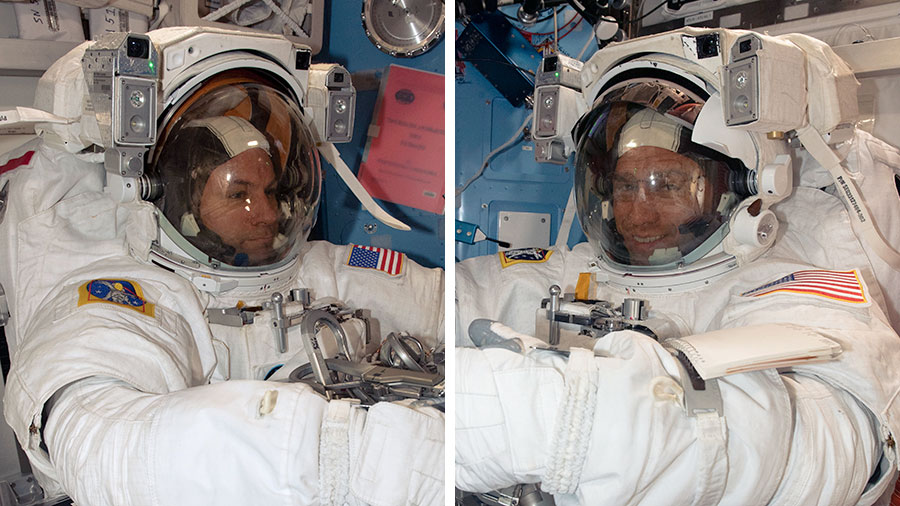
Three astronauts took turns on Tuesday morning using the Ultrasound 2 device to scan each other’s neck, shoulder, and leg veins. NASA Flight Engineers Kjell Lindgren, Bob Hines, and Jessica Watkins started the day inside the Columbus laboratory module with researchers on the ground remotely guiding the biomedical study. The ultrasound scans produce an echo that bounces off human tissue converting it to a video signal that is downlinked to Earth in real-time for analysis. Scientists view the imagery to observe how microgravity affects crew health.

The crew members also regularly collect their own blood, saliva, and urine samples, stowing the specimens in science freezers for later analysis. Shortly after Lindgren woke up on Tuesday, he spun his blood samples in a centrifuge for the Phospho-aging study to understand space-caused accelerated bone loss and muscle atrophy. ESA (European Space Agency) Flight Engineer Samantha Cristoforetti collected her blood and urine samples during the afternoon for future examination. Earlier, she documented her meals for a nutrition study then swapped material samples inside the Electrostatic Levitation Furnace, a high-temperature research facility.

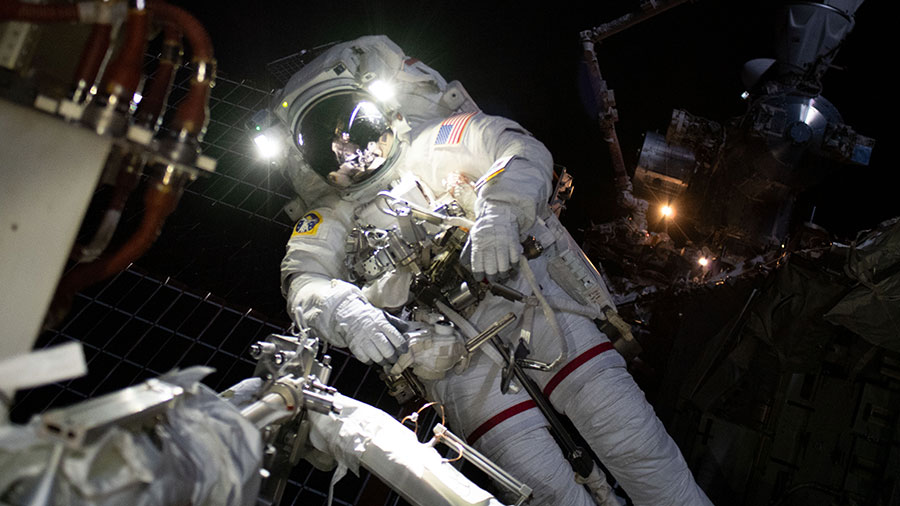
Cristoforetti and Watkins also spent time inside the U.S. Quest airlock servicing a U.S. spacesuit. The duo split their day on a variety of suit activities including swapping components and cleaning cooling loops. Hines spent his afternoon charging computer tablets and downloading security updates for the devices.

Commander Oleg Artemyev and Flight Engineer Denis Matveev spent the day activating and inspecting a pair of Orlan spacesuits, testing their communication systems, and performing leak checks. The two cosmonauts have been busy this week preparing for an upcoming spacewalk to prepare the European robotic arm for payload operations on the station’s Russian segment. Flight Engineer Sergey Korsakov worked throughout Tuesday maintaining electronics systems and life support hardware inside the orbiting lab’s Russian modules.


Learn more about station activities by following the space station blog@space_station and @ISS_Research on Twitter, as well as the ISS Facebook and ISS Instagram accounts.

Get weekly video highlights at: http://jscfeatures.jsc.nasa.gov/videoupdate/

Get the latest from NASA delivered every week. Subscribe here: www.nasa.gov/subscribe

Get The Details…

Mark Garcia

Powered by WPeMatico

Crew Studies Muscles, Skin Healing During Spacewalk Preps

Crew Studies Muscles, Skin Healing During Spacewalk Preps

The sun's glint beams off the Indian Ocean in this photograph from the space station as it soared 260 miles above.
The sun’s glint beams off the Indian Ocean in this photograph from the space station as it soared 260 miles above.

Space biology kicked off the week for the Expedition 67 crew on Monday to help NASA and its international partners support astronauts on long spaceflight missions. Two cosmonauts are also preparing for a spacewalk to continue outfitting the International Space Station’s third robotic arm.

NASA Flight Engineers Kjell Lindgren and Bob Hines began Monday morning with muscle measurements inside the Columbus laboratory module. Using the Myotones device the pair measured the biochemical properties of their neck, back, and leg muscles. By understanding how weightlessness impacts muscular tone, stiffness, and elasticity, doctors can better evaluate crew health and develop effective space fitness strategies.

Lindgren downloaded the muscle data captured from the Myotones device to a laptop computer connected to Columbus’ European Physiology Module, a research rack that supports neuroscientific, cardiovascular, and physiological studies. Afterward, the two-time station resident collected and stowed urine samples in a science freezer for later analysis.

Hines then went over to the Kibo laboratory module to continue studying how wounds heal in space. He joined Flight Engineers Jessica Watkins of NASA and Samantha Cristoforetti of ESA (European Space Agency) and practiced surgical techniques such as biopsies, suture splints, and wound dressing, inside Kibo’s Life Science Glovebox. Researchers are exploring the molecular processes behind space-caused skin aging that may impact the way wounds heal and possibly improve skin healing treatments for both astronauts and Earthlings.

Cosmonauts Oleg Artemyev and Denis Matveev continued setting up their tools and Orlan spacesuits today ahead of another planned spacewalk to configure the European robotic arm (ERA) for payload operations on the station’s Russian segment. Roscosmos Flight Engineer Sergey Korsakov spent his morning on computer maintenance inside the Nauka multipurpose laboratory module before switching to orbital plumbing duties during the afternoon.


Learn more about station activities by following the space station blog@space_station and @ISS_Research on Twitter, as well as the ISS Facebook and ISS Instagram accounts.

Get weekly video highlights at: http://jscfeatures.jsc.nasa.gov/videoupdate/

Get the latest from NASA delivered every week. Subscribe here: www.nasa.gov/subscribe

Get The Details…

Mark Garcia

Powered by WPeMatico

Biomedical Research, Spacewalk Preps Wrap Week on Station

Biomedical Research, Spacewalk Preps Wrap Week on Station

An orbital sunrise illuminate's Earth's atmosphere silhouetting the cloud tops as the space station soared 264 miles above South America.
An orbital sunrise illuminate’s Earth’s atmosphere silhouetting the cloud tops as the space station soared 264 miles above South America.

Biomedical research topped the science schedule for the Expedition 67 crew members at the end of the week. Meanwhile, the International Space Station is ramping up for another spacewalk to configure its third robotic arm.

An astronaut’s skin experiences accelerated aging in microgravity and scientists are exploring if the space-caused molecular processes affect the way wounds heal. Observations of the skin healing biological mechanisms may inform advanced wound treatments and therapies for astronauts and Earthlings. Flight Engineers Kjell Lindgren, Bob Hines, and Jessica Watkins, all from NASA, with Samantha Cristoforetti of ESA (European Space Agency), have been supporting the biomedical experiment taking place inside the Kibo laboratory module this week. On Friday, the quartet continued practicing surgical techniques such as biopsies, suture splints, and wound dressing, inside Kibo’s Life Science Glovebox.

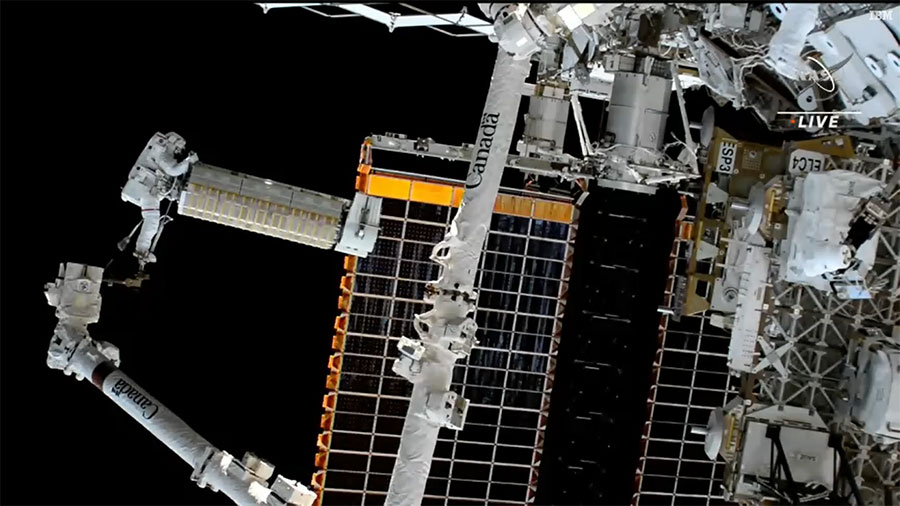
Two cosmonauts spent Friday reviewing procedures for an upcoming spacewalk to continue outfitting the European robotic arm (ERA). Cosmonauts Oleg Artemyev and Denis Matveev reviewed the tasks and maneuvers they will use when they exit the Poisk module’s airlock and translate towards the ERA in their Orlan spacesuits. The duo previously worked outside the station on Aug. 17, 2022, configuring the ERA when Artemyev’s spacesuit experienced a power issue officially ending the spacewalk after four hours and one minute.

The station’s third robotic arm, from ESA, is attached to the Nauka multipurpose laboratory module and being tested for commanding and operations by Flight Engineer Sergey Korsakov. He partnered with his cosmonaut crewmates for the spacewalk procedures review on Friday and will assist Artemyev and Matveev in and out of their spacesuits and maneuver the ERA when they conduct their upcoming robotics spacewalk.


Learn more about station activities by following the space station blog@space_station and @ISS_Research on Twitter, as well as the ISS Facebook and ISS Instagram accounts.

Get weekly video highlights at: http://jscfeatures.jsc.nasa.gov/videoupdate/

Get the latest from NASA delivered every week. Subscribe here: www.nasa.gov/subscribe

Get The Details…

Mark Garcia

Powered by WPeMatico

SpaceX, Soyuz Crew Swaps Ramping Up as Life Science Continues

SpaceX, Soyuz Crew Swaps Ramping Up as Life Science Continues

The SpaceX Crew-5 crewmates pose for a portrait. From left are, Anna Kikina of Roscosmos; Josh Cassada and Nicole Mann, both from NASA; and Koichi Wakata of the Japan Aerospace Exploration Agency. Credit: SpaceX

NASA and SpaceX have announced the date for the upcoming Crew-5 launch to the International Space Station. The space station is also orbiting higher today to prepare for next month’s Soyuz crew vehicle swap.

The fifth crewed operational mission aboard a SpaceX Dragon spacecraft has been given a launch date of Oct. 3 from Florida’s Kennedy Space Center. The four SpaceX Crew-5 crewmates, Commander Nicole Mann, Pilot Josh Cassada, and Mission Specialists Koichi Wakata and Anna Kikina will dock Dragon Endurance to the forward port on the station’s Harmony module about 24 hours later.

Several days after that, the four SpaceX Crew-4 astronauts will enter the Dragon Freedom crew ship and undock from Harmony’s space-facing port for a parachute-assisted splashdown off the coast of Florida. Freedom Commander Kjell Lindgren, Pilot Bob Hines, with Mission Specialists Jessica Watkins and Samantha Cristoforetti, have been living and working on the orbital lab as Expedition 67 Flight Engineers since April 27.

The space station received an orbital boost on Wednesday night when Russia’s ISS Progress 81 cargo craft, docked to the Zvezda service module’s aft port, fired its engines for just over six minutes in preparation for a pair of Soyuz crew ships coming and going in late September. NASA astronaut Frank Rubio will take a ride to the station with cosmonauts Sergey Prokopyev and Dmitri Petelin aboard the Soyuz MS-22 crew ship when they launch from the Baikonur Cosmodrome on Sept. 21.

Later in September, Soyuz Commander Oleg Artemyev with Expedition 67 Flight Engineers Denis Matveev and Sergey Korsakov will return back to Earth inside the Soyuz MS-21 spacecraft. The trio joined the Expedition 67 crew on March 18 following a short trip to the station’s Prichal docking module that began with a launch from Baikonur.

Meanwhile, space research benefitting humans living on and off the Earth is still ongoing aboard the orbital lab. Lindgren, Hines, Watkins, and Cristoforetti were back inside the Kibo laboratory module today exploring how skin heals in microgravity. The quartet, using the Life Science Glovebox, is observing space-caused molecular processes that may inform advanced wound treatments and therapies for astronauts and Earthlings.

Artemyev and Matveev continued researching on Thursday how weightlessness affects the human digestive system. Once again, the duo performed ultrasound scans following their breakfast period to learn more about the digestion process to improve crew health and treat Earth-bound conditions. Korsakov participated in an ear, nose, and throat study in the morning, then moved on to learn how international crews and mission controllers can communicate more effectively.


Learn more about station activities by following the space station blog@space_station and @ISS_Research on Twitter, as well as the ISS Facebook and ISS Instagram accounts.

Get weekly video highlights at: http://jscfeatures.jsc.nasa.gov/videoupdate/

Get the latest from NASA delivered every week. Subscribe here: www.nasa.gov/subscribe

Get The Details…

Mark Garcia

Powered by WPeMatico

Space Biology, Psychology Studies Help NASA Plan Future Missions

Space Biology, Psychology Studies Help NASA Plan Future Missions

A waxing gibbous Moon is pictured on Aug. 11, 2022, from the space station as it orbited 258 miles above the Pacific Ocean north of the Hawaiian island chain.

Life science continued dominating the research schedule aboard the International Space Station on Wednesday to benefit humans living on and off the Earth.  The seven Expedition 67 orbital residents explored how living in microgravity affects tissue regeneration, crew psychology, and the human digestion system.

Learning to heal wounds in space is critical as NASA and its international partners plan crewed missions to the Moon, Mars, and beyond. Four station astronauts have been partnering together this week for the skin healing study taking place inside the Kibo laboratory module. Flight Engineers Kjell Lindgren, Bob Hines, and Jessica Watkins, all from NASA, with Samantha Cristoforetti of ESA (European Space Agency), are studying surgical techniques such as biopsies, suture splints, and wound dressing, inside Kibo’s Life Science Glovebox.

Scientists on Earth seek to identify the molecular mechanisms that occur during tissue regeneration in weightlessness. Observations may offer advanced therapies and provide insights into how space-caused accelerated skin aging affects an astronaut’s healing properties. The biomedical experiment may also contribute to better wound healing techniques on Earth.

Three of the astronauts also had time today for a cognitive assessment in between the skin healing study. Lindgren, Hines, and Watkins all took turns practicing the simulated robotic capture of a spacecraft on a computer to understand how an astronaut might perform stressful activities during future space missions. One of six tests that are part of the Behavioral Core Measures human research experiment, the robotics session is helping researchers reliably assess adverse cognitive or behavioral conditions that astronauts may experience during a long-term spaceflight.

Two cosmonauts conducted ultrasound scans of their digestive system after having breakfast during Wednesday morning. Commander Oleg Artemyev and Flight Engineer Denis Matveev are exploring this week how microgravity affects the digestion process with potential applications for Earth-bound conditions. Flight Engineer Sergey Korsakov spent the day testing the commands and operations on the European robotic arm attached to the Nauka multipurpose laboratory module.

Get The Details…

Mark Garcia

Powered by WPeMatico