Space Agriculture and Eye Checks Promoting Healthy Crews

Space Agriculture and Eye Checks Promoting Healthy Crews

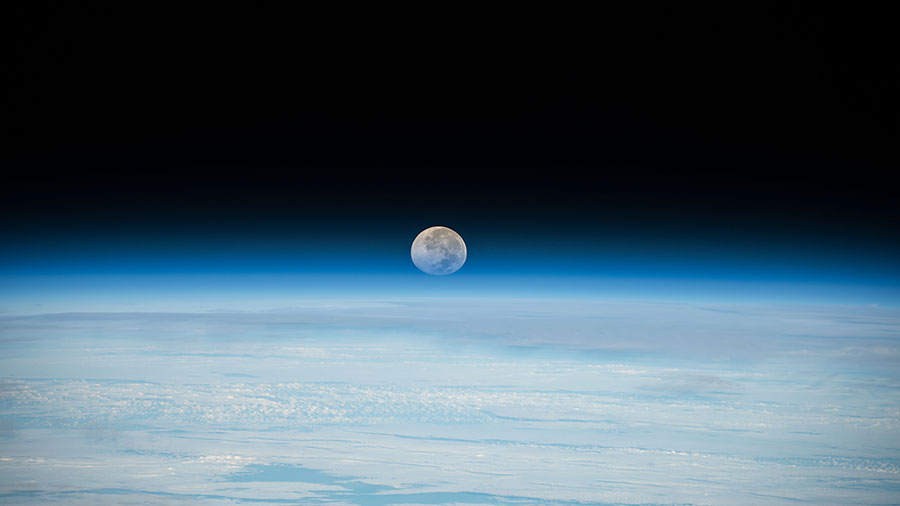
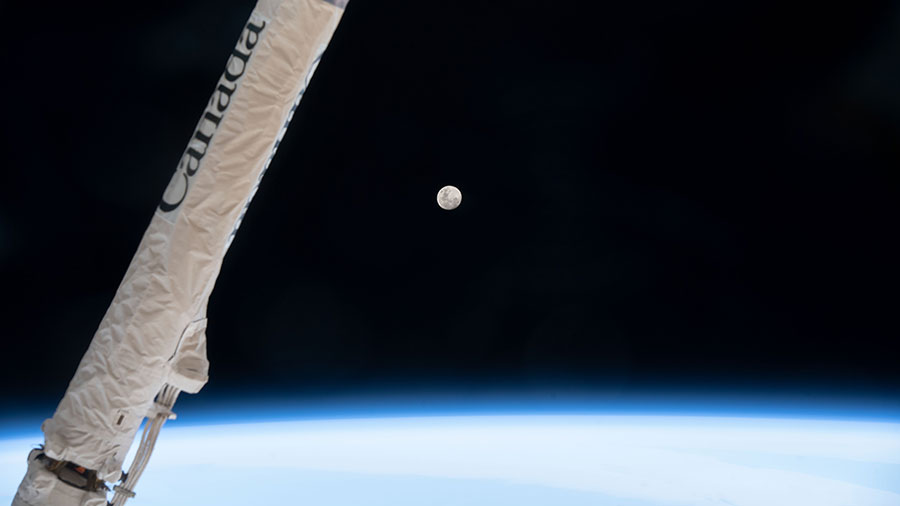
 The International Space Station flies into an orbital sunrise 261 miles above the Atlantic Ocean off the coast of northwestern Spain.
The International Space Station flies into an orbital sunrise 261 miles above the Atlantic Ocean off the coast of northwestern Spain.

Space botany and eye checks were at the top of the research schedule aboard the International Space Station on Wednesday. Life support system upgrades also continued during the middle of the week for the Expedition 67 crew members.

Understanding how plants and humans are affected by long-term exposure to microgravity is key to prolonging mission success beyond low Earth orbit and to the Moon, Mars, and beyond. NASA and its international partners are learning how crews can sustain themselves independently of ground support for longer periods of time.

Growing vegetables on space missions is critical so astronauts can feed themselves without the support of cargo missions regularly launching from Earth to replenish crews. The XROOTS space agriculture study does not use soil and is exploring growing radishes and mizuna greens on the station using hydroponic and aeroponic methods. Today, NASA Flight Engineer Kjell Lindgren recirculated fluids for the botany experiment and checked the condition of the growing plants. The study takes place inside the Columbus laboratory module and may inform ways to grow crops on larger scales during missions farther away from Earth.

Lindgren later assisted his fellow astronauts Bob Hines and Jessica Watkins of NASA, including Samantha Cristoforetti of ESA (European Space Agency), as they wrapped up two days of life support system upgrades. The quartet moved the oxygen generation system (OGS) rack from the Tranquility module to the U.S. Destiny laboratory module, then moved the Life Support Rack (LSR) from the Harmony module to Tranquility. The foursome finished rack power and data cable connections as well as fluid umbilical installations. The LSR is demonstrating capturing carbon dioxide from the cabin air and recovering 50% of its oxygen for crew use. New sensors are also being tested to detect hydrogen and protect the OGS rack.

The orbiting lab’s three cosmonauts from Roscosmos began and ended their day with eye checks. Commander Oleg Artemyev and Flight Engineers Denis Matveev and Sergey Korsakov took turns in the morning scanning each other’s eyes using the Ultrasound 2 device, part of the station’s Human Research Facility-1. In the afternoon, Korsakov took charge as Crew Medical Officer and used medical imaging gear to picture Matveev’s retinas. The eye exams help doctors understand how weightlessness affects vision and the shape of the eye. The trio then spent the rest of the day stowing spacewalk tools, working on life support and electrical systems, and analyzing the Zvezda service module’s atmosphere.


Learn more about station activities by following the space station blog@space_station and @ISS_Research on Twitter, as well as the ISS Facebook and ISS Instagram accounts.

Get weekly video highlights at: http://jscfeatures.jsc.nasa.gov/videoupdate/

Get the latest from NASA delivered every week. Subscribe here: www.nasa.gov/subscribe

Get The Details…

Mark Garcia

Powered by WPeMatico

Full Day of Life Support and Computer Maintenance on Station

Full Day of Life Support and Computer Maintenance on Station

(Clockwise from left) Astronauts Bob Hines, Jessica Watkins, Kjell Lindgren, and Samantha Cristoforetti pose for a portrait during dinner time in the space station's Unity module.
(Clockwise from left) Astronauts Bob Hines, Jessica Watkins, Kjell Lindgren, and Samantha Cristoforetti pose for a portrait during dinner time in the space station’s Unity module.

Life support and computer maintenance filled the Expedition 67 crew schedule on Tuesday following a busy Labor Day aboard the International Space Station.

The station’s four astronauts focused on a variety of biology and physics research on the U.S. holiday as they photographed growing vegetables and explored how fuel behaves in space. In the orbiting lab’s Russian segment, the crew’s three cosmonauts continued cleaning up after last week’s spacewalk and studied how to exercise effectively in weightlessness.

On Tuesday, the crew’s attention turned to servicing orbital hardware ensuring the space station’s life support systems and computer networks operate continuously.

NASA Flight Engineer Kjell Lindgren removed the Tranquility module’s oxygen generation system (OGS) rack and installed it in the U.S. Destiny laboratory module. He was assisted by fellow Flight Engineers Bob Hines and Jessica Watkins who helped remove gear and clear the path for the transfer of the refrigerator-sized OGS rack. The trio completed the installation and cable connections during the afternoon.

Watkins also had time to join ESA (European Space Agency) Flight Engineer Samantha Cristoforetti as she transferred the Life Support Rack from the Harmony module to Tranquility. Hines and Lindgren wrapped up the day reconfiguring the modules and reinstalling the station’s bathroom, the Waste and Hygiene Compartment located in Tranquility, following the rack transfers.

Roscosmos Commander Oleg Artemyev and Flight Engineer Denis Matveev spent the afternoon installing a computer desktop in the Zvezda service module. The new work area is wide enough to hold three laptop computers supporting a variety of operations including monitoring Russian spaceships arriving and departing. Flight Engineer Sergey Korsakov worked on a pair of human research experiments on Tuesday, the first exploring ways to maintain space fitness and the second researching how international crews and mission controllers can communicate successfully.


Learn more about station activities by following the space station blog@space_station and @ISS_Research on Twitter, as well as the ISS Facebook and ISS Instagram accounts.

Get weekly video highlights at: http://jscfeatures.jsc.nasa.gov/videoupdate/

Get the latest from NASA delivered every week. Subscribe here: www.nasa.gov/subscribe

Get The Details…

Mark Garcia

Powered by WPeMatico

Cosmonaut Spacewalkers Complete Robotics Spacewalk

Cosmonaut Spacewalkers Complete Robotics Spacewalk

Spacewalkers Oleg Artemyev (bottom left) and Denis Matveev (right) extend the Russian Strela cargo crane from the Zarya module toward the Poisk module following work on the European robotic arm. Credit: NASA TV

Expedition 67 Commander Oleg Artemyev and Flight Engineer Denis Matveev, both of Roscosmos, concluded their spacewalk at 5:12 p.m. EDT after 7 hours and 47 minutes.

Artemyev and Matveev completed their major objectives, which included relocating an external control panel for the European robotic arm from one operating area to another and testing a rigidizing mechanism on the arm that will be used to facilitate the grasping of payloads. In addition, the duo extended a Strela telescoping boom from the Zarya module to the Poisk module.

Additional spacewalks are planned to continue outfitting the European robotic arm and to activate Nauka’s airlock for future spacewalks. The work on the European robotic arm will be used to move spacewalkers and payloads around the Russian segment of the station.

This was the eighth spacewalk in Artemyev’s career, and the fourth for Matveev. It was the eighth spacewalk at the station in 2022 and the 253rd spacewalk  for space station assembly, maintenance, and upgrades.


Learn more about station activities by following the space station blog, @space_station and @ISS_Research on Twitter, as well as the ISS Facebook and ISS Instagram accounts.

Get weekly video highlights at: http://jscfeatures.jsc.nasa.gov/videoupdate/

Get the latest from NASA delivered every week. Subscribe here: www.nasa.gov/subscribe

Get The Details…

Mark Garcia

Powered by WPeMatico

Crew Preps for Friday Spacewalk and Conducts Skin Healing Research

Crew Preps for Friday Spacewalk and Conducts Skin Healing Research

Roscosmos cosmonauts (from left) Denis Matveev and Oleg Artemyev are pictured during a spacewalk on April 18, 2022, to configure the European robotic arm.

Two cosmonauts are finalizing preparations for a spacewalk to configure the European robotic arm (ERA) for payload operations on the outside of the International Space Station. The rest of the Expedition 67 crew is continuing to research how to heal wounds in the microgravity environment.

Roscosmos Commander Oleg Artemyev and Flight Engineer Denis Matveev have been given the go to exit the space station’s Poisk airlock on Friday at 9:20 a.m. EDT beginning a spacewalk to continue outfitting Europe’s robotic arm. The duo was joined today by Flight Engineer Sergey Korsakov for a final procedures review and last minute Orlan spacesuit checks ahead of the planned six-hour spacewalk.

The spacewalkers will complete the tasks left unfinished during the previous spacewalk that took place on Aug. 17. The tasks Artemyev and Matveev are scheduled to complete include relocating the ERA’s external control panel and testing the arm’s ability to grasp payloads. Korsakov will help the two cosmonauts in and out of their spacesuits, monitor the spacewalking activities, and maneuver the ERA on Friday.

The orbiting lab’s four other astronauts spent the entire day in the Kibo laboratory module learning how to heal wounds in weightlessness. A key characteristic of living and working in space is the accelerated aging of skin that astronauts experience. Researchers are studying those molecular processes and how they affect the healing process potentially advancing wound treatments both in space and on Earth.

Using Kibo’s Life Science Glovebox, NASA astronauts Kjell Lindgren, Bob Hines, and Jessica Watkins, along with Samantha Cristoforetti of ESA (European Space Agency) practiced surgical techniques including biopsies, suture splints, and wound dressing. The quartet will continue the biomedical research on Friday helping NASA and its international partners keep astronauts safe and healthy on long-term space missions while improving health conditions on Earth.


Learn more about station activities by following the space station blog@space_station and @ISS_Research on Twitter, as well as the ISS Facebook and ISS Instagram accounts.

Get weekly video highlights at: http://jscfeatures.jsc.nasa.gov/videoupdate/

Get the latest from NASA delivered every week. Subscribe here: www.nasa.gov/subscribe

Get The Details…

Mark Garcia

Powered by WPeMatico

Crew Supports Skin and Plant Studies During Spacewalk Preps

Crew Supports Skin and Plant Studies During Spacewalk Preps

NASA astronaut Bob Hines works inside the Kibo laboratory module's Life Science Glovebox performing space biology research.
NASA astronaut Bob Hines works inside the Kibo laboratory module’s Life Science Glovebox performing space biology research.

The way skin heals and how plants grow in space are critical research topics aboard the International Space Station. NASA and its international partners glean insights from the scientific data to boost human health and plan successful crewed missions to the Moon, Mars, and beyond.

Skin ages faster in microgravity and researchers seek to understand the space-caused molecular processes that may advance wound healing treatments for both astronauts and Earthlings. Expedition 67 Flight Engineers Kjell Lindgren and Jessica Watkins, both from NASA, spent the majority of Wednesday inside the Kibo laboratory module continuing the ongoing skin healing research. The duo, with partial assistance from astronauts Bob Hines of NASA and Samantha Cristoforetti of ESA (European Space Agency), performed the biomedical research inside Kibo’s Life Science Glovebox practicing surgical techniques including biopsies, suture splints, and wound dressing.

Hines then wrapped up his workday in ESA’s Columbus laboratory module supporting the XROOTS space botany investigation. The NASA astronaut mixed a nutrient solution and recirculated fluids to nourish radishes and mizuna greens growing inside Columbus’ Veggie botany research system. The experiment uses hydroponic and aeroponic methods as a way to promote space agriculture and sustain crews on long-term space missions.

Cristoforetti started her day charging spacesuit video camera batteries, servicing the U.S. oxygen generation system, and documenting her meals for a nutrition study. Following her mid-afternoon support for the skin study, Cristoforetti finished her day performing light plumbing duties and checking portable fire extinguisher components.

Cosmonauts Oleg Artemyev and Denis Matveev began their day studying the tasks and maneuvers they will use to configure the European robotic arm on an upcoming spacewalk. The pair from Roscosmos also checked Orlan spacesuit components and systems. Flight Engineer Sergey Korsakov spent Wednesday maintaining laptop computers and electronics systems throughout the orbiting lab’s Russian segment.

Get The Details…

Mark Garcia

Powered by WPeMatico