Crew Works Wide Variety of Research and Awaits New Arrivals

Crew Works Wide Variety of Research and Awaits New Arrivals
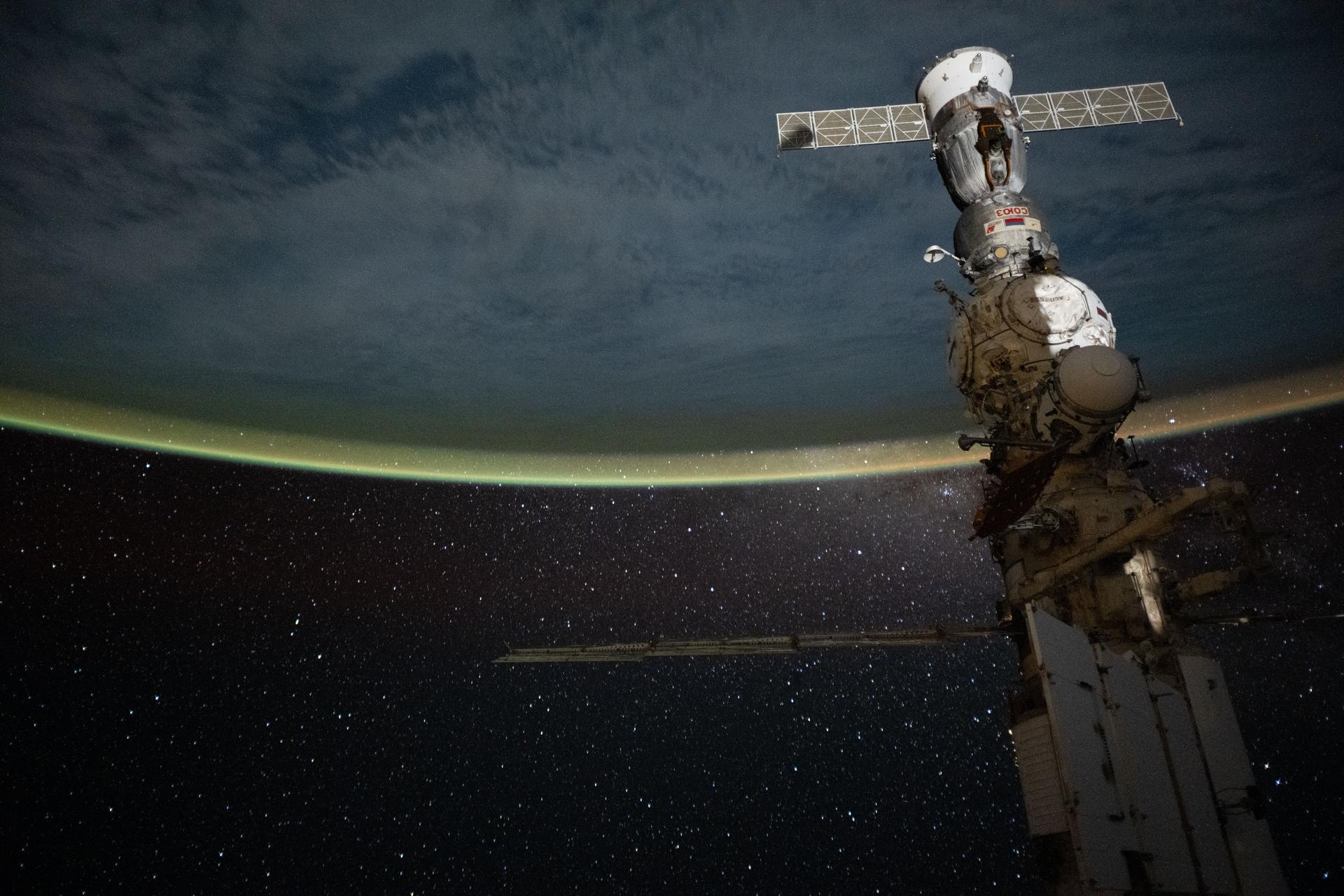
A yellow-green airglow blankets Earth’s horizon beneath a star-filled sky in this long-exposure photograph taken from the International Space Station as it orbited 265 miles above the cloudy Pacific Ocean off the coast of Chile. In the right foreground, the Soyuz MS-27 crew spacecraft is docked to the Prichal module, which is itself attached to the Nauka science module.
A yellow-green airglow blankets Earth’s horizon beneath a star-filled sky in this long-exposure photograph taken from the International Space Station as it orbited 265 miles above the cloudy Pacific Ocean off the coast of Chile.
NASA

High intensity exercising and droplets teeming with particles were the main research topics aboard the International Space Station on Tuesday. The Expedition 73 crew is also preparing to welcome three new crewmates this week while another trio gets ready to return to Earth next month.

Crew health monitoring and fitness evaluations are a crucial part of an astronaut’s stay aboard the orbital outpost. The long-duration missions in microgravity affect the crew member’s body in numerous ways and daily exercise helps keep crews fit and healthy while living in weightlessness. Doctors constantly monitor the crew with a variety of checkups, sensors, questionnaires, and more to ensure mission success off the Earth.

NASA Flight Engineers Jonny Kim and Zena Cardman took part in one portion of the CIPHER human research study looking at how the cardiovascular system adapts to space. Cardman scanned Kim’s chest with the Ultrasound 2 device while electrodes recorded his cardiac activity. Doctors on the ground monitored in real-time to understand how his heart is adapting to living in space.

Next, Kim pedaled on the Destiny laboratory module’s exercise cycle while attached to sensors and breathing gear that monitored his heart and lung activity. Doctors will use the data collected from the hardware to evaluate aerobic capacity, or the bodies’ ability to deliver and use oxygen during strenuous physical activity in space. Afterward, he rejoined Cardman and reviewed procedures, tools, and communications necessary for a medical emergency aboard the space station.

NASA Flight Engineer Mike Fincke set up a fluorescence microscope inside Destiny and installed sample hardware so scientists on the ground could view how particles behave inside fluids. The fluid physics study may inform commercial in-space manufacturing techniques and improve optical materials and pollution removal operations.

Flight Engineer Kimiya Yui from JAXA (Japan Aerospace Exploration Agency) spent the first half of his shift reorganizing cargo inside the Kibo laboratory module to make space for upcoming activities. Later, Yui measured the airflow inside of his crew quarters located inside the Harmony module. The measurements help protect health and promote comfort for the crew.

Station Commander Sergey Ryzhikov from Roscosmos worked inside the Soyuz MS-27 crew spacecraft that he, Kim, and Roscosmos Flight Engineer Alexey Zubritsky will return to Earth in next month. Ryzhikov first checked the Soyuz’ electronics and communications systems then continued loading cargo inside the spacecraft for the ride back to Earth.

Zubritsky began his shift collecting his blood, saliva, and hair samples for analysis to understand how the brain and immune system adapt to weightlessness. He then spent the rest of his day checking the Roscosmos segment’s ventilation system and collecting station water samples for analysis to protect crew health.

Roscosmos Flight Engineer Oleg Platonov photographed and treated microbe samples collected on the station. Researchers will use the observations to learn how microbes survive in space and prevent contamination on spacecraft.

Back on Earth, three new crew members are counting down to their launch aboard the Soyuz MS-28 crew spacecraft from the Baikonur Cosmodrome in Kazakhstan to the International Space Station. NASA astronaut Chris Williams and Roscosmos cosmonauts Sergey Kud-Sverchkov and Sergei Mikaev are scheduled to lift off inside the Soyuz at 4:27 a.m. EDT (2:27 p.m. Baikonur time) on Thursday, Nov. 27. They will orbit Earth twice before docking to the Rassvet module at 7:38 a.m. the same day to begin an eight-month space research mission. Live launch coverage begins 3:30 a.m. on NASA+, Amazon Prime, and YouTube.

Learn more about station activities by following the space station blog, @space_station on X, as well as the ISS Facebook and ISS Instagram accounts.

Get the latest from NASA delivered every week. Subscribe here.

Powered by WPeMatico

Get The Details…

Mark A. Garcia

Soyuz Rocket Rolls Out as Cygnus Parks Away from Station

Soyuz Rocket Rolls Out as Cygnus Parks Away from Station

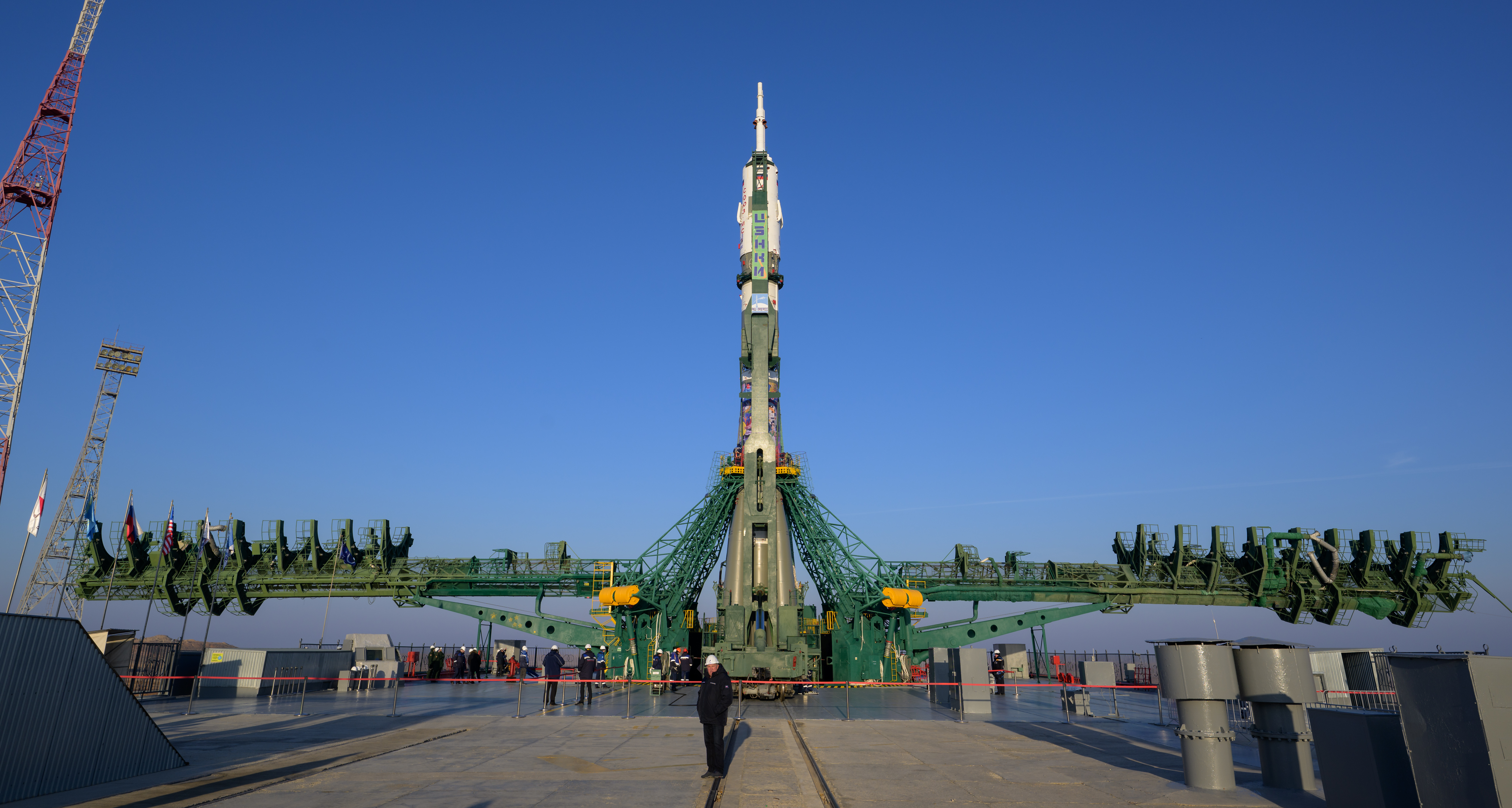
The Soyuz rocket is raised vertical, Monday, Nov. 24, 2025, at site 31 launch pad of the Baikonur Cosmodrome in Kazakhstan. Expedition 74 crewmembers: NASA astronaut Chris Williams, Roscosmos cosmonauts Sergey Kud-Sverchkov and Sergey Mikaev are scheduled to launch aboard their Soyuz MS-28 spacecraft on November 27.
NASA/Bill Ingalls

A Soyuz rocket rolled out to its launch pad at the Baikonur Cosmodrome in Kazakhstan today to begin counting down to a Thanksgiving Day liftoff of three new crew members to the International Space Station. NASA astronaut Chris Williams and Roscosmos cosmonauts Sergey Kud-Sverchkov and Sergei Mikaev are scheduled to lift off aboard the Soyuz MS-28 spacecraft at 4:27 a.m. EDT (3:27 p.m. Baikonur time) on Thursday, Nov. 27. They will orbit Earth twice before docking to the Rassvet module at 7:38 a.m. the same day beginning an eight-month space research mission.

The Cygnus XL spacecraft, supporting the Northrop Grumman-23 commercial resupply services mission for NASA, was uninstalled today from the International Space Station. It will remain attached to the station’s Canadarm2 robotic arm until Monday, Dec. 1, clearing the way for the arrival of the crewed Roscosmos Soyuz MS-28 spacecraft on Thursday. 

NASA, Northrop Grumman, and Roscosmos coordinated the spacecraft’s movement to prevent any unnecessary structural loads from being imparted on Cygnus XL and its solar arrays when the Soyuz MS-28 spacecraft docks to the Rassvet module, which is the adjacent docking port. The on-duty robotics officer in the Mission Control Center at NASA’s Johnson Space Center in Houston completed the maneuver, while agency astronauts Jonny Kim and Zena Cardman monitored from inside the space station. 

Cygnus XL will be reattached to the space station on Dec. 1 and remain there until no earlier than March 2026, when it is scheduled to depart and dispose of several thousand pounds of trash during its destructive re-entry into Earth’s atmosphere. 

Kim earlier worked out on the advanced resistive exercise device for one part of the CIPHER investigation that is studying cardiorespiratory fitness, muscle strength, and endurance in microgravity. Cardman injected gas into a specialized tank for a fluid physics experiment that is testing ways to protect super-cooled fluids, or cryogenic fluids, in space.

Flight Engineers Mike Fincke of NASA and Kimiya Yui of JAXA (Japan Aerospace Exploration Agency) joined each other on Monday and continued offloading some of the several thousand pounds of new science and supplies delivered aboard the HTV-X1 cargo spacecraft on Oct. 29. Yui also familiarized himself with the operations of the Astrobee robotic helpers before replacing components inside the Tranquility module’s bathroom, or waste and hygiene compartment. Fincke also trained to use the Astrobees then set up the fluorescence microscope to observe how particles behave inside fluids.

Roscosmos cosmonauts Sergey Ryzhikov and Alexey Zubritsky, station Commander and Flight Engineer respectively, both tested the lower body negative pressure suit for its ability to reverse the space-caused flow of body fluids toward a crew member’s head. Results may prevent microgravity-induced head and eye pressure and help crews adjust quicker to the return to Earth’s gravity. Roscosmos Flight Engineer Oleg Platonov wore virtual reality googles and sensors while responding to visual signals to observe how his vision and sense of balance is adjusting to microgravity.

Learn more about station activities by following the space station blog, @space_station on X, as well as the ISS Facebook and ISS Instagram accounts.

Get the latest from NASA delivered every week. Subscribe here.

Powered by WPeMatico

Get The Details…

Mark A. Garcia

NASA, Boeing Modify Commercial Crew Contract

NASA, Boeing Modify Commercial Crew Contract

NASA Insignia

In 2014, NASA awarded a Commercial Crew Transportation Capability contract to Boeing to fly astronauts to and from the International Space Station with its Starliner spacecraft. As part of its contract, Boeing was awarded up to six crewed flights to the orbital complex.

After a thorough evaluation, NASA and Boeing have mutually agreed to modify the contract. As part of the modification, the definitive order has been adjusted to four missions, with the remaining two available as options. The next Starliner flight, known as Starliner-1, will be used by NASA to deliver necessary cargo to the orbital laboratory and allow in-flight validation of the system upgrades implemented following the Crew Flight Test mission last year.  NASA and Boeing are targeting no earlier than April 2026 to fly the uncrewed Starliner-1 pending completion of rigorous test, certification, and mission readiness activities.  Following Starliner certification, and a successful Starliner-1 mission, Starliner will fly up to three crew rotations to the International Space Station. 

“NASA and Boeing are continuing to rigorously test the Starliner propulsion system in preparation for two potential flights next year,” said Steve Stich, manager of NASA’s Commercial Crew Program. “This modification allows NASA and Boeing to focus on safely certifying the system in 2026, execute Starliner’s first crew rotation when ready, and align our ongoing flight planning for future Starliner missions based on station’s operational needs through 2030.”

Certification of Boeing’s Starliner remains important to NASA’s goal of sustained human presence in low Earth orbit and dissimilar redundancy is essential to supporting the agency’s goals and international obligations.

Powered by WPeMatico

Get The Details…

Elyna Niles-Carnes

Week Wraps with Fluid Physics, Stem Cell Research as New Crew Preps Begin

Week Wraps with Fluid Physics, Stem Cell Research as New Crew Preps Begin

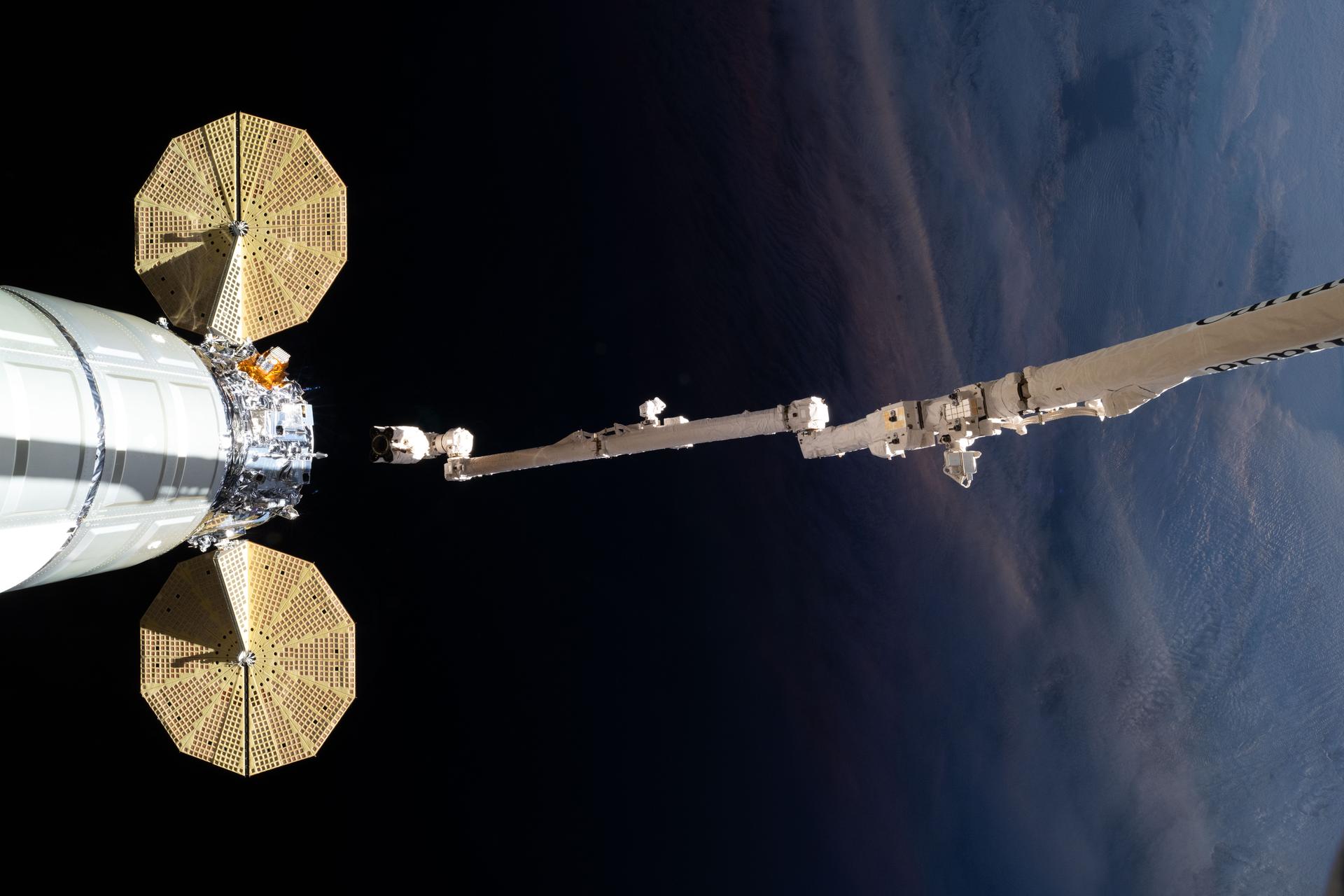
The Canadarm2 robotic arm releases Northrop Grumman’s Cygnus XL cargo craft after it was installed on the Earth-facing port of the Unity module. The International Space Station was soaring into an orbital sunrise 269 miles above the Atlantic Ocean southwest of Cape Town, South Africa, at the time of this photgraph.
The Canadarm2 robotic arm releases Northrop Grumman’s Cygnus XL cargo craft after it was installed on the Earth-facing port of the Unity module on Sept. 18, 2025.
NASA

Expedition 73 wrapped up the work week continuing to study fluid physics and stem cells, preparing for next week’s new crew arrival, and unpacking a U.S. cargo spacecraft. The International Space Station residents also serviced exercise gear, performed life support system troubleshooting, and analyzed the orbital outpost’s microbial environment.

NASA Flight Engineer Zena Cardman primarily spent her day on research first starting in the Destiny laboratory module and installing fluid samples inside a fluorescence microscope. Scientists on the ground will image the samples to observe how particles behave inside fluids. Results may inform commercial in-space manufacturing techniques and improve optical materials and pollution removal operations. Cardman then moved to the Kibo laboratory module and processed stem cells samples inside the Life Science Glovebox. Afterward, she stowed the samples in a portable science freezer for preservation and return to Earth for analysis. Scientists are exploring how microgravity affects the stem cells programmed to change into heart and brain cells that may lead to advanced treatments for cardiac and neurological disorders.

Cardman also assisted Flight Engineers Mike Fincke of NASA and Kimiya Yui of JAXA (Japan Aerospace Exploration Agency) as they continued transferring new science and supplies from inside the Northrop Grumman’s Cygnus XL cargo spacecraft. Cygnus XL arrived on Sept. 18 delivering over 11,000 pounds of cargo resupplying the orbital residents.

Northrop Grumman’s Cygnus XL cargo spacecraft, supporting the company’s 23rd commercial resupply mission to the International Space Station for NASA, will be uninstalled from the Earth-facing port of the space station’s Unity module on Monday, Nov. 24. The cargo spacecraft will remain attached to the station’s Canadarm2 robotic arm until Monday, Dec. 1, clearing the way for the arrival of the crewed Roscosmos Soyuz MS-28 spacecraft on Thursday, Nov. 27. 

NASA, Northrop Grumman, and Roscosmos coordinated the spacecraft’s movement to prevent any unnecessary structural loads from being imparted on Cygnus XL and its solar arrays when the Soyuz spacecraft docks to the Rassvet module, which is the adjacent docking port. The maneuver will be conducted by the robotics officer in Mission Control Center at NASA’s Johnson Space Center in Houston, while agency astronauts Jonny Kim and Zena Cardman monitor from inside the orbital complex.

Cygnus XL will be reattached to the space station Dec. 1, and will remain there until no earlier than March 2026, when it is scheduled to depart and dispose of several thousand pounds of trash during its destructive re-entry into Earth’s atmosphere. 

Fincke then used a computer to test the performance of a pressure management device, gear that saves station air during visiting vehicle pressurization activities, inside the Unity module. Yui also assisted NASA Flight Engineer Jonny Kim in the Tranquility module correctly positioning and centering the COLBERT treadmill, tightening its bolts, and activating the exercise device for operations. Kim then drained recycle tanks and configured emergency breathing masks. Yui swapped batteries inside a wireless environmental monitor then joined Kim again at the end of their shift servicing a vacuum cleaner.

Roscosmos cosmonaut and station Commander Sergey Ryzhikov began preparing for next week’s arrival of three new crew members aboard the Soyuz MS-28 crew spacecraft. Flight Engineer Alexey Zubritsky joined him rearranging cargo and making space inside the Rassvet module. The Soyuz MS-28 will dock to Rassvet on Nov. 27 carrying NASA astronaut Chris Williams and Roscosmos cosmonauts Sergey Mikaev and Sergey Kud-Sverchkov. Ryzhikov also began packing cargo inside the Soyuz MS-27 spacecraft that will return him, Zubritsky, and Kim to Earth in early December. Zubritsky collected microbe samples swabbed from inside the station’s Roscosmos segment for analysis to protect crew health.

Roscosmos Flight Engineer Oleg Platonov focused on maintenance at the end of the week beginning his shift replacing components on the Zvezda service module’s toilet. Next, Platonov inspected the Zarya module to identify workspace before completing his shift working on the Nauka science module’s ventilation system.

Learn more about station activities by following the space station blog, @space_station on X, as well as the ISS Facebook and ISS Instagram accounts.

Get the latest from NASA delivered every week. Subscribe here.

Powered by WPeMatico

Get The Details…

Mark A. Garcia

Crew Works on Stem Cells, CubeSats; Prepares for Soyuz and Commercial Crew Launches

Crew Works on Stem Cells, CubeSats; Prepares for Soyuz and Commercial Crew Launches

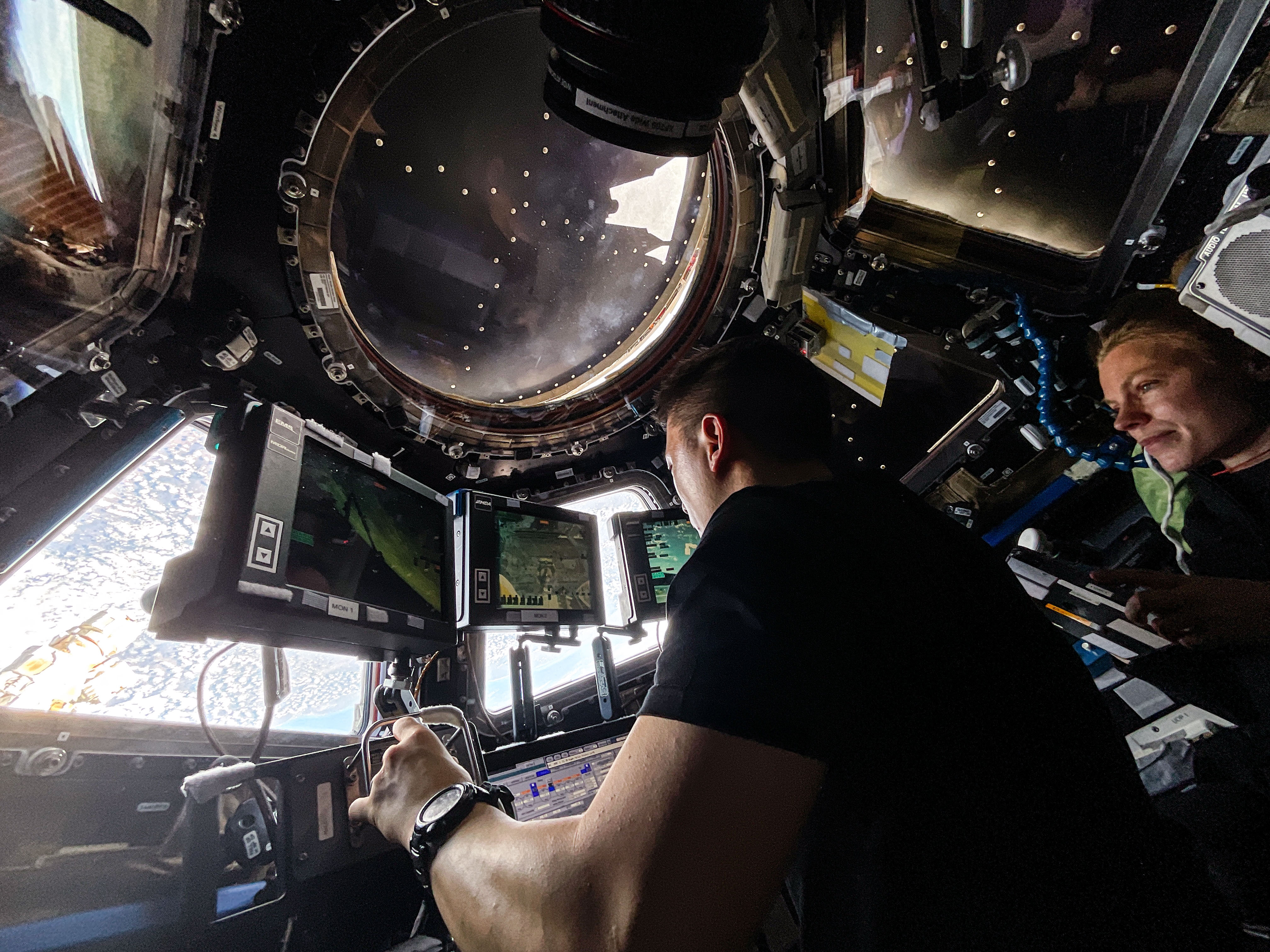
Expedition 73 Flight Engineers Jonny Kim and Zena Cardman, both NASA astronauts, practice Canadarm2 robotic maneuvers at the robotics workstation inside the International Space Station's cupola. The duo was preparing for the robotic capture of the Northrop Grumman Cygnus XL cargo spacecraft that launched on Sept. 14, 2025, and arrived on Sept. 18 delivering about 11,000 pounds of science, supplies, and hardware to the Expedition 73 crew. Credit: NASA
Expedition 73 Flight Engineers Jonny Kim and Zena Cardman, both NASA astronauts, practice Canadarm2 robotic maneuvers at the robotics workstation inside the International Space Station’s cupola. The duo was preparing for the robotic capture of the Northrop Grumman Cygnus XL cargo spacecraft that launched on Sept. 14, 2025, and arrived on Sept. 18 delivering about 11,000 pounds of science, supplies, and hardware to the Expedition 73 crew.
Credit: NASA

Stem cells and CubeSat installations were the main research focus aboard the International Space Station on Thursday. The Expedition 73 crew also collected microbe samples for analysis, configured Earth observation gear, and replaced hoses on a treadmill.

Also, NASA and SpaceX have been working to be ready as early as Feb. 15 for the next commercial crew rotation launch to the International Space Station. This change maximizes launch opportunities for NASA’s SpaceX Crew-12, while also accommodating the Artemis II launch windows. As both missions advance toward launch and rely on resources and facilities at NASA’s Kennedy Space Center, this change helps deconflict operations.

NASA also set the agency’s coverage of NASA astronaut Chris Williams’ will launch aboard the Roscosmos Soyuz MS-28 spacecraft to the International Space Station on Thursday, Nov. 27

Back on station, researchers are studying how to turn stem cells into brain and cardiac cells in microgravity. NASA Flight Engineer Zena Cardman serviced the stem cell samples for viewing inside a fluorescence microscope for the Stellar Stem Cells Mission 2 experiment. Doctors on the ground will observe how weightlessness affects the reprogrammed stem cells possibly leading to advances in regenerative medicine, drug testing, and space-based biomanufacturing.

Cardman also assisted NASA Flight Engineers Mike Fincke and Jonny Kim and JAXA (Japan Aerospace Exploration Agency) Flight Engineer Kimiya Yui who swapped thermal control system hoses on the COLBERT treadmill located inside the Tranquility module. The quartet worked throughout Thursday temporarily uninstalling the station’s bathroom, or waste and hygiene compartment, to access the life support hoses.

Earlier, Yui installed the NanoRacks CubeSat Deployer on the multi-purpose experiment platform inside the Kibo laboratory module’s airlock. It will soon be placed outside the orbital outpost in the external microgravity environment. The Japanese robotic arm will grapple the CubeSat deployer then position it away from the orbiting lab to deploy a set of CubeSats into Earth orbit for private and public research.

Roscosmos cosmonauts Sergey Ryzhikov and Alexey Zubritsky, station Commander and Flight Engineer respectively, partnered together on Thursday and swabbed surfaces inside the Zarya module then placed the samples inside test tubes. The samples will be analyzed later to understand the microbial environment aboard the space station and protect crew health.

Roscosmos Flight Engineer Oleg Platonov began his day with orbital plumbing in the Nauka science module then set up a camera to capture time-lapse photography of the Earth. Platonov spent the end of his shift inside the Zvezda service module servicing the Elektron oxygen generator.

Learn more about station activities by following the space station blog, @space_station on X, as well as the ISS Facebook and ISS Instagram accounts.

Get the latest from NASA delivered every week. Subscribe here.

Powered by WPeMatico

Get The Details…

Mark A. Garcia