Crew Ends Week with Spacesuit Checks and Science, Lab Hardware Maintenance

Crew Ends Week with Spacesuit Checks and Science, Lab Hardware Maintenance
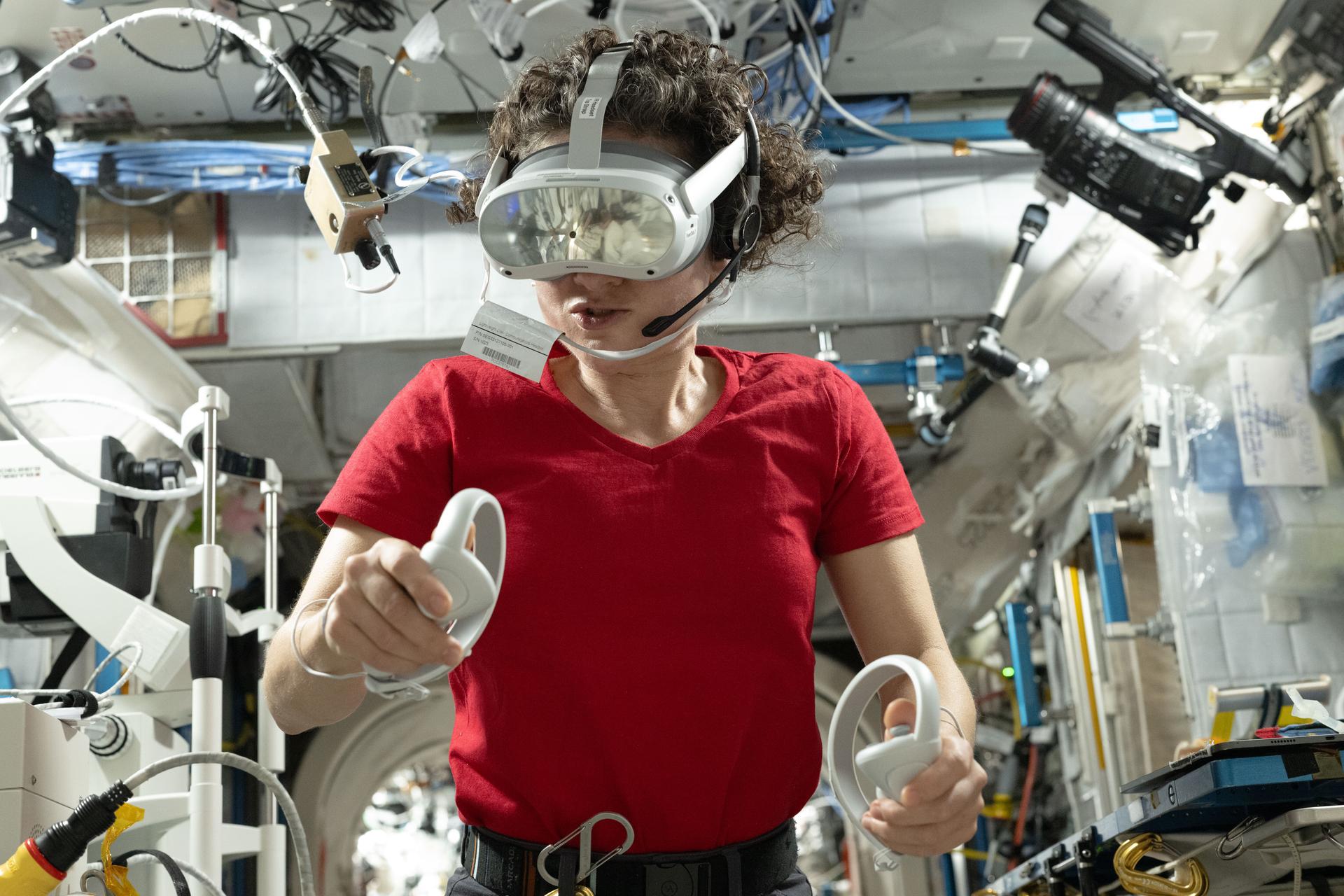
NASA astronaut and Expedition 75 commander Jessica Meir wears a set of virtual reality goggles, also called the Nevada Screening Vision System, for a test that measures visual function using a series of vision screening apps testing visual acuity, contrast sensitivity, and more.
NASA astronaut Jessica Meir wears a set of virtual reality goggles for a test that measures visual function using a series of vision screening apps testing visual acuity, contrast sensitivity, and more.
NASA/Anil Menon

Expedition 75 ended July stepping up preparations for the first of three spacewalks planned for the month of August. The International Space Station residents also wrapped up the week configuring combustion research and Earth imagery hardware while continuing lab maintenance.

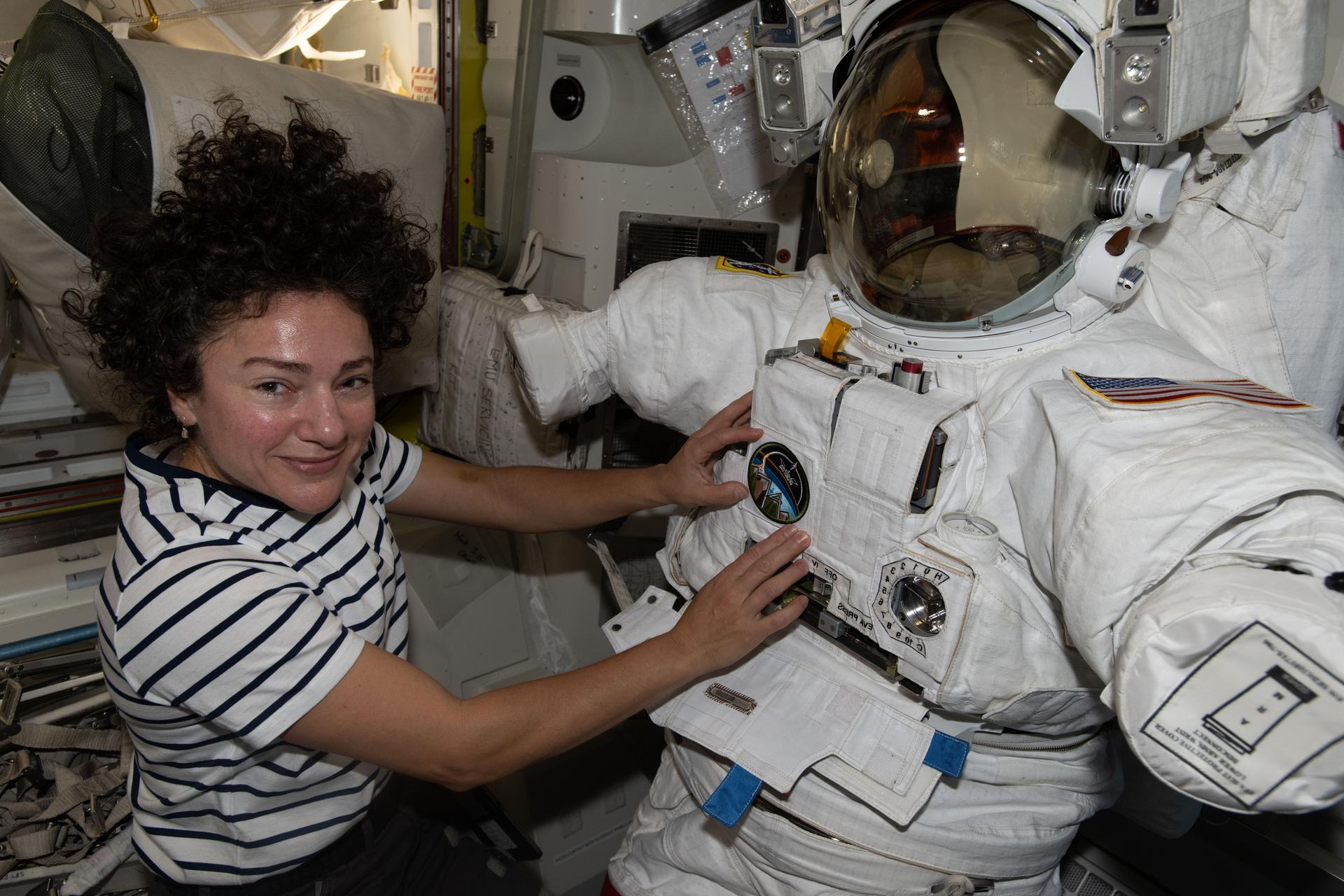
NASA flight engineer Anil Menon tried on his spacesuit on Friday to get ready for his first career spacewalk planned for Thursday, Aug. 6. NASA flight engineer Jack Hathaway assisted Menon in the Quest airlock helping him verify the suit’s comfort, mobility, and functionality. The duo also cleaned the suit’s water-cooling loops that keep an astronaut comfortable while working in the extreme environment of space.

 Menon later joined station commander Jessica Meir and reviewed procedures for the spacewalk that will see the duo spend about six-and-a-half hours building the platform upon which the orbital outpost’s seventh roll out solar array will be installed later this year to augment its power system. Meir will lead the spacewalk, her sixth since Oct. 18, 2019, when she conducted the first all-female spacewalk with NASA astronaut Christina Koch.

Flight engineer Sophie Adenot of ESA (European Space Agency) spent her shift in the Kibo laboratory module working on scientific and life support gear. Adenot opened up the solid combustion experiment module, swapped samples, and vacuumed soot in the research device that safely observes how solid materials burn and self‑extinguish in microgravity. She also collected fluid samples from Kibo’s thermal system that will be analyzed for chemical composition, contaminants, and gases.

Roscosmos flight engineer Andrey Fedyaev worked in the Zvezda service module installing and testing Earth observation hardware that uses a wide range of wavelengths to capture detailed imagery of areas affected by catastrophic events. Fedyaev completed his shift updating software that supports the European robotic arm’s control console. Roscosmos flight engineers Pyotr Dubrov and Anna Kikina partnered together at the end of the week taking inventory of station tools, office supplies, and personal items.

Learn more about station activities by following the space station blog, @space_station on X, as well as the ISS Facebook and ISS Instagram accounts.

Get the latest from NASA delivered every week. Subscribe here.

Powered by WPeMatico

Get The Details…

Mark A. Garcia

Spacewalk Preps, Bioprinting, and Exercise Research Top Station Schedule

Spacewalk Preps, Bioprinting, and Exercise Research Top Station Schedule

NASA astronaut and Expedition 74 flight engineer Jessica Meir works inside the International Space Station's Quest airlock, installing leg and arm components on a spacesuit and swapping components from one suit to another to prepare for a spacewalk.
NASA astronaut Jessica Meir works inside the International Space Station’s Quest airlock installing leg and arm components on a spacesuit.
NASA/Jack Hathaway

Expedition 75 is gearing up for a busy August with three spacewalks planned at the International Space Station. The orbital residents are also printing living cells and tissues and studying how to increase the effectiveness of exercising in space.

Mission managers discussed a series of spacewalks and their associated tasks during a news conference on Thursday. NASA flight engineers Jessica Meir and Anil Menon will conduct the first spacewalk at 7:35 a.m. EDT on Thursday, August 6, for solar array work. NASA will soon announce the astronauts who will participate in the spacewalks scheduled on Aug. 13 and 25 for communications and electronics maintenance. All three spacewalks will be broadcast live on NASA+ and a variety of platforms.

Meir and Menon spent Thursday practicing using the spacewalking tools and familiarizing themselves with the parts they will use to prepare the orbital outpost for the future installation of its seventh roll out solar array to augment its power system. The astronauts also studied their spacewalking procedures, staged their spacesuits, and organized hardware inside the Quest airlock in advance of the upcoming excursion.

Bioprinting, or manufacturing living cells and tissues using bioinks, has been a key research objective aboard the space station for several years. The lack of gravity enables the cells to grow naturally in three dimensions resulting in higher-quality tissues than those produced on Earth. Flight engineers Jack Hathaway of NASA and Sophie Adenot of ESA (European Space Agency) partnered together in the Kibo laboratory module continuing the advanced biotechnology investigation. Adenot mixed cartilage cells with bioink then injected the mixture into cartridges. Next, Hathaway collected the cartridges from Adenot and loaded them inside the InSPA-Auxilium Bioprinter installed in Kibo’s Life Science Glovebox. The bioprinted samples will be frozen and returned to Earth for analysis. Results may lead to the development of advanced treatments for cartilage injuries on Earth and in space.

Hathaway and Adenot also took turns conducting exercise research with a futuristic suit and new equipment to stay fit in weightlessness. Adenot tried on the EasyMotion-2 Suit and jogged on the COLBERT treadmill in the Tranquility module. The suit sends electrical impulses and triggers muscle contractions to supplement a space workout. Hathaway performed a rowing session on the European Enhanced Exploration Exercise Device (E4D) installed in the Columbus laboratory module. The E4D is optimized for working out in microgravity and is being evaluated for use on future space exploration missions.

Roscosmos flight engineers Pyotr Dubrov and Anna Kikina took turns wearing virtual reality goggles and responding to computerized visual stimuli. The long-running Virtual experiment tests how a crew member’s sense of balance and direction adapts to microgravity. Flight engineer Andrey Fedyaev jogged on the Zvezda service module’s treadmill while attached to electrodes for a physical fitness assessment. Afterward, Fedyaev configured radiation detection hardware to measure the neutron environment the station is exposed to and studied materials that may shield a spacecraft from space radiation.

Learn more about station activities by following the space station blog, @space_station on X, as well as the ISS Facebook and ISS Instagram accounts.

Get the latest from NASA delivered every week. Subscribe here.

Powered by WPeMatico

Get The Details…

Mark A. Garcia

Crew Conducts Futuristic Workouts, Advanced Eye Exams During Spacewalk Preps

Crew Conducts Futuristic Workouts, Advanced Eye Exams During Spacewalk Preps

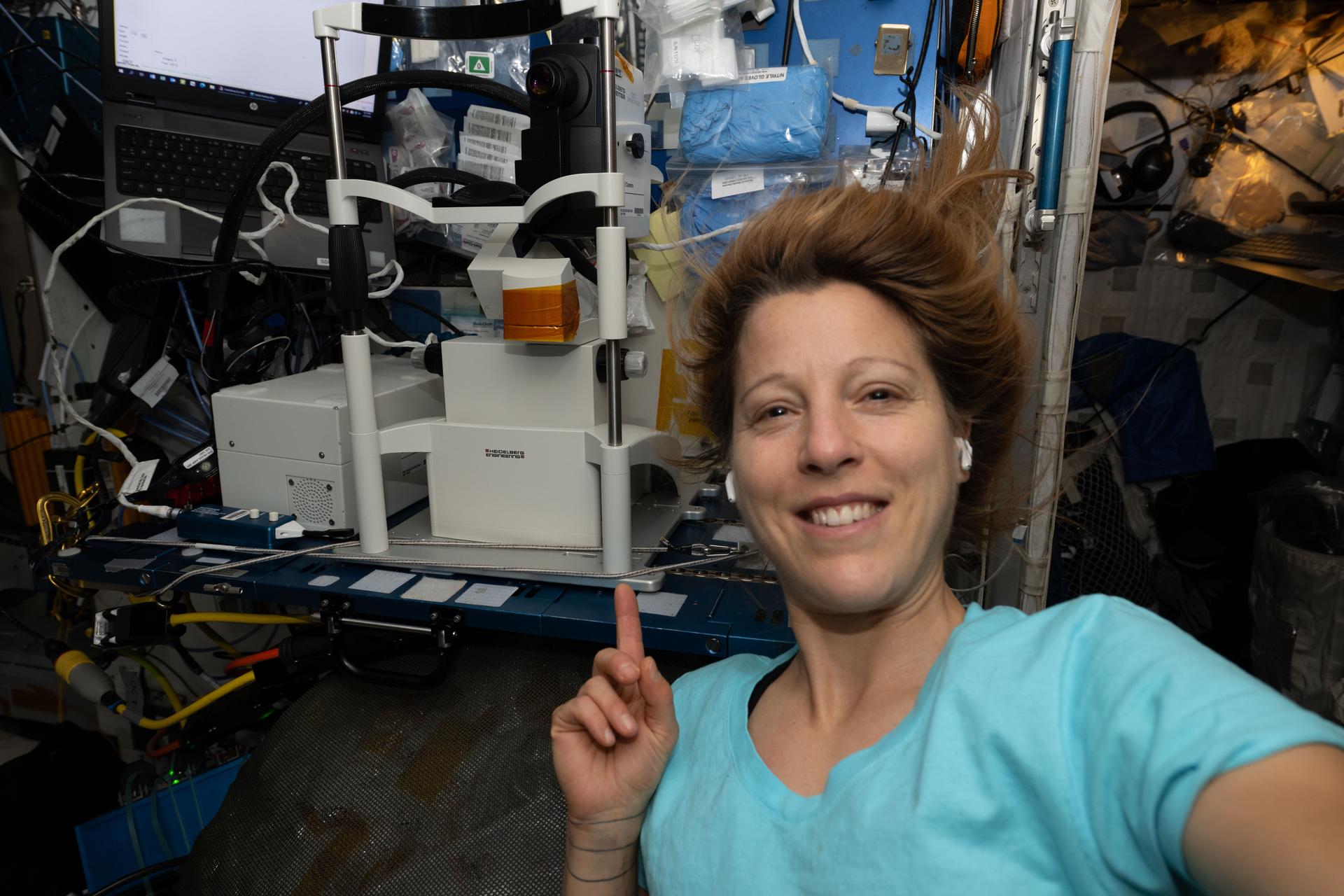
ESA (European Space Agency) astronaut and Expedition 74 flight engineer Sophie Adenot smiles for a portrait while showing off an Optical Coherence Tomography machine, a medical imaging device used for eye exams. Doctors on the ground monitor the eye exam in real-time viewing an astronaut's retina, lens, and cornea. Vision is critical to a mission’s success and doctors regularly check the astronauts’ eyes to counteract the potential effects of living in space.
ESA astronaut Sophie Adenot shows off an Optical Coherence Tomography machine, a medical imaging device used for eye exams. Doctors on the ground monitor the eye exam in real-time viewing an astronaut’s retina, lens, and cornea.
ESA/Sophie Adenot

Futuristic workouts, eye exams, and virtual reality led the research schedule for the Expedition 75 crew aboard the International Space Station on Wednesday. Spacewalk training and lab maintenance filled the rest of the shift for the seven orbital residents.

Living in weightlessness speeds up muscle and bone loss since it takes much less effort for an astronaut to move around a spacecraft than on Earth. Fluids also rise toward a crew member’s head in microgravity creating pressure on the back of the eye potentially affecting vision. Doctors are constantly monitoring astronaut health to understand microgravity’s effect on the human body while living in space, develop countermeasures to treat space-caused issues, and promote long-term mission success as NASA and its international partners plan missions to the Moon, Mars, and beyond.

NASA flight engineer Jack Hathaway tested new workout methods on the European Enhanced Exploration Exercise Device (E4D) installed in the Columbus laboratory module. Hathaway first pedaled on the E4D’s exercise cycle then he reconfigured the device for resistance workouts including bicep curls, squats, bench press, and more. Afterward, he joined flight engineer Sophie Adenot of ESA (European Space Agency) and called down to researchers to discuss their experiences on the futuristic workout device optimized for exercising in space. Adenot also reviewed her support role for when she helps a pair of astronauts suit up ahead of the first spacewalk planned in August.

Adenot and Hathway then joined Roscosmos flight engineers Andrey Pyotr Dubrov and Fedyaev for eye checks in the Harmony module. Adenot led the first eye imaging round as Hathaway peered into a biomedical device that lets researchers on the ground examine his retina, lens, and cornea in real-time. Dubrov took charge of the second-round and guided Fedyaev as he took his optical exam.

Station commander Jessica Meir participated in an advanced eye exam while wearing a set of virtual reality goggles, also called the Nevada Screening Vision System. The head-mounted display system measures visual function using a series of vision screening apps testing visual acuity, contrast sensitivity, and more. Earlier, she took turns with NASA flight engineer Anil Menon and practicing their spacewalk procedures on a computer using 3D interactive animation software. The astronauts are scheduled to begin a spacewalk at 7:35 a.m. EDT on Thursday, Aug. 6. Menon also worked inside the Kibo laboratory module and cleaned its cooling fluid systems.

Dubrov partnered with Roscosmos flight engineer Anna Kikina and began their shift together testing the performance of life support hardware inside the Zarya module. Kikina then moved on and checked the data output of scientific hardware then tested the functionality of video recording gear. Fedyaev spent his shift in the orbital outpost’s Roscosmos segment working on orbital plumbing duties and Elektron oxygen generator maintenance.

Learn more about station activities by following the space station blog, @space_station on X, as well as the ISS Facebook and ISS Instagram accounts.

Get the latest from NASA delivered every week. Subscribe here.

Powered by WPeMatico

Get The Details…

Mark A. Garcia

Commander Jessica Meir and Crew Check Spacesuits, Prep for Spacewalks

Commander Jessica Meir and Crew Check Spacesuits, Prep for Spacewalks

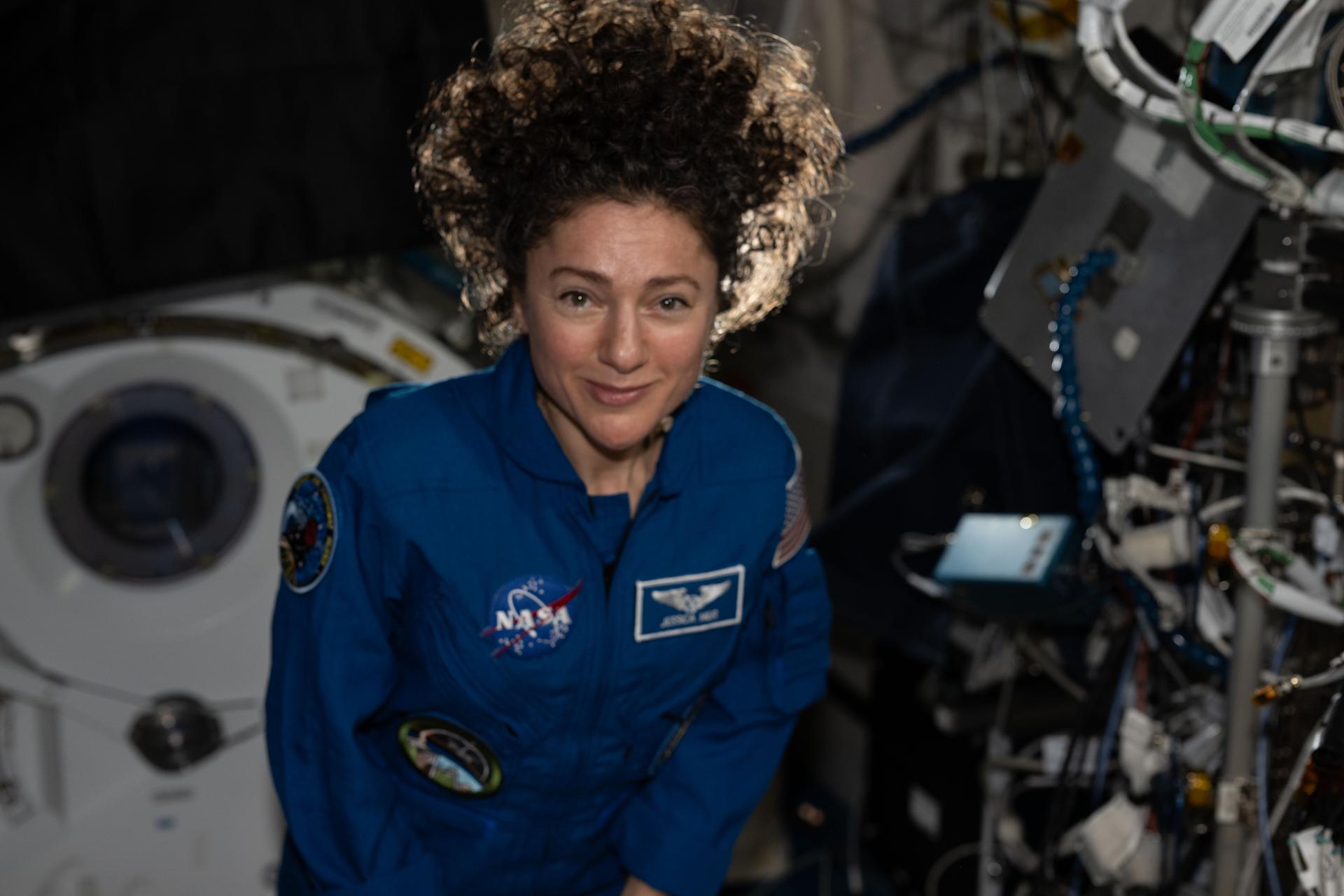
NASA astronaut Jessica Meir poses for a portrait inside the Kibo laboratory module after acccepting command of the International Space Station from Roscosmos cosmonaut Sergey Kud-Sverchkov (out of frame). Meir will lead the Expedition 75 crew until the end of summer.
NASA astronaut Jessica Meir poses for a portrait inside the Kibo laboratory module after acccepting command of the International Space Station. Meir will lead the Expedition 75 crew until the end of summer.
NASA/Anil Menon

The seven-member Expedition 75 crew worked throughout Tuesday on spacesuit checks, eye exams, and exercise research aboard the International Space Station. Earth imagery and lab inventory duties rounded out the day for the orbital residents.

NASA has scheduled three spacewalks in August to continue upgrading solar arrays, replace a communications antenna, and connect power and data cables in support of space station operations. Station commander Jessica Meir and flight engineer Anil Menon, both from NASA, will conduct the first spacewalk beginning at 7:35 a.m. EDT on Thursday, Aug. 6. The duo will spend about six-and-a-half hours in the vacuum of space preparing the orbital outpost for its seventh roll out solar array to augment its power system. Mission managers will discuss the upcoming spacewalks during a news conference on NASA+ beginning a at 2 p.m. EDT, Thursday, July 30, from NASA’s Johnson Space Center in Houston.

Meir and Menon joined flight engineers Jack Hathaway of NASA and Sophie Adenot of ESA (European Space Agency) in the Quest airlock and checked out a pair of spacesuits. The quartet first verified the suits for comfort, mobility, and fitness for the upcoming spacewalks. Next, they powered on the suits and tested the life support and electronics systems. NASA will soon announce the spacewalkers for the second and third spacewalks.

Meir and Adenot teamed up at the end of their shift for an eye exam using standard medical imaging hardware inside the Harmony module. Meir led the exam guiding Adenot as she peered into the biomedical device. Doctors on the ground monitored in real time to determine how microgravity is affecting her retina, lens, and cornea.

Roscosmos flight engineer Andrey Fedyaev pedaled on an exercise cycle while attached to cardiac sensors for a regularly scheduled physical fitness assessment. Afterward, he installed and activated Earth observation hardware for an automated photography session to capture imagery of islands, mountains, and lakes during the crew’s sleep shift.

Roscosmos flight engineers Pyotr Dubrov and Anna Kikina, along with Menon, are still familiarizing themselves with station operations while assuming their mission roles and responsibilities. Dubrov and Kikina took turns taking  inventory and inspecting tools and supplies throughout the station’s Roscosmos segment. Dubrov then loaded obsolete gear inside the Progress 94 cargo spacecraft while Kikina assisted Fedyaev with his fitness test.

Learn more about station activities by following the space station blog, @space_station on X, as well as the ISS Facebook and ISS Instagram accounts.

Get the latest from NASA delivered every week. Subscribe here.

Powered by WPeMatico

Get The Details…

Mark A. Garcia

Expedition 74 Trio Returns to Earth Inside Soyuz

Expedition 74 Trio Returns to Earth Inside Soyuz

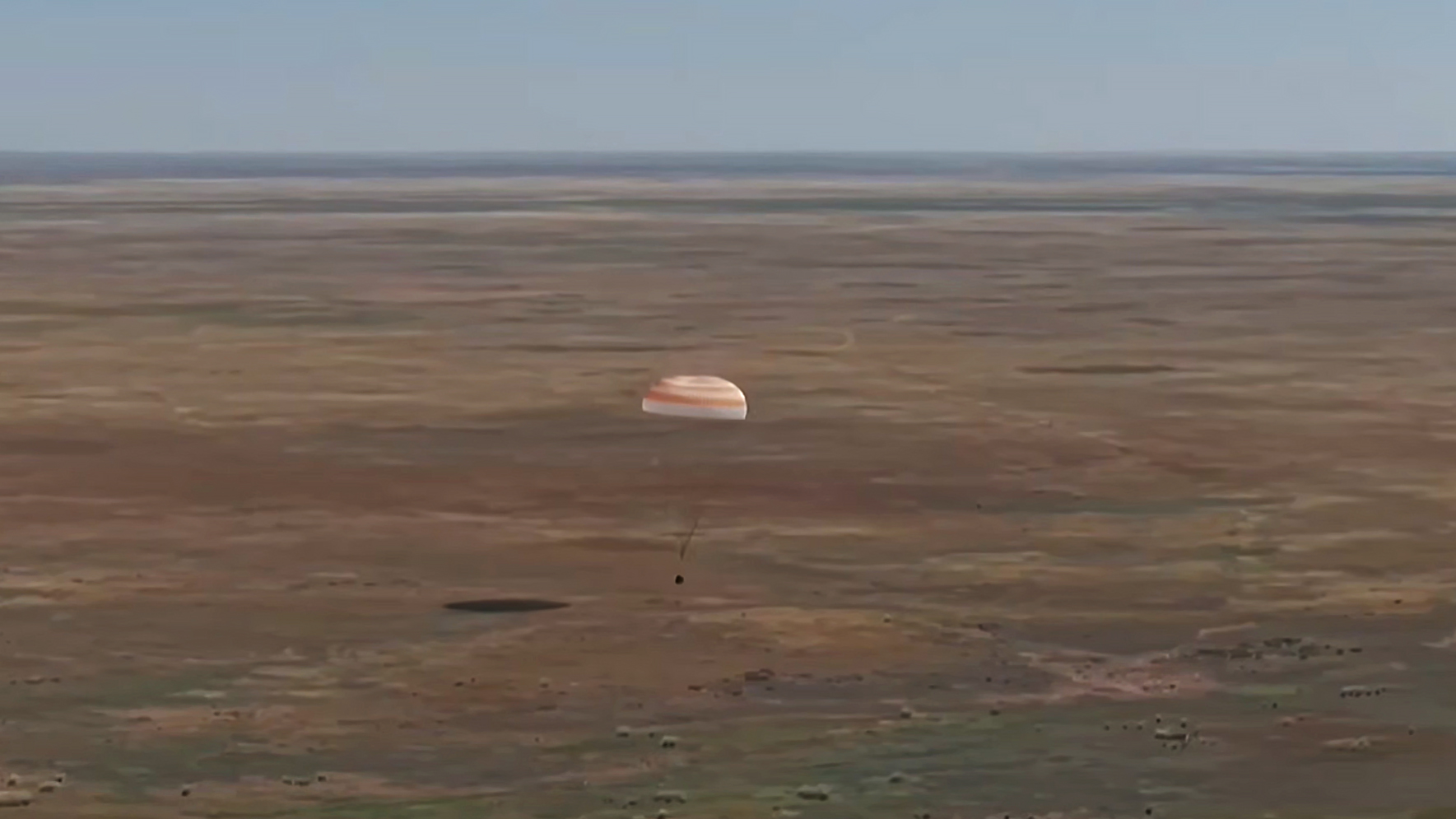
The Soyuz MS-28 spacecraft carrying three Expedition 74 crew members parachutes to a landing just feet above the steppe of Kazakhstan ending an eight-month research mission aboard the International Space Station.
The Soyuz MS-28 spacecraft carrying three Expedition 74 crew members parachutes to a landing just feet above the steppe of Kazakhstan ending an eight-month research mission at the International Space Station.
NASA+

The Soyuz MS‑28 spacecraft touched down at 5:27a.m. CDT (3:27 p.m. local time), completing a parachute‑assisted landing on the Kazakh steppe southeast of Dzhezkazgan.

NASA astronaut Chris Williams and Roscosmos cosmonauts Sergey Kud‑Sverchkov and Sergei Mikaev wrapped up a 241‑day mission, orbiting Earth 3,856 times and traveling more than 102 million miles. Soyuz MS‑28 launched and docked with the International Space Station on Nov. 27, 2025. This flight marked the first mission for Williams and Mikaev and the second for Kud‑Sverchkov.

After routine post‑landing medical checks, recovery teams will fly the crew by helicopter to Karaganda, Kazakhstan. Williams then will board a NASA aircraft bound for the agency’s Johnson Space Center in Houston.

For continued coverage and more information about research, operations, and crews, visit the International Space Station blog.

Learn more about station activities by following the space station blog, @space_station on X, as well as the ISS Facebook and ISS Instagram accounts.

Get the latest from NASA delivered every week. Subscribe here.

Powered by WPeMatico

Get The Details…

Mark A. Garcia