Ongoing Spacewalk Preps, Science, and Plumbing Keep Crews Busy

Ongoing Spacewalk Preps, Science, and Plumbing Keep Crews Busy

NASA's Boeing Crew Flight Test astronauts Suni Williams and Butch Wilmore (at center) pose with Expedition 71 Flight Engineers (far left) Mike Barratt and Tracy C. Dyson (far right), both NASA astronauts, in their spacesuits.
NASA’s Boeing Crew Flight Test astronauts Suni Williams and Butch Wilmore (at center) pose with Expedition 71 Flight Engineers (far left) Mike Barratt and Tracy C. Dyson (far right), both NASA astronauts, in their spacesuits.

Preparations continue for the next spacewalk at the International Space Station planned for next week. In the meantime, the orbital residents are rebuilding advanced plumbing gear and servicing video and science hardware.

Beginning around 8:45 p.m. EDT on Wednesday, June 26 NASA instructed crews aboard the space station to shelter in their respective spacecraft as a standard precautionary measure after it was informed of a satellite break-up at an altitude near the station’s earlier Wednesday. Mission Control continued to monitor the path of the debris, and after about an hour, the crew was cleared to exit their spacecraft and the station resumed normal operations.

NASA Flight Engineers Tracy C. Dyson and Mike Barratt began Thursday morning reviewing procedures for a spacewalk that will see hardware replacements and installations, preparations for future upgrades on science gear, and photographic inspections of station pipelines. After lunchtime, the two astronauts turned on a computer that visualized the upcoming spacewalk tasks using 3D graphics. NASA will release an advisory soon announcing the spacewalking details and NASA TV coverage times.

NASA Flight Engineers Matthew Dominick and Jeanette Epps had a busy day with spacesuit maintenance, computer updates, and orbital plumbing. Dominick then worked in the Quest airlock during the afternoon recharging spacesuit batteries and dumping and filling the suit water tanks. Epps swapped out a hard drive on a science laptop computer then replaced plumbing components in the Tranquility module’s bathroom, also called the water and hygiene compartment.

Astronauts Butch Wilmore and Suni Williams, both from NASA’s Boeing Crew Flight Test, were back on orbital plumbing duty Thursday. The Starliner Commander and Pilot spent the afternoon preparing the rebuilt pressure control and pump assembly motor for installation in Tranquility’s bathroom.

The orbital outpost’s three cosmonauts relaxed part of Thursday morning before going right into their standard science maintenance tasks. Commander Oleg Kononenko and Flight Engineer Nikolai Chub first began outfitting cables on video cameras. Kononenko then replaced video systems hardware in the Zvezda service module as Chub studied ways to create new materials on the lunar surface. Flight Engineer Alexander Grebenkin photographed microbe samples, dismantled a science cooler, then cleaned air ducts in the Nauka science module.


Learn more about station activities by following the space station blog, @space_station and @ISS_Research on X, as well as the ISS Facebook and ISS Instagram accounts.

Get weekly video highlights at: https://roundupreads.jsc.nasa.gov/videoupdate/

Get the latest from NASA delivered every week. Subscribe here: www.nasa.gov/subscribe

Powered by WPeMatico

Get The Details…

Mark Garcia

NASA Collins xEVAS Update 

NASA Collins xEVAS Update 

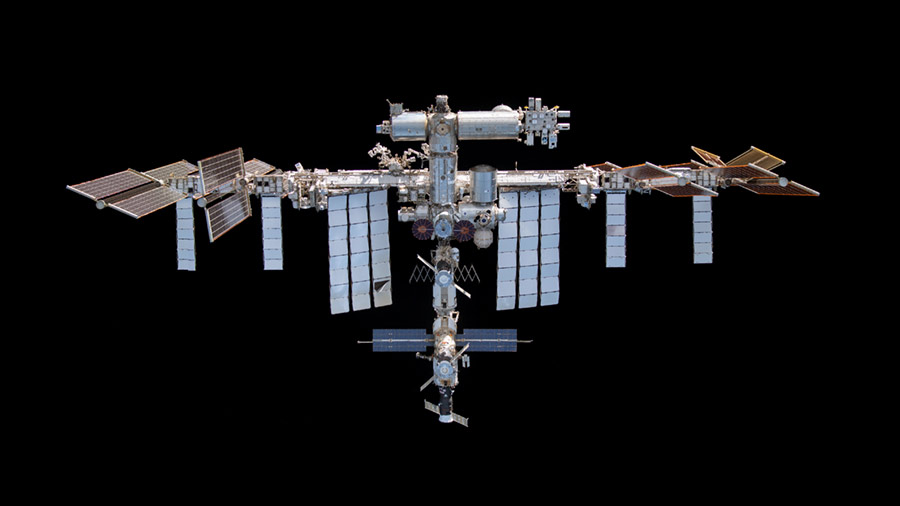
The space station is pictured from the SpaceX Crew Dragon Endeavour during its departure and flyaround on Nov. 8, 2021.

In 2022 and 2023, NASA awarded Collins Aerospace two task orders under the agency’s xEVAS (Exploration Extravehicular Activity Services) contract. The first task order was to deliver a next generation spacesuit and spacewalking system for potential use on the International Space Station with a base value of $97.2 million. The second task order was to advance additional spacesuit capabilities with a base value of $5 million.

After a thorough evaluation, NASA and Collins Aerospace have mutually agreed to descope the existing task orders on the Collins Exploration Extravehicular Activity Services contract. This descope includes ending the International Space Station suit demonstration, which was targeted for 2026. No further work will be performed on the task orders. This action was agreed upon after Collins recognized its development timeline would not support the space station’s schedule and NASA’s mission objectives.

This change to the xEVAS contract has no impact on NASA’s spacewalking capabilities on the space station. Collins will continue to support NASA’s EMU (Extravehicular Activity Mobility Unit) spacesuit and is committed to supporting space station’s ongoing spacewalking capabilities through the existing Extravehicular Space Operations Contract.


Learn more about station activities by following the space station blog, @space_station and @ISS_Research on X, as well as the ISS Facebook and ISS Instagram accounts.

Get weekly video highlights at: https://roundupreads.jsc.nasa.gov/videoupdate/

Get the latest from NASA delivered every week. Subscribe here: www.nasa.gov/subscribe

Powered by WPeMatico

Get The Details…

Mark Garcia

Cargo, Science, and Spacewalk Preps Fill Station’s Day

Cargo, Science, and Spacewalk Preps Fill Station’s Day

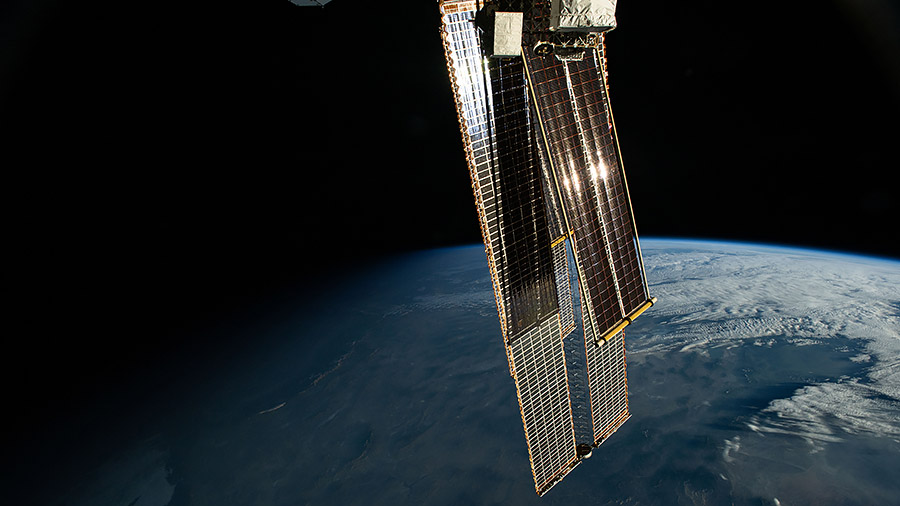
The first rays of an orbital sunrise reflect off the International Space Station's roll-out solar arrays that overshadow and augment the orbital outpost's main solar arrays.
The first rays of an orbital sunrise reflect off the International Space Station’s roll-out solar arrays that overshadow and augment the orbital outpost’s main solar arrays.

Six NASA astronauts aboard the International Space Station had a day filled with cargo packing, orbital plumbing, and a spacewalk conference. The orbital outpost’s three cosmonauts from Roscosmos spent their day testing a 3D printer, collecting microbial air samples, and servicing life support gear.

Expedition 71 Flight Engineers Tracy C. Dyson, Mike Barratt, Matthew Dominick, and Jeanette Epps worked throughout Wednesday packing trash and discarded cargo inside Northrop Grumman’s Cygnus cargo space freighter. Cygnus is targeted to complete a five-and-a-half-month mission in mid-July and depart the station’s Unity module before descending into Earth’s atmosphere for a fiery, but safe disposal above the South Pacific Ocean.

In the midst of the cargo work, Dominick videotaped the location of station hardware stowed in the starboard side of the Columbus laboratory module. Epps swapped sample cartridges inside the Materials Science Laboratory, a research furnace that safely exposes metals, alloys, polymers, and other materials to high temperatures to discover new applications for Earth and space industries. Dyson and Barratt continued spacesuit and tool configurations in the Quest airlock.

At the end of the workday, the four NASA astronauts gathered in the Destiny laboratory module for a video conference with mission controllers on the ground. The quartet called down to the NASA engineers and discussed procedures and readiness for an upcoming spacewalk.

NASA’s Boeing Crew Flight Test astronauts Butch Wilmore and Suni Williams started their morning with exercise sessions before organizing cargo packed inside the Permanent Multipurpose Module. The duo then spent the afternoon working to remove and replace a failed pressure control and pump assembly module that is part of the Tranquility module’s bathroom, or waste and hygiene compartment.

Station Commander Oleg Kononenko from Roscosmos spent all day Wednesday testing a 3D printer and its ability to manufacture space hardware on demand. Flight Engineer Nikolai Chub spent half his day servicing plumbing hardware in the Nauka science module before working out on the advanced resistive exercise device and jogging on a treadmill during the afternoon. Flight Engineer Alexander Grebenkin’s list of duties included collecting more microbial air samples for analysis and maintaining electronics systems.


Learn more about station activities by following the space station blog, @space_station and @ISS_Research on X, as well as the ISS Facebook and ISS Instagram accounts.

Get weekly video highlights at: https://roundupreads.jsc.nasa.gov/videoupdate/

Get the latest from NASA delivered every week. Subscribe here: www.nasa.gov/subscribe

Powered by WPeMatico

Get The Details…

Mark Garcia

Crews Conduct Spacewalk Review, Physics Research, and Orbital Plumbing

Crews Conduct Spacewalk Review, Physics Research, and Orbital Plumbing

Astronaut Tracy C. Dyson is pictured in her spacesuit prior to the start of a spacewalk that ended early after her suit experienced a water leak in the service and cooling umbilical unit.

The nine residents aboard the International Space Station comprising both the Expedition 71 and NASA’s Boeing Crew Flight Test teams had a day filled with spacesuit checks, advanced microgravity research, and orbital lab maintenance.

NASA Flight Engineers Tracy C. Dyson and Mike Barratt kept up their spacewalk preparations following the early end to Monday’s excursion. The duo’s spacewalk only lasted 31 minutes following a water leak in the service and cooling umbilical unit on Dyson’s spacesuit. Dyson and Barratt safely ended the spacewalk, repressurized the Quest airlock, and removed their spacesuits just over an hour after the spacewalk ended.

Barratt began Tuesday morning troubleshooting Dyson’s spacesuit and inspecting the suit’s components. Afterward, he joined Dyson for ongoing procedure reviews with fellow astronauts Matthew Dominick and Jeanette Epps for future spacewalks.

Dyson wrapped up her day swapping out a water resupply tank in the Destiny laboratory module while Barratt serviced spacesuit lithium-ion batteries in Quest. Dominick worked in the Kibo laboratory module testing flight trajectories and gesture-recognition software on an Astrobee robotic free flyer. Epps traded foam samples inside the Columbus laboratory module for a fluid physics investigation exploring the hydrodynamics of wet foams potentially benefitting mechanical and industrial processes.

NASA astronauts Butch Wilmore and Suni Williams, Starliner Commander and Pilot respectively, spent Tuesday inside the Harmony module maintaining orbital plumbing gear. The Crew Flight Test duo replaced the pressure control and pump assembly motor that supports the space station’s main restroom, also known as the waste and hygiene compartment, in the Tranquility module.

Working in the Roscosmos segment of the orbiting outpost, Station Commander Oleg Kononenko photographed the condition of handrails in the Zvezda, Poisk, and Nauka modules to determine of they need replacing. Flight Engineer Nikolai Chub swapped out toilet components inside Zvezda during the morning. He then spent the afternoon with Flight Engineer Alexander Grebenkin collecting microbial air samples in the Roscosmos modules for analysis. During his morning, Grebenkin downloaded radiation data then explored spacecraft and robotic piloting techniques future crews might use on planetary missions.


Learn more about station activities by following the space station blog, @space_station and @ISS_Research on X, as well as the ISS Facebook and ISS Instagram accounts.

Get weekly video highlights at: https://roundupreads.jsc.nasa.gov/videoupdate/

Get the latest from NASA delivered every week. Subscribe here: www.nasa.gov/subscribe

Powered by WPeMatico

Get The Details…

Mark Garcia

U.S. Spacewalk Update

U.S. Spacewalk Update

NASA astronauts Tracy C. Dyson and Mike Barratt are pictured training for spacewalks at the Johnson Space Center's Neutral Bouyancy Laboratory in Houston, Texas.
NASA astronauts Tracy C. Dyson and Mike Barratt are pictured training for spacewalks at the Johnson Space Center’s Neutral Bouyancy Laboratory in Houston, Texas.

NASA astronauts Tracy C. Dyson and Mike Barratt are back inside the International Space Station after U.S. spacewalk 90 ended early Monday due to a water leak in the service and cooling umbilical unit on Dyson’s spacesuit. The crew members were not in any danger as result of the leak. Dyson and Barratt set their suits to battery power at 8:46 a.m. EDT and opened the International Space Station’s Quest airlock hatch to the vacuum of space before reporting the water issue.

The spacewalk lasted a total of 31 minutes, when the crew suits repressurized the crew lock section of the airlock at 9:17 a.m. Dyson and Barratt removed their spacesuits at around 10:25 a.m. The crew was scheduled to remove a faulty electronics box from a communications antenna on the starboard truss of the space station. The pair also intended to collect samples for analysis to understand the ability of microorganisms to survive and reproduce on the exterior of the orbiting laboratory.


Learn more about station activities by following the space station blog, @space_station and @ISS_Research on X, as well as the ISS Facebook and ISS Instagram accounts.

Get weekly video highlights at: https://roundupreads.jsc.nasa.gov/videoupdate/

Get the latest from NASA delivered every week. Subscribe here: www.nasa.gov/subscribe

Powered by WPeMatico

Get The Details…

Mark Garcia