Sound and Hearing Studies, Earth Observations Fill Science Schedule

Sound and Hearing Studies, Earth Observations Fill Science Schedule
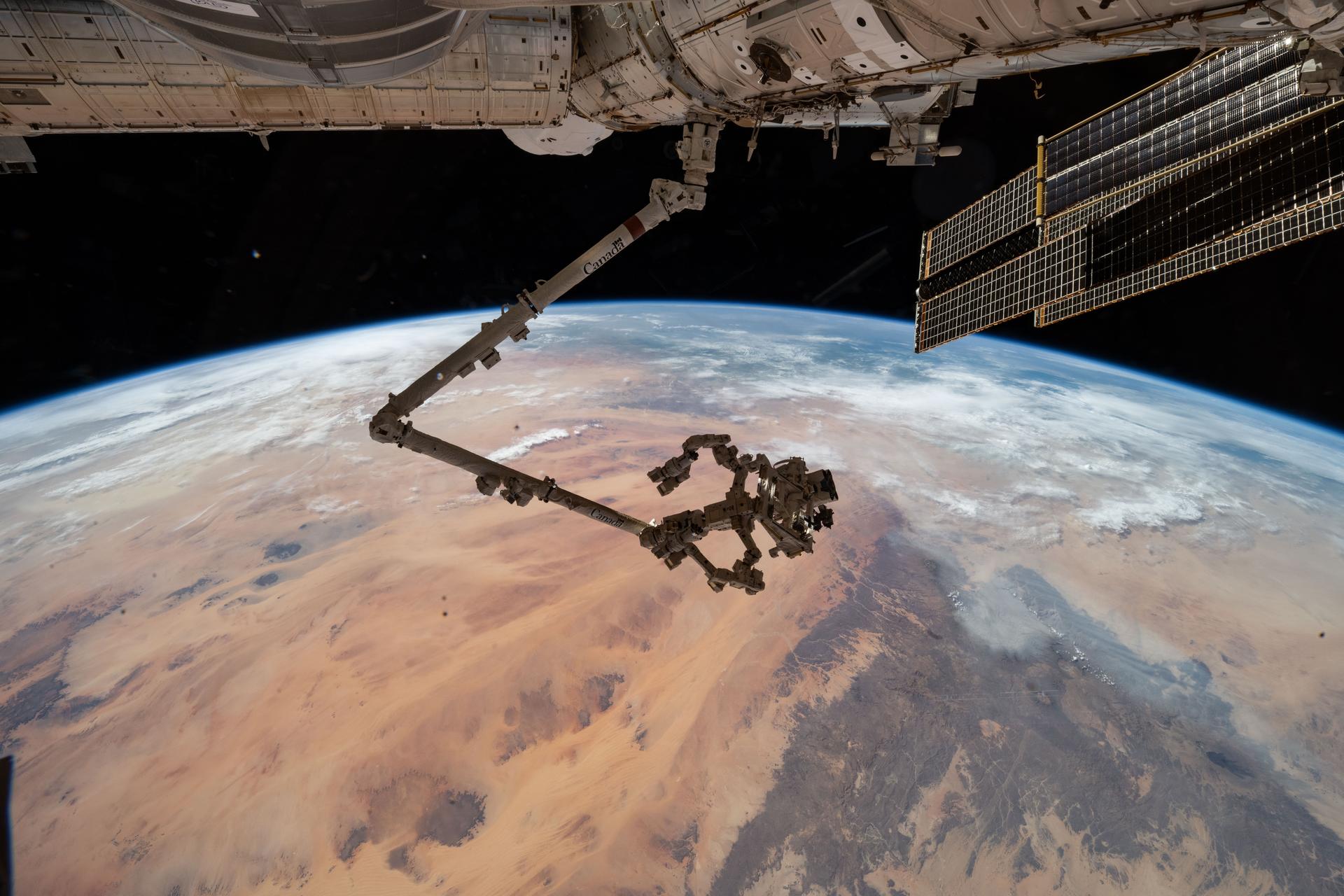
The International Space Station's 57.7-foot-long robotic arm, Canadarm2, with its fine-tuned robotic hand, Dextre, attached is pictured extending from the Harmony module. The orbital outpost was soaring 260 miles above the Saharan Desert in Libya at the time of this photograph.
The International Space Station’s 57.7-foot-long robotic arm, Canadarm2, with its fine-tuned robotic hand, Dextre, attached is pictured extending from the Harmony module. The orbital outpost was soaring 260 miles above the Saharan Desert at the time of this photograph.
NASA

Sound and hearing studies as well as Earth observations kept the Expedition 74 trio busy on Wednesday. The International Space Station residents also worked on cargo transfers, downloaded radiation data, and kept up lab maintenance.

NASA Flight Engineer Chris Williams began his day inside the Columbus laboratory module exploring how sound and shockwaves travel through small, solid particles, also called granular materials. Sensors measured the speed of sound and how the waves weaken and change shape as they move through the loose collection of tiny beads. Results may show how lunar or Martial soils behave as construction materials or during resource extraction. Insights could also lead to a better understanding of soil mechanics on Earth helping prevent landslides and sinkholes.

Williams also took turns with cosmonauts Sergey Kud-Sverchkov and Sergei Mikaev, station Commander and Flight Engineer respectively, taking a regularly scheduled hearing test. Using a quiet area in the orbital outpost, such as the Quest airlock, the crew wore a headset connected to a laptop computer and responded to a series of beeps and tones to check the health of the eardrum and inner ear in microgravity.

Williams spent the second half of his shift organizing cargo inside a SpaceX Dragon spacecraft due to return to Earth this spring. Dragon will bring back a variety completed experiments for analysis including material samples exposed to the external space environment, liquid crystal films developed in microgravity, and stem cells programmed to turn into brain and cardiac cells. Dragon will also fire its engines one more time, while docked to the Harmony module’s forward port, boosting the station’s orbit at the end of the week.

Mikaev continued his Earth observations at the beginning of his shift pointing a camera out windows on the Zvezda and Nauka modules and photographing African landmarks including the Nile Delta, Mount Kilimanjaro, and Lake Malawi. He also performed a monthly collection of radiation detectors and downloaded radiation dosages for review by mission controllers on the ground.

Kud-Sverchkov worked the first half of his shift on electronics and communications maintenance in the Rassvet module. During the second half of his day, the two-time station resident inspected and inventoried electrodes that help maintain muscle health in microgravity then finally replaced expired gas masks with new gas masks inside Nauka.

Powered by WPeMatico

Get The Details…

Mark A. Garcia

Expedition 74 Spends Tuesday on Microbiology, Lab Maintenance

Expedition 74 Spends Tuesday on Microbiology, Lab Maintenance

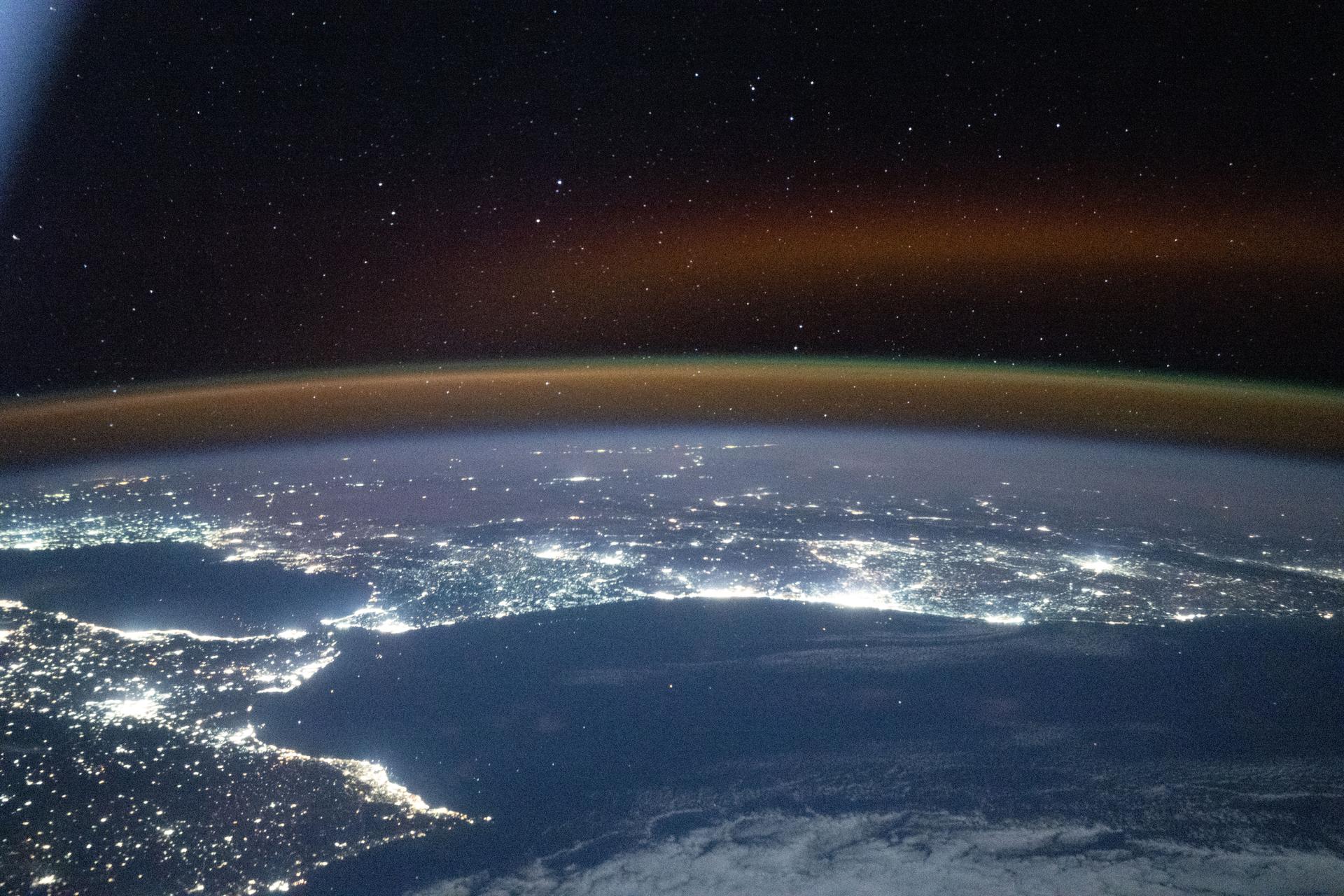
A red-yellow airglow blankets Earth's horizon as the city lights of southwestern Europe and North Africa sparkle in contrast to the Atlantic Ocean and the Mediterranean Sea that separates the two continents. The International Space Station was orbiting 262 miles above the Atlantic at approximately 7:47 p.m. local time when this photograph was taken.
A red-yellow airglow blankets Earth’s horizon as the city lights of southwestern Europe and North Africa sparkle in contrast to the Atlantic Ocean and the Mediterranean Sea that separates the two continents.
NASA

Microbiology research to protect astronaut health and spacecraft hardware topped the science schedule aboard the International Space Station on Tuesday. Earth observations and life support maintenance rounded out the day for the Expedition 74 trio.

NASA Flight Engineer Chris Williams worked throughout his shift safely processing samples of a bacterial pathogen inside the Kibo laboratory module’s Life Science Glovebox. Williams was exploring a way to prevent the formation of biofilms, or a layer of microorganisms, anywhere water is found on a spacecraft where they pose human health risks and can damage equipment. The microbe samples are housed inside a specialized cell culture chamber, called a BioCell, and exposed to different levels of ultraviolet light to learn how to inhibit microbial growth and reduce reliance on chemical disinfectants. Results may lead to safer life support and medical systems, more durable spacecraft materials, and healthier humans on and off the Earth.

Roscosmos Flight Engineer Sergei Mikaev spent his shift supporting a pair of ongoing Earth observation studies and servicing station equipment. Mikaev first deconfigured an automated overnight photography session that captured images of Earth’s nighttime atmospheric glow in near-ultraviolet wavelengths. The airglow is caused by atoms and molecules that are excited by solar ultraviolet radiation during the day and then release the energy as light at night. Next, he pointed a camera out a station window to photograph landmarks across Africa and the Middle East. Researchers will use the data to understand how natural disasters affect the surrounding landscape. Mikaev ended his day cleaning fans inside the Progress 92 cargo craft and transferring water between station tanks and inspecting water valves for microbes.

Station Commander Sergey Kud-Sverchkov assisted Mikaev during his second Earth photography session setting up and installing the hardware then downloading the imagery for analysis on the ground. Kud-Sverchkov completed his shift with orbital plumbing transferring fluids and refilling tanks before cleaning fan filters in the Zarya module.

Powered by WPeMatico

Get The Details…

Mark A. Garcia

Expedition 74 Continues After Crew-11 Returns to Earth

Expedition 74 Continues After Crew-11 Returns to Earth

Expedition 74 crew members (from left) NASA astronaut Chris Williams and Roscosmos cosmonauts Sergey Kud-Sverchkov and Sergey Mikaev pose for a portrait at NASA's Johnson Space Center in Houston, Texas.
Expedition 74 crew members (from left) NASA astronaut Chris Williams and Roscosmos cosmonauts Sergey Kud-Sverchkov and Sergey Mikaev pose for a portrait at NASA’s Johnson Space Center in Houston, Texas.
NASA/James Blair

Three Expedition 74 crew members continue to reside aboard the International Space Station now following the return to Earth of NASA’s SpaceX Crew-11 mission on Thursday. The orbiting trio will conduct research and maintenance while awaiting the arrival of four new crewmates planned in February.

NASA astronauts Zena Cardman and Mike Fincke and JAXA (Japan Aerospace Exploration Agency) astronaut Kimiya Yui and Roscosmos cosmonaut Oleg Platonov are back on Earth completing 167 days in space. The Crew-11 quartet returned in a SpaceX Dragon back to Earth for a parachute-assisted splashdown off the coast of California just ten-and-a-half-hours after undocking from the station’s Harmony module.

Meanwhile, NASA Flight Engineer Chris Williams along with station Commander Sergey Kud-Sverchkov and Flight Engineer Sergei Mikaev are on the orbital outpost and will stay in space until summer. The trio arrived on Thanksgiving Day last year aboard the Soyuz MS-28 spacecraft beginning an eight-month space research mission.

Williams spent Friday inside the Quest airlock deconfiguring a pair of spacesuits set up for last week’s spacewalk before it was postponed. He cleaned and flushed the suits’ internal water-cooling loops that regulate a spacewalker’s body temperature. Next, he powered down and inspected the suits, then uninstalled suit hardware, components, and batteries.

Mikaev installed Earth observation hardware and programmed it to photograph African landmarks from Namibia’s Namib Desert to Kenya’s Nabiyotum Crater on the southern tip of Lake Turkana. Kud-Sverchkov serviced the Elektron oxygen generator inside the Zvezda service module then documented the location of hardware stowed throughout the station’s Roscosmos segment.

Back on Earth, NASA’s SpaceX Crew-12 members are looking ahead to next month when they are targeted to launch atop a SpaceX Falcon 9 rocket aboard a Dragon crew spacecraft and join Expedition 74. Crew-12 will be commanded by Jessica Meir and piloted by Jack Hathaway, both NASA astronauts, with Sophie Adenot of ESA (European Space Agency) and Andrey Fedyaev of Roscosmos serving as mission specialists. NASA, SpaceX, and international partners are working to advance the launch of Crew-12, which is currently slated for Sunday, Feb. 15, following the early departure of Crew-11.

Learn more about station activities by following the space station blog, @space_station on X, as well as the ISS Facebook and ISS Instagram accounts.

Get the latest from NASA delivered every week. Subscribe here.

Powered by WPeMatico

Get The Details…

Mark A. Garcia

NASA’s SpaceX Crew-11 Dragon Splashdown at 3:41 a.m. EST

NASA’s SpaceX Crew-11 Dragon Splashdown at 3:41 a.m. EST

Spacecraft splashes down in ocean.
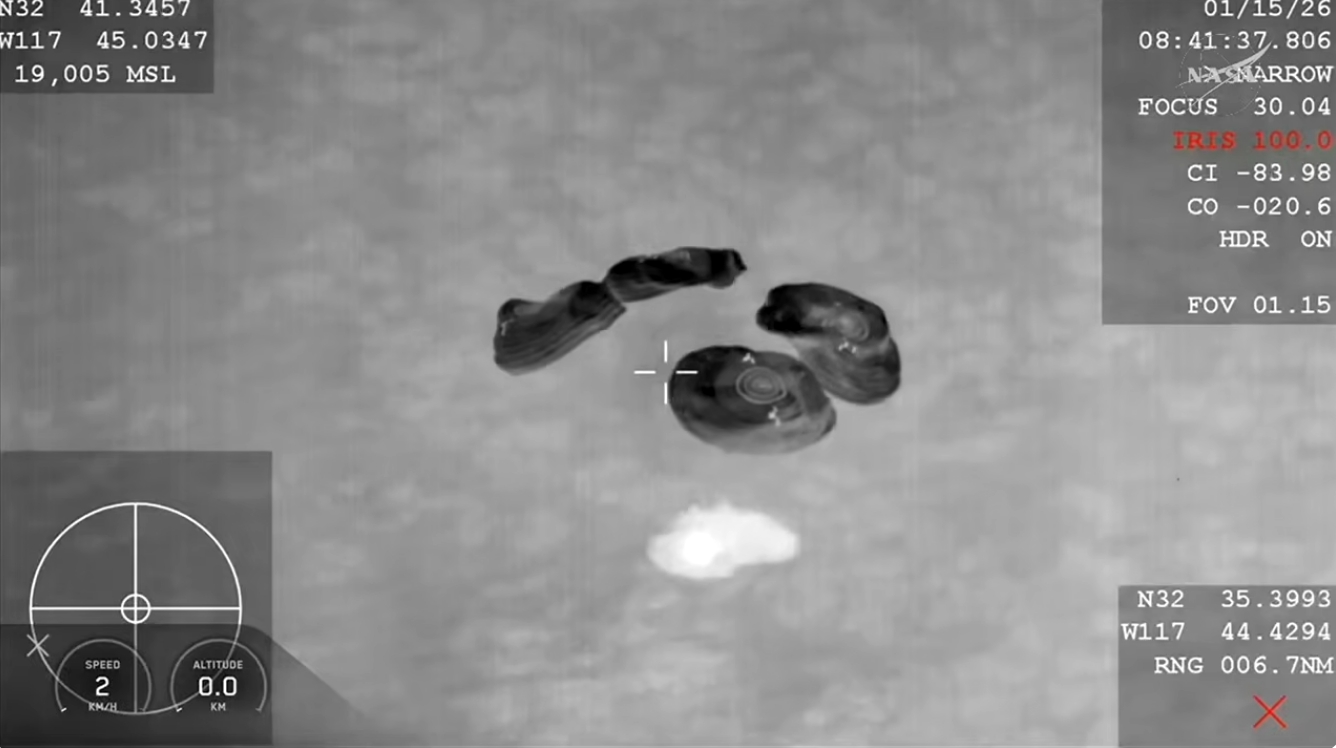
NASA’s SpaceX Crew-11 Dragon spacecraft splashes down in the Pacific Ocean on Thursday, Jan. 15, 2025.
NASA+

At 3:41 a.m. EST, the SpaceX Dragon spacecraft, carrying NASA astronauts Zena Cardman and Mike Fincke, JAXA (Japan Aerospace Exploration Agency) astronaut Kimiya Yui, and Roscosmos cosmonaut Oleg Platonov splashed down off the coast of San Diego, California.  

This completes a stay in space of 167 days for the four-person crew. The mission returned to Earth earlier than originally planned as teams monitored a medical concern with a crew member living and working aboard the orbital laboratory. The crew member is stable.  

Teams aboard the recovery ship, including two fast boats, are securing the SpaceX Dragon and ensuring the spacecraft is safe for the recovery effort. As the fast boat teams complete their work, the recovery ship will move into position to hoist Dragon onto the main deck with the astronauts inside. Once on the main deck, the crew will egress the spacecraft.  

NASA previously announced all four crew members will be transported to a local hospital for additional evaluation, taking advantage of medical resources on Earth to provide the best care possible. 

Following a planned overnight hospital stay, the crew will return to NASA’s Johnson Space Center in Houston, where they will reunite with their families and undergo standard post-flight reconditioning and evaluations. Due to medical privacy, it is not appropriate for NASA to share more details about the crew member. 

NASA will host a post-splashdown media conference at 5:45 a.m. on NASA+, Amazon Prime, and the agency’s YouTube channel, with the following participants:   

  • NASA Administrator Jared Isaacman 
  • Joel Montalbano, deputy associate administrator, NASA’s Space Operations Mission Directorate 

Learn more about the mission by following the commercial crew blog, @NASASpaceOps and @space_station on X, as well as the International Space Station’s Facebook and Instagram accounts.

Get the latest from NASA delivered every week. Subscribe here.

Powered by WPeMatico

Get The Details…

Jason Costa

SpaceX Dragon Completes Deorbit Burn

SpaceX Dragon Completes Deorbit Burn

NASA's SpaceX Crew-11 crew prepares for splashdown in the Pacific Ocean on Thursday, Jan. 15, 2025.
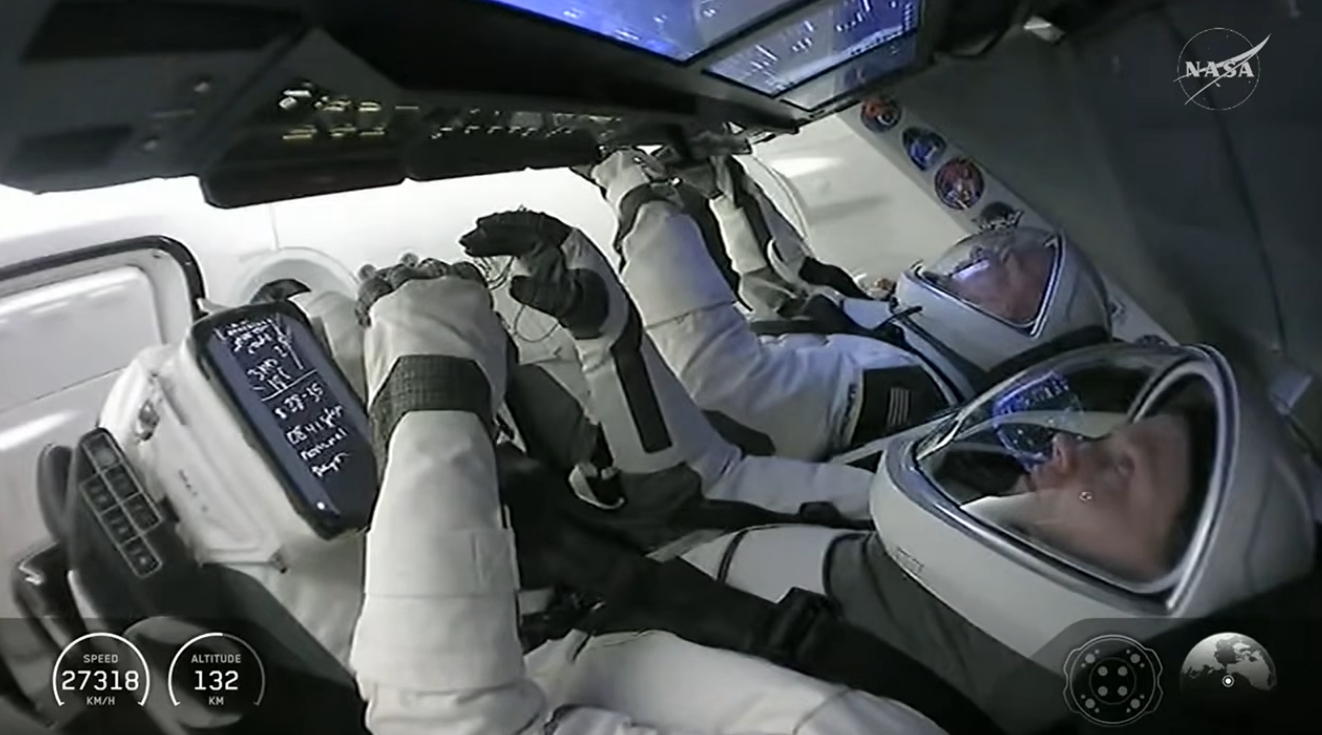
NASA’s SpaceX Crew-11 NASA astronauts Zena Cardman (right) and Mike Fincke prepare for splashdown in the Pacific Ocean on Thursday, Jan. 15, 2025.
NASA+

The SpaceX Dragon spacecraft carrying NASA astronauts Zena Cardman and Mike Fincke, JAXA (Japan Aerospace Exploration Agency) astronaut Kimiya Yui, and Roscosmos cosmonaut Oleg Platonov has completed its deorbit burn as expected ahead of splashdown. 

Four minutes before splashdown, the drogue parachutes will deploy at about 18,000 feet in altitude while Dragon is moving approximately 350 mph. Less than a minute later, at about 6,000 feet in altitude, the main parachutes deploy while the spacecraft is moving approximately 120 mph. 

Watch NASA’s live coverage on NASA+Amazon Prime, and the agency’s YouTube channel until crew recovery is complete. 

Learn more about the mission by following the commercial crew blog, @NASASpaceOps and @space_station on X, as well as the International Space Station’s Facebook and Instagram accounts.

Get the latest from NASA delivered every week. Subscribe here.

Powered by WPeMatico

Get The Details…

Jason Costa