Crew Unloads Dragon and Begins New Space Experiments

Crew Unloads Dragon and Begins New Space Experiments

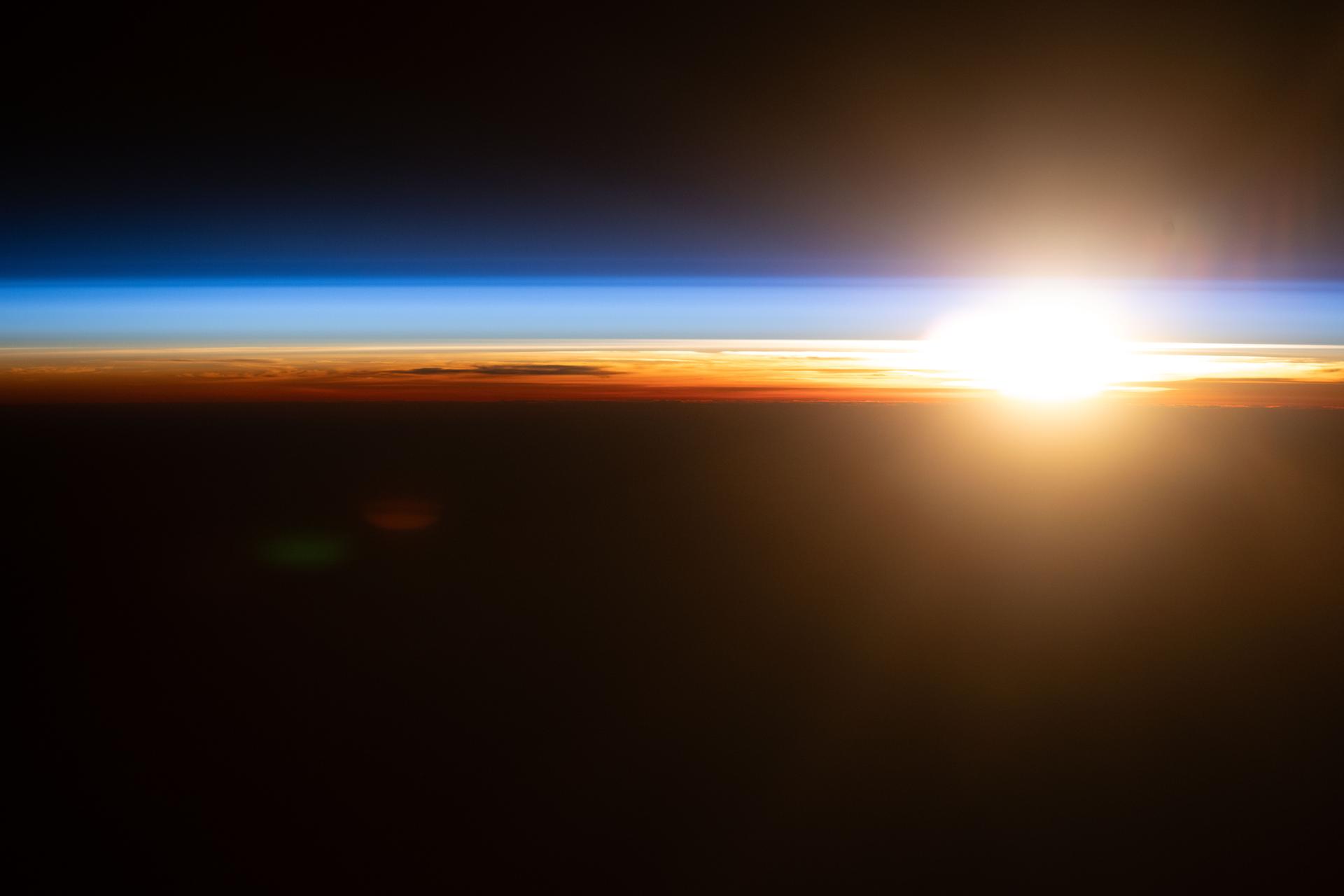
The last rays of an orbital sunset illuminate Earth's atmosphere and the cloud tops in this photograph from the International Space Station as it orbited 258 miles above the Pacific Ocean north of Papua New Guinea.
The last rays of an orbital sunset illuminate Earth’s atmosphere and the cloud tops in this photograph from the International Space Station as it orbited 258 miles above the Pacific Ocean north of Papua New Guinea.
NASA/Jessica Meir

New science experiments are getting underway aboard the International Space Station after a SpaceX Dragon spacecraft delivered about 6,500 pounds of cargo on Sunday, May 17. The Expedition 74 crew spent Monday unloading the new supplies, kicking off new research, and gearing up for a spacewalk.

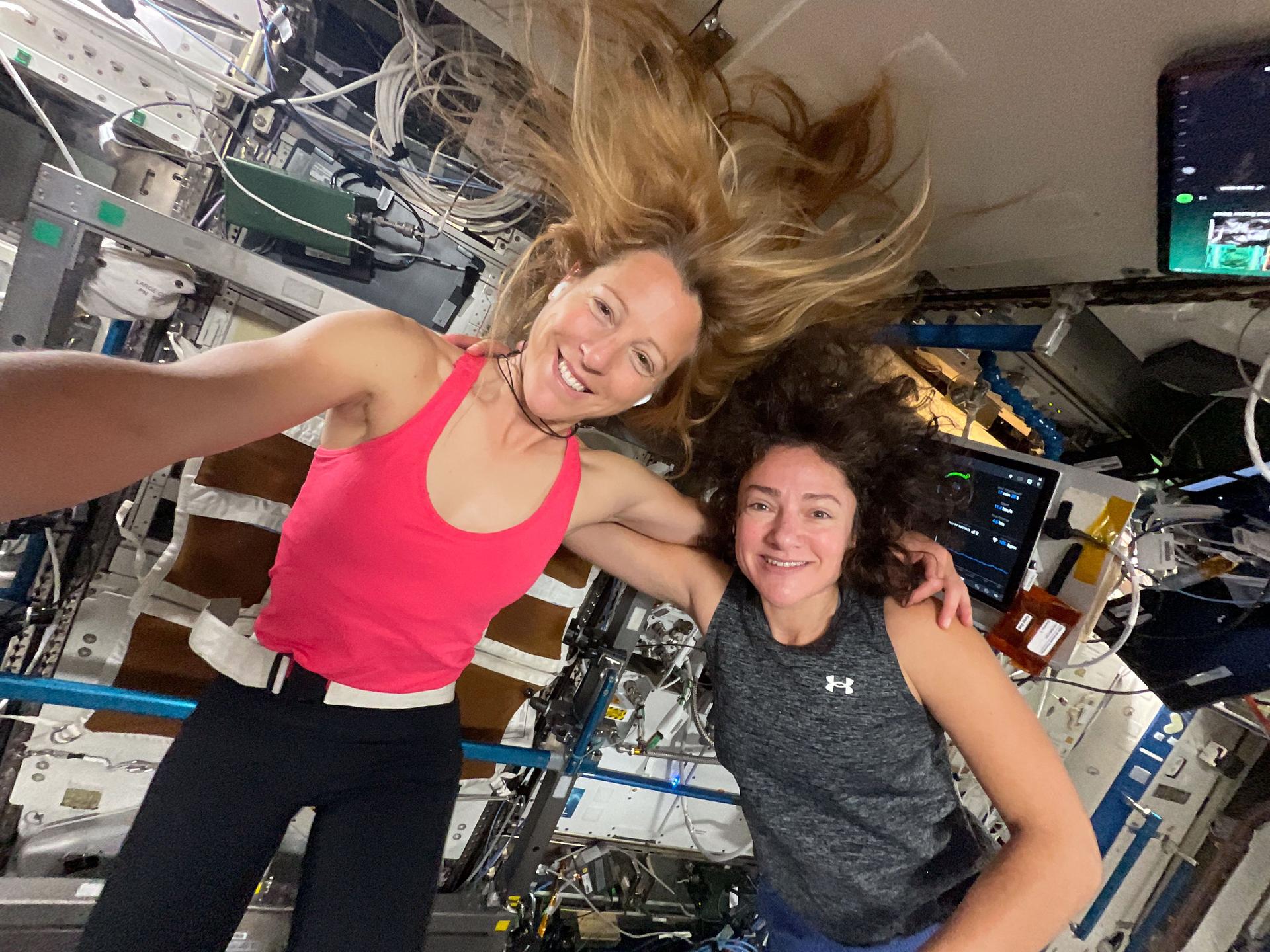
NASA flight engineer Jack Hathaway was the first crew member inside Dragon on Sunday when he opened its hatch just a couple of hours after the spacecraft’s docking. Shortly afterward, his crewmates Chris Williams and Jessica Meir, both from NASA, and Sophie Adenot of ESA (European Space Agency) followed him and began transferring time-critical research samples packed inside Dragon’s portable science freezers and stowed them throughout the orbital outpost’s research facilities.

The newest investigation delivered aboard Dragon will explore how living in microgravity affects blood-making cells, or blood platelets, at the cellular and genetic level. Meir started the experiment on Monday inside the Kibo laboratory module’s Life Science Glovebox preparing samples for incubation and growth after Hathway had thawed and spun them in the BioServe centrifuge. Adenot assisted with the research then uninstalled the centrifuge after the samples were processed and handed over to Meir. Researchers will observe the cells growing into platelets to understand how weightlessness affects a crew member’s blood clotting and immune function.

Williams worked in the Harmony module activating sample-containing tubes shipped on Dragon for a variety of student-designed experiments. The tubes were filled with biological samples including plant seeds, bacteria, and mold, as well as material samples such as iron and aluminum. Observations will expand the knowledge of space phenomena and inspire junior high and high school students to consider scientific, technical, and engineering careers.

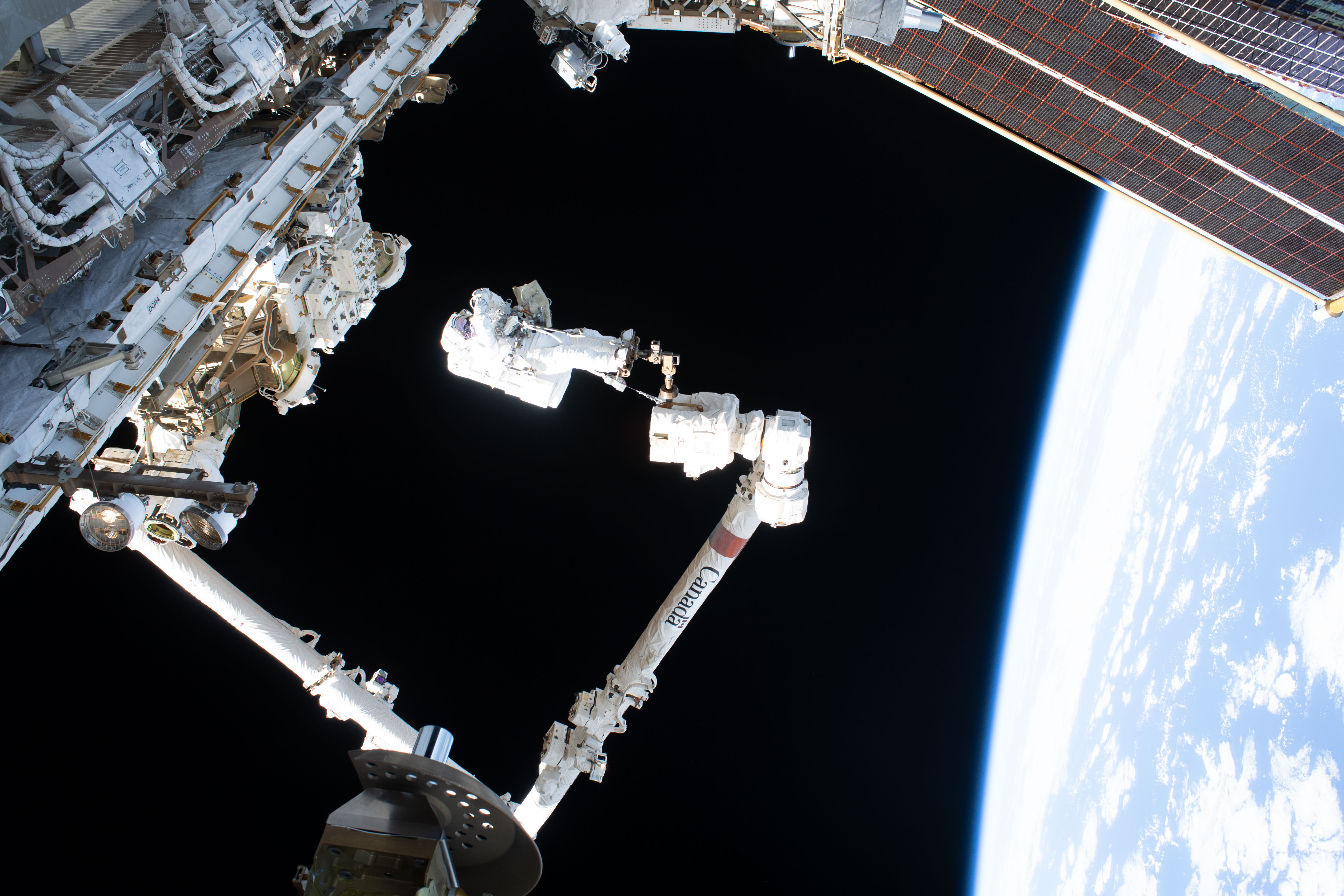
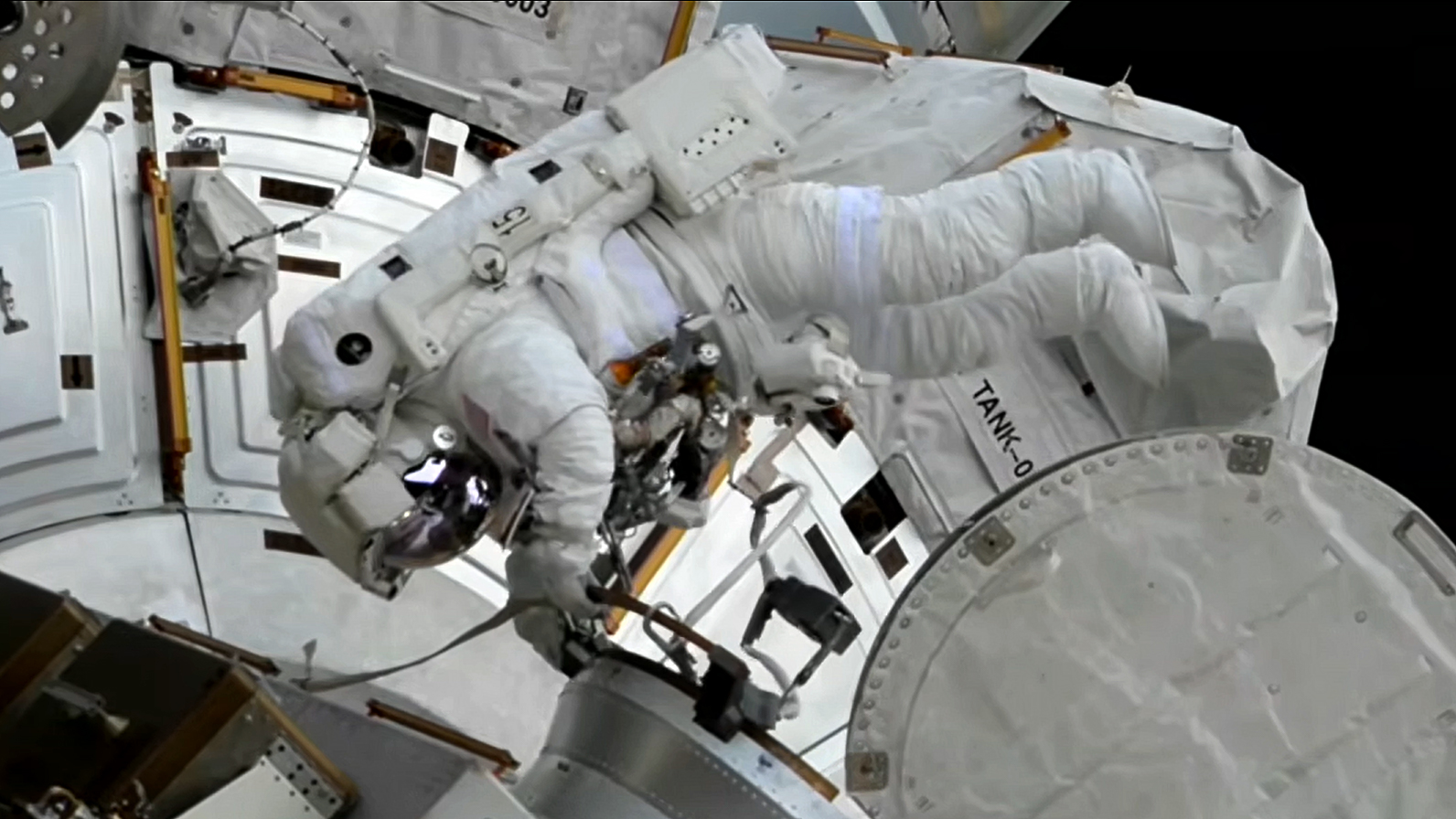
The next mission event the orbital residents are focusing on is a spacewalk planned for the end of the month. Roscosmos cosmonauts Sergey Kud-Sverchkov and Sergey Mikaev have spent the last several days, including Monday, preparing spacewalking tools and configuring Orlan spacesuits inside the Poisk module’s airlock. The pair also took time out on Monday collecting their blood pressure measurements helping doctors understand how weightlessness affects a crew member’s blood vessels.

Roscosmos flight engineer Andrey Fedyaev focused primarily on maintenance, first updating laptop computer hardware and software. Next, Fedyaev wrapped up his shift inspecting and testing the functionality of electronics systems on the Zarya module.

Powered by WPeMatico

Get The Details…

Mark A. Garcia

SpaceX Dragon Docks to Station Filled with New Science Experiments

SpaceX Dragon Docks to Station Filled with New Science Experiments

May 17, 2026: International Space Station Configuration. Six spaceships are parked at the space station including the SpaceX CRS-34 Dragon, the SpaceX Crew-12 Dragon, Northrop Grumman’s Cygnus XL, the Soyuz MS-28 crew ship, and the Progress 94 and 95 resupply ships.
NASA

At 6:37 a.m. EDT, the SpaceX Dragon spacecraft docked to the forward port of the International Space Station’s Harmony module, carrying nearly 6,500 pounds of food, supplies, and equipment for the Expedition 74 crew. This is the 34th SpaceX commercial resupply services mission to the space station for NASA.

In addition to cargo for the crew aboard the space station, Dragon will deliver several new experiments, including a project to determine how well Earth-based simulators mimic microgravity conditions, a bone scaffold made from wood that could produce new treatments for fragile bone conditions like osteoporosis, and equipment to help researchers evaluate how red blood cells and the spleen change in space. The Dragon spacecraft also will carry a new instrument to study charged particles around the Earth that can impact power grids and satellites, an investigation that could provide a fundamental understanding of how planets form, and a instrument designed to take highly accurate measurements of sunlight reflected by Earth and the Moon.

The mission launched at 6:05 p.m. May 15 aboard a SpaceX Falcon 9 rocket from Space Launch Complex 40 at Cape Canaveral Space Force Station in Florida.

Learn more about space station operations by follow @NASASpaceOps and @space_station on X, as well as the International Space Station’s Facebook and Instagram accounts.

Powered by WPeMatico

Get The Details…

Mark A. Garcia

SpaceX Dragon Approaching Station Packed with Science and Supplies

SpaceX Dragon Approaching Station Packed with Science and Supplies

The SpaceX Dragon cargo spacecraft fires its Draco engines fine-tuning its automated approach and rendezvous with the International Space Station. Dragon would dock a few moments later to the Harmony module's forward port delivering over 5,000 pounds of science, supplies, and hardware to the Expedition 73 crew.
A SpaceX Dragon cargo spacecraft fires its Draco engines fine-tuning its automated approach and rendezvous with the International Space Station on Aug. 25, 2025.
NASA

Live coverage is underway for arrival of the SpaceX Dragon spacecraft to the International Space Station on NASA+, Amazon Prime, and the agency’s YouTube channel. Learn how to watch NASA content through a variety of online platforms, including social media.

At approximately 6:38 a.m. EDT, Dragon will dock autonomously to the forward port of the space station’s Harmony module.

The spacecraft is carrying nearly 6,500 pounds of cargo to the orbiting laboratory aboard SpaceX’s 34th commercial resupply services mission for NASA. The mission launched at 6:05 p.m. on May 15 on a SpaceX Falcon 9 rocket from Space Launch Complex 40 at Cape Canaveral Space Force Station in Florida.

Learn more about space station operations by follow @NASASpaceOps and @space_station on X, as well as the International Space Station’s Facebook and Instagram accounts.

Powered by WPeMatico

Get The Details…

Mark A. Garcia

SpaceX Dragon Lifts Off to Resupply Expedition 74 Crew

SpaceX Dragon Lifts Off to Resupply Expedition 74 Crew

The SpaceX Falcon 9 rocket, carrying the Dragon cargo spacecraft atop, launches on time from Space Launch Complex 40 at Cape Canaveral in Florida.
The SpaceX Falcon 9 rocket, carrying the Dragon cargo spacecraft atop, launches on time from Space Launch Complex 40 at Cape Canaveral Space Force Station in Florida.
NASA+

At 6:05 p.m. EDT, nearly 6,500 pounds of scientific investigations and cargo launched to the International Space Station aboard the SpaceX Dragon spacecraft for the company’s 34th commercial resupply services mission for NASA. The spacecraft lifted off on a SpaceX Falcon 9 rocket from Space Launch Complex 40 at Cape Canaveral Space Force Station in Florida. 

About nine minutes after launch, Dragon will separate from the rocket’s second stage, open its nosecone, and begin a carefully choreographed series of thruster firings to reach the space station. 

Dragon will arrive at the orbiting outpost at approximately 7 a.m. Sunday, May 17, and will dock autonomously to the forward port of the station’s Harmony module. Watch NASA’s live rendezvous and docking coverage beginning at 5:30 a.m. on NASA+, Amazon Prime, and the agency’s YouTube channel. Learn how to watch NASA content through a variety of online platforms, including social media. 

Learn more about space station operations by follow @NASASpaceOps and @space_station on X, as well as the International Space Station’s Facebook and Instagram accounts.

Powered by WPeMatico

Get The Details…

Mark A. Garcia

Dragon Counts Down to Launch to Resupply Space Station

Dragon Counts Down to Launch to Resupply Space Station

A SpaceX Falcon 9 rocket, with the company’s Dragon spacecraft atop, stands in a vertical position at Launch Complex 39A at NASA’s Kennedy Space Center in Florida on Monday, April 21, in preparation for the 32nd commercial resupply services launch to the International Space Station.
A SpaceX Falcon 9 rocket, with the company’s Dragon spacecraft atop, stands in a vertical position at Launch Complex 39A at NASA’s Kennedy Space Center in Florida on April 21, 2024.
SpaceX

Live launch coverage is underway on NASA+, Amazon Prime, and the agency’s YouTube channel for the launch of SpaceX’s 34th commercial resupply services mission to the International Space Station for the agency. Learn how to watch NASA content through a variety of online platforms, including social media.

The SpaceX Dragon spacecraft is scheduled to lift off at 6:05 p.m. EDT aboard a Falcon 9 rocket from Space Launch Complex 40 at Cape Canaveral Space Force Station in Florida.

Filled with nearly 6,500 pounds of food, supplies, and equipment, Dragon will arrive at the orbiting outpost at approximately 7 a.m. Sunday, May 17, and dock autonomously to the forward port of the orbiting laboratory’s Harmony module.

In addition to cargo for the crew aboard the space station, Dragon will deliver several new experiments, including a project to determine how well Earth-based simulators mimic microgravity conditions, a bone scaffold made from wood that could produce new treatments for fragile bone conditions like osteoporosis, and equipment to help researchers evaluate how red blood cells and the spleen change in space. The Dragon spacecraft also will carry a new instrument to study charged particles around Earth that can impact power grids and satellites, an investigation that could provide a fundamental understanding of how planets form, and an instrument designed to take highly accurate measurements of sunlight reflected by Earth and the Moon.

Watch NASA’s live rendezvous and docking coverage beginning at 5:30 a.m. on NASA+, Amazon Prime, and the agency’s YouTube channel.

Learn more about space station operations by follow @NASASpaceOps and @space_station on X, as well as the International Space Station’s Facebook and Instagram accounts.

Powered by WPeMatico

Get The Details…

Mark A. Garcia