DNA-Inspired Treatments, Space Agriculture Top Crew’s Research Schedule

DNA-Inspired Treatments, Space Agriculture Top Crew’s Research Schedule

NASA astronaut and Expedition 74 flight engineer Jessica Meir inspects sensitive fiber cables that emit light to help cool, trap, and study atoms with high accuracy inside the Cold Atom Lab (CAL) aboard the International Space Station. The CAL, a quantum research facility, chills atoms to near absolute zero, providing insights into atomic wave functions, general relativity, and dark matter.
NASA astronaut Jessica Meir inspects sensitive fiber cables that emit light to help cool, trap, and study atoms with high accuracy inside the Cold Atom Lab aboard the International Space Station.
NASA/Jack Hathaway

DNA-inspired therapies and space agriculture topped the research schedule aboard the International Space Station on Thursday. The Expedition 74 crew members also serviced a variety of lab hardware including a quantum physics facility, a spacesuit, and life support gear throughout their busy day.

NASA flight engineer Jessica Meir worked in the Harmony module on a biotechnology investigation to observe how tiny, engineered materials that mimic DNA behave in microgravity. Meir pointed a light-measuring device, called a spectrophotometer, at the DNA-like sample materials housed in small transparent containers to analyze their ability to form stable structures. Next, she transferred the research data to a computer so doctors can downlink the information and learn how to improve and develop future treatments, or nano-therapies, that target cancer cells more precisely.

Flight engineer Sophie Adenot of ESA (European Space Agency) watered alfalfa plants growing inside the Columbus laboratory module’s Veggie botany research facility for the Veg-06 plant-microbe study. The experiment is exploring how plants source nitrogen and thrive in microgravity to promote food production in space during long term missions. Afterward, Adenot had her eye pressure checked by Meir who used a tonometer, an optometry tool that measures fluid pressure in the eye. Doctors regularly examine an astronaut’s eyes to detect and counteract potential space-caused vision conditions.

NASA flight engineer Jack Hathaway began his shift inside the Destiny laboratory module servicing a cooling unit inside the Cold Atom Lab (CAL) quantum research device. CAL chills atoms to near absolute zero trapping them for observation providing insights into atomic wave functions, general relativity, and dark matter. The CAL received a new quantum physics module, expanding the capacity of the research device, on April 13 when Northrop Grumman’s Cygnus XL cargo spacecraft arrived at the station. Hathaway ended his shift in the Quest airlock swapping components on a spacesuit for return to Earth.

NASA flight engineer Chris Williams was back inside the Kibo laboratory module continuing to remove research hardware for packing inside a SpaceX Dragon cargo spacecraft due to arrive next week. Williams later rearranged cargo inside the Cygnus XL spacecraft then took off the sensor-packed Bio-Monitor vest and headband that he wore for two days of health data collection.

Station commander Sergey Kud-Sverchkov and flight engineer Sergei Mikaev began their shift taking turns wearing an acoustic sensor around their necks and recording their rapid exhalation to understand how microgravity affects the respiratory system. The Roscosmos duo then partnered together the rest of the day unloading cargo packed inside the Progress 95 resupply ship.

Roscosmos flight engineer Andrey Fedyaev spent his shift continuing to replace hoses, connectors, and valves that carry water removed from the station’s air by the Zvezda service module’s dehumidifiers.

Learn more about station activities by following the space station blog, @space_stationon X, as well as the ISS Facebookand ISS Instagram accounts.

Get the latest from NASA delivered every week. Subscribe here.

Powered by WPeMatico

Get The Details…

Mark A. Garcia

Lab Hardware, Life Support Gear, and Human Research Fill Crew’s Day

Lab Hardware, Life Support Gear, and Human Research Fill Crew’s Day

This celestial image captured from a window on a SpaceX Dragon spacecraft docked to the International Space Station highlights the Milky Way rising above Earth's atmospheric glow.
This celestial image captured from a window on a SpaceX Dragon spacecraft docked to the International Space Station highlights the Milky Way rising above Earth’s atmospheric glow.
NASA/Chris Williams

The Expedition 74 crew spent the majority of their time maintaining science hardware and life support systems on Wednesday. The orbital residents aboard the International Space Station also pursued cardiovascular research, conducted a vision test, and performed other experiments throughout the day.

NASA’s Spot the Station website finally got an upgrade! You can find International Space Station viewing opportunities right from your browser, no app required. Check it out and start planning your next viewing opportunity: https://www.nasa.gov/spot-the-station/

NASA flight engineers Chris Williams and Jessica Meir partnered together inside the Kibo laboratory module finalizing the removal of botany research gear from an EXPRESS rack. Williams also swapped a sensor-packed Bio-Monitor vest and headband that he wore overnight for a spare to continue measuring his health data including blood pressure checks throughout his shift. He later videotaped alfalfa plants growing inside the Veggie facility to explore plant-microbe interactions and how plants may source nitrogen and thrive in low‑resource conditions such as a spacecraft.

Meir checked out the Cold Atom Lab, a quantum research facility that chills atoms to near absolute zero, ensuring its proper functionality after inspecting and reconnecting its sensitive fiber optic cables earlier in the week. She later joined astronauts Jack Hathaway of NASA and Sophie Adenot of ESA (European Space Agency) and took turns reading a standard eye chart for a regularly scheduled vision test.

Hathaway spent most of his day inside the Destiny laboratory module working on the orbital outpost’s oxygen generation system. He first collected water samples from the life support device for analysis by engineers on the ground. Next, he replaced a hydrogen sensor, cleaned the air intake system, then measured airflow inside the oxygen generator.

Adenot began her shift collecting her saliva samples for real time analysis aboard the station using the new APHRODITE biomedical hardware delivered aboard a SpaceX Dragon spacecraft on Feb. 14. Next, she swapped filters inside the BioLab that enables the research of microorganisms, cells, tissue cultures, small plants, and small invertebrates in microgravity. Finally, she installed a new computer system inside the Columbus laboratory module upgrading connections with scientific equipment, laptop computers, sensors, and network switches.

Station commander Sergey Kud-Sverchkov and Sergey Mikaev, both from Roscosmos, partnered together for a pair of life science investigations on Wednesday. The duo first took a controlled, progressively harder test together to observe their reactions and understand how living long term in space affects teamwork, cognitive performance, and emotional stability. Next, they took turns wearing arm, wrist, and finger cuffs that collected their blood pressure measurements helping doctors understand how weightlessness affects a crew member’s blood vessels.

Roscosmos flight engineer Andrey Fedyaev began his shift collecting a tiny blood sample from himself, spinning it in a centrifuge, then analyzing the red blood samples. Afterward, Fedyaev jogged on the Zvezda service module’s treadmill while attached to electrodes for a standard fitness test. He wrapped up his day replacing hoses, connectors, and valves that carry water removed from the station’s air by Zvezda’s dehumidifiers.

Learn more about station activities by following the space station blog, @space_station on X, as well as the ISS Facebook and ISS Instagram accounts.

Get the latest from NASA delivered every week. Subscribe here.

Powered by WPeMatico

Get The Details…

Mark A. Garcia

Crew Works Health, Spacesuits, and Cargo Mission Preps on Tuesday

Crew Works Health, Spacesuits, and Cargo Mission Preps on Tuesday

NASA astronaut and Expedition 74 flight engineer Jack Hathaway configures a spacesuit installing its components, checking a helmet, and cleaning suit seals inside the International Space Station's Quest airlock.
NASA astronaut Jack Hathaway configures a spacesuit installing its components, checking a helmet, and cleaning suit seals inside the International Space Station’s Quest airlock.
NASA/Jessica Meir

Health monitoring, spacesuit checks, and preparations for an upcoming cargo mission kept the Expedition 74 crew busy on Tuesday. The International Space Station residents rounded out the day with a variety of maintenance on science hardware and life support equipment.

Flight engineer Sophie Adenot of ESA (European Space Agency) began her shift attaching sensors to her forehead, chest, and legs to measure blood flow, breathing rate, and muscle activity for the PhysioTool technology demonstration. Next, she pedaled on the Destiny laboratory module’s exercise cycle as the sensors sent her health data to a wearable recording device. After her workout, she plugged in the device containing her biomedical data into a computer tablet for downlinking to doctors on Earth for analysis.

Afterward, Adenot assisted NASA flight engineers Jessica Meir and Jack Hathaway as they swapped and serviced components on a spacesuit inside the Quest airlock. The trio took turns cleaning the suit’s life support gear, checking for water leaks, and verifying the spacesuit’s functionality in advance of a future spacewalk. At the end of their shift, the three astronauts reviewed plans for the upcoming NASA SpaceX CRS-34 cargo mission due to launch on Tuesday, May 12, to resupply the crew. They studied the Dragon spacecraft’s automated approach and docking maneuvers and prepared for cargo operations after the spacecraft delivers several tons of new science experiments and lab hardware.

NASA flight engineer Chris Williams spent the first half of his shift inside the Kibo laboratory module uninstalling botany research gear from an EXPRESS rack with assistance from Hathaway. After lunchtime, Williams configured a sensor-packed Bio-Monitor vest and headband that he wore beginning a 48-hour session measuring his cardiovascular health for the CIPHER suite of 14 human research investigations. The wearable biomedical device, similar to the PhysioTool hardware, comfortably tracks a crew member’s health data as they work throughout the day then transfers it to a computer where doctors can access it for analysis on the ground.

Roscosmos flight engineer Sergey Mikaev was back on Orlan spacesuit duty working throughout his shift installing communications, electronics, and life support hardware on the same suit he had serviced on Monday. Station commander Sergey Kud-Sverchkov and flight engineer Andrey Fedyaev once again took turns conducting a photographic inspection of windows inside the Zvezda and Rassvet modules. The duo also worked together continuing to unpack supplies delivered aboard the Progress 95 cargo spacecraft on April 27.

Learn more about station activities by following the space station blog, @space_station on X, as well as the ISS Facebook and ISS Instagram accounts.

Get the latest from NASA delivered every week. Subscribe here.

Powered by WPeMatico

Get The Details…

Mark A. Garcia

Crew Works Advanced Radio Frequency, Quantum Physics, and Health Tech

Crew Works Advanced Radio Frequency, Quantum Physics, and Health Tech

NASA astronaut and Expedition 74 flight engineer Jessica Meir configures research gear inside the Destiny laboratory module's Microgravity Science Glovebox aboard the International Space Station. Meir was exploring how weightlessness affects tiny particles floating in a gelatin-like substance, known as a colloidal solid. Results may lead to advanced manufacturing techniques leading to new medicines, better food textures, and improved personal care products on Earth and in space.
NASA astronaut and Expedition 74 flight engineer Jessica Meir configures research gear inside the Destiny laboratory module’s Microgravity Science Glovebox aboard the International Space Station.
NASA/Jessica Meir

The Expedition 74 crew kicked off the week setting up advanced radio frequency technology, configuring quantum physics hardware, and conducting ultrasound vein scans aboard the International Space Station. The crewmates also prepared for the arrival of the next U.S. cargo mission, unpacked the latest Roscosmos resupply ship, and checked out a spacesuit.

NASA engineers are demonstrating a new technology to help astronauts keep track of the wide variety of inventory aboard the orbital outpost. Flight engineers Jack Hathaway of NASA and Sophie Adenot of ESA (European Space Agency) installed antennas that detect tagged items nearby and reader boxes that collect data from the antennas and update the space station’s inventory system. The Hyperdistributed Radio Frequency Identification Antennas demonstrate new technology that autonomously keeps track of the constantly shifting hardware and supplies on the space station. Results may inform advanced logistics systems for future space exploration missions and help astronauts focus on more important duties such as scientific research.

Afterward, Hathaway and Adenot joined each other again and trained for the upcoming SpaceX CRS-34 mission to resupply the Expedition 74 crew. The duo reviewed procedures on a computer for monitoring the automated approach and docking of the SpaceX Dragon spacecraft planned to deliver several tons of new science experiments and lab hardware later this month.

NASA flight engineer Jessica Meir inspected sensitive fiber cables that emit light helping cool, trap, and study atoms with high accuracy inside the Cold Atom Lab (CAL). Next, she carefully reconnected the cables inside the CAL, a quantum research device, that chills atoms to near absolute zero providing insights into atomic wave functions, general relativity, and dark matter.

At the beginning of his shift, NASA flight engineer Chris Williams attached electrodes to his chest then rested as doctors on the ground scanned his veins using the tele-operated Ultrasound Echo device. Next, Williams measured his blood pressure using portable biomedical hardware and arm cuffs. His health data was collected for a pair of cardiovascular studies including CIPHER, a suite of 14 continuous human research investigations, and Vascular Echo both seeking to understand and prevent space-caused heart changes. He wrapped up his shift cleaning fans inside the Tranquility module’s ventilation system.

Roscosmos cosmonauts Sergey Kud-Sverchkov and Andrey Fedyaev, station commander and flight engineer, continued unpacking some of the several tons of food, fuel, and supplies the Progress 95 cargo spacecraft delivered on April 27. The duo also took turns photographing the condition of windows inside the Zvezda, Nauka, and Rassvet modules for analysis on the ground.

Flight engineer Sergey Mikaev spent his shift checking out an Orlan spacesuit ahead of an upcoming Roscosmos spacewalk. Mikaev activated the spacesuit, checked it for leaks, and installed its support equipment making sure all of its systems functioned properly.

Learn more about station activities by following the space station blog, @space_stationon X, as well as the ISS Facebookand ISS Instagram accounts.

Get the latest from NASA delivered every week. Subscribe here.

Powered by WPeMatico

Get The Details…

Mark A. Garcia

NASA, Partners Update International Space Station 2026 Flight Plan

NASA, Partners Update International Space Station 2026 Flight Plan

A wispy aurora australis arcs across the Indian Ocean as the Milky Way protrudes above Earth’s atmosphere in this photograph taken at approximately 8:55 p.m. local time from the International Space Station as it orbited 270 miles above the planet.
NASA/Chris Williams

After reviewing the International Space Station flight schedule, NASA and its partners are adjusting launch opportunities for several upcoming missions. This update to the schedule better aligns mission planning, logistics, and timing for upcoming flights to support space station operations. 

The targeted no-earlier-than-launch opportunities with NASA crew and cargo, pending operational readiness, are: 

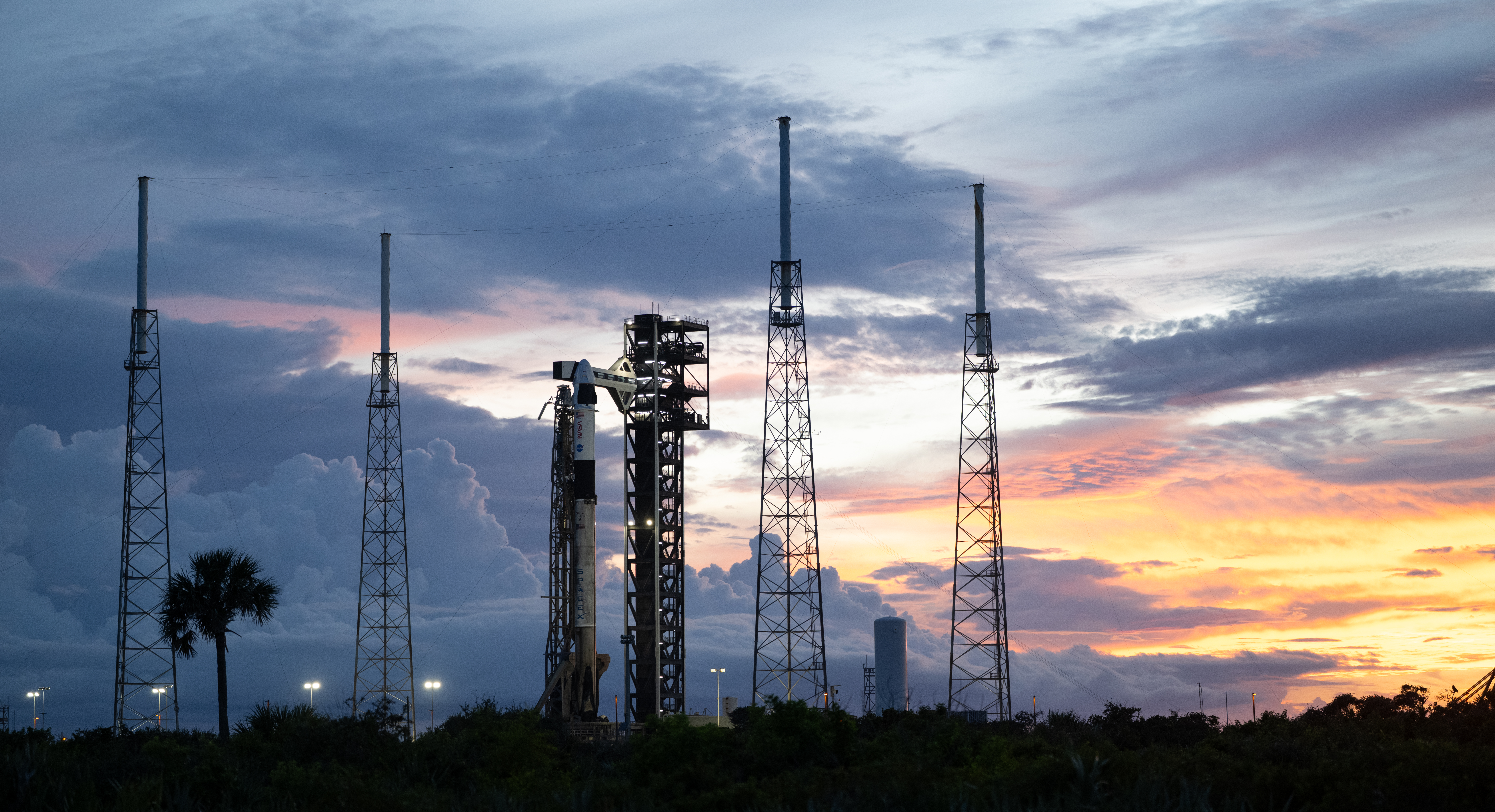
  • Tuesday, May 12: NASA’s SpaceX Commercial Resupply Services-34 mission is targeted to launch more than 6,400 pounds of cargo and payloads from Space Launch Complex 40 at Cape Canaveral Space Force Station in Florida. 
  • July 14: Soyuz MS-29 mission will launch NASA astronaut Anil Menon and Roscosmos cosmonauts Pyotr Dubrov and Anna Kikina on a long-duration mission aboard the space station.  
  • Mid-September: NASA’s SpaceX Crew-13 is moving forward from November 2026 to help increase the frequency of U.S. crew rotation missions to the space station. Launch is planned from Space Launch Complex 40. 
  • Fall: NASA’s SpaceX Commercial Resupply Services-35 mission is targeted to launch more than 7,200 pounds of cargo and payloads, including International Space Station Roll Out Solar Arrays, from Space Launch Complex 40.  
  • Fall/Winter: NASA’s Northrop Grumman Commercial Resupply Services-25 mission is targeted to launch approximately 11,000 pounds of cargo from Space Launch Complex 40. 

Launch opportunities for NASA’s uncrewed Boeing Starliner-1 cargo mission remain under review as teams continue working through technical issues discovered during the Crew Flight Test in 2024, as well as final actions from the Program Investigation Team report. The agency is assessing operational readiness and space station traffic to determine the earliest feasible launch window.  

NASA will review operations and make future adjustments, as necessary, to support the space station’s needs, crew safety, and maximize science capabilities aboard the orbiting laboratory. 

Learn more about station activities by following the space station blog, @space_station on X, as well as the ISS Facebook and ISS Instagram accounts.

Get the latest from NASA delivered every week. Subscribe here.

Powered by WPeMatico

Get The Details…

Mark A. Garcia