Crew Preps for Dragon Arrival and Keeps Up Research, Maintenance

Crew Preps for Dragon Arrival and Keeps Up Research, Maintenance

NASA astronaut and Expedition 74 flight engineer Jessica Meir works inside the International Space Station's Harmony module conducting a biotechnology investigation to observe how tiny, engineered materials that mimic DNA behave in microgravity. Meir pointed a light-measuring device, called a spectrophotometer, at the DNA-like sample materials housed in small transparent containers to analyze their ability to form stable structures. Doctors on Earth will use the research data to learn how to improve and develop future treatments, or nano-therapies, that target cancer cells more precisely.
NASA astronaut Jessica Meir conducts a biotechnology investigation to observe how tiny, engineered materials that mimic DNA behave in microgravity. Doctors on Earth will use the research data to learn how to improve and develop future treatments, or nano-therapies, that target cancer cells more precisely.
NASA/Jessica Meir

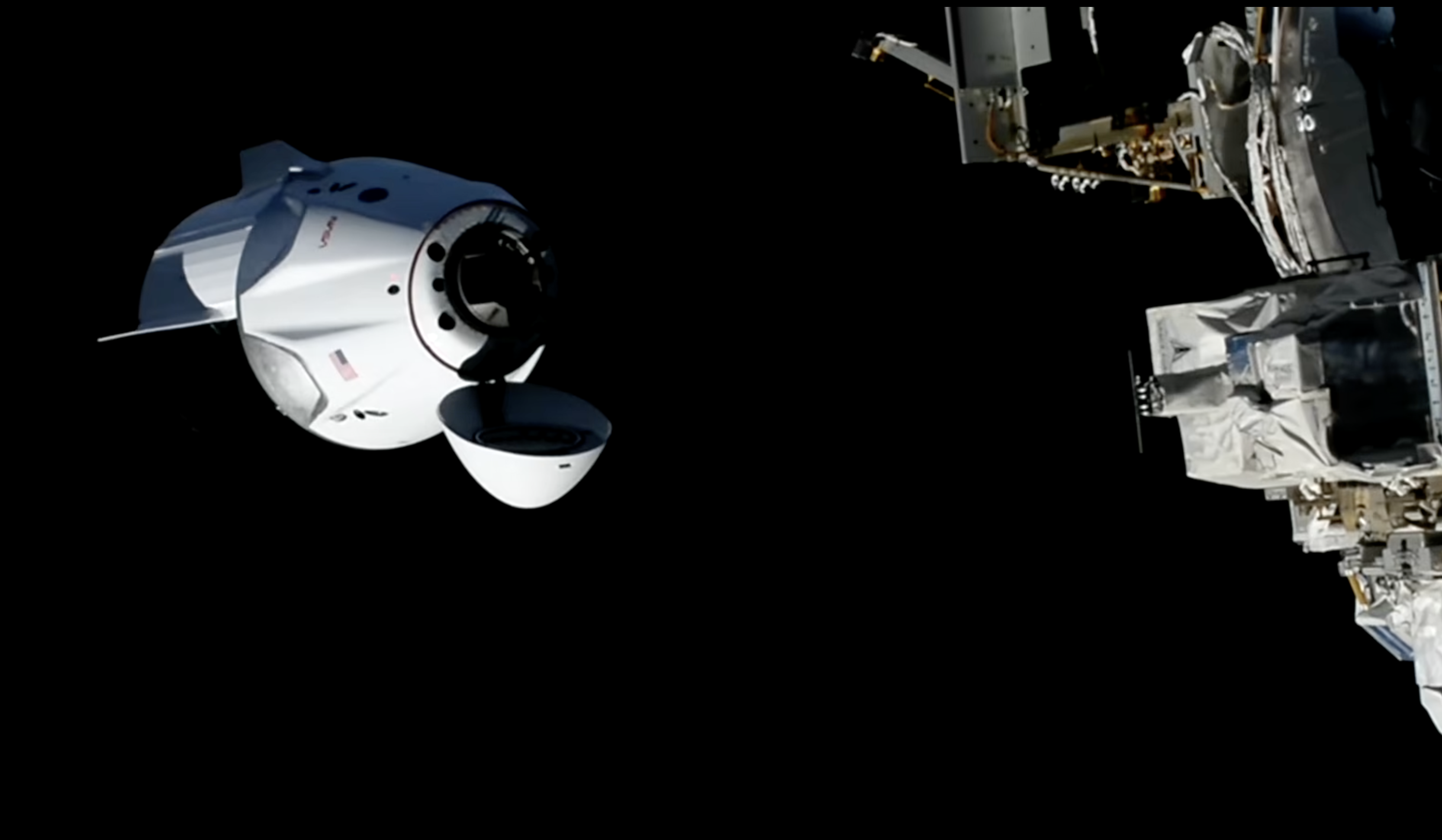
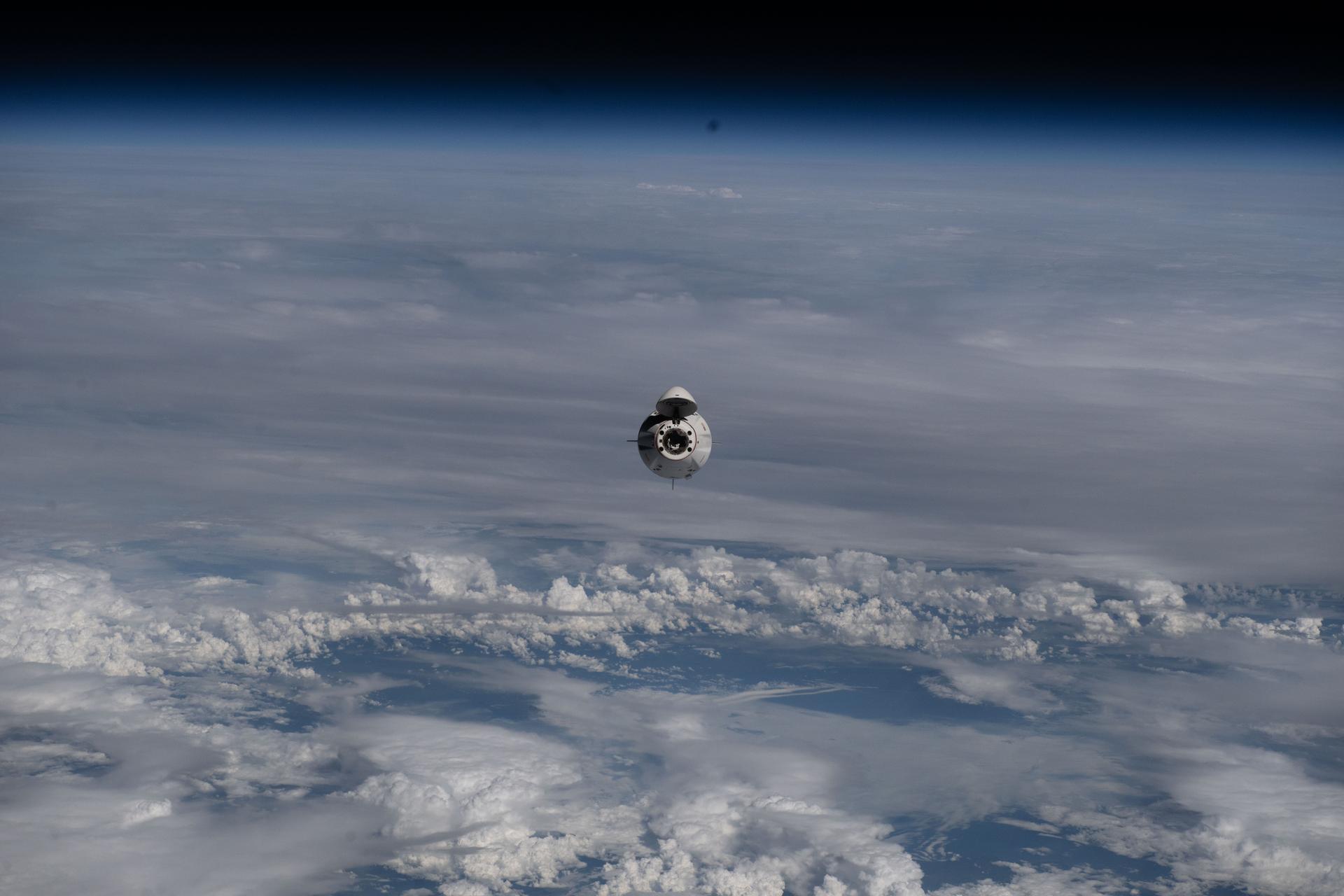
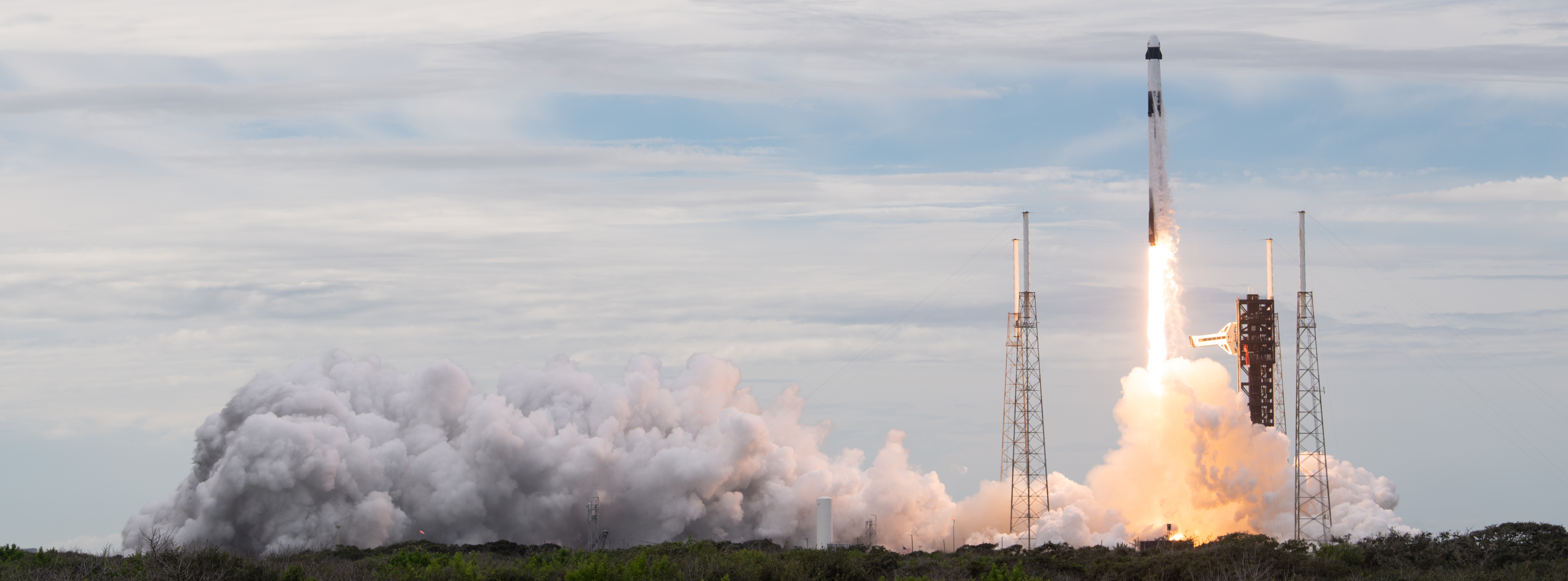
A SpaceX Falcon 9 rocket with a Dragon cargo spacecraft atop stands ready to launch to the International Space Station at 6:50 p.m. EDT today, weather permitting, from Launch Complex 40 at Cape Canaveral Space Force Station in Florida. The uncrewed Dragon, packed with about 6,500 pounds of science experiments, crew supplies, and lab hardware for the Expedition 74 crew, will orbit Earth for half-a-day before approaching the orbital outpost for an automated docking to the Harmony module’s forward port at 7:35 a.m. on Thursday. Watch NASA’s live launch coverage beginning at 6:30 p.m. on NASA+Amazon Prime, and the agency’s YouTube channel. 

NASA flight engineers Chris Williams, Jessica Meir, and Jack Hathaway joined flight engineer Sophie Adenot of ESA (European Space Agency) for part of the day on Wednesday reviewing Dragon cargo operations then calling down to flight controllers for a mission readiness review. The quartet will begin unpacking critical, time-sensitive research samples packed inside Dragon’s portable science freezers just a few after hours after the cargo spacecraft’s arrival. Hathaway and Adenot will also be on duty Thursday monitoring Dragon during its automated approach and rendezvous.

Williams assisted Hathway on Wednesday as he worked in the Tranquility module configuring hardware and making space for the installation of a new water recycling system reducing the need to resupply water from Earth. Williams then tested using voice commands on a free-flying robotic camera that could assist astronauts with video and photography activities.

Meir swapped out materials research hardware inside the Kibo laboratory module’s airlock for placement into the external environment of space for exposure and testing. Adenot wore the sensor-packed Bio-Monitor vest and headband that monitored her heart and breathing activity while she pedaled on an exercise cycle. The two astronauts wrapped up their shift together in the Columbus laboratory module with Meir scanning Adenot’s leg veins with the Ultrasound 3 biomedical device looking for potential signs of space-caused blood clots.

Roscosmos cosmonauts Sergey Kud-Sverchkov and Sergey Mikaev, station commander and flight engineer respectively, started their shift reviewing procedures they will use on an upcoming spacewalk for external lab maintenance. Kud-Sverchkov then collected and stowed his saliva samples for analysis while Mikaev serviced scientific control and data processing hardware. Roscosmos flight engineer Andrey Fedyaev pedaled on exercise cycle for a fitness test then performed maintenance on  Roscosmos computer systems.

Learn more about station activities by following the space station blog, @space_stationon X, as well as the ISS Facebookand ISS Instagram accounts.

Get the latest from NASA delivered every week. Subscribe here.

Powered by WPeMatico

Get The Details…

Mark A. Garcia

NASA, SpaceX Target May 13 for Resupply Mission Launch

NASA, SpaceX Target May 13 for Resupply Mission Launch

A SpaceX Falcon 9 rocket, with the company’s Dragon spacecraft atop, stands in a vertical position at Launch Complex 39A at NASA’s Kennedy Space Center in Florida on April 21, 2024.
SpaceX

NASA and SpaceX now are targeting no earlier than 6:50 p.m. EDT Wednesday, May 13, for the company’s 34th commercial resupply services mission to the International Space Station. Watch NASA’s live launch coverage beginning at 6:30 p.m. on NASA+Amazon Prime, and the agency’s YouTube channel.

Teams stood down from Tuesday’s launch opportunity due to forecasted inclement weather around Space Launch Complex 40 at Cape Canaveral Space Force Station in Florida.

For a May 13 launch, the U.S. Space Force 45th Weather Squadron meteorologists forecast a 60% chance of favorable conditions, with the primary concerns being cumulus and anvil clouds in the area and the potential for the Falcon 9 rocket to fly through precipitation. Weather conditions are expected to improve throughout the week, and NASA and SpaceX will continue to monitor ahead of future backup launch opportunities.

The Dragon spacecraft will dock to the orbiting laboratory at approximately 7:35 a.m. Thursday, May 14. NASA’s live rendezvous and docking coverage will begin at 6 a.m. on NASA+Amazon Prime, and the agency’s YouTube channel.

For the latest updates on this mission and space station operations, follow @NASASpaceOps and @space_station on X, as well as the International Space Station’s Facebook and Instagram accounts.

Powered by WPeMatico

Get The Details…

Mark A. Garcia

Station Hums With Advanced Research as Dragon Nears Launch

Station Hums With Advanced Research as Dragon Nears Launch

NASA astronaut and Expedition 74 flight engineer Jessica Meir processes samples of heart stem cells and bacteria that cause pneumonia using a portable glovebag inside the International Space Station's Harmony module. Observations in microgravity may give doctors a clearer understanding of how cellular and molecular mechanisms of infectious diseases damage heart tissue, potentially leading to advanced treatments for heart conditions on and off the Earth.
Astronaut Jessica Meir processes samples of heart stem cells and bacteria that cause pneumonia using a portable glovebag inside the International Space Station’s Harmony module.
NASA/Chris Williams

SpaceX CRS-34, the next cargo mission to resupply the International Space Station, is counting down to its launch at 7:16 p.m. EDT today, weather pending, from Launch Complex 40 at Cape Canaveral Space Force Station in Florida. The uncrewed Dragon cargo spacecraft is slated to lift off atop a Falcon 9 rocket packed with about 6,500 pounds of science experiments, crew supplies, and lab hardware destined for the Expedition 74 crew. Flight engineers Jack Hathaway of NASA and Sophie Adenot of ESA (European Space Agency) will be on duty monitoring Dragon during its automated rendezvous and docking currently scheduled for 9:50 a.m. on Thursday, May 14.

Hathaway and Adenot will join NASA flight engineers Jessica Meir and Chris Williams the day before Dragon arrives and call down to flight controllers for a cargo readiness review. The quartet will begin unpacking critical, time-sensitive research samples packed inside Dragon’s portable science freezers about two-and-a-half after hours after the cargo spacecraft arrives.

In the meantime, Hathaway focused on installing new life support hardware inside the Tranquility module on Tuesday. The advanced orbital plumbing work updates the orbital outpost’s water recycling system reducing the need to resupply water from Earth. Adenot watered and photographed alfalfa plants growing for the Veg-06 space agriculture study then reorganized the Quest airlock and Harmony module making space for the new cargo arriving on Dragon.

Meir kicked off her shift swapping sample hardware inside the Destiny laboratory module’s Microgravity Science Glovebox for a physics investigation observing how weightlessness affects tiny particles floating inside a gel-like substance, known as a colloidal solid. Afterward, she completed the installation of the Cold Atom Lab’s (CAL) new science module, a quantum physics research facility, delivered aboard Northrop Grumman’s Cygnus XL cargo spacecraft on April 13.

Williams tested a small robotic arm for its automated, precision manipulation capabilities inside the Kibo laboratory module then uninstalled and stowed the hardware after the technology demonstration. He spent the rest of the day on scientific maintenance servicing a research freezer, checking out a centrifuge, then removing a carbon dioxide meter from an incubator.

Station commander Sergey Kud-Sverchkov and flight engineer Sergey Mikaev worked inside two different resupply ships from Roscosmos on Tuesday. Kud-Sverchkov unpacked new supplies from the Progress 95 cargo spacecraft while Mikaev transferred water from the Progress 94 cargo spacecraft into station tanks. Kud-Sverchkov also began configuring the Poisk airlock where two cosmonauts will exit the space station for an upcoming spacewalk. Mikaev configured computer networking hardware that supports the operations of Earth observation equipment.

Roscosmos flight engineer Andrey Fedyaev began his shift replacing hoses, connectors, and valves that carry water removed from the station’s air by the Zvezda service module’s dehumidifiers. Fedyaev wrapped up his shift cleaning and swapping smoke detectors inside the Rassvet module.

Learn more about station activities by following the space station blog, @space_stationon X, as well as the ISS Facebookand ISS Instagram accounts.

Get the latest from NASA delivered every week. Subscribe here.

Powered by WPeMatico

Get The Details…

Mark A. Garcia

Crew Relaxes Before Busy Week of Science, Dragon Arrival, and Spacewalk Preps

Crew Relaxes Before Busy Week of Science, Dragon Arrival, and Spacewalk Preps

NASA astronauts Jack Hathaway and Jessica Meir, both Expedition 74 flight engineers, answer questions inside the International Space Station’s Kibo laboratory module during a live downlink event with Connecticut Public Radio. Hathaway is a native of South Windsor, Connecticut, while Meir is from Caribou, Maine.
NASA astronauts Jack Hathaway and Jessica Meir, both Expedition 74 flight engineers, answer questions inside the International Space Station’s Kibo laboratory module during a live downlink event with Connecticut Public Radio.
NASA

The next cargo mission to resupply the International Space Station, SpaceX CRS-34, is slated for launch at 7:16 p.m. on Tuesday, May 12, from Launch Complex 40 at Cape Canaveral Space Force Station in Florida, weather pending. The uncrewed Dragon will launch atop a Falcon 9 rocket carrying about 6,500 pounds of science experiments, crew supplies, and lab hardware for the Expedition 74 crew. Flight engineers Jack Hathaway of NASA and Sophie Adenot of ESA (European Space Agency) will be on duty monitoring Dragon during its automated approach, rendezvous, and docking to the Harmony module’s forward port planned for 9:50 a.m. on Thursday, May 14.

The seven-member crew had an off-duty day on Monday relaxing before beginning a busy week of microgravity research, lab maintenance, and cargo operations. On Tuesday, Hathaway will install new hardware to maintain the orbital outpost’s water recycling system reducing the need to resupply water from Earth. Adenot will water and photograph alfalfa plants growing for the Veg-06 space agriculture study exploring how to help plants thrive in microgravity to promote food production in space during long term missions.

NASA flight engineer Jessica Meir will continue carefully rewiring and reconnecting cables on the Cold Atom Lab’s (CAL) new science module delivered aboard Northrop Grumman’s Cygnus XL cargo spacecraft on April 13. The quantum physics module expands the capacity of the CAL to chill atoms to near absolute zero and study atomic wave functions, general relativity, and dark matter. NASA flight engineer Chris Williams will test a small robotic arm for its automated, precision manipulation capabilities inside the Kibo laboratory module.

The four astronauts will join each other midweek and call down to flight controllers for a cargo conference the day before Dragon arrives. The quartet will begin unpacking critical, time-sensitive research samples packed inside Dragon’s portable science freezers about two-and-a-half after hours after the cargo spacecraft arrives.

Station commander Sergey Kud-Sverchkov and flight engineer Sergey Mikaev will be gathering tools and checking their Orlan spacesuits preparing for a Roscosmos spacewalk planned for later this month. Flight engineer Andrey Fedyaev will have a busy week of human research and maintenance on life support equipment.

Learn more about station activities by following the space station blog, @space_stationon X, as well as the ISS Facebookand ISS Instagram accounts.

Get the latest from NASA delivered every week. Subscribe here.

Powered by WPeMatico

Get The Details…

Mark A. Garcia

DNA-Inspired Cancer Research; Vision, Heart, and Psychology Tests Wrap Up Week

DNA-Inspired Cancer Research; Vision, Heart, and Psychology Tests Wrap Up Week

ESA (European Space Agency) astronaut and Expedition 74 flight engineer Sophie Adenot smiles for a portrait while showing off an Optical Coherence Tomography machine, a medical imaging device used for eye exams. Doctors on the ground monitor the eye exam in real-time viewing an astronaut's retina, lens, and cornea. Vision is critical to a mission’s success and doctors regularly check the astronauts’ eyes to counteract the potential effects of living in space.
ESA astronaut Sophie Adenot shows off the Optical Coherence Tomography machine, a medical imaging device used for eye exams. Doctors on the ground monitor the eye exam in real time viewing an astronaut’s retina, lens, and cornea.
ESA/Sophie Adenot

DNA-mimicking materials, quantum physics hardware, and spacesuit batteries wrapped up the work week aboard the International Space Station. The Expedition 74 crew also went into the weekend conducting a series of human research investigations studying the heart, the eyes, and psychology.

NASA flight engineer Jessica Meir opened up the Cold Atom Lab (CAL) quantum research facility in the Destiny laboratory module and inspected its water hoses and fiber cables. The hoses carry heat away from the CAL that chills atoms to near absolute zero for observation. The sensitive light-emitting fiber cables help cool, trap, and study atoms with high accuracy providing insights into atomic wave functions, general relativity, and dark matter.

Meir later joined NASA flight engineer Jack Hathaway in the Quest airlock for more spacesuit maintenance. Hathaway first installed three charged spacesuit batteries inside a stowage compartment and then ensured the compartment and the area surrounding it were correctly configured. Meir swapped twist-and-lock connectors on a pistol grip tool used by astronauts for assembly tasks during spacewalks.

NASA astronaut Chris Williams focused primarily on unloading supplies still packed inside the Cygnus XL cargo spacecraft that arrived on April 13. Williams also worked inside the Columbus laboratory module troubleshooting the European Enhanced Exploration Exercise Device’s vibration isolation system to ensure proper performance.

Flight engineer Sophie Adenot of ESA (European Space Agency) created tiny, engineered materials that mimic DNA in the Kibo laboratory module’s Life Science Glovebox on Friday. The nanomaterials manufactured for the DNA Nano Therapeutics-3 investigation resemble the natural building blocks of DNA, are loaded with a cancer‑fighting drug, help reach target cells, and prevent unwanted side effects. The biotechnology study takes advantage of weightlessness to form stable structures with the DNA-inspired nanoparticles to possibly develop a new type of cancer treatment.

The four astronauts wrapped up their shift with a pair of biomedical exams checking their eye and heart health. Meir peered into eye-imaging hardware operated by Adenot to view her retina, lens, and cornea. Williams attached pulse-measuring electrodes to himself and then had his chest scanned by Hathaway using the Ultrasound 3 biomedical device to observe his cardiovascular system. Doctors on the ground monitor the tests in real time and use the data to detect and counteract potential space-caused health issues.

Roscosmos cosmonauts Sergey Kud-Sverchkov and Sergey Mikaev took turns filling out a computerized questionnaire for a long-running crew psychology assessment. Their responses will help researchers understand how cosmonauts mentally adapt to a long-term spaceflight informing crew selection and crew training techniques. Flight engineer Andrey Fedyaev repaired hardware that supports sensors used to monitor systems that separate and purify fluids in the Zvezda service module.

Learn more about station activities by following the space station blog, @space_stationon X, as well as the ISS Facebookand ISS Instagram accounts.

Get the latest from NASA delivered every week. Subscribe here.

Powered by WPeMatico

Get The Details…

Mark A. Garcia