Advanced Tech Research on Station as Crew-12 Announces Launch Opportunities

Advanced Tech Research on Station as Crew-12 Announces Launch Opportunities
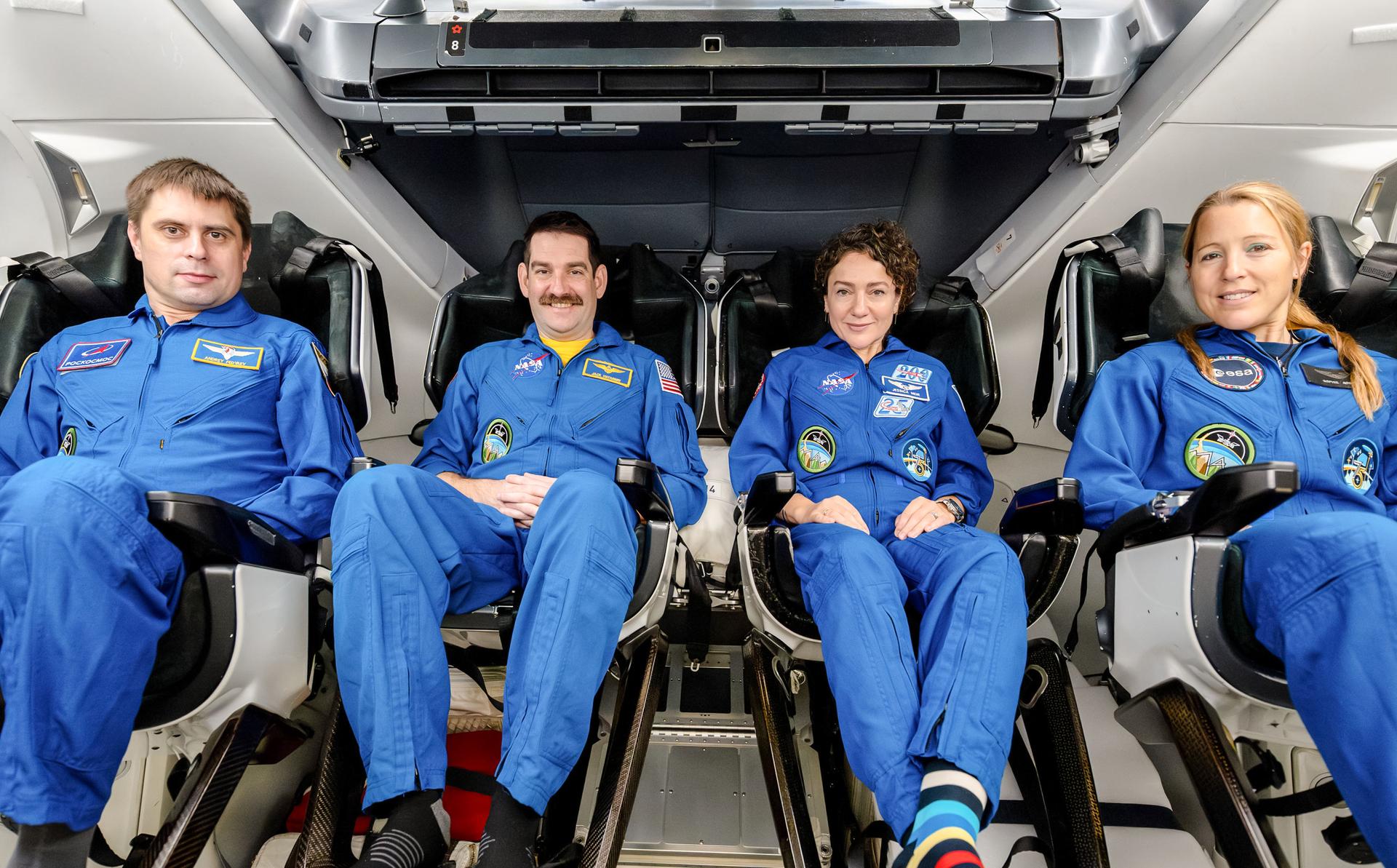
The four members of NASA's SpaceX Crew-12 mission to the International Space Station pose together for a crew portrait inside a SpaceX Dragon spacecraft at SpaceX headquarters in Hawthorne, California. From left are, Roscosmos cosmonaut and Mission Specialist Andrey Fedyaev, NASA astronauts Jack Hathaway and Jessica Meir, Pilot and Commander respectively, and ESA (European Space Agency) astronaut and Mission Specialist Sophie Adenot.
The four members of NASA’s SpaceX Crew-12 mission to the International Space Station pose together for a crew portrait inside a SpaceX Dragon spacecraft. From left are, Roscosmos cosmonaut Andrey Fedyaev, NASA astronauts Jack Hathaway and Jessica Meir, and ESA (European Space Agency) astronaut Sophie Adenot.
SpaceX

Robotics and artificial intelligence were back on the research schedule Wednesday for the Expedition 74 crew to inspire college students and explore boosting crew efficiency. Earth observations and life support maintenance also rounded out the day for the orbital residents aboard the International Space Station.

Several teams of college students from the Asia-Pacific region competed to see whose code could best command the Astrobee robotic free-flyers during a “treasure” hunt aboard the Kibo laboratory module. The challenge was to maneuver the Astrobee and properly identify and locate hidden items throughout the Kibo lab. NASA Flight Engineer Chris Williams monitored the Kibo robotics challenge ensuring the toaster-sized, cube-shaped robots were correctly configured and operated safely. The ultimate objective of the robotics challenge is to inspire students to study science, technology, engineering, and math subjects.

Station Commander Sergey Kud-Sverchkov of Roscosmos worked in the Zvezda service module and studied using artificial intelligence to boost crew efficiency aboard the orbital outpost. He tested AI-assisted tools to convert speech-to-text and improve data handling and communications between the crew and ground controllers. Researchers seek to use the new technology to speed up and increase the accuracy of crew documentation benefitting operations aboard spacecraft.

The commander also checked out a variety of cameras throughout the station’s Roscosmos segment and synchronized them to Greenwich Mean Time, or GMT, to accurately timestamp imagery. Kud-Sverchkov then moved on and serviced plumbing and ventilation systems in the Nauka and Zarya modules.

Roscosmos Flight Engineer Sergei Mikaev pointed a camera out a station window and programmed it to automatically photograph landmarks across eastern Europe at the beginning of his shift. Afterward, Mikaev uninstalled the Earth observation equipment and downloaded the imagery data for analysis on the ground. During the second half of his shift, he checked out computer software supporting physics research hardware then answered a questionnaire to help researchers improve communications between international crews and mission controllers from around the world.

The earliest opportunity for NASA’s SpaceX Crew-12 launch to the space station is 6 a.m. EST, Feb. 11, from pad 40 at Cape Canaveral Space Force Station in Florida. Next opportunities are 5:38 a.m. Feb. 12 & 5:15 a.m. Feb. 13. NASA continues working toward potential launch windows for two important crewed missions this February: Artemis II and Crew-12. We will make any decisions on the best launch opportunity for each mission closer to flight.

Learn more about station activities by following the space station blog, @space_station on X, as well as the ISS Facebook and ISS Instagram accounts.

Get the latest from NASA delivered every week. Subscribe here.

Powered by WPeMatico

Get The Details…

Mark A. Garcia

Crew Studies Robotics and Virtual Reality Advancing Space Tech

Crew Studies Robotics and Virtual Reality Advancing Space Tech

iss070e038773 (Dec. 13, 2023) --Two free-flying robotic helpers, Astrobee, float in microgravity. The robots are designed to help crews aboard the International Space Station complete daily tasks and reduce the time spent on routine duties.
Two free-flying Astrobee robotic helpers are pictured inside the Kibo laboratory module. The robots are designed to help crews aboard the International Space Station complete daily tasks and reduce the time spent on routine duties.
NASA

Robotics and virtual reality filled the science schedule aboard the International Space Station on Tuesday as the Expedition 74 crew promoted education and explored human research. The orbital trio also inspected safety equipment, worked on cargo swaps, and conducted Earth observations.

Students from the Asia-Pacific region are preparing for a robotics challenge that will see their codes uplinked to the orbital outpost to control the cube-shaped, free-flying Astrobee robotic helpers inside the Kibo laboratory module. The object of the challenge is to command an Astrobee to locate hidden objects inside Kibo promoting science, technology, engineering, and math subjects on the ground. NASA Flight Engineer Chris Williams reviewed preparations and powered on the Astrobee in advance of the robotics challenge that will take place on Wednesday.

Williams then spent the rest of his shift inspecting fire suppression and emergency breathing gear throughout the space station’s U.S. segment. He checked the equipment for damage, corrosion, and leaks and ensured the safety hardware was stowed in the proper configurations and locations.

Roscosmos cosmonauts Sergey Kud-Sverchkov and Sergei Mikaev took turns wearing virtual reality goggles and responding to visual and audio cues inside the Nauka science module on Tuesday. They also wore electrodes on their face and head and tested their how their balance and spatial orientation are adapting to microgravity. Results from the Virtual investigation may help crews adjust quicker to weightlessness and prepare for the return to Earth’s gravity after a long-term mission.

Kud-Sverchkov earlier pointed a camera out windows on the Zvezda service module and photographed landmarks from the Swiss Alps to Kazakhstan’s Lake Balkhash. Mikaev swapped a variety of cargo in and out of the Progress 92 cargo craft docked to the orbital outpost’s Poisk module.

Learn more about station activities by following the space station blog, @space_station on X, as well as the ISS Facebook and ISS Instagram accounts.

Get the latest from NASA delivered every week. Subscribe here.

Powered by WPeMatico

Get The Details…

Mark A. Garcia

Space Physics, Cardiac Research Kickoff Last Week in January

Space Physics, Cardiac Research Kickoff Last Week in January

007Q0232.NEF
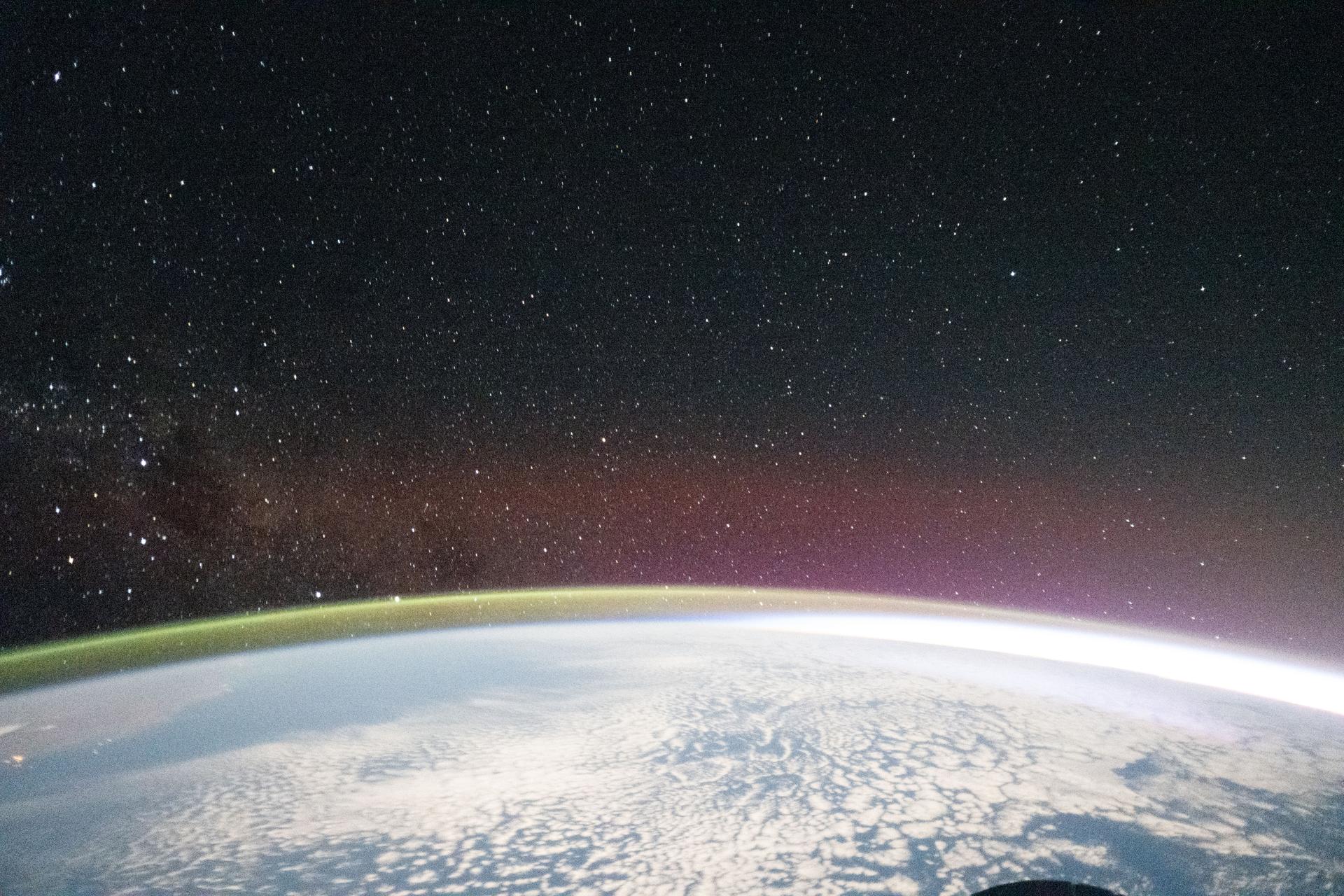
This long-duration photograph of Earth’s horizon was taken from the International Space Station as it orbited 260 miles above the Indian Ocean, south of Jakarta, Indonesia. A yellow-green airglow crowns the horizon beneath a starry sky and a faint Milky Way.

Space physics and cardiac research kicked off the week aboard the International Space Station for the three-person Expedition 74 crew. The orbital residents explored storing cryogenic fluids in space and how their cardiovascular system is adapting to weightlessness.

NASA Flight Engineer Chris Williams set up the Zero Boil-Off Tank investigation inside the Destiny laboratory module’s Microgravity Science Glovebox on Monday. He injected gas into the experimental hardware to test ways to control spacecraft tank pressure due to cryogenic fuel propellants evaporating as a result of the surrounding heat. Results may lead to lightweight, more efficient cryogenic storage facilities benefiting both Earth and space industries.

Williams later joined Roscosmos cosmonauts Sergey Kud-Sverchkov and Sergei Mikaev in the Columbus laboratory module for vein scans using the Ultrasound 2 device. The trio took turns scanning each other’s neck, shoulder, and leg veins, looking for potential space-caused blood clots with real-time assistance from doctors on the ground. Living in space long term induces fluid shifts in an astronaut’s body increasing the risk of blood clots—also called thromboembolism—that flight surgeons constantly monitor and seek to counteract.

Earlier in their shift, Kud-Sverchkov and Mikaev partnered together and explored vascular health in microgravity. The duo took turns wearing a series of electrodes and cuffs measuring blood pressure in the arm, wrist, and thumb to understand cardiovascular adaptation in space. Doctors are researching how endothelial cells—the cells that line the blood vessels—behave in weightlessness since they are responsible for blood flow, blood pressure regulation, clot prevention, and inflammation.

The International Space Station is orbiting the highest it ever has after a docked SpaceX Dragon fired two Draco engines, located in the spacecraft’s trunk and use an independent propellant system, for a regularly scheduled orbital reboost on Friday, Jan. 23. The space station is now orbiting Earth at an altitude of 269 by 255 miles statute miles.

Learn more about station activities by following the space station blog, @space_station on X, as well as the ISS Facebook and ISS Instagram accounts.

Get the latest from NASA delivered every week. Subscribe here.

Powered by WPeMatico

Get The Details…

Mark A. Garcia

Crew Studies Cardiac Research, Artificial Intelligence as Dragon Boosts Station’s Orbit

Crew Studies Cardiac Research, Artificial Intelligence as Dragon Boosts Station’s Orbit

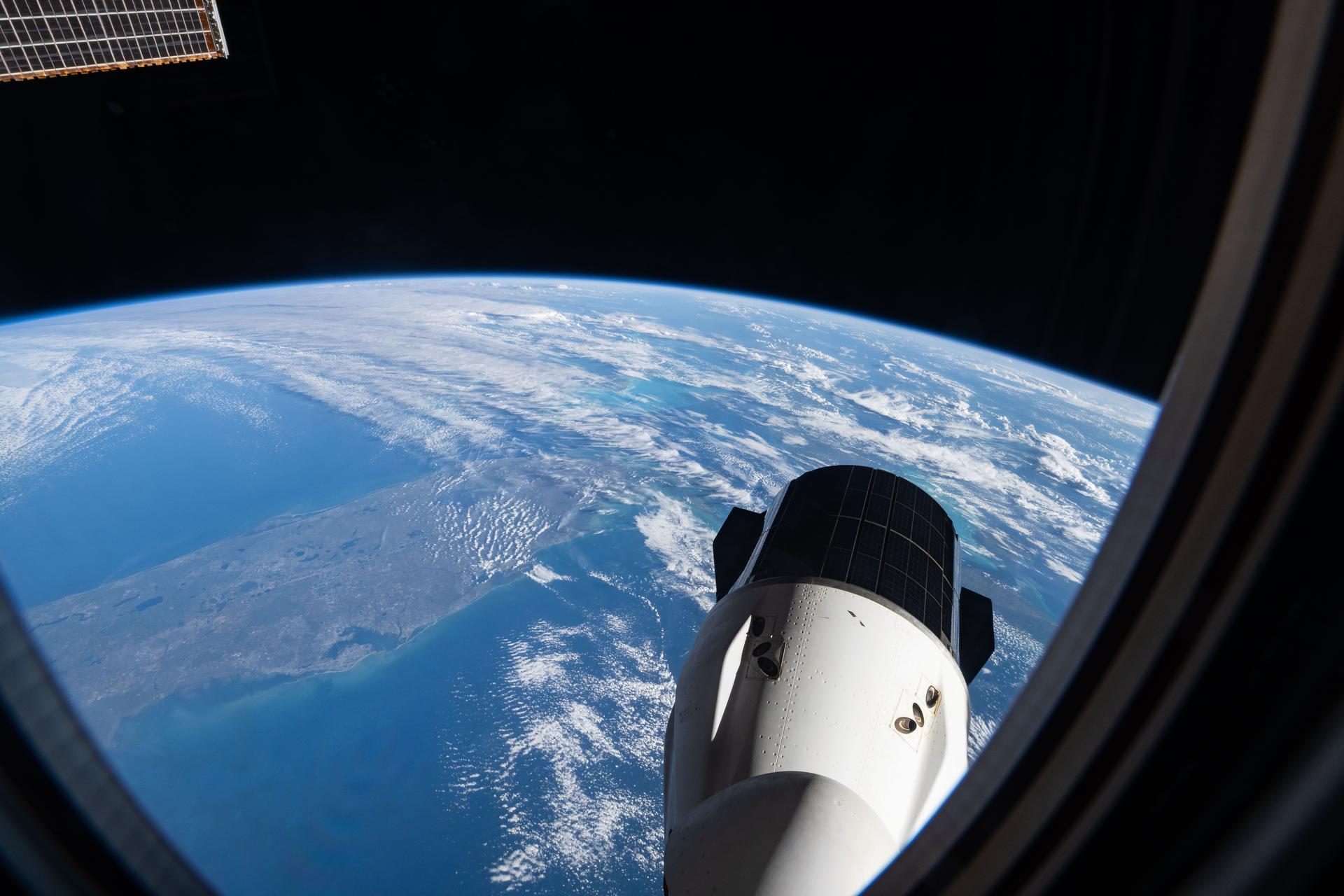
This photograph, taken from a window aboard the SpaceX Dragon crew spacecraft, shows the SpaceX Dragon cargo spacecraft with southern Florida visible below as the International Space Station orbited 260 miles above the Gulf of America.
This photograph shows the SpaceX Dragon with southern Florida visible below as the International Space Station orbited 260 miles above Earth.
NASA

Cardiac research and artificial intelligence were the main science topics for the Expedition 74 crew on Friday. The International Space Station also received an orbital boost when the SpaceX Dragon spacecraft fired its engines at the end of the week.

NASA Flight Engineer Chris Williams started his shift inside the Columbus laboratory module setting up the Ultrasound 2 device and attaching electrodes to his chest. Next he scanned his neck, chest, and leg vessels with the Ultrasound 2 with assistance from doctors on the ground as the electrodes measured his heart’s electrical activity. Afterward, Williams jogged on the COLBERT treadmill while wearing a heart monitor then worked out on the advanced resistive exercise device as his movements were tracked. Doctors will use the biomedical data to understand how living and working in space long-term affects the cardiovascular system.

Roscosmos cosmonauts Sergey Kud-Sverchkov and Sergei Mikaev joined each other in the Zvezda service module and studied using artificial intelligence to boost crew efficiency aboard the orbital outpost. The duo tested AI-assisted tools to convert speech-to-text and improve data handling and communications between the crew and ground controllers. Researchers seek to use the new technology to speed up and increase the accuracy of crew documentation benefitting operations aboard spacecraft.

Kud-Sverchkov also serviced the Elektron oxygen generator inside Zvezda, collected air samples from the station’s Roscosmos segment for analysis, and cleaned ventilation fans inside the Soyuz MS-28 spacecraft. Mikaev deactivated physics research gear that enables observations of crystallization, plasma behavior, and radiation effects then inventoried computer and electronics gear to wrap his work shift.

On Friday, Jan. 23, SpaceX’s Dragon fired its thrusters for 26 minutes, 11 seconds, boosting the International Space Station’s orbit.

The two Draco engines, which are located in the spacecraft’s trunk and use an independent propellant system, increased the station’s altitude by 3.1 miles at apogee, or highest point of station’s orbit, and 2.3 miles at perigee, or lowest point of station’s orbit, placing the station in an orbit of 269 x 255 miles. 

This Dragon spacecraft, which is supporting SpaceX’s 33rd commercial resupply mission for NASA, arrived at the orbital complex on Aug. 25 and previously performed five reboosts of the station on Sept. 3, Sept. 26, and Oct. 14, Nov. 7, and Dec. 29. This is the final planned reboost for this Dragon spacecraft before it returns to Earth with critical research and cargo and splashes down off the coast of California.

Learn more about station activities by following the space station blog, @space_station on X, as well as the ISS Facebook and ISS Instagram accounts.

Get the latest from NASA delivered every week. Subscribe here.

Powered by WPeMatico

Get The Details…

Mark A. Garcia

Biomedical Science and Hardware Top Thursday’s Schedule

Biomedical Science and Hardware Top Thursday’s Schedule

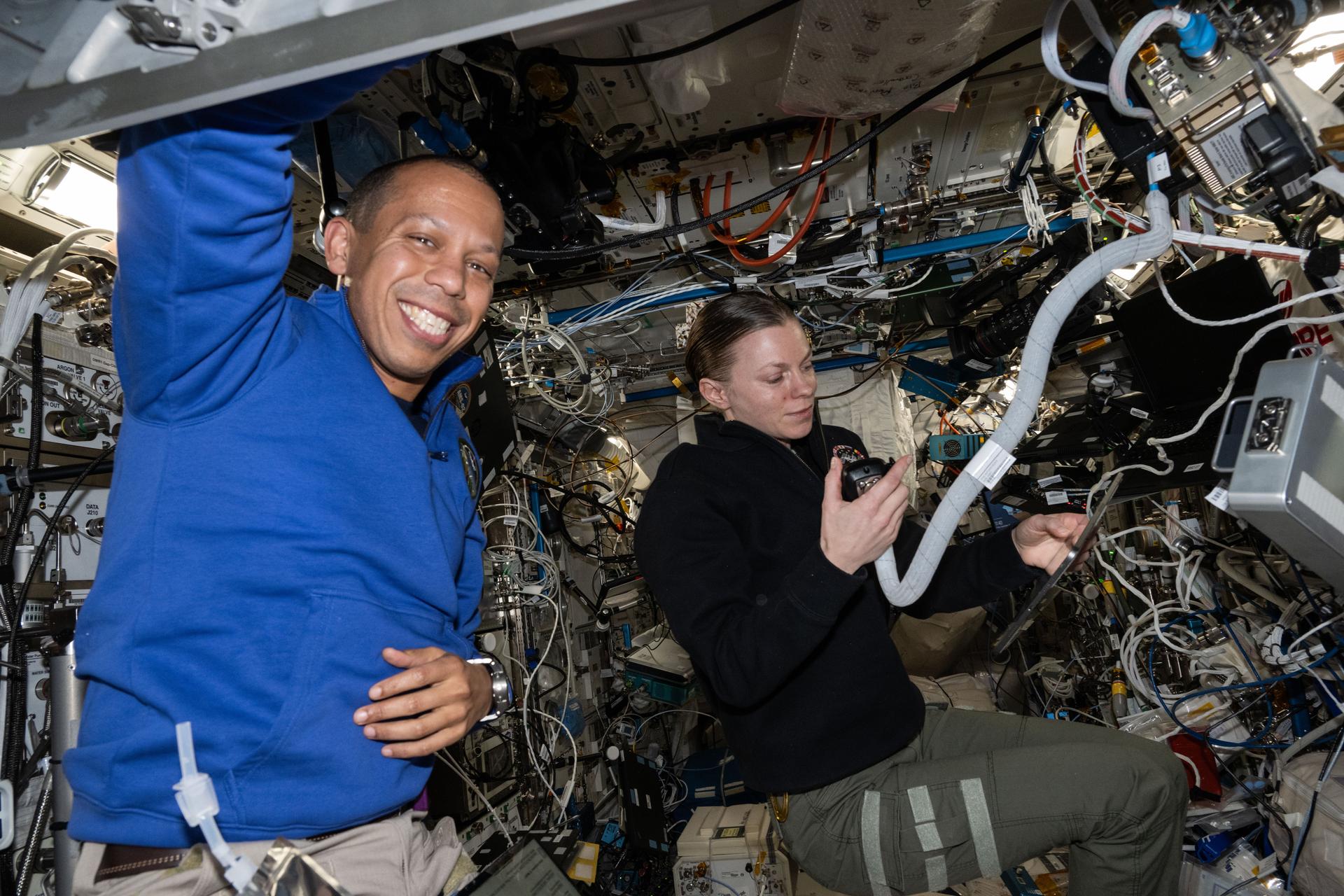
Expedition 73 Flight Engineers Chris Williams and Zena Cardman, both NASA astronauts, work together inside the International Space Station's Columbus laboratory module. Cardman was helping new NASA Flight Engineer Chris Williams familiarize himself with station hardware, operations, and systems during his second day aboard the orbital outpost.
NASA astronauts Chris Williams and Zena Cardman are seen here using the ISS ham radio during a school contact inside the International Space Station’s Columbus laboratory module on Nov. 28, 2025.
NASA

The Expedition 74 trio aboard the International Space Station checked out ultrasound gear, inspected advanced sample processing hardware, and tested muscle-stimulating electrodes on Thursday.

NASA Flight Engineer Chris Williams spent the first half of his shift servicing medical gear throughout the orbital lab’s U.S. segment. Williams first worked in the Columbus laboratory module configuring a computer tablet then installing new software to operate the EchoFinder-2 device. EchoFinder-2 enables an astronaut to conduct ultrasound scans of the human body without support from doctors on the ground. Next, he moved to the Kibo laboratory module and inspected sample holding cassettes and removed some of the internal hardware for stowage and return to Earth for analysis. The cassettes contained protein crystals being examined for their potential to help develop pharmaceuticals in space superior to medicines manufactured on Earth.

Williams also continued packing a variety of cargo inside a SpaceX Dragon spacecraft for retrieval and analysis back on Earth in the spring. Some science experiments returning to the ground include material samples exposed to the external space environment, liquid crystal films developed in microgravity, and stem cells programmed to turn into brain and cardiac cells. Dragon, while docked to the Harmony module’s forward port, will also fire its engines one more time on Friday boosting the station’s orbit.

Roscosmos cosmonauts Sergey Kud-Sverchkov and Sergei Mikaev, station Commander and Flight Engineer respectively, joined each other and tested muscle-stimulating electrodes for operability. The duo first gathered and examined the electrodes then attached them to their legs and back for testing. Next, they sent electrical signals to the electrodes to stimulate the muscles and ensure the devices provide balanced muscle contractions. The devices complement space workouts reducing exercise times and enhancing muscle activation in weightlessness.

Learn more about station activities by following the space station blog, @space_station on X, as well as the ISS Facebook and ISS Instagram accounts.

Get the latest from NASA delivered every week. Subscribe here.

Powered by WPeMatico

Get The Details…

Mark A. Garcia