DNA Research on Station Promoting Cancer Therapies, Radiation Repair

DNA Research on Station Promoting Cancer Therapies, Radiation Repair

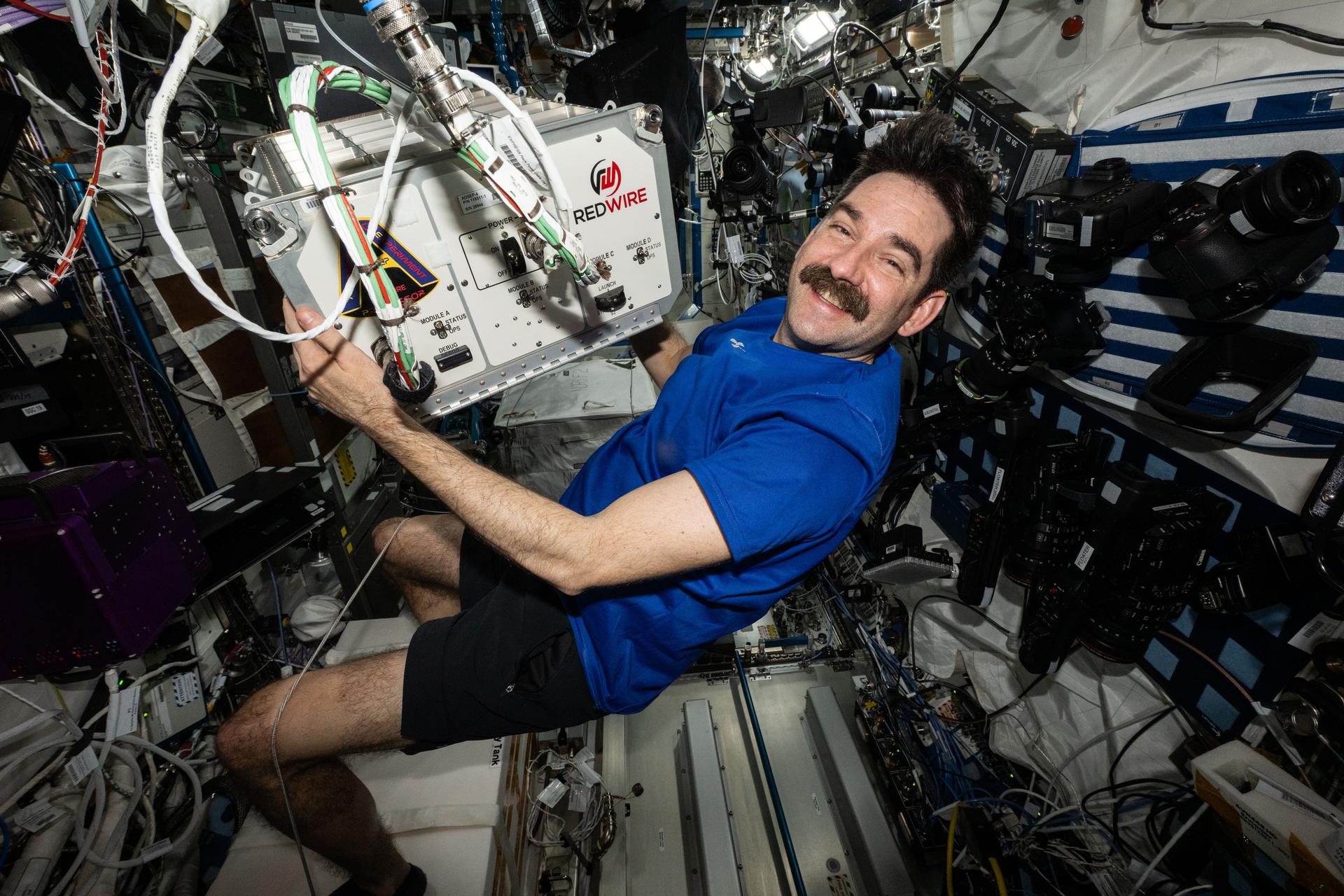
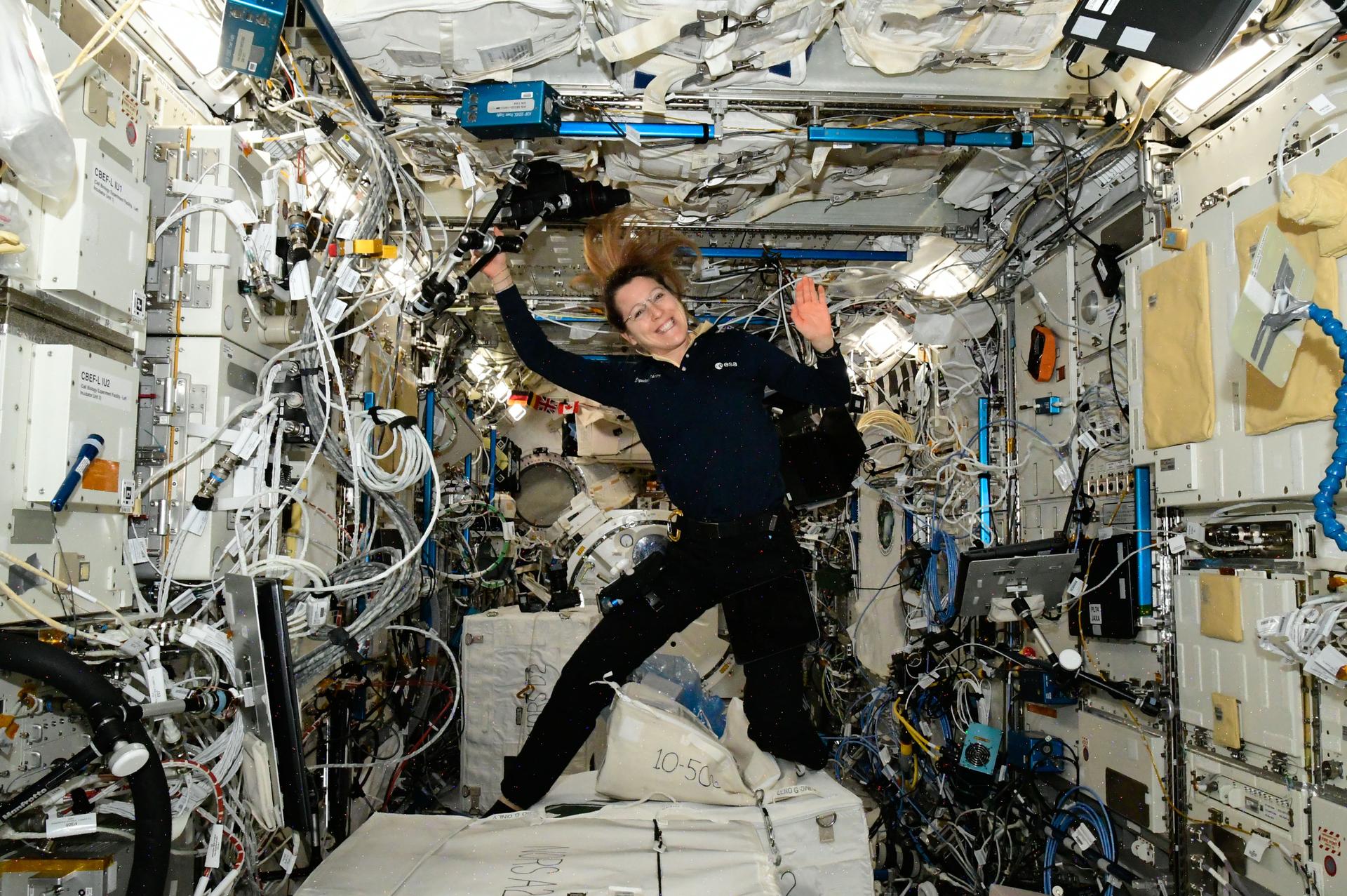
NASA astronaut and Expedition 74 flight engineer Chris Williams configures research hardware inside a portable glovebag for a biotechnology investigation exploring how bacteria affect heart tissue in the microgravity environment. Results from the MVP (Multi-use Variable-g Platform) Cell-09 experiment could lead to advanced methods for preventing or treating heart damage in humans living on and off the Earth.
NASA astronaut Chris Williams configures research hardware inside a portable glovebag for a biotechnology investigation exploring how bacteria affect heart tissue in the microgravity environment.
NASA/Jessica Meir

More biotechnology research was underway aboard the International Space Station on Wednesday taking advantage of the microgravity environment to boost knowledge about the properties of DNA and DNA-like nanomaterials. The Expedition 74 crew also completed the installation of an advanced exercise device and tested a set of new virtual reality goggles while continuing to unpack a U.S. cargo spacecraft.

Flight engineers Chris Williams of NASA and Sophie Adenot of ESA (European Space Agency) joined each other in the Kibo laboratory module processing samples of genetic materials for the DNA Nano Therapeutics-3 experiment. The investigation is exploring DNA-inspired assembly techniques as a way to manufacture treatments, or nano-therapies such as chemotherapy and immunotherapy, to kill cancer cells and activate the immune system. The manufactured samples will be analyzed first on the orbital outpost with a spectrophotometer then returned to Earth for more analysis.

NASA flight engineer Jessica Meir began her shift swapping scientific hardware inside the Columbus laboratory module’s BioLab, an incubator supporting research into the effects of microgravity on small organisms. The science maintenance work is supporting the Lux in Space investigation that observes how DNA damaged by space radiation repairs itself. While still working inside Columbus, Meir checked and secured power connections for the new European Enhanced Exploration Exercise Device, or E4D. The E4D is being tested for its ability to support crew workouts on missions to the Moon, Mars, and beyond. Finally, Meir reviewed the Nevada Vision Screening System, a head-mounted virtual reality display that measures as astronaut’s visual function to protect eyesight in space.

NASA flight engineer Jack Hathaway worked throughout Wednesday supporting his crewmates with the scientific work then continued with cargo transfers and medical inventory management. He first activated Kibo’s Life Science Glovebox enabling Williams and Adenot to work on the DNA therapy study then photographed Meir as she swapped hardware on the BioLab. Next, Hathway unpacked more cargo from Northrop Grumman’s Cygnus XL resupply ship then refilled the Columbus lab’s Human Research Facility with medical gear including blood tube kits, needles, electrodes, and gloves.

Working together in the Roscosmos segment of the orbital outpost, flight engineers Sergei Mikaev and Andrey Fedyaev participated in a fitness evaluation. Mikaev pedaled on an exercise cycle while attached to sensors measuring his cardiac activity while Fedyaev assisted him. Next, Fedyaev tested the operation of the Zvezda service module’s treadmill then worked on the Nauka science module’s orbital plumbing system.

Later, Mikaev joined station commander Sergey Kud-Sverchkov and began configuring simulation hardware that will help the duo prepare for the automated rendezvous and docking of the Progress 95 cargo mission planned for 8 p.m. EDT on Monday, April 27. Kud-Sverchkov also worked inside the Zarya module replacing battery units inside its power supply system.

Learn more about station activities by following the space station blog, @space_station on X, as well as the ISS Facebook and ISS Instagram accounts.

Get the latest from NASA delivered every week. Subscribe here.

Powered by WPeMatico

Get The Details…

Mark A. Garcia

Crew Studies Biotech on Tuesday to Advance Health and Space Economy

Crew Studies Biotech on Tuesday to Advance Health and Space Economy

Expedition 74 flight engineers Sophie Adenot of ESA (European Space Agency) and Chris Williams of NASA work together inside the International Space Station’s Columbus laboratory module to install and activate new research gear delivered on Northrop Grumman’s second Cygnus XL cargo mission. Williams was configuring the new European Enhanced Exploration Exercise Device, while Adenot was installing advanced biotechnology experiment hardware.
Expedition 74 flight engineers Sophie Adenot and Chris Williams work together inside the International Space Station’s Columbus laboratory module to install and activate new research gear.
NASA/Jessica Meir

Biotechnology research seeking to advance human health and the space economy packed the science schedule aboard the International Space Station on Tuesday. The Expedition 74 crew members also explored space physics, updated robotics software, and conducted an emergency drill.

Blood stem cells and DNA-inspired nanomaterials were the dominant research themes aboard the orbital outpost as the lab residents helped doctors on the ground explore new methods to treat space-caused ailments and Earthbound illnesses. The new experiments were delivered aboard Northrop Grumman’s Cygnus XL cargo spacecraft on April 13 then installed and activated inside the space station shortly afterward.

Flight engineers Sophie Adenot of ESA (European Space Agency) and Jack Hathaway of NASA partnered together on Tuesday processing blood stem cell samples to learn how to manufacture greater numbers of clinical grade stem cells in space. Results may lead to enhanced stem cell attributes potentially leading to improved blood disease and cancer therapies and expanding space commerce opportunities. Hathaway also powered up the KERMIT fluorescent microscope in the Destiny laboratory module so scientists on the ground could remotely view how microgravity affects the blood stem cells.

Afterward, the duo joined NASA flight engineers Jessica Meir and Chris Williams and set up the DNA Nano Therapeutics-3 experiment inside the Kibo laboratory module’s Life Science Glovebox. The biotechnology study explores mimicking DNA-assembly to manufacture nano-therapies in microgravity potentially  improving patient treatments on Earth and benefitting the space economy.

Meir later configured and powered on the Canadian Space Agency’s Bio-Analyzer then tested the research device that analyzes the molecular and cellular properties of a variety of biological samples. Next, she injected gas into experiment hardware installed inside Destiny’s Microgravity Science Glovebox for a physics study exploring long-term storage methods of cryogenic fluids for spacecraft fuel and life support systems.

Williams began his shift with station commander Sergey Kud-Sverchkov and flight engineer Sergei Mikaev, both Roscosmos cosmonauts, practicing an emergency departure drill inside the Soyuz MS-28 spacecraft. The trio trained for the evacuation procedure on a descent simulator as Roscosmos mission controllers on the ground monitored in real time.

Afterward, Kud-Sverchkov jogged on the Zvezda service module’s treadmill while attached to sensors measuring his cardiac activity for a regularly scheduled fitness test. Mikaev filled out a questionnaire helping researchers understand how international crews work together potentially leading to improved training techniques.

Roscosmos flight engineer Andrey Fedyaev worked inside the Nauka science module installing new software on a laptop computer for improved control of the European robotic arm. The two-time space station resident also worked throughout Tuesday maintaining plumbing and ventilation systems throughout the orbiting lab’s Roscosmos segment.

Learn more about station activities by following the space station blog, @space_station on X, as well as the ISS Facebook and ISS Instagram accounts.

Get the latest from NASA delivered every week. Subscribe here.

Powered by WPeMatico

Get The Details…

Mark A. Garcia

Roscosmos Progress 93 Cargo Spacecraft Departs Station

Roscosmos Progress 93 Cargo Spacecraft Departs Station

April 20, 2026: International Space Station Configuration. Four spaceships are parked at the space station including the SpaceX Crew-12 Dragon, Northrop Grumman's Cygnus XL, the Soyuz MS-28 crew ship, and the Progress 94 resupply ship.
April 20, 2026: International Space Station Configuration. Four spaceships are parked at the space station including the SpaceX Crew-12 Dragon, Northrop Grumman’s Cygnus XL, the Soyuz MS-28 crew ship, and the Progress 94 resupply ship.
NASA

The unpiloted Roscosmos Progress 93 spacecraft undocked from the International Space Station at 6:08 p.m. EDT Monday, backing away for a deorbit maneuver and a planned destructive re-entry into Earth’s atmosphere to dispose of trash loaded by the crew.

The spacecraft launched in September 2025 on a Soyuz rocket from the Baikonur Cosmodrome in Kazakhstan, carrying about three tons of food, fuel, and supplies for the space station’s crew. After a two-day journey, it arrived at the orbiting laboratory and automatically docked to the aft port of the station’s Zvezda service module.

Learn more about station activities by following @NASASpaceOps and @space_station on X, as well as the International Space Station’s Facebook and Instagram accounts.   

Powered by WPeMatico

Get The Details…

Mark A. Garcia

Space Health Research Fills Day Before Cargo Craft Departs

Space Health Research Fills Day Before Cargo Craft Departs

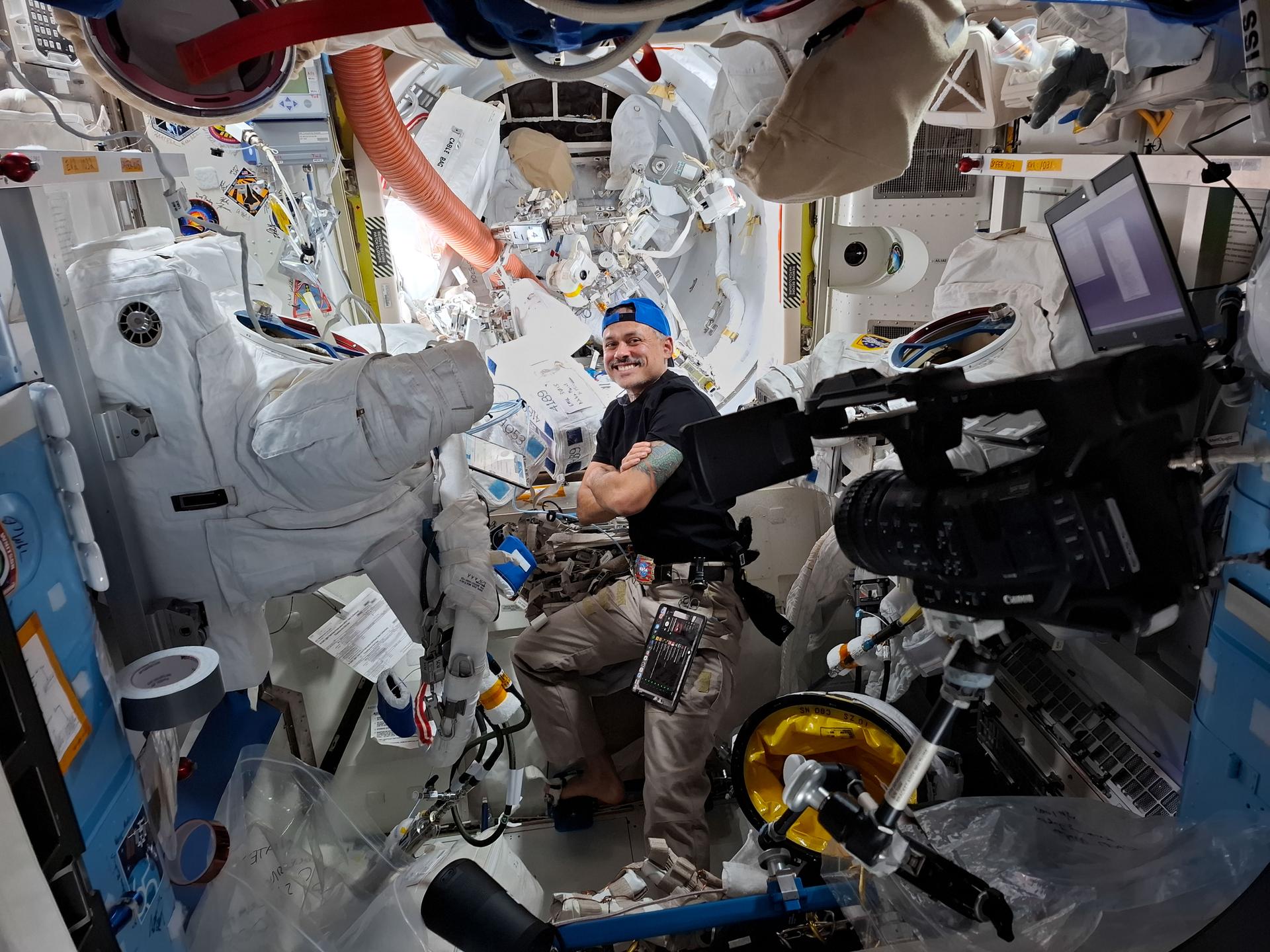
NASA astronaut and Expedition 74 flight engineer Chris Williams pedals on the exercise cycle inside the International Space Station’s Destiny laboratory module. Astronauts work out daily on the exercise cycle to maintain muscle, bone, and cardiovascular health in microgravity.
NASA astronaut Chris Williams pedals on the exercise cycle inside the Destiny laboratory module. Astronauts work out daily on the exercise cycle to maintain muscle, bone, and cardiovascular health in microgravity.
NASA/Jack Hathaway

The trash-packed Progress 93 cargo spacecraft from Roscosmos will depart the International Space Station later today completing a seven-month mission docked to the Zvezda service module’s aft port. Progress 93 will conduct an automated deorbit maneuver several hours later and reenter the Earth’s atmosphere above the South Pacific Ocean for a fiery, but safe disposal. The Roscosmos resupply ship arrived at the orbital outpost on September 13, 2025, delivering about three tons of food, fuel, and supplies two days after it launched from the Baikonur Cosmodrome in Kazakhstan.

Meanwhile, the seven-member Expedition 74 crew kicked off the work week with a full schedule of space research investigating blood stem cells, plant-microbe interactions, and more to benefit human health on and off the Earth. The orbital residents also serviced a variety of lab hardware to ensure ongoing science operations while maintaining space station life support systems.

NASA flight engineer Jack Hathaway had a busy day on Monday loading a microscope with blood stem cell samples and installing Earth observation and biology research equipment on an external platform. Hathway spent the first half of his shift swapping sample hardware containing blood stem cells inside the KERMIT fluorescent microscope. Scientists on the ground are using KERMIT’s remote imaging capabilities to view the samples with an eye toward enabling stem cell production in space and developing blood disease and cancer therapies.

Next, Hathaway installed three science payloads on the NanoRacks External Platform for placement outside the Kibo laboratory module in the vacuum of space. Two payloads will test Earth observation technologies including ultra-high resolution hyperspectral imagery and a device that measures radio signals passing through Earth’s ionosphere. A third investigation will observe how round worms adapt to weightlessness to identify space-sensitive proteins and evaluate therapies to protect mobility and neuromuscular health during a spaceflight.

NASA flight engineers Chris Williams and Jessica Meir each worked on a different botany investigation for two separate purposes on Monday. Williams checked on alfalfa plants growing inside the Columbus laboratory module’s Veggie facility and videotaped the operation of the botany research gear. The Veg-06 study is exploring beneficial plant-microbe interactions and whether organic carbon and nitrogen can be recycled to support plant growth for food production in space. Meir videotaped packs of Japanese rice samples that will be returned to Earth for cultivation promoting space education and space commercialization.

Flight engineer Sophie Adenot of ESA (European Space Agency) installed the AstroPi imaging computer inside the Destiny laboratory module’s Earth observation window for a pair of student challenges. The first challenge will see students using sensor data and Earth imagery collected from AstroPi to accurately calculate the space station’s orbital speed. During the second challenge students will write code creating pixel art imagery on AstroPi’s LED matrix to be shared back on Earth.

Station commander Sergey Kud-Sverchkov and flight engineer Sergei Mikaev, both Roscosmos cosmonauts, joined each other at the beginning of their shift and trained to use simulation software that prepares a crew for returning to Earth aboard a Soyuz spacecraft. Kud-Sverchkov then moved on to ventilation system maintenance inside Zvezda while Mikaev studied artificial intelligence tools to boost crew efficiency.

Roscosmos flight engineer Andrey Fedyaev strapped an acoustic sensor to his neck that recorded his breathing for a space respiration study early in his shift. Next, Fedyaev worked on a laptop computer that supports the European robotic arm then ensured flow valves inside the Nauka science module were safely configured and properly operating.

Learn more about station activities by following the space station blog, @space_station on X, as well as the ISS Facebook and ISS Instagram accounts.

Get the latest from NASA delivered every week. Subscribe here.

Powered by WPeMatico

Get The Details…

Mark A. Garcia

Plants and Worms Informing Future Missions; Crew Preps for Computer Upgrades

Plants and Worms Informing Future Missions; Crew Preps for Computer Upgrades

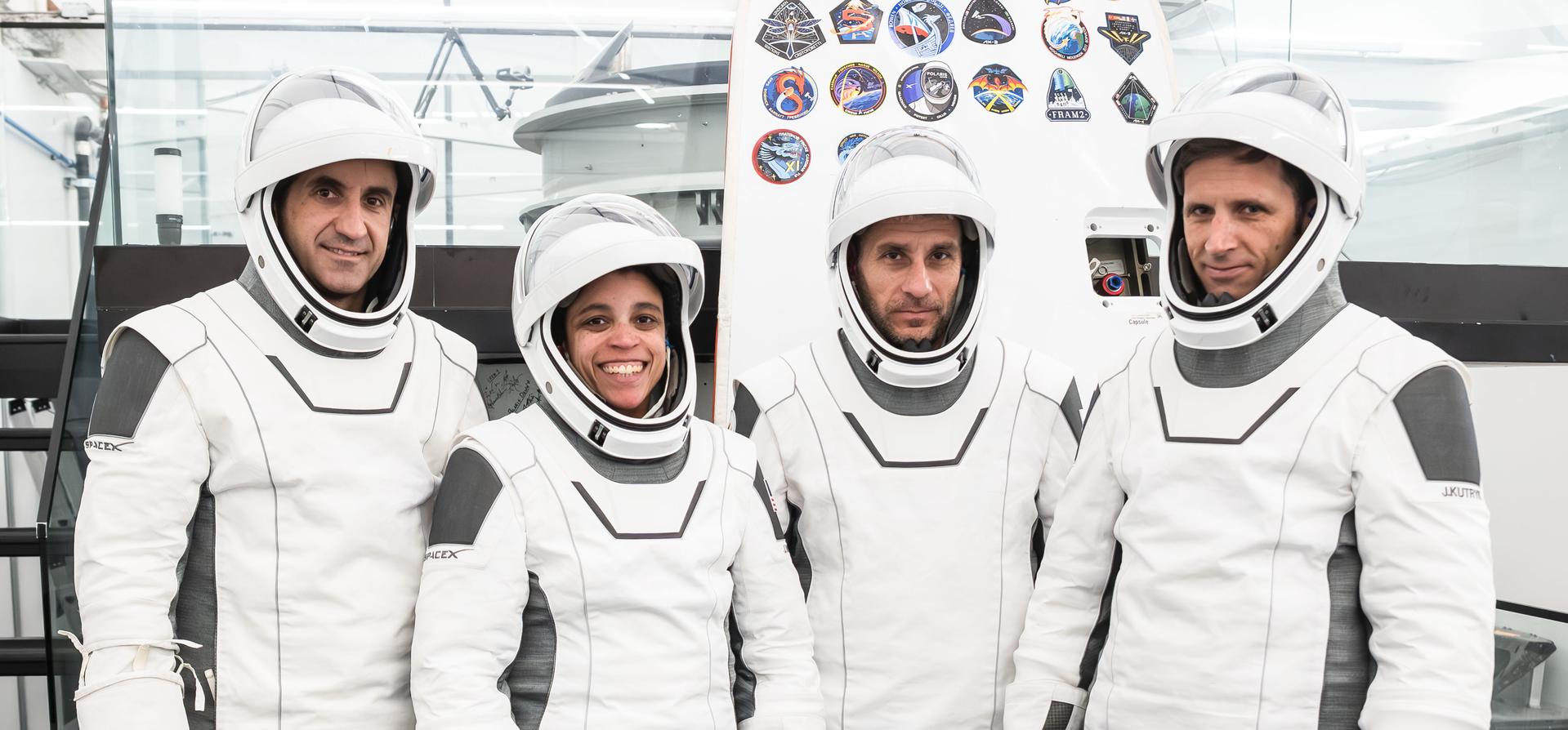
Expedition 74 flight engineers (from left) Chris Williams, Jack Hathaway, Sophie Adenot, and Jessica Meir are inside the International Space Station’s cupola, waiting to observe the plasma trail of the Orion spacecraft—with the Artemis II crew aboard—as it reenters Earth’s atmosphere.
Expedition 74 flight engineers (from left) Chris Williams, Jack Hathaway, Sophie Adenot, and Jessica Meir are inside the International Space Station’s cupola, waiting to observe the plasma trail of the Orion spacecraft—with the Artemis II crew aboard—as it reenters Earth’s atmosphere on April 10, 2026.
NASA/Jessica Meir

Advanced botany and biology research to sustain crews on future missions to the Moon, Mars, and beyond wrapped up the week aboard the International Space Station. The Expedition 74 crew also continued unpacking a U.S. cargo craft while keeping up the maintenance of the orbital outpost.

NASA flight engineer Chris Williams kicked off his shift gathering hardware and samples for the Veg-06 space botany study investigating how plants and microbes interact in microgravity. Next, Williams mixed nutrients for the alfalfa and microbe samples being housed inside the Columbus laboratory module’s Veggie facility. Results may advance the development of ways to grow plants for food on future space missions.

ESA (European Space Agency) flight engineer Sophie Adenot worked inside the Harmony module setting up research and video gear to begin exploring how microgravity affects an astronaut’s gut health. She recorded roundworms observing how their bodies and their gut microbes change in microgravity. Results may lead to the development of probiotics, or “living medicines,” to protect health in spaceflight and treat diseases and disorders on Earth.

Afterward, Adenot and Williams joined NASA flight engineer Jessica Meir and continued unpacking new scientific gear, crew supplies, and more from inside Northrop Grumman’s Cygnus XL cargo spacecraft. Meir started her shift in the Kibo laboratory module filming content for JAXA (Japan Aerospace Exploration Agency) to promote space awareness and commercialization of low Earth orbit.

NASA flight engineer Jack Hathaway focused primarily on lab maintenance throughout Friday. Hathaway first replaced filters on the urine processing assembly located in the Tranquility module’s waste and hygiene compartment, or bathroom. Following that, he inspected berthing hardware that the Cygnus XL and JAXA’s HTV-X1 spacecraft are attached to during their missions at the orbital outpost. Finally, he installed protective rings around ventilation valves in the Unity and Tranquility modules then photographed his work for analysis.

Roscosmos cosmonauts Sergey Kud-Sverchkov and Sergei Mikaev were once again inside the Zvezda service module conducting maintenance and inspections throughout Friday. Flight engineer Andrey Fedyaev inspected the ventilation system connecting the Roscosmos segment of the station with the U.S. segment then measured the airflow between the two segments.

At the end of the day all seven Expedition 74 crewmates joined each other and reviewed upcoming computer upgrades planned for the weekend. The orbital residents will first replace network servers then activate their new, more powerful laptop computers. Support teams on the ground will assist the crew with the software updates, network configurations, and other technical transitions.

Learn more about station activities by following the space station blog, @space_station on X, as well as the ISS Facebook and ISS Instagram accounts.

Get the latest from NASA delivered every week. Subscribe here.

Powered by WPeMatico

Get The Details…

Mark A. Garcia