Muscle, Eye, and Breath Research Keeping Crews Healthy in Weightlessness

Muscle, Eye, and Breath Research Keeping Crews Healthy in Weightlessness

The Milky Way appears beyond Earth's horizon in this celestial photograph captured by NASA astronaut Don Pettit using a camera with low light and long duration settings pointed out a window on the SpaceX Dragon crew spacecraft. The International Space Station was orbiting 265 miles above the Pacific Ocean off the coast of Chile just before sunrise.
The Milky Way appears beyond Earth’s horizon in this celestial photograph captured by NASA astronaut Don Pettit using a camera with low light and long duration settings pointed out a window on the SpaceX Dragon crew spacecraft. The International Space Station was orbiting 265 miles above the Pacific Ocean off the coast of Chile just before sunrise.
NASA/Don Pettit

The muscle, eye, and respiratory research that took place Friday on the International Space Station is helping doctors keep crews healthy on long term space missions and informing possible treatments on Earth. The Expedition 72 crew members also explored space agriculture while working on spacesuits and emergency training.

NASA Flight Engineer Nick Hague attached electrodes to his legs that stimulated his muscles for an investigation exploring ways to counteract space-caused muscles loss. He worked in the Columbus laboratory module where a control unit sent electrical signals exciting his leg muscles. Results may improve muscle function, shorten workout sessions, and lead to lighter exercise equipment in space.

Afterward, Hague joined NASA Flight Engineer Don Pettit for eye exams using standard medical imaging gear in the Harmony module. Pettit assisted Hague as he peered into the optical device while doctors on the ground observed Hague’s eyes in real time. Spaceflight can cause swelling where the optic nerve attaches to the back of the eye. Researchers are exploring a B vitamin supplement as a way to offset that condition, called Spaceflight-Associated Neuro-ocular Syndrome, or SANS, and protect astronauts as NASA and its international partners plan missions to the Moon, Mars, and beyond.

Earlier, Pettit removed samples from inside the Electrostatic Levitation Furnace (ELF) and stowed them inside a bag for return to Earth. The ELF, located inside the Kibo laboratory module, safely heats materials with a high melting temperature to study thermophysical properties unobtainable in Earth’s gravity. The benefits of microgravity research inside the high temperature physics device may lead to the creation of new materials leading to new industrial applications.

NASA astronaut and current space station Commander Suni Williams spent her day inside the Quest airlock servicing spacesuit and spacewalking tool batteries. NASA Flight Engineer Butch Wilmore also joined her activating communication and oxygen systems and swapping life support gear on two spacesuits. Earlier in his shift, Wilmore thinned the leaves of Red Romaine lettuce plants growing inside Kibo’s Advanced Plant Habitat. The lettuce is growing to study how to grow crops on future space missions.

Roscosmos Flight Engineers Alexey Ovchinin and Ivan Vagner partnered together and wore sensors measuring their exhalation rate for an experiment to understand how microgravity affects the respiratory system. Flight Engineer Aleksandr Gorbunov worked on life support systems throughout Friday then wrapped up his shift installing imaging hardware to observe Earth’s nighttime atmosphere in ultraviolet wavelengths.

At the end of the day, all seven Expedition 72 crew members gathered together and trained to use the Anomaly Gas Analyzer (AGA) emergency hardware. The AGA can measure and detect gases in the station’s environment that may require the crew wear protective masks. The orbital septet also reviewed ammonia leak emergency procedures then conducted a safety conference with ground teams.

Learn more about station activities by following the space station blog, @space_station and @ISS_Research on X, as well as the ISS Facebook and ISS Instagram accounts.

Get the latest from NASA delivered every week. Subscribe here: https://www.nasa.gov/subscribe

Powered by WPeMatico

Get The Details…

Mark A. Garcia

Crew Works Ongoing Spacecraft Operations, Robotics, and Combustion Science

Crew Works Ongoing Spacecraft Operations, Robotics, and Combustion Science

757Z4290.NEF
NASA’s SpaceX Crew-9 members pose together for portrait inside the vestibule between the International Space Station and the SpaceX Dragon crew spacecraft. Clockwise from left, are NASA astronauts Butch Wimore, Nick Hague, and Suni Williams, and Roscosmos cosmonaut Aleksandr Gorbunov.
NASA

Docked spacecraft operations were the main focus at the International Space Station on Thursday with crew departure training, cargo packing, and an orbital reboost also taking place. The Expedition 72 crew also worked on science hardware activating a free-flying robotic assistant and preparing for a fire safety experiment.

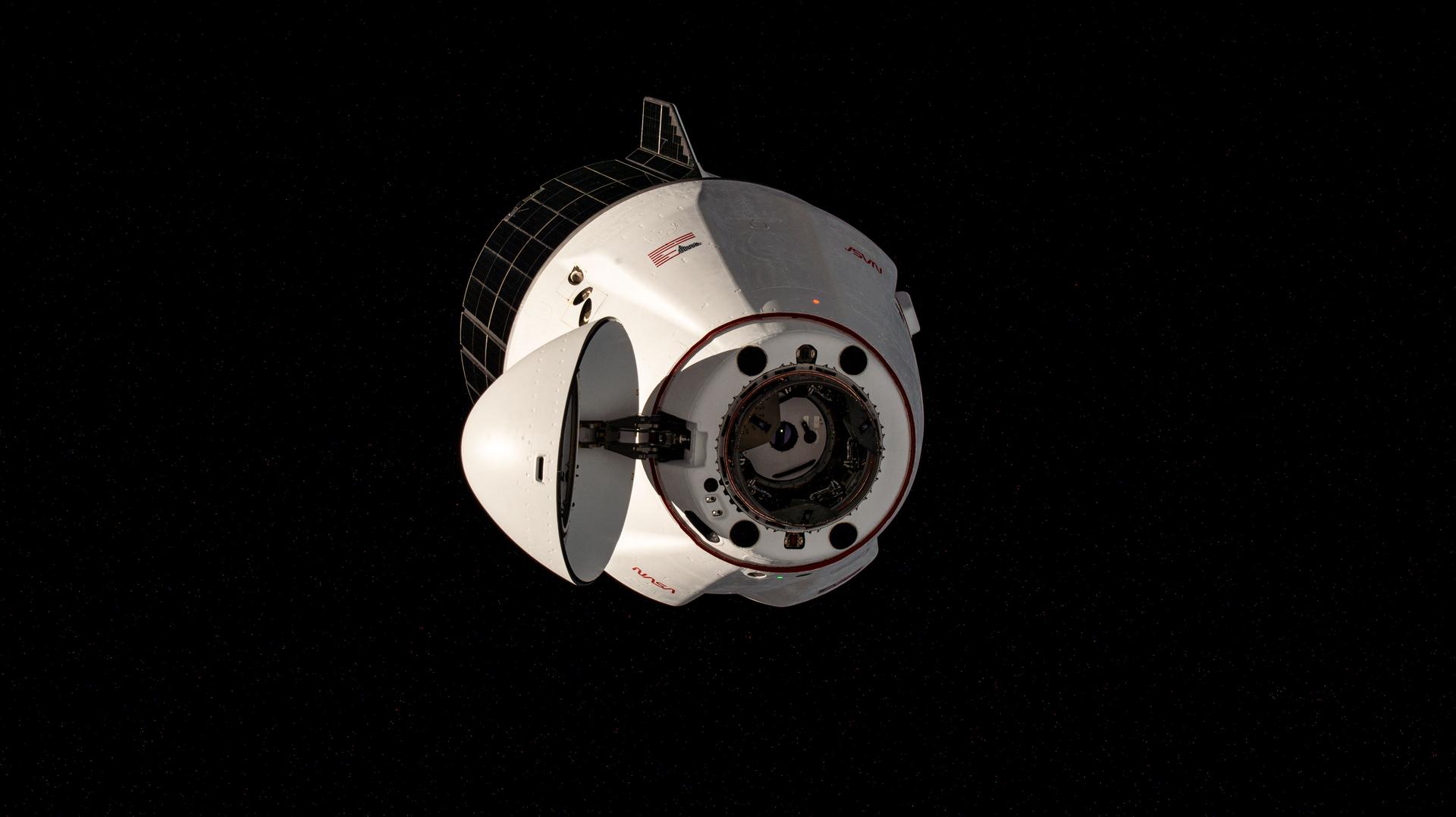
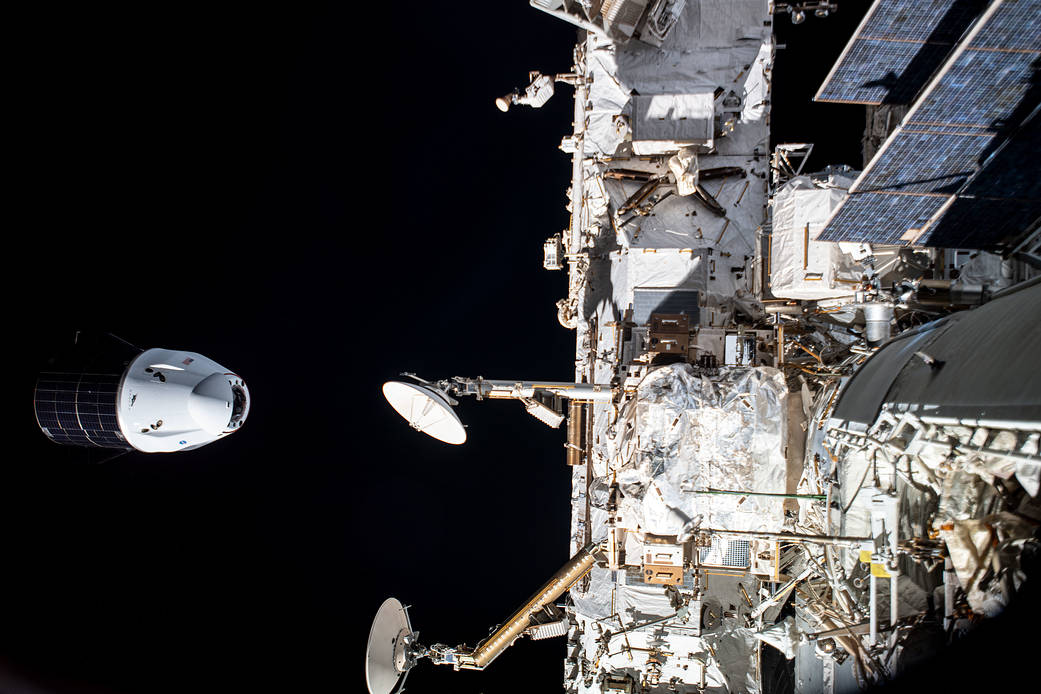
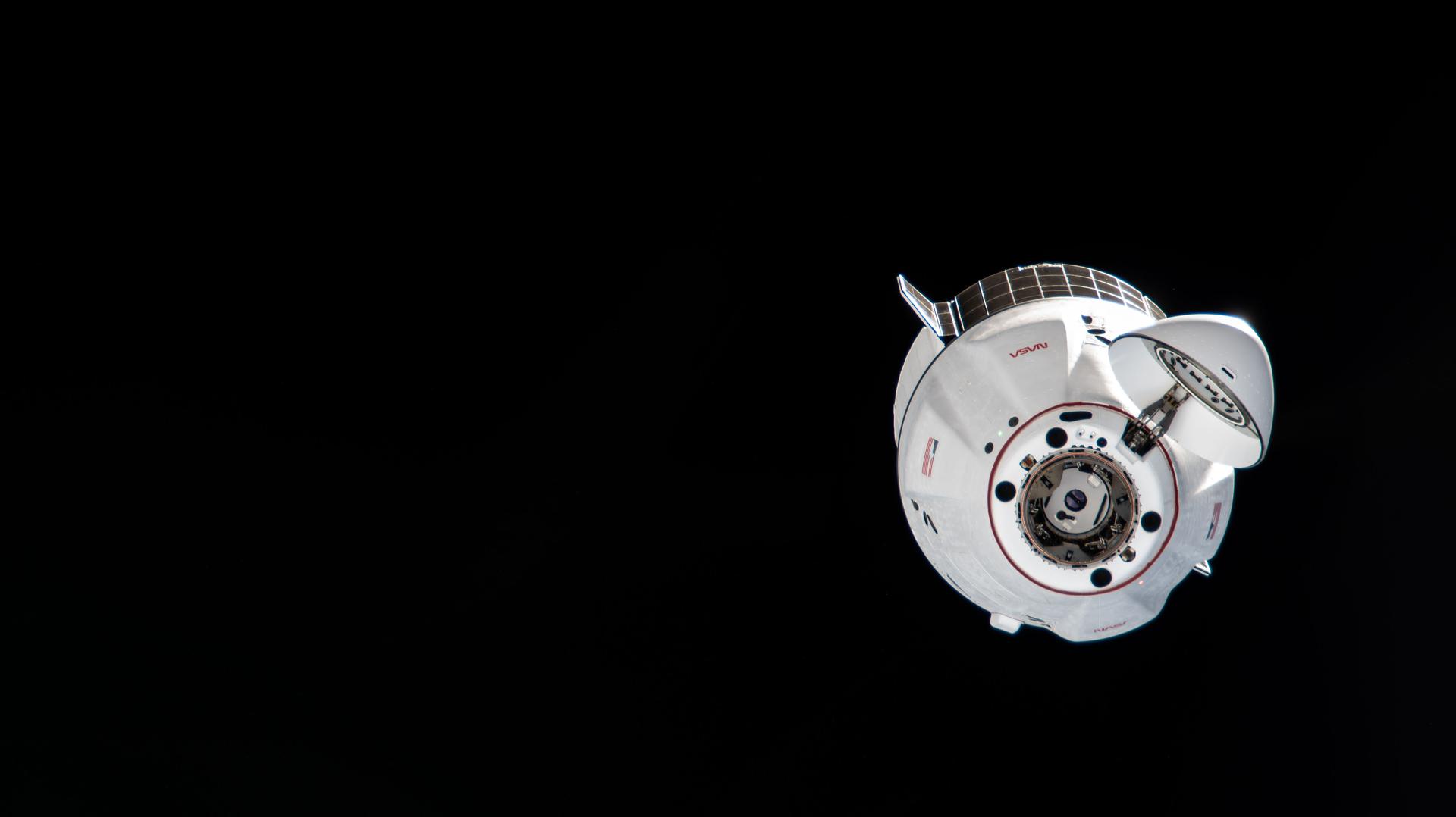
NASA’s SpaceX Crew-9 members which includes NASA astronauts Nick Hague, Suni Williams, and Butch Wilmore, as well as Roscosmos cosmonaut Aleksandr Gorbunov joined each other on Wednesday for a refresher session and practiced on a computer the procedures for reentering the Earth’s atmosphere aboard the SpaceX Dragon crew spacecraft. The quartet is planned to undock from the space station about a week after NASA’s SpaceX Crew-10 mission arrives carrying NASA astronauts Anne McClain, Nichole Ayers, Roscosmos cosmonaut Kirill Peskov, and JAXA (Japan Aerospace Exploration Agency) Takuya Onishi. Crew-10’s four crew members are targeted to launch no earlier than March 12 from the Kennedy Space Center in Florida.

Hague and Gorbunov also trained to use a new tool that measures airflow velocity from vents aboard the station. Williams replaced ammonia leak emergency response procedures with new safety manuals delivered on Aug. 6, 2024 aboard the Cygnus space freighter. Wilmore swapped fuel bottles inside the Combustion Integrated Rack to prepare for a spacecraft fire safety study that explores how flames spread in microgravity.

NASA Flight Engineer Don Pettit was back on robotics duty on Wednesday powering up an Astrobee robotic free-flyer for the Astrobee-Zero Robotics student competition to program the toaster-sized device to make a variety of maneuvers. Winning students had their algorithms uploaded to Astrobee testing its ability to autonomously detect and move objects within a time limit aboard the Kibo laboratory module.

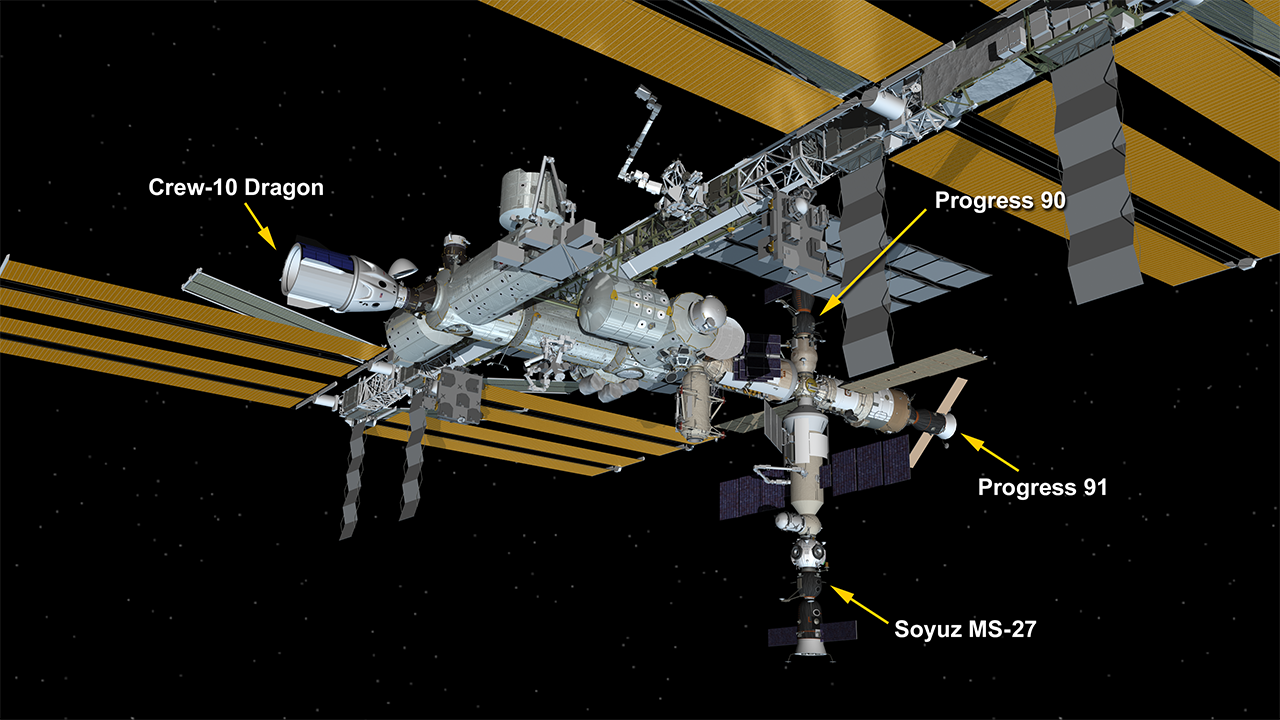
The space station is orbiting higher after the Progress 89 cargo craft, which is docked to the rear port of Zvezda service module, fired its thrusters for over 22 minutes on Wednesday night. The reboost places the station at the correct altitude to receive the new Progress 91 craft after it launches on Feb. 27 then docks on March 1.

Roscosmos cosmonauts Alexey Ovchinin and Ivan Vagner packed the Progress 89 with trash and discarded hardware in preparation for cargo craft’s undocking on Feb. 25. Ovchinin also prepared the Progress 89 for its departure removing air ducts and checking its hatch. Vagner moved on and serviced Zvezda’s oxygen generator while Gorbunov photographed the condition of stowage areas in the Zarya module. Following the Progress 89’s departure, Zvezda’s rear port will be vacated where the Progress 91 will dock beginning a six-month cargo mission.

Learn more about station activities by following the space station blog, @space_station and @ISS_Research on X, as well as the ISS Facebook and ISS Instagram accounts.

Get the latest from NASA delivered every week. Subscribe here: https://www.nasa.gov/subscribe

Powered by WPeMatico

Get The Details…

Mark A. Garcia

Spacesuits, Exercise Gear, and Spacecraft Operations Fill Wednesday Schedule

Spacesuits, Exercise Gear, and Spacecraft Operations Fill Wednesday Schedule

The full Moon is pictured just above Earth's horizon from the International Space Station as it soared 260 miles over Durango, Mexico.
The full Moon is pictured just above Earth’s horizon from the International Space Station as it soared 260 miles over Durango, Mexico.
NASA

On Wednesday, the Expedition 72 crew aboard the International Space Station focused its efforts mostly on spacesuits and advanced exercise gear. The orbital residents also worked on crew and cargo spacecraft operations at the orbital outpost.

NASA Flight Engineers Butch Wilmore and Nick Hague joined each other in the Quest airlock and swapped components on a spacesuit in preparation for a spacewalk planned in the spring. Next, Wilmore wrapped up the suit work and stowed the spacewalking hardware in Quest. Hague relocated medical operations gear from Quest into the Tranquility module and checked their wireless configurations.

Station Commander Suni Williams worked inside the Columbus laboratory module on futuristic exercise gear designed by the European Space Agency. She powered up the Portable Pulmonary Function System (PPFS) and tested its network connectivity with other space station exercise systems. The PPFS measures a variety of respiratory and cardiovascular factors such as oxygen intake, heart rate, blood pressure, and more helping researchers learn more about space biology and determine the effectiveness of space exercise techniques.

NASA’s SpaceX Crew-9 astronauts also joined Roscosmos cosmonaut Aleksandr Gorbunov and reviewed procedures on computer tablets for unlikely spacecraft emergency scenarios such as a fire or depressurization. The quartet is targeted to return to Earth aboard the SpaceX Dragon crew spacecraft in March several days after the SpaceX Crew-10 mission launches which is currently targeted for no earlier than March 12.

NASA Flight Engineer Don Pettit kicked off his day in the Kibo laboratory module inspecting and swapping out wireless communications gear. Next, he documented his daily food and medicine intake before he installed a pair of temporary hatch window covers in the Unity and Harmony modules.

Gorbunov worked on water transfers between the U.S. and Roscosmos segments of the orbital lab then cleaned ventilation systems inside the Poisk module. His fellow cosmonauts, Flight Engineers Alexey Ovchinin and Ivan Vagner, continued packing trash and discarded gear inside the Progress 89 cargo craft due to leave the station on Feb. 25. Ovchinin, along with Gorbunov, then took a test documenting his experience communicating with mission controllers from around the world. Vagner pointed a camera with a spectrometer installed toward Earth and photographed landmarks in a variety of wavelengths.

Learn more about station activities by following the space station blog@space_station and @ISS_Research on X, as well as the ISS Facebook and ISS Instagram accounts.

Get the latest from NASA delivered every week. Subscribe here: www.nasa.gov/subscribe

Powered by WPeMatico

Get The Details…

Mark A. Garcia

Crew Works Robotics Competition and 3D Bioprinter to Manufacture Cells, Tissues

Crew Works Robotics Competition and 3D Bioprinter to Manufacture Cells, Tissues

NASA astronaut Nick Hague poses next to the BioFabrication Facility inside the International Space Station's Columbus laboratory module. The bioprinter is being tested for its capability to print biological, or organ-like, tissues in space.
NASA astronaut Nick Hague poses next to the BioFabrication Facility inside the Columbus laboratory module during his first mission on July 29, 2019. The bioprinter is being tested for its capability to print biological, or organ-like, tissues in space.
NASA

The Expedition 72 crew spent Tuesday setting up a free-flying robotics competition for students and a cleaning a 3D bioprinter. The International Space Station residents also conducted blood and saliva tests, cleaned crew quarters, and packed a cargo ship for departure.

Flight Engineer Don Pettit powered up an Astrobee robotic free flyer at the beginning of his shift on Tuesday and cleared space in the Kibo laboratory module to allow the toaster-sized device to maneuver on its own. Ground controllers then took over and tested Astrobee’s autonomous flight trajectories and its ability to recognize hand gestures. The operations are being set up in advance of the Astrobee-Zero Robotics competition that will see students write algorithms controlling Astrobee to clear objects inside Kibo in a set amount of time.

The BioFabrication Facility (BFF), located in the Columbus laboratory module, is being tested for its capability to print biological, or organ-like, tissues in space and eventually fabricate human organs off the Earth. NASA Flight Engineer Nick Hague spent his shift cleaning pumps, replacing components, and installing bio-ink syringes inside the BFF ensuring ongoing research operations. Print files are uploaded from the ground to the 3D bioprinter, then cells are printed inside a cassette, and finally the cassettes are stowed in a sample processor for 60 days before being returned to Earth for later analysis.

Hague also joined station Commander Suni Williams collecting their blood and saliva samples for testing. The duo processed the blood draws in a centrifuge then stowed the samples in a science freezer for later analysis. Researchers on Earth will examine the specimens to understand how living in weightlessness affects an astronaut’s health. Williams then spent the rest of her day charging batteries on an eye imaging tool, draining orbital plumbing systems, and analyzing station water samples for contaminants.

A Roscosmos Progress 89 cargo craft is due to depart the orbital lab on Feb. 25 after six months docked to the rear port of the Zvezda service module. Cosmonauts Alexey Ovchinin and Ivan Vagner packed the Progress 89 with trash and discarded gear and transferred fluids inside the resupply ship before it completes its mission. The Progress 91 cargo craft will replace the Progress 89 when it launches on Feb. 27 and docks to Zvezda’s vacated port two days later.

Cosmonaut and Flight Engineer Aleksandr Gorbunov began his shift powering down an Earth observation camera before inspecting and servicing electronic and ventilation systems inside the orbital outpost’s Roscosmos segment. Gorbunov had a light duty shift during his afternoon then wrapped up his day with a standard medical conference.

Learn more about station activities by following the space station blog@space_station and @ISS_Research on X, as well as the ISS Facebook and ISS Instagram accounts.

Get the latest from NASA delivered every week. Subscribe here: www.nasa.gov/subscribe

Powered by WPeMatico

Get The Details…

Mark A. Garcia
Muscle Research, Blood Tests To Promote Healthy Crews End Week

Muscle Research, Blood Tests To Promote Healthy Crews End Week

The sun rises above the Pacific Ocean revealing the terminator, the line between night and day on Earth, in this photograph from the Internaional Space Station as it orbited 259 miles above and about 500 miles north of Hawaii.
NASA

Muscle stimulation and blood tests topped the International Space Station research schedule on Friday helping doctors learn how to keep astronauts healthy on long-term missions. The Expedition 72 residents also winded down the work week cleaning spacesuits and life support gear aboard the orbital outpost.

Astronauts use their legs less often aboard the station and need to exercise daily to offset the muscle loss. NASA Flight Engineers Nick Hague and Don Pettit partnered together inside the Columbus laboratory module and explored using electrical stimulation to maintain their leg muscles in addition to the crew’s two-hour daily exercise sessions. Hague was attached to a control unit and electrodes as electrical signals excited his muscles, potentially improving muscle function and endurance in space, while Pettit monitored the research operations. The lack of gravity impacts the human body in many ways and scientists are studying the physiological changes astronauts experience to learn how to counteract those changes. Results may lead to more efficient space exercise methods and smaller, lighter workout equipment on space missions.

The two astronauts started their day collecting their blood samples for processing and stowage in a science freezer. The samples will later be analyzed to understand the physiological changes astronauts experience while living and working on long-term space missions. Hague would later review procedures to install space botany hardware while Pettit prepared the Mochii electron microscope for future imaging operations.

Station Commander Suni Williams spent her day in the Quest airlock servicing a spacesuit following a Jan. 30 spacewalk she conducted with Flight Engineer Butch Wilmore. She emptied and filled suit water tanks, cleaned cooling water loops, and installed lithium-ion batteries ensuring the suit’s readiness for future spacewalks.

Wilmore worked inside the Destiny laboratory module on Friday inspecting, cleaning, and installing new components on an experimental carbon dioxide removal system. The Four Bed Carbon Dioxide Scrubber seeks to demonstrate improved reliability and performance for next-generation life support systems on future spacecraft. Researchers examine carbon dioxide samples from the device and monitor the station’s atmosphere and monitor its operation as crews of various sizes come and go.

Roscosmos Flight Engineers Aleksandr Gorbunov and Alexey Ovchinin took a regularly computer-based hearing test in the quiet area of their crew quarters. Gorbunov also worked throughout Friday on orbital plumbing duties in the Nauka science module. Alexey Ovchinin also replaced electronics and communications hardware before filling an oxygen generator with water. Flight Engineer and cosmonaut Vagner cleaned pumps and pipes inside the Zvezda service module and photographed materials that had been exposed to the external environment for a Roscosmos space experiment.

Learn more about station activities by following the space station blog@space_station and @ISS_Research on X, as well as the ISS Facebook and ISS Instagram accounts.

Get the latest from NASA delivered every week. Subscribe here: www.nasa.gov/subscribe

Powered by WPeMatico

Get The Details…

Mark A. Garcia