Crew Works Eye Checks, Stomach Scans Before Cargo Mission Launches Today

Crew Works Eye Checks, Stomach Scans Before Cargo Mission Launches Today

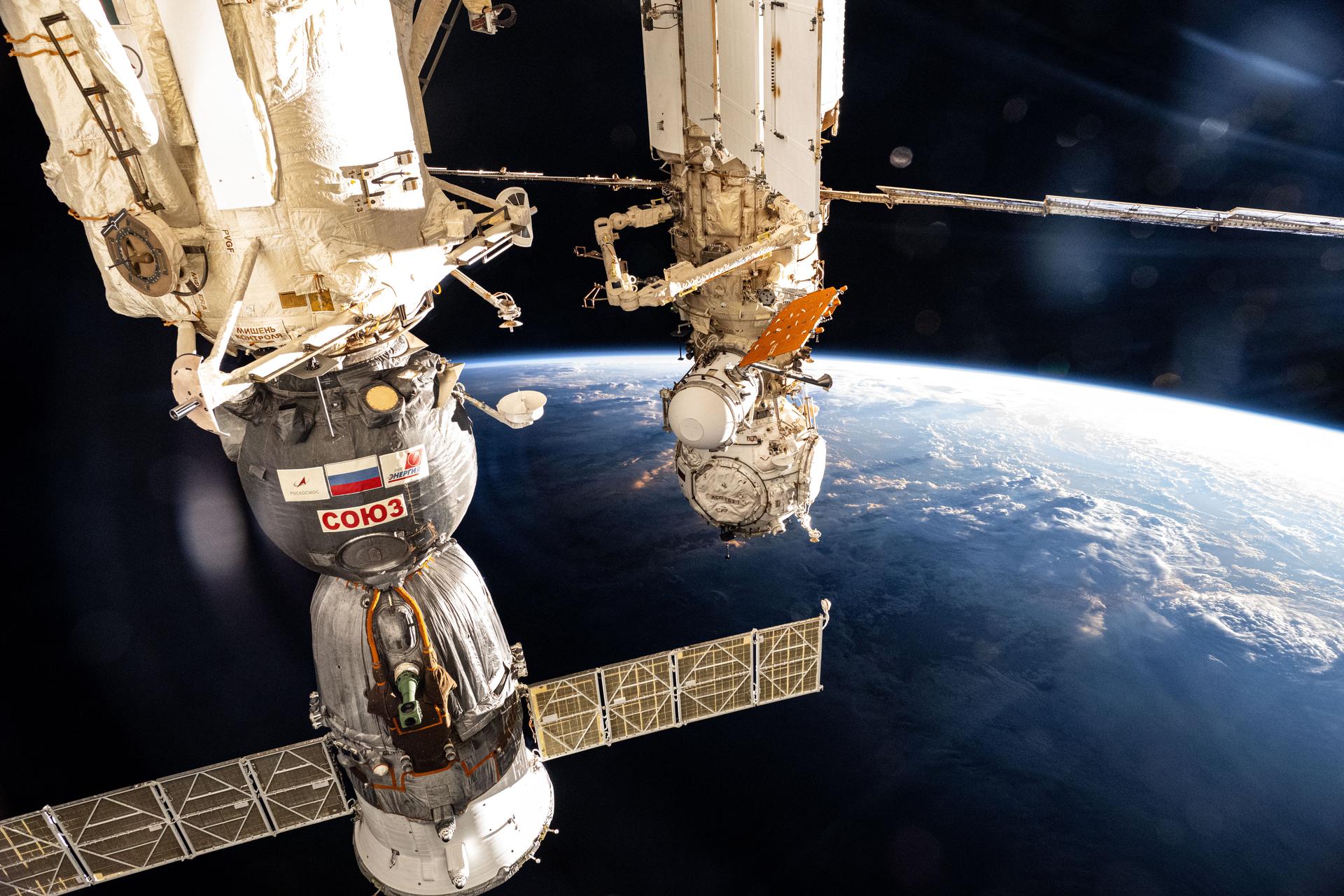
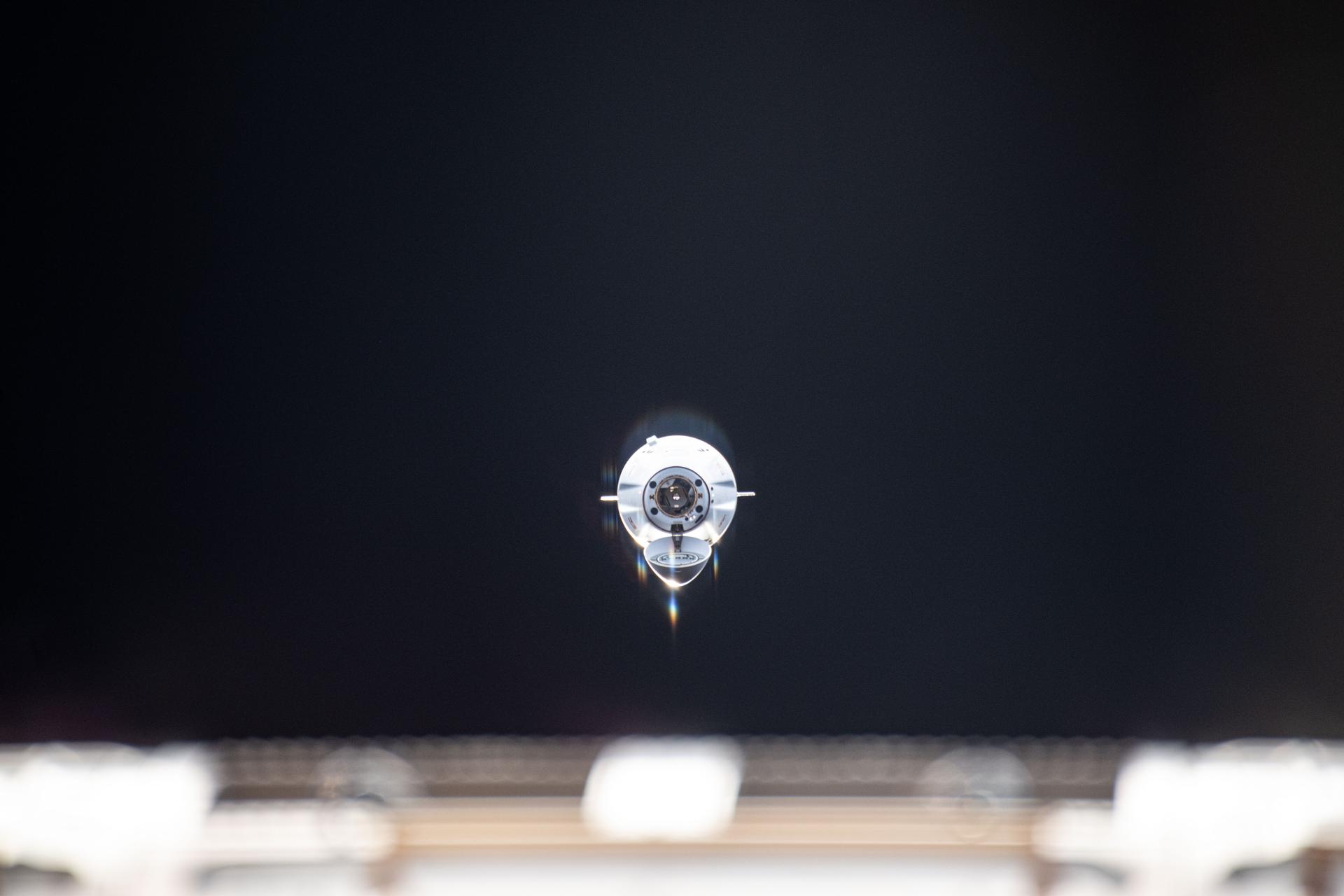
The Progress 90 cargo craft nears the International Space Station for a docking to the Poisk module delivering nearly three tons of food, fuel, and supplies replenishing the Expedition 72 crew.
The Progress 90 cargo craft nears the International Space Station for a docking to the Poisk module delivering nearly three tons of food, fuel, and supplies replenishing the Expedition 72 crew on Nov. 23, 2024.
NASA

Eye checks and stomach scans dominated the research schedule aboard the International Space Station on Thursday ensuring astronauts stay healthy in weightlessness. The Expedition 72 crew is also gearing up for the arrival of a new cargo mission this weekend.

Doctors have diagnosed eye conditions in astronauts who have reported vision issues after living and working in microgravity for months at a time. A variety of eye exams scheduled throughout a mission help researchers track and understand the space-caused optical symptoms and develop treatments to keep crews healthy.

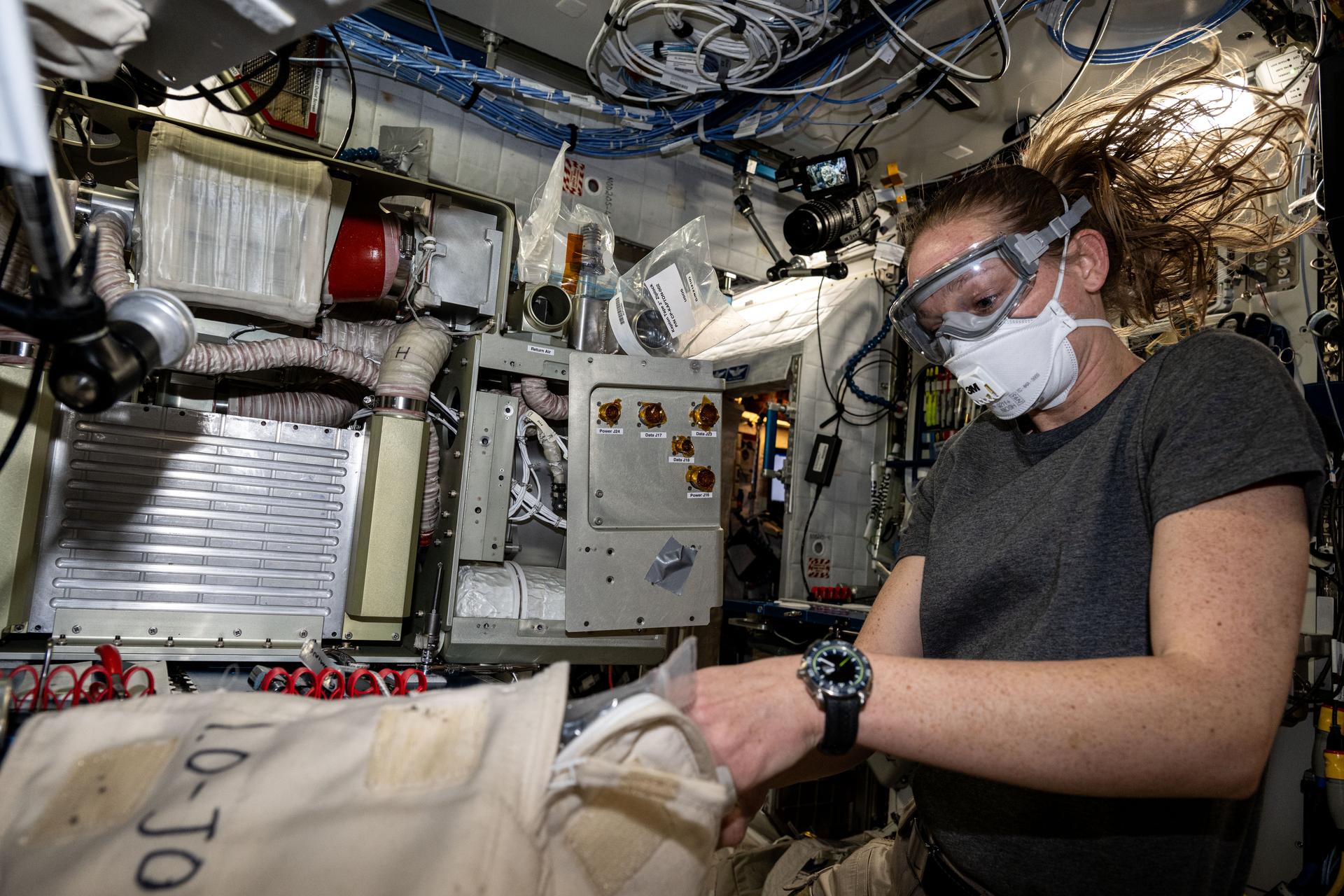
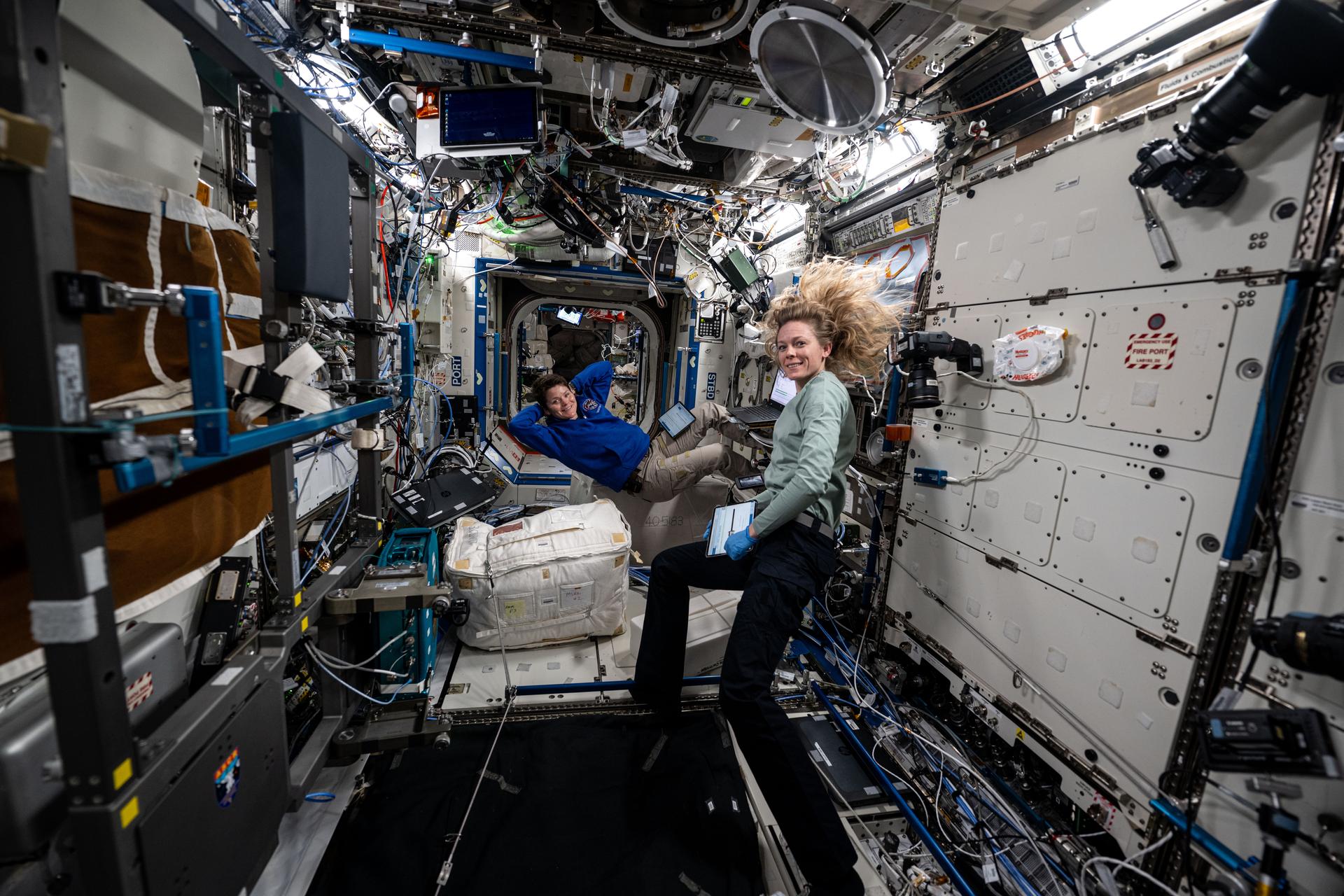
NASA Flight Engineer Butch Wilmore kicked off the first set of eye exams on Wednesday scanning the eyes of NASA astronauts Suni Williams and Nick Hague using the Ultrasound 2 device. The trio was inside the Columbus laboratory module as doctors on the ground monitored the downlinked biomedical data in real time examining the crew’s cornea, lens, and optic nerve.

The second set of eye exams included Williams, Hague, and Roscosmos Flight Engineer Aleksandr Gorbunov who peered into a high-resolution medical imaging device examining their retina. Flight Engineers Don Pettit of NASA and Alexey Ovchinin of Roscosmos, with remote guidance from doctors on Earth, assisted with the eye study to detect and counter eye and vision issues caused during space missions.

At the beginning of his shift, Hague removed blood samples from the Kubik research incubator and spun them in the Human Research Facility’s centrifuge. He then processed the specimens for stowage in a science freezer for later analysis. The samples will be studied on the space station to understand space-caused stress on cells and tissue and how the human immune system adapts to weightlessness.

Gorbunov and Flight Engineer Ivan Vagner were back on space digestion research at the beginning of their shift on Wednesday. The two cosmonauts joined each other for ultrasound scans of their stomachs before and after breakfast for a long-running human research investigation to learn how weightlessness impacts their digestion system.

The Progress 91 cargo craft is counting to its launch to the orbital outpost from the Baikonur Cosmodrome in Kazakhstan at 4:24 p.m. EST today. Ovchinin and cosmonaut Ivan Vagner will be on duty when Progress 91 and its three tons of food, fuel, and supplies arrives on Saturday and docks to the Zvezda service module’s aft port at 6:03 p.m. Both the launch and docking will be broadcast live on NASA+.

Learn more about station activities by following the space station blog, @space_station and @ISS_Research on X, as well as the ISS Facebook and ISS Instagram accounts.

Get the latest from NASA delivered every week. Subscribe here: https://www.nasa.gov/subscribe

Powered by WPeMatico

Get The Details…

Mark A. Garcia

Crew Explores Cellular Immunity, Digestion and Waits for Cargo Mission

Crew Explores Cellular Immunity, Digestion and Waits for Cargo Mission

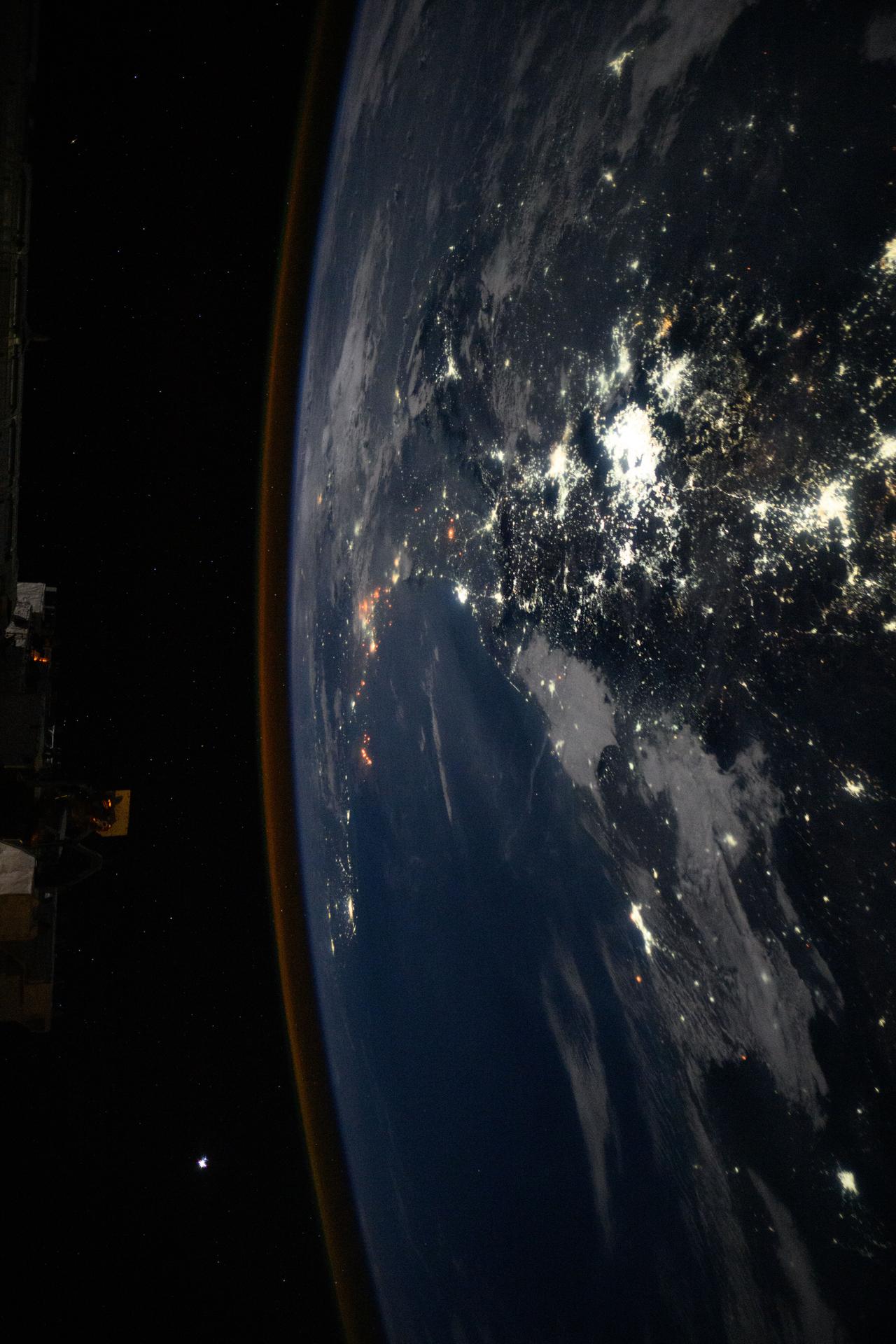
One of the International Space Station's main solar arrays is silhouetted against the backdrop of a green and red aurora borealis blanketing Quebec, Canada, as the orbital outpost soared 261 miles above.
One of the International Space Station’s main solar arrays is silhouetted against the backdrop of a green and red aurora borealis blanketing Quebec, Canada, as the orbital outpost soared 261 miles above.
NASA/Don Pettit

Cellular immunity and digestion were the main research topics on Wednesday as the Expedition 72 crew explored space biology aboard the International Space Station. The orbital residents also worked on spacesuit maintenance and prepared for the arrival of a new cargo mission this weekend.

NASA Flight Engineer Nick Hague began his day collecting his blood and saliva samples for the Immunity Assay investigation. Before breakfast, he began his saliva work processing and stowing the samples in a science freezer. Then he treated his blood samples and spun them in a centrifuge before finally loading the specimens in a pair of temperature controlled Kubik incubators. The samples will be analyzed on the space station to understand space-caused cellular stress and tissue damage. Results may reveal how an astronaut’s immune system responds to the lack of gravity and improve ways to monitor crew health on missions farther away from Earth.

Spacesuit work filled the day for NASA Flight Engineers Don Pettit and Butch Wilmore who partnered together inside the Quest airlock. The duo cleaned water cooling loops, swapped components, and checked the communications system on a spacesuit following a pair of spacewalks in January and before another spacewalk planned for the spring. Pettit later loaded disposable cargo inside the Cygnus space freighter while Wilmore removed space physics hardware from inside the Microgravity Science Glovebox.

NASA’s station Commander Suni Williams spent her day on inspection activities throughout the orbital outpost’s U.S. segment. She looked at portable fire extinguishers, breathing masks, emergency air supply tanks, and other safety hardware ensuring their functionality. Williams completed her shift inside the Columbus laboratory module inspecting air ducts inside temporary crew quarters that host visiting crews for short periods of time.

Roscosmos Flight Engineers Aleksandr Gorbunov and Ivan Vagner joined each other for ultrasound scans of their stomachs before and after breakfast on Wednesday to understand how weightlessness impacts their digestion system. Gorbunov then collected air samples in the Zvezda, Nauka, and Rassvet modules for analysis. Vagner later joined Flight Engineer Alexey Ovchinin and trained for an upcoming cargo mission.

The Roscosmos Progress 91 cargo craft is at its launch pad at the Baikonur Cosmodrome in Kazakhstan counting down to launch at 4:42 p.m. EST on Thursday. The Progress 91 is scheduled to dock to Zvezda’s aft port at 6:03 p.m. on Saturday delivering three tons of food, fuel, and supplies to the Expedition 72 crew. Vagner and Ovchinin prepared for the Progress 91’s arrival and trained on the TORU, or telerobotically operated rendezvous unit, located in Zvezda that can remotely command and control an approaching Roscosmos spacecraft if necessary.

Learn more about station activities by following the space station blog, @space_station and @ISS_Research on X, as well as the ISS Facebook and ISS Instagram accounts.

Get the latest from NASA delivered every week. Subscribe here: https://www.nasa.gov/subscribe

Powered by WPeMatico

Get The Details…

Mark A. Garcia

Progress Cargo Craft Departs Station After Six Months

Progress Cargo Craft Departs Station After Six Months

Feb. 25, 2025: International Space Station Configuration. Four spaceships are parked at the space station including the SpaceX Dragon crew spacecraft, the Northrop Grumman Cygnus resupply ship, the Soyuz MS-26 crew ship, and the Progress 90 resupply ship.
NASA

The unpiloted Roscosmos Progress 89 spacecraft undocked from the International Space Station at 3:17 p.m. EST, Feb. 25, backing away from the station for a deorbit maneuver and destructive re-entry into Earth’s atmosphere to dispose of trash loaded by the crew.

The spacecraft launched Aug. 14 on a Soyuz rocket from the Baikonur Cosmodrome in Kazakhstan, carrying about three tons of food, fuel, and supplies for the crew aboard the International Space Station. After a two-day in-orbit journey to the station, the spacecraft arrived at the orbiting laboratory Aug. 17 and automatically docked to the aft port of the orbiting laboratory’s Zvezda Service module.

Learn more about station activities by following the space station blog, @space_station and @ISS_Research on X, as well as the ISS Facebook and ISS Instagram accounts.

Get the latest from NASA delivered every week. Subscribe here: https://www.nasa.gov/subscribe

Powered by WPeMatico

Get The Details…

Mark A. Garcia

Free Flying Robotics, Space Agriculture Ahead of Cargo Mission Swap

Free Flying Robotics, Space Agriculture Ahead of Cargo Mission Swap

Astronaut Suni Williams monitors an Astrobee robotic free-flyer outfitted with tentacle-like arms containing gecko-like adhesive pads as it grapples a "capture cube."
Astronaut Suni Williams monitors an Astrobee robotic free-flyer outfitted with tentacle-like arms containing gecko-like adhesive pads as it grapples a “capture cube.”
NASA

Free flying robotics and space agriculture topped Tuesday’s research schedule as the Expedition 72 crew helps advance the space industry. The International Space Station will also see the departure of a cargo craft and the arrival of its replacement this week.

NASA’s station Commander Suni Williams began her day setting up and activating the Astrobee robotic assistant, a cube-shaped, toaster-sized technology demonstration device, inside the Kibo laboratory module. Next, she outfitted the Astrobee with tentacle-like grippers for a test of its ability to autonomously detect and capture simulated orbital debris. Afterward, ground controllers took control of Astrobee and programmed the robotic free flyer to perform maneuvers to locate a capture target then reach out and grapple the free-floating object. Researchers are testing the ability of robots to safely remove orbital debris and protect satellites.

Following the robotics demonstration, NASA Flight Engineer Don Pettit worked in Kibo installing research components on the Advanced Plant Habitat hosting growing Red Romaine lettuce. The space botany hardware divided the young plants into quadrants for observation and provided a temperature sensor device measuring leaf temperature between watering periods. Insights from the Plant Habitat-07 investigation may inform ways to grow crops on future space missions.

NASA astronauts Nick Hague and Butch Wilmore spent their day primarily focusing on science hardware, life support maintenance, and cargo transfers. Hague started his shift in the Columbus laboratory module partially uninstalling the Navigation and Communication Testbed that could provide a more accurate alternative to satellite systems for lunar navigation. Hague then powered up a pair of incubators for biology research later in the week. Wilmore began his day draining recycling tanks then loaded trash inside the Cygnus space freighter ahead of its departure next month. Wilmore wrapped up his shift installing software on a science laptop computer in the Destiny laboratory module.

Roscosmos’ Progress 89 cargo craft is poised to depart the space station at 3:17 p.m. EST today when it undocks from the Zvezda service module’s aft port completing a six-month cargo mission. It will be replaced by the Progress 91 cargo craft after it launches at 4:24 p.m. on Thursday from the Baikonur Cosmodrome in Kazakhstan. The Progress 91, carrying three tons of food, fuel, and supplies, will dock to Zvezda’s vacant port at 6:03 p.m. on Saturday where it will stay for another six months.

Cosmonauts Alexey Ovchinin and Ivan Vagner prepared on Tuesday for the Progress 91’s arrival setting up the TORU, or tele-robotically operated rendezvous unit, inside Zvezda. The TORU can be used to command and control an approaching spacecraft from Roscosmos if necessary.

Vagner then moved on and scanned cosmonaut Aleksandr Gorbunov’s eyes with the Ultrasound 2 device for a regularly schedule exam. Gorbunov also completed a 24-hour session that measured his cardiac activity and blood pressure with portable electrodes.

Learn more about station activities by following the space station blog, @space_station and @ISS_Research on X, as well as the ISS Facebook and ISS Instagram accounts.

Get the latest from NASA delivered every week. Subscribe here: https://www.nasa.gov/subscribe

Powered by WPeMatico

Get The Details…

Mark A. Garcia

Crew Off-Duty Monday Before Week of Research, Cargo Spacecraft Missions

Crew Off-Duty Monday Before Week of Research, Cargo Spacecraft Missions

NASA's SpaceX Crew-9 members pose together for a portrait inside the International Space Station's Unity module. From left, are NASA astronaut Suni Williams, Roscosmos cosmonaut Aleksandr Gorbunov, and NASA astronauts Nick Hague and Butch Wimore.
NASA’s SpaceX Crew-9 members pose together for a portrait inside the International Space Station’s Unity module. From left, are NASA astronaut Suni Williams, Roscosmos cosmonaut Aleksandr Gorbunov, and NASA astronauts Nick Hague and Butch Wimore.
NASA

The seven-member Expedition 72 crew relaxed on Monday before beginning a week with a host of advanced space research into robotics, biology, and more at the International Space Station. The orbital residents will also send off a cargo craft after a six-month mission before another resupply ship arrives to replace it this weekend.

The orbital outpost’s four NASA astronauts and three Roscosmos cosmonauts began the workweek with an off-duty day following a weekend of light science duties and housecleaning tasks. The crewmates will go into the rest of the week exploring a variety of science of topics running the gamut of advanced space technology, space agriculture techniques, and how astronauts adapt to long-term weightlessness.

Some of the experiments will include NASA’s station Commander Suni Williams setting up an Astrobee robotic free flyer for a demonstration of its ability to autonomously detect and capture space debris with tentacle-like grippers. NASA Flight Engineer Don Pettit will install space botany hardware for an investigation growing Red Romaine lettuce to learn how to grow crops on future space missions. NASA Flight Engineer Nick Hague will focus his scientific attention on human research this week as he collects his blood and saliva samples for analysis and explores electrical muscle stimulation to supplement space exercise.

NASA Flight Engineer Butch Wilmore is due to spend his week on spacesuits and cargo packing. Wilmore will join Pettit cleaning cooling loops and replacing components on a pair of spacesuits inside the Quest airlock. He will also complete a space physics experiment before packing trash and discarded gear inside Northrop Grumman’s Cygnus space freighter.

Roscosmos cosmonauts Alexey Ovchinin and Ivan Vagner are gearing up for the undocking of the Progress 89 cargo craft from the Zvezda service module planned for 3:17 p.m. EST on Tuesday. The duo finalized packing the Progress 89 for its departure and Ovchinin will be photographing the resupply ship as it backs away from the orbital outpost.

The Progress 91 spacecraft will launch from the Baikonur Cosmodrome in Kazakhstan at 4:24 p.m. on Thursday before docking to Zvezda’s vacated port 6:03 p.m. on Saturday. Ovchinin and Vagner will be on duty Saturday monitoring the Progress 91’s automated approach and docking.

Roscosmos Flight Engineer Aleksandr Gorbunov spent an hour-and-a-half on Monday attaching electrodes to himself for a 24-hour session monitoring his cardiac activity and blood pressure. He’ll spend the rest of the week on a variety of space biology studies looking at his eyes and digestion system as well as keeping up life support maintenance.

Learn more about station activities by following the space station blog, @space_station and @ISS_Research on X, as well as the ISS Facebook and ISS Instagram accounts.

Get the latest from NASA delivered every week. Subscribe here: https://www.nasa.gov/subscribe

Powered by WPeMatico

Get The Details…

Mark A. Garcia