Science Maintenance and Window Inspections Kick Off Week

Science Maintenance and Window Inspections Kick Off Week
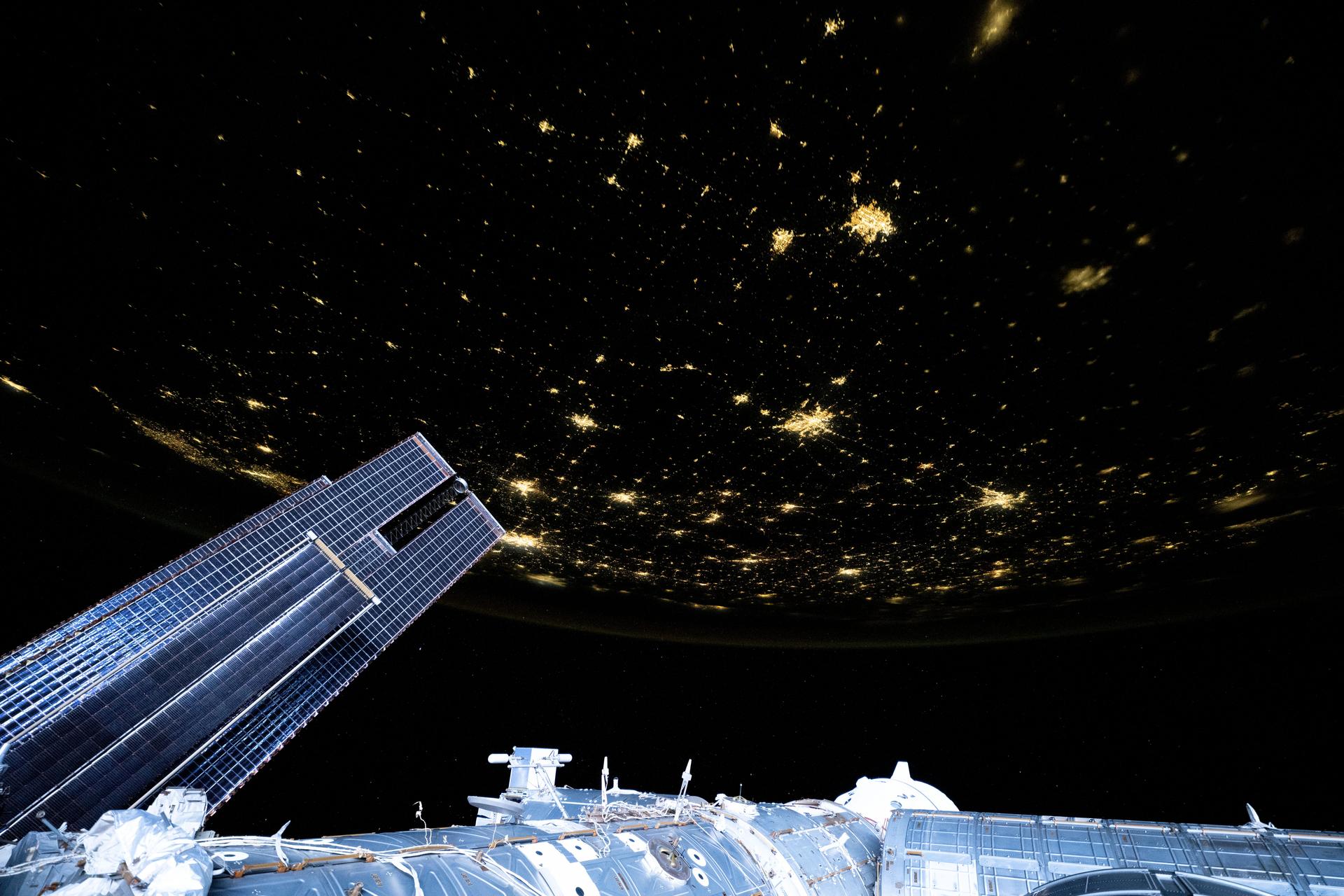
City lights dot the U.S. landscape looking southeast from 261 miles above Omaha, Nebraska, toward the southern Atlantic coast of the United States in this photograph taken at approximately 11:56 p.m. local time from the International Space Station. Pictured in the foreground, is a set of the orbital outpost's main solar arrays (lower left) and a partially obscured SpaceX Dragon crew spacecraft (lower center) docked to the Harmony module's forward port.
City lights dot the U.S. landscape looking southeast toward the southern Atlantic coast of the United States in this photograph from the International Space Station. In the foreground, is a set of the orbital outpost’s main solar arrays (lower left) and a partially obscured SpaceX Dragon crew spacecraft (lower center).
NASA

Science maintenance supporting physics research gear and window inspections kicked off the beginning of the week for the seven-member Expedition 73 crew living and working aboard the International Space Station. Meanwhile, NASA, Axiom Space, and SpaceX are reviewing launch opportunities no earlier than Thursday, June 19, for the fourth private astronaut mission to the International Space Station, Axiom Mission 4.

A fluid physics study on the orbital outpost is testing computer models that may predict the behavior of high-concentration protein fluids in microgravity. NASA Flight Engineer Nichole Ayers swapped syringes containing protein samples and installed test cells inside the Microgravity Science Glovebox. The hydrodynamics investigation explores using surface tension to contain liquids and study proteins without contacting solid walls. Results may benefit pharmaceutical manufacturing and 3D printing techniques on and off the Earth.

NASA Flight Engineer Jonny Kim began his shift opening up the Materials Science Laboratory (MSL) and removing a sample cartridge from the physics research rack. The MSL located, in the Destiny laboratory module, uses two different furnaces operating one at a time to discover new applications for existing materials, such as metals, alloys, polymers, and new or improved materials. Kim later installed tags throughout the station testing their use for a radio frequency identification system that may improve inventory management in space.

NASA Flight Engineer Anne McClain started her day with a cognition test to understand how her brain function and structure is adapting to weightlessness. Next, she jogged on a treadmill as a heart rate monitor measured her cardiac activity. At the end of her shift, McClain inspected and photographed the condition of windows inside Destiny.

Station Commander Takuya Onishi from JAXA (Japan Aerospace Exploration Agency) also inspected and cleaned windows spending his day inside the Kibo laboratory module. He first opened up Kibo’s multipurpose small payload rack where the Electrostatic Levitation Furnace is located and cleaned glass windows on the research device’s sample cartridges. The ELF uses containerless processing techniques to observe the thermophysical properties of material samples exposed to high temperatures in microgravity. Next, he inspected and photographed the condition of Kibo’s internal and external windowpanes during nighttime orbital passes for clearer imagery.

Roscosmos Flight Engineers Sergey Ryzhikov and Alexey Zubritskiy joined each other at the beginning of their shift attaching acoustic sensors to their necks measuring the sound as they exhaled rapidly for a respiratory study. The duo then split up and inventoried hardware and searched for extra stowage space inside the Zvezda service module. Flight Engineer Kirill Peskov spent his day servicing a variety of computer hardware and life support gear before pointing his camera toward Earth and photographing the mountainous area of North America near the Pacific coast.

Learn more about station activities by following the space station blog, @space_station and @ISS_Research on X, as well as the ISS Facebook and ISS Instagram accounts.

Get the latest from NASA delivered every week. Subscribe here.

Powered by WPeMatico

Get The Details…

Mark A. Garcia

NASA, Partners Review Axiom Mission 4 Launch Opportunities

NASA, Partners Review Axiom Mission 4 Launch Opportunities

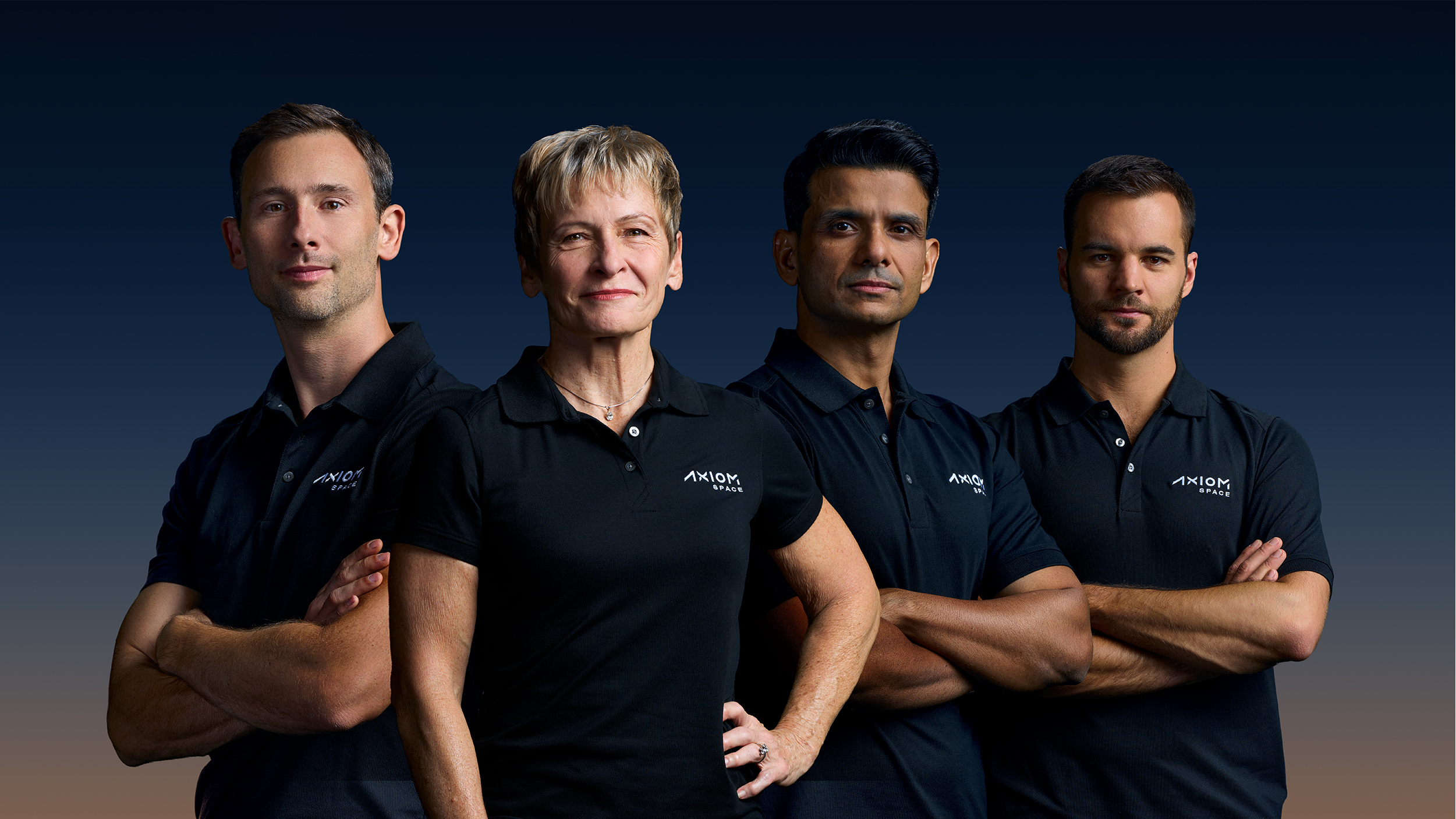
The Axiom Mission 4, or Ax-4, crew will launch aboard a SpaceX Dragon spacecraft to the International Space Station from NASA’s Kennedy Space Center in Florida. From left to right: ESA (European Space Agency) astronaut Sławosz Uznański-Wiśniewski of Poland, former NASA astronaut Peggy Whitson, ISRO (Indian Space Research Organization) astronaut Shubhanshu Shukla, and Tibor Kapu of Hungary.
The Axiom Mission 4, or Ax-4, crew (from left) with ESA (European Space Agency) astronaut Sławosz Uznański-Wiśniewski of Poland, former NASA astronaut Peggy Whitson, ISRO (Indian Space Research Organization) astronaut Shubhanshu Shukla, and Tibor Kapu of Hungary.
Axiom Space

NASA, Axiom Space, and SpaceX are reviewing launch opportunities no earlier than Thursday, June 19, for the fourth private astronaut mission to the International Space Station, Axiom Mission 4.

On June 12, NASA and Axiom Space delayed the mission as the agency continued to work with Roscosmos to understand the most recent repair efforts to seal small leaks. The leaks, located in the aft (back) most segment of the International Space Station’s Zvezda service module, have been monitored by flight controllers for the past few years.

Following the most-recent repair, pressure in the transfer tunnel has been stable. Previously, pressure in this area would have dropped. This could indicate the small leaks have been sealed. Teams are also considering the stable pressure could be the result of a small amount of air flowing into the transfer tunnel across the hatch seal from the main part of space station. By changing pressure in the transfer tunnel and monitoring over time, teams are evaluating the condition of the transfer tunnel and the hatch seal between the space station and the back of Zvezda.

It is not uncommon for the agency and its international partners to adjust launches around changes in operations aboard the space station. Teams are making progress evaluating the transfer tunnel configuration, resulting in an updated launch opportunity for the private astronaut mission.

In addition, SpaceX teams have repaired a liquid oxygen leak identified during post-static fire Falcon 9 rocket inspections. Following the repairs, the company completed a wet dress rehearsal of the Falcon 9.

Peggy Whitson, former NASA astronaut and director of human spaceflight at Axiom Space, will command the commercial mission, while ISRO (Indian Space Research Organisation) astronaut Shubhanshu Shukla will serve as pilot. The two mission specialists are ESA (European Space Agency) project astronaut Sławosz Uznański-Wiśniewski of Poland and Tibor Kapu of Hungary.

The crew will lift off aboard the SpaceX Dragon spacecraft on Falcon 9 from Launch Complex 39A at NASA’s Kennedy Space Center in Florida.

Learn more about station activities by following the space station blog, @space_station and @ISS_Research on X, as well as the ISS Facebook and ISS Instagram accounts.

Get the latest from NASA delivered every week. Subscribe here.

Powered by WPeMatico

Get The Details…

Mark A. Garcia

Station Crew Ends Week with Half-Shift Filled with Space Research

Station Crew Ends Week with Half-Shift Filled with Space Research

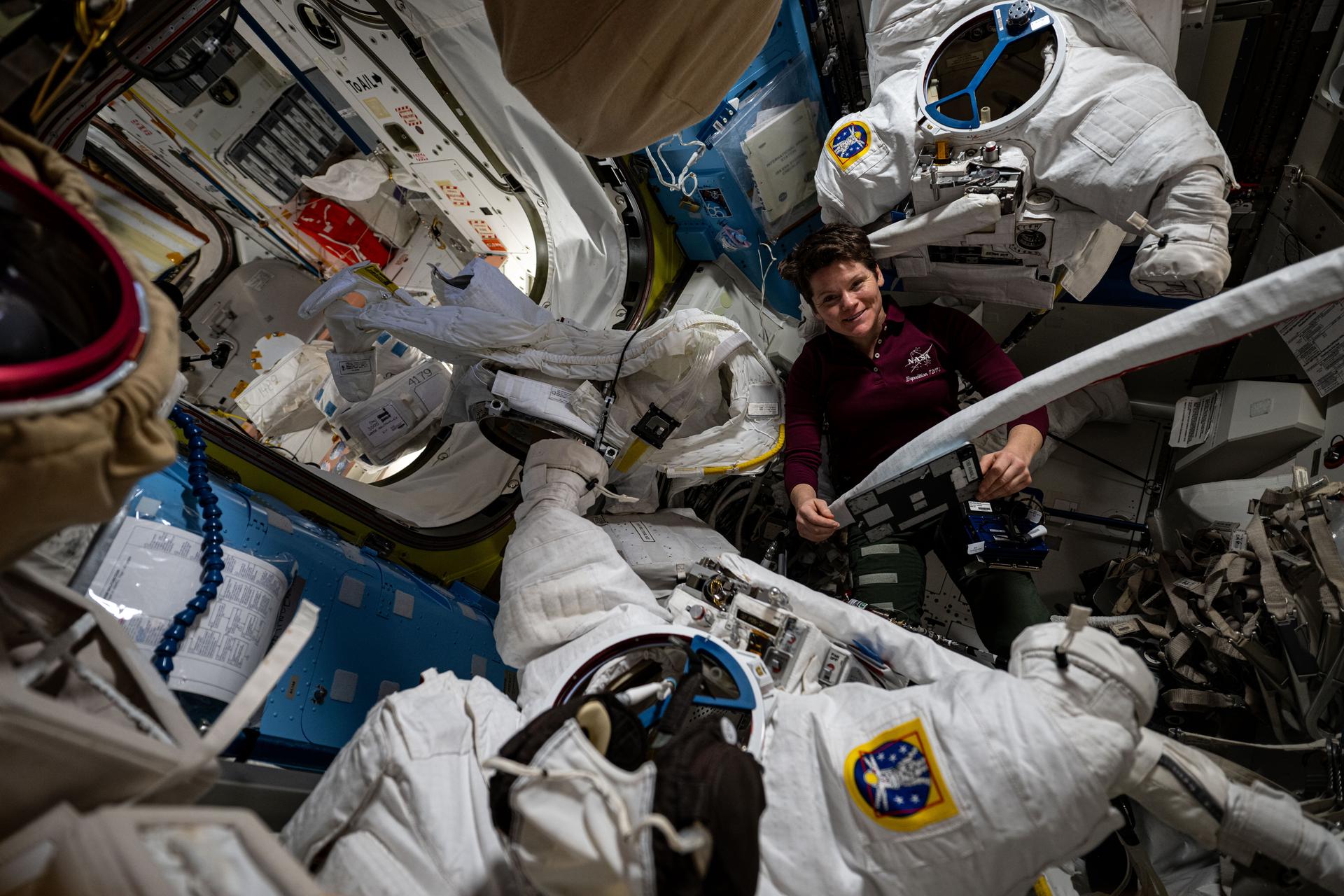
NASA astronaut and Expedition 73 Flight Engineer Anne McClain checks out a pair of spacesuits during routine maintenance operations inside the International Space Station's Quest airlock.
Astronaut Anne McClain checks out a pair of spacesuits during routine maintenance operations inside the International Space Station’s Quest airlock.
NASA

The Expedition 73 crew wrapped up the week with another light duty day working half a shift filled with vein scans, a pharmaceutical study, and International Space Station upkeep.

NASA Flight Engineer Nichole Ayers kicked off her day with station Commander Takuya Onishi from JAXA (Japan Aerospace Exploration Agency) taking turns operating the Ultrasound 2 device and scanning each other’s neck, shoulder, and leg veins. Afterward, Ayers handed over the biomedical hardware to NASA Flight Engineer Anne McClain who scanned the veins of Roscosmos Flight Engineer Kirill Peskov. Doctors on the ground monitored the regularly scheduled scans in real time checking for potential blood clots arising due to blood pooling toward a crew member’s upper body in microgravity.

Onishi and McClain then spent some time on different maintenance duties in the Quest airlock. Onishi observed, photographed, and documented the condition and location of a variety of spacewalking tools, while McClain transferred wastewater collected from a spacesuit into a contingency water container bag.

NASA Flight Engineer Jonny Kim began his shift inside Quest searching for and locating a specialized socket that will be used on a future spacewalk. Next, he worked inside the Destiny laboratory module installing hardware and setting up samples inside the Microgravity Science Glovebox to explore the behavior of amyloids, or protein deposits that affects organs and tissues, in weightlessness. Results may lead to a better understanding and newer treatments for neurodegenerative diseases such as Alzheimer’s and promote space commercialization opportunities.

Peskov began his shift in the orbital outpost’s Roscosmos segment and attached himself to a device that applies a known force to a crew member and uses the resulting acceleration to accurately calculate mass. After his vein scans, Peskov worked in the Zarya module and cleaned life support equipment and checked lighting systems.

Veteran space station resident and cosmonaut Sergey Ryzhikov spent his half-day in Zarya organizing electronics hardware to create more stowage space. First-time space-flyer cosmononaut Alexey Zubritskiy transferred fluids from the station into the Progress 90 cargo craft’s tanks then copied science data collected from a protein crystallization investigation to a flash drive.

Learn more about station activities by following the space station blog, @space_station and @ISS_Research on X, as well as the ISS Facebook and ISS Instagram accounts.

Get the latest from NASA delivered every week. Subscribe here.

Powered by WPeMatico

Get The Details…

Mark A. Garcia

NASA, Axiom Space Delay Axiom Mission 4 Launch to Space Station

NASA, Axiom Space Delay Axiom Mission 4 Launch to Space Station

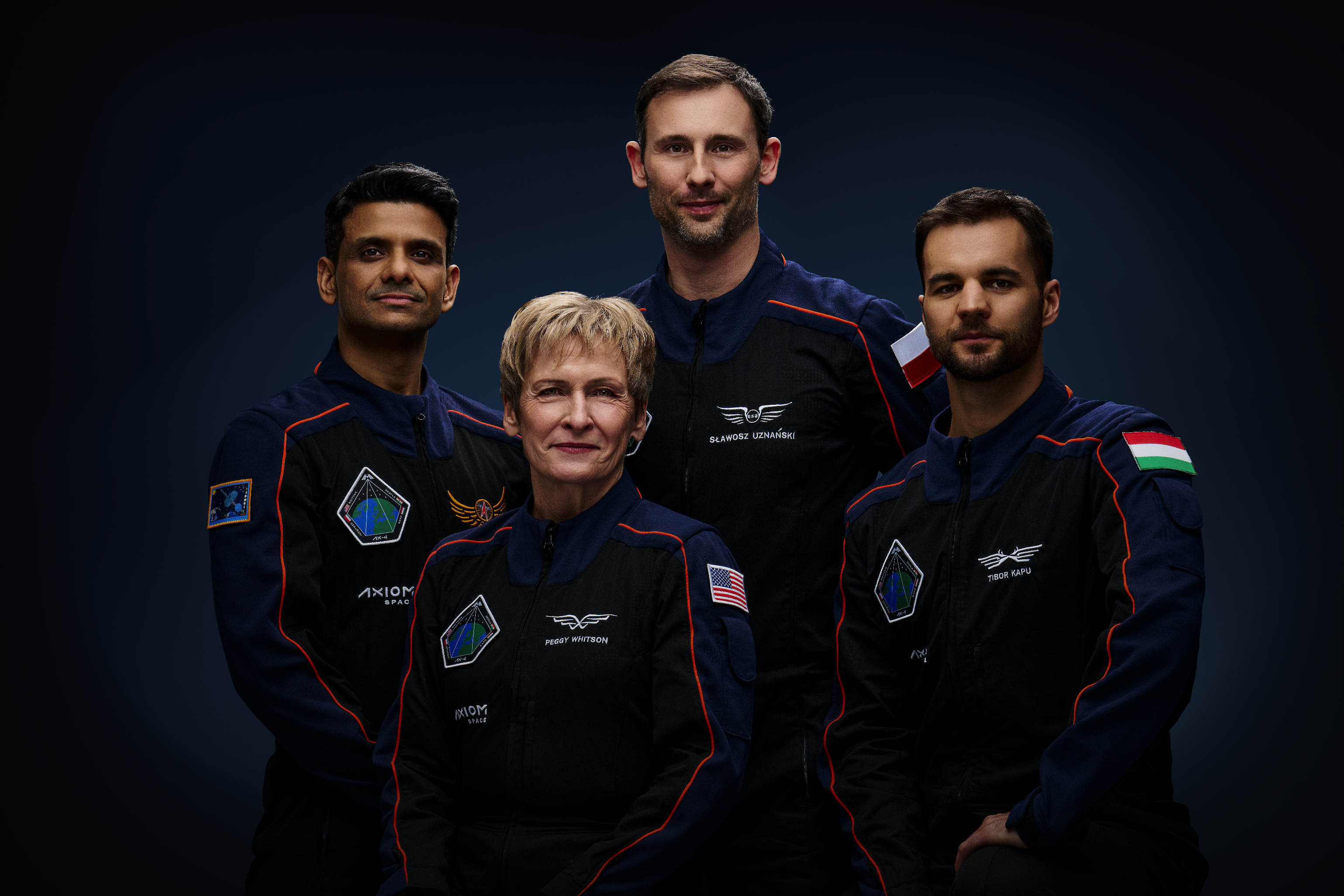
The official crew portrait of the Axiom Mission-4 private astronaut mission to the International Space Station. From left are, Pilot Shubhanshu Shukla from India, Commander Peggy Whitson from the U.S., and Mission Specialists Sławosz Uzanański-Wiśniewksi from Poland and Tibor Kapu from Hungary.
The official crew portrait of the Axiom Mission 4 private astronaut mission to the International Space Station. From left are, Pilot Shubhanshu Shukla from India, Commander Peggy Whitson from the U.S., and Mission Specialists Sławosz Uzanański-Wiśniewksi from Poland and Tibor Kapu from Hungary.
Axiom Space

NASA and Axiom Space are postponing the launch of Axiom Mission 4 to the International Space Station. As part of an ongoing investigation, NASA is working with Roscosmos to understand a new pressure signature, after the recent post-repair effort in the aft most segment of the International Space Station’s Zvezda service module.

Cosmonauts aboard the space station recently performed inspections of the pressurized module’s interior surfaces, sealed some additional areas of interest, and measured the current leak rate. Following this effort, the segment now is holding pressure. The postponement of Axiom Mission 4 provides additional time for NASA and Roscosmos to evaluate the situation and determine whether any additional troubleshooting is necessary. NASA defers to Roscosmos to answer specific questions about the Zvezda module.

A new launch date for the fourth private astronaut mission will be provided once available.

Peggy Whitson, former NASA astronaut and director of human spaceflight at Axiom Space, will command the commercial mission, while ISRO (Indian Space Research Organisation) astronaut Shubhanshu Shukla will serve as pilot. The two mission specialists are ESA (European Space Agency) project astronaut Sławosz Uznański-Wiśniewski of Poland and Tibor Kapu of Hungary.

The crew will lift off aboard the SpaceX Dragon spacecraft on Falcon 9 from Launch Complex 39A at NASA’s Kennedy Space Center in Florida.

Learn more about station activities by following the space station blog, @space_station and @ISS_Research on X, as well as the ISS Facebook and ISS Instagram accounts.

Get the latest from NASA delivered every week. Subscribe here.

Powered by WPeMatico

Get The Details…

Mark A. Garcia

Light Duty Day Aboard Station as Crew Awaits Axiom Mission 4

Light Duty Day Aboard Station as Crew Awaits Axiom Mission 4

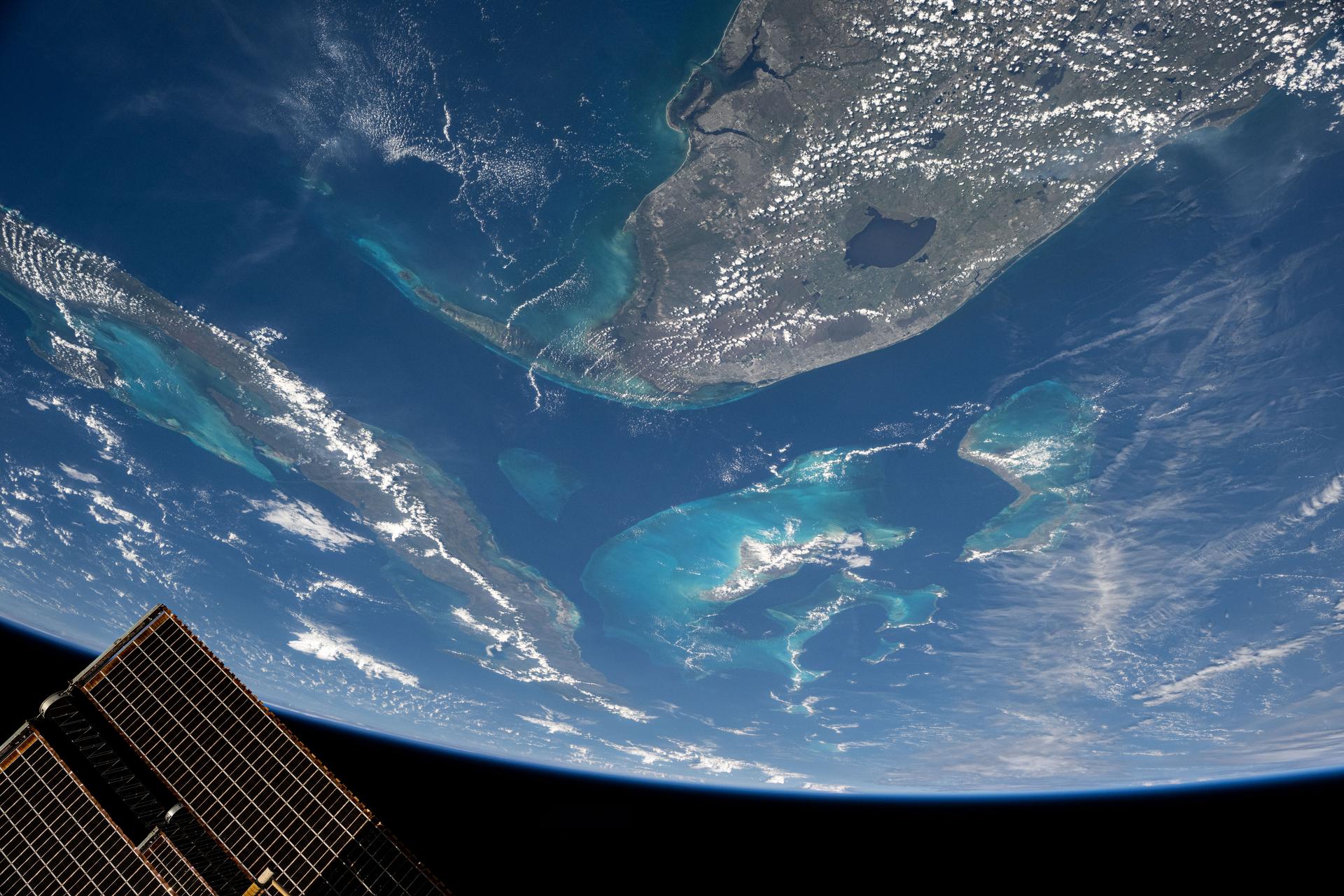
South Florida, the Bahamas, and Cuba are prominently featured in this photograph from the International Space Station as it orbited 261 miles above the Sunshine State.
NASA

The Expedition 73 crew members lightened their schedule on Wednesday following several days of Axiom Mission 4 (Ax-4) preparations including readying International Space Station systems, tablet computers, and temporary crew quarters. The orbital residents relaxed throughout the day while setting aside some time to continue ongoing human research and orbital maintenance.

NASA, Axiom Space, and SpaceX have postponed the launch opportunity on Wednesday, June 11, of Ax-4 to the orbital outpost to allow additional time for SpaceX teams to repair a liquid oxygen leak identified during post-static fire Falcon 9 rocket inspections.  A new launch date for the fourth private astronaut mission will be provided once repair work is complete, pending range availability. 

Four astronauts, three from NASA and one from JAXA (Japan Aerospace Exploration Agency, moderated their shifts on Wednesday opening up time to relax after focusing on the upcoming arrival of the Ax-4 mission. The quartet still kept up some space science duties while maintaining the upkeep of the orbital outpost.

Station Commander Takuya Onishi from JAXA, during the middle of his short day, opened up the Microgravity Science Glovebox and installed samples into research hardware to study how proteins behave in a liquid in microgravity. Results may lead to a better understanding and newer treatments for neurodegenerative diseases such as Alzheimer’s and promote space commercialization opportunities.

The three NASA Flight Engineers Jonny Kim, Anne McClain, and Nichole Ayers worked on a variety of life support maintenance tasks during their light duty day ensuring the orbital outpost operates in tip-top shape.

Kim calibrated and checked the functionality of the total organic carbon analyzer, one of several on-orbit tools that measure the quality of the station’s water. McClain activated audio hardware and measured the station’s acoustic environment, with its continuously running science racks and ventilation systems, to learn how it affects a crew member’s hearing. Finally, Ayers inspected and cleaned fans inside the Destiny laboratory module.

The three cosmonauts had a full shift on Wednesday studying space biology and maintaining life support systems in the Roscosmos segment of the space station. Flight Engineers Sergey Ryzhikov and Alexey Zubritskiy joined each other at the beginning of their day and studied how microgravity affects the exchange of blood between the bloodstream and surrounding tissues. Ryzhikov then pumped water from the Progress 90 spacecraft into station tanks and serviced the Elektron oxygen generator located in the Zvezda service module. Zubritsky photographed the condition of windows inside Zvezda and also partnered with Flight Engineer Kirill Peskov documenting and organizing cargo space inside the Nauka science module.

Learn more about station activities by following the space station blog, @space_station and @ISS_Research on X, as well as the ISS Facebook and ISS Instagram accounts.

Get the latest from NASA delivered every week. Subscribe here.

Powered by WPeMatico

Get The Details…

Mark A. Garcia