Astronauts Update Science Software and Hardware Keeping Up Ongoing Space Research

Astronauts Update Science Software and Hardware Keeping Up Ongoing Space Research
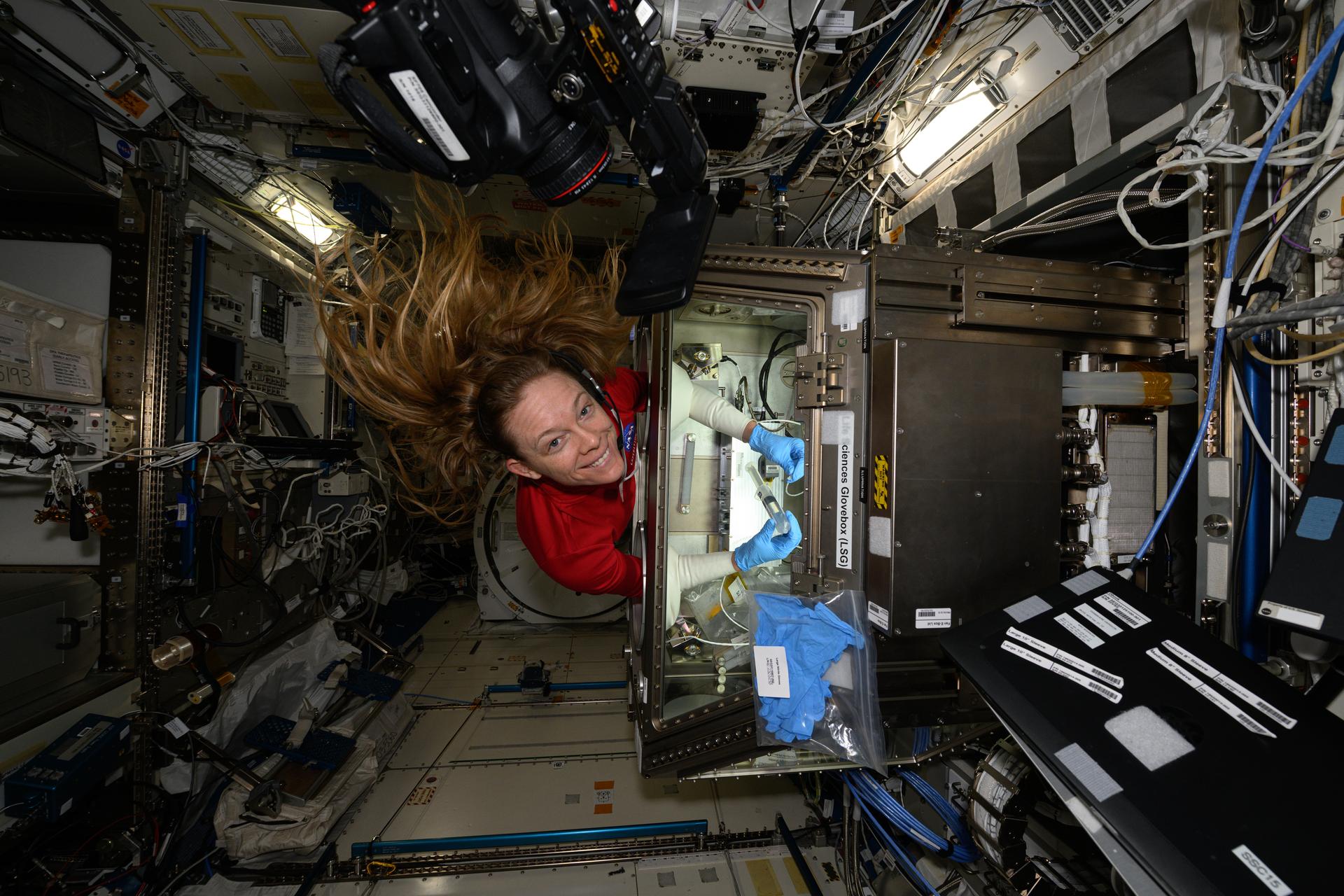
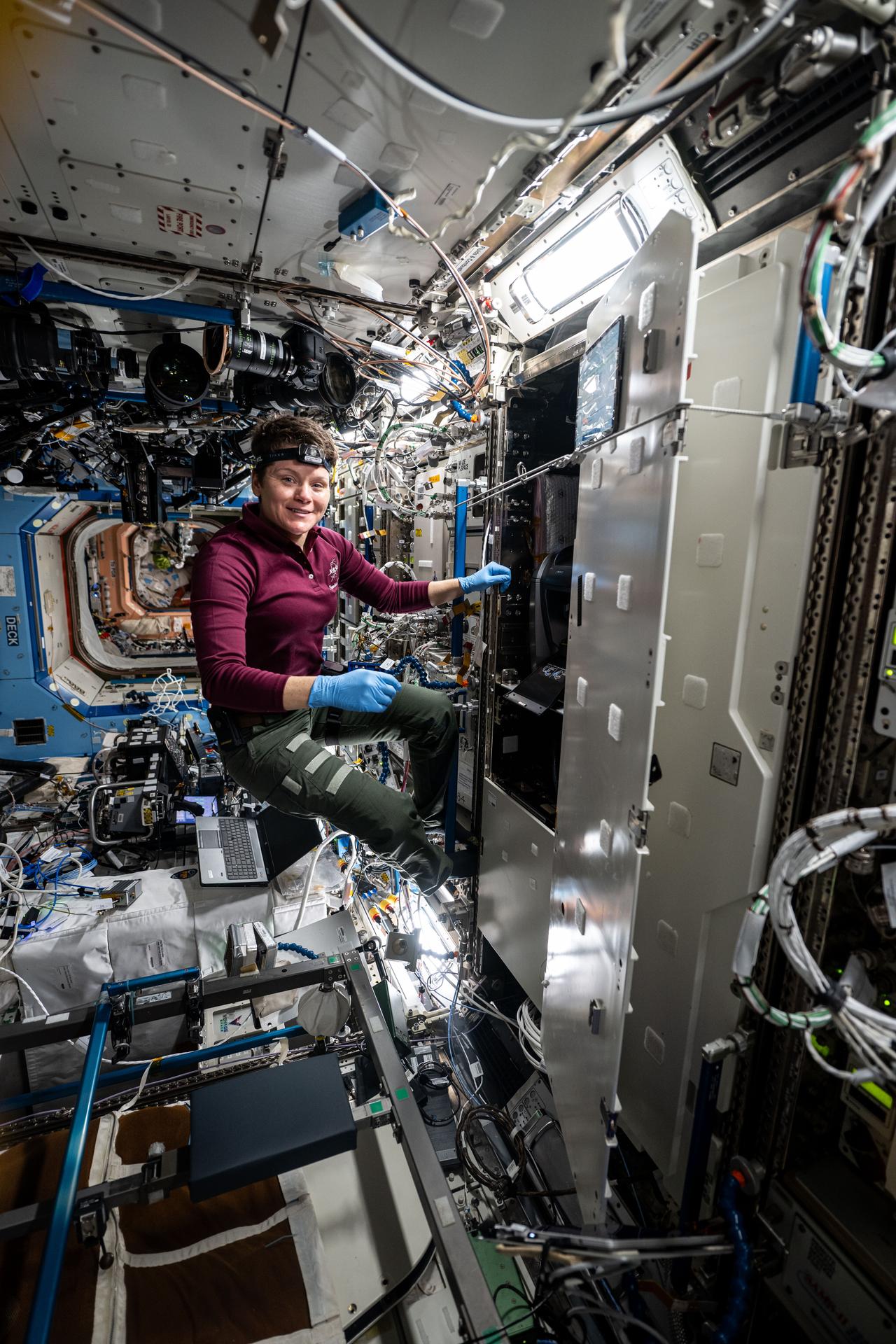
NASA astronaut and Expedition 73 Flight Engineer Nichole Ayers conducts research operations inside the Kibo laboratory module's Life Science Glovebox aboard the International Space Station. Ayers was processing samples of deep-sea bacteria to test a specialized 3D microscope for its ability to monitor water quality, detect potentially infectious organisms, and study liquid mixtures and microorganisms in space and on Earth.
NASA astronaut Nichole Ayers processes samples of deep-sea bacteria for a science experiment testing a specialized 3D microscope.
NASA

The Expedition 73 crew serviced a variety of science software and hardware on Thursday keeping up its advanced space research experiments and technology demonstrations. Eye checks, Earth observations, and life support maintenance rounded out International Space Station’s schedule.

The orbital outpost is filled with numerous science components enabling a wide range of investigations into space phenomena that is unable to be replicated in Earth’s gravity environment. The facilities range from entire laboratory modules, refrigerator-sized research racks that can support multiple experiments, to computers that control the devices, monitor the experiments, and record the research data. Scientists use the results to promote innovative health solutions for both astronauts and Earthlings and benefit public and private industries in space and on Earth.

NASA Flight Engineers Jonny Kim and Anne McClain took turns today working on computer gear ensuring microgravity research continues to provide pristine, quality results. Kim worked in the Columbus laboratory module and swapped out a processor cartridge inside the Spaceborne Computer-2. The commercial-off-the-shelf computer is demonstrating the ability to speed up research insights on orbit without reliance on Earthbound assets. McClain updated the firmware inside the Blood Analyzer, a handheld biomedical device located in the Destiny laboratory module that quickly tests a blood sample for numerous constituents aboard the orbital outpost.

Station Commander Takuya Onishi of JAXA (Japan Aerospace Exploration Agency) removed the AstroPi camera from a window on the Unity module then connected and powered it up inside Columbus. There are two AstroPi computers aboard the orbiting lab designed by the European Space Agency to support scientific and engineering skills among students. Onishi also downloaded data measuring the station’s atmosphere for the Aerosol Monitors technology demonstration to protect astronaut health.

NASA Flight Engineer Nichole Ayers once again processed deep-sea bacteria samples to test imaging operations inside a 3D research microscope, also known as the Extant Life Volumetric Imaging System, or ELVIS. The specialized 3D imaging device, located in the Kibo laboratory module, could be used to monitor water quality, detect potentially infectious organisms, and study liquid mixtures and microorganisms in space and on Earth.

Before all the science hardware work began on Thursday, Onishi, McClain, and Ayers took part in vision checks reading characters off a standard eye chart. At the end of their crew shift, the three astronauts joined Kim and called down to Earth for a ground conference with their mission’s flight director.

First time cosmonaut Kirill Peskov from Roscosmos wrapped an Earth photography session and downloaded imagery of landmarks he captured across the globe. Afterward, Peskov filled out a computer questionnaire to help researchers better understand how international crews and mission controllers from around the world communicate. Flight Engineers Alexey Zubritskiy and Sergey Ryzhikov spent their day on maintenance tasks filling an oxygen generator tank and cleaning a heater fan inside the Progress 90 cargo craft

Powered by WPeMatico

Get The Details…

Mark A. Garcia

Blood, Oxygen Research for Crew Health, and Axiom Preps Fill Day

Blood, Oxygen Research for Crew Health, and Axiom Preps Fill Day

NASA astronaut and Expedition 73 Flight Engineer Anne McClain works inside the Destiny laboratory module's Materials Science Research Rack and swaps filters inside the Kermit microscope. Kermit is an all-in-one fluorescence microscope system used to conduct biological, physical, and materials science research.
NASA astronaut Engineer Anne McClain works inside the Destiny laboratory module’s Materials Science Research Rack and swaps filters inside the Kermit microscope used to conduct biological, physical, and materials science research.
NASA

Blood and oxygen investigations to improve health in space dominated the research schedule aboard the International Space Station on Wednesday. The Expedition 73 crewmates also trained for the arrival next week of the Axiom Mission 4 (Ax-4) crew inside the Space Dragon spacecraft.

NASA Flight Engineer Jonny Kim completed a 48-hour session on Wednesday wearing a sensor-packed headband and vest that comfortably monitored his health data while he worked aboard the orbital outpost. He also downloaded his blood pressure measurements so doctors on the ground could review his cardiac health and compare the data collected from astronauts on previous missions.

Station Commander Takuya Onishi from JAXA (Japan Aerospace Exploration Agency) attached electrodes to his neck and chest that measured blood flow from his brain to his heart. The Drain Brain 2.0 experiment is helping doctors test a rapid screening tool that may identify and prevent potential space-caused thrombosis, or blood clots, on future missions.

Next, Onishi turned his attention to Ax-4 checking out tablet computers the private astronaut crew will use aboard the orbiting lab. Finally, the two-time station visitor joined NASA Flight Engineers Anne McClain and Nichole Ayers and called down to mission controllers to discuss upcoming approach and rendezvous operations when Ax-4 docks autonomously aboard Dragon to Harmony module’s space-facing port on June 11. Earlier, McClain and Ayers reviewed on a computer a variety of approach scenarios Dragon may encounter as it nears the space station next week. The SpaceX Falcon 9 rocket with the Dragon crew spacecraft atop is targeted to launch Ax-4 no earlier than 8:22 a.m. EDT on Tuesday, June 10, from NASA’s Kennedy Space Center.

Before she began her Ax-4 mission review, McClain pedaled on the Destiny laboratory module’s exercise cycle for a long-running workout study. She wore chest electrodes and breathing gear to measure her aerobic capacity, or the maximum amount of oxygen the body uses during exercise, in microgravity. Researchers will use the data to improve space exercise programs and ensure astronauts are in shape to conduct intense physical activities such as spacewalk. Ayers began her shift transferring nitrogen from Harmony to the Quest airlock. Ayers then organized food packs inside the Unity module before beginning her Ax-4 preparations.

Working from the orbital outpost’s Roscosmos segment, Flight Engineer Alexey Zubritskiy was back on Earth observation duty photographing landmarks across Eastern Europe. Flight Engineer Kirill Peskov also pointed his camera at the Earth capturing imagery of the Volga River and Aral Sea for a study documenting the effects of natural and man-made disasters. Veteran cosmonaut and three-time station resident Sergey Ryzhikov electronically stored data collected for an investigation studying how to improve communication among international crews and mission controllers from around the world.

Learn more about station activities by following the space station blog, @space_station and @ISS_Research on X, as well as the ISS Facebook and ISS Instagram accounts.

Get the latest from NASA delivered every week. Subscribe here.

Powered by WPeMatico

Get The Details…

Mark A. Garcia

Station Prepares for Axiom Mission 4, Studies How Body Adapts to Space

Station Prepares for Axiom Mission 4, Studies How Body Adapts to Space

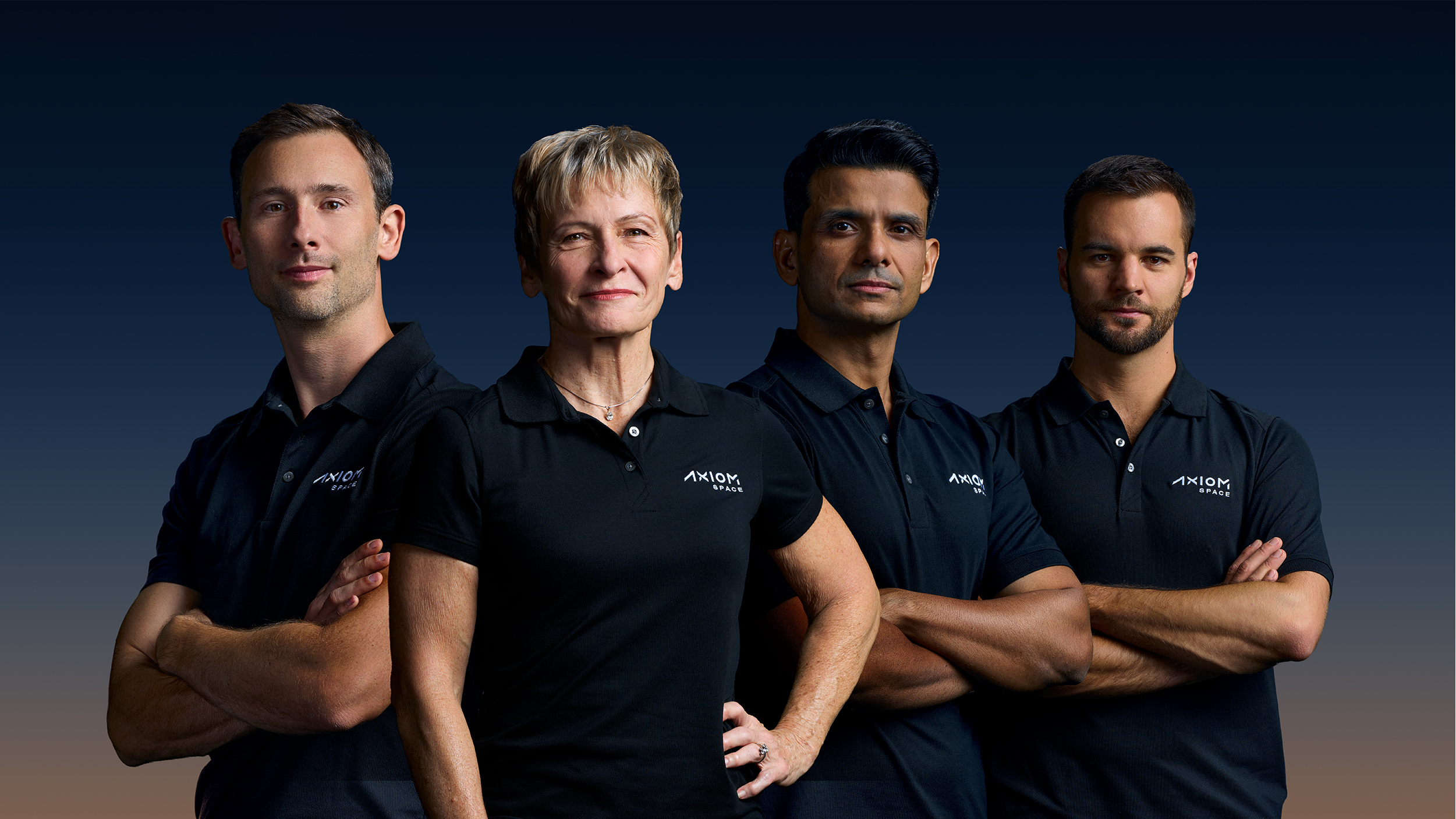
The Axiom Mission 4, or Ax-4, crew will launch aboard a SpaceX Dragon spacecraft to the International Space Station from NASA’s Kennedy Space Center in Florida. From left to right: ESA (European Space Agency) astronaut Sławosz Uznański-Wiśniewski of Poland, former NASA astronaut Peggy Whitson, ISRO (Indian Space Research Organization) astronaut Shubhanshu Shukla, and Tibor Kapu of Hungary.
The Axiom Mission 4 crew will launch aboard a SpaceX Dragon spacecraft to the space station. From left are, Mission Specialist Sławosz Uznański-Wiśniewski of Poland, Commander astronaut Peggy Whitson of the U.S., Pilot Shubhanshu Shukla of India, and Mission Specialist Tibor Kapu of Hungary.
Axiom Space

The Expedition 73 crew is preparing to welcome the arrival of Axiom Mission 4 (Ax-4) and its four astronauts to the International Space Station next week. Station Commander Takuya Onishi of JAXA (Japan Aerospace Exploration Agency) and NASA Flight Engineers Jonny Kim, Anne McClain, and Nichole Ayers joined each other on Tuesday and reviewed the upcoming private astronaut mission. The station quartet called down to mission managers and discussed Ax-4 operations and station readiness.

Ax-4 is targeted to launch from NASA’s Kennedy Space Center at 8:22 a.m. EDT on June 10 aboard a SpaceX Dragon spacecraft. Veteran astronaut Peggy Whitson will command Ax-4 and lead Indian Pilot Shubhanshu Shukla and Mission Specialists Sławosz Uzanański-Wiśniewksi from Poland and Tibor Kapu from Hungary to the orbital outpost. The Ax-4 astronauts will ride inside Dragon for an autonomous docking to the station’s space-facing port on the Harmony module at 12:30 p.m. on June 11.

Earlier on Tuesday, Onishi once again collected his blood, saliva, and urine samples for processing and cold stowage to analyze the specimens for space-caused molecular, metabolic, and microbial changes in crew members. Next, he inspected multi-layer insulation and joints on the Japanese robotic arm’s Small Fine Arm for potential repairs.

Onishi also participated in an exercise study with McClain with the pair taking turns pedaling on the Destiny laboratory module’s exercise cycle. They each wore chest electrodes and breathing gear to measure their aerobic capacity, or the maximum amount of oxygen the body uses during exercise, in microgravity.

McClain later partnered with Ayers and stowed hardware inside the Bigelow Expandable Activity Module, or BEAM. Ayers also assisted Onishi with the robotics inspection work inside the Kibo laboratory module before reconfiguring electronics and networking gear inside Harmony.

NASA Flight Engineer Jonny Kim continued his 48-hour health monitoring session changing out a sensor-packed headband and vest after working out on the advanced resistive exercise device and jogging on the COLBERT treadmill. He took off the first set of biomedical devices so they could hang out to dry then put on the second set of health monitoring garments and performed breathing calibrations and applied Ultrasound Echo gel on the electrodes.

Veteran Roscosmos cosmonaut Sergey Ryzhikov joined Flight Engineer Alexey Zubritskiy and serviced a neutron radiation detector before inspection duties inside the Zvezda service module. Zubritskiy also set up Earth observation hardware photographing ocean and sea-based landmarks across North America and Europe. Flight Engineer Kirill Peskov also pointed a camera outside a space station window and photographed European rivers and glaciers.

Learn more about station activities by following the space station blog, @space_station and @ISS_Research on X, as well as the ISS Facebook and ISS Instagram accounts.

Get the latest from NASA delivered every week. Subscribe here.

Powered by WPeMatico

Get The Details…

Mark A. Garcia

Axiom Mission 4 Targets Launch No Earlier than Tuesday, June 10

Axiom Mission 4 Targets Launch No Earlier than Tuesday, June 10

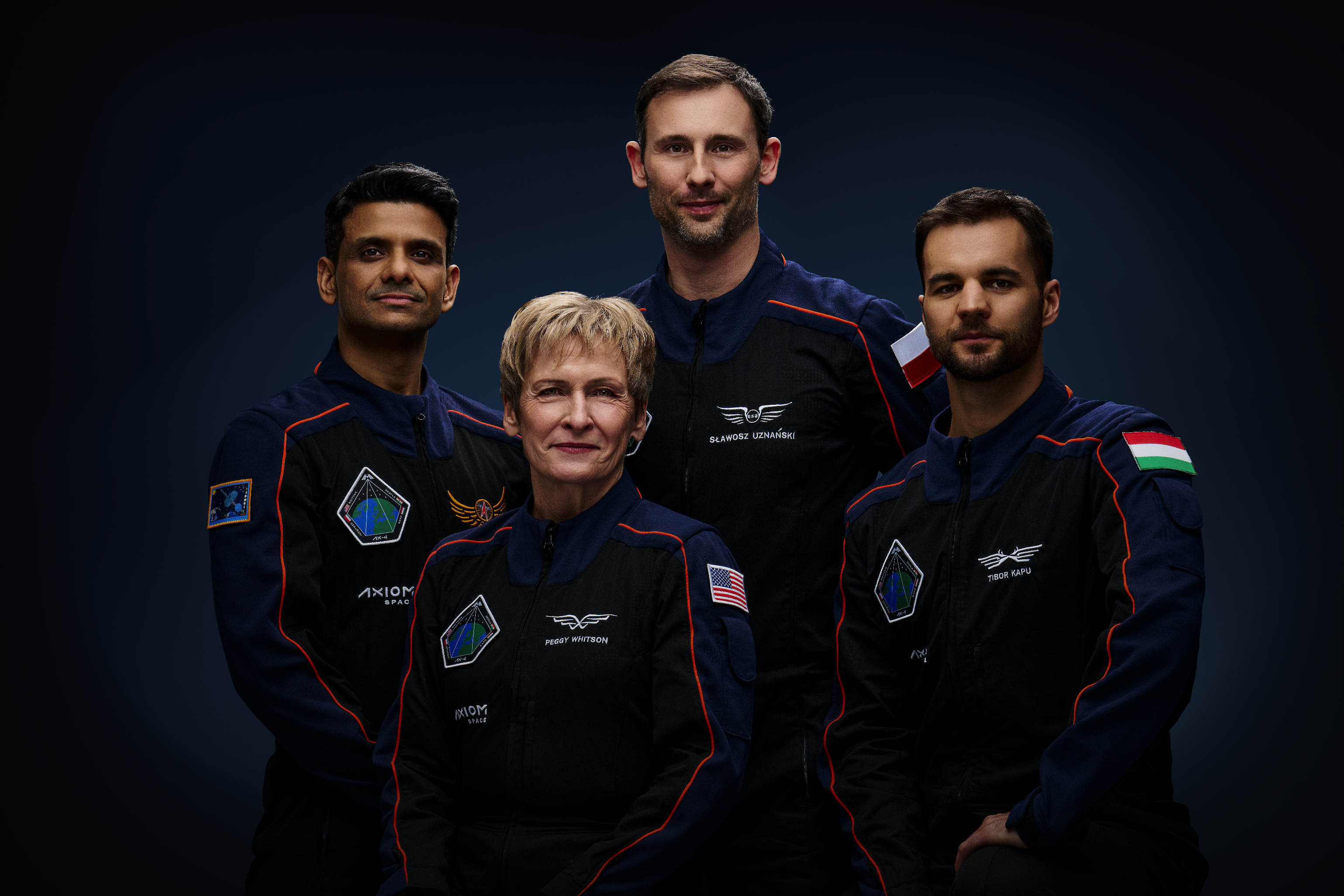
The official crew portrait of the Axiom Mission-4 private astronaut mission to the International Space Station. From left are, Pilot Shubhanshu Shukla from India, Commander Peggy Whitson from the U.S., and Mission Specialists Sławosz Uzanański-Wiśniewksi from Poland and Tibor Kapu from Hungary.
The official crew portrait of Axiom Mission 4, the fourth private astronaut mission from Axiom Space to the International Space Station. From left are, Pilot Shubhanshu Shukla from India, Commander Peggy Whitson from the U.S., and Mission Specialists Sławosz Uzanański-Wiśniewksi from Poland and Tibor Kapu from Hungary.
Axiom Space

NASA, Axiom Space, and SpaceX are targeting no earlier than 8:22 a.m. EDT on Tuesday, June 10, for launch of the fourth private astronaut mission to the International Space Station, Axiom Mission 4. This shift allows teams to account for predicted inclement weather during the SpaceX Falcon 9 rocket and Dragon spacecraft transport in addition to completing final processing of the spacecraft ahead of launch.

Peggy Whitson, former NASA astronaut and director of human spaceflight at Axiom Space, will command the commercial mission, while ISRO (Indian Space Research Organisation) astronaut Shubhanshu Shukla will serve as pilot. The two mission specialists are ESA (European Space Agency) project astronaut Sławosz Uznański-Wiśniewski of Poland and Tibor Kapu of Hungary.

The crew will lift off aboard Dragon on a SpaceX Falcon 9 rocket from Launch Complex 39A at NASA’s Kennedy Space Center in Florida. 

Learn more about station activities by following the space station blog, @space_station and @ISS_Research on X, as well as the ISS Facebook and ISS Instagram accounts.

Get the latest from NASA delivered every week. Subscribe here.

Powered by WPeMatico

Get The Details…

Mark A. Garcia

Crew Preps for Fourth Axiom Private Mission, Keeps up Human Research

Crew Preps for Fourth Axiom Private Mission, Keeps up Human Research

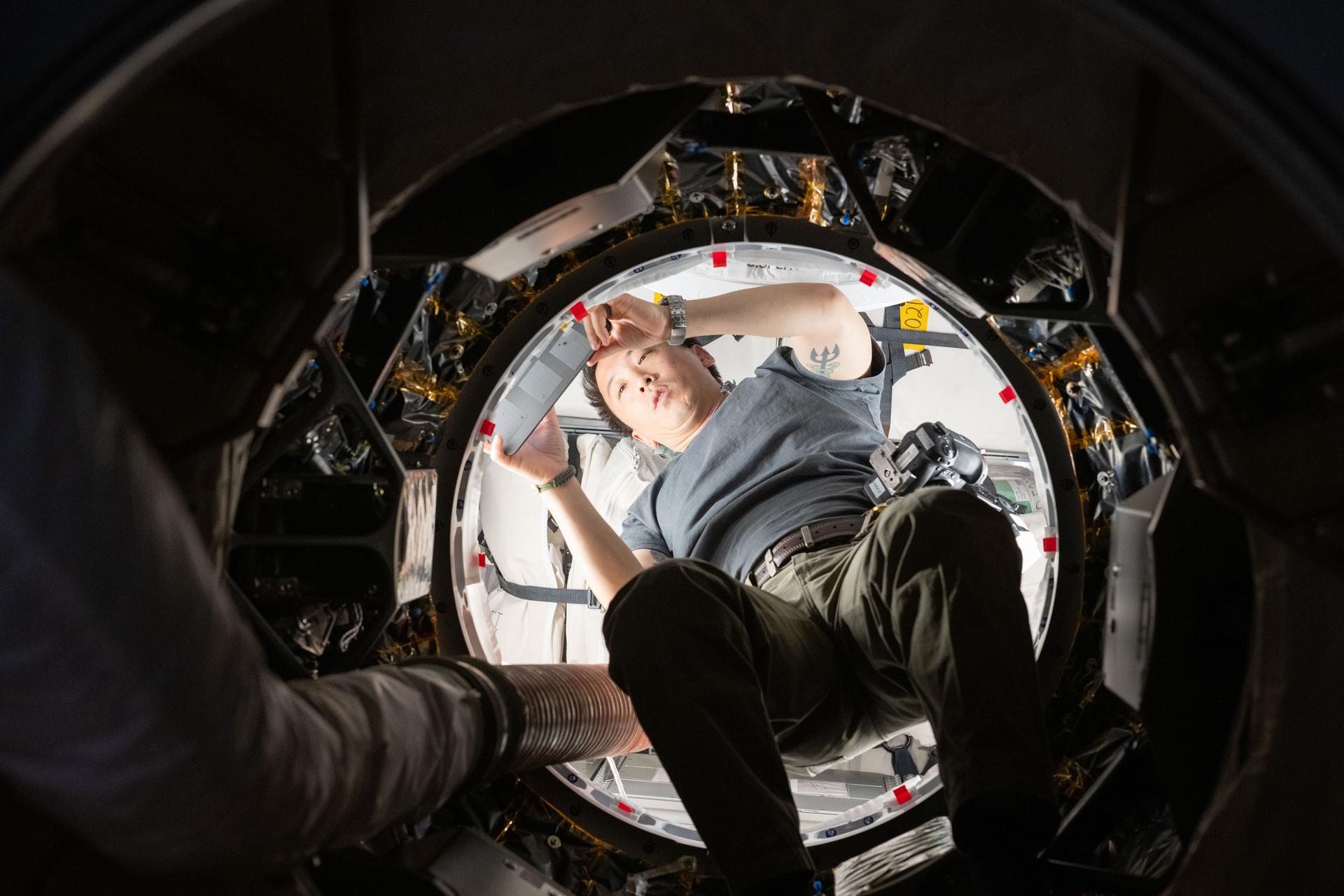
NASA astronaut and Expedition 73 Flight Engineer Jonny Kim works inside the SpaceX Dragon cargo spacecraft completing cargo operations before it undocked from the International Space Station's Harmony module several hours later.
NASA astronaut Jonny Kim works inside the SpaceX Dragon cargo spacecraft completing cargo operations before it undocked from the International Space Station’s Harmony module on May 23, 2025.
NASA

The Expedition 73 crew members are turning their attention to the upcoming fourth private mission from Axiom Space. While the International Space Station crewmates prepare for the Ax-4 quartet’s arrival aboard a SpaceX Dragon they also continued studying how their bodies are adapting to weightlessness in the midst of ongoing lab maintenance duties.

Axiom Mission-4 (Ax-4) is preparing for its launch to the orbital outpost this month carrying experienced astronaut Peggy Whitson as commander and three first-time space flyers including Pilot Shubhanshu Shukla from India and Mission Specialists Sławosz Uzanański-Wiśniewksi from Poland and Tibor Kapu from Hungary to the orbital outpost. NASA Flight Engineers Anne McClain and Nichole Ayers spent a portion of their shift on Monday reviewing procedures they will use from inside the space station when the Ax-4 crew aboard the Dragon approaches the space station to begin a two-week space research mission.

Earlier during her shift, McClain opened up the Destiny laboratory module’s Combustion Integrated Rack and replaced experiment samples and research components inside the sealed chamber that allows exploration of how fuels and flames behave in weightlessness. Ayers relocated and inspected hardware that monitors airborne particles in the station’s atmosphere then staged hardware that will soon be stowed inside BEAM, or the Bigelow Expandable Activity Module.

NASA Flight Engineer Jonny Kim began a 48-hour session wearing a biomedical vest and headband being tested for their ability to comfortably measure a crew member’s health data during daily activities. Next, he wrapped up his shift stowing bags and cleaning up packing materials following the departure of the SpaceX Dragon cargo craft on May 23.

Station Commander Takuya Onishi of JAXA (Japan Aerospace Exploration Agency) worked on standard human research duties Monday collecting his blood, saliva, and urine samples for stowage in a science freezer and later analysis. He also swapped a memory card inside radio frequency identification hardware, downloaded station acoustic data, and serviced the water storage system.

Veteran cosmonaut Sergey Ryzhikov assisted fellow Roscosmos Flight Engineer Alexey Zubritskiy who wore virtual reality glasses for an investigation of how a crew member’s sense of balance and visual tracking adjust to microgravity. Cosmonaut Kirill Peskov pointed a camera outside a window on the orbital outpost’s Roscosmos segment and photographed landmarks including the Amazon delta, the Volga River delta, the Aral Sea, and more.

Learn more about station activities by following the space station blog, @space_station and @ISS_Research on X, as well as the ISS Facebook and ISS Instagram accounts.

Get the latest from NASA delivered every week. Subscribe here.

Powered by WPeMatico

Get The Details…

Mark A. Garcia